



Abstract
This paper employs the Stimulus-Organism-Response (S-O-R) model to examine the effects of social media and two types of memorable tourism experiences (MTEs), that is, gaming and non-gaming, on short-term, mid-term, and long-term destination revisit intentions. The data were gathered via a structured questionnaire and subsequently examined through structural equation modeling (SEM). The sample consisted of 347 tourists who had engaged in both gaming and non-gaming activities during their visit to Macao. The findings support the significance of social media as a stimulus that affects the temporal destination revisit intention (response) through MTEs (organism). Besides, non-gaming MTEs are more significantly influenced and social media also moderates the impacts of MTEs on temporal destination revisit intention. Non-gaming MTEs have more significant and positive effects than gaming MTEs on temporal destination revisit intentions, particularly for the short-term revisit intention.
Keywords
Introduction
Social media refers to digital technologies that facilitate user-generated content and participatory engagement among users (Kaplan & Haenlein, 2010; Terry, 2009). These technologies can be used to either identify message directionality (Kent, 2010) or to exemplify modes of interaction using specific platforms like Instagram, TikTok, Facebook and others (Gainsbury et al., 2014; Howard & Parks, 2012). Social media has become increasingly prevalent as a platform for tourists to disseminate their tourism experiences and acquire relevant information. Repeat visitors have been admitted as an important source for many travel destinations (Darnell & Johnson, 2001). Current research linking social media with revisit intention for tourism destinations mainly focus on social media marketing (Jatiyananda et al., 2021; Wilopo & Nuralam, 2025), the influence through brand loyalty and trust (Ibrahim & Aljarah, 2018; Ibrahim et al., 2021), etc. Social media makes a destination experience more interactive, personalized, accessible, consultative, and memorable (Gainsbury et al., 2014; B. C. Su et al., 2021). To enhance tourists’ revisit intention, it is worthwhile to study the impacts of social media from their experience perspective.
Macau, a special administrative region of China (Figure 1), lies on the western bank of the Pearl River Estuary, adjacent to the Pearl River Delta. Renowned globally as a gaming hub, Macau’s integrated resorts boast world-class gaming facilities, serving as a key draw for visitors. As the outbreak of COVID-19, Macau is challenged by repetitious economic structure dominated by the casino industry, and the lack of diversity of visitors. In 2021, China’s 14th Five-Year Plan explicitly endorsed the strategic development of Macau as a world-class tourism and leisure destination. Macau is now replicating the Las Vegas style by exploring more entertainment, cultural and leisure products for visitors (Wong & Lai, 2021). Beyond gaming, there are also some United Nations Educational, Scientific and Cultural Organization (UNESCO)—historic sites in Macao like unique Sino-Portuguese cuisine, Ruins of St. Paul’s and vibrant cultural festivals. The local government is vigorously in advancing tourism diversification. Tourists in Macau can have diversified tourism experiences, that is, gaming vs. non-gaming (Luo et al., 2019; Wong & Lai, 2021).
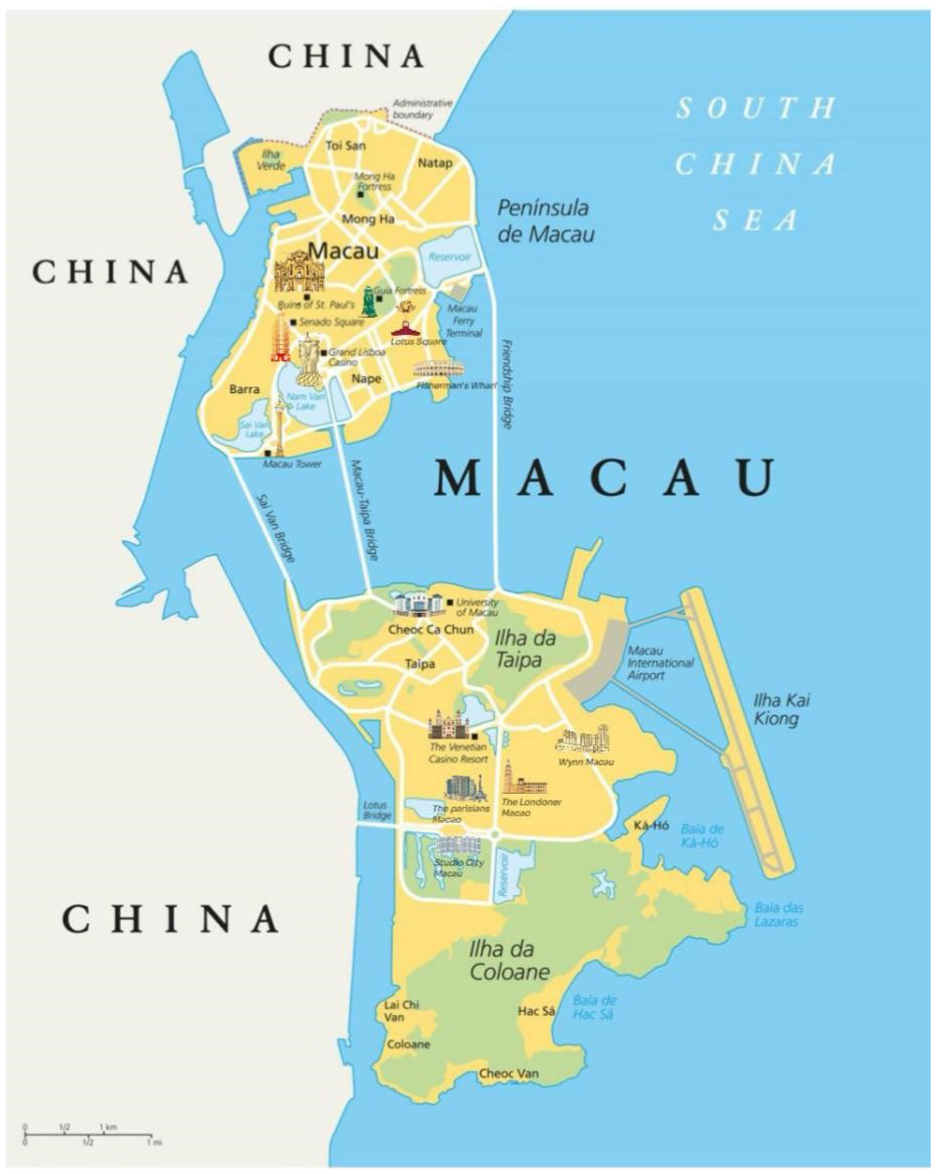
Map of MACAO.
Memorable Tourism Experiences (MTEs) refer to distinctive, emotionally engaging, and personally significant experiences that travelers undergo during their journeys (Kim, 2018). Despite the variety of tourism activities available in gaming destinations, like Macao, majority of studies on gambling destinations have concentrated on casinos and gamblers (Ji & Yang, 2022; Lai & Hitchcock, 2020). In tourism, high quality of service will boost tourists’ MTEs and satisfaction, then creating repeated visits (Coudounaris & Sthapit, 2017; J. H. Kim et al., 2010). Current empirical research offers limited insight into the impact of social media across diverse experiential contexts (e.g., dining, entertainment, lodging, attractions, and transportation), and then on future behavior in gaming destinations (Tsai & Fong, 2021). Furthermore, research has emphasized the importance of time frame in revisit intentions (Huang et al., 2012). Darnell and Johnson (2001) suggest that the likelihood of repeat visit intention changes over time, and the degree of change varies as the types of trips and visitors. Even though the booming research on MTEs and revisit intentions (Yu et al., 2021; H. Zhang et al., 2018), few research focus on social media and revisit intention from the tourists’ perspective, such as memory, tourism experience, especially considering different types of MTEs, and time frame of revisit intention.
This study examines general tourists who have been to both Macau’s casinos and other tourist sites and provides an empirical model linking social media, gaming and non-gaming MTEs, and time revisit intentions. The study addresses the following research questions: (a) Does social media influence tourists’ temporal destination revisit intention based on short-, mid-, and long-term from MTEs perspective? (b) If so, what are the different impacts of social media on gaming vs. non-gaming MTEs? (c) Will social media moderate the relationships between gaming/non-gaming MTEs and temporal destination revisit intentions? The current study extends previous research in three aspects. First, it makes a novel contribution to the literature on temporal destination revisit intention by examining the role of social media and MTEs through the Stimulus-Organism-Response (S-O-R) framework. Second, the results further confirm that various tourism resources, that is, gaming and non-gaming, are key contributors to tourists’ revisit intention. Finally, the study further examines that the influence of social media on gaming and non-gaming MTEs and the moderating effect on the relations between MTEs and temporal destination revisit intention.
Literature Review and Hypotheses Development
Stimulus–Organism–Response (S-O-R) Model
The Stimulus–Organism–Response (S-O-R) framework posits that external stimuli, that is, social and physical environments, can influence an individual’s internal affective and cognitive states (Organism), thereby eliciting subsequent behavioral responses (Response; Bagozzi, 1986; Robert & John, 1982). Recently, this model has been widely adopted in marketing and tourism research to uncover the role of tourism experiences in shaping behavioral intentions (X. Chen et al., 2020; Ouyang et al., 2017; Y. Zhang et al., 2021). For example, Chen et al. (2022) investigate the relationships among rural MTEs and green consumption intention using S-O-R model. Hameed et al. (2022) apply the Stimulus–Organism–Response (S-O-R) model to examine how green practices influence customers’ green word-of-mouth (GWOM) intention in the context of green hotels. However, the majority of studies that link social media and revisit intention concentrate on social media marketing activities and brand loyalty. Few studies have been conducted on the connection between social media, memorable tourism experience and revisit intention, specifically in gaming destinations. Mittal et al. (2022) indicate social return significantly impacts MTEs and behavior intention, which merely highlights the anticipated positive evaluation of a tourist’s social media posts by their close social connections. However, the impacts of social media are more diversified today, and the pre-trip knowledge or post trip sharing cannot be ignored. Vien et al. (2024) observe that the sharing of travel experiences on social media serves as intermediaries in the relationship between memorable tourism experiences (MTEs) and tourists’ revisit intentions. But the impacts of different MTEs and time frame in destination revisit intention have not been covered. As surrounded by various information from social media currently, such as Wechat, Tiktok, the current study employs the S-O-R model as the primary theoretical framework to explore the relations between social media and temporal revisit intention, considering from tourists’ own travel experience. Travelers may have higher MTEs (Organism) when exposed to social media surroundings (Stimulus), which promotes their temporal revisit intention (Response).
Social Media (Stimulus)
Travelers can engage with others to improve their tourism experiences by sharing their knowledge and experiences on social media (Yoo & Gretzel, 2011). According to Volo (2010), travelers use social media to read and engage with the platform during the pre-trip phase in order to learn more about the place and its image and better immerse themselves in the travel experience. Other studies have shown social media on travel-related activities can alter travelers’ views and reinterpretations of locations, activities, and residences both during and after the trip (Bronner & De Hoog, 2011; Gainsbury et al., 2014; Yoo & Gretzel, 2011). Kim and Fesenmaier (2017) confirm that sharing positive experiences decreases negative effects while increasing travelers’ positive effects, which leads to more positive ratings overall. Narangajavana et al. (2017) show that social media allows consumers to share their travel moments in different ways (stories, comments, photos, movie clips, etc.). This, in turn, moderates their travel experience. Mittal et al. (2022) argue that social media can be regarded as an important mediator of the tourism experience due to its property of enabling visitors to share their experiences. These research have investigated the positive impacts of social media on non-gaming tourism experiences during the travels.
However, the impacts of social media in gaming destinations are rarely discussed. For gaming experiences, as Expectation-Confirmation Theory, the extent to which a product or service fulfills customer expectations is a primary determinant of satisfaction levels (AlSokkar et al., 2024; Villarin, 2021). By showcasing high-quality previews of gaming attractions (e.g., trailers of an esports arena or 360° tours of a gaming lounge), social media sets positive expectations that enhance pre-travel excitement. When tourists later experience the event, they compare it to the previews, and if the reality meets or exceeds expectations, it creates a stronger memorable experience. Self-Determination Theory (Deci & Ryan, 1985; Ryan & Deci, 2017) suggests that both people’s performance and their well-being are affected by the type of motivation they have for their activities. Social media allows tourists to autonomously research gaming options (e.g., comparing different VR parks), fostering a sense of control and excitement during their trip. Interactive posts (e.g., polls on “Which game should we feature next?”) make travelers feel involved, increasing emotional investment in the upcoming experience. Las Vegas casinos use Facebook and Twitter as effective platforms to promote their brands and communicate with potential customers directly, suggesting that social media might bring benefits for gambling operators in brand reputation building and increasing consumers’ engagement in gaming activities (Kou et al., 2022). Based on these literatures, to further explore how the relationship that exists between social media and various tourism experiences in gaming destinations, the following two hypotheses are proposed:
Memorable Tourism Experiences (MTEs) and Gaming and NON-Gaming MTEs (Organism)
MTEs would influence tourists’ future behavioral intentions (H. Zhang et al., 2018). Some scholars have investigated different types of MTEs in some destinations. Wong et al. (2020) explore the relations between ethnic minority MTEs and intentions to visit some other ethnic destinations. Yu et al. (2021) examine different types of memorable tourism experiences in different attractions, such as natural attractions, human-maker attractions, and human-sight attractions. J. Chen et al. (2023) have studied the influence of MTEs on tourists’ green consumption intentions. These above studies focus on one single type of MTEs in the destinations. However, there exist different types of MTEs in one destination.
According to Wong and Lai (2021), gaming MTEs is classified as memorable experiences that occur when tourists playing casino games, while non-gaming MTEs can be regarded as memorable experiences except for playing casino games (e.g., shopping, dining, watching shows, visual stimulation). This study follows their definition about gaming/non-gaming MTEs. They firstly establish an empirical model that connects both non-gaming and gaming MTEs with overall satisfaction, destination image, and behavioral intentions. Wong and Qi (2017) outline three types of tourist experiences in Macau, that is, gaming experience, non-gaming leisure activities, cultural heritage tourism experience in the city and integrated resorts. Luo et al. (2019) analyze the relationship between gambling and non-gambling tourists and find that visitors have the opportunity to engage in other sights and attractions in gaming destinations instead of gambling activities. Although the relationship between gaming/non-gaming MTEs and revisit intention has been examined, in terms of temporal destination revisit intention, perceived behavioral control may decline due to future uncertainty and the impacts on destination revisit intentions may vary (H. Zhang et al., 2018). This paper further explores the impacts of gaming/non-gaming MTEs on temporal destination revisit intention.
Temporal Destination Revisit Intention (Response)
Repeat visitors tend to be more active in spreading positive word-of-mouth about the destination, engaging more intensively in consumer activities and significantly lower marketing expenditures compared to first-time visitors (Darnell & Johnson, 2001). Thus, revisit intention is an important phenomenon in tourism, both in terms of the overall economy and in personal appeal (Darnell & Johnson, 2001). Temporal destination revisit intention is defined as the behavioral intention of tourists to revisit a destination in the future, and it is often referred to as the strongest indicator of destination loyalty (Esau & Senese, 2022). Feng and Jang (2004) propose a trichotomous temporal destination revisit intention with a 5-year time frame: continuous repeater (travelers with consistently high revisit intentions over time), deferred repeater (travelers with low revisit intentions in the short-term but high revisit intentions in the long term), and continuous switcher (travelers with consistently low revisit intentions over time). Among the three types of attendees, deferred repeaters, after their initial visit, are also potential switchers showing a heightened propensity to revisit the destination. Therefore, focusing on the deferred repeaters, there are important relationships between revisit intentions and time and Jang and Feng (2007) split the temporal destination revisit intention of visitors from a temporal perspective into short-term revisit intention (intention to revisit within the next 12 months), mid-term revisit intention (intention to revisit within the next 3 years), and long-term revisit intention (intention to revisit within the next 5 years) and propose that the three intentions are inter-related.
Perceived behavioral control and the destination revisit intentions may decline due to future uncertainty (H. Zhang et al., 2018). Thipsingh et al. (2022) highlight that revisit intentions not only vary as the factors, like attraction and type of tourists, but also change over time. Cognitive Consistency Theory (Festinger, 1957) posits that individuals are motivated to maintain consistency among their beliefs, attitudes, and behaviors. If a tourist expresses short-term revisit intention (e.g., planning to return within a year) or mid-term (e.g., 1–3 years), cognitive consistency pressures will motivate them to maintain this intention in the mid-term or long-term (e.g., 5 years) to avoid psychological dissonance between their initial intention and subsequent plans. Wood and Neal (2009) demonstrate repeated behavioral intentions strengthen habit formation. Short-term revisit intentions act as an initial commitment, which evolves into a mid-term habit (e.g., annual trips to the same destination) through the psychological process of automaticity. The Commitment-Trust Theory (Morgan & Hunt, 1994) further establishes trust and commitment as fundamental components of sustained relationships, particularly within service-oriented contexts. Over time, consistent mid-term revisit intentions foster trust in a destination’s ability to reliably provide satisfying experiences, which lowers perceived risks for future visits and strengthens long-term commitment, eventually making the destination a permanent fixture in one’s travel repertoire. Thus, the following two hypotheses are proposed.
Numerous scholars have studied the precedents of destination revisit intentions. Positive emotions and memorable experiences from the previous trip can have an impact on the future behavior of travelers (Tung & Ritchie, 2011). Wang et al. (2020) find that although the feelings from on-site traveling are fleeting and fragile, experiences that are stored in people’s memories are recalled. Additionally, they show that experiences can significantly affect travelers’ recollections, making them one of the most potent indicators of their behavioral intentions. In contrast to other vacation destinations, casino resorts offer luxurious and unique offerings, which are intended to provide dazzling and memorable experiences for first-time visitors, thus leading to their return (Prentice et al., 2022). Furthermore, the findings of Masiero et al. (2017) suggest that regardless of win or lose, if visitors receive satisfactory service while engaging in gaming activities at a casino, MTEs might be produced, followed by repeated business. Clarifying the connection between different tourism experiences and temporal factors is important in order to better understand the underlying mechanisms of this relationship. Thus, the following hypotheses are proposed:
Over the years, empirical studies have demonstrated over time how social media may effectively promote behaviors including revisit, repeat purchases, as well as electronic word-of-mouth. Social media platforms have evolved into influential digital communication channels that enable tourists to engage interactively, exchange perspectives, and contribute to the collective evaluation of tourism experiences through reviews and ratings (Volo, 2010). Jamshidi et al. (2021) investigate how the travelers’ perceptions of coolness are affected by the information elements of tourism social media destination, which ultimately contributes to the formation of memorable experiences and fosters destination loyalty and revisit intention. L. Su et al. (2021) verify that social context increases the value of the traveler’s experience during the travel and post-trip phases, thereby fostering revisit and recommendation intentions. According to Social Influence Theory proposed (Lim, 2022), tourists’ sharing of travel-related experiences on social media boosts publishers’ confidence in their future behavioral intentions.
Casinos are commonly shaped as leisure venues to buffer the impacts of the stigmatized casino image, thus promoting revisit intentions, especially in social media promotions (Kou et al., 2022). After traveling, for gaming, by social media platforms like Instagram, TikTok, some real-time contents, such as live streams of table games and viral “win celebration” reels, might trigger immediate Fear of Missing Out (FOMO), compelling users to revisit quickly to avoid missing out on thrilling opportunities. Seeing others’ jackpot wins and success stories would also activate the viewer’s reward pathways (L. Su et al., 2021), creating excitement and motivation to revisit. In travel and tourism, the adoption of digital technologies by some businesses during this time prominently featured gamification. Ting et al. (2025) show the significant effects of perceived ease of play and motivation to play exert a greater effect on visit intention. Jo and Shin (2025) demonstrate that gamification of AR-based tourism content has a positive impact on place attachment and destination knowledge, which positively affects both replaying and revisit intentions. Hedonic adaptation refers to the psychological phenomenon that people rapidly revert to their emotional baseline following new stimuli (Frederick & Loewenstein, 1999). As the notion of hedonic adaptation, over time, people rapidly revert to their emotional baseline following the stimuli from the destination. Thus, for the mid-term revisit intention, algorithmic resurfacing (e.g., Instagram “Memories” or Facebook “On This Day”) reminds users of past casino visits, reactivating episodic memories of prior visits and stimulating renewed visitation desire (Jacobsen, 2022). Continuous engagement through casino social media accounts (e.g., exclusive content, polls, and interactive posts) maintains destination salience (Siegel et al., 2023) in users’ cognitive awareness. This also enhances positive memory distortion, making users recall their experiences during the critical mid-term decision-making window.
Social media algorithms can create self-reinforcing behavioral loops that gradually form consumption patterns as users interact with gaming tourism contents (Mambile & Ishengoma, 2024; Theodorakopoulos et al., 2025). Long-term revisit intention is more likely fueled by nostalgia (Shin & Jeong, 2022). The continuous stream of tailored contents, for example, destination promotions, peer check-ins, win celebrations, can effectively evoke nostalgia that imbues the destination with sentimental value, motivating a desire to return and recapture those positive feelings or relive memorable moments, even after significant time has passed (Lu et al., 2022). Based on the theoretical foundations of social media, gaming MTEs, and temporal destination revisit intention, we hypothesize the following:
Regarding the impacts of social media on the relation between non-gaming MTEs and revisit intentions across different temporal stages, similarly, extraordinary non-gaming experiences (e.g., cultural immersions, nature encounters) create stronger memory traces and social media platforms (e.g., Instagram, TikTok) provide live streaming of beautiful locations or cultural events, causing FOMO (Hamilton et al., 2021; Lee et al., 2024) and short-term revisit intentions. Social media employs “Memories” features and interactive contents (Cannelli & Musso, 2022) to keep destinations prominent (Siegel et al., 2023), encouraging mid-term returns even as post-trip excitement fades (Frederick & Loewenstein, 1999). Additionally, algorithm-curated throwbacks evoke nostalgia (Shin & Jeong, 2022), fostering sentimental attachment and long-term return intent. The following hypotheses are proposed.
Methodology
Research Method
Regarding the previous hypotheses proposed, this study examines the inter-relationships between social media, gaming and non-gaming MTEs, and temporal destination revisit, and the moderating role of social media, in a gaming destination, using the structural equation model. The proposed research model is illustrated as Figure 2.

Hypothesized model.
Measures
Social media consisted of 10 items adopted by Amaro et al. (2016), which were established to assess the travelers’ use and creation of travel contents among the different social media platforms. The measurable items of non-gaming and gaming MTEs were inspired and revised based on Kim (2018). For instance, the wording of “this tourism experience” was revised to “these non-gaming tourism experiences in Macau” and “these gaming tourism experiences in Macau.”Wong and Lai (2021) have reported validity and reliability of this measure to evaluate tourists’ experience toward different types of tourism. The six items of temporal destination revisit intention were those adopted by Jang and Feng (2007). Previous studies (Assaker & Hallak, 2013; King et al., 2012) supported the validity and reliability of this measure to assess the revisit intentions based on short-term, mid-term, and long-term. The questionnaire was initially developed in English, as the measurement scales were adapted from Western literature. To ensure conceptual accuracy and cross-linguistic equivalence, a standard translation and back-translation procedure was implemented following Brislin (1980). Two bilingual translators independently translated the instrument into Chinese. The translated version was then back-translated into English by a separate translator, and the resulting version was compared with the original to identify and resolve discrepancies. A native Chinese-speaking expert further reviewed and refined the questionnaire to enhance semantic and cultural appropriateness. A pilot study involving 50 respondents was conducted in January 2023 to assess the clarity and appropriateness of the items; ambiguous expressions were revised accordingly. Data from the pilot study were excluded from subsequent formal analyses.
Questionnaire Design and Data Collection
The study selected a target population of visitors to Macau who had in both gaming and non-gaming experiences in the past 6 months. The questionnaire consisted of three main parts. The first part of the questionnaire was designed as a pre-screening question to identify the target population for this study. The first question was “Have you visited Macau in the last 6 months?” The second question, “Are you a tourist in Macau?” was used to screen the initial survey population and identify tourists. The third question, “Have you engaged in any gambling or non-gambling activities in Macau?” was used to filter out frequent gamblers and general business people. The fourth question was “Did you spend less than 50% of your time on gaming activities during your trip?” as recommended by Lai and Hitchcock (2020) and Wong and Lai (2021), to filter out regular gamblers. The first part incorporated a logic jump feature, wherein only respondents who selected “yes” for all items from 1 to 4 were directed to the second part. The latter consisted of 30 self-reported items measuring six constructs, each rated on a five-point Likert scale (1 = strongly disagree, 5 = strongly agree). Table A in the Appendix shows the complete list of items and their corresponding sources. The final part of the questionnaire collected socio-demographic information, as summarized in Table 1.
The Profiles of the Respondents (N = 349).

At the beginning of the survey, respondents were given about this questionnaire-based study minimized risks by ensuring participant anonymity and collecting no sensitive personal data. The research would offer societal benefits by providing Macao’s tourism stakeholders with actionable insights to diversify their offerings and enhance the overall visitor experience. Participants were also presented with a statement detailing the research purpose and their rights; proceeding to the questionnaire served as their consent to participate. And, respondents were given an explanation about social media in the questionnaire. Social media commonly used by domestic travelers include Sina Weibo, WeChat, Little Red Book, Douyin, Douban, Zhihu, Dianpin, QQ, Meituan, Facebook, Instagram, Twitter, Youtube, etc. (Gainsbury et al., 2014). When conducting the survey, participants were instructed to reflect on their Macau travel experiences in the past 6 months. The questionnaire was administered online to Chinese tourists aged 21 and above who had travel experiences in Macau, using a snowball sampling approach. The sampling process began with a limited number of initial participants (seeds) who met the above mentioned criteria. These participants were then invited to recommend other eligible individuals within their personal networks, who in turn were encouraged to refer further prospective respondents. A total of 366 questionnaires were distributed. Excluding the invalid ones, 347 valid questionnaires were used, yielding a valid rate of 92%. The sample size was determined in accordance with the rule of thumb that a minimum of 10 observations per item ensures an adequate sample size for structural equation modeling (Beavers et al., 2013; Hair et al., 2006; Nunnally, 1970). In this study, with a total of 26 indicators, the sample-to-item ratio was 13.35, exceeding the minimum threshold.
Data Analysis
Data analysis was conducted primarily using SPSS 26.0 and Amos 24.0, with moderation effects tested via PROCESS MACRO 4.0. SPSS 26.0 was initially used to determine reliability based on Cronbach’s α. Subsequently, Amos 24.0 was employed to evaluate the measurement model, including composite reliability (CR), confirmatory factor analysis (CFA), and convergent validity. Following measurement validation, structural equation modeling (SEM) was applied to examine the overall structural model and test the proposed hypotheses. Prior to these analyses, the data were screened for missing values and outliers, with none identified. Data were also checked for common method bias via Harman’s single-factor test. As Table B in the Appendix, the results reveals that the model is free from common method bias with a variance of 37.849%, which was lower than the threshold value of 50% (Podsakoff & Organ, 1986). The skewness (ranging from −1.461 to −0.305) and kurtosis (ranging from −1.272 to 2.011) values for all measured items fall within acceptable thresholds, indicating an approximately normal distribution of the data (Kline, 2005).
Results
Measurement Model
As shown in Table 2, all scales demonstrate adequate internal consistency, with Cronbach’s α values no less than .720. Cronbach’s α procedure is used as most basic reliability test to determine the reliability of a construct (Churchill, 1979). The CFA results have shown that the factor loadings of all the items are higher than 0.709. All factor loadings of all items should be statistically significant and above the recommended minimum of 0.708 (Hair et al., 2014). High factor loadings in a specific construct imply that the items have much in common captured by the construct. The detailed questionnaire is shown as Table A in the Appendix.
Results of Confirmatory Factor Analysis (N = 347).

Note. ***p < .001.
Composite reliability (CR) is used to evaluate internal consistency, with values ranging from 0.723 to 0.976, well above the acceptable threshold of 0.7 (Hair et al., 2014). While CR values between 0.60 and 0.70 are acceptable, higher values indicate higher the level of reliability. Convergent validity refers to the degree to which items within the same construct demonstrate positive intercorrelations. According to Hair et al. (2014), items measuring a specific construct should converge, meaning they collectively explain a substantial proportion of variance (Hair et al., 2014). To evaluate convergent validity, we should assess the average variance extracted (AVE). An accepted threshold for AVE is 0.50, as this signifies that the latent construct accounts for at least 50% of the variance in its items (Hair et al., 2014). Here, the AVE values range from 0.566 to 0.800, demonstrating adequate convergent validity.
As presented in Table 3, all inter-construct correlations are lower than the square root of the corresponding average variance extracted (AVE) values, indicating discriminant validity of the measurement model (Fornell & Larcker, 1981). Furthermore, discriminant validity was additionally assessed using the Heterotrait-Monotrait Ratio (HTMT). As Table 4, the HTMT ratios are all less than 0.9, which also demonstrates the discriminant validity of the model (Henseler et al., 2015).
Discriminant Validity Test of All Constructs (Fornell-Larckerr’s Criterion).

Note. Boldface = square-root of the AVE.
p < .01.
Discriminant Validity Test of All Constructs (HTMT Ratio).

Structural Equation Model
Structural equation modeling (SEM) was applied to examine the hypotheses. As Table 5, the structural model exhibits a satisfactory fit to the data (χ2/df = 2.261, AGFI = 0.851, GFI = 0.877, TLI = 0.943, CFI = 0.950, IFI = 0.950, RMSEA = 0.060, SRMR = 0.039).
Regression Paths of the Structural Model (n = 347).

All variance inflation factor (VIF) values were below the threshold of 3.3, indicating that multicollinearity was not a serious concern. This result further supports the absence of common method bias in the model (Kock, 2015). The maximum likelihood method is employed to estimate the parameters. As shown in Figure 3, all the hypotheses in the study are supported. Among them, the influence of the impact of social media on non-gaming MTEs (H1b) is the most significant, with the largest standardized estimate (β = .3655). The effect of social media on non-gaming MTEs (β = .3655) is higher than that on gaming MTEs (β = .2580). For time destination revisit intention, short-term revisit intention exhibits a significant positive influence on mid-term revisit intention (β = .3212, p < .001), supporting H2a, and mid-term revisit intention has a significant positive effect on long-term revisit intention (β = .2265, p < .01), supporting H2b. Gaming MTEs have significant positive effects on short-term revisit intention (β = .1913, p < .001), mid-term revisit intention (β = .1410, p < .05), and long-term revisit intention (β = .1548, p < .05). Thus, H3a, H3b and H3c are supported. Non-gaming MTEs have significant positive effects on short-term revisit intention (β = .3563, p < .001), mid-term revisit intention (β = .1628, p < .05), and long-term revisit intention (β = .1714, p < .05), supporting H4a, H4b and H4c. Both gaming and non-gaming MTEs exert the strongest impacts on short-term revisit intention, compared with mid-term and long-term revisit intentions.
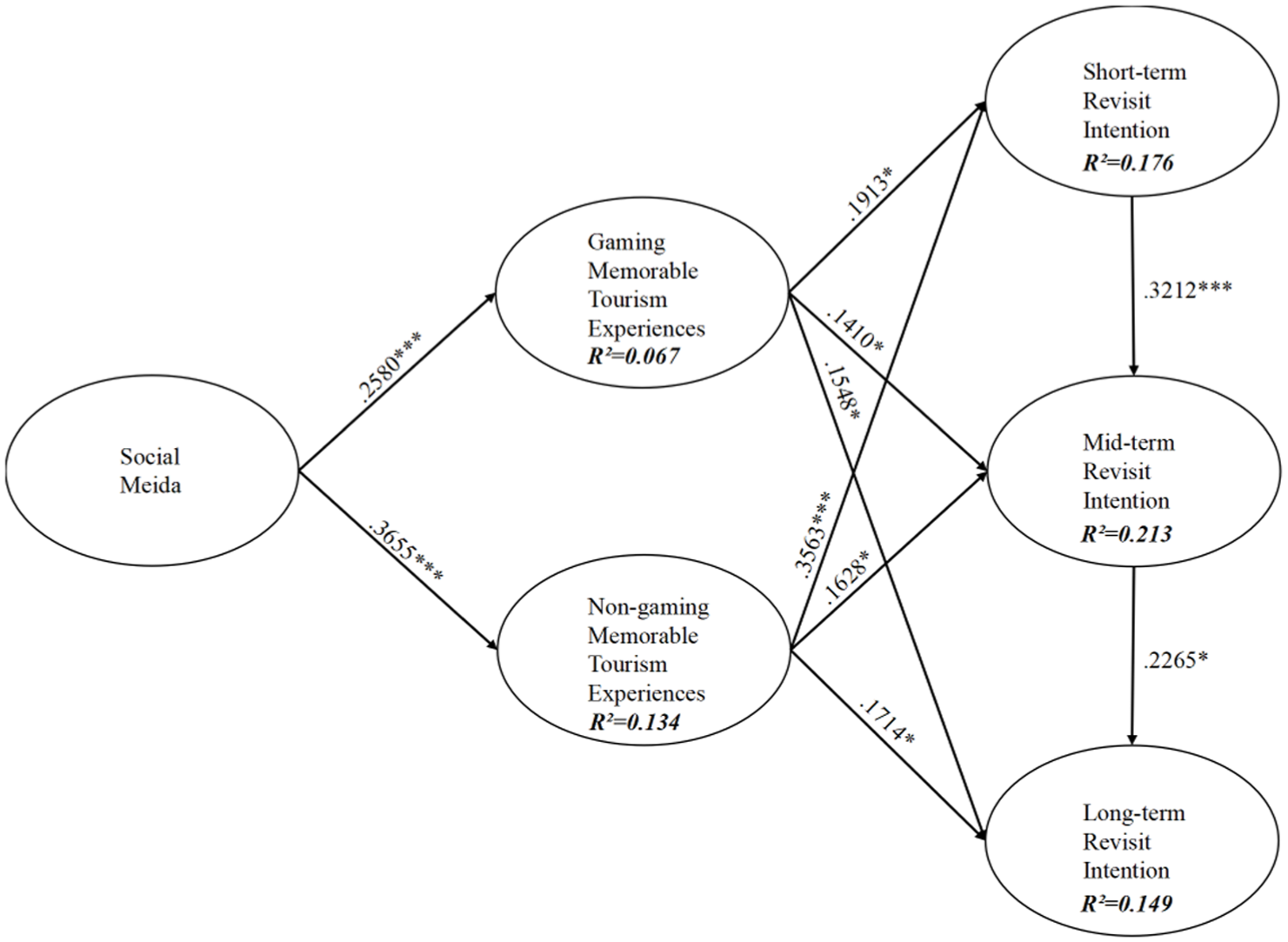
Results of path analysis.
The coefficient of determination, R2 value of short-term revisit intention is .176, indicating that social media, gaming MTEs, non-gaming MTEs explained 17.6% of the variance in short-term revisit intention. The R2 value of mid-term revisit intention is .213, indicating that social media, gaming MTEs, non-gaming MTEs, short-term revisit intention explained 21.3% of the variance in mid-term revisit intention. The R2 value of long-term revisit intention is .149, indicating that social media, gaming MTEs, non-gaming MTEs, short-term, mid-term revisit intention explained 14.9% of the variance in long-term revisit intention.
The moderation hypotheses were then examined. The product-indicator technique was used to evaluate the moderating role of social media on the relation between gaming MTEs and revisit intention as the constructs were reflective. The moderating effect of social media on gaming MTEs and short-term revisit intention has a significant path coefficient (β = .1121, p < .01), as indicated in Table 6(a). As a result, H5a was accepted. The findings indicated that social media has a substantial impact on gaming MTEs and mid-term revisit intention (β = .1312, p < .01), and H5b is also accepted. H5c is supported, because social media has a substantial moderating effect on gaming MTEs and long-term revisit intention (β = .1571, p < .01).
Moderating Effect of Social Media.

p < .05, **p < .01.
In addition, Table 6(b) shows the results of the moderation effect of social media on the relation between non-gaming MTEs and short-term revisit intention is significant (β = .1253, p < .01); the interaction between non-gaming MTEs and mid-term revisit intention is positively moderated by social media (β = .1064, p < .05); the moderating effect of social media on non-gaming MTEs and long-term revisit intention is significant (β = .2042, p < .01). In summary, the hypotheses regarding the moderating effect of social media (H5a–H5f) are all supported.
Figures 4 to 6 demonstrate that the relations between gaming MTEs/non-gaming MTEs and revisit intention are always positive. This relations become stronger when the social media impacts are higher.

Two-way interaction plot to short-term revisit intention (Moderator = social media).

Two-way interaction plot to mid-term revisit intention (Moderator = social media).
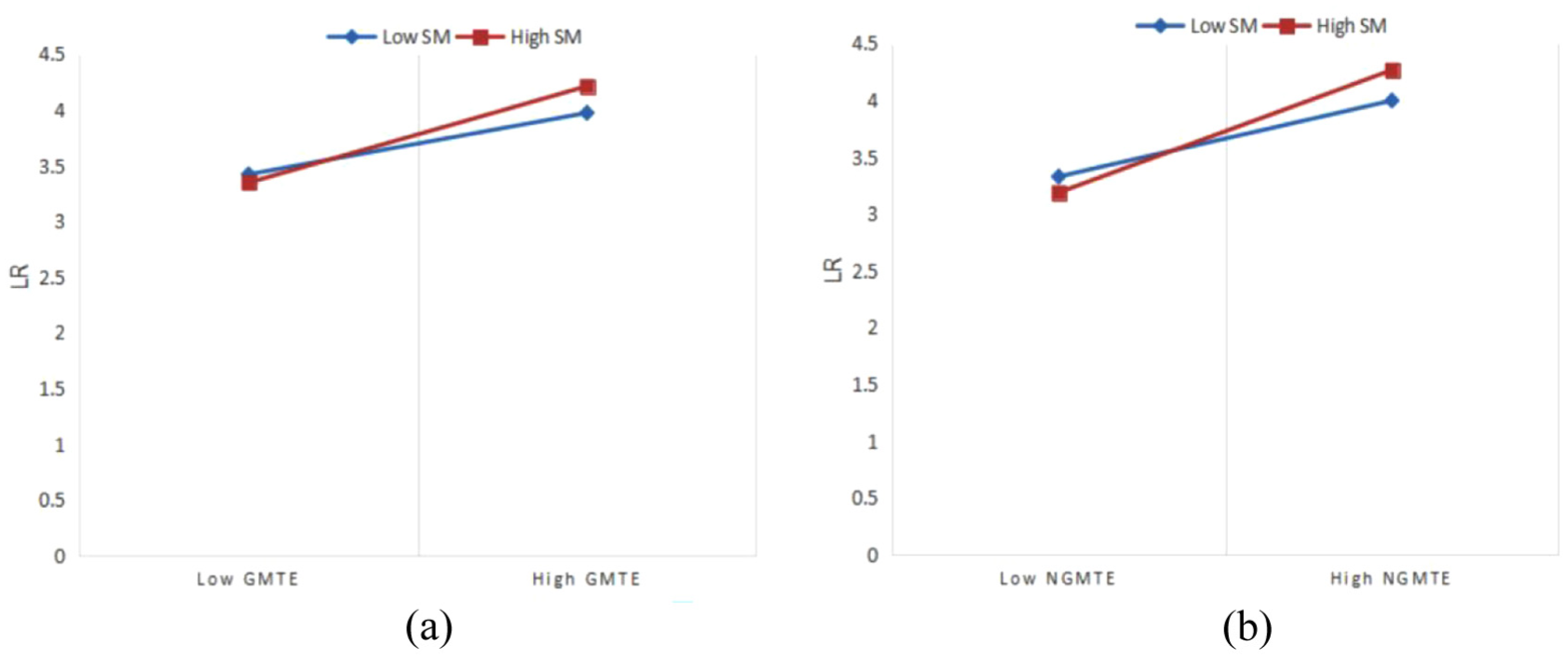
Two-way interaction plot to long-term revisit intention (Moderator = social media).
To determine whether demographic factors influenced the research model, this study tested gender, age, length of stay, education, and job-related control variables. Bootstrapping with a sample of 5,000 was also used to detect possible bias of control variables on research model. The control variables were used to test whether the research hypotheses were supported. The results reveal that the inclusion of control variables did not significantly affect the validity of the research model as Figure 7. Thus, the control variables—gender, age, length of stay, education, and job, do not bias the current outcomes.

Estimation of the research model considering control variables.
The statistical analysis yielded four major findings: (a) Temporal destination revisit intention is significantly influenced by both gaming and non-gaming MTEs, particularly for short-term revisit intention. (b) Non-gaming memorable tourism experiences have more significant and positive effects than gaming memorable tourism experiences on temporal destination revisit intention. (c) The larger the social media interaction effect, the stronger the association between different types of experiences (gaming vs. non-gaming) in gaming destinations on revisit intention. For non-gaming MTEs, this moderating impact is more pronounced. (d) We extend the model by examining the relationship between different temporal revisit intentions. There are significant relationships between short- and mid-term revisit intention, and between mid- and long-term revisit intention in gaming destinations.
Discussion and Conclusion
Theoretical Implications
This study makes several theoretical contributions. First, we emphasizes how social media benefits both gaming MTEs and non-gaming MTEs. Kim et al. (2021) already find that social media positively affects memorable tourism experiences. This study further suggests that social media has a greater impact on non-gaming MTEs than on gaming MTEs. Social Comparison Theory (Festinger, 1954) shows that people are compelled to look from outside images in order to assess their own opinions and abilities. Non-gaming tourism experiences (e.g., sightseeing, cultural trips, adventure travel) are highly visual and socially shareable (Munar & Jacobsen, 2014), making them more susceptible to social comparison. People posting scenic photos, luxury hotels, or exotic destinations to signal status would reinforce the memorability of the experience through external validation (likes, comments; Mittal et al., 2022). In contrast, gaming tourism (e.g., esports events, slot machines games) is often less visually impressive in social media posts and may trigger the same level of envy or admiration, reducing its memorability through social media influence. Furthermore, gaming-related tourism has a more niche audience rather than broadly relatable, limiting the social media appeal. Besides, as Extended-self Theory (Belk, 1988, 2013) states that our possessions that constitute the extended self serve as both a significant determinant and an expression of individual identity. The digital possessions are markers for individual and collective memory, in addition to cues for others to form impressions about ourselves (Belk, 2013). Non-gaming travel experiences can be documented more narratively or through storytelling and people curate their social media to reflect a “traveler” identity. Posting about the scenery places and related activities could construct a desirable self-image, while enhancing memorability. The findings of this study further indicate that social media is one of the most effective ways to diversify Macau’s tourism offerings, as it can make travel experience in Macau more memorable.
Secondly, two antecedents of the revisit intention are examined in gaming destinations: gaming and non-gaming MTEs. Previous research has shown that MTEs are important predictors of revisit intention (H. Zhang et al., 2018). This study further confirms that gaming and non-gaming MTEs are important factors contributing to revisit intention considering time factor. Moreover, the effects of non-gaming MTEs are more significant than those of gaming MTEs on the temporal destination revisit intention, especially from short-term perspective. This empirical evidence is consistent with previous research (Prentice et al., 2022) that different specific experiences have different degrees of influence on customers’ future behavioral responses. However, Wong and Lai (2021) indicate that the impact of gaming MTEs is larger than the impact of non-gaming MTEs on revisit intention. One possible explanation is that the gaming experience is associated with tourists’ winning and losing during gambling (Prentice & Wong, 2015). Although tourists generate MTEs during their gambling activities, revisits may be influenced by gaming results. Hedonic adaptation suggests that people quickly return to a baseline level of happiness after repeated exposure to the same pleasurable stimulus (Frederick & Loewenstein, 1999). Gaming MTEs (e.g., winning at casinos) provide intense but short-lived emotional highs (Kovan, 2025; Kusyszyn, 1984). Over time, gamblers adapt to these experiences, reducing their long-term motivational pull. Non-gaming MTEs (e.g., a Michelin-starred meal, a Cirque du Soleil show) offer varied sensory and emotional stimuli, making them less susceptible to hedonic adaptation. This sustains their appeal for repeat visits. Digital photos and social media posts reinforce memory of experiences (Mittal et al., 2022; Siegel et al., 2023). Non-gaming MTEs (e.g., like Ruins of St. Paul’s) are more shareable than casino wins, which may be kept private due to stigma. Non-gaming MTEs generate more online engagement, extending their psychological impact and reactivating the desire to revisit. Gaming lacks digital memorability, as casino experiences are often solitary or socially restricted (e.g., no photography), weakening their digital reinforcement effect.
Another possible explanation is that tourists may visit casinos for sightseeing or curiosity. Macau’s high-rollers (VIP gamblers) may prioritize gaming experiences, while mass-market tourists are more influenced by non-gaming attractions and activities. Furthermore, this finding aligns with Macau’s government strategy to promote “tourism diversification,” reducing reliance on casinos by enhancing entertainment, MICE (Meetings, Incentives, Conventions, Exhibitions), and cultural tourism. The influence of non-gaming tourism would be increased when visitors to Macau experience the rich and distinctive Western and Chinese cultures. This result supports the Macau government’s “World Center of Tourism and Leisure” vision by emphasizing a balanced tourist ecosystem that goes beyond gambling and by recognizing the government’s advancements in tourism industry diversification.
Thirdly, the results of Macau visitors’ revisit intention show a trend of serial switchers. That is, revisit intention keeps declining with over time. In addition, visitors’ mid-term revisit intention is positively influenced by their short-term revisit intention, and long-term revisit intention is positively influenced by mid-term revisit intention. This is consistent with the findings of (Barnes et al., 2016). Memory has a significant influence on revisit intention, but positive experiences in memory are temporally unstable and diminish with time. Despite significant findings from previous research on MTEs, research on tourists’ long-term memory and its implications for tourists’ future behavior remain rare. According to Behavioral Control Theory (Ajzen, 1991), respondents’ perceptions of their ability to control their behavior may be deteriorating over time. Future uncertainty may possibly be the reason for the finding that revisit intention of visitors to Macau indicates a propensity to be serial switchers.
Finally, the moderation analysis of the study suggests that social media actively supports a moderating effect, promoting the impact of MTEs on temporary destination revisit intention, particularly on long-term destination revisit intention. This finding aligns with L. Su et al. (2021) that social context would increase the value of the traveler’s experience during the travel and post-trip phases, leading to revisit and recommendation intentions. For deferred repeaters, those exhibiting low short-term but high long-term revisit intentions, destination managers should leverage social media’s influence to cultivate and strengthen their loyalty to the destination.
Managerial Implication
The research has important implications for Macau destination management organizations (DMOs), casino operators and marketing professionals to design and implement effective management strategies. First, this study reveals the effect of social media on visitors’ transition from casinos and other physical environments in Macau to temporal destination revisit intention. To increase revisit intention, marketing tools could be tailored to the features of different market segments to further explore and diversify Macau tourism. For example, leisure tourists or unprepared but high-potential marginal cultural tourists can be reached through social media. Marketing professionals could develop a series of posts that highlight Macau’s unique heritage and culture, featuring high-quality visuals of historical sites, festivals, cuisine, and traditions, while using storytelling to share the engaging narratives behind its landmarks and customs. Exposure to relevant and timely information regarding Macau’s heritage and cultural offerings may effectively encourage deeper engagement with the destination’s tourism experiences. Information about Macau tourism on social media can also be presented in a primary and secondary focus based on different market segments. The primary strategy delivers content aligned with the target market’s focus visits, while the secondary strategy stimulates visitors to create subconscious awareness and interest in other activities. These activities can be associated with focus visits, which can provide a richer, more comprehensive tourism package for tourists in Macau. For example, “Did You Know?” posts can be used to spark curiosity (e.g., “Macau’s Senado Square pavement is wave-patterned to mimic Portugal’s streets”).
Social media has a positive effect in creating memorable gaming experiences for Macau travelers, then enhancing their temporal destination revisit intentions. As most places in the world prohibit casinos from promoting and operating their gaming online, social media can be used as an important communication channel by casinos and a way to build relationships with customers. Given that casinos in Macau offer a fun experience that goes far beyond gambling, it is still possible for casino operators to use non-gaming posts to encourage casino visits in the way that creates more access opportunities. Casinos can increase short-term revisit intention by sending exclusive, time-sensitive invites via WeChat/WhatsApp (e.g., “Unlock VIP lounge privileges when you revisit within 30 days - drinks, snacks and premium service”) and providing individualized follow-ups from casino hosts (e.g., “Your VIP table is reserved—come back this weekend, plus a $500 bonus!”). Further encouraging instant repeat visits are gamified social media campaigns like Instagram/TikTok challenges (e.g., “Share your luckiest casino clip for a free chip bonus”). To increase mid-term revisit intention, casinos can use targeted Facebook and Weibo advertisements to promote themed gaming events like the “Macau Poker Championship.” Appeal is further increased by collaborating with influencers to showcase upscale resort experiences, such as Michelin-starred meals and VIP suite visits. Lastly, to cultivate long-term visit intention, casinos should establish elite-tiered rewards programs that provide Diamond members with exclusive benefits like private jet discounts in order to foster long-term loyalty and establish status-driven incentives for return business. In addition, nostalgia marketing efforts can successfully rekindle lapsed visitors’ emotional connection to the area by presenting them with customized anniversary reels that highlight their previous victories and memorable experiences.
Thirdly, the effect of non-gaming MTEs shows more significant results compared with gaming MTEs on temporal destination revisit intention. Local culture and novelty, are two important dimensions in creating MTEs in gaming destinations. Thus, it is essential to design campaigns that showcase Macau as more than a gaming destination by highlighting its cultural richness and creative tourism options to pique interest among travelers. In Asia, there are many gaming destinations other than Macau (e.g., Singapore and Manila) that are also rich in culture and architecture. To maintain its position as a unique and competitive destination, Macau’s DMOs should capitalize on their strengths, particularly in gaming culture and local culture. DMOs can create interactive cultural exhibits, live demonstrations of traditional crafts, and workshops that allow tourists to experience Macau’s unique blend of Portuguese and Chinese heritage. Historical sites can be promoted effectively, by leveraging UNESCO World Heritage sites, for example, A-Ma Temple and Ruins of St. Paul, by offering guided tours that integrate storytelling and cultural insights. Additionally, some cultural festivals can be hosted, such as food festivals featuring Macanese cuisine or traditional music and dance performances to celebrate Macau’s unique identity. On the other hand, Macau can develop its own creative tourism as a strong support for its gaming destination tourism to attract repeated visits. Themed tours that combine gaming with cultural or creative experiences can be designed, such as photography tours of historic gaming venues or art installations within casinos. Some emerging technologies can be integrated, like augmented reality (AR) or virtual reality (VR), to create interactive experiences that allow visitors to explore Macau’s cultural stories in innovative ways.
In addition, this study also shows that Macau visitors’ time-destination revisit intention gradually declines as time length. For tourism marketers, repeated visitors are important to increase revenues and save marketing expenditure for the destination. Short-term revisit intention also serves as a catalyst, fostering both mid- and long-term revisit intentions. Therefore, it is necessary for destinations to focus on tourists’ revisit intention, especially to facilitate their revisit in a shorter period of time. To further boost short-term revisit intention, for example, destination managers should create FOMO, driven “last chance” campaigns featuring limited-time events, seasonal attractions, and location-based AR games (like Pokémon GO), while also encouraging user-generated content through branded hashtag contests and sharing short videos (e.g., TikToks) of the destination that nostalgically remind travelers of their past experiences. Subsequently, by aligning short-term triggers (urgency, discounts), mid-term hooks (new experiences, events), and long-term engagement (emotional branding, loyalty programs), Macao can effectively convert one-time visitors into repeated ones.
Conclusion and Future Research
The current study is the first empirical work to explore the impacts of social media on temporal destination revisit intention from tourists’ gaming and non-gaming MTEs. The results reveal that both gaming and non-gaming MTEs influence short-term revisit intentions, but non-gaming MTEs have a stronger positive impact. Social media interaction amplifies the link between MTEs and revisit intention, especially for non-gaming experiences. Additionally, short-term revisit intention significantly affects mid-term intention, which also influences long-term intention in gaming destinations. Despite the fact that Macau has different types of tourism products such as core, supporting products, this study integrates the impacts of various tourism products, temporal destination revisit intention into one framework.
Several limitations could be addressed for future research. First, the data were collected only from mainland Chinese tourists who visited Macau, which limited the generalizability of the study’s findings. Consideration could be given to replicating this study in Las Vegas or other gaming destinations by collecting data from groups of visitors from different national and cultural backgrounds (e.g., visitors from Western countries). Second, for snowball sampling, researchers use their social networks to establish initial links, then taking effect to capture an expanding chain of participants. The sample is dependent on the researcher’s personal resources and contacts, which may introduce selection biases and lack of generalizability (Biernacki & Waldorf, 1981; Kirchherr et al., 2018). Future studies could adopt a multi-stage stratified sampling design that combines snowball sampling with probabilistic methods to enhance sample representativeness (Wang et al., 2022; Wen et al., 2021). Third, qualitative methodologies such as fuzzy-set Qualitative Comparative Analysis (fsQCA) can be used to mitigate limitations of linear models in capturing causal complexity (Akhshika et al., 2022; Ragin, 2008). Fourth, using a cross-sectional research design, this study failed to capture the dynamic evolution of the relationship between social media, experience and intention. Future research should adopt a longitudinal tracking design. Finally, revisit intentions are multidimensional, and this study selected only two indicators—social media and temporal revisit intentions. Future research should make this framework comprehensive and practical to gain more insights into tourist revisit intention in gaming destinations.
Footnotes
Appendix
Total Variance Explained Table.

| Total variance explained | ||||||
|---|---|---|---|---|---|---|
| Factor Number | Initial eigenvalues | Sum of squared loadings extracted | ||||
| Component | Total | % of Variance | Cumulative % | Total | % of Variance | Cumulative % |
| 1 | 9.841 | 37.849 |
|
9.841 | 37.849 | 37.849 |
| 2 | 4.541 | 17.466 | 55.315 | 4.541 | 17.466 | 55.315 |
| 3 | 1.791 | 6.888 | 62.203 | 1.791 | 6.888 | 62.203 |
| 4 | 1.611 | 6.195 | 68.398 | 1.611 | 6.195 | 68.398 |
| 5 | 1.241 | 4.774 | 73.172 | 1.241 | 4.774 | 73.172 |
| 6 | 1.094 | 4.208 | 77.38 | 1.094 | 4.208 | 77.38 |
| 7 | 0.607 | 2.334 | 79.714 | |||
| 8 | 0.51 | 1.96 | 81.674 | |||
| 9 | 0.461 | 1.771 | 83.446 | |||
| 10 | 0.426 | 1.637 | 85.083 | |||
| 11 | 0.406 | 1.562 | 86.645 | |||
| 12 | 0.367 | 1.412 | 88.057 | |||
| 13 | 0.353 | 1.358 | 89.414 | |||
| 14 | 0.324 | 1.246 | 90.661 | |||
| 15 | 0.313 | 1.203 | 91.864 | |||
| 16 | 0.303 | 1.167 | 93.03 | |||
| 17 | 0.283 | 1.089 | 94.12 | |||
| 18 | 0.267 | 1.027 | 95.146 | |||
| 19 | 0.238 | 0.915 | 96.061 | |||
| 20 | 0.219 | 0.841 | 96.903 | |||
| 21 | 0.181 | 0.698 | 97.601 | |||
| 22 | 0.158 | 0.608 | 98.208 | |||
| 23 | 0.141 | 0.54 | 98.748 | |||
| 24 | 0.126 | 0.484 | 99.233 | |||
| 25 | 0.106 | 0.406 | 99.639 | |||
| 26 | 0.094 | 0.361 | 100 | |||

Ethical Considerations
All procedures involving human participants in this study were performed in accordance with the ethical standards of School of Business, Macau University of Science and Technology.
Consent to Participate
Informed consent was obtained from all individual participants involved in the study.
Author Contributions
Yun Huang: Conceptualization, Investigation, Methodology, Formal Analysis, Writing—Original Draft Preparation, Review & Editing. Yixuan Wang: Conceptualization, Software, Data Curation, statistical analysis, Writing—Original Draft Preparation. Jierong Chen: Resources, Validation, Software, Writing—Original Draft Preparation, Review & Editing.
Funding
The authors received no financial support for the research, authorship, and/or publication of this article.
Declaration of Conflicting Interests
The authors declared no potential conflicts of interest with respect to the research, authorship, and/or publication of this article.
Data Availability Statement
The datasets generated during and/or analyzed during the current study are available from the corresponding author on reasonable request.