



Abstract
This study aims to examine the psychological and contextual determinants of first aid intention among Chinese undergraduate students by integrating constructs from the Protection Motivation Theory (PMT) and the Theory of Planned Behavior (TPB) incorporating two contextual variables—physical education curriculum and first aid literacy—in the proposed model. Using empirical, quantitative and cross-sectional survey method in convenience sampling approach, data were collected from 545 university students across various disciplines using a structured, self-administered online questionnaire. Structural Equation Modeling (SEM) using the covariance-based approach was employed using AMOS 28.0 version to assess the hypothesized relationships. The findings revealed that self-efficacy, response efficacy, perceived severity, attitude, and exposure to the physical education curriculum significantly influenced students’ intention to provide first aid. Response cost exhibited a significant negative effect, while subjective norms showed no statistical significance. Furthermore, both attitude and self-efficacy were found to mediate the relationship between curriculum exposure and first aid intention. Notably, first aid literacy moderated the effects of self-efficacy and perceived severity on behavioral intention, emphasizing its role as a catalyst in transforming knowledge and perception into actionable intent. This study contributes to theoretical discourse by extending PMT and TPB through the inclusion of educational and literacy-related contextual factors. Practically, the findings provide valuable insights for curriculum designers, educators, and policymakers in promoting effective first aid education and fostering a culture of preparedness among students. The research underscores the importance of combining psychological readiness with institutional support to enhance emergency response capacity in higher education settings.
Keywords
Introduction
First aid is widely recognized as a critical life skill essential for reducing morbidity and mortality in emergency situations. In recent years, there has been growing consensus that higher education institutions play a pivotal role in cultivating these competencies among students, who often serve as the first responders in campus-based or community incidents (Chan et al., 2019; Mahmood et al., 2019). In China, this need has gained particular urgency in light of rising health emergencies and calls for increased public health preparedness. As a result, universities are increasingly encouraged to integrate structured first aid education into their curricula, particularly through physical education programs which serve as practical platforms for promoting health-related behaviors (Dalkiliç, 2023; Lu et al., 2020).
University students, especially those aged between 21 and 23 years, are at a crucial developmental stage where behavioral intentions are shaped by cognitive evaluation, social influence, and institutional exposure (Šupínová et al., 2019). Despite the growing emphasis on first aid training within academic settings, research continues to reveal wide disparities in students’ preparedness, skill level, and confidence. While some students have received formal instruction, many have not, leading to inconsistencies in knowledge and behavior, and undermining public safety outcomes (Bashekah et al., 2023; Mahmood et al., 2019). The absence of widespread, standardized training initiatives also results in anxiety, hesitation, and, in some cases, harmful improvised actions during emergencies (Hooper et al., 2019; Nwosu et al., 2022).
To better explain these variations in readiness, it is important to adopt robust theoretical frameworks. Theories such as the Protection Motivation Theory (PMT) and the Theory of Planned Behavior (TPB) have been widely used to explain health-related behaviors like vaccination and smoking cessation (Alahakoon et al., 2022; Bakey et al., 2021). PMT focuses on the individual’s cognitive appraisal of threats and coping capabilities, encompassing constructs such as perceived severity, perceived vulnerability, response efficacy, self-efficacy, and response cost (Floyd et al., 2000; E. M. Rogers, 1983). These constructs are particularly relevant in emergency settings, where decision-making is shaped by perceptions of risk and one’s ability to intervene effectively. TPB emphasizes the role of attitude, subjective norms, and perceived behavioral control in determining behavioral intention (Ajzen, 1991). Together, these models offer a robust conceptual foundation for analyzing first aid readiness.
However, important gaps remain. First, prior studies have generally applied PMT or TPB in isolation, overlooking how cognitive appraisals and motivational–normative processes may interact in shaping readiness to provide first aid (Ma et al., 2025). Second, little research has extended these theories by incorporating contextual factors that reflect the realities of higher education—such as structured exposure to the physical education curriculum and the functional role of first aid literacy (Brown & Lloyd, 2024). Addressing these gaps requires an integrated theoretical model that accounts for both psychological mechanisms and contextual influences.
Beyond theoretical limitations, there is also a notable gap in contextual consideration, especially in the Chinese academic environment. Universities differ widely in the extent and quality of first aid-related training offered through physical education programs (Adewale et al., 2021; Riaz et al., 2020). Even when knowledge is acquired, the ability to act confidently is often hindered by low self-efficacy, lack of procedural clarity, and insufficient first aid literacy (AlYahya et al., 2019; Ataya et al., 2024). These deficiencies highlight the importance of not only what is taught, but how it is taught—and whether students are equipped with the cognitive and informational tools to transfer knowledge into effective action. Unfortunately, much of the existing literature treats behavioral intention as a purely cognitive phenomenon, disregarding the educational pathways that facilitate or impede this transition (Bulduk & Aytekin Özdemir, 2024; Hardy et al., 2021).
This study seeks to bridge the gaps examining how exposure to physical education curricula contributes to the development of both self-efficacy and favorable attitudes toward first aid, and whether these variables serve as mediators between curriculum exposure and behavioral intention. The study also investigates the role of first aid literacy as a potential moderator in strengthening the effects of self-efficacy and perceived severity on students’ willingness to act during emergencies. This study holds multifaceted significance by contributing to both theoretical advancement and practical application in the fields of public health education, behavioral psychology, and emergency preparedness, particularly within the context of higher education in China. From a theoretical perspective, the study provides an important contribution by integrating two well-established models—PMT and the TPB—into a unified framework. While both models have been widely applied in health-related behavior research, few studies have synthesized them to examine first aid intention. By doing so, this research enhances the predictive capability of each theory and introduces a more comprehensive understanding of how cognitive appraisals, perceived social expectations, and motivational factors interact to influence emergency response behavior. Furthermore, the incorporation of contextual variables, such as the physical education curriculum and first aid literacy, expands the theoretical boundaries of both models, offering a more holistic approach to behavioral intention modeling. On a practical level, the study offers evidence-based insights for educators, curriculum developers, and university administrators. The findings will help identify which psychological and structural factors most significantly influence students’ readiness to act in emergencies. The study’s results can inform health and education policymakers in the formulation of standardized curricula that emphasize practical first aid training as a core component of student development.
Literature Review
Insights from Recent Digital Behavior and Motivation Research
Recent digital behavior research offers valuable analogies for understanding first aid intention, as both domains revolve around how cognitive appraisals, emotional states, and contextual conditions drive—or inhibit—action. Network externalities and perceived gratifications. For instance, a study on WeChat found that both network externalities (the value derived from a large user base) and perceived gratifications (information exchange, social approval) significantly predicted continuance intention, explaining over 60% of variance in user engagement (Pang, 2024; Pang et al., 2024). Similarly, first aid readiness is strengthened when participation is seen as socially reinforced and personally rewarding—students are more likely to act if they perceive both peer approval and tangible benefits, such as enhanced social value or recognition.
Social connectivity and system interactivity. Research on short video platforms demonstrated that social connectivity and interactive system features directly enhance continuance intention, with perceived benefits acting as a pivotal moderator (Ahmed & Aziz, 2025). This mirrors the effect of interactive first aid training: students exposed to scenario-based drills or peer-to-peer simulations often report higher confidence and sustained willingness to intervene, as interactivity reduces uncertainty and normalizes helping behaviors.
Service quality, belongingness, and emotional attachment. In mobile social media, service quality has been shown to predict user identification and belongingness, which in turn cultivate emotional attachment and satisfaction (Alam et al., 2024). This dynamic parallels first aid training environments: high-quality, structured instruction not only equips students with technical competence but also builds an emotional bond with the role of “capable helper.” This attachment can transform first aid from a task into a personally meaningful responsibility.
Multidimensional benefits and eWOM engagement. Pang and Zhang (2024) reported that cumulative satisfaction and eWOM were shaped by multidimensional benefits—functional, social, and hedonic. In the same way, first aid intention is not purely functional (knowledge of CPR) but also social (peer respect, community expectation) and hedonic (personal fulfillment). Students who see first aid as providing layered benefits are more likely to develop durable intentions to help in emergencies.
Barriers and cognitive overload. Conversely, negative drivers in digital contexts also resonate with first aid. Studies on cyberbullying and communication overload showed that cognitive strain was a strong predictor of app-switching intentions (Pang et al., 2025). In first aid, response cost plays a similar role: fear of legal liability, embarrassment, or “doing harm” imposes cognitive and emotional strain, discouraging intervention even when ability and knowledge exist. Likewise, findings from Stevic et al. (2025) revealed that depressive mood and self-disclosure patterns predicted problematic app use and reduced academic attainment. Analogously, emotional distress and low readiness during emergencies can suppress the translation of knowledge into action.
Addiction, technostress, and expectancy. Finally, Pang and Wang (2025) demonstrated that mobile app addiction, privacy concerns, and cognitive overload significantly increased perceived technostress, which negatively affected subjective well-being and academic expectancy. In the first aid domain, contextual stressors such as information overload, unclear protocols, or lack of literacy can erode self-efficacy and expectancy, thereby weakening intention to act despite positive attitudes.
Taken together, these studies highlight a common thread: whether in digital engagement or first aid behavior, intention is co-determined by perceived gratifications, emotional readiness, social expectations, and contextual barriers. Just as digital platforms must reduce overload and enhance meaningful benefits to sustain use, first aid education must minimize perceived costs while amplifying efficacy, belongingness, and literacy. This reinforces the need for an integrated framework—such as PMT and TPB enriched with contextual variables—that captures both motivational drivers and situational constraints shaping students’ emergency response intentions.
Theoretical Framework and Hypothesis Development
Protection Motivation Theory
PMT, first conceptualized by R. W. Rogers (1975) and later expanded in 1983, provides a framework for understanding behavior change in response to health threats. The theory posits that individuals assess threats through two primary cognitive appraisals: threat appraisal—which includes perceived severity and perceived vulnerability—and coping appraisal, which encompasses response efficacy, self-efficacy, and response costs (Ataei et al., 2023; Ezati Rad et al., 2021). This dual appraisal system helps predict behavioral responses in contexts such as smoking cessation and vaccination uptake, and it is particularly relevant for first aid behavior. The former includes the perceived severity of the threat and perceived vulnerability to it, while the latter involves perceived response efficacy, self-efficacy, and response cost.
The PMT is well-suited for predicting intentional behavior in high-stakes, low-frequency contexts such as emergency first aid. Unlike routine actions, first aid responses are initiated under pressure and shaped by perceived risk and self-efficacy. PMT captures both motivational drivers (e.g., severity, vulnerability) and cognitive processes (e.g., self-efficacy, cost-benefit analysis), offering a comprehensive lens to understand first aid intentions, especially among individuals with limited exposure to emergencies. Applying PMT helps explain how university students, often inexperienced in crisis situations, assess their ability and readiness to act. Prior research shows that greater threat awareness, such as in skin cancer cases, enhances protective intentions (Bagagnan et al., 2019; Roozbahani et al., 2020). Since emergencies are infrequent, behaviors tend to be reactive, making PMT effective for predicting responses under stress (Loughran et al., 2021). Core PMT constructs—like perceived response efficacy and cost of inaction—are crucial for fostering positive health behaviors (Mullin et al., 2021; Regasa & Akirso, 2019). Educational programs can benefit from PMT by not only delivering first aid knowledge but also enhancing self-efficacy and shaping threat perceptions. Evidence shows that integrating psychological and physical training improves outcomes, relying on both cognitive preparedness and emotional resilience (H.-K. Kim & Han, 2021; Pavoni & Tharris, 2021). Psychological First Aid, when taught by trained laypersons, exemplifies how PMT-informed interventions can boost readiness through targeted cognitive appraisals (Shah et al., 2020).
Perceived Severity
In the context of first aid, when students believe that not administering aid may lead to death or irreversible harm, their motivation to act is likely heightened. Students who perceive emergency situations as critically dangerous are more likely to be motivated to intervene. Recognizing the potential life-threatening nature of emergencies enhances their cognitive urgency and behavioral commitment to act. This aligns with the core principle of PMT that threat intensity is a driver of protection motivation (Milne et al., 2000; Normann & Ramírez, 1993). Recent research (Jovanov et al., 2024; H. Kim & Lee, 2024) indicates that heightened perceptions of severity can significantly enhance individuals’ readiness to intervene during emergencies. For instance, Kim and Lee discussed the influence of perceived severity in behavioral contexts, highlighting its importance in decision-making processes (H. Kim & Lee, 2024). Additionally, Nazione et al. (2020) noted that the perceived severity of a risk could affect individuals' behavioral intentions, further underscoring its role in prompting first aid responses. Therefore, when individuals comprehend the life-threatening implications associated with emergencies, their motivation to provide timely assistance is amplified, supporting the hypothesis:
Response Efficacy
Students who believe that their first aid efforts can make a meaningful difference are more likely to develop the intention to help. This belief reinforces the perceived value of learning and applying first aid skills. If individuals doubt the usefulness of first aid, their motivation to act is diminished, regardless of their training. Research has consistently demonstrated that higher levels of perceived response efficacy increase the likelihood that individuals will intend to engage in first aid behaviors (Ansari-Moghaddam et al., 2021). For instance, studies have shown that individuals who believe their first aid efforts can effectively mitigate harm are more motivated to act (Ansari-Moghaddam et al., 2021; Scholz et al., 2023). Furthermore, in various health and emergency contexts, including flood risk mitigation among college students, the motivational power of response efficacy has been shown to exceed that of self-efficacy—emphasizing that belief in the effectiveness of one’s actions can drive proactive behaviors even in the presence of uncertainty regarding personal capabilities (Rainear & Lin, 2021; Walrave et al., 2020). Additionally, systematic reviews and empirical studies reiterate that perceived response efficacy is consistently linked to intentions to perform protective behaviors across a range of scenarios, highlighting its pivotal role in fostering a proactive approach to health and safety—most significantly in educational settings where first aid training is deemed essential for enhancing preparedness (De Buck et al., 2015; Mohajervatan et al., 2020) and increasing the likelihood of action in emergencies (Huy et al., 2022).
Response Cost
In first aid contexts, response cost could involve fear of doing harm, legal concerns, or fear of embarrassment. High perceived costs—such as fear of making mistakes or facing legal repercussions—can override positive motivations to act. When students anticipate significant drawbacks, their likelihood of helping decreases. Effective first aid programs must therefore address not only the benefits but also the perceived risks of intervention. Research has demonstrated that when individuals foresee substantial drawbacks, such as fears of liability or inadequate skills, their likelihood of assisting diminishes, even in contexts where they could feel sufficiently empowered (Cooper et al., 2020). This concept aligns with earlier findings that emphasize the detrimental impact of perceived costs on motivation and intentions, with theories like the Health Belief Model suggesting that perceived risks can dynamically interact with self-efficacy and other psychosocial variables (Joseph et al., 1987; Yzer et al., 1998). Consequently, effective first aid training and programs need to not only highlight the potential benefits of intervention but also explicitly address and mitigate these perceived risks, creating a supportive framework that encourages active participation in life-saving actions (Gilat & Reshef, 2014; Smith & Stasson, 2000).
Self-Efficacy
In first aid situations, self-efficacy reflects one’s belief that they can remember, apply, and sustain the correct procedures. Students who are confident in their ability to provide first aid are significantly more likely to develop behavioral intentions to do so. Research indicates that higher self-efficacy correlates with increased willingness to learn necessary knowledge and skills for effective first aid application (Can & Bayer, 2023; Pei et al., 2019). For instance, a study on nursing students showed that self-efficacy is positively correlated with their attitudes and readiness to engage in first aid actions during emergencies (Pei et al., 2019). Similarly, self-efficacy has been identified as a critical predictor within the PMT framework, where it enhances the individual’s confidence and reinforces their motivation to act in protective health behaviors (Little et al., 2023; Okuhara et al., 2020). Moreover, interventions designed to boost self-efficacy, such as first aid training, have proven effective in enabling individuals to respond confidently during emergencies, thereby increasing their likelihood of providing assistance during critical incidents (Ho et al., 2022; Huy et al., 2022). These findings collectively underscore the proposition that self-efficacy plays a pivotal role in fostering intentions to engage in first aid, aligning with the hypothesis that self-efficacy positively influences first aid intention (Can & Bayer, 2023; Karima et al., 2019).
Theory of Planned Behavior
The TPB, developed by Ajzen (1991), remains a significant framework in social psychology for predicting and understanding intentional behaviors across various domains, including health, education, and emergency care. TPB posits that an individual’s intention to engage in a behavior is influenced by three primary components: attitudes, subjective norms, and perceived behavioral control (PBC). Attitudes refer to the personal evaluation of the behavior, subjective norms encompass perceived social pressures to perform the behavior, and PBC relates to an individual’s perception of their ability to carry out the behavior effectively (Li et al., 2021; Yastica et al., 2020).
In the context of first aid training and application among students, TPB offers a pertinent lens through which the motivational antecedents of behavioral intention can be examined. TPB has been widely applied across diverse domains including health behavior, education, environmental action, and safety compliance. It is particularly well-suited for studying volitional behaviors, such as performing first aid, where intention serves as a strong predictor of actual conduct (Buckley et al., 2020; Rustagi et al., 2021). Since first aid application often relies on individual decision-making in real-time, TPB provides a relevant lens to understand the motivational antecedents of such behavior. This study adopts selected constructs from TPB to understand how students’ attitudes and perceived social expectations shape their intention to perform first aid. TPB is particularly relevant because it focuses on intentional behavior in specific contexts, aligning well with first aid actions that are planned yet situationally triggered. Thus, the TPB framework effectively mirrors the cognitive processes at play, emphasizing the significance of a supportive educational environment in nurturing these behaviors (Abutaleb et al., 2022; Li et al., 2021).
Focusing on attitudes and subjective norms within this study aligns with research suggesting that these constructs are immediate predictors of intention and, consequently, behavior (Simatupang et al., 2022; Subekhi & Ratnasari, 2018). This selective application enables a focused investigation into how students evaluate first aid behavior and perceive its social desirability, both of which are highly modifiable through education and outreach. While Perceived Behavioral Control (PBC) is a fundamental component of TPB, its omission from this study stems from its overlap with self-efficacy concepts found in the Protection Motivation Theory (PMT). Including both constructs could introduce redundancy and multicollinearity, complicating the analysis (Figure 1). Instead, by focusing on attitudes and subjective norms, the study maintains theoretical clarity and coherence, concentrating on the cognitive-behavioral predictors relevant to first aid situations (Buckley et al., 2020).
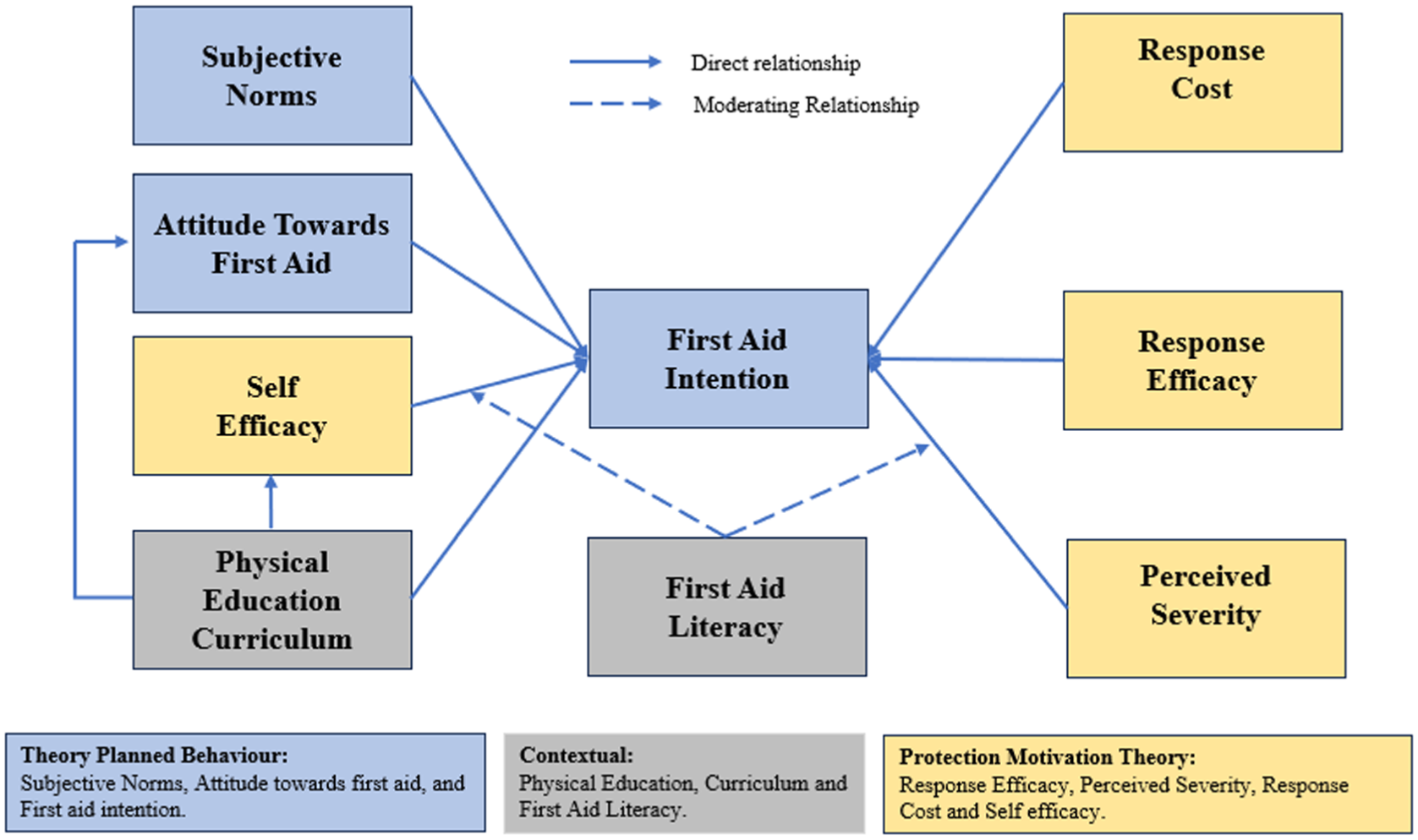
Conceptual framework.
Attitude Toward First Aid
A favorable attitude can stem from personal beliefs about the usefulness, satisfaction, or social responsibility associated with first aid. Research has consistently demonstrated that when university students possess a positive attitude toward first aid—characterized by beliefs in its utility, societal relevance, and personal satisfaction—they are more inclined to express a willingness to act in emergency situations. The perception of first aid as meaningful and impactful enhances students’ motivation and commitment, which is crucial for engagement in skill-based tasks; a positive disposition can act as an initial catalyst for behavioral change, particularly in contexts where actions are voluntary (Bashekah et al., 2023). This aligns with broader findings across health domains, demonstrating that attitudes are robust predictors of intentions towards safety-related actions, such as vaccination and preventive behaviors (Stout et al., 2020). When students view first aid as a socially responsible behavior, they are not just likely to intend to act; they are also empowered to perform in real-life situations, demonstrating that supportive attitudes lay the groundwork for practical emergency responses (Paharudin et al., 2022). Thus, it is posited that positive attitudes toward first aid are vital in shaping students’ intentions to engage in assisting others in emergencies, thereby supporting the hypothesis:
Subjective Norms
In the case of first aid, subjective norms reflect the extent to which students believe that important others—such as friends, family, peers, or instructors—approve of and expect them to know and perform first aid. The TPB suggests that subjective norms, which encapsulate the perceived social pressures from significant others, significantly influence behavioral intentions (Nursanti & Ellina, 2022). When individuals, particularly university students, recognize that their peers or authoritative figures expect them to be proficient in first aid, they are more inclined to internalize these expectations, thus fostering a stronger intention to engage in such training and to act in emergency situations (Niemiec et al., 2020). This phenomenon is even more pronounced in collectivist cultures, where group cohesion and peer acceptance are crucial to personal identity development, signifying that social reinforcement can act as a catalyst for proactive behavior in youth (Pham et al., 2023). Empirical research supports the assertion that subjective norms positively correlate with various intentions, including health-related behaviors, and demonstrates that they function effectively alongside individual attitudes and perceived behavioral controls (Fouad, 2021; Rochelle & Ng, 2022). When individuals perceive that people, they value expect them to be first aid capable, they are more likely to align their behavior with these expectations (Huang & Chang, 2020; Nukpezah & Soujaa, 2018).
The Role of Contextual Factors in First Aid Intention
While cognitive and motivational theories like PMT and TPB explain the internal processes leading to health-related behaviors, they often underrepresent the external contextual factors that enable or constrain these behaviors. In this study, we incorporate two critical real-world variables—Physical Education Curriculum and First Aid Literacy—as influential factors that shape students’ cognitive appraisals and behavioral readiness.
Physical Education Curriculum
The Physical Education (PE) Curriculum is conceptualized as a formal, institutional platform through which students are introduced to essential health and safety knowledge, including first aid. In many educational systems, PE serves not only physical development goals but also promotes life-saving competencies such as CPR, injury management, and health risk awareness. Existing research has shown that structured, curriculum-based interventions are effective in improving students’ confidence (self-efficacy), shaping positive attitudes, and promoting responsible behavior (UNESCO, 2015). Yet, little empirical work has linked PE curricula directly to behavioral intentions concerning emergency response. This study addresses that gap by examining how first aid-related instruction within PE courses shapes the psychological pathways (attitude and self-efficacy) and behavioral outcomes (intention to perform first aid).
Participation in structured, curriculum-based first aid training within physical education significantly enhances students’ perceived capability, fosters positive attitudes, and strengthens their behavioral intention to act in emergencies. Practical instruction delivered through scenario-based simulations, peer-led activities, and guided practice allows students to internalize essential competencies while building the confidence needed to apply them under pressure (Cheng & Guo, 2021; Ho et al., 2022). As students experience success in controlled learning environments, their self-efficacy improves, promoting a belief in their ability to intervene effectively during real-life incidents. Simultaneously, exposure to first aid concepts in an engaging, interactive format cultivates positive attitudes, as students begin to see first aid not only as a skill but as a meaningful and socially responsible behavior (Yılmaz, 2024; Yuksel et al., 2022).
Furthermore, the curriculum contributes to a direct increase in behavioral intention by creating a sense of urgency and personal responsibility, encouraging students to view first aid response as a normative and expected action in emergency contexts (Abdelmalik et al., 2022; El-Far et al., 2022). Studies have shown that individuals who participate in such programs are more likely to express readiness and motivation to help, even when under emotional or time constraints (Can & Bayer, 2023; Manshi et al., 2024). The normalization of first aid behaviors through repeated exposure and reinforcement in the PE setting fosters habitual preparedness and enhances real-world application, validating the link to intention. Therefore, the integration of comprehensive first aid training into physical education serves not only as a skill-building exercise but as a transformative educational strategy that simultaneously improves self-efficacy, attitude, and intention to perform first aid.
Mediation
by Attitude and Self-Efficacy
Educational exposure through the physical education curriculum not only enhances students’ knowledge of first aid but also shapes their psychological readiness by improving attitudes and self-efficacy—two critical mediators linking instruction to behavioral intention. A curriculum that incorporates hands-on, scenario-based learning fosters positive attitudes by making the experience relevant, emotionally engaging, and socially meaningful, which, in turn, increases students’ willingness to act in emergencies (Abdelmalik et al., 2022; Sheng et al., 2022). At the same time, structured practical training strengthens self-efficacy, enabling students to feel competent and confident in their ability to apply life-saving techniques, a key factor in bridging the gap between education and action (Cui et al., 2022; Lao et al., 2021). These mediating mechanisms reflect how affective and cognitive processes transform curriculum-based learning into behavioral motivation. Therefore, both attitude and self-efficacy serve as essential pathways through which physical education influences first aid intention.
First
Aid Literacy-Moderation
First Aid Literacy is an adaptation of the broader concept of health literacy—defined as the ability to access, understand, and use information to make informed health decisions (Nutbeam, 2000; Sørensen et al., 2012). In the context of this study, it refers to a student’s ability to interpret first aid instructions, critically assess emergencies, and communicate or apply life-saving techniques. Unlike general knowledge or attitude, literacy implies a functional capacity that interacts with psychological constructs. For instance, even if a student feels confident in their ability (self-efficacy) or recognizes the severity of an emergency, limited literacy may inhibit appropriate response. Therefore, literacy is tested in this model as a moderator, influencing the strength of associations between cognitive predictors and behavioral intention.
Students’ ability to translate confidence and threat awareness into action is significantly enhanced by their level of first aid literacy, which provides the functional understanding necessary to interpret emergencies and apply appropriate responses. Self-efficacy equips individuals with confidence, but high literacy ensures this confidence is not weakened by misinterpretation, overload, or unclear procedures (Cheng & Guo, 2021; Ge et al., 2022). Similarly, when individuals perceive an emergency as severe, their motivation to act is intensified only if they possess the literacy required to decode signs, assess urgency, and follow proper protocols (Barnett et al., 2012; Park & Oh, 2023). Literacy serves as a critical moderator, amplifying the effects of both self-efficacy and perceived severity on first aid intention by transforming abstract preparedness and emotional response into practical, informed action. Thus, integrating literacy-enhancing elements—such as scenario-based learning, periodic refreshers, and simplified first aid content—into educational frameworks is vital for converting knowledge and perception into meaningful emergency behavior.
Research Methodology
Sample and Population
The target population for this study comprises undergraduate students (public and private universities) enrolled in higher education institutions in China. This demographic was selected due to its relevance in the context of first aid education and its potential role in community-level emergency response. University students are at a critical developmental stage where behavioral intentions, health attitudes, and life skills are actively formed and internalized. Moreover, they frequently participate in structured academic programs, such as physical education, which serve as key platforms for first aid training. Given their accessibility to formal instruction and their likelihood of encountering peer-related emergencies in academic or social settings, this group represents an ideal population for examining the cognitive, educational, and contextual factors influencing first aid intention. The study’s focus on this population aligns with public health priorities that advocate for the inclusion of life-saving competencies within youth education frameworks to enhance community preparedness and safety outcomes.
Hebei Province was chosen as the sampling location due to its representativeness of China’s diverse higher education landscape, which includes large public institutions as well as smaller private colleges. It also offered practical accessibility for the research team, facilitating communication with institutions and student associations. While the use of a convenience sampling strategy limits strict generalizability, the diversity of respondents across universities within the province helps mitigate concerns of homogeneity and ensures coverage of students with varying academic and socioeconomic backgrounds.
Given the difficulty in determining the exact number of students enrolled across institutions, this study adopted a non-probability convenience sampling approach to access participants efficiently. To determine the minimum required sample size for statistical analysis, the G*Power software was employed, a widely recognized tool for conducting power analysis in social science research (Faul et al., 2007). Based on a medium effect size of 0.15, a power level of 0.95, and a model including eight predictor variables, the recommended minimum sample size was calculated to be 160 respondents. In practice, the study exceeded this requirement by collecting a total of 545 valid responses through an online self-administered survey. This exceeds the threshold proposed by Hair et al. (2021), who suggest that a minimum sample size of 200 is adequate for applying structural equation modeling (SEM) techniques. The final sample size thus ensured sufficient statistical power and robustness for conducting the proposed multivariate analyses.
Data Collection Method
Data for this study were collected through a structured, self-administered online survey distributed to undergraduate students across various universities in Hebei Province, China. An online platform was selected as the primary mode of distribution to facilitate broad outreach and ensure accessibility for participants regardless of geographic location. The questionnaire was developed using the WJX survey platform and disseminated via institutional mailing lists, student forums, and academic social media groups.
Prior to the full-scale distribution, the instrument underwent a pilot test with 30 respondents to evaluate item clarity, language appropriateness, and technical accuracy. Feedback highlighted minor issues in translation precision and item sequencing; these were revised before launching the final survey.
Participation was entirely voluntary, and respondents were assured of anonymity and confidentiality. To minimize social desirability bias and encourage honest responses, no identifying information was collected. Ethical approval for the study was obtained from Research Ethics Committee, confirming compliance with institutional guidelines for human subject research. Participants were provided with an informed consent statement outlining the study’s purpose, confidentiality, and withdrawal rights before proceeding with the survey.
To ensure data quality, responses were carefully screened. Cases with more than 20% missing values, straight-lining patterns, or completion times less than half the median duration were excluded. After cleaning, 545 valid responses were retained for analysis. The online data collection period spanned approximately 4 weeks, during which follow-up reminders were sent to maximize participation.
Instruments
This study employed a structured, self-administered questionnaire to measure the constructs of interest, all of which were adapted from validated scales in prior literature to ensure content validity and contextual relevance. The survey instrument was organized into two primary sections. Section A gathered respondents’ demographic information, while Section B consisted of measurement items corresponding to the theoretical constructs under investigation (see Appendix 1).
Each construct was measured using multiple items derived or adapted from established sources. First Aid Intention items were drawn from behavioral intention scales rooted in the Theory of Planned Behavior (Fishbein & Ajzen, 2011). Attitude Toward First Aid and Social Norms were similarly grounded in TPB, with items adapted from Ajzen (1991) and Fishbein and Ajzen (2011). The Self-Efficacy construct was assessed using items modified from the General Self-Efficacy Scale by Schwarzer and Jerusalem (1995). Key variables from the Protection Motivation Theory (PMT) were also integrated. Perceived Severity and Perceived Vulnerability were measured based on adaptations from E. M. Rogers (1983) and Milne et al. (2000), while Response Efficacy and Response Cost followed formats found in Floyd et al. (2000) and Plotnikoff et al. (2010), respectively. The contextual construct, Physical Education Curriculum, was operationalized using items tailored from prior curriculum evaluation studies, emphasizing exposure to first aid training in educational settings. Meanwhile, First Aid Literacy was assessed using adapted items from the health literacy frameworks proposed by Nutbeam (2000) and Sørensen et al. (2012), capturing students’ ability to access, interpret, and apply first aid information effectively.
All items were rated on a five-point Likert scale, ranging from 1 = Strongly Disagree to 5 = Strongly Agree, to capture respondents’ level of agreement with each statement. The original English version of the questionnaire was professionally translated into Mandarin Chinese, followed by a back-translation process conducted by bilingual experts to ensure linguistic accuracy and conceptual equivalence. This process minimized cultural and semantic biases, strengthening the reliability of the survey instrument.
Common Method Bias
To assess the potential influence of common method bias, Harman’s single-factor test was performed by conducting an exploratory factor analysis on all measurement items. According to Harman (1976), if a single factor emerges or if one factor accounts for more than 50% of the total variance, it may indicate the presence of common method variance. In this study, the first unrotated factor accounted for only 33.62% of the total variance, which is well below the critical threshold, suggesting that common method bias is unlikely to be a serious issue. Additionally, inter-construct correlations were examined, as extremely high correlations (i.e., ≥ .90) may signal method bias (Podsakoff et al., 2012). The highest correlation observed was .789, further confirming that common method bias is not a significant concern in this dataset. These findings align with the recommendations of Ali et al. (2020), supporting the validity of the data collection procedure and the integrity of the measured constructs.
Data Analysis Method
This study utilized Structural Equation Modeling (SEM) as the primary analytical technique to assess both the measurement and structural components of the research framework, in alignment with the two-step approach proposed by Anderson and Gerbing (1988). The measurement model was first evaluated to establish the validity and reliability of the latent constructs in relation to their observed indicators. Subsequently, the structural model was employed to examine the hypothesized relationships among the study variables.
To perform the initial analysis, including reliability tests and normality checks (via skewness and kurtosis), SPSS version 25.0 was used. The primary path analysis and structural testing were conducted using AMOS version 28.0, applying the Covariance-Based SEM (CB-SEM) approach. The selection of CB-SEM was guided by its strong compatibility with theory-driven frameworks, as well as its capacity to provide robust model fit indices, manage measurement errors, and evaluate complex interrelationships among latent constructs. Importantly, CB-SEM is well-suited for datasets that meet assumptions of multivariate normality, which was confirmed in this study through the distribution analysis. This approach also enabled simultaneous testing of direct, indirect, and moderating effects, ensuring a comprehensive and methodologically sound evaluation of the proposed conceptual model.
Results and Analysis
Demographic Profile
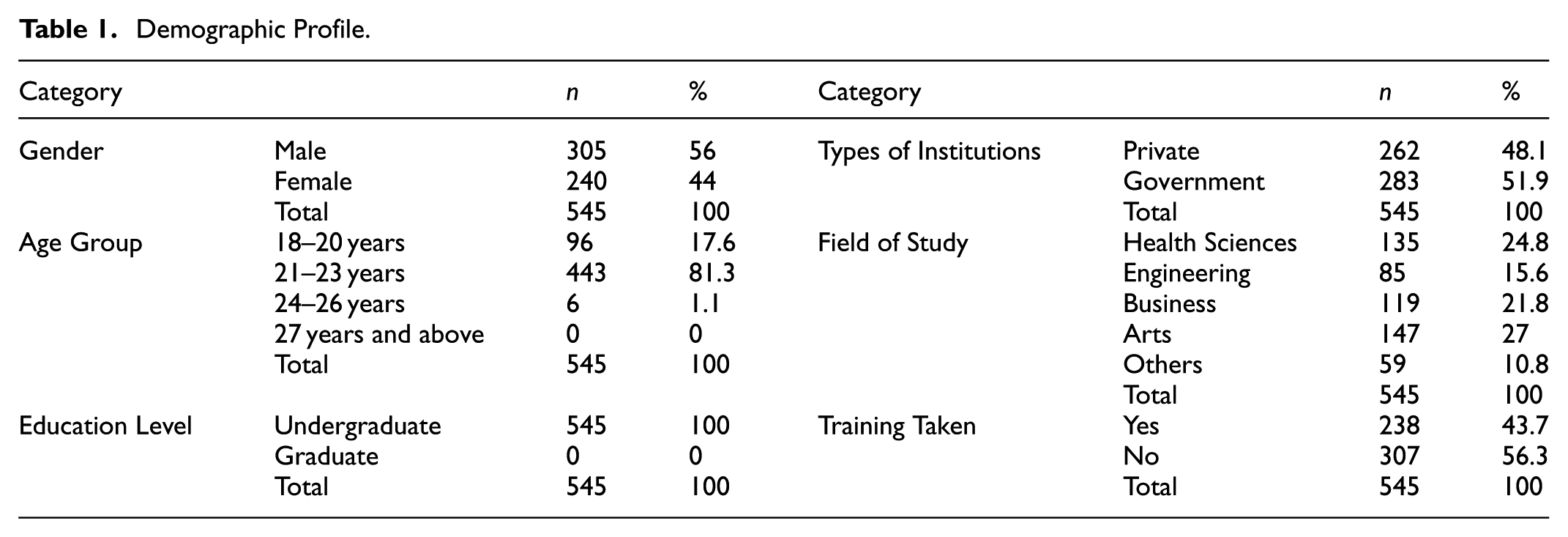
The demographic distribution of the 545 respondents provides a comprehensive representation of undergraduate university students in China. As shown in Table 1, the sample consisted of 305 males (56.0%) and 240 females (44.0%), reflecting a fairly balanced gender composition. This distribution supports the generalizability of the findings across male and female student populations in the context of first aid intention and training exposure. In terms of age, the majority of participants (81.3%) fell within the 21 to 23 years age group, while 17.6% were between 18 and 20 years, and a small proportion (1.1%) were aged 24 to 26 years. No respondents were aged 27 or above. This age range is consistent with the expected distribution of undergraduate students, confirming the relevance of the sample to the study’s target population. Regarding the type of educational institution, 51.9% of respondents were enrolled in government-funded universities, while 48.1% attended private institutions. This nearly equal split provides a balanced perspective on the influence of institutional environment on students’ exposure to first aid education and physical education curricula. The field of study was diverse, with participants from Health Sciences (24.8%), Arts (27.0%), Business (21.8%), Engineering (15.6%), and other disciplines (10.8%). This cross-disciplinary representation enriches the data by capturing varied educational experiences, which may influence students’ attitudes, perceived preparedness, and behavioral intentions regarding first aid. All participants were enrolled in undergraduate programs, aligning with the study’s target population and ensuring consistency in academic level. Furthermore, 43.7% of respondents reported having previous first aid training, while 56.3% had not received any formal training. This variation in training experience is critical for analyzing differences in self-efficacy, attitude, and first aid intention, as these constructs may be shaped by direct exposure to life-saving education.
Demographic Profile.
Measurement Model
Construct Reliability and Validity
To validate the robustness of the proposed measurement model, Confirmatory Factor Analysis (CFA) was employed, focusing on both reliability and validity aspects of the constructs. As shown in Table 2, Cronbach’s alpha coefficients ranged from .820 to .898, all of which exceeded the accepted minimum of .70, demonstrating satisfactory internal consistency among the indicators. Similarly, Composite Reliability (CR) scores ranged from .845 to .904, further confirming the stability and reliability of the measurement scales (Fornell & Larcker, 1981).
Factor Loadings and Reliability Statistics.
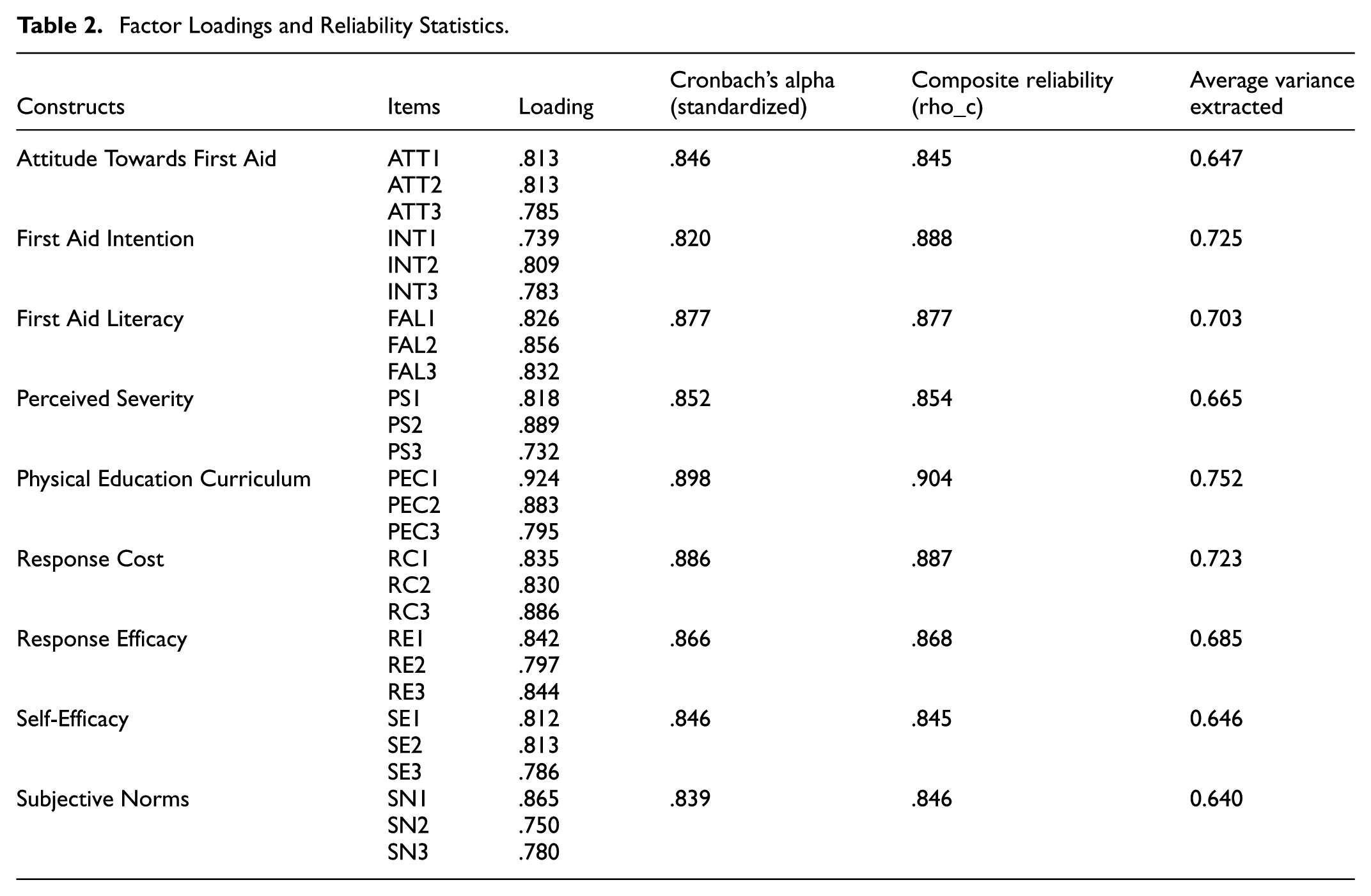
Each construct’s indicators displayed standardized outer loadings well above the 0.70 threshold, ensuring that each item made a significant contribution to its respective latent variable and supported the construct’s reliability.
Convergent validity was also examined by evaluating the Average Variance Extracted (AVE) values and indicator loadings. All items loaded significantly on their intended constructs, with values consistently exceeding 0.70. Furthermore, the AVE values ranged from 0.640 to 0.752, which are above the recommended 0.50 benchmark (Hair et al., 2021). These results confirm that the indicators collectively explain a substantial proportion of variance in their respective constructs, thus verifying the presence of convergent validity.
Discriminant Validity
To assess the distinctiveness of the constructs, discriminant validity was evaluated through both the Fornell-Larcker criterion and the Heterotrait-Monotrait Ratio (HTMT). According to the Fornell-Larcker approach, the square root of the Average Variance Extracted (AVE) for each construct should be greater than its correlation with other constructs. As shown in Table 3, this condition was satisfied for all constructs, indicating that each latent variable is more strongly associated with its own indicators than with those of other constructs. This confirms that the constructs are empirically distinct (Fornell & Larcker, 1981).
Validity, Normality and Multicollinearity Test.

Furthermore, the HTMT values—which offer a more rigorous assessment of discriminant validity—were examined. All HTMT coefficients remained well below the conservative threshold of 0.85 and the liberal threshold of 0.90, as recommended by Henseler et al. (2014). These results further reinforce the discriminant validity of the constructs, suggesting that each construct captures unique aspects of the conceptual framework and is not redundant with others.
Data Normality
The normality of the data was evaluated using descriptive statistics including mean, standard deviation, skewness, and kurtosis for each variable. As illustrated in Table 3, skewness values ranged between −0.780 and 0.108, while kurtosis values fell between −1.297 and 1.595. Both metrics are within the commonly accepted thresholds of ±3 and ±10, indicating that the dataset conforms to normal distribution assumptions (Kline, 2014). This ensures the appropriateness of using parametric statistical analyses in subsequent model testing.
Multicollinearity Assessment
To evaluate whether multicollinearity existed among the independent variables, the Variance Inflation Factor (VIF) was assessed—an established diagnostic tool recommended in regression and structural modeling literature (Kleinbaum et al., 2013). As presented in Table 3, all VIF values ranged between 1.093 and 3.142, substantially below the commonly accepted cut-off point of 10. These results suggest that the explanatory variables are not excessively correlated, thereby confirming that multicollinearity does not pose a threat to the validity of the structural model.
Coefficient of Determination (R2)
The predictive relevance of the structural model was examined through the coefficient of determination (R2) values for the endogenous constructs. According to Falk and Miller (1992), an R2 value of 0.10 or greater is sufficient to demonstrate meaningful explanatory power. Moreover, Cohen (1992) suggests that R2 values of 0.26 or above reflect a substantial effect, 0.13 to 0.25 indicates a moderate effect, while values below 0.13 are considered weak.
In this study, the R2 values reported for the endogenous variables are as follows: Attitude Toward First Aid (0.804), First Aid Intention (0.691), and Self-Efficacy (0.551). These results clearly surpass the minimum threshold and fall within the substantial effect range, indicating strong explanatory capability. Thus, the model demonstrates a robust capacity to explain variance in the key outcome variables, supporting its predictive validity and structural soundness.
Model Fit Assessment
To assess the adequacy of the measurement model, Confirmatory Factor Analysis (CFA) was performed using a range of established model fit indices. As outlined in Table 4, all fit values fell within the acceptable thresholds recommended in the literature. The chi-square to degrees of freedom ratio (χ2/df) was 1.630, indicating an excellent fit, as values below 3 are considered acceptable (Holbert & Stephenson, 2002).
Results of CFA and Structural Model.
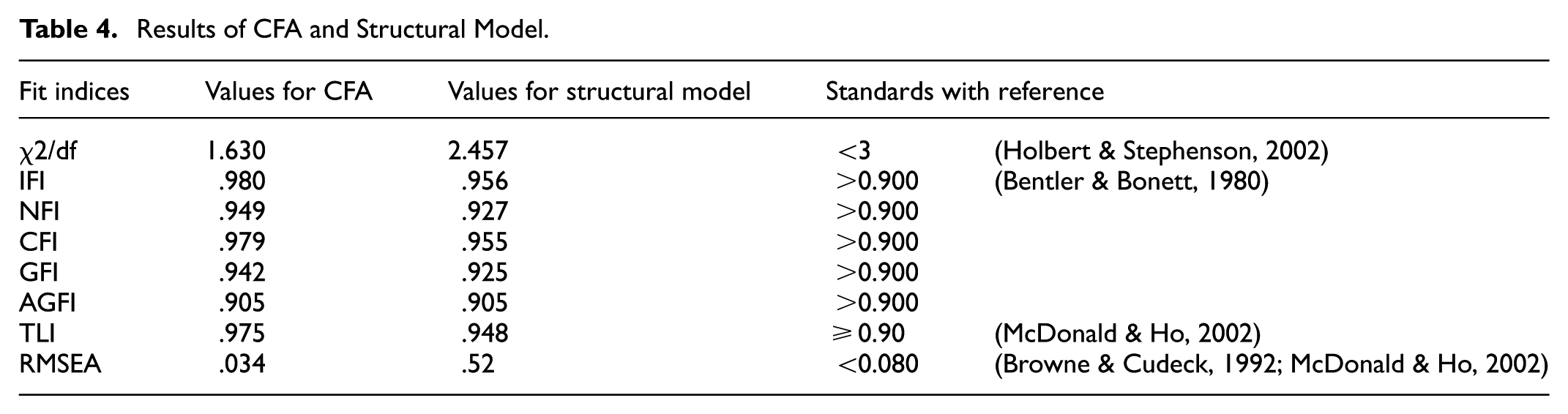
Additional indices further confirmed the model’s robustness. The Incremental Fit Index (IFI = 0.980), Normed Fit Index (NFI = 0.949), Comparative Fit Index (CFI = 0.979), and Goodness-of-Fit Index (GFI = 0.942) all exceeded the recommended benchmark of 0.90 (Bentler & Bonett, 1980). Moreover, the Tucker-Lewis Index (TLI = 0.975) and Adjusted Goodness-of-Fit Index (AGFI = 0.905) also met or surpassed the acceptable cut-off point of 0.90 (McDonald & Ho, 2002). The Root Mean Square Error of Approximation (RMSEA = 0.034) was well below the maximum limit of 0.08 (Bagozzi & Yi, 1988), indicating minimal error of approximation. Collectively, these findings demonstrate a strong model fit and validate the appropriateness of the measurement model.
Structural Model Evaluation
Following the satisfactory results from CFA, the structural model was tested to evaluate the relationships among latent constructs (Figure 2). The model’s overall fit was assessed using the same suite of goodness-of-fit indices. As presented in Table 4, the χ2/df value was 2.457, which still meets the accepted threshold of less than 3, indicating reasonable model fit (Holbert & Stephenson, 2002). Key indicators of structural model adequacy were again observed: IFI (0.956), NFI (0.927), CFI (0.955), and GFI (0.925), all exceeded the 0.90 benchmark. The TLI (0.948) and AGFI (0.905) reinforced the overall strength of the model, as each surpassed the minimum recommended values for a well-fitting model (McDonald & Ho, 2002). Finally, the RMSEA score of 0.052 remained within the acceptable range (< 0.08), signifying minimal error and confirming the model's suitability (Bagozzi & Yi, 1988; Browne & Cudeck, 1992). These results collectively validate the proposed structural model and support its effectiveness in explaining the hypothesized relationships among constructs.

Structural model.
Direct Effect Analysis
The direct effects analysis revealed that Physical Education Curriculum had a statistically significant and positive impact on both Attitude Toward First Aid (β = .897, t = 21.210, p < .001) and Self-Efficacy (β = .742, t = 16.036, p < .001), supporting the respective hypotheses (Table 5). In turn, Attitude Toward First Aid significantly influenced First Aid Intention (β = .342, t = 2.932, p = .003), as did Response Efficacy (β = .078, t = 2.091, p = .037) and Self-Efficacy (β = .133, t = 2.152, p = .031). Conversely, Response Cost showed a significant negative relationship with First Aid Intention (β = −.102, t = −2.842, p = .004), confirming its role as a deterrent. Additionally, Perceived Severity had a strong and statistically significant positive effect (β = .148, t = 3.920, p < .001). However, the relationship between Subjective Norms and First Aid Intention (β = .088, t = 2.321, p = .020) was also statistically significant and therefore supported.
Structural Model and Hypothesis Testing Results.

Mediation Analysis
Mediation effects were tested to determine whether the influence of the Physical Education Curriculum on First Aid Intention was transmitted through intermediate variables. The indirect effect of the Physical Education Curriculum
Moderation Analysis
Moderating effects were examined by testing interaction terms. First Aid Literacy was found to significantly moderate the relationship between Self-Efficacy and First Aid Intention (β = .156, t = 5.818, p < .001), indicating that students with higher first aid literacy are more likely to translate their self-confidence into actual intention (Table 5 & Figure 3). Similarly, the moderating effect of First Aid Literacy on the relationship between Perceived Severity and First Aid Intention was also significant (β = .141, t = 4.039, p < .001), suggesting that literacy enhances the perceived seriousness of emergency situations in forming behavioral intentions.
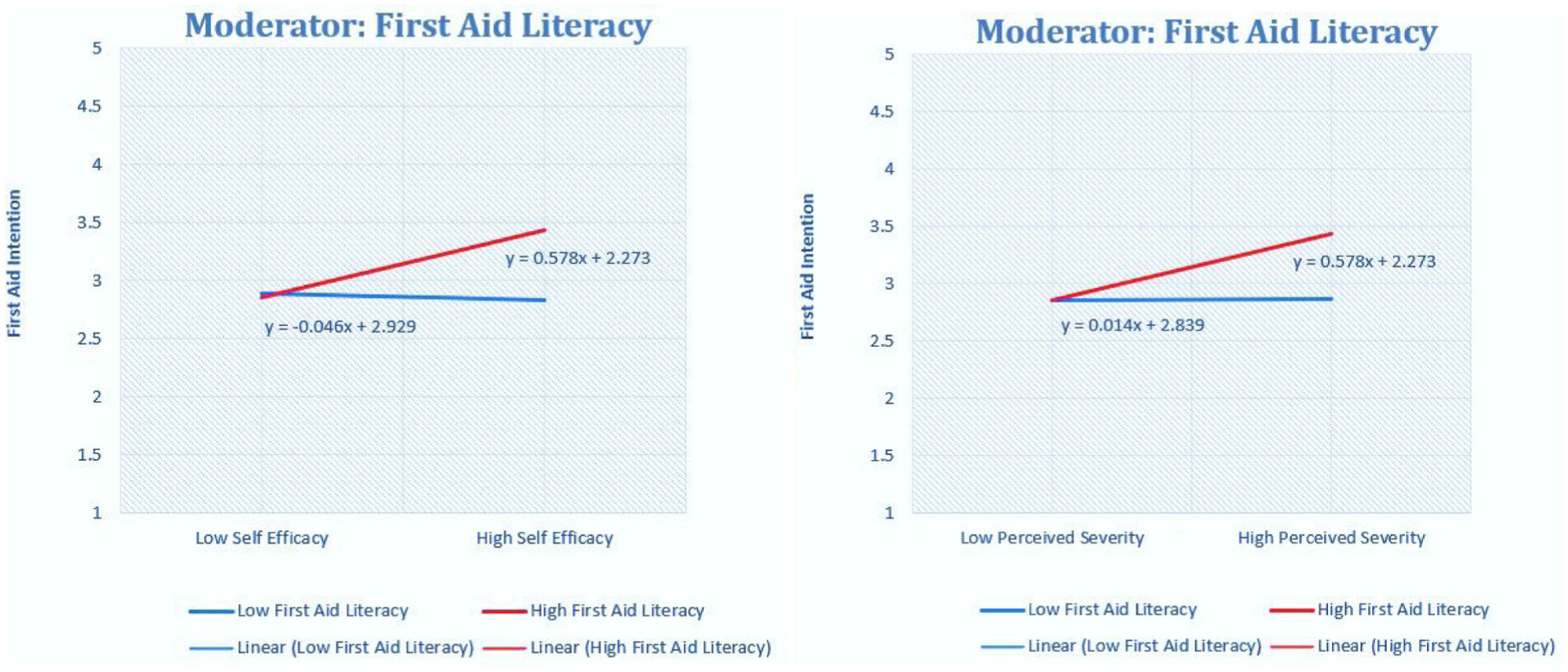
Moderation of first aid literacy.
Discussion
This study examined the behavioral intention to perform first aid among Chinese university students by integrating constructs from Protection Motivation Theory (PMT) and the Theory of Planned Behavior (TPB), while incorporating contextual variables such as the Physical Education Curriculum and First Aid Literacy. The findings underscore that both cognitive mechanisms and contextual exposures jointly shape students’ preparedness and willingness to engage in first aid practices.
The results provide strong evidence for the influence of the Physical Education Curriculum on students’ attitudes and self-efficacy toward first aid. Specifically, curriculum exposure demonstrated substantial direct effects on both constructs, indicating that structured, skills-based instruction equips learners with the confidence and mindset required to act in emergencies. This corroborates prior research highlighting the transformative role of experiential learning in shaping health-related competencies (Manshi et al., 2024; UNESCO, 2015; Yılmaz, 2024). Importantly, the strong direct pathway observed here suggests that curriculum-based training may provide immediate experiential benefits that bypass slower attitudinal change, distinguishing it from less interactive health education models (Lao et al., 2021). This finding contributes theoretically by positioning formal curricula as institutional catalysts within PMT–TPB models, and practically by signaling the need for standardized first aid training within university programs.
Consistent with TPB, Attitude Toward First Aid significantly predicted intention, supporting the well-established premise that favorable evaluations enhance willingness to act (Ajzen, 1991). This result echoes studies such as Bashekah et al. (2023) and Stout et al. (2020), where positive perceptions of CPR training strongly predicted emergency response intention. By confirming this relationship in the Chinese context, the study extends the cultural generalizability of TPB.
Subjective Norms also emerged as a significant predictor of intention, indicating that social expectations play a critical role. This aligns with findings from Fouad (2021) and Rochelle and Ng (2022), who emphasized the role of peer and institutional influence in emergency-related behaviors. However, the prominence of subjective norms here contrasts with some Western studies where norms were weaker predictors, suggesting cultural differences in the weight assigned to collective expectations versus individual dispositions. This highlights the importance of considering sociocultural context in TPB applications.
From the PMT perspective, Self-Efficacy and Response Efficacy significantly predicted First Aid Intention. These findings align with earlier work (Floyd et al., 2000; Little et al., 2023; McCarthy & Milner, 2020; Okuhara et al., 2020) showing that individuals act when they both feel capable and perceive the behavior as effective. The strength of these effects in this study underscores that beyond knowledge provision, interventions must explicitly cultivate confidence and perceived utility—two conditions essential for translating literacy into readiness.
Perceived Severity also had a strong positive effect, echoing classic PMT assumptions (E. M. Rogers, 1983; R. W. Rogers, 1975) and recent findings in health behavior contexts (Jovanov et al., 2024; H. Kim & Lee, 2024). This suggests that recognizing the potential gravity of emergencies mobilizes protective responses. Yet, Perceived Vulnerability did not emerge as a dominant factor, pointing to a possible cultural tendency among students to perceive emergencies as “unlikely but severe,” which may alter the motivational calculus compared to Western populations.
In contrast, Response Cost significantly and negatively predicted intention. This result mirrors Plotnikoff et al. (2010), Gilat & Reshef (2014), and Smith & Stasson (2000), who documented the deterrent role of perceived barriers such as fear of legal liability, causing harm, or embarrassment. Practically, this indicates that readiness cannot be enhanced by emphasizing benefits alone; institutional strategies must also reduce perceived costs through reassurance, policy protections (e.g., Good Samaritan laws), and realistic simulations.
Unexpectedly, the mediating roles of Attitude and Self-Efficacy between curriculum exposure and intention were not significant. This finding diverges from models where attitudinal shifts mediate educational influence (Lao et al., 2021). A plausible explanation is that hands-on curriculum design provides direct experiential learning that bypasses intermediate constructs, thereby exerting a more immediate influence on intention. This nuance enriches theoretical understanding by suggesting that in skill-intensive domains, education may operate through direct experiential pathways rather than gradual attitudinal mediation.
Conversely, the moderating role of First Aid Literacy was significant. Literacy strengthened the relationships between both Self-Efficacy and Perceived Severity with intention, demonstrating its catalytic function. This aligns with Nutbeam’s (2000) model of functional, interactive, and critical literacy, and with Sørensen et al.’s (2012) emphasis on the action-oriented role of health literacy. By showing that literacy amplifies the translation of efficacy and risk perception into intention, this study expands PMT and TPB by embedding informational capacity as a boundary condition. This provides a novel contribution by reframing literacy as not merely an antecedent but a contextual moderator of behavioral intention.
Theoretically, this research advances behavioral models by integrating PMT and TPB within a higher education context and extending them through contextual variables—curriculum and literacy. This dual integration responds directly to prior critiques that health behavior studies often treat psychological and environmental factors in isolation. Practically, the findings guide curriculum developers and policymakers: embedding structured first aid modules within PE classes, promoting peer-supported training environments, and incorporating literacy-enhancing activities can substantially improve readiness. Equally important, strategies must explicitly counteract response costs by clarifying legal protections and reducing psychological barriers to intervention.
Implications of the Study
Theoretical Implications
This study contributes to theory by demonstrating both the value and the limitations of established behavioral models, and by extending them with contextual variables that better reflect real-world emergency contexts.
First, the application of PMT to first aid reveals both its strengths and blind spots. While self-efficacy, response efficacy, perceived severity, and response cost remain powerful predictors, PMT’s traditional focus on risk appraisal in chronic health contexts (e.g., smoking, vaccination) overlooks the time-sensitive, high-pressure nature of acute behaviors. This study shows that PMT can be stretched to emergency readiness, but only when paired with contextual inputs like literacy and curriculum exposure. Without such integration, PMT risks being too individualistic and static to capture action-oriented competencies.
Second, TPB is confirmed as useful, but the findings also highlight its theoretical constraints. Attitudes and subjective norms predicted intention as expected, yet the strong influence of norms in this sample suggests that TPB’s assumption of universal psychological drivers underestimates cultural variability in normative weight. In contexts where collective expectations are stronger (e.g., Chinese universities), intention may hinge less on personal evaluation and more on perceived obligations. This calls into question the TPB’s claim to universality and suggests that its constructs must be reinterpreted through sociocultural lenses.
Third, by introducing the Physical Education Curriculum into the model, this study critiques the narrow individualism of PMT and TPB. Both theories are largely silent on institutional determinants of behavior. Demonstrating that curriculum directly predicts attitudes and self-efficacy highlights the need to reframe behavioral theories to include structural and policy-level antecedents. Without these extensions, models risk overstating the autonomy of individuals in contexts where formal training and institutional design heavily shape competencies.
Finally, repositioning First Aid Literacy as a moderator challenges the conventional treatment of literacy as a linear antecedent of knowledge or outcomes. The finding that literacy strengthens the efficacy–intention link underscores that literacy operates as a dynamic capacity that shapes how psychological constructs function, not simply as an input. This reconceptualization moves literacy away from being treated as a static variable toward being theorized as an interactional resource—an insight with implications for both PMT and TPB extensions.
Taken together, these findings demonstrate that while PMT and TPB offer useful starting points, they are insufficient in their original forms. By embedding contextual (curriculum) and cognitive (literacy) variables, this study not only enhances explanatory power but also problematizes the tendency of health behavior theories to privilege cognition over context.
Practical Implications
The practical lessons from this study are equally significant, but they require going beyond the “training fixes everything” narrative often found in health education.
First, while the curriculum clearly boosts attitudes and efficacy, the non-significant mediating effects suggest that education alone cannot guarantee deeper psychological change. This highlights a gap in many current interventions, which assume that exposure translates linearly into improved readiness. Instead, training must be embedded in iterative, experiential, and culturally resonant formats—otherwise the impact risks being superficial.
Second, the prominence of response cost as a deterrent reveals an uncomfortable truth: students may know what to do but remain paralyzed by fear of error, legal liability, or embarrassment. This finding problematizes simplistic “knowledge-to-action” models and underscores the need for systemic solutions, such as legal safeguards (Good Samaritan protections), institutional liability coverage, and explicit reassurance during training. Without structural protections, individual-level interventions may have limited real-world traction.
Third, the literacy findings expose inequities in how students access and process health information. While higher-literacy students were able to convert efficacy beliefs into stronger intentions, those with lower literacy may be left behind—even after training. This suggests that interventions must address not only content delivery but also information equity, through multilingual materials, digital platforms, and universal design for accessibility. Treating literacy as a moderator highlights that policies ignoring these disparities risk widening gaps in preparedness.
Finally, the cultural salience of subjective norms points to a need for peer-driven and socially endorsed interventions. Traditional training models focus heavily on individual competence, but in collectivist settings, peer approval and group expectations may be more powerful levers. Programs that create visible peer champions, peer-support networks, and social campaigns may therefore be more effective than purely individual-focused workshops.
Overall, the study suggests that improving first aid readiness cannot rely solely on enhancing knowledge or even building efficacy. Instead, it requires a multi-level strategy that:
Embeds training structurally in curricula.
Reduces systemic barriers through law and policy.
Equalizes access to health literacy.
Leverages social norms as motivational drivers.
Conclusion, Limitations and Future Research Directions
This study examined the determinants of first aid intention among Chinese university students by integrating constructs from the Protection Motivation Theory (PMT) and the Theory of Planned Behavior (TPB), enriched with contextual variables such as the Physical Education Curriculum and First Aid Literacy. The findings reveal that attitude, self-efficacy, response efficacy, perceived severity, and curriculum exposure significantly enhance first aid intention, while response cost acts as a deterrent. Subjective norms were also significant, underscoring the role of social expectations, and First Aid Literacy amplified the effects of self-efficacy and perceived severity, highlighting its function as a catalyst in transforming cognitive appraisals into behavioral readiness.
The study makes several contributions. Theoretically, it extends PMT and TPB into the underexplored context of acute, skill-based emergency behaviors. While these theories have traditionally emphasized cognitive and motivational antecedents, this study shows that their predictive power is strengthened when institutional and informational factors are embedded. By incorporating curriculum and literacy, the model moves beyond individual-level cognition and challenges the tendency of health behavior theories to ignore contextual determinants. Methodologically, the study applies Structural Equation Modeling (SEM) to validate a multi-theory framework and explicitly tests moderating effects, offering a more nuanced approach to model specification. Practically, the results provide actionable guidance for embedding structured first aid training into physical education, developing peer- and simulation-based interventions to build confidence, reducing perceived barriers through legal and psychological reassurance, and expanding literacy initiatives via accessible and culturally relevant materials. These contributions advance both scholarly understanding and real-world practice in first aid education.
Despite these contributions, the study has limitations. Its cross-sectional design restricts causal inference, and the reliance on behavioral intention rather than observed behavior raises concerns about the intention–behavior gap. The use of a single province sample (Hebei) and convenience sampling further limits generalizability, while potentially important predictors such as the bystander effect, emotional readiness, and prior first aid experience were excluded. These limitations highlight the need for caution in interpreting the results and point toward several promising research directions.
Future work should adopt longitudinal and experimental designs to test causality and track changes over time, while simulation- or observation-based methods (e.g., CPR drills, emergency scenarios) could validate whether intention translates into action. Expanding the scope to multi-regional and cross-cultural samples would test the universality of the integrated PMT–TPB model and reveal cultural differences in normative influence. Additionally, examining specific domains of first aid, such as CPR, wound care, or disaster response, would allow for tailored interventions and a more granular understanding of emergency competencies.
In conclusion, this research provides a validated, integrative model that bridges cognitive appraisals, social norms, and contextual enablers to explain first aid intention. By extending established theories, refining methodological approaches, and offering practical recommendations, the study contributes to both the academic discourse and the design of effective educational and policy interventions aimed at cultivating life-saving skills among university students.
Footnotes
Appendix
Measurement Items of Constructs.

| Construct | Items | Source |
|---|---|---|
| First Aid Intention (FAI) | FAI1. I intend to perform first aid if I encounter an emergency. FAI2. I am willing to provide first aid to someone in need. FAI3. I plan to take responsibility for helping in emergency situations. |
Fishbein & Ajzen (2011) |
| Attitude Toward First Aid (ATT) | ATT1. Performing first aid is beneficial. ATT2. Providing first aid is important for saving lives. ATT3. First aid is a valuable skill for students. |
Ajzen (1991); Fishbein & Ajzen (2011) |
| Subjective Norms (SN) | SN1. People important to me think I should perform first aid. SN2. My peers would support me if I gave first aid. SN3. My university expects students to know first aid. |
Ajzen (1991) |
| Self-Efficacy (SE) | SE1. I am confident in my ability to perform first aid. SE2. I can follow first aid procedures correctly. SE3. Even under stress, I can provide effective first aid. |
Schwarzer & Jerusalem (1995) |
| Perceived Severity (PS) | PS1. Emergencies can cause serious harm without immediate first aid. PS2. Not giving first aid can lead to severe consequences. PS3. First aid can make a critical difference in survival. |
Rogers (1983); Milne et al. (2000) |
| Perceived Vulnerability (PV) | PV1. I am likely to encounter emergencies among peers. PV2. It is possible that someone near me will need first aid. PV3. Emergencies can happen anytime at university. |
Rogers (1983); Milne et al. (2000) |
| Response Efficacy (RE) | RE1. First aid is effective in saving lives. RE2. Administering first aid reduces the severity of injuries. RE3. First aid can prevent complications until professional help arrives. |
Floyd et al. (2000) |
| Response Cost (RC) | RC1. Performing first aid could put me at legal risk. RC2. I may harm the victim if I perform first aid incorrectly. RC3. Providing first aid is stressful for me. |
Plotnikoff & Trinh (2010) |
| Physical Education Curriculum (PEC) | PEC1. My PE classes included training in first aid. PEC2. My university curriculum provides opportunities to learn first aid. PEC3. Practical exercises in PE classes increased my readiness to act. |
Adapted from curriculum evaluation studies |
| First Aid Literacy (FAL) | FAL1. I can find reliable information about first aid. FAL2. I understand the instructions provided in first aid materials. FAL3. I know how to apply first aid information in real-life situations. |
Nutbeam (2000); Sørensen et al. (2012) |

Ethical Considerations
All study procedures were conducted in accordance with the ethical standards outlined in the Declaration of Helsinki and approved by the Human Resource Ethics Committee, Institute of Disaster Prevention, 065201, Hebei Province, China, (Reference No: IDP202410). Written informed consent was obtained from all participants prior to their involvement in the study, ensuring their full understanding of the research objectives, potential risks and benefits, and their right to withdraw from participation at any time without penalty.
Author Contributions
Conceptualization: Jianheng Tian; Methodology: Jianmin Shi and Na Meng; Formal Analysis: Jianheng Tian; Investigation: Rong Li; Writing – Original Draft Preparation: Zhiyu Leng; Writing – Review & Editing: Zhiyu Leng and Na Meng; Supervision: Jianmin Shi ; Funding Acquisition: Zhiyu Leng.
Funding
The authors disclosed receipt of the following financial supports for the research, authorship, and/or publication of this article: 1. the Fundamental Research Funds for the Central Universities (Grant No.ZY20240229) 2. Funded by Science Research Project of Hebei Education Department (Grant No. QN2025521).
Declaration of Conflicting Interests
The authors declared no potential conflicts of interest with respect to the research, authorship, and/or publication of this article.
Data Availability Statement
The data supporting this study’s findings will be made available upon reasonable request to the corresponding author.