




Abstract
This study uses a mixed methods approach to explore the factors affecting international students in South Korea, focusing on the acculturative conditions of student experiences. For the quantitative aspect, 126 students participated, and 22 students took part in the qualitative research. The findings of the quantitative analysis revealed that male Uzbeks of the sample population who have been in Korea for more than 3 years reported a significant lack of interest in learning about Korean culture. These individuals were also likely to say that they were not in a supportive environment and were not treated fairly compared to Korean students. Qualitative analysis revealed how cultural adaptability and linguistic investment were deciding factors of acculturative stress. This paper offers crucial documentation of how specific international students, such as Uzbekistan nationals, have experienced acculturative stress in South Korea, influencing their decision to reject aspects of Korean society.
Plain Language Summary
Aims: This research documents international student experiences and identifies the factors affecting their positive adaptation and well-being in Korean higher education. As Korea becomes more multicultural, giving voice to the growing number of international students is critical. This paper aims to promote intercultural understanding and multicultural values. Background: Traditionally, Korea was not a country chosen by international students to study abroad. But in recent times, it has become a popular destination. As Korean universities recruit and promote on a global scale, it has become of great relevance to document the cultural transformation occurring in Korean universities as the native population of Korea decreases. Methods: This research utilized a questionnaire and interviews. The researchers measured student preferences and feelings toward local Korean culture and language. Students were asked questions about their interactions with local people and their struggles with adaptation. By combining two kinds of data, the researchers were able to narrate student experiences with statistical evidence and first-person accounts. Results & Significance: This research found that Uzbek students were highly dissatisfied with their Korean experience. Although some knew the Korean language and understood Korean culture, many felt they needed to be treated more fairly compared to their Korean peers. The Uzbek experience was instructive because some members actively rejected Korean culture. The findings confirmed that positive experiences were connected to positive attitudes toward the local Korean people. The other groups of international students had a more satisfactory and joyful experience because they actively learned and understood the Korean language and customs.
Keywords
Introduction
The rise of globalization within the last two decades has led to an increased number of individuals seeking enrollment in higher education institutions (HEI) outside of their home country. To attract students, a significant number of HEIs have implemented aggressive marketing campaigns in order to counteract the effects of their decreased matriculation rates (Byun & Kim, 2011; J. Kang et al., 2022; J. Kim et al., 2021). However, with this increased number of international students in several countries, new issues have arisen regarding acculturation and adaptation within the host country (G. Lee et al., 2020). As the number of international students around the world continues to grow, these issues are becoming more prevalent and prominent (J. Kim, 2019). Thus, it has become imperative to address these acculturation and adaptation issues to ensure that the needs of international students are met (Merola et al., 2019). Currently, there exists significant gaps in the research on acculturation and adaptation struggles in several countries which were not traditionally popular destinations for international students in the past but have in recent decades become more popular choices (J. Kim, 2019). One such case is South Korea.
South Korea’s higher education system is at a crossroads. In the next decade, there will be a significant decline in the domestic student population, which has put pressure on South Korean universities (hereafter, Korea) to expand their international student intake. Currently, 253,434 international students are studying in post-secondary institutions in Korea (KEDI, 2023), a figure that will undoubtedly increase to stabilize the Korean university-industry (Byun & Kim, 2011; J. Kim et al., 2021). Policies to address the demographics include financial incentives for families, childcare subsidies, and immigration reform (Chung, 2021). It appears inevitable that a significant demographic in Korean higher education will likely be international in a country where multicultural policies are not widely implemented (J. J. Kang & Metcalfe, 2019) and lacking public support (Denney & Green, 2021). Given the demographic challenges and the domestic competition to attract international students, it is necessary to examine the factors affecting international students’ experiences and development (Cordier & Alemu, 2017; Jin et al., 2022), improve acculturative policies in Korean higher education (Choi et al., 2021; Jung, 2022), and empower international students to promote Korean education in their home country (Bae & Song, 2017; Cordier & Alemu, 2017; Kazakova et al., 2021). This paper documents the possible sources of international students’ acculturative stress in Korean universities. The results of this study provisionally show the acculturation process of international students into Korean society by answering the following research questions:
Literature Review
Acculturative Stress and International Students
The mass internationalization of higher education, starting in the United States and other English-speaking countries, inspired researchers to identify the obstacles to integration and the variables preventing students from engaging and being involved (Jung, 2022; G. Lee et al., 2020; Merola et al., 2019; Penman et al., 2021). The research on international students’ experiences has tied their negative experiences to a lack of acculturation (Jung, 2022). Acculturation is defined as the attitude and belief toward the mainstream culture of the host country and a person’s willingness to endorse the embodied values of that culture (Berry, 2006a; Jin et al., 2022). Acculturative stress has been extensively discussed as resistance and is related to maladaptation experienced while adjusting and adapting to a host country’s culture (G. Lee et al., 2020). This type of stress is caused by cultural conflicts, experiences of discrimination, and linguistic barriers (Jung, 2022). Studies have demonstrated how acculturative stress significantly affects international students’ mental health and general well-being (Collins et al., 2021; H. R. Kim & Kim, 2021). Because of its detrimental effects, universities have incentivized stakeholders to reduce international students’ acculturative stress. One study in Australia showed that reducing acculturative stress improved student satisfaction and well-being (Sullivan & Kashubeck-West, 2015). Past research has also shown that active community support of international students increased student engagement, promoted intercultural understanding (J. Kim et al., 2021; Korobova & Starobin, 2015), and mitigated the adverse effects of maladaptation.
Furthermore, reducing acculturative stress correlates with higher reported student satisfaction and feedback (J. Kim et al., 2021; Sullivan & Kashubeck-West, 2015). One recent study demonstrated that the degree of integration correlated with acculturative stress: students reported less stress when acculturated, irrespective of their country of origin (Merola et al., 2019). The need for acculturation has inspired universities to implement a support system aimed at intercultural education. Mentorship programs provide anecdotal evidence of aiding students with their struggles in their host country and overcoming sociolinguistic-related difficulties (Penman et al., 2021). The programs successfully expand the participants’ cultural horizons and address the critical areas of acculturative stress (Penman et al., 2021).
Acculturative Stress in Korean Higher Education
While substantial evidence in recent literature has provided a reliable framework for student acculturation, implementing a program that serves that purpose requires an encompassing multicultural policy from the host university and a broad multicultural platform in the host country. In the case of South Korea, there are limits to how well international students can be integrated compared to English-speaking countries. While the United States, Canada, and Australia have had waves of immigrant populations and generations of international students, Korea’s experience with multiculturalism is relatively new (Denney & Green, 2021). The influx of international students and other immigrants has not been received positively despite the country’s demographic challenges (Denney & Green, 2021; H. A. Kim, 2020; J. Lee et al., 2017). Although scholars and policymakers are aware that Korea has one of the lowest birthrates in the world (Chung, 2021) and that there will be a crisis on many levels in the education industry, given the lack of students, the public sentiment is very much resistant to an open immigration policy (Ghazarian, 2018; J. Lee et al., 2017).
Some members of Korean society believe that accepting more foreigners is incompatible with Korea’s traditional narrative of racial homogeneity (Denney & Green, 2021; Ghazarian, 2018; H. A. Kim, 2020; Lim, 2020). A recent study of multicultural beliefs revealed that foreigners from non-Asian countries whose values are culturally distant from traditional Korean society will most likely be less welcomed by Koreans than foreigners whose cultures approximate Korean values (Denney & Green, 2021). Cultural challenges exist for foreigners who immigrate to Korea without certain preferred qualities, such as Korean language skills and a high economic status (Denney & Green, 2021). An unfortunate reality in Korea is that, in some cases, Western and European ethnic and racial identities are privileged over others (J. Lee et al., 2017). Foreigners belonging to categories outside of European and North American identities will more likely be subject to racial discrimination and prejudice (H. A. Kim, 2020; Watson, 2012). What makes this more complex is an added layer of Korean privilege mixed with Western bias that discriminates against persons who fall outside the category of fair and light-skinned, specifically Southeast Asians (Denney & Green, 2021; H. A. Kim, 2020; J. Lee et al., 2017).
In South Korea, acculturation is difficult for international students who belong to cultures that are distant from the values of traditional Korean culture or if a student does not fit the stereotypical features of Western people (Denney & Green, 2021; G. Lee et al., 2020). Studies have shown that some Korean students feel uncomfortable communicating with international students and admit to being unwilling to collaborate with foreign international students in group projects (A. Lee & Bailey, 2020). Anecdotal and qualitative evidence shows how international students have been discriminated against based on their skin color and ethnic background (J. Lee et al., 2017) and how prejudice has lowered their overall satisfaction (Jon & Ayhan, 2021). This trend of discrimination has deterred them from integrating into Korean society. It has caused a lowering of morale to overcome the challenges of adapting to their host country and performing well in school (Slick & Lee, 2014). It appears that acculturative stress in international students coincided with the length of stay (Park & Noh, 2018) and a lack of ethnic affirmation in Korea, with vivid experiences of rejection and discrimination (J. J. Kang & Metcalfe, 2019; Suh et al., 2019).
It is equally true that rampant racial discrimination in Korea has decreased with more social awareness (Lim, 2020), yet it is still a complex problem. Korean institutions and the Korean government must address a shrinking domestic population while developing a more welcoming immigration policy when segments of Korean society resist the possibility of open immigration. This demographic issue is not limited to education alone but encompasses the country’s broader socio-economic concerns (Chung, 2021).
Rationale
This research was developed to document international student experiences in South Korea with the aim of promoting multiculturalism and social justice (H. A. Kim, 2020; Lim, 2020). The critical fact that spurred this study is that the survival of Korean universities is also at stake. The decreasing domestic student body has forced many universities to supplement with international students (Byun & Kim, 2011; J. Kim et al., 2021). It is in the best interest of Korean universities to consider the foreign student body as a stakeholder (Cordier & Alemu, 2017; Kazakova et al., 2021). By showing the factors contributing to acculturative stress, new multicultural policies could be implemented in universities to improve Korea’s reputation and fulfill the purpose of government policies (Jon & Ayhan, 2021). As members of Korean higher education, the researchers have a strong sense of professional investment in the future of universities. There is also a sense of duty and responsibility established by personal interaction with international students which motivated this investigation to improve international student experiences and, thereby, shift student perceptions of Korean culture, education, and people (Lim, 2020). This work was done in good faith to make positive acculturation a focal point in Korean higher education.
Materials and Methods
Research Design & Data Collection
Investigating the factors affecting international students’ experiences required triangulation. The project utilized a similar method employed by J. Lee et al. (2017) to confirm the applicability and relevance of their results. The researchers wanted to examine if there were substantive differences to student experiences or if the negative experiences documented in their work existed in the current study context. This project employed an explanatory mixed methods approach of quantitative and qualitative analysis to cross-examine the different data sets collected from the questionnaire and the interviews. A mixed method was considered most proper for this study because the literature was divided into quantitative and qualitative approaches. Integrating different data sets appeared to be a crucial step to advance the study of acculturative experiences in Korea.
The preliminary questionnaire was designed to answer the three questions to determine the level of acculturation based on the students’ motivation to be integrated into Korean society. After meeting with a preliminary focus group that discussed foreign student experiences in Korean higher education, 17 statements were designed. The researchers developed a Likert Scale questionnaire based on a similar study conducted by J. Lee et al. (2017), which focused on determining the extent of discrimination experienced by international students in South Korea. The questionnaire items have been modified to focus on how international students feel about their treatment as minorities and their desire to immerse themselves in Korean culture. They were also designed to provisionally measure the participant’s adherence to Korean norms and culture. Reliability and validity of the questionnaire were ensured by comparing the items with similar questionnaires based on the established literature. We also consulted international instructors who have had similar adaptation experiences to assess if the questionnaire terminology was appropriate, to further reduce any existing bias and inconsistency that could be caused by the wording.
The researchers received institutional ethics approval from the Institutional Review Board at the location of research (Approval no. 1041549-220712-SB-144). Both qualitative and quantitative data collection followed standard ethical procedures. Oral and written consent from the participants were acquired before the data collection, and the research parameters and aims were explained to each participant. Although there was minimal chance of physical and emotional harm in our study, we took all measures to limit any possible risk of psychological discomfort. We made it very clear that they could discontinue participation in the study at any time during the course of the research process. Furthermore, as the current trend of increase in international students studying and residing in Korea continues, the potential benefits of this research to society and to the study participants with regards to acculturation in Korea far outweighs the risk of harm.
Students received an email from the international center of their university, requesting their voluntary participation in completing the questionnaire using Google Forms. The questionnaire asked students to provide information about their gender, country of origin, year of study, and length of stay in Korea. During the questionnaire period, student volunteers responded to interview requests made by the international center on behalf of the researchers. After 4 months of data collection and 126 students completed the form, the questionnaire was closed, and qualitative data collection began. To protect participants’ privacy, pseudonyms were used, and some parts of the interview content were edited for clarity and privacy.
For the qualitative portion, we approached the interviews with the intention of examining the significant results of the quantitative tests. The semi-structured interviews were designed to have the function of contextualizing the potential trends found in the quantitative sections. Once all 24 interviews were completed, the same students were asked to join a focus group discussion to further substantiate and contextualize the trends found in the quantitative results (Leavy, 2017, p. 173).
Data Analysis & Conceptual Framework
The questionnaire results were first analyzed for reliability. The researchers followed Pallant’s (2016) recommendations for quantitative analysis and used SPSS 27 to measure the reliability of the data, non-parametric results, and descriptive statistics. Kruskal-Wallis tests were conducted to find statistical correlations between the study’s demographics and the questionnaire items. Mann-Whitney tests were also used to show possible gender correlations. Because of the study’s exploratory nature, the researchers initially adopted a pre-theoretical approach to analyze the qualitative data. Since qualitative research is primarily a hypothesis-building project (Creswell, 2007), the items of significance from the quantitative findings were used to uncover the factors affecting the experiences and feelings of the sample population. The interviews and focus group discussions were coded to help build narratives explaining the quantitative results’ statistical correlations.
After a preliminary examination of the data, the researchers decided that acculturation was the most appropriate conceptual framework. Acculturation is defined as a disposition toward the host country’s culture and the sojourner’s willingness to accept the embodied values of that culture (Berry, 2006a; Jin et al., 2022). Acculturative stress is the negative emotion experienced while adjusting to a host country’s culture. The phenomenon is strongly associated with resistance, negative feelings, and attitudes of maladaptation (Jung, 2022; G. Lee et al., 2020; Sam, 2006). Host cultures play a significant role since some societies prefer integration while some believe in assimilation (Berry, 2006a). Given that acculturation is a discursive relation between sojourners and host societies (Berry, 2006b; Sam, 2006), the stress of assimilation often correlates with academic pressure, cultural conflicts, discrimination, and miscommunication (Jung, 2022). We examined the qualitative data with a specific examination of acculturative experiences, and how the participants narrate their personal encounters in the context of adapting to Korean culture.
Results
Quantitative Findings
When the questionnaire data collection was closed, the total number of participants was 126 international students. There was one challenge that became clear once we discovered that 23% of the student participants were Uzbeks. It became clear that the host university had a large Uzbek population, or perhaps it was the case that many Uzbeks wanted to participate over other groups. The researchers accepted the data collected as is. The participating university had a large Uzbek population, and we decided to use a quantitative measurement that would accommodate the abnormal distribution which would enable us to compare the differences between groups (Pallant, 2016). Although this aspect could be considered a limitation, the qualitative data collection analysis revealed that this finding showed the need to investigate Uzbek’s experiences in Korean society (Table 1).
Sample Population Demographic Profile.

After looking at the demographics, the reliability of the questionnaire results was calculated. The Cronbach Alpha score was .914, indicating a high degree of reliability. The descriptive analysis of standard deviation (SD) results highlighted possible areas of investigation. For example, Item 8, which asked how students felt about their treatment compared to native Korean students, had the largest SD (1.282). This result contrasted with Item 7, which had the highest mean score (4.37) and the lowest SD (.774). Item 7 asked students how comfortable they felt interacting with their international peers (Table 2). Other items with SD results included questions about students’ interest in Korean culture (1.241) and their desire to stay in Korea after graduation (1.266).
Questionnaire Results.

To better focus and contextualize the study, we have limited our discussion to items 8, 12, and 14. Table 3 reveals the results of non-parametric tests. The null hypothesis states that there would be no difference between mean ranks, and the alternative view is that there would be differences between them (Pallant, 2016). After the tests were completed, the Kruskal-Wallis results showed significant relationships between the three questionnaire items and the variables (country of origin, year of study, and years in Korea).
Kruskal-Wallis Results.

A closer examination of the mean was also quite revealing. The lower mean ranks of Uzbek groups (47.97, 45.34, 48.89) were of a lower order compared to the higher mean rank scores of other groups. For example, the mean rank scores of the next large groups were 61.94, 82.17, 77.94 (Indians) and 75.44, 73.88, 48.69 (Bangladeshi) were comparatively higher (Table 4).
Mean Ranks.

To illustrate, the stark difference between groups, we have included a figure to show how the Uzbek group has a lower mean rank score compared to other groups. Their lower score reveals how the Uzbeks responded negatively to the questionnaire items (Figure 1).

Mean rank by country of origin.
Although other questionnaire items had statistical significance, questionnaire item 14 (I am interested in learning about Korean culture) was the one that correlated with all four grouping variables. In Table 5, the data reveals how male-identifying participants were less likely to be interested in Korean culture than female participants—the trend was clear while comparing the means showing a higher rank for female students than male students.
Mann-Whitney Result: I Am Interested in Learning About Korean Culture.

From both non-parametric tests, we have a generalized account of the acculturation experiences of the sample population. Participating students who identify as male Uzbeks, who have been in Korea for more than 3 years, and who are near matriculation reported a higher rate of disinterest in learning about Korean culture than other international students. These individuals also said that they were not in a supportive environment and were not treated fairly compared to Korean students.
Qualitative Findings
Based the results of the quantitative data, the interview process was approached with the need to explain why a large portion of the sample population was dissatisfied with their educational and cultural experience. The quantified results framed the dialogues with 24 students (see Table 6). An integral part of the qualitative study was examining the acculturation conditions that made the experience of Korea worse for some students. The results from the 24 interviews and one focus group discussion helped uncover four themes that participants used to evaluate their experiences.
Interview and Focus Group Participant Demographics.

Our analysis aimed to compare student experiences to arrive at a greater understanding of how they judge the Korean culture and people. The preliminary themes appeared directly correlated with the quantified findings, illustrating the interconnectedness of international student acculturation. Based on the results, a matrix diagram has been provided to represent the principal categories of acculturation (see Figure 2). Based on the acculturation framework proposed by Berry (2006a) and the quantitative trends found in Denney and Green (2021), we have conceptualized student experiences into four major categories. These emerged after recursive and reiterative analysis. Figure 2 represents how the four categories affect the acculturative experiences of our subjects.
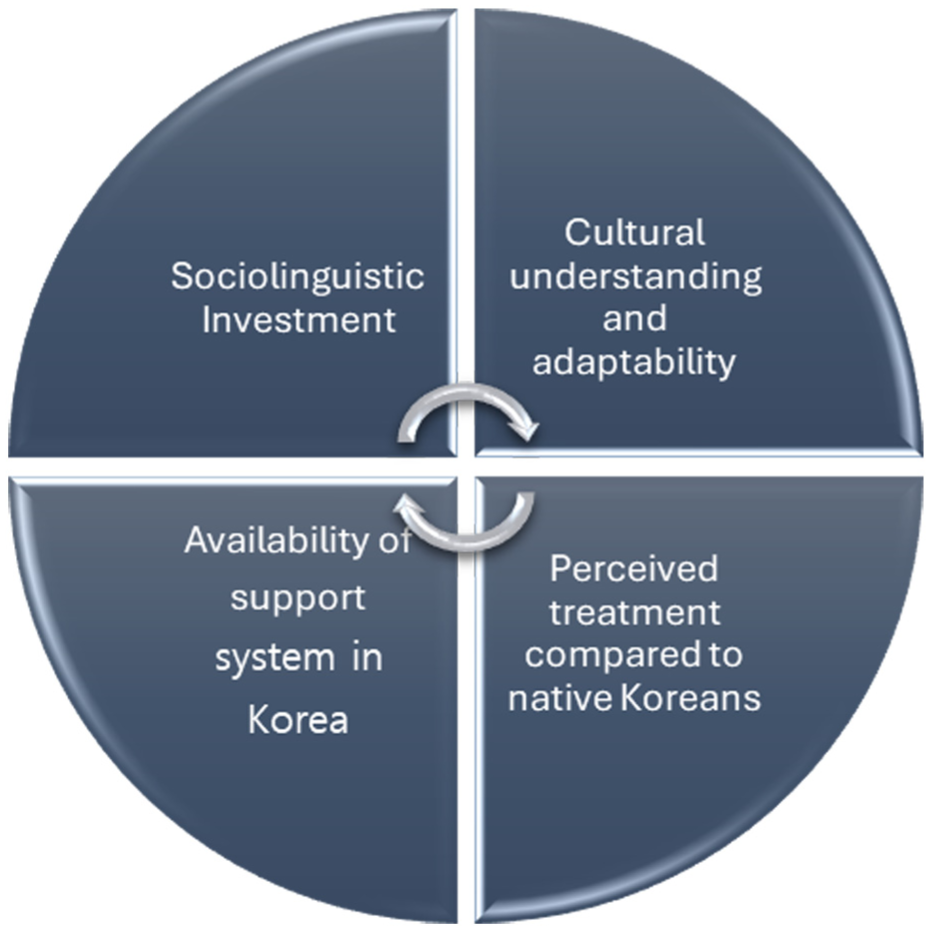
The Acculturative Conditions of International Student Experiences in Korea.
Theme #1: Sociolinguistic Investment
From the interviews, it became clear that there was a strong relationship between the students’ sociolinguistic investment and judgments of their Korean experience. Sarika is a second-year Indian student who has stated her high satisfaction with her education and immersion in Korean culture. She works part-time at the university and uses her Korean to communicate with staff and peers. When asked if she wants to be a fluent Korean speaker, Sarika explained: I want to learn academic and business Korean and that is the part I cannot do. However, in terms of reading, we must follow some of the formal procedures in the dorm in Korean. That I can handle.
Another Indian student expressed her eagerness to learn the language. Kamala has been a first-year student in Korea for a few months. Like Sarika, Kamala relished her time in the country and had only positive things to say about the experience.
Do you want to be a fluent Korean speaker?
Yes, I want to. After staying here for four years, I need to learn to converse with everyone more easily.
Are you confident that you will be fluent?
Yes. I will be.
Unlike Kamala and Sarika, who had positive experiences, Samuel described how Koreans pushed him away. Samuel explained that the rejection made him resentful of the Korean people. Over time, Samuel recovered by establishing local friendships, and he overcame the difficulties by immersing himself in the language and understanding the nuances of Korean culture. When asked about his desire to be a fluent Korean speaker, Samuel affirmed his belief in immersing oneself in Korean life.
I can never be a fluent speaker like Koreans, but I want to be because I want to communicate correctly and not have to pause and think about what to say. That’s how I feel right now and how I think about the Korean language.
All three students expressed a genuine desire to expand their Korean repertoire. The purpose of their sociolinguistic investment is to establish an emotional connection with native Korean speakers. Learning Korean is more than just meeting a minimal level of communication since the motivation itself is a desire to immerse oneself in the multiple facets of the Korean community. This desire is essential to improve Korean fluency. For example, Zeke is an Uzbek student only a month away from graduating. He said that he had mixed experiences of enjoying his time outside of school and being disappointed with the quality of his education. He loves Korean films and is interested in the cultural nuances that manifest in the behaviors he saw in Korean cinema. However, Zeke is ambivalent towards his experience in Korea which is reflected in his sociolinguistic disinterest, clear in the following exchange:
Do you still want to learn more about the Korean language and culture?
Not language, but culture, yes.
Okay.
There’s a lot to learn yet.
What was your biggest personal challenge of the last four years?
Sometimes, I felt alone, and there was no one to whom I could talk; no one could understand me. That was the worst thing.
In this exchange, it becomes clear how Zeke’s lack of interest in language is inseparable from the feeling of isolation. He is only partly interested in Korea; he’s not as fully invested as Sarika, Kamala, or Samuel. Zeke was content communicating in English and enjoyed Seoul for its English amenities and expatriate community. One of the stated personal challenges for Zeke was a sense of isolation and lack of emotional connection, which was noted in the context of his relative disinterest in developing his Korean repertoire.
Theme #2: Cultural Understanding and Adaptability
The boundaries between culture and language are porous, making it difficult to separate the components of Korean linguistic competence from the life encounters of Korean language use. This difficulty became clear while examining students’ value judgments about their feelings of Korean culture. Ansar was a 4th year Uzbek student who was disappointed with the quality of his education and social interactions. He endured financial hardships and legal quarrels with his former employers. However, Ansar had lived long enough in Korea to converse fluently with Korean citizens, and he had been exposed to Korean culture to be familiar with its nuances. However, when asked about his motivation to come to Korea, Ansar admitted that he was never interested in Korean culture. Ansar’s Korean linguistic competence did not inspire him to broaden his cultural knowledge. Instead, the more time he spent in the country only confirmed his dislike for the Korean way of life.
What were the other reasons you came to Korea? Was there another reason for learning Korean culture and language?
No, Korea is a complex country for me. The culture is all about work. Here, finding Halal meat is tough, and only a few people pray at the mosques. Moreover, Korean culture is not for me. Sometimes, I look at how they eat pork and it’s hard to watch.
Ansar avoided adapting to the Korean way of life, and he found aspects of Korean culture at odds with his religious values. In the 4th year, Uzbek students had different reasons for rejecting Korean culture. When asked about his Korean experiences, Don answered with a few strong words.
I don’t want my people from Uzbekistan to come to Korea. They will learn from Korean culture that it’s okay not to take care of their parents if they see all the people working outside without hearts. I feel bad, and I don’t want Uzbeks learning that. So, I wouldn’t advise my people to come here because I struggled daily, carrying that on my mind.
Ansar and Don’s vehement criticism of Korean culture was formulated based on a strong sense of Uzbek identity which they interpreted and understood as irreconcilable with Korean customs. Their strong words are not without consequences, affecting other people’s feelings. For example, Daniela, a second-year student from Kyrgyzstan, reflected on how some international students have problems adapting.
With other international students from Central Asia, like our neighbours, our relationships are primarily based only on complaints. I just noticed this because they always complain. Thinking about it, I see it as being in our nature.
Do they complain about cultural things?
Not cultural, but the environment in general, the university, everything.
Do they complain about everything?
They complain, and I don’t want to talk to them because I don’t like this negativity. And they spoil the atmosphere.
Daniela’s observation complicates the hostile account of Uzbeks and other students because she tries to make her time in Korea positive despite her peers’ legitimate complaints. She has made a conscious choice to withhold judgment and be open.
Theme #3: Perceived Treatment Compared to Native Koreans
Students like Ansar and Don’s complaints were irreconcilable observations based on real struggles that they and other Uzbek students had endured. Their dislike for Korean culture was rooted in their first-hand experience of unfair treatment. In the focus group discussion, Nadia, a 4th-year Uzbek student, explained the conditions to which she and her Uzbek classmates have been subject while working and studying in South Korea.
The university doesn’t always give us any priority. The school first considers Koreans for any internship. The school allows international students if only space is left after Koreans have been served. Yes, we have been in training, but it was not an internship; they exploited us. In our internships, we had to do the basic things they didn’t want to do like cleaning.
Unfair treatment was not only at school but was especially prevalent outside the campus. Nadia also spoke on behalf of the male students and described the unfair treatment that she and other Uzbek students experienced while working part-time in Korea.
All these guys had worked, and I can’t even describe their work. You can ask them. They all went through it, and their work was stressful and challenging. And for the job, they needed to be paid more.
So, they were getting less than the minimum wage?
It was not always less than the minimum wage, but sometimes it was the case. If Koreans were getting 20,000 won per hour, the internationals were getting 8000 won. Now, everyone is financially stable because we are graduating. However, if you ask me whether I want to stay in Korea, I don’t want to. I am done with their culture.
Lived experiences shape beliefs and judgments. Unfair treatment at school and work has negatively influenced these Uzbeks to reject their host country and the culture it represents.
Theme #4: Availability and Limits of Support Systems
Experiences of discrimination and unfair treatment were not limited to Uzbek students. Other students also experienced it, but a few were fortunate to have had a support system in Korea to rectify and aid them when needed. Illa, a 4th year Nepalese student, was quite unhappy with the quality of her education and the lack of communication at her workplace and school. However, she had a broad social network to help her when needed. Her professors made themselves available and were open to suggestions and criticisms. More importantly, she had a Korean friend to help her.
I have a friend, Jen, and she helped me so much. I have other Korean friends who also helped me. Jen helped me speak in Korean and translated the conversation into English if I didn’t know what to say. It was helpful.
Illa’s friendship was a powerful support system that allowed her to be invested in expanding her Korean language and culture repertoire. Although she had not seen Jen for quite a while, it was a memory that stayed a positive experience. Samuel also had a strong emotional attachment to a larger community. In his journey to learn more about the Korean way of life, Samuel walked into a church, and a few days later, he became a regular. Although not a Christian, Samuel recalled his conversation with the church leader.
I told the pastor straight up that I like coming here because it is very peaceful. I worked the whole week and my work and study give me stress. But when I come here, I feel good, not in a religious sense that I want to go to heaven someday, but I feel good right now. So, I came here, and they understood. It was nice. Everybody who comes to Korea should go there if they need help adjusting. They will show you the way because they have people who speak English.
There are two important considerations to keep in mind. First, these positive encounters with helpful people are often subject to change, and international students are not guaranteed to meet a conscientious friend or a welcoming community. Second, there are limits to people’s generosity. A powerful example of the second consideration is Ansar’s story. At first, his first part-time job was a positive experience: he expanded his cultural horizons and established an emotional connection to a Korean local. However, the relationship ended abruptly.
I worked in a chicken restaurant. It was interesting; there was a mom for me. We called her Imo. She liked me. Every time, she said I was her third son. I remember one Ramadan; she saw me for one month without eating or drinking water. When I worked hard, she liked that I was passionate. She brought Halal meat from the Asian market only for me. I felt I was respected because I had never had chicken from that site. After all, it was not Halal. When I talked to her, she said I deserved it.
She trusted you.
Yes, she trusted me. There were many hard times. During the busy times, during the holidays, all Koreans had their rest. She asked me if I had time because we could have more customers. I worked there with her, and she was delighted with me.
Do you still work there?
No, because of COVID-19, I left that place.
Although not explicitly examined, COVID-19 affected students’ experiences like Ansar’s, adding another difficulty to their acculturation process.
Discussion
Both quantitative and qualitative data revealed that students who are near matriculation, who have been in Korea for more than 3 years, and who identify as male Uzbeks reported having negative experiences in South Korea. In comparison, students in the first year of study who have recently arrived in the country reported higher satisfaction rates. The quantified findings formed a cluster of negative responses when a sizable segment of the sample population, the Uzbeks, were asked about their treatment, support, and cultural interest in their host country. The anecdotal evidence discovered during the exploratory section of the research revealed the acculturative stress points (categorized as sociolinguistic investment, cultural understanding and adaptability, perceived treatment compared to native Koreans, and availability of a support system in Korea), provisionally explains why the Uzbek participants reported a significantly higher rate of dissatisfaction. The Uzbek participants’ experiences of discrimination, unfair treatment, and lack of support correlated with their disinterest in Korean culture and language. Their personal stories contextualized the quantified findings by revealing why some had no desire to be integrated into Korean society, which was rooted in experiences of racial prejudice and perceived unfair treatment.
In the qualitative results, the explanatory reasons provided by students confirmed the findings of Jung (2022), with the participants’ positive experiences demonstrating integration into Korean society and lower acculturative stress rates. A Korean support system made a critical difference between high dissatisfaction cases and students with lower acculturative stress rates (G. Lee et al., 2020). Students like Samuel, Illa, and Sarika were part of multiple groups in the Korean community; they were integrated into Korean society at different levels, both within and outside of school. After synthesizing the quantified results with the qualitative data analysis, it was possible to interpret the reduction of acculturative stress and a higher degree of satisfaction with a student’s open attitude and a desire to integrate into Korean society. Students like Daniela and Kamala’s adherence to Korean norms was a crucial factor in their acculturation (Berry, 2006a; Jin et al., 2022). In contrast, the Uzbeks who were vocal about their dislike of Korean culture have a lesson to teach: there must be a desire for deep cultural integration for one to be integrated. The experiences shared by the other participants revealed that their willingness to take part and contribute to Korean society displayed the actions preferred by the Korean public (Denney & Green, 2021). Consistent with the past literature and earlier studies, the quantitative and qualitative data reveal how lower linguistic and cultural interests coincided with higher acculturative stress and dissatisfaction (Jung, 2022; Rabbidge & Banerjee, 2022). Experiences of acceptance and friendship coincided with increased linguistic and cultural investment as well as competence and confirmed the recommendations of earlier studies for more cultural understanding (Merola et al., 2019). The results of the mixed-method analysis highlighted that an immigrant’s willingness to adhere to Korean norms was a crucial factor in positive acculturation (Denney & Green, 2021). Thus, long-term prospects in Korea will likely be determined by a sojourner’s willingness to conform to Korean culture, especially as Korean multicultural policies are still defined in terms of assimilation and conformity to dominant customs and norms (Ghazarian, 2018; Lim, 2020; Watson, 2012). And yet the contribution of our work is that adherence to Korean customs might not be enough. The key finding of this study of high rates of dissatisfaction among male Uzbeks and their anecdotes explaining the acculturative stress confirm the recent discovery of male international students having high rates of anxiety, depression, and sleep problems since COVID-19 (H. R. Kim & Kim, 2021). Some Uzbek participants had the cultural and linguistic ability to take part in Korean society but were at odds with the host country’s way of life. The collected qualitative data revealing negative experiences and mental health responses corresponded with findings that connected low satisfaction and depression with weak social support and other psychological factors (Achangwa et al., 2022). Feelings of isolation and emotional distress were consistent with recent reports of how international students have had higher rates of mental health problems, especially during the pandemic (H. R. Kim & Kim, 2021). Thus, in addition to what domestic students experience at university, such as how to effectively self-regulate their learning and enhance self-efficacy beliefs (Santos & Alliprandini, 2023), international students also suffer from the same problems but with the added stress from acculturation factors.
The anecdotal data presented here confirms how frequent local interactions with native Koreans increased student satisfaction (Jon & Ayhan, 2021; J. Kim et al, 2021). Stories shared by Samuel, Illa, and Sarika are examples of international students who have found ways to reduce their acculturative stress by overcoming experiences of discrimination with mentorship and frequent interactions with locals (Sullivan & Kashubeck-West, 2015). Mentorship and support programs have been recommended to reduce negative experiences among international students (Collins et al., 2021; J. J. Kang & Metcalfe, 2019; Korobova & Starobin, 2015). Earlier studies have proven the effectiveness of such programs (G. Lee et al., 2020). Along the same lines, it is also crucial for institutions to provide an atmosphere of tolerance through school-organized programs and activities to spread a positive student culture on campus among international and Korean students (Alibraheim & Al-hussary, 2023). As with previous studies on international students in Korea, the results of this study confirm that segments of the Korean population still have prejudices against immigrants from dissimilar cultures and countries from the Global South (Denney & Green, 2021; H. A. Kim, 2020; Suh et al., 2019), highlighting the need for further intercultural communication and translingual educational policies (J. Choi et al., 2021; Rabbidge & Banerjee, 2022). Furthermore, the results of this research provide statistical and anecdotal data showing how some internationals are also wary of integration.
Limitations and Future Research Directions
Given that there are currently 253,434 international students enrolled in Korea (KEDI 2025), the evidence presented here still needs to be confirmed by similar studies. The good news is that acculturation can begin by encouraging participation in local leisure activities (J. Kim et al., 2021). While a few participants stated their lack of interest in Korean culture and language, the sentiment is not typical. S. Kim and Cho (2022) and Takeda (2020) reported the opposite trend; the participants of their respective studies were motivated to be part of the Korean milieu. Positive changes towards the fair treatment of internationals have occurred to some extent. However, barriers to positive adaptation still exist. J. Kim (2019) and Rabbidge and Banerjee (2022) provided qualitative evidence of barriers to positive adaptation as local Koreans did not have enough intercultural training to interact with international students.
As Uzbeks become part of the larger Korean milieu, their specific motivations for coming to Korea need further examination (Juraev et al., 2022). Our findings demonstrate the need to foster intercultural understanding to reduce cultural conflict and misunderstanding. Both quantitative and qualitative data we have shared should encourage policymakers to increase the acculturation of Muslim foreigners in a country without a Muslim heritage. Denney and Green (2021) reported that Koreans were concerned with an immigrant’s language capacity and type of employment as crucial points of multicultural acceptance, and current multicultural polices are based on assimilation and adherence (Ghazarian, 2018; Lim, 2020). Although there has been some progress, it still stands that Korea’s cultural identity requires a shift towards openness and acceptance. Expanding the multicultural repertoire of its citizens, especially the stakeholders in Korean higher education, is crucial, and its implementation is not impossible. A recent study on international student self-formation in Korea has also demonstrated successes and struggles similar to those reported in our study, such as the negative linguistic experiences with the Korean language and culture. For instance, Jung and Reyes (2025) demonstrated that possessing a cultural affinity for the host culture led to a strong desire to develop intercultural competence, creating a pathway for acculturation. We hope this investigation will inspire future research on multiculturalism in Korea that addresses the concerns of both Koreans and newcomers.
Conclusion
This study is a preliminary account of acculturative stress factors experienced by international students in Korean higher education. The findings show how male Uzbeks who have been in Korea for over 3 years reported a lack of interest in learning about Korean culture and language. Anecdotal evidence was provided to explain why they felt like they were not in a supportive environment and were not treated fairly compared to Korean students. Further investigation revealed that students had a more positive experience when they were more interested in Korean culture and language. These individuals also received positive reinforcement from a broad social network. However, interpretation of these experiences is still open, as other factors may contribute to producing vicious or virtuous cycles of international experiences (Jon & Ayhan, 2021). Given that the future of Korean higher education requires recruiting more international students (Cordier & Alemu, 2017; Jin et al., 2022), improving the acculturation process in Korea is a salient and urgent task for educators and policymakers alike.
Footnotes

Ethical Considerations
Institutional ethics approval was received by the authors from the Institutional Review Board at the research location, Woosong University (Approval no. 1041549-220712-SB-144). All research procedures and steps taken by the authors complied with the 1964 Declaration of Helsinki and its later addenda.
Consent to Participate
All participants provided written and oral informed consent prior to enrolment in the study. Consent from the participants was acquired before the data collection process to audio-record the interviews for the purposes of transcribing and analyzing the data.
Funding
The authors received no financial support for the research, authorship, and/or publication of this article.
Declaration of Conflicting Interests
The authors declared no potential conflicts of interest with respect to the research, authorship, and/or publication of this article.
Data Availability Statement
Due to confidentiality agreements, supporting data can only be made available to bona fide researchers subject to a non-disclosure agreement. The authors obtained institutional research ethics approval from the Institutional Review Board at the participating institution, and all research procedures and steps taken by the authors followed the 1964 Declaration of Helsinki and its later addenda. Details of the data and how to request access are available by directly contacting the author via email.