




Abstract
Numerous empirical studies have extensively explored the impact of respect for supervisors on employees’ sense of belonging and trust, confirming its positive effects on these outcomes. Nevertheless, scarce attention has been given to what factors connected the respect for supervisors and employees’ sense of belonging and trust. To fill this gap, and under the perspective of leader-member exchange (LMX) theory, this study proposes organizational fairness as the mediating factor that connects the effects that respect for leaders promotes employees’ development of a sense of belonging and trust. Data collected from 277 employees of small to medium technology enterprises were analyzed using Partial Least Squares-Structural Equation Modeling (PLS-SEM), revealing several key findings. Respect for supervisors positively affects both belonging and trust. Additionally, the mediating role of various types of justice was confirmed. Procedural justice mediated the relationship between respect and belonging, as well as between respect and trust. Distributive justice demonstrated similar mediation effects between respect and both belonging and trust. Interpersonal and informational justice also mediated these relationships. These findings underscore the critical role of justice perceptions in fostering employees’ feelings of belonging and trust within the workplace. This study provides theoretical implications for organizational fairness and LMX theory, as well as practical implications for leadership and organizational management.
Plain Language Summary
This study looks at how respecting supervisors at work can help employees feel like they belong and trust their workplace. While earlier research has shown that respect for supervisors positively influences these feelings, it’s still unclear what underlying factors link these effects. Using a theory called Leader-Member Exchange (LMX), which focuses on relationships between leaders and employees, this research explores whether employees’ sense of fairness plays a role in connecting respect for supervisors with belonging and trust. The study collected data from 277 employees in small to medium-sized technology companies and used a statistical method called PLS-SEM to analyze the results. The key findings show that respect for supervisors improves both employees’ sense of belonging and trust at work. Additionally, it was found that different types of fairness—such as fair processes (procedural justice), fair distribution of resources (distributive justice), and respectful and clear communication (interpersonal and informational justice)—help link the impact of respect on belonging and trust. By highlighting the importance of justice in the workplace, this study provides useful guidance for leaders and organizations. For instance, ensuring fairness in the way decisions are made, resources are allocated, and communication takes place can strengthen employees’ trust and feelings of inclusion. This research not only adds to the understanding of organizational fairness and leader-employee relationships but also offers practical steps for leaders to create a more supportive and engaging
Introduction
In the post-social distancing era, many employees require organizations to provide the flexibility to work remotely or in a hybrid environment, which allows them to work from home on certain days and in the office on others. This arrangement can obstruct communication between employees and leaders, thereby diminishing employees’ sense of belonging and trust (Babapour Chafi et al., 2022). However, the sense of belonging and trust in leaders has been shown to significant influencing factors which causing multiple outcomes, such as organizational citizenship behavior (C. Yang et al., 2016), job satisfaction (Zhou et al., 2021), group learning behavior (G. Wang et al., 2024), and job performance (Meynhardt et al., 2020). Moreover, over the years, empirical studies have confirmed the positive impact of leader respect on the sense of belonging and trust (Zhou et al., 2021). Leader-Member Exchange (LMX) theory highlights the importance of strong relationships between supervisors and employees (Graen & Uhl-Bien, 1995). High-quality LMX is built on respect and trust, which lead to better attitudes and outcomes for employees. As founded by Sousa and van Dierendonck (2021), when leaders are respected, followers perceive these leaders as more willing to sacrifice themselves, but this is only significant when leaders possess low power. The self-sacrificial behavior of leaders with high power is not closely related to employees’ respect for those leaders. Lee (2021) proposed that perceived organizational support by remote workers is a crucial mediator in the positive relationship between leader feedback quality and the sense of belonging. Paliszkiewicz et al. (2015) suggest that within organizations, respecting and highly rating leaders increase trust, leading to effective knowledge management and successful organizational performance. Nevertheless, previous research has primarily focused on the mediating role of sense of belonging and trust without treating them as dependent variables. Moreover, scarce attentions have been given to what factor related to respect for supervisors affect employees’ sense of belonging and trust. Organizational fairness is proposed by this study as the medicating factor under the view of LMX theory.
Organizational fairness, often referred to as organizational justice, encompasses employees’ perceptions of the fairness present in workplace processes, outcomes, interactions, and communications (S. Choi & Rainey, 2014). This multidimensional construct provides the foundation for how individuals evaluate their treatment within organizations and responds to the essential human need for justice and equity in social and professional contexts (Huong et al., 2016). The concept has evolved to include four main dimensions: procedural justice (PRJ), distributive justice (DIJ), interpersonal justice (ITJ), and informational justice (IFJ). Applying organizational fairness as a mediator makes sense that respectful supervisors improve employees’ perceptions of fairness in procedures, outcomes, interpersonal treatment, and information sharing (Ryu & Hong, 2020). These fairness perceptions are the way respectful leader-employee relationships turn into feelings of trust and belonging. By focusing on all four justice dimensions, it can be showed how different aspects of fairness support engagement, trust, and inclusion (R. Wang et al., 2020). Research also supports that high-quality LMX leads to positive results through greater perceptions of justice. Therefore, this study targets to fill these research gaps, in details:
(a) Confirming the effects of respect for supervisors on employees’ sense of belonging and trust;
(b) Confirming the mediating role of organizational fairness between respect for supervisors and employees’ sense of belonging or trust.
To explain how leader respect affects employees’ sense of belonging and trust, we apply the Leader-Member Exchange Theory (LMX Theory). This theory describes the relationship-based social exchange between leaders and members, encompassing mutual evaluation, trust, and loyalty (Zou et al., 2015). This study aims to elucidate why and how leader respect influences employees’ sense of belonging and trust, emphasizing the role of fairness in enhancing this positive effect (Salas-Vallina et al., 2021). We have constructed an explanatory framework detailing the interplay between leader respect, sense of belonging, and trust, as Figure 1. When employees respect their leaders, leaders reciprocate with fairness, fostering an exchange where employees’ respect leads to fair treatment, thereby cultivating a sense of belonging and trust (S. B. Choi et al., 2015). By drawing on LMX Theory, we explore the impact of respect for supervisors on employees’ sense of belonging and trust, with a specific focus on the mediating role of fairness (including procedural justice (PRJ), distributive justice (DIJ), interpersonal justice (ITJ), informational justice (IFJ)). In detail, this study proposed four main questions.
What is the effect of respect for supervisors on belonging?
What is the effect of respect for supervisors on trust?
What is the mediating role of organizational fairness between respect for supervisors and employees’ sense of belonging?
What is the mediating role of organizational fairness between respect for supervisors and employees’ sense of trust?

Conceptual research model.
This study provides important insights and extends existing research on leader respect, employees’ sense of belonging and trust, and organizational fairness. While previous studies have often focused on the general influence of leaders and overlooked the specific role of leader respect (J. Zhang et al., 2015), we propose that leader respect fosters perceptions of organizational fairness, which in turn enhances employees’ sense of belonging and trust in their leaders. Specifically, our results suggest that encouraging respect toward leaders can contribute to a fairer organizational climate, and, as a consequence, foster stronger feelings of belonging and trust among employees (Rice et al., 2020). These insights can inform managerial practices aimed at improving workplace relationships and overall organizational cohesion.
Our study presents several distinct contributions. Firstly, we introduce fairness as a mediating variable to explore the impact of respect for supervisors on employees’ sense of belonging and trust (Ryu & Hong, 2020). Secondly, we employ quantitative analysis, in the context of small and medium technology enterprises in Hunan province, China, to enhance the reliability of our findings (Bauer & Bernroider, 2017). Thirdly, we shift the focus from prior research—which typically considered sense of belonging and trust as independent variables—to examining the antecedents of these outcomes (Cao et al., 2018). Lastly, our in-depth analysis reveals that higher employee evaluations of supervisors are positively correlated with a greater sense of belonging and increased trust in leaders under the view of LMX Theory (Zhou et al., 2021), which offering fresh perspectives for future research..
Theoretical Background and Hypotheses Development
Leader–Member Exchange Theory (LMX)
The most prominent research that focuses on this relationship is the Leader-Member Exchange (LMX) theory (Dansereau et al., 1975). Graen and Uhl-Bien (1995) defined it as relationship-based social exchange between leaders and members. This theory has received significant attention in the field of management (Gottfredson et al., 2020; Yadav & Dhar, 2024), and it continues to evolve in practical research.
This study’s application of LMX theory aims to broaden the understanding of the mediating elements (organizational fairness), emphasizing the reciprocal nature of leader-employee relationships (respect for supervisors, belonging, trust, and organizational fairness). Leader-Member Exchange (LMX) theory underscores the critical role of dyadic communication quality between leaders and followers, highlighting its impact on various employee outcomes such as performance, organizational commitment, and turnover intentions (Graen & Uhl-Bien, 1995; Keskes et al., 2018; M. H. Kim & Yi, 2019). The theory recognizes the mutual responsibility of leaders and followers in sustaining high-quality relationships, where resource constraints often necessitate differentiated relationships (Nicholson & Kurucz, 2019; X.-H. Wang et al., 2015). High-quality leader-member exchanges foster mutual respect and trust, which are essential for enhancing employees’ sense of belonging and trust within the organization (Dechawatanapaisal, 2018).
This study aims to address the gaps by investigating the exchange relationship between leaders and employees, introducing organizational fairness as mediating variables under this theory. During its development, the Leader-Member Exchange (LMX) theory has addressed various challenges of previous researches. Firstly, while the LMX theory emphasizes the relationship between leaders and members (Dansereau et al., 1975), existing research predominantly focuses on employees’ perspectives (S. Zhang et al., 2022), with fewer studies examining leader influence. Secondly, there is a scarcity of research on organizational fairness under the view of leader-member relationships within domestic contexts and limited in-depth studies of China (H. Liu et al., 2021). Lastly, there is a notable absence of cross-level research that considers the impact of organizational-level variables on employees (Harrington & McCaskill, 2022). On the contrary, the primary contribution of the LMX theory lies in its provision of a fundamental framework for understanding leadership, particularly the establishment of diverse exchange relationships between leaders and subordinates (Hirvi et al., 2021). The quality of these exchange relationships, based on emotional support and resource exchange, is crucial for fostering employees’ sense of belonging (Adeel et al., 2018). In this study, we applied organizational fairness as resource for exchange between leaders and employees.
Hypotheses Development
Professional respect in leader-member exchange theory refers to the respect expressed for the leader’s knowledge and abilities (Liden & Maslyn, 1998). Within Leader–Member Exchange (LMX) theory, the quality of the relationship between employees and supervisors plays a pivotal role in shaping employee outcomes. Professional respect is a defining feature of high-quality LMX, reflecting mutual appreciation of skills, knowledge, and contributions (Liden & Maslyn, 1998). Such relationships are marked by trust and support, which help meet employees’ fundamental need for belonging—a universal human motivation (Fuchs & von Scheve, 2023). When employees feel their supervisors respect them, and this respect is reciprocated, they perceive themselves as valued team members, fostering stronger relational bonds and a deeper sense of attachment (Lee, 2021; Randel et al., 2018). Conversely, low-quality exchange relationships, characterized by disrespect or exclusion, can result in social rejection, undermining employees’ sense of belonging (Slepian & Jacoby-Senghor, 2020). Empirical studies reveal that mutual respect within LMX leads to higher motivation, engagement, and feelings of inclusion (Byun et al., 2020; Kleine et al., 2019). Thus, under LMX theory, respect for supervisors is theorized to directly enhance employees’ sense of belonging by satisfying their needs for social connection, validation, and inclusion.
Under the view of LMX theory, mutually respectful interactions between employees and leaders, where leaders provide employees with sufficient, authentic, timely, and honest information (i.e., interactive fairness), can foster a sense of cohesion and belonging among both leaders and others, thereby promoting employees’ attachment to their leaders (Lee, 2021). Belonging is a human need and an emotional state; thus, we need to develop social connections with others and maintain high-quality relationships. This, in turn, provides us with emotional nourishment and positive effects (Smith et al., 2021). Belonging is defined as a socio-emotional position that is experienced through identification, embedding, connection, and attachment (Fuchs & von Scheve, 2023). Every employee needs a sense of belonging and a desire to be valued (Kachchhap & Horo, 2021). There are two criteria for creating a sense of belonging: frequent and pleasant interactions with others, and lasting and stable relationships that convey personal care (Hall, 2018).
When employees show respect for their leaders and leaders reciprocate, it enhances employees’ positive emotions and strengthens their sense of belonging to their leaders. A culture of belonging fosters a positive and supportive environment that enables marginalized employees to thrive and develop (Byrd, 2022). Belonging elicits emotional reactions, with positive outcomes associated with increased belonging and negative outcomes with decreased belonging (James et al., 2017). If individuals feel disregarded, excluded, ignored, or disrespected, they are likely to experience a sense of rejection (Slepian & Jacoby-Senghor, 2020), making it challenging to form attachments to the organization and its leaders, thus hindering their sense of belonging (Y. Liu et al., 2022). Conversely, when employees highly respect their leaders and perceive that their leaders value them, employees believe that their superiors care about them and will not exclude them from reciprocal relationships (Randel et al., 2016). Consequently, employees feel more positive about their position in the organization (Rhee et al., 2017) and become more attached to their leaders. As Gaudet and Tremblay (2017) demonstrated, within the framework of leader-member exchange (LMX) theory, high-quality exchanges result in positive and trusting attitudes from both employees and leaders. Therefore, when employee feeling supported and valued by leader leads to positive emotions and a stronger sense of belonging to their leaders (K. Y. Kim et al., 2016).
When employees and leaders mutually respect each other and leaders exhibit positive behaviors, it enhances employees’ sense of belonging to their leaders. Ko et al. (2021) found that leaders play a direct and critical role in shaping employees’ sense of belonging within teams, suggesting that high-quality LMX, marked by mutual trust and respect, strengthens belonging. For a high-quality follower-leader relationship, respect, honesty, appreciation, and mutual responsibility are essential (Ansong et al., 2023). Randel et al. (2018) identified several factors influencing employees’ sense of belonging, including support as group members, fairness, equity, and shared decision-making. Within the LMX framework, when managers consistently offer appreciation, respect, and fair treatment, these actions signal their recognition of employees’ value, which motivates employees to contribute equitably and feel included (Byun et al., 2020). Additionally, feedback from direct supervisors and organizational support are crucial for employees’ perceived sense of belonging (Q. Wang & Wang, 2020). Randel et al. (2018) also found that when leaders engage in positive behaviors, it fosters employee belonging and an inclusive atmosphere. Leaders who earn respect and favorable evaluations from employees should create conditions that help employees recognize the value of their contributions and experience a sense of belonging (Jiang & and Gu, 2017). Establishing relationships with leaders serves as a form of resource acquisition, enhancing individual responses to emotional and physical needs, leading to a strong sense of belonging (Kleine et al., 2019). Furthermore, a high sense of belonging signals to employees that they are valued members of the organization (Randel et al., 2018).
In conclusion, employees hold positive evaluations and demonstrate respect toward their leaders, while leaders recognize the critical role of belonging in the employee experience. Leaders must continuously monitor their team members’ sense of belonging and consistently exhibit positive behaviors to enhance this sentiment among their employees.
Therefore, the following hypothesis is proposed:
LMX theory posits that high-quality leader–member relationships are built on mutual respect, frequent supportive interactions, and open channels of communication. When supervisors demonstrate respect by valuing employees’ skills, acknowledging their contributions, and treating them with fairness, they signal credibility and benevolent intent, both of which are recognized antecedents of trust (Rousseau et al., 1998). Such respectful treatment strengthens the cognitive and affective bonds within the leader–employee dyad, as employees come to view their leader as reliable, equitable, and worthy of confidence (Clarke & Mahadi, 2017; McAllister et al., 2017). This relational context, fostered by repeated respectful exchanges, builds the foundation for trust by satisfying employees’ needs for security and recognition, core components emphasized in LMX theory (Paxton & Glanville, 2015). Thus, within the LMX framework, respect for supervisors not only signals the quality of the relationship but also acts as a psychological resource that directly cultivates and sustains employees’ trust.
Rousseau et al. (1998) defined trust as a psychological state comprising the intention to accept vulnerability based upon positive expectations of the intentions or behavior of another. According to Nyhan and Marlowe (1997) and Nyhan (2000), trust entails a person’s confidence in another’s ability and willingness. Trust develops through experiences and interactions in interdependent relationships (Paxton & Glanville, 2015). Both theoretical and empirical work suggest that trust has cognitive, emotional, and behavioral foundations (Clarke & Mahadi, 2017). Cognitive trust involves beliefs about others’ credibility, while affective trust pertains to the emotional aspects of trust. Behavioral trust includes reliance on others and the disclosure of sensitive information (Khan et al., 2025). Leaders strive to cultivate followers’ beliefs in their credibility, as well as their behavioral and affective trust.
Trust in leadership, when formed through respect, can be understood as a role behavior. Dunning et al. (2014) note that individuals trust others not solely out of desire but due to perceived social obligations. Trust behaviors themselves generate influence, fostering a reputation of being a good and valuable leader (Bénabou & Tirole, 2016). Respect typically involves valuing another person for their positive status or reputation within a group, rather than mere likability (Blader & Yu, 2017; Kruglanski et al., 2022). Trust lays the groundwork for respect, which in turn reinforces trust. Frei and Shaver (2002) suggest that respect from one person fosters reciprocal respect and deepens mutual trust. Under the LMX theory, it clarifies that respect not only leads to higher quality relationships but also directly strengthens the emotional and psychological foundations of trust among employees. Respect for a leader reflects the leader’s behavior of acknowledgment, particularly in the atmosphere they create. Serrano Archimi et al. (2018) found that the three types of fairness are positively correlated with organizational trust, with interactional fairness significantly affecting trust in leaders. Additionally, perceived procedural justice positively influences trust in supervisors (Thomsen et al., 2014). Within LMX theory, procedural and interactional justice, demonstrated through fair and equitable treatment, signal to employees that they are valued members of the group, further deepening respect and reinforcing trust (Salas-Vallina & Alegre, 2021).
Therefore, we propose the following hypotheses:
Organizational fairness refers to employees’ perceptions that people are treated fairly in important organizational or personnel procedures, especially regarding decision-making, grievance resolution, and the suppression of bias or favoritism (S. Choi & Rainey, 2014). This concept closely resembles procedural justice, highlighting the importance of consistent, unbiased, and just procedures. When individuals perceive organizational procedures as fair, it contributes to greater job satisfaction, trust in the organization, and effective management of diversity within the workplace (Meynhardt et al., 2020). Within the intricate lattice of modern workplaces, organizational fairness, alternatively termed organizational justice, constitutes the prism through which individuals appraise the equity of institutional mechanics, finalities, interrelations, and communicative exchanges (Unsworth, 2001). This paradigm resonates with humanity’s perennial inclination toward justice and parity, traversing the tapestry of both communal and vocational realms. As Table 1, its conceptual boundaries have coalesced into four cardinal veins (Schminke et al., 2000): procedural justice (PRJ), distributive justice (DIJ), interpersonal justice (ITJ), and informational justice (IFJ). Each dimension unfurls a distinct vista on workplace equity, permeating the ethos of the organization, molding collective sentiments, and sculpting behavioral proclivities (DeOrtentiis et al., 2022). Collectively, these justice modalities function as a robust analytical architecture, underpinning empirical investigation and guiding the cultivation of equitable and ethically sound organizational milieus (Jnaneswar & Ranjit, 2022).
The Primary Focus and Key Outcomes of Each Justice Dimension.
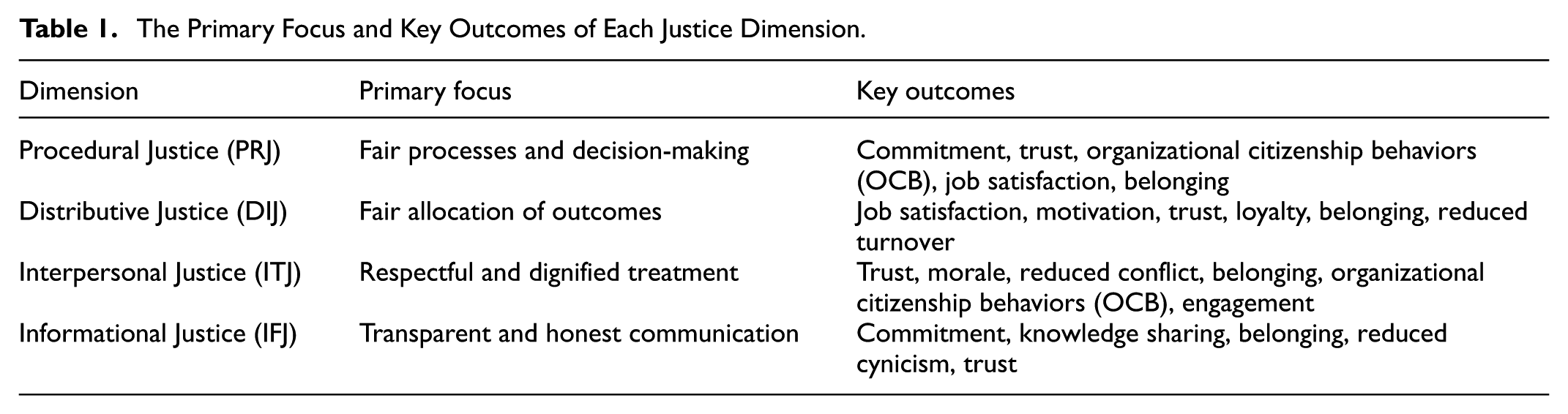
Organizational fairness, encompassing the variegated realms of procedural, distributive, interpersonal, and informational justice, weaves the very tapestry from which robust, principled, and enduring institutions are fashioned (Schminke et al., 2000). By delving into and consciously fostering these nuanced justice dimensions, executives can enkindle an atmosphere rich in trustworthiness and belonging, galvanize profound commitment, and architect a foundation for enduring institutional ascendancy (Malla & Malla, 2023). The seamless interlacing and conscientious enforcement of these justice doctrines throughout quotidian managerial praxis transmute fairness from a mere theoretical ideal into a lived, tangible verity for every echelon of the organizational populace (Unterhitzenberger & Bryde, 2019).
Leader–Member Exchange (LMX) theory helps explain how respect for supervisors leads to a stronger sense of belonging among employees through organizational fairness. When employees respect their supervisors, it encourages fairness and openness at work (C. Yang et al., 2016). A workplace built on fairness and respect helps employees feel included, valued, and connected (Ozdemir et al., 2022). Research shows these types of justice act as pathways through which respect for supervisors boosts employees’ sense of belonging (Colquitt & Zipay, 2015; Graso et al., 2020). Following LMX theory, it is expected that all four types of justice will mediate this relationship, as a fair climate helps employees feel more at home in the organization (Demirtas et al., 2017; Z. Wang & Xu, 2019).
Respecting leaders can significantly promote organizational fairness, which including four dimensions: procedural fairness, distributive fairness, interpersonal justice, and informational justice (Huong et al., 2016). Distributive fairness concerns the perceived fairness of outcome allocation, where individuals feel their inputs and outcomes are justly balanced (R. Wang et al., 2020). Procedural justice pertains to the fairness of the rules and procedures involved in decision-making regarding tasks or outcomes (Donner et al., 2015). Interpersonal justice reflects the quality of personal treatment individuals receive in their environment (Hannam & Narayan, 2015), while informational justice pertains to the explanations given for decisions made. When employees respect their leaders, these leaders are more inclined to display ethical leadership and foster organizational fairness (C. Yang et al., 2016). Respected leaders tend to ensure distributive fairness, thereby garnering increased respect from employees (Walsh et al., 2018). Followers’ perceptions of interpersonal fairness are positively associated with their views of leaders’ transformational leadership abilities, indicating that leaders who treat individuals with dignity and respect can better motivate them and enhance organizational fairness (Reb et al., 2019). Furthermore, the respect and pride group members have toward their leaders promote informational fairness within organizations (Al-Atwi, 2018).
Justice can significantly promote a sense of belonging within organizations. Inequality, conflict, distrust, and marginalization diminish this sense of belonging, whereas individuals with a strong sense of belonging integrate group goals into their self-concept (Schmader & Sedikides, 2017). Organizational justice ensures employees feel treated fairly, thereby enhancing their sense of belonging (Ozdemir et al., 2022). Promoting organizational justice can also reduce internal corruption and foster a strong sense of belonging among employees (Graso et al., 2020). Respect for leaders contributes to organizational justice and democracy, as respected leaders are dedicated to promoting fairness, which nurtures a sense of belonging (Demirtas et al., 2017). Additionally, Sumayya and Raziq (2019) assert that a fair performance evaluation process is essential, as employees expect equitable treatment and recognition. Such fair treatment boosts loyalty, support, efficiency, effectiveness, and fosters a sense of belonging and trust among employees.
Higher evaluations of supervisors correlate with a stronger sense of belonging among employees. Employees who respect their leaders perceive higher levels of fairness, which can enhance their sense of belonging (Colquitt & Zipay, 2015). This respect directly influences employees’ sense of belonging; the greater the respect for leaders, the stronger this sense becomes (Adeel et al., 2018). X. Zhang et al. (2025) further proposes that establishing respect in the workplace directly impacts employees’ perceived sense of belonging.
In conclusion, the leader-member exchange theory suggests that employees’ respect for leaders fosters an environment of organizational fairness, which in turn enhances their sense of belonging. Z. Wang and Xu (2019) assert that in a fair organizational environment, higher levels of respect for leaders correlate with a greater sense of belonging. This study demonstrates a positive correlation between respect for leaders and organizational fairness, indicating that employees’ perceptions of procedural, distributive, interpersonal, and informational fairness significantly contribute to their sense of belonging.
Therefore, we propose the following hypotheses:
Leader–Member Exchange (LMX) theory explains how respect for supervisors establishes fairness in the workplace, which, in turn, enhances employees’ trust in leadership (Xue et al., 2020). When employees respect their supervisors, leaders are more likely to implement fair procedures, make equitable decisions, treat staff with dignity, and communicate openly (Mo & Shi, 2017). These experiences of justice fulfill social and emotional needs and promote both cognitive and affective trust in leaders (González-Cánovas et al., 2024; Ho, 2024). Research consistently demonstrates that each dimension of justice provides a pathway through which respect for supervisors improves employees’ trust (Saleem et al., 2020; Xu et al., 2016). Thus, procedural, distributive, interpersonal, and informational justice are expected to mediate the positive relationship between respect for supervisors and employees’ sense of trust in organizations.
Distribution fairness pertains to employees’ perception of the fairness of organizational allocation outcomes (DeOrtentiis et al., 2022). Interpersonal fairness concerns how employees are treated with politeness, respect, and equality within the organization (Bies, 1986), especially the behaviors of leaders toward employees, including honesty, sensitivity, and respect during interactions. Information fairness addresses the quality of information exchange among employees during the decision-making process (Shin et al., 2015). Particularly in the context of interpersonal and procedural fairness, employees’ respect for leaders and other positive relationships within the organization foster the formation of leader-member exchange (LMX) relationships (W.-S. Choi et al., 2021). Zhou et al. (2021) highlighted that establishing an exchange relationship involves trust in commitments made to the other party. Perceived fairness and trust constitute essential components of the exchange relationship, with previous research linking employees’ evaluations of leaders to trust (M. Kim et al., 2018). However, limited research explores the impact of organizational fairness on the relationship between respect for leaders and trust. This study will explore how organizational fairness mediates this relationship.
According to leader-member exchange theory, employees’ respect for leaders fosters a fair environment, thereby enhancing trust in leadership (Xue et al., 2020). Leaders contribute to creating a fair environment to meet economic, social, and emotional needs, such as recognition and respect (Asif et al., 2019). This exchange relationship, built on trust, develops into long-term reciprocal obligations (Jeong & Oh, 2017). Trust is crucial in social interactions, as individuals must trust that their benefits to others will be reciprocated (X. Yang, 2019). In organizational settings, positive evaluations of leaders by employees, such as respect, enhance leaders’ well-being. This heightened well-being prompts leaders to be more attuned to employees’ challenges and to implement fair organizational practices, ensuring fairness in procedures, distribution, interpersonal relationships, and information. Consequently, employees’ work enthusiasm increases (Xue et al., 2020). When employees respect leaders and benefit from the resulting fair environment, their trust in leaders is strengthened (Holley et al., 2018). Mo and Shi (2017) found that when employees respect their leaders, leaders are more likely to establish a fair working environment. This environment is characterized by procedural fairness (having open and equitable procedures that allow employees to express their opinions and feel valued), distributive fairness (allocating rewards equitably based on employees’ contributions), interpersonal fairness (maintaining respectful and harmonious interactions between leaders and employees), and informational fairness (providing employees with truthful and consistent information without favoritism). Such a work environment fosters employees’ trust in their leaders.
The relationship between organizational fairness and cognitive trust underscores the critical role of fairness in fostering trust and positive workplace outcomes (Xu et al., 2016). Organizational justice, encompassing distributive, procedural, interpersonal, and informational fairness, serves as a foundation for cognitive trust, which is based on rational evaluations of competence and reliability (Ho, 2024). Procedural justice, in particular, plays a pivotal role, as transparent and consistent decision-making processes strengthen employees’ trust in leaders. Additionally, cognitive trust acts as a mediator between perceived fairness and positive workplace behaviors by enhancing trust in supervisors and leaders, which, in turn, drives employee engagement, collaboration, and loyalty (Saleem et al., 2020). Overall, organizational fairness builds cognitive trust by ensuring fairness and reliability in processes, ultimately improving organizational performance.
Fairness in organizational practices fosters emotional bonds and goodwill between employees and their leaders or peers (Ho, 2024). Affective trust is strongly influenced by perceptions of procedural, distributive, interpersonal, and informational fairness, with interactional justice (respect and dignity in interpersonal dealings) playing a particularly critical role in strengthening relationships built on care and empathy (González-Cánovas et al., 2024). This emotional connection enhances affective commitment, work engagement, and fosters a positive organizational climate (Chen et al., 2015). In summary, organizational fairness promotes affective trust by ensuring fairness and respectful treatment, emotionally connecting employees to their leaders and the organization. In summary, when employees respect their leaders, it fosters a fair working environment, thereby enhancing employees’ trust in those leaders. This study supports the positive correlation between respect for leaders and organizational fairness. Employees’ perception of fairness in procedures, distribution, interpersonal relationships, and information significantly increases their trust in leaders.
Therefore, we propose the following hypothesis:
Materials and Methods
Partial Least Squares-Structural Equation Modeling (PLS-SEM) is applied by this study for several reasons. The complex models with multiple variables and constructs of this study are handed. The limited sample size (277 questionnaires) is suitable to be analysis by SMART-PLS. The reflective constructs of this study are analyzed by SMART-PLS can indicate the effects among variables.
Sample and Procedure
The survey involved 277 employees from small and medium technology enterprises in Hunan province, China. Utilizing convenience sampling with a 100% response rate. Conducted via the online platform Questionnaire Star (https://www.wjx.cn/), the survey provided a comprehensive overview of these enterprises’ conditions. It highlighted their rapid growth, strong innovation capabilities, and market adaptability, predominantly within high-tech sectors such as software development and IT services. They face challenges, such as recruitment difficulties and unfriendly employee relationships, which impact their sustainable development. The findings offer valuable insights into the operational realities and challenges of these enterprises.
Measures
In this study, the majority of measurement scales are derived from established scales used in previous research. When translating the English items into Chinese, modifications were made to fit the specific circumstances of the research participants while preserving the original meaning. The independent variable is respect for the supervisor, the mediating variable is organizational fairness, and the dependent variables are sense of belonging and trust. These variables are measured using multi-item scales on a 7-point Likert scale (1 = strongly disagree; 7 = strongly agree). Cronbach’s alpha values were employed to assess the internal consistency of each variable. The details of measurement scales refer to Table A1 in appendix.
Respect to Supervisors
This study employed seven items to measure Respect for supervisors. Because respect pertains to employees’ evaluations of their supervisors, an evaluation scale more effectively captures employees’ perspectives. Consequently, this study utilized an evaluation scale, developed from Tyler and Blader (2000), to assess respect for supervisors. The scale demonstrated strong internal consistency, with a Cronbach’s alpha of 0.886.
Procedural Justice
This study measured procedural justice using a seven-item scale rooted in control-based procedural justice standards established in the literature (Lind & Tyler, 1988). The dimensions assessed included procedural fairness, informational fairness, distributive fairness, and interpersonal fairness. The scale, referenced from Colquitt (2001), demonstrated strong reliability, with a Cronbach’s alpha of 0.908.
Distributive Justice
This study utilized four items to measure distributive justice, derived from the organizational fairness scale as outlined by Colquitt (2001). This measurement reflects Leventhal’s (1976) conceptualization of fairness rules, ensuring broad applicability. The Cronbach’s alpha for this scale was 0.851, indicating high reliability.
Interpersonal Justice
Interpersonal justice, introduced by Bies (1986), encompasses legitimacy (e.g., explanations of decisions), sincerity (e.g., honesty and absence of deception from authorities), respectfulness (e.g., politeness instead of rudeness), and propriety (e.g., avoiding improper or biased comments) as described by Colquitt (2001). This study employed four items to measure interpersonal justice based on the organizational fairness scale, yielding a Cronbach’s alpha value of .843.
Informational Justice
This study employed the subscale of informational justice, derived from the organizational fairness scale, to measure informational justice. Kernan and Hanges (2002) identified this subscale, which includes two items related to explanations of reorganizations. The reliability of this subscale was confirmed with a Cronbach’s alpha value of .853.
Belonging
This study utilized three items to measure the scale of belonging, drawing on related scales developed by Ibarra and Andrews (1993), which were originally based on Miller’s (1980) work on belonging and acceptance. Additionally, Chung et al. (2020) measured belonging using a scale comprising two dimensions: belonging and uniqueness, which informed our methodology. The Cronbach’s alpha for this scale was reported as .796.
Trust
Organizational trust in this study was measured using the trust scale developed by C.-P. Lin (2010), which consists of three items directly extracted from Mayer and Davis (1999). The Cronbach’s alpha for this scale was .805.
Control Variables
Gender, age, education, organizational tenure, and type of work were used as controls because the limit influence perceptions of respect, belonging, trust, and justice at work. Gender shapes experiences through societal norms, while age affects views based on career stages and experience (Ridgeway, 2009). Education impacts expectations of authority and relationships (Fulford, 2016). Tenure reflects familiarity with the organization, affecting trust and belonging (Knapp et al., 2014). Work type, such as sales operations, support work, managerial work, others, shapes how employees perceive respect, trust, and justice (Colquitt & Zipay, 2015).
Results
Demographic Analysis
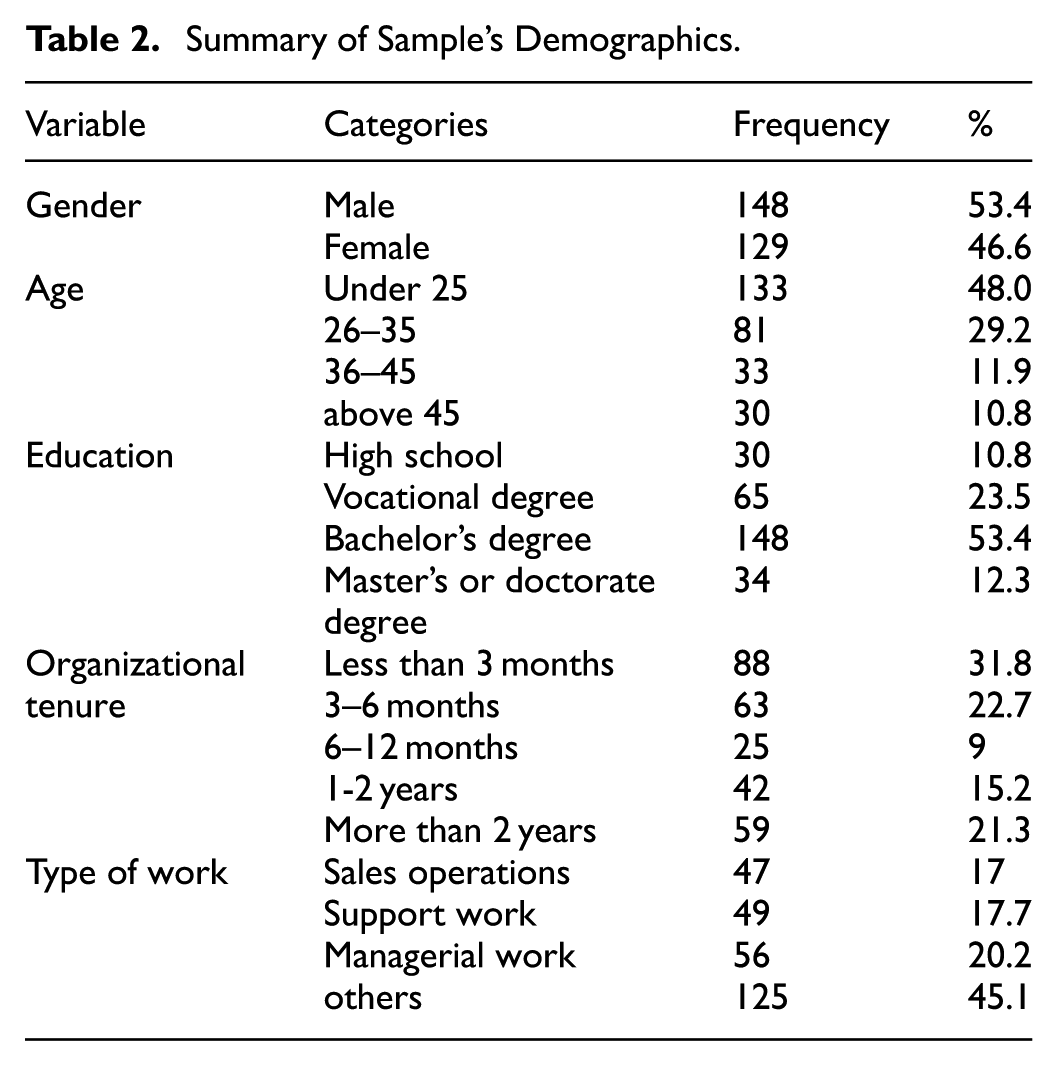
As shown in Table 2, the demographic analysis offers detailed insights into the composition of participants across five key variables: gender, age, education, organizational tenure, and type of work. The gender distribution reveals a slight predominance of males over females, with a 6.8% difference, though the sample remains reasonably balanced. The majority of participants are young, with nearly half (48.0%) under 25 years old. Those aged 26 to 35 make up 29.2% of the sample, while participants aged 36 to 45 and over 45 account for 11.9% and 10.8%, respectively. Most participants hold a Bachelor’s degree (53.4%), followed by those with vocational degrees (23.5%), Master’s or Doctorate degrees (12.3%), and high school education (10.8%). Regarding organizational tenure, 31.8% of participants have been with their organization for less than 3 months, 22.7% for 3 to 6 months, 9.0% for 6 to 12 months, 15.2% for 1 to 2 years, and 21.3% for over 2 years. In terms of type of work, the largest category is “Others” at 45.1%, indicating that nearly half of the participants do not fall into the specified job categories. Managerial roles constitute 20.2%, followed by support work (17.7%) and sales operations (17.0%). This distribution provides a comprehensive view of the sample’s diversity, essential for assessing the study’s sampling rigor and relevance.
Summary of Sample’s Demographics.
Measurement Tests
Data were collected in two waves in January 2024, with a two-week interval between each wave. This approach helps control for common method variance. This study employed Harman’s single-factor analysis to assess common method bias, confirming that a single factor accounts for less than 50% of the variance in the data (39.482%), indicating the absence of common method bias.
Table 3 presents the results of the analysis of internal consistency reliability and convergent validity for various constructs measured by SMART-PLS. Each construct was evaluated using several indicators, with the table listing their loadings, VIF (Variance Inflation Factor), CA (Cronbach’s Alpha), CR (Composite Reliability), and AVE (Average Variance Extracted). All constructs demonstrated high internal consistency reliability, as evidenced by Cronbach’s alpha values exceeding the commonly accepted threshold of .7. The highest CA was observed for Procedural Justice (PRJ) at 0.908. All constructs also showed good reliability, with CR values exceeding 0.7; these ranged from 0.797 (Belonging) to 0.910 (Procedural Justice). Satisfactory AVE values above 0.5 were noted, indicating that over 50% of the variance in the indicators is captured by the construct. Except for Informational Justice (0.629) and Respect for supervisors (0.639), all constructs had AVE values above 0.6. All indicator loadings were above 0.7, suggesting good indicator reliability, with some slightly lower values, such as ETS3 (0.737), still being acceptable. VIF values ranged from 1.640 to 3.083, well below the threshold of 5, indicating no multicollinearity issues.
Internal Consistency Reliability and Convergent Validity.

Note. AVE = average variance extracted; CA = = Cronbach’s alpha; CR = composite reliability.
The measured constructs exhibit strong internal consistency reliability, as reflected by high Cronbach’s Alpha (CA) and Composite Reliability (CR) values, and demonstrate convergent validity, with Average Variance Extracted (AVE) values exceeding .5. Additionally, item loadings surpass the acceptable threshold, affirming each item’s effective contribution to its respective construct. The absence of multicollinearity, indicated by Variance Inflation Factor (VIF) values below the critical limit, further suggests that the measurement model is both robust and reliable for analysis.
As shown in Table 4, the sample exhibits a diverse distribution in terms of education and tenure while maintaining consistent demographic characteristics. The correlation matrix indicates no excessive multicollinearity, suggesting that each construct measures distinct aspects of the variables. The Fornell–Larcker Criterion confirms that each construct shares more variance with its own items than with those of other constructs, validating discriminant validity and confirming a robust construct structure.
Means, Standard Deviations, Correlations, and Discriminant Validity (Fornell–Larcker Criterion).

Note. Values in bold and italic are square roots of the AVE.
M = mean; SD = standard deviations.
Based on the data presented in Table 5, all HTMT ratios fall below the 0.85 threshold, indicating acceptable discriminant validity across the listed constructs.
Discriminant Validity (HTMT Ratio of Correlations).

Hypotheses Test
In analyzing the path coefficients derived from SMART-PLS, we examined the hypothesized relationships and their statistical significance. Table 5 and Figure 2 provide valuable insights into the relationships among Respect for supervisors, various forms of organizational justice, and employees’ sense of belonging and trust. The Q-square values for the affected variables are greater than zero (BEL = 0.401, DIJ = 0.241, IFJ = 0.241, ITJ = 0.233, PRJ = 0.211, TRU = 0.374) and exceed the acceptable threshold of 0.1 (BEL = 0.591, DIJ = 0.354, IFJ = 0.393, ITJ = 0.347, PRJ = 0.334, TRU = 0.552). The f-square values, which indicate effect sizes of small (0.02), medium (0.15), and large (0.35), show a large effect size in this study (DIJ = 0.061, IFJ = 0.084, ITJ = 0.045, PRJ = 0.043, ETS = 0.032). This suggests that the model has predictive relevance concerning the endogenous latent constructs.
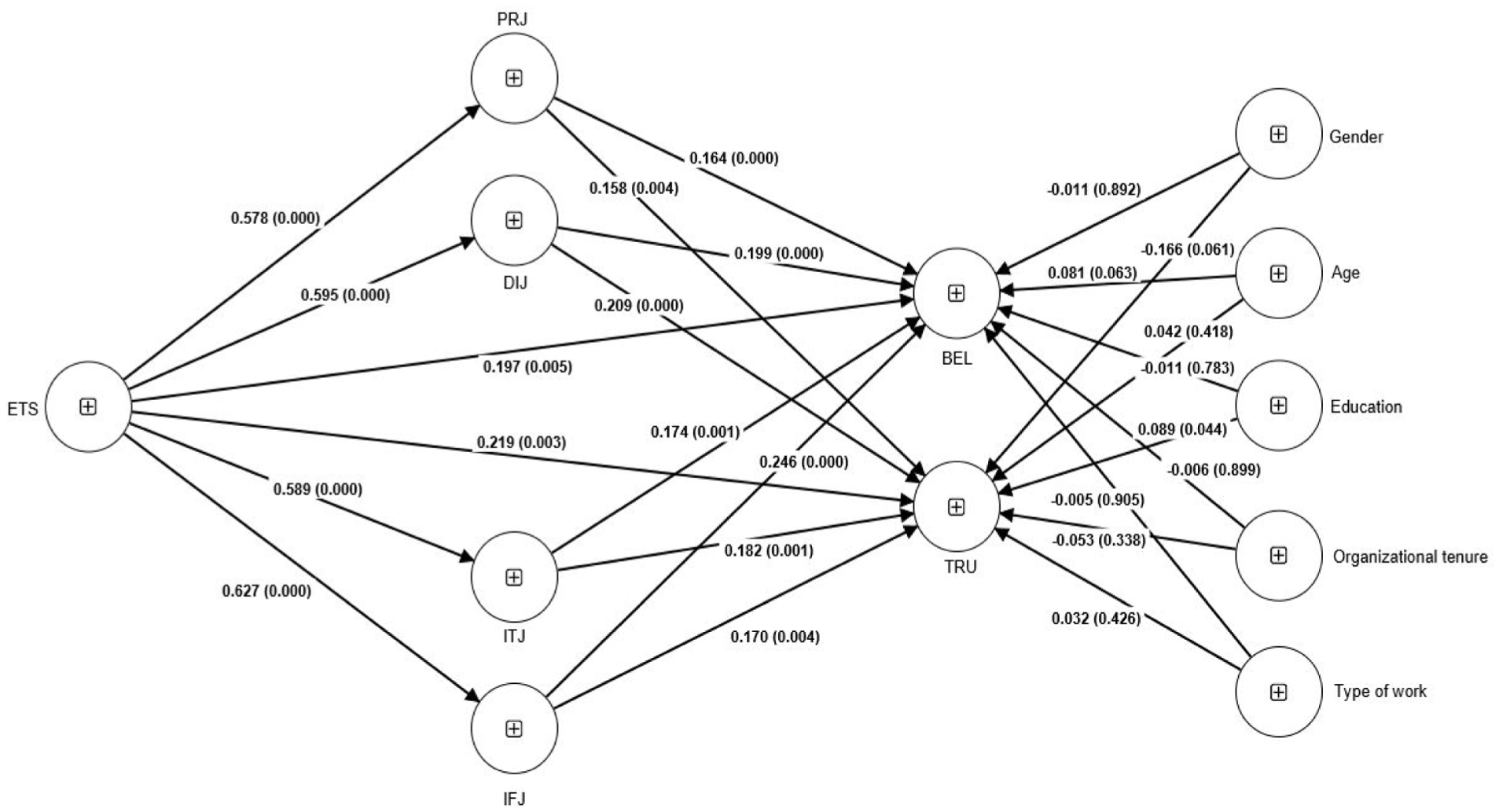
Results of PLS structural path model.
As showed in Table 6, the analysis revealed that none of the control variables exhibited statistically significant relationships with either belonging (BEL) or trust (TRU). Age no significant effect on belonging (β = .081, p-value = .063) or trust (β = .042, p-value = .418). Education presented no significant impact on belonging (β −.011, p-value = .783) or trust (β = −.009, p-value = .832). Gender did not significantly influence belonging (β = −.011, p-value = .892) or trust (β = −.166,p-value = .061). Organizational tenure was not a significant predictor of belonging (β = −.006, p-value = .899) or trust (β = −.053, p-value = .338). Type of work did not have a significant relationship with belonging (β = −.005, p-value = .905) or trust (β = .032,p-value = .426).
Path Coefficients.
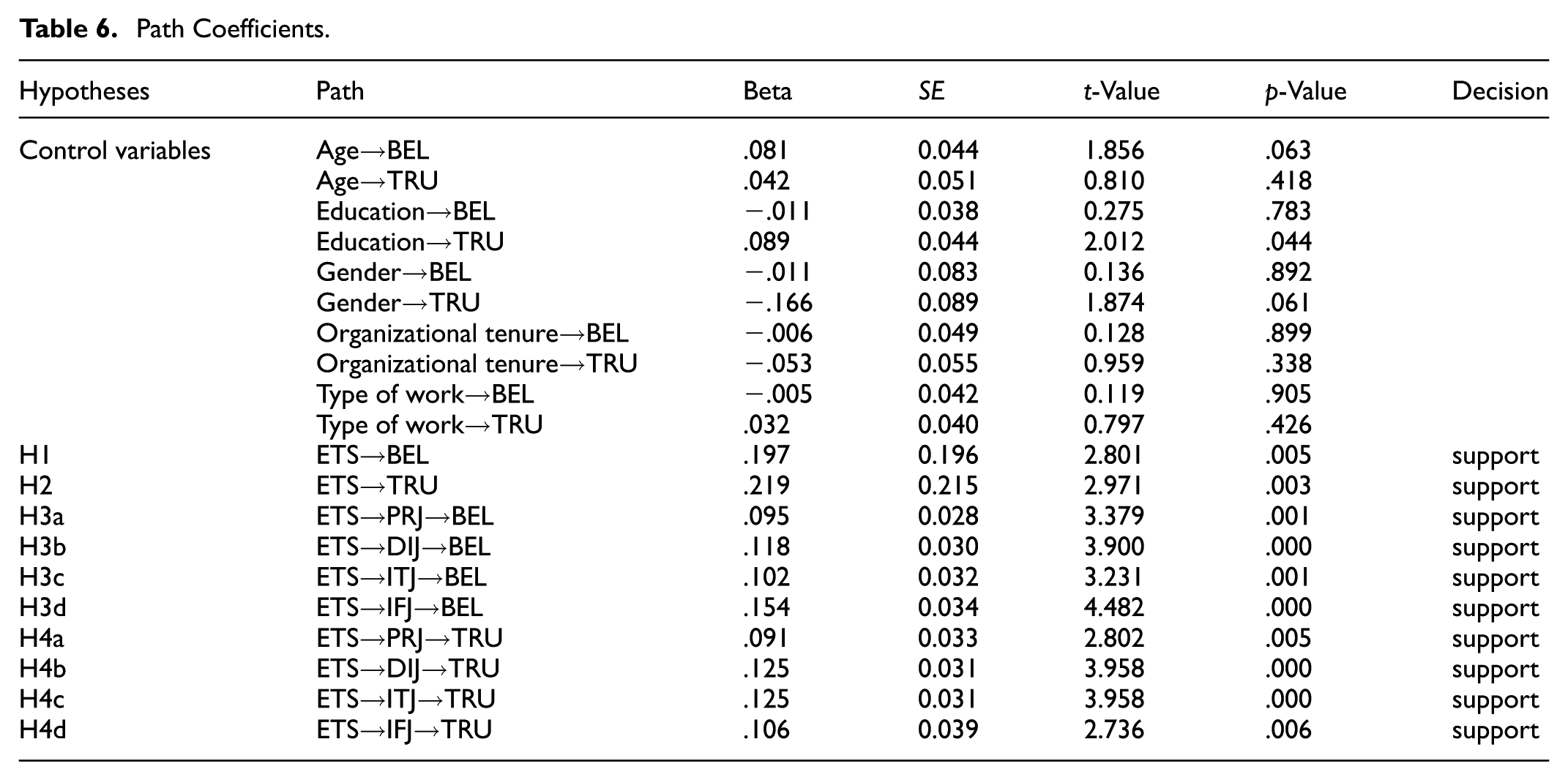
As Table 6 and Figure 2, this study examines the relationships between respect for supervisors (ETS), belonging (BEL), trust (TRU), and various forms of justice, namely procedural (PRJ), distributive (DIJ), interpersonal (ITJ), and informational (IFJ). The hypotheses testing revealed significant positive effects for all proposed relationships. Specifically, respect to supervisors positively influenced belonging (H1: β = .197, p = .005) and trust (H2: β = .219, p = .003). The mediating role of justice types was also confirmed; procedural justice mediated the relationship between respect and belonging (H3a: β = .095, p = .000), as well as between respect and trust (H4a: β = .091, p = .005). Distributive justice showed similar mediation effects between respect and belonging (H3b: β = .118, p = .000) and trust (H4b: β = .152, p = .000). Interpersonal justice mediated these relationships as well (H3c: β = .105, p = 0.001; H4c: β = .125, p = .000), alongside informational justice (H3d: β = .154, p = .000; H4d: β = .106, p = .006).
These findings support the notion that justice perceptions play a crucial role in fostering employees’ feelings of belonging and trust within the workplace, highlighting the importance of respecting supervisors in organizational contexts.
Discussion, Implications, and Limitations
Discussion
This study explores the impact of respectful respect to supervisors on the sense of belonging and trust, incorporating both mediating and moderating variables. The model is based on the leader-member exchange theory, which explains the relationships among respect, sense of belonging, and trust. Empirical research indicates that the influence of respectful leadership on the sense of belonging (H1) and trust (H2) aligns with previous findings (Rogers & Ashforth, 2017; Voigt et al., 2017). Respect for leaders originates from the recognition of their behaviors; a higher evaluation of leaders corresponds to increased employee feelings of belonging and trust. Additionally, the mediating role of various forms of fairness (procedural, interpersonal, distributive, and informational) in the relationship between respect, sense of belonging (H3a, H3b, H3c, H3d), and trust (H4a, H4b, H4c, H4d), which supports earlier research (Qiu & Dooley, 2022). For instance, Nazir et al. (2019) found that fair distribution of organizational outcomes can enhance trust in leaders and organizations. Conversely, perceptions of unfairness can evoke anger and lead to distrust in leaders (Tee et al., 2017).
This study posits that there is an exchange and feedback loop of emotions and resources, specifically fairness, between leaders and employees. When employees highly evaluate and respect their leaders, it prompts fair responses from leaders in interpersonal, informational, distributive, and procedural dimensions. This virtuous cycle enhances employees’ sense of belonging and trust in their leaders. Consequently, this sense of belonging and trust helps maintain team cohesion and functionality in diverse environments, including the workplace. Our findings have significant theoretical and practical implications, which will be elaborated upon in the following sections.
Theoretical Implications
Based on the leader-member exchange theory, this study investigates how employee respect for leaders influences their sense of belonging and trust in those leaders, with program fairness, distributive fairness, interpersonal fairness, and informational fairness considered as mediating variables. The theoretical significance of this study is highlighted in several ways. Firstly, it expands the application of the leader-member exchange theory by integrating respect for leaders, organizational fairness, sense of belonging, and trust within the leader-member exchange model. While the leader-member exchange theory emphasizes reciprocal interactions (W. Lin et al., 2018), prior research has primarily focused on the employee’s perspective, often neglecting the impact on leaders (X.-H. Wang et al., 2015). By introducing the variable of organizational fairness, this study examines how leaders’ receipt of respect from employees can foster a sense of belonging and trust in leaders. Within organizational contexts, when leaders receive respect from employees, they respond by fostering a fair working environment, which, in turn, enhances employees’ sense of belonging and trust in their leaders (Asif et al., 2019).
Secondly, this study integrates organizational fairness with the leader-member exchange theory, thereby enriching its application in the domestic context and enhancing its relevance in describing superior-subordinate relationships in China. This approach contributes to the localization and deepening of the theory. Furthermore, the study examines the relationships among program fairness, distributive fairness, interpersonal fairness, and informational fairness, as well as their impact on the employee-leader relationship. This analysis helps to elucidate the inherent connections among various dimensions of organizational fairness and further expands the theoretical framework of organizational fairness research.
Lastly, this study contributes to the literature on the relationships between respect for leaders, a sense of belonging to leaders, and trust in leaders. Our findings support the notion that respect for a leader can enhance both a sense of belonging and trust toward the leader (Lampinen et al., 2018). Additionally, the study by Holley et al. (2018) demonstrates that organizational fairness is crucial in shaping the dynamics among respect for leaders, a sense of belonging, and trust, thereby confirming and extending previous research. Specifically, this study elucidates how program fairness, distributive fairness, interpersonal fairness, and informational fairness influence the relationship between respect for leaders and a sense of belonging, as well as between respect for leaders and trust.
Practical implications
The results of this study offer practical guidance for leadership and organizational management with several key points. Firstly, this study provides valuable management insights that address the emerging needs of modern Chinese society. Leaders should focus on cultivating their own values and setting an example for employees. Gaining the respect of employees enhances their sense of belonging and trust in leadership, thereby contributing to organizational development. To maximize leadership effectiveness and improve employee dedication, creativity, and loyalty, leaders need to provide organizational rewards, ensure employee involvement in decision-making processes, and make fair decisions.
Secondly, this study demonstrates that organizational fairness significantly influences employees’ sense of belonging and trust in leadership. It highlights the crucial role organizational fairness plays in establishing a healthy and efficient work environment, encouraging employees to courageously invest in their work. Current research indicates that respect for leadership indirectly affects employees’ sense of belonging and trust through the lens of organizational fairness. Consequently, leaders must understand and identify the causal relationships between respect, belonging, trust, and employee commitment to enhance performance. Building reciprocal relationships between leaders and employees fosters mutual trust within the organization. Therefore, it is recommended that organizations focus on comprehensive training and development programs for leaders to promote overall organizational growth.
Thirdly, the results of this study underscore the ethical implications of earning employee respect in organizational management. Leaders who garner such respect foster a sense of belonging and trust, which enhances organizational unity and harmony, thus generating economic benefits aligned with individual interests. When employees respect their leaders, it strengthens their sense of belonging and trust in the leadership. Leaders must prioritize fairness in procedures, distribution, interpersonal interactions, and information dissemination. They should communicate openly with employees, address workplace issues promptly, and customize performance evaluations to motivate employees effectively, thereby encouraging greater contributions to the organization.
Lastly, In the context of Hunan, China, the findings emphasize the critical role of fostering respect for supervisors and implementing justice-oriented management practices (covering procedural, distributive, interpersonal, and informational justice) to enhance employees’ sense of belonging and trust in small and medium-sized technology enterprises. These insights can guide companies in Changsha to develop leadership training programs that promote respect and fairness, create transparent decision-making systems, and prioritize effective communication. Additionally, culturally relevant strategies tailored to Changsha’s regional workforce dynamics can improve employee engagement, strengthen workplace relationships, and enhance talent retention, ultimately contributing to the growth and competitiveness of the local tech industry.
Limitations and Future Research Directions
Despite yielding intriguing findings, this study has several limitations that impact the generalizability of the results. This study could not conclusively establish causal relationships between antecedents and the sense of belonging and trust due to the reliance on self-reported data. These data reflect respondents’ normative perceptions of their workplace experiences, which heightens the risk of distortion through dishonest responses (Thakur, 2018) or common method bias (Dash & Paul, 2021). It is worth noting that a common mitigation for common method bias is introducing a time interval between predictors and outcomes (Kock et al., 2021). The generalizability of our findings is constrained by the focus on specific regions within a single country. To address the growing need for cross-national studies, future research should include a diverse range of countries and regions and compare findings with those from developed countries.
There are several limitations concerning the factors influencing organizations. We did not evaluate alternative paths linking respect for leadership to the sense of belonging and trust, such as motivational approaches. Our focus was on distributive fairness, interpersonal fairness, informational fairness, and procedural fairness, given their intrinsic connections to emotions and cognition, which enhance the sense of belonging and trust. Other factors, such as emotional commitment, envy, and transformational leadership (Lampinen et al., 2018), also affect the sense of belonging and trust. For instance, Dominguez et al. (2020) argue that commitment to employees fosters a sense of belonging. Transformational leadership positively influences trust in leaders. Altunoğlu et al. (2018) suggest that engagement and cooperation among team members, as trust behaviors, lead to the sharing of more ideas, emotions, and aspirations between parties.
There is a paucity of research on the impact of sense of belonging and trust on organizations, despite their critical role in group cohesion and functioning. Knapp et al. (2019) contend that the cooperative attitudes and behaviors emanating from a sense of belonging and trust are especially beneficial for nonprofit organizations. These organizations can more effectively manage their employees and enhance organizational value by helping individuals understand their significant contributions to the organization’s functional and mission achievements. Consequently, future research should prioritize the exploration of the influence of sense of belonging and trust in leadership on other areas.
Footnotes
Appendix
Measurements Scales.

| Factors | Questions | Labels |
|---|---|---|
| Respect for supervisors (ETS) | I respect my supervisor. | ETS1 |
| I think of my supervisor as a friend. | ETS2 | |
| My supervisor and I have a lot in common. | ETS3 | |
| My supervisor and I share many of the same values and concerns. | ETS4 | |
| I know my supervisor very well as a person. | ETS5 | |
| I care a great deal about what my supervisor thinks of me as a person. | ETS6 | |
| Belonging (BEL) | I often feel like an outsider in this company. | BEL1 |
| I feel accepted here. | BEL2 | |
| I feel valued by the leader. | BEL3 | |
| Trust (TRU) | I would be willing to let my firm have complete control over my future in the firm. | TRU1 |
| I would be comfortable allowing the firm to make decisions that directly impact me, even in my absence. | TRU2 | |
| I trust my leader perceived economic citizenship. | TRU3 | |
| Procedural justice (PRJ) | Have you been able to express your views and feelings during those procedures? | ORJ1 |
| Have you had influence over the (outcome) arrived at by those procedures? | ORJ2 | |
| Have those procedures been applied consistently? | ORJ3 | |
| Have those procedures been free of bias? | ORJ4 | |
| Have those procedures been based on accurate information? | ORJ5 | |
| Have you been able to appeal the (outcome) arrived at by those procedures? | ORJ6 | |
| Have those procedures upheld ethical and moral standards? | ORJ7 | |
| Distributive justice (DIJ) | Does your (outcome) reflect the effort you have put into your work? | ORJ8 |
| Is your (outcome) appropriate for the work you have completed? | ORJ9 | |
| Does your (outcome) reflect what you have contributed to the organization? | ORJ10 | |
| Is your (outcome) justified, given your performance? | ORJ11 | |
| Interpersonal justice (ITJ) | Has (he/she) treated you in a polite manner? | ORJ12 |
| Has (he/she) treated you with dignity? | ORJ13 | |
| Has (he/she) treated you with respect? | ORJ14 | |
| Has (he/she) refrained from improper remarks or comments? | ORJ15 | |
| Informational justice (IFJ) | Has (he/she) been candid in (his/her) communications with you? | ORJ16 |
| Has (he/she) explained the procedures thoroughly? | ORJ17 | |
| Were (his/her) explanations regarding the procedures reasonable? | ORJ18 | |
| Has (he/she) communicated details in a timely manner? | ORJ19 | |
| Has (he/she) seemed to tailor (his/her) communications to individuals’ specific needs? | ORJ20 |
Acknowledgements
The author(s) appreciate the contributions of editors and all reviewers.

Ethical Consideration
It met APA section 8.05 criteria for waiving consent and was approved by the Ethics Review Committee of the Management College, Changsha Medical University (Approval No. CMU-MC-0003) on 7 January 2024.
Consent to Participate
This study used anonymous questionnaires with no risk to participants, and all responses were kept confidential. Participation was voluntary, withdrawal was allowed at any time, and confidentiality was strictly protected.
Author Contributions
Hua Gao and Gao Wang contributed to the study’s conceptualization and methodology. Hua Gao led the analysis, investigation, data curation, and drafted the manuscript, with both authors reviewing and editing. Gao Wang supervised, managed the project, and obtained funding. Hua Gao is the first author, and Gao Wang is the corresponding author.
Funding
The authors disclosed receipt of the following financial support for the research, authorship, and/or publication of this article: This work was supported by the Changsha Medical University’s Start-up funds for scientific research of high-level talents (for Gao Wang), grand name: Research on digital enabling to stimulate ambidexterity innovation of traditional Chinese medicine agriculture from multiple theoretical perspectives.
Declaration of Conflicting Interests
The authors declared no potential conflicts of interest with respect to the research, authorship, and/or publication of this article.
Data Availability Statement
The raw data from this study is available upon reasonable request. To obtain access, please contact the corresponding author at