



Abstract
This study aims to presents the impact of organizational culture changes on employees’ job satisfaction in Montenegro hotels, utilizing the Competing Values Framework to identify and track cultural transitions. It assumes that organizational culture shapes how employees perceive and evaluate their jobs, thereby influencing their job satisfaction. The first hypothesis states that organizational culture affects the job satisfaction levels and that changes in culture type also changes satisfaction level. The second hypothesis posits that clan culture implies a higher level of job satisfaction than hierarchical culture, and that replacing clan culture with hierarchical culture decreases employees’ satisfaction levels. The study surveyed 765 employees across 47 hotels, collecting data in 2019. Participants assessed both current organizational culture and job satisfaction, and also retrospectively evaluated these factors from 5 years prior. Findings revealed a significant shift in organizational culture within Montenegrin hotels over a 5-year period, with 66.7% of hotels transitioning from clan to hierarchy culture. This cultural transition corresponded with the most substantial decrease in job satisfaction compared to organizations that maintained a clan culture or shifted from an adhocracy/market to a clan culture. The specific transition from a clan to a hierarchical culture emerged as particularly harmful, with significant negative effects confirmed at both individual and organizational levels. These results highlight the importance of the human impact of cultural change, suggesting that management should carefully evaluate the potential consequences of shifting from family like clan cultures to more formalized hierarchical structures.
Keywords
Introduction
Job satisfaction, understood as “a positive and pleasurable state resulting from an individual’s job appraisal or job experience” (Fila et al., 2014, p. 639), has a long-standing history of research in the fields of organizational behavior and human resource management (Cheng, 2024). This enduring interest largely stems from the widely held belief that job satisfaction leads to greater productivity, and consequently, better company performance (Judge et al., 2001; Staw, 1986).
Factors affecting job satisfaction have been identified at both the individual and organizational levels. At the organizational level, these factors include wage systems, job characteristics, working conditions, leadership style, organizational structure, and colleagues (Luthans, 2005). When organizational factors are viewed as contextual elements that shape individuals’ attitudes toward their jobs (essentially job satisfaction), organizational culture must also be considered as an essential component. Cultural assumptions, values, and norms are imposed on members of the organization, shaping their perception, reasoning, and behavior in both their work and daily life (Janićijević, 2013). Among other influences, organizational culture significantly shapes how employees perceive and react to their jobs. It can create a favorable or unfavorable environment for achieving work outcomes and employee values, thus significantly affecting job satisfaction. To date, numerous studies have confirmed the influence of organizational culture on job satisfaction (Belias & Koustelios, 2014; Fatima, 2016; Janicijevic et al., 2015; MacIntosh & Doherty, 2010; McKinnon et al., 2003; Nebojša et al., 2020; Sabrina & Linda, 2024; Shurbagi & Zahari, 2012; Silverthorne, 2004). These studies have not only validated the relationship but also explained the mechanisms through which various types of organizational culture impact job satisfaction. However, the relationship between the two constructs must be explored within the context of change. A critical question emerges: Does organizational culture influence employee job satisfaction during a cultural change. If culture affects the job satisfaction levels, will a change in culture lead to changes in job satisfaction? This question has not been researched in the literature thus far, and this study aimed to fill this gap.
This study presents the impact of changes in organizational culture on job satisfaction during the hotel industry’s transition in Montenegro over a 5-year period (2013–2019). During this period, hotels in Montenegro underwent extensive transformational changes caused by alterations in their sector ownership structure, as part of country’s overall economic transition. Since the transformation of these hotels also involved changes in their organizational culture, this study analyzed the extent to which changes in the dominant types of organizational culture affected job satisfaction among employees.
This study aimed to establish whether the existence of a causal relationship exists between organizational culture and the job satisfaction levels among employees during changes in organizational culture. In other words, this research attempt to prove that a change in organizational culture also affects job satisfaction. The second aim of the study was to determine which organizational culture type evokes the highest employee satisfaction, and whether replacing one culture type with other leads to an increase or decrease in job satisfaction. Finally, the third aim was to identify the dominant organizational culture type in Montenegro hotels and to examine how it evolved during the transition.
The remainder of this paper is organized as follows. The first section provides a comprehensive literature review, offering an overview of existing research concerning organizational culture, job satisfaction, and the relationship between these two constructs. The second section develops the theoretical framework, elaborating the conceptual model that outlines the influence of organizational culture on job satisfaction and formulates the corresponding hypotheses. The third section details the empirical research conducted within the Montenegro hotel industry during its transition period, outlining the research context, sampling procedures, instruments, and statistical methods. The fourth section presents the results accompanied by a critical discussion. Finally, the conclusion outlines the study’s key conclusions, implications, and limitations.
Literature Review
Given that the focus of this study is the influence of organizational culture on job satisfaction, the literature review should encompass a review of relevant research on both concepts, as well as studies examining the impact of organizational culture on job satisfaction.
Organizational culture is understood as a system of assumptions, values, norms, and attitudes (E. Schein, 2004), expressed through symbols (Rafaeli & Worline, 2000) that members of an organization have developed and adopted through mutual experience (E. Schein, 2004), helping them determine the meaning of the world around them and how to behave within it (Peterson & Smith, 2000). Cultural assumptions, viewed as hypotheses about reality (E. Schein, 2004); values, regarded as ideal states that organizations should strive for (Rokeach, 1973); and, cultural norms, understood as social expectations regarding the behavior of organization members (Hofstede et al., 1990), serve as strong guidelines for understanding and addressing people, phenomena, and occurrences within the organization. The everyday decisions, actions, and interactions of employees and managers are largely determined by the assumptions, values, and norms of the organizational culture.
Organizational culture is a complex and multidimensional phenomenon, studied from a wide range of perspectives and through diverse methodological approaches (Dauber et al., 2012; Gutterman, 2024; Tadesse Bogale & Debela, 2024). Organizational culture models represent conceptual framework that illustrate content. E. H. Schein’s (1986), Hofstede’s (1990), and Hatch’s (1993) models of culture are among the most influential. In Schein’s model, the content of culture consists of assumptions, espoused values, and artifacts, whereas in Hofstede’s model, values play a central role, and assumptions are absent. Hofstede argues that assumptions are primarily part of national culture rather than organizational culture. Like Hofstede, Hatch incorporated symbols to Schein’s cultural elements.
According to Dauber et al. (2012), the literature presents three approaches to studying culture: the dimensional, interrelated, and typological. The dimensional approach focuses on identifying the dimensions of organizational culture as variables suitable for measurement and management. Well-known classifications of dimensions include those proposed by Hofstede et al. (1990), Sagiv and Schwartz (2007), Denison et al. (2004), and Ashkanasy et al. (2000). A particular challenge lies in the fact that the dimensions of organizational culture often overlap with those of national culture. While some authors, such as Hofstede, draw a clear distinction between these two levels of culture, identifying specific dimensions for national culture (Hofstede, 2001) and separate dimensions for organizational culture, others, such as Sagiv and Schwartz or Trompenaars (1994), do not consider this differentiation between levels of culture as productive.
The interrelated approach focuses on the intercorrelations between organizational culture and other variables within an organization. This branch of organizational culture research is particularly productive because it offers practitioner-relevant insights into the possibilities of improving various aspects of management and the organization by influencing culture. Extensive empirical research has documented that organizational culture affects or correlates with strategic direction (Klein, 2011), performance control (Deem et al., 2010), organizational structure (Ranson et al., 1980), compensation systems (Chen, 2010), organizational learning (Alavi et al., 2005), leadership (Giberson et al., 2009), organizational performance (Wilderom et al., 2000), and job satisfaction (Sabrina & Linda, 2024).
The typological approach is based on an attempt to identify types of organizational culture, thereby simplifying its complexity and making it more accessible for research and management. Numerous diverse organizational culture types can be found in the literature (Balthazard et al., 2006; Cameron & Quinn, 2006; Deal & Kennedy, 1982; Denison et al., 2004; Handy, 1979; O’Reilly et al., 1991; Trompenaars, 1994). These classifications are distinguished based on the specific categorization dimensions employed.
Organizational culture is a dynamic phenomenon, and its changes have been the subject of extensive studies. Research in this area has primarily focused on three issues: the causes, processes, and methods of organizational cultural changes. (Kressmann & Mueller-Seeger, 2025).
Job satisfaction, understood as an employee’s attitude toward the work they performs, is defined as the “individual’s cognitive, affective, and evaluative reactions toward his or her job” (Locke, 1969, p. 312) or “…how people feel about their jobs and different aspects of their jobs. It is the extent to which people like (satisfaction) or dislike (dissatisfaction) their jobs” (Spector, 1997). There is broad consensus that employees’ job satisfaction enhances their motivation and, consequently, their productivity, while simultaneously reducing absenteeism and turnover intentions (Fatima, 2016).
Some authors view job satisfaction as a single, overall attitude toward work (Alegre et al., 2016). However, most scholars regard it as a multifaceted construct, as it does not represent an attitude toward work as a unified whole but encompasses attitudes toward multiple dimensions or aspects of a job (Fila et al., 2014). The literature identifies numerous job dimensions that employees evaluate when forming attitudes toward a job; however, the following job dimension groups are most commonly distinguished: 1. job per se; 2. salary; 3. working conditions; 4. Relationship with managers; 5. Relationships with colleagues: 6. possibility of promotion (Baxi & Atre, 2024; Belias & Koustelios, 2014; Janicijevic et al., 2015; Kovacevic & Petrovic, 2006; Luthans, 2005
Herzberg (1987) is widely credited with laying the foundation for research on job satisfaction, as he was among the first to distinguish between the factors that determine the level of satisfaction (motivators) and those that determine dissatisfaction (hygiene factors). Motivators are typically intrinsic, whereas hygiene factors are extrinsic. The importance of intrinsic factors in job satisfaction is further emphasized by the more recent Self-Determination Theory (SDT). According to this theory, employees are intrinsically motivated and satisfied with their jobs when they fulfill three core psychological needs: autonomy, competence, and relatedness (Allan et al., 2016; Deci et al., 2017; Ryan & Deci, 2017; Wandycz-Mejias et al., 2025). SDT also highlights the role of both the work and social environments in creating the conditions necessary to satisfy these psychological needs (Wandycz-Mejias et al., 2025).
Using their Job Characteristics Model, Hackman and Oldham (1976) highlighted the importance of the job itself in fostering job satisfaction. They proposed that job satisfaction arises from three psychological states of employees: 1. experiencing the meaningfulness of work; 2. experiencing responsibility for work outcomes, and 3. possessing knowledge of the actual results of work. However, these three psychological states result from five job characteristics: skill variety, task significance, task identity, autonomy, and feedback.
More recent theories, such as Social Exchange Theory (SET), introduce additional elements to the understanding of job satisfaction, particularly regarding the influence of organizational culture. SET posits that behavior and relationships among organizational members are based on reciprocity within social interactions, leading to harmony and balance among employees. (Cook et al., 2013; Mitchell et al., 2012). When this balance is perceived, employees are more likely to feel satisfied and motivated to achieve higher performance.
Questionnaires are the most commonly used method for researching and measuring job satisfaction. A wide range of scales has been developed, including the following: 1. global scales, which assess the overall level of employee satisfaction, such as The Generic Job Satisfaction Scale (Macdonald & Maclntyre, 1997); 2. facet scales, which measures the satisfaction with specific aspects of the work environment, such as Spector’s Job Satisfaction Survey 2 (Spector, 2020); and 3. composite scales, which measures the overall job satisfaction by averaging scores across multiple facets (Baxi & Atre, 2024).
To date, several factors affecting job satisfaction at both the organizational and individual levels have been identified (Luthans, 2005). Organizational factors refer to aspects of the workplace that shape the environment and either enable or hinder employees in attaining valued outcomes from their work. These include wage systems, job characteristics, working conditions, leadership style, rewards, organizational structure, and colleagues.
Among the various organizational factors influencing job satisfaction, organizational culture has long been recognized in the literature as a significant determinant (Sadikin et al., 2025). This is because organizational culture, as a determinant in shaping the meaning that members attribute to their surrounding reality, significantly shapes their perception of the work environment and organizational context, determining whether it is favorable or unfavorable for fulfilling their needs (Bellou, 2010; Janicijevic et al., 2018). Furthermore, the authors have emphasized the role of organizational culture in shaping several components of the organization that, in turn, influence job satisfaction, such as leadership style, organizational structure, and human resource policy (Chang & Lee, 2007).
Numerous earlier studies on the impact of organizational culture on job satisfaction have indeed confirmed that this impact does, in fact, exist (Bellou, 2010; Bigliardi et al., 2012; Fatima, 2016; Nebojša et al., 2020; Sadikin et al., 2025; Silverthorne, 2004). While some studies have focused on how culture directly influences job satisfaction (MacIntosh & Doherty, 2010), others have examined the role of organizational culture as a mediating variable that moderates the impact of another variable, such as leadership or human resource practices, on job satisfaction (Nainggolan et al., 2023; Sabuhari et al., 2020; Sapkota et al., 2024).
Two approaches can be used to examine the effect of organizational culture on job satisfaction. The first approach attempts to determine the impact of individual values in organizational culture on job satisfaction. These studies have established that cultures with higher job satisfaction levels are supportive and most often contain values and norms focused on individuals, their needs, and development. The positive impact of organizational culture on job satisfaction is related to the cultural values emphasizing support and respect toward individuals and their needs for learning and development (Bellou, 2010; Nebojša et al., 2020; Silverthorne, 2004). Conversely, organizational culture is related to lower job satisfaction when it implies competition among members of the organization, win-lose orientation, pressure for results, and aggressiveness in organizational life (Bellou, 2010; Lievens, 2007).
The second approach seeks to determine the impact of organizational culture type on job satisfaction, specifically, whether and to what extent job satisfaction varies across different types of cultures (Fatima, 2016; Lund, 2003; Odom et al., 1990; Shurbagi & Zahari, 2012). Researchers who used Cameron and Quinn’s Competing Values Framework to classify types of organizational cultures found that clan and adhocracy cultures have a positive impact on job satisfaction, while market and hierarchy cultures have a negative impact on job satisfaction (Fatima, 2016; Lund, 2003; Shurbagi & Zahari, 2012; Silverthorne, 2004). On the other hand, authors who used Harrison/Handy’s classification of organizational culture types found that employee job satisfaction was highest in task culture, followed by power culture, and lowest in role culture (Janicijevic et al., 2018). A study that classified organizational cultures based on the Organizational Culture Inventory into constructive, passive defensive, and aggressive defensive cultures showed that job satisfaction is positively associated with a constructive culture and negatively associated with it (Cooke & Szumal, 2000). Another study that classified organizational cultures as supportive, innovative, and bureaucratic clearly demonstrated that supportive and innovative cultures implied a higher level of job satisfaction than bureaucratic cultures (Bigliardi et al., 2012).
Studies have examined the impact of organizational culture on job satisfaction across various industries, particularly those that are labor intensive and in which human resources have a significant influence on organizational performance. This group includes universities and research organizations (Bigliardi et al., 2012; Crispen & Bulelwa, 2017; Nebojša et al., 2020), as well as organizations in service industries such as healthcare (Bellou, 2010). Given that hotel performance largely depends on the quality of human resources, namely the motivation, commitment, and satisfaction of employees, it is not surprising that the impact of organizational culture on job satisfaction in the hotel industry has been intensively researched in recent years (Dawson et al., 2023; Miralam & Jeet, 2019; Nainggolan et al., 2023; Pawirosumarto et al., 2017; Zahid et al., 2017). In nearly all of these studies, the influence of organizational culture on job satisfaction has been confirmed almost without exception.
Although the impact of organizational culture on job satisfaction has been extensively researched and confirmed over the past few decades from various perspectives across many industries and countries, there is still a gap in this area of research that needs to be addressed. To date, the causal relationship between organizational culture and job satisfaction has not been examined during the process of cultural change. No studies have shown whether the causal relationship between organizational culture and job satisfaction holds true when culture undergoes a radical transformation. Does job satisfaction after a cultural change confirm the assumed influence of culture on job satisfaction? If a culture that implies a higher level of job satisfaction is replaced by a culture associated with a lower level of job satisfaction, will there be a decline in job satisfaction after the cultural transformation? Although previous studies have shown that certain organizational culture types imply higher or lower levels of job satisfaction, no studies to date have examined what happens when one type of organizational culture is replaced by another and whether such a change leads to a shift in the level of job satisfaction in line with the assumed relationships between culture type and job satisfaction level. Addressing this gap requires further research on the differences in job satisfaction levels in the context of the transformation of the dominant type of organizational culture.
Theoretical Framework
The theoretical framework of this research is based on the assumption that, since organizational culture influences interpretations of organizational reality, it also influences their perceptions of the work environment, which, in turn, informs their attitudes toward their jobs (Bellou, 2010). Depending on the dominant cultural values and norms within the organization, employees perceive the work environment as either favorable or unfavorable for their well-being and the fulfillment of their goals and needs within the organization (Sabrina & Linda, 2024). Organizational culture imposes a certain understanding of the workplace on all its members, which may be more or less compatible with their personal expectations and thereby affect their level of job satisfaction.
Since organizational culture affects job satisfaction, it is logical to assume that a change in culture will also lead to a change in job satisfaction. Shifts in cultural values and norms modify how employees perceive the work environment, subsequently influencing their job satisfaction. Thus, managers must recognize that both planned and spontaneous changes in organizational culture affect job satisfaction levels.
Organizational cultural changes become most evident when the dominant culture type within an organization is altered. Replacing one dominant culture type with another implies a transformation of the entire system of interrelated values and norms that characterize a particular type of culture. Therefore, examining the causal relationship between culture and job satisfaction during cultural changes involves monitoring job satisfaction levels throughout the process of replacing the dominant organizational culture type.
In the literature review, various classifications of organizational culture types, differentiated based on the distinct criteria, have been discussed. In the present study, we employed Cameron and Quinn’s classification of organizational culture types, known as the Competing Values Framework (Cameron & Quinn, 2006), for three primary reasons. First, it is the most recognized and extensively utilized classification of organizational culture. Second, the questionnaire used to identify organizational culture types according to this classification has been tested and validated across numerous studies. Third, this questionnaire, with certain modifications, allows the recording of the organizational culture at two different points in time, which is necessary for monitoring and evaluating the transition of organizational culture types.
Organizational cultures differ based on two criteria, according to the Competing Values Framework. First criterion distinguishes between cultures that support flexibility and change and those that emphasize stability and predictability. The second criterion differentiates between cultures that prioritize an internal perspective, collective integration, and harmony within the collective, and those that value an external focus, as well as competition both within and outside the organization. Based on these two criteria, four organizational culture types can be differentiated: clan, hierarchy, market, and adhocracy cultures.
Clan culture combines flexibility and change with an internal focus on integration and harmony, and organizational members perceive it through the metaphor of an extended family or clan. Owing to the family metaphor, loyalty, collective cohesion, and strong interpersonal relationships are highly valued within organizations. Cultural values emphasize the importance of human resources, long-term development, and the development and learning of individuals. Consequently, employee satisfaction becomes a key criterion for an organization’s success. Managers develop close and often emotional relationships with employees, and communicate with them frequently. In clan culture, there is a strong emphasis on supporting employees and attending to their needs (Cameron & Quinn, 2006; Guerra et al., 2005). Clan culture creates a supportive work environment, which is a prerequisite for high job satisfaction (Bellou, 2010). Due to strong employee support, employees in clan culture more easily achieve an experienced sense of meaningfulness of work, a feeling of responsibility for the outcomes of work, and an understanding of the actual results of work—three psychological states that Hackman and Oldham (1976) argued lead to higher levels of job satisfaction. Additionally, in such an environment, intrinsic motivations and employees needs are emphasized, which, according to SDT, leads to higher levels of job satisfaction. Clan culture, which emphasizes the importance of collective cohesion and strong interpersonal relations, creates better conditions for reciprocity and fosters a sense among organizational members that they are treated in accordance with what they contribute to the organization. Thus, SET leads to a greater job satisfaction (Cook et al., 2013). All the characteristics of clan culture described above support the assumption that it is associated with a high level of job satisfaction. Previous research supports this hypothesis. Fatima (2016) and Lund (2003) found that clan and adhocracy cultures had a positive impact on job satisfaction, whereas market and hierarchy cultures had a negative impact on job satisfaction. Additionally, studies by Nebojša et al. (2020), Bellou (2010), Silverthorne (2004) and Bigliardi et al. (2012) have shown that support and respect for individuals, opportunities for growth and development, fairness, and recognition of job performance—all present in clan culture—positively impact job satisfaction.
Hierarchical culture combines internal orientation and stability, and organizational members often perceive it through the metaphor of a machine. Consequently, organizations are observed as highly structured, hierarchized, depersonalized, and formalized systems, in which the role of employees is limited functioning as parts of the machine. Rationality, stability, and effectiveness are among the primary values emphasized in hierarchical culture. Considering these values are achieved through specialization, standardization, and formalization, such tendencies are highly prevalent in organizations with hierarchical cultures. In these settings, there is no room for the utilization and development of human potential (Cameron & Quinn, 2006; Guerra et al., 2005). Due to the high degree of specialization, formalization, and centralized decision-making, job positions are designed in a way that task variety, task significance, autonomy, and feedback remain very low. Consequently, employees find it difficult to achieve job satisfaction (Hackman & Oldham, 1976). In hierarchical cultures, tasks are highly fragmented, offering minimal opportunity to fulfill intrinsic needs and motives, which, according to SDT, leads to low employee satisfaction (Ryan & Deci, 2017; Wandycz-Mejias et al., 2025). Thus, unlike clan culture, hierarchical culture exhibits almost no characteristics linked to high job satisfaction. Hence, the assumption is that a hierarchical culture leads to a low level of job satisfaction among employees. This assumption was confirmed by Odom et al. (1990), who found that a hierarchical culture is the least conducive to job satisfaction, work cohesion, and organizational commitment. Fatima (2016) and Lund (2003) also demonstrated the negative impact of hierarchical culture on job satisfaction. Janicijevic et al. (2018) found that role culture, which closely resembles hierarchical culture, is associated with a low level of employee satisfaction, while Bigliardi et al. (2012) reported similar findings regarding bureaucratic culture, another version of hierarchical culture.
Adhocracy culture combines values of flexibility with an external orientation. Members of organization with an adhocracy culture perceive their organization as places for innovation, experimentation, and entrepreneurship. The culture promotes a flexible team structure and emphasizes the values of openness, change, innovation, teamwork, and development. (Cameron & Quinn, 2006; Guerra et al., 2005). An adhocracy culture creates favorable conditions for autonomy, task significance, and task variety, which leads to higher levels of experienced meaningfulness of work and responsibility for work outcomes, and consequently, to a higher level of job satisfaction (Hackman & Oldham, 1976). In particular, an adhocracy culture fosters a favorable environment for expressing intrinsic motives and needs, which, according to SDT, leads to higher levels of job satisfaction (Ryan & Deci, 2017; Wandycz-Mejias et al., 2025). A strong orientation toward teamwork and a team-based structure enables reciprocity and balance in organizational relationships, further contributing to a higher level of job satisfaction. Previous studies have also highlighted the positive impact of an adhocracy culture on job satisfaction. Bokhari et al. (2024), Fatima (2016), and Lund (2003) included adhocracy and clan cultures among those that positively affected job satisfaction. Silverthorne (2004) demonstrated that an innovative culture, such as an adhocracy culture, leads to a higher level of employee satisfaction than a bureaucratic culture. McKinnon et al. (2003) identified innovativeness as a cultural characteristic that leads to greater job satisfaction.
Market culture combines stable values with an external orientation and competitiveness. Its primary value is the achievement of results and success in competition, both within the market and inside the organization. Success was measured using financial revenue metrics. Win-lose logic dominates both interactions among organizational members and relationships between the organization and its market competitors. Within this culture, people strive for independence, differentiate themselves from others, and are guided primarily by personal interests. As a result, the organization is perceived by its members as a place of fierce, often ruthless struggle (Cameron & Quinn, 2006; Guerra et al., 2005). An orientation toward results and success, which are highly valued and rewarded, can elevate job satisfaction levels, especially because these values enhance job characteristics such as autonomy and feedback, which are known to contribute to higher job satisfaction (Hackman & Oldham, 1976). However, excessive pressure for hard work and performance can lead to employee dissatisfaction. An exclusive emphasis on results and success leaves little room for the expression of intrinsic motivation, which, according to SDT, reduces job satisfaction (Ryan & Deci, 2017; Wandycz-Mejias et al., 2025). Additionally, a win-lose perspective and intense employee competition restrict opportunities to build balanced, reciprocal relationships, which, according to SET, is a prerequisite for job satisfaction (Cook et al., 2013). This combination creates a work environment that is unfavorable for job satisfaction. Consequently, it can be concluded that market culture has a largely negative impact on job satisfaction, a finding supported by Ratican et al. (2023), Lievens (2007) and Bellou (2010), who reported that cultures emphasizing aggression, competition, and rivalry among employees negatively affect job satisfaction. Fatima (2016) and Lund (2003) likewise demonstrate that, along with hierarchical culture, market culture is negatively correlated with job satisfaction.
As concluded from the previous analysis, different organizational culture types are associated with different levels of job satisfaction. Accordingly, it can be inferred that changing the type of organizational culture in a company will likely lead to a change in job satisfaction level among employees. Therefore, we formulate the following hypotheses:
The previous analysis also shows that clan culture exerts a strong positive impact, while hierarchical culture has a strong negative impact on employee job satisfaction. Therefore, we formulate the following hypotheses:
Research Methodology
Context of the Research
To examine whether job satisfaction changes with shifts in organizational culture, this study monitors cultural changes in Montenegrin hotels over a 5-year period during the country’s ongoing economic transition. The hotel sector in Montenegro has transformed from a socialist, self-managed model to a privately owned, market-based system. This transition, characterized by both mass and tender privatization, has led to significant changes in ownership, management, and organizational models. Currently, all 423 registered hotels are privately owned. The entry of foreign capital and global hotel brands, supported by government investment incentives, has introduced modern management practices that have replaced the outdated socialist approach. As a result, Montenegro’s hotels have undergone a comprehensive transformation, reflected in their organizational culture and structure.
Sample
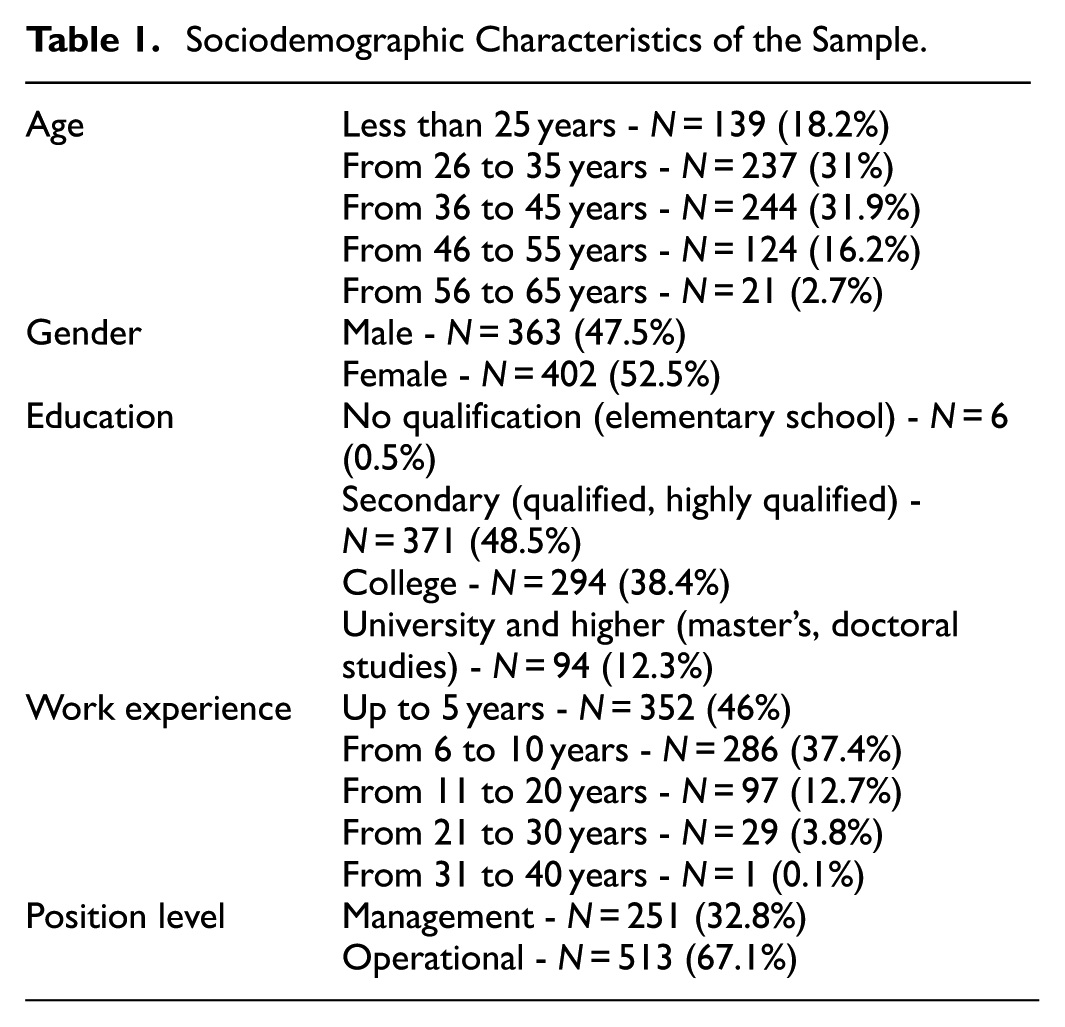
The sample was based on the entire population of hotels in Montenegro, which, according to the Central Register of Business Entities of Montenegro, comprised 423 hotels. Owing to the nature of our study, the relevant hotels were only those with more than 5 years of organizational experience. To determine the sample size, we assumed that a sample covering 10% of the population would be sufficient to represent the population and ensure reliable statistical analysis (Gay & Diehl, 1992; Simovic et al., 2023). In this study, we employed stratified random sampling: the population of 423 hotels was divided into strata based on geographical location (southern, central, and northern Montenegro), and 47 hotels were proportionally selected from all strata to ensure sample representativeness. Of these 47 hotels, 22 were foreign-owned and 25 were domestically owned. The sample included 20 small hotels, 12 medium hotels, and 15 large hotels. These hotels employed 814 employees, of whom 765 completed the questionnaires. Data were collected in 2019, with participants evaluating both the current organizational culture and job satisfaction, as well as retrospectively assessing these factors from 5 years prior (2013). Participant safety was ensured through noninvasive methods, anonymity, and confidential data handling. Participants were informed of their rights, including the option to withdraw at any time. All study materials were reviewed for sensitivity. Furthermore, this study offered participants an opportunity to contribute to socially relevant research and reflect on personal views, promoting a sense of inclusion and value. All participants provided written informed consent, and participation was entirely voluntary. The sociodemographic characteristics of the participants are presented in Table 1.
Sociodemographic Characteristics of the Sample.
Research Instruments
As the research focused on changes in organizational culture and job satisfaction, the research instrument comprised two questionnaires designed to measure these constructs. Changes in organizational culture were assessed using a questionnaire developed by Cameron and Quinn (2006) to operationalize their classification of organizational culture based on the Competing Values Framework. One of the reasons for choosing this classification was that it is supported by a questionnaire that allows organizational cultures to be classified in practice into specific culture types based on this concept: 1. clan culture (e.g., The organization is a very personal place. It is like an extended family. People seem to share a lot of themselves); 2. adhocracy culture (e.g., The organization is a very dynamic and entrepreneurial place. People are willing to stick their necks out and take risks); and 3. market culture (e.g., The organization is very results-oriented. A major concern is with getting the job done. People are very competitive and achievement-oriented); and 4. hierarchical culture (e.g., The organization is a very controlled and structured place. Formal procedures generally govern what people do). Another reason for selecting this questionnaire this questionnaire was its adaptability, which enables tracking changes in organizational culture over time. Accordingly, the respondents were required to assess the state of the organization at two points in time—the time of the survey and 5 years before—resulting in two representations of organizational culture classified into one of four types. This questionnaire consists of six questions, and for each question, respondents allocated 100 points among the answers, depending on the extent to which each answer adequately described the organization. In this study, participants provided assessments for both organizational culture measures at a single time point, recalling conditions 5 years ago and evaluating the current organizational culture. The internal consistency reliability was strong, with Cronbach’s alpha coefficients ranging from .775 to .966 for T1 and .840 to .944 for T2.
Job satisfaction was assessed using a specially developed questionnaire, adapted from previously validated instruments employed in on job satisfaction in companies in Serbia (Janicijevic et al., 2015). Employees assessed their job satisfaction by evaluating their individual job dimensions. Fifteen job dimensions were selected, covering the 6 basic job dimensions previously mentioned: salary level, teamwork, autonomy at work, job security, salary regularity, opportunities for professional development, opportunities for promotion, relationships with colleagues, absence of conflicts in the company, the company’s concern for employees, job variety, working conditions, relationships with immediate supervisors, benefits, and the importance of work for the company and society. Participants rated their satisfaction on a five-point Likert scale, ranging from 1 (completely dissatisfied) to 5 (completely satisfied). Exploratory factor analysis (EFA) supported a one-factor solution that explained 52.19% of the variance at T1 and 58.54% at T2. The communalities (T1 ranging from 0.440 to 0.616; T2 ranging from 0.431 to 0.697) and factor loadings (T1 ranging from 0.664 to 0.785; T2 ranging from 0.656 to 0.835) for all items were within acceptable values, exceeding the standard cut-off value of 0.30. Reliability was high, with a Cronbach’s alpha of .933 for T1 and .948 for T2.
Data Analysis
Pre-analysis
Before conducting the main analysis, an EFA using the principal component method was performed on the job satisfaction questionnaire. The resulting factorial structure, communalities, factor loadings, percentages of variance explained, and reliability coefficients for both test forms are presented in the Methods section under the instrument’s description.
Data Cleaning and Missing Data Treatment
A total of 49 participants (6.4%) were excluded from further analyses due to inconsistencies in their responses on one of the 12 organizational culture questions (six participants at T1 and six at T2). The assumption was that these participants either did not understand the task well (e.g., the sum of the four provided answers equals 150%) or they completed the questionnaire carelessly (e.g., the sum of the four provided answers equals 95%). Missing data, which ranged from 0.1% to 1.9% at the item level, were addressed using the Full Information Maximum Likelihood (FIML) approach.
Individual-Level Approach
Latent profile analysis (LPA) was performed using Mplus version 8.11. Maximum Likelihood (ML) estimation with the expectation-maximization algorithm was employed. The initial step involved identifying the number of distinct profiles. To determine the optimal number of profiles, we utilized several fit indices: the Akaike Information Criterion (AIC), Bayesian Information Criterion (BIC), Sample-Adjusted BIC (saBIC), adjusted Lo-Mendel-Rubin test (aLMR), and bootstrap likelihood ratio test (BLRT). For the AIC, BIC, and saBIC, lower values indicate a better model fit. The aLMR and BLRT tests were used to assess whether a more complex model significantly improved the data fit compared with a simpler model. These tests compare a model with n profiles to one with n-1 profiles, with significant p-values supporting the retention of a more complex n-profile solution. Finally, we used entropy to evaluate the classification quality, which reflects the precision with which cases are assigned to their respective profiles.
After determining the number and content of the profiles using LPA, the obtained latent profiles were related to changes in job satisfaction using multiple linear regression (SPSS, version 26). To calculate the changes in job satisfaction, we used the residuals from the regression analysis in which job satisfaction at T2 was regressed on job satisfaction at T1. This methodological approach allowed for a more comprehensive assessment of change while effectively controlling for baseline levels, thereby making the analysis significantly more robust than using simple difference scores. Given that the predictor variable was categorical, it was transformed into dummy variables before conducting an analysis.
Organization-Level Approach
SPSS version 26 was employed to test the main hypotheses at the organizational level. Prior to conducting the main analysis, we assessed the degree of consensus among employees regarding the dominant organizational culture of each hotel to ensure reliable measurements (rwg indices). This assessment was conducted at both T1 and T2, and the organizations were subsequently grouped based on the dominant patterns of organizational culture change. Finally, this newly created categorical variable was related to changes in job satisfaction using multiple linear regression. As in the individual-level approach, to calculate changes in job satisfaction at the organizational level, we used the residuals from the regression analysis in which job satisfaction at T2 was regressed at T1. Given that the predictor variable was categorical, it was transformed into dummy variables before conducting the analysis.
Results
Individual-Level Approach
This research utilized LPA to examine whether and how participants’ responses to organizational culture measurements clustered into commonly perceived organizational culture profiles. Table 2 presents the fit indices of the four tested solutions. LPA results revealed decreasing AIC, BIC, and saBIC values across models with increasing numbers of profiles, suggesting an improved model fit with additional profiles. The four-profile solution showed the lowest values for these indices (AIC = 37,617.58, BIC = 37,814.25, and saBIC = 37,677.72). However, while both the two-profile and three-profile solutions had significant aLMR and BLRT tests (p < .05 and p < .01, respectively), indicating that these solutions were statistically preferable to solutions with fewer profiles, the four-profile solution produced non-significant values for both tests. Additionally, entropy values remained excellent (0.99) for both the two-profile and three-profile solutions, indicating very clear classification of cases, whereas the four-profile solution showed a decrease in classification quality (entropy = 0.78). Considering all fit indices together, the three-profile solution were deemed to offer the optimal balance between model fit and profile distinctiveness.
Latent Profile Analysis Fit Indices.

Note. AIC = akaike information criterion; BIC = Bayesian information criterion; saBIC = Sample-adjusted BIC; aLMR = adjusted Lo-Mendel-Rubin test (aLMR); BLR = bootstrap likelihood ratio test.
p < .01, *p < .05.
The values of the three latent POS profiles of perceived organizational culture are presented in Figure 1. LP1 accounted for 8.7% of participants and was characterized by high values in hierarchical culture, both 5 years ago and at present. This profile shows low values across all other types of organizational cultures. It is important to emphasize that within this profile, no statistically significant differences were found between the assessments of hierarchical organizational culture 5 years ago and now (t(61) = 0.625, p = .535). LP2 represents 50.3% of the participants and indicates a transition in dominant organizational culture from a clan culture toward a hierarchy culture. The effect size of the change between the two time points in the case of clan and hierarchical culture was extremely large, amounting to 9.04% and 10.26%, respectively. LP3 included 40% of participants and was characterized by balanced responses across all four types of organizational culture, without identifying any single type as predominant (Figure 2).

Classification of organizational culture based on competing values framework.
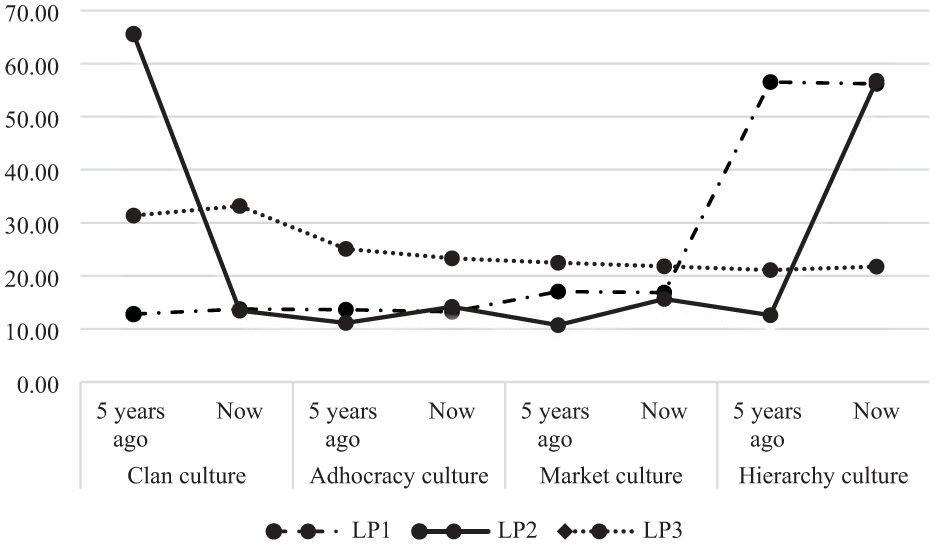
Perceived organizational culture profiles.
Profiles of Observed Organizational Culture and Changes in Job Satisfaction
Multiple linear regression was employed to test whether different latent POS profiles of perceived organizational culture contributed to changes observed in job satisfaction. To calculate the change in job satisfaction, residuals from the regression analysis were used, regressing job satisfaction at T2 on job satisfaction at T1. This methodological approach allows for the assessment of changes while controlling for baseline levels, making it more robust than relying on simple difference scores. In this analysis, LP2 (profile characterized by transition from clan to hierarchy culture) was set as the reference category, while dummy variables were created for the other profiles: dummy1 represents LP1 (consistently high hierarchy culture) and dummy2 represents LP3 (balanced profile with no predominant organizational culture).
The model explained 35.3% of the variance in job satisfaction (R = .594, p < .001). The regression results show that the constant term (B = –0.331, p < .001) represents the predicted change in job satisfaction for LP2 and is significantly negative. This confirms that the transition from a clan culture to a hierarchical one was associated with a significant decrease in job satisfaction between T1 and T2. The positive coefficients for both alternative profiles (dummy1: β = .159, p < .001; dummy2: β = .615, p < .001) indicate that these profiles experienced relatively less negative changes in job satisfaction compared to LP2. Moreover, the substantially higher beta value for dummy2 compared to dummy1 indicates that the balanced organizational culture profile (LP3) was associated with a smaller decrease in job satisfaction than the consistently high hierarchy culture (LP1), when both were compared to the transition from clan to hierarchy (LP2). These results provide compelling evidence that the specific transition from a clan to a hierarchy culture (LP2) leads to the most substantial decrease in overall job satisfaction, while a consistently high hierarchy culture (LP1) and balanced organizational culture (LP3) are associated with more stable, though slightly declining, job satisfaction outcomes over time (Table 3).
Results of Multiple Regression Analysis: Individual-Level Approach

Note.**p < .01.
Organization-Level Approach
Prior to conducting the main analysis, we assessed the degree of consensus among employees regarding the dominant organizational culture (T1) at each hotel to ensure measurement reliability. Analysis of rwg indices for categorical data across 47 hotels revealed high agreement (rwg ≥ 0.70) in 32 hotels (68.1%), moderate agreement (0.50 ≤ rwg < 0.70) in 3 hotels (6.4%), and low agreement (rwg < 0.50) in 12 hotels (25.5%). The mean rwg is 0.774, with values ranging from 0.067 (25 hotels) to 1.000 (18 hotels with perfect agreement). Clan culture dominated employee perceptions in 34 hotels (72.3%), adhocracy culture in 2 hotels (4.3%), market culture in 1 hotel (2.1%), and hierarchy culture in 4 hotels (8.5%), whereas 6 hotels (12.8%) showed mixed patterns without clear employee consensus.
Using rwg index for T2, we found that 31 hotels (66.0%) demonstrated high employee agreement (rwg ≥ 0.70), 5 hotels (10.6%) showed moderate agreement (0.50 ≤ rwg < 0.70), and 11 hotels (23.4%) displayed low agreement (rwg < 0.50). The mean rwg across all hotels is 0.775, with values ranging from 0.111 to 1.000. The analysis revealed a notable shift in dominant organizational culture patterns at T2, with hierarchical culture becoming the dominant culture in 24 hotels (51.1%), and clan culture remaining dominant in 12 hotels (25.5%). Based on these results, we determined that 36 hotels exhibiting either high or moderate employee agreement (76.6% of the sample) were suitable for further analysis, as they demonstrated sufficient consensus to reliably represent each organization’s cultural profile.
When examining both T1 and T2, 33 hotels demonstrated moderate or high levels of employee agreement in their assessment of the dominant organizational culture; therefore, further analyses will focus exclusively on these hotels, where the assessment of the dominant organizational culture can be considered reliable.
Changes of Organizational Culture at the Organizational Level
Table 4 presents a cross-tabulation of organizational culture types across 2 time periods for the 33 hotels. Five years ago, clan culture was predominant in 27 hotels (81.8% of the sample), while adhocracy culture was dominant in 2 hotels (6%), market culture in 1 hotel (3%), and hierarchical culture in 3 hotels (9%). A significant shift in organizational culture patterns occurred. Hierarchical culture emerged as the dominant culture in 25 hotels (75.8% of the sample), while clan culture remained dominant in only 8 hotels (24.2%). Currently, no hotel exhibits adhocracy or market culture as its dominant culture.
Changes of Organizational Culture in Surveyed Hotels in Montenegro Over a 5-Year Period.

The most notable transition occurred with hotels that previously had clan culture: out of the 27 hotels that had clan culture 5 years ago, 5 hotels (15%) maintained a clan culture, while 22 hotels (66.7%) shifted to a hierarchical culture. Meanwhile, two hotels that previously exhibited an adhocracy culture and one hotel with a market culture transitioned to a clan culture. Notably, three hotels (9%) that had a hierarchical culture 5 years ago maintained the same culture type.
Based on this analysis, several patterns of change in dominant organizational culture were identified. These included (1) organizations that consistently maintained clan culture throughout the period (N = 5; 15%), (2) organizations that consistently maintained a hierarchical culture throughout the period (N = 3; 9%), (3) organizations that consistently transitioned from clan culture to hierarchical culture (N = 22; 66.7%), and (4) organizations that consistently transitioned from adhocracy and market culture to clan culture (N = 3; 9%). This categorical variable was used in the subsequent analyses.
Organizational Culture Change and Changes in Job Satisfaction
Multiple linear regression was used to examine how different patterns of organizational cultural change influenced changes in job satisfaction over time (Table 5). In this analysis, dummy variables were created to represent three distinct organizational culture change patterns: (1) dummy1 for organizations that maintained clan culture at both time points, (2) dummy2 for organizations that maintained hierarchy culture at both time points, (3) dummy3 for organizations that transitioned from adhocracy/market to clan culture. Organizations that transitioned from clan to hierarchical culture were set as the reference categories.
Results of Multiple Regression Analysis: Organizational-Level Approach

Note.**p < .01.
This model explains 43.8% of the variance in job satisfaction. The results show that the reference group (organizations transitioning from a clan to a hierarchical culture) experienced a significant decrease in job satisfaction (based on a constant value). Organizations that maintained a clan culture experienced significantly less negative change in job satisfaction (β = .577, p < .001) compared to the reference group, while organizations that maintained a hierarchy culture showed no significant difference in job satisfaction change (β = .041, p = .774) compared to the reference group. Additionally, organizations that transitioned from an adhocracy/market to clan culture experienced significantly less negative change in job satisfaction (β = .423, p = .006) compared to the reference group.
Discussion
The findings of the study on changes in job satisfaction levels among hotel employees in Montenegro during the organizational culture change confirm both of the proposed hypotheses and offer new insights into the relationship between organizational culture and job satisfaction. The research showed that over the 5-year transition period in Montenegro’s hotel sector, the dominant type of organizational culture in most hotels changed—from clan culture to hierarchical culture. The analysis also indicated that this transformation was accompanied by a significant and systematic decline in job satisfaction. The statistical analysis confirmed that the change in organizational culture caused a decline in job satisfaction, thereby supporting the first hypothesis that changing the dominant type of organizational culture within a company also impacts the overall level of job satisfaction. This further confirms the idea that organizational culture plays a key role in determining job satisfaction, which aligns with numerous previous studies (Bellou, 2010; Bigliardi et al., 2012; Fatima, 2016; Nebojša et al., 2020; Sadikin et al., 2025; Silverthorne, 2004). However, this study goes a step further by clarifying the causal relationship between organizational culture and job satisfaction, demonstrating that culture influences job satisfaction not only at a single point in time but also throughout the period of change. Consequently, changing the organizational culture type will also result in changes in the level of job satisfaction.
Another important finding of this study is that clan culture is associated with a significantly and systematically higher level of job satisfaction compared to a hierarchical culture. This finding aligns with previous research, although such studies have been relatively limited in number (Fatima, 2016; Lund, 2003; Shurbagi & Zahari, 2012; Silverthorne, 2004). The positive influence of clan culture on job satisfaction stems from values and norms that emphasize caring for others and viewing the organization through the metaphor of an extended family (a clan; Bellou, 2010; Lund, 2003; Nebojša et al., 2020). In contrast, the negative influence of hierarchical culture on job satisfaction arises from values and norms that prioritize task orientation and efficiency, depicting the organization through the metaphor of a machine (Fatima, 2016; Lund, 2003; Odom et al., 1990).
Given that clan culture creates more favorable conditions for job satisfaction than hierarchical culture, it was anticipated that the shift from clan culture with hierarchical culture, which occurred in hotels in Montenegro over a 5-year period, would lead to a decrease in job satisfaction. These predictions were confirmed in this study. Specifically, the results provide compelling evidence that the transition from clan culture to hierarchy culture (LP2) leads to the greatest decline in overall job satisfaction. In contrast, a consistently high hierarchy culture (LP1) and a balanced organizational culture (LP3) are associated with more stable job satisfaction outcomes over time, although both still show declining trends. In other words, the shift from a clan culture to a hierarchy culture proved particularly detrimental to employee job satisfaction, with both individual- and organizational-level analyses confirming significant negative effects compared with other cultural patterns and transitions. This supports the second hypothesis, which states that changing the dominant organizational culture type from a clan culture to a hierarchical culture leads to a decrease in overall job satisfaction. These results were expected, although they have not been previously confirmed by empirical research, as prior studies have not examined the impact of organizational culture on job satisfaction in the context of change.
The research findings reveal trends in organizational culture changes in Montenegro hotels during the transition in the country’s hotel industry. However, the transformation of the dominant culture within these hotels may also signal a broader shift in the entire organizational and business model in Montenegro’s hotel sector. As clan culture is typically associated with an entrepreneurial organizational model, while hierarchical culture is commonly linked to a bureaucratic organizational model (Cameron & Quinn, 2006), the results of this study may suggest even more extensive changes in hotel operations in Montenegro. It can be assumed that the change in the dominant culture type in Montenegro’s hotel is only one component of the broader transformation process in the hotel sector—one that, judging by the replacement of clan culture with hierarchy culture, appears to be moving toward greater professionalization and bureaucratization of their operations. If this assumption holds, it is likely that post-transition hotels in Montenegro operate more efficiently and at a lower cost, but with reduced flexibility and lower employee satisfaction.
This shift in both organizational culture and the model of hotels in Montenegro can be explained through the lens of the broader economic transition, as well as the specific transformation within the hotel sector itself. Hotels in Montenegro have undergone a process of professionalization, evolving from simple, low-formalization organizations, typically represented by the metaphor of a family, to highly formalized, hierarchical organizations, commonly described using the metaphor of a machine. This transformation can largely be attributed to the influence of foreign hotel chains, which became the owners of many hotels in Montenegro during the transition period. In their effort to increase efficiency levels and improve financial performance, these chains adopted a bureaucratic organizational model, replacing the simpler, entrepreneurial model that had previously prevailed. This shift in the organization and functioning of hotels affected not only hotels that became part of large international hotel chains but also those remaining in the hands of domestic private investors, as they too were compelled to emulate the more efficient foreign-owned hotels and adopt the new business and organizational model. A bureaucratic organizational model inherently involves a hierarchical type of organizational culture, which explains the shift from a clan culture to a hierarchical culture in hotels across Montenegro.
Conclusions, Implications, and Limitations
Organizational culture has been identified in several studies as a significant factor influencing employee job satisfaction. This relationship has theoretical justification, as organizational culture shapes the context in which employees perceive and evaluate their work, ultimately affecting their job satisfaction. This study aimed to verify whether the impact of organizational culture on job satisfaction remains valid during periods of cultural change. We analyzed whether changes in organizational culture over a 5-year period corresponded with shifts in employee job satisfaction in Montenegro hotels. This research was conducted against the backdrop of a broader transformation within the Montenegrin hotel industry, driven by changes in ownership structures. The study’s findings confirmed both of the proposed hypotheses: changing the type of culture in a company also changes the level of employees’ job satisfaction, and that replacing clan culture with hierarchy culture results in a decrease in job satisfaction levels.
The theoretical contributions of this study are as follows: First, it establishes that a change in organizational culture leads to changes in job satisfaction. This is an important contribution, as the influence of organizational culture on job satisfaction had previously been examined and confirmed at a single point in time, rather than in the context of change. This finding indirectly confirms that organizational culture influences job satisfaction. Second, this study demonstrates and explains why clan culture is associated with high levels of employee satisfaction, while hierarchical culture is linked to significantly lower job satisfaction. Consequently, any replacement of clan culture with a hierarchical one is linked to a decline in employee satisfaction. Third, this study shows that the transition of the hotel industry in Montenegro, driven by the entry of large hotel chains, transformed the organizational culture of hotels in the country from clan culture to hierarchy culture, and that this shift caused a decline in employee satisfaction.
This study also has significant practical implications for policymakers and hotel management in Montenegro. Policymakers should recognize that the chosen method of hotel sector transition had led to hotel bureaucratization. The dominance of hierarchical culture in hotels in Montenegro is a clear sign that they are shifting toward a bureaucratic organizational model. Although this shift may increase operational efficiency, it also significantly reduces hotel flexibility. Therefore, policymakers should implement strategies to preserve flexibility in the hotel sector, which is particularly important in today’s context of rapid and intense changes. Hotel management in Montenegro must take proactive measures in human resource management to address the decline in employee satisfaction, as this decline can negative impact employee productivity and hotel performance over the long term. Management must adapt its human resource policy to the new situation and take active measures to increase employee satisfaction. The practical implications of this study’s results can also be applied to other transitional countries in the region that have undergone or are undergoing similar transitions in the hotel sector.
The limitations of this study are evident both theoretically and methodologically. In the theoretical framework, the indirect influence of organizational culture on job satisfaction remains insufficiently explored. Additionally, the influence of Montenegro’s natural culture has not been included in the analysis, even though it certainly impacts the organizational cultures of enterprises in the country and their changes. This study also exhibits several methodological limitations that must be considered when interpreting the results. It does not employ a longitudinal design but rather measures both organizational culture and job satisfaction at a single point in time (2019), requiring participants to retrospectively assess these factors as they were 5 years earlier (2013). This retrospective approach is susceptible to memory limitations and potential distortions in participants’ recollections of past organizational conditions and levels of job satisfaction. Moreover, the methodology does not control for numerous variables that could significantly affect employee satisfaction beyond organizational cultural changes. These uncontrolled variables include hotel-specific characteristics, such as size and location, compensation structures, physical working conditions, leadership styles, and other organizational variables that might have changed during the 5-year study period. Furthermore, the self-reported nature of data collection introduces a risk for common method bias, as both the independent variable (organizational culture) and the dependent variable (job satisfaction) were measured from the same source using similar measurement approaches. This could have artificially inflated the relationship between the two variables.
Further research on the relationship between organizational culture and job satisfaction should examine the role of moderating variables, such as employees’ demographic characteristics, the hotel’s organizational structure, and the hotel’s business model and strategy. Additionally, a cross-cultural study would help explore the potential influence of Montenegro’s national culture on this relationship.
Footnotes

Ethical Considerations
This study involved human participants and was conducted in accordance with the APA Ethical Principles (Section 8.05) and Sage guidelines. Owing to the minimal risk and the use of anonymous, noninvasive surveys, formal ethical approval was not required.
Consent to Participate
The participants provided written informed consent after being fully informed of the study and their rights, including the option to withdraw at any time. Participation was voluntary, and data were collected confidentially.
Funding
The authors received no financial support for the research, authorship, and/or publication of this article.
Declaration of Conflicting Interests
The authors declared no potential conflicts of interest with respect to the research, authorship, and/or publication of this article.
Data Availability Statement
Data supporting the findings of this study are available upon request from the corresponding author. The data are not publicly available because they contain information that could compromise the privacy of the research participants.