




Abstract
Vocational education plays a vital role in promoting youth employment; however, vocational high school graduates in Turkiye face structural, social, and economic barriers in their labor market transitions. This study explores the cross-cultural challenges experienced by Turkish and Syrian vocational graduates, focusing on job entry barriers, employer perceptions, workplace experiences, and the role of policy incentives. Conducted as part of the Social and Economic Cohesion through Vocational and Technical Education Project (SEUP), in collaboration with the Ministry of National Education and funded by the EU Facility for Refugees in Turkiye (FRIT) with KfW, this research draws on semi-structured interviews with 154 stakeholders across five provinces. Findings reveal critical obstacles such as skills mismatch, job dissatisfaction, adaptation issues, and, notably for Syrian graduates, dependency on financial aid. The analysis is theoretically guided by Social Identity Theory (SIT) and draws practical insights from international vocational education models in Germany, the Netherlands, Canada, and Sweden. Policy recommendations include aligning curricula with industry needs, simplifying employment incentives, strengthening school-employer partnerships, and improving the public image of vocational careers through awareness campaigns and mentorship programs.
Plain Language Summary
Vocational education helps young people gain skills for employment, but vocational high school graduates in Turkiye face many difficulties when entering the job market. This study looks at the challenges faced by both Turkish and Syrian vocational graduates, including finding and keeping jobs, employer attitudes, workplace experiences, and the impact of government policies. As part of the Social and Economic Cohesion through Vocational and Technical Education Project (SEUP), this research was conducted with the support of the European Union and the Ministry of National Education. Interviews were held with graduates, employers, families, and policymakers in five cities (Gaziantep, Adana, Ankara, Konya, and Kayseri) to understand their experiences. The findings show that many graduates struggle to meet workplace expectations, and employers often have concerns about their attitudes and ability to adapt. Some Syrian graduates rely on financial aid, making them less likely to seek formal jobs. Employers also hold biases that affect hiring decisions. Compared to vocational education systems in Germany, the Netherlands, Canada, and Sweden, Türkiye’s system lacks strong partnerships between schools and businesses, limiting job opportunities for graduates. The study suggests several solutions: updating vocational school programs to match industry needs, improving apprenticeship opportunities, simplifying government support programs, and promoting vocational careers through public awareness campaigns and mentorship. By strengthening ties between schools and employers, vocational graduates could have better job prospects and a smoother transition into the workforce.
Keywords
Introduction
Vocational education is a broad concept encompassing the formal school system that provides specialized training and education for specific occupations. Vocational high schools and vocational colleges fall into this category. Vocational training aims to gain practical skills and usually covers short-term, certified, or on-the-job learning processes (Cai & Kosaka, 2024). It is used for structures such as apprenticeships, vocational courses, or in-company training programs. This study was conducted within the scope of “vocational education.”
Vocational education is a key driver for economic integration and social cohesion, particularly in contexts with high youth unemployment and forced migration. (Edwards-Fapohunda, 2024; Lin, 2019; Preston & Green, 2008). Despite substantial investments and reforms, vocational high school graduates in Turkiye continue to face structural, social, and psychological barriers when transitioning into the labor market. These challenges are further magnified for refugee youth, particularly Syrian students, who encounter legal, linguistic, and cultural obstacles in addition to broader systemic disincentives.
According to the 2023 Global Trends Report of the United Nations High Commissioner for Refugees (UNHCR), the number of refugees from Syria stood at 6.4 million at the end of 2023. Almost three-quarters (73%) were hosted in neighboring countries, such as Turkiye (3.3 million), Lebanon (784,900), and Jordan (649,100; UNHCR, 2023). The integration of this population into the labor market has been a critical challenge due to linguistic, cultural, and bureaucratic barriers. In response, various initiatives, including SEUP-II, have been launched to support both Turkish and Syrian students in vocational education programs. However, despite these efforts, graduates from different cultural and socio-economic backgrounds—Syrians—experience distinct challenges in employment, reflecting broader cross-cultural labor market segmentation and skill mismatch issues. While Turkish graduates primarily navigate structural barriers and status perceptions associated with vocational education, Syrian graduates face additional linguistic, cultural, and legal obstacles, making their transition into the workforce even more complex.
These challenges are not unique to Turkiye but reflect broader issues in vocational education and labor market integration worldwide. Studies indicate that vocational education programs often struggle to align with employer demands, leading to underemployment or skills mismatches (Brun-Schammé & Rey, 2021).
In conflict-affected settings such as Lebanon and Jordan, vocational training is increasingly used as a resilience tool for refugee youth (El-Ghali et al., 2016). However, regional studies indicate that vocational programs often struggle with low completion rates, cultural mismatches, and poor labor market alignment (Deane, 2016; Milton & Barakat, 2018). Importantly, unlike the Turkish context, many Arab host countries do not face the same degree of language or cultural distance, which renders Turkiye’s experience more complex.
These findings highlight the need to contextualize vocational education not only as a skill-building mechanism, but also as a means of rebuilding social identity and economic agency among displaced populations. Dryden-Peterson (2016) highlights that in first-asylum countries, refugee education systems are often fragmented, poorly resourced, and disconnected from long-term socioeconomic inclusion goals. While formal schooling provides critical access to learning, it frequently lacks coherence with host country labor markets and overlooks the socio-emotional needs of refugee youth. These insights underscore the importance of embedding vocational education within broader frameworks of social identity formation, community belonging, and realistic livelihood pathways.
This study aims to examine the factors affecting graduates’ employment outcomes under SEUP-II- Labor Market Support Component (LMSC), and how institutional support mechanisms shape the labor market experiences of Turkish and Syrian vocational high school graduates. The Social and Economic Cohesion through Vocational and Technical Education Project (SEUP) is one of the most comprehensive and impactful European Union-funded initiatives aimed at improving the effectiveness of vocational education in Turkiye. Coordinated by the Ministry of National Education, Directorate General for Vocational and Technical Education, and financed through the European Union Facility for Refugees in Turkiye (FRIT) in collaboration with KfW, SEUP represents a strategic effort to enhance vocational education, promote labor market integration, and support social cohesion, particularly for vulnerable groups. .
The project is structured around two main components: (1) Investment in Vocational Education Infrastructure, which includes the construction and renovation of vocational training centers, equipping schools with modern technologies, and updating curricula to align with industry needs; and (2) Labor Market Support Component (LMSC), which aims to increase employment opportunities for vocational graduates by facilitating industry partnerships, providing employment incentives for businesses, and strengthening career guidance services.
Methodologically, the study relies on semi-structured interviews with 154 stakeholders, including graduates, families, employers, school administrators, and institutional actors. By conducting qualitative research across five major cities—Gaziantep, Adana, Ankara, Konya, and Kayseri—, with a high concentration of vocational school graduates, strong employment support initiatives, and significant refugee populations, particularly Syrians under temporary protection status. Thematic analysis was conducted using MAXQDA software, with visual models highlighting the key findings: mismatch between training and job demands, employer biases and status-related stigma, job dissatisfaction, and disincentives linked to social assistance dependency, especially among Syrian youth.
The study makes three primary contributions to the literature:
It provides original qualitative evidence on cross-cultural labor market integration of native and refugee vocational graduates, a topic underexplored in current policy and academic debates.
It applies Social Identity Theory (SIT) to analyze how students’ perceived social status and group membership influence motivation, retention, and access to employment.
It draws comparative insights from international vocational education models (Germany, the Netherlands, Canada, and Sweden) to inform policy design and transferability.
Although recent studies have explored the employment outcomes of Syrian youth in Turkiye, limited attention has been paid to how vocational education functions as an institutional bridge between schooling and decent work, especially in complex contexts of displacement and fragility. The literature largely overlooks how vocational pathways operate not only as skill-building mechanisms but also as instruments of identity formation, institutional trust, and social inclusion.
In response, this study focuses on the experiences of both Turkish and Syrian vocational graduates and stakeholders within the SEUP-II program provinces. It aims to explore the structural, psychological, and institutional dimensions of labor market integration, especially in contexts shaped by demographic diversity, economic precarity, and contested social cohesion.
To guide this inquiry, the study addresses the following research questions:
What structural, psychosocial, and institutional barriers affect the school-to-work transition of vocational high school graduates in Turkiye?
How do labor market experiences differ between Turkish and Syrian vocational graduates in relation to employment, discrimination, and employer expectations?
In what ways do social identity perceptions (ingroup/outgroup dynamics) shape labor market behavior and institutional trust?
How do public actors (school administrators, institutional stakeholders, and employers) assess the alignment between vocational education outcomes and labor market needs?
What implications do these findings carry for improving vocational training, employment pathways, and social cohesion in Turkiye’s current policy environment?
The findings will contribute to the broader discourse on integrating vocational education with labor market expectations, improving employment outcomes, and using large-scale initiatives as models for future education and workforce development policies.
The paper is structured into six sections. Following the introduction in the first section, the second section presents the conceptual framework, which includes labor market segmentation and SIT. The third section outlines the qualitative methodology. The fourth section discusses the key findings thematically. The fifth section offers a comparative discussion and policy implications. Finally, the sixth section concludes with recommendations for future research and practice.
Conceptual Framework
This study is grounded in labor market integration theories and vocational education literature, focusing on barriers such as language proficiency, skill mismatches, employer biases, and social adaptation. Understanding these dynamics is crucial for evaluating the effectiveness of SEUP-II LMSC in bridging the gap between vocational education and employment for both Turkish and Syrian graduates.
The integration of vocational education graduates into the labor market is a multidimensional process influenced by structural, institutional, and psychological factors. In contexts marked by economic uncertainty and migration-induced diversity, such as Turkiye, these challenges become more layered—particularly for vulnerable groups like refugee youth. To understand these dynamics, the present study draws on labor market integration theory, dual labor market theory, human capital theory, and Social Identity Theory (SIT), weaving them into a cohesive narrative that explains both systemic obstacles and subjective perceptions shaping employment outcomes.
At the core of labor market integration theory lies the idea that successful transition from school to work depends on the alignment between individuals’ acquired skills and the demands of the job market (Berry, 1997; Borjas, 2014). In theory, vocational education systems are designed to bridge this gap by providing job-relevant skills and practical training. However, in practice, a misalignment often persists due to outdated curricula, weak school-industry linkages, and insufficient employer engagement (OECD, 2024). This disconnect is further amplified in labor markets characterized by segmentation.
The Turkish labor market exhibits many features of dual labor market theory, in which stable, well-paid, and regulated jobs (primary sector) coexist with precarious, low-wage, and informal jobs (secondary sector; Doeringer & Piore, 1975; Leontaridi, 1998; O’Reilly et al., 2015). Many vocational graduates, especially those from refugee backgrounds, find themselves funneled into the secondary segment, where opportunities for upward mobility are limited. Structural barriers such as legal work restrictions for refugees, limited recognition of prior learning, and employer discrimination compound these disadvantages (World Bank, 2023). These patterns are not unique to Turkiye but resonate with global challenges in aligning vocational education with equitable employment pathways.
Beyond structural segmentation, human capital theory (Becker, 1994) suggests that individuals invest in education and training with the expectation of future returns in the form of wages and career advancement. Yet, when vocational credentials are devalued—either by employers or society—graduates may experience diminished motivation, lower self-esteem, and career disillusionment. This is particularly evident in our fieldwork, where many students described vocational education as a “second-choice” pathway compared to university education.
To explore the psychosocial dimensions of this devaluation, the study draws on Social Identity Theory (SIT; Tajfel & Turner, 1986). SIT posits that individuals derive part of their self-concept from the social groups to which they belong. When vocational students perceive their educational track as low status—reinforced by societal attitudes or employer biases—it can adversely affect their motivation to enter or remain in the workforce (Nguyen et al., 2024). For refugee students, this identity-based marginalization is further intensified by linguistic and cultural exclusion, as well as anxieties over losing access to social support (e.g., ESSN) upon formal employment.
Taken together, these frameworks offer an integrated lens to understand why Turkish and Syrian vocational graduates—despite participating in similar educational programs—experience labor market transitions so differently. By situating this discussion within international comparative contexts (e.g., Germany’s dual system, the Netherlands’ BBL/BOL models, and Canada’s co-op programs), the study also underscores how institutional design, employer engagement, and status recognition shape employment outcomes.
Figure 1 presents a conceptual model illustrating the interaction between support mechanisms, social identity dynamics, labor market structures, and their impact on employment outcomes.
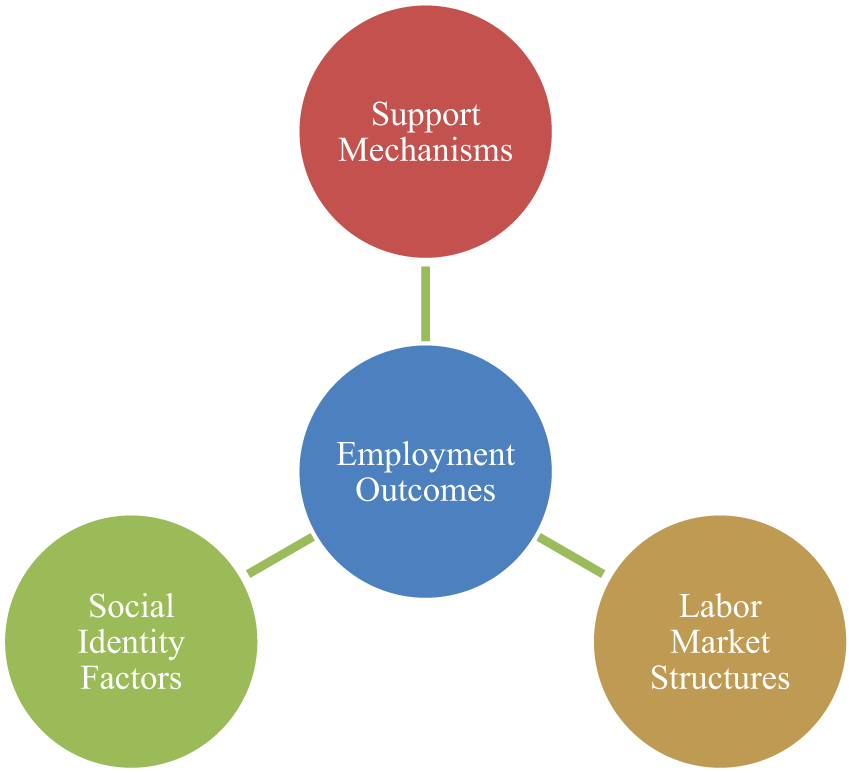
Conceptual model of employment outcomes.
This conceptual foundation guides the empirical analysis that follows, informing both the interpretation of qualitative findings and the formulation of context-sensitive policy recommendations.
Materials and Methods
This study adopts a qualitative research method to explore the challenges faced by graduates of vocational high schools in Turkiye. Given the complex socio-economic factors influencing graduates’ employment outcomes, a qualitative approach was chosen to gain in-depth insights into their experiences, perspectives, and challenges. The study focuses on both Turkish and Syrian graduates, their families, employers, school administrators, and key institutional stakeholders. The methodological framework and research approach are outlined as follows:
Research Design and Rationale
A qualitative research approach is appropriate for this study because:
There is limited prior research specifically on the effectiveness of LMSC in Turkiye,
The study seeks to capture individual experiences, perceptions, and motivations,
Qualitative methods allow for thematic analysis and interpretation of patterns in employment dynamics.
The qualitative research method is used in cases where there is little information about a particular theme in the literature; when studying more quietly pronounced topics, they need to be explored and have an idea about. The qualitative research method is preferred, especially when studying subjects with a complex structure requiring in-depth knowledge and different social segments (Creswell & Poth, 2016). When there is an endeavor to reach a deep understanding of the subject in question, research conducted with qualitative methods yields more accurate results. The answers received in qualitatively designed studies are suitable for observation and interpretation by considering the participants’ natural environment. Thus, analyses can produce more effective results (Lawrence Neuman, 2014).
A literature review was conducted before the field research. The researchers planned the method and design of the research and submitted it to the MEB and the Project team for approval. After approval, the provinces, individuals, and organizations where the interviews would be conducted were determined by the SEUP II Project team. Question sets were prepared before the field research, and the interview schedule was determined after the approval and revision.
To ensure comprehensive data collection, semi-structured in-depth interviews were conducted across five provinces—Gaziantep, Adana, Ankara, Konya, and Kayseri. These cities were selected due to:
Their high concentration of vocational school graduates,
Their significance in Turkiye’s labor market,
The concentration of employment support initiatives
Their high refugee populations, particularly of Syrians under temporary protection status.
Sampling and Data Collection
A stratified purposive sampling method was employed to ensure diversity among participants. The study targeted:
Vocational school graduates (Turkish and Syrian),
Students preparing for graduation (Turkish and Syrian),
Families of students and graduates (Turkish and Syrian),
Vocational school administrators,
Employers who have participated or are eligible for LMSC incentives,
Representatives from İŞKUR and local institutions (NGOs) dealing with the labor market.
The fieldwork started on 15 April 2024 (15–16 April Gaziantep, 17–18 April Adana, 22 and 30 April Ankara, 25–26 April Konya, and 2–3 May Kayseri).
Table 1 presents the distribution of interviewed participants:
Participants of the Research.

Within the stratified purposive sampling design, the number of participants in each stakeholder group was determined to ensure institutional representation, functional diversity, and thematic saturation across research sites. The number of participants from each stakeholder group was determined based on their strategic relevance to the SEUP-II Labor Market Support Component and the study’s aim to reflect diverse experiences. A higher number of vocational students (n = 32) and employers (n = 31) were included to prioritize first-hand, practice-based perspectives on employment challenges. School administrators (n = 15) and institutional actors (n = 14), while fewer in number, were selected for their policy-level insights and coordination roles in vocational education. The quotas also reflected practical constraints such as access, consent, and regional representativeness across the five selected provinces. Thematic saturation (Creswell, 2013) was used as a guiding principle in determining sample size; data collection continued until no new themes or insights emerged, indicating content sufficiency and analytical completeness.
Semi-structured face-to-face interviews were conducted to enable participants to openly express their perspectives. Each interview lasted 50 to 60 min, with questions adapted based on participants’ responses. Observation notes were also taken to complement the interviews. Data was collected between April 15 and May 3, 2024, in the selected provinces.
Data Analysis
The collected data were transcribed and analyzed using MAXQDA (version 24) qualitative analysis software. The analysis followed a two-stage process:
First Stage: Coding
Interviews were transcribed manually and uploaded to MAXQDA.
Thematic coding was conducted independently by two experts to ensure reliability.
The coding framework was refined through iterative comparison and cross-validation.
Second Stage: Visualization
After coding, MAXMaps visualizations were generated to identify thematic clusters.
Data were categorized based on recurrence frequency, allowing for a structured hierarchical analysis of challenges and opportunities.
Figures and models generated from MAXQDA illustrate key patterns in employment participation, reasons for job dissatisfaction, and employer perspectives.
To ensure ethical compliance and data reliability, the study adhered to the following principles:
Ethical Approval: The research design was submitted and approved.
Informed Consent: Participants were informed of the study’s purpose, and verbal and written consent was obtained before interviews.
Confidentiality: Personal information was anonymized, and responses were stored securely.
Triangulation: Findings were cross-validated by comparing responses from different participant groups(graduates, employers, families, school administrators).
Reliability Check: Coding was independently reviewed by two qualitative research experts to ensure accuracy.
Limitations of the Study
Despite its empirical richness, this study has certain limitations that should be acknowledged. First, the research was conducted in five provinces—Gaziantep, Adana, Ankara, Konya, and Kayseri—which, while diverse in terms of demographic and economic structure, do not represent the full spectrum of Turkiye’s regional variation. Therefore, findings should be interpreted within the context of these specific provinces, where both refugee concentration and vocational education interventions are relatively prominent. Second, the study adopts a qualitative approach, which prioritizes depth over breadth. As such, while the thematic findings offer valuable insights into structural and psychosocial dynamics affecting vocational graduates, they are not statistically generalizable to all vocational students or employers across Turkiye. Additionally, some employers were hesitant to participate due to concerns over bureaucratic processes and potential misinterpretations of their views. The purposive and stratified sampling strategy aimed to capture diversity in participant experiences rather than representative proportions. This approach is appropriate for exploring nuanced, context-dependent phenomena but inherently limits the extrapolation of findings to broader populations. Third, the composition of the refugee population in the sample reflects individuals with access to vocational training and some degree of system navigation. Hence, the experiences of more vulnerable sub-groups—such as non-registered youth, seasonal workers, or those outside the formal training pipeline—may not be adequately captured in this study. Lastly, the dynamic nature of labor market policies, refugee regulations, and institutional practices suggests that findings reflect a specific socio-political moment (April–May 2024). Future longitudinal or mixed-method studies could build on this work by tracking graduate outcomes over time or comparing across different policy regimes and regions.
Findings
The findings of this study reveal significant barriers and challenges faced by vocational high school graduates in entering and remaining in the labor market. The thematic analysis, conducted through MAXQDA, highlights the perspectives of students, graduates, employers, families, and institutional stakeholders. The data visualization from MAXQDA indicates several recurring themes, including mismatch between education and job expectations, workplace challenges, employer attitudes, bureaucratic difficulties, and gender-based employment barriers.
A prominent theme emerging from the analysis is the mismatch between vocational education and labor market expectations. Many graduates expressed frustration over the irrelevance of their education to available jobs. The findings presented in Figure 2 illustrate the key reasons why graduating (final-year) students choose to either continue working in their vocational field or leave it.
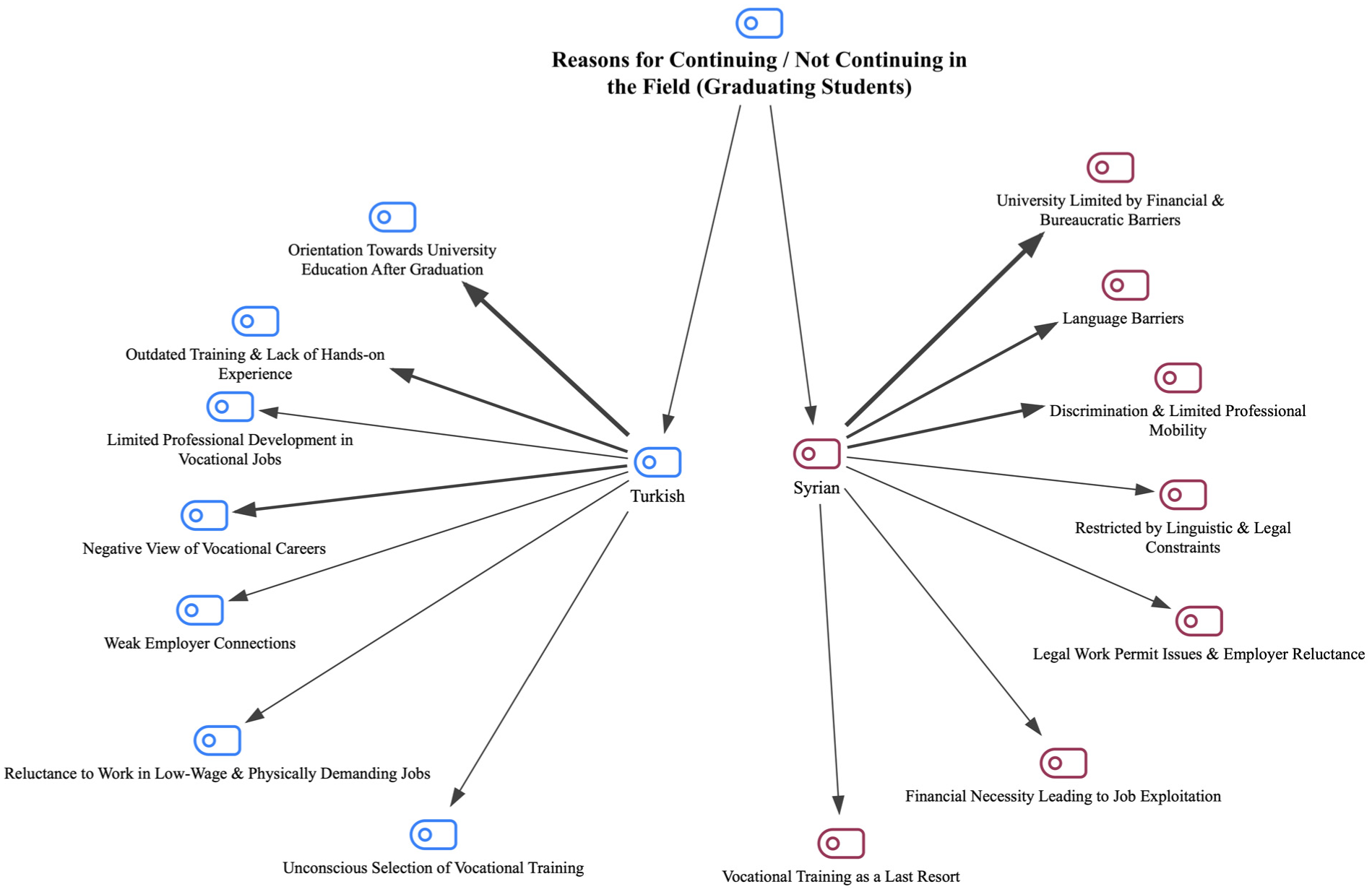
Factors influencing final-year students’ decision to continue or leave their vocational field.
The findings indicate distinct patterns in the factors influencing Turkish and Syrian vocational high school students’ decisions to either continue working in their trained field or leave it. While both groups experience challenges related to vocational education quality and labor market integration, their specific concerns and motivations differ due to structural, cultural, and socio-economic factors.
A key theme among Turkish students is the strong preference for university education over direct workforce entry. Many views higher education as a pathway to better career prospects and social mobility, perceiving vocational education as a secondary choice rather than a definitive career path. Although some Syrian students also express a desire to pursue university education, financial difficulties, language barriers, and bureaucratic restrictions often limit their access to higher education, making vocational training a more immediate necessity rather than a steppingstone to further education.
Another critical issue is the perceived inadequacy of vocational education in preparing students for real-world labor demands. Turkish students frequently express dissatisfaction with outdated training methods, lack of hands-on experience, and insufficient career guidance, contributing to a significant skills mismatch. For Syrian students, these challenges are compounded by language barriers and legal uncertainties, further hindering their ability to apply their training in formal job settings. Many employers cite these factors as reasons for hesitancy in hiring Syrian graduates, reinforcing employment disparities. The lack of self-development opportunities is also a significant factor in students’ career decisions. Turkish students often feel that vocational jobs do not offer long-term career growth, pushing them toward alternative employment paths or further education. For Syrian students, self-development is often deprioritized in favor of immediate economic survival, although those who do seek career advancement frequently encounter workplace discrimination and limited professional mobility.
The invisibility of certain vocational professions further discourages students from pursuing careers in their trained fields. Turkish students are more likely to perceive some vocational careers as low-status or lacking in long-term stability, leading to disengagement from their chosen profession. Among Syrian students, limited visibility of career opportunities is exacerbated by linguistic and legal constraints, which restrict their ability to seek employment in formal sectors. Consequently, many are pushed into informal, low-paying jobs outside their trained profession. Structural barriers such as limited job openings, weak employer connections, and geographical constraints are commonly cited by Turkish students as obstacles to labor market entry. Syrian students face additional barriers, including legal work permit restrictions, employer reluctance to hire refugees, and discriminatory hiring practices, further limiting their employment opportunities.
Concerns about working conditions play a crucial role in employment decisions for both groups. Turkish students are often reluctant to work in physically demanding, low-wage, or long-hour vocational jobs, leading to high dropout rates from the vocational workforce. While Syrian students are often unable to reject difficult working conditions due to financial necessity, they are more likely to experience exploitation, unsafe workplaces, and informal employment. Additionally, dissatisfaction with vocational field choice is a common concern, particularly among Turkish students who report that they had not consciously chosen their field and therefore lack motivation to continue in their trained profession. Among Syrian students, this issue is less prominent, as vocational education is often seen as a necessity rather than an optional career pathway. However, those who entered vocational training due to limited alternatives rather than personal interest frequently struggle with long-term commitment to their profession.
These findings underscore the structural and socio-economic challenges influencing vocational graduates’ employment decisions. While some factors are common to both Turkish and Syrian students, the additional legal, linguistic, and cultural barriers faced by Syrian graduates highlight the need for targeted policy interventions to ensure more equitable labor market integration.
The findings presented in Figure 3 highlights clear distinctions in what dampens, or boosts work enthusiasm for Turkish versus Syrian vocational students. The thickness of the lines in the MAXQDA visualization represents the frequency of responses, with dominant themes indicating personal expectations, professional recognition, and structural barriers that impact students’ motivation to enter and remain in the workforce.

Factors affecting work enthusiasm among students.
Turkish students are more likely to point to intrinsic or field-related issues as obstacles. For example, Turkish youth often mentioned misalignment with their field of study (having been trained in a field they aren’t passionate about) and the unappealing image of jobs in their sector (viewing them as dirty, low-prestige work) as reasons for reluctance. They also expressed concerns regarding limited career advancement, fearing a lack of opportunities for learning and growth if their skills were underutilized by employers. Additionally, female students highlighted workplace gender discrimination as a significant challenge. These factors are largely internal to the vocational education experience and local work culture. In contrast, Syrian students’ unique concerns are more tied to their refugee experience and external circumstances. The possibility of losing welfare support (ESSN aid) upon formal employment is a deterrent specific to the Syrian cohort, as is the anticipation of discrimination due to their refugee status. These factors highlight the precarious socio-economic position of Syrian youth; despite their willingness to work, systemic barriers and concerns about bias can significantly diminish their motivation.
Another distinction lies in personal motivation and choice. Turkish students showed a higher tendency to express personal disinterest or burnout regarding work. Some Turkish participants frankly admitted to low motivation or pessimism about working (e.g., a sense of inertia or “hopelessness about the future”), which can be linked to broader socio-cultural factors such as comfort provided by family or frustration with limited opportunities. Syrian students, however, rarely cited such personal reluctance—indicating that, for them, the drive to work is strong if the opportunity is fair. This difference suggests that Turkish students’ hesitancy can sometimes stem from within (intrinsic factors or personal outlook), whereas Syrian students’ hesitancy is almost entirely contextual (extrinsic factors beyond their control).
Despite these differences, there are important commonalities shared by Turkish and Syrian vocational high school students. Both groups strongly value opportunities for self-development, respect, and status in their prospective jobs. These motivators were among the top factors in the figure for all students, indicating a universal desire for dignified work that offers growth and recognition. Both Turkish and Syrian youths aspire to careers where they can continue to learn and improve themselves, suggesting that any program or employer that highlights mentorship, training, or clear advancement pathways will likely engage their interest. Similarly, being treated with respect and achieving a respectable standing through their work is a mutual priority—they do not want to be seen as cheap labor, but rather as skilled professionals. The emphasis on innovative and modern work environments also appears in both groups’ responses, showing a shared optimism for working in dynamic sectors where they can be part of new developments.
Another common theme is the importance of social perception and support for their professions. Both Turkish and Syrian students mentioned that increasing the visibility and recognition of vocational jobs would bolster their enthusiasm. This implies that initiatives to improve how society views vocational careers (through awareness campaigns, success stories, or community engagement) could positively impact both groups. In addition, practical considerations like wages and commute distance cut across both populations. While the specific emphasis differed (with wage concerns voiced more by male students and commute difficulties more by female students in each group), the underlying insight is that basic job conditions—fair pay and accessible work locations—are fundamental to motivating young people to join the workforce regardless of background.
The data suggest that improving work enthusiasm among these students requires a dual approach addressing both groups’ needs. For Turkish students, interventions could prioritize career guidance and improvements in job quality by ensuring alignment between students’ fields of study and their interests, addressing the stigma associated with blue-collar work—potentially by emphasizing the modern and hygienic aspects of vocational jobs—and ensuring that entry-level positions effectively utilize graduates’ skills. Addressing workplace gender bias is also crucial so that female graduates feel welcome and valued in their industries. For Syrian students, the findings highlight the need for policy and employer-level assurances, such as coordinating with social assistance programs to prevent young individuals from fearing an immediate loss of benefits upon employment and promoting inclusive workplace policies to mitigate discrimination. Simply put, Syrian youth need to feel that taking a job will improve, not endanger, their livelihood and social acceptance.
The findings depicted in Figure 4 illustrate the primary reasons why Turkish and Syrian graduates decide to leave their jobs. Many graduates who left their jobs cited poor working conditions as a primary reason for dissatisfaction.
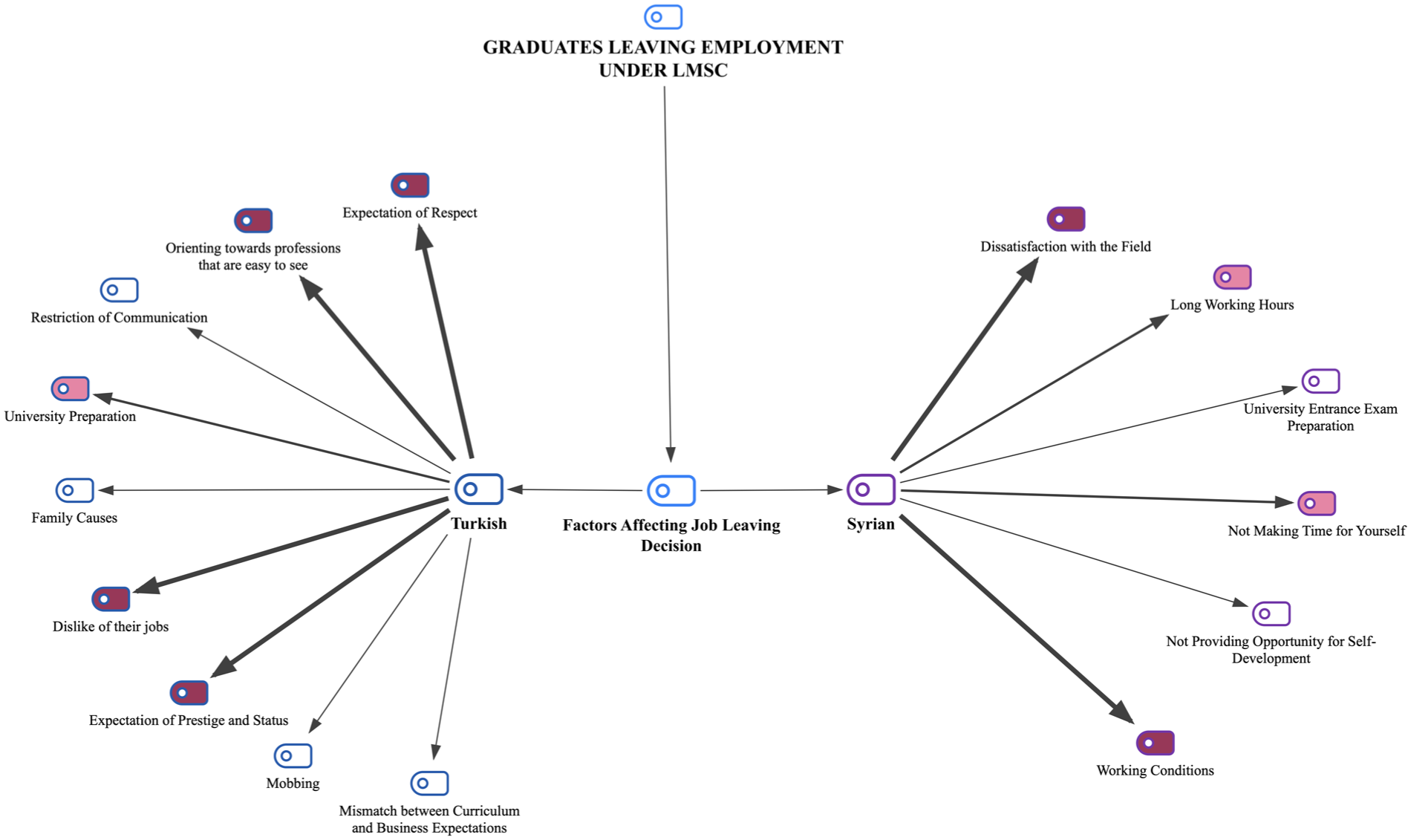
Factors influencing job-leaving decisions among graduates.
For Turkish graduates, the most frequently cited reason for leaving their jobs is the expectation of higher prestige and social status. Many graduates feel that their current positions do not meet their career aspirations, leading to dissatisfaction and early exit from the workforce. Similarly, orienting toward professions that are more visible or socially prestigious is a significant factor, indicating that some vocational graduates perceive their jobs as less respected within society.
Another frequently mentioned factor is dislike of their jobs, which suggests that many graduates lack intrinsic motivation to continue in their current field. Mismatch between curriculum and business expectations is also a major concern, reflecting the ongoing disconnection between vocational education and real-world labor market needs. Additional factors influencing job-leaving decisions include mobbing (workplace harassment), family-related causes, and the need for university preparation. The restriction of communication in workplaces further contributes to dissatisfaction, indicating that some graduates struggle with workplace culture and adaptation.
These findings suggest that improving the prestige and visibility of vocational careers, enhancing skill development opportunities, and addressing workplace conditions could increase retention rates among graduates. Additionally, tailored career guidance and labor market matching strategies could help reduce job dissatisfaction and improve workforce stability.
For Syrian graduates, the most dominant reason for leaving their jobs is poor working conditions, which significantly impact job retention. Many Syrian graduates face long working hours and physically demanding labor, making employment in their vocational field less sustainable in the long term.
Another frequently cited reason is not providing opportunities for self-development, suggesting that many Syrian graduates feel their jobs do not offer career growth or skill enhancement. Dissatisfaction with the field also plays a crucial role, like their Turkish counterparts, indicating that some graduates may not have chosen their vocational paths voluntarily.
Additional factors include not making time for oneself, reflecting concerns about work-life balance, and university entrance exam preparation, suggesting that some Syrian graduates, like their Turkish peers, prefer to continue their education rather than remain in the workforce.
Prejudice and discrimination from employers emerge as a significant challenge, with many respondents believing that they will be treated unfairly or will not be hired because of their refugee status. This aligns with broader concerns about workplace inclusion and employer biases against Syrian workers. This perception reflects the assumptions embedded in Social Identity Theory (SIT), which posits that negative group-based stereotypes can shape how individuals are evaluated and treated in institutional contexts, such as hiring. For Syrian students, these assumptions were compounded by language barriers and assumptions about cultural fit. Other frequently mentioned factors include assignment of work outside their trained profession, which reduces job satisfaction, and training programs failing to adequately prepare them for real-world job conditions.
For instance, Syrian graduates frequently reported that despite their qualifications, they faced rejection during job interviews based solely on their refugee identity. One graduate remarked: “I was the top student, but during the job interview, they looked at my ID and just shut the door.” (Syrian Graduate, S4, SIT Construct: Identity-Based Exclusion)
Employers also revealed a preference for hiring Turkish youth, associating Syrians with potential risks due to language or accountability concerns: “You can always find a way with Turkish youth, but with Syrians, there are too many issues around language and responsibility. We don’t want to take the risk.” (Employer, E7, SIT Construct: Outgroup Risk Attribution)
Turkish participants echoed this ambivalence, indicating that Syrians were either trusted too much or completely excluded: “Employers either really trust Syrians or not at all. There’s no middle ground.” (Turkish Graduate, T9, SIT Construct: Social Categorization).
These quotations reflect the intersection of status perceptions, identity politics, and labor market integration, affirming SIT’s explanatory relevance.
The findings in Figure 5 illustrate the key recommendations made by company representatives regarding ways to improve the employability of vocational graduates. The thickness of the lines in the MAXQDA visualization represents the frequency of responses, with dominant themes emphasizing administrative simplifications, employer engagement, skill development, and job market awareness as crucial factors for increasing employment retention.

Recommendations for enhancing employability from company representatives.
One of the most frequently cited recommendations is informing young people about their professions, suggesting that many students enter the job market without sufficient awareness of their vocational field’s demands, expectations, or career paths. Employers believe that better career orientation and realistic job expectations could improve workforce retention.
A further major recommendation is enhancing employer awareness of supports. Many company representatives note that businesses lack adequate knowledge about available employment incentives, discouraging them from hiring vocational graduates.
Employers also emphasize the need to reduce bureaucratic complexity in support procedures, as observed in the SEUP II-LMSC project. Many businesses perceive the current processes as cumbersome and ambiguous, which contributes to lower participation rates in employment incentive programs. Streamlining these procedures could enhance employer engagement and encourage the hiring of vocational graduates.
Additionally, companies highlight the need for developing social and professional skills among students, recommending courses on communication, teamwork, and workplace behavior. This suggests that technical training alone is not sufficient; soft skills are equally important for graduates to adapt to workplace environments.
A notable recommendation is the creation of a Moodle-based digital platform to inform employers about employment incentives. This platform would provide visual guides, step-by-step processes, and structured roadmaps to facilitate employer participation. The emphasis on raising awareness of young people about real labor market conditions further underscores the need for bridging the gap between vocational education and employer expectations.
These findings highlight the importance of structured career guidance, stronger employer support mechanisms, and improved coordination between companies, vocational schools, and policymakers in enhancing the effectiveness of vocational education and employment initiatives.
The role of families in shaping graduates’ employment decisions was another significant finding. Many parents expressed concerns that vocational education did not provide a stable career path. In several cases, families discouraged their children from continuing in their trained professions, believing that higher education or alternative employment would offer better prospects.
The findings shown in Figure 6 highlight significant differences between Turkish and Syrian families regarding the reasons why young people are unwilling to work or decide to leave their jobs. In the MAXQDA visualization, the thickness of the lines represents the frequency of responses, with the most frequently mentioned factors emerging as dominant themes.

Family perspectives on youth employment barriers and job quitting reasons.
For Turkish families, the most frequently cited reason for youth unemployment or job quitting is the inadequacy of vocational education. Families emphasized that the issue is not low wages but rather that their children do not receive proper training in their professions and are consequently dismissed from work. This suggests a fundamental concern regarding the effectiveness of vocational training programs in equipping students with practical skills required by the labor market.
Another major concern is the difficulty of commuting to workplaces. Many Turkish families reported that long commutes, combined with the lack of employer-provided transportation, negatively impact young workers’ willingness to remain in their jobs. Correspondingly, poor employer behavior was mentioned, albeit less frequently, as a contributing factor to job dissatisfaction.
For Syrian families, the most dominant factor preventing youth employment is the fear of losing ESSN (Emergency Social Safety Net) financial assistance. This concern significantly discourages formal employment, as families prioritize maintaining their social benefits over potential long-term job stability. This finding suggests that existing social assistance policies may inadvertently create employment disincentives for refugees, reinforcing dependency rather than facilitating labor market integration.
A frequently mentioned issue is personal reluctance to work, including lack of motivation, inertia, and feelings of hopelessness about the future. These highlights broader social and psychological barriers affecting labor market participation among Syrian youth. Furthermore, prejudice and discrimination from employers emerged as a major concern, with many families believing that employers will not hire Syrians or will treat them unfairly in the workplace.
A significant barrier is the lack of career development opportunities, with many Syrian families stating that their children perceive limited chances for professional growth in their jobs. Occupational gender discrimination was also a significant issue, particularly affecting Syrian women, who face more restricted job opportunities due to both cultural and structural barriers.
Other less frequently mentioned but still relevant factors include low wages, limited awareness of regional employment opportunities, and the remoteness of workplaces.
Overall, the analysis underscores the following key differences:
For Turkish families, the primary concerns are inadequate vocational training and commuting difficulties, both of which negatively impact job retention.
For Syrian families, the most significant barriers are the fear of losing social assistance and employer discrimination, which create additional obstacles to labor market participation.
Gender-based employment barriers disproportionately affect Syrian women, limiting their access to job opportunities.
Both Turkish and Syrian families identify the lack of career advancement opportunities as a major issue, suggesting that increasing wages alone may not be sufficient to improve employment outcomes.
These findings illustrate the critical role of family perceptions in shaping young people’s employment decisions and highlight how social, economic, and policy-related factors influence workforce participation. Addressing these challenges requires a multi-faceted approach, including reforming vocational education, improving transportation accessibility, reducing social assistance-related employment disincentives, and combating workplace discrimination.
Interestingly, wage levels were not the primary concern for families. Instead, they emphasized the lack of real skill development in vocational schools as the reason why graduates became disenchanted with their jobs. This suggests that increasing wages alone may not be sufficient to improve retention rates without enhancing the quality and relevance of vocational education.
The study also revealed significant gender disparities in employment experiences. The findings shown in Figure 7 highlight key differences between Turkish and Syrian female graduates in their decisions to either continue working in their vocational field or leave it. The thickness of the lines in the MAXQDA visualization represents the frequency of responses, with dominant themes indicating structural, educational, and socio-economic barriers to workforce participation.

Factors influencing the decision to continue or leave the vocational field among female graduates.
For Turkish female graduates, the most frequently cited reason for leaving their vocational field is dissatisfaction with their field of study. Many graduates feel that their profession does not align with their interests or career expectations, leading to low motivation to remain in their chosen field. A significant number of respondents report a lack of opportunities for self-improvement, which limits their ability to advance within their profession. Frequently mentioned factor is the non-visibility of their profession, suggesting that many female graduates perceive their vocational training as less valued or underrepresented in the labor market. Mobbing (workplace harassment or exclusion) is also noted, though it appears with lower frequency compared to other concerns.
For Syrian female graduates, the most dominant reason for leaving their vocational field is the concern that their ESSN (Emergency Social Safety Net) financial assistance will be cut off if they formally enter the workforce. This reflects a policy-driven disincentive, where refugees must choose between stable employment and maintaining much-needed social support. Another major factor is the lack of field-specific knowledge, indicating that many Syrian graduates feel underprepared for the job market, either due to language barriers, limited practical training, or difficulties adapting to the Turkish vocational education system.
For male graduates, job dissatisfaction was often linked to working conditions and perceived lack of career progression. Syrian male graduates also expressed concerns over losing financial assistance (ESSN aid) if they formally entered the labor market, which acted as a disincentive for employment.
Syrian graduates reported hesitations about formal employment due to the risk of losing access to monthly ESSN payments. From a dual labor market perspective, this hesitancy can be interpreted as a rational response to limited upward mobility in the informal or secondary labor segment, where formal work may not offer enough compensation to offset the loss of aid. Others cited informal jobs as more flexible and culturally familiar, despite their insecurity.
The findings presented in Figure 8 highlight the key reasons why Turkish and Syrian male graduates decide to either continue working in their vocational field or leave it.

Factors influencing the decision to continue or leave the vocational field among male graduates.
For Turkish male graduates, the most frequently cited reason for leaving their vocational field is dissatisfaction with their vocational training. Many respondents believe that their education does not adequately prepare them for real workplace demands, leading to a lack of confidence in their professional skills. A significant number of Turkish male graduates express a desire to open their own businesses, rather than working in a structured employment setting, suggesting that many view entrepreneurship as a more viable career path.
Another prominent concern is the lack of opportunities for self-improvement, which prevents them from advancing in their careers. Family guidance also plays a role in their career decisions, with some graduates stating that their families influence their choices regarding employment or further education. A smaller but notable group of respondents indicate university preparation as a reason for leaving vocational training, reflecting a preference for higher education over immediate labor market participation.
For Syrian male graduates, the most dominant factor preventing them from continuing in their vocational field is the concern that their ESSN (Emergency Social Safety Net) aid will be cut off if they formally enter the workforce. This highlights a policy-related employment disincentive, where refugees must choose between financial stability through social assistance and job market integration.
Frequently mentioned issue is the belief that employers will assign them jobs outside their trained field, suggesting that Syrian male graduates lack confidence in job matching processes or perceive significant employer biases. Precarious work conditions—specifically, the inability of insured persons to receive employment benefits—discourage formal employment, making informal jobs more attractive for many Syrian graduates.
Other concerns include transportation difficulties and heavy working conditions, both of which reduce job satisfaction and make formal employment less desirable. Dissatisfaction with vocational education also emerges as a major reason for leaving, similar to their Turkish counterparts. Some Syrian male graduates mention that they prefer to transition into more profitable jobs rather than staying in low-paying vocational professions.
The findings in Figure 9 show insights from İŞKUR, Turkiye’s public employment agency, regarding the factors influencing young people’s decision to quit work and suggestions for increasing employment.
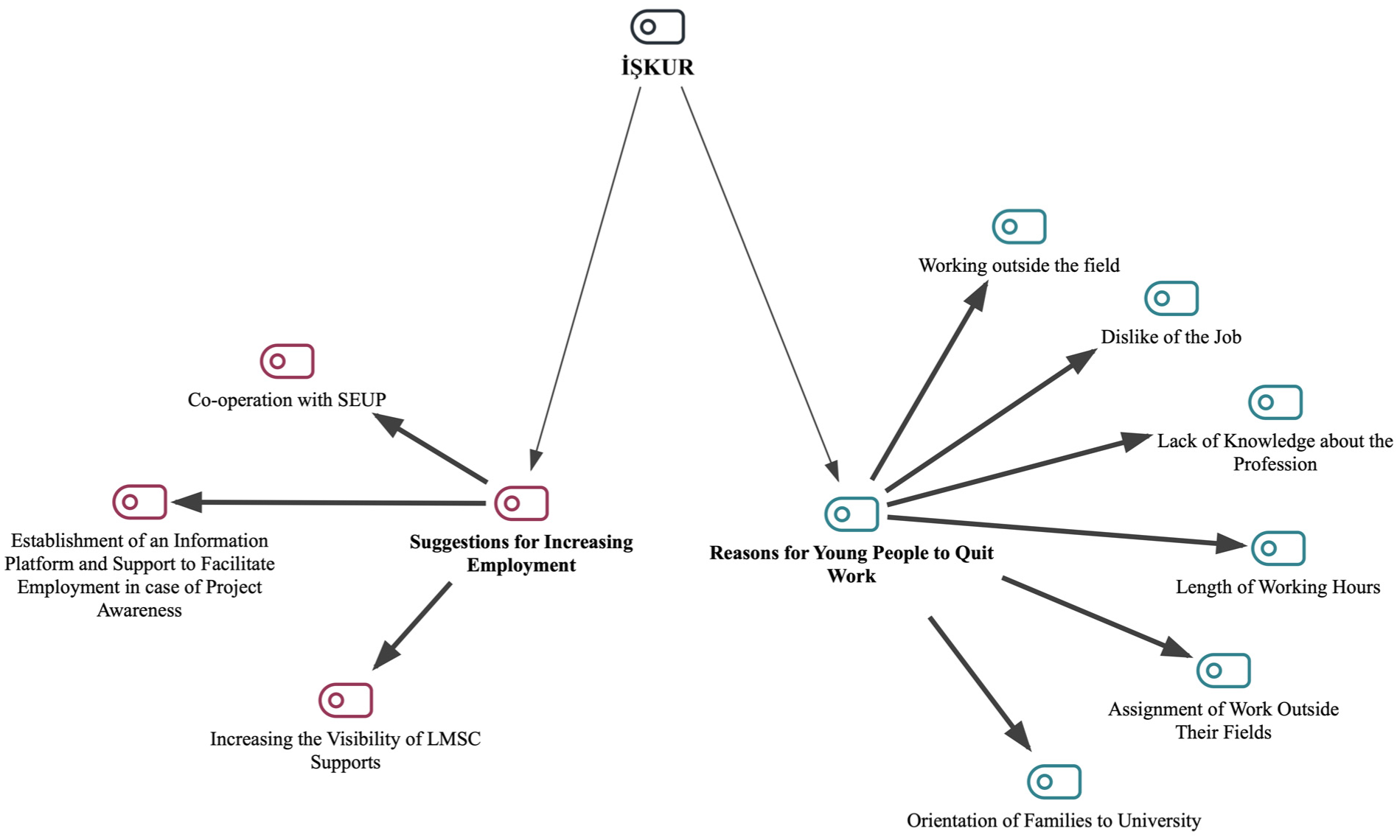
İŞKUR’s perspective on youth employment and retention challenges.
One of the most frequently cited reasons for job quitting is assignment of work outside their trained fields. Many young workers feel that their vocational education does not align with the jobs they are placed in, leading to dissatisfaction and disengagement. This aligns with broader findings on skills mismatch and vocational training misalignment with industry needs.
Another critical factor is lack of knowledge about the profession, suggesting that many young workers enter the labor market without a clear understanding of job expectations or career pathways. This points to a need for stronger career guidance and job preparation programs before workforce entry.
Length of working hours and general dislike of the job emerge as key reasons for quitting. Young workers, particularly those new to the workforce, struggle with adapting to workplace demands, which may indicate a need for structured onboarding programs to ease the transition from education to employment.
To address these challenges, İŞKUR representatives emphasize the importance of increasing awareness and visibility supports. A key recommendation is the establishment of an information platform that would provide structured guidance on employment opportunities, job matching, and available incentives for both graduates and employers.
Another major suggestion is enhancing cooperations, which could improve policy alignment and better integrate employment initiatives with broader labor market strategies. Strengthening these collaborations may result in more efficient job placements, reduced skills mismatches, and improved employer participation in vocational training programs.
All these findings indicate an urgent need for flexible market-oriented policies to better align vocational education with labor market realities and increase employer participation.
The results point to a consistent mismatch between vocational training content and actual employer expectations. This aligns with human capital theory, which assumes that individuals invest in education to enhance employability, but this investment yields limited returns when employer systems do not value or reward vocational credentials. Participants frequently mentioned the lack of hands-on training and weak connections with real industry settings.
Vocational education was frequently described by both Turkish and Syrian students as a second-choice path. According to Social Identity Theory, such perceptions can erode individual motivation and reinforce a sense of group-based inferiority, thereby reducing commitment to long-term employment or further training. Some students even reported feeling embarrassed to tell others about their vocational school background.
Table 2 summarizes the thematic findings across Turkish and Syrian vocational graduates, highlighting common and divergent challenges as well as the theoretical perspectives that inform their interpretation (Table 2).
Summary of Employment Barriers and Theoretical Lenses Across Groups.

Overall, the findings underscore how structural segmentation, social identity perceptions, and weak human capital returns intersect to shape the employment trajectories of vocational graduates in Turkiye.
Discussion
The findings of this study reveal significant gaps in the integration of vocational high school graduates into the labor market. While vocational education is designed to bridge the transition between school and work, the study reveals multiple structural, social, and economic barriers that limit its effectiveness. These challenges are consistent with previous research on labor market segmentation, skill mismatch, and employment incentives (Brun-Schammé & Rey, 2021; Capelli, 2014; McGuinness et al., 2018; OECD, 2024).
One of the most striking findings of this study is the disconnect between vocational education curricula and employer expectations. Many graduates reported that their training was inadequate for real workplace conditions, aligning with prior research indicating that vocational education often fails to keep pace with evolving industry needs (Becker, 1994).
This mismatch is exacerbated by the perceived low status of vocational education, which leads many students to seek alternative career paths or pursue university education instead of entering the workforce. Similar trends have been observed in other contexts, particularly in countries where vocational training is perceived as a second-tier educational pathway (Borjas, 2014).
Comparative evidence from countries with mature vocational training systems reveals critical structural differences that may inform policy reform in Turkiye. For instance, Germany’s Dual System operates on a binding partnership between employers, vocational schools, and chambers of commerce, ensuring that curricular content aligns with occupational standards and labor market trends. Unlike Turkiye, where employer involvement is often limited to internships or incentives, German firms co-design and co-evaluate training programs, which increases both relevance and employability (Busemeyer & Trampusch, 2012). In Germany’s Dual Vocational Training System, employer involvement is a key component, ensuring that training curricula align with industry needs. Germany’s approach offers structured apprenticeships, leading to higher employability rates for vocational graduates (Busemeyer & Trampusch, 2012). In contrast, Turkiye lacks a robust employer engagement model, resulting in misalignment between the skills taught in vocational schools and actual labor market demands.
Similarly, the Netherlands’ BOL/BBL model allows students to flexibly alternate between school-based and work-based training, offering individualized pathways based on readiness and employer demand. Nederland’s BOL and BBL models (school-based and work-based vocational education/training) offer greater flexibility for students to either focus on theoretical knowledge or combine it with practical experience (Blommaert & Wolbers, 2021; CEDEFOD, 2018). This dual approach could serve as a model for Turkiye’s vocational education reforms, ensuring that graduates receive market-relevant skills before entering the workforce. Turkiye’s rigid school-based structure often limits practical exposure and sectoral adaptation.
Canada and Sweden, on the other hand, invest significantly in inclusive vocational pathways, particularly for marginalized groups, through mentorships, wage subsidies, and fast-track certifications (World Bank, 2023).
These countries emphasize vocational dignity, integrating career guidance early in secondary education to reduce societal stigma around non-academic tracks. Turkiye’s policy architecture may benefit from adopting a similar “vocational excellence” approach, where quality assurance, employer trust, and upward mobility are institutionalized. Rather than simply borrowing models, these comparisons suggest transferable principles—such as tri-partite governance, flexible transitions, and social legitimation—that can be adapted to Turkiye’s demographic and economic context.
The study highlights significant discrepancies between employer expectations and graduate experiences. While graduates cite long working hours, limited career progression, and lack of professional respect as key reasons for leaving jobs, employers emphasize attitudinal issues, unrealistic status expectations, and lack of workplace adaptation.
These contrasting perspectives suggest that vocational graduates and employers are not aligned in their expectations, leading to high turnover rates and limited job retention. This finding is consistent with the dual labor market theory, which suggests that structural rigidities and workplace hierarchies often prevent smooth transitions from school to work (Borjas, 2014; Doeringer & Piore, 1975).
This issue is not unique to Turkiye. In Canada and Sweden, vocational graduates are provided with structured work placements and employer mentorship programs, ensuring better alignment between workplace expectations and graduate preparedness (World Bank, 2023). In Turkiye, however, SEUP-II participants report a lack of structured transition programs, which exacerbates the mismatch between graduate expectations and employer demands.
The Social Identity Theory (SIT; Tajfel & Turner, 1986) provides a valuable framework for understanding how social perceptions of vocational education shape employment outcomes. According to SIT, individuals derive a sense of self-worth and status from their group affiliations. Many students view vocational training as a low-status educational path, affecting their career motivation and job retention. In contrast, vocational education is considered on par with higher education in countries like Germany and Switzerland, leading to stronger professional identity formation (Busemeyer & Trampusch, 2012). This suggests that in Turkiye, policy efforts should focus on rebranding vocational education as a high-status, aspirational career path.
The findings also reveal clear patterns of social categorization and outgroup bias, consistent with Social Identity Theory (Tajfel & Turner, 1986). For instance, employers frequently expressed greater comfort in hiring Turkish graduates, citing perceived “trust” and “cultural fit,” while Syrian graduates were often seen as potential “risks” or “uncertain hires.” This ingroup preference not only limits employment opportunities for refugee graduates but reinforces systemic biases. One employer stated: “We know how to work with Turkish youth. With Syrians, you’re never sure what to expect” (Employer, Kayseri).
Conversely, Syrian graduates reported feeling excluded from formal work settings despite academic success, with one student remarking: “They don’t see our effort. One look at our ID and the answer is no” (Syrian Graduate, Adana). These interactions align with SIT’s conceptualization of outgroup discrimination based on group-based identity cues, such as nationality, refugee status, or language proficiency.
Employers often perceive vocational graduates as less competent than university graduates, leading to hiring biases and lower wages. This “outgroup bias” (Tajfel & Turner, 1986) discourages vocational graduates from pursuing long-term careers in their field. Public awareness campaigns and employer incentives could help reduce these biases and promote vocational careers as valuable professional pathways.
Our qualitative interviews revealed strong evidence of SIT dynamics, particularly in employer biases, perceived job status, and gender-specific employment barriers.
Female graduates—especially Syrians—face additional challenges, including occupational gender discrimination, limited mobility, and lack of employer trust. In Sweden and Canada, fast-track integration programs provide mentorship and networking opportunities for female vocational graduates, ensuring better employment outcomes (Canadian, 1991; European Commission, 2017). Applying a gender-sensitive approach in Turkiye’s vocational employment programs could improve female graduates’ workforce participation rates.
The study also underscores the role of families in shaping graduates’ employment decisions. Many families expressed skepticism about vocational education as a pathway to stable employment, reinforcing previous findings that parental influence plays a crucial role in career decision-making (Berry, 1997).
Interestingly, wages were not the primary concern for most families. Instead, they highlighted the lack of real skill development and career advancement opportunities in vocational jobs. This suggests that policy efforts should focus not only on financial incentives but also on improving the perceived value of vocational education through stronger school-employer partnerships and career guidance services.
Conclusion and Recommendations
This study provides an in-depth qualitative analysis of the employment challenges faced by vocational high school graduates. The findings highlight persistent structural, social, and economic barriers that hinder employment and job retention, particularly among Turkish and Syrian graduates. The most critical issues identified include skills mismatch, employer biases, limited career progression opportunities, and socio-economic disincentives such as dependency on financial aid programs. These challenges underscore the need for comprehensive policy interventions and structural reforms to enhance the effectiveness of vocational education as a pathway to stable employment.
A key takeaway from this study is the misalignment between vocational education curricula and labor market demands. Many graduates report that their training does not sufficiently equip them with industry-relevant skills, leading to dissatisfaction and high turnover rates. Employers, in contrast, emphasize attitudinal challenges, unrealistic career expectations, and workplace adaptation difficulties, which further contribute to employment gaps. These findings indicate an urgent need for stronger school-employer partnerships and apprenticeship-based learning models to enhance the practical relevance of vocational education. International best practices, such as Germany’s dual vocational training system and the Netherlands’ work-integrated education model, offer potential pathways for reform.
The study also highlights the social perception of vocational careers as a significant factor influencing employment outcomes. Many graduates perceive vocational education as a secondary or less prestigious career path, opting for university education or alternative employment instead. This aligns with findings from international research on the status perception of technical professions. Addressing this challenge requires public awareness campaigns, mentorship programs, and employer engagement strategies to improve workforce retention and enhance the professional identity of vocational graduates.
Another critical barrier identified is the impact of social and economic policies on employment choices, particularly among Syrian graduates. Many Syrian students and their families fear losing financial aid (e.g., ESSN) upon formal employment, discouraging workforce participation. Moreover, refugee graduates face additional challenges related to linguistic barriers, cultural biases, and employer hesitancy to hire Syrian workers, all of which exacerbate employment disparities. These findings suggest that policies should focus not only on labor market incentives but also on social inclusion measures, targeted job placement services, and workplace integration programs to support vulnerable groups.
Policy interventions play a crucial role in addressing these challenges. The study identifies three key areas for improvement: (1) Curriculum reform: Aligning vocational training with industry needs by integrating workplace-based learning models and employer collaboration in curriculum design. (2) Employer incentives and awareness: Simplifying procedures and increasing employer engagement to facilitate smoother graduate transitions into formal employment. (3) Social and economic policy adjustments: Addressing disincentives that discourage job retention, particularly financial aid structures that inadvertently deter formal employment among refugees.
By situating these findings within international vocational education models (Germany, the Netherlands, Canada, and Sweden), this study offers a comparative perspective on how alternative approaches—such as dual-training systems and structured employment incentives—can enhance vocational workforce integration. The application of Social Identity Theory further enriches the analysis, providing a framework to understand how societal and employer biases influence vocational employment outcomes.
In conclusion, this study contributes to the broader discourse on vocational education as a mechanism for labor market integration by offering empirically grounded policy recommendations. Addressing the systemic barriers identified will not only enhance employment outcomes for vocational graduates but also contribute to a more inclusive and efficient labor market. Future research should expand on these findings by incorporating longitudinal data to track graduates’ career trajectories and assessing the long-term effectiveness of policy interventions.
The vocational education system is not merely a vehicle for technical skills acquisition; it represents a strategic intervention for fostering social cohesion, economic inclusion, and intergenerational equity. However, without comprehensive and integrated reforms, vulnerable groups—especially Syrian graduates—will remain at heightened risk of informality, low-productivity employment, and social exclusion. Such fragility threatens to reduce overall labor market productivity and exacerbate social polarization over time. Furthermore, Turkiye’s demographic window of opportunity is narrowing. Failure to productively and inclusively integrate the youth population will result in the loss of this historic advantage. If policymakers and sectoral stakeholders do not take immediate action to modernize curricula, institutionalize school-industry partnerships, and address the overlap between social assistance and employment, skill mismatches will become chronic, informality will rise, and prospects for long-term cohesion will weaken. Every reform deferred today carries the risk of significant economic and social costs tomorrow.
Limitations and Suggestions for Future Research
While this study provides valuable qualitative insights into the labor market transitions of Turkish and Syrian vocational graduates, several limitations should be acknowledged. First, the research was conducted in five provinces—Gaziantep, Adana, Ankara, Konya, and Kayseri—limiting the geographic generalizability of the findings. Second, the reliance on self-reported narratives introduces the possibility of subjective bias and recall limitations. Additionally, employer participation was somewhat constrained by concerns over institutional scrutiny and misinterpretation. The study captures short-term transitions but does not assess long-term career mobility. Future studies could expand the geographic scope, adopt longitudinal or mixed-methods designs, and include more vulnerable subgroups—such as undocumented youth, seasonal workers, or those outside formal vocational tracks—to provide a more comprehensive understanding of employment pathways in diverse labor market contexts.
Supplemental Material
sj-docx-1-sgo-10.1177_21582440251375206 – Supplemental material for Do Support Mechanisms Ensure a Smooth Labor Market Transition? A Cross-Cultural Qualitative Study on Vocational High School Graduates in Turkiye
Supplemental material, sj-docx-1-sgo-10.1177_21582440251375206 for Do Support Mechanisms Ensure a Smooth Labor Market Transition? A Cross-Cultural Qualitative Study on Vocational High School Graduates in Turkiye by Volkan Isik, Mustafa Caglar Ozdemir and Bunyamin Yasin Cakmak in SAGE Open
Footnotes
Acknowledgements
The authors would like to express their sincere gratitude to the Ministry of National Education, Directorate General for Lifelong Learning, and the Social and Economic Cohesion through Vocational and Technical Education Project (SEUP) team for their valuable support throughout this research. Their collaboration and commitment to enhancing vocational education in Turkiye have been instrumental in facilitating this study. The insights and guidance provided by SEUP project stakeholders have greatly contributed to a deeper understanding of the challenges and opportunities in vocational graduate employment.

Ethical Considerations
The research design was submitted to and approved by the Turkish Ministry of National Education (MEB) and the SEUP-II IPA/2017/389-728 (KfW Procurement No: 501190) Project Team.
Funding
The authors disclosed receipt of the following financial support for the research, authorship, and/or publication of this article: This research was supported by the Ministry of National Education, Directorate General for Lifelong Learning, within the framework of the Social and Economic Cohesion through Vocational and Technical Education Project (SEUP). The collaboration and contributions of SEUP stakeholders were instrumental in facilitating this study.
Declaration of Conflicting Interests
The authors declared no potential conflicts of interest with respect to the research, authorship, and/or publication of this article.
Data Availability Statement
The qualitative interview data generated and analyzed during this study are not publicly available due to confidentiality and ethical restrictions imposed by the Ministry of National Education and the SEUP-II Project Team. Anonymized excerpts supporting the findings of this research may be made available from the corresponding author upon reasonable request and with permission from the Ministry of National Education.
Supplemental Material
Supplemental material for this article is available online.
References
Supplementary Material
Please find the following supplemental material available below.
For Open Access articles published under a Creative Commons License, all supplemental material carries the same license as the article it is associated with.
For non-Open Access articles published, all supplemental material carries a non-exclusive license, and permission requests for re-use of supplemental material or any part of supplemental material shall be sent directly to the copyright owner as specified in the copyright notice associated with the article.
