



Abstract
This paper investigates how transport accessibility influences residents’ livelihood transformation and land use change on the Tibetan Plateau (TP) through questionnaire surveys and interviews in nine villages. The study finds that households near cities primarily enhance income via non-agricultural employment, with cash crops making limited contributions to income growth. Binary logistic model results show that outbound transportation frequency, proportions of non-agricultural income and employed population and altitude significantly impact micro-level land use change. Notably, the ‘inverse Thünen model’ is identified, where improved transport accessibility near cities correlates with higher rates of arable land rental, idling, or abandonment due to labour migration to urban areas. The research enriches household-level empirical evidence and offers policy insights for optimising transport infrastructure and sustainable livelihood strategies to enhance farmers’ and herdsmen’s living standards on the TP.
Keywords
Introduction
As a support for livelihood transformation (Weiss et al., 2018), transport accessibility has been identified as one of the key elements for sustainable livelihood in agricultural and animal husbandry areas (Takada et al., 2021). Livelihood transformation is a micro-economic unit that drives the evolution of human–land relationships (Kates et al., 2001). The impact mechanism of transport accessibility on livelihood transformation is not only an important aspect of livelihood transformation research but also a core issue for the coordinated development of human–land relationships in pan-third pole areas and ecologically fragile areas.
Rural residents are more vulnerable to transport-related exclusion than urban residents. Road construction and traffic environment are the basis of economic and social exchanges between rural and other areas, and closely related to the production and livelihood of farmers and is an important driving factor for regional development. Due to lacking basic infrastructure, roads and services in remote rural areas, transport is identified as a significant factor in poverty reduction and livelihood transformation. Especially for developing countries and regions, accessibility to markets and key infrastructure is the major determinant of rural development (Banick et al., 2021), as well as a support for farmers’ livelihood transformation and the key element for achieving sustainable livelihood (Takada et al., 2021; Weiss et al., 2018). Road construction improved the connectivity between rural areas, showing a significant positive effect on poverty reduction.
China represents a successful example of leapfrog infrastructure development in the world. As an important means of poverty alleviation (Zhu & Liao, 2020), transportation improvement is crucial to regional economic growth (Rokicki & Stępniak, 2018). The past three decades have witnessed significant changes in China’s rural areas (Zhuo et al., 2022). In theory, improving transport infrastructure in poor areas could directly reduce poverty, and the shorter the time it takes a resident to get to the nearest road, the less likely a family is to fall into poverty. Road construction promoted labour migration and significantly increased the per capita net income of people from poor families, which, in turn, led to poverty reduction (Zhu & Liao, 2020). Studies have shown that every additional 1 km of low-grade roads in rural areas of northern China could lift 226 people out of poverty (Fan & Chan-Kang, 2008). Thus, transport facilities should be provided, and barriers to mobility should be removed in rural areas. Meanwhile, the training, education and social links between rural and urban areas are supposed to be increased, and it is essential to provide ways to address poverty and paths for livelihood transformation.
As the region with the highest average altitude in the world (Chen & Xu, 2023), the Tibetan Plateau (TP) has always been a transport ‘desert’ (X. Gao et al., 2022). ‘Transport poverty’ has long been an important factor restricting the development of TP and the livelihood of farmers and herdsmen living in this area (X. Gao et al., 2022; Miao et al., 2023). For nearly five decades, China’s government has invested heavily in the transport infrastructure on TP, particularly in Qinghai Province and Tibet Autonomous Region. The fragmentary terrain (average altitude > 4,000 m) and ecological sensitivity of TP lead to high road construction costs (the cost per kilometre is 3–5 times that of the plain area), and difficult maintenance, which restrict the improvement of the actual accessibility of remote villages. Although many transport infrastructure projects were declared as part of the key investment projects for regional economic growth, the positive socio-economic effects generated by these investments might not be transferred to the least advantaged groups in society (Benevenuto & Caulfield, 2022); this remained a gap in research.
This paper is structured as follows: the literature review on transport accessibility and livelihood transformation is summarised part 2; the data sources and methods are presented in part 3; the research results are discussed in part 4; the discussion is in part 5; and the conclusion is presented in the last part.
Literature Review
The Impact of Transport Accessibility on Residents’ Livelihood
Transport accessibility, which originated from classical location theory, is the core theme of transport geography. The concept was proposed first by Hansen (1959), who defined accessibility as the size of mutual opportunities between nodes in a transport network. This perspective started from the spatial quantification level and was often called spatial accessibility. Subsequently, scholars in different fields have given various definitions of accessibility based on different research objects and perspectives (Ingram, 1971; Miller, 1991; Vickerman, 1974). Despite the lack of a uniform and specific definition, scholars generally agree that accessibility refers to the ease of getting from a given location to the location of activity using a given transportation system.
Transport accessibility is not limited to the objective spatial level, but it also relates to people’s psychological feelings and behavioural abilities. The perspective could also be subjective, focusing on the analysis of accessibility from people themselves (Kwan et al., 2003). Accessibility refers to the freedom of individuals to participate in social and economic activities (Weibull, 1976). For urban and rural residents, accessibility has an important impact on household livelihood transformation. The combination of socio-economic and transport disadvantage has led to transport rejection (Lucas, 2012), which negatively affected people’s livelihood. Transport accessibility is a key link for poor people living in urban areas to obtain services and livelihood assets and to achieve sustainable livelihood (Sohail, 2005). It is also the basic demand of urban residents, as it plays a key factor in the livelihood of urban residents (such as the livelihood of women in urban slums [Alberts et al., 2016; Anand & Tiwari, 2006] and African urban residents [Andreasen & Møller-Jensen, 2017; Sewell et al., 2019]). Improving transport accessibility could reduce poverty (Benevenuto & Caulfield, 2019); thus, it has been considered an important determining factor of livelihood transformation. Considering that cities are the economic growth poles of TP and counties don’t offer much employment, the paper defines travel time to the nearest city as transport accessibility.
Improved transport accessibility can increase employment opportunities as well as improve individuals’ willingness and ability to travel, which, in turn, would positively promote livelihood transformation. For rural areas, transport accessibility has become a key factor in the livelihood transformation of residents living in ecologically fragile areas where natural resources are their main source of livelihood. Improving the transport accessibility between farmers and the market would promote the transformation of livelihood activities into non-agricultural employment (Takada et al., 2021), thus reducing their dependence on forests and other natural resources (Salonen et al., 2012; Soltani et al., 2017). It is a key factor in rural adaptability and resilience and also affects farmers’ selection of livelihood strategies (J. Zhang et al., 2019). The improved transport accessibility would improve livelihood diversity level (Zhu & Liao, 2020). Farmers and herdsmen are considered to be the micro-subjects and practice subjects of regional sustainable development (Zhong et al., 2022). It has been widely recognised that transport development is an important prerequisite for livelihood improvement, especially in ecologically fragile areas.
The Impact of Transport Accessibility on Livelihood Transformation
With the decline of the traditional agricultural and animal husbandry sector, and the prevailing challenges and risks, farmers and herdsmen are pushed towards livelihood transformation. Livelihood transformation has become a common phenomenon worldwide. Farmers decide whether to change their livelihood or not, a decision that was based on factors such as personal ability, capital, household, community situation and market supply and demand. The process of livelihood transformation is often influenced by the unsustainability of the original livelihood, personal judgement and decisions. Additionally, it also depends on some external objective conditions. As urban and rural areas are increasingly connected globally, rural areas are becoming part of urban space in terms of production, consumption and social interaction (Allen & Farber, 2019; Fan & Chan-Kang, 2008). Livelihood transformation can be affected by many factors, such as ecological migration, returning farmlands to forests and grasslands and relocation and other policies in western China. However, these factors usually lead to changes in farmers’ livelihood in specific regions, and the impact is often sudden and short term. The development and construction of a transportation network provide a more convenient and close connection network between rural and urban areas (Adugbila et al., 2023; P. Zhao & Yu, 2021), which can have a sustainable impact on the livelihood transformation of farmers and herdsmen.
Many studies have revealed the impact of transport accessibility on livelihood transformation and livelihood resilience of rural residents. For example, Herzog (2021) proposed that differences in market accessibility caused by transportation led to employment differences in different counties, affecting regional income levels and economic growth. Zhuo et al. (2022) revealed that accessibility and mobility promoted the industrial model of rural households in the Jianghan Plain of China, transforming from full-time agriculture to part-time agriculture. The study also suggested few strategies for this transformation. Some scholars argued that people living in poor areas do not benefit equally from road construction or transportation improvements, mainly because walking is their only available or affordable means of travel (Salon & Gulyani, 2010). In a study by Y. Zhang et al. (2023) examining the ethnic areas in western Sichuan, it was determined that transport accessibility significantly affected livelihood transformation and served as the leading force to enhance the resilience of rural residents’ livelihood.
As the basic support for livelihood transformation, transport accessibility is one of the key elements in achieving sustainable livelihood in agricultural and animal husbandry areas. Transportation is considered an important factor in the transformation of people’s livelihood, especially in areas where transportation infrastructure remains lacking. The construction of transportation networks and eco-social development on TP have long lagged behind other regions of China (X. Gao et al., 2022), but the region has seen rapid transport development in recent years (X. Gao et al., 2019). Relevant studies have confirmed the impact of railway construction on accessibility and economic development of TP (D. Gao & Li, 2022). However, all the evidence comes from macro-scale or urban analysis, rather than a micro-perspective one. Meanwhile, as most scholars focused on the social and economic effects of transportation on the Tibet Plateau at the macro-level, there is a lack of research on the dynamic and changing impact of transportation on the livelihood of farmers and herdsmen from the micro-perspective.
The Impact of Livelihood Transformation on Land Use Change
Farmers are the real managers of rural lands; they are closely connected with the land physically and psychologically. Their livelihood transformation can directly affect the quality of rural economic development and the direction of land use transformation. Some scholars believed that land use would affect farmers’ livelihood, such as the impact of crop planting on farmers’ income. Thus, they could examine the impact of land use change on farmers’ livelihood (Bou Dib et al., 2018; Nguyen et al., 2017). However, most studies agreed that livelihood choice and its transformation would promote the change of land use types, showing an uncertain impact on land use (Randell, 2017). Therefore, the adjustment of land use structure reflects the livelihood change of rural households.
Transport accessibility causes the change of location conditions and promotes the change of farmers’ livelihood. It can be noted that the dependency of their household on land livelihood has also changed. At the micro-level, farmers’ livelihood is most closely related to land use change (Hu et al., 2016; C. Wang & Yang, 2012). Livelihood transformation will promote the change in land use, which may reduce the input of agricultural land or increase the intensity of arable land use (Yan et al., 2010). It would then result in changes in land quality, planting structure and food yield.
Land use change is the main intermediary through which farmers’ livelihood affects the ecological environment. The livelihood transformation dominated by diversification and non-agriculture can have a strong impact on farmers’ land use behaviour by inducing the shortage of agricultural labour force and the increase of non-agricultural income. Ultimately, it can also impact land quality and the ecological environment (F. Zhang & Zhao, 2015). De-agriculturalisation and diversification of livelihood promoted the competition between agricultural activities and non-agricultural activities in terms of the quantity and quality of the labour force and capital investment. With the improvement of the non-agriculture level, farmers tend to choose these planting modes with high efficiency and less time-consuming in terms of arable land utilisation (J. Zhang et al., 2019), and the use of pesticides and other agricultural chemicals has been noted to double. Many changes in agricultural production were also determined, such as the increase in labour opportunity cost in agriculture, the decrease in the intensity of arable land use, the abandoned marginal arable land and the transformation of arable land to other land types (Sun et al., 2021). At the same time, investment in land conservation was in a decline, which could then lead to more soil erosion and more rapid land degradation.
Given the relevant research on TP, some scholars have studied the livelihood of farmers in Jinchuan County, eastern regions (Dari County, Banma County and Rangtang County), Gannan and other areas in TP from the aspects of arable land use mode (L. Zhang et al., 2008), diversification (Yan et al., 2009), vulnerability (Q. Zhang et al., 2016), livelihood risk (W. Wang et al., 2017) and adaptability (X. Y. Zhao & Xue, 2016). Most relevant studies adopt the sustainable livelihood analysis framework (Chambers & Conway, 1991; DFID, 1999), taking the current situation of farmers’ livelihood in a certain area as the research object; there were few relevant studies on how land use changed after livelihood transformation. Therefore, comparing the livelihood transformation of farmers in different regions from the perspective of transport accessibility, as well as the land use changes after livelihood transformation, can enrich research content such as sustainable livelihoods and transportation geography.
Data Sources and Study Methods
Data Sources
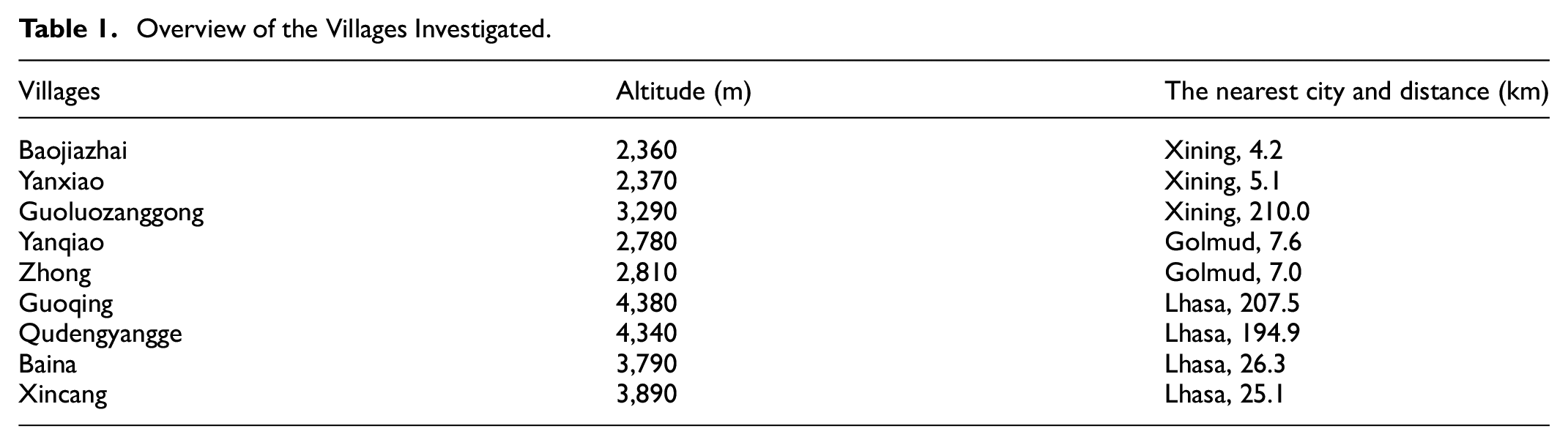
To learn more on the livelihood of farmers and herdsmen along the Qinghai–Tibetan railway, we surveyed nine villages in the study area in July, August 2019 and May 2021, with three surveys conducted by 12 personnel. Each survey took about 10 days. Through the questionnaire surveys, we were able to have a grasp of the basic situation of farmers and herdsmen, including their economic conditions, transportation and travel conditions. We distributed more than 330 questionnaires to farmers and herdsmen, of which 323 were valid (the effective rate is 97.88%, and coverage reached 37.9%). Some residents have lived in the city for a long time for employment, education and other reasons, but their household registration is still in the original village. Therefore, in fact, the resident population is lower than the statistical population, and the coverage rate of the questionnaire is about 50%. At the same time, we were able to interview some farmers, herdsmen and village cadres to extract relevant information. Figure 1 shows their geographic location, and Table 1 shows the overview of the villages investigated.
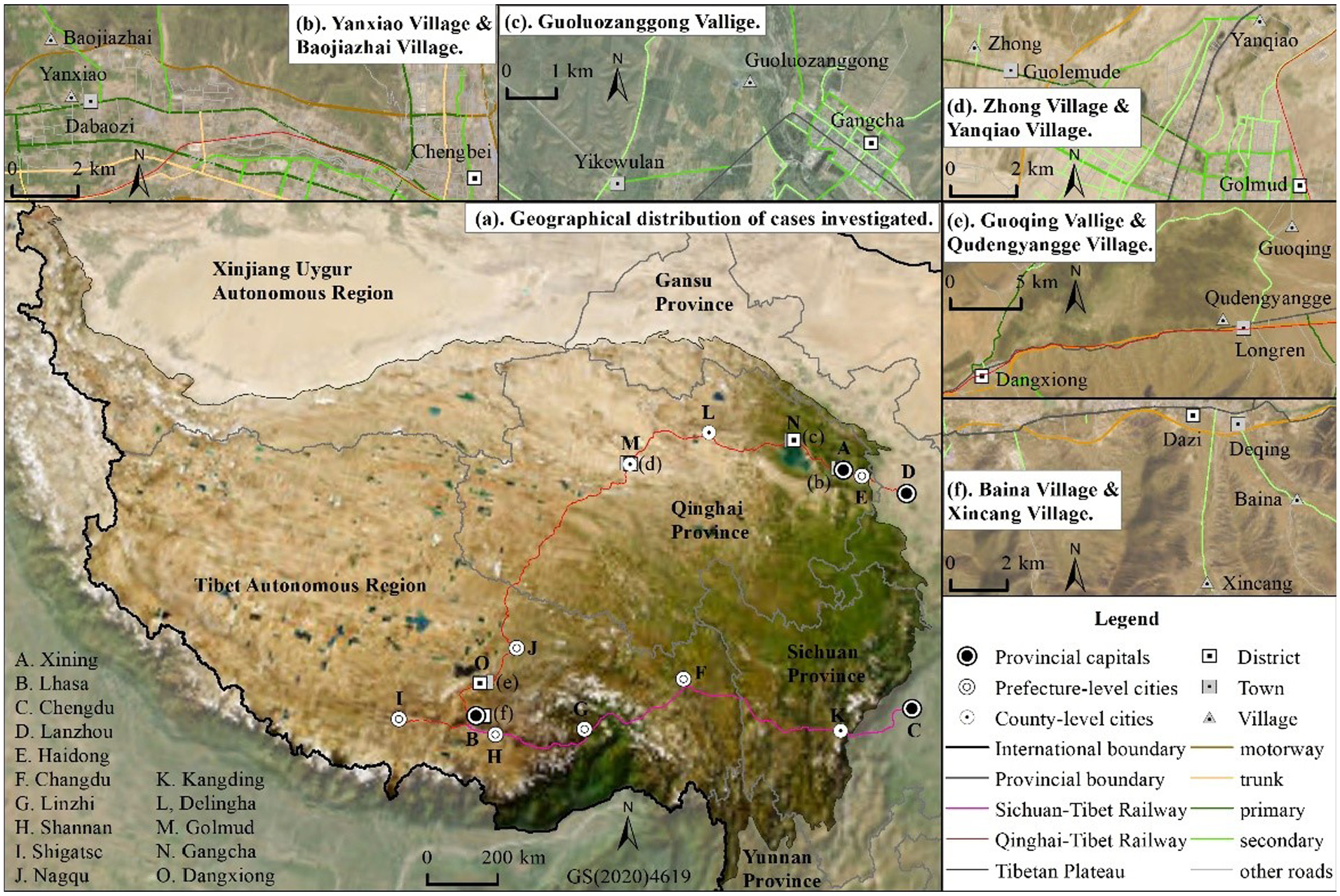
Geographical distribution of cases investigated.
Overview of the Villages Investigated.
Study Methods
As per the sustainable livelihood framework proposed by the United Kingdom’s Department for International Development, farmers’ livelihood strategy refers to their capital assembly and use (DFID, 1999). Significant differences were noted in the livelihood capital of farmers with different livelihood strategies. Therefore, the status of livelihood capital can be used as a representative of farmers’ livelihood strategies. The main income sources of livelihood transformation are used to divide farmers’ livelihood strategies. Flood, debris flow and salinisation are important factors affecting land cover change on TP but are not considered in this paper. Land use change may be affected by a variety of factors. However, the final result is ‘changed’ or ‘not changed’, which means land use change is a discrete selection problem, namely, a binary variable (Li & Ren, 2012; He et al., 2010). The binary logistic analysis model is deemed more appropriate, as it is effective for multiple regression analysis of the explained variable as a binary classification variable. The linear expression between the probability function and the independent variable is as follows:

where P is the probability of household land use change, xi is the explanatory variable, b is the coefficient of the influencing factor, b0 is the intercept and ε is the error. In the questionnaire data, the question ‘whether land use has changed or not’ was defined as ‘yes = 1, no = 0’.
This paper takes the change of land use at the household level as the dependent variable and the following factors as independent variables: the number of vehicles, the frequency of outbound transportation, the average cost of outbound transportation, the proportion of non-agricultural and animal husbandry employed population in the household, the proportion of non-agricultural and animal husbandry income, the number of labour force, the level of education, altitude and average annual temperature. The specific definition of independent variables is shown in Table 2, in which the number of vehicles, the proportion of non-agricultural and animal husbandry employed population in the household, the proportion of non-agricultural and animal husbandry income, the number of labour force and the level of education are the field research data. The frequency of outbound transportation and the average cost of outbound transportation have been calculated based on the survey data, and the transport accessibility of rural households is represented as the frequency and cost of outbound transportation. Meanwhile, altitude was measured through site measurement, and the average annual temperature data were obtained from the local government data. Hosmer-Lemeshow test of independent variables in binary logistic analysis regression showed that the model fitted well (p = .12 > .05), and there was no multicollinearity (VIF value < 2).
Description of Variables.

Ethics and Risk Control
This paper was independently conceived, designed and implemented by researchers in China. Prior to data collection, all authors reached consensus on research design, data ownership, and role responsibilities, with no involvement from external commercial entities, posing no foreseeable risk of stigmatisation or discrimination to any involved village.
For ethical safeguards and data protection, residential data (e.g., questionnaire responses, interview transcripts) were anonymised – personal identifiers like names and addresses were removed, with samples labelled solely by numerical codes. Sensitive topics (e.g., religious beliefs) were explicitly avoided. Questionnaires and interview guides, validated via pre-surveys, remained neutral and non-offensive, strictly adhering to risk control standards for human participant research.
Informed consent was obtained through written forms clarifying the study’s purpose, content, data usage, anonymisation measures and participants’ right to withdraw without repercussions. For illiterate participants or non-Mandarin speakers, researchers or interpreters read key content aloud; verbal consent was documented with time, location and witnesses upon confirmed comprehension. All participation was voluntary, with no coercion or inducement.
Participants spent approximately 15 min on average, incurring low time costs. Collected data were encrypted, with near-zero leakage risk and potential risks are significantly outweighed by the study’s academic and practical value. Its findings provide a scientific basis for transportation planning, livelihood enhancement and sustainable land use on TP, supporting regional coordination policies, while resident demand data aids targeted solutions to livelihood challenges from inadequate transport accessibility.
Results
The Impact of Transport Accessibility on Livelihood Transformation
Based on the data from interviews and questionnaires, the change in livelihood income of agricultural and animal husbandry households was determined (Table 3). It was found that the most obvious change is the income from migrant work (170 households), followed by the income from selling grain crops or livestock (49 households) and the third is the income from wages (39 households). These results show that the farmers and herdsmen near Xining and Golmud are more inclined to increase their income by working, such as residents in Yanqiao Village, Yanxiao Village, Zhong Village and Baojiazhai Village. This proportion is determined to be much higher than that of farmers and herdsmen near Lhasa, which is the capital of Tibet Autonomous Region. On the contrary, the proportion of livelihood income change brought about by migrant work in villages farther away from the cities, such as farmers and herdsmen near Gangcha County and Dangxiong County, is significantly lower than in other villages. This result is consistent with the existing research (Benevenuto & Caulfield, 2022; P. Zhao & Yu, 2021). There are usually more economic activities and job opportunities in cities. The closer workers live to the city, the more they can reduce travel costs and shorten commuting time. The result also revealed an interesting finding that in terms of the proportion of income from working in the change of livelihood income, Golmud (with an average of 79%) provided more jobs to the surrounding villagers than Xining (with an average of 71%); meanwhile, Lhasa provided only 40% of the employment opportunities. As the transportation gateway into the Tibet Autonomous Region, Golmud holds the largest salt lake industry in China (Qarhan Salt Lake), higher per capita income and more commercial activities, thus generating more employment opportunities in transportation, retail and catering. Usually, the employment threshold is lower, and the surrounding villagers can participate in these jobs relatively easily.
Statistics on Changes in Livelihood Income of Cases Investigated.

Note. SGL = sell grain crops or livestock; SCC = sell cash crop; EC = ecological compensation; WI = wage income; MWI = income from migrant work; BI = business income; PSI = policy subsidies, such as pensions.
The change of livelihood income from selling grain crops or livestock is mainly concentrated in counties far away from cities, such as Gangcha County and Dangxiong County. Guoluozanggong Village, Guoqing Village and Qudengyangge Village are pure grazing villages and the main way for residents to obtain income is to sell livestock (yaks), and the change ratio of livelihood income brought about by livestock is 37.04%, 36.36% and 33.33%, respectively. At the same time, we also found that agricultural villages are more likely to choose to work to increase income. There are two reasons for this difference in livelihood strategies: first, agricultural regions have larger populations; second, counties and cities in agricultural regions are usually larger than pastoral areas, providing more job opportunities and choices. Agricultural planting is seasonal, and non-agricultural busy times are longer than other times. By contrast, grazing requires the year-round participation of young adults, and winter pastures are located in more remote and high-altitude mountainous areas, leaving people who live there with little access to other economic activities. In TP, Grazing is divided into summer pastures (from April to September, in higher and more remote mountain areas, with access to the outside world mainly by motorcycles and horses) and winter pastures (from October to March, in flat areas at relatively lower elevations, such as those along roads, near towns and around lakes).
Cash crops are a common way to increase the income of farmer households, but this is not evident in TP (only 16.22% in Zhong Village). Located upstream of Yanqiao Village (Yanqiao means salt bridge), Zhong Village is known for its abundant freshwater resources, providing ample freshwater for goji berries (Chinese wolfberries) cultivation. As per the interview, the income from goji berries cultivation is not stable, and many planters may gradually give up the cultivation of cash crops and choose to work instead in order to increase their income. Farmers from Xincang Village hold the highest proportion of wage-based income. Because the per capita income of Xincang Village is low, the proportion of salary income from forest protection and road patrol is higher than that of Baina Village.
The proportion of income from business activities has been found to be higher in Baojiazhai Village (14.63%) and Qudengyangge Village (12.12%). Summer is the peak season for tourism on TP; the large number of tourists provides business opportunities for villagers near the scenic spots. Xining is a transportation hub and popular tourist destination on TP. Qudengyangge Village is close to the 318 National Highway (the main route for self-drive tours and material transportation in Tibet) and Namtso Lake, which has a large passenger flow. The proportion of ecological compensation and policy income in the change of livelihood income is low, which indicates that the targeted poverty alleviation has prompted most farmers and herdsmen in the region to diversify their livelihood, thereby increasing household income.
The Impact of Transport Accessibility on the Change of Land Use
Using the SPSS 22 software to run the binary logistic module, this paper performs the Wald test on the samples in the input mode and sequentially selected independent variables to obtain different factor analysis tables (Table 4). As per the results, it was determined that the altitude, proportion of non-agricultural and animal husbandry employed population and the educational level meet the significance test at Sig. < .05 level, and the frequency of outbound transportation and the number of vehicles pass the significance test at Sig. < .10 level.
Regression Results of the Binary Logistic Model.

The improved road construction and transport accessibility can effectively promote the transfer of agricultural and animal husbandry labour to non-agricultural and animal husbandry sectors, thereby improving the marginal labour productivity of agricultural and animal husbandry sectors and the income of farmers and animal husbandry residents (Liu et al., 2015). Most households owned arable land or grassland, and the frequency of outbound transportation, the proportion of non-agricultural and animal husbandry income, the proportion of non-agricultural and animal husbandry employed population and altitude were significant influencing factors of household land use change (Sig. < .05). The education level and the number of vehicles were no longer significant factors affecting land use change of rural households. This current study found that farmers are mainly engaged in road construction, construction and other work, as there is no specific educational level requirement for these jobs. At the same time, most of the migrant farmers use the vehicles of acquaintances to travel to and from, so the number of vehicles bears no significant effect. With the increase in the proportion of non-agricultural and animal husbandry income and the proportion of non-agricultural and animal husbandry employment, especially in the frequency of outbound transportation resulting from the increase in income level and the improvement of transportation accessibility, rural residents are more connected with external social and economic activities and they more and more participate in non-agricultural and animal husbandry employment, significantly reducing their livelihood dependence on their land. It also led to abandoned arable land, grassland rental and forest nursery planting. For example, in Baojiazhai Village near Xining, part of the arable land has been abandoned or trees are planted at will. Many farmlands in Yanxiao Village have been rented out for growing vegetables. Some herders in Guoluozanggong Village have stopped grazing and rented their pastures to others. Meanwhile, with the increase in altitude, the availability of arable land and grassland was noted to decrease, making it difficult for the planting type to change.
The most important factor affecting farmers’ land use change is the frequency of outbound transportation, with 14.098 (Sig. < .001) wald and 1.841 as the regression coefficient. It has been indicated that the frequency of outbound transportation has a significant positive effect on the land use change of rural households: transportation brings about changes in employment conditions, encourages rural households to choose non-agricultural and animal husbandry employment and reduces the input on cultivated land and grassland. Farmers in areas with convenient transportation are more likely to obtain market information and turn to cash crop planting or land transfer.
The most significant negative correlation factor was the proportion of non-agricultural and animal husbandry income, with a −2.180 regression coefficient and 7.458 (Sig. < .006) wald. Second is the proportion of the non-agricultural and animal husbandry employed population, with −1.499 for the regression coefficient and 4.387 (Sig. < .036) for wald. The regression coefficient of altitude factors was −0.003 and 5.275 for wald (Sig. present, the communication ways developed in TP < .001). The higher the proportion of non-agricultural and animal husbandry income and the proportion of non-agricultural and animal husbandry employed population, the lower the possibility of farmers’ planting structure adjustment or land use change. The main reason for this phenomenon is that farmers no longer grow cash crops, but instead grow food crops (requiring less labour and shorter labour time). For example, 12 households in Yanqiao village and seven households in Zhong village have eradicated cash crops and resumed planting food in recent years. This result reveals that the improvement of transport accessibility has a significant effect on promoting economic development at the micro-level.
The Impact Pathway of Transport Accessibility on Land Use Change
From the macro-level, the development of transportation on TP has improved transport accessibility, promoted the change of township location conditions (X. Gao et al., 2019, 2022) and led to the transformation of various land use types affecting land use change. At the micro-household level, the response of land use to the improvement of transport accessibility was mainly reflected in the following aspects: with the increase of non-agricultural and animal husbandry employment opportunities brought by the improvement of accessibility, the land livelihood dependence was reduced and households in different geographical conditions are encouraged to use arable land or pasture in a way that maximises economic benefits (Figure 2), resulting in land use changes.
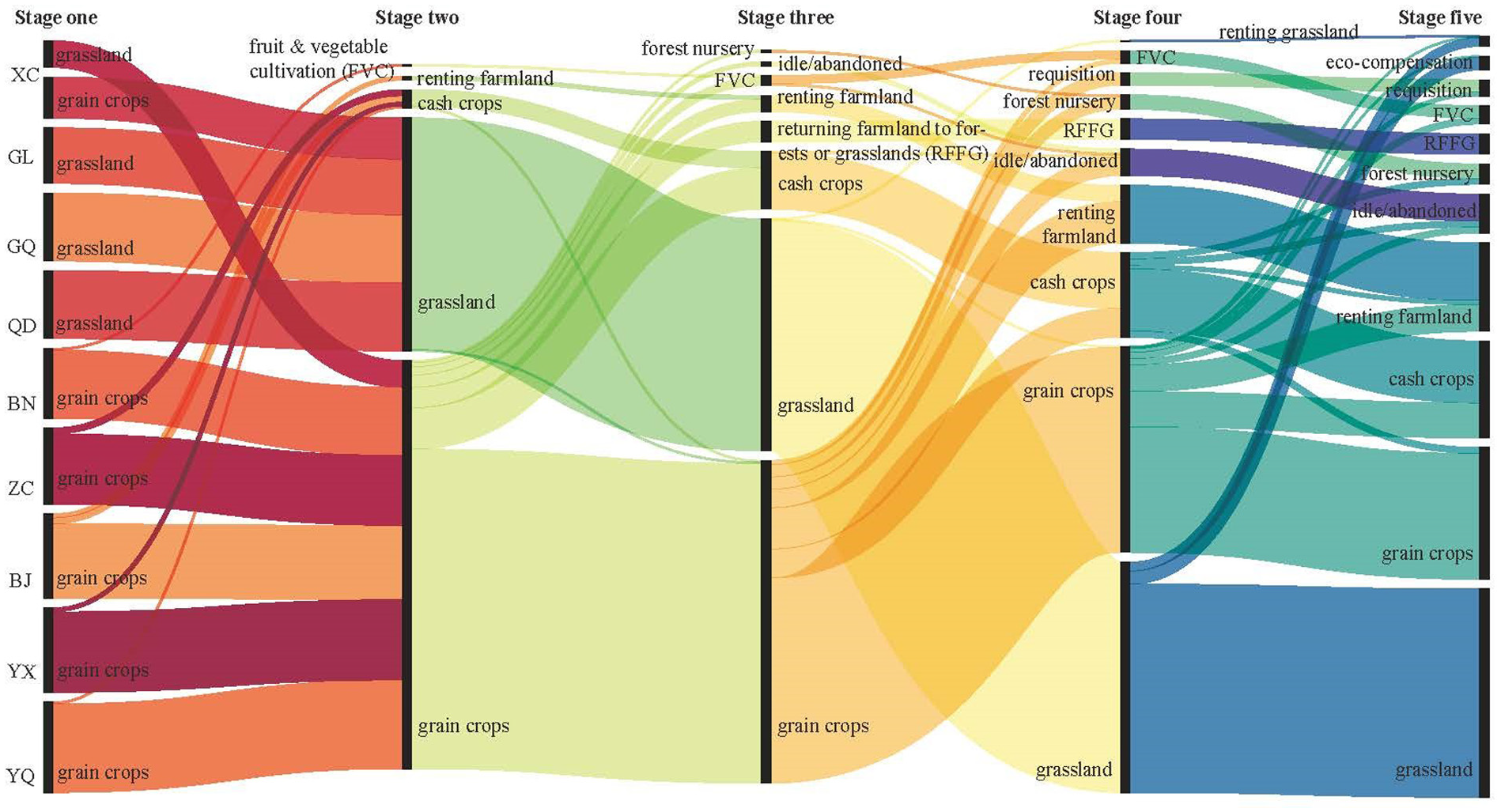
Transformation of agriculture and animal husbandry structure of cases investigated.
The first stage is the traditional agricultural and animal husbandry livelihood, with food planting or grazing as the main livelihood strategy; land use has not changed. In the second stage, urban economic development has increased the demand for fruits and cash crops such as vegetables and goji berries. Under the condition that the existing arable land remains unchanged, farmers close to the city would choose to reduce the area of food crops and increase the area of cash crops. The transition from the first stage to the second stage could be equivalent to the transformation of traditional agriculture into specialised agriculture. Limited by the carrying capacity of grassland and the cold climate, animal husbandry cannot change quickly. In the third stage, with the improvement of road construction and accessibility, especially in cities with frequent access, non-agricultural and animal husbandry employment opportunities increased, and residents chose migrant work as their main income source. The increase of investment in non-agricultural and animal husbandry employment has led to the reduced agricultural and animal husbandry investment by farmers and herdsmen; the conversion of arable land to forest nursery and vegetable planting areas, which is often referred to as ecological reclamation; and the phenomenon of renting idle arable land and grassland or leaving them unused.
In the fourth stage, the rural labour force was noted to participate more in urban economic activities, while the elderly stayed in the countryside. The main land use change in this stage was that more arable land was leased, left unused or abandoned, and part of it was used for roads, urban construction and other construction activities. Arable land adjacent to the city was converted into tree nurseries in order to receive more compensation after expropriation. In the fifth stage, the young and middle-aged labour force in agricultural and animal husbandry areas continued to migrate to urban areas, and many of them settled in cities. The planting of food crops has replaced part of the planting of cash crops, but its planting area has decreased (at this time, the land was cultivated by the elderly left behind); moreover, there has been abandonment and expropriation of land. The implementation of ecological restoration policies, such as returning farmland to grassland and ecological migration, has transformed some arable land into grassland and forestland. Herders in inaccessible areas have moved to cities and towns and gave up traditional grazing while receiving ecological compensation. At this stage, the left-behind elderly people in the agricultural and animal husbandry areas still maintained their livelihood through traditional types of agriculture and animal husbandry.
Transportation development has caused changes in the level of transport accessibility in the different regions of TP, bringing about the exchanges between different regions and realignment of economy, personnel and industries (D. Gao & Li, 2022). Moreover, it resulted in the changes in land use and further affected landscape patterns and the ecological environment. At the micro-scale, the construction of transportation infrastructure has enhanced the social and economic ties between the countryside and the other areas and increased employment opportunities, prompting the gradual change from the livelihood mode based on food crops planting into the planting mode based on food crops, supplemented by cash crops. At the same time, herdsmen have changed from relying on grazing to having opportunities to participate in non-agricultural and animal husbandry employment. The improvement of transport accessibility changed the original travel mode of farmers and herdsmen and made them communicate more frequently with the outside world, which led to higher income benefits of cash crops, increased area of cash crops and decreased area of food crops, forming a livelihood strategy based on cash crops supplemented by food crops. With the increase of non-agricultural and animal husbandry employment opportunities brought by the improved transportation conditions, especially the strengthening of social and economic ties between rural and urban areas, the livelihood of surrounding residents has undergone many changes and the proportion of non-agricultural income has increased. In some regions, residents gradually gave up cash crop planting or grazing and only retained food crops with low labour demand, resulting in the phenomenon of renting idle arable land or grassland or leaving them unused (Tang et al., 2022). Meanwhile, some arable land was converted into forestland or construction land. At the same time, road construction and other transportation developments have provided more non-agricultural and animal husbandry employment opportunities for people living along the route. The proportion of non-agricultural and animal husbandry income has increased; this resulted in residents no longer relying on agriculture and animal husbandry. Some residents have gradually changed to an urban lifestyle.
From the abovementioned analysis, we could find that transport accessibility changed land use at the micro-level through the mediating role of livelihood transformation. According to the case study of rural areas on TP, transport accessibility could improve the employment environment around the countryside and provide closer social and economic ties between rural and urban areas; this, in turn, affects the response of residential households to land use under different location conditions. In Baojiazhai Village and Yanxiao Village, the two villages having the best transport accessibility and location conditions, non-agricultural income is the main source of livelihood for villagers and land use change was mainly the change from arable land to forestland and construction land. Meanwhile, Yanqiao Village and Zhong Village are in the transitional stage of the combination of cash crop and food crop planting and non-agricultural income and crop planting, and the location conditions of these two villages have been noted to be better than the others. Residents in Baina Village and Xincang Village mainly cultivate traditional food crops; at the same time, with the development of transportation and the strengthening of social and economic ties with Lhasa, the cultivation of cash crops has been gradually developed.
Realistic Obstacles to Livelihood Transformation
The TP’s unique geography has shaped distinct local cultures and lifestyles. While this has equipped residents with survival wisdom suited to the environment, it has also limited their engagement in external socio-economic activities. Villages in the region encounter various realistic obstacles in transforming their livelihoods.
The Chinese government’s investment in TP has primarily focused on major transportation infrastructure such as airports, railways and highways. However, due to the area’s vastness, sparse population, difficult road maintenance, and underdeveloped public transportation, the ‘last mile’ of road infrastructure is often missing. This restricts the improvement of actual transportation conditions in remote villages. As a result, local farming and herding households cannot fully benefit from transportation development. This is especially true for households far from transportation routes and cities, which lag further behind in livelihood transformation.
Unlike farmers in other parts of China, such as those in Shanxi, Henan and Sichuan provinces who often migrate to eastern cities like Beijing, Shanghai, and Guangzhou, residents of agricultural villages on TP (e.g., Baojiazhai Village, Yanxia Village, Zhong Village and Yanqiao Village) mainly seek work in nearby cities rather than moving across provinces. Although the construction of railways, airports and highways has significantly improved transportation in TP, residents still face long travel times. For instance, the regular trains from Lhasa and Xining to Shanghai take about 48 and 34 hr respectively. Other issues include infrequent train services (only one train per day from Lhasa to Shanghai) and difficulties in purchasing tickets (middle-aged and elderly people are generally unfamiliar with online ticket purchasing), etc. In cities like Xining, Lhasa and Golmud, the threshold for non-agricultural employment skills is not high, but these jobs are physically demanding. Combined with a shortage of service sector positions, this limits non-agricultural employment opportunities for middle-aged and elderly groups. Therefore, in agricultural areas at relatively lower altitudes, cash crop cultivation coexists with non-agricultural employment. Usually, the elderly engage in agricultural work, and middle-aged people participate during the busy farming season.
In high-altitude pastoral areas, the cold climate and short growing seasons make crop cultivation impossible. As a result, herders in villages like Guoqing and Qudengyangge are more dependent on grasslands rather than transforming land use. Grasslands in high-altitude regions are more vulnerable to climate change, which has caused the decline of traditional animal husbandry. Residents of pastoral villages struggle to find suitable jobs in cities due to their limited proficiency in Mandarin, religious differences and short education durations. In our research, about 30% of middle-aged herders in Guoluozanggong Village have been forced to work in infrastructure construction due to reduced herding income caused by grassland degradation. Similar situations have also been observed in Xincang Village and Baina Village. Meanwhile, we found that ecological compensation accounts for a small proportion of total income (approximately 5%–10%), indicating that current policies have a limited impact on transforming herders’ livelihoods.
Discussion
The Role of Transport Accessibility at the Micro-Level
Some studies have shown that the construction of major transportation infrastructure will improve the accessibility level of internal and external transportation on TP (X. Gao et al., 2019, 2022), reduce travel time and freight costs (Adugbila et al., 2023), and promote the socio-economic development of TP (D. Gao & Li, 2022). However, there are still few studies on the role of transport accessibility at the micro-level.
Transport accessibility is the basic guarantee for production and life (Zhu et al., 2022); furthermore, it is known to play different roles in promoting the development of farmers and herdsmen. Transportation construction promoted the social and economic development of Tibetan cities and strengthened the social and economic ties between the region and beyond (D. Gao & Li, 2022). At the same time, the scale of urban social and economic activities has increased rapidly; it then became the development pole of the region (X. Gao et al., 2022). It has also generated more and more significant attraction and cohesion for towns and villages, driving the livelihood transformation of agricultural and animal husbandry families and especially reducing the dependence on land for livelihood. It promoted the change of land use at the micro-level and land use function. Land use change is the main intermediary of the impact of livelihood transformation of farmers and herdsmen on the environment (C. Wang & Yang, 2012). At the micro-level (Figure 3), transportation development reduced the transportation cost between households and the outside regions, especially cities, increased external relations and improved transport accessibility. The impact of transport accessibility on land use change is mainly reflected in its effect on land use function. Especially in rural areas, when the family has a certain area of arable land and grassland, the agricultural and animal husbandry families mainly change the land use function from planting food crops to double planting food and cash crops and from double planting cash crops as the main and food crops as the supplement; this gradually reduces the dependence on land livelihood and finally rent idle farmland and forest nursery or leave them unused. It would transform the function of land use and then promote the change of land use.
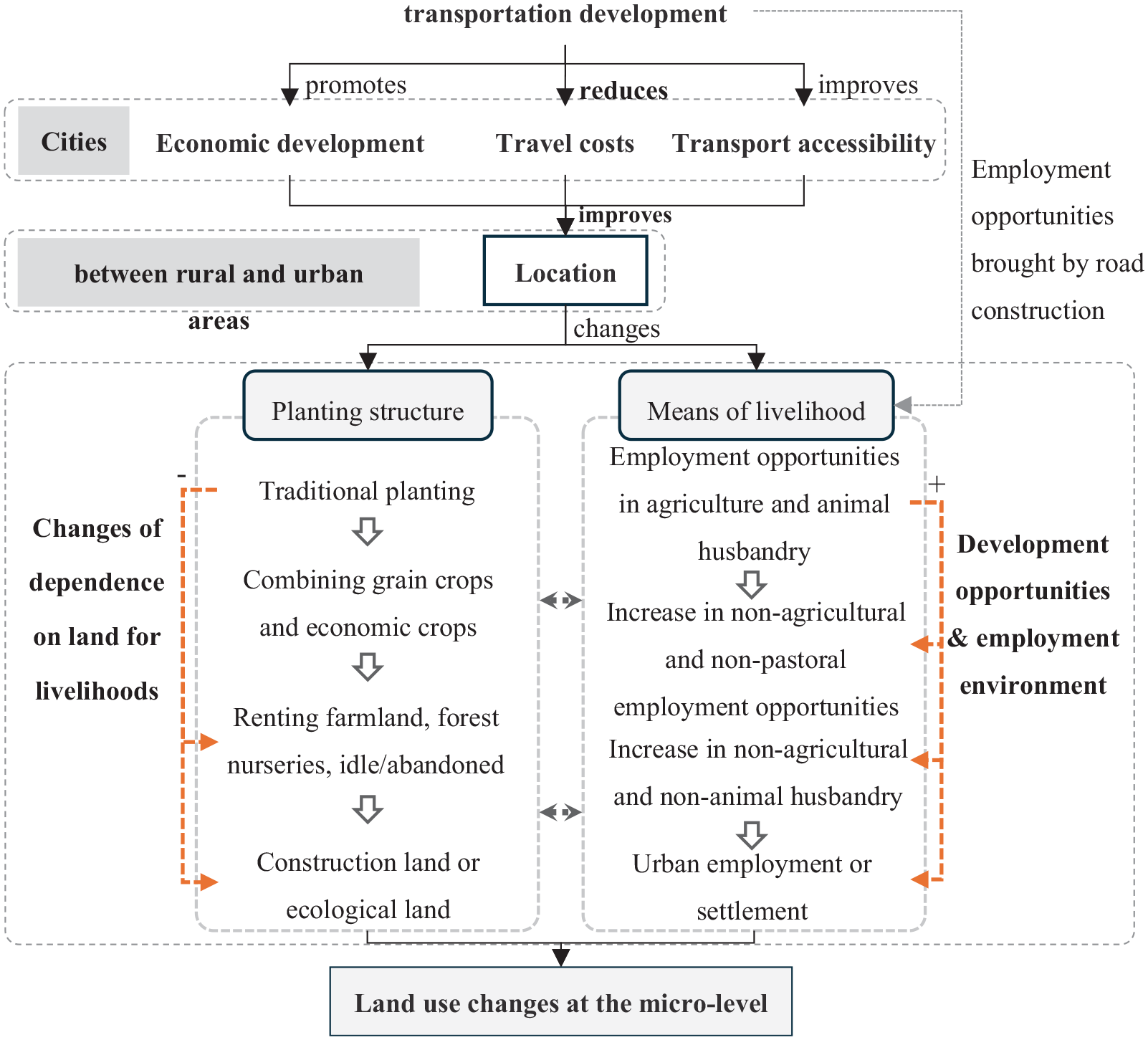
The mechanism of transport accessibility on land use change at the micro-level.
The action mechanism of transport accessibility on land use change in micro-cases can be summarised as follows: transportation development promoted urban economic growth, improved the transport accessibility of the micro-case location and reduced the transportation cost with the city. It also improved the location conditions of the micro-case, especially the county where the people of the micro-case lived, enhancing the social and economic attraction of the city to rural areas and stimulating the development opportunities and employment environment changes in rural areas. Finally, residents were encouraged to switch their main livelihood from agricultural and animal husbandry to non-farming and non-animal husbandry; eventually, they might choose urban employment or settlement in cities. Accordingly, with the change of land livelihood dependence, the land use function of households has changed, in which land use has changed from traditional planting mode to the combination of food crops and cash crops. With the increase of non-agricultural and animal husbandry employment opportunities and in the proportion of non-agricultural and animal husbandry income, villagers gradually rented idle farmland, planted forest nurseries or even left them unused. The labour force was gradually gathered in non-agricultural and animal husbandry production industries to obtain more non-agricultural and animal husbandry income. With the increase of development opportunities and the change of population and labour force in agricultural and pastoral areas after the improvement of transportation, land adjacent to urban built-up areas might be transformed into construction land, while land in remote areas might be transformed into ecological land.
The Implication for Policy-Making
The results of this paper confirmed the rural development policy of ‘To get rich, build roads first’ that the Chinese government has long advocated. The distance between the agricultural and animal husbandry areas and cities limited the agricultural and animal husbandry families’ travel to a large extent, and the distance to the cities remains to be an objective factor affecting the livelihood transformation of agricultural and animal husbandry families. At present, the communication ways developed in TP are mainly the main lines (such as railways [X. Gao et al., 2022; Miao et al., 2023]). Roads are still the main way to connect agricultural and animal husbandry areas with cities. Optimising roads to improve accessibility in agricultural and animal husbandry areas, improving road safety facilities to ensure winter travel for agricultural and animal husbandry families and reducing travel time between cities and agricultural and animal husbandry areas should be the main priorities of transportation development policies on TP.
Specific strategies should be adopted for different villages to promote the sustainable transformation of residents’ livelihoods and efficient land use.
Suburban rural areas (such as Baojiazhai Village, Yanxiao Village, Zhong Village, and Yanqiao Village) should promote the linkage model of ‘transportation + non-agricultural employment’ and the model of ‘land trusteeship + ecotourism’; Establish vocational training centres (such as relying on industrial resources in Xining and Golmud to carry out home economics and logistics training); Guide farmland to transform into ecological nurseries or high value-added crops, improve farmland utilisation efficiency and reduce the occurrence of the ‘inverse Thünen model’.
Remote pastoral areas (such as Baina Village, Xincang Village, and Guoluozanggong Village): Construct seasonal pastures to adapt to the migration of winter and summer pastures; Establish transportation subsidies for pastoral areas, support the construction of cold chain logistics for livestock products in towns and villages, and provide supporting cold chain logistics points for livestock products. Through the ‘transportation + e-commerce’ model, compress the ‘time + space’ distance from cities and enhance the market premium of yaks, Tibetan sheep, and barley in other parts of China.
Ecological sensitive areas (such as Qudengyangge Village and Guoqing Village around Namtso Lake): Promote low ecological disturbance transportation methods (such as solar electric vehicles and ecological boardwalks), and provide local employment opportunities such as ecological managers, homestay operators and specialty restaurants in conjunction with tourism development.
The Limitation
Based on survey data and interviews, this paper has used the binary logistic model to analyse the livelihood transformation of nine villages on TP and the impact of transport accessibility on livelihood transformation. Moreover, this paper further discusses the changes of land use on household scale after livelihood transformation. Although the villages of this paper are located at different distances from the city, they are still along the same railway line. Future research should expand the scope of research and extend the time span, such as rural areas with different distances from traffic trunk lines, 10-year follow-up survey, different climatic conditions, etc. At the same time, stratified sampling (such as altitude, distance from the city, distance from the railway station, geographical conditions, economic type, etc.) can be used to improve the sample balance in the future. With the construction of the Sichuan–Tibetan Railway, the impact of the Sichuan–Tibetan Railway on the transport accessibility of TP and its role in the livelihood transformation and land use change of residents along the line are worthy of long-term consideration in the future. More importantly, future research should pay more attention to the potential impact of climate change on the livelihood transformation in TP, such as glacier retreat and grassland degradation, which will lead large-scale land use change, and explore livelihood adaptation strategies under multi-dimensional pressures.
Conclusions
This paper takes nine villages on TP as micro-cases, and relevant data were collected on livelihood transformation and land use change at the household level through questionnaire surveys and interviews to explore how transport accessibility affects residents’ livelihood and leads to land use transformation. The main conclusions are as follows:
First, the distance from cities significantly influences household income sources, with households near cities such as Baojiazhai Village and Yanxiao Village mainly relying on non-agricultural employment like migrant work and wage labour for income growth, where non-agricultural income accounts for over 70% of total income; in contrast, remote pastoral areas like Guoqing Village and Qudengyangge Village depend more on selling livestock and grain crops, with livestock income making up 33% to 37% of total income, while cash crop cultivation plays a minor role in income growth, only accounting for 16.22% in Zhong Village due to unstable market conditions and seasonal labour constraints.
Second, Using a binary logistic model, four significant factors affecting micro-level land use change were identified: higher outbound transportation frequency (Wald = 14.098, p < .001) acts as a positive correlate, enhancing access to non-agricultural opportunities, reducing land dependency, and promoting land leasing or idling; increased proportions of non-agricultural income (β = −2.180, p = .006) and non-agricultural employment (β = −1.499, p = .036) are negative correlates that lead to reduced agricultural labour input and favour low-intensity food crop cultivation; higher altitude (β = −.003, p < .001), another negative correlate, limits arable land usability and preserves traditional land use patterns.
Finally, for the first time, the applicability of the ‘inverse Thünen model’ on TP was verified at the micro-level. Contrary to classical location theory, better transport accessibility near cities (e.g., Xining, Golmud) correlates with higher rates of arable land rental, idling, or abandonment (e.g., 30% of farmland in Baojiazhai Village). This stems from labour migration to urban areas, leaving elderly populations to manage small-scale food crop cultivation. In remote areas, limited accessibility preserves traditional grazing and subsistence farming.
Footnotes

Funding
The authors disclosed receipt of the following financial support for the research, authorship, and/or publication of this article: This article was supported by the Natural Science Foundation of Zhejiang Province (LTGG24D010001), and the National Natural Science Foundation of China (Grant No. 42101207).
Declaration of Conflicting Interests
The authors declared no potential conflicts of interest with respect to the research, authorship, and/or publication of this article.
Data Availability Statement
The data that support the findings of this study are available from the corresponding author upon reasonable request.