




Abstract
Blockchain has the potential to enhance supply chain efficiency, increase transparency, and reduce operational costs. However, small and medium-sized logistics enterprises (SMEs) face significant challenges in adopting this technology. This study aims to examine the key barriers to blockchain implementation in SMEs operating in Vietnam’s logistics sector. Using structural equation modeling (SEM), the study identifies six critical obstacles: high initial investment costs, small business scale, lack of stakeholder cooperation, technological resistance, insufficient government support, and a shortage of skilled human resources. These findings offer important contributions to the understanding of technological barriers, particularly within the context of SMEs in emerging economies. Based on the results, the study recommends that governments provide financial incentives and establish clear legal frameworks to facilitate blockchain adoption. For enterprise-level action, managers should focus on staff training programs to develop in-house blockchain capabilities and reduce resistance to technological change. In addition, forming collaborative partnerships with supply chain stakeholders can help SMEs share implementation costs and improve adoption success.
Plain language summary
Blockchain can make supply chains more efficient, transparent, and cost-effective. This research explores the challenges these businesses face in Vietnam. The study identifies six main barriers to blockchain implementation: high initial investment costs, small business size, lack of stakeholder cooperation, technology resistance, lack of government support, and a lack of human resources and professional skills.
Introduction
Blockchain technology is increasingly acknowledged as a transformative force in the logistics and shipping industry, offering significant improvements in supply chain efficiency, transparency, and operational accuracy. By facilitating real-time document exchange, reliable data sharing, and accurate tracking of goods, blockchain enhances the reliability of logistics documentation (Kapnissis et al., 2022). In container shipping, smart contracts automate key processes, reducing processing times and ensuring regulatory compliance (Pu & Lam, 2021). As noted by Groenfeldt (2017), manual paperwork accounts for 15% to 50% of global shipping costs—a burden blockchain alleviates by enabling a digital, paperless ecosystem (F. Chen et al., 2024). Its immutable and secure ledger also mitigates risks related to document fraud, such as falsified bills of lading and letters of credit (Hackius & Petersen, 2017).
Beyond documentation, blockchain contributes to cost reduction and fraud prevention across the logistics sector. Distributed ledger systems ensure that transactions involving goods movement and transport documentation are accurately recorded and verified, reducing human error (Tangsakul & Sureeyatanapas, 2024). Smart contracts further enhance efficiency by automating payments, thereby lowering administrative overhead and increasing operational performance (Tapscott & Tapscott, 2016). These capabilities not only streamline logistics operations but also strengthen the global competitiveness of logistics enterprises (Kumar et al., 2023).
Despite its potential, blockchain adoption among logistics SMEs remains limited. Several barriers hinder implementation, including the absence of standardized frameworks and inconsistent regulatory environments, which create uncertainty and complexity (Choi et al., 2020). SMEs also face technical incompatibilities between blockchain platforms and legacy IT systems, often necessitating costly upgrades (F. Chen et al., 2024). Financial constraints—such as high initial investment requirements and the costs of hiring or training blockchain professionals—further exacerbate the challenge (Beck & Demirgüç-Kunt, 2006).
Empirical studies confirm that blockchain adoption among SMEs is still in its infancy. Tijan et al. (2021) found that low digital readiness, limited technical knowledge, and insufficient funding are persistent barriers. Similarly, Wong et al. (2020) reported that fewer than 20% of SMEs in Southeast Asia’s logistics and manufacturing sectors had adopted blockchain, citing complexity, unclear regulations, and a lack of interoperability. This suggests a broader problem: many SME managers are unaware of blockchain’s infrastructure and compliance demands, leading to low motivation and misinformed investment decisions (Kapnissis et al., 2022). The lack of harmonized global standards also limits the scalability of cross-border applications (Swan, 2015), underscoring the need for clearer policy frameworks and collaborative strategies.
While existing literature has explored blockchain’s theoretical benefits and applications, few studies examine the specific barriers to adoption among logistics SMEs, particularly in emerging economies such as Vietnam. Much of the current research emphasizes broader trends or case studies of large firms, often overlooking the unique financial, structural, and organizational constraints smaller firms encounter (Crosby et al., 2016; Tangsakul & Sureeyatanapas, 2024). This gap highlights the need for systematic and quantitative analysis to understand the obstacles SMEs face and how these factors interrelate.
To address this gap, the present study investigates the key barriers to blockchain implementation in small and medium-sized logistics enterprises in Vietnam. Employing a quantitative approach using Structural Equation Modeling (SEM), the study aims to identify, evaluate, and analyze the most significant obstacles hindering adoption. The findings contribute empirical evidence and actionable insights to support inclusive and effective digital transformation strategies in the logistics sector.
Literature Review
The Logistics Industry and the Vietnamese Context
The logistics industry is a critical pillar of global commerce, responsible for the movement, storage, and distribution of goods from origin to final consumption. It encompasses key activities such as transportation, warehousing, inventory management, supply chain coordination, and order fulfillment—all essential for linking suppliers, manufacturers, and consumers efficiently (Mvubu & Naude, 2024; Rustamovich, 2024). By optimizing these operations, logistics directly contributes to reduced delivery times, lower operating costs, and enhanced customer satisfaction, ultimately improving productivity and competitiveness across economic systems (Lan, 2024).
Amid the pressures of the Fourth Industrial Revolution (4IR), the logistics sector is undergoing a rapid digital transformation. Technologies such as the Internet of Things (IoT), artificial intelligence (AI), and particularly blockchain are reshaping the industry’s foundations (Negueroles et al., 2024). Blockchain, with its capabilities in real-time data authentication, decentralized transaction recording, and enhanced traceability, is especially suited for complex supply chains such as international freight transport (Wang et al., 2022). Its application helps reduce fraud, human error, and inefficiencies—challenges that are increasingly prominent in today’s globalized logistics networks.
Vietnam’s logistics industry reflects both the opportunities and constraints seen globally but is shaped by distinct national dynamics. In 2023, the country recorded a total import-export turnover of approximately USD 683 billion, with processed industrial goods comprising over 88% of exports (Khue, 2024; Ministry of Industry and Trade, 2024). The sector supports this trade activity through around 4,000 to 5,000 enterprises focused mainly on transportation, warehousing, and supply chain services. These businesses play an increasingly strategic role in global supply chains, particularly as firms shift operations out of China in response to geopolitical and post-pandemic realignments.
Despite its growing importance, Vietnam’s logistics sector faces significant structural challenges. Although it contributes 4% to 5% of national GDP (valued at USD 40–42 billion), its logistics costs are among the highest in the region—estimated at 16% to 20% of GDP, compared to 8% to 10% in developed countries and 14% in regional peers (Khue, 2024; World Bank, 2022). Contributing factors include a fragmented industry landscape dominated by SMEs, outdated infrastructure, limited access to technology, and cumbersome administrative procedures. These limitations not only inflate operational costs but also hinder the global competitiveness of Vietnamese exports and the ability of logistics SMEs to adopt transformative technologies such as blockchain.
Blockchain Technology in the Logistics Industry
Blockchain has emerged as a transformative force in the logistics industry, enabling process automation, reducing paperwork, and enhancing operational efficiency (Lan, 2024). Its decentralized architecture facilitates secure, real-time data sharing and transaction authentication, minimizing fraud and errors while fostering transparency and trust among supply chain partners (Kapnissis et al., 2022; Mvubu & Naude, 2024). Applications such as real-time goods tracking and smart contracts further streamline operations by automating payments and improving delivery verification (Li et al., 2024; Wang et al., 2022). Studies show that blockchain can boost efficiency by up to 40% and increase competitiveness by 35% (Park, 2020; Treiblmaier, 2019). However, adoption—especially among SMEs—faces hurdles such as high investment costs, lack of technical standards, and limited managerial support (Beck & Demirgüç-Kunt, 2006; Choi et al., 2020). Addressing these challenges requires stakeholder collaboration and strategic commitment. Ultimately, blockchain offers a transparent, secure, and efficient foundation for digital transformation in logistics, positioning firms to better navigate the demands of globalized supply chains (Nguyen et al., 2023; Santhi & Muthuswamy, 2022).
While prior research has identified a variety of barriers to blockchain adoption in logistics, few studies have applied an established theoretical framework to systematically categorize these factors. To address this gap, the present study integrates the Technology-Organization-Environment (TOE) framework (Tornatzky & Fleischer, 1990) to guide both the selection and interpretation of the barriers investigated. The TOE framework is a well-established model in the field of technology adoption, which posits that organizational decisions regarding innovation are influenced by three contextual dimensions: (1) technological, (2) organizational, and (3) environmental.
This theoretical lens not only enhances the coherence of the research model but also enables alignment with a broader body of innovation diffusion literature. Specifically, technological resistance and complexity align with the technological context, financial and capacity-related constraints such as high investment costs and lack of skilled human resources fall under the organizational context, and factors such as lack of government support and insufficient stakeholder cooperation are situated in the environmental context. By organizing these empirically derived barriers within a robust theoretical framework, the study contributes to both the academic discourse and practical understanding of blockchain adoption among SMEs in logistics.
Hypothesis Development
High Initial Investment Cost
High initial investment costs are a major barrier to blockchain adoption for small and medium-sized logistics enterprises (SMEs). Implementing blockchain requires significant expenditure on hardware, advanced software, and IT infrastructure such as servers and integrated systems (Choi et al., 2020; Wang et al., 2022). These costs rise further when firms build custom systems or use cloud-based platforms (Mvubu & Naude, 2024). Additionally, SMEs must invest heavily in specialized personnel—blockchain experts, cybersecurity professionals, and data analysts—whose scarcity in the labor market drives up recruitment and training expenses (F. Chen et al., 2024; Negueroles et al., 2024). Ge et al. (2022) confirm that demand for blockchain skills far exceeds supply, intensifying cost pressures. Project management and consulting services, often required for successful implementation and system trials, add further financial burden (Santhi & Muthuswamy, 2022). These challenges are especially difficult for SMEs with limited financial capacity, making it hard to cover startup and maintenance costs, integrate blockchain with existing systems, or sustain ongoing workforce development (Beck & Demirgüç-Kunt, 2006; Naseem et al., 2023). As a result, many SMEs delay or abandon blockchain adoption, limiting their innovation potential and weakening their competitiveness in a digital economy (Khan et al., 2022; Rodrigue, 2020). Based on the above reasons, we believe that:
Hypothesis 1: High initial investment costs are a barrier to the implementation of blockchain technology for small and medium-sized logistics enterprises.
Small and Medium Scale
The small and medium scale of logistics enterprises presents a significant barrier to blockchain adoption due to financial, technical, and organizational constraints. Smaller firms typically operate with limited budgets, making it difficult to afford the substantial upfront investment in hardware, software, and system integration required for blockchain implementation (Bharadwaj et al., 2013; Tapscott & Tapscott, 2016). They often lack the robust IT infrastructure—such as servers and distributed storage systems—needed to support such technologies (Yermack, 2017; Zohar, 2015). Furthermore, SMEs face challenges in accessing blockchain talent, as recruiting and training experts in this domain adds to the cost burden and is often beyond their financial capacity (Öztürk & Yıldızbaşı, 2020). Given their smaller operational scale, these enterprises may also struggle to recognize the full strategic benefits of blockchain, which are more pronounced in large, complex supply chains (Tapscott & Tapscott, 2016). As a result, many SMEs are unable to justify the investment or sustain the technology long-term, particularly in the absence of external financial support (Hughes et al., 2019; Kaur et al., 2024; Kouhizadeh et al., 2021). Thus, the small and medium scale of logistics enterprises is a critical limiting factor in the adoption of blockchain. Therefore, we propose that:
Hypothesis 2: Small and medium scale is a barrier to the implementation of blockchain technology for logistics SMEs.
Lack of Cooperation Among Stakeholders
Lack of collaboration among stakeholders in the logistics supply chain is a significant barrier to blockchain adoption for small and medium-sized logistics enterprises (SMEs). Effective blockchain implementation requires close coordination among suppliers, manufacturers, transporters, and technology providers to ensure transparency, data sharing, and standardized processes (Cao & Zhang, 2011; I. J. Chen & Paulraj, 2004). However, SMEs often face challenges due to technological incompatibilities between partners, divergent business goals, and limited experience in managing cross-organizational systems (Christopher & Peck, 2004; Prajogo & Olhager, 2012). Disparate IT infrastructures hinder blockchain integration, while disagreements on implementation standards delay or derail collaborative efforts. Concerns over data privacy and security further complicate trust and cooperation, especially when parties resist sharing sensitive information without clear safeguards (Gervais et al., 2016; Narayanan et al., 2016; Tapscott & Tapscott, 2016). For SMEs lacking resources and technical understanding, these issues are magnified, making it harder to align with larger or more technologically advanced partners (Tapscott & Tapscott, 2016). As Tangsakul and Sureeyatanapas (2024) emphasize, mistrust, limited transparency, and conflicting expectations are key obstacles to stakeholder alignment. Without strong inter-organizational collaboration, SMEs struggle to leverage blockchain’s full potential, hindering its effective implementation in the logistics sector.
Hypothesis 3: Lack of collaboration between parties is a barrier to the implementation of blockchain technology for small and medium-sized logistics enterprises.
Technological Resistance
Technological resistance is a significant barrier to blockchain adoption in small and medium-sized logistics enterprises (SMEs), stemming from fear of disruption, lack of understanding, and reluctance to change entrenched processes. Many SMEs are hesitant to adopt blockchain due to its perceived complexity, high implementation costs, and potential incompatibility with existing systems (Choi et al., 2020; Jang et al., 2024; Swan, 2015). Venkatesh et al. (2003) highlight that such resistance often arises from low confidence in the technology’s effectiveness and concerns about cultural and operational upheaval. In logistics, where traditional systems are long-established, blockchain adoption may be viewed as a threat to stability and efficiency, especially during the transition phase (Choi et al., 2020). Employees and partners may resist blockchain due to unfamiliarity with its benefits, further hindering collaboration and slowing implementation (Mougayar & Buterin, 2016). This resistance is particularly acute among smaller firms with limited technological readiness, weakening innovation and obstructing supply chain transparency. Overcoming this challenge requires targeted training, clear communication of blockchain’s value, and fostering a culture that embraces technological change. Therefore, we argue that:
Hypothesis 4: Technological resistance is a barrier to the implementation of blockchain technology for small and medium-sized logistics enterprises.
Lack of Government Support
Lack of government support is a critical barrier to blockchain adoption in small and medium-sized logistics enterprises (SMEs), as these firms often lack the financial and institutional capacity to implement complex technologies independently. Without access to preferential loans, tax incentives, or R&D subsidies, SMEs face overwhelming costs related to blockchain infrastructure, personnel, and integration (Mazzucato, 2018; Teece, 2010; Zhou et al., 2024). Additionally, the absence of public investment in logistics infrastructure—such as ports, roads, and warehouses—limits the operational environment needed for efficient blockchain deployment (Rodrigue, 2020). Regulatory uncertainty also plays a major role; unclear or inconsistent legal frameworks surrounding data privacy and cybersecurity make SMEs hesitant to adopt blockchain, fearing legal and compliance risks (Mougayar & Buterin, 2016). Furthermore, the lack of national initiatives to train blockchain professionals restricts SMEs’ access to skilled labor, reducing their capacity to innovate and remain competitive (Choi et al., 2020). As Venkatesh et al. (2003) note, government inaction not only hinders technological diffusion but also undermines stakeholder consensus within the supply chain. Therefore, in the absence of coordinated financial, infrastructural, regulatory, and educational support, SMEs struggle to adopt blockchain, limiting technological advancement and competitiveness in the logistics sector.
Hypothesis 5: Lack of government support is a barrier to the implementation of blockchain technology for small and medium-sized logistics businesses.
Lack of Human Resources and Specialized Skills
The lack of human resources and specialized skills is a major barrier to blockchain adoption in small and medium-sized logistics enterprises (SMEs). Blockchain requires expertise in IT, cybersecurity, data analytics, and supply chain management—skills that are often scarce in SMEs due to financial constraints and limited access to high-quality training programs (Mckinnon et al., 2017). SMEs struggle to attract and retain qualified personnel, as they cannot compete with larger firms in offering competitive salaries or career development opportunities (European Commission, 2019). This talent shortage increases implementation complexity and delays integration with existing systems, leading to inefficiencies and higher operational costs (Choi et al., 2020; Ge et al., 2022). Moreover, a weak internal capacity to adapt to technological change undermines SMEs’ competitiveness and innovation potential, especially in a fast-evolving logistics environment (Porter, 1985; Tushman & O’Reilly, 1996). Without strategic investment in human capital—through internal training, partnerships with educational institutions, and supportive government policies—SMEs risk falling behind in digital transformation and failing to leverage blockchain’s long-term benefits (Negueroles et al., 2024; Wang et al., 2022; Figure 1).
Hypothesis 6: Lack of human resources and professional skills is a barrier to the implementation of blockchain technology for small and medium-sized logistics enterprises.

The research model.
Methodology
Sampling and Data Collection
To empirically investigate the barriers to blockchain implementation in small and medium-sized logistics enterprises (SMEs), this study employed a quantitative research design within a positivist paradigm, underpinned by the Technology-Organization-Environment (TOE) framework. The TOE model, widely applied in innovation and information systems research, provided a structured lens through which the study’s identified barriers could be classified and interpreted. Specifically, it allowed the researchers to align individual obstacles within three contextual categories: technological, organizational, and environmental. This integration enhanced both the explanatory power of the findings and the study’s theoretical consistency, enabling meaningful comparisons with prior studies on technology adoption.
Data were collected through an online survey, utilizing convenience sampling to ensure rapid and efficient access to a relevant population within a constrained timeframe. In partnership with the Vietnam Logistics Association, the research team successfully engaged a range of logistics SMEs and invited participation from leaders, managers, and employees familiar with or directly involved in blockchain initiatives. The survey instrument was carefully designed to capture perceptions across several critical dimensions, including blockchain awareness, perceived technological and organizational barriers, financial constraints, and regulatory considerations affecting adoption.
The survey instrument was developed using validated constructs from previous studies and was explicitly mapped to the TOE framework to maintain content validity. For instance, questions addressing issues such as technological complexity and user resistance were categorized under the technological dimension. Items measuring resource constraints, firm size, and lack of skilled personnel were situated within the organizational domain, while factors related to government support and stakeholder collaboration were placed in the environmental context. This theoretically guided structure provided a comprehensive and systematic way to understand how diverse contextual variables shape blockchain adoption behavior among SMEs.
To ensure ethical compliance, participants were presented with a detailed informed consent statement at the beginning of the online questionnaire. This statement clarified the study’s objectives, emphasized the voluntary nature of participation, outlined data confidentiality procedures, and assured respondents of their right to withdraw at any time without consequence. Consent was obtained explicitly by asking participants to select an “I agree” option before proceeding with the survey. All responses were collected anonymously and handled under strict confidentiality protocols. To minimize any risk of harm, the study deliberately excluded any personally identifiable or sensitive information. Moreover, the survey consisted solely of neutral, non-invasive, and policy-level questions, ensuring that the research posed no more than minimal risk to participants. Respondents had full freedom to skip questions or discontinue the survey at any point, reinforcing the ethical integrity of the data collection process.
For data analysis, the study employed Structural Equation Modeling (SEM) using AMOS 22.0 to examine the relationships among the identified barriers. This analytical approach allowed for a robust evaluation of both measurement reliability and the structural validity of the hypothesized relationships. SEM was particularly effective in validating the TOE-based framework and testing the strength of each contextual barrier’s impact on blockchain adoption outcomes. The combined methodological rigor and theoretical alignment contributed significant empirical insights into the factors hindering blockchain implementation in Vietnamese logistics SMEs, thus advancing scholarly understanding in the fields of digital transformation and innovation diffusion in emerging economies.
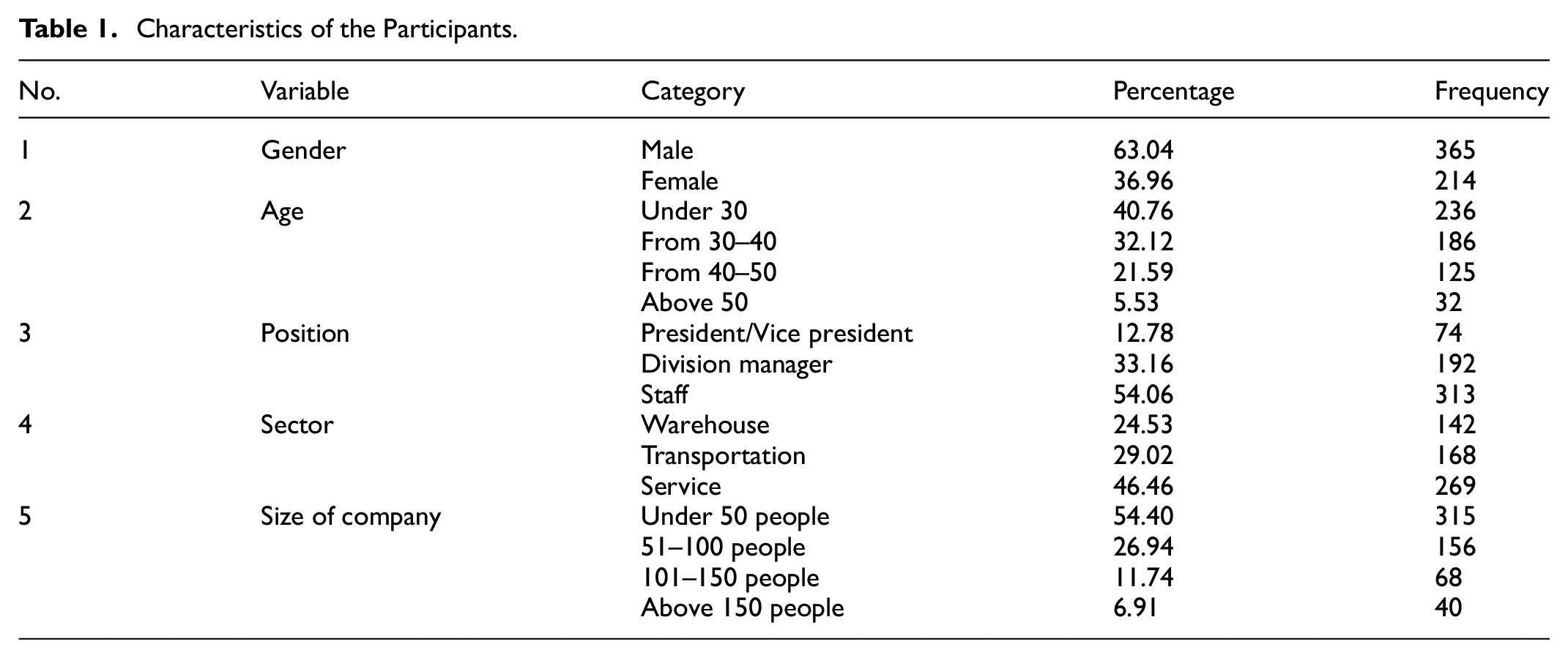
Table 1 provides information on the characteristics of the research sample, including gender, age, position, sector, and company size. Specifically, in terms of gender, 63.04% of the participants were male, while 36.96% were female, reflecting a fairly balanced gender distribution in the sample. In terms of age, the group under 30 accounted for the largest proportion at 40.76%, followed by the 30 to 40 age group (32.12%) and the 40 to 50 age group (21.59%), indicating that participation mainly came from young and middle-aged people. In terms of position, 54.06% of the participants were employees, 33.16% were department managers, and 12.78% were senior positions such as general directors or deputy directors. In terms of industry, the service industry accounted for the highest proportion (46.46%), followed by transportation (29.02%) and warehousing (24.53%), indicating that the service industry had a significant participation in this study. Finally, in terms of company size, 54.40% of the companies had more than 50 employees, followed by companies with 51 to 100 employees (26.94%), while larger companies (over 100 employees) accounted for a smaller proportion (18.65%). These characteristics indicate the diversity of the study sample in terms of demographic and organizational factors, thereby increasing the representativeness and reliability of the research results.
Characteristics of the Participants.
Scales and Measures
The six core barriers identified in this study—initial investment cost, small organizational size, lack of stakeholder cooperation, technological resistance, insufficient government support, and shortage of skilled personnel—were developed through a rigorous, multi-phase process to ensure theoretical relevance and empirical validity. First, a targeted review of literature on blockchain adoption, innovation diffusion, and SME technology integration provided the conceptual foundation for barrier selection. These constructs were then refined through consultations with academic experts and industry practitioners in the logistics sector to ensure contextual relevance. A pilot test involving 25 SME participants was conducted to assess item clarity and eliminate redundancy. Finally, confirmatory factor analysis (CFA) was performed to validate the constructs’ dimensionality and internal consistency, confirming their suitability for inclusion in the structural model.
To measure these validated constructs, a structured questionnaire employing a five-point Likert scale was developed. This scale allowed logistics SME leaders, managers, and employees to indicate their level of agreement with statements reflecting the identified barriers, ranging from 1 (strongly disagree) to 5 (strongly agree). The items were designed to systematically capture perceptions related to financial constraints, organizational capacity, technological readiness, and external support conditions. This approach ensured both methodological rigor and objective data collection, enabling robust analysis of the factors influencing blockchain adoption in small and medium-sized logistics enterprises.
High Initial Investment Costs
We used six items to measure the high initial investment cost scale (Choi et al., 2020; Naseem et al., 2023; Öztürk & Yıldızbaşı, 2020; Rejeb et al., 2022). Example statements include: “Your company faces difficulties in securing the necessary funding to invest in blockchain infrastructure” and “The cost of purchasing equipment, software, and services related to a blockchain is a major barrier for your company” (Table 2).
Results of Convergent Reliability Testing.

Small Scale
The variable of small scale was measured by six items (Govindan, 2022; Kaur et al., 2024). Example statements include: “Your company faces difficulties in investing in blockchain technology due to limited financial resources” and “The small scale of your company poses a challenge in achieving economic efficiency when implementing blockchain.”
Lack of Collaboration Among Participants
The scale of the lack of collaboration among participant’s barrier was measured by six items (Kouhizadeh et al., 2021; Öztürk & Yıldızbaşı, 2020). Example statements include: “The level of mistrust between your company and its supply chain partners affects the adoption of blockchain” and “The lack of consensus between partners on data standardization and blockchain-related processes is a major barrier.”
Technological Resistance
We used six items to measure this scale (Choi et al., 2020; Kouhizadeh et al., 2021). Example statements include: “The resistance of departments or individuals in your company to adopting blockchain technology” and “The lack of knowledge about blockchain in your company is the main cause of resistance during implementation.”
Lack of Government Support
The lack of government support scale was measured by six items (Choi et al., 2020; Kouhizadeh et al., 2021). Example statements include: “Your company faces difficulties in implementing blockchain due to the lack of clear support policies from the government” and “The lack of financial or tax incentives from the government is a major barrier to adopting blockchain.”
Lack of Human Resources and Specialized Skills
We applied six items to measure this scale (Öztürk & Yıldızbaşı, 2020; Kaur et al., 2024; Kouhizadeh et al., 2021). Example statements include: “Your company faces difficulties in recruiting personnel with blockchain expertise” and “Current employees in your company are not adequately equipped with the knowledge and skills to apply blockchain.”
The Implementation of Blockchain
The dependent variable of this research is the implementation of blockchain. To measure this variable, we employed six items referred from studies (Choi et al., 2020; Kaur et al., 2024; Kouhizadeh et al., 2021; Naseem et al., 2023). Example statements include: “Implementing blockchain technology in your company helps improve supply chain management efficiency” and “My company has sufficient resources (personnel, financial) to implement blockchain technology applications.”
Control Varriables
To enhance the robustness of the structural equation model and reduce potential bias, this study included several organizational-level control variables that may influence blockchain adoption outcomes. Specifically, the model controlled for company size (measured by the number of employees), years of operation (reflecting organizational maturity), prior experience with digital technologies (indicating technological readiness), and leadership IT awareness (capturing managerial support and innovation orientation). These variables were selected based on established literature in technology adoption and innovation diffusion, particularly within the TOE framework. By accounting for these contextual factors, the model ensures a more accurate estimation of the effects of the identified barriers, thereby improving both the validity and generalizability of the study’s findings.
Analytical Methods
In this study, we used SPSS 22.0 and AMOS 22.0 tools to perform statistical analysis, with the analysis process divided into two main stages: testing the validity of the scale and testing the structural model. In the first stage, we tested the convergent and discriminant validity of the scales in the model using Principal Component Analysis (PCA) and Confirmatory Factor Analysis (CFA). PCA helps identify latent factors and reduce the number of input variables, making the data easier to analyze, while CFA is applied to test the fit between the observed variables and the theoretical model, as well as ensure that the latent factors are accurately defined. After cleaning the measurement model, we continued to test the structural model using Structural Equation Modeling (SEM) to identify the relationships between the latent factors, thereby assessing their impact and correlation in the research model.
Results
Principal Component Analysis (PCA)
We began by using Principal Component Analysis (PCA) with Promax rotation. PCA is a data dimensionality reduction method, commonly used to reduce the number of variables in large datasets, but still retain most of the information from the original dataset. Smaller datasets make analysis and visualization easier and faster for machine learning algorithms, eliminating redundant variables (Hair, Anderson, Babin et al., 2010; Le, 2024).
The PCA results show that there are six factors with Eigen values greater than 1.0, explaining 59.84% of the variance of all variables. However, the Eigenvalue of the seventh factor was 0.92, and the screen plot showed a seven-factor structure. We then adjusted the number of observed components to 7 and performed PCA again. The results showed that some cross-loadings, namely Support5, Skill5, and Skill6, were removed for further data analysis. After removing these items, the variance explained by all factors was 64.41%.
Confirmatory Factor Analysis (CFA)
Confirmatory Factor Analysis (CFA) is a multivariate statistical method that helps determine the effectiveness of measured variables in reflecting latent factors. CFA allows for determining the number of components required in the data and indicating which measured variables are related to which latent variables.
CFA analysis was performed using AMOS 22.0 and the seven-factor model fit the data well (χ2 = 1,201.191, df = 640, χ2/df = 1.877, CFI = 0.951, TLI = 0.946, GFI = 0.904, IFI = 0.951, RMSEA = 0.039). The fit indices for the seven-factor model were considered satisfactory according to the criteria proposed in previous research (Hu & Bentler, 1999).
Reliability and Validity Assessment
The results in Table 2 show that the factors in the research model all meet the necessary standards of reliability and validity. Specifically, the composite reliability index (C.R.) of the factors ranges from .86 to .91, exceeding the minimum threshold of .7, indicating that the scales are capable of accurately measuring the latent concepts (Hair et al., 2010; Le, 2023b). In addition, the convergence index (AVE) of the factors ranges from 0.50 to 0.65, with most of the factors having AVE exceeding the threshold of 0.50, indicating an acceptable level of convergence and the observed variables can fully reflect the research concepts (Fornell & Larcker, 1981; Le, 2023a). Cronbach’s Alpha coefficient (α) ranges from.85 to .91, all exceeding the threshold of .7, demonstrating that the internal reliability of the scales is high, ensuring consistency in measuring concepts (Nunnally & Bernstein, 1994). Thus, this result shows that the factors in the study have high reliability and consistency, meeting the requirements for further analysis.
Common Method Variance (CMV)
Common Method Variance (CMV) is a systematic bias that can appear when variables are assessed by the same source or method. To test the existence of CMV in this study, we used the Principal Component Analysis (PCA) method. The results from PCA showed that no single factor was dominant in the initial analysis, with the eigenvalue of the first factor decreasing from 5.786 (accounting for 15.226% of the variance) to a lower level for the subsequent factors. Specifically, after rotation, the first factor explained 4.786% of the variance, the second factor explained 3.668%, and the third factor explained 3.704% of the variance, indicating that no single factor was dominant. This demonstrates that CMV did not affect the data in our study.
Correlation Assessment
Based on the empirical data, the relationship between the independent variables and the dependent variable “Blockchain Implementation” was clearly identified (Table 3). Among the factors considered, technological resistance showed the strongest negative correlation with the variable “Blockchain Implementation” (−0.270, p < .01), emphasizing that fear of technological change and lack of understanding of blockchain are significant barriers to the implementation of this technology. Next, high initial investment costs also had a significant negative correlation with the dependent variable (−0.265, p < .01), indicating that the financial burden of blockchain implementation, including hardware, software, and training costs, reduces the likelihood of technology adoption. This result is consistent with previous studies, such as Beck and Demirgüç-Kunt (2006), on the limited role of investment costs in technological innovation.
Correlation Matrix Between Variables.

p < 0.05, **p < 0.01.
Factors such as lack of government support and lack of professional human resources show moderate negative correlations (−.181 and −.218, p < .01). This reflects that although lack of policy support and professional skills also affect blockchain implementation, their impact is not as large as investment costs and technological resistance. Finally, factors such as the small size of enterprises and lack of cooperation among stakeholders have weaker negative correlations with the variable “The implementation of blockchain” (−.160 and −.158, p < .01). Although the impact of these factors is smaller than that of other factors, they still create significant barriers, especially in supply chains with interdependencies between parties.
Testing Hypotheses
To test the relationships between the factors, we performed Structural Equation Modeling (SEM). The results from the SEM model showed that the goodness of fit indices of the theoretical model were valid and the hypotheses were tested in turn (Figure 2).The results of the hypothesis testing in the study confirmed that all independent factors have a significant negative relationship with the implementation of blockchain technology in small and medium-sized logistics enterprises, with a high statistical significance (p-value<.001; Table 4).
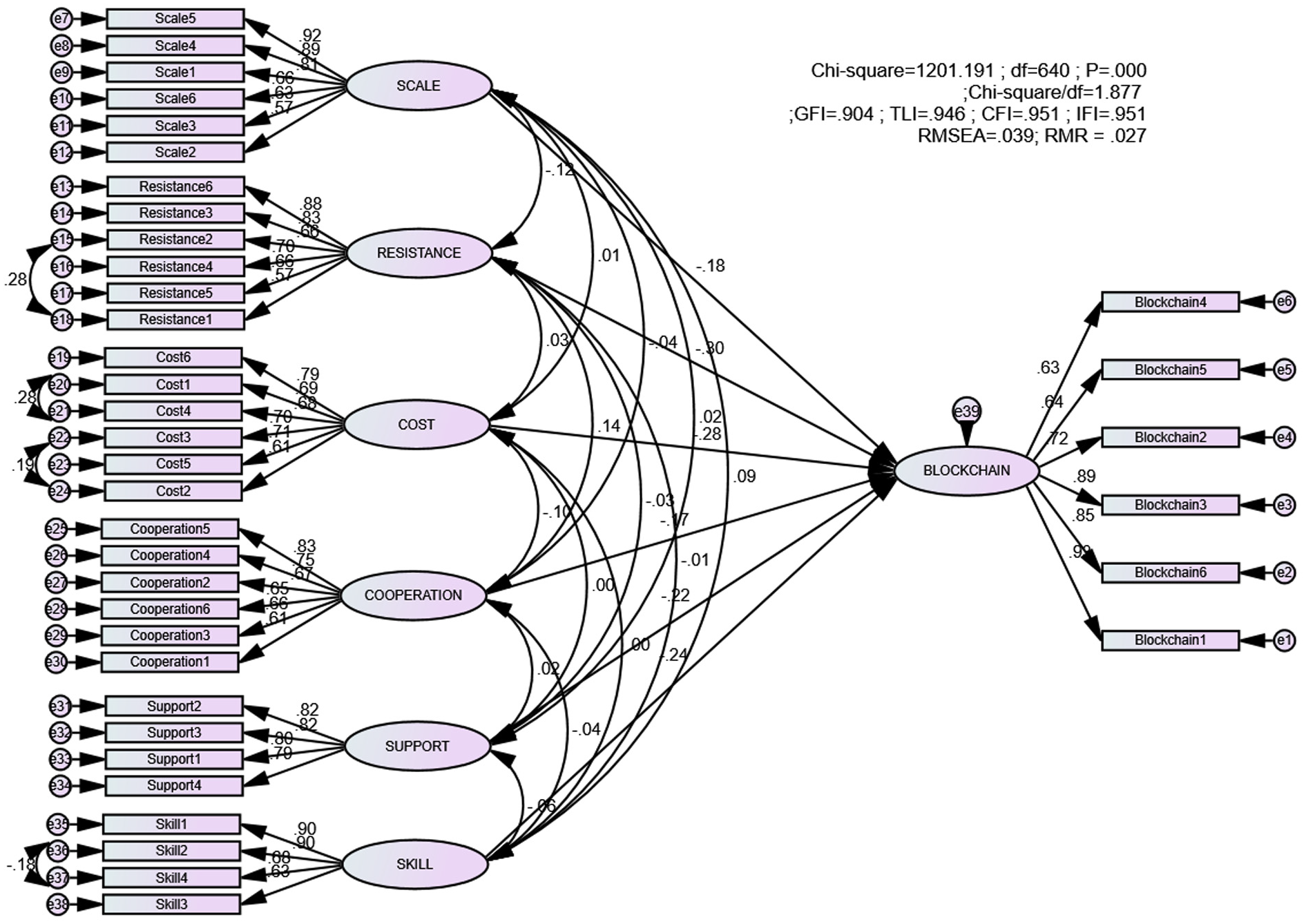
Results of structural equation modeling.
Hypothesis Testing Results.

**p < .001.
Among them, technological resistance (β = −.30) was identified as the strongest negative factor, indicating that fear of change and lack of understanding of technology are the biggest barriers to blockchain adoption. Therefore, hypothesis 4 is supported.
This is followed by initial investment costs (β = −.28) and lack of human resources and professional skills (β = −.24), indicating that financial and human resources barriers play an important role in limiting enterprises from implementing this technology. Therefore, hypotheses 1 and 6 are accepted.
Lack of government support (β = −.22) and small size (β = −.18) also have negative effects, but to a lesser extent. Lack of cooperation between parties (β = −.17) has the weakest effect among the tested hypotheses, although it is still statistically significant. Therefore, hypotheses 2 and 5 are confirmed.
Discussion
In the context of the shipping and logistics industry increasingly demanding transparency, efficiency, and security, blockchain technology is considered a potential solution to address existing challenges (Opoku & Williams, 2024). However, in small and medium-sized logistics enterprises (SMEs), blockchain adoption still faces many barriers, making them vulnerable to financial and technical requirements (Ćoćkalo et al., 2024). Studying the barriers to blockchain implementation in this context is important, not only to identify and analyze the root causes of delays but also to provide a basis for developing appropriate support policies and strategies (Tiwari & Rueboon, 2024), helping SMEs overcome challenges and take advantage of blockchain technology in optimizing logistics operations (Tran et al., 2024). This study found the following important barriers to blockchain technology implementation for small and medium-sized logistics enterprises:
The results show that high initial investment costs are a significant barrier to the blockchain adoption—pose a considerable financial burden for SMEs. This finding supports earlier research by Beck and Demirgüç-Kunt (2006), which emphasized the critical role of capital constraints in limiting technological innovation in smaller firms. More importantly, this study contributes sector-specific quantitative evidence, illustrating that SMEs in the logistics sector—particularly in resource-constrained economies like Vietnam—face heightened sensitivity to cost pressures due to lean operational structures. Unlike capital-heavy sectors such as fintech or manufacturing, logistics SMEs often operate with thinner margins and lower financial resilience, making blockchain’s upfront costs a disproportionately larger hurdle.
The study also confirms that smaller firm size is a statistically significant inhibitor of blockchain adoption (β = −.18, p < .001). Consistent with the findings of Khan et al. (2022), small organizations often lack the financial, human, and technological resources necessary to pursue and sustain advanced digital transformations. However, our study deepens this understanding by highlighting that small size not only limits internal capacity but also reduces bargaining power when dealing with technology vendors, restricts access to external financing, and excludes many SMEs from participation in pilot programs or government-funded innovation initiatives. These limitations, while often structural, shape how readily a firm can connect to the broader technological ecosystem, underscoring the compounded disadvantage of organizational scale.
A lack of collaboration among key supply chain stakeholders also emerged as a substantial barrier (β = −.17, p < .001). This aligns with the findings of Pournader et al. (2020), who stressed that fragmented communication and misaligned objectives across the supply chain impede new technology integration. Our study builds on this by providing empirical confirmation that mistrust, absence of shared data standards, and poor interoperability between supply chain partners directly undermine blockchain implementation efforts. As a decentralized and integrative technology, blockchain requires a strong foundation of relational coordination. In highly fragmented logistics environments, especially among SMEs that rely on diverse and informal networks, these relational deficiencies become a critical impediment to adoption.
Technological resistance was identified as the most influential barrier in this study (β = −.30, p < .001). Consistent with Choi et al. (2020), this resistance is attributed to fear of change, organizational inertia, and lack of familiarity with blockchain technology. The strength of this effect suggests that resistance is not simply an informational gap but reflects deeper organizational and psychological reluctance to disrupt established practices. These behavioral dynamics highlight the need for change management strategies that address cultural readiness and foster innovation mindsets within firms. This insight also expands the Technology-Organization-Environment (TOE) model by positioning internal behavioral factors as central to the technological domain, rather than merely secondary or peripheral concerns.
The absence of adequate government support is another major constraint (β = −.22, p < .001). This finding supports Lan (2024), who emphasized the importance of public policy in facilitating digital transformation in emerging markets. In Vietnam, uncertainty surrounding regulatory standards, legal liability for blockchain-based transactions, and the lack of government-led sandbox initiatives collectively discourage SMEs from experimenting with blockchain solutions. In contrast, countries like Singapore have actively reduced such barriers through proactive regulations, innovation grants, and public-private collaboration programs. Our findings underscore that, in settings without strong institutional support, the private sector alone may lack the capacity to initiate meaningful blockchain adoption at scale.
Finally, a shortage of personnel with blockchain expertise, cybersecurity knowledge, and data analytics capabilities significantly hinders adoption efforts (β = −.24, p < .001). This echoes global concerns noted by Ge et al. (2022) regarding the gap between industry demand and the availability of blockchain-proficient professionals. Unlike larger corporations that can outsource or import specialized talent, SMEs typically depend on their internal workforce, making this talent gap even more critical. The lack of targeted training programs, university partnerships, and certification schemes further delays organizational readiness and perpetuates digital exclusion among SMEs.
Although this study focuses specifically on logistics SMEs in Vietnam, the findings invite broader consideration of how these barriers may vary across different sectors and regions. For example, fintech firms may encounter less resistance due to higher digital literacy and more mature IT infrastructure, while firms in highly regulated markets such as the UAE or China may benefit from government-driven pilots that reduce adoption risk. These contextual differences suggest the need for sector-specific and country-specific policy approaches to blockchain integration.
Theoretical and Practical Implications
This study offers novel theoretical contributions by reinterpreting blockchain adoption barriers in small and medium-sized logistics enterprises (SMEs) through the lens of the Technology-Organization-Environment (TOE) framework. By mapping empirically validated barriers to the TOE model, the study not only confirms previous findings but also advances the theoretical understanding of how contextual dimensions interact in shaping innovation adoption in emerging economies.
Within the technological dimension, the research reaffirms the critical role of technological resistance—including fear of change, perceived complexity, and lack of understanding—as a major deterrent to adoption. This expands upon earlier work (e.g., Choi et al., 2020) by quantitatively demonstrating that technological resistance exerts the strongest negative effect on blockchain implementation, thus identifying it as a dominant barrier in SME contexts. Moreover, by isolating resistance as distinct from knowledge gaps or infrastructural concerns, the study provides conceptual clarity on how behavioral and perceptual factors influence the perceived feasibility of new technologies.
In the organizational dimension, the findings reinforce and extend prior studies on financial and structural constraints. Specifically, the study identifies high initial investment costs and small organizational size as substantial impediments. While prior research (e.g., Beck & Demirgüç-Kunt, 2006; Khan et al., 2022) has acknowledged these issues, this study contributes new empirical evidence by showing how these organizational limitations directly correlate with reduced blockchain adoption capacity. Additionally, the lack of skilled human resources—particularly in blockchain, cybersecurity, and data analytics—is shown to be a structural deficiency that severely constrains SMEs’ ability to implement and maintain advanced technological systems. This insight refines the organizational dimension of TOE by highlighting the pivotal role of specialized workforce readiness in digital transformation.
The study also makes a significant contribution to the environmental dimension of the TOE model by illustrating how external support mechanisms—or the lack thereof—can inhibit innovation adoption. The absence of government incentives, ambiguous regulatory frameworks, and insufficient legal clarity are empirically shown to undermine blockchain uptake. This strengthens and contextualizes previous theoretical claims (e.g., Lan, 2024) by showing that regulatory uncertainty and policy inaction function as systemic inhibitors in developing markets. Furthermore, the identification of stakeholder collaboration as a distinct environmental barrier—due to misaligned standards, lack of trust, and inadequate information sharing—extends the TOE framework to account for relational and ecosystem-based dynamics that are especially relevant in supply chain-dependent sectors like logistics.
Collectively, these findings demonstrate that the TOE framework is a robust and adaptable tool for understanding blockchain adoption challenges in SMEs. More importantly, the study extends the TOE model by incorporating domain-specific barriers such as trust asymmetries among supply chain actors and contextual policy voids in emerging economies—factors that are often underexplored in existing literature. This not only deepens theoretical insights into the interplay between internal capabilities and external constraints but also broadens the applicability of the TOE framework beyond traditional IT systems to encompass emerging decentralized technologies like blockchain. Thus, by categorizing and analyzing blockchain adoption barriers through the TOE model, this study makes an important theoretical advancement, offering a structured, comparative, and scalable approach for future research on technology implementation in SMEs operating within complex and resource-constrained environments.
The research results provide important suggestions for managers in implementing blockchain technology in the logistics industry. First of all, identifying the initial investment cost as a major barrier emphasizes the need to develop specific financial plans, optimize resources, and seek external support, such as funding funds or strategic alliances (Beck & Demirgüç-Kunt, 2006; Khan et al., 2022). At the same time, small-scale organizations need to focus on cooperating with partners in the supply chain to share costs and resources, thereby reducing financial pressure (Pournader et al., 2020). Technology resistance and lack of professional skills suggest that managers need to invest in personnel training and promote internal awareness of the benefits of blockchain to reduce resistance to change (Choi et al., 2020; Ge et al., 2022). In addition, the lack of government support and a clear regulatory framework necessitates the need to strengthen the role of industry associations in policy advocacy and promoting initiatives to support technological innovation (Lan, 2024; Wang et al., 2022). These findings provide a basis for developing effective management strategies to overcome current barriers and maximize the potential of blockchain in the logistics industry.
Limitations and Future Research Directions
This study has provided insights into the barriers to blockchain technology adoption in the logistics industry in Vietnam, especially for small and medium-sized enterprises (SMEs). However, there are still some limitations that need to be considered. First, the scope of the study is limited to small and medium-sized logistics companies in Vietnam, which limits the ability to generalize the results to other countries or regions with different economic and legal conditions. Second, the data were collected through an online survey using a convenience sampling method, which may lead to sample bias and affect the reliability of the results. In addition, the study mainly used a quantitative model and did not delve into qualitative factors, such as management motivation or organizational culture change, which may strongly influence the decision to implement blockchain technology. Finally, the lack of in-depth analysis of the interactions between barriers, such as the relationship between initial investment costs and technological resistance, limits the ability to gain a comprehensive understanding of the issue.
To overcome these limitations, future studies could expand the geographical scope and compare countries with different levels of economic development to assess differences in barriers to blockchain implementation. Furthermore, mixed-methods research that combines qualitative and quantitative research could be applied to provide deeper insights into organizational motivations and culture. In addition, conducting a longitudinal study would help track changes in corporate perceptions and behaviors toward blockchain, especially in the context of rapid digital transformation. Finally, future research should focus on designing intervention models or support policies to address specific barriers, thereby promoting more efficient and sustainable blockchain implementation.
Conclusion
This study provides empirical evidence on the key barriers hindering blockchain adoption in small and medium-sized logistics enterprises (SMEs) in Vietnam. By applying structural equation modeling, six significant obstacles were identified—high initial investment costs, small enterprise size, lack of stakeholder cooperation, technological resistance, limited government support, and a shortage of skilled personnel. These findings highlight the need for strategic policy interventions, capacity-building initiatives, and collaborative frameworks to support blockchain integration. Ultimately, addressing these challenges is essential to accelerating digital transformation and enhancing the competitiveness of logistics SMEs in a rapidly evolving global supply chain landscape.
Footnotes

Ethical Considerations
This research exclusively addresses technical, organizational, and operational barriers associated with blockchain adoption in logistics SMEs. It involves no experimentation with human or animal subjects and does not handle personal or sensitive data. The study is based on secondary sources, publicly accessible data, and anonymized survey responses, all collected in line with applicable data protection standards. Consequently, ethical clearance from an Institutional Review Board was not required.
Consent to Participate
All participants provided informed consent prior to data collection.
Funding
The author(s) disclosed receipt of the following financial support for the research, authorship, and/or publication of this article: This research was support by Phenikaa University.
Declaration of Conflicting Interests
The author(s) declared no potential conflicts of interest with respect to the research, authorship, and/or publication of this article.
Data Availability Statement
Data sharing not applicable to this article as no datasets were generated or analyzed during the current study.
References
 ,
,