




Abstract
Effective knowledge resource interaction is essential for achieving value co-creation in service innovation projects. Service innovation projects involve collaboration among multiple actors, leading to complex knowledge interactions. However, due to a lack of deep understanding of the mechanisms underlying knowledge resource interaction in multi-actor contexts, effective management of these processes have been challenging, resulting in low value co-creation efficiency in such projects. This study employs the grounded theory approach to identify the key factors and their pathways in the knowledge resource interaction process within service innovation projects. The findings indicate that the knowledge resource interaction mechanism can be explained by four elements: market environment, goal alignment, knowledge capability, and organizational context. These four elements collectively drive and regulate the knowledge resource interaction process. Among them, the market environment is the external driving factor for knowledge interaction, goal alignment serves as the direct motivation, knowledge capability is the critical moderating factor, and the organizational context acts as the safeguarding factor. By constructing a theoretical model, this study reveals the mechanisms of the knowledge resource interaction process, providing decision-making references for enhancing the value co-creation efficiency in service innovation projects.
Plain Language Summary
This study explores how knowledge is shared and exchanged among different groups involved in innovative service projects. These projects often require collaboration between various stakeholders, such as companies, researchers, and customers, to create new and improved services. The research identifies four key factors that influence how well these groups can share knowledge: 1. Market Environment: The external market conditions, such as customer demands and technological changes, play a critical role in encouraging collaboration. For instance, when customers express new needs or when new technologies emerge, different groups must work together to respond quickly and effectively. 2. Shared Goals: The alignment of goals among the project participants is crucial for successful knowledge exchange. When all parties involved have similar objectives, they are more motivated to share their expertise and resources. 3. Individual Knowledge Capabilities: The ability of each participant to contribute valuable knowledge depends on their own skills and expertise. The study shows that the effectiveness of knowledge sharing increases when participants have strong, relevant knowledge. 4. Organizational Support: Support from the organizations involved, such as providing resources and creating a conducive environment, is essential for facilitating knowledge exchange. This support ensures that all participants can collaborate efficiently. By understanding these factors, organizations can improve how they manage and implement innovative service projects. This research provides valuable insights into how to enhance collaboration and knowledge sharing, ultimately leading to more successful innovation outcomes.
Introduction
In the era of rapid economic transition from manufacturing to service-oriented industries, service innovation has become a critical driver for companies to gain a competitive edge in the market. Service innovation involves not only the development of new services but also the optimization of service processes, enhancement of customer experience, and innovation in business models (Mahavarpour et al., 2023). The successful implementation of service innovation projects relies on the collaboration of multiple value co-creation stakeholders (hereinafter referred to as “multi-actor”), including service providers, customers, upstream and downstream suppliers, R&D teams, technology providers, and research institutions (Barrios et al., 2023). In the process of value co-creation, knowledge resources serve as a core element, and their effective integration and interaction are essential for achieving the objectives of service innovation (Ul Hameed et al., 2021).
However, practical challenges often arise, such as misalignment of project goals among stakeholders, inefficiencies in knowledge sharing due to a lack of trust or communication channels, and difficulties in integrating diverse knowledge bases across disciplines (Figueiredo et al., 2020). These issues not only slow down project progress but also reduce the overall effectiveness of value co-creation efforts. This challenge arises mainly because the knowledge interaction process in service innovation projects evolves from a simple binary form to a complex network form, significantly increasing the complexity of management (Goermar et al., 2021).
Despite the significant attention service innovation projects have received in theoretical research, with core characteristics such as resource integration, collaborative processes, and value co-creation extensively explored (Lopez et al., 2024; Virtanen & Bjoerk, 2024), the understanding of the complex mechanisms underlying knowledge resource interaction remains limited. This theoretical gap not only impedes the academic community's ability to systematically grasp the driving forces and pathways of knowledge resource interaction, but also diminishes the practical effectiveness of service innovation projects. In particular, in projects involving multiple stakeholders, the interaction of knowledge resources among various entities is often constrained by factors such as divergent organizational relationships (Lopez et al., 2024), cultural differences (Alkaabi et al., 2024), and misaligned goals (Schiefer et al., 2024), further complicating both research and practical implementation.
To address the identified theoretical gap, this study proposes the following research questions: What factors influence the knowledge resource interaction process among multiple actors in service innovation projects? How do these factors affect the knowledge interaction process? To answer these questions, the study employs a grounded theory approach, collecting and analyzing interview data from stakeholders engaged in service innovation projects. Through the three stages of open coding, axial coding, and selective coding, this study systematically identifies the key factors influencing the knowledge interaction process and further investigates their roles and pathways within this interaction.
This study holds significant theoretical and practical implications. Theoretically, the study lays a foundation for the research on value co-creation in service innovation projects by exploring the mechanisms of knowledge resource interaction in service innovation projects from a multi-actor’s perspective. Additionally, the study enriches the theoretical framework of knowledge management by expanding the application of theoretical models related to knowledge interaction in service innovation project settings. Practically, the findings can help project managers understand the driving factors of multi-actor knowledge interaction in the value co-creation process, providing theoretical guidance for effectively stimulating knowledge interaction activities within service innovation project contexts. Furthermore, this study reveals the key elements in the knowledge interaction process of service innovation projects, offering decision support for systematically managing the knowledge interaction process.
The structure of this paper is as follows. The “Introduction” section outlines the research background and research questions. The “Literature Review” section reviews relevant studies on service innovation projects, knowledge resource interaction and theoretical foundation, highlighting the gaps in existing research. The “Research Methods and Design” section explains the reason of method choice and the process of data collection. The “Data Analysis” section presents the process of three levels of coding. The “Research Results and Discussion” section displays the main categories identified through data analysis and their mechanism of action. The “Research Conclusions and Prospects” section summarizes the key findings and managerial implications of this study, while also pointing out its limitations and suggesting directions for future research.
Literature Review
Service Innovation Projects
Service innovation projects have gained significant attention as organizations seek to adapt to evolving market demands and enhance competitiveness. Rooted in the concept of service-dominant logic (Vargo & Lusch, 2004), service innovation emphasizes resource integration, collaborative processes, and value co-creation. These projects often involve diverse stakeholders, including customers, suppliers, and technology partners, working together to create innovative solutions (Taghizadeh et al., 2018; Xie et al., 2021).
Existing studies highlight several critical aspects of service innovation projects. First, the dynamic and iterative nature of these projects requires continuous adaptation to external market drivers such as technological advancements and shifting customer expectations (Sjodin et al., 2020). Second, successful service innovation relies heavily on multi-actor collaboration, which facilitates the exchange of complementary knowledge and skills (Jiang et al., 2020). Additionally, some studies have focused on the key factors that hinder collaborative innovation, such as misaligned goals and cultural differences among stakeholders (Moreira et al., 2018; Taghizadeh et al., 2020).
Despite these insights, the role of knowledge resource interaction in driving value co-creation within service innovation projects have received limited attention. Knowledge resources are the main driving force behind service innovation, yet the question of how project stakeholders interact with knowledge resources has not been clearly revealed. Especially in service innovation projects involving many stakeholders, their organizational relationships are characterized by diversity and networking (Nobari & Dehkordi, 2023), making the process of knowledge resource interaction more complex and hidden (Jiang et al., 2020). Therefore, this study explores the issue of knowledge resource interaction from the perspective of multiple project stakeholders, providing theoretical support for the practice of service innovation projects.
Knowledge Resource Interaction
Knowledge resource interaction is a critical enabler of innovation and value creation in multi-actor settings (Wang & Li, 2023). Drawing on knowledge management theory (Cohen & Levinthal, 1990), key concepts such as absorptive capacity and knowledge sharing willingness provide a foundation for understanding these processes. Existing research underscores the importance of relational factors, such as trust and communication quality (Qin & Wang, 2023), in facilitating knowledge interaction (Xu et al., 2022). For instance, trust reduces perceived risks associated with knowledge sharing, while effective communication channels enhance the clarity and accessibility of shared information (de Bem Machado et al., 2021).
However, significant gaps persist. First, much of the existing literature focuses on intra-organizational knowledge processes (Liu et al., 2024; Zhang & Yi, 2024), leaving the complexities of inter-organizational interactions underexplored, particularly in the context of service innovation projects. And, the applicability of evidence from existing theories has not been verified in service innovation projects. Second, there is limited empirical evidence on how diverse stakeholders with varying knowledge capabilities contribute to value co-creation. Previous studies have mostly explored the knowledge interaction process from the perspective of the knowledge elements themselves (Sondhi et al., 2024; Wang, & Li, 2023), but exploring this topic from the perspective of stakeholders holds greater value for project managers.
By addressing these gaps, this study seeks to advance the understanding of knowledge resource interaction mechanisms in service innovation projects, providing a basis for theoretical development and practical application.
Theoretical Foundation
To enhance our understanding of multi-actor interactions in service innovation projects, this study draws upon Stakeholder Theory and Agency Theory as complementary theoretical lenses.
Stakeholder Theory provides a valuable framework for analyzing the roles and relationships of diverse actors—such as customers, suppliers, and strategic partners—as integral contributors to the co-creation of value. According to Bridoux and Stoelhorst (2022), stakeholders within an organization collaborate to create long-term shared value, extending beyond short-term transactional interests. In the context of service innovation, stakeholders contribute critical resources, including specialized knowledge, technological capabilities, and human capital, making effective coordination and alignment essential for successful innovation outcomes. As Dmytriyev et al. (2021) argue, stakeholders are often motivated by intrinsic values such as fairness, reciprocity, and shared identification with collective goals. These pluralistic motivations foster cooperative environments that encourage stakeholders to actively engage in knowledge sharing and innovation efforts.
Agency Theory further complements this view by highlighting potential conflicts and information asymmetries between principals (e.g., project owners) and agents (e.g., project managers, consultants, or service providers; Georges et al., 2025). In multi-actor service innovation projects, actors may operate under different incentive structures, leading to misalignment in goals and reluctance in knowledge disclosure or collaboration. Agency problems can hinder the efficiency of knowledge interaction by introducing issues of trust, opportunism, and incomplete communication. Understanding these dynamics is crucial for identifying governance mechanisms that reduce coordination barriers and support effective multi-stakeholder knowledge exchange.
Research Methods and Design
Choice of Research Method
This study employs grounded theory to explore the mechanisms of knowledge resource interaction in service innovation projects. Grounded theory, with its exploratory and inductive approach, is particularly well-suited for uncovering the underlying mechanisms behind complex social phenomena. In service innovation projects, the interaction of knowledge resources involves multiple stakeholders, diverse contexts, and dynamic processes (Zhang & Yi, 2024), which presents challenges for traditional theoretical validation methods in fully capturing the core mechanisms and relationships. By deriving concepts and theories directly from data, grounded theory is better positioned to identify the key factors influencing knowledge resource interaction and their modes of interaction (Glaser, 2010).
This study employs the three-stage coding process of grounded theory, comprising open coding, axial coding, and selective coding (Glaser, 2010). First, the research team analyzed the raw data to identify and define the initial concepts during the open coding phase. In the axial coding phase, the researchers reorganized these initial concepts into more systematic categories and conducted iterative validations of the data through recordings, texts, and secondary materials to examine the relationships between these categories. Building on the first two stages of coding, the researchers then selected a core category and developed a more generalized theory around it. Finally, through coding analysis, the study extracted the key elements of knowledge resource interaction in service innovation projects and explored their interaction pathways to construct a theoretical model of knowledge resource interaction.
Data Collection
The study collected primary data through focused interviews. To obtain high-quality interview data, “one-on-one” interviews through face-to-face meetings and online conferences were conducted with the interviewees, ensuring each interview lasted over 1 hr. For any omitted or key issues in the interview outline, supplementary information was obtained through telephone, email, WeChat, and other means after the interviews. The entire data collection process lasted for 5 months.
This study employs theoretical sampling to ensure that the sample is both representative and relevant, providing a comprehensive reflection of the knowledge resource interaction mechanisms in service innovation projects. The criteria for participant selection are as follows: (a) Experience: Participants must have at least 10 years of experience in service-related projects and have actively participated in such projects within the past year. Furthermore, participants must be able to accurately recall and clearly articulate their recent project experiences to ensure the data's relevance and timeliness. (b) Knowledge and Expertise: Participants should possess a solid understanding of project management theory and practice, particularly in knowledge management, and be capable of providing informed responses to questions regarding service innovation projects. This requirement ensures that the data provided offers valuable insights and analysis. (c) Diversity and Balance: To obtain comprehensive and objective interview data, the sample must include diverse participants from different sectors of the service innovation discipline, such as service companies, research institutions, users, and government agencies. Ensuring a balanced representation of participant categories facilitates a multi-dimensional understanding of key factors and dynamics within service innovation projects.
Based on these criteria, 23 participants were selected, ensuring diversity in both roles and industries. The sample includes project managers, expert consultants, and R&D personnel, representing sectors such as IT, transportation, retail, and healthcare. Furthermore, participants come from various categories, including universities and research institutions, service providers, upstream and downstream suppliers, and key users. This diverse composition enhances the breadth and multi-dimensionality of the data. Notably, while all participants are based in China, the projects they were involved in span multiple regions and industries. These include multinational corporations and international projects, such as Deutsche Bank in Germany, Sberbank in Russia, Mauritius Airport, Shanghai World Expo, Nanjing Public Medical Center, Payra Power Plant in Bangladesh, Huawei Technologies. This cross-regional and cross-industry sample further strengthens the representativeness of the study and ensures the broad applicability and credibility of its findings. The basic information of the interviewees is presented in Table 1.
Basic Information of Interviewees.

To ensure the objectivity and completeness of the data collection, the interview process was conducted in three steps: designing the interview outline, scheduling interviews with actors, and conducting in-depth personal interviews. A semi-structured interview guide was used to minimize variability in data collection, ensuring that all participants addressed the same key themes. All participants provided informed consent before the interviews, either in written or verbal form, depending on the interview medium (in-person or online). To ensure confidentiality, all interview data were anonymized, and identifiable information was removed. Transcripts and recordings were securely stored on encrypted devices, and access was restricted to authorized researchers. Participants were informed of their right to withdraw from the study at any time without consequence. Two graduate students were invited to assist with the interviews to ensure their quality. A pilot interview was conducted with three randomly selected interviews, during which the interview content was adjusted and refined based on the feedback. The main content of the interview outline included:
① What do you think are the characteristics of service innovation projects? Who are the actors involved?
② How is knowledge resource interaction manifested in service innovation project activities, and what does it include?
③ Is there a difference in the knowledge resource interaction process in service innovation projects compared to other types of projects or organizational contexts?
④ In your opinion, what are the reasons behind the knowledge interaction process in service innovation projects?
⑤ Under what circumstances would you be willing to engage in knowledge resource interaction? What factors affect the efficiency of your knowledge interaction with other members?
⑥ How do you think organizational factors influence the knowledge interaction process?
⑦ Besides the factors mentioned earlier, what other factors do you believe influence knowledge resource interaction in service innovation projects, and how do they affect the process?
In the entire interview process, two interview assistants recorded the interview content on computers and made audio recordings of the interview process to ensure data traceability. After the interviews, the assistants reviewed the recordings to refine and organize the interview content, creating a complete interview record and memorandum. The entire interview process results in 23 interview transcripts totaling more than 100,000 words. This study used these interview materials to perform grounded theory coding analysis, ultimately constructing a theoretical model of knowledge resource interaction in service innovation projects.
Data Analysis
In this study, 19 out of the 23 interview transcripts were randomly selected for data analysis and theory construction using grounded theory. The remaining four transcripts were used for theoretical saturation testing. The data analysis was conducted through three levels of coding: open coding, axial coding, and selective coding. To enhance the reliability of the findings, the study employed the following measures. Two researchers independently coded the transcripts and compared their results to ensure consistency during the whole coding process. Additionally, data from interviews were cross-verified with relevant project documents and previous literature to confirm the validity of the identified categories.
Open Coding
Open coding was performed on the collected sample data using the NVIVO 11 coding analysis software. The coding process was as follows. First, statements closely related to the research questions were extracted, resulting in a total of 157 original statements. Next, these original statements were merged, summarized, and refined to form relatively concise concepts (Urquhart et al., 2010). Then, invalid concepts were removed, such as those that were contradictory or those that appeared very rarely (fewer than two occurrences). After multiple iterations of these steps, 25 initial concepts were finally obtained. Lastly, these concepts were standardized, named, and abstracted into categories based on their content.
The open coding process ultimately yielded 11 categories (labeled as “A+”), and 25 initial concepts (labeled as “a+”), as shown in Table 2. The 11 categories are as follows: market demand, technological innovation, time urgency, task orientation, knowledge limitation, cognitive ability, sharing ability, absorptive capacity, resource allocation, reciprocity norms, and multi-actor relationships and structures.
Open Coding.

Axial Coding
The categories formed during open coding were further refined, identifying the main categories and subcategories. The relationships between the 11 initial categories were analyzed and established at the conceptual level. This process ultimately led to the extraction of four main categories: market environment, goal alignment, knowledge capability, organizational context, as shown in Table 3.
The Main Categories Formed Through Axial Coding, Corresponding Subcategories and the Underlying Meanings.

Selective Coding
Selective coding involves refining the core category from the main categories identified during axial coding. This core category should encapsulate the other categories, forming the central theme of the research. In this study, the selective coding process focused on establishing the relationships between the main categories, abstracting them into a coherent structure, and developing a theoretical framework.
The storyline of this study can be summarized as follows. Faced with a rapidly changing external market environment, service firms transform external market demands, technological innovations, and time pressures into value co-creation goals for project actors. The consistency of these goals directly drives the knowledge resource interactions among the various actors in service innovation projects. The knowledge resource interaction process within the project is directly influenced by the knowledge capabilities of the actors. Moreover, these actors' knowledge capabilities are moderated by the organizational context, collectively influencing the knowledge interaction process within the project. The relationship structure of the main categories and representative interview statements can be found in Table 4.
Relationships Among the Main Categories.

Theoretical Saturation Test
During the data collection for this study, a total of 23 samples were gathered; 19 samples were used for coding analysis, while the remaining four interview materials were utilized for theoretical saturation testing. The data from these additional interviews underwent open coding, axial coding, and selective coding. The results showed no new concepts or categories, and no new connections were identified among the four main categories. This indicates that the theoretical model of knowledge resource interaction mechanisms in service innovation projects is theoretically saturated.
Research Results and Discussion
Based on the coding results, a multi-actor knowledge resource interaction mechanism for service innovation projects was developed, as shown in Figure 1. This mechanism is formed by the combined influence of four key factors: market environment, goal alignment, knowledge capability, and organizational context. Among these, the market environment factors are external factors that serve as crucial prerequisites for the occurrence of knowledge resource interaction in service innovation projects. Goal alignment factors are the direct driving forces, providing the immediate motivation for project participants to engage in knowledge resource interaction. Knowledge capability factors act as regulatory factors, crucial in influencing the efficiency of knowledge interaction. Organizational context factors are safeguarding elements that impact the knowledge interaction process by influencing the knowledge capabilities of project participants. The combined effect of these four factors forms the knowledge resource interaction mechanism in service innovation projects.
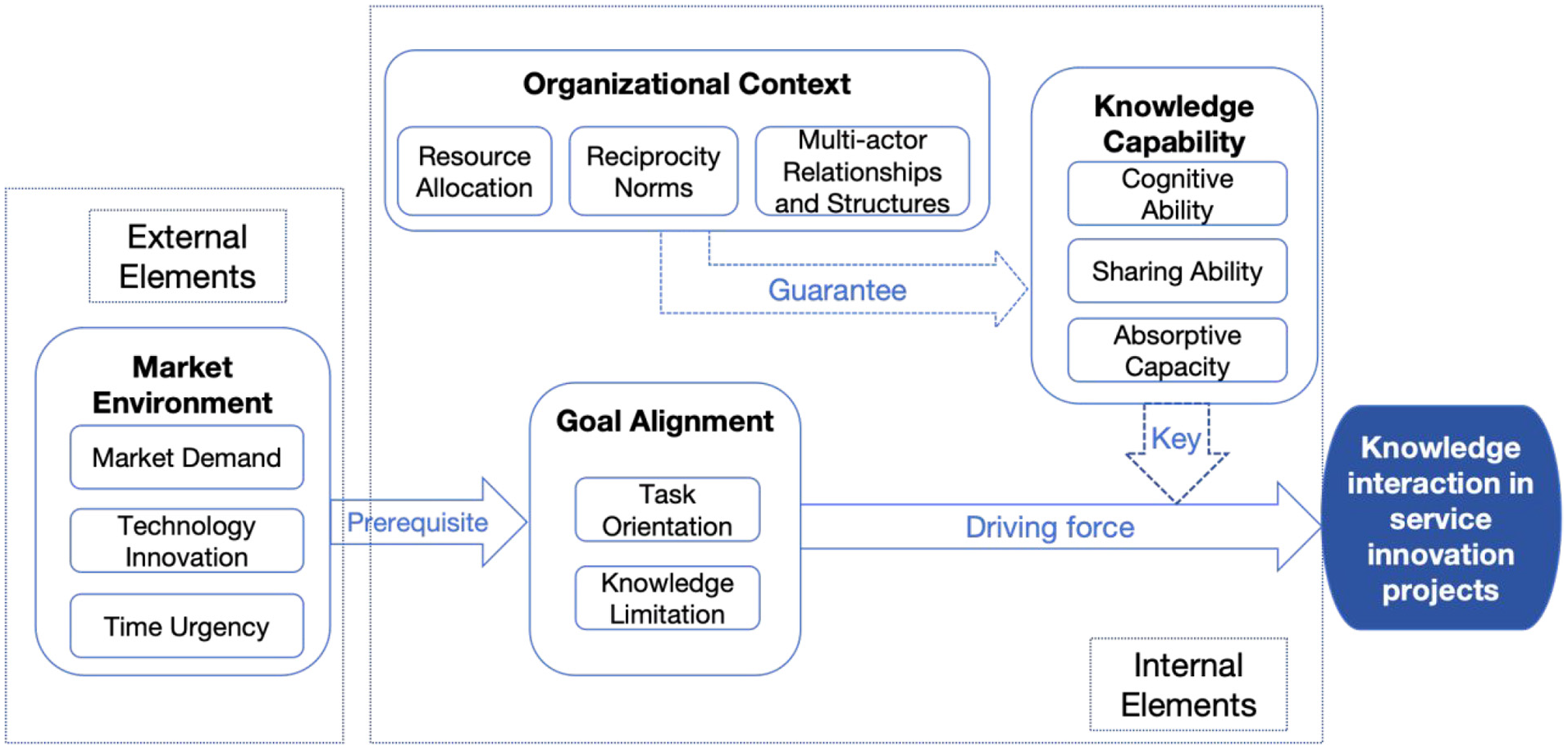
The knowledge resource interaction mechanism in service innovation projects.
Market Environment
Market environment are crucial external elements that facilitate knowledge resource exchange in service innovation projects. It includes market demand, technological innovation, and time urgency, which is the foundation for aligning the goals of project actors.
Market Demand
Market demand can be defined as the desire and ability of consumers or customers in a specific market to purchase a service product (Dahlquist, 2021). Changes in market demand directly influence a company's strategic and operational decisions, especially in service innovation projects, where it is a critical external driver for value co-creation (Ndubisi et al., 2020). Many interviewees mentioned, “When new demands emerge in the market or customers provide feedback, we need to react quickly and innovate.” The changes in market demand prompt close cooperation between different actors, consistent with existing collaboration theories (Schiefer et al., 2024). It is worth mentioning that this study found that the mechanism of market environment mainly involves external pressures and opportunities that prompt project actors to perceive the need for innovation, which then translates into the motivation for knowledge exchange. In general, market demand is an external driving factor that encourages project actors to break organizational boundaries, facilitating the flow and integration of multi-actor knowledge resources to achieve value co-creation in service innovation projects.
Technological Innovation
Technological innovation refers to the advancement of technology within an industry and the emergence of new technologies that are then commercialized (Gallegos & Seclen-Luna, 2022). For example, the progress of internet technology has given rise to the food delivery industry, transforming the strategy and operational models of the catering industry. Technological innovation makes project actors aware of the new opportunities and challenges brought about by technological changes. Interviewees noted, “The introduction of new technology requires us to continuously learn from and communicate with others”; “Technology is updating rapidly, and we realize we need to seek more collaboration and help.” These statements indicate that technological innovation drives companies to integrate resources both internally and externally, optimizing and updating their knowledge reserves. Moreover, the pace of technological advancements necessitates that companies quickly understand and apply new technologies (Lee, 2023), leading them to recognize that value co-creation is essential for swiftly responding to market changes and enhancing the innovation capabilities of both themselves and the project as a whole. Thus, technological innovation also contributes to the alignment of value co-creation goals among project actors.
Time Urgency
Time urgency refers to a company's heightened focus on time resources in the face of a rapidly changing market environment, manifesting as a tendency for quick responses and swift actions (Laufs et al., 2024). Interviewees mentioned, “When faced with immediate customer needs, we need to collaborate quickly,” reflecting the impact of time urgency. Companies feel the pressure of time in service innovation and are more inclined to seek resources and assistance from others. This demand encourages internal and external organizational collaboration to achieve rapid innovation or iteration within a limited time frame (Emami et al., 2023). Time urgency drives companies to recognize that achieving quick responses and swift actions requires value co-creation, which is less frequently mentioned in research on service innovation projects. By rapidly integrating multi-actor knowledge resources, companies can more quickly adapt to market environment changes, thereby maintaining their competitive advantage.
Goal Alignment
Goal alignment emphasizes the consistency and coordination maintained by multiple actors in service innovation projects while pursuing common objectives. It ensures that all actors work toward the same direction, serving as an internal driving force for the knowledge interaction process in service innovation projects. This category mainly includes task orientation and knowledge limitations.
Task Orientation
Task orientation refers to the driving force focused on clear goals and tasks. It helps unify the actions of actors, reduces conflicts caused by different goals or interests, and effectively drives collaborative activities among stakeholders. Shared task objectives can facilitate smoother knowledge interactions between actors (Ahmed et al., 2024). For example, many interviewees have mentioned: “Some tasks are difficult for me to complete on my own, such as technical issues that require consulting technicians,” and “In a design project for an information system, it is often necessary for multiple parties to work together to understand customer needs, design service processes, and solve technical problems.” Additionally, the complexity of service innovation tasks further drives the integration of multi-actor resources. Complex tasks typically require collaboration among multiple parties and finding solutions through the sharing and integration of knowledge resources (Lai, 2015). Existing research also shows that in task-oriented organizations, members generally exhibit more proactive attitudes in knowledge interactions, suggesting that task orientation promotes knowledge interaction (Lai, 2015). Therefore, the finding that significant task orientation characteristics in project contexts directly promote collaborative activities among actors, is consistent with existing research.
Knowledge Limitations
Knowledge limitations refer to the lack of necessary knowledge or skills in certain areas among project actors, reflecting differences in knowledge reserves and skill levels among actors (Bashir, 2023). Knowledge differences are a necessary condition for knowledge interaction, and this is especially important in service innovation projects. The realization of service innovation requires the integration of knowledge resources from multiple fields to achieve collaborative effects. Actors' awareness of their own knowledge limitations drives the occurrence of knowledge interaction behavior (Aslam et al., 2024). For instance, some respondents mentioned: “By communicating with people from other professional fields in the project, I can gain new ideas,” and “When I encounter difficulties, I proactively learn from those with relevant expertise in the project.” Thus, this study posits that actors' perception of knowledge limitations directly drives the occurrence of knowledge interaction in service innovation projects.
Knowledge Capability
Knowledge capability plays a crucial moderating role in the project knowledge interaction process. While it may not directly trigger the occurrence of knowledge interaction behaviors, it influences the quality and efficiency of knowledge interaction. This element includes the cognitive ability, sharing ability, and absorptive capacity of project actors, which has not received focused attention in the related research.
Cognitive Ability
Cognitive ability refers to actors' awareness of the knowledge resources of other project actors. The cognitive ability of actors affects knowledge interaction behaviors, primarily influencing their search behaviors (Hyland et al., 2022). Most respondents indicated: “I know what I’m not good at, and I also know whom I should consult,” and “Sometimes when I communicate with technical personnel, I actually don’t fully understand what they mean,”. These statements reflect that actors' cognitive ability affects their performance in knowledge interaction. After comparing and analyzing their own knowledge areas and knowledge levels with those of others, actors can identify their own knowledge interaction needs, plan their targets, resources, and interaction paths, thereby improving the efficiency of knowledge search behaviors (Cowan & Jonard, 2004). Therefore, cognitive ability has a significant and positive moderating effect on the efficiency of knowledge interaction.
Sharing Ability
Sharing ability refers to the efficiency with which actors share knowledge with others through organizational relationships (Nguyen et al., 2021). It mainly includes actors' willingness to share and their ability to articulate knowledge. Respondents mentioned: “I am very willing to answer technical questions when others ask me,” and “I can clearly explain my ideas and am willing to share them with the team.” Terms such as “willing to answer,”“clearly explain,” and “willing to share” highlight the importance of sharing ability in knowledge interaction. Existing literature suggests that the willingness to share knowledge primarily affects the extent to which actors are willing to share knowledge with others (Zhang et al., 2019), and research generally indicates that willingness to share has a positive effect on knowledge interaction behaviors (Nguyen et al., 2021). Besides, actors' articulation ability also affects the knowledge interaction process. The stronger a actor’s articulation ability, the more efficient the knowledge transfer. Therefore, overall, actors' sharing ability has a direct and positive moderating effect on knowledge interaction.
Absorptive Capacity
Absorptive capacity refers to the efficiency with which actors acquire and successfully convert external knowledge into their own knowledge (Algarni et al., 2023). Absorptive capacity affects the efficiency of knowledge interaction by influencing the recipient's ability to handle knowledge, and it determines the final outcome of knowledge interaction (Aslam et al., 2024; Limaj & Bernroider, 2019). For example, respondents mentioned: “I have learned many new methods and techniques from team members,” and “I can quickly absorb new knowledge and apply it to my work.” These indicate that absorptive capacity is a crucial component in knowledge interaction. According to existing literature, absorptive capacity encompasses the ability to acquire, absorb, and transform knowledge. It refers to the actor's ability to encode, decode, and internalize new knowledge into their own knowledge after receiving it (Wang et al., 2024). The higher a actor's absorptive capacity, the better they can understand and assimilate external knowledge and recombine it with existing knowledge resources to enhance their own knowledge resources (Yao et al., 2013). Therefore, a actor’s absorptive capacity moderates the knowledge interaction process by affecting the efficiency with which the recipient accepts and utilizes knowledge.
Organizational Context
Organizational context are safeguarding elements for knowledge resource interaction. They influence the knowledge interaction process by affecting knowledge capabilities of project actors. This factor mainly includes three sub-categories: resource allocation, multi-actor relationships and structures, and reciprocity norms.
Resource Allocation
Resource allocation refers to the distribution and use of various resources (such as funds, personnel, technology, etc.) in service innovation projects (Fu et al., 2021). Proper resource allocation ensures that project actors have the necessary support during the knowledge interaction process, reducing barriers to knowledge acquisition and sharing (Zhao et al., 2018). Respondents mentioned: “When project funding is sufficient, knowledge interaction is smoother. For example, when the project team is equipped with advanced technology and equipment, we can more effectively acquire and share knowledge.” Resource allocation also involves providing supportive platforms and tools for knowledge interaction, such as knowledge management systems, collaboration software, and internal social networks, which facilitate easier storage, retrieval, and sharing of knowledge, greatly enhancing actors' knowledge capabilities (Bai & Li, 2020). Additionally, appropriate resource allocation can reduce resource competition and increase the willingness of project actors to cooperate, thereby promoting the flow and sharing of knowledge. Therefore, resource allocation indirectly influences the knowledge interaction process in service innovation projects by affecting the knowledge capability elements.
Multi-actor Relationships and Structures
Multi-actor relationships and structures primarily refer to the impact of the network organization built by project actors on knowledge interaction, including the quality of relationships among actors and structural characteristics. The quality of multi-actor relationships mainly refers to the closeness and connectivity of the relationships among actors (Rowley, 1997). Respondents mentioned: “Good relationships with partners make knowledge interaction smoother,” and “Project team members should have opportunities for communication and learning beyond work, which increases the chances for knowledge exchange.” These statements highlight the importance of multi-actor relationships in knowledge interaction. Additionally, a tight network structure allows actors to connect directly or through a few intermediaries, which enhances the efficiency of knowledge interaction among actors (Duan et al., 2023). (Lin et al., 2024). Existing research on organizational relationships and structures impacting resource interaction efficiency has been validated in enterprises and industry alliances (Lin et al., 2024). Nevertheless, this study extends this conclusion to the field of service innovation projects and has been validated.
Reciprocity Norms
Reciprocity norms refer to the behavioral expectation that individuals or organizations feel obligated to reciprocate after receiving help or benefits from others. In organizations, reciprocity norms can promote the formation of trust and cooperation. When project members believe that their knowledge-sharing behavior will be reciprocated, they are more willing to actively engage in knowledge interaction (Ganguly et al., 2019). This trust relationship can enhance team cohesion and cooperation willingness, thereby improving the frequency and quality of knowledge interaction (Nguyen et al., 2022). For example, respondents mentioned: “We have a culture of mutual help, and everyone is willing to share knowledge,” and “The reciprocal atmosphere makes knowledge interaction more frequent and efficient.” Additionally, reciprocity norms help establish long-term knowledge-sharing relationships. When project members feel that their contributions are recognized and rewarded, they are more willing to enhance their own knowledge capabilities and continuously invest time and effort in knowledge sharing (Olan et al., 2019). In service innovation projects, knowledge sharing often comes with psychological barriers, such as fear of losing competitive advantage or concerns about misuse of knowledge. The establishment of reciprocity norms can alleviate these psychological barriers, as project actors believe that their contributions will be reciprocated, thereby increasing their willingness to engage in knowledge interaction (Ganguly et al., 2019). Therefore, reciprocity norms act on the knowledge interaction process by enhancing actors' knowledge capabilities and are organizational measures established by service innovation project managers to promote the flow and feedback of knowledge interaction.
Research Conclusions and Prospects
Research Conclusions
This study employs a grounded theory approach to explore the mechanisms of multi-actor knowledge resource interaction in service innovation projects. The research finds that the multi-actor knowledge resource interaction in service innovation projects can be explained by the synergistic effects of four categories: market environment, goal alignment, knowledge capability, and organizational context, with the market environment being an external driving factor for knowledge interaction, and the other three being internal influencing factors.
Specifically, the market environment (market demand, technological innovation, time urgency) serves as a factor for knowledge interaction. This factor leads to a perceived alignment of value co-creation goals among the project actors, thereby stimulating knowledge interaction behaviors. Goal alignment is the direct motivation for knowledge interaction in the project, where task orientation drives actors to actively collaborate to achieve common goals, and knowledge limitations prompt actors to seek expertise from others to compensate for their own deficiencies. During the knowledge interaction process, knowledge capability (cognitive ability, sharing ability, and absorptive capacity) is a key moderating factor, with high levels of knowledge capability enhancing the efficiency and effectiveness of knowledge interaction and facilitating the generation of innovative outcomes. Organizational context (resource allocation, multi-actor relationships and structures, reciprocity norms) is an internal safeguarding factor for knowledge interaction, influencing the knowledge interaction process by moderating actors' knowledge capabilities. An organizational context that matches the knowledge interaction needs can provide resource support, reduce communication costs, and enhance trust, thereby improving actors' knowledge capabilities.
Theoretical Contributions
The theoretical contributions of this study are primarily reflected in the following three aspects:
First, the identification of market environment, goal alignment, knowledge capability, and organizational context as key drivers of knowledge interaction corroborates prior studies emphasizing the significance of external and internal factors. By integrating insights from knowledge management and value co-creation theories, the study offers a comprehensive framework for understanding knowledge interaction mechanisms in service innovation projects. The framework not only bridges the gap between macro-level external drivers and micro-level collaborative processes, but also provides a theoretical framework for subsequent empirical studies.
Second, this research extends knowledge creation theory by applying it to multi-actor service innovation projects. While the framework primarily focuses on intra-organizational knowledge conversion, the present study highlights how diverse actors across organizational boundaries contribute to knowledge integration and co-creation. This perspective underscores the iterative nature of knowledge interaction, identifies key factors influencing multi-actor knowledge interaction, and highlights the mechanisms driving multi-actor participation in knowledge interaction.
Practical Implications
The findings of this study provide the following important implications for the management practice of service innovation projects:
Firstly, project managers should closely monitor changes in market demand and actively capture customer feedback and market dynamics. By establishing a rapid response mechanism to market needs, they can enhance the market competitiveness of service products. Especially in service innovation projects in industries such as retail, medical services, and transportation, project management should make full use of market insight tools (such as big data analysis) to identify rapid changes in market demand and adjust project objectives in a timely manner. During this process, project managers should clearly define project goals and tasks, and establish a well-defined task-oriented mechanism to ensure that knowledge interaction activities always focus on the project objectives. Additionally, helping team members identify and bridge knowledge gaps through professional training and internal seminars can dynamically optimize project actors, forming a project team with diverse knowledge resources and enhancing the team’s innovation and adaptability.
Secondly, attention should be given to the critical role of project actors' knowledge capabilities in knowledge interaction. Project managers should focus on enhancing the knowledge capabilities of project actors, including improvements in cognitive ability, sharing ability, and absorptive capacity. Project managers can help members enhance cognitive ability through systematic training and education, such as regular professional training, lectures, and seminars, enabling members to understand the integration of new knowledge and technologies with their own expertise. Particularly for service projects involving high-tech industries, teams should pay more attention to the ability of project members to learn cutting-edge knowledge to meet the challenges that new technology updates pose to their own service products.
Additionally, online learning platforms and internal knowledge bases can be used to help members continually update and expand their knowledge domains. To improve sharing ability, project managers should foster an open and collaborative organizational culture, encourage the free flow of knowledge, and set up knowledge-sharing sessions, internal forums, and cross-departmental project teams to facilitate knowledge dissemination and exchange. Regarding absorptive capacity, project managers should implement practical training, mentorship programs, and job rotations to enable members to learn and apply new knowledge in real-world work settings.
Last but not least, an appropriate organizational context is crucial for ensuring effective knowledge interaction in projects. Service innovation projects often involve multiple stakeholders, and a well-structured multi-actor relationship and appropriate organizational structure significantly impact team collaboration. Project managers should enhance trust and collaboration among team members through team-building activities and cross-departmental cooperation. Furthermore, by implementing incentive mechanisms and fostering a supportive culture, managers can strengthen reciprocal relationships among members and reduce psychological barriers to knowledge sharing. For example, establishing knowledge sharing reward systems, creating transparent communication channels, and encouraging a cooperative organizational culture can all help facilitate the flow of knowledge and drive innovation.
Research Prospects
This study has provided an in-depth exploration of the mechanism of multi-actor knowledge resource interaction in service innovation projects, proposing that this process can be explained through the interaction of four main categories: market environment, knowledge capability, goal alignment, and organizational context. Although this study has made progress in revealing the mechanisms of knowledge interaction, there are still some limitations.
Firstly, the study acknowledges the limitation of a relatively small and predefined sample, which may restrict the generalizability of the findings. Although theoretical sampling was employed to ensure diversity across stakeholder roles, the sampling process was completed prior to data collection and did not evolve iteratively in response to emerging theoretical insights. This approach, while enhancing representativeness, deviates from the classical grounded theory practice of progressive sampling, and may limit the ability to follow emergent conceptual directions in real time. Nonetheless, the attainment of theoretical saturation provides support for the robustness and depth of the constructed model. Future research could address these limitations by adopting more flexible sampling strategies and incorporating large-scale quantitative methods to test and refine the proposed mechanisms in broader contexts.
Secondly, this study analyzed the influencing factors of knowledge interaction from a static perspective. Future research could adopt a dynamic perspective to further explore the evolution of knowledge interaction throughout the project lifecycle. Longitudinal studies could reveal how knowledge interaction changes across different project phases (e.g., initiation, execution, delivery, and evaluation) and identify the key factors and driving forces at each stage.
Thirdly, the role of digital tools and platforms in knowledge interaction is becoming increasingly significant. Future research could incorporate technological factors to investigate the roles of digital technologies, artificial intelligence, and big data analytics in facilitating knowledge interaction and value co-creation. For instance, studies could explore how digital technologies enhance the efficiency of knowledge acquisition, sharing, and application, as well as their impact on the effectiveness of knowledge interaction.
Footnotes
Acknowledgements
We sincerely thank all interview participants, as well as the editor and reviewers for their thoughtful comments and guidance.

Ethical Considerations
This study does not involve any human subjects or animal testing in a clinical or biomedical context. The research was based on expert interviews related to organizational and project management practices, without collecting any personal, sensitive, or health-related data. All participants were adult professionals who voluntarily agreed to participate and provided informed consent before the interviews. To ensure ethical compliance, participants were informed of the study’s purpose, assured of anonymity and confidentiality, and were given the right to withdraw at any time. According to institutional and national guidelines, formal ethical approval was not required for this type of study. Therefore, the study adheres to accepted ethical standards for social science research.
Author Contributions
Conceptualization and writing – original draft, L. X.; methodology and data analysis, X. L.; supervision and writing – review and editing, Y. S., funding acquisition, H. T. and L. X. All authors have read and agreed to the published version of the manuscript.
Funding
The author(s) disclosed receipt of the following financial support for the research, authorship, and/or publication of this article: This paper is supported by the National Social Science Foundation of China (Grant/Award Number: 21BTJ019), and Shandong Provincial Natural Science Foundation (Grant/Award Number: ZR2024QG152).
Declaration of Conflicting Interests
The author(s) declared no potential conflicts of interest with respect to the research, authorship, and/or publication of this article.
Data Availability Statement
The data that support the results of this study are available from the corresponding author upon request.