




Abstract
Foreign language acquisition significantly hinges on competencies that inform both teaching and learning. Despite the multiple language policies and frameworks like the CEFR (Common European Framework of Reference for Languages), there exists a gap in empirical research on the implementation of language policies by local education authorities in rural areas, where trainers’ needs and trainees’ circumstances are often different. Therefore, this study contributes to bridging this gap by analyzing how competency-based policies are implemented in rural areas via teacher training workshops organized by the local education board and schools. In total, 196 junior and senior high school teachers of English as a foreign language (EFL) in the rural areas surrounding Hengyang City in China were recruited to participate in the study. A mixed-method approach, consisting of analyzing quantitative and qualitative data gathered from a questionnaire, semi-structured interviews, a corpus comprising seven years of education policies, and workshop content, is analyzed in the study. The findings indicate that national language policies did not adequately align with teachers’ needs, and EFL teachers attended relatively few competency-based training workshops, which they perceived to be moderately useful in improving core competencies outlined in the policies. Furthermore, there were discrepancies in the needs of junior and senior high school TOE. The implications of the findings inform our reflection on adjusting the policy implementation structure at the rural level to customize the policies and reinforce competency-based training to reflect the realities of rural area-based parents, students, and TOE.
Plain language summary
Foreign language learning relies heavily on the skills of teachers and students. Although language policies, such as the Common European Framework of Reference for Languages (CEFR), exist, limited research examines how these policies are applied in rural areas, where teachers and students face distinct challenges. This study investigates the implementation of competency-based policies through teacher training workshops in rural schools near Hengyang City, China. The research involved 196 English as a Foreign Language (EFL) teachers from junior and senior high schools. A mixed-methods approach was employed, comprising a questionnaire, semi-structured interviews, a review of seven years of education policies, and an analysis of workshop materials. Findings reveal that national language policies do not fully address the needs of rural teachers. Teachers attended few skill-focused training workshops and found them only moderately helpful. Differences were also noted between the needs of junior and senior high school teachers. These results suggest that policies should be adapted for rural areas, with improved training that better aligns with the needs of parents, students, and teachers in these communities.
Keywords
Introduction
Effective language teaching in rural areas is critical for equitable education but faces unique challenges that demand specialized teacher competencies. Rural English education contributes to human and social capital development, yet teachers often navigate large classes, isolation, and limited resources (Meskill et al., 2023). These settings require innovative pedagogical approaches to foster student engagement and critical thinking, particularly in English as a foreign language (EFL) contexts. Governments and regional institutions globally have recognized the importance of competency-based frameworks to standardize and enhance language education, yet rural areas often lag due to systemic barriers and insufficient training tailored to local realities.
Teaching English in rural areas presents significant obstacles, including a shortage of qualified teachers, inadequate infrastructure, and limited resources (Herizal et al., 2023; Shan & Aziz, 2022). Many rural teachers lack formal pedagogy training, often coming from non-English backgrounds, which hinders their ability to address low student proficiency and negative attitudes toward English (Pramesty et al., 2022). Poor facilities, such as unreliable electricity and scarce teaching materials, further impede instruction, while minimal parental support, driven by socioeconomic constraints, exacerbates challenges (Herizal et al., 2023). Policy-practice misalignment and limited professional development opportunities, particularly for young learners, create additional barriers (Pramesty et al., 2022; Rosyida et al., 2024). In China, rural areas face added complexities due to linguistic, cultural, and demographic diversity, such as left-behind children and ethnic minorities, which complicate standardized policy implementation (Li & Xue, 2021; Wang, 2016).
To overcome these challenges, rural teachers require a range of competencies. Pedagogical skills, including student-centered methods and curriculum alignment, are essential for engaging learners in resource-scarce environments (Rosyida et al., 2024; Shan & Aziz, 2022). Communication and parental engagement skills foster community support, while adaptability enables teachers to innovate with limited tools (Shan & Aziz, 2022). Cultural awareness ensures sensitivity to local contexts, and digital literacy, including proficiency with platforms like WhatsApp or Google Classroom, supports teaching despite technological constraints (Butarbutar, 2025; Pratolo & Solikhati, 2021). Subject matter expertise in English is critical, particularly for teachers from non-English backgrounds (Rosyida et al., 2024). In China, teachers need additional competencies in professional adaptability, reflective practices, and curriculum design tailored to diverse rural populations, yet gaps in research competence and oral proficiency persist (Sun & Sihes, 2019). However, the literature lacks detailed pathways for developing these competencies, limiting scalable training solutions (Herizal et al., 2023).
Competency-based frameworks, such as the Common European Framework of Reference for Languages (CEFR), formulated by the Council of Europe in 2001, aim to standardize language teaching, learning, and assessment through defined proficiency levels (A1 to C2) and competencies like mediation and pluricultural skills (Council of Europe, 2001). Adopted globally, including in non-European contexts (Ahmad Afip et al., 2019), CEFR guides curriculum objectives but faces criticism for its broad scope and unclear intercultural components, complicating rural implementation (Glaesser, 2019). In China, holistic policies since the mid-1990s have focused on system restructuring, capacity building, and rural revitalization, recruiting thousands of teachers to rural schools (Rao, 2020). Hunan province’s policies, such as mandatory training every 3 years, emphasize competency development (Liao & Wei, 2023). However, these top-down approaches often fail to address local linguistic and cultural complexities, and empirical research on their alignment with rural teachers’ needs remains limited (Li et al., 2020).
This study addresses these gaps by examining competency-based training for EFL teachers in the rural areas around Hengyang City, Hunan, China, from 2015 to 2022. It analyzes local education authority data, teacher questionnaires, and semi-structured interviews to assess how national and provincial policies align with teachers’ needs in diverse rural contexts. The study explores teachers’ perceptions of competency-based training and policies, focusing on challenges like resource scarcity and cultural diversity, and proposes a new organizational structure to enhance policy implementation.
Effective language teaching hinges on developing competencies that address rural-specific challenges. This study illuminates how policies can be tailored to local realities, offering insights for educators and policymakers to improve training and support for rural English teachers, ultimately bridging the urban-rural educational divide.
Conceptual Background and Literature Review
Teaching in Rural Areas: Challenges and Need for Competency Training
Teaching English in rural areas presents significant challenges, including a lack of qualified teachers, inadequate infrastructure, and limited resources (Herizal et al., 2023; Shan & Aziz, 2022). Many EFL teachers, often untrained in English pedagogy, struggle with low student proficiency and negative attitudes toward the language, compounded by minimal parental support due to socioeconomic constraints (Pramesty et al., 2022). Poor facilities, such as unreliable electricity and scarce teaching materials, further hinder effective instruction (Herizal et al., 2023). Policy-practice misalignment and limited professional development opportunities exacerbate these issues, particularly for young learners (Pramesty et al., 2022; Rosyida et al., 2024).
To address these challenges, EFL teachers require specific competencies. Strong pedagogical skills, including student-centered methods and curriculum alignment, are essential for engaging rural learners (Rosyida et al., 2024; Shan & Aziz, 2022). Communication and parental engagement skills foster community support, while adaptability enables teachers to work with limited resources (Shan & Aziz, 2022). Cultural awareness ensures sensitivity to local contexts, and digital literacy, including proficiency with tools like WhatsApp or Google Classroom, supports innovative teaching despite technological constraints (Butarbutar, 2025; Pratolo & Solikhati, 2021). Subject matter expertise in English is critical, especially for teachers from non-English backgrounds (Rosyida et al., 2024). These competencies, supported by targeted training and policy interventions, are vital for improving English education outcomes in rural settings.
The studies on teaching English in rural areas reveal critical limitations that affect their applicability. First, the limited number of participants restricts the generalizability of the findings. For instance, Pratolo and Solikhati (2021) involved only two EFL teachers, which may not represent the broader population of rural educators in diverse settings like Indonesia, limiting the robustness of conclusions (Pratolo & Solikhati, 2021). Second, the geographical and contextual specificity of the results limits their relevance. Studies such as Herizal et al. (2023) and Butarbutar (2025) focus on specific regions (e.g., South Sumatera or Papua, Indonesia), where unique socioeconomic and infrastructural conditions may not reflect challenges in other rural contexts globally, reducing transferability. Third, there is a lack of studies showing how competencies are developed, leaving no clear pathway for other rural areas to follow. While competencies like pedagogical skills, digital literacy, and cultural awareness are identified as essential (Rosyida et al., 2024; Shan & Aziz, 2022), the literature rarely details structured processes or training programs for cultivating these skills, hindering replication in other rural settings (Herizal et al., 2023). This gap underscores the need for research outlining practical, scalable strategies for teacher competency development to address rural education challenges effectively.
Competency-Based Education and Frameworks
Competencies have been defined as “the set of knowledge, skills, and experience necessary for future, which manifests in activities” (Katane et al., 2006, p. 44) or as “knowledge, skills, attitudes, or behaviors that enable one to perform the activities of a given occupation or function to the standards expected in employment” (Gupta, 2011, p.135). The range of competencies has increased as times have evolved and educational needs have changed. For instance, initially, teachers’ competencies were understood to belong to three main dimensions—field competencies, pedagogical competencies, and cultural competencies (Selvi, 2010). However, as educational needs morphed over time, marked by the introduction of technology, the list of competencies increased following the re-evaluation of educational needs (Bansal & Tanwar, 2021; Bulajeva, 2003; Selvi, 2010). As a result, several competencies were added to the initial three, including field, research, curriculum, lifelong learning, social-cultural, emotional, communication, information and communication technologies (ICT), and environmental. The inclusion of ICT and environmental competencies is undoubtedly due to the emphasis on the environment and technological advances. This dynamism in conceiving competencies should underpin pedagogical choices and competency-based assessments.
Therefore, regional organizations and governments have tended to develop frameworks and policies to enhance the core competencies of teachers, including EFL teachers. One such framework is the Common European Framework of Reference for Languages (CEFR), formulated by the Council of Europe in 2001. CEFR intends to define and standardize foreign language competencies, and it is widely popular, particularly the six levels that differentiate language proficiency. CEFR has classified competencies from A1, the most basic, to C2, the highest (Council of Europe, 2001). The framework’s application in European countries and other countries and regions (Ahmad Afip et al., 2019; Nishimura-Sahi, 2022) demonstrates its relevance and the necessity of defining broad-based frameworks for language learning.
However, critics have concluded that although it forms the basis for defining foreign language competencies and has significant “implications for national educational contexts” (Glaesser, 2019, p. 77), the CEFR is too broad and practically impossible to be applied successfully. Sections of the framework, including intercultural personality, are not clearly defined (Glaesser, 2019). In addition, institutions can decide whether to include this factor in their curriculums, even though the framework does not describe factors to consider during the inclusion, and they can be applied in a given context.
At the national level, various countries have issued policies on developing language teachers’ competencies (Rahman et al., 2019; Sukenti & Tambak, 2020). In China, the policies issued in a series of documents over the past decade are “shaped by the perceived goals and changing contexts of national development” (Hu, 2005, p. 6). According to Rao (2020, p. 95). They have been implemented in three main phases: “the phase of system restructuring (from the mid-1990s to 2005), the phase of capacity building (from 2005 to 2016), and the phase of revitalization (since 2017).” That means the policies of the past several years have focused on revitalization, including simultaneously attempting to bridge the divide between urban and rural areas while reinforcing the core competencies of language teachers. The government has improved the teacher education system, teachers’ status, promotion, salary, and other incentives (Rao, 2020). In addition, the government has massively recruited teachers, including 84,330 in 2021 alone, to work in rural schools nationwide, considerably narrowing the human resource discrepancy between urban and rural schools. Despite these policy changes, not much empirical research has been conducted on the competencies of rural language teachers.
Competency-Based Training for Rural Teachers
While the literature on competency-based language learning as a teaching strategy is voluminous, there is a notable lack of corresponding literature on how teachers are trained using this model. The competency-based training of EFL teachers in rural areas has particularly been underinvestigated. We found studies of rural language training in Indonesia (Misbah et al., 2020), Tanzania (Muneja, 2015), Cameroon (Bipoupout, 2007), and other developing countries. In China, while the literature on the conditions of teachers in rural schools and their retention has been considerably explored, publications on competency-based training for language teachers in rural areas have been sidelined. Murray et al.’s (2023) investigation on rural area teachers’ competencies or lack concludes that teachers cannot innovate because they lack resources, stick to textbooks, do not have enough language proficiency, and have little training and development opportunities, what Li et al. (2020) term the dilemma between training and teaching.
Many teachers in rural areas confront multiple challenges. For new teachers, some challenges include “professional adaptability in rural areas, such as the interpersonal relationship, heavy workload and dissatisfied salary, and unqualified teaching capacities” (Li & Xue, 2021, p. 1295). Other problems are linguistic, cultural, demographic, economic, and social. For instance, some areas have a huge population of migrant or left-behind children (Wang, 2016), while others hail from significantly poor areas, and some belong to different ethnic minorities with considerably complex cultural and linguistic realities.
In China, the literature on EFL teachers’ competence has been summarized by Sun and Sihes (2019). The authors identified key areas of improvement. First, Professional Competence (PC) shows that while teachers excel in teaching methods and classroom management, their overall proficiency is only fair, with noticeable gaps in essential pedagogical skills. Reflective Competence (RC) is another concern, as many teachers engage in limited reflective practices, relying more on backward strategies rather than theoretical insights.
Scientific Research Competence (SRC) is notably low among most teachers, indicating a lack of necessary theoretical knowledge and research skills. In terms of Classroom Competence (CC), teachers manage classrooms fairly well but often lack awareness of critical teaching concepts. Information and Communication Technology Competence (ICTC) reveals that while most teachers can effectively use multimedia and online resources, novice EFL teachers outperform their experienced colleagues in this area. Additionally, Curriculum Competence (CC1) is weak, impacting teaching effectiveness due to limited application of curriculum knowledge. Lastly, Language Competence (LC) varies, with teachers showing solid phonetic knowledge but lacking confidence in oral communication. Overall, significant discrepancies in competencies highlight the need for enhanced training and greater support from educational authorities to improve teacher development.
The policies in China, to a certain extent, cater to the competencies of rural teachers (Liao & Wei, 2023). Through the Rural Vitalization Strategy introduced in 2017 and other government actions, the government has implemented reforms that prioritize the development of rural areas in China (Wei et al., 2023). Although enhancing the education level is a national accordant goal, every regional education policy has subtle peculiarities, especially based on the region’s financial situation. For instance, in Document No. [2025]3 on promoting digitalization issued by the Ministry of Education, each province, region, and municipality is encouraged to develop comprehensive digital solutions to promote high-quality regional education, ensuring interconnectivity between provincial platforms, resources, services, and the national platform(Ministry of Education and eight other departments of the People’s Republic of China, 2025). Such government decisions give provincial and local education the authority to align nationally set objectives with the realities of their respective localities. As Zhong (2008, p. 148), summed, “Historically, the county government throughout Chinese history has performed similar functions and has been charged with the comprehensive responsibility of administering local affairs concerning justice, public order, tax collection, economic development, agriculture, education, defense and promotion of culture and traditions.”
At the Hunan provincial level, several competency-improvement policies have been implemented, particularly in rural and county-level schools. On August 4, 2020, a government policy mandated that teachers in small-scale rural schools undergo professional training at least once every 3 years (Hunan Provincial Department of Education, 2020). The January 17, 2023, directive focused on developing a high-quality teacher workforce, emphasizing training in key subjects and enhancing teachers’ skills in various educational areas (Hunan Provincial Department of Education, 2023). A December 23, 2022, action plan aimed to enhance teacher capabilities in county-level high schools through increased funding and support (Hunan Provincial Department of Education, 2022). Finally, on September 2, 2019, an initiative was launched to provide specialized training programs for new teachers and leadership development, with a focus on prioritizing rural educators to ensure comprehensive training by 2020 (Hunan Provincial Department of Education, 2019).
Despite the role of local governments in implementing educational reforms, researchers (Li et al., 2020; Sun et al., 2022 ) have overwhelmingly called for reforms to factor in the specific conditions of local teachers, ensuring that they are well equipped to handle the daily challenges. Li et al. (2021) call for a personalized set of policies for rural area teachers, suggesting policies that enrich the training of teachers in rural areas, including “decentralizing of training authority and construction of county-level teacher education system” (p. 101496). Meanwhile, the local education authorities and schools implement core competency-based language policies for EFL teachers (Hu, 2012). Though criticized for being top-down, the policies offer local authorities a certain latitude. For instance, the authorities and schools determine the number of teacher development training workshops and teachers’ workload, schedules, and office hours based on the budget, the number of teachers in the department, and the number of students.
Therefore, we argue that, to a significant extent, the success of any language policy in China depends on how local authorities tailor competency-based training for rural EFL teachers. However, the volume of research undertaken to fully understand the training workshops organized by local education authorities and schools for rural teachers remains scant. In addition, the perception of teachers on government-issued competency-based policies and training organized by the local education authorities is not fully understood. Therefore, to fill this void, we investigate the training of local teachers in the rural areas surrounding Henyang City in Hunan province. We analyze data obtained from the local education authorities regarding training workshops, from teachers (via a questionnaire and semi-structured interviews), from local schools (on the workload of teachers), and from 7 years (2015–2022) of educational policies, especially those on the competency of rural language teachers, to assess the relationship between government policies, the role of local education authorities, and rural area language teachers. In particular, we answer the questions and sub-questions outlined in Figure 1 below.

Research questions and sub-questions.
The study provides a holistic view of the policies and their customization for rural areas with unidentical linguistic, geographical, social, political, and cultural realities.
Methodology
A mixed method, consisting of analyzing qualitative and quantitative data, was employed in the current study. This section focuses on participants, data collection, instruments, and analysis.
Participants
Participants were recruited to participate in the study via a public announcement and a call for participation disseminated on social media (WeChat groups and Weibo, two of the most popular Chinese social media platforms). To be eligible, a participant had to be an EFL teacher in one of the public high schools surrounding Hengyang city’s villages. The schools belonged to the same school board that administered policies and organized training seminars. In total, 495 teachers responded to the call for participation; however, 196 (female, 182; male, 14) teachers met the criteria. They included junior high school teachers (n = 123) and senior high school (n = 73). Partcipants were invited using the contact information they provided and were requested to complete the questionnaire. Data collection lasted for five and a half months, during which all participants completed the questionnaire on their core competence training and perception. They were asked to provide contact information if they would like to participate in the semi-structured interview phase. Of the 56 who volunteered, 13 were selected for the semi-structured interviews. The 13 participants each represented one of the schools from which participants were recruited. Participants had various levels of education, including high school (n = 1), junior college (n = 4), uncompleted undergraduate (n = 7), undergraduate (n = 172), and graduate (n = 12).
Participant recruitment was facilitated due to the collaboration between the authors’ university, which trains pre-service teachers, the local education bureau, which implements policies, and local schools, some of which host pre-service teachers during internships. Additionally, the exchanges, mostly via WeChat, are consistent with government policies calling for the establishment of collaborative platforms among teachers to exchange best practices and joint pedagogical endeavors. Moreover, WeChat has been a common participant recruitment medium for multiple researchers from China (Tekwa & Liu, 2024; Wu et al., 2019). Participants’ personal information was not gathered at any phase of the study.
Data Collection
Data for the study was gathered via multiple sources. A corpus was created based on 5 years (2018–2023) of Ministry of Education-issued educational policies, including on rural-teacher core-competence development. In particular, the policies defined core competencies and related teacher competency-based teacher training. The corpus was computed with data available publicly on the Ministry of Education website and intended for public readership and access. The policies focused on the development of core competencies of rural area teachers within the broader framework of rural revitalization, poverty alleviation, and education reinforcement in rural areas of China. The corpus contained eight documents issued in 2021 (n = 2), 2020 (n = 2), 2019, and 2018 (n = 3) and comprised 47,552 characters. The corpus was searched using the keywords  (core) and
  (competence/competencies) to identify and isolate sections of the policies that focused on core competencies in rural areas of China. In total, 76 excerpts were identified and extracted from the corpus.
Policies extracted were then compared with core competencies defined by the Council of Europe (Glaesser, 2019) in 2001 to align them with the framework and broaden the applicability of the study’s findings. A total of nine core competencies were retained for the study, as outlined in Figure 2 below.
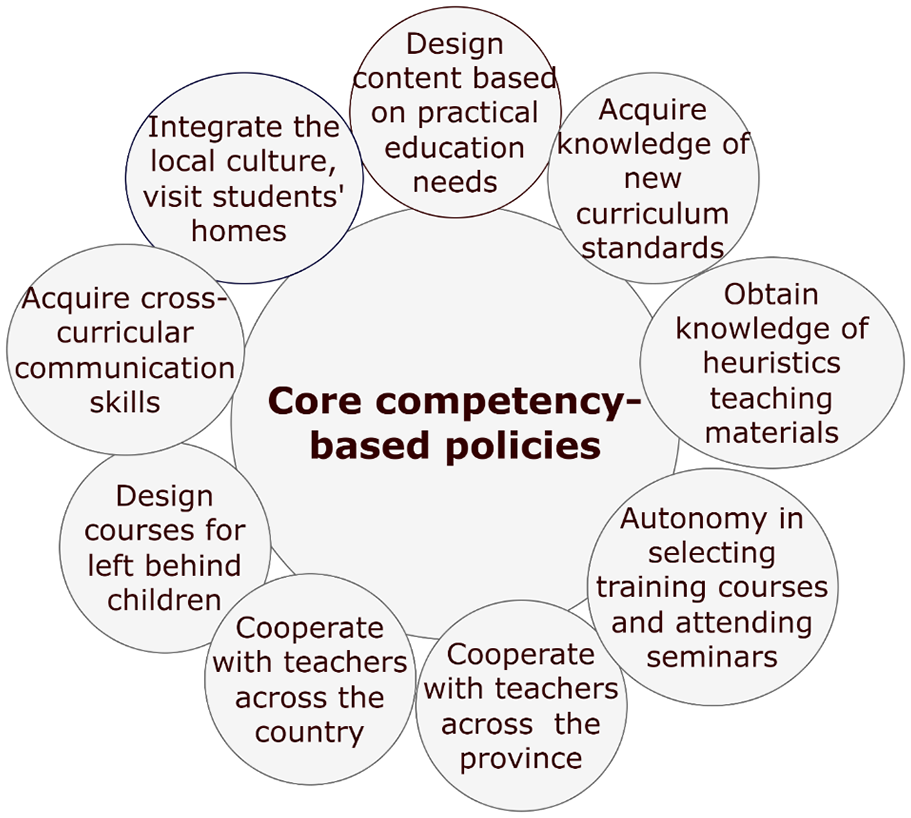
Competencies retained for the study.
In addition to the corpus, the study analyzed data gathered via a questionnaire completed by participants. The questionnaire gathered information regarding participants’ competence training and their perceptions of the training. Data was also obtained from semi-structural interviews with 13 participants to triangulate the questionnaire data. Finally, data was obtained from participants’ work schedules, particularly the number of hours they worked on and off campus, and from the education bureau regarding the workshop types (general competence, specialized competence, online, and offline) organized for rural language teachers. We assumed that the workload of participants has a bearing on their ability to participate in training and even continue to work in rural areas (Liu et al., 2022).
Instruments
The corpus was designed using SketchEngine, a free, open-source corpus design tool extensively used in research (Thomas, 2014). The tools’ Keyword Search feature facilitated the detection and extraction of all occurrences of “core,”“competence,” and “competencies” in the policies. The questionnaire was designed and launched on Freeonlinesurveys (Humagain et al., 2020), a platform for designing, disseminating, and gathering questionnaire information. Furthermore, social media platforms, specifically WeChat and Weibo, were used to disseminate information about the study. The semi-structured interviews were recorded as MP3 audio files and then transcribed into text for analysis using NVivo, a voice-to-text software and thematic analysis tool. Meanwhile, data collected were downloaded or transferred into a Microsoft Excel spreadsheet, then uploaded to SPSS, a data analysis software to compute T-test, correlation analysis, and perform other tests. The data was also presented in graphs, charts, tables, and figures created on Microsoft Excel or Draw.io, a data presentation web-based tool.
Data Analysis
The questionnaire gathered various information from the teachers, including the number of core-competence training sessions/workshops they attended the past 2 years, the usefulness of the training, and how it aligned with their perceived most needed competencies. The data partially provided responses to Research Question 1 (whether the core competencies outlined in government policies aligned with core competencies needed by teachers) and Research Question 2 (the number of training sessions attended and perception thereof). Meanwhile, data on teachers’ workload and semi-structured interviews triangulated the questionnaire data, with interviewees explaining some of the questionnaire data. Meanwhile, thematic analysis was carried out on the transcribed semi-structured interview audios to triangulate data obtained from questionnaire responses. This qualitative data supported some of the findings and provided excerpts in the findings section. Questionnaire data were uploaded to SPSS and computed to obtain the mean and standard deviation of various variables. The range of interpreting the Likert scale mean score was given as follows: 1.0–2.4 = negative, 2.5–3.4 = neutral, and 3.5–5.0 = positive (McLeod, 2019). Furthermore, T-tests and Pearson’s correlation coefficients were calculated to determine the statistical validity of most of the variables.
Ethical Considerations
Ethical approval was obtained from the authors’ institution prior to the study, guaranteeing the anonymity of participants, right to withdraw, full explanation of the research objectives, and adequate securing of data collected. Additionally, participants provided written informed consent before participating.
Findings
Research Question No. 1: Do Government’s Core Competencies Align with Teachers’ Needs?
Participants were asked in the questionnaire to determine (on a 5-point Likert Scale) the extent to which the core competencies outlined in the policies aligned with their perceived professional needs. The results showed that some competencies did not align with participants’ needs.
Participants’ Perceived Usefulness of Government-Identified Competencies
Questionnaire data revealed varying alignment between the nine government-prescribed core competencies and rural English teachers’ perceived professional needs, as measured on a 5-point Likert scale (1 = not useful, 5 = very useful). As shown in Table 1, four competencies—knowledge of new curriculum standards (M = 3.28, SD = 1.23), new heuristics teaching materials (M = 3.26, SD = 1.31), autonomy in selecting training courses and seminars (M = 3.12, SD = 1.33), and designing content based on practical education needs (M = 3.03, SD = 1.17)—had mean scores above 3, indicating moderate alignment with teachers’ needs. The remaining five competencies, including cooperation with teachers from Hunan province (M = 2.74, SD = 1.26), designing courses for left-behind children (M = 2.71, SD = 1.25), integrating local culture (M = 2.60, SD = 1.22), cross-cultural communication skills (M = 2.58, SD = 1.20), and cooperation with teachers nationwide (M = 2.55, SD = 1.32), scored below 3, suggesting limited perceived relevance.
Alignment of Government-Identified Competencies with Participant’s Rural Area Needs.
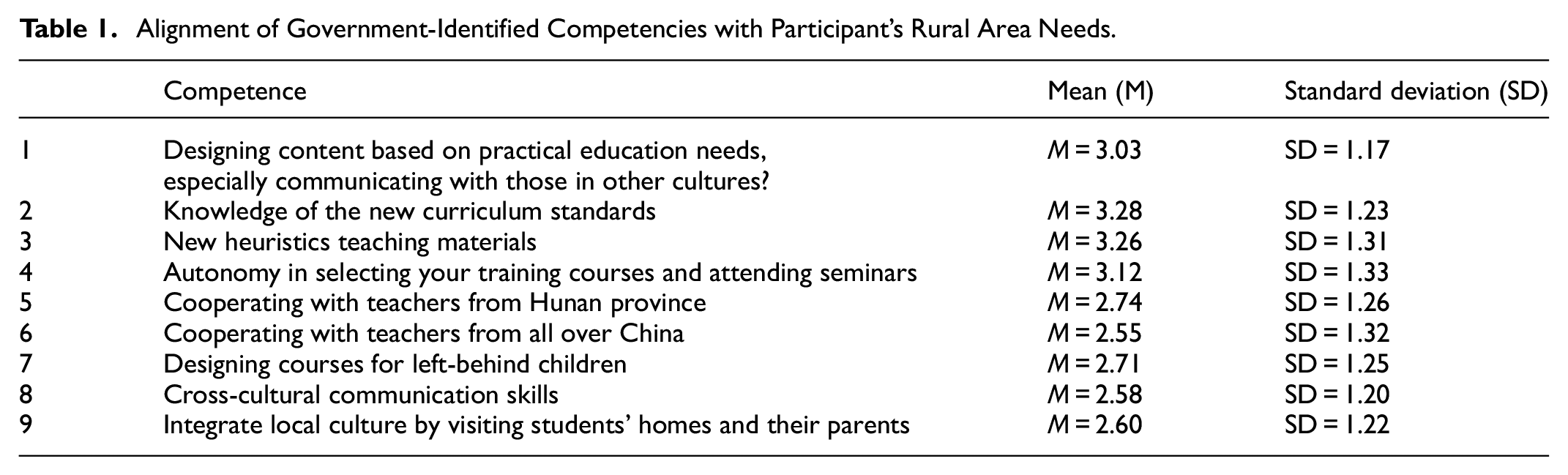
To examine differences in perceived usefulness across competencies, paired-sample T-tests were conducted to compare mean scores between each pair of competencies. Results indicated significant differences (p < .001) for most comparisons, confirming that teachers perceived some competencies as more useful than others. For instance, knowledge of new curriculum standards (M = 3.28) was rated significantly higher than cross-cultural communication skills (M = 2.58, t(195) = 4.12, p < .001). Additionally, Pearson’s correlation coefficients were calculated to assess the relationship between perceived training usefulness and the number of training sessions attended. The correlations were weak and non-significant, ranging from r(196) = .02 (p = .78) for cross-cultural communication to r(196) = .17 (p = .09) for curriculum standards, suggesting that attending more training sessions did not strongly influence perceived competency usefulness. These findings highlight a partial misalignment between government-prescribed competencies and teachers’ practical needs in rural contexts.
We triangulated the findings by asking the participants in the semi-structured interviews whether, after the training, their challenges were resolved. There was consensus that the problems were not significantly addressed. Some of the unresolved issues included dealing with the poor learning habits of rural students, strategies to motivate students in and out of class, defining learning objectives and planning lessons, lack of teaching experience, insufficient knowledge managing the classroom, lack of experience preparing students for the senior high school entrance examination safety issues at school, coping with a tremendously heavy workload, adjusting the content of coursebooks to the needs of rural children, lesson planning, developing as a teacher.
We sought to understand the teachers’ real training needs through semi-structured questionnaires to inform how policies could be tailored to address their needs better. Our findings indicated that most participants preferred training that aligned with their specific needs, which we have categorized into core competencies and sub-competencies, as presented in Table 2 below.
Rural Area Teachers’ Competency Needs.

Question No. 2: What Were EFL Teachers’ Perceptions of and Participation in Competency-Based Training Provided by Local Education Authorities and Schools?
Limited Participation in Competency-Based Training
Analysis of questionnaire data revealed low participation in competency-based training among rural EFL teachers over the past 2 years. As shown in Figure 3, 81.63% (n = 160) of participants attended 1–3 training sessions, while 7.65% (n = 15) attended none, 6.75% (n = 15) attended 4–6, 1.53% (n = 3) attended 7–9, and 1.02% (n = 2) attended over 9 sessions. Figure 3 illustrates a sharp decline in participation beyond 1–3 sessions, indicating limited engagement with available training opportunities. Comparing teacher groups, 82% (n = 101) of junior primary and 84% (n = 61) of senior primary teachers attended 1–3 sessions, with no senior high school teachers attending 7–9 or over 9 sessions, suggesting even lower participation at higher education levels.
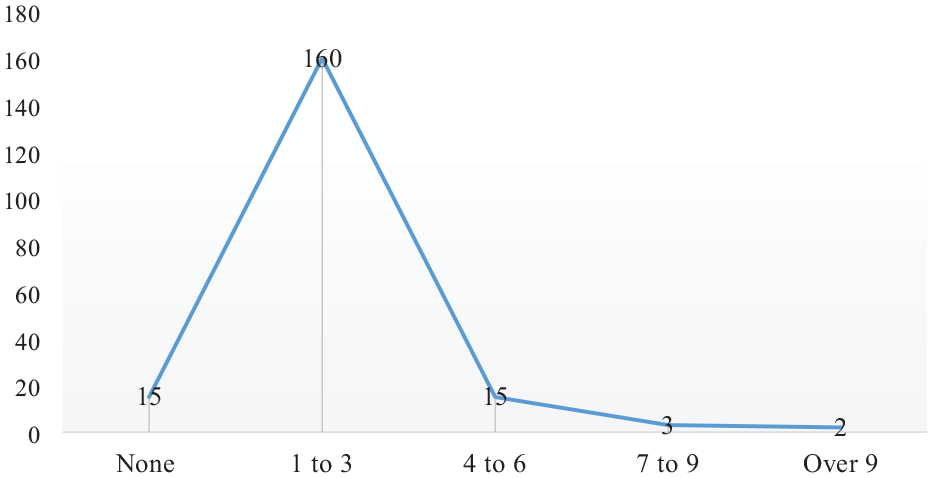
Number of training workshops attended by language teachers.
Our analysis of the two teacher groups indicated that while 82% (n = 101) and 84% (n = 61) junior and senior primary teachers attended 1 to 3 training sessions, no senior high school teacher attended 7 to 9 or over 9 training sessions. A one-sample T-test was computed to determine the mean and standard deviation between the two groups. The results showed a significant difference between the junior primary (M = 2.10, SD = .62) and senior primary (M = 2.00, SD = .41) teachers, with p
To compare participation between junior and senior primary teachers, an independent samples T-test was conducted, revealing a significant difference in mean training sessions attended (junior primary: M = 2.10, SD = 0.62; senior primary: M = 2.00, SD = 0.41; p < .001). This suggests slightly higher engagement among junior primary teachers, though overall participation remains low across both groups. Semi-structured interviews identified barriers to participation, including heavy workloads (mean in-class hours: M = 3.34, SD = 0.59; mean out-of-class hours: M = 3.03, SD = 0.66), with all participants working 5 days a week, reducing availability for weekday seminars. Teachers also perceived general training as less useful and cited inconvenient scheduling as a deterrent.
We confirmed this data by computing the Pearson’s correlation coefficient between the number of training sessions attended and whether they met teachers’ expectations and were perceived to be beneficial. The analysis indicated a low but significant positive correlation between the number of training sessions attended and teachers’ expectations (r(196) = .18, p ≤ .011, significant at the 0.05 level), and between the number of training courses attended and the extent to which they were beneficial (r(196) = .15, p ≤ .034, significant at the 0.05 level).
Preference for Online and Specific Competency-Based Training
Questionnaire data revealed that rural English teachers in Hengyang City predominantly participated in and preferred online competency-based training over other formats. As shown in Figure 4, 75% (n = 147) of participants attended online training, compared to 44.9% (n = 88) for offline training, 29.6% (n = 58) for general competency-based training, and 27.04% (n = 53) for specific competency-based on-site training. Figure 4 highlights a clear preference for online formats, corroborated by semi-structured interviews where 95% (n = 12) of junior high school teachers cited online training’s convenience, flexibility, and ability to multitask (e.g., Participant No. 3: “While participating in the training, I can also sort out things on my computer”). Offline training participants valued opportunities for interaction with trainers and peers.
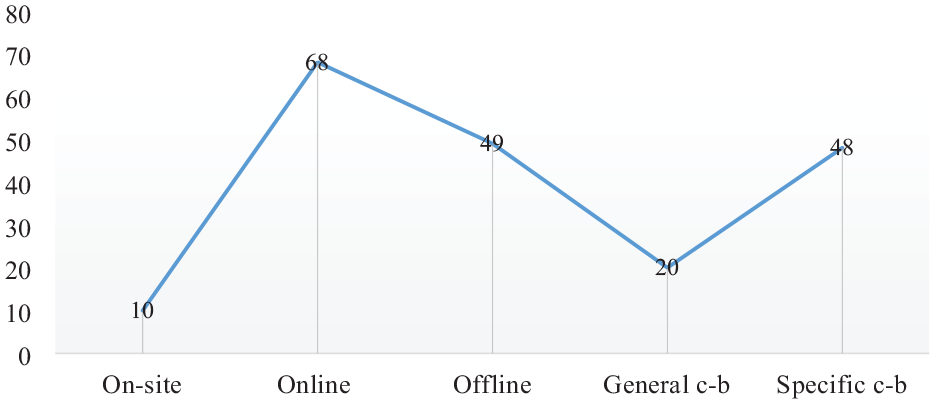
Workshop type attended by participants.
Regarding training type, teachers preferred specific competency-based training over general training. A paired-sample T-test comparing preference ratings (on a binary or proportion-based scale) showed a higher mean for specific training (M = 0.30, SD = 0.46) than general training (M = 0.27, SD = 0.45, p < .001), indicating a statistically significant preference for targeted content. Interviews confirmed this, with 100% of participants noting specific training’s relevance, 92% its usefulness, and 38.5% its novelty compared to general training. For the training format, a paired-sample T-test revealed a stronger preference for online training (M = 0.75, SD = 0.43) over offline training (M = 0.45, SD = 0.45), p < .001, as shown in Figure 5.

Descriptive statistics of workshop types.
Preferences varied between teacher groups, with junior primary teachers showing higher participation in online (38%, n = 46) and specific training (27%, n = 32) compared to senior primary teachers (28%, n = 20; 21%, n = 15, respectively), as shown in Figure 6.

Statistics on participants at various competency-based workshops.
Conversely, 35% (n = 25) of senior primary teachers preferred offline training. An independent samples T-test comparing preference scores (on a 5-point Likert scale) between groups revealed a small but significant difference (junior primary: M = 3.15, SD = 1.32; senior primary: M = 3.12, SD = 1.20, p = .001), suggesting nuanced differences in training format preferences. These findings underscore the need for flexible, targeted training to address rural teachers’ practical constraints and professional needs.
EFL Teachers Perceived the Training to be Moderately Beneficial and Relevant
Teachers were required to indicate whether they found the training beneficial, using a Likert scale from one (not at all beneficial) to five (significantly beneficial). The data indicated that 2.04% (n = 4) believed the training was not at all beneficial. In contrast, 32.7% (n = 64) of the teachers perceived it to be a little beneficial, 15.3% (n = 30) perceived it to be averagely beneficial, 38.3% (n = 75) believed it was very beneficial, and 11.22% (n = 22) benefitted significantly beneficial.
With regard to the extent to which the training met the professional expectations of the teachers, our analysis indicated that 3.5% (n = 7) believed the training did not at all meet their expectations, 26% (n = 51) claimed the training met their expectations a little, 23% (n = 45) believed it averagely met their expectations, 38.3% (n = 75) of the teachers believed the training met their expectations to a large extent, and 8.2%(n = 16) believed the training me their expectations to a significant extent.
Furthermore, we conducted a one-sample T-test to determine the statistical difference between the perception of junior and senior primary teachers. The analysis showed no significant difference in the mean score of the two groups regarding perceptions of the training’s benefits. However, in terms of the extent to which the training met their expectations, we noted statistical differences between senior (M = 3.18, SD = 1.03) and junior (M = 3.22, SD = 1.05, p-value of .001) high school teachers.
We computed the data in SPSS to determine Pearson’s correlation coefficient between the extent to which the training benefited teachers and how it met their expectations. The data showed a high positive and significant correlation, r(196) = .61, p < .001, between the two variables. However, there was a higher positive correlation for junior primary teachers (r(123) = .71, p ≤ .001) than senior primary teachers (r(73) = .57, p ≤ .001) between the two variables. The results indicated differences in expectations between senior and junior primary teachers and confirmed that teacher’s expectations correlate with how much the training benefits them.
Perceived Benefits and Relevance of Competency-Based Training
We sought to understand whether, according to teachers, the training improved their core competencies. In other words, we asked them to rank how training improved each of the nine core competencies laid out in the policy. For easy presentation, we grouped the policies into four categories: curriculum design, curriculum knowledge, and (cross-cultural) collaborative endeavors.
Curriculum Design Competencies
Under curriculum design, we grouped the results of core competencies in designing content based on practical education needs, designing courses for left-behind children, and autonomy in selecting courses and attending seminars. The data indicated that 6.6% (n = 13) believed the training did not at all develop the core competence of designing content based on practical education needs, focusing on communication with those in other cultures. In addition, 27.6% (n = 54), 26% (n = 51), and 10.7% (n = 21) believed that the training prepared them a little, a lot, and significantly, respectively. Meanwhile, 27% (n = 53) of the teachers were neutral, while 2% (n = 4) did not respond to the question. The statistical data (M = 2.96, SD = 1.32) showed a neutral (2.5–3.4.0) perception, meaning that teachers did not believe training developed the core competence under investigation.
With regard to designing courses for left-behind children, most teachers believed the training did not sufficiently develop this core competence. In particular, 21.9% (n = 43) and 8.2% (n = 16) of the teachers believed the training developed their abilities a lot and significantly, respectively. In contrast, 16.3% (n = 32) and 29.1% (n = 57) of the them believed the training did not at all develop and developed a little their ability to design courses for the left-behind children. Meanwhile, 20.9% (n = 41) were neutral and 3.6% (n = 7) did not answer the question. The mean score of the data was M = 2.71, and the standard deviation was SD = 1.25, indicating a neutral perception. This means teachers did not perceive that training improved their ability to design courses for left-behind children.
Furthermore, 29.6% (n = 58) and 13.3% (n = 26) of the teachers believed the training developed their autonomy in selecting their courses and attending seminars core competencies a lot and significantly, respectively. In contrast, 22.5% (n = 44) of the teachers claimed the training developed their core competencies a little, while 4.6% (n = 9) perceived the training did not at all develop these core competencies. Meanwhile, 26% (n = 51) were neutral and 4.1% (n = 8) did not answer the question. The mean score of the data was M = 3.04, and the standard deviation was SD = 1.51, indicating a neutral perception, as outlined in Figure 7.

EFL teachers’ perceptions on the training’s usefulness in developing the curriculum design core competence.
The statistics of this category showed that teachers had a neutral perception of how training improved their knowledge of curriculum design, particularly autonomy in choosing courses and attending seminars, as corroborated by Finding 3.2.1 above.
Curriculum Knowledge Competencies
Under this category, we analyzed data on the knowledge of new curriculum standards and new heuristics teaching materials core competencies. Our analysis indicated that 32.7% (n = 64) and 15.3% (n = 30) of the teachers felt the training developed their knowledge of new curriculum standards a lot and significantly, respectively. In contrast, 23% (n = 45) believed the training increased their knowledge of heuristics teaching materials a little, and 3.6% (n = 7) thought the training did not at all enhance their knowledge of new curriculum standards. Meanwhile, 24% (n = 47) teachers were neutral, and 1.53% (n = 3) did not respond to the question. The mean score was M = 3.26, and the standard deviation was SD = 1.28, indicating a neutral perception (range: 2.5–3.4).
Furthermore, our analysis showed that most teachers, 32.7% (n = 64), believed the training enhanced their core competence in new heuristics teaching materials a lot and significantly (16.3%, n = 32). In contrast, 4.6% (n = 9) and 21.4%(n = 42) of the teachers believed the training did not at all enhance and enhanced a little their core competencies in new heuristics teaching materials. In total, 22.5%(n = 44) of the teachers remained neutral, while 2.6%(n = 5) did not answer the question. Statistically, the mean score was M = 3.22, and the standard deviation was SD = 1.41, meaning teachers had a neutral perception of how training improved competence in curriculum standards and new heuristic teaching materials.
Collaborative and Culture-Based Competencies
In the collaborative culture-based category, we grouped cooperation with teachers in the province, from the country, cultural communication, and integrating the local culture by visiting students’ homes. This category, we presumed, focused on working together and encouraging the cultural communication core competencies. Our analysis indicated that 19.4% (n = 38) and 9.7% (n = 19) of the teachers believed the training improved their competence in working with teachers from the province a lot and significantly, respectively. In contrast, 26.6% (n = 52) of the teachers believed the training enhanced this core competence a little, while 16.3% (n = 32) thought the training did not at all enhance this core competence. Meanwhile, 24.5% (n = 48) of the teachers remained neutral and 3.6% (n = 7) did not answer the question. Statistically, the mean score was M = 2.72, and the standard deviation was SD = 1.31, indicating a neutral perception of the impact of training.
With regard to collaborating with teachers from the country, the study found that 18.4% (n = 36) and 8.7% (n = 17) of the teachers believed the training enhanced this core competence a lot and significantly, and 18.9% (n = 37) remained neutral. In contrast, 25% (n = 49) and 25.5% (n = 50) believed the training did not at all enhance and enhanced a little their competence in working collaboratively with teachers across the country. Seven teachers (3.6%) did not answer the question. The mean score was M = 2.53, and the standard deviation was SD = 1.36, indicating a neutral perception of how training improved the ability of rural area teachers to collaborate with their peers nationwide.
Furthermore, concerning developing teachers’ cross-cultural communication core competencies, our analysis indicated that 20.4% (n = 40) and 28.6% (n = 56) of the teachers believed the training did not at all enhance, and enhance a little their core competence, respectively. Meanwhile, 22.5% (n = 44) of them remained neutral, while 16.3% (n = 32) and 7.7% (n = 15) believed the training enhanced their core competence a lot and significantly, respectively. Nine (4.6%) teachers did not answer the question. Statistically, the mean score was M = 2.58 while the standard deviation was SD = 1.20, slightly over average.
The data concerning the core competence of integrating the local culture into the curriculum by visiting students’ homes showed that 19.9% (n = 39) and 29.1% (n = 57) believed the training did not at all enhance, and enhanced a little their competence. In contrast, 15.8% (n = 31) and 8.7% (n = 17) of the participants believed the training enhanced their competence a lot and significantly, respectively. In contrast, 22.5% (n = 44) of the teachers remained neutral, while 4.1% (n = 8) did not answer the question. Statistically, the mean score was M = 2.60, and the standard deviation was SD = 1.22, indicating a neutral perception of the impact of training.
The statistical data of the four variables under the collaborative and culture-based competencies have been summarized in Figure 8 below.

EFL teachers’ perceptions of the training’s ability to improve their cultural communication and local culture integration core competencies.
The mean scores indicated that teachers’ perceptions of how training improved their collaborative and cross-cultural competencies were neutral (M = 2.5–3.4), idem for the curriculum design and curriculum knowledge competencies.
Discussion
The study’s findings indicate that the competency-based training of rural area teachers does not necessarily align with the specific needs of the teachers, which, to a significant extent, do not align with the national language policy. The study found that teachers’ needs significantly differed from those foregrounded in the language policy. It was also evident from the study that the competency-based policies and training workshops did not consider language teachers’ specific conditions, including workload, the classes they teach (levels), their teaching experience, and the realities of the rural setting. Consequently, most teachers attended a few training workshops (1–3), did not perceive the training to be particularly beneficial, and did not believe they enhanced their competencies. The study corroborated the findings of related competency-based investigations outlining the non-alignment of language policies and realities on the field, the conditions of teachers, and inadequate policy implementation (Gill, 2006; Hopkins, 2016; Hornberger, 2002; Lewis, 2019; Wang, 2008).
The findings of this study bridge critical research gaps in rural English teacher training by providing empirical evidence on competency-based training alignment and teacher needs in rural areas around Hengyang city. The findings address the lack of detailed pathways for competency development (Herizal et al., 2023) by identifying specific teacher needs, such as textbook modification and student motivation strategies, that inform scalable training solutions. It tackles the gap in policy-practice alignment (Li et al., 2020) by revealing that only four of nine government-prescribed competencies align with teachers’ needs, highlighting the need for context-specific policies. The focus on left-behind children and cultural diversity addresses the understudied rural-specific contexts (Wang, 2016), while neutral perceptions of CEFR-related competencies confirm its limited applicability in rural settings (Glaesser, 2019), guiding tailored training frameworks.
This study’s findings reveal partial alignment between government-prescribed competencies and rural English teachers’ needs, with implications for the Common European Framework of Reference for Languages (CEFR) in Hunan’s rural contexts. Teachers rated CEFR-related competencies like cross-cultural communication and local culture integration as less useful, supporting critiques of CEFR’s broad intercultural components in resource-scarce settings (Glaesser, 2019). The preference for online and specific training suggests CEFR’s standards could be adapted into targeted, digital modules focusing on practical skills like textbook modification for left-behind children. Future training policies should refine CEFR’s descriptors to address rural challenges, enhancing alignment with teachers’ needs and bridging urban-rural educational divides.
The findings have far-reaching implications for implementing competency-based policies in rural areas, especially where left-behind children and teachers are recruited en masse to meet surging demand. First, language policies should follow a bottom-up structure where the needs of the teachers and learners are taken into consideration. Given that rural areas are characteristically different from urban areas, there is a need for different (sub)policies targeting these educational settings. For instance, competency-based policies should be directed towards left-behind children, teachers with minimal pedagogical knowledge, textbooks, and strategies to motivate children to learn. Policies should be preceded by an in-depth investigation of learner and teacher needs or implemented based on the conditions of students and teachers in specific rural areas. That also means a policy implementation structure that reflects the needs of rural teachers and students (see Figure 9) must be established.

Policy implementation structure for rural areas.
The proposed structure consists of developing various departments or divisions at the local level to facilitate the implementation of national-level policies. Therefore, we suggest the creation of three divisions at the local level (curriculum adjustment and implementation, strategic planning and research, and training). The divisions need to work together to ensure that policies are tailored to the specific needs of local communities.
The Strategic Planning and Research Division researches the needs of teachers, students, and parents and submits the findings to the Curriculum Adjustment Implementation and Training Division. This division modifies the curriculum based on the findings and oversees its implementation. For its part, the training department organizes training considering any curriculum modifications based on the findings of the strategic planning and research division on the needs of teachers, students, and parents. Training should also be provided on teachers’ self-development, career advancement, and coping with several challenges, including stress, heavy workload, and time management. The training division may also consider setting up mobile training units to visit local schools and train teachers based on their availability.
We argue that such a structure will ensure that core competencies outlined in government policies are implemented, albeit slightly modified, to reflect the realities of each rural setting. In particular, it will ensure that competency-based training is enhanced at the local level within a functional structural framework. Furthermore, the structure will ensure that the needs of the rural area teachers and students are met via specifically customized training models.
Conclusion
This study evaluated how competency-based language policies and training align with the needs and realities of language teachers in rural areas. Taking teachers in the suburbs of Henyang in Hunan Province, China, the authors investigated the impact of national-level competency-based language policies and rural and school-level training workshops on the competencies of 196 language teachers. Our findings indicated that national-level competency-based policies did not align with the needs of rural area language teachers to a significant extent. In terms of competency-based training provided, the findings showed that most teachers attended between one and three training workshops and preferred online and specific competency-based training. There were also differences in the needs of junior and senior primary school teachers. Finally, teachers perceived the training moderately improved the competencies outlined in the policies.
We proposed a different organizational structure for implementing competency-based language policies based on the findings. The structure allows for customizing national policies based on rural area realities. According to the structure, policies are issued by the education authority at the national level. However, at the local levels, three structures are set up to implement the policies: a curriculum adjustment and implementation division, a strategic planning and research division, and a training division. The strategic planning and research division investigates the needs of teachers, parents, and students and forwards their findings to the curriculum adjustment and implementation division, which adapts the policies to the needs of the rural area teachers. The modified policies are then transmitted to the training division, which organizes training workshops for teachers or sets up mobile training units that provide customized training in specific local area schools. Such a structure, we believe, can significantly align the policies and training with the needs of rural area language teachers.
Limitations
This study has several limitations that warrant consideration. First, its focus on rural English teachers in Hengyang City, Hunan, restricts generalizability to other rural regions with distinct linguistic and cultural contexts, such as varying proportions of left-behind children or ethnic minorities. Second, reliance on self-reported questionnaires and a small interview sample may introduce response bias and limit the depth of qualitative insights into rural-specific needs. Third, the cross-sectional design limits our insights into the long-term impacts of training on teacher competencies or student outcomes. Fifth, the study’s limited engagement with the CEFR framework, despite the low perceived usefulness of related competencies like cross-cultural communication, restricts contributions to evaluating its applicability in rural settings. Fifth, external factors like school infrastructure or parental involvement, noted as critical in rural contexts, are underexplored, potentially overlooking important barriers to training effectiveness. Future research should address these through broader, longitudinal, and mixed-methods approaches to enhance CEFR-aligned training for rural teachers.
Footnotes

Ethical Considerations
This study was conducted in accordance with the guidelines of the Helsinki Declaration and the ethical requirements of Hengyang Normal University. Ethical approval was obtained from the College of Foreign Languages (Approval No. HNUCFL202330091, of Sept. 30, 2023). Institutional ethical approval was obtained for this study, which was conducted according to the guidelines of the Helsinki Declaration.
Consent to Participate
Informed consent was obtained from all human participants of this study. These included teachers and education authorities who provided the data analyzed in this study. Measures were taken to protect the privacy and confidentiality of all research participants.
Funding
The author(s) disclosed receipt of the following financial support for the research, authorship, and/or publication of this article: This paper was funded under the framework of the Higher Education Teaching Reform Projects in Hunan Province titled “Research and Practice on the Path of ‘UGS’ Educating Teachers under the Background of Rural Revitalization” (Project number: HNJG-2021-0159).
Declaration of Conflicting Interests
The author(s) declared no potential conflicts of interest with respect to the research, authorship, and/or publication of this article.
Data Availability Statement
The datasets generated during and/or analyzed during the current study are available from the corresponding author on reasonable request.