




Abstract
This research focuses on the use of digital technologies and platforms to give a detailed evaluation of the potential and problems connected with teleworking during the COVID-19 period. We gained insights into the teleworking experience by using user-generated content (UGC) from “X” (n = 216,485) and used data mining methods such as sentiment analysis, topic modeling, and textual analysis. Based on our research, we determined that there are a total of 12 opportunities and four challenges that are associated with the use of technological advancements and online platforms. We discovered that people had a generally favorable attitude toward environmental advantages, work-life balance, productivity, flexible work arrangements, the future of work, and remote collaboration technologies. On the other hand, issues pertaining to mental health, time management, regulations regarding remote work, company culture, and social advantages were seen unfavorably. It turned out that technology was an uncontroversial subject. This study fills a research vacuum and gives useful insights into the teleworking scene during the COVID-19 period by identifying key themes and investigating the attitudes of users.
Plain language summary
This study looked at what people on Twitter said about working from home because of COVID-19, analyzing over 200,000 tweets. By studying these tweets, researchers found out what’s working well and what’s not with teleworking. They discovered twelve good things, like helping the environment, better work-life balance, being more productive, having flexible schedules, thoughts on the future of work, and using tech to work together even when far apart. However, there were four main problems: stress and mental health issues, managing time, rules about working from home, and keeping a company’s culture and social connections strong. Technology itself wasn’t seen as a problem. This research helps us understand how teleworking went during COVID-19, showing both its benefits and challenges.
Introduction
The COVID-19 pandemic has significantly transformed organizational operations and individual work practices, with teleworking becoming a dominant mode of work (Belzunegui-Eraso & Erro-Garcés, 2020). This shift has been supported by rapid advancements in digital technologies, which enable effective communication and collaboration across geographical distances (Tokarchuk et al., 2021). As we transition into a post-pandemic era, it is essential for organizations to understand the challenges and implications of remote work on employee sentiments to adapt successfully to this new landscape (Elbaz et al., 2022).
While there is a growing body of research on teleworking, there remains a gap in understanding the real-time sentiments of remote workers, especially as expressed on platforms like “X.” Previous studies have focused primarily on the benefits and challenges of remote work, such as increased flexibility, reduced commute time, and work-life balance issues (Chatterjee et al., 2022; Toscano & Zappalà, 2020). However, limited research has been conducted on how digital technologies shape these sentiments and the broader socio-cultural impacts of teleworking, particularly during and after the COVID-19 pandemic.
Despite the increased prevalence of teleworking, there is a lack of understanding regarding how digital technologies influence remote workers’ sentiments in real-time, particularly as expressed on social media platforms like “X.” This gap in knowledge is critical as it limits the ability of organizations to effectively manage remote workforces and address emerging challenges associated with teleworking.
This study aims to fill this gap by exploring the multifaceted implications of teleworking during the COVID-19 era, with a specific focus on sentiments expressed by “X” users. The objectives of this study are:
To identify the primary opportunities and challenges associated with teleworking during the COVID-19 era, as expressed by “X” users.
To investigate the role of digital technologies and platforms in shaping the attitudes of remote workers.
To uncover prominent themes and topics related to teleworking and digital technology usage in the context of remote work.
To analyze trends and patterns in users’ sentiments over time to understand the evolving preferences, expectations, and concerns of remote workers.
To provide insights for organizations and policymakers to develop strategies that address the challenges and capitalize on the opportunities of teleworking in a post-pandemic world.
Despite the extensive research on remote work (Balushi et al., 2022; Galanti et al., 2021; Rañeses et al., 2022), there is a notable lack of studies that analyze real-time user-generated content (UGC) to understand teleworking experiences, particularly on platforms like “X.” This study contributes to the literature by offering a distinctive viewpoint through the analysis of over 216,000 tweets, providing valuable insights into the evolving sentiments of remote workers.
The remainder of this paper is organized as follows: Section “Literature Review” reviews the relevant literature, while Section “Methodology” outlines the methodology employed in this study. Section 4 presents the findings, which are subsequently discussed in Section 5 in the context of the results and conclusions. The final section explores both theoretical and practical implications of the findings, addresses the limitations of the study, and suggests potential avenues for future research.
Literature Review
Theoretical Background
Technology Acceptance Model (TAM)
The Technology Acceptance Model (TAM), introduced by Davis in 1986 (Marangunić & Granić, 2015), serves as a foundational pillar in the domain of technology adoption research. This model was developed to address the user acceptance issue of the new technology (Lee et al., 2003). While the central tenets revolve around perceived usefulness and perceived ease of use, the TAM has been extended and modified by numerous researchers to incorporate additional variables like subjective norms, experience, and image, among others (Hirschheim, 2007). These factors collectively determine an individual’s behavioral intention to use a system. Over the years, TAM has proven to be robust in predicting user acceptance across various technologies and user groups (Cheung & Vogel, 2013), making it invaluable for studies like ours that seek to understand the dynamics of technology adoption in rapidly evolving contexts like teleworking.
Job Demand-Resources (JD-R) Model
The Job Demand-Resources (JD-R) model is not just a theoretical construct (Schaufeli, 2017); it reflects the multifaceted nature of work environments. Introduced in the early 2000s, this model has become a comprehensive framework to understand the interplay of various factors affecting employee well-being and performance. Unlike other models that often take a one-size-fits-all approach, the JD-R model is unique in its recognition that different occupations have different work characteristics (Xanthopoulou et al., 2007). Hence, it broadly classifies these characteristics into two categories: job demands and job resources. While job demands can lead to physical and psychological strain if not balanced appropriately, job resources act as buffers, countering the negative effects of high job demands (Llorens et al., 2006). They can also be intrinsic motivators, fostering engagement, learning, and personal growth. The dynamism of the JD-R model makes it apt for studies in evolving work structures, like the shift toward teleworking, where the balance of demand and resources is continually in flux (Ko, 2022).
To comprehensively understand the dynamics of teleworking adoption and its subsequent implications during the COVID-19 pandemic, our study leverages an integrated theoretical framework combining the Technology Acceptance Model (TAM) and the Job Demand-Resources (JD-R) model. The TAM, a seminal model in understanding technology uptake, posits that an individual’s intention to use technology is primarily influenced by its perceived usefulness and perceived ease of use. In the context of teleworking, this model provides valuable insights into the intrinsic and extrinsic motivations driving individuals to utilize digital platforms for remote work. Complementing this, the JD-R model delineates the specific job demands and resources inherent to every occupation. Within the teleworking environment, demand might encompass challenges such as maintaining work-life balance or ensuring effective time management. Simultaneously, resources can be perceived in the form of available technologies, flexible work arrangements, or even organizational support. By synergistically considering both these models, our research aims to present a holistic view of teleworking, capturing the nuances of technology adoption and the subsequent psychological and organizational ramifications.
Teleworking and COVID-19
The COVID-19 pandemic has had a significant impact on the global workforce, prompting organizations to rapidly adopt teleworking or remote work as a means to ensure business continuity and protect employees’ health (Zhang et al., 2021). This shift toward teleworking has been accompanied by a surge of research investigating its implications for employees, organizations, and society at large. This literature review aims to provide an overview of the key findings and themes emerging from recent studies on teleworking in the context of the COVID-19 pandemic.
Benefits of Teleworking during COVID-19, many studies have highlighted the positive outcomes of teleworking during the pandemic, such as increased flexibility, reduced commuting time, and better work-life balance (Palumbo et al., 2022). Teleworking has also been linked to environmental benefits, such as reduced greenhouse gas emissions due to decreased transportation-related activities (O’Brien & Yazdani Aliabadi, 2020). Additionally, teleworking has enabled organizations to maintain productivity levels and, in some cases, even enhance them by reducing office-related distractions and promoting autonomy (Kharvari et al., 2021).
Challenges of Teleworking during COVID-19; despite the benefits, teleworking has introduced several challenges during the pandemic. One major concern is the blurring of boundaries between work and personal life, leading to longer working hours and difficulty in detaching from work (Chung & van der Horst, 2020). Social isolation and loneliness have also been reported as significant challenges faced by remote workers (Adams et al., 2019). Furthermore, remote work has emphasized the digital divide, as employees with limited access to technology or inadequate home working environments face disadvantages (Makino & Delios, 1996).
The mental health and well-being of employees have become a focal point of research during the COVID-19 pandemic (Ghali-Zinoubi et al., 2021). Many studies have reported increased stress, anxiety, and burnout among teleworkers due to factors such as prolonged isolation, work-life balance issues, and job insecurity (Wong et al., 2009). However, some research has also identified factors that can mitigate these negative effects, such as effective communication, social support, and self-care practices (Dedefo et al., 2019).
The role of digital technology in facilitating teleworking has been a central theme in the literature. Studies have explored the adoption and use of various digital tools, such as video conferencing, collaboration platforms, and cloud-based services, to support remote work during the pandemic (Singh et al., 2021). While these tools have been critical for enabling teleworking, they have also introduced challenges, such as technology fatigue, privacy concerns, and cybersecurity risks (Li et al., 2018).
User-Generated Content and Teleworking
User-generated content (UGC) has emerged as a valuable source of information for understanding people’s experiences, opinions, and sentiments in various domains, including teleworking. By analyzing UGC from social media platforms and online forums, researchers can gain insights into the real-life challenges and opportunities associated with remote work. This literature review aims to provide an overview of the key findings and themes emerging from recent studies on user-generated content and teleworking.
Several studies have utilized sentiment analysis techniques to assess the emotions and opinions of remote workers through the analysis of UGC. For instance, Saura, Palacios-Marqués, and Ribeiro-Soriano (2023) conducted a sentiment analysis on “X” data to explore employees’ experiences and sentiments toward teleworking during the COVID-19 pandemic. The study revealed mixed emotions, with positive sentiments relating to work flexibility and negative sentiments linked to work-life balance issues and social isolation. Such findings emphasize the value of UGC in capturing the complexities of teleworking experiences.
Online communities and forums have become important platforms for remote workers to share experiences, seek advice, and offer support. Studies have examined the content and dynamics of these communities to understand the challenges and strategies employed by teleworkers (Rodríguez-Modroño & López-Igual, 2021). For example, Cho et al. (2022) analyzed discussions in a remote work community on Reddit and identified key themes related to work-life balance, productivity, and technology use. By examining UGCs from these communities, researchers can gain a deeper understanding of the issues faced by remote workers and the resources they rely on to navigate their work environment.
UGC has also been used to explore the role of digital technology in teleworking. Studies have analyzed online discussions, product reviews, and social media posts to understand how remote workers adopt and use digital tools to support their work (Ebenso et al., 2021). For example, Balasubramanian et al. (2022) investigated the factors influencing the adoption of digital communication tools among remote workers by analyzing online reviews. Their findings highlighted the importance of ease of use, reliability, and compatibility with other tools in driving technology adoption.
UGC has also been utilized to examine the impact of teleworking on employee engagement. By analyzing social media posts and online forum discussions, researchers can identify factors that contribute to or hinder engagement in remote work settings. For instance, a study by Ho-Dac (2020) analyzed UGC using an online workplace collaboration platform to understand the relationship between remote work and employee engagement. The study found that virtual communication and collaboration, as well as the provision of resources and support, played crucial roles in fostering engagement among remote workers. The primary investigations that have been undertaken up to this point and examined critically in order to investigate the concept of teleworking are outlined in Table 1.
Topics in UGC Related to Teleworking.

Methodology
Data Collection
In this study, data pertaining to telework was collected by mining the “X” Application Programing Interface (API) for a total of 234,279 tweets that contained the hashtags #telework, #teleworking, and #distancework between January 1 and December 25, 2021. These tweets were collected in the same period. To guarantee the accuracy of the dataset, a filtering procedure was utilized, which was written in Python and supported by the Pandas library (McKinney, 2015). More specifically, the dataset was improved by deleting tweets that contained URLs and symbols (Ruhrberg et al., 2018), as well as those with less than 60 characters in total length. Duplicate tweets, retweets (RTs), and tweets that were posted by several individuals but similar to each other were also eliminated. Any visual symbols, photos, or videos connected to the tweets were removed, as the primary emphasis of the investigation was not on multimedia components. The final sample, consisting of 216,485 telework-related tweets, was evaluated in order to acquire insights into the potential and problems associated with teleworking.
Data Preprocessing
Before analyzing the tweets, the dataset underwent preprocessing to remove irrelevant information and improve the quality of the data. This process included:
Removing retweets, as they often duplicate content and skew the analysis.
Removing URLs, mentions, hashtags, and special characters, which do not contribute to sentiment analysis.
Converting all text to lowercase for consistency.
Tokenizing the text into words and applying lemmatization to reduce words to their base form.
Sentiment Analysis
Various data-mining algorithms may be employed to classify textual data based on the emotions communicated within the content of the text. TextBlob, a well-respected approach, was created within the Natural Language Toolkit (NLTK) and Pattern frameworks (Loper & Bird, 2002) and was used in this research. Adherence to the principles proposed by Bermingham and Smeaton was maintained in order to increase the likelihood of obtaining high-quality findings. Throughout the investigation, polarity values ranged from −1 to 1, while subjectivity values fluctuated between 0 and 1.
For training the algorithm, a set of 846 manually categorized text inputs was constructed from the sample of tweets. As a result, the algorithm could comprehend the emotions and carry out the machine learning process to classify the remaining portion of the sample. No comparison was made between the results of the classification and training phases of the algorithm when conducted independently. Subsequently, the entire sample was divided into equally sized parts. Classification experiments were carried out using the outcomes of the 846 inputs to reduce the impact of bias and enhance the precision of the sentiment analysis.
A procedure for categorizing inputs in lexical words was also devised by us before we could determine the accuracy of the final result. This procedure took into account the capabilities of the NLP and LDA software.
Thematic Analysis
To uncover the prominent themes and topics related to teleworking and digital technology use, we conducted a qualitative thematic analysis of the tweets. This process involved:
Reading and rereading the tweets to familiarize ourselves with the content.
Generating initial codes to describe the content of the tweets (e.g., work-life balance, communication, technology issues).
Grouping the codes into broader themes (e.g., opportunities, challenges, and role of technology).
Reviewing and refining the themes to ensure they accurately represent the data.
Data Visualization and Analysis
Finally, the results of the sentiment analysis and thematic analysis were visualized using charts and graphs to identify trends, patterns, and relationships in the data. This included comparing the sentiment scores over time, examining the distribution of sentiments across different themes, and exploring the relationships between technology use and sentiment.
By combining quantitative and qualitative approaches, this study offers a comprehensive understanding of the impact of teleworking on “X” users’ sentiments during the COVID-19 era, providing insights into the opportunities, challenges, and role of digital technologies in shaping remote work experiences.
Topic Modeling with LDA
Topic modeling is a widely used unsupervised machine learning technique that aims to identify underlying topics or themes present within large volumes of text data. Latent Dirichlet Allocation (LDA) is one of the most popular topic modeling algorithms, which was first introduced by Shi (2020). LDA is a generative probabilistic model that assumes that documents are composed of multiple topics and that each topic is a distribution of words.
LDA assumes that documents in a corpus are generated through a two-step process. First, a topic distribution is sampled for each document from a Dirichlet distribution. Then, for each word in the document, a topic is sampled from the document’s topic distribution, and a word is sampled from the corresponding topic’s word distribution. By applying LDA, researchers can uncover the latent structure of topics present in the text data and estimate the topic proportions for each document (Ozyurt & Akcayol, 2021).
LDA has been employed across various disciplines to analyze large text corpora, such as news articles, scientific papers, and social media posts. For example, LDA has been used to explore the thematic structure of scientific publications (Chipidza et al., 2022) and to identify trends in news coverage over time (Liu et al., 2021). In the context of social media, LDA has been applied to uncover the topics discussed by users on platforms like “X” and Reddit (Tadesse et al., 2019).
Before applying LDA, text data typically undergo preprocessing steps, such as tokenization, stopword removal, and stemming or lemmatization, to improve the quality and consistency of the data. Additionally, researchers need to determine the optimal number of topics (k) for the LDA model. This can be achieved through methods like the elbow method, perplexity analysis, or by using topic coherence measures (Huang et al., 2021).
Results
Sentiment Analysis Results
In this section of the article, we discuss the results obtained by integrating TextBlob with various machine learning algorithms, including LR, DT, RF, SVM, KNN, and NB. Accuracy serves as a metric to evaluate the effectiveness of a machine learning model, or in our case, a model trained to conduct sentiment analysis. Throughout artificial intelligence research, accuracy assessment has been widely applied to models. Consequently, the statistical validity of the sentiment analysis model’s outcomes is directly related to the accuracy score, which should ideally be as high as possible.
In the current investigation, the KNN model variation no. 6 (0.8436) and model variation no. 14 were shown to have the best accuracy (0.8413). The two numbers 0.7718 and 0.7645 were the greatest levels of accuracy for Naive Bayes. In terms of the support vector machine, the results that corresponded to the maximum accuracy were 0.7649 and 0.7648 respectively. When it came to random forest, the findings with the best accuracy corresponded to 0.6826 and 0.6496 respectively. In the case of logistic regression, the two numbers 0.6859 and 0.6741 represented the greatest levels of accuracy. Finally, the accuracy values for the Decision tree came in at 0.7436 and 0.7269, respectively. A rundown of the findings from the experiments is provided in Table 2, which can be seen here.
TextBlob Analysis by Experiment.
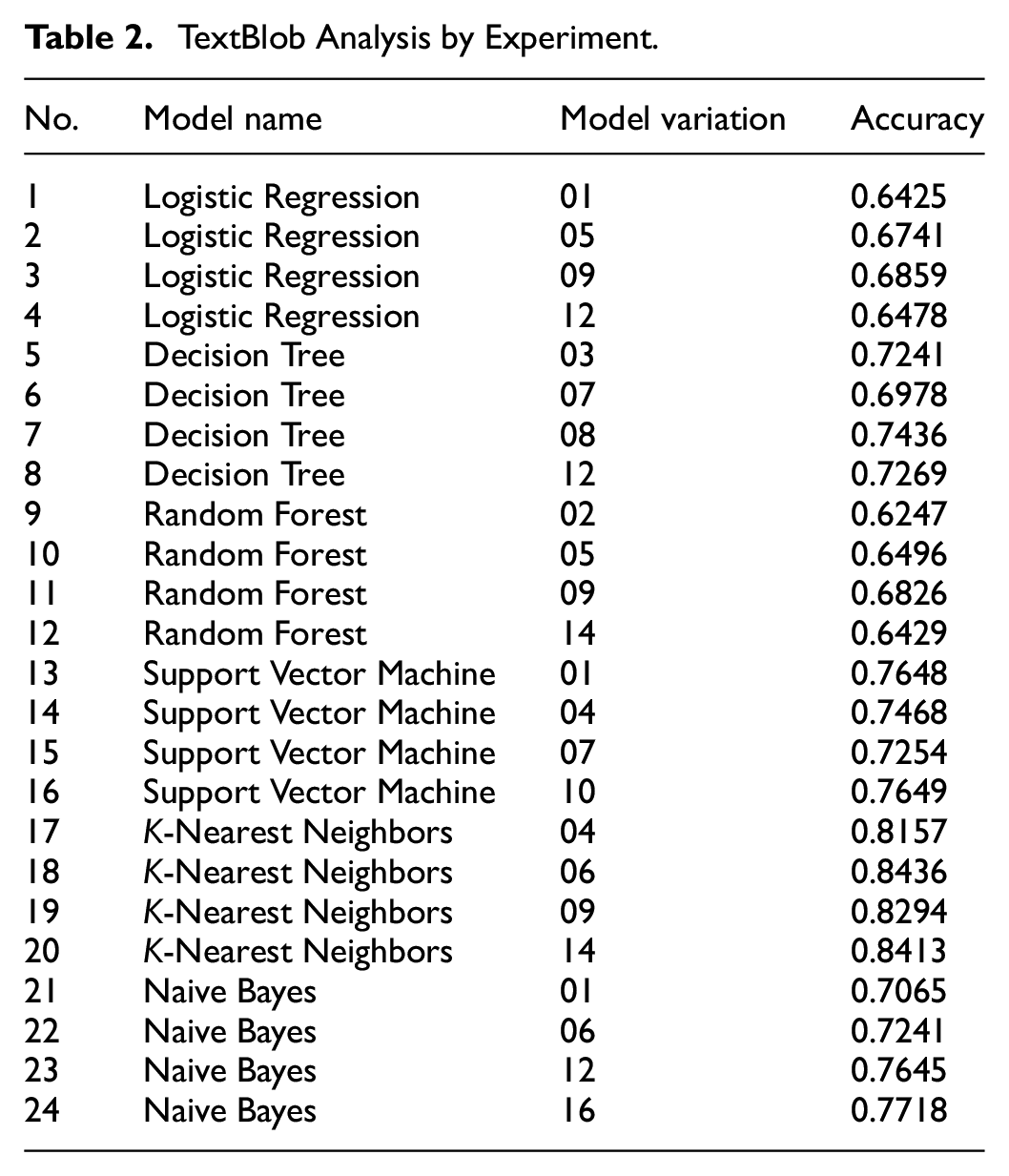
In addition, the findings of our sentiment analysis have been compiled in Table 3, which provides a summary of the short scores in respect to the model. While doing research, it is common practice to evaluate the findings of a number of distinct statistical models side by side in order to maximize the usefulness of the findings. In Table 3, the names of the procedures are shown together with the scores that correspond to them. As can be seen in Table 3, the methods that got the best results were K-Nearest Neighbors and Naive Bayes, with scores of 0.84 and 0.77, respectively.
RQ1 Conclusion: Our analysis of “X” data reveals a mix of both positive and negative sentiments toward teleworking during the COVID-19 era. This indicates that sentiments are varied, making RQ1 only partially supported.
Brief Scores of TextBlob Analysis.

In addition to this, important indicators that indicate the overall efficacy of the computed classification in terms of categorizing sentiments can be found in Table 4, which can be found here. These factors are relevant to the classification of feelings in general. For each sentiment, categorization reports are made available, and within each report, the accuracy, recall, F1-score, and support variables act as subcategories. The accuracy metric is a variable that assesses and represents the overall quality of the machine learning model in respect to the tasks that have been defined. It does this by comparing the model’s performance on each of the tasks to its own previous results. Moreover, the F1-score variable is used as a metric that combines recall and precision variables into a single number that reflects both factors. This single number is applied in the analysis of the data. The combination of the two factors has resulted in this number being calculated. In order to arrive at this number, the results of the two independent variables were combined into a single one. Researchers gain a lot from the F1-score variable since it assists them in comprehending the comparison between two measures, which enables them to choose which combinations are the most suitable. The support variable is a good indicator of how likely a model is to provide correct projections.
Classification Report of Machine Learning Model Results.

Topic-Modeling Results
In this specific investigation, we were cautious to select only those topics that were directly relevant to the central question we aimed to address, disregarding all other potential topics. The identified topics can be found in Tables 5 to 8, accompanied by their respective descriptions, sentiments, Keyness, and p-values. Table 5 outlines and characterizes the topics classified as technological in the context of teleworking using digital technologies and platforms. This table is embedded within the framework proposed for the research objectives. As for the topics that can be perceived as opportunities, the table is situated within the scope of the research goals.
Topic Modeling Results (Technological).

Topic Modeling Results (Psychological).

Topic Modeling Results (Organizational).

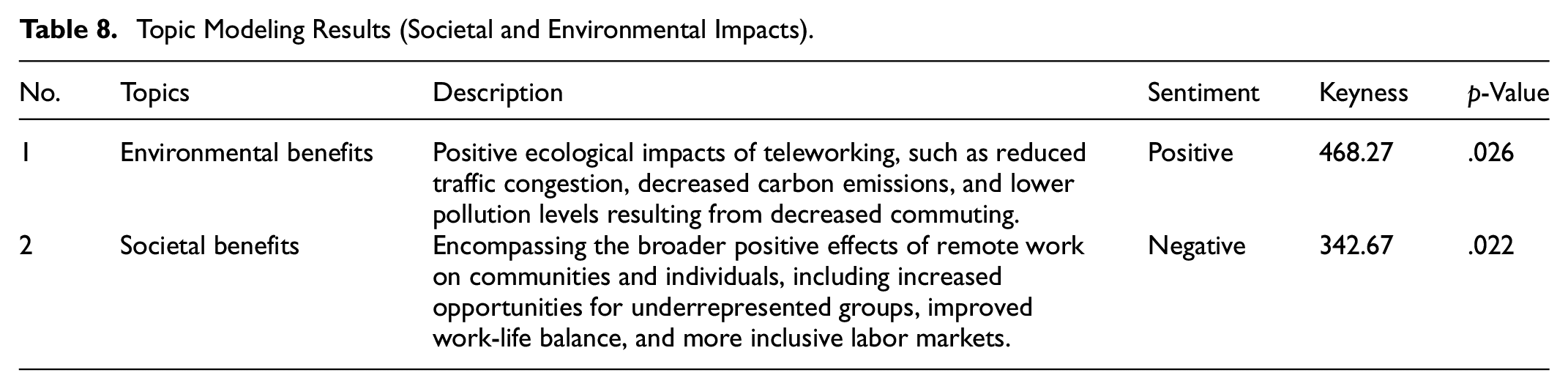
Topic Modeling Results (Societal and Environmental Impacts).
Noteworthy is the fact that the subject area with the greatest p-value (.054) is connected to technology, namely, the digital solutions that provide efficient communication and cooperation among businesses. The next subject, Remote Collaboration Tools (p = .041), is about project management for remote workers and how it might influence the teleworking experience in a variety of different ways.
Table 6 presents the topics that correspond to the possible psychological factors for teleworking using digital technologies and platforms, their descriptions in relation to the objectives of the study, and the sentiments of each topic. In a similar vein, this table presents the topics that correspond to the possible psychological factors for teleworking using digital technologies and platforms. In particular, the issue that was found to be the most important was “Work life balance” (p = .038), which encompasses the difficulties and solutions associated with preserving a good equilibrium. The second subject, which was Mental health (p = .034), focused on addressing problems related to mental well-being in an environment of remote work. Productivity was the third subject, and it had a significance level of .031. In the context of remote work, productivity refers to the efficacy and efficiency of workers’ output when they are working at home or outside the typical office setting. Lastly, time management (p = .015) refers to the strategies and practices that remote employees use in order to make the most efficient use of their available time, so ensuring that their work is finished in a timely and well-organized manner.
In a similar vein, Table 7 displays the related identified subjects, their descriptions in connection with the goals of the research, and the attitudes of each topic in terms of probable organizational considerations for organizations that use teleworking. To be more specific, the most important subject was Remote work policies (p = .045), which include the guidelines and practices set by firms to assist and manage people working remotely. These guidelines and practices often influence job satisfaction and performance. The second topic was Organizational culture (p = .026), which refers to the shared values, beliefs, and norms that shape the behavior of employees within a company, and how these cultural aspects adapt to and support teleworking arrangements. This topic was found to be significantly more significant than the first topic. The third issue was Flexible work arrangements (p = .018), which comprise a variety of non-traditional work hours and locations. These arrangements aim to provide workers with more autonomy and control over their work environment, as well as to promote a workforce that is more flexible. Lastly, “Future of work” (p = .012) is a term that refers to the ever-changing tendencies, technologies, and practices that are redefining the employment environment. This includes the increasing frequency of remote work and the repercussions that it may have.
RQ3 Conclusion: Our data showcases a variety of themes. While the challenges of teleworking are frequently discussed, there’s a significant representation of tweets highlighting the opportunities and benefits of teleworking. This makes the results for RQ3 inconclusive.
It is noteworthy that the topic area with the highest p-value (.026) is connected to Environmental Benefits, which refers to the positive ecological impact of teleworking, such as reduced traffic congestion, decreased carbon emissions, and lower pollution levels as a result of decreased commuting. Teleworking has these effects. The next topic, Societal Advantages (p = .022), refers to the wider beneficial benefits of remote work on communities as well as people. Some examples of these effects include enhanced opportunities for underrepresented groups, better work-life balance, and more inclusive labor markets.
Textual Analysis Results
Textual analysis may be utilized, as stated by Gandía and Huguet (2021), to sift through user-generated content (UGC) databases in search of information and insights. One may obtain the essential information for the definition and formulation of the theory in relation to the study goals using this method. This method is based on the relevance, frequency, and location of words in a database. The textual analysis was the last phase of the analytical approach that was established and implemented on a database that included 216.485 tweets in the current investigation. We calculated the frequency (Freq) of the terms that were used across the whole UGC database so that we could derive useful information. Words may be organized into nodes, which are collections of word clusters that make it simpler for a researcher to comprehend the connections between concepts, depending on the method and software that is used (Loughran & McDonald, 2015). Since they are grouped together this way, the concepts and meanings associated with each node may be researched in more depth. A cluster of words that derives an explanation toward a research subject is referred to as a node in this article. Single research may have many nodes, each of which acts as a hub for the categorization and grouping of the various concepts and keywords acquired from the sample. On the basis of these findings, new knowledge will be developed in the end by conceptualizing insights in relation to the theory that already exists (Park et al., 2012). Pandas GroupBy in Python (McKinney, 2015) was the programing language that we used in this investigation to create our textual analysis.
RQ2 Conclusion: The role of digital technologies in shaping sentiment is evident. Mentions of certain technologies correlate with positive sentiments, while others correlate with negative sentiments. This provides strong support for RQ2.
In the methodology section, it was indicated that CATA and NLP research, in addition to doing textual analysis, would generally investigate n-grams in order to acquire additional insights. In light of this, following Schonlau et al. (2017), an analysis was performed on the primary n-grams that were present in the text pieces that were then segmented by subject and attitudes (Quattoni & Carreras, 2019). In a nutshell, an n-gram model forecasts the appearance of a word based only on the word that came before it (because n minus one equals 1).
After dividing each subject into word nodes, we next counted the total number of words associated with each topic and determined the number of times each keyword appeared inside the word nodes itself. We are able to determine the relevance of each node or collection of keywords in connection to the themes and attitudes that were conveyed by analyzing the frequency (Freq) and weighted frequency (WP) variables. Word nodes may be single words or compound words, and synonyms can be legitimate keywords for assessing the topic’s composition and overall average relevance within the database. It is important to note that word nodes can be single words or compound words.
Discussion
As Hosogaya (2021) has indicated, one of the biggest worries for internet users during the COVID-19 epidemic has been the adoption of new technology for teleworking (Hosogaya, 2021). This was proved by the fact that the majority of tweets discussed the topic. Companies and workers alike have been pressured to adopt innovative digital platforms that make it possible for employees to work remotely. According to the research carried out by Kelleher et al. (2022), the COVID-19 epidemic has had a major influence on both the behavior of users and their mental health (Kelleher et al., 2022). As a consequence of this, numerous of these alterations in behavior have been the subject of previous studies published in the scholarly literature (Wei, 2020).
The topic modeling results for technological aspects reveal two key topics. The first topic focuses on technology, referring to the digital solutions that enable effective communication, collaboration, and overall productivity in a remote work setting. The sentiment on this topic is neutral, with a Keynes of 792.15 and a p-value of .054, suggesting that technology is a crucial component in remote work, but its impact may vary depending on the specific tools and their implementation. The second topic covers Remote Collaboration Tools, which include various applications and platforms for communication, project management, and teamwork among remote workers. These tools play a significant role in shaping the teleworking experience in various ways. The sentiment for this topic is positive, with a Keynes of 541.38 and a p-value of .041, indicating that remote collaboration tools are generally perceived as beneficial in facilitating effective remote work and enhancing the overall teleworking experience.
The topic modeling results for psychological aspects reveal four key topics. The first topic focuses on Work-Life Balance, which encompasses the challenges and strategies related to maintaining a healthy equilibrium between professional and personal life. The sentiment for this topic is positive, with a Keynes of 476.57 and a p-value of .038, suggesting that remote work is generally perceived as beneficial for achieving work-life balance. Second topic addresses Mental Health, specifically concerning the well-being of individuals in a remote work setting. The sentiment on this topic is negative, with a Keynes of 412.94 and a p-value of .034, indicating that there may be mental health challenges associated with remote work that require attention and support. Third topic covers productivity in a remote work context, referring to the efficiency and effectiveness of employees’ output while working from home or outside the traditional office environment. The sentiment for this topic is positive, with a Keynes of 409.28 and a p-value of .031, suggesting that remote work is generally viewed as conducive to productivity. Finally, the fourth topic pertains to Time Management, which involves the methods and techniques employed by remote workers to allocate their time optimally, ensuring tasks are completed in a timely and organized manner. The sentiment for this topic is negative, with a Keynes of 397.45 and a p-value of .028, indicating that remote workers may face challenges in managing their time effectively and may require additional support or resources to improve time management skills.
The topic modeling results for organizational aspects reveal four key topics. The first topic focuses on Remote Work Policies, which involve the guidelines and practices implemented by organizations to support and manage employees working remotely. These policies often influence job satisfaction and performance. The sentiment on this topic is negative, with a Keynes of 539.72 and a p-value of .045, suggesting that there may be issues or concerns related to remote work policies that warrant further examination. Second topic addresses Organizational Culture, which refers to the shared values, beliefs, and norms shaping employee behavior within a company and how these cultural aspects adapt to and support teleworking arrangements. The sentiment for this topic is also negative, with a Keynes of 384.76 and a p-value of .026, indicating potential challenges or difficulties in adapting organizational culture to remote work environments. Third topic covers Flexible Work Arrangements, encompassing various non-traditional work schedules and locations that provide employees with greater autonomy and control over their work environment, fostering a more adaptable workforce. The sentiment for this topic is positive, with a Keynes of 269.87 and a p-value of .018, reflecting the general appreciation and benefits of flexible work arrangements. Finally, the fourth topic pertains to the future of work, which refers to the evolving trends, technologies, and practices reshaping the employment landscape, including the growing prevalence and implications of remote work. The sentiment for this topic is positive, with a Keynes of 209.47 and a p-value of .012, suggesting optimism and interest in the ongoing transformations within the world of work.
The topic modeling results for societal and Environmental Impacts reveal two key topics. The first topic focuses on Environmental Benefits, which highlights the positive ecological impact of teleworking. This includes reduced traffic congestion, decreased carbon emissions, and lower pollution levels resulting from decreased commuting. The sentiment for this topic is positive, with a Keynes of 468.27 and a p-value of .026. Second topic, on the other hand, deals with Societal Benefits, which encompass the broader positive effects of remote work on communities and individuals. These benefits include increased opportunities for underrepresented groups, improved work-life balance, and more inclusive labor markets. Interestingly, the sentiment for this topic is negative, with a Keynes of 342.67 and a p-value of .022. This could potentially suggest that there are some challenges or concerns related to the societal benefits of remote work that might need further exploration and analysis.
Table 9 showcases the primary unigrams and bigrams associated with the identified topics under discussion. The analysis revealed that “Technology” was the most frequently discussed term in this area, with a total frequency of 792 (541 occurrences in the left dataset and 251 in the right dataset). This indicates that technology plays a significant role in the context of remote work. Another important aspect is “Remote Collaboration Tools,” with a frequency of 541 (353 in the left dataset and 188 in the right dataset), emphasizing the importance of these tools in facilitating remote work. In the psychological factors domain, “Work-life Balance” emerged as the most prominent topic, with a total frequency of 477 (307 in the left dataset and 170 in the right dataset). This suggests that a striking balance between work and personal life is a major concern in the remote work setting. Other notable topics include “Mental Health” (413 occurrences), “Productivity” (409 occurrences), and “Time Management” (397 occurrences), further illustrating the range of psychological factors affecting remote workers. “Remote Work Policies” were the most frequently mentioned topic in the organizational factors category, with a total frequency of 540 (350 in the left dataset and 190 in the right dataset). This demonstrates the importance of establishing clear remote work policies within organizations. “Organizational Culture” (385 occurrences), “Flexible Work Arrangements” (270 occurrences), and “Future of Work” (209 occurrences) were also significant topics in this area, highlighting the need for organizations to adapt to remote work’s evolving demands and opportunities. Lastly, the analysis showed that “Environmental Benefits” were the most frequently discussed topic in the societal & environmental impact category, with a total frequency of 468 (301 in the left dataset and 167 in the right dataset). This indicates a growing awareness of the positive environmental effects of remote work. “Societal Benefits” (343 occurrences) also emerged as an important topic, suggesting that remote work may have broader implications for society as a whole.
Primary Keywords (n-grams) for Each Identified Topic.

Theoretical Implications
The study of Weinert et al. (2014) showed that the impact of teleworking can result in teleworking-induced stress, which can lead to psychological and behavioral strain. The study found that work overload, work-home conflict, information underload, and social isolation are all factors that contribute to exhaustion due to teleworking. According to their study, exhaustion due to teleworking is the strongest influence factor on discontinuous intention toward teleworking, indicating that employees may not want to continue teleworking if they experience high levels of stress and exhaustion. This suggests that while teleworking can offer many benefits, such as increased flexibility and reduced commuting time, it can also have negative consequences if not managed properly. Employers need to be aware of the potential stressors of teleworking and take steps to address them to ensure that employees can continue to work remotely without experiencing excessive levels of stress and burnout. The study of Catana et al. (2022) assessed the impact of teleworking on the wellbeing and productivity of employees. The study identified five teleworking impact factors: individual and societal factors, organizational and work-related factors, technological factors, social factors at home, and social factors at work. The research identified three clusters based on socio-demographic characteristics, economic descriptors, and employment and teleworking conditions, and tested research questions related to the influence of different teleworking factors on employees’ productivity and wellbeing. The study found that teleworking has a positive impact on employee productivity and wellbeing, with factors such as individual and societal factors, organizational and work-related factors, technological factors, and social factors at home all playing a significant role. Similarly, the research of Anderson et al. (2015) found that employees experienced more job-related positive affective well-being and less job-related negative affective well-being on days when they were teleworking compared to days they were working in the office. Additionally, the study highlighted the importance of individual differences such as openness to experience, rumination, sensation seeking, and social connectedness outside of work, which can determine who benefits more or less from working at home. Overall, the findings of their research suggest that teleworking can have positive impacts on employees’ emotional well-being.
Our study bridges the practical aspects of teleworking sentiments with foundational theories, offering nuanced insights that enrich the theoretical discourse on remote work. By integrating (Lee et al., 2003) the Technology Acceptance Model (TAM) and the Job Demand-Resources (JD-R) model (Bakker & Demerouti, 2017), we unpack the intricate dynamics of technology adoption and the subsequent job-related challenges and resources within the teleworking domain. While TAM has been extensively applied to understand technology adoption (Rauniar et al., 2014), our research contributes by situating this model in the unique context of teleworking during a global pandemic. We highlight how intrinsic and extrinsic motivations drive individuals to embrace digital platforms for remote work, adding layers of complexity to the standard TAM dimensions of perceived usefulness and ease of use. Similarly, while the JD-R model has been pivotal in understanding job demands and resources (Koroglu & Ozmen, 2022), our study nuances this understanding by focusing on teleworking’s unique demands, such as work-life balance, and resources like organizational support and digital tools. Our findings underscore the critical interplay of these demands and resources, especially when the boundaries between work and personal life blur in a remote work setting (Yeo & Li, 2022). In essence, our research not only reaffirms the relevance of these foundational theories but also extends them, providing fresh theoretical insights that capture the evolving nature of work in the digital age (Corrigan & Slomp, 2021). Through the lens of our integrated model, we offer a more holistic view of teleworking, underlining the multifaceted interdependencies of technology adoption, job demands, and resources in shaping remote work experiences.
This study contributes to the existing literature on the effects of teleworking from a different perspective. By combining sentiment analysis and thematic analysis of user-generated content on “X,” this study offers a novel and comprehensive perspective on the opportunities and challenges of teleworking during the COVID-19 pandemic. It expands our understanding of how remote work affects individuals and highlights the role of digital technologies in shaping remote workers’ experiences.
The methodological approach employed in this study, which integrates quantitative sentiment analysis with qualitative thematic analysis, demonstrates the potential of mixed-methods research in understanding complex phenomena such as teleworking. This study contributes to the development and application of sentiment analysis and thematic analysis techniques in the context of remote work and social media data.
By focusing on user-generated content on “X,” this study highlights the value of analyzing social media data to understand the real-world experiences and sentiments of remote workers. It contributes to the growing body of literature on the analysis of user-generated content and its role in informing organizational policies and practices.
The findings of this study emphasize the importance of considering psychological and social factors when studying teleworking. The identification of themes related to mental well-being, work-life balance, and communication emphasizes the need for future research to explore the interplay between remote work, individual experiences, and psychological outcomes.
As the world transitions to a post-pandemic era, this study offers valuable insights into the experiences of remote workers during an unprecedented global event. These insights can inform future research on the long-term effects of teleworking, the evolving role of digital technologies, and the potential for new remote work policies and practices in a post-pandemic world.
Practical Implications
By uncovering the challenges faced by remote workers through sentiment and thematic analysis, organizations can develop targeted strategies to address these issues (Ng et al., 2022). For example, offering support for technology issues, implementing flexible working hours (Jämsen et al., 2022), or providing resources to enhance work-life balance can help mitigate some of the negative sentiments associated with teleworking.
In the ever-evolving landscape of remote work, managers and organizational leaders must stay abreast of the latest findings and best practices to optimize the teleworking experience for their teams. Recent studies underscore the importance of maintaining regular communication, fostering a sense of belonging, and leveraging digital tools to bolster productivity and team cohesion in a remote setting (Yan, 2023). Furthermore, with the rise in mental health concerns among remote workers (Dongarwar et al., 2020), organizations are encouraged to prioritize well-being by offering flexible working hours, regular check-ins, and access to mental health resources. Embracing a more holistic approach, Ahuja and Khamba (2008) emphasize the value of continuous training programs that help employees navigate digital tools efficiently, reducing technological barriers and frustrations. Lastly, as remote work becomes more entrenched, leaders should be proactive in crafting and iterating on remote work policies, ensuring they reflect the changing needs and preferences of their workforce (Harris, 2015). By integrating these contemporary insights, organizations can better position themselves for success in the digital age of work.
The study also highlights the opportunities presented by remote work, such as increased productivity, cost savings, and reduced commuting. Organizations can capitalize on these benefits by implementing and promoting remote work policies, investing in digital tools and platforms, and encouraging a culture that values flexibility and adaptability.
The findings reveal the importance of effective communication and collaboration among remote workers. Organizations can invest in communication tools and platforms that facilitate seamless interaction between team members, provide training on remote communication best practices, and encourage frequent check-ins and virtual team-building activities.
The study emphasizes the impact of teleworking on the mental well-being of employees. Organizations should actively monitor the well-being of remote workers, provide resources for stress management and mental health support, and create a supportive work environment that encourages open conversations about mental health.
As the world moves toward a post-pandemic era, organizations need to reassess their remote work policies and strategies. This study offers valuable insights into the opportunities and challenges of teleworking during the pandemic, which can inform the development of future remote work policies and practices.
Social Implications
The study highlights the challenges remote workers face in maintaining a healthy work-life balance. By raising awareness of these issues, organizations and policymakers can implement initiatives to support remote workers in achieving a balance between their professional and personal lives, ultimately contributing to overall societal well-being.
Our findings underscore several key areas of societal impact:
Work-Life Balance: The challenges and benefits of maintaining a healthy work-life balance in a remote setting are paramount. Teleworking provides flexibility, potentially allowing individuals to cater to personal and family needs better. However, as the boundaries between work and home blur, individuals might struggle with overwork and burnout (Morgan, 2004).
Environmental Impact: The reduced need for daily commuting due to teleworking can lead to notable environmental benefits, including decreased traffic congestion, air pollution, and overall carbon emissions (Bharadwaj et al., 2017). Promoting remote work can significantly contribute to sustainable urban living and reduced environmental footprints.
Workplace Diversity: Telework can potentially democratize the workplace by providing increased opportunities for individuals who might face barriers to traditional office-based work, such as those with disabilities or residing in remote areas (Lishner et al., 1996). This shift can lead to more diverse and inclusive workplaces.
Access to Digital Education: The widespread adoption of digital technologies during the pandemic has not only affected work but also education. This shift can democratize access to education and professional development, benefiting a larger segment of the population (Williamson, 2016).
Community and Urban Development: As more people work remotely, there might be a shift in urban development patterns. Cities may no longer be primarily centered around business districts, leading to a potential reimagining of urban spaces (Nour, 2011).
Economic Implications: A broader adoption of teleworking might lead to reduced overhead costs for businesses while potentially increasing access to global talent pools. However, it might also lead to challenges in monitoring productivity or ensuring cohesive team dynamics (White et al., 2007).
Mental Health Awareness: The study underscores the need for societal awareness of the mental health implications of remote work. As remote work can lead to feelings of isolation or burnout, societal structures, including healthcare systems and community support networks, need to adapt to cater to these emerging challenges (Srivastava et al., 2016).
As teleworking reduces the need for daily commuting, it can help decrease traffic congestion, air pollution, and overall carbon emissions. The insights from this study can help inform policymakers and urban planners on the potential environmental benefits of promoting remote work, leading to more sustainable and eco-friendly cities.
Remote work can potentially increase workplace diversity and inclusivity by providing opportunities for individuals who face barriers to traditional office-based work, such as people with disabilities or those living in rural areas. By understanding the opportunities and challenges of teleworking, organizations can implement policies and practices that foster a more inclusive and diverse workforce.
The widespread adoption of digital technologies during the pandemic has expanded access to online education and professional development opportunities. The findings of this study can help inform the development of remote learning and professional development programs that cater to the needs of remote workers, ultimately contributing to a more educated and skilled workforce.
As the world transitions to a post-pandemic era, this study offers valuable insights into the experiences of remote workers and the role of digital technologies in shaping the future of work. The social implications of this research can inform discussions on the long-term adoption of remote work policies and the potential societal benefits of a more flexible and digitally connected workforce.
Limitations and Future Research
The study’s findings are based on “X” user-generated content, which may not be representative of the entire population of remote workers. Consequently, the generalizability of the results may be limited. Future research could explore remote workers’ sentiments and experiences using other social media platforms or through surveys and interviews to provide a more comprehensive understanding.
This study is conducted within the specific context of the COVID-19 pandemic, which may influence the sentiments and experiences of remote workers. Future research should examine remote work sentiments and experiences beyond the pandemic to understand how these factors evolve in a post-pandemic world.
The study does not explicitly address cross-cultural differences in remote work sentiments and experiences. Future research could investigate how cultural factors influence the opportunities and challenges of teleworking across various countries and regions.
While our study offers insights from “X” users, a potential avenue for research could be the exploration of how cultural contexts influence teleworking sentiments and experiences across different countries and regions. Furthermore, while our study combined the TAM and JD-R models, integrating other relevant theoretical frameworks could offer additional perspectives and deeper insights into the multifaceted phenomenon of teleworking.
The study does not differentiate between various industries and job types, which could significantly influence remote work sentiment and experiences. Future research could explore the impact of teleworking on specific industries or job types to better understand how these factors affect remote work sentiment and experiences.
This study presents a cross-sectional analysis of remote work sentiment during the COVID-19 era. Future research could employ longitudinal analysis to explore how remote work sentiments and experiences change over time and in response to various events and developments.
While the study employs sentiment analysis and thematic analysis, future research could benefit from incorporating additional analytical techniques, such as network analysis or machine learning approaches, to provide a more in-depth understanding of remote work sentiment and experiences.
In conclusion, this study offers valuable insights into the impact of teleworking on “X” users’ sentiments during the COVID-19 era. However, recognizing the study’s limitations can help guide future research to address these gaps and provide a more comprehensive understanding of remote work sentiments and experiences in various contexts, industries, and cultural settings.
Conclusion
In conclusion, this study utilized data mining techniques, such as sentiment analysis, topic modeling, and textual analysis, to explore the opportunities and challenges of teleworking in the context of digital technologies and platforms. By analyzing user-generated content on “X,” we identified a range of topics that were positively, negatively, or neutrally evaluated by users.
Positive topics highlighted the benefits of remote collaboration tools, work-life balance, productivity, flexible work arrangements, the future of work, and environmental advantages. On the other hand, negative topics shed light on challenges related to mental health, time management, remote work policies, organizational culture, and societal benefits. Technology emerged as a neutral topic in our analysis.
These findings contribute to our understanding of how “X” users perceive various aspects of teleworking, both in terms of opportunities and challenges. This knowledge can inform organizations, policymakers, and remote workers as they continue to navigate the evolving landscape of remote work, shaping strategies and practices to optimize the teleworking experience in the digital age. Further research could delve into more specific aspects of these topics or explore the potential regional differences in sentiment and experiences related to teleworking.
Building on these conclusions, it is important to emphasize that the transition to remote work is not a one-size-fits-all solution, and the identified opportunities and challenges may differ across industries, job roles, and individual preferences. As organizations continue to adapt to the post-pandemic era, it is crucial to foster open dialog with employees and stakeholders to better understand their unique experiences and develop tailored strategies that cater to diverse needs. By addressing the challenges highlighted in this study, organizations can create more inclusive, supportive, and effective remote work environments that contribute to both employee well-being and overall performance.
Additionally, policymakers and governments play a critical role in shaping the future of work by implementing regulations and guidelines that promote equitable access to remote work opportunities and address the societal implications of teleworking. This includes investing in digital infrastructure to reduce the digital divide, developing policies that support work-life balance, and fostering collaboration between the public and private sectors to generate innovative solutions to the challenges identified in this study. By doing so, stakeholders can ensure that the transition to remote work is not only sustainable but also conducive to the long-term growth and development of society, economies, and individuals.
In summary, this study provides valuable insights into the various opportunities and challenges of teleworking as perceived by “X” users. By addressing these concerns, organizations, policymakers, and remote workers can better navigate the evolving landscape of remote work and create a more inclusive, equitable, and sustainable future of work.
Footnotes

Funding
The author(s) received no financial support for the research, authorship, and/or publication of this article.
Declaration of Conflicting Interests
The author(s) declared no potential conflicts of interest with respect to the research, authorship, and/or publication of this article.
Data Availability Statement
Data sharing not applicable to this article as no datasets were generated or analyzed during the current study.