



Abstract
This scoping review is intended to examine and consolidate the factors that influence the uptake of COVID-19 vaccines among African university students. Gaining an understanding of these factors is crucial for developing effective public health strategies to improve vaccination rates within this demographic. An extensive search of peer-reviewed publications was carried out in databases such as Pubmed, Ebsco host, Medline as well as Google and Google Scholar. The Critical Appraisal Skilled Programme Checklist (CASP) was used to evaluate the retrieved articles and presented in the PRISMA flow diagram. Ultimately, 10 articles satisfied the inclusion and exclusion requirements. The review generated five main themes: willingness/acceptance of COVID-19 vaccine, vaccination hesitancy, factors/reasons for vaccine willingness/acceptance, reasons/barriers for vaccine hesitancy, and source of vaccine information. The acceptance rate of vaccines varied across studies and ranged from 34.2% to 69%, while vaccine hesitancy ranged from 20.8% to 50%. Several factors influenced vaccination acceptance and hesitancy including fear of side effects, the desire to protect oneself and others, doubts about vaccine efficacy, and limited access to information on vaccination. Notably, social media became the frequently utilized source of vaccination-information among university students. The synthesized studies have revealed that vaccination acceptability among the African student population is low, while hesitancy is high. Therefore, public health education should be intensified among the Africa university students to stop COVID-19 transmission, improve vaccination acceptance, achieve herd immunity, and safeguard the health and wellness of the student body and the public.
Keywords
Introduction
Several viruses, including coronaviruses like SARS and MERS, pose significant risks to global public health (Al-Hazmi, 2016). The SARS-CoV-2 virus, which has been recognized by the World Health Organization (WHO) as a global health concern, was initially expected to have a minimal impact on Africa due to climatic factors (Martínez-álvarez et al., 2020). However, predictions of a severe impact by experts like Nagar (2021) were contradicted by lower incidence and mortality rates in the region compared to the USA and Europe (World Health Organisation [WHO], 2022). Vaccine development for SARS-CoV-2 has progressed rapidly, and WHO-approved vaccines have been distributed globally (Ndwandwe & Wiysonge, 2021). Despite the virus spreading to most African nations (Islam et al., 2021) and significant vaccination efforts, only 10% of Africa’s population was fully vaccinated by early 2022, raising concerns (Africa CDC, 2022). Public health experts advocate for vaccination to reduce virus transmission and severe outcomes (Wang et al., 2021), supported by evidence of the effectiveness of vaccines in reducing transmission and protecting against severe disease (Dagan et al., 2021; Polack et al., 2020). However, the exact vaccination rates required for herd immunity remain uncertain amid evolving variants.
While vaccination campaigns have made significant progress globally, the issue of disparities in vaccine uptake persists as a critical concern, especially in regions with low-and middle-income backgrounds like Africa (Africa CDC, 2022). According to Salerno et al. (2021), vulnerability and age have been given priority in vaccination distribution techniques, with the elderly receiving priority because of their increased risk of COVID-19-related mortality. However, it is also important to immunize adolescents and young adults to reach the threshold of “herd immunity” and decrease the worldwide cost of COVID-19 (de Bekker-Grob et al., 2018). Therefore, there is a substantial effort being made to increase the level of vaccination and the effectiveness of vaccination deployments among diverse age categories, considering that prior research demonstrates varying reactions to vaccines among population subgroups.
Among the African population, university students are considered critical due to their potential as influencers and future leaders (Lee et al., 2022). As such, they require special focus for COVID-19 immunization. University students are vulnerable to infection due to factors such as their active social lives, different living arrangements (both on-campus and off-campus), and the need to travel. To improve vaccination coverage in university students, it is important to understand the factors that influence COVID-19 vaccine uptake. University students are at a critical stage in their lives when health behaviors and attitudes are formed, which can persist into adulthood. Their choices regarding vaccination not only affect their own health but also influence their peers and family members. Achieving high vaccination rates is crucial in university environments to prevent outbreaks and ensure uninterrupted educational activities.
Despite COVID-19 vaccines being available, African university students have shown different levels of acceptance and uptake. This can be attributed to various factors, including individual, social, and structural dimensions. Individual factors include personal beliefs about vaccine safety and effectiveness, perceived susceptibility to COVID-19, and general health literacy (Aw et al., 2021). Social influences involve peer pressure, family attitudes, and cultural beliefs (Solís Arce et al., 2021), while structural factors relate to vaccine accessibility, government policies, and the role of university health services (Dzinamarira et al., 2021).
Considering the diverse range of reports on vaccine acceptability and hesitancy among African students, it is imperative to conduct a scoping review to consolidate and map studies that have investigated the factors influencing and hindering vaccination uptake among university students. The primary objective of this scoping review is to analyze and synthesize the existing literature on the determinants of COVID-19 vaccine uptake among African university students. By identifying key drivers and barriers, this review aims to provide insights that can inform the development of effective public health strategies and targeted interventions for this specific demographic. Understanding these factors is not only crucial for enhancing current vaccination rates, but also for bolstering the overall resilience of health systems in Africa in the face of future pandemics (Wiysonge et al., 2022).
Materials and Methods
Study Design
This study employed a scoping review methodology, which is widely acknowledged for its effectiveness in identifying trends, synthesizing evidence, and uncovering gaps within the existing body of literature (Westphaln et al., 2021). The review adhered to the five-stage analytical framework proposed by Arksey and O’Malley (2005), which is a well-established approach for conducting systematic reviews. The stages of this process are: defining the research questions to establish clear objectives and guide the scope of the review; conducting a comprehensive search for relevant studies across various databases and sources; selecting appropriate studies based on predetermined inclusion and exclusion criteria; organizing and analyzing the data to identify key themes, patterns, and insights; and summarizing and disseminating the findings to inform future research, policy development, and practical applications (Lisy & Porritt, 2016). By following this structured framework, the study aimed to provide a thorough exploration of the topic and generate evidence-based insights that could guide further scholarly inquiry and influence policy-making and practice within the relevant field.
Searching for Pertinent Studies
A systematic search strategy was employed to collect relevant literature from electronic databases, including PubMed, EBSCOhost, Medline, Google, and Google Scholar. Initial searches in PubMed, EBSCOhost, and Medline were conducted from April 14, 2023, to April 25, 2023. Searches were then extended to Google and Google Scholar from May 8, 2023, to May 29, 2023. The literature search inclusion criteria included: peer-reviewed articles from the selected databases; quantitative, qualitative, and mixed studies involving student groups; studies addressing the scope and principal aim of the research; original research focused on COVID-19 vaccine acceptance and hesitancy; studies conducted in Africa; publications in English; and studies published between 2020 and 2023. Exclusion criteria included: unpublished manuscripts; publications lacking required original data; studies where students were not the sample population; articles focused on non-COVID-19 vaccine hesitancy; publications other than original research; and non-English publications. To enhance search precision and ensure a focused capture of relevant literature, specific key phrases were developed for use across the databases. The key predictive items associated with vaccine hesitancy were conceptualized around COVID-19 vaccines in Africa. The search items were adapted from prior systematic analyses evaluating COVID-19 and non-COVID-19 vaccine hesitancy globally (Roy et al., 2022; Schmid et al., 2017; Truong et al., 2022). These key phrases included (“COVID-19” OR “COVID19” OR “coronavirus 2019” OR “COVID 2019”) AND (vaccine OR immunization) AND (hesitancy OR reluctance OR barriers OR acceptance OR willingness OR intentions OR motivators) AND (student OR educational sector) AND (Africa OR sub-Saharan Africa). This strategic use of keywords ensured that the search captured studies related to vaccine uptake, acceptance, hesitancy, and barriers within the context of the COVID-19 pandemic, specifically among students in Africa. The approach enabled a focused collection of data relevant to the scoping review and provided a basis for identifying trends, challenges, and opportunities in COVID-19 vaccination efforts on the continent.
Study Selection
Following the completion of a carefully screened title and abstract in the aforementioned databases, the studies underwent a screening process utilizing the Critical Appraisal Skills Programme Checklist (CASP). This tool was employed to assess the quality and relevance of the studies, ensuring that only those meeting rigorous criteria for validity, reliability, and applicability were included in the final analysis. The CASP Checklist helped identify studies with robust methodologies, clear findings, and appropriate conclusions, ensuring a high standard of evidence for the scoping review. Those studies that fell short of the research questions were deliberately omitted. Full-text studies that were most pertinent to this review were chosen using the criteria for inclusion and exclusion. The primarily concentration was on studies using mixed, qualitative, and quantitative methodologies published in English language in an academic peer-reviewed journals between the years 2020 and 2023. Gray literature, such as thesis, was also considered. On the other hand, reports, conference papers, unpublished journals, abstracts, commentaries, protocols, letters, memoranda, and other reviews were excluded from the review. Studies that centered on the general public or certain target groups like healthcare professionals and high-risk populations were also excluded.
The data for this scoping review were independently extracted by DAF and CE, and reviewed by INK and KB. Any discrepancies that arose during extraction were resolved through meetings involving all authors. Input from a review and subject expert was sought to ensure data accuracy and comprehensiveness. Finally, the authors conducted a thematic analysis to present the results.
Charting Data
To organize and summarize the data gathered, Microsoft Excel’s standardized information extraction sheet was utilized. This sheet facilitated the collation of data into themes and the synthesis of information from the studies and reports. Detailed information from the included studies was extracted under specific headings, including the authors and year of the study, country, purpose, study design, population, sample size, and study outcome. Given the diversity of the research, the narrative synthesis method, which utilizes words and texts, was employed to compile, summarize, and explain the data (Lisy & Porritt, 2016). The identified studies were classified under the following headings: information source for COVID-19, vaccination acceptance, motivation for vaccination acceptance, vaccine hesitancy for COVID-19, and barriers/reasons for vaccine hesitancy. Thematic narratives were used by the researchers to comprehensively report the data.
Reporting the Results
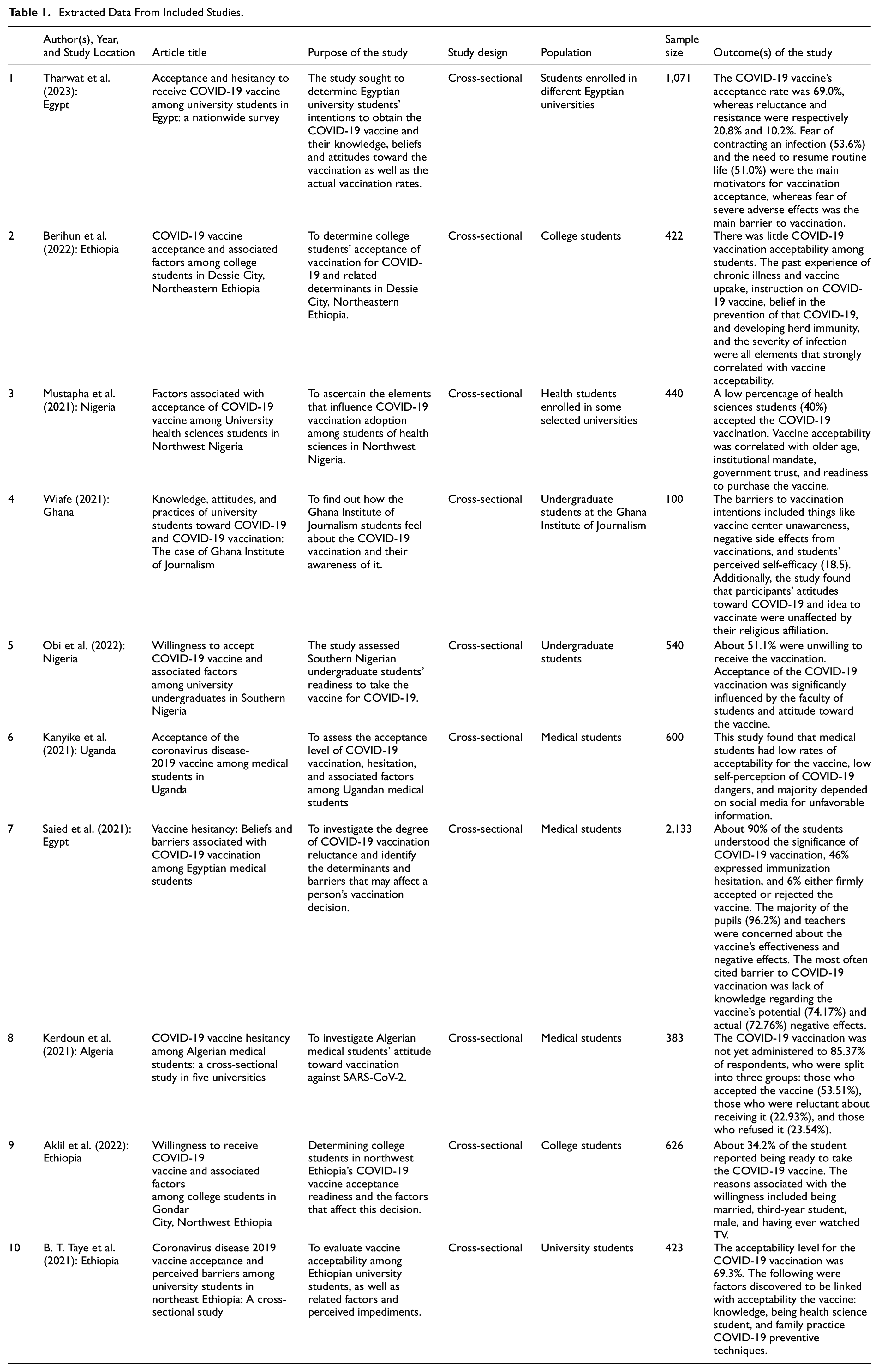
The preliminary search yielded a total of 131 studies from various databases: PubMed (n = 36), EBSCO Host (n = 29), MEDLINE (n = 15), Google, and Google Scholar (n = 51). After a careful review, 45 duplicate records were removed, resulting in 86 articles for screening. Among these, 66 articles were deemed unrelated to the research objectives and were excluded, remaining 20 articles for full-text evaluation. The eligibility of these 20 articles was then assessed according to the established inclusion and exclusion standards. Following the assessment, 10 journal articles were considered for the present research. The PRISMA flow diagram in Figure 1 provides a visual representation of the screening procedure and the search outcome. Table 1 provides more information about the extracted data.
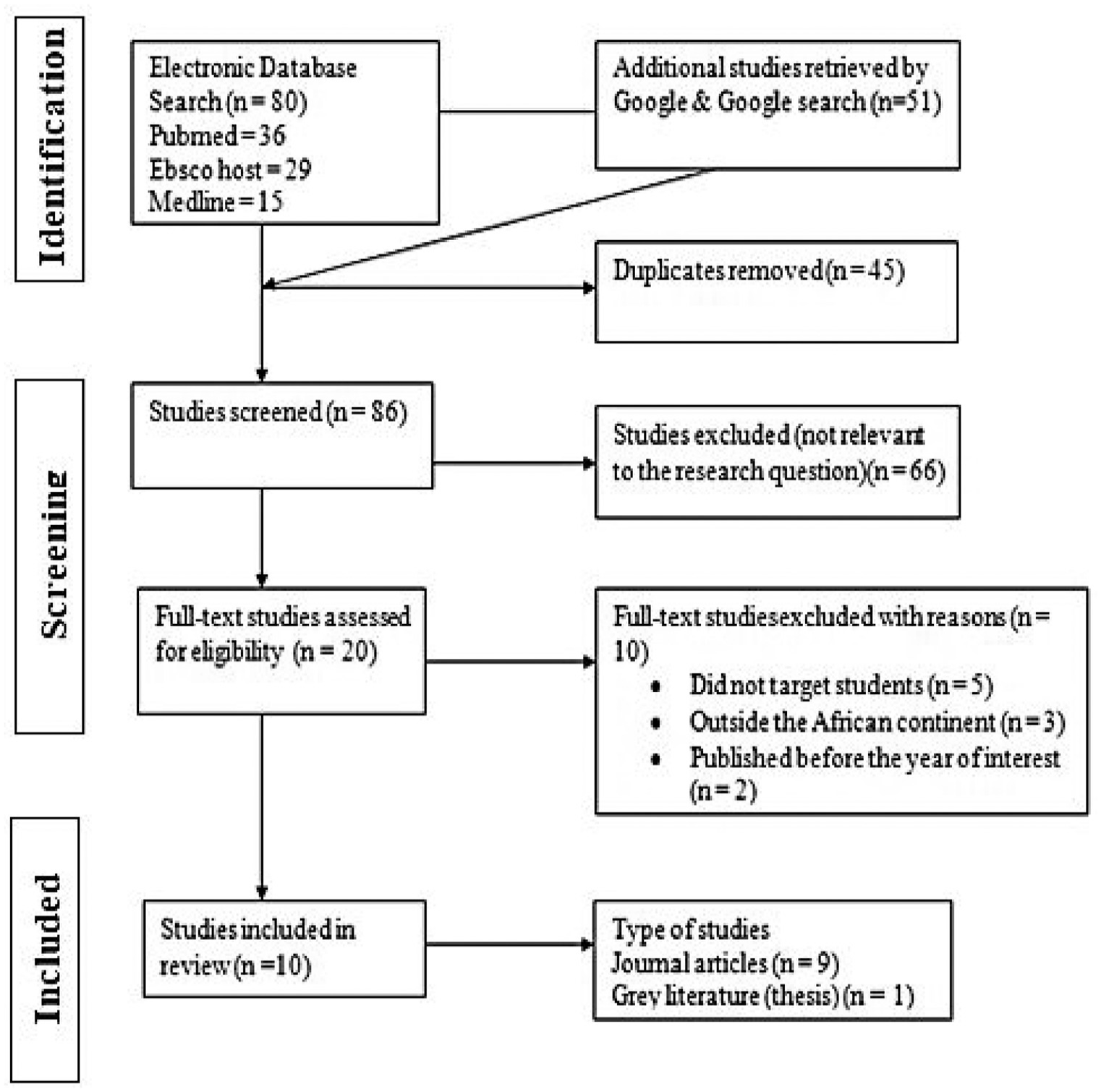
PRISMA flow diagram: selection of included studies.
Extracted Data From Included Studies.
Results
Characteristics of Included Studies
All the studies included in this review were completed after the COVID-19 immunization programme had begun in the relevant country. The studies were quantitatively cross-sectional design, and the sample size ranged between 100 and 2,133, with a mean sample of 673.8. The mean age of participants in the included studies varied between 20.24 and 24.17 years. The majority (n = 3) of the research used in this analysis was carried out in Ethiopia. Two (2) studies came from Egypt; two (2) from Nigeria; and one (1) each from Ghana, Uganda, and Algeria. Participants were made up of undergraduate students from various African educational institutions. Four (4) studies were undertaken on university students, three (3) on medical students, two (2) on college students, and one (1) on students in health sciences. Detailed characteristics of participants in each study are included in Table 2:
Characteristics of Participants in Each Studies.

Acceptability and Willingness to Use the COVID-19 Vaccination
Nine (9) of the synthesized papers discussed the students’ willingness to receive the vaccination (Aklil et al., 2022; Berihun et al., 2022; Kanyike et al., 2021; Kerdoun et al., 2021; Mustapha et al., 2021; Obi et al., 2022; Saied et al., 2021; B. T. Taye et al., 2021; Tharwat et al., 2023). The overall vaccine acceptability and willingness from the study ranged between 34.2% and 69%. In Egypt, Tharwat et al. (2023) evaluated university students’ intentions to take vaccinations and found the acceptability rate to be 69.0%. Similarly, Saied et al. (2021) found the acceptability among the sample to be 34.9%. Studies from Ethiopia reported willingness to received the vaccine among the students to be 56.2%, 95% CI [51.5, 60.9%] (Berihun et al., 2022), 34.2% (95% CI [30.9, 38.1]) (Aklil et al., 2022), and 69.3% (95% CI [65, 74]) (B. T. Taye et al., 2021). Obi et al. (2022) reported that less than 50% of the students expressed a willingness to get immunized in Nigeria. Forty (40%) of the student participants in the study of Mustapha et al. (2021) accepted to be vaccinated. Studies from Uganda and Algeria reported willingness and acceptable level to be 37.3% and 53.51%, respectively (Kanyike et al., 2021; Kerdoun et al., 2021).
Vaccination Hesitancy
Overall, the vaccination hesitancy rate from the synthesized studies varied from 20.8% to 50%. The study by Tharwat et al. (2023) in Egypt found out that 20.8% of university students had hesitated to take the COVID-19 vaccine. Nearly 43.8% (95% CI [39.1, 48.5]) of student in Ethiopia either hesitated or rejected vaccination (Berihun et al., 2022). According to Obi et al. (2022), 51.1% of the participants in Nigeria were unwilling to receive the vaccination. The majority (62.79%) of the participants in a study by Kanyike et al. (2021) concerning acceptability, reluctance, and correlated factors of COVID-19 immunization among medical students in Uganda did not consent to vaccination. Vaccine hesitant and refusal groups in a study conducted in Algeria accounted for 46.47% (Kerdoun et al., 2021).
Motivations and Determinants of COVID-19 Acceptance
Eight (8) studies reported on the variety of factors that increased vaccine uptake and willingness. Prevalent among them were fear of contracting an infection, a desire to resume normal life, and concern over spreading an infection to others (Mustapha et al., 2021; Saied et al., 2021; Tharwat et al., 2023). Additionally, herd immunity emergence, vaccination instructions, prior records of taking regular vaccines, COVID-19 severity, and belief that the virus can be prevented all had an impact on students’ inclination to obtain the COVID-19 vaccine (Berihun et al., 2022). Other factors include adequate information about the vaccine, religious/cultural belief, family support, where to get the vaccine, vaccine availability, protection of oneself and others, vaccine effectiveness, and no severe side effects (Kanyike et al., 2021; Kerdoun et al., 2021; Obi et al., 2022).
Mustapha et al. (2021) identified several factors connected to COVID-19 vaccination acceptance. These included ethnicity (OR, 1.68; 95% CI [1.13, 2.55]; p = .011), age 25 years and above (OR, 1.77; 95% CI [1.18, 2.65]; p = .006), being a student in the fourth year (OR, 2.12; 95% CI [1.10, 4.09]; p = .025) or a student in the sixth year (OR, 3.27; 95% CI [1.56, 6.87]; p = .002), report of a chronic condition (OR, 2.85; 95% CI [1.36, 5.95]; p = .005), infected with COVID-19 (OR, 4.18; 95% CI [1.71, 10.24], p = .002), readiness to get vaccinated if advised by institutional leaders (OR, 33.35; 95% CI [18.09, 61.49]; p < .001), readiness to purchase the vaccine if it’s not provided for free (OR, 23.39; 95% CI [9.83, 55.62]; p < .001), and confidence in how the government handles vaccine related concerns (OR, 50.82; 95% CI [23.62, 109.36]; p < .001).
According to Aklil et al. (2022), the alertness to receive vaccination for COVID-19 was considerably related to listening to the radio, watching TV, participants’ sex, living with family, maternal education, marital status, paternal education, knowledge and attitude. Furthermore, having knowledge (AOR: 2.43, CI [1.57, 3.77]), pursuing a degree in health science (AOR: 2.25, CI [1.43, 3.54]), and living in a household practicing COVID-19 preventive measures (AOR: 1.73, CI [1.06, 2.81]) were discovered to be elements linked to the uptake of COVID-19 vaccination (B. T. Taye et al., 2021).
Reasons/Barriers for Vaccine Hesitancy
Seven (7) of the studies discussed students’ perceived barriers to not getting the vaccine. Of these seven studies, five (5) cited fear of side effects and safety issues (Aklil et al., 2022; Kerdoun et al., 2021; Saied et al., 2021; B. T. Taye et al., 2021; Tharwat et al., 2023; Wiafe, 2021). Five (5) studies raised issues with the efficacy of vaccines and doubts about their ineffectiveness, which has resulted in widespread anxiety about receiving vaccinations (Aklil et al., 2022; Kerdoun et al., 2021; B. T. Taye et al., 2021; Tharwat et al., 2023; Wiafe, 2021). Insufficient information about vaccination safety was cited by three (3) different studies (Kerdoun et al., 2021; Saied et al., 2021; B. T. Taye et al., 2021), whereas negative information regarding the vaccine was identified in two (2) studies (Kanyike et al., 2021; Saied et al., 2021). Less common reasons were center awareness (Wiafe, 2021), concerns about safety (Kanyike et al., 2021), financial cost hindrance (Saied et al., 2021), insufficient trust in vaccine sources (Saied et al., 2021), and vaccines for only at-risk populations (B. T. Taye et al., 2021).
Source of Vaccine Information
The research explored the information sources on COVID-19 inoculation for students and discovered that five (5) of the studies reported on the information sources. Four (4) studies (Kanyike et al., 2021; Saied et al., 2021; Tharwat et al., 2023; Wiafe, 2021) highlighted the main source of information on the COVID-19 vaccine for students to be social media. Healthcare workers, the internet, and scientific websites as sources of information were identified in two studies (Saied et al., 2021; Tharwat et al., 2023). Additionally, two studies also reported that students received information from family/friends, television, and radio (Kanyike et al., 2021; Wiafe, 2021). Two other studies reported newspapers and magazines as additional sources of information for students; however, they were considered the least significant sources (Kanyike et al., 2021; Saied et al., 2021).
Discussion
Throughout history, vaccinations have proven to be the most effective means of combating rapidly spreading communicable diseases such as COVID-19 (Elhadi et al., 2021; Kaya et al., 2021). Vaccination is crucial for achieving herd immunity and controlling infectious diseases, especially COVID-19. However, in Africa, there are various challenges associated with this process, which are connected to personal, socio-cultural, economic, and political factors. The acceptance percentages in sub-Saharan African nations varied greatly, ranging from 28% in the Democratic Republic of Congo (DRC) to 92% in Ethiopia (Kanyanda et al., 2021; Oyekale, 2021). However, most studies conducted among university and school communities reported acceptance rates below 50% (Kanyike et al., 2021; Sahile et al., 2022). According to Tadele Admasu (2021) and Lamptey et al. (2021), acceptance was positively influenced by a higher perceived risk of COVID-19. Additionally, good knowledge, a positive attitude, and adherence to safe procedures were found to have a significant impact on vaccine acceptance (Abebe et al., 2021; E. B. Taye et al., 2022). Other research revealed that individuals with a previous history of COVID-19 showed a greater acceptance of vaccination (Adedeji-Adenola et al., 2022; Mustapha et al., 2021).
In developed countries, Ding et al. (2020) found that young people, such as university students, may not show symptoms or only have mild symptoms when infected with COVID-19. This could lead to a lower perception of risk and a decreased willingness to get vaccinated. Studies by Sharma et al. (2021) and Latkin et al. (2021) have shown high levels of vaccine reluctance among young adults aged 18 to 29, ranging from 47% to 60%. For example, a survey of university students in the USA found that 47.5% of respondents expressed unwillingness to get vaccinated (Sharma et al., 2021). Pastorino et al. (2021) also discovered that medical students, those who were more worried about COVID-19, and those who were more susceptible to the illness were more likely to intend to get vaccinated. Assessing the acceptance level of vaccination is important for implementing intervention and communication campaigns. This understanding is crucial for increasing public awareness, building confidence in vaccine effectiveness and safety, and ultimately reducing COVID-19 transmission (Habersaat et al., 2020; Weintraub et al., 2021). It is essential to grasp young people’s attitudes toward the COVID-19 vaccine in order to develop successful public health interventions, as they have higher rates of infection and hospitalization due to their presence in academic and social settings (Sandoval et al., 2021).
The reviewed studies primarily focused on university students due to the expectation that they would possess better information about COVID-19 and be ready to receive vaccination. In spite of this expectation, low vaccination acceptance rates were seen in this group in the studies reviewed. This is similar to a study conducted in Europe among first-degree nursing students (Patelarou et al., 2021). The synthesized results differed across research and populations. These findings are similar to Reiter et al. (2020), who discovered that 69% of the adult population in America accepted the vaccine, while 31% rejected inoculation. Again, research was carried out by Barello et al. (2020) among university students and 86.1% of the students were vaccine accepters; likewise in France, 35% of adults were categorized as vaccine hesitant (Detoc et al., 2020). A cross-sectional study conducted in the United Arab Emirates revealed the vaccination acceptance level to be 56.3% (Shahwan et al., 2022). Meanwhile, in Jordan, 30.4% of the respondents stated that their acceptance of vaccines is dependent on its availability (Al-Mistarehi et al., 2021). These discrepancies in vaccination acceptance and reluctance rates among the studies are likely caused by variations in geographical spread, demographic characteristics, distinct study periods, data gathering techniques, and cultural inequalities. Geographical spread is crucial in determining vaccination rates due to differences in healthcare accessibility, infrastructure, and governmental support (Wiysonge et al., 2022). The timing of studies can influence findings, as public perception and knowledge about vaccines can rapidly change due to new information, public health campaigns, or changes in the pandemic’s status. Early studies during the COVID-19 pandemic showed higher vaccine hesitancy, while later studies demonstrated increased acceptance as more information became available and vaccines proved effective (Lazarus et al., 2021). These variations impact individual health outcomes, public health strategies, healthcare systems, and societal health metrics. They hinder achieving herd immunity, increase the risk of outbreaks, strain healthcare resources, complicate public health campaigns, and affect mental health and academic performance. Addressing these variations through targeted interventions, equitable access, and effective communication strategies is crucial to improving vaccination rates and protecting public health.
Most commonly cited reasons for vaccination acceptance were the need to safeguard oneself, prevent transmission to others, adverse effects, resume normal life, trust and the conviction that vaccination is the greatest method of defense against COVID-19 spread and its associated complications. These findings align with a study by Manning et al. (2021). Other scientific research has recognized safety as a strong predictor of vaccination reluctance, along with the seriousness of the disease, cultural factors, and contextual influences (Sweileh, 2023). For both the general public and healthcare experts, safety and side effects were top priorities when choosing a vaccine (Yaqub et al., 2014). According to Karafillakis and Larson (2017), vaccine efficacy and safety were major determinants in decisions regarding vaccination among various nations. Risk perception of COVID-19 can directly influence an individual’s decision to receive vaccination (Kanyike et al., 2021). Public health experts can strengthen their campaign for vaccination acceptance among students by addressing concerns about vaccine safety and potential side effects. Acceptance of COVID-19 vaccines among university students in Africa has important clinical implications. It can reduce transmission rates, contribute to herd immunity, ensure academic continuity, and ease the burden on healthcare systems. It also offers psychosocial benefits, influences future health behaviors, and has positive economic impacts. By reducing hospitalization rates, it allows healthcare providers to focus on other critical health issues and maintain healthcare quality, which is particularly important in African countries with strained healthcare infrastructure. Promoting vaccine acceptance among this demographic is crucial for safeguarding public health and ensuring the resilience of educational and healthcare infrastructures.
According to Larson et al. (2014), inoculation rejection is not a constant occurrence, but instead a flexible, heterogeneous idea shaped by various socio-psychological, societal, and behavioral factors. The main reasons for vaccine reluctance in the current review included fear of adverse reactions, doubts about the effectiveness and safety of vaccines, suspicion, and limited information about the vaccine, and this was also confirmed in the findings of Guljaš et al. (2021) Additional research also revealed similar concerns by participants (Dror et al., 2020; Patelarou et al., 2021). Lucia et al. (2021) reported similar proportions of hesitation, with 89.2% expressing concern about adverse effects and 83.8% doubting the vaccine’s efficacy. It can be challenging to guarantee equal vaccine coverage across different demographic groups due to shifting public attitudes toward immunization over time and in reaction to disease outbreaks (Xiao et al., 2022). In 2021, Manning et al. reported a decreased percentage (7.1%) of hesitation to take vaccination among students, indicating a pressing need to address poor knowledge and misconceptions about the vaccine promptly. Vaccine reluctance poses a severe obstacle to the battle against COVID-19 (Rodríguez-Blanco et al., 2021). The pandemic’s high mortality rates make vaccination hesitancy a primary public health concern (Bedford et al., 2018). The study’s findings demonstrate that the bulk of those who refused to be vaccinated must be included in the widespread immunization process; otherwise, global attempts to provide free vaccines might not successfully stop the spread and mobility of COVID-19. Therefore, synthesizing and summarizing vaccine hesitancy among student populations can aid in formulating measures to reduce vaccination hesitation and create mass vaccination programmes. Healthcare providers should prioritize clear communication about vaccine safety, potential side effects, and the overall risk-benefit profile of COVID-19 vaccines. This will enhance public confidence and alleviate fears.
Unreliable sources of information can significantly impact students’ vaccination decisions and this can lead to higher transmission rates of COVID-19. Health-related information, including vaccine-related content, obtained from various sources, especially social media, has the potential to fuel vaccine indecision. Social media is identified as a key resource for accessing COVID-19 information (Abdelhafiz et al., 2020; Saqlain et al., 2020). Social media platforms allow users to publish news quickly and internationally without editorial control, which could result in the spread of false information. Through the use of vivid narratives and powerful imagery, social media can further amplify the dissemination of inaccurate information. According to Puri et al. (2020), the vast reach and quick information-sharing capabilities of social media contribute to its potential to influence large audiences. Continuous exposure to alarming and false narratives about vaccines can cause anxiety, stress, and confusion among university students. This psychological impact can negatively affect mental well-being, leading to decreased academic performance and overall quality of life (Zhou et al., 2020). Health institutions and public health professionals must ensure that information shared on future pandemics via various platforms is very informative to help reduce misconceptions regarding the uptake of vaccines. It is important to address misinformation through targeted public health communication, improved health literacy, and increased trust in healthcare systems. These actions are necessary to mitigate negative outcomes and promote a healthier future.
Conclusion
This scoping review highlights the factors that influence COVID-19 vaccine uptake among university students in Africa. It shows that vaccine acceptance and hesitancy are influenced by various determinants, including individual beliefs and knowledge, social influences, structural barriers, and cultural contexts. Understanding these factors is crucial for developing targeted public health interventions. Such interventions should include educational campaigns to combat misinformation, promote vaccine literacy, and involve trusted community leaders and peer influencers to build trust and acceptance. Future research should delve further into these determinants, using rigorous methodologies to capture the experiences of university students. By addressing barriers and leveraging facilitators, stakeholders can increase COVID-19 vaccination coverage among this demographic, contributing to broader public health goals and strengthening health systems in Africa against future pandemics. This review emphasizes the importance of adopting a comprehensive and inclusive approach to public health, considering the unique challenges and opportunities within African university settings that can help the health system.
Recommendation
It is essential to encourage students’ immunization against COVID-19, and this can be achieved through effective vaccination campaigns and health education initiatives. Medical professionals play a pivotal role in continuously raising awareness of the significance, vaccine efficiency and safety, particularly targeting groups who are more likely to get the disease. Health education among university students should include courses on vaccinations and preventive behaviors. Public health specialists should put in place organized efforts targeted at lowering vaccination resistance and promoting greater vaccination rates among students. They must increase public confidence and trust in health services in order to successfully lower COVID-19 vaccination resistance. By combining these efforts, a more informed and proactive approach can be created to combat the pandemic and protect the health of both students and the wider community. Thus, health professionals must implement vaccination policies and launch programs to raise public awareness of the advantages of vaccination. It is important for healthcare agencies to formulate targeted and efficient methods to increase overall vaccine acceptance and ensure equitable vaccine coverage among students. Furthermore, government websites and health organizations should increase their social media presence. Establishing collaborations with social networking sites can be a powerful tool to rapidly promote evidence-based public health strategies. Moreover, it is essential to ensure that mass media channels disseminate factual information in a manner consistent with procedures established by the WHO.
Limitation and Suggestion for Further Studies
Limited studies were included in the current study due to the limited databases searched and search strategies. Therefore, future studies should advance the searches into more databases to enable the discovery of many studies. Again, background characteristics like age, education, gender and socio-economics status were not analyzed in this scoping review due to its limited reportage across the studies. Future studies should focus on the background characteristics that could influence willingness and acceptability of vaccination. Since all of the studies were cross-sectional and quantitative, additional research should focus on qualitative investigations to acquire a deeper appreciation of the factors affecting students’ willingness and reluctance toward COVID-19 vaccination.
Footnotes

Funding
The author(s) received no financial support for the research, authorship, and/or publication of this article.
Declaration of Conflicting Interests
The author(s) declared no potential conflicts of interest with respect to the research, authorship, and/or publication of this article.
Data Availability Statement
The data that support the findings of this study are available from the corresponding author, Daniel Adom-Fynn, upon reasonable request. To protect the confidentiality and privacy of participants, the data are not publicly available.