




Abstract
The major epidemics, especially COVID-19, caused a significant impact on global businesses, including lockdowns, labor shortages, price increases, disrupted supply chains, and increased demand. They brought challenges to enterprise systems and business modes and triggered knowledge innovations. Bibliometric and Latent Dirichlet Allocation (LDA) were used to investigate the distribution of literature, co-citation, research hotspots, and trends in pandemic-triggered enterprise management from 2006 to 2023 based on the Web of Science databases. The results show that during the outbreak period, supply chain resilience management, enterprise technological innovation and sustainable development were hot topics in research. In the post-epidemic era, enterprise crisis management and sustainable development are gradually refined, and resilience, digitalization, and sustainability will become the frontier topics.
Keywords
Introduction
In recent years, major epidemic events such as SARS, H1N1, and COVID-19 have occurred successively, especially the outbreak of novel coronavirus pneumonia (COVID-19), which has had a significant impact on the development of global business enterprises. Due to the devastation caused by this global pandemic, traditional enterprise production processes, supply chain coordination mechanisms, organizational operating modes, and technological applications have struggled to deal with the difficulties posed by major epidemics, including lockdowns, labor shortages, price increases, disrupted financial chains, and surging demand (Patel & Gohil, 2021). This led to research on “Pandemic-Triggered Enterprise Management (PTEM).” Scholars have conducted research on various issues from different perspectives, including optimization of enterprise supply chain management (Belhadi et al., 2021), the application of digital business models (Lee et al., 2021), and the proposal of new management models and frameworks (Bai et al., 2021). However, no one yet has systematically studied the impact of major epidemics on “Pandemic-Triggered Enterprise Management Innovation (PTEMI)” from a quantitative analysis perspective.
Knowledge mapping is a research method that presents the core structure, development history, frontier areas, and overall knowledge architecture of a discipline in a visual way. It incorporates ideas and approaches from various fields, including information science, graphics, applied mathematics, and information visualization. The knowledge of the subject area is deeply mined and presented through methods of econometric citation analysis and co-occurrence analysis. CiteSpace, a Java application that incorporates bibliometric analysis, data mining algorithms, and visualization techniques, is primarily utilized to analyze and visualize scholarly literature. Compared to other visualization tools, CiteSpace enables in-depth analysis and visual presentation of academic literature by building academic literature data into a knowledge graph, assisting users in spotting significant trends and hotspots with less cognitive effort.
LDA topic modeling is an unsupervised machine learning method, which identifies topics in a large number of text-abstract corpora, obtains the distribution and specific probability matrix of document-topic and topic-word, further calculates the effectiveness and popularity of topics, and explains the content of topics with topic words. Therefore, this paper uses bibliometrics and CiteSpace tools to make an overall overview of the research progress of PTEM and explore the impact of pandemic on knowledge innovation in this field. The LDA theme model is used to promote knowledge management, discover theme relationships, and combine regression analysis to detect trends and predict future directions.
This study uses the bibliometric method and topic modeling to identify the bibliometric characteristics and visualize the relationships of articles in the Web of Science database between 2006 and 2023: (1) to analyze the characteristics of the distribution of articles and regional collaborations; (2) to identify the knowledge base and hot topics; and (3) to identify new trends and emerging research directions in the post-epidemic era. The remaining sections of this paper are structured as follows. The section entitled “Research methods and data sources” explains data collection, CiteSpace tools and LDA topic modeling principles. The “Results” section provides a thorough analysis of research outputs and their categories: annual publication volume distribution, collaboration network, keyword co-occurrence network, cluster analysis (to analyze research hotspots). Then, the LDA model is used to calculate the theme intensity to analyze the hot topics which is mutually confirmed with the clustering results. And regression analyses of proportion of time and topic were conducted to predict future trends. Lastly, the “Conclusion” section summarizes the key findings and suggests future research directions, exhibiting the extensive applicability of this work.
Methodology
Research Framework
This study presents a comprehensive analysis framework for PTEMI research, as shown in Figure 1. Firstly, four key research questions are proposed. According to the questions, 1,143 documents are collected from the Web of Science (WoS) core databases. Using the LDA model and visualization methods, this study makes adjustments in the three-stage system analysis method proposed by Hu et al. (2023) and divides the process of PTEMI analysis into four parts: basic statistical analysis, co-cited network analysis, hot topic analysis, and emerging trend analysis.

Research framework.
The basic statistical analysis includes the analysis of the number of papers published and compares differences across various epidemic scenarios; Co-cited network analysis identifies the knowledge base of this field by analyzing co-cited clustering and highly cited documents; Hot topic analysis combines LDA and word cloud to identify research hot spots; Trend analysis is to use regression to predict future research theme. Through this systematic method, this study comprehensively analyzes the development of PTEMI.
Data Construction
The following search string was applied to the Science Citation Index Expanded and the Social Sciences Citation Index of the Web of Science (WoS) core database published between 2006 and 2023: TI = (“epidemic*” OR “pandemic*” OR “COVID-19” OR “H1N1” OR “SARS” OR “H5N1”) AND TI = (“enterprise*” OR “industry*” OR “manufactur*” OR “company” OR “companies” OR “corporation” OR “firm”). After filtering out irrelevant documents, 1,143 valid literature were obtained.
Method and Tool
Bibliometrics is a discipline that uses mathematical and statistical methods to analyze the distribution structure, quantitative relationships, and change patterns of scientific literature information. CiteSpace, the visualization and analysis software developed by Dr. Chen, is capable of visualizing data and analyzing structural and temporal patterns in scientific literature (C. Chen, 2017). In this paper, CiteSpace is used as the basic analysis tool, and the core collection data of the WoS database is used as the data source. Using the time-slicing feature, CiteSpace creates a panoramic view of a network from a series of snapshots of the network as it changes over different time slices (C. Chen et al., 2009). The number and size of nodes reflect the frequency of co-occurrence, and the thickness of the connecting line presents the co-occurrence strength between the keywords. Based on the formation of the map and further analysis, we can quickly sort out the relevant research progress of PTEM, then explore the research hotspots of PTEMI and detect the evolutionary trend.
Topic modeling is a popular statistical tool for latent variables in large unstructured textual data. The most widely used algorithm in topic modeling is Latent Dirichlet Assignment (LDA), which is a hierarchical Bayesian algorithm. Each document has a probability that it belongs to a topic, and each topic is identified by a probability distribution of words (Porturas & Taylor, 2021). The topology of LDA is shown in part A of Figure 2. Its core is that each document M corresponds to the polynomial distribution θ of k topics, and each topic corresponds to the polynomial distribution φ of n words in feature words, and hyperparameters of the Dirichlet distribution α and β exist in θ and φ, and finally the probability distributions of all topics and words can be obtained. The graph model of LDA is shown in part A of Figure 2 (Jung & Kim, 2023; Rehman Khan et al., 2022).

Graphical model of LDA.
Results
Basic Statistical Analysis
According to the statistics of Excel table, the trend of PTEMI is shown in Figure 3. From 2006 to 2019, the number of publications remained at a relatively low level, and only 33 articles focused on the impact of other epidemics, including SARS, H1N1, and H5N1.

The annual output of relevant scientific literature from 2006 to 2023.
Looking back at these major epidemics, they have promoted PTEMI to varying degrees. The outbreak of SARS in 2002 greatly affected the tourism industry, prompting the hotel industry to innovate the communication mechanism and service process (Chien & Law, 2003; Hung et al., 2018). Vaccine manufacturers have demonstrated the importance of vaccine production capacity in the face of H1N1 and H5N1 (Baras et al., 2008; Fox et al., 2013). As a global epidemic, the H1N1 influenza outbreak in 2009 prompted vaccine manufacturers to cooperate globally, which led to innovations in organizational management and production processes (Abelin et al., 2011). Although H5N1 primarily affects the poultry industry, its high mortality and recurrence prompted the industry to invest more resources in vaccine R&D and production, leading to technological innovations, such as the development of new vaccines and diagnostic technologies (Palache & Krause, 2009). Compared with SARS, H1N1, and H5N1, the COVID-19 outbreak in 2019 demonstrated a wide spread and high contagiousness, which not only had a direct impact on specific industries such as hotels, manufacturing, and poultry but also triggered a chain reaction and crisis in social, economic and energy sectors and medical fields around the world (Sharifi et al., 2021).
After 2020, the number of papers published shows a trend of substantial growth. By December 2023, the number of published articles related to the Covid-19 epidemic has reached 1,015, accounting for 88.8% of the total articles. This not only indicates that the research heat in this field is heating up rapidly, but also highlights the far-reaching impact of the Covid-19 epidemic on PTEMI. Therefore, most subsequent studies are based on Covid-19 to explore.
The Co-citation Network Analysis
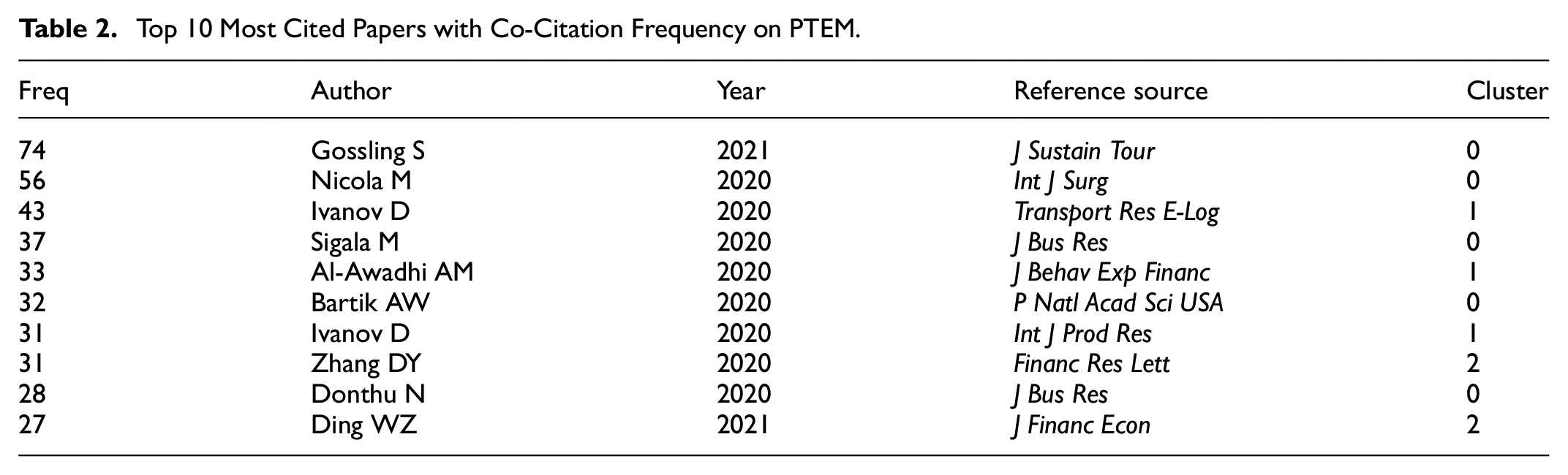
Figure 4 shows a visual clustering map of the document co-citation network, which summarizes the knowledge foundation of PTEM from 2006 to 2023. To further explore and excavate the highly co-cited literature that plays a critical role in the evolution of the knowledge foundation and research frontiers, this study selected the top 10 cited papers for in-depth analysis.
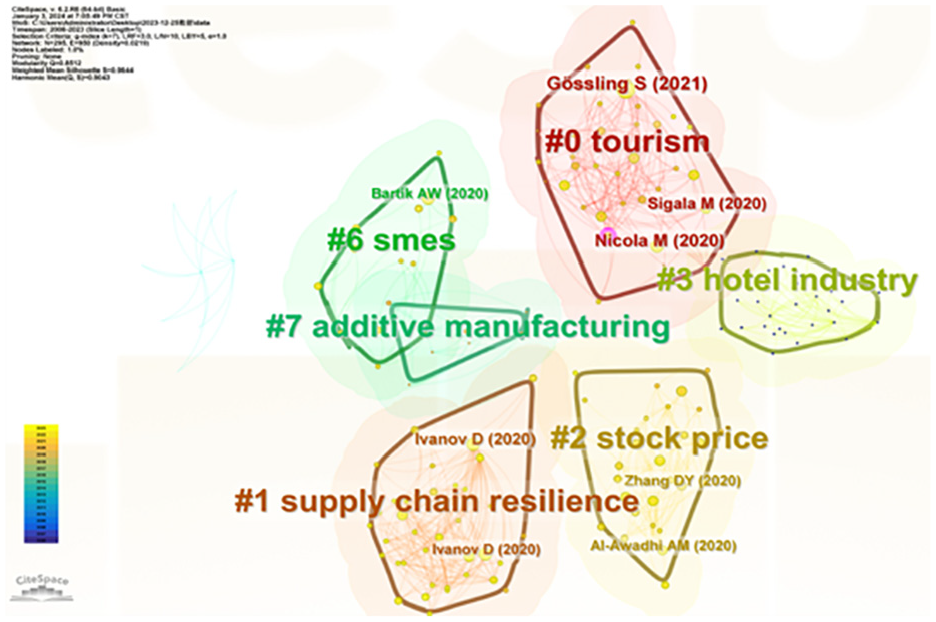
A visualization of the document co-citation network on PTEM.
Ivanov D and Gossling S are the authors with the most influence. Both of Ivanov D’s selected papers focus on the study of supply chain management. Ivanov D is a well-known supply chain and operations management expert with a 2018 h-index of 72. His published works in the disciplines of global supply chain resilience and digital supply chain are highly cited. His research emphasizes on the durability and resilience of supply chains. Gossling S, who studies sustainable tourism, wrote a paper called “Pandemics, tourism, and global change: a rapid assessment of COVID-19.” It was released in the Journal of Sustainable Tourism and got 88 citations, making it the most co-cited document.
Based on co-citation analysis, the LLR algorithm was used for cluster analysis to obtain 5 clusters, and the top 10 cited papers were classified as shown in Tables 1 and 2. The research content mainly involves the following aspects: firstly, Nicola et al. discussed the hospitality and travel industries perhaps being hit the hardest by the COVID-19 outbreak (Nicola et al., 2020), while Sigala et al. analyzed the challenges and opportunities faced by the tourism industry, quoted Gossling S’ idea of resetting the tourism industry (Gössling et al., 2021), and put forward some strategic and policy suggestions for COVID-19 (Sigala, 2020), such as digital transformation, tourism business redesign, and tourism innovation. The above measures provide a direction for PTEMI in the tourism industry. Secondly, Dmitry Ivanov introduced the term “intertwined supply network” (ISN) for the first time and emphasized the interdependence between ISN and viability (Ivanov, 2020). In his research, he also summarized the impacts of the pandemic on the supply chain, such as transportation restrictions, labor shortages, and supply chain interruptions. Practical solutions to improve supply chain survivability were provided, such as strengthening risk management, diversifying suppliers, and enhancing digital transformation (Ivanov & Dolgui, 2020). Lastly, some academics have discussed the impact of the use of digital technology by small and medium-sized businesses during COVID-19 in theory and practice (Papadopoulos et al., 2020), and the mutual influence of stock price, enterprise value and COVID-19 (Bose et al., 2022; Wang et al., 2022; Zhang et al., 2021).
Summary of the Largest five Clusters on PTEM.

Top 10 Most Cited Papers with Co-Citation Frequency on PTEM.
Analysis of Major Clusters
Based on the network of keyword co-occurrences drawn based on CiteSpace, the LLR algorithm was used to extract the labels from the keywords to generate the keyword clustering knowledge graph (Figure 5). The enterprise management clustering map under the epidemic contains 300 nodes and 1,295 connected lines. The value of S was 0.8576, and an S-value > 0.5 indicates reasonable clustering. The average profile value (S) is a measure of network homogeneity, and the closer it is to 1, the higher the response network homogeneity. The value of Q was 0.5593, and it is generally believed that Q > 0.3 suggests the clustering structure is significant. However, due to the lack of semantic relationship between keywords and the omission of keywords representing emerging topics with low frequency, some results may depend on subjective judgment, so the LDA topic model is used for further analysis.

Clustering map of the articles on PTEM.
The title, keywords and abstract information of the literature are used as the input document set of the LDA model. The text set is trained by the gensim text analysis tool, 14 related topics are identified, and their theme intensity is calculated (as shown in Table 3).
Fourteen Topics on PTEM in WoS Journal.

Combined with the actual topic extraction results of this study, the topic intensity threshold is set to 0.08 by direct assignment. It can be seen from Table 3 that Crisis and Innovation, Tourism Crisis, Sustainable Development, Public Health and Supply Chain Resilience are five hot topics with high attention, the results are consistent with the analysis of the five clusters of Citespace. The research results are organized and visualized to create word cloud maps (Figure 6) for each hot topic based on the LDA model training. Representative documents are selected from the distribution of “document themes” to elaborate on the hot topics, reflecting innovations in management, technology, and sustainable development.
(1) Management innovation in supply chain resilience triggered by pandemics

Word cloud maps of LDA topics on PTEM.
The key words of Supply Chain Resilience include supply, chain, crisis, risk, resilience, etc. Therefore, this category is classified as the research on management innovation of supply chain resilience, corresponding to cluster 0 (supply chain resilience). Supply chain resilience (SCRes) refers to the ability of a supply chain to prevent and absorb changes, as well as restore its initial performance level after unexpected disturbances. The COVID-19 crisis has caused significant supply chain interruptions around the world, resulting in substantial changes in the internal structure of supply networks. Developing more resilient supply chains has become an urgent priority. Scholars have expanded their assessment indicators (Badhotiya et al., 2022; Fu et al., 2022) analyzed relevant influencing factors (Piya et al., 2022), and further developed evaluation models in order to identify strategies to improve supply chain resilience. For example, on one hand, accelerate the digital transformation and use technologies such as the Internet of Things, artificial intelligence, and big data (Belhadi et al., 2021; Cui et al., 2022; Spieske & Birkel, 2021) to achieve visualized, intelligent, and automated supply chains (Lee et al., 2021). On the other hand, promote the collaborative management of the supply chain, with the participation of other suppliers, logistics service providers, and customers (Cui et al., 2022), and realize efficient collaboration and optimal management through information sharing and coordination (Piya et al., 2022). Furthermore, strengthen supply chain risk management, and reduce the impact and losses on business operations by identifying, evaluating, and controlling various risks in the supply chain (Piya et al., 2022; Spieske & Birkel, 2021). Small and medium-sized enterprises can establish flexibility by adopting effective proactive strategies, including increasing the number of geographically distributed supply chain partners, and reducing the risks caused by major disruptions economically and efficiently (Cagri Gurbuz et al., 2023). Strategies such as digital transformation, technology application, collaborative management, and risk management are all conducive to improving the flexibility and efficiency of the supply chain to some extent.
(2) Technology innovation under enterprise crisis triggered by pandemics
The key words of Tourism Crisis, Crisis and Innovation include manufacturing, tourism, crisis, innovation, etc. Therefore, this category is classified as technological innovation research under enterprise crisis, corresponding to clusters 2, 4, and 5 (tourism, digital transformation and additive manufacturing). The emergence of novel coronavirus triggered a global economic crisis, which had a great impact on enterprise operation and supply chain (Bianco et al., 2023). Digital transformation aligns with the trends of the new wave of technological revolution and industrial transformation, continuously deepening the application of next-generation information technologies such as cloud computing, big data, artificial intelligence, and blockchain (Asokan et al., 2022). Tourism and hotel industry are at the forefront of innovation. Automation and technologies bring empowerment to the hotel industry, enabling the creation of a new model of hotel functioning through tools such as automated operations and hotel robots (Sztorc, 2022). Contactless services are also becoming increasingly popular, as digitization and intelligent tools enhance customer satisfaction and hotel performance in the highly competitive business environment (Hao et al., 2020). As for the manufacturing industry, the epidemic caused a surge in demand for emergency materials and supply chain disruption (Cao et al., 2023; Ni et al., 2019). It forces emerging technologies such as additive manufacturing technology, digital twin, and the Internet of Things to be widely used in emergency manufacturing during major epidemics (Xie et al., 2023). Digital transformation in supply chains (SCs) has emerged as one of the most effective ways to minimize SC disruption risks (Ngo et al., 2023). The fifth industrial revolution, Industry 5.0 (I5.0), and artificial intelligence (AI) also offer the overwhelming potential to build an inclusive digital future by ensuring supply chain (SC) resiliency and sustainability (Ahmed et al., 2023).
(3) Innovations in enterprise sustainable development triggered by pandemics
The keywords of sustainable development and public health include health, sustainable, job, crisis, public, etc. Therefore, this category is classified as innovative research on enterprise sustainable development, corresponding to clusters 1 and 3 (corporate social responsibility and disease). Concerns about public health still exist, and protective measures, such as wearing masks, blockades and social distances are still very strict (Quan et al., 2022). Enterprises are forced to deal with the problem of high demand, reduced labor demand and blockades leading to major interruptions of supply chain (Ivanov & Dolgui, 2020; Popa et al., 2023). However, studies have shown that CSR can help reduce the negative impact of the COVID-19 pandemic (Jin et al., 2023). Many enterprises have chosen to incorporate social responsibility into their development strategies (Z. Chen et al., 2022). The pandemic has prompted the integration of corporate social responsibility, servitization, and digitization into new theoretical frameworks of technological innovation, including the integration of Social Responsibility Operating Performance (SROP) and Industry 4.0 frameworks (Asokan et al., 2022), the Servitization-Digitization Conceptual Framework (SDC framework) (Lee et al., 2021), digital transformation, and the technology-organization-environment framework (Bai et al., 2021). These new theoretical frameworks emphasize corporate social responsibility and servitization to help enterprises comprehensively understand and promote digital transformation. Application of artificial intelligence and big data can serve as a business response to any future crisis, alleviating the pressure of supply chain disruptions and enabling the sustainable development of enterprises (Y. Chen & Biswas, 2021).
Emerging Trends Analysis
The knowledge structure of PTEM has evolved. This paper makes a regression analysis of time and topic weight, and detects the trend of research topics by observing the change of the weight of each topic with time (Hu et al., 2023). Figure 7 shows the weights of 14 topics changing with time. Through the rise, fall and smoothness of the nonlinear trend line of LDA topics, three modes of topic evolution are determined: growth, decrease, and smooth.

Research topic trends of 2008 to 2023.
“Growth ” refers to the topics whose nonlinear trend forecast proportion exceeds 0.1 and shows an upward trend, including manufacturing performance, SMS crisis, tourism crisis, food industry crisis, sustainable development and sustainable business solution (2, 3, 5, 8, 10, 14). “Attenuation” refers to the themes of crisis and innovation, manufacturing supply chain, crisis management, and supply chain resilience (1, 4, 7, and 13) whose nonlinear trend lines show a downward trend. From the results, the general themes of enterprise management, such as supply chain resilience (13) and crisis management (8) tend to be refined gradually. Crisis management literature records the importance of proactive, preventive and reactive policies to deal with the crisis (Bundy et al., 2017). The research on supply chain resilience is no longer limited to traditional concepts and methods, but covers many aspects such as technology application, digital transformation and sustainability. The scope of its research object has been extended to more specific industry fields and enterprise types, such as contactless services in hotels and tourism, technology applications in intelligent manufacturing and Industry 4.0 in the manufacturing and food industries, and policy support for small and medium-sized enterprises. The conventional theme content is subdivided, which leads to a slight downward trend in its popularity.
The epidemic situation makes society more sensitive to the sense of social responsibility of enterprises, and enterprises are expected to assume more social responsibilities. To achieve sustainable development (10), sustainable business solution (14) have also been continuously studied. To protect the safety of employees and meet customer needs, remote working and digital platforms are being optimized to accelerate digital purchasing and omni-channel services in pursuit of post-pandemic business opportunities (Pratap et al., 2023).
“Smooth” refers to the theme that the overall trend of the nonlinear trend line is relatively flat and the fluctuation does not exceed 0.2, including digital supply chain, enterprise economic risk, global tourism industry and public health. It should not be overlooked that the proportion of gentle themes is mostly above 0.1. Although the proportion does not fluctuate greatly, it plays an important role in enterprise management. Because digital supply chain (6) and enterprise economic risk (9) directly affect the operation and development of enterprises, it is necessary to strengthen management and coping strategies. Therefore, global tourism industry (11) and public health (12) are not direct hot topics, but they are the aspects that enterprise management needs to pay attention to during the epidemic.
Conclusion
Theoretical Contributions
The contribution of this study includes the following two aspects, as shown in Figure 8. On the one hand, different from the traditional bibliometrics and qualitative research methods, it introduces four-stage analysis method, and comprehensively uses quantitative research methods such as LDA theme model and regression analysis to expand bibliometrics analysis.

Dual contributions of PTEMI.
On the other hand, basic statistics show that COVID-19 has a wide spread and strong infectivity compared with other epidemics, affecting more industries. With its outbreak at the end of 2019, the research results of PTEMI show explosive growth, and a new knowledge field is taking shape.
First, the literature co-citation network shows that issues such as tourism crisis and supply chain disruptions, which were highlighted after the outbreak of COVID-19, have shaped research on digital transformation and business redesign in the tourism industry, and laid the early knowledge base for PTEMI. Meanwhile, fluctuating demand and material shortages in the manufacturing industry have given rise to research hotspots on supply chain resilience and corporate sustainability in the (post)epidemic period.
Second, the results of LDA topic analysis and co-occurring word clustering show that the hotspots mainly focus on “management innovation in supply chain resilience, technology innovation under enterprise crisis, innovations in enterprise sustainable development triggered by pandemics.” Optimization strategies such as intelligence and efficient collaboration can help improve supply chain resilience. The application of technologies such as digital twins, additive manufacturing, the Internet of Things, artificial intelligence, blockchain, etc. can effectively promote efficient collaboration in the supply chain, foster supply chain intelligence, digitization, and resilience, and strengthen the ability of enterprises to cope with risks during epidemics. Social responsibility, servitization, and digital integration have become important research areas that cannot be ignored for enterprise sustainable development.
Third, the trend analysis of PTEM research in the post-epidemic era based on LDA and regression modeling shows that future research will be more refined, and the research hotspots will gradually focus on industry-specific operation models, such as contactless services in the hotel and tourism industry, and intelligent manufacturing and industry 4.0 in the manufacturing industry. Digital transformation, sustainability, and corporate social responsibility will continue to be long-term hotspots to cope with the uncertainty crisis in the future.
Research Limitations and Future Studies
This study establishes a knowledge map of PTEM, describing the foundations, hot topics, and future development trends in this field. It provides a theoretical basis for related research and indicates future directions. However, there are still some limitations to be acknowledged. Firstly, the scientific validity of any knowledge map relies on the underlying data. It is crucial to accurately and comprehensively retrieve all relevant literature on the research topic, and the retrieval methods used are particularly important. There is still room for further optimization in the current retrieval methods. Secondly, the literature included in the WoS database is limited to English publications, which may introduce a certain bias in the research findings. Lastly, this study has limitations in terms of sample size, geographical coverage, and the targeted industries for future work. Further exploration can be conducted in these areas.
Footnotes
Acknowledgements
Thanks to our team 179. Thanks to Wei-fan Chen for the paper writing advice.

Ethics Considerations
This paper does not involve the ethics of animal and human research.
Funding
The author(s) disclosed receipt of the following financial support for the research, authorship, and/or publication of this article: The APC was funded by National Natural Science Foundation of China (No. 71974090); Youth talents support program of Hunan Province of China (2018HXQ03); Key scientific research project of Education Department (20A443); Social Science Key Breeding Project of USC (2018XZX16); Doctoral scientific research foundation of USC (No. 2013XQD27); Philosophy and Social Science Foundation Youth Project of Hunan Province of China (19YBQ093); Special Funds for Student Innovation and Entrepreneurship Training Program (202110555003X); Special Funds for Student Innovation and Entrepreneurship Training Program (202110555088); Scientific research project of Education Department (No. 20C1625); State Scholarship Fund (202108430098) from CSC; State Scholarship Fund (202208430061) from CSC.
Declaration of Conflicting Interests
The author(s) declared no potential conflicts of interest with respect to the research, authorship, and/or publication of this article.
Data Availability Statement
Data sharing not applicable to this article as no datasets were generated or analyzed during the current study.