



Abstract
Retailers leverage service investment to enhance competitiveness and counter supplier encroachment. With the evolving relationship between enterprises and consumers, service-oriented value co-creation offers substantial competitive advantages. This paper develops a game-theoretical model to explore the interaction between value co-creation and supplier encroachment. The results show that value co-creation benefits both sides of implementers and serves as an effective strategy for the retailer to resist supplier encroachment. Furthermore, supplier encroachment incentivizes consumers to invest more in co-creation, while the retailer may reduce its own investment if the direct channel gains advantages. Under co-creation, supplier encroachment can benefit the manufacturer, consumers, and the entire supply chain, but Pareto improvement is only achieved when the co-creation environment is effective. This study contributes to the literature by providing a general framework for analyzing co-creation in dual-channel supply chains and expanding research on value co-creation, supplier encroachment, and dual-channel investment.
Plain language summary
This paper introduces value co-creation as a co-investment from the retailer and customers into the supplier encroachment background. Although both value co-creation strategy and supplier encroachment (launching a direct channel when the manufacturer has a retailer already) are widely implemented by businesses, there is still a barren land when the two come together in academia. Thus, to fill this gap, this paper aims to find out the impacts of value co-creation and supplier encroachment on each other. To answer this question, we build a set of game-theoretic models and make comparisons with previous literature, and within our models. we find co-creation is not only beneficial to implementors but also an effective means for the downstream retailer to resist supplier encroachment. This study also finds that supplier encroachment leads consumers to invest more efforts in co-creation, while the retailer may invest less when the direct channel takes advantage. Under the co-creation circumstance, supplier encroachment can bring benefits to the manufacturer, consumers, and the entire supply chain.
Introduction
The competitive landscape of the market has changed dramatically in recent decades: an increasing number of manufacturers have encroached on the retailer’s market to sell products directly (Arya et al., 2007; Chen et al., 2016). It is noteworthy that the upstream player has greater channel power in a dual-channel supply chain, which can undermines the retailer’s performance when the supplier encroaches (Arya et al., 2007). Therefore, to counteract the competitive pressure from supplier encroachment, the retailer often unilaterally invests in services to enhance competitiveness (Zhang et al., 2019; Zhang, Li, Liu, et al., 2021).
In recent years, the relationship between enterprises and consumers has also changed. Unlike in the past, when enterprises were the sole providers of value, enterprises and customers now actively and jointly participate in unique services and experiences to create value, which is called value co-creation (Chung & Tan, 2022; Prahalad & Ramaswamy, 2004; Vargo & Lusch, 2008). By improving the business’s front-end process of discerning customers’ needs and wants (Payne et al., 2008), value co-creation is not only beneficial for the firm but also advantageous for consumers as well, creating a “win-win” situation (Cao & Song, 2016).
Value co-creation is an effective service-oriented strategy for firms to seek diverse competitive advantages in the marketplace (Khasraghi et al., 2024; Leclercq et al., 2017; Li et al., 2023; Martinez, 2014; Pantano et al., 2018). For instance, LEGO has established a platform called LEGO Ideas to facilitate active customer engagement and encourage customers to share their opinions (Jensen et al., 2014). The platform has attracted more than one million registered users and contributed thousands of prototype models to LEGO, and many of which have been successfully commercialized (Qi et al., 2021). Nevertheless, the extent to which value co-creation enhances competitiveness in scenarios of supplier encroachment remains uncertain.
Within academia, as highlighted by Arya et al. (2007), Van den Broeke and Paparoidamis (2021), and Zhang et al. (2019), a downstream retailer’s strategy to counter supplier encroachment through investments in value co-creation may lead to a reciprocal effect between supplier encroachment and value co-creation. On the one hand, value co-creation has the potential to change the balance of power across channels, thereby impacting the effects of supplier encroachment. On the other hand, supplier encroachment is often detrimental to the retailer, which in turn may affect the retailer’s participation in value co-creation. Therefore, it is of great significance to explore the interplay between supplier encroachment and value co-creation.
As mentioned above, supplier encroachment occurs within the context of a dual-channel supply chain where an upstream firm sells products through both direct channels (such as self-owned online stores) and indirect channels (such as third-party retailers). This structure allows upstream firms to expand market reach and enhance competitiveness, but it also increases the risk of downstream firms being disadvantaged. Consequently, investments in the dual-channel supply chain are necessary to mitigate the unfavorable conditions faced by downstream firms. Regarding dual-channel investment, while various types of investments have been explored, the majority of research has focused on unilateral investments by distinct supply chain members (Li & Li, 2021). Among the studies on dual-channel investment, few involved co-investment with more than one investor (Xie et al., 2017), and even fewer have considered investment from customers. Since value co-creation requires the joint efforts of the firm and customers, it presents a valuable opportunity to expand the scope of dual-channel investment by probing into the interface between value co-creation and dual-channel supply chain.
In addition, while existing literature highlights the benefits of value co-creation (Chen et al., 2017; Han & Xu, 2021; Ramaswamy & Ozcan, 2018; Tajvidi et al., 2020), little attention has been paid to how downstream retailers can utilize value co-creation to fend off supplier encroachment, particularly when upstream suppliers hold greater channel power. Moreover, recent studies suggest that the relationship in dual-channel supply chains is evolving from competition to coopetition (Jiang et al., 2023; Xia & Niu, 2020). As a result, several key questions are raised: How does value co-creation, as a form of co-investment, influence the performance of investors in the supply chain? Can value co-creation help the retailer resist supplier encroachment in dual-channel contexts? How does coopetitive supplier encroachment affect the implementation of value co-creation, and what are the impacts of encroachment on a dual-channel supply chain where the retailer already employs value co-creation?
Prompted by the above questions and gaps, this study develops two theoretical models to explore the relationship between value co-creation and supplier encroachment in a coopetitive dual-channel supply chain. In this study, we investigate how value co-creation interacts with supplier encroachment and the implications of this dynamic for supply chain performance. Our key findings indicate a significant interplay between value co-creation and supplier encroachment. First, value co-creation is beneficial for both consumers and the retailer, regardless of supplier encroachment. Second, we find that customer and retailer investments in value co-creation are influenced by supplier encroachment, with customers investing more when encroachment occurs. Third, supplier encroachment, when paired with value co-creation, can improve the performance of the manufacturer, customers, and the overall supply chain. Finally, the co-creation parameter plays a pivotal role, as a favorable environment for value co-creation can lead to Pareto improvements.
This study makes three major contributions. First, building upon Arya et al. (2007)’s application of game theory to investigate supplier encroachment, this study expands the scope by incorporating value co-creation and examining its effects within a dual-channel supply chain. Second, our models capture the essence of the coopetitive dynamic, reflecting the interaction and coordination of supply chain participants. Third, we contribute to the literature on dual-channel investment by examining co-investment from both retailers and end-users.
The rest of the paper is organized as follows. Section “Literature Review” presents a review of the pertinent literature and identifies existing gaps. Section “The Model & Analysis” outlines the model framework and delineates the key findings of the paper. Section “Numerical Example” uses the numerical method to validate our findings. Finally, Section “Conclusion” summarizes the conclusions of this paper and discusses the limitations of the research.
Literature Review
The following streams are covered in the literature review: value co-creation, supplier encroachment, dual-channel investment, and the application of the game-theoretic methodology to value co-creation.
Value co-creation provides numerous benefits to both firms and customers (Vargo & Lusch, 2016).For firms, value co-creation can result in lower costs, a wider spectrum of innovation sources (Jensen et al., 2014; Ramaswamy & Ozcan, 2018), and better customer loyalty (Brodie et al., 2013), etc. For customers, it enhances satisfaction and experience (Feng et al., 2024; Ghali et al., 2024). Despite these advantages, value co-creation remains underexplored in supply chain literature, especially in relation to inter-channel power dynamics (Yang et al., 2021). Van den Broeke and Paparoidamis (2021) examined the conditions that value co-creation might fail in the new product development. Yang et al. (2021) investigated the customer co-creation investment and pricing issue in a duopoly context. Hafezi et al. (2023) introduced the idea of coopetition to value co-creation, where competitors collaborate to reduce R&D costs. This study extends the conversation by analyzing value co-creation in a coopetitive supplier encroachment scenario with unequal channel power.
Supplier encroachment refers to the process in which a manufacturer launches a new direct sale channel to compete with its retailer in a vertical supply chain (Arya et al., 2007). In Arya et al. (2007)’s work, the manufacturer leveraged its pricing power to create a “win-win” situation with its retailer. Researchers have explored supplier encroachment from various perspectives. Guan et al. (2019) explored supplier encroachment from a strategic inventory perspective, while Chai et al. (2021) put extended warranties into consideration. Zhang et al. (2023) studied the effect of different types of consumer showrooming on supplier encroachment. Amirnequiee et al. (2024) compared outsourcing strategies in scenarios where downstream firms switch suppliers in response to supplier encroachment. Bian et al. (2024) and Yang et al. (2024) extended this research into the platform economy, focusing on strategic inventory holding and asymmetric service information sharing. However, insufficient attention has been given to the role of customers (Tahirov & Glock, 2022), especially how can the participation of the customer influence other supply chain members during the supplier encroachment. This paper addresses these gaps by constructing models that incorporate consumer-participated value co-creation and supplier encroachment.
Investment in the dual-channel supply chain has recently gained significant attention from researchers. Two main research streams exist: one is represented by Arya and Mittendorf (2013), Zhang et al. (2019), and Zhang, Li, Liu, et al. (2021), suggests that investment affects dual channels by altering market demand. The other stream, led by Sun et al. (2019) and Yoon (2016), focuses on cost-reduction investments aimed at enhancing the profitability of participant(s) in the dual-channel. Based on information asymmetry, Zhang and Xiao (2024) examined a dual-channel scenario where retailers receive hybrid investments, including bank loans and supplier equity. This study addresses gaps in co-investment models involving multiple investors (Xie et al., 2017). Another key topic concerns investment as an anti-encroachment measure. Zhang et al. (2019) argued that retailer service investment is an effective countermeasure against the supplier encroachment strategy in a retailer-led context, while Zhang, Zhang, Song, Gu, et al. (2021) examined the introduction of premium store brand as another effective anti-encroachment strategy. However, customer participation in dual-channel investment, though crucial, remains underexplored (Li & Li, 2021). Since value co-creation involves investment from both firms and customers, this study examines customer co-investment behavior under supplier encroachment.
A variety of methodologies have been employed over the past decade to investigate value co-creation, encompassing theoretical establishment, conceptual frameworks, case studies, and empirical research (Payne et al., 2008; Tajvidi et al., 2020; Vargo & Lusch, 2016; Wulfert et al., 2022). Although numerous studies have emphasized that value co-creation involves an interactive decision-making process with multiple participants (Jiang et al., 2022; Wang & Herrando, 2019), the use of game-theoretic models in this literature remains relatively low (Van den Broeke & Paparoidamis, 2021; Yang et al., 2021). Since game theory studies mathematical models of conflict and cooperation between rational decision-makers (Myerson, 1991), we build on Arya et al. (2007)’s game-theoretic approach to supplier encroachment, by examining the complex interplay between value co-creation and supplier encroachment.
The Model & Analysis
The complex dynamics between value co-creation and supplier encroachment in dual-channel supply chains form the basis of this study. To investigate these interactions, we develop two analytical models based on Arya et al. (2007)’s game-theoretic framework, adapted to include value co-creation and coopetition. These models allow us to examine how participants’ strategies evolve under different scenarios, highlighting the impact of value co-creation on supply chain performance. By analyzing these models, we gain insights into the strategic decisions made by participants when facing supplier encroachment and the role of value co-creation in mitigating or enhancing competitive pressures.
Given the characteristics of supplier encroachment and value co-creation activities, two critical parameters need to be focused on, namely, the transaction cost and the co-creation investment parameter. First, transaction costs refer to the various costs incurred during the process of completing a transaction (Gereffi et al., 2005). In supply chain management, transaction costs play a critical role in coordinating upstream and downstream enterprises, optimizing resource allocation, and improving operational efficiency. Typically, transaction costs in a supply chain are closely linked to information search, contract negotiation, logistics, and sales activities (Choi & Krause, 2006). Firms with lower transaction costs tend to be more competitive in specific areas. Therefore, in the competitive context of the supplier encroachment, transaction costs serve as an important indicator for assessing channel advantages (Arya et al., 2007). In business practice, particularly in the retail sector, the rise of private labels provides a persuasive example. By 2023, approximately 70% of European consumers regularly purchased private label products (Bambridge-Sutton, 2023). Leading retailers such as Walmart, Aldi, and Costco not only sell products from external manufacturers but also operate a few successful private label lines. These retailers benefit from reduced transaction costs through streamlined negotiation processes, integrated logistics systems, and their proximity to the market. As a result, private labels often offer lower prices, giving them competitive advantages in the marketplace.
Second, existing research highlights that various factors, including consumer-related, firm-related, and societal factors, significantly impact value co-creation (Carvalho & Alves, 2023). However, the essence of value co-creation lies in the process where firms and consumers interact and integrate resources to create value. Both firms and consumers must contribute in various forms, such as time, resources, and knowledge during the value co-creation process. Therefore, to capture and quantify the factors influencing value co-creation, we draw on the concept of the ‘co-creation investment parameter’ as proposed by Van den Broeke and Paparoidamis (2021). Successful value co-creation requires joint participation from both firms and consumers, rather than being solely led by the firm. Whether in LEGO Ideas, Nike By You, or My Starbucks Idea, the generated content primarily stems from consumer contributions, highlighting the active role consumers play in the co-creation process. All the relevant variables are summarized in Table 1 below:
Model Notation.

The Non-Encroachment Model (Model N)
Consider a typical supply chain model as the benchmark which consists of a manufacturer, a retailer, and a group of homogenous customers (see Figure 1). To simplify the analysis, we follow the research framework of Van den Broeke and Paparoidamis (2021) and preset a few assumptions in the benchmark model. First, the manufacturer (M1) is assumed to be a monopoly firm, wholesaling product to the retailer (R1), who then the retailer resells the product to customers at a retail price. Second, value co-creation activities exist between the retailer and customers (C1), where both parties contribute efforts to the co-creation process to enhance the perceived quality of the product (i.e., retailer & customers incur co-creation costs).

Model N.
More specifically, we conceive the model’s inverse demand function as follows:
As Schneider (2005) suggested, value co-creation brings opportunities and challenges for firms. Implementing the value co-creation strategy is not cost-free. Thus, we introduce
In terms of sequential decision-making, Model N and Model E share similar decision sequences. Taking Model N as an example, as Yoon (2016) and Van den Broeke and Paparoidamis (2021) designed in their research, we also view the value co-creation as a type of upfront investment aimed at enhancing the competitiveness of participants, as it is considered a routine activity that occurs beyond the purchase phase. The retailer and customers first simultaneously determine their co-creation effort share (

The optimal quantity is obtained by performing optimization in equation (1), giving the output of retailer:

Anticipating the retailer’s response, the manufacturer will choose the wholesale price (

Substituting the quantity from equations (2) into (3) and solve the first-order condition of it, we obtain:

By substituting equations (2) and (4) into the
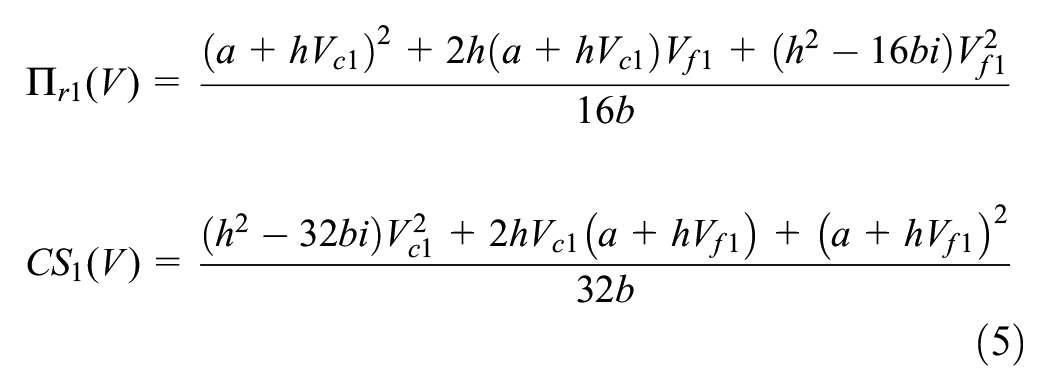
In the final step within model N, implementing first-order condition on equation (5) yields:

Solving simultaneous formulas of equation (6) yields the equilibrium of value co-creation efforts:

It is easy to obtain the rest equilibrium solutions (see in Table 2).
Equilibrium Solutions.

To simplify the calculation process, we set
To be noticed, as the relation between price and co-creation efforts is not the main research subject in this article, for the convenience of calculation,
Specifically, we use
The Encroachment Model (Model E)
To be compared with the benchmark model, the Encroachment Model is made up of a manufacturer (M2), a retailer (R2), and customers (C2). The main difference is that manufacturer kicks off a new sale channel—making direct sales to the customer. To be noticed, we set the manufacturer will only launch the direct sale channel when it is profitable. The Model E is listed below (see Figure 2):

Model E.
In model E, because the newly added direct channel does not have any co-creative feature, we introduce a nearly identical but simplified inverse demand function for the manufacturer:
The decision sequence of Model E is listed in Figure 3. Backward induction is implemented to identify the equilibrium of game theoretic models.

Decision timeline of Model E.
Given the wholesale price

To obtain the result of optimal sales of the direct sale channel in equation (8), first-order condition of

Substitute equation (9) into the expression of

The next decision is made by the manufacturer to choose the optimal wholesale price

Substituting the quantity of manufacturer’ direct channel, that of retailer and the wholesale price from equations (9) to (11) into the

The simultaneous solution of equation (12) yields the optimal co-creation efforts of retailer and customers in the encroachment setting:

The rest of the equilibrium solutions of the model E setup are also listed in Table 2. To be noticed, to make the direct channel profitable, the investment parameter must fit
To figure out the impact of value co-creation under the supplier encroachment setting, we subtract consumer surplus and the profit of the retailer in Arya et al. (2007)’s encroachment setting, namely,
Based on the results above, it can also be shown that the co-creative strategy implemented by the retailer leads to improved performance for both itself and its customers once the encroachment occurs. This finding challenges the common belief that supplier encroachment often erodes the profit of the retailer, as does not true in the value co-creative context. Most importantly, this result adds that value co-creation can increase the competitiveness of its participants in a coopetitive environment while the mainstream literature discusses it under the competitive environment. Thus, the co-creation serves as an effective investment to alleviate the competitive pressure brought by supplier encroachment and make it possible to create a win-win situation for all supply chain participants under the supplier encroachment.
The Effect of Supplier Encroachment on Co-creative Supply Chain
To answer the final research question of this paper, which explores the impact of supplier encroachment on value co-creation activities and the performance of participants in a dual-channel supply chain, a series of comparisons between the equilibrium solutions of Model N and Model E across different parameters are conducted.
Comparing the Investment of Co-Creation Efforts
By comparing the expressions of
The underlying reason for this result was identified by Arya et al. (2007) from the demand side, who explained that supplier encroachment encourages the manufacturer to lower its wholesale price, leading to increased sales for the retailer as customers prefer purchasing through the retail channel. From the customer perspective, in Model E, we perceive a growth in consumer surplus (i.e.,
The appearance of supplier encroachment indicates the intensification of competition. As such, Proposition 3 reveals the change of co-creation efforts of the retailer can be divided into three scenarios (see details in Appendix). In general, after the encroachment, the retailer will invest more effort when the investment parameter is low (
Comparing the Profitability
By comparing the profit of the manufacturer and the consumer surplus between model N and model E respectively. We find both the profit of the manufacturer and the consumer surplus will witness an increase after the encroachment (i.e.,
This result aligns with the findings of Arya et al. (2007), demonstrating that supplier encroachment can have positive effects on manufacturers and consumers under certain conditions. Our study extends this research by exploring these dynamics within the context of value co-creation. To gain a more detailed understanding of the dynamics, we compute the differences in manufacturer profits and consumer surplus before and after encroachment in both our study and Arya et al. (2007)’s research, and further compare the results.
By analyzing the result of manufacturers’ profits (See proof in Appendix.), we find that when
Unlike the manufacturer described by Arya et al. (2007) which had full control of the encroachment process and benefited from it, our findings reveal a new dynamic: in the value co-creative context, while the manufacturer remains profitable and often gains more compared to a non-co-creative setting, it may also be repelled by a retailer that has increased its competitiveness through value co-creation (see detail in Proposition 4b). when
The second finding of Proposition 4a is that when the manufacturer kicks off the direct sale channel, the consumer surplus ends up with an even better increment compared with Arya et al. (2007)’s. Thus, for Proposition 4a, we can conclude that although the results of the change in manufacturer’s profit and that in consumer surplus of our paper are seemingly in accord with Arya et al. (2007)’s research, the deeper mechanism is different due to the introduction of value co-creation.
To further explore the role of retailer plays in this our models. We compared the profit of the retailer in Model N and that of the retailer in Model E. It is found that when
In the premise of the manufacturer gaining from supplier encroachment under the co-creative circumstance, Proposition 4b indicates that even in the co-creative context, the conclusion from Arya et al. (2007) still partially stands. That is, when
Aiding to Arya et al. (2007)’s finding, where supplier encroachment can boost the whole industry profit conditionally. We observe below the threshold
To give readers a more intelligible understanding of Proposition 4a and Proposition 4b, Figure 4 illustrates the possible situation between the retailer and the manufacturer.

Demonstration of situation after the supplier encroachment.
From the perspective of the whole system, with the advent of co-creation, we find that the Expression
Proposition 4c proves that the investment parameter plays an important role in the whole system. Interestingly, in Proposition 4a and Proposition 4b, we have already found that the profit of the retailer may decrease when
In addition, according to the findings above, there is:
In Corollary 1, the conclusion of Arya et al. (2007) still partially gets verified that supplier encroachment can bring Pareto improvement for all participants. However, we further find that when
To expand the result of Proposition 4b, we find value co-creation can not only create a win-win situation between value co-creation implementors but also creates a win-win situation between firms (i.e., retailer & manufacturer) under the coopetitive environment when the investment parameter is small enough.
This finding also enriches the research on dual-channel investment. As Yoon (2016) reported that Pareto improvement can occur through the manufacturer’s self-interested investment which changes the profitability of the investor. We add that Pareto improvement can also be achieved by co-investment from the retailer and customers which changes the profitability and function of demand simultaneously.
Numerical Example
To give readers a deeper understanding of the results, a numerical example is implemented in this section to examine the above conclusions and illustrate the practical application of the theoretical model by demonstrating how different variables influence supply chain decisions and outcomes in our setting. Since the simplification of parameters is applied in numerous studies, we also normalize the market size
In this section, a numerical simulation of the optimal outcomes of customers’ investment in value co-creation effort is presented first. From Figure 5, it can be concluded that, the co-creation investment on the customers’ side after the encroachment is higher when compared with that before the encroachment regardless of the level of transaction cost and external environment. On the retailer side, from Figure 6, the increase in transaction cost will alter the threshold of the investment environment where the co-creation effort starts to decline after the encroachment. Thus, the results are consistent with Proposition 3 of this article.
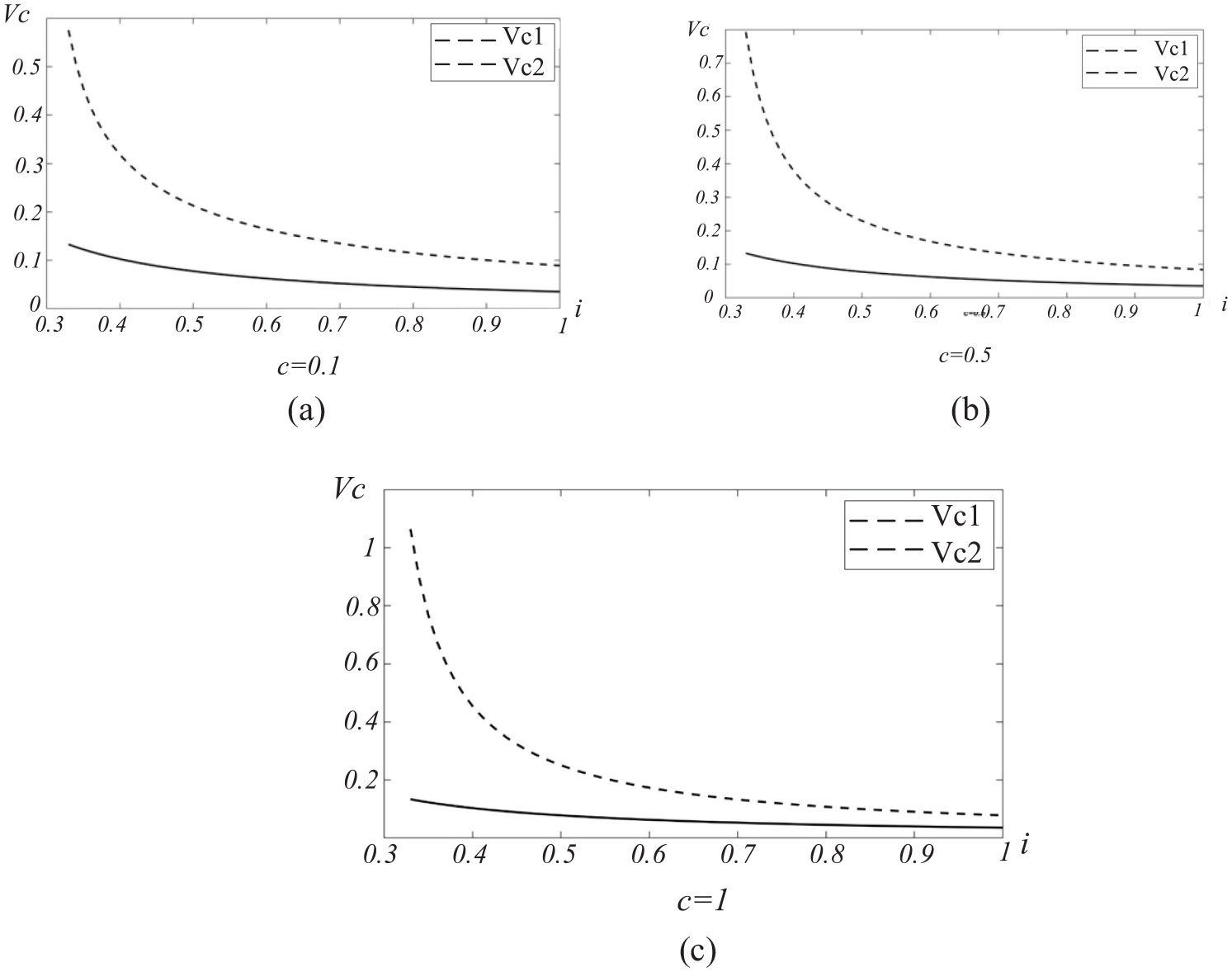
Customers co-creation efforts under different levels of transaction cost (a) Impact of encroachment on customers co-creation efforts (c = 0.1) (b) Impact of encroachment on customers co-creation efforts (c = 0.5). (c) Impact of encroachment on customers co-creation efforts (c = 1).

The retailer co-creation efforts under different levels of transaction cost (a) Impact of encroachment on retailer co-creation efforts (c = 0.01). (b) Impact of encroachment on retailer co-creation efforts (c = 0.15). (c) Impact of encroachment on retailer co-creation efforts (c = 1).
In Figure 7, we can verify that in the context of different levels of transaction costs, the profit of the retailer will witness different change patterns as the index of the investment environment grows, which is coherent with Proposition 4b.

The retailer’s profit under different levels of transaction cost (a) Impact of encroachment on retailer's profit (c =0.01).(b) Impact of encroachment on retailer's profit (c = 0.1). (c) Impact of encroachment on retailer's profit (c = 1).
As for benefits from the manufacturer and customers facets, we introduce Figures 8 and 9 respectively to exemplify Proposition 4a. It can be concluded that with the help of value co-creation, the profit of the manufacturer and the consumer surplus witness a boost after the encroachment despite the shift of transaction cost level, thus Proposition 4a is supported.

Consumer surplus under different levels of transaction cost (a) Impact of encroachment on consumer surplus (c = 0.1).(b) Impact of encroachment on consumer surplus (c = 0.5). (c) Impact of encroachment on consumer surplus (c = 1).

The manufacturer’s profit under different levels of transaction cost (a) Impact of encroachment on manufacturer's profit(c = 0.1). (b) Impact of encroachment on manufacturer's profit (c = 0.5). (c) Impact of encroachment on manufacturer's profit (c = 1).
Furthermore, a sensitivity analysis is conducted to test the robustness of the analytical results obtained in this paper. As a result, sensitivity analysis results are summarized in Tables 3 to 5 listed below and all propositions get verified.
The Sensitivity Analysis Results for Model N.

The Sensitivity Analysis Results for Model M.

The Sensitivity Analysis Results for Comparison Between Two Models.

Finally, to further enhance the persuasiveness of the sensitivity analysis and to validate the reliability of the co-creation investment parameter and transaction cost assumptions used in this study, the analysis is extended to examine scenarios beyond the feasible range of the basic model. As observed in Table 6, when the co-creation investment parameter is less than the threshold value of
The Sensitivity Analysis Results for Comparison Between Two Models Beyond the Feasible Range.

Conclusion
In recent years, as supplier encroachment has become more popular, retailers have tried to mitigate their potential losses by increasing their competitive edge through service investment. Value co-creation, as a service investment jointly participated by enterprises and customers, has been proven to effectively bolster implementors’ competitiveness. At the same time, according to the existing literature, value co-creation and supplier encroachment may have impacts on each other. However, few studies have looked into these two topics simultaneously. This paper constructs a set of coopetitive supply chain models where downstream retailer invests in value co-creation with customers to study the effects of supplier encroachment and value co-creation on each other. Specifically, our study reveals: (a) the impact of value co-creation on the supply chain with/without supplier encroachment; (b) the impact of supplier encroachment on the investment behavior of value co-creation participants; and (c) the overall impact of supplier encroachment on the entire supply chain under the premise of retailer value co-creation.
Key Findings and Managerial Implications
This study offers valuable insights and practical implications for firms facing supplier encroachment, summarized as follows.
First, downstream firm can leverage value co-creation as a defensive strategy. The research demonstrates that value co-creation can benefit retailers and customers in both traditional and encroached supply chains. When a strong co-creation environment is established, it can deter manufacturers from launching a profitable direct sales channel. Therefore, managers in downstream enterprises should enhance co-creation activities with customers to strengthen their channel power and leverage their proximity to customers. For instance, Starbucks has effectively used co-creation through its My Starbucks Idea platform to build a loyal community and enhance customer engagement. By involving customers in the idea generation process, Starbucks has not only strengthened its brand loyalty but also developed innovative products and services that resonate with its customer base. Compared to its dozens of suppliers worldwide, value co-creation has provided Starbucks with a significant competitive advantage and brand effect, thereby reducing the risk of supplier encroachment.
Second, in the context of value co-creation, supplier encroachment offers downstream firms an opportunity for strategic adjustment. Obtained findings indicate that supplier encroachment stimulates customers to invest more in co-creation, while the retailer’s efforts are influenced by the competitiveness of the direct channel. To navigate this, retailers in practice must align their co-creation strategies with the level of competition they face. Specifically, if the direct channel presents a minor threat, retailers can enhance their competitive advantage by increasing their investment in value co-creation. However, when competition intensifies, continuing to invest in co-creation may not be the optimal strategy. In such cases, downstream retailers should consider collaborating with upstream manufacturers, for example, through the development of private labels. Retail giants such as Walmart, Aldi, and Costco collaborate with manufacturers to produce private label products, which are sold exclusively through their own channels. This approach allows these retailers to exert control over pricing, quality, and branding, thereby strengthening their market position and mitigating the impact of competition from direct channels.
Third, embracing value co-creation can lead to a win-win scenario for both manufacturers and retailers. Our study finds that supplier encroachment, under favorable co-creation conditions, can result in a Pareto improvement for the entire supply chain. This challenges the traditional view that increasing retailer profit is strictly dependent on reducing transaction costs (Arya et al., 2007), and demonstrates that value co-creation can serve as a primary driver of mutual benefits. Consequently, upstream manufacturers with retail divisions are encouraged to integrate co-creation into their strategy to foster win-win outcomes. Independent retailers, on the other hand, should focus on enhancing the co-creation environment to improve performance when facing supplier encroachment, rather than merely attempting to lower transaction costs. For example, Nike has successfully adopted a win-win approach by encouraging customer co-creation through its Nike By You platform, while simultaneously operating its own retail stores. This demonstrates that even when manufacturers have direct channels, co-creation remains a viable strategy for driving mutual gains.
Research Limitations & Future Research
This study constructs a general theoretical model to examine the interaction between value co-creation and supplier encroachment in the context of the dual-channel supply chain for future study. While the findings provide valuable insights and a general framework for understanding co-creation in a dual-channel structure, there are several limitations that future research could address.
First, the study assumes homogeneity in co-creation efforts between retailers and customers. In practice, the motivations, resource endowments, and the benefit from co-creation efforts may vary significantly between individuals and organizations. Further research could delve into the heterogeneous nature of co-creation participants, examining how characteristics of different co-creators affect the overall dynamics of co-creation and supplier encroachment.
Second, this model is primarily developed within the context of traditional retail channels. In reality, many businesses now engage customers through online platforms, which typically employ commission-based business models rather than traditional markup strategies. Moreover, in the academic field, the issue of supplier encroachment in the context of platforms has also emerged as a recent research focus, reflecting the growing importance of digital marketplaces in shaping competitive landscape (Bian et al., 2024; Yang et al., 2024). Future research could extend the current study by incorporating platform-specific features, such as commission rate and digital engagement mechanisms, to better reflect the evolving retail landscape.
Furthermore, the study does not explicitly account for the variability across different industries or market conditions. Factors such as market competition, information symmetry, and consumer knowledge and shareholding structure can vary significantly across industries and may influence the interaction between value co-creation and supplier encroachment (Li et al., 2015; Liu & Zhou, 2024; Vargo & Lusch, 2016). Therefore, applying this model to specific industries or market contexts would provide a more nuanced understanding of its applicability and limitations.
Lastly, this study adopts a relatively static perspective, considering value co-creation as the only dynamic factor in the supply chain system. In reality, the market is inherently dynamic, with external factors such as regulatory changes and technological advancements constantly evolving. Regulatory environments can shift, affecting the feasibility and attractiveness of supplier encroachment and co-creation strategies. Similarly, technological progress can introduce new forms of co-creation and alter the competitive dynamics between firms and customers. Future research should, adopt a more dynamic approach, taking into account how these external factors evolve over time and influence the strategic interactions within the supply chain.
Footnotes
Appendix
When
Author Contributions
The authors contributed equally to this work.
Declaration of Conflicting Interests
The author(s) declared no potential conflicts of interest with respect to the research, authorship, and/or publication of this article.
Funding
The author(s) disclosed receipt of the following financial support for the research, authorship, and/or publication of this article: This research is supported by National Natural Science Foundation of China under grants G0571971043, 71872027 and 72172024.

Data Availability Statement
Data sharing not applicable to this article as no datasets were generated or analyzed during the current study.