




Abstract
In academic performance assessments, citations and citation-based metrics play a pivotal role. Among the elements that influence the success of an article, the title stands out as the first point of contact for editors, reviewers, and readers. Consequently, the title length-citation relationship is an extensively studied issue. While the dominant language used in the databases is English, rhetorical discourses are dominant in the non-English literature about the appropriate length of titles. This study investigates the relationships between title lengths, article downloads, and citations for educational research articles in the Turkish context. Specifically, it focuses on articles indexed in TRIndex and Google Scholar that were published in the Turkish Journal of National Education between 2010 and 2015. The parametric and nonparametric tests using different approaches (median and quarterly classification, correlation analysis) reveal a low negative correlation between title lengths and citations and downloads, a moderate positive correlation between downloads and citations, and a high positive correlation between the citations in the databases. It has been observed that the articles with short titles are read and cited more than the ones with longer titles. These findings align with previous research conducted in the English language. The results suggest that the optimal title length for educational research coincides with “the magical number seven, plus or minus two,” often referred to as Miller’s Law, which represents the number of objects an individual can retain in their short-term memory. The study provides practical implications for authors, editors, and researchers on optimizing title length for better visibility and impact.
Introduction
In the realm of academic publishing, the title of a research article serves as the proverbial “first impression” and is often the decisive factor that determines whether an article garners attention or languishes in obscurity. It is the gateway that welcomes editors, reviewers, and readers into the world of scholarly work. As researchers, we have long been aware of the paramount importance of the title, but it is its length that has remained a subject of both scholarly intrigue and pragmatic concern. In the digital age, where information abundance competes for readers’ attention, the ability to craft a title that is both concise and captivating is of paramount importance.
Academic journals and books play a leading role among the official communication channels of science in the process of knowledge construction, dissemination, and use (Hicks, 2012). However, the intensity of the use of these channels may vary over time between various branches of science. Included among the main reasons for (the variations) this difference is the fact that the field has universal or local characteristics, the nature of the information, whether up-to-date or retrospective, and whether it is suitable for teamwork (Diem & Wolter, 2013; Hicks, 2012; Nederhof, 2006; Özenç-Uçak & Al, 2008) internationalization in the field of education, which as a subdiscipline of social sciences, combined with the rapid development of the relationship of education with other disciplines has resulted in academic journals in this field coming to the fore in recent years (Aman & Botte, 2017; Budd & Magnuson, 2010; Goodyear et al., 2009; Huang et al., 2020; Sezgin et al., 2022). This transformation has brought academic journals in the field of education to the forefront of scholarly discourse.
Advances in technology have made it possible to access information quickly, and the amount of accessible information has increased daily and exponentially (Fire & Guestrin, 2019; X. Hu et al., 2020; Ioannidis et al., 2018). Therefore, the competitive environment driven by the growing number of academic journals and the relentless “publish or perish!” ethos among researchers, now demands a critical examination of the trade-off between “quality versus quantity?” (Civera et al., 2020; McGrail et al., 2006; K. Orbay et al., 2020; van Dalen, 2021). For this reason, tracking publications and analyzing them based on various criteria has gained paramount significance for journals, researchers, research institutions, funders, and even the nations in which the research is published (Aksnes et al., 2019; Donthu et al., 2021; Liu et al., 2020).
Metrics such as the journal impact factor, h-index, impact factor quartile, and g-index used to measure the contribution of articles to the field of science are based on the “citation count,” which is an accepted measure of the widespread impact of articles (Aksnes et al., 2019; Ellison, 2013; Karamustafaoğlu & Orbay, 2021). A comprehensive discussion of metrics developed around citations and fundamental approaches for assessing research quality can be found in Aksnes et al.’s (2019) review. As the volume of daily published articles grows exponentially, citation numbers take on heightened significance as they provide a means to evaluate article quality. As a result of the citation analysis, it has been observed that 90% of the articles are not cited at all and 50% of them are not read except by the authors, editors, and reviewers (Meho, 2007).
Factors Affecting the Number of Citations
“What and how,” that is, the influence of research articles, both in terms of content and methodology extends beyond academic careers and has a ripple effect on the prestige of journals, as well as the popularity of research topics. In addition, the decision-making processes of policymakers and funders frequently discuss these topics in academic environments (Ha, 2022). The factors that underpin the number of citations an article receives have been extensively explored in the literature, and these investigations can be broadly grouped into three categories (Heßler & Ziegler, 2022).
The first category consists of factors directly associated with the journal itself, such as the number of journals in the research field, publication language, impact factor, and the databases in which it is indexed. Therefore, authors typically have limited influence over these journal-related factors, aside from the selection of the journal to which they will submit their articles.
The second category revolved around factors linked to the authors, including the researchers’ recognition within their field, the number of authors involved in a project, the extent of national or international cooperation, and the funding status of the research.
The final category encompasses factors related to the article itself. These factors consist of the type of research, originality, method, findings, date of publication, number of references, and length of the article. As these are inherent to the work produced, they cannot be easily changed directly by the authors and would not be adjusted unless it is mandatory. Furthermore, elements such as the article title, abstract, and keywords also fall within this category. Authors have direct control over these components, and they play a pivotal role in establishing connections between articles and relevant stakeholders through online database searches (Bornmann & Daniel, 2008; Ebrahim et al., 2014; Heßler & Ziegler, 2022; Tahamtan et al., 2016).
Importance of Article Title
The article title serves as the primary label for a research paper, offering journal editors, reviewers, and fellow researchers their initial glimpse into the content. It should not only convey information about the article’s subject and methodology but also possess characteristics that entice readers to delve further (Güneş & Çevik, 2016; Hartley, 2005; Harzing, 2022). In particular, feedback from prestigious international journal editors implies a direct link between title quality and article quality, as “people who cannot think up a decent title are less likely to have written a decent paper” (Gjersvik et al., 2013). In contrast, a study involving 5,000 researchers revealed a fascinating trend: while the researchers skim through an average of 1,142 article titles per year, they only invest their time in reading the abstracts of 204 articles and the full texts of merely 97 (Mabe & Amin, 2002).
With the widespread use of online environments in literature searches and the exponential increase in the number of articles, there has been an increase in the number of studies on article titles, including their length (Elgendi, 2019; Fiala et al., 2021; Fumani et al., 2015; Guo et al., 2018). This heightened interest has given rise to a distinct subfield known as “Titleology” in the western literature in recent years (Appiah, 2021; Diao, 2021; Pearson, 2020, 2021; Soler, 2011). The study within the new field reduces to sub-research problems such as title length, syntax in the title, and punctuation use (Alohali et al., 2022; Fox & Burns, 2015; Goodman & Smith, 2000; Guo et al., 2018; Hyland & Zou, 2022; Jiang & Hyland, 2022).
The Relationship of Title Length, Citations, and Downloads
Title length refers to the measurement of the number of words or characters used in the title. Since in many studies, the number of words is commonly used for title length, what is meant by the length of the title is the number of words in the title. The relationship between title length and citation has been studied extensively in the literature. This section presents an overview of the outcomes derived from various studies, encompassing the databases used in those studies, the samples, and the findings of this specific investigation, all of which are summarized in Table 1. Furthermore, a correlation can be observed between this research and the study conducted by Subotic and Mukherjee (2014), which summarizes the relationship between the characteristics of the titles and the number of citations in the context of the sample and study area in previous years.
Some Studies on Title Length-Citation Relationship.
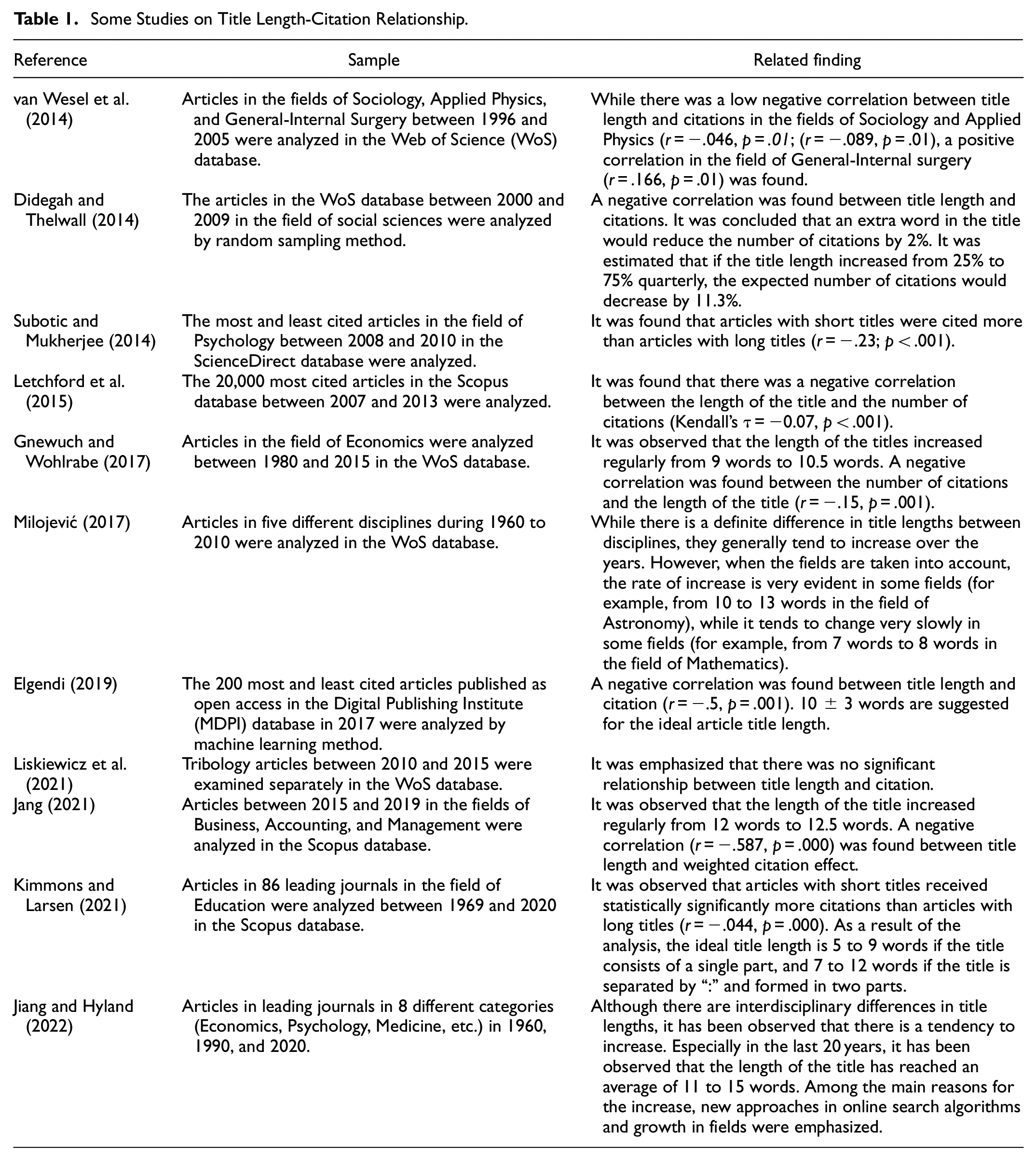
When the studies that focus on the title length-citation relationship are evaluated in general, the results are as follows:
Title lengths differ between research areas,
Although the rate of change from area to area has been different over time, there is a tendency to increase,
Except for a limited number of examples, it can be summarized as “articles with short titles have received more citations than articles with long titles.”
Articles in journals indexed in databases such as WoS and Scopus (Pranckutė, 2021), which are internationally accepted in academic platforms, were chosen as samples. However, the language of publication in these databases is English (Hyland & Jiang, 2022; Örnek et al., 2021; Pranckutė, 2021; Sezgin et al., 2022; T. van Leeuwen, 2006). Therefore, it is important to reconsider the relationship between the characteristic features of their titles and the number of citations, taking into account the differences in the language structures of other languages. In this context, databases such as the Turkish citation index (TRIndex, 2022), the Korean citation index (Ko & Park, 2013), and the Russian citation index (Moskaleva et al., 2018), which have national or regional characteristics, gain importance in the search for similar features.
With the widespread online publication of academic journals, the number of downloads of articles from both publisher web pages and databases is an issue not only for publishers but also for many researchers, especially librarians (B. Hu et al., 2021). The main reason for this is that the downloaded data is accepted as a measure of interest in the article, furthermore, it has started to be used as the first predictor of possible future citations. It is shown that there is a positive correlation between the number of downloads and citations in the studies, although at different levels (Arslan et al., 2022; Moed, 2005; Moed & Halevi, 2016; Schloegl & Gorraiz, 2010). B. Hu et al. (2021) made a broad critique of the relationship between downloads and citation counts.
Although the internationalization and interdisciplinary working culture in the field of education are increasing, it should not be forgotten that the knowledge produced in the field is fed by the region, social conditions, as well as the political and cultural climate (Diem & Wolter, 2013; Hicks, 2012; Nederhof, 2006; Özenç-Uçak & Al, 2008). This situation makes the production and consumption of knowledge in the field of education valuable at the national level and reveals the importance of publications in the mother tongue. The educational area, unlike fields such as medicine, engineering, and basic sciences, has some subjects which are not under the pressure of time. For this reason, national-level research and retrospective archival information can only link-up with relevant stakeholders through publications in the native language at the national level (Diem & Wolter, 2013; Hicks, 2012; Nederhof, 2006; Özenç-Uçak & Al, 2008).
Although the discussions on the length of the titles continue in English, the discussions on the titles of the articles in Turkish are at the level of rhetorical discourse (Ufuk, 2017a). In this context, the titles of Turkish articles are not an overstudied subject, and the studies can be evaluated mostly in terms of language and text-writing rules. There are a limited number of pioneering articles that analyze the titles of Turkish articles (Deniz & Karagöl, 2018; Güneş, 2015; Güneş & Çevik, 2016; Ufuk, 2017a, 2017b). The Turkish article titles in Güneş and Çevik (2016) education faculty journals focused on title length, punctuation usage, grammatical errors, and compatibility with text content. The study by Ufuk (2017a, 2017b) examined the article titles in the journals Belleten, which publishes in the field of History, and Bilig, which publishes in the field of social sciences, in terms of title length, text arrangement, title type, and punctuation mark usage. Güneş and Çevik (2016) emphasized that the length of the titles is mostly more than eight words, which is more than necessary. Ufuk (2017a, 2017b) emphasized that the length of the titles consisted of nine words on average, which was in line with the articles in English. Deniz and Karagöl (2018), on the other hand, examined the author’s guides of journals in the field of education and drew attention to the common acceptance that the length of the title should not exceed 12 words. The common view emphasized both in these studies and in studies on Turkish article writing techniques is that the titles should be as short as possible, probably due to the influence of Western literature. Considering that the definitions of “Long” and “Short” are relative, and on the other hand, the differences in the language structures of Turkish and English are taken into account. As such statements which are not supported by data cannot go beyond rhetorical discourse. This study delves into the multifaceted relationship between title length and the impact of educational research articles, particularly in the context of Turkish literature. We aim to uncover the connections between title lengths, article downloads, and citations, shedding light on a fundamental yet understudied aspect of academic communication.
Purpose and Importance of the Study
Every year, as mentioned above, the number of articles increases exponentially compared to the previous years (Fire & Guestrin, 2019; X. Hu et al., 2020; Ioannidis et al., 2018). However, while a limited number of articles receive attention and citations, many receive little or no citations (Meho, 2007). Citations in academic platforms and metrics developed based on citations are frequently used in performance evaluation (Aksnes et al., 2019). For this reason, the “title” part of the article, which is read the most, and which initially welcomes the editor, reviewer, and reader, is of more importance. In international literature, the relationship between the title length and citation count has been extensively studied, with English being the dominant language in the databases examined. Conversely, in the national literature concerning the ideal length of titles in Turkish, rhetorical discourses prevail.
In light of the preceding discussion considering the interplay of title length, citations, and downloads, this research aims to investigate the relationships between the criteria listed below for Turkish education research published in the Turkish Journal of National Education journal during 2010 to 2015, utilizing TRIndex and GS database as the primary data sources. Specifically, the study seeks to address the following Research Questions (RQ) pertinent to Turkish educational research:
RQ1: What is the relationship between title lengths and the number of citations and downloads?
RQ2: What is the relationship between the number of citations and downloads?
This study contributes to the literature in several ways.
First, it marks the first study, to the best of the authors’ knowledge, which incorporates data acquired through citation analysis, extending beyond rhetorical discussions concerning the ideal title lengths for Turkish educational research. Second, building upon the results of the analysis, the study delves into the concept of the optimal title length for Turkish educational research. These discussions are expected to offer valuable insights into the editorial and referee evaluations of articles created through diligent research efforts, as well as their interaction with relevant stakeholders post-publication, thereby influencing the construction, dissemination, and utilization of scientific knowledge.
Method
Research Design
This study was conducted using the bibliometric analysis method. As is well-known, the term “bibliometric” was first coined by Pritchard (1969), who describes it as “the implementation of mathematics and statistics to books and other communication media”. On the other hand, the research of bibliometric analysis can be dated back to the 20th century (Phoong et al., 2022). The primary significance of bibliometric analysis is its capacity to synthesis massive volumes of bibliographical data in order to discover research trends and features (Donthu et al., 2021; Zhang & Liang, 2020). Bibliometric analysis is used to understand the contribution to the relevant field in the present, to make inferences between the past and the future by analyzing the environments in which the scientific information is published, and to assess the contribution of the publications to the fields with their characteristics based on various criteria (Aksnes et al., 2019; Merigó & Yang, 2017; Tsay & Shu, 2011). In this context, bibliometric analysis is based on quantitative measurements of qualitative aspects such as the quality of research (Donthu et al., 2021; T. N. Van Leeuwen, 2004). Given that the objective of this study is to investigate the relationship between the length of research article titles, citations, and downloads, the research method of bibliometric analysis was chosen to facilitate this exploration.
Data Source
The data source of this study consists of 350 research articles published in Turkish between 2010 and 2015 in the Turkish Journal of National Education, which the Turkish Ministry of National Education started to publish in 1973 (Turkish Journal of National Education [TJNE], 2022). The year 2010 was chosen as the lower limit of the time interval because, since 2010, all issues of the journal and the number of downloads of the articles have been available online via DergiPark (2022). The reason the upper limit of the time interval was chosen in 2015 was to keep data comparable as the citation characteristics of social sciences are different from other fields (Archambault & Larivière, 2010). That is, articles in medicine, engineering, and basic sciences begin to be cited immediately after they are published with citations peaking at the end of the third year. In the social sciences, on the other hand, articles do not receive many citations in the first years, and the citation peaks almost toward the 10th year. Therefore, a period of at least 5 years is needed for the citation analysis of articles in social sciences (Archambault & Larivière, 2010). Another important reason for choosing the Turkish Journal of National Education is that since 2006, the journal has been scanned in TRIndex (2022) at the national level and Scopus databases at the international level. Since the indexing of the articles in the Scopus database is mainly done using English titles and abstracts (Baas et al., 2020), it was not taken into account in the citation analysis. Instead, the Google Scholar (GS) database was used. As it is known, the GS database has the widest search network and takes into account not only the citations from the articles, but also the citations from many early published materials such as thesis, books, and scientific reports (Halevi et al., 2017; Jacsó, 2005). Duplicate citations in the GS database have been cleared. Data collection was carried out between 12.11.2022 and 23.11.2022. Open-source databases were used in the study, and ethics committee approval was not required.
Data Analysis
Data were analyzed using IBM SPSS 25.0 software. Descriptive statistics such as minimum, maximum, median, mean values, and frequencies were used to give information about the title lengths, GS citations, TRIndex citations, download numbers, and the number of authors. Because the number of citations and downloads of the articles in the databases is time-dependent and tends to increase over time, the per year-by-year (PyBy) change in the number of citations and downloads was calculated separately to control this situation (Kimmons & Larsen, 2021). Preliminary analyses were conducted to examine the distribution of the data and assumptions of statistical analysis as suggested by Tabachnick and Fidell (2013). Normality assumption was examined using skewness and kurtosis values of each variable. As a general rule skewness and kurtosis values between −2 and 2 are considered within acceptable range (George & Mallery, 2022). Examination of skewness and kurtosis values indicated that GS citations, TRIndex citations, and the number of downloads significantly deviate from normal distributions (Table 3). Because the normality assumption was violated in these variables, data were analyzed after the cube-root transformation of GS citations, TRIndex citations, the number of downloads that required to use of independent samples t-test, and Pearson product-moment correlation analysis. The cube-root transformation method is used when researchers need to reduce the effects of outliers, stabilizing variance, reducing the impact of outliers, and making patterns in the data more interpretable as in this study (Fink, 2009; Hoyle, 1973; Osborne, 2010). According to Tabachnick and Fidell (2013), although transformation often hinders interpretation, if the scale is somewhat arbitrary anyway (as is often the case), transformation does not notably increase the difficulty of interpretation as in this study. The title length was analyzed generally using three different methods in the literature namely median classification, quarterly classification, and correlation analysis.
The median classification method firstly orders title length values from longest the shortest. Articles with a title length equal to or above the median and median value are defined as “Long,” and articles below the title are accepted as “Short” titles. This method used in previous studies (Elgendi, 2019; Letchford et al., 2015; Paiva et al., 2012). Similar to the median classification method, the quarterly classification method firstly orders title length values from longest to shortest and divides them into quarters based on the first quartile (25%) and third quartile (75%). Articles in the upper quartile (third quartile) are accepted as “Long,” and articles in the lower quartile (first quartile) are defined as “Short” articles. This method was also used in previous studies (Moldwin & Liemohn, 2018; Paiva et al., 2012). Lastly, correlation analysis was also used to examine the strength and direction of the relationship between title length, citations, and download numbers. This method was also used in previous studies (Elgendi, 2019).
Considering previous studies and current data, we first examined differences in GS citations, TRIndex citations, downloads, PyBy GS citations, PyBy TRIndex citations, and PyBy downloads with respect to three different classification methods based on transformed raw data. In these analyses, independent t-tests were used to examine differences with respect to article title length based on three different methods. Moreover, Pearson product-moment correlation analysis was used to examine the association between title length, GS citation, TRIndex citation, Downloads, PyBy GS citations, PyBy TRIndex citations, and PyBy downloads. The non-parametric equivalent of independent sample t-test and Pearson product-moment correlation analysis namely Mann-Whitney U Test and Spearman’s rank order correlation analysis to examine the robustness of findings based on the raw data. This method was also used in previous studies (Moldwin & Liemohn, 2018; Paiva et al., 2012). Because the independent samples t-test also has a homogeneity of variance assumption, we used the Welch t-test when this assumption was not met. The level of significance was accepted as p < .05 for statistical analyses (Cohen, 1988).
Results
Descriptive Statistics
The change in the number of articles constituting the sample of the study and the number of authors in the articles by year is given in Figure 1.

Change by years: (a) number of articles and (b) average number of authors in articles.
A total of 350 research articles indexed in both the TRIndex and GS databases were published in the Turkish Journal of National Education between 2010 and 2015. The average number of authors per article for the period studied is 1.64, the median value is 1, and the majority of the articles are single-authored (52.9%). On the other hand, 34% of the articles have two authors, 10.3% have three authors, 1.7% have four, and 1.1% have five authors. The descriptive statistical data for the variation in the headline length by year are given in Table 2, and the frequency distribution of the title lengths for the studied period is given in Figure 2.
Descriptive Statistics for Title Lengths by Year.

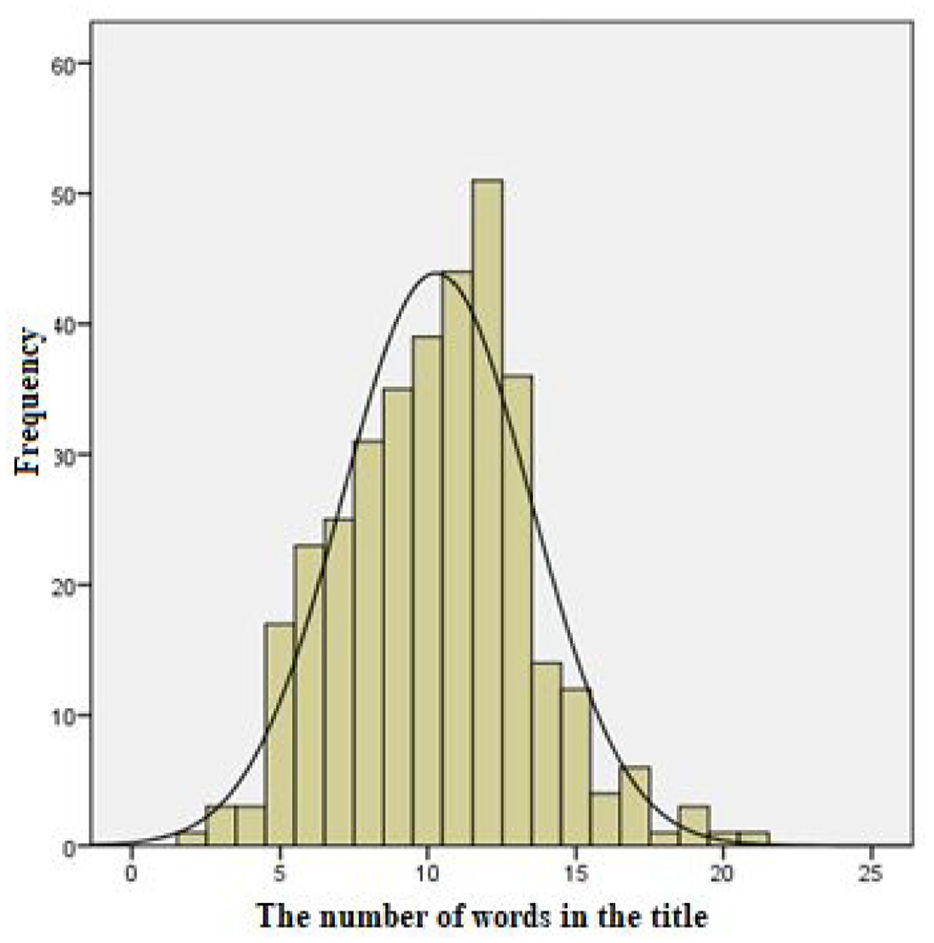
Title length distribution.
The length of the title, the number of citations and downloads in the GS and TRIndex databases, and the year-to-year changes for each independent variable are reported in Table 3. As can be clearly seen from the data in Figure 2 and Table 3, the cube-root transformation was applied to these data since the data other than the cap length did not follow the normal distribution (Hoyle, 1973). The data after this transformation shows a distribution close to normal.
Descriptive Statistics on Variables.

Average title lengths and standard deviation values for articles classified as “Long” and “Short” in the median and quartile classification are given in Table 4.
Number of Articles (n) in Each Approach and Average Title Length.
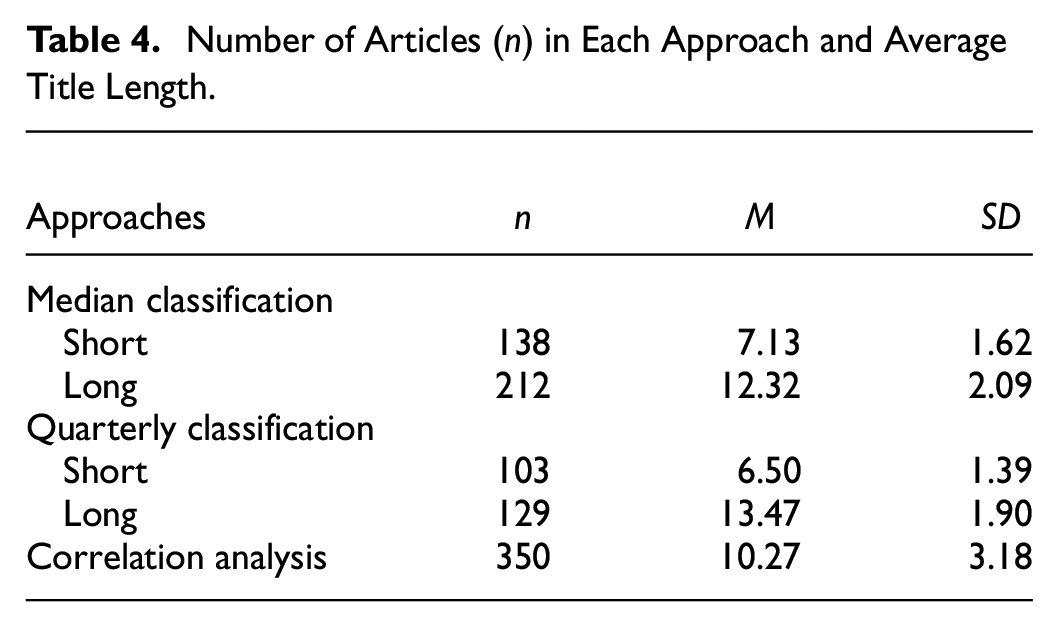
Table 4 shows that while the average “short” title length was 7.13 (SD = 1.62) according to the median classification, this value was 6.50 (SD = 1.39) in the quarterly classification. On the other hand, while the average “Long” title length was 12.32 (SD = 2.09) according to the median classification, this value was 13.47 (SD = 1.90) in the quarterly classification. When the articles were evaluated in general, the average value for the title lengths was 10.27 (SD = 3.18).
Findings for the Median Classification
Independent samples t-test results for the median classification were summarized according to the article title length in Table 5.
Independent Samples t-Test Results for the Median Classification.

Note. The mean and standard deviation values reported in the table belong to the raw data. Inferential statistics are reported from transformed data.
p < .01. p < .001***.
As seen from Table 5, as a result of the independent samples t-test, it was observed that there was a significant difference between the groups according to the length of the title, the number of GS citations and downloads, and the number of GS citations and downloads from year to year. This difference has a low effect size. According to the median classification, the number of GS citations and downloads of articles with short title lengths and the number of GS citations and downloads from year to year are statistically significantly higher than those of articles with long titles. However, no significant difference was observed in TRIndex and TRIndex citation counts from year to year, although articles with short titles received more citations than articles with long titles.
Findings for the Quarterly Classification
Independent samples t-test results for the quarterly classification were summarized according to the article title length in Table 6.
Independent Samples t-test Results for the Quarterly Classification.

Note. The mean and standard deviation values reported in the table belong to the raw data. Inferential statistics are reported from transformed data.
p < .05. **p < .01. p < .001***.
Table 6, as a result of the t-test for the independent samples, shows that there was a statistically significant difference between the groups according to the length of the title, the number of GS and TRIndex citations and downloads, and the number of GS and TRIndex citations and downloads from year to year. These observed differences between groups have low to moderate effect sizes. According to the quarterly classification, the number of GS and TRIndex citations and downloads of articles with short titles and the number of citations and downloads of GS and TRIndex articles from year to year are significantly higher than those of articles with long titles.
Findings for Correlation Analysis
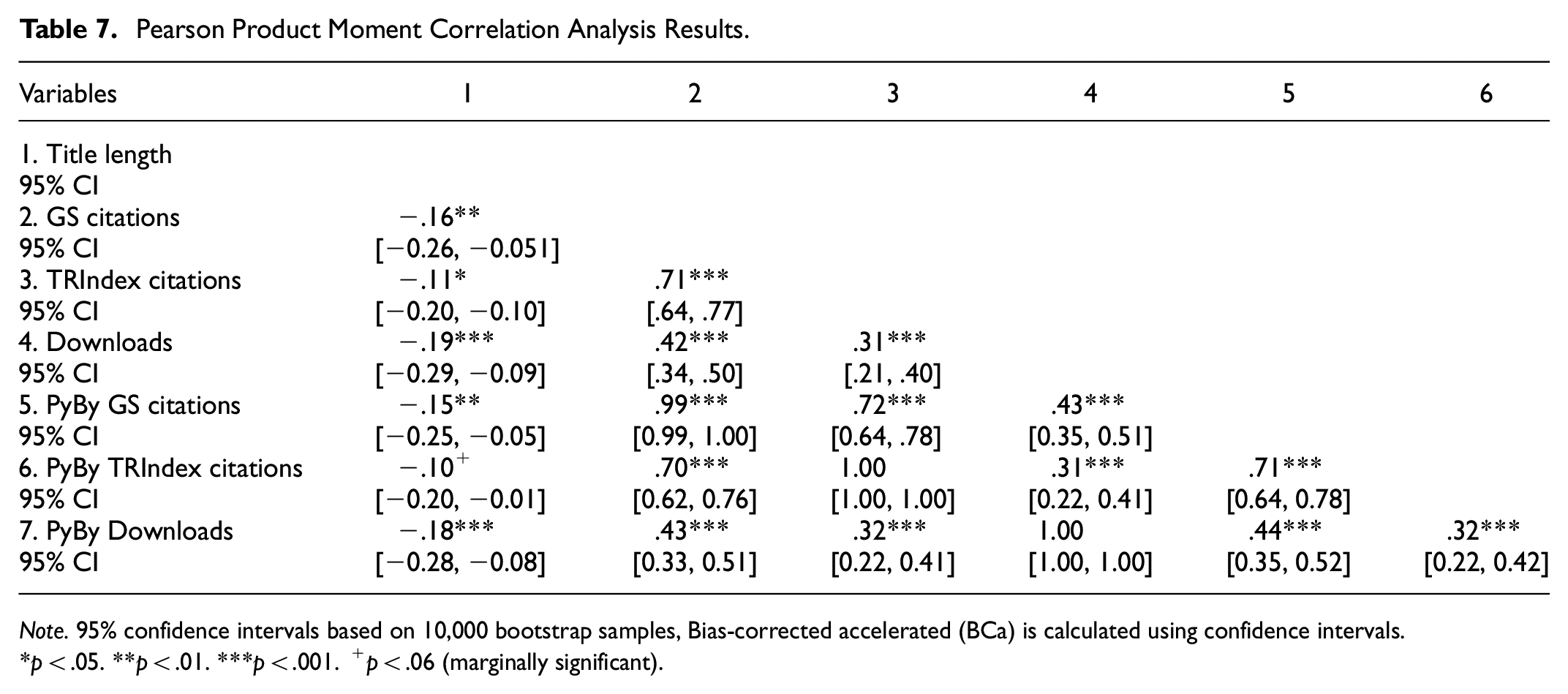
Table 7 shows the results of the Pearson Product Moments correlation analysis, which was performed to determine the strength and direction of the relationship between the title length, the number of GS and TRIndex citations and downloads, the year-to-year changes of these variables, and the mean and standard deviation values of the variables.
Pearson Product Moment Correlation Analysis Results.
Note. 95% confidence intervals based on 10,000 bootstrap samples, Bias-corrected accelerated (BCa) is calculated using confidence intervals.
p < .05. **p < .01. ***p < .001. +p < .06 (marginally significant).
As shown in Table 7, for the length of the title, there is a low negative correlation between the number of GS and TRIndex citations and downloads and the calculated values for the year-to-year changes for each of these variables. In addition, there is a moderate positive correlation between the number of GS and TRIndex citations and downloads and the values calculated for the year-to-year variation of each of these variables. On the other hand, there is a high positive correlation between GS and TRIndex and between GS and TRIndex citations from year to year.
Findings for the Nonparametric Test Results With Raw Data
Table 8 shows the mean rank according to the median classification of the title length and the results of the Mann-Whitney U test.
Mann-Whitney U Test Results According to Median Classification.

Note. The mean and standard deviation values reported in the table belong to the raw data. Inferential statistics are reported from transformed data.
p < .05. **p < .01. ***p < .001.
As shown in Table 8, according to the length of the title as a result of the Mann-Whitney U test, there was a significant difference between the groups for the number of GS and TRIndex citations and downloads and the changes in these variables from year to year. This difference has a low effect size. According to the median classification, the number of GS and TRIndex citations and downloads of short-titled articles is significantly higher than that of long-titled articles. The same is true for the data calculated by considering the change in these variables from year to year.
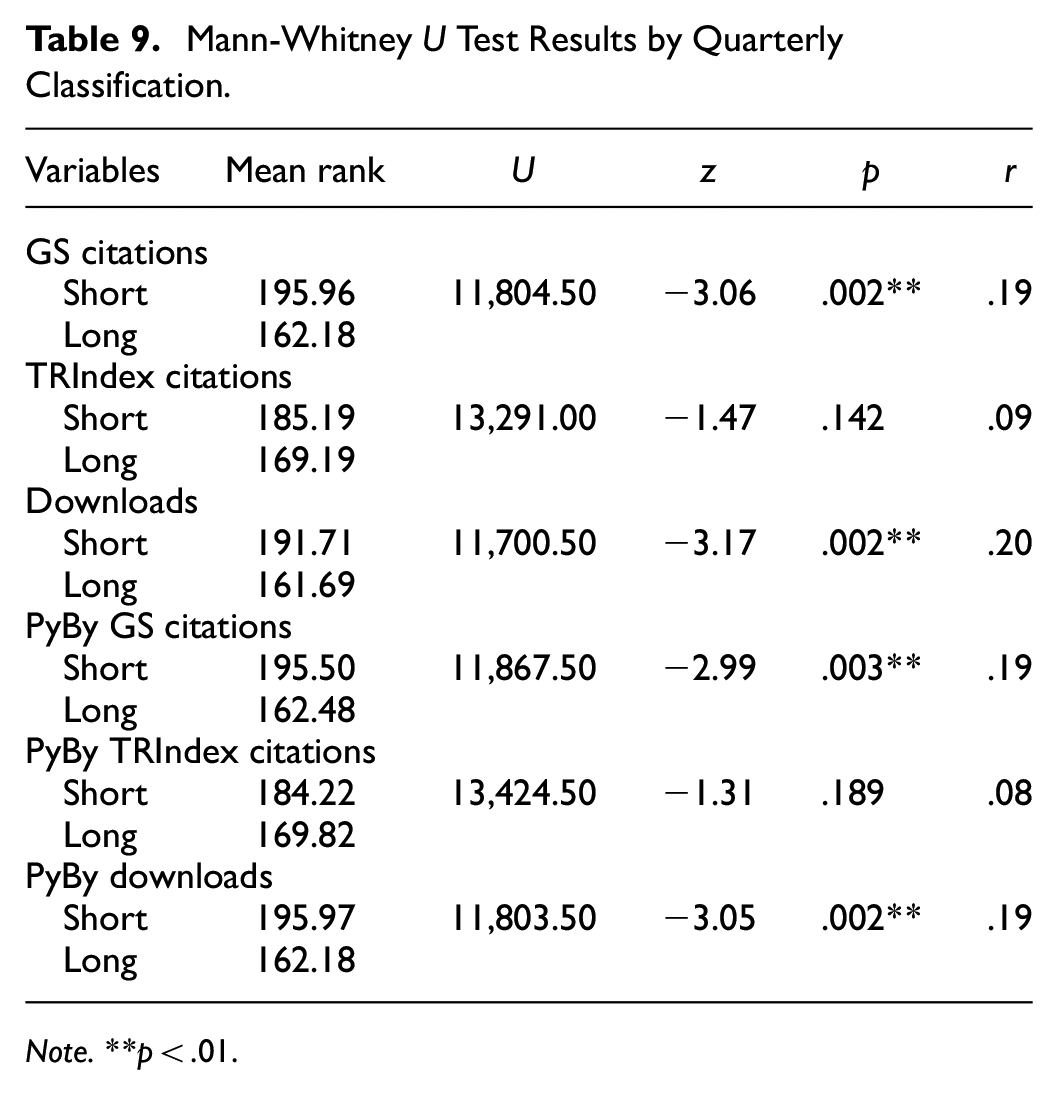
Table 9 shows the mean rank according to the quarterly classification of the title length and the results of the Mann-Whitney U test.
Mann-Whitney U Test Results by Quarterly Classification.
Note.**p < .01.
As seen from Table 9, according to the title length as a result of the t-test for the independent samples, there is a significant difference between the groups in the number of GS citations and downloads and the number of GS citations and downloads calculated for these variables from year to year. These differences observed between groups have a low effect size. According to the quarterly classification, the number of GS citations and downloads of articles with short titles is significantly higher for year-to-year changes in GS citations and downloads than for articles with long titles.
Table 10 shows the results of Spearman’s rank order correlation analysis, which were carried out to determine the strength and direction of the relationship between the length of the title, the number of GS and TRIndex citations, and downloads, and the number of GS and TRIndex citations and downloads from year to year.
Spearman’s Rank Order Correlation Analysis Results.

Note. 95% confidence intervals based on 10,000 bootstrap samples, Bias-corrected accelerated (BCa) is calculated using confidence intervals.
p < .05. **p < .01. ***p < .001.
As seen from Table 10, there is a low negative correlation between the number of GS and TRIndex citations and downloads and the calculated values for the year-to-year changes for each of these variables. In addition, there is a moderate positive correlation between the number of GS and TRIndex citations and downloads and the values calculated for the year-to-year variation of each of these variables. On the other hand, there is a high positive correlation between GS and TRIndex and between GS and TRIndex citations from year to year.
Discussion
In this section, descriptive statistics and the findings obtained from each classification are discussed in comparison with the literature, and suggestions are presented to the relevant stakeholders together with the results.
This study’s findings highlight notable trends in the relationship between title length and academic impact, offering new insights into educational research practices within the Turkish context. Notably, over half of the sampled articles are single-authored, diverging from international trends where collaborative research has become more common. To illustrate, Ossenblok et al. (2014) noted that single-authored publications accounted for only 24% in the years 2000 to 2005 for educational research, and this figure decreased to 16% in the period 2006 to 2010. On the contrary, Henriksen (2016) reported that educational research was predominantly single-authored from 1980 to 2000, but the median value of the number of authors per publication increased to two between 2005 and 2013. Similarly, Aman and Botte (2017) showed that the number of articles produced through international cooperation in the study on educational research among the 20 most productive European countries, from 2002 to 2013, showed a steady increase, rising from 14.1% in 2002 to 21.7% in 2013.
Another study by M. Orbay et al. (2021) revealed a similar trend, with internationalization in educational research increasing from 20.6% in 2013 to 29.1% in 2018. Furthermore, Sezgin et al. (2022) emphasized that national and international cooperation in journals indexed between 2010 and 2020 within the “Education and Educational Research” category in the WoS database, published in the field of education, experienced consistent growth. Consequently, collaboration in research has become an integral part of academic life, and single authorship has become increasingly rare, even in the field of social sciences (Henriksen, 2016). These findings imply that fostering collaboration, especially across national borders, could be critical in enhancing the impact and visibility of research in the field of education.
The discrepancy among the average number of authors in the selected articles, as compared to the international literature, can be attributed to the academic appointment and promotion criteria enforced in Türkiye during the study period (Head of InterUniversity Council [HIUC], 2022; Higher Education Council [HEC], 2022). Notably, it was mandatory to have a single-authored article for associate professorship applications in the field of education (HIUC, 2022). Conversely, in the case of articles with multiple authors, the score assigned to the publication is directly divided by the number of authors, regardless of whether the author is the corresponding author. Numerous national-level studies have raised concerns about the effectiveness of such criteria on publications. These studies have shown that candidates tend to publish solely to meet the criteria (Akçiğit & Özcan-Tok, 2020; Caliskan Tur & Aksay, 2012; Tonta, 2018; Tonta & Akbulut, 2021). This shift toward meeting criteria rather than fostering a collaborative and research-driven environment is aligned with a “career plan” mindset rather than one driven by curiosity and genuine research interest among scholars. Thus, academic policies that emphasize individual authorship over collaborative research may inadvertently limit the potential for innovative and impactful scholarship.
Notably, the case study by Al and Tonta (2022) on the behavior of academics in the national research evaluation system is important in justifying these concerns. The fact that decision-makers put forward such criteria in the academic performance evaluation process can be interpreted as falling into the “fatal attraction” of these metrics (van Raan, 2005). However, it is advisable to consider the warnings articulated in the San Francisco Research Declaration on Research Assessment (DORA) and the Leiden Manifesto, both of which have been published against research evaluation solely based on bibliometric metrics and have gained prominence recently (DORA, 2012; Hicks et al., 2015). In line with these warnings, there is a need for policy development against the lure of metrics (Muller, 2018) by academic institutions, funders, or decision-makers when evaluating research outputs. In conclusion, the main motivation underlying these studies can be succinctly captured by a quote from Cameron (1963), which states “Not everything that can be counted counts, and not everything that counts can be counted.” This suggests that revisiting these policies could help mitigate the adverse effects of overly rigid evaluation metrics, fostering a research environment that values quality and collaboration over mere metric achievement.
In the Turkish Journal of National Education, it is requested that the length of the title should not exceed fifteen words (TJNE, 2022). Figure 2 reveals that the length of some titles exceeds 15 words, albeit a limited number. In general, the titles within our sample averaged 10.27 ± 3.18 words and met the expectations of the journal (Table 3). While the title length of the articles with short titles is 7.13 ± 1.62 words in the median classification, it is 6.50 ± 1.39 words in the quarterly classification (Table 4). As a result of parametric and nonparametric tests for median and quartile classifications, it was seen that articles with short titles were cited more than articles with long titles. At the same time, articles with short titles receive more citations than articles with long titles in the GS database, both in the median and quarterly classification, and this difference is statistically significant (p < .001). Considering that the number of citations is time-dependent and tends to increase, it was observed that this situation did not change in the analyses repeated with the transformations made in the number of citations from year to year (Tables 5, 6, 8, and 9). Although this difference remained at the limit value for TRIndex, it was not significant. One of the reasons for this situation may be the limited number of educational journals in TRIndex. In other words, the indexing process of educational journals in TRIndex started with a journal in 2000, and during 2010 to 2022, the number of journals increased over the years, with an average of 86 journals (TRIndex, 2022). This may indicate that the TRIndex database still lacks a sufficient number of educational journals for comprehensive citation analysis. On the other hand, a low negative correlation was observed between title length and number of citations in both parametric and nonparametric tests, supporting the findings of the median and quartile classifications (Tables 7 and 10). This finding aligns with the existing literature, as discussed in detail in the introduction (Table 1).
When the median and quartile classifications used in educational research in this study are examined together, we encounter 7 ± 2 word lengths for articles with short titles (Table 4). In a related study conducted by Kimmons and Larsen (2021), which focused on English educational research in the Scopus database, they found a low negative correlation between title lengths and citations. Interestingly, in the same study, the ideal title length was determined to be 7 ± 2 words. Additionally, the study suggested that if the article titles toned to be written longer, they should be divided into two parts using a “colon (:).” This way, the total title length could range from 7 to 12 words (Kimmons & Larsen, 2021). Consequently, the findings derived from this analysis of Turkish education articles align with the results from the studies on English education articles, demonstrating a consistent relationship between title length and citation patterns in these two contexts. This indicates that strategic title formulation can significantly enhance an article’s discoverability and subsequent citation frequency. This correlation suggests that titles exceeding this length may hinder immediate recognition and recall, ultimately reducing the article’s visibility and impact.
When the analysis results for the length of the titles and the number of downloads were evaluated together, a consistent trend emerged. Articles with shorter titles were consistently downloaded more frequently than articles with longer titles, irrespective of the method and test type used (Tables 5–10). This difference is statistically in favor of short-titled articles in any case. When the parametric and nonparametric correlation coefficients between title lengths and the number of downloads are examined, a low negative correlation is observed (Tables 7 and 10). This implies that shorter titles not only facilitate easier recognition but also encourage broader readership, which is crucial for increasing an article’s overall influence. Therefore, from these data, it can be interpreted that articles with short titles are read more than articles with long titles.
A moderate positive correlation (.31–.43; p < .001) in parametric and nonparametric tests was observed between downloads and citation numbers in databases (Tables 7 and 10). In repeated analyses for year-to-year changes in the number of downloads and citations, this moderate positive correlation remains stable (Tables 7 and 10). Notably, Moed and Halevi (2016) emphasized that the correlation coefficient can differ depending on the fields of the journals, and in social sciences, it tends to be positive and at a level of .3. Furthermore, the results from similar studies examining the relationship between the number of downloads and citations are consistent with the findings in this study (Arslan et al., 2022; B. Hu et al., 2021). This suggests that download rates can be a useful predictor of citation performance, highlighting the role of accessibility and engagement in academic impact. At this point, authors, and librarians, especially journal publishers, have an important role in bringing articles together with stakeholders in a timely manner. It should be noted that there are studies showing that the sharing of articles in academic social media networks, especially in recent years, contributes to the readability of the articles and therefore the number of citations (Shrivastava & Mahajan, 2022; Sudah et al., 2022).
As evident from the data presented in Tables 7 and 10, a notably high positive correlation (.71–.74; p < .001) was observed between citations in the databases in both parametric and nonparametric test results. Martín-Martín et al. (2018) pointed out that the scope of the GS database is very wide and found that it covers the WoS and Scopus databases at a rate of 95% and 92%, respectively, and that nearly half of the citations are from sources other than the journal. They also found a high positive correlation (.78–.99), taking into account the differences between disciplines among the citations, between the GS and Scopus databases. In another study, Moed and Halevi (2016) showed that the ratio of citations drawn from the GS and Scopus databases can vary between 1 and 4 times, depending on the subject areas. They emphasized that this ratio tends to favor open-access journals when comparing journals within the same discipline. For the articles constituting the sample of this study, GS citations are approximately 4.2 times higher than TRIndex citations (Table 2). These correlation values between citations in the databases and the citation rates across databases are compatible with the literature.
It has been observed that all analyses produce similar results if the citation and download numbers are used either directly or in the transformed cases, considering the changes from year to year (Tables 5–10). Considering the publication timeframes of the articles that make up the sample, it can be interpreted that the articles have reached a certain saturation in citations and downloads in the past period. This interpretation supports the results of Archambault and Larivière (2010) in their study.
Limitations
The study, despite its valuable insights, is subject to certain limitations that should be acknowledged. These limitations include:
First, the sample is limited to 350 articles published in Turkish in the Turkish Journal of National Education between 2010 and 2015, as indexed in the TRIndex and GS databases. This limited sample size might lead to the omission of pertinent articles from other journals. Future research should aim to overcome this limitation by expanding the sample to ensure a broader representation.
Second, the study solely focused on “research articles” for its analysis, as these were perceived to be the predominant standard in the field. However, it’s worth noting that other data types and formats are emerging in scholarly publishing. Including a more diverse range of content could provide a more comprehensive view of the field in future studies.
Finally, bibliometric indicators based on the number of citations and downloads are time-dependent, and they tend to increase over time. The study takes into consideration the temporal aspect of these indicators. Nevertheless, it is essential to acknowledge that these metrics evolve with time, and this may impact the findings.
Considering these limitations, further research endeavors might expand to include significant education studies in languages other than English and Turkish, such as German, French, and Russian, to offer a more inclusive perspective on the field.
Conclusions
For a good article, the number of citations the article receives is a criterion critical metric used to assess the scientific, intellectual, and social impact. Numerous performance assessment metrics are built upon citation counts and the article title, being the first element encountered by editors, reviewers, and readers. A well-crafted title can spark curiosity and anticipation in the reader, while a poorly chosen title may discourage further engagement. Authors are often faced with the challenge of creating titles that will ensure their articles are accepted and frequently cited after publication. An effective title should aid in reading and comprehension, be straightforward, memorable, and succinctly summarize the content.
As indicated by the results of this study, articles with short titles tend to attract more readership and citations than those with longer titles. The ideal title length for educational articles appears to be around 7 ± 2 words, which aligns with similar findings in the context of English education articles. As Elgendi (2019) points out, this brings to mind the work of Miller (1956), one of the founders of cognitive psychology, known as Miller’s Law, titled “the magical number is seven, plus or minus two.” Miller (1956) points out that the recallable memory width, in other words, the number of items in the short-term memory of a person with average intelligence, is 7 ± 2. It can be interpreted that the capacity of the readers in the information-processing and decision-making process is limited by such a restriction. Authors should therefore strive to craft titles that are concise, memorable, and indicative of the article’s content. This is particularly relevant in the context of Turkish educational research, where shorter titles have demonstrated a clear advantage.
The study also suggests that academic policies in Türkiye should be revisited to encourage more collaborative research practices, which align with global trends and could enhance the quality of scholarly outputs. Discussions regarding the length of Turkish education articles: The ideal title length and the number of downloads give clues to relevant stakeholders, especially authors, reviewers, and editors, about potential citations of the articles in the future. However, although the rate of increase is different between disciplines, it should not be forgotten that the length of titles has been increasing in recent years. Such metrics developed on title length are not binding but guiding in the title determination process. As noted by Goodhart’s (1983) Law, if such metrics become a target during the determination of the article title, they lose their feature of being a good metric and may even have a destructive effect. Nevertheless, it is essential to remember that “Titles consist of only a few words, but they are serious stuff” (Swales, 1990), emphasizing the importance of crafting titles that are both concise and impactful.
Footnotes
Acknowledgements
The authors would like to thank the section editor of the journal as well as the reviewers for their encouraging comments and insightful suggestions, which helped to improve the quality of the research substantially.
Authors’ Contributions
All authors contributed to the study’s conception and design. The duties of literature search, data analysis, and manuscript drafting were shared between the authors. All authors read and approved the final manuscript.
Declaration of Conflicting Interests
The author(s) declared no potential conflicts of interest with respect to the research, authorship, and/or publication of this article.
Funding
The author(s) received no financial support for the research, authorship, and/or publication of this article.
Compliance with Ethical Standards
The authors performed no studies involving human subjects or animals.

Data Availability Statement
Data are available from the correspondence author upon reasonable request.