




Abstract
Maintaining engagement in outdoor recreation during COVID-19 required adaptation as the pandemic continuously reshaped risk perceptions, use of outdoor space, and interpersonal contact. This study examined the role of four main adaptive strategies in outdoor recreation engagement among U.S. adults during one of the nation’s largest waves of COVID-19 cases and death. Cross-sectional data were collected through an online survey in February 2021 (N = 503) from an online panel representative of the U.S. adult population in age, gender, and race. Multiple linear regression results suggested that increasing effort and temporal adjustment were associated with higher outdoor recreation frequency controlling for the effects of nearby green space access and attributes, COVID risk perception, and demographic variables. Binary logistic regression results revealed that these same strategies were also associated with increased odds of maintaining or increasing outdoor engagement relative to pre-COVID level. The prominent role of individual adaptive strategies relative to the impact of nearby green space access and attributes highlighted the value of behavioral adaptation at the individual level in times of major disruptions and constraints and the need to prioritize recreation programming to facilitate adaptation and healthy behaviors during future stressful events.
Plain Language Summary
Amidst enduring stress and constraints introduced by the COVID-19 pandemic, we examined four unique adaptive strategies’ relationship with outdoor recreation engagement and their relative adoption among different demographic groups. Our evidence was based on an online survey conducted in early 2021 among U.S. adults. We observed that two strategies—increasing effort and adjusting the times of personal recreation—were associated with more frequent outdoor recreation engagement. The implications of our research suggested promotional efforts for outdoor participation amidst major disruptions should prioritize facilitating behavioral adaptation, supplemented by measures to mitigate selected structural barriers related to green infrastructure (e.g., safety, crowdedness, aesthetics). Furthermore, those efforts should apply an equity lens by allocating resources to address the needs of disadvantaged groups (e.g., low-income groups and younger adults) that may have fewer resources to adapt.
Keywords
Introduction
The COVID-19 pandemic imposed significant constraints on outdoor recreation, including heightened infection risks, social distancing requirements, travel restrictions, and closures or regulations of public recreational facilities and spaces (Humagain & Singleton, 2021; Larson et al., 2022; Mateer et al., 2021; McCormack et al., 2022). Despite these challenges, people demonstrated remarkable adaptability in their outdoor recreation and leisure pursuits. They replaced indoor activities with safer outdoor alternatives (McCormack et al., 2021; Mutz & Gerke, 2021; Strömblad et al., 2021), adjusted their schedules to avoid crowds (McCormack et al., 2022), conducted additional research to ensure personal safety (Humagain & Singleton, 2021), and explored new places to overcome boredom and seek novelty (Espiner et al., 2022; Humagain & Singleton, 2021). Moreover, people opted to recreate closer to home and avoid popular destinations to reduce community virus transmission (Espiner et al., 2022; Humagain & Singleton, 2021). Many also employed creative strategies to introduce fun challenges and quality entertainment within the confines of pandemic restrictions (Espiner et al., 2022; Ferguson et al., 2022; Taff et al., 2022).
It is unclear how prevalent outdoor adaptation was during the pandemic and how it related to outdoor recreation engagement among U.S. adults. Mixed outdoor participation rates were reported during COVID-19 (Doubleday et al., 2021; Fagerholm et al., 2021; Landry et al., 2021; Rice et al., 2020), likely reflecting variations in local environmental, epidemiological, and behavioral factors as well as research designs. Based on results from an annual weighted nation-wide sample (The Outdoor Foundation, 2021, 2022), the rate of U.S. participation in outdoor recreation activities among people six and older rose faster during the first two years of the pandemic, 2020 and 2021, than the years preceding COVID-19 at approximately 2% year-over-year growth to a total participation rate of 54%. However, the same reports documented a lack of diversity in outdoor recreation participation, more casual participation, and overall fewer annual outings per person, indicating that outdoor adaptation during the pandemic likely varied across demographic groups.
Examining outdoor adaptation during COVID-19 in greater depth, specifically the adoption of different adaptation strategies across different groups and their association with outdoor recreation engagement, is crucial. Outdoor recreation emerged as a relatively safe health behavior that helped maintain physical activity and mental health amidst the pandemic’s major disruptions and constraints (Astell-Burt et al., 2022; Bulfone et al., 2021; Patwary et al., 2024). Promoting outdoor recreation through adaptation can potentially mitigate lingering negative impacts of the pandemic, such as the alarming surge of screen-based digital leisure (Shen et al., 2022), the overall trend of increased sedentary behavior and reduced physical activity (Stockwell et al., 2021), and the associated decline in mental health (Labib et al., 2022; Xiong et al., 2020).
Furthermore, insights into outdoor recreation adaptation during periods of substantial stress and constraints could inform strategies at the individual-level and from a land management perspective for navigating future regional or global events that may necessitate lockdowns or preventive health measures. These events could include increasing climate crises and future pandemics, or more common personal challenges such as caregiving responsibilities and managing depression.
Casey and McKendrick (2023) discussed facilitating and encouraging play during crises, drawing on theory and guidance from international human rights councils regarding child and adult rights to recreation, leisure, and play. While our study and their discussion center on COVID-19, understanding the role of individual adaptation and structural factors in facilitating or constraining outdoor recreation is crucial for maintaining these critical behaviors during various crises. Prior evidence already supports that recreation spaces can promote mental health and recovery after crises like natural disasters (Rung, Broyles, et al., 2011). However, strategies for adapting to using these spaces or engaging in outdoor recreation amidst or in response to stress and disruption remain under-examined. To address this limitation, we examine adaptive strategies salient to the COVID-19 context, as well as risk perception, individual attributes, and structural factors that may be reasonably adapted for similar research aims during other crises and stressful events where outdoor space use is safe and accessible.
Existing studies have examined outdoor adaptation during COVID-19 among active outdoor recreationists or gateway community members (Ferguson et al., 2021, 2022; Humagain & Singleton, 2021; Landry et al., 2021; Taff et al., 2022), but outdoor adaptation among the general population has received less attention. Importantly, studies conducted both before (Giles-Corti et al., 2005; Kaczynski et al., 2016; McCormack et al., 2010) and during COVID-19 (Feng & Astell-Burt, 2022; Larson et al., 2022) suggested that access to and quality of nearby green spaces influenced outdoor recreation engagement. Yet, few studies have considered or controlled for these structural factors when examining the effect of outdoor adaptation.
Additionally, the majority of existing studies focused on the initial lock-down phase of the pandemic (March–August 2020; Humagain & Singleton, 2021; McCormack et al., 2022), characterized by relatively consistent responses across the nation (e.g., lockdowns and public health regulations; Adeel et al., 2020) and uncertainty regarding the virus’ transmission and treatment. However, evidence suggested that people’s outdoor behavior shifted in later stages of the pandemic in response to changes in public health policies and understanding (Espiner et al., 2022), which in the U.S. were fragmented by state and municipality (Adeel et al., 2020). Examinations of later stages of the pandemic in the U.S. (i.e., December 2020 forward), characterized by access to vaccines and more reliable treatment options, and varied responses to localized waxing and waning community spread and COVID-19-related deaths, are required to provide an updated understanding of how people continued to adapt to enduring pandemic stress and changing outdoor recreation management practices and policies.
In this study, we build on past research on recreation substitution behaviors and emerging studies of adaptative outdoor recreation during COVID-19 by examining four main adaptive strategies: (1) increasing effort (i.e., global adaptation across domains), (2) creative approach (i.e., domain-general adaptation that involves new ways to engage with the outdoors), (3) exploring new places (i.e., adaptation focused on resource substitution), and (4) temporal adjustment (i.e., adaptation focused on temporal substitution). The results from this study may contribute insights on the use of different outdoor adaptive strategies among U.S. adults during an underexamined stage of pandemic and how those strategies affected their outdoor recreation engagement independent of potentially confounding structural and contextual factors.
Literature Review
Adaptive Strategies in Outdoor Recreation
Two theoretical frameworks underpin the significance of studying adaptive leisure behavior and provide the foundation for the present study. The leisure constraint negotiation theory posits that when encountering constraints, individuals engage in a negotiation process by adopting cognitive and behavioral strategies to modify their leisure participation (Hubbard & Mannell, 2001; Jackson et al., 1993). Extensive research has identified specific negotiation strategies ranging from cognitive reframing (e.g., Loucks-Atkinson & Mannell, 2007) and skill acquisition (e.g., Dillard & Bates, 2011) to interpersonal coordination (e.g., Scott & Mowen, 2010) and time or resource management (e.g., Hubbard & Mannell, 2001; Son et al., 2008). Notably, leisure constraints negotiation theory emerged from earlier work on leisure constraints (Crawford et al., 1991), and the framework is deeply rooted in constraint- or problem-based adaptation, as evidenced by negotiation strategies explicitly addressing specific categories of constraints at the intrapersonal, interpersonal, and structural levels.
Within the outdoor recreation research tradition, adaptation has been conceptualized as activity- or resource-based substitution behaviors performed when preferred activities or resources become unavailable or less desirable (Manning, 2011). This line of research has generally supported that individuals are willing to adjust their behaviors to maintain engagement in outdoor recreation (Miller & McCool, 2003; Shelby & Vaske, 1991). Researchers have identified empirically validated behavioral adaptation strategies specific to outdoor settings (Manning, 2011; Stankey & McCool, 1984). These strategies typically involve altering activities, timing, and/or resources in response to constraints or conflicts associated with pre-existing outdoor activities (Shelby & Vaske, 1991). When adaptive strategies are unsuccessful or not employed, absolute displacement occurs, wherein individuals discontinue engagement with a recreation resource or activity entirely (Miller & McCool, 2003). Similar to leisure constraints negotiation theory, recreation substitution theory emphasizes constraints and their negotiation, while maintaining a narrower focus on specific resource-based activities (e.g., white-water rafting, alpine skiing).
In the context of COVID-19, early-stage studies provided qualitative evidence of constraint-specific adaptation strategies such as crowd avoidance (Humagain & Singleton, 2021; Kim & Kang, 2021) and shifting from indoor to outdoor activities (McCormack et al., 2022; Mutz & Gerke, 2021; Strömblad et al., 2021), which might loosely align with time/resource management or activity, temporal, and resource substitution strategies previously identified in constraint negotiation or recreation substitution research, respectively. Temporal adjustment, in particular, emerged as a prominent adaptation strategy during the pandemic. While pre-pandemic studies documented that temporal adjustments typically occurred in response to crowding conditions, park carrying capacity, and user satisfaction (Shelby & Vaske, 1991; Stankey & McCool, 1984), the pandemic intensified this pattern. As local and national parks experienced increased visitation, users modified their visiting times (Ferguson et al., 2021; McCormack et al., 2022; Taff et al., 2022) or days to avoid crowds (Ferguson et al., 2021; Humagain & Singleton, 2021; Rice et al., 2020). This strategy was particularly prevalent among frequent visitors to national parks or forests (Ferguson et al., 2021; Humagain & Singleton, 2021; Rice et al., 2020; Taff et al., 2022), though its adoption among general participants remains unclear. Evidence suggests that temporal adjustment mediated the relationship between crowding and satisfaction (Humagain & Singleton, 2021) and mitigated concerns about crowding’s impact on personal health, safety, and public health compliance (Humagain & Singleton, 2021; McCormack et al., 2021). However, few studies have examined whether this strategy effectively maintained or increased outdoor recreation engagement during the pandemic.
Another significant adaptation involved exploring new places, often in response to crowding and travel restrictions aimed at reducing COVID-19’s community spread (Espiner et al., 2022; Sharp et al., 2024). This strategy contributed to increased participation in microadventures—smaller, often closer-to-home outdoor adventures that present fewer barriers in cost, time, and access—compared to traditional adventure tourism (Dashper & King, 2022; Espiner et al., 2022; Mackenzie & Goodnow, 2021). While exploring new places inherently involves resource substitution (e.g., visiting a suburban natural area for a walk when a nearby park became overcrowded; McCormack et al., 2022), it may also necessitate activity substitution (e.g., birdwatching in a new meadow park instead of dog-walking dogs in the neighborhood) due to location limitations or affordances. Importantly, this adaptation strategy appears to serve dual purposes: constraint negotiation through compromise (accepting resource limitations) and goal pursuit through opportunity expansion (discovering new activities). Indeed, qualitative studies have identified seeking novelty, adventure, and a sense of escape as primary motivations for exploring new places (Hedenborg et al., 2024; Humagain & Singleton, 2021; McCormack et al., 2022). This goal-oriented aspect of exploration suggests the existence of broader adaptation strategies not fully captured by existing theoretical frameworks focused on constraint negotiation.
Beyond resource-specific strategies addressing specific constraints, researchers identified broad-band adaptation approaches unique to the COVID-19 context. These strategies were not necessarily associated with specific constraints, activity, or resource, but stemmed from an overarching motivation to maintain health and wellbeing facing unprecedented disruptions and heightened stress. Some strategies, such as extensive planning and non-activity-specific information seeking (McCormack et al., 2022), fell under the broader category of increasing effort—a cross-cutting approach responding to pervasive challenges in the disrupted environment. Other strategies, while connected to pre-existing activities and constraints, emphasized experiential quality by prioritizing novelty, entertainment, and fun (Espiner et al., 2022; Humagain & Singleton, 2021). These often manifested as creative endeavors, such as organizing neighborhood scavenger hunts for children or backyard challenges for runners, aiming to create quality time for social connection and physical and mental health (Espiner et al., 2022). While previous research has acknowledged that some constraint negotiation strategies work across multiple constraint categories (Henderson & Bialeschki, 1993; White, 2008), the focus on specific constraints remains, leaving cross-cutting, goal-oriented flexible adaptation relatively under-examined. Despite many observations of increasing effort and creative approach during the pandemic, few studies have directly measured these strategies or quantify their associations with outdoor engagement.
This study examines four theoretically distinct adaptation strategies in outdoor recreation during COVID-19: two resource-specific strategies (exploring new places, temporal adjustment) that align with traditional recreation substitution theory, and two general-purpose approaches (increasing effort, creative approaches) that emerged from recent observations of goal-oriented adaptation behaviors. This combination addresses a critical gap in the literature, as existing frameworks typically focus either on resource-specific substitution behaviors (Manning, 2011) or constraint-specific negotiation strategies (Hubbard & Mannell, 2001). By examining both types of strategies simultaneously, we can better understand how different adaptive approaches complement each other in maintaining recreation engagement during periods of disruption. The resource-specific strategies represent well-documented behavioral adjustments in outdoor recreation research (e.g., Miller & McCool, 2003; Shelby & Vaske, 1991), while the general-purpose strategies reflect emerging evidence of more flexible, goal-oriented adaptations observed during COVID-19 (Espiner et al., 2022; McCormack et al., 2022). By examining these strategies’ joint and relative effects on outdoor recreation engagement while accounting for structural factors, this study has the potential to: (1) provide insights into how different theoretical approaches to adaptation—resource-specific substitution versus general-purpose adaptation—contributed to maintaining recreation engagement during the pandemic, and (2) bridge traditional theoretical frameworks with emerging patterns of adaptation, and offer valuable insights for understanding and promoting recreational resilience during future periods of disruption.
Access to and Attributes of Nearby Green Spaces
Existing literature on green space use or park visitation suggest that green space access and qualities (e.g., safety, aesthetic quality, crowding condition) can influence user perceptions and engagement in outdoor recreation (Feng & Astell-Burt, 2022; Giles-Corti et al., 2005; Kaczynski et al., 2016; McCormack et al., 2010). Access to green space is often measured by distance. Even though people may use a variety of spaces for outdoor recreation, studies using spatial analysis of neighborhood greenness and self-reported distances to nearby parks suggested that park proximity was positively associated with visitation before (Dallimer et al., 2014; Lin et al., 2014) and after COVID-19 (Fagerholm et al., 2021; Lopez et al., 2020).
During the pandemic, poor facility quality was associated with reduced green space visitation (Mayen Huerta & Utomo, 2022; McCormack et al., 2022; Noszczyk et al., 2022). For example, perceptions of safety and crowding affected whether and how people used outdoor space due to concerns over contracting COVID-19 (Burnett et al., 2022; Fagerholm et al., 2021; Lopez et al., 2020; Mayen Huerta & Utomo, 2022; McCormack et al., 2021). McCormack et al. (2022) called for more attention to the role of green space attributes in facilitating outdoor physical activity during the pandemic.
As part of the growing popularity of microadventures during COVID-19 (Espiner et al., 2022; Mackenzie & Goodnow, 2021), nearby green spaces became an important venue for recreation as people reduced recreation-oriented trips (Hedenborg et al., 2024; Humagain & Singleton, 2021; Landry et al., 2021), recreated closer to home (Portegijs et al., 2021; Rice et al., 2020), and visited local parks more (Fagerholm et al., 2021; Lopez et al., 2020; Noszczyk et al., 2022). In this study, we consider both the access to and multiple measures of quality of nearby green spaces as covariates to control for their possible confounding effects on outdoor recreation engagement and understand the role of structural factors relative to individual adaptation consistent with the leisure constraint negotiation theory (Godbey et al., 2010).
Perceived Risk and Demographic Factors
Perceived risk of COVID-19 infection directly influenced outdoor recreation engagement by increasing threat appraisal in outdoor areas and motivating adaptive recreation behaviors (Larson et al., 2022; Mateer et al., 2021; Seong & Hong, 2021). Theoretically and practically, heighted perceived risk should decrease engagement in outdoor recreation without adaptation or substitution (Rice et al., 2020). Perceived risk was also associated with varied COVID-19 contextual factors (e.g., pandemic policies, guidance, and infection rates) among other factors (e.g., personal experience with the virus, trust in science; Dryhurst et al., 2020), consistent with longstanding theory and evidence on risk perception (Slovic et al., 1980). Because of perceived risk’s influence on individual behavior and likely collinearity with community infection rate or community COVID-19 policies and adherence, we treated it as the sole control factor unique participant’s COVID-19 experience.
Demographic characteristics may also confound the relationship between adaptative strategies and outdoor recreation engagement. In the U.S., new and continuing outdoor recreation participants during the pandemic were typically younger and wealthier than displaced participants and non-participants (Taff et al., 2021; The Outdoor Foundation, 2021), though adults aged 55 and older still disproportionately made up 22% of outdoor participants (The Outdoor Foundation, 2021). Reflecting the financial resources available to people, income might limit individual’s capacity to engage in adaptive behaviors (Burnett et al., 2022; Ferguson et al., 2022), with lower-income people having a harder time adjusting schedules or having fewer resources to invest in alternative activities. Women were also more likely than men to report barriers to outdoor activities due to greater concerns over social distancing and crowding (Burnett et al., 2022; Ferguson et al., 2022). In many general, income, race, age, and gender are associated with varied constraint negotiation processes that should extend to adaptation during the COVID-19 context (Godbey et al., 2010; Jackson et al., 1993). This study will examine outdoor adaptation patterns across different demographic groups and account for their potential confounding effects by including them as covariates in regression analyses of outdoor recreation engagement.
Research Questions
The goal of this study is to examine the use of four adaptive strategies and their effects on outdoor recreation engagement during the COVID-19 pandemic among U.S. adults. We explore this question during a unique phase of the pandemic when people simultaneously had more time to adapt to living with COVID-19 but were also experiencing renewed and sustained stress amidst the deadliest wave of cases and deaths in the country up to that point. Two research questions are examined. First, what were the broad patterns of adaptive outdoor strategy usage—namely, increasing effort, creative approaches, exploring new places, and temporal adjustment—among U.S. adults during COVID-19? Second, did the use of different adaptive strategies predict outdoor recreation engagement controlling for access to and attributes of nearby green space, COVID-19 risk perceptions, and key demographic variables?
Methods
Research Design
This study is part of a broader project, Play2Cope, which collected cross-sectional data from a nation-wide U.S. adult sample and a regional sample of caregivers of children with and without disabilities to examine leisure engagement and health during the COVID-19 pandemic. The project received approval from the Institutional Review Board of anonymized author institution. All participants provided consent before completing the survey.
This study used data from the nation-wide sample, collected through Prolific, an online crowdsourcing platform, from participants who were at least 18 years old, residing in the U.S. at the time of survey, and representative of the U.S. adult population based on age, gender, and race. All participants (n = 503) completed the survey via Qualtrics between February 3 and February 15, 2021. Additional details on research design were reported in Shen et al., (2022).
Instrumentation
Outdoor Recreation Engagement
Engagement in outdoor recreation, which was defined for participants as any outdoor activity, was measured in two ways. Past-month outdoor recreation frequency was assessed using a 5-point scale (1 = “Less than once a week,” 2 = “Once a week,” 3 = “2–3 times a week,” 4 = “4–5 times a week,” and 5 = “Almost every day”). These response are similar to research on local green space visitation conducted before COVID-19 (Flowers et al., 2016). Change relative to pre-COVID level was measured with the question, “Compared with how frequent you recreated outdoors before COVID-19, how is your current level of outdoor activity?” on a five-point bipolar scale (1 = “Much less now than before COVID-19,” 5 = “Much more now than before COVID-19”). This item was developed for this survey and is similar to other measures on outdoor recreation engagement during the pandemic (Young et al., 2022).
Adaptive Strategies
Adaptive strategies were measured by asking participants to indicate their agreement with four statements, each describing a different type of adaptive strategy, including increasing effort (“I have been trying to get outdoors more”), creative approach (“I have been trying creative ways to recreate outdoors”), exploring new places (“I have been exploring new outdoor places”), and temporal adjustment (“I often changed my schedule to fit outdoor activities into my day or week”). All items were measured using a 6-point Likert scale (1 = “Disagree strongly” to 6 = “Agree strongly”). These items were developed for this study based on constraint negotiation (Jackson et al., 1993) and recreation substitution (Manning, 2011), which are theories explaining behaviors broadly identified by emerging COVID-19 literature (Espiner et al., 2022; Humagain & Singleton, 2021; Mackenzie & Goodnow, 2021; Rice et al., 2020).
Access to and Attributes of Nearby Green Space
Green space was defined for participants as open spaces with natural elements such as parks, playgrounds, sports fields, riverbanks, greenways and trails, forests, and nature conservation areas (Van Den Berg et al., 2019). Green space access was measured by asking participants to rate how long did it take them to walk to the nearest green space from where they live on a 4-point scale (1 = “<5 min,” 2 = “5–15 min,” 3 = “15–30 min,” and 4 = “>30 min”). The quality of nearby green spaces was measured by asking participants to rate their agreement with four statements on a 6-point Likert scale, including safety (“There are safe green play spaces in our neighborhood for children and teenagers”), facility quality (“The green space where I recreate most often has good facilities [e.g., playground, sports fields, restrooms, drinking fountains]”), aesthetic quality (“The green space where I recreate most often is aesthetically pleasing”), and crowding (“The green space where I recreate most often is crowded”). These items were adapted from validated measures in prior literature that influenced use of green space or recreation areas, including proximity and safety (Orstad et al., 2020), facility and aesthetic quality (Saelens et al., 2006), and crowding (Lopez et al., 2020).
Perceived Risk and Demographic Variables
Perceived risk of infection was measured by asking participants to rate their agreement with the statement, “There is a high likelihood of acquiring COVID-19 in general” on a 6-point Likert scale, similar to related research (Larson et al., 2022; Mateer et al., 2021). Demographic variables included age (continuous), race (White, Asian, Black or African American, and other), gender (male, female, or trans/nonbinary), and household income (measured in increments of $10,000 up to “$100,000–150,000” and “$150,000 or more”).
Data Analysis Strategies
Preliminary Analysis, Date Processing, and Assumption Testing
Preliminary analysis was conducted to verify the representativeness of study sample, missing data patterns, and satisfaction of key assumptions. The study sample was compared to the 2015 Biennial American Community Survey sample income using the Chi-Square Goodness of Fit Test to confirm representativeness in age, sex, and race. The diagnosis of missing data suggested missing completely at random (Little’s MCAR test: χ2 = 115.693, df = 107, p = .266) with a low per variable missing rate (<5%), therefore no imputation was performed. The data met all assumptions of multiple linear regression (i.e., linearity, normality, homoscedasticity, and no multicollinearity) and binary logistic regression (i.e., independence, linearity of log odds, and no multicollinearity). Demographic groups with 10 or fewer cases were either excluded from analyses or merged with other groups.
Descriptive Analyses
Frequencies, proportions, means, and standard deviation were used to describe demographics, outdoor recreation engagement, access to and attributes of nearby green spaces, and adoption levels of each adaptive strategy. Additionally, bivariate analyses (i.e., ANOVA and correlation analysis) were used to describe the differences in adaptive strategy adoption between different demographic groups.
Regression Analyses
Ordinary least squares regression analysis was used to examine the effect of adaptive strategies on outdoor recreation frequency, hierarchically controlling for the access to and attributes of nearby green space and additional covariates (i.e., perceived risk of infection, age, sex, household income). Binary logistic regression was used to examine the effect of adaptive strategies on the likelihood of maintaining or increasing outdoor recreation engagement during COVID-19, hierarchically controlling for the same set of covariates described earlier. Change in outdoor recreation engagement was recoded into a binary variable, consisting of decreasing engagement (combining “Much less now than before COVID-19” and “Slightly less now than before COVID-19”) and maintaining or increasing engagement (combining “About the same,”“Slightly more now than before,” and “Much more now than before COVID-19”).
In both sets of regression analyses, all adaptive strategies and nearby green space variables were treated as continuous variables, as were perceived risk of infection, age, and household income. All analyses were conducted using IBM SPSS 27 (IBM Corp, IBM SPSS for statistics Macintosh, Version 27.0. Armonk, NY, USA 2020) except for Chi-square analysis, which was conducted in Excel (version 16.6).
Results
Characteristics of Study Sample and Nearby Green Space
Table 1 provides descriptive characteristics on demographics, outdoor recreation engagement, and access to and attributes of nearby green space. The sample was representative of U.S. adults in sex (50.7% female, χ2 = 0.004, df = 1, p = .947), race (73.4% White, χ2 = 8.776, df = 5, p = .118) and age (M = 46.6, SD = 16.1) in 10-year categories up to 60 years or older (χ2 = 5.346, df = 5, p = .375), but overrepresented low- and middle-income people. Further information on the sample’s demographic characteristics outside of the theoretically salient variables for this study are reported in Shen et al., (2022).
Descriptive Characteristics of Socio-Demographic, Outdoor Recreation Engagement, and Access to and Attributes of Nearby Green Space Variables (n = 503). 1
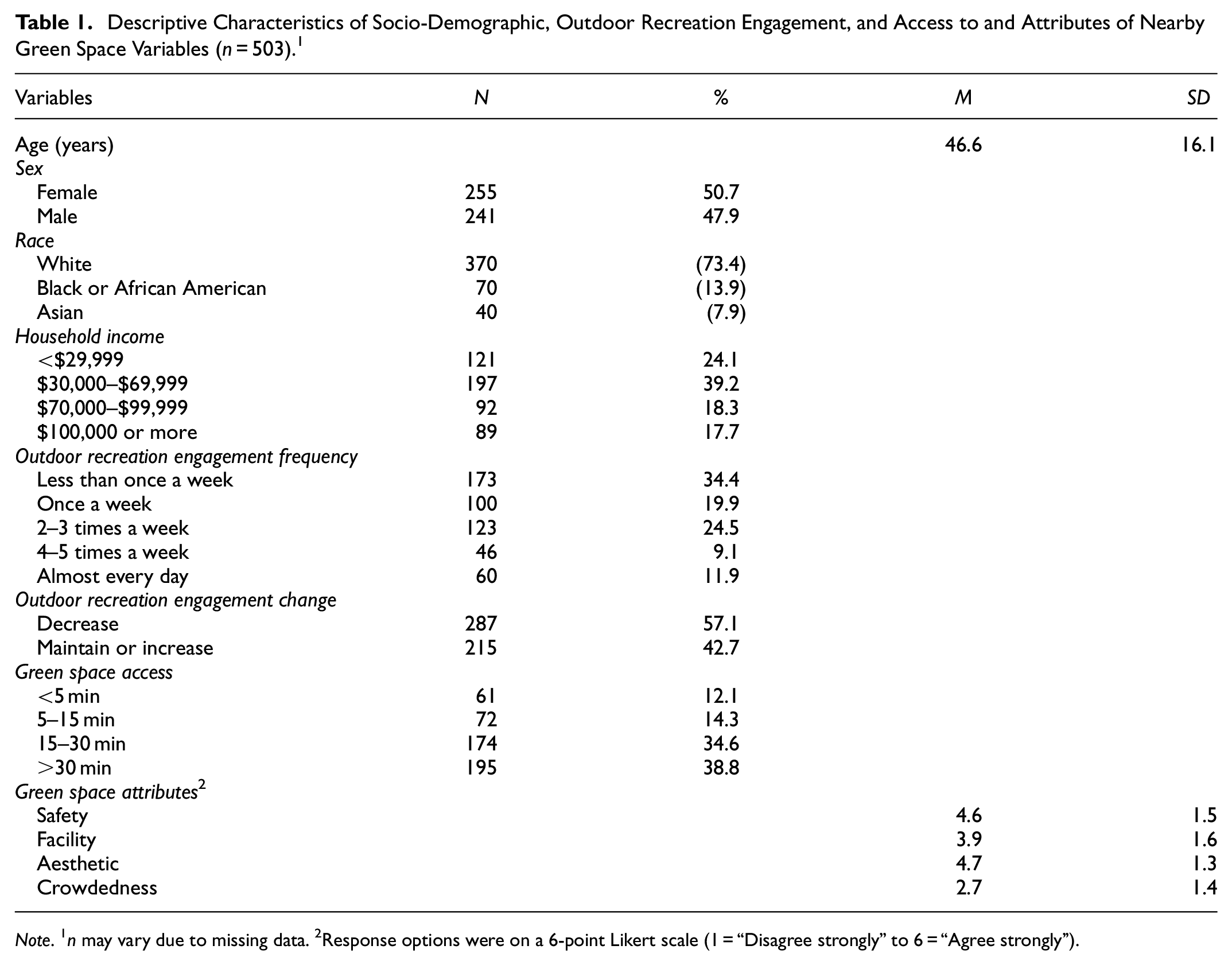
Note. 1n may vary due to missing data. 2Response options were on a 6-point Likert scale (1 = “Disagree strongly” to 6 = “Agree strongly”).
Nearly half of respondents (45.7%) reported engaging in outdoor recreation once a week or more and the majority reported reducing outdoor recreation engagement during the pandemic compared to their pre-COVID-19 level (57.1%). Nearly two-thirds of the sample (61.2%) reported having access to a green space within a 15-minute walking distance. On average and in order from highest to lowest, the sample agreed their nearby green spaces were aesthetically pleasing (M = 4.7), safe enough for children to play in (M = 4.7), and offered good facilities (M = 3.9), whereas they on average disagreed that their nearby green spaces were too crowded (M = 2.7).
Patterns in Adaptative Outdoor Behaviors
Figure 1 visualizes the distribution of different levels of adoption of each adaptive strategy during COVID-19. From high to low based on degree of agreement with using each strategy, the rankings were increasing effort (58.6%), creative approach (42.2%), exploring new places (35.0%), and temporal adjustment (27.2%). Notably, nearly a third of respondents strongly disagreed that they had explored new places (32.0%) or used temporal adjustment to fit outdoor activities into their schedule (33.2%) during the pandemic.
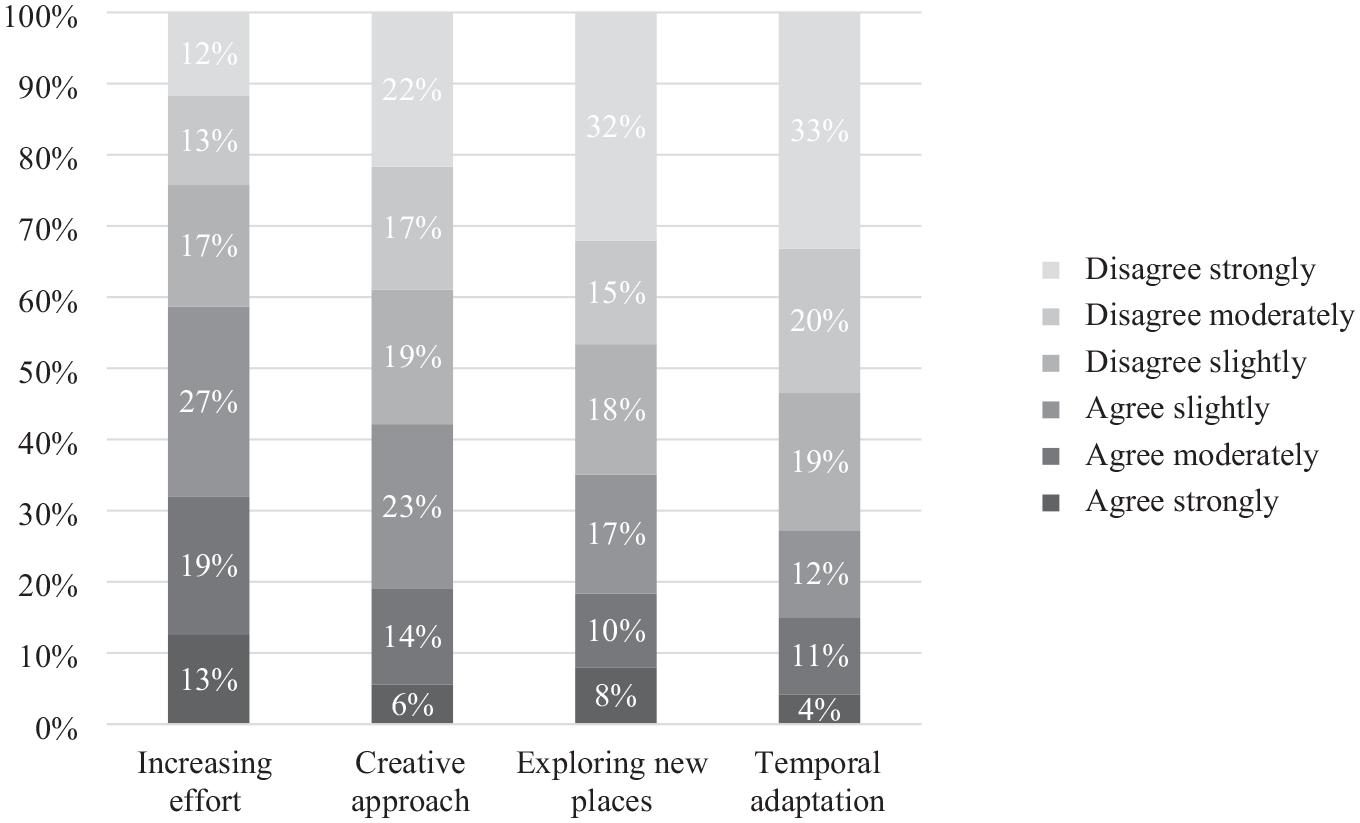
Agreement with practicing adaptive strategies for outdoor recreation during COVID-19.
Table 2 describes the adoption of each adaptive strategy among different demographic groups. Higher levels of increasing effort (M = 3.6–4.0) were observed descriptively across different age, sex, race, and income groups on average than any other adaptive strategy. Small but significant differences were found in the adoption of all four strategies between different household income levels (effect sizes = 0.018–0.026). In general, higher-income groups tended to report higher levels of adaptation, with statistically significant post-hoc test differences observed between the lowest income group (<$29,999) and the highest income group ($100,000 or more) in the adoption of all strategies except for increasing effort. Using correlation, the younger a respondent was, the higher they rated adopting a creative approach (r = −.11, p = .013) and exploring new places (r = −.194, p < .001). No significant differences were observed between different groups by sex or race.
Adoption of Adaptive Strategies by Demographic Characteristics.

Note. 1Different superscripts signify significantly different means at p < .05 based on Scheffe post hoc tests for equal variances. 2Effect sizes are provided if significant group differences existed. All significant results shown in bold.
Adaptive Strategies and Outdoor Recreation Engagement
Table 3 presents the linear regression model of outdoor recreation frequency. Controlling for the effect of access to and attributes of nearby green spaces, perceived risk of infection, and demographics, higher adoption of two adaptive strategies—temporal adjustment (β = .26, p < .001) and increasing effort (β = .16, p = .004)—were significantly associated with more frequent outdoor recreation. Specifically, each unit increase in temporal adjustment and increasing effort was associated with a .23 and .16 increase in the outdoor recreation frequency measure, respectively. Creative approach and exploring new places were not significant predictors. Additionally, higher levels of perceived safety of nearby green spaces (β = .13, p = .011) and older age (β = .11, p = .014) were associated with more frequent outdoor recreation. The model accounted for 20% of the total variance in outdoor recreation frequency, with adaptive strategies explaining the majority (15%).
Linear Regression Model Predicting Outdoor Recreation Frequency During COVID-19 (n = 486).
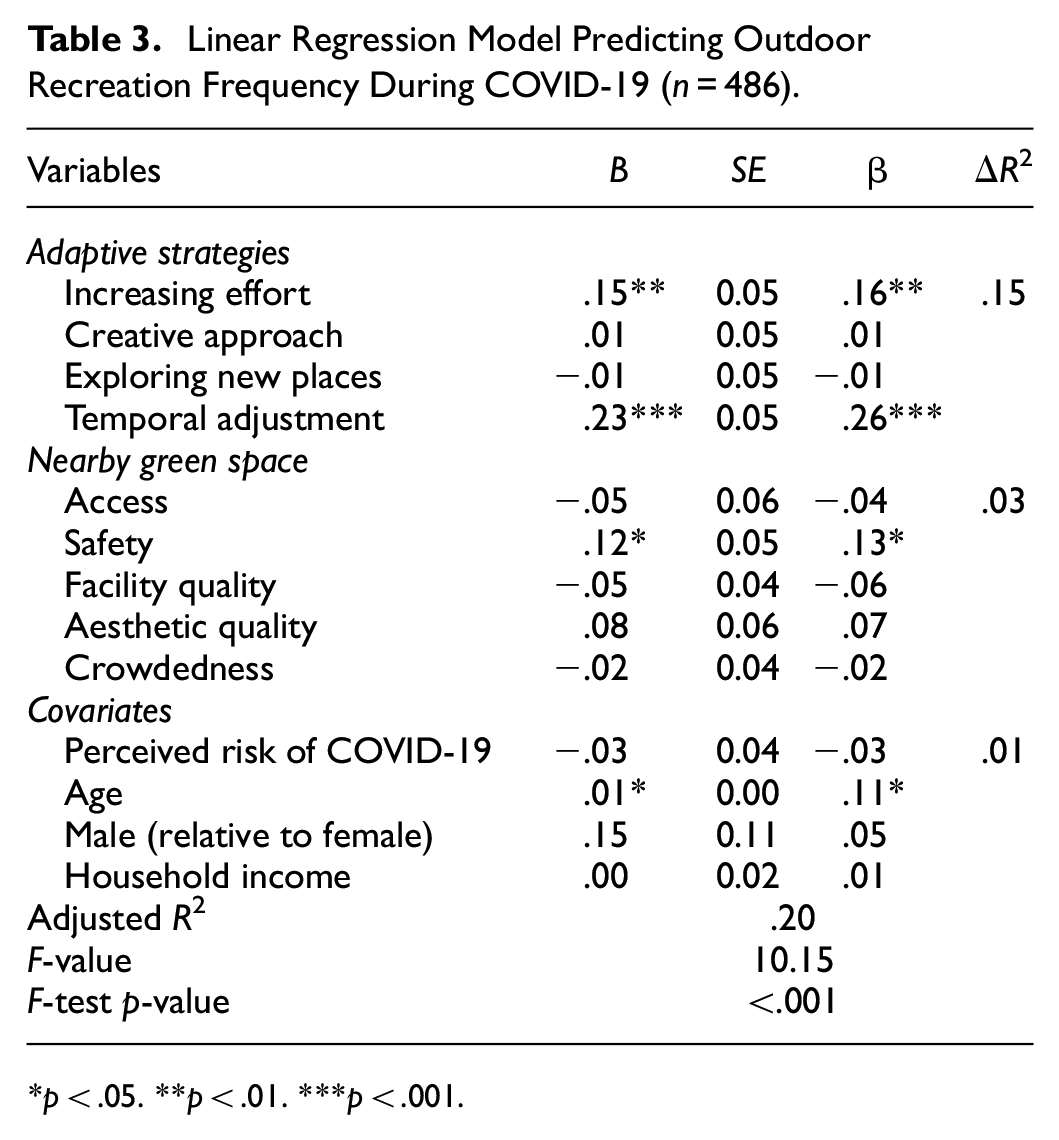
p < .05. **p < .01. ***p < .001.
Table 4 presents the logistic regression model for predicting maintained or increased outdoor recreation engagement during COVID-19. After controlling for the effect of nearby green spaces, perceived risks, and demographic variables, three adaptive strategies were significantly associated with increased or reduced odds of maintaining or increasing outdoor recreation engagement. Specifically, every unit increase in temporal adjustment and increasing effort was associated with a 40% (p < .001) and 21% (p = .04) increase in the odds of maintaining or increasing engagement, respectively. Every unit increase in creative approach was associated with a 19% (p = .04) decrease in the odds of maintaining or increasing outdoor recreation engagement level. Exploring new places was not a significant predictor.
Binary Logistic Regression Model Predicting Maintaining or Increasing Outdoor Recreation Engagement During COVID-19 (n = 486).

p < .05. ***p < .001.
Perceiving nearby green spaces as more aesthetically pleasing was associated with increased odds of maintaining or increasing outdoor recreation engagement (OR = 1.26, p = .023), but higher perception of crowding in nearby green spaces (OR = 0.84, p = .032) and perceived risk of infection (OR = 0.83, p = .016) were associated with decreased odds. The model accounted for approximately 21% of the total variance in changes in outdoor recreation engagement and correctly classified 70.2% of the cases.
Discussion
This study examined the use of four common adaptive outdoor recreation strategies among U.S. adults and those strategies’ associations with outdoor recreation engagement amidst enduring stress from the COVID-19 pandemic in early 2021. The results revealed several important findings to inform response to and research on future stressful or constraining events at the global, community, or individual level where adaptation may be necessary to maintain or increase outdoor recreation engagement. The research aligns with other studies during COVID-19 that aim to understanding behavioral consequences from the pandemic (see Pröbstl-Haider et al., 2023).
Patterns of Adaptive Strategies in Outdoor Recreation During COVID-19
Among the four adaptive strategies examined in this study, increasing effort emerged as the most common strategy. Its prevalence suggests that many people tried harder to keep or make outdoor recreation activities part of their lives, likely through a combination of continuing pre-COVID-19 outdoor recreation pursuits and exploring new ways to connect with the outdoors. Conceptually, this strategy can encompass effort made to adopt more specific strategies and thus may have measured more prominently as a general domain strategy.
Temporal adjustment and exploring new places saw relatively low levels of adoption, likely because these strategies were resource-specific and constrained by the resources available to people. Exploring new places, for example, may require additional work to research places and available activities, traveling longer distances, and switching to new activities because the new location did not support previous activities (Espiner et al., 2022; Humagain & Singleton, 2021), which combined may make exploring new places less appealing. Moreover, resource-specific strategies are often used to address specific challenges, particularly overcrowding at an existing recreation site (Ferguson et al., 2022; Humagain & Singleton, 2021; McCormack et al., 2022). However, less than a third of the participants reported crowding issues in nearby green spaces, which may have translated into less need to engage in temporal adjustment, exploring new places, and other potential resource-specific adaptations.
Our analyses also revealed demographic differences in the use of different adaptive strategies. The adoption of all four strategies differed between income groups. The lowest income group (<$29,999) reported significantly lower level of adoption than the highest income group ($100,000 or more) in creative approach, exploring new places, and temporal adjustment. This result suggested that the lack of financial and associated resources might have negatively affected people’s adaptive capacity (Burnett et al., 2022; Ferguson et al., 2022). The relatively lower use of all four adaptive strategies among low-income groups likely reflected a combination of a lack of access to monetary resources, historical social barriers (Green et al., 2009), and worse access to green spaces (Spotswood et al., 2021). Therefore, facilitating adaptation among this group should be a priority during stressful events and efforts should focus on strategies that address their “stacked” inequalities (Spotswood et al., 2021).
On the other hand, older adults reported using creative approaches and exploring new places less. Lower use of these specific adaptive strategies may reflect mobility limitation and cognitive decline that occur with aging and alter how people adapt to constraints and barriers (Douglas, 2016), introducing physical and mental limitations that hinder creative adaptations and exploration of new places. However, it is also likely that older adults were more capable of continuing their pre-COVID outdoor recreation, perhaps reflecting lifestyle differences (e.g., retirement) and evidence that older adult’s interest in going outdoors during COVID-19 was higher across waves (Burnett et al., 2022). This interpretation would be consistent with the positive association between age and frequency of outdoor recreation, and echoes findings of Shen et al. (2022), which suggested older people were more likely to engage in valued outdoor or physical activities during COVID-19. Valuable lessons can be drawn by better understanding the resilience among this group. Meanwhile more resources can be invested to facilitate younger adults’ outdoor adaptation and translate it into long-term engagement.
Association Between Adaptive Strategies and Outdoor Recreation Engagement
While past studies have documented various adaptive outdoor strategies (Espiner et al., 2022; Humagain & Singleton, 2021) and linked specific strategies to overall recreation satisfaction (Ferguson et al., 2021), the present study connected, for the first time, adaptive outdoor strategies with levels of and changes in outdoor recreation engagement by quantitatively assessing their relationships. Our results suggested that people who engaged in more temporal adjustment or overall invested more effort tended to spend time outdoors more frequently and were more likely to maintain or increase their outdoor recreation engagement during COVID-19. Both strategies involved directly investing resources (e.g., time and effort) that facilitate engagement. Temporal adjustment had the largest effect size in its association with both measures of outdoor recreation engagement. Past studies have suggested that this strategy is used most frequently to address crowding, a salient issue in spaces that involved physical or social contact during the pandemic (Burnett et al., 2022; Lopez et al., 2020; McCormack et al., 2022). Our results revealed that temporal adjustment remained a significant predictor of outdoor engagement after controlling for crowding. It is likely that aside from mitigating the negative effect of crowding, temporal adjustment was used to simply fit more outdoor activities into one’s life with a goal to, for example, compensate for the loss of previous leisure activities (e.g., indoor recreation, team sports) that became inaccessible during the pandemic (Shen et al., 2022). This is particularly likely given that crowding was not perceived as a common issue among our sample.
The significant effect of increasing effort on outdoor recreation indicates the importance of prioritizing outdoor activities in the face of substantial constraints—personal, social, and community—imposed by the pandemic across domains. While appearing to be uninspiring, increasing effort might be the most straightforward and needed approach a person can take to overcome unprecedented obstacles and maintain valued activities. By comparison, more context- or resource-specific strategies, albeit useful for addressing specific needs or challenges, may not be equipped to tackle a broader set of varied challenges.
The use of creative approach was not a significant predictor of outdoor recreation frequency, though counter-intuitively, it was associated with decreased odds of maintaining or increasing outdoor recreation engagement. It is possible that creative approaches were used in response to already decreased outdoor recreation engagement or for purposes other than increasing engagement (e.g., to have fun, maintain social connections, or achieve self-fulfillment). To ascertain the direction of the creative adaptation-outdoor recreation engagement relationship, however, a follow-up study that explores participant motivations, likely through qualitative inquiry, will be required.
Exploring new places did not predict frequency of spending time outdoors or changes in outdoor recreation engagement. Past studies have connected this strategy with the desire for novelty and challenge (Espiner et al., 2022; Humagain & Singleton, 2021), suggesting that, akin to creative approach, it may be aimed less at increasing the quantity or frequency of outdoor recreation. This strategy was observed as a rapid response to drastic changes during the initial phase of the pandemic (Espiner et al., 2022), so it’s possible it subsided after people exhausted local “new” places. As people continued to adjust their pandemic norms during later phases, other strategies might overshadow exploring new places in addressing ongoing challenges.
Overall, we found strong support for the positive effects of temporal adjustment and increasing effort on outdoor recreation engagement during COVID-19. The patterns of adoption and associations with engagement suggest potentially varied uses of different strategies to address different needs or challenges associated with the constraints and resources embedded in individual’s life circumstances.
General Discussion and Practical Implications
Previous studies identified multiple adaptive strategies for outdoor recreation during COVID-19 (Espiner et al., 2022; Humagain & Singleton, 2021; McCormack et al., 2022) and examined the prominence of substitution or adaptive outdoor behaviors in selective regional samples (Ferguson et al., 2021; McCormack et al., 2022; Taff et al., 2022). There are several strengths associated with examining specific sites and earlier phases of the pandemic, such as consistency in pandemic policy that ultimately varied widely among individuals and communities (Adeel et al., 2020). However, the current study contributes to existing literature by investigating adaptation in association with an understudied health behavior during COVID-19 (i.e., outdoor recreation engagement) in a less-examined context (i.e., a later stage of a global crisis marked by major disruptions and constraints). Our focus on non-site or activity-specific outdoor adaptation among a nation-wide sample is a strength that allowed us to draw inferences about broad outdoor adaptation with potential relevance to the broader population.
The prominent role of individual adaptation in affecting outdoor recreation engagement relative to structural factors—specifically nearby greenspace safety, access, facility quality, aesthetic quality, and crowdedness—is a key finding from this study. Few existing studies examined both types of factors in the same model in the pandemic context, thus failing to reveal the relative impact of behavioral and environmental factors on outdoor recreation engagement. Our result suggested that researchers should prioritize understanding the motivation, outcomes, and obstacles associated with behavioral adaptation during stressful events. This line of research will generate critical insights into the underlying processes and corresponding interventions that may facilitate effective adaptive behaviors toward enhancing or improving outdoor recreation engagement. From a practical perspective, resources should be directed toward programming that facilitates adaptation at the individual level in future similar scenarios. This is in line with previous research that suggested outdoor physical activity promotional campaigns were more effective than built environment interventions and improved the outcomes of built environment interventions when performed in tandem (Hunter et al., 2015).
Not all adaptive strategies contributed to the frequency and maintenance of outdoor recreation engagement during the pandemic. The associations between different adaptative strategies and outdoor recreation engagement differed quantitatively and likely qualitatively as well, suggesting potentially different roles that various adaptive strategies play as people tried to adapt to the changes and constraints imposed by the pandemic. This finding supports studying different adaptive strategies as unique and independent factors to ensure nuanced understanding of the potentially diverse purposes and outcomes associated with each strategy.
Frequent use of temporal adjustment among outdoor enthusiasts, existing national park users, and gateway community members were reported in related research (Ferguson et al., 2021; Rice et al., 2020; Taff et al., 2022). The inconsistency between these findings and our observation can be partially reconciled by differences in destinations, motivations, levels of commitment, experiences, and familiarity or knowledge of on-site conditions (e.g., crowdedness at different times) between different types of outdoor participants. As the use of adaptive strategies can be closely tied to individual circumstances, future research examining adaptive outdoor behavior as a way of constraint negotiation (Hubbard & Mannell, 2001; Jackson et al., 1993) can build on our model by factoring in recreation specialization and participant experience while distinguishing between local and non-local users. Given the prominent role of temporal adjustment in helping to maintain or increase outdoor recreation engagement and its relatively low adoption, actionable steps should be taken to facilitate the use of this strategy during future crises and stressful events. For example, recreation managers could incorporate educational approaches that provide access to information on less busy times or days in recreation areas or diversify recreation programming and provide options across different times or days. These types of adaptive management strategies were found to facilitate more positive recreation SCUBA experiences during COVID-19 (Marconi et al., 2023) and may more broadly address crowding issues that can have generally negative impacts on outdoor recreation engagement and experiences (Manning, 2011).
The overall high levels of increasing effort reported by our participants suggested a need for other adaptive management approaches to reduce the burden involved in outdoor participation (Pröbstl-Haider et al., 2023). Practical steps may include providing up-to-date information that address safety or risk concerns (e.g., community COVID-19 cases or restrictions; Humagain & Singleton, 2021) and informing visitors about facility quality and features (Marconi et al., 2023; McCormack et al., 2022), all of which may affect outdoor recreation engagement as indicated by findings of the present study and others (Lopez et al., 2020; McCormack et al., 2022).
Our results also suggested that promoting creative approach and exploring new places did not affect participation rate, however fostering these forms of adaptation can potentially support other management priorities. Examples include recruiting new participants, improving experiential quality (Espiner et al., 2022), or dispersing visitation to reduce pressure on given areas. Exploring new places may also promote microadventures post-pandemic given the associated low costs and demands on time compared to other forms of adventure tourism (Mackenzie & Goodnow, 2021). Recreation managers of local or state parks may build on users’ positive experiences at these sites during the pandemic to expand their user base and advocate more visitation to local or within-state destinations in place of more resource-dependent alternatives (e.g., international trips, multi-day outdoor recreation trips).
Our findings build on a chorus of other research justifying the prioritization of recreation, leisure, and green spaces during COVID-19 and future crises (e.g., Casey & McKendrick, 2023; Gatersleben et al., 2024; Patwary et al., 2024; Pröbstl-Haider et al., 2023), but they are distinguished by quantitatively assessing the efficacy of individual adaptations and factors that fostered outdoor recreation engagement. Future crises and emergencies will have varied management policies and recommendations for promoting and maintaining public health that differ from COVID-19. However, we believe the constructs in our analytical model—general-purpose and resource-specific adaptations, perception of risk of the crisis or hazard, access to and attributes of nearby greenspace, and individual demographic attributes—could be applied to study outdoor recreation engagement in times of crisis when outdoor space is safe to use. The model would not be appropriate in areas with policies or events that fully constrain mobility (e.g., population-wide lockdown, heatwave) or require temporary relocation (e.g., hurricane, terror attack). However, we believe our research opens the door to a line of outdoor recreation research on adaptation during times of crisis, which is arguably when it is most important (Casey & McKendrick, 2023; Rung, Broyles, et al., 2011). That research can confirm if the effects we observed during COVID-19 are stable during and at different stages of other crises with varied levels of community-wide constraints and stress, like climate-related blackouts, future pandemics, or regional violence. Researchers may also further examine our model to address specific individual constraints and challenges more common in leisure constraint research, including caregiving, depression, or individual injury, with a context-specific reconceptualization of the role of risk perception.
Limitations and Opportunities for Future Research
Much of this study’s analytical framework is grounded in theories on leisure and outdoor recreation (e.g., leisure constraints theory, typologies of recreation substitution) and existing qualitative research (e.g., categories of adaptive strategies). We focused on four specific adaptive strategies that were relevant to outdoor recreation adaptation during the pandemic based on theory and emerging literature. Studies examining other types of adaptive strategies, including resource substitution strategies, such as recreating closer to home, and activity substitution strategies, such as going on day trips instead of overnight trips (Espiner et al., 2022; Humagain & Singleton, 2021), may generate valuable insights not directly examined in this study.
The data collected in this study was based on self-report measures, which excel at accurately capturing people’s perceptions (e.g., perceived risk or access). However, site-based research using objective measures of use and behavior (e.g., length, frequency, and longitudinal changes of visitation) or a combination of objective and self-report measures (e.g., Rung, Mowen, et al., 2011) can potentially improve measurement reliability or provide data triangulation. With the advent of health and activity tracking data, researchers may also be able to examine specific behavioral changes (such as the time-of-day people recreate and the activities they engage in) and people’s actual use and access to high-quality nearby green spaces more accurately on a large scale. These approaches may be able to account for limitations in our ability to validate the psychometric properties of the measures included in our study and to examine other factors not directly examined in this study, such as COVID-19 policies and geographic influences.
The cross-sectional design of this study precludes causal inferences. We encourage future research to use longitudinal or qualitative designs to clarify questions surrounding causality (e.g., did people experiencing decreased engagement tend to resolve to creative adaptation?) and purpose (e.g., was creative adaptation more frequently used to improve quality instead of quantity of recreation experience?). Further, while our study sample was representative of the U.S. adult population in age, sex, and race, the use of an online participant recruitment platform lent itself to possible self-selection biases that might limit the generalizability of our findings. Lastly, this study did not control for seasonal effects or climatic factors that might have influenced participant’s outdoor participation and experience of crowding (Rice & Pan, 2021). Future research may take this into account to improve the precision of estimation.
Conclusion
Outdoor recreation provided a relatively safe activity outlet critical for maintaining physical and mental health during COVID-19. Understanding how people navigated through and adapted to the unprecedented constraints imposed by the pandemic allows us to identify effective strategies and potential obstacles for maintaining active engagement with the outdoors when adaptation is most needed. Findings from this study revealed that the adoption of outdoor adaptive strategies collectively outweighed green space access and quality in shaping outdoor recreation engagement in times of enduring stress and substantial constraints. Two adaptive strategies, temporal adjustment and increasing effort, predicted more frequent outdoor recreation and higher odds of maintaining pre-COVID engagement levels during the pandemic. Future efforts to promote outdoor recreation should balance the existing mainstream approach that emphasizes green infrastructure’s availability and quality with programming designed to facilitate individual adaptation. Meanwhile, recreation managers should strategically direct resources to support lower income groups, design age-specific interventions, and expand their focus on both the frequency of outdoor participation and quality of recreational experiences.
Footnotes
Acknowledgements
The authors thank Oregon State University Hallie E. Ford Center for providing funding for this study.
Author Contributions
C. P. (conceptualization, methodology, data collection, data curation, formal analysis, and writing—original draft); X. S. (conceptualization, data collection, data curation, methodology, writing–original draft, supervision, funding acquisition, project administration); M. M. (methodology and writing—review and editing); S. W. L. (methodology and writing—review and editing); L. G. (data collection and writing—review and editing); B. E. H. (Writing—review and editing). All authors have read and agreed to the published version of the manuscript.
Declaration of Conflicting Interests
The author(s) declared no potential conflicts of interest with respect to the research, authorship, and/or publication of this article.
Funding
The author(s) disclosed receipt of the following financial support for the research, authorship, and/or publication of this article: This study was supported by the Hallie E. Ford Center Team Science Seed Grant from the Hallie E. Ford Center for Healthy Children & Families, College of Public Health and Human Sciences, Oregon State University.
Institutional Review Board
This research obtained written consent from Oregon State University’s Institutional Review Board (IRB-2020-0927).
