




Abstract
The Child Sponsorship Program (CSP) is critical to enhancing the objective and subjective well-being of enrollees. Meanwhile, social work interventions emphasize scientific approaches aimed at empowering marginalized populations. This intervention research (IR) was focused on raising the psychological well-being (PWB) of adolescents in a prominent CSP located in Kochi, Kerala. Preliminary findings from a pilot study underscored the need for intervention, and subsequent Delphi survey results guided the formulation of an intervention strategy. Capitalizing on the transformative power of peer groups, IR implemented a social group work intervention to enhance adolescent PWB in CSP. Using a nonequivalent comparison group interrupted time-series design, the PWB of participants in the intervention group (IG, N = 20) and comparison group (CG, N = 20) was measured and compared. Ryff’s PWB scale with 42 items served as the assessment instrument. Descriptive statistics confirmed the normal distribution of baseline data for all participants (N = 40), while repeated measures ANOVA in SPSS 25 validated the alternative hypothesis, indicating significant differences in PWB measures over time within IG and between IG and CG. Additionally, along with statistical evidence of intervention effectiveness, this study used a qualitative design for ongoing evaluation of the intervention process, providing insights for program refinement and demonstrating intervention outcomes. By defining a model for group work intervention among CSP adolescents to improve PWB, this study underscores the important role of social work interventions in empowering marginalized populations.
Plain Language Summary
The Child Sponsorship Program (CSP) plays a crucial role in improving the well-being of enrolled children, while social work interventions focus on empowering marginalized groups. This research aimed to boost the mental well-being of teenagers in a prominent CSP in Kochi, Kerala. After initial findings showed a need for intervention, a strategy was developed based on input from experts. Leveraging the supportive nature of peer groups, a social group intervention was introduced to enhance adolescents’ mental well-being within the CSP. Using a specific research design, the well-being of participants in the intervention group (IG) and comparison group (CG) was measured and compared over time. Statistical analysis confirmed significant improvements in well-being within the intervention group. Additionally, qualitative methods provided valuable insights into the intervention process, aiding in its refinement and showcasing positive outcomes. This research highlights the vital role of social work interventions in supporting vulnerable populations like those in the CSP, ultimately empowering them to lead healthier lives.
Keywords
Introduction
Intervention for change is the hallmark of social work practice (Fraser et al., 2009). Invention and implementation of social work interventions bring changes at the individual, group, or more expansive levels, by impeding risk factors and initiating protective factors (Ogden & Hagen, 2018). Therefore, interventions are “purposive change strategies” (Fraser & Galinsky, 2010, p. 459), and social work adopts intervention research (IR) to develop new strategies and enhance existing strategies (Fraser et al., 2009; Rothman & Thomas, 1994). However, the rarity of IR in the literature calls for high-quality social work research that designs, executes, and evaluates interventions (DePanfilis & Herman, 2015; Gilgun & Sands, 2012; Mishna et al., 2012).
IR is the systematic study of “purposive change strategies” (Fraser & Galinsky, 2010, p. 459). It involves “creative as well as evaluative processes” (Fraser et al., 2009, p. 4). IR entails a program design and a research design (Soydan, 2015), where both these designs act complementary to the other so that one informs the other. The research design encompasses a series of studies, each with a different framework enabling an iterative interplay between data and program. Therefore, a researcher must adopt deductive and inductive processes, ensuring methodological pluralism for knowledge development (Fraser & Galinsky, 2010). These studies range from single-case studies for charting the intervention programs to experimental studies for assessing proximal and distal outcomes (Rothman & Thomas, 1994).
This social work intervention research (SWIR) was conducted to enhance the psychological well-being (PWB) of adolescents in a child sponsorship program (CSP). Adolescence is a stormy developmental stage (Zastrow, 2015) and a sensitive period where factors such as the immediate family environment, school, peers, and community can profoundly influence how adolescents process and respond to life (United Nations Integrated Child Emergency Fund [UNICEF], 2018). Adolescents pivot between positives and negatives during this vulnerable period as they develop an identity that finds their social niche.
Scientific investigations among adolescents confirm the adverse effects of social stratification on their developmental outcomes (Benner et al., 2018; Dercon & Krishnan, 2009; Wheeler et al., 2020). Moreover, poverty exacerbates the behavioral bias toward aspiration failure leading to a poverty trap (Dalton et al., 2016). The poverty trap stems from internal conditions, such as lack of hope, loss of desire, and lack of self-efficacy rather than external limitations (Bernard & Taffesseb, 2014; Dalton et al., 2010). In development economics, the importance of aspirations in assisting the marginalized out of poverty is becoming an emerging avenue for research (Ross et al., 2021).
However, adolescence provides a window of opportunities for staging interventions to produce desirable changes in adolescent developmental pathways (Dahl et al., 2018; Joseph & Karalam, 2021; Knoll et al., 2016). On the other hand, in development practice, child sponsorship, an organized charity program for child welfare, is a vital intervention tool (Joseph, 2016). Although the CSPs raise the objective well-being of underprivileged children by providing education and employment opportunities, their subjective well-being remains under-researched and hence requires professional attention (Glewwe et al., 2014; Ross et al., 2021; Wydick et al., 2013).
The defining characteristic of contemporary social work is the emphasis on empowerment in promoting the needs of underprivileged populations (Gitterman & Knight, 2016). Capitalizing upon the strengths of members and emphasizing mutual aid, group work stands as a vital intervention in social work for empowering clients and endorsing social justice and equity (Gitterman & Knight, 2016). During adolescence, relationships with peers become more or less important than family relationships because adolescents see them as a source of care, companionship, and intimacy (Levendosky et al., 2002). They seek the company of peers for excitement and novelty (Ogden & Hagen, 2018). So much so that this SWIR was designed, administered an intervention strengthening peer support to raise PWB among adolescents in CSPs, and evaluated its effects.
Materials and Methods
Considering the complexity of IR, we divided this study into three major phases for a better understanding and an effective execution of each step.
Phase 1
This research began with developing a protocol and obtaining approval from the university’s Institutional Review Board.
Research Setting and Participants
This SWIR was conducted among adolescents (13–16 years) enrolled in CSP by a non-government organization (NGO) by Carmelites of Mary Immaculate (CMI) in Kerala. Figure 1 shows the selection process for sponsorship centers (SC) under the NGO for the study. This particular NGO’s program was selected for the study due to its vast network of SCs totaling 30 in number. The program operates in three districts in Kerala, namely Ernakulam, Alappuzha, and Kottayam. Among these districts, Ernakulam has the highest concentration of centers with a total of 16. Therefore, Ernakulam was chosen as the focal district for this research.

Selection of sponsorship center.
Centers with more than 30 adolescents aged between 13 and 16 years were considered to select the SCs within Ernakulam. This criterion yielded two eligible centers. A randomized approach was used to determine the intervention and comparison settings, which was done by flipping a coin. The decision was made by the principal investigator overseeing the process. The coin flip favored Center 1 (SC1) as the intervention setting, while Center 2 (SC2) became the comparison setting.
Figure 2 shows the selection and assigning of participants into intervention and comparison groups. Participants from SC1 were assigned to the Intervention Group (IG) and those from SC2 to the Comparison Group (CG). In SC1, there were 98 enrollees, while SC2 had 64. The selection of these centers was based on the criteria of a sufficient number of adolescents aged between 13 and 16 years old, resulting in a sampling frame of 42 and 35 adolescents in SC1 and SC2 respectively.

Sampling strategy.
The first enrollment criterion was a minimum membership duration of 2 years in the program, which reduced the numbers to 29 in SC1 and 25 in SC2. The second criterion was regular attendance in the program, further reducing the numbers to 24 and 22 respectively. After thoroughly explaining the intervention process and duration, 20 adolescents from each group expressed their willingness to participate. The final two criteria, concerning reports of mental illness and physical limitations hindering participation in activities, did not result in any reductions in the number of participants in either group.
Preliminary studies and pre-tests were administered to participants in both the IG and the CG. Likewise, post-tests and follow-up assessments were conducted among all 40 participants across both groups. However, the intervention was exclusively provided to the 20 participants within the IG, specifically those situated in the intervention setting, SC1.
Study protocol and procedures were explained to the chosen centers’ heads and the participants, and the researchers obtained their written consent for voluntary participation, recording of sessions, and publication of study results.
Preliminary Study
Phase 1 explored the socio-demographic profile of the participants. Then, considering the effectiveness of the qualitative method in detecting risk and protective factors (RPFs) (Bender et al., 2015), we conducted a qualitative study to explore the problems of participants and identify the RPFs and their interactions before designing the intervention. All the forty selected adolescents, their parents, managing heads of selected SCs, and community animators of the CSP were participants in this preliminary study. Data collection and analysis were carried out concurrently with the help of research assistants. Tools for data collection for the preliminary study are below.
In-Depth Interviewing (IDI)
A 60-min pre-scheduled IDIs were conducted with the SC heads, using a semi-structured interview guide to explore the program’s general functioning, the trend in enrollment of children, social conditions of enrollees, their development trajectory, center’s programs, and packages for the welfare of children.
This study further interviewed parents, either the father or mother of the adolescents selected for the intervention study. A pre-scheduled 45-min IDIs with each parent was conducted at the interviewee’s convenient time and place, using a semi-structured interview guide that focused on the socio-demographic status of the family, attachment among the family members, problems of their adolescent children, and their RPFs.
Another group interviewed was the five community animators of the CSP. A 90-min pre-scheduled IDI was conducted with each animator to explore the RPFs of the adolescents in the CSP.
Group Interviewing
The forty selected adolescents were interviewed in five-member groups at the respective centers. The purpose of the interview was to identify their ambitions in life, reasons for choosing the same, and identify RPFs. Four group interviews were conducted at each center and collected data.
Risk and Protective Factors Mapping
A risk factor mapping and a protective factor mapping were carried out during group interview sessions. Templates (Figures 3 and 4) were developed based on RPFs identified from IDIs. Copies of the templates were distributed to all 40 participants, who then marked risk factors and protective factors according to the provided instructions. The results obtained from the RPF mapping process served as a guide for delineating both the problem theory and the program theory, aiding in the development and implementation of the appropriate intervention strategies.

Template for risk factor mapping.

Template for protective factor mapping.
Records Reviewing
With prior consent, secondary data was collected from records on each participant at the center office. We reviewed their profile, case summaries, and school reports.
Data Analysis
The qualitative data collected in the preliminary study was analyzed thematically. Audio-recorded interviews in Malayalam (the local language) were transcribed verbatim and translated into the target language English by a bilingual expert. All the transcripts were back-translated and verified the accuracy of the translation. Coding and categorization were done using NVivo 12. Excerpts leading to the emerging themes were listed. The research guide did a debriefing of the analysis.
Defining Problem Theory
This study explored the problems faced by adolescents in low-income families from an ecological perspective (Bronfenbrenner, 1979). It suggested that adolescents from deprived family environments tend to experience problems, which is consistent with the family process model (Conger et al., 1993). This model linked a family’s economic stress to the problematic adjustment of adolescents. Financial hardships can lead to parents’ behavioral problems and interparental conflicts, which can result in harsh and uninvolved parenting, thereby impairing the competencies of adolescents and triggering emotional and behavioral problems (Conger et al., 2010).
Moreover, the study postulated that children from poor families tend to attend schools with fewer resources. Their classroom environments are often characterized by poor behavior, low achievement, and less support, which can worsen the psychological state of adolescents and increase their behavioral problems (Eamon, 2001). Adolescents from disadvantaged families are also likely to face stigmatization and isolation from mainstream peer groups, which can lead to the development of peer relations supporting anti-social behavior such as aggression and substance abuse (Eamon, 2002). The study suggested that adolescents’ educational aspirations are linked to the material well-being of the family, and their psychosocial competencies are linked to their parents’ education (Dercon & Krishnan, 2009).
For adolescents, setting goals and finding meaning in life are crucial aspects linked to their psychological well-being (PWB) (Davids et al., 2017; Krok, 2018). Establishing personal goals provides direction, motivation, and a sense of fulfillment while finding meaning involves understanding one’s purpose and significance (Seginer, 2019). Adolescents who set meaningful goals aligned with their values experience increased self-efficacy and satisfaction with life (Bozzato, 2020). Similarly, those who perceive their lives as meaningful demonstrate greater resilience and a positive outlook (Sagone & De Caroli, 2014). Therefore, the study postulated that promoting goal-setting and fostering a sense of meaning can enhance adolescents’ overall well-being and adaptive functioning as they navigate the challenges of adolescence and beyond.
Psychological Well-being Model
We espoused Ryff’s (2014) revised PWB model that probes into six dimensions of well-being for assessing the PWB of participants.
(1) the extent to which respondents felt their lives had meaning, purpose, and direction (purpose in life); (2) whether they viewed themselves to be living in accord with their own personal convictions (autonomy); (3) the extent to which they were making use of their personal talents and potential (personal growth); (4) how well they were managing their life situations (environmental mastery); (5) the depth of connection they had in ties with significant others (positive relationships); and (6) the knowledge and acceptance they had of themselves, including awareness of personal limitations (self-acceptance) (p. 32).
Phase 2
In phase 2, this SWIR developed an appropriate intervention model to resolve the problems of adolescents in CSP identified from the preliminary study by reducing risk factors and promoting protective factors. In addition, we contoured a theoretical framework and decided on research designs to evaluate the efficacy of the intervention.
Delphi Survey
A Delphi survey was conducted to elicit expert opinions on the intervention method and techniques to enhance the PWB of participants. Social work educators from three universities in South India were selected using purposive sampling for the survey. After three rounds of the survey, the panelists agreed on the suitable intervention method for adolescents in SP. The first round was based on the findings of the preliminary study, and the results of the previous rounds shaped the next two rounds of the survey. Figure 5 shows the Delphi survey process.

Delphi survey process.
The process commenced with emailing selected professors, outlining the research, and requesting their participation consent. Among the 15 contacted, 9 returned signed consent forms. Subsequently, their expertise was sought to determine the most suitable intervention for enhancing adolescents’ PWB in sponsorship programs. Following this, all pertinent details regarding the proposed intervention model were requested. The findings from these inquiries are elaborated upon in the results section.
Delineating Program Theory
For adolescents, setting goals and finding meaning in life is highly associated with PWB (Brassai et al., 2011; Ho et al., 2010; Steger & Kashdan, 2013). Considering the close association between well-being and empowerment, we designed the intervention anchored in empowerment theory (Zimmerman, 2000), incorporating its individual-level construct (psychological empowerment) and group/ organizational level construct. Personal empowerment stays unattainable for the members of any marginalized group unless activating collective actions (Cislaghi et al., 2016). The fundamental strategy for empowering the weaker section is capacity building (Kaplan, 2000), and consciousness-raising is central to the process of empowerment (Bruley, 2013). Therefore, the trajectories set for empowerment were consciousness-raising, capacity-building, and collective action. It was postulated that an empowerment-based group intervention enhances the PWB of adolescents in CSP to articulate aspirations to go up the social ladder breaking the cycle of poverty.
Theoretical Framework
Hinged on problem and program theories, this SWIR followed a theoretical framework shown in Figure 6. The study aimed to address participants’ low PWB, assessed using Ryff’s 42-item PWB scale. Drawing from the literature review, the research connected identified risk factors to existing theories. To elevate the PWB of the participants in the IG, the study capitalized on the prominent protective factor of peer groups. Based on Delphi survey results, a social group work intervention was implemented, specifically the empowerment model by Gitterman and Knight (2016), which is rooted in the empowerment theory by Zimmerman (2000).

Theoretical framework.
Program Design
Leveraging peer group, identified as a critical protective factor in phase 1, we framed an empowerment-based social group work (SGW) intervention plan based on the Delphi survey results. The group’s general objective was to raise participants’ PWB. We adopted a model of group development proposed by Northen and Kurland (2001), with four stages; Inclusion–Orientation, Uncertainty–Exploration, Mutuality–Goal Achievement, and Separation–Termination (Zastrow, 2015).
Figure 7 shows the program design for the SGW intervention. The main program began with a quantitative pre-test and concluded with a quantitative post-test, while qualitative data collection and analysis occurred continuously throughout all stages. Each stage of group development involved specific tasks aimed at achieving the intervention’s goals. Upon completion of the main program, pre and post quantitative results were compared to verify intervention effectiveness. Furthermore, both quantitative and qualitative findings were combined to reinforce the intervention’s efficacy before disseminating the results.

Program design.
Experimental Design
This study opted for a Non-equivalent Comparison Group Interrupted Time Series design (Siedlecki, 2020), the most potent quasi-experimental model considering the non-randomized allocation of participants to IG and CG. However, we chose two similar groups of adolescents attending different SCs. The intervention and comparison settings were located in the same district of Kerala, sharing similar cultural contexts, and participants shared similar socio-demographic characteristics (See Table 1). Moreover, this study analyzed the central tendency and variability of data measured for PWB of all 40 participants in the study before the intervention, exploring descriptive statistics. The study confirmed the normal data distribution for the variable measured by drawing a bell curve (See Figure 10).
Socio-Demographic Profile of Participants.

Scheduled caste, **Other backward class, ***Above poverty line, ****Below poverty line.
Figure 8 illustrates the design notation, depicting the measurement of participants’ PWB in both the IG and the CG at four time points. Following the initial measurement, the intervention was administered to the IG. Subsequent measurements were taken immediately post-intervention, as well as 3 months and 6 months thereafter.

Experimental design notation.
A Pragmatic Qualitative Design
Qualitative approaches can develop causal inferences rigorously (Hill, 2012); therefore, this study adopted a qualitative research design to understand the intervention process’s association with outcomes through all stages. Employment of qualitative methods in IR can provide an explicit understanding of the change process with thick descriptions of mediating mechanisms in studies with smaller sample sizes where the validity of statistical analysis is limited.
Pragmatist ontology relies on actions and change; knowledge-guided actions bring about desired changes (Goldkuhl, 2012). Therefore, subscribing to the pragmatic paradigm, we developed a qualitative design for testing the outcomes of this SWIR and making causal explanations. Qualitative data collected during the intervention were analyzed for prescriptive and prospective knowledge to refine intervention at each stage for attaining the desired outcome, espousing the ‘cyclic model of human action’ (Goldkuhl, 2007; 2012).
Additional qualitative data were collected from teachers and parents post the intervention to confirm the effectiveness of the intervention. The content of all those interviews and focus group discussions (FGDs) was analyzed, and themes obtained from all the sections were conflated for interpreting the results.
Program Scheduling
The intervention sessions took place on 20 consecutive Saturdays at SC1 and lasted for 2 hr each. During these hours, regular programs in the intervention setting were suspended to ensure that the focus was solely on the intervention. In the comparison setting, participants continued attending their usual programs. This scheduling approach aimed to rule out the influence of regular programs on achieving intervention goals.
Additionally, the intervention program was meticulously organized to suit the convenience of resource persons and evaluators. Arrangements were also made to record the sessions for documentation and analysis purposes.
Phase 3
The intervention program was administered in the third phase of SWIR. SC1 was the setting for intervention. Resource persons included group workers/researchers, social work educators, motivational speakers, psychological counselors/mentors, school teachers, physical trainers, and agricultural field officers. The intervention process lasted for 5 months.
We collected both qualitative and quantitative data in phase 3 to analyze and confirm the intervention’s effectiveness in raising the PWB of adolescents in CSPs.
Minimizing Bias
We recognized that it was impossible to keep the intervention unknown to IG in an SGW intervention, as the group’s objectives had to be communicated to members during its formation. Additionally, the researcher could not remain unfamiliar with the intervention, as they were responsible for delivering the program they had developed. However, data collection was conducted by research assistants unfamiliar with the intervention, and participant identities were anonymized during data processing. The bilingual translators were also kept unaware of the study objectives to maintain neutrality. For CG, the study’s purpose was not disclosed to minimize potential bias.
Collecting and Analyzing Qualitative Data
This SWIR collected qualitative data through participant reflection and observation during the intervention process. We encouraged participants to reflect on the program and its effect. All sessions were video recorded with the prior consent of participants and the SC. Recordings of verbal data for every session were transcribed verbatim, and observed data were documented. We analyzed the data collected based on Schilling’s content analysis spiral (Schilling, 2006), which is analytical. Textual raw data was transferred into condensed protocols such as (a) conversations taking place within the time frame of the intervention process; (b) conversations between researcher and participants and among participants; (c) conversations or reflections only on the program, effects, drawbacks, and anticipations; (d) observations on changes in attitude, behavior, relations, and interactions of participants in the group; and (e) a segment of comprehensible text that contains an idea or information is the unit of analysis. Next, we sorted data into categories to construct prescriptive knowledge (guidelines for refining the program) and prospective knowledge (possibilities for refining the program). After every session, we incorporated data from peer and guide debriefing into these categories to fine-tune the intervention, applying the researcher’s reflexivity. Data were further separated into coded protocols that developed with sufficient granularity from the specific objectives of activities to raise participants’ PWB. Toward interpretation, subthemes were formulated by joining codes and themes clubbing subthemes.
This research employed triangulation to confirm the result of the study from different perspectives. Post-intervention IDIs were conducted with each participant’s parent (father/mother), and FGDs were carried out with teachers of three local schools that participants were attending. The data-gathering sessions were conducted with the participant’s consent and scheduled at their convenience. Both sets of data were analyzed thematically through an iterative process. The themes derived from all three methods were conflated for the final interpretation.
Figure 9 illustrates the qualitative data analysis process. Participant reflections in Malayalam were transcribed and translated into English, alongside documenting participant observations in English. The data underwent coding and categorization into preliminary categories, followed by the researcher’s reflection on these initial classifications to refine the intervention. Preliminary categories were reviewed through debriefing sessions with peers and the research guide, leading to the development of subthemes and overarching themes.

Qualitative evaluation process of SWIR.
Additionally, qualitative data gathered from teachers and parents of the participants post-intervention underwent thematic analysis. The themes that emerged from both datasets were collated to interpret the intervention’s outcomes effectively.
Quantitative Data Collection and Analysis
A 42-item version of Ryff’s Psychological Well-being scale (PWBS) with six subscales for autonomy, environmental mastery, personal growth, positive relations, purpose in life, and self-acceptance, was administered to both IG and CG at four time points (Pre-intervention, immediately after the intervention, 3 months after the intervention, and 6 months after the intervention) to measure PWB of participants. Before the study, all items were translated into Malayalam (The local language) and back-translated into English, ruling out discrepancies. Piloting the tool was done, and internal consistency was calculated for each subscale after reversing the negatively phrased items. The average value obtained for Cronbach alpha coefficients was .79, which is >0.7, indicating the scale’s reliability. SPSS version 25 was used to analyze the quantitative data statistically.
PWBS used a six-point scale, where 1 = strongly disagree, and 6 = strongly agree. Of the 42 statements, 22 were positively, and 20 were negatively phrased items. Therefore, we reverse-coded the negatively phrased items. The maximum score for PWB was 252, so we classified it into three, the average score ≤84 was considered low PWB, 85 to 168 was medium, and 169 to 252 was high PWB.
This study employed repeated measures ANOVA to test the changes in the measured values of PWB at four time points. The test was run against the following hypotheses;
Variance within Group- IG
Null Hypothesis (H0): There is no significant difference in the PWB across various time points within the IG. Alternative Hypothesis (H1): There is a significant difference in the PWB across various time points within the IG.
Variance within Group- CG
H0: There is no significant difference in the PWB measures at different time points within the CG. H1: There is a significant difference in the PWB measures at different time points within the CG.
Between Groups (IG vs. CG) H0: There is no significant difference in the PWB means between the IG and the CG post-intervention. H1: There is a significant difference in the PWB means between the IG and the CG post-intervention.
Ethical Considerations
This SWIR took a value-based approach to align the research goals with the sponsoring center’s goals. All participants and key informants signed informed consent after all points were explained. We embraced sensitivity to participants’ feelings, treated each one with respect, and acted courteously by greeting them warmly and shaking hands. We also established group norms such as mutual support, respect, respect for privacy, self-disclosure is harmless, try it, failure is okay, open communication, constructive conflict, and commitment to the group. We assigned pseudonyms to participants and key informants to maintain confidentiality throughout the data collection, analysis, reporting, and publication.
Reporting
This SWIR maintained a standardized reporting of nonrandomized controlled trials, following a 22-item TREND checklist (Des Jarlais et al., 2004).
Results and Discussion
Socio-demographic Profile
Table 1 shows the socio-demographic characteristics of the participants in IG (N = 20) and CG (N = 20).
Preliminary Study Results
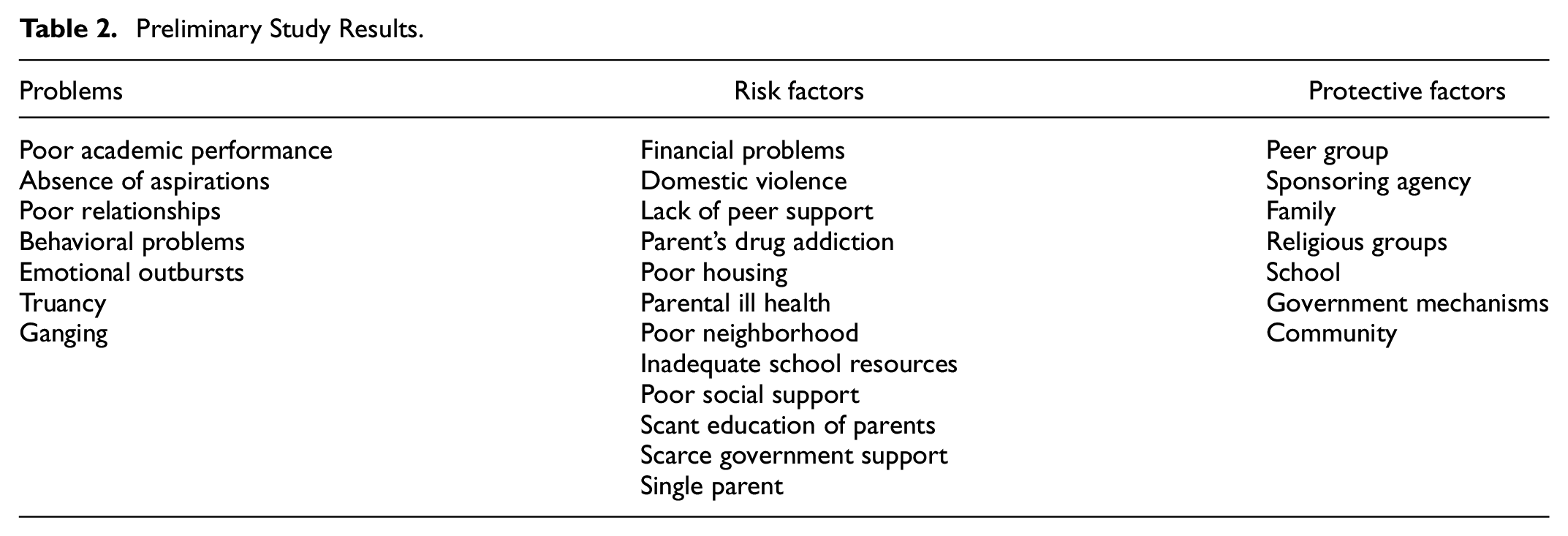
The IDIs revealed the problems and RPFs of adolescents in CSP. Group interviewing confirmed their low aspirations, and records-reviewing demonstrated poor academic performance, truancy, and behavioral issues. Mapping clarified the list of RPFs that placed the peer group first among the protective factors. At the same time, poor peer support was identified as a critical risk factor.
Table 2 presents the preliminary study results, showcasing the participants’ identified problems, risk factors, and protective factors. They are listed in descending order of severity/significance as reported and mapped by the participants. These findings served as a foundational understanding for developing targeted interventions aimed at addressing the identified challenges and leveraging protective factors to promote positive outcomes among the participants.
Preliminary Study Results.
Delphi Survey Results
Delphi survey was designed to develop strategies for solving problems by minimizing risk factors and promoting protective factors. Therefore, it focused on raising PWB, which has a theoretically proven impact on the aspirations of adolescents, and it inquired about interventions to improve the PWB of participants through the promotion of the peer group, which was the top-rated protective factor. Table 3 shows the Delphi Survey results.
Delphi Survey Results.

The Delphi survey recommended an empowerment model SGW intervention with 20 adolescents from the CSP to raise their PWB. Heeding the suggestions by this panel of social work educators, this SWIR programmed the intervention.
Quantitative Results
Descriptive Statistics for Baseline Data
Descriptive statistics for the baseline data (Pre-intervention PWB) collected from all the participants (IG&CG) proved the normal data distribution. Table 4 shows the descriptive statistics, and Figure 10 shows the bell curve that illustrates the normal distribution of baseline data.
Descriptive Statistics for Baseline Data.

Note. Valid N = 40, Missing N = 0, Total N = 40.

Baseline data distribution curve.
The mean value for the baseline is 83.58, which is less than 84. Therefore, the participants in this SWIR had low PWB.
The center of the curve, corresponding to the mean of 83.58, represents the central tendency of the data. Since the standard deviation is 5.574, the curve is relatively narrow, indicating less variability in the data points. While the skewness and kurtosis values suggest some departure from a perfectly normal distribution, they are within acceptable ranges for parametric tests. Additionally, parametric tests are robust to deviations from normality when the sample size is sufficient.
Repeated Measures ANOVA Results
Repeated measures ANOVA performed within and between the groups compared the means of PWB measured at four time points. Table 5 shows the descriptive statistics for the mean value of PWB of IG & CG measured at T1, T2, T3, and T4.
Descriptive Statistics for Repeated Measures of PWB for IG & CG.
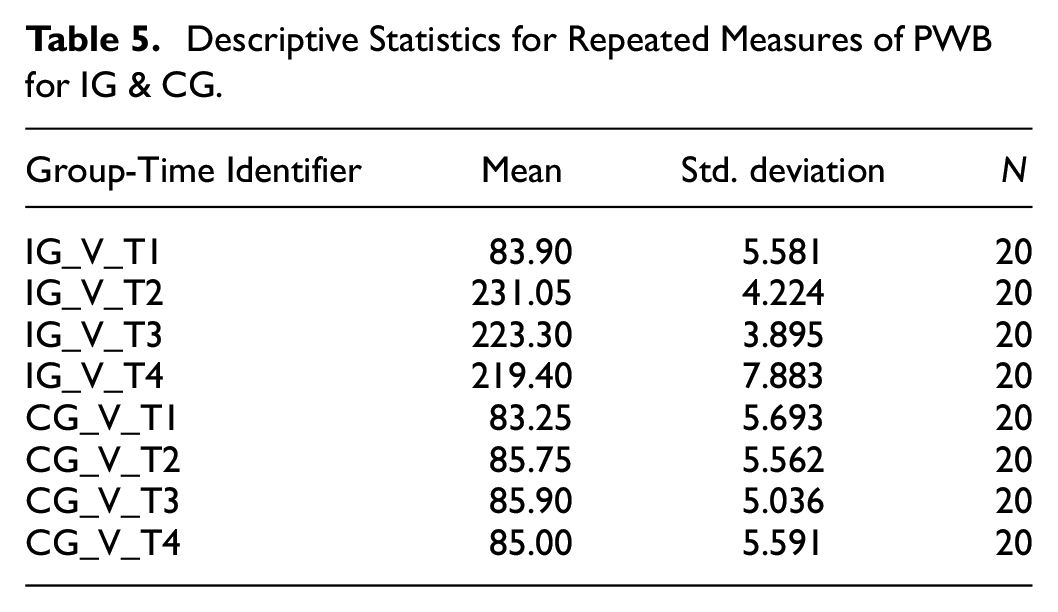
Figure 11 illustrates the difference between the estimated means of PWB for the IG before and after the intervention, as well as the difference between the means of PWB for the IG and the CG. The estimated marginal mean shows a significant increase of almost 140 in the PWB measures of IG after the SGW intervention. This indicates that the intervention had a positive impact on the PWB of the participants in the IG. The negligible variance in the means of PWB of the CG, which was repeatedly measured, rules out alternative explanations and confirms the internal validity of the study.
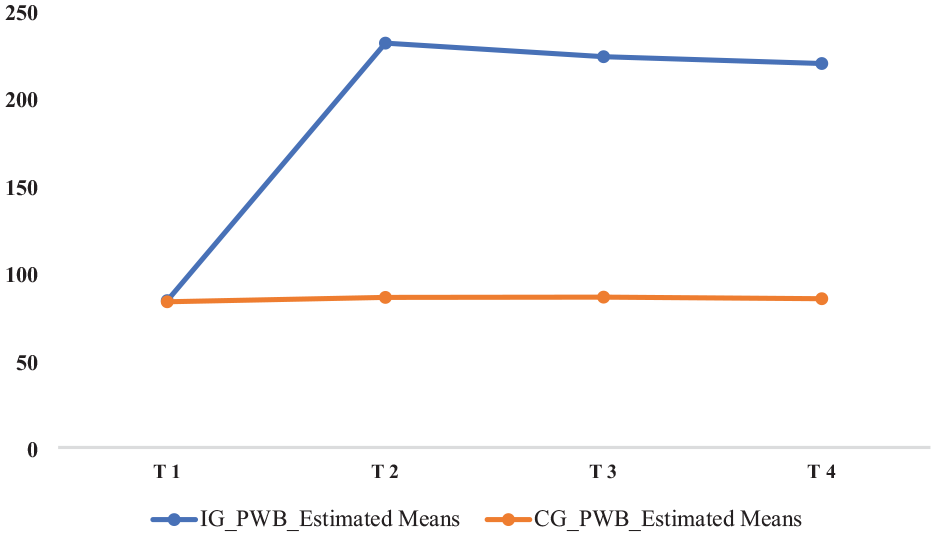
Comparison of repeated measures of PWB of IG & CG.
Table 6 shows the repeated measures ANOVA results.
Repeated Measures ANOVA Results.

Note. IG = Intervention Group; CG = Comparison Group.
These results confirmed a significant variance (p-value < .05) within the IG, supporting the alternative hypothesis that meaningful differences exist in PWB across various time points. Conversely, the comparison of PWB means within the CG yielded a p-value > .05, leading to acceptance of the null hypothesis that there is no significant difference in PWB measures at different time points for the CG. Moreover, the comparison between groups revealed a p-value < .05, affirming the intervention’s effectiveness by demonstrating a significant difference in PWB means between the IG and the CG post-intervention.
Qualitative Evaluation Results
The main themes that emerged from the qualitative data analysis are discussed below.
Gaining Confidence to Open Up
The major obstacle that the researchers/Group worker faced in the forming stage of the group was members’/participants’ hesitation to communicate since the evaluation of the intervention was designed to analyze participant reflections. This situation put the researchers in a dilemma; therefore, participants’ difficulty interacting was dealt with as a top priority. Ice-breaking sessions with group games helped participants reduce their anxiety or fear of talking. When they realized they were facing more or less the same problems in their lives, such as poverty, domestic violence, social discrimination, and hopelessness, they began to develop a sense of belongingness in the group.
When others talked about the plight of their family, I felt relieved; I used to think that I was the most disadvantaged one, but now I got their company; they all are like me, and all are fighting similar problems (MG3)
Once members started exhibiting their talents, such as singing, drawing, and dancing, the act of encouragement subsequently came in. Qualities of mutual support and mutual aiding that developed eventually through group work brought considerable growth in their interactions and communications.
Members were eager to voice their views on the discrimination they faced in the community (Obs52). Members now discuss and communicate their expectations about the program (Obs44).
The effect of intervention began to reflect on other spheres of their life than the group work setting, illustrating the personal growth of participants. The confidence to speak up in their situation indicates advancement to autonomy.
I had never seen him before talking to others in the class, but now he interacts, not much, but moderately, and he answers my questions too (FGD1:02).
Appreciating Others
A session to showcase members’ talents provided an opening to express the group’s support for participants. It proved that peer support could positively change adolescents’ attitudes.
You are an excellent singer; then why do you want to become a driver?
I am not learning music; it is very competitive. It will be a big failure if I choose singing as my profession.
Not just music lessons, but talent matters in singing. You have got that talent that you must cherish.
Okay, but no one supports me at home.
(To the group) What do you want him to be? A driver or singer?
A singer.
He is a winner in the district-level youth festival.
(GWR starts clapping, and the whole group follows)
We all are your supporters.
The group continued supporting all members with unique talents, who sang and drew pictures and caricatures, encouraging them to cherish their abilities.
Enjoying Group Activities
Tackling the initial difficulties in mingling, participants started enjoying the activities in the group. They found the group a space to have fun with friends and learn new life lessons. Suggesting tasks of interest and participating actively in all sessions, they expressed their approval of group work for their upliftment and individually. It indicates the effectiveness of collective action for the empowerment of marginalized groups. Working as a group of individuals sharing similar concerns can catalyze their actions and interactions, as it is convenient and comfortable for making and maintaining relationships in a homogenous group.
I love being in this group, and I forget all my worries about my home, a drunkard father, and lack of food. I am not stressed; I have good friends and feel comfortable in this group (MB5). I have no issues interacting with these friends because they are all of my levels in all aspects, so I am happy to be involved in all activities. I do not feel discriminated against here (MG12).
Relating One Another
As the group worker encouraged self-disclosure, promising confidentiality, and the group members developed trust in each other, they started sharing their life stories in the group. It prompted all to relate their life with others’ lives. As a homogenous group of adolescents in the sponsorship program, sharing life stories instilled a sense of shared problems.
We all face the same problems; we are financially deprived, do not have good houses or peaceful life, attend poor-quality schools, and people look down on us (MB15). I am relieved knowing others are struggling like me, and now I feel I am not alone (MG8).
The process of relating oneself with others greased the accepting self for the participants. A course of psychological empowerment has to begin with accepting the self, and the individual must make conscious efforts to move forward by utilizing the opportunities and resources available. It was crucial for this group work intervention to make members accept themselves and feel comfortable.
Feeling Worthy
Bibliography sessions that described stories of successful personalities from the lower socioeconomic strata made the participants feel positive about themselves. These sessions proved the power of biographies or life stories of eminent persons in inculcating confidence in adolescents to identify potentialities and to believe in themselves.
I know I cannot be another Abdul Kalam, but I can be something if I try (MB20). How nicely Martin Luther King iterates his dream, I am sure we can enjoy equality if we wish and work for that; at least I can go up to a better status with my own house to live in (MB10).
Stories have an added effect on members when discussed in the group, although those stories are already known. This intervention proved that group work is an effective tool for transferring positive vibes from person to person. A member’s positive observation of a story inspires others to think in the same line, consequently imparting a self-worthiness to them.
After listening to a positive comment by a boy, others started commenting in the same way, expressing that they were good enough to move up the social ladder (Obs98).
Articulating Aspirations
Participants set their life goals with the bibliotherapy produced spark reinforced with motivational speeches. One of the main problems identified in the preliminary study was the need for more aspirations among participants. At this stage, all members expressed their aspirations to earn a decent job that would help them improve their living standards. This indicates group work’s effectiveness in empowering adolescents to set life goals by raising their consciousness.
I never thought of a goal before, but now I have decided to become a teacher; it will bring me a better status and an income (MG11). I want to improve my living conditions. I want to work with a government office (MB13).
All participants shared their goals (Obs112).
Motivating Mutually
This group work intervention evidenced that an adolescent group in an advanced stage is a pool of motivation. Peer support and encouragement helped participants to avoid ambiguities about their goal setting. The inspiration adolescents receive from peers is vital in setting realistic and achievable goals, as peers are excellent at understanding and acknowledging the capabilities of group members.
Their support made me set my ambition to become an architect; they supported all my attempts in drawing (MG12). The members cheered as everyone stated their ambition (Obs105).
Setting Role Models
Selecting a suitable role model is crucial for adolescents to focus on their ambitions. This intervention helped participants choose a cognitive window to look at people with higher standards and set and observe role models intending to copy the good traits that keep them at a higher level in society.
My science teacher is my role model. I want to become a teacher like her (MG18). My role model is you (GWR). I want to become a person like you (MB17).
Realizing the Need to Study
This group work intervention demonstrated its effectiveness in raising the consciousness of participants as they realized the need to concentrate well on academics to achieve their goals. One of the problems identified in the preliminary study was the poor academic performance of participants. Accepting the fact and understanding the necessity of resolution is the first step in making academic progress.
Now I know I must study well to achieve my goals (MB13). There is no other shortcut to win my ambition, so I must study (MB19).
Making Resolutions
Determination is paramount in achieving a goal, and identifying ways to do it is crucial. Motivational sessions in the intervention assisted participants in making resolutions to keep them dedicated to their life goals. They made resolutions such as investing 3 hr a day in studying other than school time; attending school regularly; writing class notes appropriately, and taking help from teachers and peers.
If I want to succeed, I must make and stick to those decisions (MG12). I must focus on my studies to achieve my goals (MB16). She completes notes on time and scores better on class tests (FGD3:05).
Making decisions on academic performance and showing an advancement toward it indicates attaining the desired outcome of SWIR.
Extending Study Time
Keeping the resolutions, participants made alterations to their daily routine chart, expanding the duration of studying. Participants benefited from the tuition provided for capacity building and showed academic performance growth, verified by FGDs with teachers. Parents also confirmed the change in participants’ behavior, pointing out their time studying at home.
These tuitions are very helpful for us; we cannot afford private tuition on a difficult subject. Now I feel that studying is not that hard (MG14). Nowadays, I see him reading his textbooks; he is interested in studies (F10). They both show some interest in studies and answer class questions (FGD2:03). Participants asked questions about difficult concepts and utilized the tuition sessions (Obs201).
These results show the advancement of intervention on the right path toward better academic performance of participants.
Aiding Mutually
Mutual helping strategy in studying was another task that improved participants’ interactions and enhanced their attitude toward working together, besides improving academics. Participants realized the power of peer help in studying, which confirmed the effect of this group work intervention leveraging peer groups to empower marginalized adolescents.
When friends explain concepts they know, it is very easy to comprehend (MB13). No participant was an excellent academic performer, but some of them comprehended concepts from tuition fast and explained them to others (Obs199).
Showing Academic Progress
This evaluation proved the success of this intervention in capacity building by identifying an improvement in participants in academics. FGDs conducted with teachers of schools that participants attend revealed the signs of growth on their academic scale. Teachers elucidated it, pointing out better performance for class tests, which was poor, response to their questions, note completion, and reduced absenteeism.
He attends class tests and scores better now (FGD1:02). She completes notes and gives notebooks for corrections on time; earlier, she was slow in completing notes (FGD2:05). They are regular to school now, showing some interest in studies (FGD3:04).
Reducing Truancy
Truancy was a behavior problem identified in the preliminary study. Reportedly it reduced to a reasonable extent after the intervention. Parents and teachers confirmed reduced absenteeism among participants, verifying the efficiency of this SWIR.
Nowadays, he goes to school every day. I do not see him hanging out with friends (M1). Two of them are in my class, and they were irregular to school; but now I see them in the class every day (FGD2: 04). My students also come regularly to school; earlier, they were visitors (FGD2: 03).
Involving in Family Matters
The post-intervention study among participants’ parents divulged the positive changes the intervention made in their children. Parents reported an evident growth in participants’ involvement in everyday family matters.
I am happy that my son tries to calm his father down when he becomes aggressive. Earlier, he used to leave the house in such situations (M1). She helps me in doing chores (M3). Nowadays, he inquires if I have enough food while he takes dinner. He knows that sometimes I must go on an empty stomach (M5).
These results indicate the transfer of change in relations that participants earned from group to home, which is a clear sign of the growth of PWB that adolescents obtained through the group work intervention.
The qualitative evaluation was based on the data collected primarily from the reflections of the participants who received the intervention. The participants’ reflections offered valuable insights into their experiences and perspectives on the program. Researchers’ observations provided useful context and initial observations on emerging themes, but it was the reflections of the participants that delved deeper into the underlying meanings and intricacies of their experiences. Through their reflections, participants were able to express their thoughts, feelings, and perceptions in a way that provided a better understanding of the nuances of their experiences in the intervention program. Therefore, the qualitative findings confirmed the effectiveness of social group work intervention in advancing the PWB of adolescent enrollees in CSPs.
Figure 12 serves as a visual representation of the effects and outcomes resulting from the intervention. Through logical connections, it effectively interconnects various themes identified within the study, linking them with the constructs of PWB. By visually mapping out these connections, the figure provides a comprehensive understanding of how different aspects of the intervention contribute to specific outcomes related to PWB.
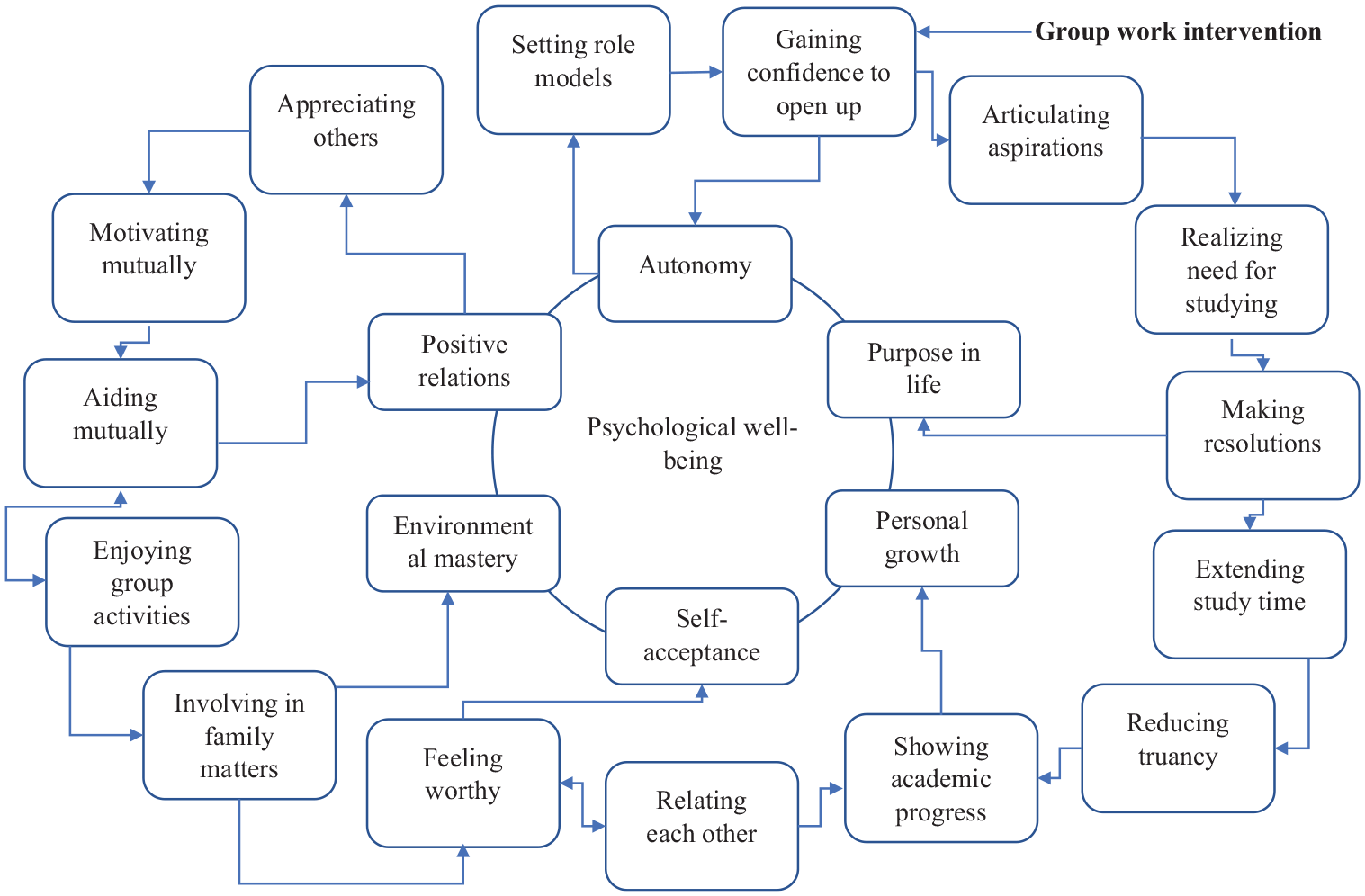
Outcome map.
The outcome map conflating qualitative results of IR clarifies how the qualitative themes interact and contribute to the constructs of PWB that were measured quantitatively. It stresses the significance of qualitative approaches in social intervention research (Hill, 2012; Webber, 2014).
These SWIR evaluation results confirmed the effectiveness of the empowerment model SGW intervention for underprivileged adolescents to improve their PWB (Gitterman & Knight, 2016; Joseph & Karalam, 2021). The study underscored that peer group is an important protective factor that can be leveraged to engage in collective action, raising consciousness and capacity for empowering disadvantaged adolescents. Moreover, it asserted the positive association between the constructs of PWB and adolescents’ aspirations that facilitate their social mobility (Brassai et al., 2011; Ho et al., 2010; Steger & Kashdan, 2013). Therefore, this SWIR affirmed that CSPs could elevate adolescents’ educational and vocational aspirations through SGW interventions for raising their PWB and act as an effective development economics tool (Joseph, 2016; Joseph & Karalam, 2021).
Fidelity of Intervention
Fidelity is imperative to intervention research which refers to “the extent to which an intervention is delivered as intended” (Fraser et al., 2009, p. 15; Gearing et al., 2011). As a tailor-made novel program for a group of adolescent enrollees in a sponsorship program in Kochi, this intervention ensured external validity being the best fit for the social and cultural context (Sundell et al., 2016).
The SGW intervention program was developed and delivered as specified by the program theory, confirming an increased efficacy with a greater engagement of experts through the Delphi survey and continuous qualitative evaluation (Fraser & Galinsky, 2010). Moreover, this intervention claimed internal validity, ensuring high fidelity to the approved protocol (Sundell et al., 2016).
Limitations of the Study
Although an interrupted time series design requires multiple measures before the intervention, this SWIR collected only one set of preintervention quantitative data. However, the trivial variances in the PWB measures of CG at all time points made alternative explanations for the effects of the SGW intervention implausible. This study has measured the post-intervention data for 6 months, which needs to be measured further to assess the long-term effect of the intervention. In addition, follow-up sessions are needed to sustain the effect.
Moreover, one possible drawback when giving adolescents Ryff’s inventory is that they may respond in a more socially desirable way than their actual response to the statements. Finally, repeated measures using the same instrument may lead to an inclination toward the consistency of values. However, this study addressed these dilemmas by incorporating a qualitative design in evaluating the intervention.
Discussion
The findings of this study hold significant implications for both social work education and practice, providing valuable insights into the complexities of addressing PWB among adolescents in sponsorship programs. The findings underscore the importance of empowering adolescents through interventions that leverage protective factors, such as peer support, to enhance their PWB. This resonates with the empowerment approach in social work (Lee & Hudson, 2011), which emphasizes the importance of empowering individuals to identify their strengths and address their own needs and challenges.
Moreover, the contextual factors identified in the study, including financial difficulties, family dynamics, and community resources, highlight the intersecting layers of influence that shape adolescents’ well-being. Social work education must equip practitioners with a nuanced understanding of these contextual factors to effectively address the needs of vulnerable populations. By integrating case studies and real-life examples from sponsorship programs into the social work curriculum, educators can provide students with practical insights into the challenges faced by adolescents and the strategies employed to promote their well-being.
Furthermore, the findings contribute to the existing literature on social work practice with adolescents, highlighting the need for strengths-based approaches (Bozic et al., 2018; Lippold & Jensen, 2017) that prioritize well-being by leveraging protective factors. By drawing on evidence-based interventions (McNeece & Thyer, 2004) and best practices, social workers can develop tailored interventions that address the unique needs of adolescents in sponsorship programs. Additionally, the findings underscore the importance of collaboration between social workers, educators, community organizations, and other stakeholders in promoting the well-being of adolescents.
Finally, this study sheds light on the multifaceted nature of addressing PWB among adolescents in sponsorship programs, offering valuable insights for social work education and practice. By incorporating these findings into curriculum and practice, social workers can enhance their ability to effectively support adolescents and empower them to thrive in the face of adversity. Through ongoing research, collaboration, and innovation, the field of social work can continue to advance its efforts in promoting the well-being of vulnerable populations.
Conclusion
IR straddles quantitative and qualitative dichotomy. Meticulously interlacing quantitative and qualitative strands, this SWIR established an association between the empowerment of marginalized adolescents and their psychological well-being. A well-structured and approved study protocol provided lucidity to the development of each stage and goal attainment of this SWIR. The preliminary qualitative studies that explored participants’ problems and their RPFs, and the definition of a problem theory set the stage for program development. A custom-made intervention program hinged on a program theory developed and delivered under rigorous expert supervision ensured desired outcomes. The continuous qualitative evaluation process that warranted the program’s fine-tuning for the best results affirmed the irrefutable position of qualitative designs in IR that focus on humans’ subjective changes. Besides, the conflation of qualitative and quantitative evaluation results, which proved the effectiveness of social group work intervention in raising the psychological well-being of adolescent enrollees in sponsorship programs, reckoned the success of this intervention research. Therefore, we recommend social group work as an effective tool for raising the psychological well-being of underprivileged adolescents to instill aspirations in them to climb the social ladder.
Footnotes
Declaration of Conflicting Interests
The author(s) declared no potential conflicts of interest with respect to the research, authorship, and/or publication of this article.
Funding
The author(s) received no financial support for the research, authorship, and/or publication of this article.

Ethical Statement
The ethical committee at the CHRIST Deemed to be University, Bengaluru approved this study, Register no: CU:RCEC/00037/l/19.