




Abstract
Violence has been widely acknowledged as a severe infringement of human rights and a global public health concern, with profound implications for individuals’ well-being and socioeconomic status. Scholars have illustrated that growing up amid societal violence significantly affects adolescents’ social, emotional, behavioral, and cognitive development. This research aimed to explore the prevalence of community violence and its correlated factors among adolescents in Makassar, Indonesia, utilizing a standardized questionnaire. The study took a cross-sectional approach and was conducted in Makassar, Indonesia. Three out of 15 districts were purposively selected. Researchers recruited 345 adolescents aged 15 to 19 through multi-stage sampling methods. Their encounters with community violence were evaluated through self-reports, assessing their perceptions of aggressive behavior, problematic behaviors, and exposure to community violence, encompassing self-victimization, witnessing violence, and hearing about it. The majority of the participants were female (57.9%), with an average age of 16 years. 17% of participants had a history of drug abuse. The findings disclosed that 62% of participants had encountered direct victimization, while 56.2% and 51.9% had observed and heard about violence in their community, respectively. Associations were identified amongst their grade level, living arrangements, maternal education and occupation, perceptions of problematic behavior, pro-social fantasies, and a history of drug abuse in relation to exposure to community violence. The study provided valuable insights into measuring exposure to community violence and its associated factors. Based on these findings, the research suggested preventive measures and intervention recommendations, and emphasizing adolescent- survivor-centered approaches.
Introduction
Violence is a persistent issue that transcends generations and borders, becoming ingrained in societies. This unfortunate reality persists even in apparently productive societies with religious, legal, and moral constraints (Dahlberg & Krug, 2006). While global statistics may indicate a decline in violence rates, it is important to note that low- and middle-income countries face challenges in accurately representing their homicide rates (McCoy et al., 2020; World Health Organization, 2015b). Cultural perspectives play a significant role in shaping this issue, contributing to the difficulty in obtaining precise data. Despite this, the prevalence of violent behaviors has increased over the past decade, affecting both developed and developing nations.
Measuring the extent of suffering and pain inflicted by violence is a complex endeavor. Various methods can be employed to gauge violence, as it permeates society both inside and outside homes, manifesting through media, politics, neighborhoods, communities, and schools (Docherty et al., 2018). Violence can be categorized by its nature (physical, sexual, or psychological), the life stage of its victims (childhood, adolescence, adulthood, or older adulthood), or the context in which it occurs (workplace, school, or community) (White & Geffner, 2022).
Community violence represents a form of interpersonal violence where victims and perpetrators, often unrelated and possibly unknown to each other, may encounter intentional acts, commonly within the home. This category of interpersonal violence includes incidents occurring among family members, intimate partners, friends, acquaintances, and even strangers. Such violence imposes a significant burden on public health, elevating the risk of premature death and contributing to widespread social challenges. The repercussions of interpersonal violence extend beyond individual fatalities, profoundly affecting the psychological well-being of children and adolescents exposed to the trauma and violence (Brison, 2023). Adolescents’ perceptions of violence are influenced by their unique emotional reactivity and cognitive impulsivity, often leading to a misguided belief that aggression is rewarded, even in threatening and challenging circumstances. Although less common, the notion of being “street smart” in some communities reflects a level of respect associated with involvement in violent activities (McCoy et al., 2020; World Health Organization, 2015a)
A person’s lifetime represents an accumulation of interactions shaped by beliefs, thought patterns, and cognitive factors. Violent individuals employ different cognitive processes when interpreting their behaviors. Individuals exposed to hostility often exhibit a phenomenon known as hostile attribution bias, perceiving situations differently than those with limited exposure. This bias is particularly evident among young men, especially those involved in gangs, who may view aggression as an effective problem-solving strategy, albeit one that isolates them from non-aggressive peers (Schneider, 2020). Such exposure to community violence has been linked to negative health outcomes, as highlighted by DeCou and Lynch (2017). It leads to internal consequences, such as psychological distress, with highly lethal weapons contributing to depression, anxiety, and aggression among adolescents (Mitchell et al., 2021, 2015).
In 2017, the INSPIRE report on ending violence against children revealed that Indonesia ranked third in Southeast Asia for violence prevalence, trailing behind India and Nepal (World Health Organization, 2021). Discussing violence remains a sensitive issue in Indonesia, where it is often regarded as a private matter, making it challenging to address effectively. A study conducted on adolescents aged 13 to 17 found that a significant portion (up to 61%) experienced physical violence, with 40% of female participants witnessing parental abuse within a year (Rumble et al., 2018).
Makassar, one of Indonesia’s largest cities, also grapples with a significant share of national violence cases, accounting for up to 9% of such cases in the country (Keamanan, 2019). In 2021, the Women Empowerment and Child Protection Office in Makassar reported a 63% increase in cases involving children and adolescents with violent tendencies compared to the previous year, marking the highest increase in 5 years (Aminah, 2021).
Despite limited knowledge about interpersonal violence, this study aims to investigate the impact of community violence on daily life and individual characteristics among adolescents in Makassar, Indonesia. Research on community violence exposure, particularly among adolescents in this region, is scarce. Existing literature, however, suggests alarmingly high levels of violence experienced by Indonesian adolescents. The study adopts a comprehensive approach, utilizing both school-based and community surveys to assess the prevalence and magnitude of community violence exposure in Makassar. This dual methodology aims to provide insights into the overall prevalence and consequences of youth violence, contributing valuable data to enhance understanding and address the multifaceted aspects of community violence exposure in the region. The study endeavors to shed light on the extent of such experiences and their associated factors among adolescents in Makassar, Indonesia.
Methodology
Ethics Approval
Ethical approval for the study was secured from both the Research Ethics Committee of the university and the University of Muhammadiyah Jakarta Faculty of Medicine and Health Ethic Commission in Jakarta, Indonesia (No.075/PE/KE/FKK-UMJ/IV/2022). As the participants were considered underage due to the legal age being 18 years old in Indonesia, obtaining consent from both parents and adolescents was crucial. To ensure the anonymity and protection of subjects’ rights, a comprehensive chain of permissions was established. A series of permissions were established to ensure anonymity and protect the participants’ rights.
Study Design
This research was conducted on adolescents in Makassar, the capital city of South Sulawesi, Indonesia. Makassar, one of Indonesia’s largest cities, ranks third in size after Jakarta and Surabaya. It is situated in the eastern region of Indonesia, covering an area of 199.3 square kilometers. The city is home to approximately 667,810 children aged 15 to 19 years. Notably, South Sulawesi had one of the highest prevalence rates of violence compared to other provinces in Indonesia, according to National Criminal Statistics from 2019 (Keamanan, 2019).
To determine the sample size, the Cochran formula was employed, estimating a total of 325 participants, accounting for a 10% refusal rate. However, collecting data proved to be challenging due to the majority of participants being underage. Consequently, the process of obtaining consent was prolonged, eventually resulting in a sample of 345 participants.
Data Collection
The study employed a cross-sectional design conducted in three districts within Makassar, Indonesia, selected through a multi-stage purposive sampling approach. Initial district selection was based on specific criteria such as low socioeconomic status and documented urban violence, particularly against women and children. These districts, identified as having the highest rates of receiving social welfare in Makassar according to public records from Social Services Offices of Makassar, were Panakukkang, Tallo, and Ujung Pandang. Violence data were collected through integrated services provided by the Center of Women’s Empowerment and Child Protection in Makassar. The second stage involved convenience sampling within the selected districts, targeting schools, and communities. Two research assistants selected adolescents based on predefined inclusion criteria: individuals aged 15 to 19 years with internet access, consent to participate, and proficiency in using Google Forms. Exclusion criteria applied to those with physical or mental health challenges. As the legal age in Indonesia is 18 years old, obtaining consent from both parents and adolescents was crucial. The formal process of obtaining consent from both parents and adolescents, considering the legal age in Indonesia, is crucial for ethical and legal reasons. This step enhances the internal validity of the study by ensuring that participants are willing and legally permitted to participate. Formal letters seeking permission for data collection were sent to the Education Office and the Women Empowerment and Child Protection Office of Makassar City. Upon receiving approvals, similar letters were sent to three anonymous junior high schools and three senior high schools selected by the State Office of Education. Research assistants engaged with school principals, disseminating study information, obtaining informed consent from parents, and explaining the study content. This step enhances the reliability of the data by ensuring that the research is conducted in collaboration with relevant authorities. For out-of-school youths, formal letters from the Women Empowerment and Child Protection Office sought approval for data collection in selected districts. This approach enhances the reliability of the data by utilizing established sources that specialize in handling sensitive information related to violence. Recognizing the sensitivity of the topic and the vulnerability of the participants, the two research assistants were experienced in trauma studies. These assistants possessed essential counseling skills and the ability to address potential participant distress, contributing to a thorough permission process. Hiring research assistants experienced in trauma studies, possessing counseling skills, and the ability to address potential participant distress contributes to the study’s reliability (Figure 1).

Data collection.
Data were collected through group or youth forums, following a similar approach as used in schools. After obtaining informed consent, a WhatsApp messenger link directed participants to a Google Form, where the 10-min questionnaire was completed and collected by research assistants. The use of group or youth forums for data collection, followed by a standardized 10-min questionnaire through a Google Form, contributes to the reliability of the measures. The standardized approach minimizes variability in data collection, increasing the consistency of responses.
Survey of Exposure to Community Violence (SECV)
The questionnaire utilized for this study was the Survey of Exposure to Community Violence (SECV), originally developed by Richters and Saltzman in 1990 and updated in 1993 (Booth et al., 2024; Richters & Saltzman, 1990).
SECV is a research tool designed to assess individuals’ experiences and exposure to violence within their community. Such surveys typically include questions related to direct victimization, witnessing violent events, and other factors that may contribute to an understanding of the prevalence and impact of community violence on individuals, particularly adolescents in this context.
Tailored to the Indonesian context, the self-report version of the SECV comprises 45 questions, with modifications to fit local conditions (e.g., exclusion of gun violence questions due to limited gun ownership in Indonesia). The questionnaire, taking less than 5 min to complete, features a reading level equivalent to less than Grade six elementary school, utilizing a multiple-choice answer format. The study primarily focused on questions related to direct victimization and witnessing violence (seeing and hearing). Direct victimization included experiences like being chased, involvement in drug activity, serious accidents, forced entry, threats, arrests, slapping, hitting, punching, beatings, muggings, rape, molestation, and knife attacks. Witnessing events encompassed scenarios like being chased, drug activity, serious accidents, forced entry, arrests, threats, slapping, hitting, punching, beatings, muggings, rape, molestation, carrying weapons, serious wounding, knife attacks, killings, and a combination of all violence types. The study also included additional sections covering sociodemographic information, perceptions of aggressive behavior, perceptions of problematic behavior, and a history of drug abuse.
Perception of aggressive behavior is a characteristic of an individual in solving social problems. These characteristics are usually emerging early in life. Genetic, physiological, and other constitutional factors undoubtedly play a role in many cases to be seen as “appropriate conditions and thoughts.” The study measured the perception of aggressive behavior using by using 17 questions grouped into
Fantasy measures: Fantasy measures are often employed to understand different dimensions of individuals’ cognitive processes, attitudes, or preferences. In this study, referring to tools or assessments that gauge aspects related to negative imagination, or daydreaming.
Pro-heroic fantasy, a specific type of imaginative or fantasy-related thought process where individuals envision themselves in heroic or positive roles. This could involve imagining oneself as a hero, protector, or someone who engages in positive and altruistic behaviors to help others.
Pro-social fantasy, pro-social fantasy, on the other hand, involves the imagining of scenarios or behaviors that are socially positive and beneficial. This could include envisioning oneself engaging in acts of kindness, cooperation, or empathy towards others. Pro-social fantasies often align with the promotion of positive social behaviors and relationships.
Items were rated using a three-point scale (1 = no, 2 = a little, and 3 = a lot). A maximum score of 3 indicates the fantasies of the participants about social behavior (Ferdushi, 2019; Rosenfeld et al., 1982). High scores indicated high levels of perception about acquiring negative or positive thoughts. Fantasy measures indicate the perceptions about bad thoughts, and the opposite is true for pro-heroic and pro-social fantasy. The median score is considered the cut-off point for each measure.
Perception of Problematic Behavior (Pittsburgh Youth Study)
The scale is composed of 15 items in the form of statements and measures one’s willingness to engage in problematic behaviors such as yelling and arguing to solve conflicts or rebelling against parents. Points will be assigned 0 and 1 to each question. The assigned 0 for answering no, and 1 for yes, where high scores indicate willingness to engage in problematic behavior (Ahonen et al., 2021; Loeber et al., 1998).
History of Drug Abuse
The survey is adopted from Car, Relax, Alone, Forget, Friends, Trouble (CRAFFT), which is an efficient and effective health screening tool used worldwide to identify substance use, substance-related riding/driving risk, and substance use disorder in adolescents (Shenoi et al., 2019).
Validity and Reliability
The structured questionnaires were initially created in English and underwent a thorough review by three experts affiliated with the College of Public Health Sciences at Chulalongkorn University. These experts possessed specialized knowledge in the domains of violence and health. The questionnaire’s content was meticulously examined and evaluated using the Item-Objective Congruence (IOC) Index, ensuring a minimum score of 0.5.
To validate the questionnaire, a pilot test was conducted with a sample of 36 adolescents in Makassar, representing 10% of the total sample size. The reliability score, measured by Cronbach’s alpha coefficient, yielded a consistent result of .731, affirming the reliability of the instrument.
Statistical Analysis
Analysis was descriptive, bivariate, and multivariable. Specifically, bivariate analysis was composed of binary logistics regression for categorical data and correlation among Spearman’s correlation for continuous data. Significance was set to p-value <.05 for the bivariate analysis between the dependent variables (self-victimization, seen-witnessing, and heard-witnessing) and each of the independent variables. For multivariable analysis, significance was set to p < .2 for variables without collinearity with the other variables after considering those with p-value <.2 to include potential variables that were non-significant to bivariate analysis.
Multivariable analysis was conducted via multiple logistic regression; moreover, the study used binary logistics regression to determine which variables strongly associated with the exposure to community violence and which ones were the best predictors. Analyses were conducted using SPSS 23.0.
Results
Sociodemographic Characteristics of the Adolescent
Table 1 presents the sociodemographic characteristics of the sample, which consisted of a total of 345 participants. Among these, the majority were women, accounting for 57.9% of the total. Additionally, 5.7% of the participants chose not to disclose their gender. Approximately 27% of the participants were aged 15 years, with an average age of 16.74 years. Notably, the majority of the participants were underage, being less than 17 years old in accordance with Indonesian law. Furthermore, 30% of the participants were in Grade 11. A total of 96 participants were out of school. When examining the distribution by districts, participants from the Panakukkang district constituted nearly 40% of the sample (n = 129). Additionally, almost 70% of the participants reported living with their parents, while approximately 5.5% of them were in different living arrangements.
Sociodemographic Characteristics of Respondents (n = 345).
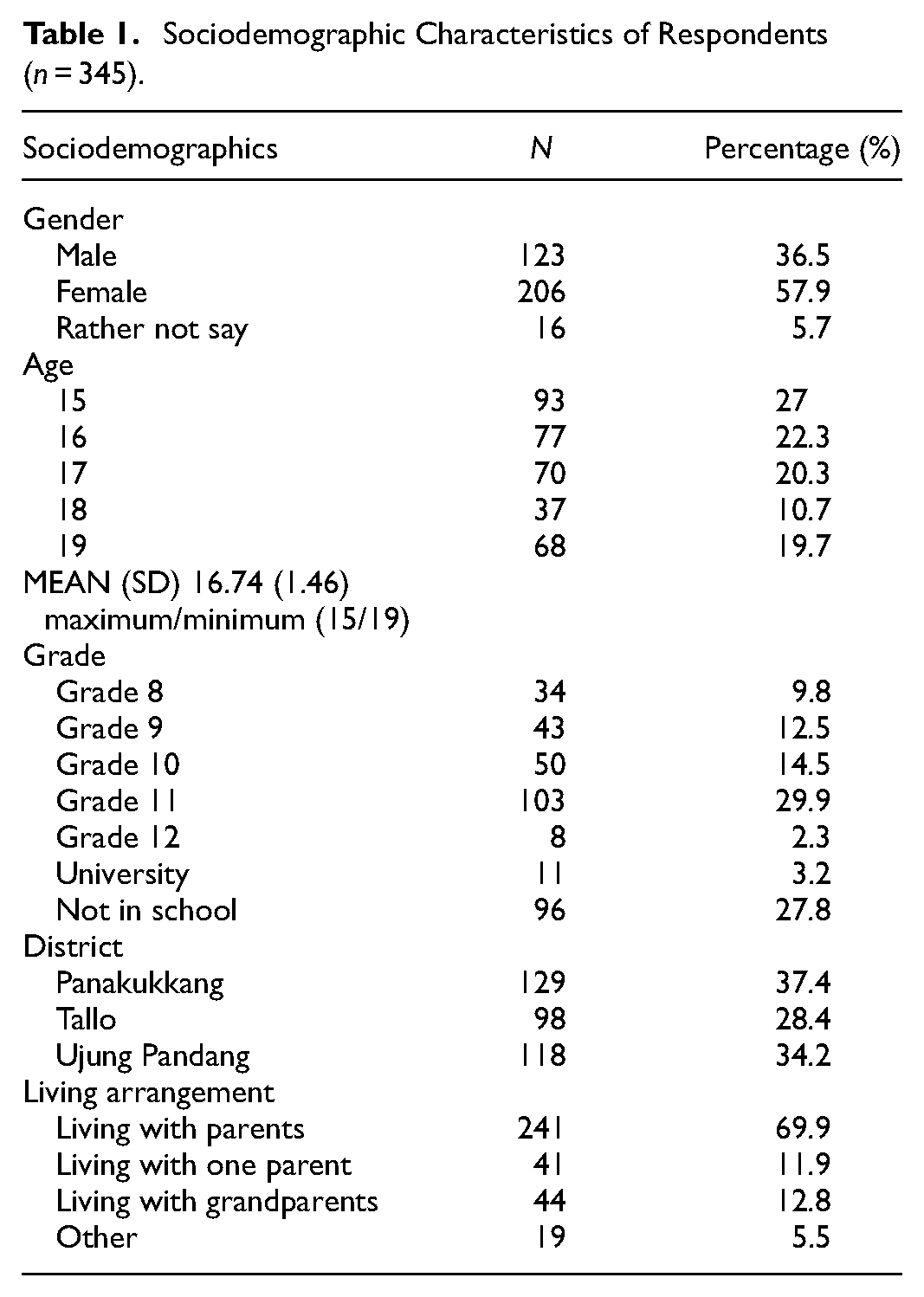
Table 2 provides insights into the education and occupation of the participants’ parents. Among the 127 participants, at least one of their fathers held a university degree or higher education. In contrast, the majority of mothers, accounting for 35.7% (n = 123), had completed senior high school. The most common professions among fathers and mothers were entrepreneurship and homemaking, respectively. Notably, the highest percentage of participants, 46.1% and 66.7% respectively, mentioned their fathers’ and mothers’ occupations within these categories. Additionally, 135 participants reported living in households with incomes below the minimum wage, constituting the largest proportion of the sample.
Family Characteristics of Respondents (n = 345).

Fantasy measures were categorized into three groups: aggressive, pro-heroic, and pro-social. These categories were assessed based on participants’ scores, with median scores from the entire sample serving as cutoff points. Despite the non-normal distribution of the data, Table 3 displays the results in two categories: below the median and above the median.
Fantasy Measure and Perception of Problematic Behaviors.

Participants scoring above the median were deemed to have a greater inclination toward either negative (aggressive fantasy) or positive (pro-heroic and pro-social fantasy) thoughts. Notably, 67% of the participants exhibited higher scores in aggressive fantasy, indicating a prevalent inclination toward such thoughts. Additionally, 192 participants scored above the median in pro-heroic fantasy, while 218 participants scored above the median in pro-social fantasy, signifying a higher propensity for positive thoughts related to these fantasies.
Pro-social fantasy items were associated with helping others (e.g., “Do you sometimes daydream about helping other kids in trouble?”), while pro-heroic fantasy items related to the desire to engage in heroic activities in society (e.g., “Do you sometimes daydream that you enter a burning building to save somebody in a fire?”). Furthermore, the results regarding the perception of problematic behavior indicated that 51% of the participants exhibited low levels of perception in this regard.
The Prevalence of Community Violence Exposure
Table 4 presents descriptive statistics regarding exposure to community violence outcomes. It is important to note that the three outcome variables were found to have a non-normal distribution, with a median score of 11.965. This median score was determined by calculating the total score for each participant based on their responses to the 13 questions and subsequently applied to the other outcome variables.
Community Violence Exposure; Direct Victimization, Witnessing by Seeing, and Witnessing by Hearing.

Scores exceeding the median value indicated a high level of exposure to direct victimization of community violence, which was the case for 62% of the participants, totaling 214 individuals. Notably, the majority of participants reported no personal experience of violence, particularly in instances such as being asked to use or sell drugs, as well as falling victim to beatings, muggings, or forced entry when outside of their homes. The highest level of non-exposure to direct victimization was observed in cases involving knife attacks, with 98.3% of participants reporting no such experiences. However, for certain items, such as victimization by being chased, slapping, hitting, punching, and serious injury, a slightly higher percentage of participants, around 20%, reported exposure to these incidents.
The table also provides results for witnessing community violence, both by seeing and hearing. The prevalence of exposure through witnessing violence was higher, reaching 56.2% (n = 194), compared to the victimization outcomes presented in Table 3. Notable incidents of exposure included witnessing individuals being chased, engaging in drug-related activities, and experiencing serious injury or arrest. A significant proportion, 51% of participants, reported witnessing people being seriously injured, with the majority of these incidents involving adult strangers.
Table 4 further presents 15 items related to witnessing community violence through hearing. Similar to the other outcomes, these items exhibited a non-normal distribution, with a median score of 15.55. Notably, 51.9% of participants displayed high levels of exposure to violence through hearing. The two items with the highest exposure levels were related to incidents of serious injury and being chased, both at 55%. It’s important to highlight that in most cases, the participants were not acquainted with either the victims or the perpetrators, who were typically adult strangers. Lastly, 40% of participants reported witnessing incidents of people being arrested through hearing.
Factors Associated with Exposure to Community Violence Among Adolescents
Table 5 presents Spearman’s correlations to the continuous results. Three items for exposure to community violence were positively correlations with aggressive, pro-heroic, and pro-social fantasy, perception of problematic behavior, and history of drug abuse.
Correlation of Exposure to Community Violence with All Items.

The significance for “**” is p value <0.005. The significance for “*” is p value <0.001.
Factors Associated with Exposure to Community Violence Among Adolescents
Table 6 presents the final model for predicting exposure to community violence using binary logistic regression. This analysis was conducted to determine the likelihood of exposure to community violence. Based on β coefficients with a significance level of p < .2, the results highlight several significant predictors of exposure to community violence, including Grade, Living Arrangement, Mothers’ Levels of Education, Mothers’ Occupation, Perception of Problematic Behavior, Pro-Social Fantasy, and History of Drug Abuse:
Grade: Participants in high school and university were found to be 2.1 times more likely to become victims of community violence, 3.7 times more likely to witness violence by seeing it, and 3.8 times more likely to witness violence by hearing it, compared to those in junior high school.
Living Arrangement: Adolescents living with their parents were less likely to become victims of community violence compared to those in other living arrangements. Furthermore, adolescents living with their grandparents were also less likely to become victims of community violence compared to those in other living arrangements. However, adolescents living in one-parent households were 4.2 times more likely to witness violence by seeing it in their community compared to those in other living arrangements.
Mothers’ Levels of Education: Adolescents whose mothers had achieved basic education were 5.8 times more likely to become victims of violence compared to those whose mothers had no education. Additionally, adolescents whose mothers were government officers were four times more likely to witness violence by seeing it and 3.3 times more likely to witness violence by hearing it in the community.
Perception of Problematic Behavior: Adolescents with thoughts and high levels of perception of problematic behavior were 1.3 times more likely to become victims of community violence. They were also 1.4 and 1.2 times more likely to witness violence by seeing and hearing it, respectively, in the community.
Pro-Social Fantasy: Adolescents with pro-social fantasies were 20 times more likely to witness violence by hearing it.
History of Drug Abuse: Adolescents with a history of drug abuse were 1.53 times more likely to witness violence by seeing it in their community. These findings shed light on the factors that significantly influence the likelihood of exposure to community violence among adolescents.
Final Model of Factors Associated with Direct Victimization Through Exposure to Community Violence.

p–value < 0.05
Discussion
This study aims to comprehensively outline sociodemographic characteristics, aggressive fantasies, problematic behavior perception, drug abuse history, and exposure to community violence among Makassar adolescents, investigating the prevalence of such exposure. Senior high school and university students exhibited a higher likelihood of violence exposure, consistent with prior research on higher victimization rates in this demographic (Abel et al., 2022; Anderson et al., 2001). Intriguingly, mothers with higher education levels also showed increased vulnerability, challenging common assumptions. This unexpected finding suggests the need for further research to elucidate the underlying dynamics, potentially involving heightened adolescent awareness and the mediating role of positive parenting.
An integral finding was the strong association between perception of problematic behavior and community violence exposure. Adolescents with a heightened perception of behaviors like stealing or fighting were more prone to violence as victims or witnesses. This underscores the urgency of addressing problematic behavior as a preventive measure before it escalates into real-time exposure to violence.
Prevalent aggressive fantasies, reported by up to 67% of participants, were noteworthy. While consistent with prior studies (Nagtegaal et al., 2006), along with the recent study adding social media as one of the factors encouraging aggressive fantasies (McCreery & Krach, 2018), and variations in measurement methods may account for differences. The positive correlation between perception of aggressive behavior and community violence exposure aligns with existing research, indicating that exposure contributes to aggressive behavior (Prati et al., 2018).
Despite the valuable insights, the study’s cross-sectional design necessitates further investigation. Nevertheless, these results underscore the critical importance of focusing prevention efforts on understanding aggression triggers and mitigating community violence exposure in urban contexts. This implies the need for targeted interventions addressing problematic behaviors and fostering awareness among adolescents. The findings suggest that parenting programs emphasizing positive guidance may play a crucial role in mediating the impact of education on mothers’ vulnerability to violence exposure.
Sociodemographic Characteristics of Adolescents
The study predominantly involved female participants (60%), and their noteworthy diligence in completing questionnaires adds value to violence research, particularly given that a majority of victims are female adolescents. This aligns with White and Geffner’s theory, highlighting the influence of individual-level factors like power and control on victimization tendencies, especially in a cultural context where power dynamics often favor men (White & Geffner, 2022).
Examining family dynamics, the majority of participants (approximately 70%) lived with their parents, a common practice in Indonesia post-high school graduation. The study suggests that residing with parents serves as a form of family intervention, reducing the likelihood of becoming victims of community violence. However, it’s crucial to note that families, despite their protective role, can also be perpetrators of violence (Decety et al., 2018).
A previous study conducted by the organization (World Health Organization, 2021) made comparisons between community and family settings. Revord (2022) highlighted that residing in areas characterized by high levels of stability was associated with an improved individual quality of life. In our current study, despite the fact that the selected districts had low socioeconomic status within their community settings, we deliberately chose these districts due to their high prevalence of households with low socioeconomic status. Regardless of the economic disparities, community interactions persist, particularly in shared government facilities such as primary healthcare centers and schools. Our findings support the notion that violence can potentially occur in any setting, irrespective of its socioeconomic status or location.
Contrary to expectations, gender was not significantly associated with any type of violence exposure in this study, challenging the stereotype that gender inequality contributes to gender-based violence. The predominance of female participants might explain the deviation from prior trends associating exposure to community violence with males (Löfving-Gupta et al., 2018).
Surprisingly, the study revealed no significant link between low-income households and violence exposure. This finding persisted even when considering that a significant portion of participants resided in households with incomes below the minimum wage (44%). Financial difficulties, common in Indonesian households, were not significantly correlated with violence exposure, challenging assumptions about the role of economic factors (Brodie et al., 2023; Rutherford et al., 2007).
Regarding witnessing violence, the study reported higher prevalence rates for serious injuries (witnessing seeing-exposure: 51.3%, hearing exposure: 58.9%) compared to stabbing incidents. The persistence of physical violence in Makassar is concerning, raising the possibility of its normalization and influencing adolescents to resort to physical aggression as a conflict resolution strategy (Orbuch et al., 2022) A report from the WHO South-East Asia Region indicated that sharp objects were frequently used in homicide cases in Indonesia (World Health Organization, 2021).
Implications of these findings suggest the need for targeted interventions that consider the nuanced roles of gender, family dynamics, and economic factors in violence exposure. Addressing violence at its roots, both within families and communities, is crucial. Additionally, public awareness campaigns may help in challenging ingrained stereotypes and normalizations of violence, fostering a safer environment for adolescents in Makassar.
Factors that Predicting Community Violence
This study uncovered a higher likelihood of exposure to community violence among senior high school and university students, encompassing dimensions such as self-victimization and witnessing incidents by sight or sound. Consistent with previous research by Holland et al. (2019) and Anderson et al. (2001), this finding reinforces the elevated rates of victimization and homicide among high school students compared to their elementary counterparts.
Austin et al.’s (2020) research highlighted differences in perceptions of violence, indicating that children might experience violence more frequently than acknowledged by their families. Surprisingly, our findings suggested that mothers with higher education levels were more prone to community violence exposure, necessitating further investigation, potentially through surveys tailored to mothers. This result challenges societal expectations in Indonesia, where educated mothers often choose to be stay-at-home parents due to cultural, religious, and traditional norms (Mahfud & Rizanizarli, 2021). Increased adolescent awareness, influenced by positive parenting, may contribute to heightened community involvement and sensitivity to events.
A significant association was identified between the perception of problematic behavior and exposure to community violence. Adolescents with heightened awareness of problematic behaviors were more likely to be victims or witnesses, emphasizing the overlap between offenders and victims (Dong et al., 2020). Addressing and mitigating problematic behaviors become crucial for preventing real-time exposure to violence, particularly among victims.
The study revealed a notable presence of aggressive fantasies, with 67% of participants reporting them. While aligning with findings from Nagtegaal et al. (2006), it’s crucial to note the difference in measurement methods, with our study employing a frequency scale. The perception of aggressive behavior was associated with community violence exposure, impacting both self-victimization and witnessing, supporting Prati et al.’s (2018) assertion that exposure to community violence can lead to violent behavior (Prati et al., 2018).
Concerns regarding the perception of aggression revolved around the belief that violence is an acceptable means of conflict resolution. The circumstances in which individuals witness violence may contribute to the normalization of aggression. Despite our study’s cross-sectional design, differing from previous research, it underscores the need for further investigation. Orue et al.’s similar results emphasize the importance of prevention efforts focusing on identifying aggression triggers and addressing community violence, especially in urban contexts.
To address the heightened exposure among educated mothers, tailored intervention programs focusing on their specific needs and challenges should be implemented. Additionally, community-wide awareness campaigns can challenge stereotypes and normalize non-violent conflict resolution methods. School-based programs targeting problematic behaviors and aggressive fantasies, while involving parents through positive parenting initiatives, can contribute to a safer environment for adolescents. Collaboration between educational institutions, communities, and families is crucial for comprehensive and effective violence prevention strategies.
Conclusion
Research on violence encounters significant challenges due to its sensitive nature, with norms surrounding violence often conflicting with moral values, even in studies aimed at promoting children’s well-being (Rumble et al., 2018). Our study in Makassar faced similar challenges, revealing diverse perceptions of research in public settings. Despite our initial focus on areas with low socioeconomic status, we discovered that certain findings related to violence were not exclusive to poverty, emphasizing that violence is not solely a financial issue, though it remains a risk factor. The research highlights that high school and university students, consistent with trends in violence research, face higher exposure to community violence than junior high school students. Examining adolescent resilience becomes crucial in understanding their response to adversity. Living with parents and grandparents emerged as a protective factor, underscoring the significance of positive family relationships in shielding individuals from violence. Conversely, living with only one parent increased the likelihood of witnessing violence.
Mothers, being primary caregivers, were linked to exposure to community violence based on their education and occupation, emphasizing their enduring responsibility in parenting. Pro-social fantasy significantly correlated with witnessing violence, reflecting sensitivity to the environment and acts of violence, but with a dual nature that can desensitize adolescents to constant exposure. Finally, the study highlighted that the perception of problematic behavior and a history of drug abuse are persistent risk factors transcending culture and values. In conclusion, the study indicates the need for tailored intervention programs and community-wide awareness campaigns to effectively address violence. The unexpected findings challenge existing assumptions, emphasizing the importance of nuanced and context-specific approaches to violence prevention.
Limitation and Strengths
One of the study’s limitations pertains to the selected schools, which are government-operated. This categorization may not fully capture the diversity present in private and vocational schools, potentially limiting the generalizability of the findings. A more comprehensive inclusion of different school types could provide a more holistic understanding of the prevalence of community violence exposure among adolescents. The study acknowledges a relatively low representation of out-of-school youth, a vulnerable group. This limitation may result in an underestimation of the prevalence of community violence among this specific demographic. A more robust inclusion of out-of-school youth would have enhanced the study’s ability to comprehensively address the exposure of all adolescents to community violence. The study’s findings are geographically confined to Makassar, limiting the applicability of the results to the entire national population. A more expansive data collection approach encompassing multiple cities and rural areas would have provided a broader perspective on the prevalence and nature of community violence among children and adolescents in Indonesia.
Due to the sensitivity of the topic, there is a possibility that some students and youth may have been hesitant to openly report instances of violence to external parties. This reporting bias could impact the accuracy and completeness of the data, potentially leading to an underrepresentation of the true extent of community violence exposure.
Despite these limitations, the study’s results provide a valuable baseline for understanding exposure to community violence among children and adolescents, particularly within the specific context of Makassar. The findings contribute essential insights into the prevalence and associated factors of community violence in this urban setting.
The study acknowledges the vulnerability of out-of-school youth, emphasizing the importance of considering their unique experiences in future research and intervention programs. This acknowledgment reflects a commitment to addressing the limitations and enhancing the inclusivity of future studies. The concentration on an urban capital city, while a limitation in terms of generalizability, offers in-depth insights into community violence within an urban context. This focused exploration can be valuable for tailoring urban-specific prevention and intervention strategies that address the unique challenges present in urban environments. The study recognizes the sensitivity of the topic, emphasizing potential reporting bias. This awareness adds depth to the interpretation of the findings, prompting considerations for future research methodologies that encourage more open and honest reporting on instances of community violence.
While acknowledging the limitations, the study’s strengths lie in providing a foundational understanding of community violence exposure among adolescents in Makassar. The insights gained contribute to the broader discourse on violence prevention, underscoring the need for future research that addresses the identified limitations for a more comprehensive understanding of this critical issue.
Implication
The study’s innovative approach in delving into adolescents’ perspectives on community violence offers a novel lens through which policies and public health initiatives can be refined. In recognizing the intricate relationship between self-victimization and adolescents’ perceptions, policymakers should steer violence prevention policies toward a holistic understanding of the psychological and emotional responses to community violence. A shift from conventional approaches to a more empathetic and emotionally aware framework is imperative.
Communities emerge as pivotal actors in violence prevention, transcending passive bystander roles. The policy landscape should champion active community involvement, prioritize victim rehabilitation, and fortify family resilience as a cornerstone for shielding children from the adverse effects of violence.
Moreover, a targeted approach to address restrictive values, especially gender stereotypes, is warranted. Inclusivity and equality, woven into the fabric of community life, can reshape societal norms and foster an environment conducive to violence prevention. Education and social skills programs emerge as potent tools to initiate this transformative change. Teachers, as educators and role models, hold the potential to be agents of change within the school environment. Empowering them with programs that focus on non-violent practices and incorporating mandatory subjects on social and health behavior can contribute significantly to preventing problematic behavior among students. Additionally, the establishment of school-based counseling services and violence-focused centers is critical. These initiatives should be seamlessly integrated into the educational system, ensuring the comprehensive well-being of the student body. The implications highlight the interconnectedness of various elements in creating a robust policy framework that addresses the multifaceted nature of community violence.
Recommendation
The study contributes new insights into measuring the association between exposure to community violence and various factors. Most prior studies have primarily focused on its prevalence. In contrast, our current study aims to explore adolescents’ thoughts and perspectives regarding exposure to community violence and how these factors interact with their environment. The study reveals that self-victimization in community violence is linked to both negative and positive perceptions. It’s worth noting that adolescents often display resilience when faced with hardship and challenges (Docherty et al., 2018).
In essence, these recommendations serve as a roadmap for policymakers and public health officials to navigate the intricate landscape of community violence prevention, ensuring interventions are not only evidence-based but also sensitive to the unique needs and perspectives of adolescents in Makassar.
Communities play a vital role in the prevention of violence by actively seeking to enhance awareness and engagement, transcending passive bystander roles. Prioritizing victim rehabilitation should be a cornerstone of violence prevention policies in Indonesia. Essential to this effort is the strengthening of family resilience, positioning the family as a cohesive unit and a key protective factor for children. Supporting parents in fostering positive interactions, especially with at-risk youth, holds the potential to drive significant behavioral changes within communities. It is imperative for these efforts to address restrictive values, such as gender stereotypes, promoting inclusivity, and equality. Moreover, education and social life skills programs should be strategically designed to focus on trauma, healthy behavior, and providing necessary support for adolescent survivors of violence.
Developing programs that empower teachers as agents of change and non-violent role models for students is crucial for fostering a positive school environment. Introducing mandatory classroom subjects on social and health behavior can effectively contribute to preventing problematic behavior among students. To further support students, schools should consider establishing counseling services and violence-focused centers, ensuring the comprehensive well-being of the student body. Public health campaigns should be launched to raise awareness about the psychological and emotional impact of community violence on adolescents. These campaigns should encourage open dialogue, reduce stigma, and promote community support for affected individuals.
As the study expands, exploring additional districts in Makassar with larger participant groups can enhance inclusivity. Investigating additional predictors for adolescents and conducting longitudinal studies will provide deeper insights into the long-term impacts of violence. Supporting the expansion of research efforts to additional districts in Makassar with larger participant groups is essential. This expansion contributes to a more comprehensive understanding of regional variations in community violence experiences, informing targeted interventions.
Lastly, dedicating resources to qualitative research to uncover the reasons behind exposure to community violence in Makassar, alongside exploring experimental designs to identify causal relationships, is paramount. These endeavors provide invaluable perspectives for refining and tailoring effective intervention strategies.
Footnotes
Acknowledgements
The authors wish to extend gratitude to all participants.
Declaration of Conflicting Interests
The author(s) declared no potential conflicts of interest with respect to the research, authorship, and/or publication of this article.
Funding
The author(s) received no financial support for the research, authorship, and/or publication of this article.
Ethical Approval
Ethical approval for this study was obtained from the Research Ethics Committee of the UNIVERSITAS MUHAMMADIYAH JAKARTA (No.075/PE/KE/FKK-UMJ/IV2022)

Data Availability Statement
Data are available on reasonable request.