



Abstract
English as a foreign language (EFL) students’ lack of engagement directly affects their learning outcomes, and it has captured the attention of many researchers. Factors affecting EFL students’ participation may be differed by student and lecturer perceptions, which will cause differences in these stakeholders’ solutions to classroom difficulties. Accordingly, this study measured Non-English major (NEM) students and EFL lecturers’ perceptions of factors hindering students’ participation in English-speaking classes. About 156 NEM freshmen and 14 lecturers responded to a 35-item questionnaire containing five primary clusters: linguistic, cognitive, affective, pedagogical, and social-cultural factors. The study further employed semi-structured interviews with six students and four lecturers. The results found some significant differences between lecturer and student perceptions. On the one hand, the students did not consider the large class size, insufficient time for in-class practice, and students’ tendency to remain silent as hindering their class participation. On the other hand, the lecturers considered vital barriers: students’ insufficient proficiency, teachers’ poor lessons, or teacher-student relationship. Based on the findings, teacher professional development activities are expected to be one of the solutions to EFL students’ insufficient engagement in English-speaking classes.
Keywords
Background of the Study
In the Vietnamese context, the English subject is compulsorily taught in numerous educational institutions, from primary to tertiary levels, since it plays an essential role in the development of the country. Therefore, educational institutions are expected to enhance the effectiveness of English teaching and learning. One of the solutions is to propose some programs, often named “Advanced programs,”“High-quality programs in English,” and “Mainstream programs” to promote English language abilities. The current study was employed in a tertiary institution in the Mekong region with Advanced and High-quality programs. These programs involve English as the medium of instruction (EMI), requiring non-English major (NEM) students to advance their English proficiency in reading, writing, or presenting reports and materials in English for academic demands and professional careers in the future. Students are taught in General English courses to acquire adequate linguistic competence (in pronunciation and lexicogrammar) and the target language skills (listening, speaking, reading, and writing) to master the contents of their major courses through EMI. Furthermore, by the time of graduation, Vietnamese NEM learners are expected to reach level 4 of the Vietnam Foreign Language Framework (VFLF), which is equivalent to level B2 in the Common European Framework of References for Languages (CEFR) (Phuong, 2017). Consequently, the call to acquire English, especially speaking skills, has progressed dramatically at the tertiary level.
Notwithstanding the consequences of achieving communicative competence in learning English as a foreign language (EFL), Vietnamese students’ English proficiency levels remain unsatisfactory (H. T. Nguyen, 2018). This is especially the case of verbal competence, which is below expectations when students have finished tertiary education (T. T. Nguyen & Nguyen, 2016). One reason for this distance “far from the expectation” is students’ low participation in English-speaking classrooms (Vo et al., 2018). Many reasons have been found as the factors inhibiting Vietnamese students’ engagement in English-speaking classes, such as their traits (obedience, shyness, timidness, and the likes), teacher-student power distance, and so on (Aubrey et al., 2022; H. T. Nguyen et al., 2014; Tran, 2013a, 2013b). However, Vietnamese teachers and students do not have enough opportunities to share their viewpoints inside or outside the classrooms. Hence, it remains necessary to investigate what inhibits students’ classroom participation throughout the teaching and learning process from the perspectives of lecturers and students in English-speaking classrooms. Consequently, this study aims to check whether there is any significant difference between lecturer and student perceptions of the factors hindering EFL student participation at a tertiary institution.
Factors Hindering Students’ Participation in English Speaking Class
Some reliable frameworks could be used as a basis for this study (e.g., Ariyanti, 2016; Huang & Brown, 2009; Savaşçı, 2014). Specifically, Ariyanti (2016) aimed to investigate psychological barriers to Indonesian learners’ oral performance. Otherwise, Huang and Brown (2009) focused on determining cultural factors affecting Chinese pupils’ second language learning; or Savaşçı (2014) found some factors hindering Turkish students’ oral performance, namely anxiety, fear of being despised, or teacher effect. Based on the aforementioned frameworks with some modifications, the framework used in this study comprises the following factors: linguistic, cognitive, affective, pedagogical, and socio-cultural.
Linguistic Factors
Linguistic factors can be understood as the students’ linguistic expertise and communicative competence (Liu, 2001). If any aspect of this consciousness is lacking or weakly performed, it can be challenging for language learners to develop their speaking abilities. Consequently, the challenges can come from deficiencies in vocabulary, pronunciation blunders, and grammar mistakes. Tatar (2005) claimed that EFL students tend to keep quiet in classrooms because they lack language skills and inadequate content knowledge. Duy and Nguyen (2019) conducted their study to assess Vietnamese students’ knowledge. Their study showed that most students’ lexicon knowledge is insufficient and decreases when word complexity increases.
Cognitive Factors
According to Liu (2001), cognitive factors are associated with language learners’ previous learning experiences, learning styles, class preparation, knowledge of the subject matter, and enthusiasm for discussing topics. Students would be competent in English when their background information and previous learning experience are sufficient (Truong & Wang, 2019).
Affective Factors
Affective factors include students’ temperament characteristics, motivation, attitude, anxiety, and risk-taking (Liu, 2001). Affective factors refer to the emotional or psychological facet of students’ behaviors, influencing their language learning process. Vietnamese students’ personalities, fears, nature, and impulses have been rated as significant factors inhibiting participation in speaking lessons (Le, 2019).
Pedagogical Factors
Pedagogical factors are related to assessment, teacher characteristics, class size, classmate traits, and how teachers structure their classes (Liu, 2001; Martin & Collie, 2019). Al-Seyabi (2002) ascertained that pedagogical factors such as the program, discussion topics, instructors, and instructional strategies could affect students’ engagement. In the Vietnamese context, large class sizes and mixed-level classes are regularly considered significant barriers to students’ language learning (Huong, 2010). In addition, EFL teachers in Vietnam still tend to use content-based instruction rather than interactive approaches, which prevents Vietnamese language learners from developing their English communicative competencies (Tran, 2013a, 2013b).
Socio-Cultural Factors
Socio-cultural factors can be seen as the learners’ beliefs, self-perceived values, and morality-related issues strongly affected by their backgrounds, cultures, learning experiences, and educational policies in their countries. Confucian ethics have a substantial impact on the mindsets of both Vietnamese teachers and students; thus, the students are taught to be obedient from a very young age (Thompson, 2009). Rote learning becomes a standard learning style for students from K12 to higher education. T. H. Nguyen (2002) also found that Vietnamese learners frequently remain inactive in class discussions until the teacher controls the discussion. Moreover, they often keep quiet in class to respect the teacher and create a productive learning environment since interrupting lessons or challenging the teacher are not allowed (Oanh, 2021).
A significant number of studies on factors that discourage university students’ participation in EFL classrooms have been conducted in varied contexts, particularly in Asian countries (e.g., Ariyanti, 2016; Donald, 2010; Huang & Brown, 2009; Liew, 2009; Li & Liu, 2011). Notably, there are fundamental reasons for students’ low participation in speaking activities in EFL classrooms, including their language proficiency, shortage of confidence, nervousness and shyness, lack of motivation, cultural acceptance, hostile classmates’ traits, and teachers’ performance. Several early researchers investigated the factors influencing or discouraging students’ participation in English-speaking classrooms from the learner’s views. However, there are insufficient investigations into what causes students’ low involvement in speaking classes from both students’ and lecturers’ perspectives. Not only would the comparison between students’ and lecturers’ perspectives promisingly enhance EFL students’ participation in English-speaking classes, but it also points out the potential mismatch between them regarding factors hindering language learners’ participation in English-speaking classes. Accordingly, there is a need for a study to compare lecturers’ perceptions to students’ perceptions of factors causing students’ low participation in English-speaking classrooms. As a result, this current study addressed the main research question: “What are student and lecturer perceptions of factors hindering students’ participation in English-speaking classes in the Vietnamese context?”
Methodology
Research Design
The study was conducted as a mixed-methods approach in which the data were collected by two types of a questionnaire and 10 semi-structured interviews. The rationale for using a combination of these approaches is that the quantitative data can provide readers with a comprehensive image of the research issue; qualitative data collection provides information that refines, extends, or explains the concept (Subedi, 2016). More specifically, this study was designed in an explanatory sequential design, using qualitative data to interpret the results obtained from the questionnaires. Therefore, combining these two methods ensures the validity and reliability of the results and enhances in-depth analysis. Figure 1 displays the research procedures of this current study.

Research procedures.
Participants
Participants included 14 lecturers and 153 NEM students aged 18 to 19 years randomly selected from volunteers at a higher education institution in the Mekong region of Vietnam. In other words, the research team used a convenience sampling method to recruit the participants. The researchers only screened participants’ information to ensure their anonymity and confidentiality. In addition, the participants were allowed to withdraw from the study whenever they found it uncomfortable. Table 1 shows the participants’ information.
Participants for the Questionnaire.

After participating in the survey, 10 participants (six students and four lecturers) were selected based on the mean score of their responses to the survey. Table 2 displays the participants’ information for the interviews.
The Participants’ Information for the Interviews.

Instruments
Questionnaires
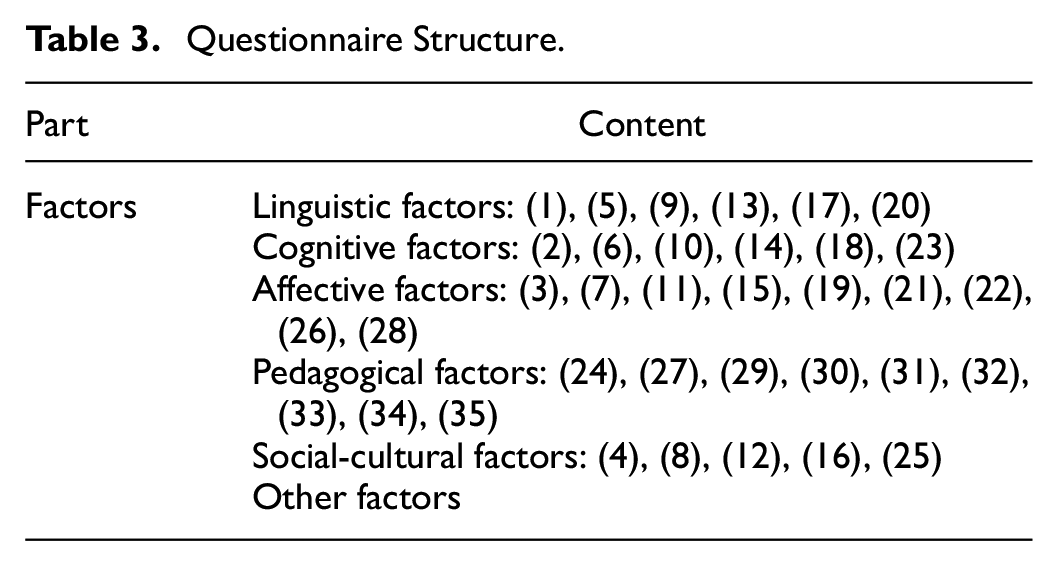
The questionnaire concentrated on factors that hinder students’ participation in English-speaking classrooms. Specifically, the research team adapted from previous studies (e.g., Ariyanti, 2016; Duy & Nguyen, 2019; Huang & Brown, 2009; Liu, 2001; Martin & Collie, 2019; Oanh, 2021; Savaşçı, 2014; Truong & Wang, 2019) to develop 35 items to measure the influence levels of factors inhibiting EFL students’ engagement in speaking classes. The items were designed with a five-point Likert scale, ranging from 1 (Strongly disagree) to 5 (Strongly agree), allowing the respondents to express how much they are with each item. The contents of the questionnaire are detailed in Table 3.
Questionnaire Structure.
The survey was translated into Vietnamese to avoid ambiguity and misinterpretation. The transcription empowered the participants to understand the items’ meanings and implement reliable answers. For the validity of the translation, the researchers first developed the questionnaires in Vietnamese. They then invited two colleagues who majored in Teaching English as a Foreign Language (TEFL) to translate the Vietnamese version into English to check to what extent these English versions were similar to the original ones. Regarding the internal reliability of the questionnaires, the research team piloted them with 50 university NEM students and 31 high-school English teachers in the Mekong Delta. Cronbach’s alpha was computed for the questionnaires in SPSS 20 (α = .95 and .92, respectively). The results showed that the questionnaires could be used to collect the official data (.7 ≤ α ≥ .95). The questionnaires were then sent to the official participants. The researchers also explained the topic content and the scope of the study to ensure that the teachers and students understood the topic well. The results from the Scale test revealed that the reliability coefficient of the questionnaires was confident (α = .90 and .91).
Semi-Structured Interviews
Semi-structured interviews also were used to gather data. In the interviews, the researchers used an interview guide to direct the interaction while allowing the participants to express their thoughts, behaviors, and feelings. Moreover, the semi-structured interviews allowed the researchers to prompt and explain the questions if they were ambiguous for respondents to answer. The semi-structured interviews helped the research team gain a more in-depth understanding of participants’ perceptions. The interviews included one main question related to what the participants perceive as factors that discourage students’ participation which provided a key point to find out whether there are similarities and differences between lecturers’ and students’ perceptions. The researchers also used several sub-questions to elicit respondents’ answers and go deeply into the discussion for more information. The interview questions were checked by an expert having more than 10 years of applied linguistic research to ensure the validity of the collected data. Additionally, the researchers translated the questions into Vietnamese so the participants could understand, express their opinion easily and provide as much information as possible. The interviews were piloted with two students and two lecturers. Regarding the pilot participants’ feedback, the interview questions were adjusted. The official interviews were conducted as informal conversations in quiet places. The sessions started with a 5-min orientation, in which the researchers asked the interviewees for background information and explained the research aims. Then, the participants were required to answer the revised questions and sub-questions. Each interview lasted an average of one and a half hours and was recorded carefully by the researchers.
The research team analyzed the interview transcripts to identify themes. First, the researchers read through the interview transcripts to familiarize themselves with the data on participants’ perceptions of factors hindering EFL students’ participation in English-speaking classes, categorized into five domains: social-cultural factors, pedagogical factors, affective factors, linguistics factors, and cognitive factors. Based on the literature review, all research team members coded and cross-checked the data to ensure the inter-rater reliability of the data analyses. The themes were coded in different colors. Then, all excerpts of the same code were grouped. After that, the research team reviewed, categorized, and compared the lecturers’ statements with those of the students. The similar codes would be bold; the differences, on the other hand, were displayed in italic.
Results
First, an independent sample T-test was conducted on the quantitative data to determine whether there was a significant difference between the student and lecturer perceptions of factors hindering students’ participation in English-speaking classrooms. Table 4 displays the results of the test.
Differences Between EFL Students’ and Lecturers’ Perceptions of Hindering Factors of Student Participations in Speaking Classes (N = 153 and 14).

In general, the test results showed that although the overall mean score of the learner participants’ perceptions (M = 3.28) was higher than that of the lecturer participants’ perceptions (M = 3.06), no statistically significant difference between the participants’ perceptions was detected (t = −1.61; df = 165; p = .11). However, a significant difference was observed in the linguistic factors (p = .02). Specifically, the student participants perceived that they were more affected by the linguistic factors than the lecturers (M = 3.65 and 3.24). Another noticable finding is that both lecturer and learner participants’ perceptions of pedagogical factors were identified as the least influential ones, with the lowest mean scores (M = 2.98 and 2.74).
A series of independent sample T-tests were administered to check whether there was any significant difference in specific clusters of hindering factors, including linguistic, cognitive, affective, pedagogical, and social-cultural factors.
Table 5 displays the test results regarding linguistic factors.
Differences between EFL students’ and lecturers’ perceptions of linguistic factors (N = 153 and 14).
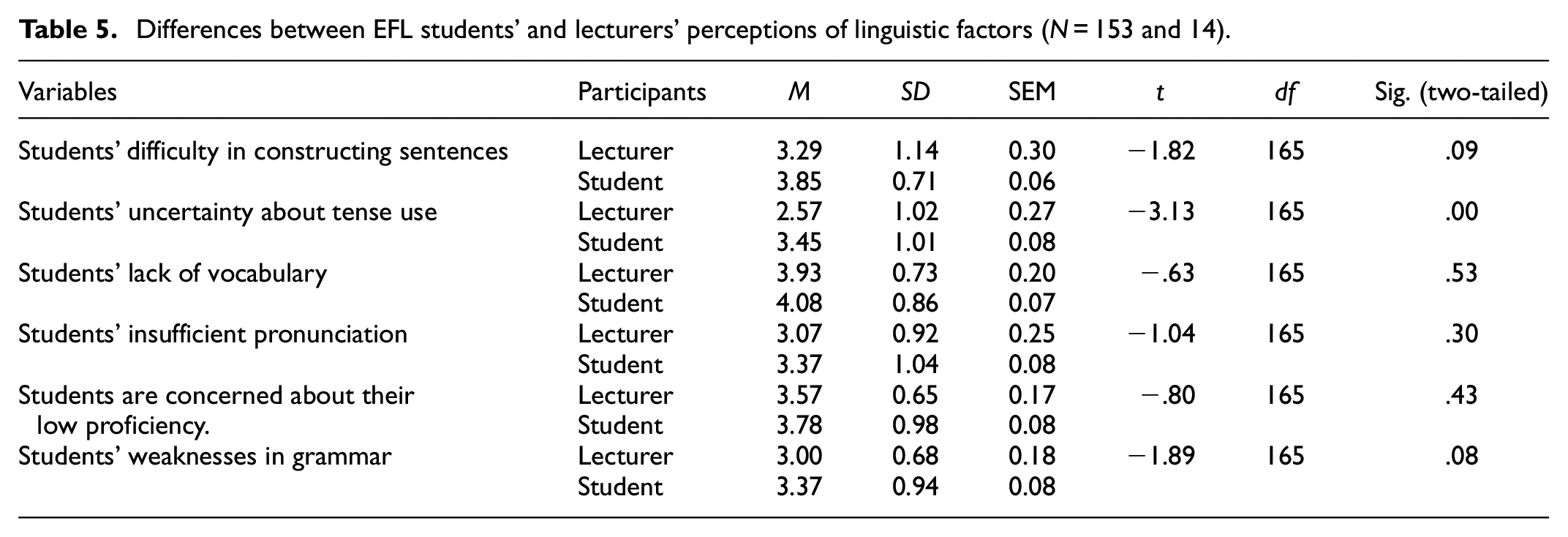
According to the test results, there was a significant difference between the students’ and lecturers’ perceptions of the factor on “students’ uncertainty about tense use” (p = .00). While the students were perceived to be strongly affected by this factor, the lecturers seemed to overlook its impact (M = 3.45 and 2.57). The lecturers even perceived this factor as the least influential one (M = 2.57).
In the interviews, the student interviewees stated that they were afraid of making mistakes in using verb tenses because they were unaware of which one should be used. Student B said, “I often find it challenging to share my ideas because I usually make mistakes in using verbs. It sometimes makes me stressed.” (Student B; Female; Advanced sciences; Low mean score)
On the other hand, the lecturer interviewees did not think it was a big problem when their students made mistakes in using incorrect tenses. Lecturer C said, “I think it is okay. You know, speaking is not similar to writing. Sometimes, I want my students to share their ideas and contribute to class discussions. Ideas are more important than something like verb use, I think.” (Lecturer C; Male; Master; 11-15 years; High mean score)
The two most minor influential factors perceived by the student participants in this study were “students’ wrong pronunciation” (M = 3.37) and “students’ weaknesses in grammar” (M = 3.37).
Although the quantitative results found that “students’ lack of pronunciation knowledge” was the minor influential factor, some shared their concerns about it. Student A stated, “Maybe I know the word meanings, but I have never used them. Moreover, I usually forget its pronunciation, so I am afraid of mispronouncing it. Regarding my pronunciation, I do not feel confident enough to speak. I find some long words difficult to pronounce.” (Student A; Female; Social sciences; Low mean score)
In contrast, the students’ perceptions of the factor on “students’ lack of vocabulary” were similar to the lecturers’ perceptions due to its highest mean scores among the linguistic factors (M = 4.08 and 3.93). As a result, both students and lecturers perceived that the factor of “students’ lack of vocabulary” affected their low participation in English-speaking classes the most.
In the interviews, both the students and lecturers agreed on the influence of vocabulary on language learners’ participation in English-speaking classes. Notably, Students D and F remarked, “My most significant barrier is my insufficient lexicon knowledge, and I have not yet prepared to choose words for ideas that I want to express.” (Student D; Female; Social Sciences; High mean score) “My current problem is my range of vocabulary. Sometimes, I want to participate in group discussions, but I do not have enough vocabulary to do it.” (Student F; Male; Natural sciences; High mean score)
Lecturer C stated that students’ low level of vocabulary knowledge is the main factor hindering students’ participation in English-speaking classes as follows: “Some students do not speak English much in class because their English is not good. Their lack of words may be the core reason for their resistance to speaking activities.” (Lecturer C; Male; Master; 11-15 years; High mean score)
In short, the study highlighted a disparity in the perceptions of students and lecturers concerning the impact of tense use in speaking. The students found uncertainty in tense usage daunting, fearing mistakes and feeling stressed, especially during verbal interactions. However, the lecturers downplayed the importance of correct tense use, emphasizing more on the conveyance of ideas. Notably, both of them agreed that a lack of vocabulary significantly hindered student participation in English-speaking classes. While minor linguistic factors like pronunciation and grammar had some influence on student apprehensions, vocabulary stood out as the most influential linguistic factor affecting participation. Then, Table 6 provides the test result regarding the cognitive factors.
Differences Between Students’ and Lecturers’ Perceptions of Cognitive Factors (N = 153 and 14).

The test results showed that the learner participants disagreed with the lecturers concerning the factor of “students’ lack of independence” (p = .02). While the lecturers did not perceive this factor as an influential factor, it strongly hindered the students’ participation in English-speaking classes according to their perceptions (M = 2.57 and 3.23).
In terms of the factor on “students’ lack of independence,” the interviews also contributed to better understanding the impact of this factor on students’ participation in English-speaking classes. Specifically, Student C stated, “Instead of sharing ideas without any prior discussion, I would like to discuss the questions with my friends before expressing the ideas.” (Student C; Female; Social sciences; Low mean score)
In contrast, there were some notable similarities among the participants’ perceptions, such as the factors on “students’ disinterest in group work” and “their lack of knowledge of discussed topics.” Specifically, both the students and lecturers perceived the factor on “students’ disinterest in group work” as the least hindering factor (M = 2.68 and 2.29), and the factor of “students’ lack of knowledge of discussed topics” as the most hindering factor (M = 3.67 and 3.36) among the cognitive factors.
According to the results, both students and lecturers agreed that EFL students were interested in working in groups. However, some issues affected the students’ perceptions group work activities. Specifically, Student F stated, “Teamwork activities are also sometimes dull. Many of my classmates are so good that sometimes I feel like teamwork makes no sense. I do not have any chance to contribute because my classmates are so dominant in the discussions.” (Student F; Male; Natural sciences; High mean score)
In the same vein, the lecturers also faced some difficulties regarding the mixed-level classes. Lecturer A said, “Some students want to participate in specific activities, but they cannot because they are too complex. However, some students who are good at English feel bored if the tasks are easy. Therefore, the mixed-level class is one of the biggest challenges in English-speaking classes.” (Lecturer A; Male; Bachelor degree; Less than 5 years; Low mean score)
Based on the words of Student F, it was possible to ascertain the impact of social comparison on their perceptions and behaviors in EFL classes.
In terms of the factor of “students’ lack of knowledge of discussed topics,” Student E, who was not interested in some particular topics, stated, “I do not know what to say about some topics, such as citizens in other countries, culture or social topics. Therefore, I cannot say anything.” (Student E; Female; Advanced sciences; High mean score)
In the same vein, Lecturer D also shared, “As you know, students, even university ones, are too young. Therefore, they lack knowledge of some social and cultural topics. As a result, they always keep silent when we discuss those topics.” (Lecturer D; Female; Master; 5-10 years; High mean score)
In terms of the reasons why the lecturers perceived the factor of “students’ lack of preparation” as one of the two most cognitive factors hindering students’ participation in English-speaking classes, Lecturer A explained, “Many students often complain that they do not know about the topics. However, I always remind them to prepare before coming to class, but they refuse to do it. It sometimes disappoints me.” (Lecturer A; Male; Bachelor degree; Less than 5 years; Low mean score)
In a nutshell, the study revealed a discrepancy between students and lecturers on the influence of students’ lack of independence on participation in English-speaking classes, with students feeling it as a more considerable hindrance. Both groups, however, concurred that students’ disinterest in group work was minimally impactful, while students’ lack of knowledge on discussed topics was a significant barrier. Mixed-level classes posed challenges, with advanced students feeling overshadowed by dominant peers and less proficient ones finding topics too complex. Both students and lecturers identified the issue of students’ unpreparedness as a primary concern affecting participation.
Table 7 displays the test results regarding the affective factors.
Differences Between Students’ and Lecturers’ Perceptions of Affective Factors (N = 153 and 14).
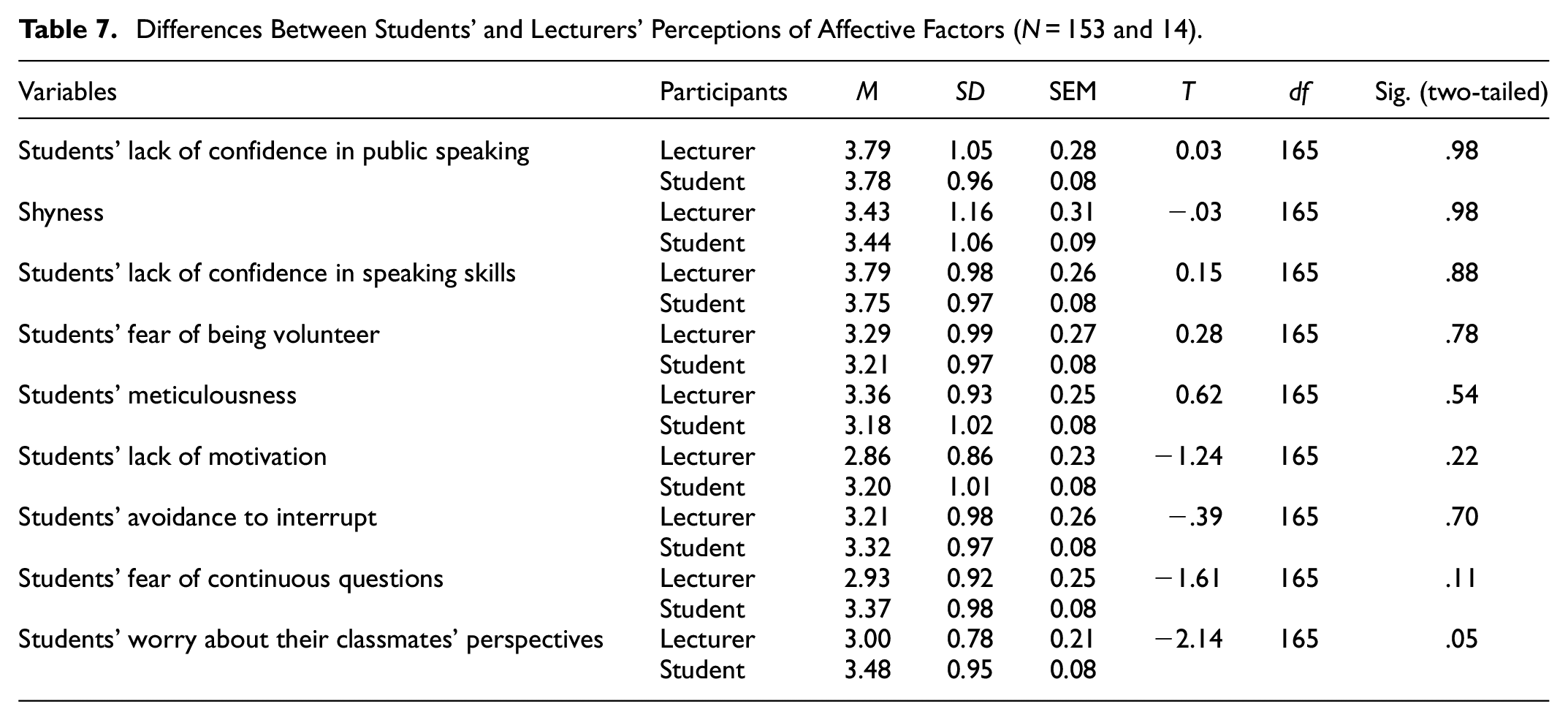
According to the test results, the students’ perceptions of the factor of “students’ worry about their classmates’ perspectives” were different from the lecturers’ perceptions (p = .05). The students paid much more attention to how their friends think of them than the lecturers perceived the influence of this factor (M = 3.48 and 3.00).
Regarding this factor, Students A and C shared their concerns as follows, “I do not want to participate or express my ideas. I am afraid of my friends’ negative thoughts about me.” (Student A; Female; Social sciences; Low mean score) “I often hesitate to speak in front of the class because many people are concentrating on me. I am afraid of accidentally saying incorrect words. I also feel a bit petty and ashamed.” (Student C; Female; Social sciences; Low mean score)
Meanwhile, Lecturer B perceived this factor not as influential as their students stated. Lecturer B stated, “I think making mistakes in front of others is embarrassing. However, we cannot learn English without making mistakes, right? It is a natural process in language acquisition. I usually share this with my students.” (Lecturer B; Male; Master; More than 15 years; Low mean score)
On the other hand, both the students and lecturers perceived the factors of “students’ lack of confidence in public speaking” (M = 3.79 and 3.78) and “their speaking skills” (M = 3.79 and 3.75) as the most hindering factors of students’ participation in English-speaking classes among the proposed affective factors.
In the interviews, Student A, who was afraid of sharing opinions in group discussions, stated, “When working with others, I do not often share my ideas because I am not confident in myself, or my speaking skills in particular. Regularly, I just listen to them.” (Student A; Female; Social sciences; Low mean score)
Sharing the same views regarding students’ lack of confidence in English speaking, Lecturers B and D said, “Students think that if they say something wrong, there will be someone in class who notices that, and they will feel unconfident. Therefore, they will not actively participate in in-class activities. This factor leads to a lack of confidence and fear of communicating.” (Lecturer B; Male; Master; More than 15 years; Low mean score) “There are many excellent students in class, and the weaker will feel unconfident. I think that the reason is that students lack the confidence to give the answers and express themselves in English.” (Lecturer D; Female; Master; 5-10 years; High mean score)
While the factor of “students’ meticulousness” was the most unimportant about the students’ perceptions (M = 3.18), the lecturers thought that the factor “students’ lack of motivation” was more important (M = 2.86).
The students also shared concerns about their tendency to process deep thoughts before expressing their ideas to avoid losing face in the interviews. Student F claimed, “Sometimes, I keep silent because I want to think carefully before expressing my ideas about the topics. However, it may cause my lecturer to misunderstand that I do not want to join the class activities.” (Student F; Male; Natural sciences; High mean score)
On the other hand, the lecturers shared much about their students’ lack of motivation to learn English. Lecturer D shared, “From my experience, students’ internal factor is the most significant element because they lack the motivation to learn. Then, no matter what the lecturer teaches or delivers, students still are not involved in the speaking activities.” (Lecturer D; Female; Master; 5-10 years; High mean score)
Based on the data presented above, the study highlighted a divergence between students and lecturers regarding the influence of students’ worry about their classmates’ perspectives on participation in English-speaking classes. While the students felt highly influenced by their peers’ views, their lecturers underestimated this impact. Both groups, however, concurred that the students’ lack of confidence in public speaking and their speaking skills were significant barriers. The students were also concerned about meticulously crafting their responses before speaking, while the lecturers felt that students’ lack of motivation played a significant role in their reduced participation.
Table 8 presents the test results for the pedagogical factors.
Differences Between Students’ and Lecturers’ Perceptions of Pedagogical Factors (N = 153 and 14).

The test results found some significant differences in the factors on “large class size” (p = .00), “the insufficient allotted time for practicing English in class” (p = .03), “lack of time for students to process answers” (p = .03), “participation marking scheme” (p = .05), “noisy in-class discussions” (p = .01), and “boring activities” (p = .02).
The lecturers strongly believed in the negative impact of large class sizes on students’ low participation in English-speaking classes (M = 3.79). However, the students indicated that this factor moderately affected their participation (M = 2.94).
In the interviews, the learners thought that large class sizes were acceptable because they had become used to this when they were high school students. Student C said, “I think that large class size is not a factor hindering my participation in English-speaking classes. I studied with more than forty other classmates as a high school student. Therefore, it is not the problem.” (Student C; Female; Social sciences; Low mean score)
On the other hand, the lecturers perceived the large class size as a crucial hindering factor. Lecturer B stated, “Sometimes, it is very challenging for university lecturers to plan the activities in speaking classes due to the many students in a class. I find it challenging to use suitable strategies for enhancing students’ engagement in speaking activities.” (Lecturer B; Male; Master; More than 15 years; Low mean score)
Regarding the factor of “insufficient allotted time for practicing English in class,” while the lecturers thought that allotted time for practicing speaking hindered their students’ participation (M = 3.86), it was perceived as not so necessary in the students’ perceptions (M = 3.27).
In the interviews, the lecturers indicated that they would have insufficient time to complete the lesson if they lengthened the discussion time. Lecturer D stated, “I do not have enough time to provide students time to discuss. The content of the lesson is often too long. Therefore, I have to shorten the discussions.” (Lecturer D; Female; Master; 5-10 years; High mean score)
Otherwise, the learners did not perceive it as a problem in their participation in English-speaking classes. Student F said, “I think we have enough time because we, sometimes, finish our classes early.” (Student F; Male; Natural sciences; High mean score)
The students’ perceptions of the factor of “noisy in-class discussions” (M = 2.77) indicated that this hindered students’ participation in English-speaking classes more than how the lecturers perceived (M = 2.77).
For the factor of “lack of time for students to process answers,” the lecturers thought they gave sufficient time for students to process their answers (M = 2.00). Nonetheless, the allotted time seemed insufficient for the learners to answer their lecturers’ questions (M = 2.58).
In the interviews, Lecturer A stated, “I do not find any problem regarding the time I give my students to brainstorm their ideas for my questions. Whenever I give a task or a discussion question, I will give them two or three minutes to think before the whole class discussion.” (Lecturer A; Male; Bachelor degree; Less than 5 years; Low mean score)
On the other hand, Student C, who found it challenging to brainstorm their ideas in 2 or 3 min, complained, “I feel so sorry when I cannot answer my lecturer’s questions. However, there are some questions I have to search for the answers on the internet. Two or three minutes are not enough.” (Student C; Female; Social sciences; Low mean score)
For the factor on “participation marking scheme,” the lecturers did not perceive it as a remarkable factor (M = 2.93), while the students seemed to be under much pressure because of this factor (M = 3.43).
In the interviews, the lecturers perceived this factor as a good strategy for enhancing students’ participation in English speaking. Lecturer C said, “I usually have participation bonus points to enhance students’ engagement in class discussions.” (Lecturer C; Male; Master; 11-15 years; High mean score)
On the contrary, the learners felt uncomfortable participating in class discussions due to these classroom rules. Student E said, “It is good to encourage students to participate in speaking activities with bonus points sometimes. I, however, rarely participate in discussions because of the points. Sometimes, it is ridiculous to see my friends partaking in the discussion without contributing ideas; otherwise, they want to get points.” (Student E; Female; Advanced sciences; High mean score)
Finally, the lecturers were confident in their teaching activities (M = 2.57). Otherwise, “the boring activities” hindered the students’ participation in English-speaking classes at a higher level (M = 3.20).
In the interviews, the lecturers were proud of their lesson plans, confident in their teaching techniques, and satisfied with what they were doing. Lecturer A said, “I do not see any problem related to my teaching methods. Before I plan the classroom activities, I would search the Internet and collect interesting activities to encourage my students to learn English.” (Lecturer A; Male; Bachelor degree; Less than 5 years; Low mean score)
Often the students felt dissatisfied with their lecturer’s activities. Student C said, “In general, I love being in class with my friends. However, some activities are not enjoyable, and I sometimes feel unmotivated to learn English. As a result, I keep silent.” (Student C; Female; Social sciences; Low mean score)
In conclusion, the study highlighted differences between students’ and lecturers’ perceptions of factors impacting participation in English-speaking classes. The lecturers saw large class sizes as a major hindrance, while their students felt less impacted by it. Though the lecturers believed they allocated adequate time for English practice and processing answers, the students felt the opposite. While the lecturers used the participation marking scheme as a motivational tool, their students felt pressured by it. Additionally, the students found some teaching activities boring and less engaging, even though the lecturers expressed confidence in their methods. Interviews further underscored these contrasting views.
Table 9 provides the test results for social-cultural factors.
Differences Between Students’ and Lecturers’ Perceptions of Social-Cultural Factors (N = 153 and 14).
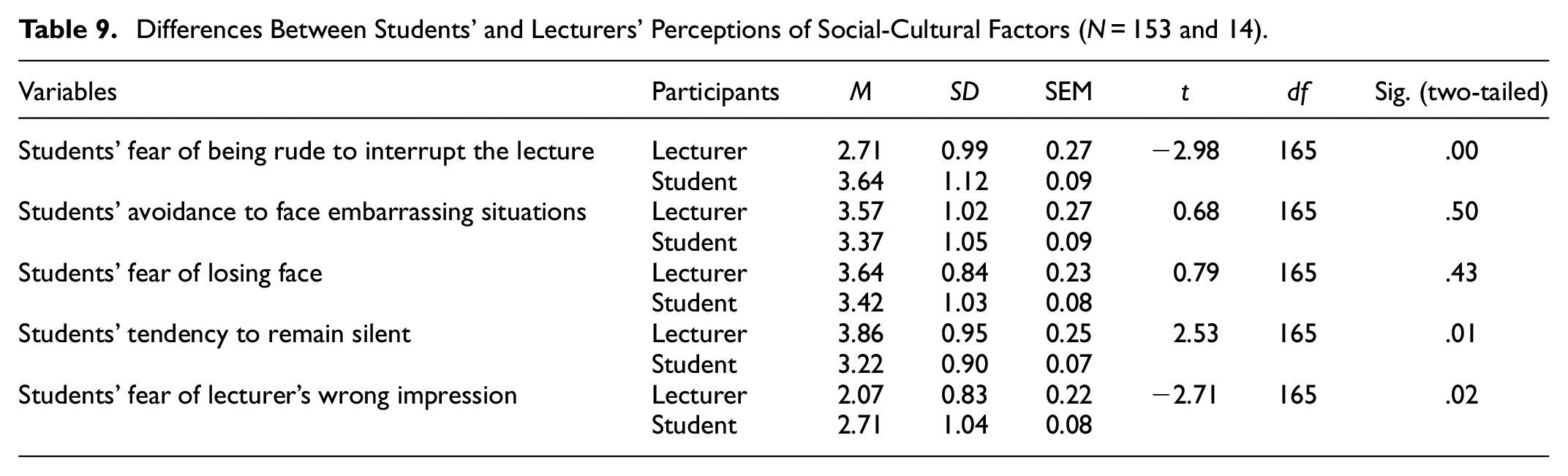
Regarding the factor of “students’ fear of being rude to interrupt the lecture,” the lecturers seemed to feel good when their students interrupted the lectures with their queries (M = 2.71). The learners, in contrast, perceived that interrupting teachers’ instructions was not acceptable (M = 3.64). The learners even perceived this factor as the most influential among all social-cultural factors.
According to Student F, answering the instructor’s questions without careful consideration is unacceptable. He said, “I rarely ask questions when I do not understand well or raise my point of view in front of my teacher. I am afraid that they would think I disrespect them.” (Student F; Male; Natural sciences; High mean score)
Lecturer B, who had a different viewpoint, remarked, “It is okay for me when my students share their opinions even though their ideas are incorrect. To me, it is an excellent way to understand their perspectives more.” (Lecturer B; Male; Master; More than 15 years; Low mean score)
The most crucial social-cultural factor hindering students’ participation in English-speaking classes in the lecturers’ perceptions was “students’ tendency to remain silent” (M = 3.88). However, the learner participants seemed to disagree with that (M = 3.22).
In the interviews, the lecturers stated that it is related to cultural influence. Lecturer C viewed, “In my opinion, Vietnamese students tend to keep silent because of cultural factors. You know what? The Vietnamese students were taught to be friendly, show their respect for others, keep quiet in classes, and so on.” (Lecturer C; Male; Master; 11-15 years; High mean score)
Students shared similar views but not to the same extent as the lecturers. Student D stated, “I think it is better to keep silent in the classroom in order to listen to the lecturer’s instructions.” (Student D; Female; Social Sciences; High mean score)
There was a significant difference between the students’ and lecturers’ perceptions of the factor of “students’ fear of lecturer’s bad impression” (p = .02). Students thought it affected their participation in English-speaking classes more than what the lecturers supposed (M = 2.71 and 2.07).
In the interviews, the students shared their concerns about the fear of making a wrong impression on their lecturers. Student D stated, “I am also afraid that my lecturer would have a wrong impression of me. Therefore, it will be better to keep quiet.” (Student D; Female; Social Sciences; High mean score)
On the other hand, the lecturers stated that they were willing to hear incorrect answers to give feedback on their answers and develop their ideas better. Lecturer A stated, “Why are they afraid of making mistakes? I think making mistakes is good, especially in language learning. Besides, I love giving feedback on my students’ performance. It will help them develop their English a lot.” (Lecturer A; Male; Bachelor degree; Less than 5 years; Low mean score)
In essense, the students were more hesitant to interrupt lectures due to fears of being perceived as rude, whereas their lecturers valued and encouraged such kinds of interactions. While the lecturers attributed students’ silence in class to cultural practices and viewed it as a significant barrier, the students themselves felt less constrained by this norm. A disconnect also emerged regarding perceptions: the students were highly concerned about making a negative impression on their lecturers, but the lecturers emphasized the importance of mistakes as learning opportunities and seemed less judgmental than students feared.
Discussion
Overall
The primary research question sought to understand the differing perceptions of students and lecturers regarding the factors hindering participation in English-speaking classes. In answering this, the study revealed that while learner participants scored slightly higher in their perceptions compared to lecturers, this difference was not statistically significant. Notably, students felt more influenced by linguistic factors than lecturers, with a significant difference in their scores. Both groups, however, agreed that pedagogical factors were the least influential. Based on the literature, the linguistic cluster refers to the students’ linguistic expertise and communicative competence (Liu, 2001). If any aspect of this is missing or weakly performed, it can be challenging for students to improve their speaking abilities. The challenges, including deficiencies in vocabulary, pronunciation blunders, and grammar mistakes, hinder language learners from active participation (Tatar, 2005). Pedagogical factors encompass whether oral participation is a component of the assessment, teacher characteristics, class size, classmate traits, and teachers’ design to accompany the classes (Liu, 2001). Al-Seyabi (2002) further corroborated that pedagogical factors like the program, discussion topics, teachers, and their instructions play a vital role in influencing students’ involvement. Although the impact of pedagogical factors such as teachers’ teaching abilities or pedagogical knowledge on learner participants’ speaking performance was evident, the results diverged from the study by Donald (2010). His findings indicated that teachers’ pedagogical strategies were the primary causes of Taiwanese learners’ reluctance to participate. This divergence may be attributed to the context: Vietnamese teachers are often trained rigorously to enhance their teaching performances. Hence, in this study’s context, the pedagogical concerns were not significantly influential.
Linguistics Factors
A salient discrepancy was observed between students and lecturers concerning the role of uncertainty about tense use in speaking English. Students perceived this as a substantial barrier, while lecturers viewed it as secondary. This significant divergence in perception is critical to our understanding. Drawing from Hamouda (2012), the apprehension surrounding grammatical errors, especially in tense use, is a documented impediment for EFL students in their active participation. This lends credibility to the students’ sentiments that fear of errors in verb tense can profoundly inhibit their ability to communicate. Given that speaking is primarily a medium to convey thoughts, and not just a demonstration of grammatical prowess, educators must address this perceptual disparity to foster more open classroom interactions.
On initial observation, students rated pronunciation issues as minimally influential on their participation. However, a more profound qualitative exploration revealed a latent anxiety surrounding pronunciation. This aligns with Hamouda (2012) and Lubazid (2012), who both emphasized pronunciation as a significant determinant in shaping students’ confidence and willingness to participate. The reluctance to use particular words due to potential mispronunciation can further limit their contributions in class, a sentiment echoed by Torres-Marín et al. (2022) and Thaher (2005).
Both students and lecturers unanimously identified a deficiency in vocabulary as a cardinal impediment to participation. This consensus is firmly grounded in the broader academic literature. A constrained vocabulary not only limits students’ expressive capabilities but also diminishes their self-assuredness in participation. Duy and Nguyen (2019), Hamouda (2012), and Tatar (2005) have all highlighted how an inadequate lexicon can stifle students’ active involvement in English-speaking endeavors. Thornbury’s (2005) assertion that spoken language is intrinsically vocabulary-rich further illuminates why any shortfall in this domain directly curtails participation.
Cognitive Factors
The study underscored a perceptual chasm between students and lecturers concerning the importance of student independence. A distinct preference among students to consult with peers before voicing their ideas publicly was discerned. This corroborates J. C. Richards (2014) who posited that learners’ unique cognitive styles determine their approach to language learning. Drawing from Grasha’s (2002) learning style framework, it is evident that an individualized pedagogical approach, considering these cognitive styles, is instrumental for effective language teaching.
Notwithstanding a general affinity for group-based learning, certain students experienced feelings of marginalization within these groups, mainly due to the overpowering presence of select classmates. These sentiments resonate with Vogel et al.’s (2014) findings, emphasizing the profound influence of social comparison on learners’ self-perception. The nuances of group dynamics in mixed-level classes, as elucidated by T. B. Nguyen and Lo (2022) and Hayden and Thiep (2007), emphasize the complexities Vietnamese lecturers grapple with in attempting to address diverse learner needs.
Both students and lecturers identified a limited familiarity with discussion topics as a substantial barrier to active participation. This sentiment aligns with Sixsmith et al.’s (2006) observation that insufficient topic knowledge can cripple students’ participative confidence. Han (2007) and Sayadi and Md Yusof (2007) reinforced this, suggesting that topic comprehension is pivotal for active participation. This unveils an imperative for educators to ensure topic accessibility and relatability. Yet, while pre-class preparation could be a solution, factors like the packed schedules of Vietnamese students, as indicated by Luu and Hoang (2022), impose constraints. The pivotal role of pre-class preparation in determining active participation was underscored by both students and lecturers. Mustapha et al. (2010) and Li and Liu (2011) both documented how unpreparedness directly curtails students’ willingness and ability to engage actively. This is exacerbated in contexts like Vietnam, where students face considerable academic workload pressures.
Affective Factors
One salient affective factor is the students’ apprehension of negative peer evaluations. The study delineates the students’ considerable anxiety surrounding potential mistakes in front of their peers. This resonates with Liew’s (2009) assertion that language learners often refrain from participation due to the trepidation of making errors. Furthermore, cultural nuances, especially the heightened emphasis on honor in Vietnamese society, play an integral role in this affective barrier. Students, out of fear of being perceived as less competent, may opt for silence over active participation.
Both the students and the lecturers pinpointed low self-confidence as a chief deterrent to students’ participation. This is further supported by Li and Liu’s (2011) findings that posit a robust link between learners’ self-confidence and their willingness to partake in classroom dialogs. Notably, the heterogeneity in proficiency levels in many Vietnamese classrooms, as highlighted by Huong (2010), can exacerbate these confidence issues, especially for learners who gage their abilities as subpar compared to their peers.
An intriguing revelation from the study was the seeming contradiction between the students’ perception of meticulousness and its impact on participation. While students initially deemed it as less influential, interviews divulged that the students’ propensity for careful deliberation might be misinterpreted by educators as disengagement. This meticulous approach is rooted in the students’ drive to circumvent potentially embarrassing situations, in line with Liew’s (2009) observations.
Lecturers highlighted a significant affective barrier in students’ lack of intrinsic motivation to learn English. This is corroborated by Richard’s (2022) assertion that motivation is a linchpin in learners’ enthusiasm, perseverance, and courage in the learning journey. The repercussions of diminished motivation, such as passivity, procrastination, and avoidance behaviors, as emphasized by Brewster and Fager (2000) and Goslin (2004), can severely stunt students’ active involvement in classroom discourse.
Pedagogical Factors
A prominent pedagogical factor highlighted is the challenge posed by large class sizes. While students did not perceive it as a deterrent, possibly due to their accustomed high school experiences, lecturers found it problematic for planning and managing speaking activities. As supported by Celce-Murcia (2001), large classes are standard in several Asian countries and pose multiple challenges, from classroom management issues to limiting interactional opportunities for students.
Differing perceptions also arose in the context of time allocation for practicing speaking. Lecturers, possibly feeling the pressure of content delivery, perceived time constraints. In contrast, students felt that the time allocated was sufficient, which may stem from their conditioning to traditional, lecture-based teaching. This discrepancy underscores the significance of adapting classroom instruction to ensure that students get ample opportunity for speaking practice, as posited by K. Richards (2006) and Talandis and Stout (2015).
A significant divergence in perception was evident in the allotted time for processing answers. Despite lecturers believing they gave sufficient time, students felt the pressure of the limited window. The insights from Fritschner (2000) and Khojasteh et al. (2018) validate the students’ concerns. It is crucial for educators to realize that providing adequate thinking time can significantly impact students’ participation, especially for those with lower English proficiencies.
Another significant pedagogical aspect was the marking scheme based on participation. While lecturers intended it as an incentive, it inadvertently caused undue pressure on students, leading to potential surface-level participation. The observations from Ghanizadeh and Jahedizadeh (2016) and Felder and Spurlin (2005) emphasize the importance of aligning teaching and learning styles. Such discrepancies in perception underscore the potential pitfalls of using participation as a graded metric without considering its impact on student behavior.
Lastly, the divergence in views on classroom activities underlines the importance of pedagogical adaptability. Lecturers, confident in their techniques, might sometimes fail to recognize when certain activities do not resonate with students. As Dörnyei and Ushioda (2011) highlighted, lackluster classroom activities can demotivate students and adversely impact their participation.
Socio-Cultural Factors
Central to the discussion is the idea of preserving face and the societal implications of potentially embarrassing oneself or others, which deters participation. This concept is deeply embedded in many East Asian cultures, including the Vietnamese. As highlighted by Li and Liu (2011), the fear of “losing face” manifests as a reluctance to ask questions or participate in discussions. For students coming from such backgrounds, the classroom becomes a space where potential embarrassment is to be avoided, even at the cost of personal learning.
The influence of Confucian ethics in shaping educational norms in Vietnam cannot be understated. The virtues of obedience, respect for authority figures, and the value of silence, as discussed in T. H. Nguyen (2002), Thompson (2009), and Oanh (2021), lay the groundwork for a student’s behavior in the classroom. In such settings, students are conditioned to perceive their roles as passive recipients of knowledge, with the teacher as the undisputed authority. This cultural mindset actively discourages the questioning of instructors, as it is equated with challenging authority, disrupting harmony, and showing disrespect.
A noteworthy point is the interpretational divergence between students and lecturers regarding silence and reduced participation. While students may perceive their silence as a mark of respect, educators might interpret it as lack of understanding, disengagement, or lack of preparation. The cultural gap becomes even more pronounced when instructors, possibly from different pedagogical backgrounds, encourage active participation, interruptions, or mistakes as learning opportunities (Oanh, 2021). For the student, culturally conditioned against such actions, this becomes a complex challenge. Recognizing this gap is essential for creating inclusive pedagogical strategies that account for diverse cultural backgrounds.
Tani’s (2005) observation about the reduced reticence in informal settings like the “English Café” is particularly telling. It suggests that creating environments where traditional hierarchical structures are downplayed can encourage participation from students who would otherwise remain silent. This points to the value of integrating more informal, collaborative, and culturally-sensitive approaches into classroom dynamics.
Conclusions
The current study found similarities and differences between the students’ and lecturers’ perceptions of factors hindering students’ participation in English-speaking classes. In general terms, linguistics factors were perceived to significantly affect EFL students’ participation in English-speaking classes. There was a distinction between the lecturers’ and students’ perceptions of linguistics factors. The students’ uncertainty about tense use, fear of mispronunciation, and lack of grammatical knowledge affected their participation in English-speaking classes more than the lecturers thought. However, they perceived students’ lexicon knowledge as the most hindering factor. For cognitive factors, the students perceived their lack of independence as a significant, influential factor, which differed from the lecturers’ perceptions. Besides, lecturers and students shared the same perceptions of the influence of the factors on students’ disinterest in group work and their understanding of the topic discussions.
Regarding affective factors, the students were more affected by their peers’ feedback than what the lecturers perceived. Both lecturers and students agreed that students’ lack of self-confidence and poor speaking skills were the most hindering factors in the affective dimension. The lecturers were concerned about the impacts of large class sizes and time constraints on their students’ participation in English-speaking activities for the pedagogical factors. The learners, on the other hand, were more affected by given scores for class participation, noise when discussing, and boring activities than what was analyzed according to the lecturers’ data. Finally, regarding social-cultural factors, the students were mainly concerned about what their lecturers thought about them. Students thought their lecturers would think they were rude if they interrupted to ask a question. On the other hand, the lecturers found questions acceptable, but the students’ tendency to remain silent bothered them.
This research significantly contributes to the existing body of knowledge by providing an in-depth comparative analysis of students’ and lecturers’ perceptions regarding hindrances in English-speaking classrooms. The study sheds light on nuances and specific aspects of language learning that were previously not as emphasized, especially in the context of the EFL classrooms in Vietnam. By highlighting the differing perceptions between students and lecturers, it underscores the importance of understanding and bridging these perceptual gaps to enhance the overall learning experience. It also emphasizes the significance of differentiating between various factors, such as linguistic, cognitive, affective, pedagogical, and social-cultural factors, in comprehending the intricate dynamics of an EFL classroom.
Implications
There are some implications for English lecturers, teachers, students, and school administrators. First, teachers can think of and implement suitable solutions to assist their learners in overcoming their deficiencies in English vocabulary, dread of judgments, lack of confidence, or negative feelings about activities in English-speaking classes. Teachers could be encouraged to concentrate on activities providing more lexicon in specific topics so that language learners can formulate their ideas in English more productively. Adopting communicative tasks appropriate for students’ knowledge is essential, encouraging them to participate in speaking activities. Through their knowledge and prior experience, lecturers can anticipate their difficulties and expectations in speaking styles.
Lecturers should scaffold students’ learning with suitable reading materials before discussing the topics to build up their knowledge. If language students do not interact with their learning materials, they cannot understand and integrate them. Additionally, EFL instructors should attend professional development training on their language, research, pedagogical, and technological skills. The professional development events are expected to allow them to enhance their teaching performance with better students’ participation in EFL classes.
Teacher-related factors such as their communication skills and personalities strongly affect EFL students’ attitudes toward their English learning. Therefore, they should be encouraged to develop a sympathetic and supportive rapport with students. EFL teachers need to display personal characteristics, such as enthusiasm, thoughtfulness, sincerity, friendliness, and trustworthiness. Besides, teachers need to develop strategies to promote learners’ self-confidence by planning an environment within the learners’ proficiency, giving positive reinforcement for good performance, or emphasizing meaning rather than grammatical reconstruction.
For other educational stakeholders, such as university administrators, policymakers, and academic supervisors, there are many things they can do to enhance students’ participation in English-speaking classes. First, the results of diagnostics tests can help instructors adjust their teaching strategies to fit with particular groups of students. Therefore, university administrators should use diagnostics tests to lessen the abrogating consequence of mixed-level classes. Second, in non-English-speaking contexts, students have limited or no exposure to English-speaking environments outside the classroom. Therefore, unrealistic goals, such as high achievements in international standardized tests, including TOEFL and IELTS, can enhance lecturers’ and students’ stress. Consequently, policymakers should develop an applicable and practical curriculum in language learning and classroom intercommunication. Third, students’ previous learning experiences are essential to engage them in learning activities. Educational supervisors should modify the assessment and evaluation system to stimulate students’ involvement. It is to advise that speaking English tests should be attached to placement, progress, final, and high school national tests. It is expected to enhance students’ awareness of their learning objectives, not for reading, writing, vocabulary, or grammar only, but for speaking and listening skills.
Limitations and Recommendations for Further Studies
The study was conducted as a mixed-methods approach in which the data were collected by two types of a questionnaire and 10 semi-structured interviews. The rationale for using a combination of these approaches is that the quantitative data can provide readers with a comprehensive image of the research issue; qualitative data collection provides information that refines, extends, or explains the concept. More specifically, this study was designed in an explanatory sequential design, using qualitative data to interpret the results obtained from the questionnaires. Therefore, combining these two methods ensures the validity and reliability of the results and enhances in-depth analysis. However, during the research process, there were several challenges and limitations encountered.
One significant challenge faced was the reticence of some students to critically assess their lecturers, which may have affected the authenticity of the data. Furthermore, there was a quantitative disparity between students and teachers, with the study comprising more student participants than lecturers. This imbalance could be viewed as a limitation since the perspectives of both groups are equally important for a well-rounded understanding of the issue. Additionally, the sample was restricted to one institution, limiting the diversity of perspectives. To counter the potential bias and reticence from students, future research may benefit from implementing both direct and indirect observations of classrooms. This approach would provide a more holistic understanding and ensure a diverse range of feedback that is not solely dependent on personal perceptions and biases.
An underlying assumption of this study was that students and teachers would provide objective feedback regarding the factors that deter students’ participation in English-speaking classrooms. While many of the responses aligned with this assumption, the previously mentioned reticence of students highlighted the potential subjectivity in some responses. This realization underscores the need for diversified methods of data collection for more robust findings. Considering the emphasized importance of English-language competence in Vietnam, the findings of this research provide a stepping stone for further investigations. Future researchers can build on this study by expanding the sample size, including participants from different universities and language majors.
The authors recommend replicating this study with a more diverse range of lecturers and language learners from multiple universities and also involve different groups of participants from different language majors. Besides, the quantitative disparity between students and teachers is also a weakness of this study. Therefore, the following studies should balance the two sides to make the results more objective and significant. In order to compensate for the reticence of some students to speak critically of their lecturers, it would be appropriate to use direct and indirect observations of classrooms to collect data to enhance the authenticity of the results.
Footnotes
Declaration of Conflicting Interests
The author(s) declared no potential conflicts of interest with respect to the research, authorship, and/or publication of this article.
Funding
The author(s) received no financial support for the research, authorship, and/or publication of this article.
Ethics Statement for Animal and Human Studies
The intellectual content of submitted manuscripts is evaluated regardless of race, gender, sexual orientation, age, disability, religion, ethnicity, or political philosophy of the authors.

Data Availability Statement
Data sharing not applicable to this article as no datasets were generated or analyzed during the current study.