




Abstract
Significant advances in teleworking have received a lot of attention, particularly in the post-COVID-19 age. This research aims to shed light on the teleworking landscape in Spain, providing a comprehensive analysis from 2017 to 2020. Using data from the Spanish Labor Force Survey (SLFS), our study investigates the likelihood of teleworking, with a strong emphasis on individual characteristics. Our findings are varied. Notably, we discover a potential short-term increase in teleworking between 2017 and 2019, a phenomenon that assumes significant significance in the context of the global pandemic in 2020. We use probabilistic regressions that control for a variety of sociodemographic factors to identify the determinants of telework. Surprisingly, we discover that family composition, including the presence of children, has only a minor impact on the likelihood of teleworking. Furthermore, our research indicates a significant shift in gender dynamics, with women showing an increased proclivity to telework in the critical year 2020. Occupation emerges as a key factor, with highly skilled, educated workers in telework-friendly roles experiencing a significant increase in teleworking likelihood in 2020. Gender differences in teleworking, on the other hand, persist, implying more complex occupational dynamics such as contract type, sectoral differences, and work commitment. Our research differentiates three occupational categories: jobs that are naturally suited to teleworking, jobs that require physical presence, and jobs with untapped teleworking potential. We contribute valuable insights to the ongoing debate on remote work in a rapidly changing world by delving into the nuances of telework adoption. While our study offers valuable insights, it’s important to consider these limitations when interpreting findings and implications for telework legislation and practices. Telecommuting, like any labor market regulation, requires thorough scrutiny due to its dual nature.
Plain language summary
We use Spanish Labor Force Survey annual data from 2017 to 2020 in order to compute the probability of teleworking each year by the main characteristics of the individuals. Our descriptive statistics underline a potential, short run, upward trend of teleworking routines across Spain between 2017 and 2019, and capture the sudden spike in work at home policies during 2020. Results of the probabilistic regressions, aimed at calculating the likelihood of teleworking given the covariate set, show that family composition (being childless or having at least one child) only slightly skews up the probability of teleworking, while only in 2020 women would appear to have been more likely to undergo work at home practices when compared to men. In terms of occupation, high skilled workers with jobs and tasks naturally allowing for teleworking saw the majority of the increase in probability between 2020 and the previous periods, while other features such as contract length, private or public ownership, full-time or part-time commitment also played their roles. Our estimates allow us to identify three different occupational categories: occupations which involve duties that can be naturally carried out teleworking; occupations that, given the current state of technology, can only be carried out at the workplace; finally, occupations which, given their duties and current state of technology, would present the largest room for improvement toward a higher level of teleworkability.
Introduction
Teleworking: Context and Definitions
According to the historical recap by Allen et al. (2015), teleworking policies started taking the scene of the U.S. first world economy in the seventies, when the National Aeronautics and Space Administration decided to introduce it in order to reduce energy expenditures and limit traffic jams around its centers. From there on, telecommuting was successfully introduced to tackle a variety of issues: in the same period, IBM thought of it as a way to create an optimal work/life balance in families, while a revision of the Clean Air Act in the nineties aimed at reducing air pollution and car emissions explicitly included the adoption of telecommuting schemes and plans by private firms as a specific mean to achieve the main goals of the reform. Again in the nineties, the approval of the Americans with Disabilities Act spawned new interest in work at home practice as a way to balance and expand the employment of that share of workforce with manifested disabilities.
With the onset of an unprecedented crisis as a result of the coronavirus outbreak, many economic actors have been forced to implement various employment policies in order to mitigate the systemic risks associated with the virus transmission mechanism. Aside from industrial policy decisions related to profitability and economic survival (short-term work schemes, furloughs, and layoffs on the labor side, asset adjustments and shutdowns on the capital and managerial sides), firms all over the world were forced to reconsider how much work from home policy would be an optimal choice to counteract the virus’s widespread spread. We use annual data from the Spanish Labor Force Survey at the national and regional levels in our work to examine short-term trends in teleworking in both Spain and Andalusia from 2017 to 2020. We estimate the probability of being a teleworker based on a set of relevant controls (gender, age, education, economic sector) using weighted probabilistic regressions.
It is important to point out that past and present research does not agree on a single definition for work at home practices, and that the terms telecommuting, teleworking, remote work, distributed work, virtual work, flexible work, flexplace, distance work and work at home have been used equivalently across the relevant literature (Allen et al., 2015). As various punctual definitions of it have been offered across the years, the important point to make is its conditionality on the availability of survey data that exactly matches the definition. Definitions in literature range from Mokhtarian (1991), who defined telecommuting as the “Use of telecommunications technology to partially or completely replace the commute to and from work”, thus focusing on the initial aim of telecommuting as a way to control and reduce actual commute load, to Tworoger et al. (2013), who define “Virtual teams” as “spatially or geographically dispersed work arrangements that are generally characterized by a relatively short life span, technology-enhanced communications, and a dearth of face to face interaction”. Our definition of teleworking is as such based on the accomplishment of past literature, but mainly focused on our own, data-based definition. This will be describe in better detail in our Data Section.
The rest of the paper is organized as follows. In Section 2, we provide a detailed explanation of our data source, the Spanish Labor Force Survey, and describe the logistic regression analysis we conducted, along with the predicted probabilities calculation. In Section 3, we present our findings, starting with an initial overview of teleworking in Spain and Andalusia. We then investigate the chances of teleworking, looking at sociodemographic and job-related factors. Finally, in Section 4, we summarize our key findings and discuss their implications for the future of teleworking in the context of Spain and Andalusia.
Previous Literature
The lockdown increased teleworking, with many European countries reporting dramatic increases in the number of employees working from home, which has shifted from a requirement for many employees to a preference for part-time or full-time telework for the majority of employees. Regardless of the fact that telecommuting is an important alternative work method, current economic literature has not thoroughly investigated how working outside the office affects productivity (Glenn Dutcher, 2012). Up to this point, empirical research has been largely unsuccessful in identifying and explaining what happens when people telework (Bailey & Kurland, 2002). As economies have been affected by a worldwide epidemic and its subsequent economic, social, and health effects over the last 3 years, current literature is focusing on identifying the relationship between health effects and work at home in order to determine whether or not a healthier status is related to teleworking during outbreaks. Everything else being equal, as researchers control for demographic, educational, and labor-related variation across individuals and/or households, we would expect to find a positive and significant set of probability coefficients conditional on all of the covariates mentioned above, with particular attention paid to year-to-year and sector variations. As a matter of fact, recent reports and studies have tried to measure the extent of the gap between potential and current work-at-home labor allocation. Vargas Llave et al. (2022) find that workers are willing to telework but long working hours, isolation, and inadequate equipment must be tackle. Stiles and Smart (2021), on the other hand, investigates the relationship between work locations, particularly teleworking, and travel patterns in the United States between 2003 and 2017. They discover that full-day telework from home reduces travel duration and peak hour travel, whereas part-day telework does not, and working from other locations also affects travel behavior, implying that policies should encourage temporal and spatial flexibility in work to better manage travel demand and peak hour congestion.
Related with the impact of the lockdown on telecommuting, Predotova and Vargas Llave (2021) shows that during the pandemic remote working posed many challenges for workers, mainly in relation to the organization of working time, but issues also arose around the work–family interface (the myriad ways families and workplaces intersect), well-being and the physical work environment. In this sense, Rahman Fatmi et al. (2022) investigates the long-term impact of COVID-19 on work preferences, focusing on post-pandemic work-from-home choices. Their findings highlight how dwelling size, location characteristics, and personal factors influence the work-from-home preferences. Notably, larger dwellings and certain demographics, such as part-time female workers and individuals with longer commutes, are more likely to prefer work-from-home after the pandemic.
In a relatively influential and recent discussion paper, Dingel and Neiman (2020) make use of the US Department of Labor’s O*NET database, which contains accurate, four-digit descriptions of nearly 1,000 occupation types in the US. When the results are aggregated at the two-digit level, they discover that 37% of the nation’s jobs could be performed by working from home, with values ranging from 25% in the case of Mexico and Turkey to more than 40% in countries such as the United Kingdom or Sweden, while Spain and other Mediterranean countries such as Italy would be included between 30% and 35%. These results may come as no surprise, as relevant trends in that regard could be seen long before the Epidemic began. According to the findings, the share of work-at-home jobs in the United States across all urban areas is positively correlated with median income and the share of household members with a college degree, but is usually negatively correlated with home ownership rate and the share of white residents per household. The authors discovered that managers, educators, IT personnel, finance experts, and law experts would naturally represent the majority share of the work at home workforce, as agricultural, construction, and production workers are typically unable to carry out their tasks at home.
Furthermore, according to Vilhelmson and Thulin (2016), working from home had become the norm for 20% of the total employed in Sweden by the end of 2012, following a 3.8% increase overall between that year and 2005. As a result, when considering a large panel of 86 different countries, the authors discover a strong positive correlation between PPP GDP per capita and the share of potentially home-based jobs.
Using Spain as a case study, Anghel et al. (2020) finds that work at home increased by 2.4% between 2009 and 2019, implying that 30% of employed workers could work from home at least occasionally. Aside from sectoral considerations, the authors show that workers between the ages of 35 and 65 are more likely to choose or be permitted to work from home, and this proportion is even higher when university level education is taken into account. López-Igual and Rodríguez-Modroño (2020) offer some additional insights on the determinants (or perhaps covariates) of teleworking practices across the EU25 group. Analyzing a sample of more than 20,000 workers belonging to the latest European Working Conditions Survey, the authors confirm that mobile teleworkers are indeed mangers and professionals, but also discover that technicians and associates (non-full) professionals represent a non negligible share of the work at home workers, while clerks and support staff workers would make up one of the largest group of mainly stationary, home-based workers. Most importantly, and breaking with past trends, the authors find out that the majority of highly mobile teleworkers are still men, but such gender disproportion could not be found anymore in the case of standard work at home employees. Following-up with a case study on gender effects, Pigini and Staffolani (2019) show that, besides higher education and family composition, gender as well may play a role into being a key determinant conditioning the probability of work at home. In particular, having children, being in possession of a college title, and being female now all appear to increase the base likelihood of standard at home teleworking in the Italian study case, contributing to an expected wage premium ranging from 2.7% to 8%.
Natural experiments have made some of the most important contributions to work at home studies, as they have been able to detect, at least internally, a causal relationship between teleworking and productivity. Amongst the relevant literature cases, Bloom et al. (2015) conducted a natural experiment on a NASDAQ-listed travel agency based on China. Employees from the call center division of the company where randomly assigned to stay in office or work at home during three quarters. Causal increases in performance (measured in terms of hours of on-line activity detected and number of call per shift) were measured to range between 9% (increase in working hours) and 4% (more calls per minute). In qualitative terms, the workers were found to be more satisfied, and as workers were left free to self-select themselves into the work from home program in the three quarters following the initial period the detected efficiency increase raised to double its initial figures to 22%. This additional positive increase, would of course suffer, in terms of causal interpretation, by the lack of random selection. On a similar route, Glenn Dutcher (2012) carried out an on-campus experiment at Florida State University. As participants where incentivized to join the test through small payments for each round of the experiments, they were told to chose between two kind of tasks, one more menial, the other more creative. Dutcher easily showed that, when a duller and a more interesting task are supposedly carried out at home, the latter’s productivity increases while the former’s decreases. Recently, Battiston et al. (2017) reversed productivity studies on work at home policies by considering the impact of face-to-face communication, opportunity costs considered. They investigate the impact of face-to-face communication on the efficiency of emergency 999 line operator lines in Manchester, where call center operators receive emergency phone calls from the public and then pass the case on to operation managers, who then allocate some appropriate form of response (firefighting, law enforcement, or nation health system operators) to the case. Using the exogenous source of variation provided by the informatic system, which randomly assigns call descriptions to operations managers based on their availability, and taking into account that some operation managers are physically present in the rooms where call center operators are while others are in another room of the office, this experiment was able to demonstrate causally that productivity is relatively higher when teammates not only share the same room.
Following the line described in the preceding literature, our article contributes to the teleworking literature by attempting to uncover the probability of teleworking in Spain at the provincial level, with a focus on the various sectors of the economy as well as any other relevant socio-demographic covariate mentioned in the literature. According to the literature, the logical economic disadvantage of adopting work-at-home policies is shirking, which results from a loss of supervision and results in a loss of productivity rather than a net gain. However, as stated by Pabilonia and Vernon (2021), such a loss may be compensated by mixed temporary at work policies. Also, this paper discusses current workforce conditions as well as the weight of current descriptors associated with telework. According to Tavares (2017), “empirical evidence favors a positive association between telework and worker health.” There are, however, some negative side effects, such as stress and depression, and the overall conclusion is that telework benefits rather than harms individual health (Pabilonia & Vernon, 2021).
Data and Methods
Teleworking in the Spanish Labor Force Survey
In our analysis, we leverage the strength of annual data from the Spanish Labor Force Survey (SLFS), covering the period from 2017 to 2020. The singularity of our dataset lies in its exclusivity—unlike publicly available sources, we obtained this data by procuring the relevant section, a significant undertaking made possible by the funding of our research project. 1 For this reason, ours is the only paper covering the mechanisms behind the teleworking trends. After data filtering, the SLFS’s sample size of nearly 100,000 individual observations per year is reduced to a robust 37,000 observations. It’s worth noting that our analysis includes sample weights, which boosts the dataset’s power to over 18 million individual observations for each year covered by our study. We focus on the module question: Did you work from home within the last 4 weeks? This approach, made possible by project funding, enables us to investigate the nuanced dynamics of teleworking in Spain, particularly in the context of post-pandemic lockdown measures. This level of granularity and insight into Spanish labor market conditions distinguishes our study as a trailblazing effort with far-reaching implications for understanding telework in Spain.
With the aim to study the use of telework, we only kept the observations that answered the previous question in one of the three possible responses: not a single day, occasionally or over half of the working days. Thus, we were keeping only those individuals over 15 who worked or were employed in the survey reference week, and placed themselves in one of the aforementioned categories. Afterward, we transformed this variable, generating a binary response variable which takes value 1 if the individual worked from home at least occasionally within the last 4 weeks, and 0 otherwise. Then, we were ready to perform logit estimations and compute teleworking probabilities.
Logistic Regressions and Predicted Probabilities
Considering the binary response for teleworking as our dependent variable we fit a logistic regression for every year in our data, thus from 2017 to 2020. Therefore, we estimated four cross-sectional regressions, one for each year. For these logistic regressions, the log-likelihood function to be maximized is shown in Equation 1.

Where N denotes the sample size considering any individual i in a given year t from 2017 to 2020;
Thus, the probability of teleworking for the individual i in year t given their covariates in that year is assumed to follow the logistic distribution given by Equation 2.

At this point, we estimated the predicted probabilities of teleworking by different characteristics of the individuals, for example, their gender. However, since we are not fixing values for all covariates we would obtain a combination of different predicted probabilities and not a single one. In order to solve this issue, one possible approach consist in setting the rest of covariates to a specific value (typically their means) and compute the predicted probability for a theoretical individual with those characteristics. Nevertheless, this method would only take into account the prediction for one relevant stratum of observations. In addition, the presence of factor covariates would yield unrealistic individuals when taking their mean values. Therefore, this time we used an often preferred method which consist in estimating the predicted probabilities summed to a weighted average over the covariates distribution in our population, as shown in Equation 3.

Hence, for a year t, the probability of teleworking
Using this technique, we estimated the predicted probability of teleworking in the 4 years (2017, 2018, 2019, and 2020) by gender, by gender and whether having a child under 16, by age group, by one-digit occupation, by region, by self or salaried worker, by public or private sector, and lastly, by full or part-time working day.
Results
A First Glance at Teleworking in Spain and Andalusia
From 2017 to 2019 the use of teleworking experienced a slight increase in Spain which may reveal a short-run trend before the pandemic. During this period, the percentage of the employed who teleworked at least occasionally increased 1 percentage point (shorten as p.p.), from 7.35% in 2017 to 8.38% in 2019. In this sense, the advances in the enterprise digitalization process and the increasing hyper-connectivity might have been influential factors for this slow but sustained trend in the increase of home-based work. However, the sanitary crisis and the subsequent imposition of social distancing measures increased dramatically this fraction of teleworkers, jumping up to 15.22% in 2020, almost doubling pre-pandemic digits. (see Table 1 and Figure 1). Table 2 reports the statistic associated with the estimates in Table 1. Furthermore, as a consequence of lockdown, a major part of these teleworkers did it over half of the working days, so not only more people were teleworking, but they were also doing it more intensively.
Teleworking Intensity in Spain by Sex (%).

Source: Spanish LFS.
Statistics Based on Table 1.


Teleworking intensity in Spain.
These patterns seems to be quite similar when differentiating by sex, except for year 2020. This year, we found that women experienced an even higher leap in the use of teleworking with regard to men. Despite teleworking had been more common among males in the 2017 to 2019 period (around 1 p.p. above), the pandemic would have inverted this fact. As a result, we observed that women teleworking reached 1.63 p.p. above men in 2020 (see Table 1 and Figure 2) On the other hand, this and other relevant socio-demographic and job-related factors will be explored in detail afterward using the probabilistic approach, which allow us to control for potential confounders.

Teleworking intensity in Spain by sex.
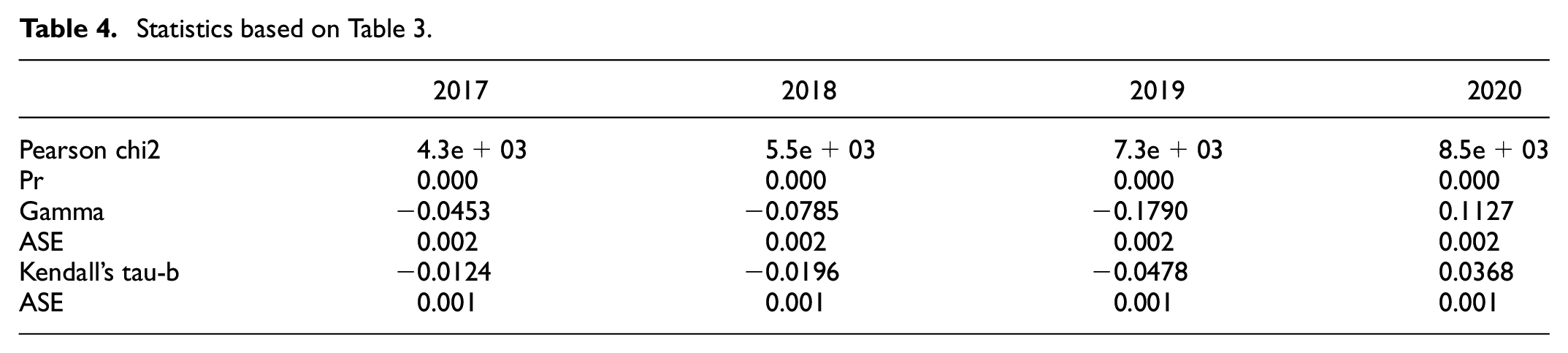
Figures 3 to 5 show an overall, gender related, and probability outcomes for Spanish Region of Andalusia. Excat shares of teleworking across the region by gender and tota population are visible in Table 2. From a pool of Spanish regions, we chose Andalusia as the focus of our study for several reasons. First, the teleworking landscape in Andalusia closely mirrored the national average during the pre-pandemic years of 2017 to 2019, making it a representative region for our analysis. This consistency in telework rates provided a useful baseline against which to assess the impact of the pandemic. Furthermore, while the increase in teleworking in 2020 was significant and noteworthy, it was below the national average of 11.69%. This deviation from the national trend provided an interesting case study for understanding the regional dynamics of telework. Despite these differences, Andalusia showed gender disparities in teleworking similar to the broader national pattern, highlighting the relevance of this region in our research (see Table 3 and the relevant statistics in Table 4, compared to the results in Tables 1 and 2).
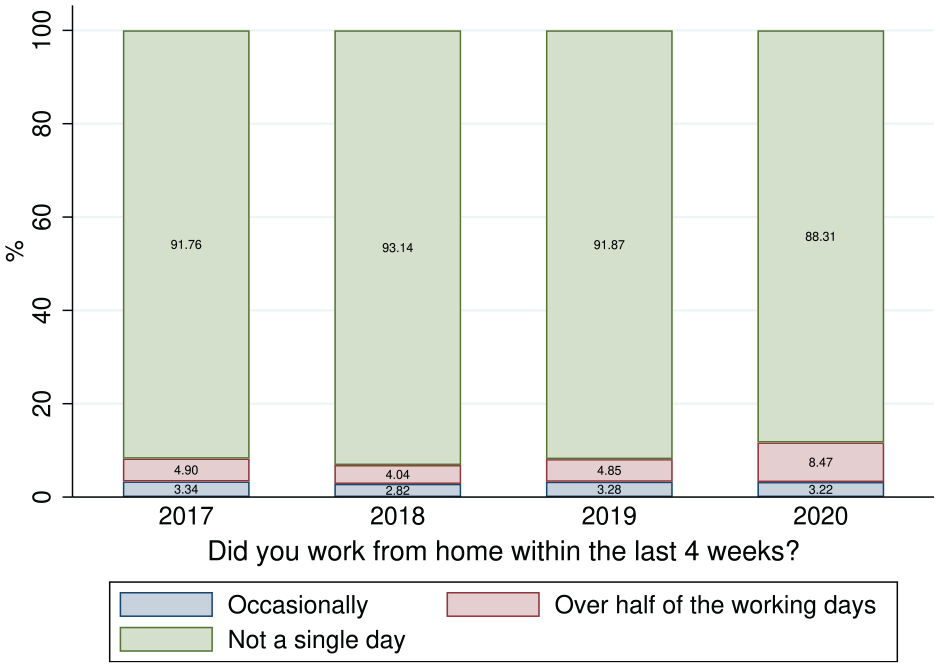
Teleworking intensity in Andalusia.

Teleworking intensity in Andalusia by sex.

Teleworking estimated probabilities by age groups.
Teleworking Intensity in Andalusia by Sex (%).

Source: Spanish LFS.
Statistics based on Table 3.
Probabilities of Teleworking
The calculation of probabilities of teleworking for each individual on the Spanish Labor Force Survey (SLFS) allows us to produce detailed demographic breakdowns, by taking the average probability of teleworking within each demographic group. To produce those probabilities at one digit occupation level on the SLFS, 3 we pooled 4 years data (2017–2020), ensuring a sample size that enables us to calculate a probability for each digit occupation code.
We, therefore, predict the probability of teleworking for individuals on the SLFS using observed characteristics such as gender, if the individual has children, occupation, type of employee (self-employed or salaried worker), sector of employment (private or public), type of working day (part-time or full-time), and region of residence.
Although we cannot find any causal relationship between teleworking and the outbreak of Corona because we are working with cross-sectional data, the results are quite clear. In particular, we can determine the actual probability of working remotely based on different individual characteristics, years before and during the pandemic.
For this reason, we find that they were no patterns across sociodemographic characteristics that can determine short-run trends, with the exception of the type of occupation. As we explore the probabilities of teleworking considering the characterization of each of the individuals in the sample, we divide this section into different groups of sociodemographic and job-related determinants.
Sociodemographic Determinants
Unlike any other modern recession, the downturn triggered by the pandemic has created larger employment losses for women than for men (Alon et al., 2020). In this section, we analyze the relation between shecession 4 and teleworking or, in other words, we determine if there exists any relationship between gender and probabilities of telecommuting and which are the factors that could drive those differences.
We first focus on the estimation of the probabilities of teleworking among men and women and whether having children matters when we assess them. As for the predicted probability based on gender differences, Table 5 detects no substantial differences, save for a slightly higher probability of teleworking for women after 2019. As we can observe in Table 6, having children is closely related to more probabilities of performing a remote job. Although telecommuting and other forms of flexible work have long been promoted as a means for enabling individuals to effectively manage their on and off-work time, there is little empirical evidence to suggest that telecommuting is a generally effective way to mitigate work-family conflict (Lyttelton et al., 2022). Nevertheless, in Spain, we cannot consider teleworking as a way of making more flexible individuals’ working days as the difference between having, at least, one child under 16 years old and being a childless individual is only about 1 p.p. As having children is not highly related with telecommuting, we expect that other factors different as family issues contribute more in the decision. During the lockdown, this weak relationship between having family responsibilities and performing a remote job are almost the same, increasing from 1 p.p. to 2 p.p. Table 7 reports the predicted probabilities crossed with 5 years-age groups. No major patterns are visible, besides the natural trend to increase work-at-home practices as time go by.
Predicted Probabilities of Teleworking by Gender.

Note. 95% confidence intervals in brackets.
1% significance.
Predicted Probabilities of Teleworking by Gender Whether They Have Children or Not.

Note. 95% confidence intervals in brackets.
1% significance.
Predicted Probabilities of Teleworking by 5-Year Age Groups.

Note. 95% confidence intervals in brackets.
1% significance.
Exploring if there are gender differences in the probability of teleworking, whether they are parents or not, we find that women, taking into account demographic and labor characteristics of each woman in the sample, were less likely to perform a remote job from home before the pandemic took place, which is a cornerstone to understand why telecommuting in Spain is not a mechanism to combine work with family commitments. Thus, if the outbreak of Corona had not happened, the evolution of the rates of remote jobs performed by women would differ from the actual ones, keeping men at a higher level than women. We estimate that women during the lockdown were 10 p.p. more likely to telecommute when compared with women with the same characteristics before the outbreak of Corona. This became even more significant as the 2020 marginal difference between women and men, compared to the same difference during the 3 years before the pandemic, appears to be positively skewed in favor of women by a 2 p.p. margin (see Table 5). In other words, the lockdown drove women, whether they are mothers or not, to more likely adapt their jobs remotely than men workers, turning around the situation.
Job-Related Determinants
Based on a review of the literature presented in Section 1.2, we, therefore, define teleworking as a work practice that involves members of an organization substituting a portion of their typical work hours (ranging from a few hours per week to nearly full-time) to work away from a central workplace–typically from home–using technology to interact with others as needed to conduct work tasks. This definition of telecommuting is based heavily on several widely adopted conceptualizations (e.g.(Bailey & Kurland, 2002); (Gajendran & Harrison, 2007)). Meanwhile, the ongoing development of ICT and the growth of the knowledge economy with its autonomous, task-based work culture is swelling the ranks of the professional, better educated, more internet-savvy sectors of the population who are more likely to telecommute (Felstead & Henseke, 2017). In other words, the adoption of teleworking is negatively related to the level of face-to-face interactions with the public needed in a particular sector (Fana et al., 2020).
We apply the intuition behind the estimation of the probabilities of automation, approach proposed by Frey and Osborne (2017). In spite of the obvious differences, we have not included tasks in the estimation and, therefore, we calculate the average estimated probability per one-digit occupation taking into account each of the factors we have mentioned before which contribute to those individuals’ estimated probabilities such as gender, age, family situation, type of employee, work day schedule, sector, and region of residence. We can observe in Figure 6 that an exogenous shock as the outbreak of the Corona virus is an opportunity to adapt the working system to telecommuting but only for those with the potential of being performed remotely potentially digital occupations.

Proportion of individuals who perform a remote job classified by 1-digit occupations.
We refer to potentially digital to all those jobs in which their workers develop digital skills as well as those in which human interactions can be replaced by the use of ICT resources. Workers with strong digital skills are arguably better-positioned to respond to the demands of remote working during the current crisis, as it has been analyzed right after the lockdown by the European Commission (Fana et al., 2020).
There were large differences in the prevalence of teleworking across occupations before the pandemic. If we observe in Figure 6 the 3-year window before COVID-19, we can divide into three groups the occupations. In the first place, we have those occupations whose 20% of the workers had performed a remote job such as Management and Directors, and Scientific and Intellectual technicians. In the second place, 10% of Support professionals and Agriculture and Manufacturing skilled workers in Spain telecommuted, and if we focus on the bottom of the distribution of jobs performed at home, we find those occupations with higher-level social interactions or those low- and middle-skilled occupations in which teleworking remains a largely unrealistic option, making these workers more vulnerable during the lockdown.
Figure 7 shows which occupations were already more likely to be teleworkable before the outbreak of COVID-19 and which ones had a probability not marginally different from zero. The lockdown exacerbated the likelihood of performing a job remotely for those occupations with characteristics that enabled a fast adaptation of the work system and a prompt transformation of face-to-face into virtual services necessary to continue performing them. Nevertheless, it is important to remark that occupations such as technicians, support professionals, and others related to accounting, administrative, and other office employees experimented an increase in their likelihood to telecommute close to a 20 p.p., which is relatively the same magnitude compared to those we have mentioned before (moved from 20% to near 40%). 5

Predicted probabilities for teleworking across occupations.
Henceforth, we determine that the lockdown caused by the outbreak of the pandemic revealed three types of teleworkable occupations in Spain: occupations in which the use of ICT resources can offer almost the same job performance and quality of services demanded; occupations in which telecommuting can be implemented to make jobs more flexible, and occupations in which the productive and organizational structure prevents their online performance. We also performed the analysis region-wise, as in Table 8. Some regions do appear to have picked up teleworking with a higher probability after 2019, while some others lagged behind. Anyway, the acceleration of the tendency to work at home is clearly visible across the whole country.
Predicted Probabilities of Teleworking by Spanish Regions.

Note. 95% confidence intervals in brackets.
1% significance.
Regarding the type of employee, self-employed or salaried worker, our results are consistent with those found in the literature. Evidence suggests that for many own-account workers their home is often their place of work. However, the definition of own-account teleworkers is wider and includes not only those “working at home” without ICT, such as small artisans and farmers, but also those “working from home” using ICT resources, such as designers or software developers (Sostero et al., 2020). Table 9 offers us an overview of the likelihood of teleworking at the one digit level across the country.
Predicted Probabilities of Teleworking by One-Digit Occupation.

Note. 95% confidence intervals in brackets.
1% significance.
As we can observe in Table 10, self-employed individuals were already more likely than salaried workers to telecommute before the outbreak of COVID-19, in particular, they were, on average, 17 p.p. more likely to perform a remote job than employees. However, even when more than 80% of the working population in Spain are salaried workers, they are 18 p.p. less likely to perform their jobs remotely during the lockdown compared to own-account workers. This result reveals that dependent workers cannot adapt or make their jobs more flexible as self-employed, who in principle have much greater discretion over how and where their work is carried out, and this can be more related with workers’ autonomy than with technical teleworkability.
Predicted Probabilities of Teleworking for Either Self-Employed or Salaried Workers.

Note. 95% confidence intervals in brackets.
1% significance.
Beyond the technical feasibility, differences in access to telework across occupations also reflected varying degrees of workers’ autonomy, which in turn depend on employers’ trust. Many employers have been reluctant to give up direct supervisory control, or argue that face time is a critical feature of the productive process (Allen et al., 2015). Nevertheless, the expansion of telecommuting across salaried workers has also been linked to a general expansion of work hours and low wage returns to working at home beyond the standard work week (Glass & Noonan, 2016).
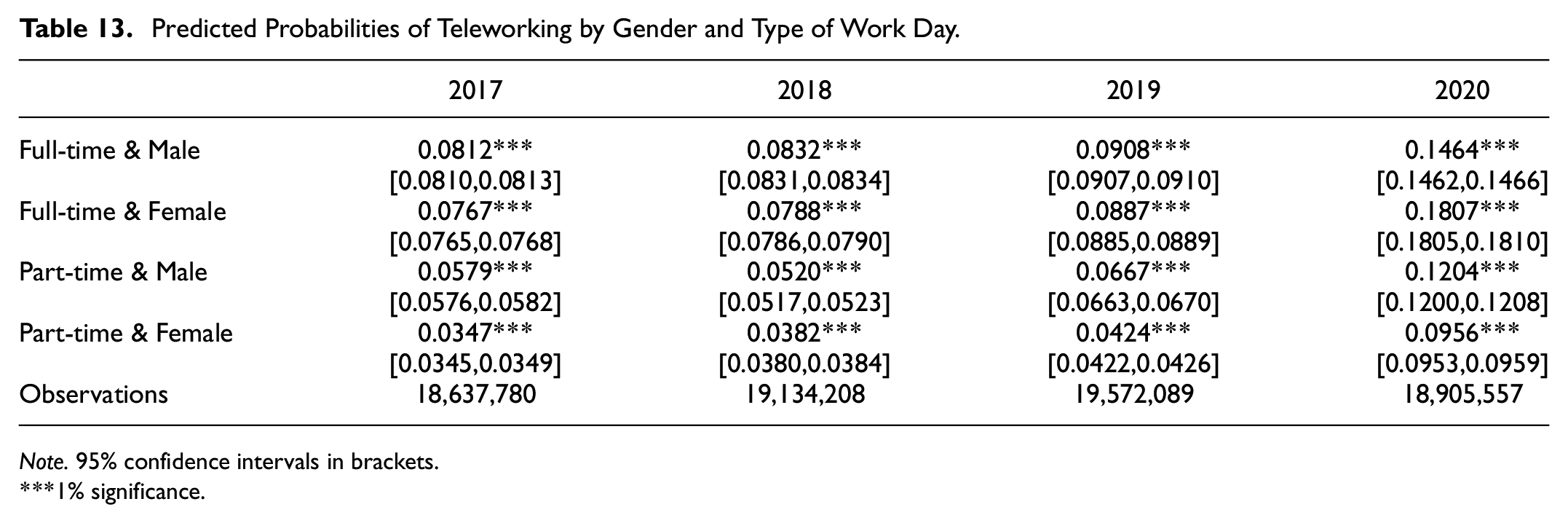
Conversely, part-time jobs provide an opportunity for flexible hours of work and for combining work with family commitments. Thus, we could expect that those part-time employees are more likely to adapt their jobs and perform them from home as they have already a more flexible working day compared to those working under full time schedules. Public sector servants appear, in this regard, to enjoy a higher probability of working at home compared to their private counterparts (See Table 11). However, as we can observe in Table 12, in Spain a full-time worker is, on average, 4 p.p. more likely than a part-time worker to perform their work from home, estimated for the 3 years period before the pandemic. This differences are intensified by the outbreak of Corona, where the lockdown is related to an increment of almost 7 p.p. in both type of work days and to a wider gap between full-time and part-time workers during the lockdown.
Predicted Probabilities of Teleworking for Either Public or Private Sector.

Note. 95% confidence intervals in brackets.
1% significance.
Predicted Probabilities of Teleworking for Either Full or Part-Time.

Note. 95% confidence intervals in brackets.
1% significance.
It was also worth mentioning that the intuition behind telecommuting is associated with the increase of work flexibility although, the evidence suggests that part-time workers would be less likely to be given the opportunity of telecommuting by their employers, which could be defined the part-time paradox. In Spain, women, low-paid, and multiple job holders are the vast majority of part-time workers which means that they are working under a more flexible schedule but without benefit neither from it nor from an opportunity of telecommuting to buffer the lockdown and its containment and mobility measures.
If we analyze deeper results differentiating the individuals’ estimated probability by the type of work day and gender, we find that during the lockdown women with full-time jobs were more than 4 p.p. more likely to be performing a remote job than their counterparts males. At the same time, women holding a part-time job were less likely to adapt their jobs to telecommuting than men, which can be explained by the type of occupations where they are usually over represented in part-time jobs, which are the same as those occupations with lower probabilities of teleworking.
Among men workers, it is important to remark that the estimated probability of telecommuting is almost the same (lower than 2 p.p.) between those who work full-time compering with those who do it part-time. However, when we estimate the same probabilities for women, holding a part-time job penalizes them being the likeliness of performing a remote job halved (see Table 13). Thus, we can determine that there is no relationship between the type of employee and being women or men with the probability of teleworking but it has to be related with the type of work day among different occupations.
Predicted Probabilities of Teleworking by Gender and Type of Work Day.
Note. 95% confidence intervals in brackets.
1% significance.
Finally, homeworking appears to have mitigated negative employment effects not only at an individual level but also at a national level (Sostero et al., 2020). In the case of Spain, the SLFS data enables us to evaluate in which regions teleworking was more prevalent before and after the irruption of the pandemic. Nevertheless, there was no such difference among regions before the pandemic took place and the levels of telecommuting and individuals’ probabilities to telework across territories does not distance so far between them. Thus, we find that, before COVID-19, performing a remote job was not related to a specific group of Spanish regions.
It is important to underline that, according to the existing polarization that characterizes the Spanish labor market, non preexisting differences among regions lead to an increase in the probabilities of telecommuting that are explained only by their relationship with particular characteristics of the productive system in each of them.
During and after the lockdown, when teleworking was used as a labor market buffer, differences arose and workers in Madrid and Catalonia were more likely to perform a remote job than they were before the pandemic, and this was not the case for the other regions. This dissimilarity can not be attributed to the economic performance of those territories. 6
The ranking of regions where workers are more likely to telecommute demonstrates, surprisingly, no gap between those better positioned in economic performance (those with lower levels of unemployment such as Basque Country, Navarre, Madrid, and Catalonia, among others) and those in the bottom (such as Canary Islands, Andalusia, and Extremadura).
Regarding the estimated probabilities of telecommuting among the 17 Spanish regions, we find an homogeneous result in performing a remote job all over the territory, presenting a regional convergence during the 3 year window before the pandemic, as we show in Table 8. Nevertheless, the outbreak of Corona revealed that those regions with higher economic performance are those reporting to be significantly more likely to adapt jobs remotely. In particular, during the lockdown, workers in Madrid and Catalonia were, on average, twice as likely to telework than other workers located in any other Spanish region.
While this study provides useful insights into the trends and determinants of teleworking in Spain, it has several potential limitations. First, due to the short time period, our analysis is based on data from the Spanish Labor Force Survey from 2017 to 2020, which may not capture the full extent of the COVID-19 pandemic’s impact on teleworking. A longer post-pandemic period would allow for a more complete understanding of telework dynamics.
Second, while we look at both national and regional data, our focus on Andalusia may not fully represent the breadth of regional experiences in Spain. The regional differences in teleworking observed during the pandemic, particularly in Madrid and Catalonia, suggest that our analysis could benefit from a more in-depth examination of other regions and their distinct characteristics.
Furthermore, while our research identifies certain factors associated with the likelihood of teleworking, such as family composition and occupation, we recognize that there may be additional unobserved variables influencing teleworking patterns that are not accounted for in our analysis. These could include difficult-to-quantify workplace policies, cultural factors, or individual preferences.
Finally, while our study provides useful insights into the likelihood of teleworking based on various characteristics, it does not delve deeply into the potential reasons for these patterns or the underlying causal mechanisms. Further qualitative research or detailed case studies could provide a more nuanced understanding of the factors influencing Spain’s teleworking trends.
Conclusions
The massive expansion of telework during the pandemic can be considered a natural experiment in countries’ labor markets around the world. Restrictions on mobility and physical distancing policies led to the shuttering of many workplaces. Although containment measures were only designed and established to contain the pandemic, they also had a negative impact in the worldwide economy. The lockdown force industries, companies, and workers to restructure work organizations to fight against the upcoming unprecedented economic crisis.
In this study, we determine that the technical feasibility pertaining to each occupation is the factor affecting more the probability of teleworking. We find that telecommuting can be used as a tool to make jobs more flexible. Accordingly, teleworking can be a candidate to substitute gender strategies to conciliate family and work responsibilities that many families adopt following childbirth. Nevertheless, prior literature suggests that telecommuting may exacerbate gender inequalities between parents by increasing mothers’ exposure to domestic demands and blurring the work-life boundary. Based on conceptual and empirical evidence, we expect telecommuting to increase mothers’ housework and childcare and reduce their leisure relative to fathers’ (Lyttelton et al., 2020).
Conversely, and one of the most important findings, we classify occupations in Spain by their degree of teleworkability, creating three groups. First, one group of occupations that are very likely to perform remotely because they leverage the potential of its access and use of ICT resources in its working process. A second group which is unaffected by an exogenous shock as the worldwide lockdown because of its high level of human interactions. And, finally, a third group composed by all those occupations where the supply of activities or services conducted at workplaces can be replaced conducting them from workers’ homes. As the lockdown and its containment measures force companies and workers to adapt work organizations to the new and uncertain situation, in this last category we find the most potential of working remotely as a tool to make jobs more flexible, since they were adapted once the lockdown took place which would certainly not have been the case if the exogenous nudge of COVID-19 never happened.
While our study provides useful insights, these limitations should be considered when interpreting the findings and considering the broader implications for telework policies and practices. Finally, because telecommuting can be a double-edged sword, its implementation must be evaluated in the same way that any other labor market policy is.
Footnotes
Acknowledgements
The authors would like to thank the Regional Government of Andalucía for its help and financial support.
Declaration of Conflicting Interests
The author(s) declared no potential conflicts of interest with respect to the research, authorship, and/or publication of this article.
Funding
The author(s) disclosed receipt of the following financial support for the research, authorship, and/or publication of this article: This article draft is part of a project financed by the Regional Government of Andalucia (Junta de Andalucía), titled “Nuevas dinámicas del mercado laboral tras el confinamiento en Andalucía: el empleo del futuro post-Covid19 y respuesta a nuevos confinamientos” (“New Dynamics of the labor market after the lockdown in Andalucía: employment of the post-Covid19 future and reactions to new lockdowns”).
Ethics Statement
An ethics statement is not applicable to this research paper draft, as no human or animals where harmed during its creation.

Data Availability Statement
Data sharing not applicable to this article as no datasets were generated or analyzed during the current study.