




Abstract
Multiple studies and reports have now concluded that the police in the United Kingdom (UK) disproportionately enforced coronavirus legislation against black and minority ethnic communities during the COVID-19 pandemic. This disproportionality was enforced through coronavirus fines which were introduced as part of coercive measures designed to restrict the movement of citizens. The use of coercive tactics by the police as a tool for maintaining order is not unheard of, and stopping and searching citizens is one method that is used to achieve this. This study therefore seeks to establish if the stop and search tactic was used proportionately by the police during the COVID-19 pandemic. To achieve this, we examine the application of the tactic in the UK, where data from stop and search records from all police services in England and Wales is publicly available. By using descriptive statistics, combined with modeling designed to detect anomalies, data from a 5 year period that includes the relevant periods of the UK pandemic is examined. Results identify significant rises in the use of the tactic during periods of lockdown, which when compared to white citizens, illustrates that the rises disproportionately affected Black, Asian, and young people aged 18 to 24. We discuss these findings against a backdrop of reduced recorded crime and wider traditional police demand, along with correlations in increased police activity related to the issuance of coronavirus fines. In conclusion, we suggest that both coronavirus legislation and stop and search may have been used together by the police as tactics to maintain order, specifically adherence to periods of coronavirus lockdowns.
Introduction
In 2020 the global coronavirus pandemic caused significant upheaval in societies across the world. One area of society that was significantly affected was policing. As countries around the world rushed to manage the spread of the COVID-19 virus various forms of social lockdowns were imposed. As a result, entire societies, overnight, came under legally mandated stay-at-home orders. The United Kingdom (UK) was no exception, and the introduction of coronavirus legislation affected crime and policing in a variety of ways. Most significantly, it reduced recorded crime and wider police demand by volumes never experienced. However, in its place the police found themselves conducting a new role, one that was linked to the preservation of health across society. To conduct this function, the police were provided with new powers to maintain order, specifically the adherence to lockdown orders, through the issuance of on-the-spot fines known as fixed penalty notices (FPNs). Since its implementation and cessation, research on how the police used these new powers during the pandemic has outlined that they were used disproportionately, impacting higher proportions of black, Asian, and young people than any other demographic groups. Such disproportionate enforcement upon certain ethnic groups was present in the pandemic policing response across all of Europe, and not just the UK (Aitkenhead et al., 2022).
The use of coercive tactics to maintain order is not unheard of within policing literature. Commonly, the tactic of stop and search is used in the UK to deliver three functions, crime prevention, investigation, and order maintenance. Research in the field of procedural justice theory has explored how the police use this tactic and has also established that in the past, it has been used disproportionately, with black, Asian, and young people being targeted in far greater proportions than white citizens. Such disproportionate use of the stop and search tactic has been argued to significantly undermine the trust, confidence in the police, and legitimacy afforded to them.
Despite the identified disproportionate use of FPNs during the pandemic and the way stop and search tactics are often used, there has been no empirical research that has sought to explore its application during the COVID-19 lockdowns. This is important because, like FPNs, if the police have also disproportionately used stop and search, then it may in part help understand why public confidence in the police is at a reported 5 year low (Mynenko & Ditcham, 2022). In addition, it may also help understand why police officers perceive that the policing of COVID-19 may have negatively impacted their relationship with the public, especially amongst certain groups of society where there are pre-existing issues related to distributive fairness (Charman et al., 2022).
To help explore these issues, this study examines the use of the stop-and-search tactic during the pandemic, paying particular attention to periods of lockdown. We achieve this by using quantitative statistical approaches to examine all stop and search within England and Wales over 5 years to accurately identify the proportionality of its application towards Black, Asian, and young people, in comparison to white citizens. By considering its use upon members of Black and ethnic minority communities this study enables us to provide further insight into “how” the police conducted stop and search during this period in the context of procedural justice theory, and particularly the issue of disproportionality.
Literature Review
In the UK, the practice known as “stop and search” is a routine policing method. The tactic involves police officers temporarily detaining individuals to search their body or vehicle. The police can only use the tactic if there is a justified belief that the person being searched may possess an illegal item or something that could be used to commit a crime. Typically, the objective of such searches is to uncover illicit substances, which could include prohibited weapons like knives or firearms, stolen goods, or tools that could aid in criminal activity. This method contrasts with the “stop and frisk” tactic employed by police in the United States, which is less comprehensive and involves a “pat-down,” usually as a means of officer safety which is used to help locate weapons like firearms (Skogan, 2017). UK law governing stop and search stipulates that police officers must harbor a realistic and objectively justifiable suspicion that they will uncover an illegal item, or equipment for criminal use, before proceeding with a search (College of Policing, 2022). To form such suspicion, behavior and actions by the individual can be used to help inform the officer’s judgement. Of note, the coronavirus legislation introduced in the UK to tackle COVID-19 neither provided or amended existing stop and search rules. As such, we can categorically say that the police in the UK could not stop and search a person just because they suspected them of breaching coronavirus legislation.
Research on Stop and Search
Ordinarily the police in the UK use stop and search to conduct three main functions. These include crime prevention (Apel & Nagin, 2011; Bowling & Weber, 2011; Bradford et al., 2013; Nagin, 2013; Pratt et al., 2009; Quinton et al., 2017; Tiratelli et al., 2018), crime investigation (Bowling & Weber, 2011; Murray, 2018; Tiratelli et al., 2018), and order maintenance (Bradford & Jackson, 2016; Bradford & Tiratelli, 2019; Braga et al., 2014; Choongh, 1997; Quinton, 2011; Smith & Gray, 1985).
The use of the tactic as a method of impacting crime is heavily debated within the literature (McCandless et al., 2016; Rosenfeld & Fornango, 2014; Smith et al., 2012; Tiratelli et al., 2018; Weisburd et al., 2016; Weisburd et al., 2021). It has been argued that it is most effective in the detection of drug-related offenses, which is achieved due to the ability of the tactic to identify people in possession of illegal drugs, as opposed to its ability to prevent or reduce such crime (Tiratelli et al., 2018). Because of its widespread application in the UK, the way the police conduct stop and search have been extensively studied in the field of procedural justice theory (PJT) (Bradford, 2017, Bradford & Jackson, 2016, Huq et al., 2011a, 2011b; Schulhofer et al., 2011; Sunshine & Tyler, 2003; Tyler & Fagan, 2008; Tyler et al., 2010; 2015; Tyler & Jackson, 2014). We do not intend to extensively revisit and examine this area in detail, except to the extent to understand it within the context of police stop and search.
Stop and Search and Procedural Justice
Fundamentally, Hough et al. (2017) have suggested that it “T’ain’t what you do, it’s the way that you do it’ t” (Hough et al., 2017, p. 274). As such, PJT places a strong emphasis on how public establishments, such as the police, interact with citizens. Specifically, PJT posits that the way the police behave during a stop and search is important because it shows the subject that they are respected and valued (Lind & Tyler, 1988). As a result, citizens are more likely to cooperate if they perceive themselves as being treated fairly, and that any requests or instructions are implemented equitably (Lind & Tyler, 1988; Schauer, 2015; Schulhofer et al., 2011; Tyler, 2016). During such interactions, the police must show citizens respect, allow them to respond, and most importantly, to engender trust they must behave in a non-biased, neutral, and objective manner (Mazerolle et al., 2013).
To ensure that the police conduct a procedurally just stop and search the literature has outlined some rules that can be followed (Bradford, 2017; Bradford & Jackson, 2016). For example, McCluskey and Reisig (2017) suggest that it is imperative that the police act within the boundaries of the law. Furthermore, the tone and vocal pitch used during the interaction must be appropriate (McCluskey & Reisig, 2017). Bradford and Jackson (2016) further suggest that the subject of the search must be listened to and allowed to voice a perspective on the interaction (Bradford, 2017). Finally, the police must ensure that they outline the rationale for the search, so the subject fully understands why it is taking place (Bradford, 2017; Bradford & Jackson, 2016).
Despite the existence of such guidance, there is an array of studies in existence that indicate that the police often get it wrong. Specific issues include the police conducting searches with little justification (Bowling & Weber, 2011), which it is argued is often underpinned by prejudice and stereotyping (Minhas & Walsh, 2021; Quinton, 2011). It has also been suggested that the police often conduct the searches in an adversarial fashion (Hough, 2012; Sharp & Atherton, 2007) as an overt display of power, which they achieve through reliance on an authoritative “command and control” tone of policing (Gau & Brunson, 2010; Parmar, 2011; Tyler & Huo, 2002).
Proportionality of Stop and Search
Specific to this study, is the disproportionate way in which the police often use the stop-and-search tactic. Disproportionality is best described as the volume of stop and searches conducted against a group in comparison to their corresponding population demographics (Bowling & Phillips, 2007). An abundance of literature has outlined the disproportionate volume in which the police use the stop and search tactic upon young people (Bowling & Weber, 2011; Flacks, 2020; McAra & McVie, 2005) and those from black and minority ethnic communities (Bowling & Phillips, 2007; Bowling & Weber, 2011; Bradford & Loader, 2016; Delsol & Shiner, 2006; Delsol, 2015; Eastwood et al., 2013; Flacks, 2020; Lennon & Murray, 2018; Quinton, 2015). It has been argued that non-procedurally just stop and search, and its disproportionate application, can undermine the trust and confidence in the police, and therefore affect their legitimacy (Delsol & Shiner, 2006; Stevenson, 2016; Thacher, 2019). This is vital because if the public no longer consider the police as a legitimate state actor, then it makes it less likely that people will abide by the rule of law, and the actions of the police to maintain it (Bottoms & Tankebe, 2012; Bradford, 2014; Hough et al., 2010, 2013; Jackson et al., 2012; Tyler & Huo, 2002, Tyler & Blader, 2013; Tyler, 2011, Tyler & Fagan, 2008).
Changes to Policing During the Pandemic
The issue of compliance is important for this study as during the coronavirus pandemic the role of the police significantly changed. The policing environment shifted away from investigating crime as extreme proportions of criminal behavior significantly reduced (Halford et al., 2020). There was a similar reduction in the volume and nature of demand placed upon policing (Solymosi et al., 2021), with a wide variety of traditional functions also diminishing. A portion of these functions was replaced with new roles and responsibilities regarding the implementation of new legislation, the most notable of which was the Coronavirus Act (2020) (Coronavirus Act 2020 (c.7) United Kingdom). The main purpose of the act was to prevent unnecessary transmission of the virus, which it achieved through implementation of coercive controls, including stay at home lockdown laws (Halford, 2023). As a result, a range of businesses and services were drawn to a close (Brown, 2021). In conjunction with these measures, strict guidance was enacted that sought to reduce close contact between people and included measures of social distancing, and self-isolation for anyone infected with coronavirus became mandatory (Brown, 2021). One of the main roles the police adopted because of the newly implemented legislation was the issuance of fixed penalty notices (FPN). An FPN is an on-the-spot fine issued by the police for breaching a specified law. Studies on the police use of the new powers to issue coronavirus FPNs has outlined that they were issued disproportionately during the pandemic (Currenti & Flatley, 2020), targeting black and minority ethnic people, and the young. As a result, we believe that stop and search may also have been used disproportionately during the pandemic against young, black, and minority ethnic people.
Official Data on Stop and Search During the Pandemic
Examining the official data on this issue identifies that from April 1st, 2020 to March 31st, 2021, when compared with the previous year, the number of people from all ethnicities stopped and searched increased (Home Office, 2022). Proportionately however, White British people saw the largest rise (26%), followed by Asian or Asian British (22%) and people from other backgrounds (19%), mixed ethnicities (15%), and finally, Black, or Black British (1%). When we consider the proportionality of FPNs during the pandemic we see a different pattern in the limited research on this subject, showing that Black and minority ethnic people were 1.7 times more likely to receive an FPN than white members of the population (Currenti & Flatley, 2020). By their admission, the national police chief’s council (NPCC) admits that this amounts to disproportionality (Currenti & Flatley, 2020). In their defense, the NPCC has suggested that “disproportionality could legitimately result from the fair application of the regulations when sub-groups differ in their observance of the regulations” (Currenti & Flatley, 2020, p. 7). This statement suggests that Black and minority ethnic people were less likely to observe the laws regarding coronavirus legislation but provides no evidence to support this statement. Non-peer-reviewed research on stop and search during the pandemic has suggested that just like FPNs, it was used disproportionately against Black people and their wider communities (White et al., 2021). However, it is not clear if this non-peer-reviewed conclusion refers to the overall volume, its proportional application, or its use during distinct periods such as lockdowns.
Aims of the Study
This study has a single primary objective, to establish the application of stop and search in England and Wales during lockdown periods of the coronavirus pandemic to identify if it was proportionately applied. To achieve this objective, we need to individually establish the proportionality of stop and search on Black, Asian, White, and young people aged 18 to 24. We select these groups specifically as they are most frequently affected by the disproportionate use of stop and search. White people are also included to provide the comparator that will enable us to judge the proportional application.
Understanding the application of stop and search during the pandemic is important for several reasons. First, research on young people stopped and searched has identified that as a result, the likelihood that they partake in anti-social behavior in the future is increased, irrespective of whether the search identified any crimes (McAra & McVie, 2005). This negative effect of stop and search is magnified further if people experience repeated searches, which is an effect that remains long term (McVie, 2015). Second, research argues that poorly conducted searches also serve to humiliate and anger those subjected to them (Bowling & Phillips, 2007; Scrase, 2021), therefore, if searches are conducted disproportionately, this may have a similarly negative effect. Third, scholars (Bowling & Weber, 2011) also suggest that if stop and search is not conducted properly, it can serve to solidify negative stereotypes held by both the police and subject of the search, which serves to further erode confidence and trust with communities (Murray et al., 2021). Because of the potential for such significant negative impacts from the disproportionate use of stop and search, we believe that it is vital that a full understanding of how the tactic was applied during the COVID-19 lockdowns is established. Establishing a conclusion to this issue will help us understand the proportionality of the tactics used during lockdowns. As a result, we can reconcile the conflicting reports between official statistics and research to date. It will also enable policymakers and senior police decision-makers to use the conclusions to inform its application in future similar conditions.
Method and Data
This study utilizes secondary data to examine the impact of national lockdowns on police stop and search activities during the COVID-19 pandemic. The research method is designed to enable identification of patterns and anomalies in the existing data so that we may be able to infer the pandemic’s effects on the polices use of the stop and search tactic. The data for this study was sourced from the open-access website www.policedata.co.uk and includes records of all police stop and search activities in England and Wales from January 2016 to December 2021. This period captures the three critical lockdown phases, and thereby provides us with the backdrop to explore the effect of the pandemic on the tactic in question. Utilizing secondary data from a comprehensive national database allows for a broad analysis of trends without the logistical and ethical complexities of primary data collection. This approach also provides access to a pre-existing, large-scale dataset that would be difficult to replicate through primary means.
For our methodological approach, we begin with descriptive statistics to assess trends and changes during the lockdown periods specified—March 26, to May 10, 2020; November 5 to December 2, 2020; and January 6 to March 8, 2021. In doing so we identify overall counts, means, and percentile changes to help establish a baseline of stop and search activities during these intervals. We then support this with statistical testing to ascertain the significance of observed variations by using two-sample t-tests. This statistical method compares the mean daily number of searches during each lockdown to corresponding periods in non-lockdown years, including the post-pandemic year of 2021. This helps determine whether the lockdowns significantly altered police use of stop and search compared to normal conditions. We conclude by using the Prophet time series model to forecast and analyze anomalies during the lockdown periods.
This technique has been used for similar studies (Halford, 2023) and demonstrated that it is effective for predicting complex data sets, especially when generating time series forecasts that incorporate non-linear patterns along with various calendar periods such as annual, weekly, and daily seasonality’s, in addition to holiday impacts (Snow, 2020). It is particularly beneficial for time series with seasonal components and multiple years of data (Snow, 2020). Furthermore, the method has a high degree of robustness in handling missing data and trend deviations, as well as its capability to manage outliers efficiently (Zunic et al., 2020). These characteristics mean that the method is highly suitable for this study. A decomposable time series model is employed to account for variations in the three primary model components: trend, seasonality, and holidays. Anomalies are identified within 95% confidence intervals, highlighting instances of unusually high or low activity. This analysis not only aids in understanding the data’s broader context but also in recognizing specific, significant deviations that may correlate with the lockdowns.
As with previous similar studies (Halford, 2023), this triangulation of methodologies produces multiple data points that enables a highly informed discussion to then take place. To illustrate these findings a mixture of tables and figures is used to articulate the results.
Results
Our primary objective was to examine the disproportionate use of stop and search during lockdown periods. Specifically, we wanted to understand if the three groups examined (Asian, Black, and 18–24 year-olds) would experience proportionate volumes of stop and search during the lockdowns when compared to White citizens. Our analysis, which can be seen in full in Tables 1 and 2, identified that all groups experienced highly statistically significant rises (p < .001) in stop and search during periods of lockdown when compared to the same periods of non-lockdown years.
Descriptive Results of Mean Volumes Stop and Searches by Officer Defined Ethnicity.

Inferential Statistics Results of Mean Numbers of Stop and Searches Conducted Per Lockdown Period versus Non-Lockdown Years.

In respect of Asian citizens, the full modelling results can be seen in Figure 1, and this illustrates a clear clustering of the rise in searches in and around periods of lockdown. This is highlighted further when we consider how the mean number of positive weekly anomalies changed during lockdown periods versus non-lockdown, which were also much higher, increasing from 0.15 in lockdown 1 to 1.25, from 0 in lockdown 2 to 0.25, and from 0.2 to 0.7 in lockdown 3. Furthermore, we identified that the increases in daily means were highly significant. In lockdown 1 for example, the mean number of daily searches rose by 109% (M = 280, SD = 10.67) which was a significant difference (p < .001) when compared to the same periods from non-lockdown years (M = 134); t (37) = 15.37. Significant rises were also identified in lockdown 2 (p < .001) and lockdown 3 (p < .001), which are outlined in full in Table 2.

Modelling of stop and searches for Asian people. Lockdowns in grey.
Similarly, our modelling in Figure 2, identifies that the increase in Black people stopped and searched also correlate with the periods of lockdown. Lockdown 1 was the greatest proportionate increase of any of the groups examined. We also saw weekly positive anomalies rise from 0 in lockdown 1, to 0.35. The rise in daily means was also highly significant (p < .001), rising by 114% (M = 489, SD = 16.18) when compared to the same periods from non-lockdown years (M = 228); t (37) = 13.45. Like stop and searches of Asian people, the increases reduce in lockdown 2 and 3 but at a faster pace, but neither lockdown experiences any positive weekly anomalies. Despite the volumes of stop and search remaining within predicted levels, the daily means were still both significantly higher (p < .001) than the same periods of non-lockdown years, which can be seen in Table 2.

Modelling of stop and searches for Black people. Jan 2018–Jan 2022. Lockdowns in grey.
Modelling of stop and search for young people aged 18 to 24 can be seen in Figure 3. This again demonstrates that stop and search increase notably around lockdown 1, before reducing in lockdown 2 and 3. Analysis of positive weekly anomalies identified that these correspondingly increased during each lockdown period, from 0.15 to 0.65 in lockdown 1, 0 to 0.25 in lockdown 2, and 0.22 to 0.45 in lockdown 3. In line with other demographics, lockdown 1 saw the greatest proportional rise in the mean number of daily searches, which rose by 114% and was a highly significant increase (M = 728, SD = 19.29; p < .001) when compared to the same periods from non-lockdown years (M = 340); t (37) = 14.96. The rises in mean daily searches during lockdowns 2 and 3 were also highly significant (p < .001) and these are outlined in Table 1.

Modelling of stop and searches for people aged 18to 24. Jan 2018to Jan 2022. Lockdowns in grey.
To place the results in context we also analyzed the officer-defined category of “White,” which can be seen in Figure 4. As a result, our analysis showed that this group also experienced greater volumes of stop and search, which is to be expected given the overall number increased. However, the proportionate rises were not equal to the other three groups we examined. For example, Table 1, outlines that in lockdown 1 the 89% rise in mean daily searches of white people was 20% less than Asian people, 25% less than Black citizens and those aged 18 to 24. This rise was highly significant (p < .001) (M = 728, SD 21.64) (p < .001) when compared to the same periods from non-lockdown years (M = 340); t (37) = 12.20. The number of daily means in searches of white people during lockdowns 2 and 3 was also significantly higher (p < .001) than normal but was also below the percentile rises experienced by Asian people and 18 to 24 year-olds. The only exception to this pattern was identified in lockdowns 2 and 3 where we identified that Black people experienced a lower percentile increase in searches than white citizens. The full results can be seen in Tables 1 and 2.
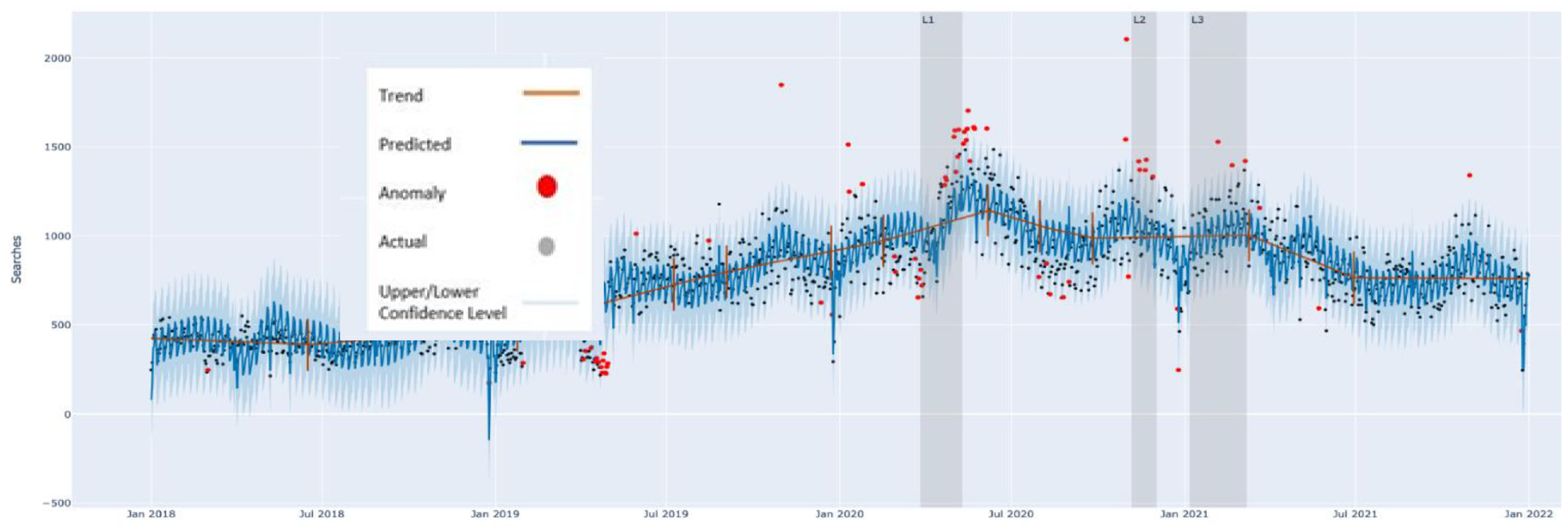
Modelling of stop and searches for white people. Jan 2018–Jan 2022. Lockdowns in grey.
Discussion
Proportionality of Stop and Search During Periods of Lockdown
An important part of this study was to explore whether the police used stop and search proportionately, which we examined through its use against traditionally disproportionately targeted groups. Results identified that there is evidence to suggest the pandemic, and lockdowns specifically, did impact the overall volume of stop and search significantly, which is confirmed by each of the three methods employed (descriptive, analysis of daily means, and anomaly detection). As the number of stops and searches increased overall it is then unsurprising that all groups, including White people, were stop and searched significantly more than the same periods within non-lockdown years. However, the descriptive analysis identifies that the rises were disproportionate within the three groups we analyzed (Asian, Black, and people aged 18–24) when compared to the proportionate increases during lockdown periods experienced by White people.
The disparity was most pronounced within lockdown 1, when each of the three groups (Asian, Black, and people aged 18–24) experienced rises of 109% or more, compared to an 89% rise in searches of white people. This is important as the official data indicates that across the entirety of the pandemic (which includes non-lockdown periods), it was White citizens who saw the highest percentile rises (26%). This indicates that it was the lockdowns when stop and search were most disproportionately used. As the pandemic continued this gap did reduce, and by lockdown three the difference in percentage increases was just 3% when compared to Asian citizens and people aged 18 to 24. In fact, by lockdown three the rise in stop and searches on white people was 37% higher than against Black citizens.
Using Stop and Search to Maintain Order
Understanding why lockdowns caused disproportionate rises in stop and search is important and when we consider the literature again the potential explanation presents itself. Our review outlined how the police use stop and search for three primary reasons, two of which included crime prevention and investigation (Apel & Nagin 2011; Bowling & Weber, 2011; Bradford et al., 2013; Nagin, 2013; Murray, 2018; Pratt et al., 2009; Tiratelli et al., 2018; Quinton et al., 2017). However, the significant reductions in crime and wider police demand that has been identified (Halford et al, 2020; Solymosi et al., 2021) would indicate that this was unlikely to be the main function for which stop and search was used during the pandemic.
The third function for which the tactic is most frequently used is for maintaining order (Bradford & Jackson, 2016; Bradford & Tiratelli, 2019; Braga et al., 2014; Choongh, 1997; Quinton, 2011; Smith & Gray, 1985). We already know that during the pandemic the role of the police shifted significantly toward one of health preservation, and maintaining order was essential to achieving this. As such, we should not be surprised that the police may have used additional tactics to bolster their use of the new coronavirus legislation and the issuance of FPNs and stop and search was likely a supplemental tactic they employed.
This hypothesis is supported by the substantial correlation between stop and search and coronavirus FPNs. For instance, recent research (Currenti & Flatley, 2020; McVie & Matthews, 2021) has shown that in certain areas within the U.K, Black, and minority ethnic communities received higher proportions of FPNs for breaches in coronavirus legislation. When we consider the statistics, it is hard to ignore the correlations. For example, Table 3 demonstrates that in the period of the pandemic, both FPNs and stop and search were disproportionately applied toward Asian, Black, and young people aged 18 to 24. White people in contrast experienced a much lower proportion of both FPNs and stop and search when compared to their representation in the general population.
Comparison of % FPNs versus Stop and Search in England and Wales between March 27th, 2020–March 14th, 2021. FPN data obtained from National Police Chiefs’ Council (2020) (volume counts unavailable). Population data are drawn from UK Census, 2021.

When we consider the rise in stop and search against young people aged 18 to 24, the correlation with the issuing of FPNs is also important. As we can see in Table 3, young people aged 18 to 24 accounted for 46% of all FPNs issued during the pandemic. This is close to 40% higher than the population level of young people aged 18 to 24, which stands at approximately 7.8%. By considering our argument we would expect to see similar levels of rise in stop and search, which is exactly what is observed. This link is far more pronounced than that seen by both Asian and Black people with stop and search being almost 25% above the population levels of 18 to 24 year-olds, accounting for 33% of all searches during the period in question.
Potential Causes of Disproportionate Stop and Search During the Pandemic
When considering why this pattern occurs, previous literature (Vomfell & Stewart, 2021) suggests one reason could be the tendency the police have for “over patrolling” areas with higher levels of ethnic minorities. If this occurred during the pandemic, with movement between localities also restricted, the rises in stop and search against the demographics examined may have also been further pronounced because of the populations in those areas being prevented from leaving, or only permitted under stringent conditions. As this has continued to occur during the pandemic than a correlation between FPNs and stop and search would develop.
The increases could also be further influenced by the ethnic make-up of frontline workers who were afforded more mobility during the lockdown, and as such, were, in comparison to their representation in the general populous, more likely to encounter the police. For example, reporting (The Health Foundation, 2020) has suggested that key workers are made up of disproportionately higher numbers of ethnic minorities (13%) compared to the U.K ethnic makeup that we outlined in Table 3. In areas such as London, the level of representation among frontline workers increases even further, and is dependent on industry (food production, 54%) (health and social care sector, 48%) (The Health Foundation, 2020).
Although the coronavirus legislation did not explicitly carry the power to conduct stop and search, the use of this tactic by the police as a method of displaying power is not unheard of and is an effective way to maintain order (Bradford & Jackson, 2016; Choongh, 1997; Quinton, 2011; Smith & Gray, 1985). Literature even goes as far as to suggest that stop and search are frequently used as a method of regulating the behavior of residents in specific areas to achieve order maintenance (Bradford & Jackson, 2016), which is achieved because of the overt display of power (Gau & Brunson, 2010; Parmar, 2011; Tyler & Huo, 2002). When we consider these issues in the context of stop and search, we already know that such interactions are frequently underpinned with little justification (Bowling & Weber, 2011; Quinton, 2011) beyond prejudice and stereotyping (Minhas & Walsh, 2021; Quinton, 2011), and lockdown conditions likely made easier to justify suspicion for searches by the police, which may in part, help us understand the identified rises.
Implications
Implications for these findings are important. From a positive perspective, the pattern experienced during lockdowns 2 and 3 when Black citizens were far less likely to be searched than white people, may go some way in helping improve public confidence in the police and enhance their legitimacy amongst Black communities. However, this is a small victory that stands to be undermined by the overall use of stop and search throughout the whole of the pandemic. At worst, the procedurally just nature of the searches is undermined as they may not have been in strict compliance with the law, as stop and search were not authorized to enforce coronavirus legislation, a key factor within PJT (Bradford, 2017). In addition, the disproportionate use also undermines the non-biased, neutral, and objective execution of police order maintenance that is required to maintain confidence, legitimacy and engender trust in the police (Mazerolle et al., 2013). Such application also calls into question the fairness of the police approach to maintaining order during the pandemic, and especially within lockdown periods, which is also key to ensuring their actions are considered procedurally just (Lind & Tyler, 1988; Schauer, 2015; Tyler, 2016; Schulhofer et al., 2011). Most significantly, as McVie (2015) has argued, the result of repeatedly targeting the same groups is likely to have a long-lasting effect.
Conclusion
This study provides a comprehensive analysis of the proportionality of police stop and search tactics during the COVID-19 pandemic lockdowns in England and Wales. Our findings indicate a significant increase in the use of the tactic during the lockdown periods, with disproportionate impacts on Black, Asian, and young people aged 18 to 24 compared to white citizens. These results are particularly concerning given the overall increases occur during a time when crime rates and broader policing demands were lower. The findings correlation with the lockdown periods suggests that the tactic was used as a tool to enforce lockdown compliance. Furthermore, the overlay of our findings with the issuance of fixed penalty notices, which were also disproportionately directed at these same groups, suggests a broader pattern of targeted enforcement that aligns with historical biases in policing.
We suggest there could be several causes for the disproportionate application of the tactic. It is possible that whilst maintaining order related to lockdown adherence the police have, unwittingly we would suggest, focused their activity disproportionately towards Asian, Black, and young citizens, which has come about because of “over patrolling” certain areas that are high in such demographics, as literature has indicated occurs (Vomfell & Stewart, 2021). This has been compounded by the higher ratios of black and ethnic minority frontline workers outdoors during periods of lockdown. As a result, we see a distinct correlation between higher volumes of coronavirus related FPNs and stop and search. These are most pronounced for members of Asian, Black, and young people, and most significant early in the pandemic whilst the police were still coming to terms with how to conduct their newly assigned function of maintaining order for the health of the population.
This pattern not only reflects the challenges of pandemic policing but also mirrors long-standing issues related to procedural justice within the UK. The disproportionate use of stop and search has implications for community trust and police legitimacy. Such practices can exacerbate existing societal tensions and diminish public confidence in policing, potentially leading to less cooperation with the police. To address these issues, the police must continue to consider reforms that ensure policing tactics are applied proportionally and justly across all communities. This is essential not only for the legitimacy of the police but for the overall cohesiveness of the society they serve.
Limitations and Further Research
This study has several limitations. First, from a quantitative data perspective, it should be acknowledged that we only examined data from the officer-defined ethnicity category to examine the makeup of those stopped and searched. The “self-defined” category had significantly more sub-categories of ethnicity and as such may provide further nuances, particularly as they relate to people of mixed heritage. For example, a person who is defined as “Black” by an officer, may self-define as “Black—mixed White European.” In addition, geographic data related to the site of stop and search may provide additional information, especially in regard to the ethnic demography of the impacts identified in this study. This could be particularly helpful when considering if the demographics of frontline workers in areas such as London (where it is at its highest), has had a significant effect on our findings. Methodologically, there are also alternative methods that could be used to conduct the time series modeling. For example, we use the Prophet method, but an alternative method such as the use of ARIMA modeling, may provide further insights.
In our discussion, we also argue that disproportionality may have occurred as the police have used stop and search to maintain order during the pandemic, and in particular adherence to lockdowns. This position is informed by the literature on stop and search but is primarily supported by the correlations with FPNs. We are aware that correlation is not the same as causation and accept that other reasons for the disproportionate application may exist, most notably, the view of the NPCC who stated: “disproportionality could legitimately result from the fair application of the regulations when sub-groups differ in their observance of the regulations” (Currenti & Flatley, 2020, p. 7). Replication of this study but examining the reasons for conducting stop and search may provide greater insight into how the police used the tactic that is, for prevention, investigation, or order maintenance. However, to truly explore this position further studies that explore the link between FPNs and stop and search would need to be conducted and these should include qualitative case studies of individual services, examining records of both FPNs, and stop and search to establish any link.
Footnotes
Acknowledgements
The authors would like to acknowledge the support of Rabdan Academy in enabling the time and capacity to complete this study.
Declaration of Conflicting Interests
The author(s) declared no potential conflicts of interest with respect to the research, authorship, and/or publication of this article.
Funding
The author(s) received no financial support for the research, authorship, and/or publication of this article.
Ethical Approval
The research was supported and approved by the Rabdan Academy internal ethics approval committee, reference number RAHEC #0006 2021. No human or animal participants were involved in this study.
