




Abstract
The Fourth Industrial Revolution has built upon the lessons learned from Covid-19 and has emphasized the urgent need for digital transformation in Small and Medium Enterprises (SMEs) in Latin America. This study aims to identify the factors that can explain the varying degrees of adoption of digital technologies 4.0 (DT 4.0). The research analyzes the results of surveys conducted among 35 companies located in the Central Region of Argentina and the Biobio Region of Chile. By utilizing the Technology, Organization, and Environment (TOE) model of adoption and employing data science tools, such as cluster analysis (K-means) and decision trees (J48), the study parameterizes the different responses and generates valuable insights. Our work provides a complementary view to existing studies, analyzing the key factors in the adoption of DT 4.0 in a group of SMEs located in regions, not national capitals, of two Latin American countries with different growth models. The results highlight the significance of business leaders possessing knowledge of DT 4.0, the importance of having specialized human capital, and the need for an organizational culture that embraces innovation. Public policy should focus on transforming business leadership and organizational dynamics to stimulate digital transformation.
Plain Language Summary
This paper seeks to identify the factors that may explain the depth of adoption of digital technologies 4.0 (DT 4.0). 35 companies were analyzed, which already have a degree of awareness in enabling technologies of Industries 4.0, distributed in the Central Region of Argentina and the Biobio Region of Chile. Both regions are not national capitals and have similar relative economic importance in their respective countries. Through the Technology, Organization, and Environment (TOE) adoption model, the different responses were parameterized and data science tools were applied, allowing the construction of clusters (K-means) and decision trees (J48). The results show the importance of the business leader having knowledge of DT 4.0, the relevance of having specialized human capital and having an organizational culture willing to innovate.
Introduction
Manufacturing has served as the primary driver of accelerated economic growth throughout the 19th century. In recent decades, manufacturing has undergone a transformation from labor-intensive processes to those driven by Information and Communication Technologies (ICTs). It is crucial for companies, including Small and Medium Enterprises (SMEs), to sustain and enhance their technological capabilities. Presently, the term “Industry 4.0” refers to a new industrial revolution. Countries recognized as manufacturing leaders, like Germany, Japan, Korea, and the UK, as well as countries like Brazil and China, whose manufacturing capabilities have seen rapid growth in the past 20 years, share common objectives: to strengthen their manufacturing foundations and capitalize on new technologies (Shipp et al., 2012).
Evidence indicates that Latin America lags behind in the utilization of ICTs and internet applications for industrial purposes, particularly when compared to Europe and the USA, although individual connectivity rates may differ (ECLAC, 2016). These disparities became even more pronounced during the COVID-19 pandemic (ECLAC, 2020). In February 2021, UNCTAD investigated the potential consequences of the digital revolution for companies in developing countries. They emphasized that failing to embrace new technologies could lead to significant inequalities, while recognizing the immense opportunities that arise when these technologies are adopted through appropriate public policies and favorable conditions (UNCTAD, 2021).
The term “new technologies” encompasses a range of advancements that are part of the concept of the Fourth Industrial Revolution (Schwab, 2016). These include monitoring in processes and products, big data analytics, cloud computing, the Internet of Things (IoT), additive manufacturing, collaborative robotics, and artificial intelligence (Gatica & Ramos, 2020). The gradual adoption and integration of this array of technologies determine a company’s progression toward what is commonly known as Digital Technologies 4.0 (DT 4.0).
Our work aims to identify the key factors in the adoption of DT 4.0 in SMEs in two selected regions of the Southern Cone of Latin America, Argentina and Chile. Firms were studied as they have some level of awareness of the new TD 4.0, thus these organizations are “technological first movers” in their respective territories. On reviewing the descriptors “SMEs”; “Digital Transformation,”“Region” in the Web of Science Core-Collection (June 2023), we found the existence of only nine publications. Of these, three correspond to topics outside our research (geo-information, electronics, and cultural heritage). Of the remaining six, four publications deal with European companies (mainly Italian), only one study deals with Asian companies and one study deals with Latin American companies. In this regard, De Lucas Ancillo et al. (2022) notes that studies on the application of Industry 4.0 to innovation and competitiveness in SMEs in Latin America and Spain are still scarce.
Our work makes a valuable contribution by offering insights into the adoption of DT 4.0 within manufacturing SMEs in two countries/regions that follow distinct development models.
The Argentinean case exhibits a greater presence of public policies oriented toward industrialization and a higher level of decentralization. The Chilean case is more focused on neoliberal policies that prioritize internationalization, accompanied by a lower level of decentralization. In both cases, we analyze regions that are not national capitals, which is also a distinctive factor of our work.
Both regions share common features: a diversified productive structure, high participation in national manufacturing activity, a network of industrial SMEs linked to large companies (forestry, cereals, soya, iron and steel, energy, auto parts, etc.), a critical mass of universities and technological institutes, and public institutions willing to promote DT 4.0 in SMEs.
We first provide a theoretical framework that delves into the TOE adoption model in DT 4.0. Subsequently, we characterize the two regions where the SMEs are located. In the third part, the methodological aspects are presented, going in depth into the origin of the information, the presentation of the variables and the use of data science tools. The fourth chapter presents the main results based on cluster analysis and decision trees. This is followed by a discussion based on the findings of the field study, and finally, conclusions are presented. Our main results underscore the importance of the human resources qualification, the organizational climate, the company’s type of production (serial, on-demand and engineered solutions), and the leader’s knowledge of TD 4.0. These results should be considered by public policies to promote Industry 4.0 which, in our opinion, should seek to be stable over time and should operate in a decentralized manner, enhancing regional dynamics.
Theoretical Framework
According to the endogenous growth theory, regional development can be explained by a virtuous circuit involving: the generation of innovation, the adoption and diffusion of new technologies, learning processes based on novelty, the accumulation of knowledge, the attraction of new investments, and the generation of further innovation (Mohamed et al., 2022). In this context, digital transformation will produce a set of virtuous impacts, resulting in greater efficiency, lower production costs and the creation of new business models (Büchi et al., 2020). DT 4.0 will have a positive impact on the sustainability of economic activity in territories by reducing resource usage, lowering the environmental impact, and improving the management of sustainable processes (Huang et al., 2022; Luo et al., 2022). In this line, it is essential to study the processes of new technology adoption within the regional productive network. There are different models to study this adoption phenomena, which are not exclusive to DT 4.0, but respond to a wider range of technologies.
In this regard, Kossaï et al. (2020) mention the Technological Acceptance Model (TAM), the Theories of Planned Behavior (TPB), the Unified Theory of Acceptance and Use of Technologies (UTAUT), and the models of the diffusion of innovation from where the model of Technology, Organization, and Environment known by its acronym TOE arises. The UTAUT (Venkatesh et al., 2012) is widely used, identifying as explanatory factors: expectations of returns, expected effort, social influence, facilitating conditions, hedonic motivation, price, and habits as determinants of the intention to adopt. The UTAUT model encompasses many economic, social, technological, and psychological dimensions. However, it emphasizes the adoption processes of end-consumers with interesting literature on ICT adoption processes (Chege et al., 2020).
Considering our object of study, we use Technology, Organization, and Environment (TOE) model. The technological dimension includes the relative advantages of what is being adopted, the perception of the challenges involved in carrying out the adoption, and the compatibility problems that may exist at the time of linking the new technology with what already exists in the company. The organizational dimension is associated with the size of the firm, the management support, and the capacity for technological absorption, which depends on the qualification of the workforce. The environment includes the level of rivalry that the adoptive company has, the levels of environmental uncertainty, and the perception of logistical support.
A TOE Model to each individual company was applied, rather than analyzing it at the sector level, as factors such as technological intensity, economies of scale, and the nature of innovative efforts, among others, can influence their capacity to embrace technological changes. In this context, Bogliacino and Pianta (2016), in the context of the Fourth Industrial Revolution, examines how the integration of science-based sectors with specialized suppliers within a region plays a crucial role in stimulating the adoption and diffusion of new digital technologies in the realm of Industry 4.0.
Preliminary studies suggest that SMEs are at a clear disadvantage when it comes to adopting new enabling technologies of Industry 4.0. In brief, the following variables are noted:
There is a direct and positive relationship between company size and the ability to adopt 4.0 technologies. Smaller companies have an adoption gap in relation to large companies. Size is associated with the administrative and financial capacity to invest significant resources in adoption processes (Ingaldi & Ulewicz, 2020; Kiraz et al., 2020; Reyes et al., 2016).
Access to ICT professionals significantly conditions the ability of companies to adopt more complex technology. A key element is that the manager has prior knowledge of this type of technology, being able to better visualize the expected return on technological investment, as well as better, manage the obstacles and adaptation costs arising from prospecting, compatibility, and organizational inertia, among other barriers (Agostini & Filippini, 2019; Cabrera-Sanchez & Villarejo-Ramos, 2019; Ciarli et al., 2021).
Connectivity with high-speed internet, of good quality, is essential for the implementation of this type of technology. The internet that small companies usually have is of poor quality (low speed, high intermittency, coverage, among other factors) conditioning the adoption of this type of technology (Gatica & Ramos, 2022).
Deficit in innovative trajectories. The data show that those companies that present future projects and that have had innovation processes in the past are good adopters and disseminators of T.D 4.0. In this case, the quality of business leadership turns out to be a key element (Chauhan et al., 2021; Gatica, 2022; Horvath & Szabo, 2019; Müller et al., 2018).
The motivation of the business leader is an unbalancing factor for the adoption of DT 4.0 (Maggi et al., 2020; Motta et al., 2019). The knowledge-intensive entrepreneur is more likely to adopt new technologies because he has a greater capacity to take risks, explore new technologies, manage uncertainty and create opportunities (Malerba & McKelvey, 2020). The emergence of this type of entrepreneur is based on taking advantage of opportunities that arise from regional knowledge (Mahn & Poblete, 2022).
Based on these key factors, which can explain technology adoption in SMEs in Chile and Argentina, a set of strategies emerges that could accelerate the process of Digital Transformation. This is particular true from a regional policy perspective, through a greater productive articulation that facilitates resilience and the creation of new business models based on new technologies (Scott, 2022). This implies a specific governance and regional coordination of networks in each territory, with different actors, structures, previous local knowledge and particular business dynamics (Knox & Arshed, 2021). This is in the context of a stable policy to support the development of Industry 4.0 in SMEs (Lepore et al., 2021), which should enable the co-evolution of skills, innovation and new digital technologies in the territories (Ciarli et al., 2021).
Our paper aims to identify the factors accounting for the extent of digital 4.0 technologies adoption in companies located outside the national capitals of Argentina and Chile, where there is already some level of awareness regarding these new technologies. To this end, information available from surveys conducted by ECLAC (Maggi et al., 2020; Motta et al., 2019) in both countries was used. These inputs were standardized and parameterized relying on responses from 35 companies: 20 from the Biobio region (Chile) and 15 from the Central Region of Argentina (Argentina). These companies were surveyed in depth by professionals specialized in the field. The data obtained were analyzed using data science algorithms, which will be developed in the methodology (Figure 1).
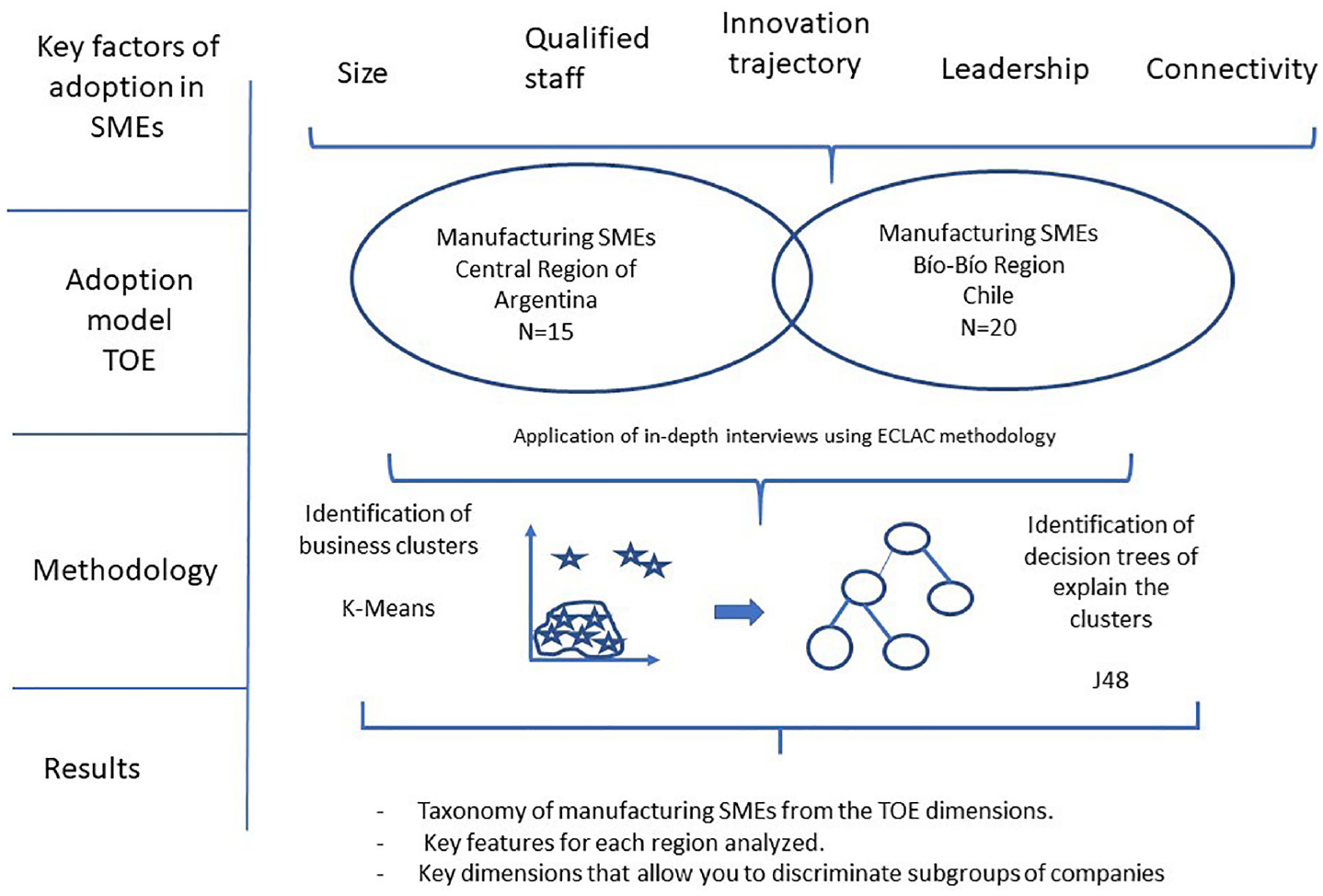
Analysis map.
Characterization of the Regions Analyzed
The following is a brief economic description of each territory analyzed, providing context for the analysis of the different companies.
Center Region Argentina
The provinces of Córdoba, Santa Fe, and Entre Rios are part of the Central Region of Argentina. According to INDEC estimates for 2019, the population that year amounts to 8.6 million inhabitants, which means 19.1% of the national total; and the surface of the region is 377,109 km2, which represents 14% of Argentina’s continental surface.
It is a region characterized by a diversified productive and economic structure. Endowed with diverse natural resources, the three provinces comprising the Central Region stand out for their agricultural and livestock production, as well as significant forestry activity in Entre Rios. In the provinces of Cordoba and Santa Fe, the food industries and the agricultural machinery industry stand out. It has a traditional metal-mechanic industry linked to the automotive terminals of Cordoba and Santa Fe, and other industries that achieved development in the region such as plastics, wood, iron, and steel, among others.
When it comes to education, Cordoba, known as “la docta” (the learned), serves as a hub attracting thousands of students from across the country. It is an established university system with nine houses of higher education, two of which were the first universities in the country, the National University of Cordoba (UNC) and the Catholic University of Cordoba (UCC). The UNC has 103 research centers, in addition to the centers of the other universities. The National Institutes of Industrial and Agricultural Technology (INTI and INTA) are other knowledge transfer centers focused on industry and the agricultural sector. The creation of the National Agency for the Promotion of Science and Technology in 1996 marked a shift in the field’s activity from basic research to applied research and technology transfer.
On the other hand, the province of Santa Fe is characterized by the development of agricultural activities such as the harvest of soybeans, wheat, corn, and the dairy industry, which resulted in a strong boost to other sectors such as transportation, commerce, and the food industry. Construction is also part of the main activities, but it is largely sustained by the contribution of the different levels of government.
The Gross Geographic Product for the Province of Santa Fe represents 10.3% of the national GDP, with goods-producing sectors accounting for 36.4%, and the services sector making up the remaining 63.6%. The sector with the greatest weight within the provincial economy is manufacturing, which represents 26.3%, according to data at constant 2004 prices from the Provincial Institute of Statistics and Census of Santa Fe. Behind is the Commerce sector with a share of 21.6% (Figure 2).

Territories analyzed.
Biobio Region Chile
The Biobio Region is located in the center of the country. Biobio has an area of 23,890.2 km2 and a population of 1,557,000. It is the third most populated in the country, after Santiago and Valparaiso. The region is made up of the provinces of Arauco, Biobio, and Concepción. Its main urban center is the Gran Concepción. The Region has intense industrial activity in the areas of forestry, fishing, agriculture, manufacturing, energy, and services.
The Region produces 8% of the national GDP and its GDP per capita is US$ 12,500 (as of 2018). The Biobio region bases its economy on the large forestry industry (wood, cellulose, and boards), energy and steel and polymer industries, and to a lesser extent tourism. Most manufacturing SMEs in the region serve as suppliers to large companies, either in the supply of parts and pieces, or equipment of various kinds. Because it is considered an iron and steel hub, the manufacturing SMEs are also suppliers to the large mining companies in the north of the country and to the aquaculture industry in the south of the country. Agriculture is developed in the province of Biobio, especially around the industry of berries, cereals, vegetables, fodder, and leguminous plants and cattle, destined for the production of milk and meat. The energy industry is composed of hydroelectric, wind, and thermoelectric generation, being an important supplier to the Chilean interconnected system. The port of Talcahuano is the third commercial port of Chile. Heavy industry is concentrated there, with steel plants, shipyards, and oil refineries. It is the country’s military port and is home to the Asmar shipyard.
The academic and research in the region is highly vibrant, with over 100,000 students enrolled in higher education. There are several prominent universities in the area that offer relevant academic programs. Notably, three institutions, namely Universidad de Concepción (UdeC), Universidad del Bio-Bio (UBB), and Universidad Católica de la Santísima Concepción (UCSC), actively engage in research across various disciplines. The Biobio region has demonstrated a strong commitment to promoting innovation through robust public policies, as evidenced by the presence of innovation and development strategies and agencies. In fact, the region ranks second in the country in terms of R&D activity.
In summary, both regions possess a diversified productive structure highlighting their important contribution to the national manufacturing industry, a network of industrial SMEs that are driven by large companies, an interesting critical mass of universities and technological institutes which makes it possible to produce, disseminate and accumulate technological knowledge, and a territorial public institutional framework with different levels of development. These regions are capable of implementing a set of regional public policies to promote DT 4.0 in SMEs.
Methodology
First, some elements of the field study that served as input for this work are presented. Subsequently, the tools to be used associated with statistical cluster analysis and decision trees are presented.
Description of the Work of Argentina and Chile
The works that are the basis of this study aimed to understand the adoption and impact of DT 4.0 in industrial SMEs in order to generate new public policies. To this end, Maggi et al. (2020) in the case of the Biobio Region-Chile and Motta et al. (2019) in the Central Region of Argentina, carried out several case studies in industrial SMEs that had already introduced some DT 4.0, to learn about the motivations, benefits, and obstacles in the incorporation processes. To this end, these studies applied a questionnaire to the same implementing companies, based on the guidelines of the Working Document of the Euromipyme Project, conducted by ECLAC. Our study leverages the inputs from these studies, providing a global and comparative analysis of both territories. A quantitative approach based on semi-structured interviews with companies is used.
The distribution by country was:
For the case of Chile, 20 local companies, which work in intermediate manufacturing sectors, oriented to the requirements of industrial clients.
In the case of Argentina, 15 companies were interviewed in the provinces of Santa Fe and Cordoba, covering the food sector, auto parts, metalworking, electronics, plastics industry, equipment, ophthalmic lenses, and agricultural machinery, among others.
The selection of the companies was made on the registers available in the public offices for the promotion of production, complemented with contributions from local universities. The application of the semi-structured interviews is carried out in the first semester of 2020, in the Chilean case, and in the case of Argentina it is carried out in the first semester of 2019. The interviews are applied to the owner and/or manager of the company.
In both countries, given the research topic and the characteristics of the study population, a convenience sample was employed to identify industrial SMEs that have either implemented or are in the process of implementing DT 4.0. Both surveys followed a methodologically convergent approach and were parameterized based on the TOE model, resulting in a comprehensive sample of 35 companies and 12 questions. These served as the input for our quantitative field study.
Description of the Methodological Axes
Using data science tools, a taxonomy of companies was identified based on common patterns of responses in the adoption of DT 4.0, using statistical clustering (K-Means). A hierarchy of variables with higher discriminatory capacity was constructed, using a decision tree analysis (J 48). This methodology allowed the identification of different behaviors between the Bío-Bío region of Chile and the Central region of Argentina. The location of the company was incorporated as a variable.
Tools
Pre-Processing
A first task was to improve the standardization of responses. To this end, the research teams in both countries reviewed the 35 interviews and standardized the response formats from the questionnaire (see Annex 1). Subsequently, a table of responses was constructed in an Excel spreadsheet, which was converted into a CSV file (separated by commas) and, using WEKA software, was converted into ARFF format.
Cluster Development
The K-means algorithm (Sharma et al., 2012) is applied, using Manhattan distances, available in WEKA software, which is the sum of the absolute differences between points in all dimensions (Kubat, 2017). In this regard, the K-means algorithm performs the following steps: (i) K points are located in space representing the objects to be grouped. These points represent the centroids of the initial group; (ii) Each object is assigned to the group that has the closest centroid; (iii) The positions of the K centroids are recalculated, (iv) The second and third steps are repeated until the centroids do not move, and (v) This results in a separation of the objects into groups.
To improve the output, a distance number reduction algorithm calculated via canopy is applied, following the recommendations of Zhang et al. (2018). Different numbers of subgroups were tested, and the efficiency of the clustering algorithm was analyzed by the improvements of the sum squared error. The process of subgroup generation is concluded when no significant improvements are seen in the above-mentioned indicators.
In each subgroup, the dimensions of the TOE model are analyzed. Table 1 presents the TOE dimensions, the question number, and the key variables.
Key Dimensions and Variables.

Source. Prepared by the authors.
Note. Location was used as a control variable.
Development of a Decision Tree
Subsequently, the J48 algorithm, available in the Weka software, was applied to determine which key variables that can best explain the clusters previously constructed. The J48 of the Weka software is based on the C 4.5 algorithm, devised by J. Ross Quinlan (Witten et al., 2011), and chooses as a decision parameter the attribute with the “greatest information gain” measured by the entropy difference. Its stages are: (i) incorporate the base cases, (ii) calculate entropy of the set, for each attribute, calculate the information gain, (iii) find the attribute that gives the highest normalized information gain, and (iv) repeat the process until the information gain is zero throughout the tree. The entropy of (p1, p2, …, pn) = −Σ(pi) Log2 (pi), where each pi is a fraction = class i cases/total cases.
To evaluate the quality of the tree, the confusion matrix is used and, specifically, the rate of correctly predicted cases is used.
Annex 2 presents the list of companies indicating their activity and location.
Results
First, the cluster analysis is presented for the total number of companies (n = 35), the results are broken down by country and the characteristic features of each cluster are analyzed. Subsequently, the J48 algorithm is applied for the total number of companies, without distinguishing the country, and then the tree is built incorporating the location.
Cluster Analysis
From the studies of Maggi et al. (2020) and Motta et al. (2019), we start by testing with three subgroups or typologies of adoption (Table 2).
Final Cluster Centroids.

Source. Own elaboration based on the results.
Note. Sum of inter-cluster errors = 122; distance reduction calculated using canopies; Canopy T2 radius = 1,732; Canopy T1 radius = 2,165
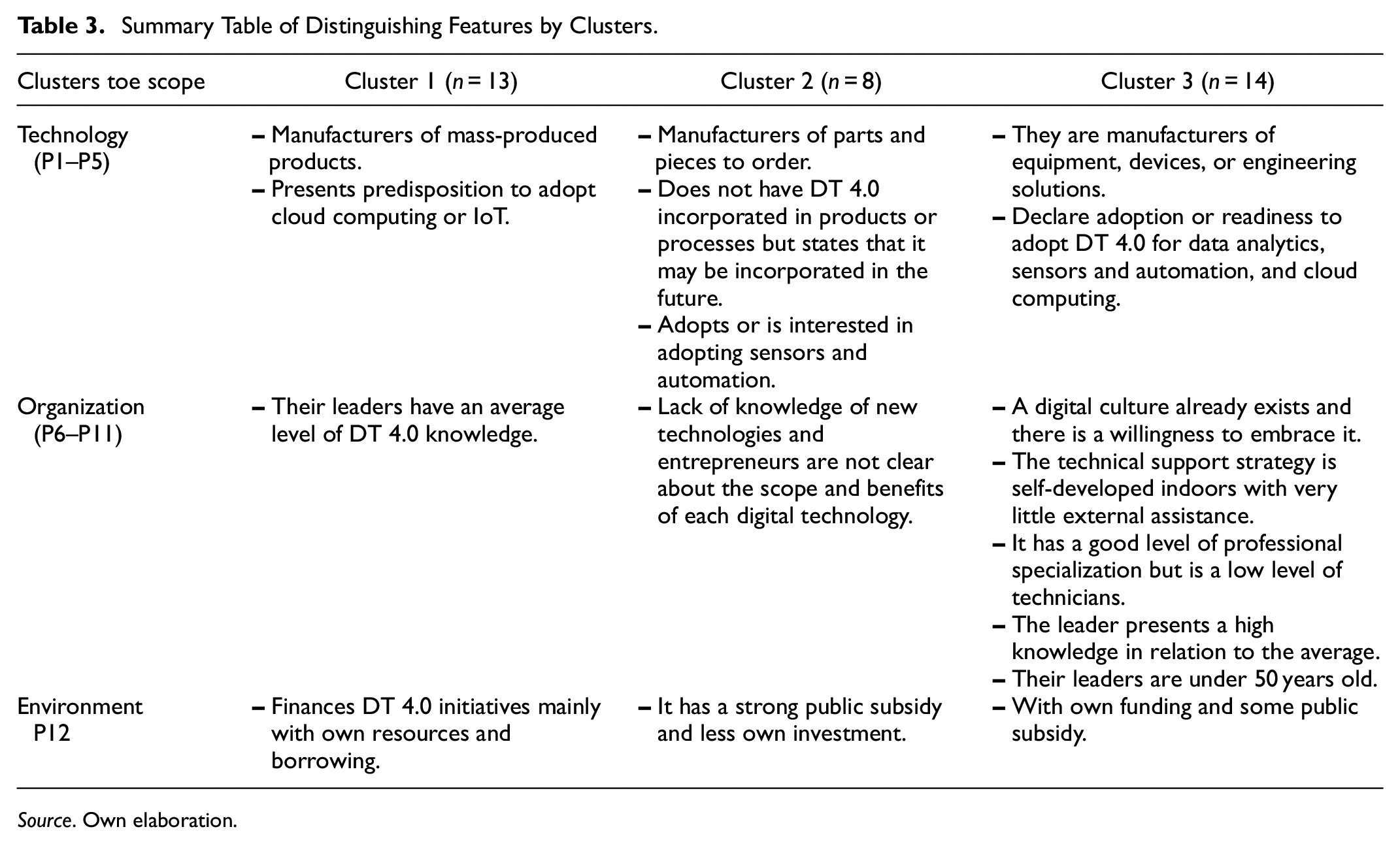
Cluster 1: Explains 13 Companies, Which Means 37% of the Total Analyzed
Technology: It is characterized by the integration of manufacturers of serial products, with a low level of sophistication. It has DT 4.0 incorporated only in the production process. Mainly states that the current and future offers must incorporate DT 4.0. It has cloud computing and IoT, but it does not have DT 4.0 in manufacturing processes such as additive manufacturing, mobile robotics, or virtual reality.
Organization: There is an interest in incorporating DTs into the supply of technologies. However, the culture is partially established and there are traits of resistance to change, there is a dependence on external suppliers and it is difficult to have qualified human capital. The leaders present a medium level of knowledge and in general, are older than 50 years old.
Environment: Works with its own financing at the working capital level and does not receive any financing from public agencies.
Characteristic features of cluster 1: Manufacturers of serial products, who are predisposed to adopt cloud computing or IoT, with a medium level of knowledge in their leaders, and finance DT 4.0 initiatives mainly with their own funding.
Cluster 2: Explains 8 Companies, Which Means 22% of the Total Analyzed
Technology: It is characterized by the integration of on-demand manufacturers. It has digital 4.0 technologies only in production processes. It is predisposed to incorporate new technologies in the future. It has sensors and some automated processes. Like all the clusters analyzed, it does not have DT 4.0 of the additive manufacturing, mobile robotics or virtual reality type linked to manufacturing processes.
Organization: It shows interest in incorporating DT 4.0 like the other clusters. And, as in the previous cluster, there is a partially installed culture with traits of resistance to change. A similar situation is found when stating that the support of DT 4.0 comes from own developments with the support of external suppliers. The company, as in the previous cluster, has difficulty having qualified human capital. The leaders have a lack of knowledge of new technologies. The leaders are older than 50 years old.
Environment: A characteristic feature of this cluster is that it works with heavy subsidies and less own investment.
Characteristic features of cluster 2: Manufacturers of parts and pieces to order, who state that they do not currently have DT 4.0 incorporated in products or processes but plan to do it in the future. They adopt or are interested in adopting sensors and automation, but are unaware of new technologies. Entrepreneurs are not clear about the scope and benefits of each digital technology. Finally, they receive strong public subsidies and use less own investment.
Cluster 3: It Explains 14 Companies, Which Means 40% of the Total Analyzed
Technology: They are manufacturers of equipment, devices, or engineering solutions. Like the other clusters, they have DT 4.0 incorporated only in production processes. They declare to have incorporated DT 4.0 and have the conviction that DT 4.0 will continue to be part of their future offerings. Unlike the previous clusters, they claim to have data analytics, sensors, some automated processes, and cloud computing.
Organization: Like all the other clusters, the leader expresses interest in incorporating DT 4.0. Unlike the rest of the clusters, it states that there is a clear digital culture and there is willingness to adopt it. It is also the only cluster where it is stated that the technical support strategy of DT 4.0 is self-developed or in-house, with very little external technical assistance. Unlike the previous clusters, it has a high level of specialization at the professional level and a low level of specialized technicians. Leaders have a high knowledge of DT 4.0 above average and above the other subgroups analyzed. Another distinctive feature is having leaders younger than 50 years old.
Environment: Finally, this subgroup is characterized by its own financing and using some public subsidy, but mainly the former (Table 3).
Summary Table of Distinguishing Features by Clusters.
Source. Own elaboration.
Characteristic features of cluster 3: They are manufacturers of equipment, devices, or engineering solutions, they declare adoption or predisposition to adopt DT 4.0 for data analysis, sensors and automation, and cloud computing, there is already a digital culture and there is a willingness to adopt it, its technical support strategy is developed in-house with very little external assistance, it has a good level of professional specialization but low in the level of technicians, the leader has a high knowledge in relation to the average, its leaders are under 50 years old and its financing is own with some public subsidy.
Identification of the efficiency of the clustering algorithm. For these purposes, the clustering algorithm was reapplied to the set of already classified companies. The three previously classified groups are contrasted with what was observed in the group of 35 companies. There are six (6) companies, equivalent to 17% of the total analyzed, that could not be accurately classified (Figure 3).

Distribution of conglomerate firms.
The non-clustered points are scattered, so there is no justification for splitting any of them. These companies are distributed across both countries, therefore, they are not due to population differences.
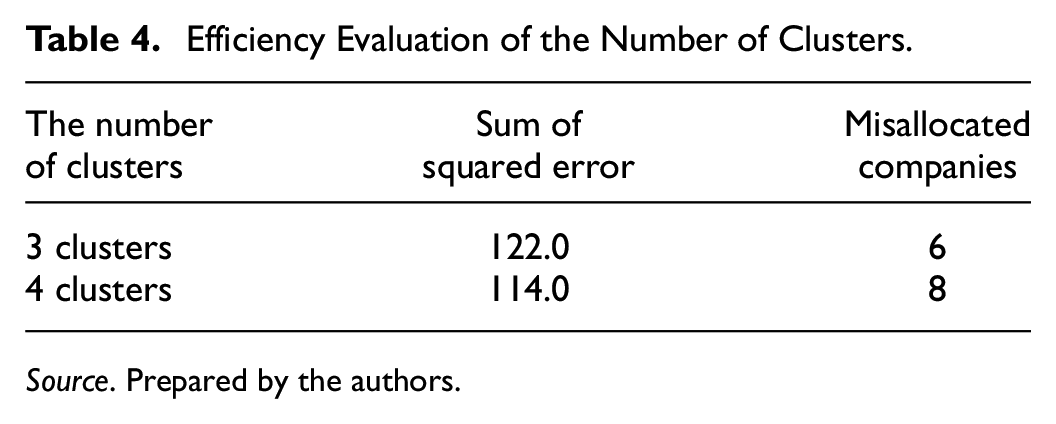
We do not have additional (control) information that would allow us to find new patterns. We also tried generating four clusters, but the number of misclassified companies did not improve (Table 4).
Efficiency Evaluation of the Number of Clusters.
Source. Prepared by the authors.
Based on the above, it was decided to maintain the three subgroups already presented.
Regarding the Location
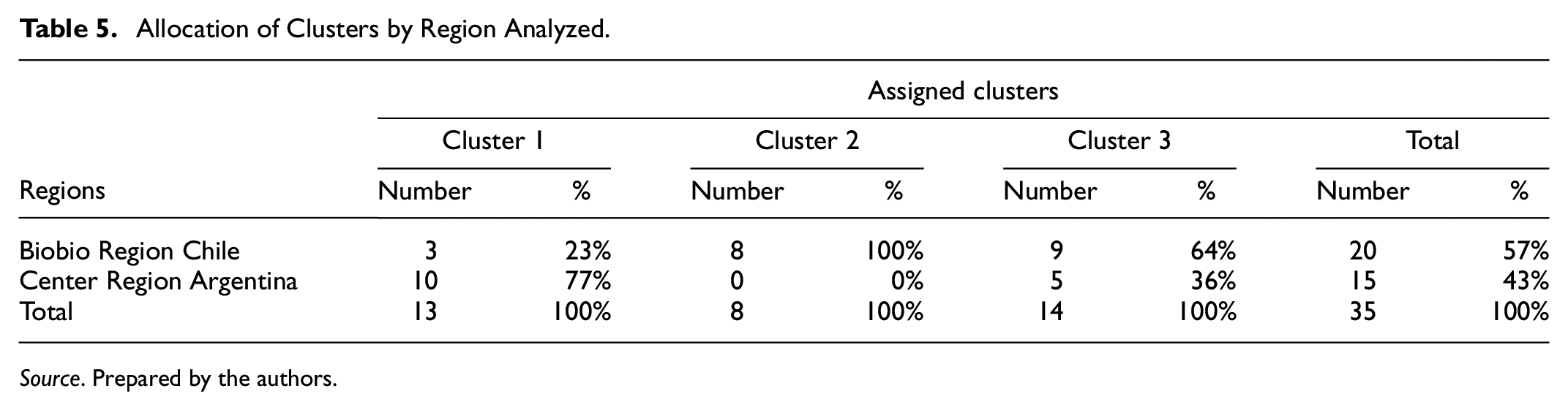
The behavior of the clusters assigned by region is analyzed to identify elements that may define a different pattern (Table 5).
Allocation of Clusters by Region Analyzed.
Source. Prepared by the authors.
Interestingly, the Central Region of Argentina does not have companies that have been grouped in cluster 2, comprised by companies oriented to the on-demand manufacturing of parts and pieces, which have not incorporated DT 4.0 in products or processes but may do so in the future. These would be companies that are inclined to sensors but do not know the potential and scope of new technologies. They can rely on public funding and, to a lesser extent, their own resources, among other aspects.
We must consider that it is an “assignment” that has a margin of error, as previously explained, which was reduced by the clustering algorithm. We tried to increase the number of groups without significant improvement, leaving a subgroup with two cases. When the assignment with four subgroups is reviewed, it is verified that the absence of Argentinean companies in cluster 2 is not rectified. Therefore, further subdivision of the groups does not add any value.
When comparing the distribution percentages, we found that the Central Region of Argentina has a higher relative participation in cluster 1 focused on manufacturing of serial products. These companies show a predisposition to adopt IoT and cloud computing, have leaders with a medium level of knowledge, and rely on their own financing or indebtedness.
Meanwhile, the Biobio Region has a higher participation in cluster 3 focused on the manufacture of equipment, devices, or engineering solutions. These companies declare an adoption or predisposition to adopt DT 4.0 for data analysis, sensors, automation, and cloud computing, with leaders under 50 years old, among other aspects.
Decision Tree to Identify the Cluster
Two decision trees are constructed. The first one does not incorporate location as an explanatory variable. Therefore, we work on a single group of companies without considering the territory where they are located. The second one incorporates the location variable (Biobio Region-Chile and Central Region-Argentina). In both cases, the J48 algorithm is used to identify the questions that best classify the previously constructed clusters 1 to 3.
Tree Without Considering the Location Variable
A 91% of instances are correctly classified. When reviewing the confusion matrix (Table 6) it is found that the diagonal of the cases is discriminant.
Confusion Matrix of Decision Tree J48 Without Location Variable.

When evaluating the tree, it is concluded that the first discriminating variable is the leader’s knowledge of DT 4.0. If the leader has a medium level of knowledge with certain gaps in understanding the benefits and opportunities of new technologies, the J48 algorithm links it to cluster 1 (13 cases). While if the leaders have a lack of knowledge of new technologies, the J48 links it to cluster 2 (nine cases).
When the level of knowledge is high with respect to the average, the algorithm is linked to the human capital attribute in DT 4.0 to improve its discriminant capacity. If the company has a good level of professional and technical specialization, the algorithm links it to cluster 3 (seven cases). Meanwhile, if the professional management is high but the technical level is low, it would also be linked to cluster 3 (five cases) (Figure 4).

Decision tree elaborated from Weka without location variable.
Tree Incorporating the Territorial Location of the Company
This tree reaches 94% of correctly predicted instances. When reviewing the confusion matrix, it is found that the diagonal of the cases is discriminant (Figure 5 and Table 7).

Decision tree from Weka with the variable location.
Confusion Matrix of the Decision Tree J48 with Location.

A first conclusion is the explanatory capacity of the variable “Organizational culture,” which when it exists and is inclined to technological adoption, the algorithm links it to cluster 3 (14 cases). When there is no innovative culture and there is strong resistance to change, the algorithm associates it with cluster 1 (four cases).
When the adoption culture is partially installed and there are traits of resistance to change, the J48 algorithm links it to the location. In the case of the Central Region of Argentina, the linkage is with cluster 1 in seven cases. In the case of the Biobio Region of Chile, the connection is with the presence of a support strategy. When the support strategy depends on external suppliers, the linkage in the Chilean case is with cluster 2.
The decision trees made it possible to reduce from 12 to 5 factors, based on their discriminating capacity: organizational culture, leadership, qualified human capital, strategic support and company location. Within this group, the knowledge of the leader and the organizational culture are fundamental for the depth of adoption of TD 4.0. The design of public policies on these factors imposes a great challenge of targeting and promotion.
Discussion
The importance of identifying whether the company corresponds to order production, in series, or are manufacturer of the equipment, devices, and technological solutions is confirmed, corroborating the findings of Maggi et al. (2020). It is suggested to deepen Pavitt’s taxonomies to identify the different speeds of adoption and diffusion of DT 4.0 (Bogliacino & Pianta, 2016). The group of companies in cluster 3 of manufacturers of equipment and engineering solutions would respond to the classification of “specialized suppliers” and will play a key role in the diffusion of innovation in the productive fabric of both territories.
Both in the cluster analysis and in the decision trees the strategic variables of organizational culture and leadership with DT 4.0 knowledge are key for the classification of the companies. This result reaffirms what has been found in the theoretical framework (Chauhan et al., 2021; Gatica, 2022; Horvath & Szabo, 2019; Müller et al., 2018) regarding that the innovative trajectories of the companies are an element that conditions the depth in the adoption levels. A company that has experience in innovative processes has a level of leadership and a more flexible organizational culture, which allows it to deepen the levels of adoption of DT 4.0. Our results reaffirm the importance of the knowledge-intensive entrepreneur as proposed by Malerba and McKelvey (2020).
The work also notes the importance of having qualified human capital in DT 4.0 corroborating what was indicated by Agostini and Filippini (2019), Cabrera-Sanchez and Villarejo-Ramos (2019), and Ciarli et al. (2021). Being able to count on professionals in the ICT area is fundamental to accessing new technologies. The above was verified very clearly in cluster 3, which is dominated by companies that manufacture equipment and engineering solutions.
Location alone did not significantly indicate a pattern of agglomeration. However, the absence of Argentine companies can be observed in cluster 2, which manufactures parts and pieces on demand. In clusters 1 and 3 we have companies from both countries. In this line, if we incorporate in the decision tree the location, this was in the second order of importance when explaining the clusters. Both regions share common characteristics: they are manufacturing regions, they have a network of SMEs linked to large companies, and they have universities and regional governments with promotion policies. According to our results, the difference between the regions is associated with the type of production (mass, made-to-order or equipment manufacturing).
It is found that the different clusters have different ways of financing adoption. In the case of cluster 1, it is focused on its own resources and indebtedness. In cluster 2 the State subsidy predominates and finally cluster 3 the financing is owned and there is a State subsidy. These responses account for the size, already identified by Ingaldi and Ulewicz (2020), Reyes et al. (2016), and Kiraz et al. (2020), where the “economies of scales” achieved by mass production allow the financing with own resources of R&D initiatives. Meanwhile, in the manufacture of parts on demand (cluster 2) the economies are smaller and the need for public resources is greater. In an intermediate situation would be the companies in cluster 3 of manufacturers of equipment, devices, or engineering solutions, and
When companies have a partially installed innovation culture and present traits of resistance to change, in the case of Chilean companies, the DT 4.0 support strategy is key, which when it is dependent on external suppliers, the algorithm links it to cluster 2 of companies that manufacture parts and parts on demand. This condition confirms that this group of Chilean companies is dominated by specialized suppliers in need of differentiated treatment from public policies. As indicated by Bogliacino and Pianta (2016), the presence of specialized suppliers will facilitate the adoption and diffusion of DT 4.0 in regional productive fabrics.
Finally, we found that the technological factors of the TOE model, including current supply, future supply, data exploitation and manufacturing processes, did not appear decisively in the results. This is explained by the current stage of the 4th Industrial Revolution we are in Schwab (2016). The significance of adoption factors will evolve as the digital transformation progresses. It is likely that in a few years the discriminating factors will have to shift from organizational to technological elements, which will account for a change in the barriers to adoption.
Conclusions
Final reflections are presented below, distinguishing between three points: public policies, the methodology used, and potential lines of research.
Public Policy
Based on the findings, it is crucial for promotion instruments key factors such as the leader’s profile, organizational culture, level of workforce qualifications, and the feasibility of acquiring such qualifications. Traditionally, these important aspects have not been adequately evaluated within promotion instruments targeting SMEs.
Some lines of action are: (i) building networks around the SME entrepreneur to open up and take advantage of new business opportunities in the context of the Fourth Industrial Revolution (Hietala et al., 2019), (ii) implement a quality standards certification scheme for small businesses (Calza et al., 2019), which enables interaction with demanding markets, (iii) generate incentives to attract and retain human capital (Ingaldi & Ulewicz, 2020; Meyer et al., 2018). This challenge clearly involved the educational system in the territory, (iv) enhancing innovation processes focused on inter-firm collaboration (Hojnik et al., 2017), and (vi) implementing collaboration models between large, technologically advanced companies and SMEs, through mentoring, dissemination of new practices, and training programs (Lepore et al., 2021).
The implementation of these lines of action requires stable public policies that operate under a decentralized scheme, taking advantage of the different local networks, prior knowledge and capacities already in place in the territories (Knox & Arshed, 2021).
Methodology
Our work is a sample study aimed at those companies that had some positive predisposition toward DT 4.0. This, which could be a limitation, turns out to be an advantage because the surveyed companies already had a previous reflection on the importance of digitization in their organization. The application of unstructured interviews and case studies is relevant to verify several of the hypotheses held by different authors regarding the causes that may affect the adoption of DT 4.0.
On the other hand, our study uses data science tools (clusters and decision trees), which do not have the demanding restrictions of traditional econometric tools, and which allow us to visualize new relationships, which escape the initial hypotheses of the researchers (Han, 2006). These types of methodologies allow us to describe heterogeneity within a productive plant very well, and at the same time help us to visualize patterns that can guide public policies in the territories.
Regarding Future Lines of Research
To study in greater depth the “pulls” between large companies and manufacturing SMEs, which, through “customer-supplier” relationships, are stimulated to adopt DT 4.0.
To identify the quality of suppliers specialized in DT 4.0 in each region. It is more difficult for manufacturing SMEs located in non-core regions to find specialized equipment, human resources and inputs, which is a barrier to adoption.
To assess the preparedness of regional innovation systems to face the challenges of the Fourth Industrial Revolution. This implies identifying the governance schemes of the network of regional actors to train specialized labor, develop innovations, narrow technological gaps, and finance new developments and business models, among other aspects.
To analyze the impact of digitalization at the level of regional manufacturing SMEs to achieve the Sustainable Development Goals (SDGs) at the level of each region. The incorporation of DT 4.0 in the production processes of SMEs will reduce the emission of pollutants and, at the same time, facilitate better management of environmental impacts (Huang et al., 2022; Luo et al., 2022).
The Fourth Industrial Revolution requires considerably less physical investment than previous ones. However, it is highly intensive in human capital, creativity, and intelligence. It is a cultural revolution. Future studies should investigate this variable so that SMEs can take advantage of this new technological wave. Therefore, organizational culture and leader type become relevant.
Footnotes
Annex 1: TOE Methodology Axes
The categories considered were the following:
The geographical location (control variable)
Annex 2: List of Companies
List of companies.

| Company | Activity | Location |
|---|---|---|
| A | Automotive. Machining | Cordoba (capital) |
| B | Food. Beer. | Córdoba (Alta Gracia) |
| C | Food. Ice cream | Cordoba (capital) |
| D | Electronics | Cordoba (capital) |
| E | Food. Dairy. | Córdoba (James Craik) |
| F | Plastic Industry | Santa Fe (Rafaela) |
| G | Machinery for the food industry | Santa Fe (Rafaela) |
| H | Machinery for waste treatment | Santa Fe (Rafaela) |
| I | Food. Refrigerator | Santa Fe (Rafaela) |
| J | Optics | Santa Fe (Rafaela) |
| K | Agricultural Machinery (seeders) | Santa Fe (Rosario) |
| L | Electrical equipment | Cordoba (capital) |
| M | Plastic Industry | Cordoba (capital) |
| N | Medical equipment | Cordoba (capital) |
| O | Metal mechanics. Agroparts | Santa Fe (Rafaela) |
| P | Engineering and design of equipment and solutions for the mining industry. | Concepción |
| Q | Design, development, and implementation for automation. | Concepción |
| R | Design and manufacture of machines and equipment for industry | Concepción |
| S | Developer and marketer of sawmill technologies. | Colonel |
| T | Design, engineering, manufacture, and assembly of machines or equipment for manufacturing. | Colonel |
| U | Manufacture metal parts with machining processes, and minor equipment. | Penco, Lirquen |
| V | Engineering design and fabrication of minor equipment and light metallic structures. | Concepción |
| W | Manufacture of metal parts, pieces, and spare parts with metal removal processes. | San Pedro de la Paz |
| X | Design and manufacture of forestry harvesting equipment. | San Pedro de la Paz |
| Y | Engineering and development of biomedical devices | Concepción |
| O | Design, engineering, and manufacturing of industrial dryers. | Talcahuano |
| Z | Design, engineering, and manufacture of equipment based on oil-hydraulic technology for the industry. | Concepción |
| AA | Manufacture of spare parts and mechanical assemblies with CNC technology. | Concepción |
| AB | Electronics and lighting manufacturing (IoT) | Concepción |
| AC | Knot Free Wood Molding Products | Colonel |
| AD | Manufacture of minor equipment and knives for the wire industry | Concepción |
| AE | Manufacture of fishing and salmon farming vessels | Colonel |
| AF | Producer of processed wood for export | Colonel |
| AG | Design, fabrication, and assembly of equipment and structures. | Colonel |
| AH | Engineering and manufacture of equipment for the manufacturing industry | Talcahuano |
Source. Own elaboration based on Maggi et al. (2020) and Motta et al. (2019).
Acknowledgements
The authors would like to thank the various Argentine and Chilean businessmen for their responses in the framework of the project led by ECLAC.
Authors Contribution
FGN, MRM, RA, HR and VF Conceptualization; FGM and VF information gathering; FGN, MRM, RA, HR and VF Information Analysis; Drafting of the FGN, MRM, and HR report.
Declaration of Conflicting Interests
The author(s) declared no potential conflicts of interest with respect to the research, authorship, and/or publication of this article.
Funding
The author(s) disclosed receipt of the following financial support for the research, authorship, and/or publication of this article: The author(s) receive the following financial support for the research, authorship and/or publication of this article: (i) FIC Project “Sustainable digital transformation for manufacturing SMEs in the Biobío region.” Innovation Fund for Regional Competitiveness, FIC-R Biobio 2021. Execution 2022 to 2024. FIC I+D 22-79; (ii) Internal Fund of the University of Bío-Bío (Research Directorate), (iii) Internal funds of the National University of Rafaela and (iv). Funds for the Doctorate in Economics and Information Management (DEGI). Faculty of Business. University of Bío-Bío.

Data Availability Statement
Data sharing not applicable to this article as no datasets were generated or analyzed during the current study.