




Abstract
Performing arts education has been significantly affected by the COVID-19 pandemic crisis around the world since early 2020. Educators had to adapt the classes with remote learning when face-to-face instruction had been suspended during the pandemic. Although frustrations and confusion continued to abound with the implementation of new pedagogies, online teaching, and learning spurred new practices, innovative ideas, and breakthroughs. Some performing arts educators took this opportunity to explore new skills and strategies and provided performing arts students with more impactful learning experiences. Presently, with the COVID-19 pandemic gradually showing a sign of easing, many Hong Kong schools have returned to in-person instruction. Meanwhile, the impactful learning feedback from students triggered calls for redesigning the pedagogy of performing arts education. This study placed the impact of COVID-19 on performing arts education into context and drilled down into the delivery of performing arts education in the post-pandemic era. This study reviewed teaching and learning experiences of performing arts education, with the following three research questions addressed: (a) What is the correlation between performing arts students’ academic traits and their proficiency in utilizing technology during the COVID-19 pandemic? (b) What are the influential factors impacting the hybrid learning experience and outcomes of performing arts students during the COVID-19 pandemic? (c) What are the anticipated expectations of performing arts students regarding future models of arts education? Furthermore, practical solutions and insights for performing arts educational delivery in the post-pandemic era are provided in this study.
Plain Language Summary
This study reviewed teaching and learning experiences of performing arts education, with the following three research questions addressed: 1) What is the correlation between performing arts students’ academic traits and their proficiency in utilizing technology during the COVID-19 pandemic? 2) What are the influential factors impacting the hybrid learning experience and outcomes of performing arts students during the COVID-19 pandemic? 3) What are the anticipated expectations of performing arts students regarding future models of arts education? Furthermore, practical solutions and insights for performing arts educational delivery in the post-pandemic era are provided in this study.
Keywords
Background
In 2021, an influential study by Q. Li et al. (2021) shed light on the previously under-recognized field of hybrid learning pedagogy in performing arts education, which emerged as a response to the challenges posed by the COVID-19 pandemic. This study has garnered significant attention, evident from its substantial citations and widespread readership among performing arts practitioners, educators, and researchers. The study’s impact underscores the growing importance and relevance of investigating this subject to advance the field. It has made a noteworthy contribution by enhancing our understanding of the challenges and opportunities associated with online learning in performing arts education.
However, the original study had limitations due to its relatively small sample size, which restricted its ability to capture the complete range of experiences and perspectives among teachers and students. In order to address this limitation, the present study undertakes a larger-scale investigation by engaging performing arts students from various disciplines. By doing so, this study aims to provide a more comprehensive understanding of the impact of online learning in performing arts, with the potential to inform and enhance online education practices, foster the development of hybrid pedagogy, and promote equity and access in performing arts education. Furthermore, the insights gained from this study could prove valuable for other practice-based subjects, such as Health and Physical Education or Culinary Arts Education.
Introduction
The COVID-19 pandemic has significantly disrupted performing arts education, prompting a departure from the conventional teaching approaches prevalent prior to its onset. According to Q. Li et al. (2021), the prevailing methods employed by most performing arts educators were the “Sage on the Stage” and “Learn from the Masters” approaches. These methods were primarily based on face-to-face teaching and learning activities, with online models serving as supplementary components (Simamora, 2020). However, in response to the lockdown and social distancing measures necessitated by the pandemic, tertiary education institutions worldwide were compelled to transition to online teaching.
In traditional face-to-face instruction in performing arts subjects, there is a strong emphasis on experiential learning, where teachers demonstrate while students observe and engage in repeated practice to achieve mastery. This process of physical training, which demands substantial time and effort, is an implicit practice in world-class conservatories and dance academies (Ng et al., 2022). Therefore, remote teaching during the pandemic, lacking access to necessary equipment, spaces, performers, and peers, presented a highly unfavorable situation for both performing arts teachers and students.
During the pandemic, numerous tertiary-level performing arts institutions, including the Hong Kong Academy for Performing Arts (HKAPA), closed their campuses in an effort to curb the spread of COVID-19 globally. HKAPA, established by the Hong Kong Academy for Performing Arts Ordinance in 1984, is a leading tertiary institution for the performing arts in Asia. In the 2022 QS World University Rankings, the Academy is ranked the 1st in Asia and 10th in the world in the Performing Arts category. It provides professional undergraduate education and practice-based postgraduate studies. The Academy offers academic programmes from diploma/foundation to master’s degree level in six faculties: School of Chinese Opera (CO); School of Dance (DA); School of Drama (DR); School of Film and Television (FTV); School of Music (MU); School of Theatre and Entertainment Arts (TEA). At present, HKAPA has approximately 1,000 students and 120 teaching staff.
HKAPA, for instance, suspended in-person classes and studio-based activities from January 2020 to August 2020, marking the first instance in its history when hybrid learning pedagogy was adopted in performing arts education (Li et al., 2021). As depicted in Figure 1, this pedagogical approach integratedQ. traditional lectures, regular webinars, innovative performance projects, asynchronous e-learning, and synchronous online learning facilitated by various technologies such as Microsoft Teams, Zoom, Cisco Webex, Google Classroom, Panopto, and others.

Framework of the hybrid learning in performance arts education (Q. Li et al., 2021).
To ensure and enhance the quality of student’s learning experiences, this study conducted an anonymous quantitative survey among all students in October 2021, to validate the hybrid learning pedagogy. A total of 408 students, 251 females and 157 males, between the ages of 17 and 44, participated in the survey. These students come from six Schools: School of Chinese Opera, School of Dance, School of Music, School of Drama, School of Film and Television, and School of Theatre and Entertainment Arts. First, the survey results show that students majoring in different programmes hold different attitude toward the hybrid learning pedagogy. The following three research questions are addressed in this study:
(1) What is the correlation between performing arts students’ academic traits and their proficiency in utilizing technology during the COVID-19 pandemic?
(2) What are the influential factors impacting the hybrid learning experience and outcomes of performing arts students during the COVID-19 pandemic?
(3) What are the anticipated expectations of performing arts students regarding future models of arts education?
As an empirical investigation, this study brings forth numerous considerations and challenges confronted by institutions implementing online classes, along with potential solutions to facilitate a positive learning experience in performing arts education. While specifically tailored for the context of HKAPA, the protocols and strategies identified in this study hold relevance and applicability to performing arts academies worldwide as they navigate the post-pandemic era.
Literature Review
Research has shown that online learning in performing arts education can be synchronous or asynchronous (Turnbull et al., 2021). Information technology tools and other infrastructure were used to support e-learning in higher education during the COVID-19 pandemic. Through a range of online platforms (Zoom, Google Meet, Canvas, etc.) teachers and students could interact in the same time frame and via virtual space. That means although students learned from a distance, they were able to attend a class session virtually, at the same time as their instructor and classmates (Guo, 2020). Educational institutions in Malaysia implemented emergency remote teaching following the outbreak of COVID-19 (Saearani, 2022). Using the Google Meet and video streaming, teachers showed details of physical movements. The class resembled a regular on-campus class that occurred weekly, which its time commitment could not be rescheduled (Saearani, 2022). Provided that the students were well prepared, and the teachers were dedicated, each class session could be productive. Muir stated online synchronous learning did not always just take the form of a live video lecture or an instructor-led discussion (Scheiderer, 2022). Instead, in the School of Film and Television at the Ohio State University, some instructors assigned case studies to students. They had to discuss with peers and negotiated with each other to find an answer first as a small group. Then, each small group brought their answer to the big class and repeated the first step until there is a unified answer. This exercise actively engaged learners and nurture their communication and critical thinking skills.
Although synchronous video teaching appeared to offer more immediate replicability of existing face-to-face synchronous teaching than asynchronous methods, research showed that asynchronous one is well accepted by students as it allows for refining activities (Pratama & Surahman, 2020). Asynchronous classes used technology as a social medium to provide educators with opportunities to conduct time-separated communication. It allowed students to take more ownership in learning because they can set their own schedule (Lowenthal et al., 2020). For instance, in dance classes, asynchronous approach involved both teacher and student exchanging multimedia resources via online platforms. Teachers provided instructions through social media and learning Management Systems (LMS), such as Moodle or Canvas. Students completed online quizzes, submitted assignments, and even uploaded a recorded dance project. All these works were later processed either by the teacher or peers in the same class. Individual students received feedback and suggestions from the teacher and classmates. Meanwhile, the teacher and students could work on the assignment together during a future face-to-face session via a virtual platform and students themselves can work on it during self-practice time (Tariao & Yang, 2021). As a result, asynchronous classes provided flexibility to students and enhance their communications with teachers and peers.
However, transitioning the pedagogical approach from one media to another was not always easy. The abrupt transition to online learning had raised several issues, and it is particularly difficult in performing arts education due to its inherited tradition. Hybrid learning environments necessitate the adaptation of pedagogical approaches to suit both online and in-person components. Studies have explored the effective integration of synchronous and asynchronous activities, peer collaboration, and personalized feedback to enhance students’ engagement and learning outcomes (Cameron et al., 2021). Although hybrid learning was implemented during the pandemic period, some instructors had struggled with challenges such as the lack of adequate time and opportunities to design and test new online learning models (Joseph & Lennox, 2021; Z. Li, 2020). The availability and accessibility of resources and facilities, such as rehearsal spaces, specialized equipment, and performance venues, significantly impact the quality of hybrid learning experiences for performing arts students (Moore, 2020). Inequities in access can hinder students’ ability to fully engage in practical components of their education. The learning materials were delivered to students via internet, which increased their dependency on smartphones and other new technologies. This posed great challenges to traditional art forms such as Chinese Opera or Theatre Arts. Educators in those fields rely heavily on face-to-face, practice-based teaching, rather than using technologies. Unequal internet access was another important issue to concern since the stability of the connection had a huge impact on students’ learning experience (Asio et al., 2021). Some students could not afford to pay for adequate bandwidth that allowed for fast data processing (Q. Li et al., 2021). Learning atmosphere and online resources were also important factors when teaching in a virtual space (Wright & Kanellopoulos, 2010). According to Dawn, teachers from music-associated departments felt disappointed as their students were unable to play authentic instruments from home. According to a study in Australia, half of the African instruments classes discontinued their teaching and learning activities in 2020 as most of the students did not have authentic African drums in their homes and the actual hands-on experience—playing the drum became impossible (Joseph & Lennox, 2021).
In contrast, increasing amount of research began to reveal the potential benefits that would impact performing arts education in a long term (Joseph & Lennox, 2021; Zhou et al., 2020). One research pointed out that the practice of online teaching activities offered educators opportunities to re-image and transformed their teaching in their respective settings (Joseph & Lennox, 2021). Contemporary research had discussed how practical implementation of online education affected society and education (Zhou et al., 2020). Online restrictions motivated teachers and students to think creatively and hence had optimized learning outcomes. However, few studies had conducted comparative research between different performing arts subjects and programmes. This small-scale both qualitative and quantitative study will fill this research gap by exploring the attitudes and preferences of students at different schools at HKAPA for Performing Arts toward the hybrid learning pedagogy.
Research Methodology
The descriptive survey research and multiple statistical analysis were employed. Quantitative data was collected to understand students’ experiences, including the attitudes and preferences toward the hybrid learning pedagogy. This study also included open-ended question to supplement students’ recommendations for the hybrid teaching mode. In this study, a purposive sampling approach was employed, specifically targeting students who are majoring in performing arts to serve as our sample. This study utilized the typical and extreme case sampling method to illustrate the hybrid learning experience of students majoring in performing arts disciplines. The aim was to explore whether there were any exceptional cases across various departments and different student backgrounds.
Specifically, this study centered on students who have experienced hybrid learning following the outbreak of COVID-19 pandemic. Due to the diverse definitions and geographic coverage of performing arts students, it can be challenging to provide an exact figure for their total population. To gain a more profound insight into the effects of online learning in performing arts and its potential to enhance online education and hybrid pedagogy in performing arts education, this study focused on the Hong Kong Academy for Performing Arts (HKAPA) as a case site and aimed to obtain a comprehensive sample of students that encompasses a range of performing arts disciplines as comprehensively as possible. This study intended to understand how different groups respond to the specific online learning activity or experience.
In total, 408 data samples were collected from a student survey conducted in the spring term of 2021, the first time when HKAPA’s performing arts education adopted a hybrid learning pedagogy amid COVID-19 pandemic. Multiple statistical analysis methods were utilized to examine the variations in and explanations for the survey data. To compare the variations between different groups, we employed the one-way ANOVA analysis (Weiss, 2006). It involved comparing means across multiple groups and calculating an F ratio, which represented the variance between the groups divided by the variance within the groups. Pearson correlation (Sedgwick, 2012) and Spearman correlation (Xiao et al., 2016) were used to analyze the relationship between continuous variables and determine the significance of these relationships among different participants. Chi-square test (Shih & Fay, 2017) was utilized to evaluate the distribution of categorical data and test the association between variables. Tukey’s HSD Test (Stuart-Hamilton, 1995) was applied to compare multiple performing arts student groups to determine any significant differences between them. The utilization of these statistical methods in performing arts research contributed to a number of advantages. These methods allowed researchers to conduct precise analysis and interpretation of data, leading to more robust, provocative, and accurate findings. By leveraging these techniques, researchers had gained a deeper understanding into the complexities of the performing arts and provide evidence-based recommendations for practice.
Research Instrument
An anonymous survey was conducted to receive feedback on the teaching and learning quality. The survey used a web-based comprehensive questionnaire composed of four sections: demographic information; the measurement of motivation by the Likert scale; multiple choice questions on the positive and negative aspects of hybrid learning; and two independent questions on students’ opinions regarding hybrid learning pedagogy. The Likert scales in this study were measured using a five-point scale, ranging from “strongly disagree” to “strongly agree.” Each response was assigned a numerical value, with “strongly disagree” being assigned a value of 1 and “strongly agree” being assigned a value of 5.
The survey was designed to investigate the virtual learning experiences among students. In this survey, there are three types of questions covering various topics. The first category (eight questions for students) covered demographic questions such as gender, backgrounds, and experiences, etc. The second category (10 questions for students) requested students to reveal their perspectives on face-to-face and virtual learning environments. The third category (seven questions for students) were used to understand their preference on online activity types and platforms such as Zoom or MS Teams. Supplemental Appendix A shows details about the survey questionnaire.
The socio-demographic variables in this survey included gender, age, schools/departments, education status, and nationality. Among these factors, the followings were taken as nominal variables: gender (1 = male, 2 = female), education (1 = dip/cert, 2 = bachelor year 1, 3 = bachelor year 2, 4 = bachelor year 3, 5 = bachelor year 4, 6 = master’s programme), and nationality (1 = China, 2 = Hong Kong, 3 = Macau, 4 = Taiwan, 5 = Others). The factor age was represented as ordinal variables.
The dependent variable in this study was students’ views toward and preferences for hybrid teaching and learning approaches and activities. Researchers employed a single-choice question to assess students’ subjective ratings of their online learning abilities: Please rate how well you think you are able to use technology to handle your learning, and score ranging from 1 (not able at all) to 10 (really good at it) respectively. Higher scores indicated a better use of technology to manage online learning. Then, six indicators were employed to assess the effectiveness of hybrid teaching activities: (1) very ineffective, (2) ineffective, (3) uncertain, (4) effective, (5) very effective, and (6) N/A. Online teaching approaches were measured by the following indices: (a) uploading course materials; (b) links to online resources; (c) individual learning activities; (d) collaborative group learning activities; (e) live classes or tutorial via Zoom or other tools; (f) synchronous discussion; (g) asynchronous discussion session; (h) recorded lectures or classes. This measuring activity demonstrated a high degree of reliability (Cronbach’s alpha was .907).
Factors influencing the hybrid learning experience were measured by utilizing 13 dimensions: (a) the ability to use digital technology; (b) interest in the course content; (c) stress level; (d) level of motivation; (e) time to complete course work; (f) internet connectivity; (g) space to complete course work; (h) availability of learning devices; (i) relationships with other students; (j) relationships with teachers; (k) opportunity to interact with other students; (l) opportunity to interact with teachers; (m) support from school/academy. The responses are organized into one of five categories: (1) extremely irrelevant; (2) irrelevant; (3) uncertain; (4) relevant; (5) extremely relevant. The standardized Cronbach’s alpha for these 13 components is .908, showing high level of internal consistency.
At the end of the survey, two independent questions were used to understand students’ preferences regarding how future classes should be arranged: (a) what is your preference for theory-based classes in the future?; (b) what is your preference for practiced-based classes in the future? Three choices were presented to the respondents: (a) fully online; (b) hybrid (partially online and partially face-to-face); (c) offline or in-person.
Data Collection
There were 408 participants in this study, coming from six schools, namely, the School of Music (27.5%), the School of Theatre and Entertainment Arts (22.8%), the School of Dance (21.1%), the School of Film and Television (19.9%), the School of Drama (6.9%), and the School of Chinese Opera (2.0%). The participants include 251 females and 157 males between the ages of 17 and 44, with 96.3% of students under the age of 30 and 80.1% being undergraduates in their first and second years. Since this survey was carried out at HKAPA, the majority of respondents were Hong Kong local citizens (83.1%), followed by 12.3% mainland Chinese, 1.5% Macanese, 1.2% Taiwanese, and 2% from other nations.
Main Findings
According to descriptive statistical analysis using SPSS 28.0, students were highly optimistic in the subjective assessment of their capacity and capability to handle hybrid learning. Figure 2 illustrates the frequency distribution of students’ self-perceived ability to use technology for their learning, measured on a scale of 1 (not able at all) to 10 (perfectly good at it). The findings reveal that out of the 408 individuals surveyed, 393 of them selected a score higher than 5 on the scale, indicating their perceived capability to effectively participate in remote learning during the COVID-19 pandemic. Only four respondents, on the other hand, reported that they were unable to complete their studies with technology. It was later discovered that two of those four students lived in a remote island in Philippine, where the access to internet was almost impossible.
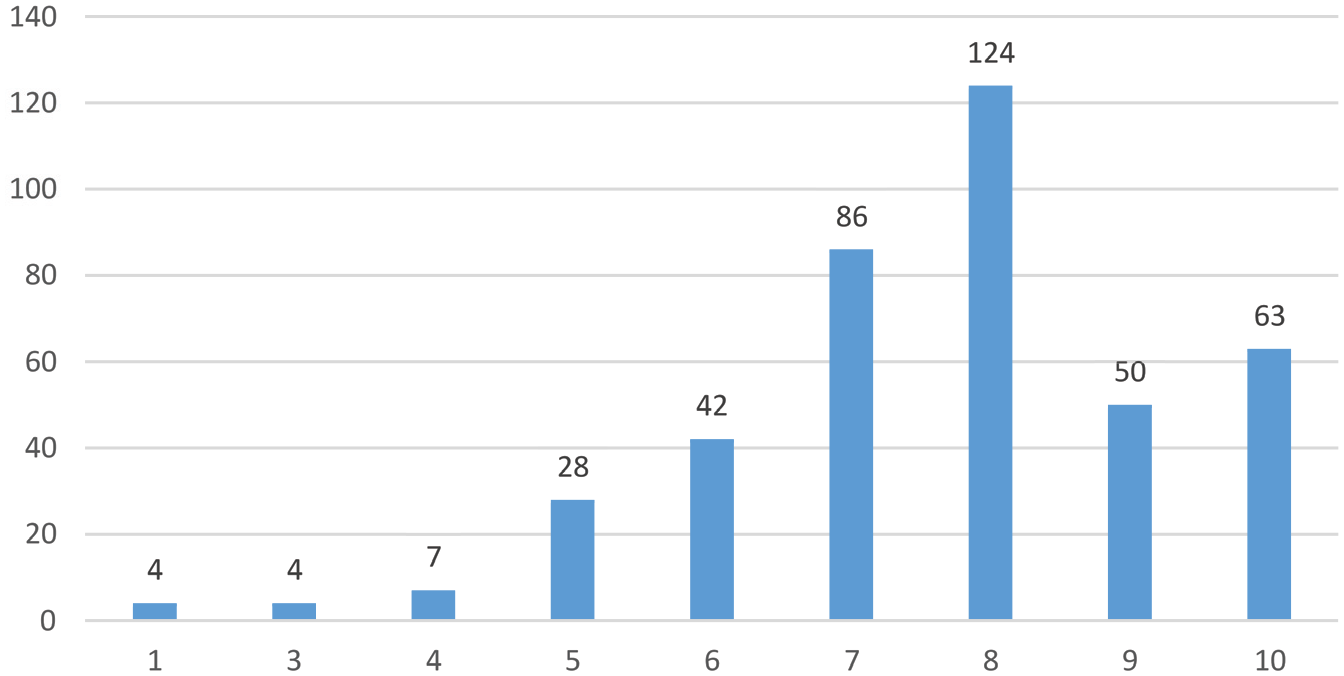
Frequency of students’ ability in using technology to handle their learning (1 = not able at all; 10 = really good at it).
In the realm of performing arts education, students had expressed a range of viewpoints toward the evaluation of teaching materials and learning activities provided by their instructors in online courses. Additionally, these students had identified various factors that have impacted their learning experience in the pandemic times of 2021. In the following subsections, this study further investigated the association between students’ opinions for hybrid teaching and learning activities. It tracked their personal traits and learning preferences during the pandemic.
Students’ Competency of Using Technology in Their Studies
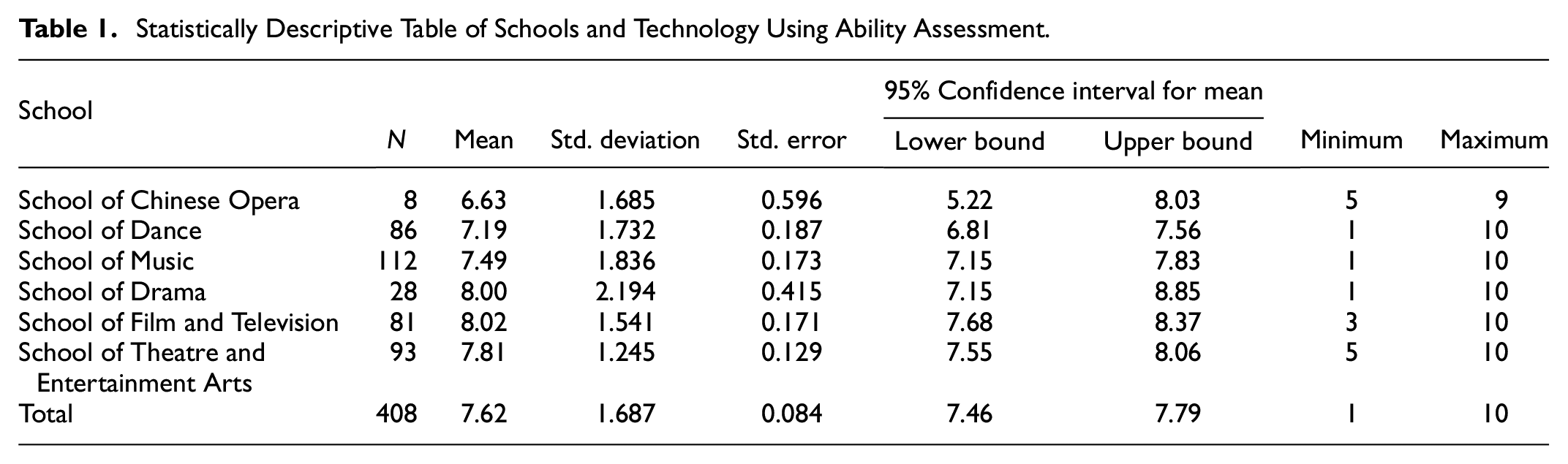
A one-way ANOVA was employed to investigate the differences in mean scores of students’ perceptions of hybrid learning process. As stated in Table 2, the results of the one-way ANOVA showed that there were significant differences in the mean self-scores between at least two groups of students from different schools/departments (F[5, 402] = [3.365], p = .005). As illustrated in Table 1, a significant discrepancy is evident in the mean scores of students from the School of Chinese Opera (6.63) and the School of Film and Television (8.02). This represents the most significant difference observed in the data set. According to Tukey’s HSD Test for multiple comparison (Stuart-Hamilton, 1995), the mean value of students’ capacity to use technology was considerably different between the School of Dance and the School of Film and Television (p = .015, 95% CI [−1.58, −0.10]), whereas no statistically significant difference was found among students from other schools (see Table 3).
Statistically Descriptive Table of Schools and Technology Using Ability Assessment.
ANOVA Analysis of Student’s Department and Capacity to Use Technology.

Tukey HSD Multiple Comparison Test Result.
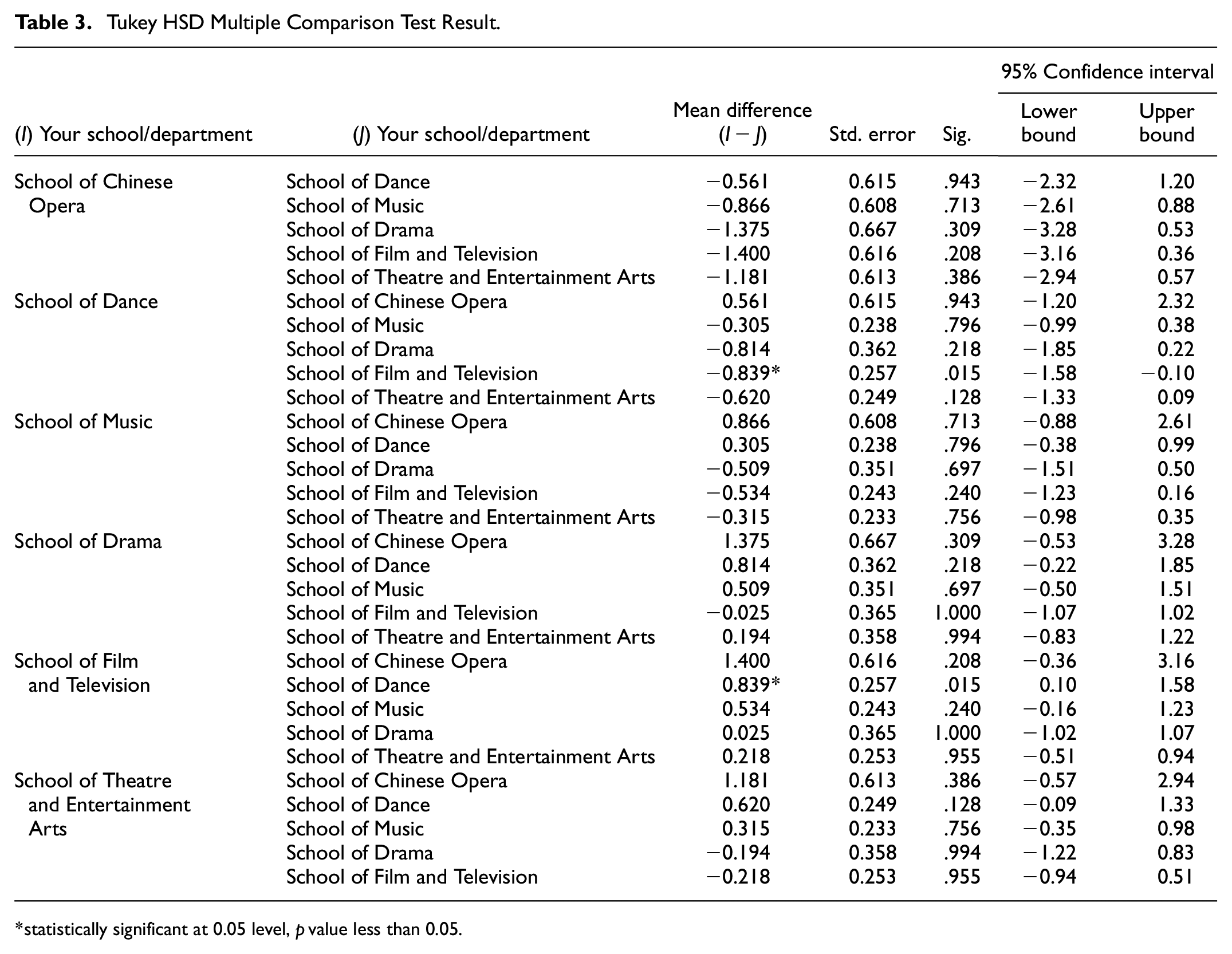
statistically significant at 0.05 level, p value less than 0.05.
The Pearson correlation coefficient showed that age has positively correlation with the capability of using technology to handle online learning (r = .140, p = .005). Moreover, the one-way ANOVA analysis (see Tables 4 and 5) revealed a significant difference between bachelor year 1 (M = 7.24, SD = 1.709) and year 2 students (M = 7.99, SD = 1.529) in terms of their capability to manage online learning using technologies (F[5, 402] = 3.690, p = .003), and the difference was analyzed by Tukey’s HSD. As shown in Table 6, new students tend to be less confident in using technology to manage online learning. Based on the Spearman correlation analysis, the ability to utilize digital technology for learning (r = .104, p = .035) and availability of technologies/devices for learning (r = .121, p = .015) in the selection of aspects that affected students’ learning experience was also correlated with age. Researchers identified students’ value on the impact of the capacity for learning (F[5, 402] = 2.697, p = .021) and availability of learning devices (F[5, 402] = 2.426, p = .035) on their hybrid learning experience. The results were analyzed by using the ANOVA test to examine if they are related to the year of study. Multiple comparisons suggested that second-year undergraduates evaluated these two categories much higher than first-year students, indicating that they believe these two factors had a greater impact on their hybrid learning experience. However, this considerable variation persists only between first- and second-year undergraduate students, not across Dip/Cert, Bachelor, and Master programmes. It highlights the needs for improving the entry-level degree students’ digital literacy and their awareness of available resources. The university and government have sponsorship programmes for students in need of learning tools. Yet rarely anyone know the existence of such programmes.
Statistically Descriptive Table of School Years and Technology Using Ability Assessment.

ANOVA Analysis of School Year and Student Capacity to Use Technology.

Tukey HSD Multiple Comparison Test Result.

statistically significant at 0.05 level, p value less than 0.05.
Factors Affecting Student’s Hybrid Learning Experience and Outcomes
In this survey, students were asked to assess the effectiveness of 8 online learning activities and 13 related activities that might impact their hybrid learning experience and outcomes. By comparing these activities, we were able to examine effective teaching and learning strategies that could be applied to enhance learning outcomes in the future. The chi-square test was used to examine the relationship between students’ characteristics and their opinions of online learning activities. The chi-square test evaluated the significance of the test statistic, which is calculated by comparing the observed frequencies in the contingency table to the expected frequencies under the null hypothesis. Specifically, the analysis aimed to determine whether there were significant differences in students’ perceptions of online learning activities based on their academic major, program of study, grade level, and online learning platform. If the chi-square statistic is found to be sufficiently large, and the associated p-value is less than the predetermined significance level (p < .05), then we reject the null hypothesis and conclude that there is a significant association between the selected variables.
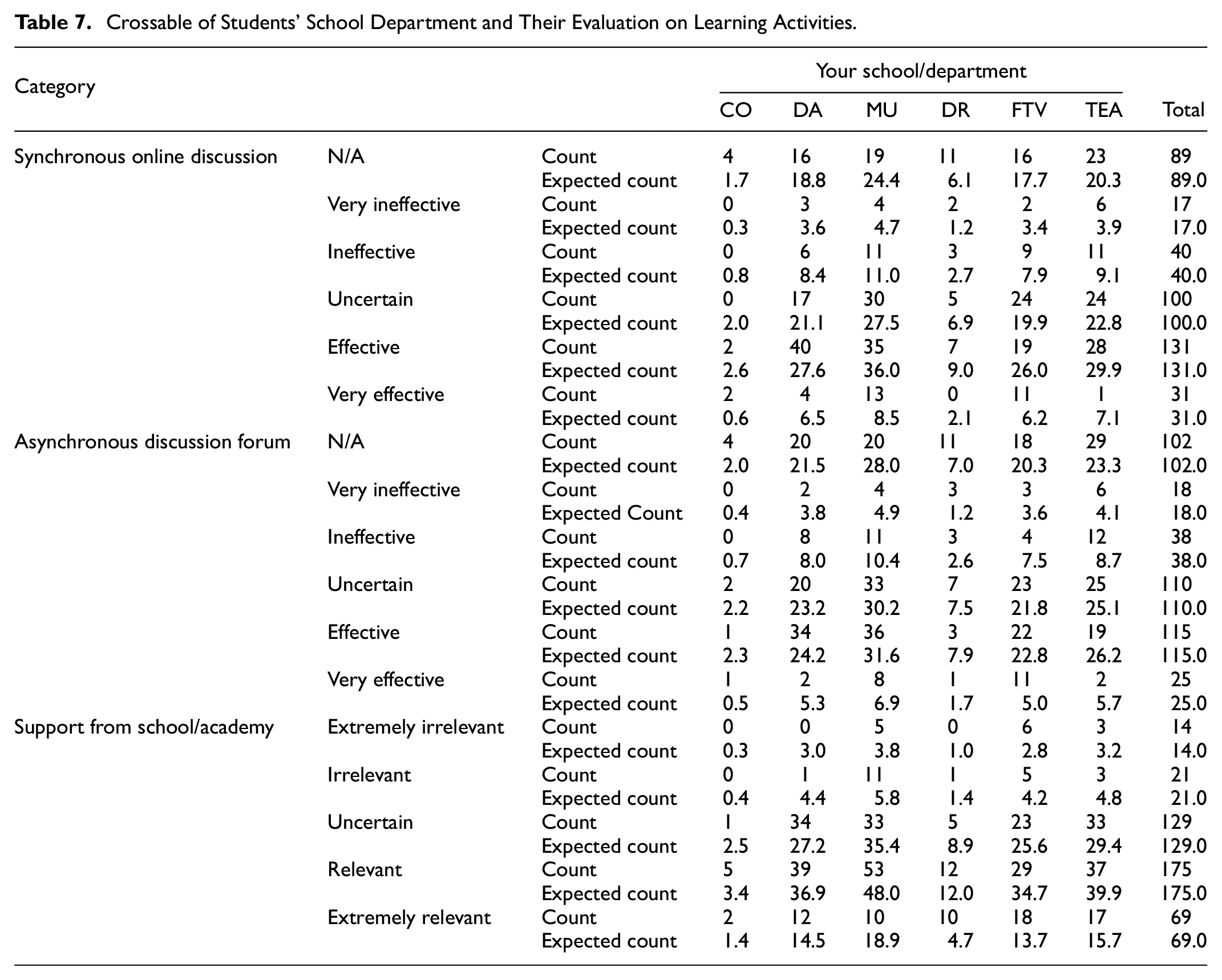
The results of the chi-square test in Table 7 indicated that there were statistically significant differences in students’ perceptions of and performance on the online learning activities based on their majors. Students major in different schools had quite a different view on synchronous online discussion (χ2 [25] = 44.116, p = .011), asynchronous online forums (χ2 [25] = 40.904, p = .023), and school/academy support (χ2 [20] = 37.032, p = .012), and the difference is statistically significant. Students from the School of Music were more likely to rate higher than students from other schools in synchronous online discussions (F[5, 402] = 2.978, p = .012), asynchronous discussion forums (F[5, 402] = 4.027, p = .001), and assistance from the School or Academy (F[5, 402] = 2.853, p = .015). For instance, compared to students in the School of Drama, those in the School of Music showed a much higher demand for the three activities mentioned in Table 3. In other words, Music students had shown much higher approval rate than students from other schools in terms of their preference toward hybrid pedagogy.
Crossable of Students’ School Department and Their Evaluation on Learning Activities.
A more detailed analysis of the results in subscales indicates that first-year students needed to put in more effort during hybrid learning than senior students at the Academy. In contrast to freshmen, the chi-square test of independence revealed that senior undergraduates consider the following activities effective in a hybrid learning context: submitting course materials (χ2 [25] = 41.130, p = .022), virtual collaborative group learning (χ2 [25] = 50.036, p = .002), live online classes or tutorials (χ2 [25] = 48.134, p = .004), synchronous online discussion (χ2 [25] = 47.688, p = .004), asynchronous online activities (χ2 [25] = 42.776, p = .015), and recorded lectures or classes (χ2 [25] = 45.560, p = .007). In addition to the emphasis on technology-related abilities, asynchronous and synchronous learning activities, senior students evaluated the relevance of peer interactions opportunity (χ2 [20] = 40.302, p = .005), student-teacher engagement (χ2 [20] = 47.617, p < .001), and support from school/academy (χ2 [20] = 53.487, p < .001) higher than first-year undergraduates. Students in their second, third, and fourth years of college were more likely to believe that the above-described learning activities and resource provision will enhance their hybrid learning experience. This association, however, did not exist between undergraduate and master programme students. Researchers suggest that there was a need for improving such skills in digital literacy and support seeking among first year university students. Obtaining such skills will greatly benefit their ability to utilize various technologies, find needed support, grasp eLearning strategies, boost peer interactions, and enhance learning outcomes.
Students’ Expectations of Future Education Models
A significant interaction was identified using an independent chi-square test to examine the frequency of students’ preference for theory or lecture-based classes in the future across departments (χ2 [10] = 24.745, p = .006). While students in the School of Theatre and Entertainment Arts favor a hybrid teaching style for future theory classes, those in the School of Music, Drama and Chinese Opera prefer online theory-based lessons over other forms (see Figure 3).

Frequency of students’ preference for theory-based course teaching formats in different departments/schools.
Additionally, there was a strong association between the students’ programme (χ2 [4] = 12.794, p = .012) and preferred future delivery method for theory classes. Students in the BFA/BMus programme (43.3%) prefer future theory classes to be delivered fully online compared to students in the MFA/MMus programme (18.4%). It seems that postgraduate students preferred more face-to-face interactions with professors. When theories were discussed in person, it would be easier for them to understand. Or it could be the peer discussions that help students understand various topics better. Language might play a role as the instruction of teaching is English, but most students speak Mandarin or Cantonese as their first language. There were also some MFA/MMus programme students expect that theoretical classes in the future should be offered in a hybrid mode (50%). Significant relationships between students’ grade level and preferred arrangement for upcoming theory sessions were also found (χ2 [10] = 38.386, p < .001). First-year performance arts students preferred a hybrid arrangement of theory-based courses (42%), with nearly equal preferences for fully online (30%) and purely face-to-face (28%) pedagogy. On the other hand, second-year performance arts students anticipated taking theory classes in their future studies entirely online (53.2%).
The association between students’ grade and preferences for future delivery methods (χ2 [10] = 26.340, p = .003) indicated the inverse of theory class preference. In comparison to students in other years, first- and second-year undergraduates and those enrolled in the Master performance arts programmes tended to expect that their future practical lessons will be conducted completely in-person (see Figure 4). The majority of first-year performance arts students had significantly high expectations for face-to-face practical classes in the future (75.2%). It was clear to researchers that while theory or lecture-based classes could be delivered either through hybrid or online model, students of all levels and programmes, particularly those in junior years still overwhelmingly preferred practical classes to be held in person.

Frequency of students’ preference for practiced-based course teaching formats in different years.
Independent chi-square tests had also revealed a significant relationship between students’ preference for future practical class teaching modes and the usage of various online learning tools (χ2 [14] = 28.546, p = .012). Regardless of the online learning platform adopted, the majority of the students selected the face-to-face practical class as the most favorable means for their future studies (see Figure 5). Students who utilized Zoom as their only online learning tool preferred the online teaching arrangement (23.4%) than hybrid methods (17%). Regardless of various online tools that students utilized for online learning, none of them want to be taught purely online for their future practiced-based lectures.

Frequency of students’ preference for practiced-based course teaching formats in different learning platforms.
Conclusion
The study findings (both qualitative and quantitative), presented several crucial implications for performing arts education. Firstly, the findings revealed that first-year students were less prepared for online learning compared to students in senior years. A higher level of self-discipline and motivation was necessary, particularly in the early stage as they adapt to the new learning environment. The COVID-19 pandemic highlighted the need for higher education institutes to equip students with digital competencies and information and communications technology or ICT proficiency. A lack of these skills and inexperience with ICT may result in pessimistic learning experiences for first-year students. Additionally, they need to develop other essentials such as critical thinking and communication skills, required for higher education. To mitigate the stress caused by the paradigm shift in teaching and learning, higher education institutions could provide more supportive training sessions to help first-year students adjust to the new mode of learning, environment, and associated ICT equipment.
Secondly, data indicated a variance in students’ views and preferences for learning and teaching methods. Students in the School of Dance displayed more effort in adapting to online learning and technology compared to other students. Meanwhile, students from the School of Film and Television demonstrated better competency in utilizing technology for education, having been exposed to media and technology since their first day of study. On the other hand, students in traditional performing arts departments, such as Chinese Opera lacked regular exposure to online technology and require more time for adaptation (Leijen et al., 2008). Failure to provide sufficient support may increase learners’ stress levels and lead to a reduced perception of the value and interest in distance learning. Therefore, institutions need to consider the variance of students’ subject areas, level of competence, and the access to tools in order to enhance their online learning experience.
Finally, the study revealed a significant correlation between the online learning platform and learning experience as well as outcomes. Findings indicated that using Zoom and Canvas together provided a more effective learning environment compared to Microsoft Teams. Zoom and Canvas enabled teachers to engage in synchronous and asynchronous teaching and offered students the opportunity to interact with each other and teachers at low cost (Bonneville-Roussy et al., 2020). The majority of performing arts students had a positive attitude toward online theory-based classes, regardless of their grade level and department/school. However, they still expressed high level expectations for face-to-face practical classes in the future. These findings suggested that institutions should consider the use of effective online platforms to enhance the learning experience and outcomes of performing arts students.
In conclusion, data collection in the performing arts field was never easy, especially with large number of students in various fine arts subjects. Dataset and a thorough analytics helped researchers and educators to understand the challenges and opportunities posed by the shift to hybrid pedagogy. The results of this study provided valuable insights to the unique challenges and opportunities of online learning in performing arts education, which can serve as a reference for other practice-based subjects and provide guidance for future research in this area. The study highlighted the importance of preparing students with digital competencies and addressing their varying views and preferences based on their year of entry, major of study, and level of ICT skills. The findings also shed light on the significance of effective online learning platforms in enhancing students’ learning experience and outcomes. These insights are crucial for institutions as they strive to provide quality education and support to students in a rapidly changing landscape of higher education. Because of the COVID-19 pandemic, the era of online learning has accelerated. It has opened up new avenues for innovation and growth, and it is crucial that we continue to push boundaries and explore new frontiers in the field of performing arts education. It is time for educators to take action to embrace the change and continuous to be creative and stay innovated, so that tertiary institutes can continue to serve its mission of preparing students for the future.
Limitations and Suggestions for Future Research
One limitation of the study is that it only focused on the performing arts student learning experience, not from teacher’s aspect, and the results may not be generalizable to other fields of education. Another limitation is that it was based on a limited time frame and did not account for the long-term impact of online learning and the shift to hybrid pedagogy on students and teachers. Specifically, we had noted that the study was conducted in a unique context and may not generalize to other settings or populations. And the use of self-reported data may be biased by subjective responses. Further longitudinal studies are needed to better understand the changes and implications of this shift. Meanwhile, the study highlighted the importance of digital competencies and the need for students to be prepared for online learning, especially in the post-pandemic era. It also shed light on the varying views and preferences of students based on their grade level and major, and the need for institutions to consider these differences when providing support and guidance. Based on a larger study sample than the previous one (Q. Li et al., 2021), this study highlighted the potential of hybrid pedagogy in enhancing students’ online learning experience and how the shift to remote learning has opened up new opportunities for innovation in performing arts education.
Supplemental Material
sj-docx-1-sgo-10.1177_21582440241243185 – Supplemental material for Enhancing the Online Learning Experience of Performing Arts Students in the Post-Pandemic Era: A Large-Scale Empirical Study in Hong Kong
Supplemental material, sj-docx-1-sgo-10.1177_21582440241243185 for Enhancing the Online Learning Experience of Performing Arts Students in the Post-Pandemic Era: A Large-Scale Empirical Study in Hong Kong by Qingyun Li, Zhen Tian, Zihao (Michael) Li, Jie Han, Zhongyang Zhang and Yanjun Zhang in SAGE Open
Footnotes
Declaration of Conflicting Interests
The author(s) declared no potential conflicts of interest with respect to the research, authorship, and/or publication of this article.
Funding
The author(s) disclosed receipt of the following financial support for the research, authorship, and/or publication of this article: This research was funded by the Office of the Leading Group for Education Planning of Guangdong Province Fund project: (a) Research on the Construction of the “Three Connections” Training System for the Key Adaptation Abilities of Newly Recruited Doctoral-level High-level Talents in Higher Vocational Education, grant number KYA2202; and (b) Research on the Common Key Ability Enhancement Strategies for the Transformation of Newly Recruited Research-oriented High-level Talents in Higher Vocational Colleges, grant number 2022GXJK628.
Informed Consent Obtained for Research
All participants provided written informed consent prior to enrolment in the study.

Supplemental Material
Supplemental material for this article is available online.
Data Availability
The datasets generated during and/or analyzed during the current study are available from the corresponding author on reasonable request.
References
Supplementary Material
Please find the following supplemental material available below.
For Open Access articles published under a Creative Commons License, all supplemental material carries the same license as the article it is associated with.
For non-Open Access articles published, all supplemental material carries a non-exclusive license, and permission requests for re-use of supplemental material or any part of supplemental material shall be sent directly to the copyright owner as specified in the copyright notice associated with the article.
