




Abstract
This research has been motivated by a lack of studies related to cyberbullying in Montenegro. The main goal of the research has been to evaluate the incidence of cyberbullying and its most common forms among high school students in Montenegro, as well as whether it is committing and experiencing cyberbullying connected to the self-esteem of high school students. As many as 202 students from 10 Montenegrin high schools have participated in the research. Schools from the northern, central, and southern regions of Montenegro have been included. The research results analysis has shown that high school students commit and experience various forms of cyberbullying. The results have shown that, when it comes to committing it, the most common forms are online ridicule and online identity concealment, while the least common are e-mail insults, as well as online fraud. When it comes to experiencing cyberbullying, based on the data analysis, we can conclude that the most common forms among high school students are online gossip/slander, spreading online rumors, and online identity concealment. According to the results of our research, high school students experience online fraud and e-mail insults the least. As for the connection between committing and experiencing cyberbullying and self-esteem, we have concluded that there is a statistically significant connection between committing and experiencing verbal cyberbullying and online counterfeiting/criminal acts since high-school students committing and experiencing verbal cyberbullying and online counterfeiting/criminal acts possess higher self-esteem than those uninvolved. However, the level of self-esteem is quite low over the whole sample. Committing and experiencing online identity concealment/lies are not related to low self-esteem in high-school students.
Keywords
Introduction
Electronic communication is something that has become an integral part of the lives of children and young people nowadays. Children use the Internet every day and for various purposes. In addition to numerous benefits, using the Internet also brings unwanted experiences. One such experience is cyberbullying. Several names are being used for it: e-violence, online violence, internet violence, virtual violence, or digital violence (Popovic-Citic, 2009). Cyberbullying was initially difficult to define due to the complex forms that this type of violence encompasses (Dooley et al., 2009). Popovic-Citic (2009) defines it as a “special form of peer violence that takes place through the mediation of information and communication technologies, primarily computers and mobile phones” (p. 44). Cyberbullying includes “inciting group hatred, attacks on privacy, harassment, stalking, insults, unscrupulous access to harmful content, and sharing violent and offensive comments” (Buljan Flander et al., 2010, p. 12). In addition, it can include sending cruel, vicious, sometimes even threatening messages, as well as creating websites that contain stories, drawings, pictures and jokes at the expense of peers” (Buljan Flander et al., 2010, p. 12). Cyberbullying is an aggressive and deliberate act of an individual or a group, carried out with the help of electronic forms of communication, repetitively and over a prolonged period, against victims who cannot defend themselves (Smith et al., 2008, according to Dooley et al., 2009, p. 182). Cyberbullying has most often been defined as a repeated, deliberate hostile, and violent behavior, committed by individuals or groups, demonstrating their power, using various electronic devices to inflict pain, injury, or harm on victims unable to defend themselves (Beran & Li, 2008). Cyberbullying is a type of abuse that refers to activities performed through digital technologies. These actions intend to offend someone directly or indirectly. This includes a wide range of behaviors such as verbal abuse, anonymous and malicious phone calls, blackmail, putting the victim into various types of embarrassing situations, as well as humiliating someone online or via electronic media (Hinduja & Patchin, 2008).
Cyberbullying is the violence that children and young people commit to the detriment of their peers. It presents a deliberate, hostile, and repetitive action aimed at causing physical and emotional harm. The perpetrators are people who are physically stronger or are perceived as such, psychologically more powerful or socially privileged, that is, more accepted in a peer society (Sesar et al., 2012). According to Patchin and Hinduja, cyberbullying is defined as “intentional and repeated harm to another person using a computer, telephone, and other electronic devices” (Hinduja & Patchin, 2009, p. 5). Cyberbullying is a special form of harassment that occurs through information and communication technologies, especially mobile phones and computers (Kowalski et al., 2008).
Chisholm (2006) defined cyberbullying as a threatening, offensive humiliation of people using electronic media such as mobile phones, e-mail, and websites. Cyberbullying is “an aggressive, deliberate act committed by a group or individual, using electronic forms of contact, constantly or from time to time, against a victim who cannot easily defend” (Pelfrey & Weber, 2014, p. 398). Cyberbullying can potentially infiltrate the lives of victims 24 hr a day and involves a steady increase in audiences (Polanco, 2018). Raskauskas and Stoltz (2007) believe that the term cyberbullying refers to indirect aggression in which victims suffer insults, ridicule, intimidation, harassment, and threats.
High self-esteem in childhood and adolescence has been proven to result from good relations with age peers (Jackson & Bracken, 1998). On the other hand, experiencing bullying first-hand has been proven to result in low self-esteem (Brito & Oliveira, 2013; Sesar et al., 2012). However, it is not quite clear whether low self-esteem is a risk factor or a consequence of the experienced bullying. Namely, while certain studies indicate higher self-esteem in bullies (Salmivalli et al., 1999), other studies find it lower in comparison to age peers (Jankauskiene et al., 2008). The few studies examining the nature of this relationship in a cyber environment indicate lower self-esteem in cyberbullying victims (Cénat et al., 2014; Patchin & Hinduja, 2010) as well as lower self-esteem in children committing (Patchin & Hinduja, 2010) as well as in children both committing and experiencing cyberbullying.
Literature Review
The Incidence and Forms of Cyberbullying
Cyberbullying is very widespread around the world nowadays. “Young people today have direct access to the Internet from personal computers and mobile devices, whether at home, schools or in public places.” (Ferrara et al., 2018, p. 1). The results of the research conducted by Peled show that cyberbullying is committed through different electronic media like email, instant messaging, chat rooms, SMS, and social networking sites (Peled, 2019). Sometimes teenagers create a website and share videos to mock other teens. It also occurs that they make and share unauthorized videos of their coevals, in order so that others can judge, tag or comment (Hinduja & Patchin, 2020).
The research conducted by Lee and Shin in Korean high schools showed that 34% of surveyed students were involved in cyberbullying; 6.3% were bullies, 14.6% were victims and 13.1% were both bullies and victims (Lee & Shin, 2017). The results of research conducted by Machimbarrena and Garaigordobil show that “20.3% (n = 404) were pure victims, 6.1% (n = 121) pure bullies, 23.9% (n = 476) bully-victims, and 28.9% (n = 575) pure bystanders of bullying. With respect to cyberbullying, 13.4% (n = 267) were pure cyber victims, 0.7% (n = 13) pure cyberbullies, 3.1% cyberbully-victims (n = 62), and 25.6% (n = 510) pure cyber bystanders. In addition, the results reveal that verbal aggression and offensive or insulting messages were the most prevalent forms of aggression in bullying and cyberbullying, respectively. 36.6% of the sample had suffered verbal aggression and 8.4% had received offending or insulting messages. These data show that bullying and cyberbullying are considerably prevalent in this educational stage.” (Machimbarrena & Garaigordobil, 2018, p. 1). The results of a survey conducted in five high schools in Belgrade have shown that 10% of students aged 11 to 15 had carried out this type of activity toward other students. In addition, research has shown that 20% of students had been victims of such virtual campaigns (Popovic-Citic et al., 2011, p. 412). On a sample of 3,786 Serbian high school students, 3,078 parents, and 1,514 teachers, Popadić and Kuzmanović found that 22% of respondents had reported experiencing violence by a phone, 18% of them had experienced harassment via social networks, while 12% of them had publicly commented on their acquaintances in a hurtful way. As many as 66% experienced at least one form of cyberviolence, out of which 23% of children experienced a single instance of one form of violence, 16% two forms, and 27% three or more types of cyberbullying (Popadić & Kuzmanović, 2013).
When it comes to the forms of cyberbullying, Willard mentions frequent sending of insulting and provocative messages (harassment), arguments via e-mails saturated with insults and vulgar content, and communicating under a false name, but he also points out other forms, such as deliberate expulsion from online groups, disclosure of personal information, shared secrets or photographs not approved by the victim, slander and spreading rumors (Willard, 2007). This author also emphasizes cyberstalking, which is manifested by frequent sending of threatening messages and involvement in various social networks where the victim is active, to cause feelings of fear and insecurity (Willard, 2007). “Happy slapping is one of the latest forms of cyberbullying in which the perpetrator intentionally slaps the victim, records the attack, and posts it online” (Kowalski et al., 2008; according to Popovic-Citic, 2009). Bilić et al. (2014) divides these forms into three groups: harassment and intimidation, telling lies, and special forms of cyberbullying.
Authors of relevant pedagogical literature list several forms of this type of violence:
(a) e-mails containing vulgarities and insults, (b) sending threatening messages, (c) slandering and accusing others by sending rumors and lies, to ruin someone’s reputation or relationships with others, (d) false identity: perpetrators present themselves as other persons (using their nicknames, passwords, etc.), doing things that destroy those persons’ reputation and bring them into conflict with others, (e) intentionally expelling someone from an online group (forum, discussion list, etc.), (f) indiscretion—revealing someone’s secrets, data and images that are not intended for the public (Rey & Ortega, 2007).
Slonje et al. also mention griefing and trolling. Griefing refers to harassing teammates while playing computer games and trolling refers to writing comments that interfere with “normal” communication (Slonje & Smith, 2008). Ciboci (2014) talks about hate groups on a Facebook social network that were created to insult, belittle, and criticize peers, acquaintances, teachers, or celebrities. Such groups have common characteristics, the most prominent of which are: orientation toward a larger number of people; accusing girls of promiscuity and insulting boys; intolerance shown by the followers rather than by the founders of the groups themselves; relatively short-term orientation of these groups; usage of numerous swear words and vulgarities; victims of hate groups most often being called by their full names. Mention has also been made of the division into verbal cyberbullying, including insults and threats via SMS, e-mail, chat rooms, social networks, blogs, etc.; physical cyberbullying, including publication of videos of happy slapping; and psychological cyberbullying, including spreading lies and slandering someone, as well as avoiding, isolating or excluding a person (Kaschnitz, 2016). According to the classification of cyberbullying, which takes as a criterion the media channels used by perpetrators, there are the following types: harassment via phone calls, text messages, photos, or videos; harassment via e-mail, instant messaging, or websites; harassment in chat rooms, via social networking sites (Smith et al., 2006). In the instructions published by the Tulane University School of social work, four types of cyberbullying have been identified, namely: abuse, harassment, flaming, and exclusion from social media (Tulane University, 2018).
When it comes to the forms of cyberbullying that students most often experience, the results have pointed to insults and name-calling (Juvonen & Gross, 2008). In their study, the sample included 677 teenagers, Goebert et al. (2011) concluded that one out of two respondents had been a victim of cyberbullying. Çetin et al. (2011) obtained results that the most common forms of cyberbullying were posting offensive comments online, entering someone else’s website without permission, as well as online ridicule. On the other hand, the least represented forms were forcing someone to talk about sex and sharing photos of sexual content. Using the same scale of committing and experiencing cyberbullying, Đuraković et al. (2014) have obtained data that students most often commit and experience online gossip and ridicule, while they rarely commit and experience online hacking of other people’s web pages and editing photos offensively.
Cyberbullying and Self-Esteem in High-School Students
Being involved in cyberbullying, whether as a victim, bully, or both, is an utterly negative experience related to numerous negative consequences (Kumpulainen et al., 1998). Violent behavior consequences can be long-term and very serious. Numerous studies have dealt with the harmful consequences of bullying on victims. However, bullies themselves also have a higher risk of future psychopathology, and criminal and suicidal behavior (Kumpulainen & Räsänen, 2000). Those who have been both bullies and victims show problematic behavior, psychoactive substance abuse, depressive symptomatology, and low-level performance in school (Ybarra & Mitchell, 2004b). Studies have also shown that bullies/victims suffer from low self-esteem and low self-control, suicidal ideas, a higher risk of self-harm, bad physical health, as well as loneliness. Empirical data indicate that harmful behaviors such as depression, anxiety, anger, socially undesirable personality traits, and low self-esteem, make a foundation for being a bully/victim. Also, those spending more time online are believed to become more proficient technologically and more prone to be involved in cyberbullying as victims or bullies (Kowalski et al., 2014). Numerous studies have shown that cyberbullying is related to low self-esteem, family issues, academic underachievement, school violence, and delinquent behavior (Hinduja & Patchin, 2007; Patchin & Hinduja, 2010; Ybarra & Mitchell, 2004a).
Victims of cyberbullying have problems with behavior, substance abuse, and many other problems as well as low self-esteem (Hamm et al., 2015; Tokunaga, 2010). Students which had experienced cyberbullying, have problems with grades at school, intrapersonal problems, family problems, are prone to depression, use of psychoactive substances and abuse, are helpless, sad, have suicidal thoughts, and problems with self-esteem (Garaigordobil et al., 2020; Peled, 2019; Tural Hesapcioglu & Ercan, 2017).
Low self-esteem is another thing “inciting” adolescent bullying (Safaria, 2016). When it comes to cyberbullying, this form of violence is being committed to regain, regulate or reinforce self-esteem (Rigbi & Slee, 1993). Kowalski and Limber (2013) have found that bullies show higher levels of depression and anxiety, and lower levels of self-esteem and academic achievement than those uninvolved. Ybarra and Mitchell (2004a) have pointed out that cyberbullies are less dedicated to school and school activities, and not fond of school altogether.
Studies show that cyberbullying victims are often socially isolated and characterized by low self-esteem and anger (Sheras, 2002). Also, victims deteriorate in academic achievement and are more frequently absent from school. Cyberbullying victims show lower concentration during studying, more frequent absences, and academic underachievement (Beran & Li, 2008). Certain studies of cyberbullying effects have shown that victims feel depressed, confused, scared, embarrassed, lonely, angry, and sad; that they have issues in relationships and lower self-esteem than those uninvolved (Mishna et al., 2009; Raskauskas, 2010). Cyberbullying victims experience consequences such as depression, stress, low self-esteem, anxiety, irritability, and sleep disorder (Garaigordobil, 2011). They also emphasize that cyberbullying victims feel sad, angry, frustrated, and anxious. Ortega and González-Lloret (2015) have studied the consequences of cyberbullying on academic achievement and concluded that they exist. Cyberbullying victims show a lower level of self-esteem and a higher level of depression symptoms (Calvete et al., 2010). A Korean study indicates that victims experience negative consequences when it comes to self-esteem, depression, hope, as well as life satisfaction (You et al., 2016). Cyberbullying victims face stressful situations and experience a great deal of stress during this form of violence. Hawker and Boulton (2000) have pointed out that cyberbullying victims suffer from depression, loneliness, weak socialization, low self-esteem, and anxiety. Victims of cyberbullying show less self-esteem and have feelings of loneliness (Brighi et al., 2012). Some researchers concluded that besides gender, age, loneliness, school success, and pleasure, an important risk factor of being cyberbullied is self-esteem. (Kenny et al., 2018; Landstedt & Persson, 2014; Oriol et al., 2021).
Kowalski and Limber (2007) have found a relation between cyberbullying, anxiety, and low self-esteem. O’Brien and Moules (2013) argue that cyberbullying affects self-esteem.
The authors who conducted similar research came to comparable conclusions that low self-esteem is common for both victims and bullies. (Mazzone et al., 2017; Patchin & Hinduja, 2010). Rodríguez-Hidalgo et al. (2020) during their research concluded that low self-esteem is connected with cyberbullying among the respondents in Spain. The results of other research show that there are differences between genders regarding the influence of involvement in cyberbullying on self-esteem. The boys, both victims, and bullies have low self-esteem, and the girls who experienced cyberbullying have low self-esteem but that is not the case with the girls who are bullies. (Reignier et al., 2022). Some studies pointed out that youngsters with high self-esteem have fewer chances to be victims of cyberbullying, and persons with low self-esteem could be more exposed to cyberbullying. (Mobin et al., 2017; Modecki et al., 2013).
The Goal and Research Questions
This research has aimed to check whether and to what extent cyberbullying is present among high school students in Montenegro. In addition, we have studied which forms are the most common ones, and which are least frequently committed and experienced by high school students. We have also studied the connection between committing and experiencing cyberbullying and self-esteem in high-school students. Accordingly, the following research questions have been formulated:
Do high-school students commit and experience cyberbullying?
Which is the most frequent form of cyberbullying among high-school students?
Which is the least frequent form of cyberbullying among high-school students?
Does committing/experiencing cyberbullying affect high-school students’ self-esteem?
Method
Design and Participants
As many as 202 (N = 202) high school students from Montenegrin territory have participated in our research. The sample included third (97 students) and fourth grade (105 students) high school students in Montenegro. They are the children of 17 and 18 years. Among them the use of the Internet is very popular. 111 girls and 91 boys have taken part in the research.
The research covers the northern, southern, and central regions of Montenegro. The students of third and fourth grade were asked to fill in the scale of doing and experiencing cyberbullying, and then The Rosenberg Self-Esteem Scale. Before filling in the scale the respondents have been explained the purpose of this research and they have been asked to be honest. The respondents filled in the scale willingly and anonymously, so that the privacy of students were protected. The filling in of the scale was conducted during the lessons and it took approximately 30 min.
Before the research, we obtained approval from the Ministry of Education, of Montenegro. In addition, we have also obtained approval from the principals of all high schools covered by our research.
The research has been carried out toward the end of 2020.
Measures
Cyber-bullying
The Cyber victim and bullying scale have been used in this research (Çetin et al., 2011). The scale examines experiencing and committing cyber bullying. It consists of two parts, each part containing 22 particles. In the first part (Experiencing Cyberbullying subscale), on a scale from 1 (never) to 5 (always), participants assess whether the described behavior happened to them. In the second part (Committing Cyberbullying subscale), on identical particles, respondents assess whether they behaved in this way. Factor analysis conducted by Çetin et al. (2011 points to three factors for each part: (a) verbal cyberbullying, (b) identity concealment, and (c) online counterfeiting. The percentage of explained variance is 46.38%. The internal consistency coefficients for both subscales (committing and experiencing violence) are 0.89. The final result is formed as the sum of the results of all particles, and the authors state that it can be expressed by (a) dimension of committing or experiencing, and (b) the above factors.
In our research, we have performed a factor analysis of the Scale of committing and experiencing cyberbullying. Analysis of the main axis factor with Varimax rotation has been conducted to assess the basic structure for 22 cases. After the rotation, the first factor accounted for 23.06% of the variance, the second factor accounted for 17.033%, and the third factor accounted for 15.048%. The percentage of explained variance is 55.141% for committing, and 65.211% for experiencing. Our factor analysis for both the subscale of committing and the subscale of experiencing has pointed to three factors, namely: (a) verbal cyberbullying, (b) online identity concealment/lies, and (c) online counterfeiting/criminal acts.
The restrictions of this scale are considering that we depend on the self-assessment of respondents and there is a possibility that they give socially acceptable answers. Although this scale is reliable and applicable to numerous types of research, the scale doesn’t include all behaviors that can be characterized as cyberbullying.
Self-esteem
Self-esteem has been evaluated with the help of the Rosenberg self-esteem scale (RSE; Rosenberg, 1965). RSE is a measure of self-reporting 10 items for evaluating self-esteem (e.g., “generally, I am satisfied with myself”). Participants have been asked to assess themselves using a 4-level Likert scale (I disagree completely = 1, I agree = 4). The mean grade of the 10 items is in the range of 1 to 4, with higher values presenting higher levels of self-esteem.
Every answer is evaluated so that the answers from 1 to 5 are calculated based on the results from 4 to 1 and the answers from 6 to 10 are calculated based on results from 1 to 4. If the final result is between 30 and 40 points that indicate high self-esteem, the final result between 26 and 29 points indicates medium self-esteem, and the final result 25 points and less indicates low self-esteem.
RSE is highly reliable, consistent in factor structure, and convergently valid.
The restriction of this scale is reflected in that we lean on respondents’ self-assessments that could be covered with a socially desirable and acceptable answer. We are also aware of the weakness of the sample we chose so some next research would be better conducted on a bigger sample.
The claims in both scales we used, were understandable to respondents. Before the research, the respondents had the opportunity to read both scales. After they were asked if the claims were totally clear and understandable. All respondents had the opinion that the claims were clear, understandable, and precise.
Results
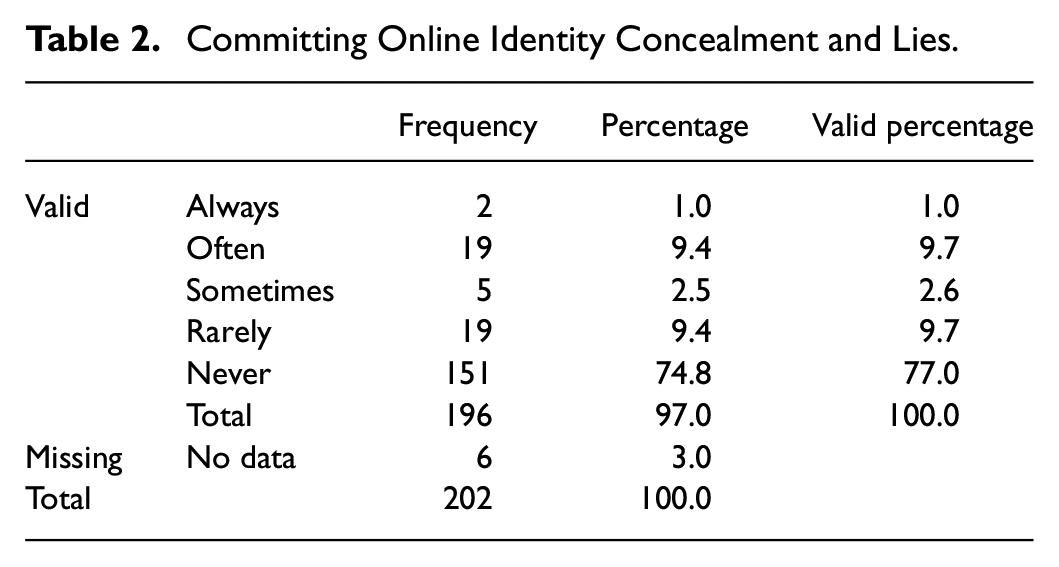
Replies to the first research question, referring to the incidence of cyberbullying, can be read in Tables 1 to 3. We can see that out of 202 respondents (six of them did not fill in the scale), 44.39% have committed verbal cyberbullying, while 55.61% of them have never committed this type of peer violence. When it comes to online identity concealment and lies, we can see that 22.96% replied that they had committed this type of cyberbullying, while 77.04% of them said that they had not committed this type of violence. This scale also was not completed by six respondents. From Table 3 we can see that online counterfeiting and criminal acts accounted for 33.16% of the total number of students who answered questions on the scale, while 66.84% never committed this type of cyberbullying. Nine students did not complete the scale.
Committing Verbal Cyber Bullying.

Committing Online Identity Concealment and Lies.
Committing Online Counterfeiting and Criminal Acts.

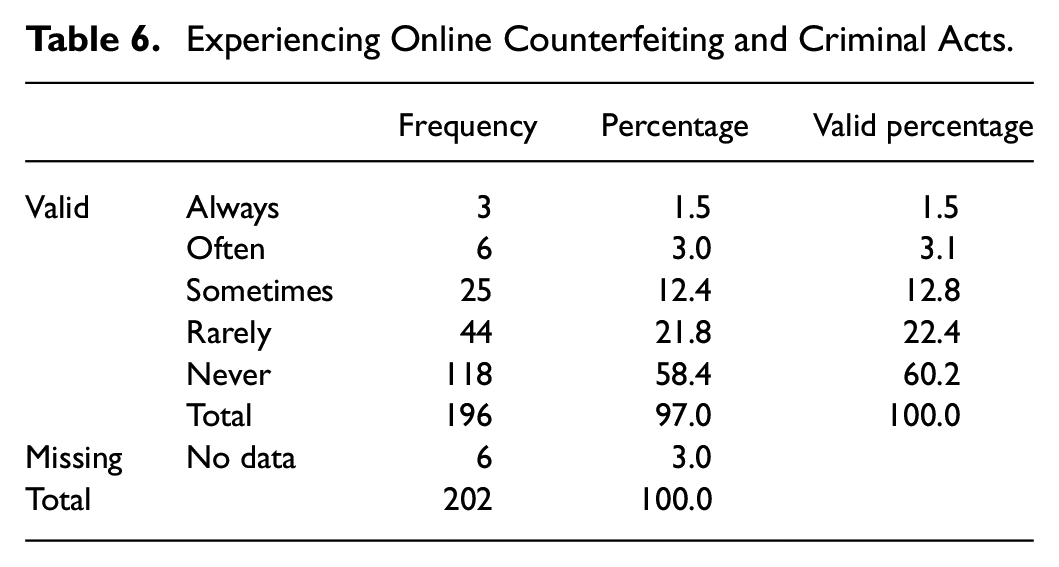
Replies to the second research question, referring to the incidence of experiencing cyberbullying, can be read in Tables 4 to 6. From Table 4 we can see that 54.04% of respondents have never experienced verbal cyberbullying, while 45% have experienced this type of violence. Four respondents did not fill in the scale. From Table 5 we can see that 70.26% have never experienced online identity concealment and lies, while 29.74% of our respondents have experienced this type of cyberbullying. Seven respondents did not fill in the scale. From Table 6 we can see that 60.2% of students have never experienced online counterfeiting and criminal acts, while 39.8% of respondents have experienced this type of cyberbullying. Six respondents did not fill in the scale.
Experiencing Verbal Cyber Bullying.

Experiencing Online Identity Concealment and Lies.

Experiencing Online Counterfeiting and Criminal Acts.
The presented results of the research have shown that high school students included in the sample of our research both commit and experience cyberbullying.
Our third research question was about the most common forms of cyberbullying among high school students.
From Table 7 we can see that when it comes to committing cyberbullying, the most common are online ridicule and identity concealment, while the least common forms are the use of offensive language via email and the use of the Internet for fraud.
Mean Values and Standard Deviation Per Question (Committing Cyberbullying Scale).

More precisely, it has been concluded that among high school students, when it comes to committing cyberbullying, the most common form is online identity concealment, while the use of the Internet for fraud is the least common one.
Figure 1 shows the answers to the question: Online identity concealment—the form of cyberbullying that is most frequently committed among high school students.
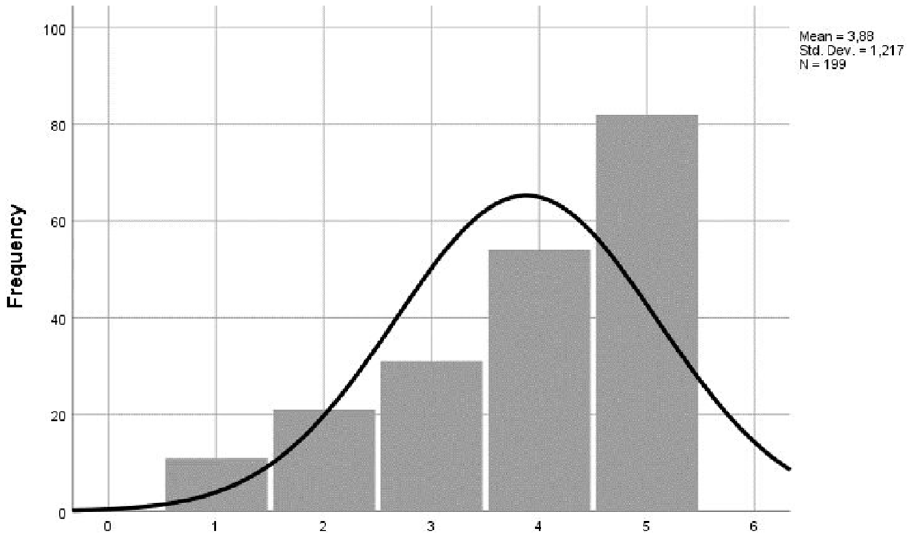
Presenting the answers to the question Committing Online Identity Concealment.
Figure 2 shows the answers to the question: Using the Internet for fraudulent acts—the form of cyberbullying that is least frequently committed among high school students.
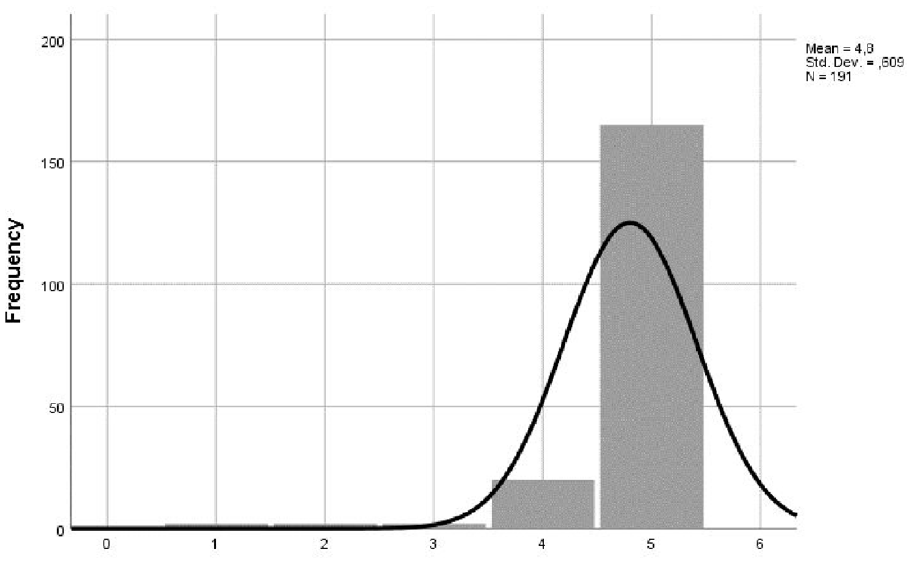
Presenting the answers to the question Using the Internet for Fraudulent Acts.
When it comes to experiencing cyberbullying among high school students in the sample of our research, from Table 8 we can conclude that the most common forms of cyberbullying among high school students are online gossip/slander, spreading online rumors, and online identity concealment. Based on the presented data obtained after statistical analysis, we can conclude that high school students experience online gossip/slander most, and online fraudulent acts least.
Mean Values and Standard Deviation Per Question (Experiencing Cyberbullying Scale).

Figures 3 and 4 show the answers to the questions about experiencing online gossip/slander (most frequently experienced form of cyberbullying among high school students) and about experiencing online fraudulent acts (least frequently experienced form of cyberbullying among high school students).

Presenting the answers to the question: Experiencing online slander.

Presenting the answers to the question: Experiencing online fraudulent acts.
We have seen that, when it comes to committing cyberbullying, the most common forms are online identity concealment and online ridicule, while the least common forms are insults via email and using the Internet for fraudulent acts. On the other hand, our research has shown that the most common forms of cyberbullying experienced by high school students are the use of the Internet for gossip/slander, spreading online rumors, and online identity concealment, while the least frequently experienced is online fraud.
When it comes to the connection between self-esteem and being involved in cyberbullying as a victim or a bully, Table 9 shows that Sig < .05, or more precisely Sig. = .000 for committing verbal online violence and self-esteem in high-school students. Accordingly, there is a statistically significant difference p = .000 between committing verbal online violence and self-esteem in high-school students. (Moderate, Severe, Mild, Normal, Extremely severe group), F = 9.536. When it comes to experiencing cyberbullying, we can see that Sig < .05, or more precisely Sig. = .000 for experiencing verbal online violence and self-esteem in high-school students. Accordingly, there is a statistically significant difference p = .000 between experiencing verbal online violence and self-esteem in high-school students. (Moderate, Severe, Mild, Normal, Extremely severe group), F = 28.215. Thus, it can be concluded that verbal online violence is connected with self-esteem. More precisely, being involved in verbal cyberbullying as a victim or a bully is connected with higher self-esteem. Table 9 shows that, Sig < .05 (Sig. = .000) for committing online counterfeiting/criminal acts and self-esteem in high-school students. Accordingly, there is a statistically significant difference p = .000 between committing online counterfeiting/criminal acts and self-esteem in high-school students. (Moderate, Severe, Mild, Normal, Extremely severe group), F = 16.162. When it comes to experiencing cyberbullying, we can see that Sig < .05 (Sig. = .000) for experiencing online counterfeiting/criminal acts and self-esteem in high-school students. Accordingly, there is a statistically significant difference p = .000 between experiencing online counterfeiting/criminal acts and self-esteem in high-school students. (Moderate, Severe, Mild, Normal, Extremely severe group), F = 10.397. Based on these results, it can be concluded that committing and experiencing cyberbullying is statistically connected with self-esteem. More precisely, high-school students committing and experiencing cyberbullying in the form of online counterfeiting and criminal acts, possess higher self-esteem or higher opinion about their self-esteem, in comparison to their peers uninvolved in this form of cyberbullying. When it comes to the connection between committing online identity concealment/lies and self-esteem, Table 9 shows that Sig > .05, or more precisely Sig. = .879 for committing online identity concealment/lies and self-esteem in high-school students. Accordingly, the difference of p = .879 between committing online identity concealment/lies and self-esteem in high-school students is not statistically significant. (Moderate, Severe, Mild, Normal, Extremely severe group), F = 0.129. We can see that Sig > .05, or more precisely Sig. = .056 for experiencing online identity concealment/lies and self-esteem in high-school students. Accordingly, the difference of p = .056 between experiencing online identity concealment/lies and self-esteem in high-school students is not statistically significant. (Moderate, Severe, Mild, Normal, Extremely severe group), F = 2.932. Based on these results, it can be concluded that committing and experiencing online identity concealment/lies is not statistically connected with self-esteem. More precisely, high-school students committing and experiencing this form of cyberbullying do not possess higher or lower self-esteem in comparison to their peers uninvolved in this form of cyberbullying.
Anova–Cyberbullying and Self-Esteem.

It has been determined that self-esteem is generally low over the whole sample (84.2). This results from the developing phase in which the students are. Since these were adolescents, their emotional and social functioning is known to be very delicate.
The following Table 10 shows this:
Rosenberg Self-Esteem Scale.

Discussion
Conducted to reveal whether cyberbullying is present among high school students in Montenegro and which of its forms occur most frequently and most rarely, this research has provided results showing that this type of peer violence is indeed present and can occur in different forms. However, when it comes to interpreting the results obtained, we must keep in mind certain limitations of this research. Although the research has included high schools from the northern, central, and southern regions of Montenegro, the answers obtained are partly limited by the sample on which they have been obtained, as well as by relying on the respondent’s self-assessment. Also, the fact that some students have not given answers to some questions must be taken into consideration.
The results obtained on the incidence and forms of cyberbullying can be somewhat compared with the results of previous studies conducted in Montenegro (Hrnčić & Lončar, 2018; UNICEF Montenegro, 2016), as well as with studies by authors outside Montenegro (e.g., Baić et al., 2017; Buljan Flander et al., 2006; Çetin et al., 2011; Đuraković et al., 2014; Kowalski & Limber, 2007; Popadić & Kuzmanović, 2013; Pregrad, 2010).
Research conducted by UNICEF in Montenegro on a sample of 1,002 students aged 9 to 17 have shown that 14% of respondents stated that disturbing things had happened to them at least once in the last year, while 69% of cyberbullying victims stated that peer violence was the most common type of cyber violence to which they had been exposed (UNICEF Montenegro, 2016). Research on violence conducted in Montenegro in 2018, for the needs of the Coalition Against Peer Violence project, has shown that every fifth child is exposed to violence, mostly verbal (in 2006, every second child was exposed to violence). When it comes to cyberbullying, 18.6% of high school students pointed out that they had experienced this form of violence in the last month (Portal Analitika, 2018). Research conducted by Hrnčić and Lončar on a sample of 249 upper elementary school students in Pljevlja, Montenegro, has shown that 13.7% of students stated that they had been victims of peer cyberbullying, 12.1% that they had been cyberbullies, while 27.7% of students replied that they knew a student who was a victim of peer cyberbullying (Hrnčić & Lončar, 2018).
Research on cyberbullying has been carried out in 2012 by Microsoft. It was conducted in 25 states among children aged 8 to 17 years. The results have shown that as many as 37% of children had been victims of cyberbullying, while 24% of children had admitted to abusing other children online (Ciboci, 2014).
According to the results of this research, when it comes to cyberbullying, the most represented are mockery and identity concealment on the Internet, and the Internet is the least used for fraud. The most common forms of cyberbullying that high school students experience are gossiping/slander, spreading rumors, and identity concealment, while the least experienced is fraud.
Our research results are party similar to the results used by authors of doing and experiencing cyberbullying Çetin, Yaman, and Peker. They had the results showing that the most common forms of cyberbullying are writing offensive comments, visiting someone’s site without permission as well as mocking on the Internet. We had similar results regarding mocking on the Internet as one of the most common forms of cyberbullying in high school students. When it comes to the rarest forms of cyberbullying according to this research, are forcing sexual talks and spreading photos with sexual context (Çetin et al., 2010). We haven’t got such results during our research.
Research conducted by Đuraković et al. has shown that the frequency of cyberbullying is 24.9% for experiencing and 27.7% for committing. On both scales, most participants responded that they had had no experience with behaviors involving hacking other people’s websites and editing photos in an offensive manner. On the other hand, the most common behaviors are online gossip and online ridicule (Đuraković et al., 2014). This research is similar to our research according to that our results also show that mocking and gossiping is one of the most common forms of cyberbullying, while the other segments’ results are different from our results.
Popadić and Kuzmanović, on a sample of 3,786 upper elementary school students in Serbia, 3,078 parents and 1,514 teachers, found that 22% of respondents had reported experiencing violence by a mobile phone call, 18% of them were harassed via social networks, while 12% of them publicly commented on their acquaintances in a hurtful way. Of all the students, 66% experienced at least one form of cyberbullying, out of which 23% experienced one form only once, 16% two forms, and 27% three or more forms of cyberbullying (Popadić & Kuzmanović, 2013). UNICEF research in Croatia has shown that 34% of children aged 10 to 15 experience some form of peer violence through new technologies 1 to 2 times a month or more often (Pregrad, 2010). Research conducted by the Child Protection Clinic of the City of Zagreb and Brave Phone has shown that 12.1% of children experienced violence on Facebook, and 9.6% behaved violently. As many as one-fifth of children state that they have received abusive messages or comments via Facebook several times or often, half of them have experienced this at least once, while 9% of children admit that they have done it more than once. Lies have been spread via Facebook about every fourth child, and 7% of children admit that they have done it themselves (Child Protection Center of Zagreb, 2013). Research by Baić et al. (2017) has included 300 fifth, sixth, seventh, and eighth-grade students in the Autonomous Province of Vojvodina, of which 147 were male and 153 female. Research has shown that every second elementary school student has been a victim of cyberbullying. Also, this research has shown that girls were victims more often than boys. Students have most often experienced exclusion from groups (30.3%), identity concealment (27.7%), insults (22.7%), and gossip (20%). A smaller percentage of them were victims of revealing secrets (16.7), lying (16%), and harassment (5.7%). This research has shown that every fourth elementary school student was a perpetrator of some form of cyberbullying. This research is also party similar to ours because its results show that misrepresentation or identity concealment, gossiping, and insulting are forms of cyberbullying presented among the coevals. We had similar conclusions in our research.
According to Buljan Flander et al. (2010) 18% of Croatian children aged 12 to 14 were victims of some form of cyberbullying, and 62% stated that the perpetrator was a person they knew or even someone from their class. Aizenkot (2018) was studying cyberbullying via Whatsapp and its types. It has been found that 70% of elementary and high school students had experienced cyberbullying, the most common forms being offensive messages and expulsion from groups, as well as posting offensive photos. Kowalski and Limber (2007) have researched the incidence and forms of cyberbullying in a sample composed of elementary and high school students. The results have shown that 11% of students were victims of this type of violence once in the last month (victims only), 7% of them were both victims and perpetrators, while 4% of students were violent toward someone else (perpetrators only). Instant messages are the most frequently mentioned form of violence.
Patchin and Hinduja (2006) have found that 30% of students under the age of 18 reported being victims of cyberbullying, and 11% admitted having been cyberbullies. Comparing this study with a study by the same researchers on the same population in 2008, the prevalence rate was slightly higher (34.6%). Kowalski and Limber (2007) conducted a study in which the population was high school students, and the results have shown that 18% of respondents had been abused online in recent months, while 11% admitted to having been bullies “About 20% of more than 4,400 randomly selected students aged 11 to 18, that we surveyed in 2010, confirmed that they had been victims at some point in their lives. Roughly the same number of respondents admitted to having been cyber bullies during their lifetime.” (Hinduja & Patchin, 2009, p. 5).
Research conducted by Kowalski and Limber has examined the incidence of cyberbullying among high school students. A total of 3,767 elementary and high school students in the southeastern and northwestern United States participated in this study. As many as 11% of the total number of students stated that they had experienced cyberbullying at least once in the last few months (victims only), 7% stated that they had been both perpetrators and victims, while 4% of respondents said that they had committed cyberbullying against someone else in the previous few months (perpetrators only). The most common means were instant messaging, chat rooms, and e-mail (Kowalski & Limber, 2007).
The results of our research show that between doing and experiencing cyberbullying, forgery, and criminal actions on the Internet and self-esteem there is a statistically significant connection. According to that our results are partly similar to the research done by Lei and associates using meta-analysis, which indicates the connection between self-esteem and cyberbullying (Lei et al., 2020) some other researches deal with the connection between cyberbullying and self-esteem and had similar results as we (Burns, 2017; Cenat et al., 2014; Ding et al., 2018; Palermiti et al., 2017).
Chen’s results show a strong correlation between cyberbullying and self-esteem (Chen, 2016). Extremera et al. have researched the influence of cyberbullying on self-esteem and concluded that this form of violence negatively impacts self-esteem (Extremera et al., 2018).
The results of our research when it comes to doing and experiencing cyberbullying, forgery, and criminal actions on the Internet and their connection with self-esteem are similar to the results of the research done by Brewer and Kerslake (2015) in the research standard, multiple regressions discovered that the loneliness, empathy, and self-esteem together anticipated the level of victimization and doing abuse on the Internet. Self-esteem was a significant singular predictor of victimization and cyberbullying. so that those with low self-esteem have probably reported experiencing cyberbullying (Brewer & Kerslake, 2015). The research conducted by Mcvean came up with data that indicates that the students who reported cyberbullying had low self-esteem (Mcvean, 2017). Liu and Xu had come to results that self-esteem is connected with cyberbullying (Liu & Xu, 2019). Contrary to this, the research conducted by Balakrishnan and Fernandez (2018) doesn’t result that self-esteem has a significant impact on cyberbullying. Data from this research found that self-esteem has a significant relation with victims’ feeling angry and reporting a cyberbullying incident (Balakrishnan & Fernandez, 2018). Results of the research done by Tintori et al., show that a high level of self-esteem is a risky factor for cyberbullying (Tintori et al., 2021).
It can be said that these results are similar to the results of our research regarding high-school students’ involvement in verbal cyberbullying and online counterfeiting/criminal acts. Besides, results partly similar to ours have been obtained from research by Rose et al. Namely, their results indicate that students committing cyberbullying do not have a higher or lower level of self-esteem in comparison with their uninvolved peers (Rose et al., 2017). This research bears resemblance to ours when it comes to committing and experiencing online identity concealment and lies. Also, according to research by Tan Kim Hua et al. low level of self-esteem is neither a characteristic of victims nor of cyberbullies (Hua et al., 2019). A study conducted by Pyżalski (2012) has shown a very weak correlation between cyberbullying and self-esteem. Didden et al. (2009) have also obtained results indicating the weak connection between self-esteem and cyberbullying.
As you can see, the results of our research have similarities with the research that we have examined and analyzed. On the other side, our research had some differences from other researchers’ data. The rarest forms of cyberbullying, according to our research, are our use of bad language to insult through emails as well as the use of the Internet for fraud. It can be said that this rarest form of cyberbullying among high school students is a specific feature of our country. Some other researches conducted in our county are similar to our in part of cyberbullying presence among students and they reveal that there is cyberbullying among students. When it comes to the connection between cyberbullying and self-esteem the results of our research show some specificity regarding the results of other research done in some other countries. Namely, being involved in cyberbullying, fraud, and criminal actions on the Internet, according to our research is connected with high self-esteem. A small number of researches we analyzed had similar results. There are no similar researches in our country so we couldn’t compare with.
Conclusion and Recommendations
The results of the research have indicated that cyberbullying is present among high school students in Montenegro. Among the high school students included in our sample, verbal cyberbullying is the most prevalent.
According to the results of the research, when it comes to committing cyberbullying, the most common forms are online ridicule and online identity concealment, while the least common forms are the use of insulting language via email, as well as the use of the Internet for fraud. On the other hand, our research has shown that the most common forms of cyberbullying experienced by high school students are online gossip/slander, online rumor spreading, and online identity concealment, while high school students experience online fraud the least.
When it comes to how committing and experiencing cyberbullying affects self-esteem in high-school students, the results of our research show a statistically significant connection between committing and experiencing cyberbullying, online counterfeiting/criminal acts, and self-esteem, whereas committing and experiencing online identity concealment and lies did not affect self-esteem in high-school students from our sample. As for the connection between committing and experiencing verbal cyberbullying, online counterfeiting/criminal acts, and self-esteem, our results indicate that there is a statistically significant connection, with those involved in cyberbullying (lower values for verbal cyberbullying) showing higher self-esteem (or higher self-esteem evaluation). In our country, there is no other research on the connection between cyberbullying and self-esteem, although there is a very small number of researches on cyberbullying conducted in our country, so it would be good to do more research about this subject, and afterward, we could do something to improve the present situation with cyberbullying.
The results of our research indicate that there is cyberbullying among the high school population in Montenegro. This data should be a warning to all persons involved in educational work. Namely, schools must have more activities concerning cyberbullying to prevent and repress it as well as activities that offer support to victims and rehabilitation of bullies. It is also very important to involve parents in all this. It should be done by organizing more workshops on cyberbullying, its causes and consequences, victims’ and bullies’ characteristics, and also the best ways to prevent it. There should make some kind of relationship of trust with students through talks, workshops, and seminaries to try to develop socio-emotional competence emphasizing empathy, tolerance, self-confidence, self-control, and optimism. Besides students need to be informed about cyberbullying, its characteristics, causes, and consequences, and mainly for students to understand how dangerous is to do cyber bullying.
We concluded that there is low self-esteem in the entire sample, but also that there is a statistically significant connection between involvement in cyberbullying, forgery, and criminal actions on the Internet while doing and experiencing identity concealment, lies on the Internet occurred to have no connection with highschool students’ self-esteem. Generally, low self-esteem in the entire sample (84,2%) is the result of the developing phase of this age group. Considering that these are adolescents, it is known that their socio-emotional functioning at this age is very sensitive. All this indicates the necessity of permanent work of both parents and school on developing socio-emotional competencies. The special accent should be on developing self. esteem as one of the most important socio-emotional competencies. This could be obtained through different workshops on the subject of socio-emotional competencies organized by the school for the students as well as for their parents. Besides that, it would be also good to make individual conversations about self-esteem and its importance for a quality life. This way could be made the relationship of trust between family-school-student. All this together could contribute to the prevention of cyberbullying and the development of socio-emotional competencies including one of the most important and that is self-esteem.
Footnotes
Declaration of Conflicting Interests
The author(s) declared no potential conflicts of interest with respect to the research, authorship, and/or publication of this article.
Funding
The author(s) received no financial support for the research, authorship, and/or publication of this article.

Data Availability Statement
Data sharing not applicable to this article as no datasets were generated or analyzed during the current study.