




Abstract
This study focuses on the excessive pricing issue that practiced by ecommerce websites during the Covid-19 pandemic. To understand the antecedents of excessive pricing and the expectations of consumers, Attribution Theory and Equity Theory were utilized. A total of 4,001 data were analyzed following a text mining methodology. Results showed that the main problem stems from the profit-oriented approach of the thirdparty sellers for the excessive pricing issue. According to results, while sudden price hikes without a reasonable excuse, stockpiling and opportunism were determined as the antecedents of excessive pricing; immediate action and the attention of authorities were appeared as the expectations of consumers. This result is clearly proved that consumers think they are deceived by stockpiling and opportunistic behavior arising from price gouging and wait for an urgent response from the authorities. Moreover, consumers’ price comparisons by using the terms “today,”“yesterday,”“before,” and “after” totally represent the perception of unfairness of price increases which is in parallel with the Equity Theory. Consumers who particularly pick the terms “authority,”“immediate,” and “attention” are by far the most dissatisfied ones and support their complaints by attaching proofs. This behavior is one of the effective ways to fight against price gougers’ uncontrollable practices and making the brand visible which coincides with the Attribution Theory. To the best of our knowledge, this study is the first conducted with the competent authority provided data rather than using complaint websites or social media tools.
Plain language summary
This study focuses on the excessive pricing issue that practiced by e-commerce websites during the Covid-19 pandemic. According to results, while sudden price hikes without a reasonable excuse, stockpiling and opportunism were determined as the antecedents of excessive pricing; immediate action and the attention of authorities were appeared as the expectations of consumers. This result is clearly proved that consumers think they are deceived by stockpiling and opportunistic behavior arising from price gouging and wait for an urgent response from the authorities.
Introduction
The Covid-19 pandemic has generated dramatic changes in the social and financial lives of human beings, and continues to spread all around the world uncontrollably. Globally, there have been 255,324,963 cases reported by WHO as of November 19, 2021. The rising trend of the outbreak causes to new peaks in many countries, particularly by January and April 2021 (WHO, 2021). The new peaks in the number of cases and deaths force countries to lockdown and/or to restrict business activities inside and outside. The ultimate purpose of all of these cautions is of course to save lives, vulnerable people in particular (Donthu & Gustafsson, 2020).
There is no doubt that Turkey is one of the countries where the negative effects of the Covid-19 pandemic occurred. The first case was reported within the first hour of March 11, 2020 by the minister of health of Turkey (Ministry of Health, 2020). Since then, the cases have started to increase every passing day, and many people living in Turkey had a sense of fear and anxiety of losing their health and job (Morgul et al., 2020). These emotions also obliged people in Turkey to demonstrate irrational consumer behavior, such as stockpiling food and protective products (hand sanitizers, masks, cologne, hygiene products), and even toilet paper, similar to many countries in the world (Arslan, 2020; Lufkin, 2020).
Figure 1 delineates the disruptive effects of Covid-19 on mask prices in Turkey. Stable prices till the end of January 2020 suddenly started to increase as of February due to fear of contagion. When it comes to March 2020, prices increased 7 times on average. What is more interesting is that the main disruptive effect associated with price increase coincides with the night when the first case was announced by the health minister of Turkey. Of course, the peak on the prices at just one night is not limited to masks. Similar tendencies in prices also appeared in cologne with nine-fold (Temizkan, 2020), sanitizers with six-fold (Hurriyet, 2020), and even pasta with 15-fold increase (Marketing Turkiye, 2020) as of March 11, 2020. This opportunistic behavior of managers especially who have profit-seeking perspective leads companies to increase their prices arbitrarily violating the reference price without a reasonable excuse (Kahneman et al., 1986a). This business practice that perceived unethical by consumers due to opportunism (Zwolinski, 2008), can emerge in different ways such as hoarding, profiteering (Sobirova, 2020), and exploitative increases in prices (Kahneman et al., 1986a) which is called excessive pricing as well during the Covid-19 pandemic (Jones, 2020).
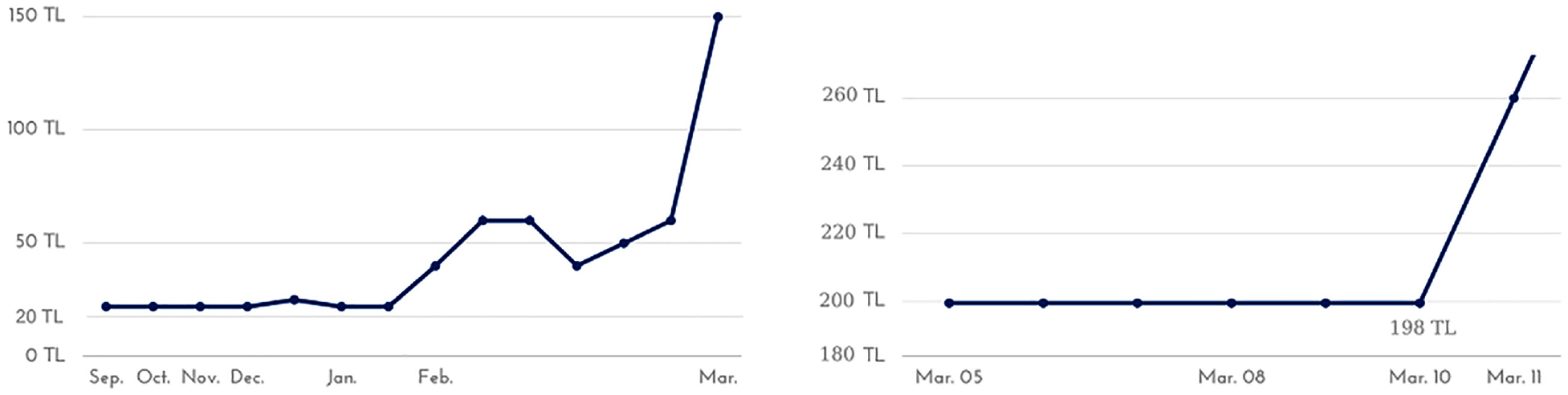
Price increase of masks.*
Excessive pricing, also called as price gouging in law (Zwolinski, 2008), is fixing abnormally high prices for products and services by exceeding the price-cost margin (Akman & Garrod, 2011) especially on account of extraordinary circumstances (Chonko, 1995). Excessive pricing and price gouging are expected to show similar patterns if sufficient time is provided. However, the main factor is “the nature of the disaster-period demand shock” to determine if there is an excessive pricing or price gouging issue. In the case of elevated demand, they differ markedly. The former situation is known as a normal market reaction, whereas the second should possibly be investigated for antitrust violations. Additionally, there is an allowance for cost-based price increases during the Covid-19 period; however, there is no explicit attention towards demand-based increases. Thus, Covid-19 excessive pricing regulations can also be plausibly interpreted as price gouging regulations (Boshoff, 2021). Therefore, these two concepts will be used interchangeably in the following article.
All in all, excessive pricing is considered unconscionable, unfair, unjust, and unreasonable (Ratshisusu & Mncube, 2020), and mostly occurs at emergency times in emergency areas especially after natural disasters such as hurricanes (Lee & Lee, 2019; Zwolinski, 2008), and globally contagious diseases like the Covid-19 pandemic (Basaran, 2022; Jones, 2020). The Covid-19 pandemic makes excessive pricing to become an easy deceiving business practice on consumers who are shopping affrightedly (Rydzewski, 2020). Accordingly, this unethical practice unrelated to ordinary rules in the economy directly harms the consumers (Giosa, 2020) by making them feel deceitful. The loss of consumer trust and satisfaction due to excessive pricing practices (Mushagalusa et al., 2022) make companies lose much more in the long run than they gain in the short-term during the pandemic (Abdelnour et al., 2020).
However, many companies fall into this mistake when it comes to their profits. Regarding most of the past excessive pricing cases belonging to large dominant companies, it is interesting that smaller ones also pursue short-term excessive pricing practices during the exceptional nature of Covid-19 (Fung & Roberts, 2021). Herein, price gouging issues due to sudden price hikes are trying to get under control by the competition authorities (Basaran, 2022). Even though, Wilson (2014) claim that price gouging is more a myth than a reality and has no need for immediate legislative interference, this claim is doubtful when considering the unique and global effects of Covid-19 (Borio, 2020). Many countries such as France, China and USA have adopted emergency legislation, related to Covid-19, that limits the price of vital products (masks, sanitizers etc.). Others such as Germany and UK declared that abusive anticompetitive behaviors (e.g., unfair pricing) will be charged. As a result of these precautions, many companies were fined (Seuster vd., 2020). In the meantime, some actors such as Amazon imposed its own sanctions by partnering directly with law enforcement agencies to protect their customers. In order to combat third-party price gougers that raise prices excessively, they took immediate actions by removing over half a million offers and suspending 3,900 selling accounts (Amazon, 2020). However, majority of the profit-seekers do not perform like Amazon. For this reason, the regulation of pricing issues should not be left to the initiative of companies. The inferences coming from the Covid-19 pandemic can be used for the enactment of new price gouging regulations by governments (Boshoff, 2021; Riefa, 2020) to prevent further excessive pricing practices.
In this respect, Turkish government demonstrated a remarkable effort too in order to fight against excessive pricing practices even before the first case was announced. One of the important steps taken in this regard is to add a new article related to price gouging and stockpiling to the Law on the Regulation of Retail Trade as of April 16, 2020 (Official Gazette, 2020). The latter is HFA-Notice (Unfair Price Increase) Application. The HFA-Notice Application is a digital platform that helps people living in Turkey to submit their complaints about excessive pricing practices directly to the Ministry of Trade (to the Unfair Price Review Board after the regulation on April 16, 2020).
The HFA-Notice Application has been downloaded over 100,000 times on Google Play. Consumers take advantage of reporting their complaints by elaborating them with the name of the company and brand, information about the product/service itself, detailed descriptions about the unfair price increases, and images as proofs (Google Play, 2020). The data collected by the ministry is considered very important in terms of providing evidence for inspection. Thus, consumers were directly called by the minister of trade, Ruhsar Pekcan, as of February 27, 2020 to use the HFA-Notice Application to report unethical excessive pricing practices (Ministry of Trade, 2020a). Thanks to these calls, the number of complaints received by the ministry began to increase day by day. After the announcement of the first case, 5,170 complaints were reported via the HFA-Notice Application by consumers in just 2 days all over Turkey (Ministry of Trade, 2020a, 2020b). In total, 15.5 million TL was fined for 495 companies due to excessive price practices by the Unfair Price Review Board as of January 27, 2021 (Bloomberg, 2021).
Considering the number of the complaints, the amount fined, and the increasing number of online searches about the anti-price gouging laws related to specific products (Chakraborti & Roberts, 2020) during the Covid-19 pandemic, the existence of the HFA-Notice Application is of great important to decrease the number of opportunistic profit-seekers to protect consumers from unfair price increases. Nevertheless, as the minister of trade mentioned, the HFA-Notice Application is useless without the contribution of consumers’ valuable complaints (Ministry of Trade, 2020c). In this manner, the significance of complaining behavior rises to prominence.
Motivations of the Current Study
Moving from aforementioned reasons, this study focuses on the excessive pricing issue that practiced by e-commerce websites during the Covid-19 pandemic. The first motivation of the study to investigate this critical topic is that although researchers specifically contribute to the different aspects of consumer behavior such as panic buying, stockpiling, excessive pricing and complaining (Fernando et al., 2021; Güven, 2020; He & Harris, 2020; Islam et al., 2021; Jones, 2020; Naeem, 2021b; Prentice et al., 2021; Rydzewski, 2020; Sobirova, 2020; Şimşek, 2020; Tehci & Ersoy, 2020; Temizkan, 2020) during the Covid-19 pandemic, there is a gap in the literature that explore the linkages between the mentioned subjects. Remembering the importance of combating with unethical business practices during the Covid-19 pandemic again (Alderman et al., 2020), besides the legal perspective, extending the limited literature by connecting with the abovementioned topics related to consumer behavior can lessen various kinds of unethical practices.
The second motivation is that the relation of consumer complaining behavior with Covid-19 pandemic has not been thoroughly studied enough. In the limited literature, there are descriptive studies carried out by Güven (2020), Şimşek (2020), Tehci and Ersoy (2020), and Temizkan (2020) that approach the consumer complaints with regards to basic frequency analyzes to find an answer to the question “What do consumers complain about?.” In other words, these studies are insufficient to get a deeper understanding of the phenomena and reveal the possible antecedents and outcomes of excessive pricing issue from the perspective of consumer complaining behavior at the time of the Covid-19 pandemic. Revealing the connections between the antecedents and outcomes will provide a better understanding to the underlying reasons by explaining the questions “Why?” and “How?” aspects of consumers’ complaining behavior patterns change. In this manner, our study addresses this void in the literature, and again adds to the compendium of knowledge in the area.
From this point of view, our study aims to investigate the antecedents and outcomes of excessive pricing issue practiced by online shopping websites during the Covid-19 pandemic by seeking answers to the following research questions:
RQ-1: What are the antecedents to make consumers complain about the excessive pricing issue during the Covid-19 pandemic?
RQ-2: What do consumers expect as an outcome after they report their complaints about the excessive pricing issue during the Covid-19 pandemic?
The remainder of this paper is organized as follows: In Section 2, a comprehensive literature review including price fairness concept (2.1) and related studies (2.2) was discussed. Section 3 refers to the methodology and the data set. The results were summarized in Section 4. Then, the discussions and conclusions were given in Section 5. Finally, implications for practitioners, and limitations and implications for further research were given in Section 6 and 7, respectively.
Literature Review
Price Fairness
Fairness has been characterized as an evaluation of whether an outcome and/or the process used to achieve that outcome is reasonable and acceptable (Bolton et al., 2003). If an individual dislikes an outcome that is seen as unfair, he/she is said to be inequity averse. Individuals tend to resist such inequitable outcomes (Fehr & Schmidt 1999). When it comes to prices, a price fairness judgment may be based on a basic comparison between the past experiences and current situation with the help of a reference price (Xia et al., 2004). Naturally, this concept presents the challenging issue of how people interpret the fairness of outcomes. Herein, researchers have developed various frameworks to explain how consumers respond in case of price fairness.
While the researches generally approach the price fairness in the context of a comparison that requires a reference point by benefiting from the past experiences/prices (Bolton et al., 2003; Ordóñez et al., 2000; Xia et al. 2004), some of them also compare the consumers’ outcomes and expectations. Greater outcomes and benefits have a potential to make consumers to perceive the prices more fair (Huppertz et al., 1978; Oliver & Swan, 1989). Fairness of prices are also related to seller practices. If consumers infer opportunism from the seller’s behavior, they feel deceitful (Campbell, 1999; Maxwell, 2002). The rest attributes an important meaning to providing accurate information and being transparent, especially regarding costs, profits, and margins. When sellers are not able to justify the increases in costs, and increase the prices exploitatively via sudden demand shocks, consumers perceive the prices as unfair (Collie et al., 2002; Kahneman et al., 1986a; Kalapurakal et al., 1991; Urbany et al., 1989; Vaidyanathan & Aggarwal, 2003).
As Xia et al. (2004) highlighted, there may be several other factors such as distribution of cost and profit, buyer-seller relationship (trust), and knowledge provided that affect this ratio. Thus, the opportunism stem from the disaster-period demand shock, sudden price hikes in a short time, and lack of explanation to justify the costs (Boshoff, 2021; Campbell, 1999; Kahneman et al., 1986a, 1986b) during the Covid-19 pandemic, can be considered as the reasons to perceive the pricing practices as excessive and unfair. Moreover, perception of consumers caused by the opportunistic behavior of companies harms their trust, which is an important factor for the continuation of sustainable relationships. Once the gap between input and output increases; consumers may take actions such as terminating the relationship with the company, spreading negative emotions via word-of-mouth (wom), and complaining (Huppertz et al., 1978; Xia et al., 2004).
As it is seen, most of the discussions consider the fairness of price judgments by comparing the inputs and outputs. Moving from here, inferences from the aforementioned researches can be considered as compatible with the attribution theory and equity theory.
Attribution Theory
In order to have a comprehensive understanding of the underlying reasons why individuals strive for complaining when they face sudden price increases, attribution theory may help to disclose an explanation. Attribution theory states that individuals search for casual explanations for events such as surprising and/or negative in particular (Folkes, 1988). Based on this, highly increasing levels of prices with the emergence of cases at the Covid-19 pandemic, which is considered completely unexpected and surprising as well, make consumers have a negative output.
Attribution theory focuses on two areas which are the locus of control and the outcome. The outcome may reflect a positive (success) or negative (failure) emotion. In addition to this, the motives may come from internal and external factors (Gourley, 2020). Internal factors can be controlled while the latter such as companies’ practices, just as in this study, is outside of the control. When consumers face sudden price hikes and attribute this to the companies’ negative motives, such as opportunistic behavior resulting from the disaster-period demand shock rather than increased costs, the prices will be evaluated as unfair. Again, according to the theory of attribution (Gourley, 2020), negative inferences due to uncontrolled and unfair practices of companies make consumers feel dissatisfied and angry. Undoubtedly, angry consumers are more inclined to complain as Min et al. stated (2019).
Equity Theory
In any exchange relationships between individuals and/or groups, there is probability to occur inequitable outcomes. This inequity comes from the feeling that “other” takes advantage of the relationship for own benefit (Adams, 1963). Individuals compare their inputs (prior experiences, skills, social status etc.) and outputs (current experiences, others’ acquisitions like wage, status etc.) in order to bring the inequity light (Davlembayeva & Alamanos, 2023). In such cases, according to the equity theory, individuals seek ways to reduce the level of distress that they have through the opportunistic practices (Adams & Freedman, 1976).
Equity theory focuses on explaining how fair individuals perceive their relationships with others by comparing the inputs and outputs (Adams, 1965). If there is a disadvantageous gap between the inputs and outputs such as exploitatively higher prices than in the past, just as in this study again, individuals feel angry as Adams and Freedman (1976) indicated. Thus, in addition to the attribution theory, equity theory can also explain why consumers tend to complain. It is because individuals those feel inequality seek justice through the “right to redress” to have a fair solution (Larsen & Lawson, 2013). As aforesaid and expressed by Larsen and Lawson (2013) as well, complaining is the way of avoiding inequality and compensating for the negative outputs that stems from the unfair practices of companies.
Related Studies
In parallel to the increasing number of Covid-19 cases, the number of published articles has also increased in the field of business and management. According to the study made by Verma and Gustafsson (2020), Covid-19 has created many substantial changes from different points such as decision making, supply chain, digital transformation, e-commerce, price volatility, sustainability, consumer behavior, and many others. Regarding the common point within these areas, Covid-19 has disrupted the economic balance and negatively affected its actors, particularly consumers, resulting with unable to access vital products (hygiene and food products) and services as well (Lufkin, 2020; Mahajan & Tomar, 2020). Therefore, the problems that stem from the Covid-19 pandemic related to consumers are worth to investigate as they generate solutions spreading to whole society during and after the Covid-19 process (Kirk & Rifkin, 2020; Sheth, 2020).
In the extant literature, several studies mostly handle the relations between consumer behavior and the Covid-19 pandemic around three aspects which focus on consumer attitudes (Alhaimer, 2021; Güney & Sangün, 2021), consumer psychology (Naeem, 2021a) and consumers’ motives (Koch, 2020). From a subject-based perspective, some researches mention panic buying behavior arising from the fear of scarcity of products, unable to access them during the lockdown and bandwagon effects of social media (He & Harris, 2020; Islam et al., 2021; Naeem, 2021b; Prentice et al., 2021; Rydzewski, 2020) while some of them discuss food delivery services and packaging as well to make the process easier and more safety for consumers owing to social distance rules (Chang & Meyerhoefer, 2020; Galanakis et al., 2021; Kim et al., 2021) and/or payment methods of the purchased goods/services (Khanra et al., 2021). The main issue here is that there are new global rules, called new normal, which shape and change consumer behavior by shifting to virtual environment in many ways (Jo et al., 2021; Kirk & Rifkin, 2020; Safara, 2020).
In substance, the restriction of brick-and-mortar shopping due to new normal by Covid-19 pandemic (Sheth, 2020) has led consumers to online transactions which make the e-commerce sector more important (Abdelrhim & Elsayed, 2020). In the existing literature, Kim (2020) and Brem et al. (2021) reveal how consumers benefit from the e-commerce in their daily lives, and there appear some studies investigating this sector from the perspective of disruptive effects such as stockpiling, opportunism and excessive pricing (Jones, 2020; Sobirova, 2020) culminate in consumer complaints (Fernando et al., 2021; Güven, 2020; Şimşek, 2020; Tehci & Ersoy, 2020; Temizkan, 2020) on the contrary. However, complaint related studies basically handle consumer behavior from the perspective of subjects such as hygiene and service speed in food delivery (Şimşek, 2020), delay in product and missing-wrong item delivery (Tehci & Ersoy, 2020), problems with customer services and product returns (Güven, 2020), and excessive prices from different product categories (Temizkan, 2020). The rise of consumer complaining behavior due to aforesaid unfair practices make the e-commerce industry as the most complained one during the Covid 19 pandemic (Eser, 2020).
Complaining behavior in a moment of dissatisfaction is a three-sided concept including voice, third-party and private actions (Singh, 1988). Consumers prefer to take action when the importance of products and prices are high; especially at the time of sensitive consumption situations (Keng et al., 1995; Sharma et al., 2010). In such a sensitive consumption process during the Covid-19 pandemic, the existence of companies’ opportunistic behavior forwards consumers to report their complaints to third-party competent authorities via HFA-Notice Application, which is due to the fact that digital platforms provide immediate and efficient responses (Hsiao, 2011). The studies penned by Şimşek (2020) and Temizkan (2020) indicate that consumers use digital platforms such as complaint websites (e.g., sikayetvar.com) or prefer to submit their complaints directly to sellers’ personal/institutional websites, if available, during the Covid-19 pandemic. To this end, consumer complaints are seen so valuable to investigate in order to struggle against unethical business practices (Boshoff, 2021; Chakraborti & Roberts, 2020; Freckelton, 2020; Hayter, 2020; Riefa, 2020), and have vital importance for the sustainability of the economic system and the protection of consumers.
Methodology
The current study aims to draw the picture of price gouging issue as an unethical business practice via big data insights obtained from consumers’ complaints during the Covid-19 pandemic. The data were retrieved from the consumers who live in Istanbul via HFA-Notice Application within the period of 11 to 18 March 2020, the first week when the number of cases began to rally, and the number of complaints peaked (Ministry of Trade, 2020b). Istanbul is a cosmopolitan city with its representative population of over 15 million people including Turkish citizens and half a million foreign residents (TUIK, 2020). HFA-Notice Application is specifically designed to combat with the price gougers at the Covid-19 pandemic by istry of Trade. Unlike other similar studies which were used a data set come from websites or social media, this study uses an original data set provided by the competent authority.
Accordingly, based on the fact that the e-commerce industry is one of the most complained sectors with a 255% increase in the number of complaints during the Covid-19 pandemic (Eser, 2020), mostly known and preferred onlinMine shopping websites, which are hepsiburada.com, trendyol.com, gittigidiyor.com and n11.com in Turkey (Deloitte, 2019; Ertemel & Çelik, 2016), were determined as the sources of complaints. The websites called hepsiburada.com and trendyol.com serve as vendors and perform as marketplaces, which means they also enable third-party sellers while gittigidiyor.com and n11.com perform entirely as marketplaces. Online shoppers reported 4,001 complaints belong to these websites via HFA-Notice Application.
Totally, 4,001 obtained complaints associated with price gouging were analyzed via text analysis. The number of cases is enough to reach saturation and achieve similar results, namely, literal replication (Mason, 2010; Yin, 2003). It should be noted here that text analysis (TA) and content analysis (CA) are generally used interchangeably. However, there are some main differences in their quantification of content, the logic of interpretation, and formalization of the procedure. Simply put, CA can be considered as a specific form of TA (Bauer et al., 2014). In this regard, it is better to claim that text mining methods through the TA were benefited since any prediction has not been utilized as CA generally does.
Text mining is an unobtrusive approach accepted as a specific type of data mining, which can be defined as “the process of extracting hidden information from textual data” (Feldman & Sanger, 2007). As Chakraborty et al. (2013) state, text mining is an iterative process that begins with data collection and lasts text mining. Throughout the study, Chakraborty et al.’s (2013) text-mining framework was followed. Figure 2 illustrates these iterative processes with the summarized explanations for each phase. To conduct the qualitative analysis, WordStat package program—a product of Provalis Research- was used because of its flexibility in terms of categorization and file formats (Pollach, 2011). Although the creation of a categorization dictionary is a challenging task, WordStat will analyze all the words appearing in the dataset without a dictionary which may cause undesirable results (Davi et al., 2005).

Text mining process.
As previously mentioned, a total of 4,001 consumer complaints were retrieved from the HFA-Notice Application. The detailed of the collected data called Corpus which means “finite sized body of machine readable text” (McEnery & Wilson, 1996, p. 24). Corpus may consist of some processing speed information as well as the total number of words/paragraphs/sentences to be analyzed. In the text parsing phase, the size of the corpus is aimed to be reduced and arranged (Vijayarani & Janani, 2016). To do so, five techniques were used, which are: tokenization, down casing, stemming, stop-words removal, and synonym expansion (Ingersoll et al., 2013). Tokenization is a process where strings are broken up into tokens to be indexed (Özyirmidokuz, 2014). Down casing is converting all the words to uppercase because WordStat is case-sensitive and by default, internally converts all the text to uppercase letters (Normand, 2010). Stemming is a kind of natural language processing that reduces inflected or derived words to their stem (Akbıyık, 2019). Synonym expansion can be used with the help of the “Suggest” feature of WordStat to include synonyms of existing words. This option is very useful when developing a categorization dictionary in another language than English (Normand, 2010) as already done in this study.
In the filtering stage, an exclusion list is created which consists of frequently used words such as and, the, or etc. Consistent handling of the brackets and symbols has also been provided. As of this stage, there is a cyclic iteration which means, even if the text mining process has finished, researcher(s) may return to the text filtering phase to determine the new categorization criteria based on the feedbacks (Akbıyık, 2019). To do this, related words can be detected by the ‘Keyword-in-context’ (KWIC) feature of WordStat and send them into the categorization dictionary (Normand, 2010).
The transformation stage aims to visualize and structure the filtered data with the help of word cloud, word frequencies and phrases. While the frequency table consists of some statistical information about the included words, the word cloud presents a nutshell review. To evaluate the frequency tables, Term Frequency (TF) by Inverse Document Frequency statistics can be used. TF*IDF is such a weighting that evaluate how relevant a word is to a document in a corpus. As Normand (2010, p. 33) simply states “a more often a term occurs in a document, the more it is representative of its content yet, the more documents in which the term occurs, the less discriminating it is.” At the end of this phase, a term-by-document matrix is created, in which all the words in the text set represent a row, and documents (cases) represent a column (Uğur & Akbıyık, 2020).
At the last stage, besides analyzing the words alone, topic extraction is performed in order to get a more accurate representation of the data. To do so, a hierarchical clustering of words, using the Jaccard coefficient, is performed. From this clustering, link analysis and correspondence plot are also obtained where the keywords and their semantic relations are easily seen. Link analysis (graph visualization) is a kind of visualization analysis that aims to create associations between the keywords. Once the extracted rules about the connections are identified, the corpus can be extremely useful for numerous applications (Nisbet et al., 2018). Any traditional statistical or data mining algorithm or forecasting model can be used during this stage (Chakraborty et al., 2013). In this study a fixed taxonomy was used, a categorization dictionary was created by the authors. Automatically keywords extraction technique suggested by Rose et al. (2010) was focused for the assignment of our keywords.
Results
In this part of the study, the obtained results are presented, and the data are interpreted under the light of literature review.
Descriptive Statistics
Before moving further, some collection statistics are given in Table 1. Within the scope of the study, 6,371 sentences containing 73,154 tokens were evaluated.
Collection Statistics (Corpus).

The data consisting of 4,001 complaints via HFA-Notice Application were retrieved from four well-known and preferred online shopping websites which are hepsiburada.com, trendyol.com, gittigidiyor.com and n11.com performing in Turkey. The majority of the data (n = 1,918) comes from Hepsiburada, where 990 belongs to n11, 898 belongs to Trendyol and the rest of them (n = 195) belongs to Gittigidiyor.
Transformation
Following the descriptive information about the data, further analyzes were conducted in the transformation phase. First, word frequencies were represented, and a word cloud was created. Then, extracted phrases were introduced in order to get more detailed insights into the data set.
Table 2 shows the most repeated words in relation to their frequencies. Some restrictions were applied so as to get a more summarized frequency table. The words which are repeated at least 150 times and occurred at least 100 cases were included. Filtered 25 words were arranged according to their TF*IDF values. The one that has the highest TF*IDF value ranks at the top of the table.
Word Frequencies.

It is important to understand the relationship between frequencies and TF*IDF values to interpret Table 2 properly. Although some words have relatively low frequency such as ATTENTION and PRODUCT, they appear with a high TF*IDF value. This simply means that these words, despite being less repeated, have a critical importance with their relevancy within the text. Taken all these findings together, as mentioned in Table 2, customers’ complaints generally include the words EXCESSIVE, MASK, PRODUCT, ATTENTION, BRAND, OPPORTUNISM, COLOGNE, CORONA, PROOF by looking at their frequencies as well as their TF*IDF values. Consumers perceive the Covid-19 process as a path that triggers opportunism and causes excessive pricing practices. In order to take legal action, they report this unfair business practice to the Ministry of Trade via HFA-Notice Application as evidence for inspection. This finding demonstrates the importance of what Pekcan said about the contribution of consumers’ complaints once again (Ministry of Trade, 2020c).
Just the opposite, some words have a high frequency such as PRICE while it has a low TF*IDF value. This is simply because price is not alone representative of the corpus. Indeed, “excessive price” or “price increase” may have higher TF*IDF values since they fit well with the scope of the corpus. Additionally, the fact that PRICE has a share of 76.8% among all cases proves that price-based increases are the main reasons to complain.
Figure 3 illustrates the word cloud generated based on the word frequencies. The word cloud (tag cloud or word art) is a simpler way to see the most frequently repeated words. This visualization is used to provide an overview by purifying text down to the keywords which appear with the highest frequency within the corpus. By means of this feature, researchers are able to get an idea to what extent their data are relevant to their scope of the study (Heimerl et al., 2014). Based on this, it is considered that the data featured by EXCESSIVE and PRICE words fits well with the excessive pricing issue.

Word cloud.
Word frequency analysis was performed at the individual token level, however; to get a more precise understanding, phrase extraction should also be performed. Table 3 represents the extracted phrases which are repeated more than 40 times and appeared in at least 40 cases. Extracted phrases are listed on the basis of their TF*IDF values.
Extracted Phrases.

The concerns about product pricing such as EXCESSIVE PRICE, PRICE INCREASE, UNEARNED INCOME come to the fore among phrases. Thus, it is plausibly stated that consumers are really troubled with these concerns which result in requesting IMMEDIATE ATTENTION. This finding apparently shows that consumers tend to complain and consult with third-party competent authorities when the prices are not fair. Following words are protective/hygiene products like LEMON COLOGNE, HAND SANITIZER, and SABRI TUNCER (a popular cologne brand in Turkey) which are highly demanded during the CORONA VIRUS process than usual time. Totally 221 comments include a specific brand or seller name, NAMELY PRODUCT/SELLER, which proves the fact that consumers divulge the brand/seller names deliberately.
In the meantime, the words SAME PRODUCT, NORMAL PRICE, ON MARCH, and DAY BEFORE refer to the sudden increase in the prices of relevant products at just one night. Consumers are aware of the opportunistic behavior of companies through excessive pricing by comparing the product prices before and after 11 March when the first Covid-19 case was announced. They stated this unethical business practice in their complaints via HFA-Notice Application.
Text Mining
The last step of the analysis is text mining which aims to uncover hidden and useful knowledge. As a result, nine topics were automatically clustered and named via WordStat.
Before looking at Table 4 more closely, it should be stated that extracted topics are listed by their coherence. Like TF*IDF values in the word frequency analysis, coherence value (or sometimes eigenvalue) represents the quality of being logical and forming a unified whole. The first topic, MASK; PROOF, has the highest coherence (0.376) which contains the keywords such as DISPOSABLE, DUST, MASK, CLOTH, and PROOF. This topic and its keywords possibly prove the fact that consumers have included some evidence in their comments when complaining about especially mask products via HFA-Notice Application.
Extracted Topics.

Topics are listed according to their coherence.
The second topic, AFTER CORONA, is very interesting in its nature with the keywords such as AUTHORITY; CORONA; AFTER; IMMEDIATELY. Although the topic has a relatively low frequency of 406, its coherence (0.324) is greater than the other seven which indicate the representation power of this topic. Thus, it may reveal the fact that consumers are aware of the opportunistic behavior of companies and want authorities to act immediately to end this situation. Consumers perceive companies as self-seekers because they take advantage of sudden demand shocks of the Covid 19 process. The third topic is BRAND; COLOGNE was repeated 1,502 times in 964 different cases. One of the keywords of this topic is TRENDYOL which possibly proves that complaints about cologne are mostly featured on this website. Similarly, three different topics (4, 6, and 9) are also related to specific brands and their complaints.
The fifth topic, OPPORTUNISM; ATTENTION may overlap with Topic 2 in which there is a call for immediate attention. However, the interesting thing about Topic 5 is its keywords like STOCKPILING and DROP. Here, DROP refers to the sudden decreasing of high prices that perceived as fake discounts by consumers. Regrettably, companies pretend to make a serious discount by raising the prices at first. It is no surprise this practice overlaps with the OPPORTUNISM and ATTENTION topic. Consumers feel deceived particularly due to this issue and want to draw attention for a solution. The seventh topic, TODAY; YESTERDAY, simply describes a comparison of price fluctuations over days and weeks; especially associated with the existence of the first case in Turkey. This topic can be considered as a signal for the perception of prices as unfair due to the equity theory. The eighth topic, EXCESSIVE; PRICE, has the highest frequency (2,722) as well as the highest number of cases (1,791). In nearly half of the cases (44.78%), consumers mention excessive pricing issue during the Covid-19 pandemic. Although the coherence is relatively low (0.273), it is still acceptable (Bach et al. 2020).
All things considered together, it is clearly seen that extracted topics and their keywords are in compliance with the main structure. The topics, which are named by WordStat, are also related to each other. Within the topics, the largest coherence value belongs to the topic of MASK; PROOF; however, when considering the number of cases and frequencies, the topic EXCESSIVE; PRICE is mentioned in the highest both number of cases and the frequencies. The conclusion to be drawn here is that the excessive price increases among protective products forward consumers to complain mostly about masks due to their vital importance and being obliged by the authorities. As stated earlier, being stuck in a difficult situation due to inaccessibility of masks in the Covid-19 process and sudden increases in demand can be considered as the main reasons to create an opportunistic practice as excessive pricing issue.
Beyond the topic extraction, WordStat can cluster keywords in two or/and three-dimensional analytical plane. To do this, a correspondence plot is created which is shown in Figure 4. This plot allows us to see the relationship between particular keywords and independent variables (online shopping websites).

Correspondence plot.
The correspondence plot reveals that the keywords located in the middle of the plane represent the mergers. IMMEDIATE, ATTENTION, EXCESSIVE, PRICE are the keywords which appear on all the websites. This finding is also manifested itself in both word frequency and topic extraction analysis. As mentioned before, consumers complain about excessive prices regardless of which website it is and report them to the authorities. When it comes to COMPLAINT, N11, and Gittigidiyor stand apart from others because of the way they perform. As these websites perform as totally marketplaces, third-party price gougers are mostly located here.
Hepsiburada has taken a position that is closer to the keyword density than other online shopping websites. This simply means the keywords such as AUTHORITY, OPPORTUNISM, CORONA, YESTERDAY, TODAY, NORMALLY, and MORE are mostly spoken in Hepsiburada and rarely appeared on the other websites. Thus, there is a high divergence between the Hepsiburada and the other websites. Consumers’ comparison behavior of the prices of such products before and after the Coronavirus process is mostly repeated at Hepsiburada. The obtained result might be due to the third-party price gougers’ opportunistic behavior and the high number of complaints reported at Hepsiburada as well.
Considering the relevant products, consumers mostly complain N11 about THERMOMETERs, Trendyol about COLOGNEs, and Gittigidiyor about HAND SANITIZERs. Even though unethical stockpiling practices of businesses occur in all protective products during the Covid-19 pandemic, Gittigidiyor is perceived more as a hoarder by consumers because of the position of the keyword STOCKPILING.
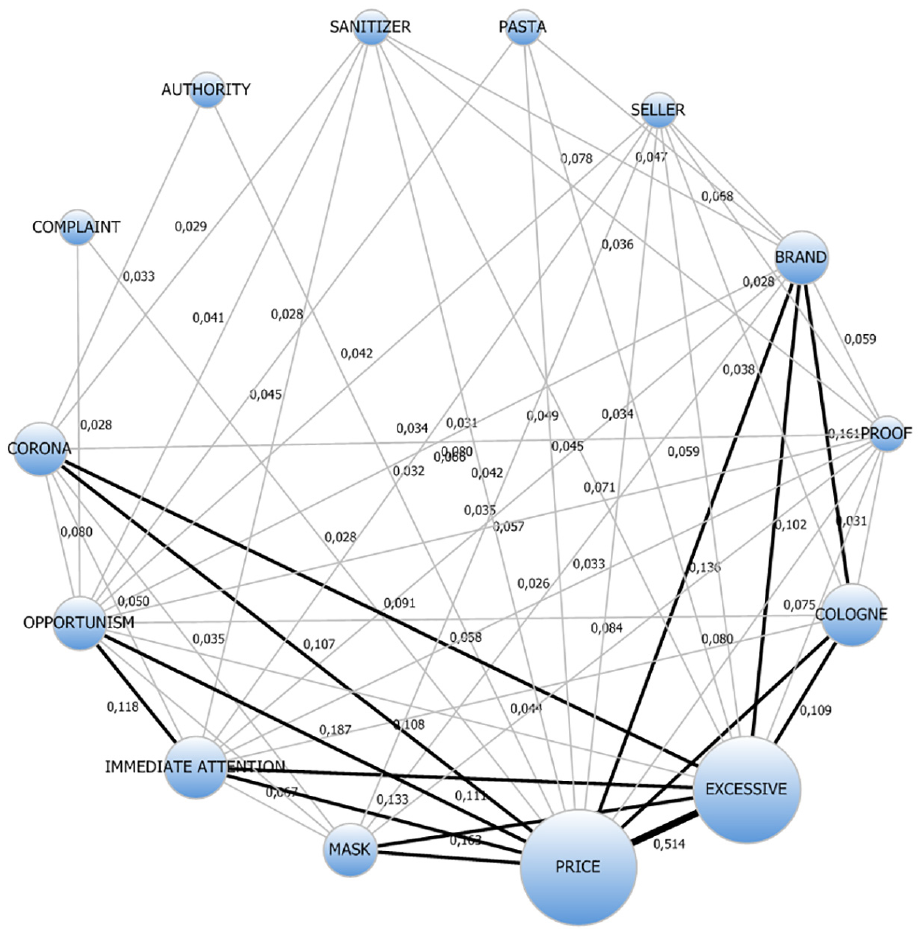
Figure 5 represents the link analysis which tries to reveal the associations between the keywords. Although there is no specific rule for link analysis in WordStat, thick dashes were used to draw the associations which have a threshold greater than 0.1 in this study. In addition to this, the size of the circles was adjusted by the number of thick dashes they had. If a keyword has no thick dash, then the default value is used.
Link analysis.
When the associations in Figure 5 are examined, it is understood that PRICE and EXCESSIVE have the greatest association with the highest value (0.514), which means that consumers most especially chose the word EXCESSIVE while they were reporting their complaints about the unfair price increases. As can be remembered from Table 3, the phrase EXCESSIVE PRICE is by far the first with 347.3 TF*IDF value among others. Selecting this phrase when compared to PRICE INCREASE with 217.5 TF*IDF value at the thir place in Table 3 proves that a majority of consumers do not adopt these price increases as normal and perceive companies as self-seekers because they turned the CORONAvirus process into an opportunity due to sudden demand shocks.
This unfair business practice associated with PRICE forwards consumers to end their complaint expressions with IMMEDIATE ATTENTION. The consumers who think they are deceived by the opportunistic behavior of relevant companies ask urgent help from the third-party competent authorities, the Ministry of Trade in this study, via HFA-Notice Application by attaching PROOFs such as screenshots to demonstrate the excessive pricing issue. Excessive prices occurred at protective products such as SANITIZERs, most notably MASKs and COLOGNEs which are vital for hygiene, trigger consumers to ask AUTHORITIEs to punish such kind of SELLERs by disclosing the names of their BRANDs at such a sensitive consumption process.
Discussion and Conclusion
Due to the flexible structure of pricing which allows companies to set prices through the sudden raising of consumer demand and being the only element that produces revenue among the marketing mix (Kotler & Armstrong, 2014), companies, the profit-seekers in particular, may cross the thresholds of consumers’ price fairness perceptions. Especially, in case of urgent needs at emergency times, a global contagious disease like the Covid-19 pandemic, they perform to take advantage of the opportunity to get much profit by increasing the prices arbitrarily violating the reference price without a reasonable excuse as Kahneman et al. (1986a) mentioned. However, consumers attribute these practices to the companies’ negative motives. In parallel with the attribution theory (Folkes, 1988), unreasonable price increases in case of an unexpected event like the Covid-19 pandemic, consumers perceive these sudden price hikes as opportunistic and unfair which make them angry.
Moreover, in this study, consumers’ price comparisons by using the terms “today,”“yesterday,”“before,” and “after” totally represent the perception of unfairness of price increases which is in parallel with the theory of equity. Based on the equity theory (Adams, 1963, 1965), these terms are the proofs that consumers make a comparison between their inputs (awareness about past prices) and outputs (suddenly increased prices) to reveal the inequality that stems from the companies’ as “others” approaches to take advantage for their profits. In a period when the price history of the products can be easily monitored on the internet, these unfair increases in prices made by online shopping websites, unluckily, are not accepted by consumers. In such a disadvantageous situation, consumers seek ways to reduce the levels of their distress and anger as Adams and Freedman (1976) expressed.
Based on the abovementioned theories, one of the ways to avoid inequality is complaining (Adams & Freedman, 1976; Gourley, 2020). The negative outputs such as unsatisfaction, anger, and distress due to consumers’ attribution to the companies’ negative motives, undoubtedly forward consumers to seek justice through the “right to redress” to have a fair solution as stated by a couple of researchers (Larsen & Lawson, 2013; Sharma et al., 2010; Xia et al., 2004). If consumers believe that they are being manipulated through pricing practices, they are most likely to complain. Especially, as the anger levels increase the tendency to complain becomes more intense as Yildirim (2021) expressed. Though all data are related to the complaints of consumers, the keyword “complaint” appears closest to the n11 and Gittigidiyor in particular because of the way they perform (see Figure 4). As these websites perform as marketplaces, which means they entirely enable third-party sellers to sell their products, price gougers are mostly located here. It is understood that the problem stems from the profit-oriented approach of the third-party sellers for the excessive pricing issue. At this point, the precautions taken by Amazon can guide to the relevant websites. On the other hand, n11 and Gittigidiyor are also found responsible by consumers because they paved the way for excessive pricing practices. Conspicuously repeated brand names of them including vital products such as masks and thermometers is considered as a declining in the trust perceptions of consumers through these websites.
The loss of consumer trust and satisfaction due to excessive pricing practices makes companies lose much more in the long run although they think that they boosted their profits as Abdelnour et al. (2020) and Mushagalusa et al. (2022) expressed. In parallel to the findings of Yildirim (2021), consumers who particularly pick the terms “authority,”“immediate,” and “attention” are by far the most dissatisfied ones in case of excessive pricing practices. They wait for an urgent response from the third-party competent authorities; Ministry of Trade in this study which is directly responsible for the economic regulations. Additionally, they prefer to support their complaints by attaching proofs into the HFA-Notice Application to disclose their negative emotions via wom. At a time when most consumers postpone complaining due to complex processes, the effort of such consumers is seen as admirable. In parallel to the attribution theory, this exertion is one of the effective ways to fight against price gougers’ uncontrollable practices. Making the brand visible to the public by pronouncing it loudly and continuously in complaints can enable companies to pay attention to their practices. Remembering the destructive effects of wom on the brand trust (Ha 2004), dealing with consumer complaining behavior is an obligation beyond a choice.
Nevertheless, relevant companies approach their customers as if they will only sell once without even realizing the importance of customer lifetime value. Consumers’ insistent usage of “excessive price” phrase indicate that sudden price hikes are not perceived as a normal situation; as an opportunism instead. According to Jones (2020) and confirmed in this study (see Figure 5 Link analysis) opportunism created by Coronavirus is considered for the main reason for this unethical business practice. In fact, from the results of topic extraction, opportunism has appeared in Topic 5 with the “stockpiling,”“seems,”“drop,” and “complaint” keywords which indicates that consumers mostly complain about the fake discounts here. The fact that prices of vital products were first increased and then seem to have been decreased is perceived as an opportunism. Additionally, the phrases of consumers about the cancellations of orders by the sellers and offer the products again at higher prices in a short time strengthen this claim. As Xia et al. (2004) and Huppertz et al. (1978) indicated this unethical business practice increases the gap between inputs and outputs of consumers resulting with decreased trust perceptions again.
In response to our first research question, based on the previous paragraphs, sudden price hikes without a reasonable excuse, stockpiling and opportunism are determined as the antecedents of excessive pricing issue during the Covid-19 pandemic. Based on the attribution theory, companies’ aforesaid negative motives trigger consumers to complain. Their comparison about the fluctuation of prices by indicating even the date and hour information proves this unfair business practice in parallel with the equity theory again. Moreover, hygiene products such as masks and cologne, and disclosed brand names are highly linked with the excessive pricing issue as illustrated in the link analysis. Indeed, it is understood that consumers evaluate all these triggers as an opportunistic behavior culminating in unfair perception of prices in parallel with Maxwell (2002) and Campbell’s (1999) expressions.
While investigating the consequences in response to the second research question, following important keywords appear: “proof,”“immediate,”“attention,” and “authority.” The consumers who think that they are misled by opportunists, they feel anger and dissatisfied as Yildirim (2021) expressed. In such a situation, consumers ask for an urgent reply from the third-party competent authorities by attaching “proofs” such as screenshots and commercial register certificate number to support their claims through the excessive pricing issue. Consumers, who have intense negative emotions in particular, see their efforts as the only way out to claim their rights. Moreover, they want to see opportunistic companies were penalized beyond terminating the relationship with them in the final. Indeed, this process is based on an interaction between the customers and authorities, which means proofs attached complaints have vital importance on triggering the legal authorities as highlighted by Ministry of Trade (2020c). Along these lines, disruptive effects of Covid-19 (Balleer et al., 2020; Mahajan & Tomar, 2020) through the excessive pricing issue can be lessened, and the sustainability of the economic system can also be assured.
Theoretical Implications
The boost in Covid-19 cases has paved the way for an increase in academic studies in different disciplines. The marketing area follows this mainstream by studying different aspects such as panic buying and stockpiling behavior, and also excessive pricing which are closely related to legal issues. Although understanding the legal perspectives of these practices is important to regulate the economic structure, it is also critical to find a proper answer to the questions “Why?” and “How?” individuals react against unethical practices.
This study contributes to the marketing literature by uncovering the linkages between the abovementioned subjects and opportunistic behavior of companies via the Attribution and Equity theories. In this regard, both two theories help us to disclose an explanation how individuals behave when they face unethical pricing practices and what they do in order to lessen their negative emotions. Moving from here, our findings show that consumers do not accept to be manipulated and seek justice through the “right to redress” to have a fair solution. Incorporating two theories, the study offers new supportive evidences to the argument why price hikes during a disaster-period perceived unethical by consumers.
Implications for Practitioners
The findings of this study present several implications for business practice. First, companies should focus on the long-term values benefited from customers rather than short-term gains. A remarkable amount of increase in the demand for the hygiene products at the emergency time of Covid-19 pandemic forwards companies to act in opportunism to bring-in more from a narrow perspective; on the other hand, this unethical business practice has a great potential of customer loss in the long-run. Remembering “when customer retention goes up, marketing costs go down” (DeSouza, 1992, p. 24) and customer acquisition becomes more over costing (Ang & Buttle, 2006), every passing day proves that gaining and maintaining customer trust is more important, specifically in the highly competitive digital age as Lee and Lee (2020) mentioned, rather than making short-term profits no matter how high the amount is.
Second, companies must be sure that each price adjustment is legal, ethical and community minded. Of course, the increased production, delay and other costs that stem from the problems associated with global value chains during the Covid-19 pandemic (Gereffi, 2020) have a great impact on price adjustment; however, pricing issue must be based on a logical point and economic rules in order not to break the antitrust laws and regulations related to unfair trade. When the prices are far away from meeting community expectations during such a sensitive consumption process, companies may be subjected to lots of complaints. Owing to the fact that the prices are perceived as unfair and even excessive, consumers tend to complain and share their negative outcomes via word-of-mouth (Gilly et al., 1991; Xia et al., 2004), which is a new information source to consult for potential customers (Moliner-Velázquez et al., 2021). Considering the fact that today’s well-equipped and conscious consumers are more willing to use technology for spreading their negative experiences just like they use the HFA-Notice Application, they also use complaint websites (e.g., sikayetvar.com in Turkey) or several social media tools. Accordingly, companies must establish their own complaint management systems to make their customers to report their complaints directly to them. In case of customers are redressed without seeking any third-party competent authority, the complaining severity of unsatisfied consumers will decrease. At this point, in order to fix the bad image, companies may also benefit from the influencers (Martinez-Lopez et al., 2020) which bring additional costs again. Hence, the best way to acquire new customers is to never lose them.
Limitations and Implications for Further Research
Beyond the valuable insights from consumer complaints, this study has also some limitations. First, the data only involve the first week of the Covid-19 pandemic in Turkey. We deliberately chose this range because it was the week when people’s level of fears, demands for protective products, and tendencies to complain were at their highest. From this point of view, researchers can extend the time to track consumer complaints based on the price fluctuation of such products. Second, we limited the data with the four online shopping websites from the e-commerce industry due to their popularity. At this point, the number of websites can be increased or even the sector may be changed. We chose the e-commerce industry because it is one of the most complained ones. Besides, logistics, shipping services, and retail sectors which are increasing in importance in the Covid-19 process can be addressed.
Third, the source of complaints is the HFA-Notice Application. This digital platform was specially chosen because it belongs to a competent authority which is directly responsible for the economic regulations. The complainers here are the people who seek an immediate way to solve their problems, which means they do not write their complaints unglamorously. From this perspective, other complaint channels such as social media tools and websites operating like sikayetvar.com can be beneficial to obtain more from this procedure. Lastly, antecedents (opportunism and stockpiling) and outcomes (proofs and immediate attention) of price gouging are semantically determined, further studies should statistically test whether a causal relationship exists between them.
Footnotes
Appendix
Declaration of Conflicting Interests
The author(s) declared no potential conflicts of interest with respect to the research, authorship, and/or publication of this article.
Funding
The author(s) received no financial support for the research, authorship, and/or publication of this article.
Ethics Statement
Not applicable.

Data Availability Statement
Data sharing not applicable to this article as no datasets were generated or analyzed during the current study.