



Abstract
Kindergarten educators play a crucial role in promoting young children’s technological awareness and ensuring that they possess the necessary skills and knowledge to integrate technology effectively into their teaching practices. This study examines the factors that influence early childhood educators’ use of digital educational aids, that is, media and technology. The study employs a sequential explanatory design, which is a mixed-methods approach consisting of two phases. The first phase is quantitative, where data is collected through surveys, and the second phase is qualitative, where semi-structured interviews are conducted among a small subsample to gain a deeper understanding of the participants’ perspectives. The survey data collected from 369 early childhood educators revealed that attitudes toward the value of technology in aiding children’s learning had the strongest influence on technology use. Additionally, semi-structured interviews conducted with 62 educators found that teacher beliefs, knowledge, and attitudes, as well as access to technology and media resources, influenced the frequency and quality of technology and media use in preschool classrooms. These findings emphasize the importance of extrinsic factors including support, resources, and policies, while intrinsic factors include confidence and beliefs. Moreover, teacher attitudes toward the value of technology for learning and confidence using technology had the strongest positive effects on actual technology use.
Plain language summary
In order to effectively use technology into their teaching techniques, kindergarten educators must ensure that young children are aware of technology and that they have the abilities and knowledge to do so. This study looks at the variables that affect early childhood educators’ usage of media and technology as digital teaching tools. The study uses a mixed-methods approach with a sequential explanatory design that is divided into two sections. Surveys are used to gather data in the first phase, which is quantitative. In the second phase, which is qualitative, a small subsample is interviewed in semi-structured interviews to learn more about the opinions of the participants. Technology use was most strongly influenced by opinions toward the importance of technology in supporting children’s learning, according to survey data gathered from 369 early childhood educators. Furthermore, the frequency and quality of technology and media use in preschool classrooms were found to be influenced by teacher beliefs, knowledge, and attitudes as well as access to technology and media resources, according to semi-structured interviews with 62 educators. The aforementioned results underscore the significance of extrinsic elements such as policies, resources, and support, and intrinsic elements like beliefs and confidence. Furthermore, the most positive effects on actual technology use were observed in teacher views on the importance of technology for learning and their confidence in using it.
Introduction
In recent years, there has been a remarkable advancement in science and knowledge, particularly in natural and applied sciences, as well as humanities and its various branches. This progress has naturally led to the development of other fields related to education, including educational technologies (Valtonen et al., 2022). These modern technologies have expanded their reach to kindergartens and have played a significant role in child development (Goldfeld et al., 2022). The digital curriculum comprises a diverse set of educational and scientific experiences presented to learners through modern technological communication techniques (Berson et al., 2022). This curriculum’s flexibility and impactfulness on learners result in a more effective learning process. Considering the technological and informational revolution, it is crucial to activate the role of kindergarten teachers in developing the technological awareness of children (Kastriti et al., 2022). This includes addressing the most important computer and information technology applications in the kindergarten stage that can be used to enhance the child’s education and develop their technological proficiency (Alghamdi et al., 2022).
The growth of digital educational aids has contributed greatly to the enhancement of educational curricula and learning methods and has laid the foundation for sustainable development. This includes supporting the educational process, searching for appropriate resources to improve the effectiveness of education, ensuring that teachers are qualified to embrace change and development, and designing the educational process with specific goals (Alam, 2022a). Rehabilitation and training of teachers in educational techniques for kindergarten are also crucial since this is the foundation stage of the educational process. Teachers must possess certain characteristics, such as moral principles, self-confidence, emotional control, and a nurturing demeanor, and be committed to their own development to ensure that they can deliver information and gain experience. Education techniques promote individualization by considering the unique abilities of each student and addressing any differences that may arise. This includes the ability to learn anywhere, not just in a specific physical location. By utilizing educational technologies, the learning environment becomes independent of spatial and temporal constraints, thereby reducing effort and costs in the long run (Kilag et al., 2022).
Digital Educational Aids play a significant role in the educational process, particularly in the kindergarten stage, which serves as the basis for future learning (Yemelyanova et al., 2023). It is crucial to utilize these technologies to build a generation that is capable of assimilating knowledge through non-traditional methods and promoting individualization in learning. To achieve this, it is recommended that the kindergarten stage be a compulsory stage and made available to all children, or that it serves as the developmental year in kindergarten, which is the foundation of the educational journey. This is due to the extreme importance of kindergarten in preparing children for future learning and development. The kindergarten teacher plays a critical role in developing children’s technological awareness, and it is essential to ensure that they are equipped with the necessary skills and knowledge to effectively integrate technology into their teaching (DeCoito & Briona, 2023). This includes providing training and professional development opportunities to help teachers stay up to date with the latest technologies and teaching methods. The integration of technology into the curriculum is also an important factor. Research has shown that technology can be effectively integrated into literacy, numeracy, and science education, among other areas (e.g., Kontkanen et al., 2023). However, there is a need for more research on how technology can be integrated into other areas of the curriculum, such as social studies and the arts.
The gaps in the existing research on technology use in kindergarten classrooms are evident in the questions that remain unanswered. For instance, there is limited understanding of the current level of access to technology in kindergarten classrooms and its impact on early childhood education. Additionally, there is a need to investigate the factors that contribute to teachers’ attitudes toward technology in the classroom, as well as the relationship between instructional factors, teacher acceptance, and use of media and technology in preschool classrooms. Furthermore, there is a lack of research on the perceptions of kindergarteners’ teachers toward the use of technology in their learning process and how these perceptions can be influenced by the implementation of technology in their learning environment. Addressing these gaps is essential to ensure that technology is effectively integrated into kindergarten classrooms, enhancing the learning experience for young children.
The use of technology in kindergarten education can have both positive and negative effects on young children’s development (Indriani & Suteja, 2023). By developing children’s technological awareness in kindergarten, it is possible to better prepare them for the demands of a rapidly changing world and equip them with the skills needed to succeed in their academic and professional lives. It is crucial to recognize the importance of the kindergarten stage in laying the foundation for future learning and development and to provide teachers with the they need to effectively integrate technology into their teaching and enhance the educational experience for children (Ritonga et al., 2023). This study provides important insights into the factors that influence early childhood educators’ use of technology in the classroom. It highlights the importance of educators’ attitudes and confidence in using technology to support children’s learning, as well as the need for support and technology policies to facilitate its effective use. The findings of this study can be used to inform practical considerations to aid early childhood educators in their use of technology in the classroom. This study aims to address the following research inquiries:
What is the current level of access to technology in kindergarten classrooms, and how does this impact the use of technology in early childhood education?
How do teachers’ attitudes toward technology in the classroom influence its use in the kindergarten stage, and what factors contribute to positive or negative attitudes?
Are there any relations between instructional factors, teacher acceptance, and use of media and technology in preschool classrooms?
What are the perceptions of kindergarteners’ teachers toward the use of technology in their learning process, and how can these perceptions be influenced by the implementation of technology in their learning environment?
Theoretical Background
Digital teaching aids are crucial inputs in the educational system at the kindergarten stage and are considered essential in educational planning (Almazroa & Alotaibi, 2023). The design of these aids is not limited to specialists but also involves educators in the field of teaching, particularly kindergarten teachers. They provide significant benefits as a powerful tool in achieving educational goals by attracting children’s attention, stimulating learner activity, and increasing their motivation to participate. Teaching aids are part of play-based learning, also known as fun learning, which is suitable for kindergarten children’s needs and transcends geographical and natural boundaries (Dore & Dynia, 2020).
Digital teaching aids avoid the use of meaningless verbal words that do not resonate with learners and allow them to use their senses to learn. They enable integration and interdependence between different learning concepts, which deepens their understanding and provides a variety of new experiences suitable for their age and mental level. These aids also help develop higher-level skills, such as meditation, accurate observation, and scientific thinking. Using teaching aids improves the quality of learning, raises children’ performance level, and caters to all learners’ styles, including auditory, visual, and kinesthetic learners (Yilmaz & Siğirtmaç, 2023). Additionally, these aids contribute to the diversification of reinforcement methods. However, teaching aids cannot replace a teacher’s role; they are merely a specific tool that assists teachers in performing their teaching duties. Although teaching aids help teachers, they can also increase their workload as teachers must select them according to certain criteria, present them at the appropriate educational time, create an appropriate atmosphere for maximum benefit, and prepare their children to absorb and interact with them effectively (Forsling, 2023).
Principles of Using Digital Teaching Aids
The use of teaching aids should follow certain principles to ensure its effectiveness. One of the most important principles is to define educational goals accurately before choosing the appropriate method of teaching to ensure that the method aligns with the goals and can measure the extent of their achievement (Sanjaya et al., 2022). These goals should cover the mental, motor, and emotional levels and should consider the characteristics of the target learners, such as their age, intelligence level, preferences, learning patterns, and needs.
The method of teaching aids should be integrated into the curriculum to achieve harmony and integration between them without interfering with each other (Alam, 2022b). The method should also be tested by the teacher before using it to ensure its validity, safety, and the appropriate time and place for its use in terms of space, lighting, ventilation, and operational requirements. The teacher should prepare learners’ minds to receive and engage with the teaching aid by asking questions related to it or explaining its benefits and role in achieving the lesson’s objectives. It is crucial to evaluate the teaching method after using it to determine if it achieved the desired results. There are various means of evaluating the method, such as measuring the extent of learners’ achievement through tests or using measures of their attitudes, tendencies, and skills, and the activities that the student practices through these means (Yang, 2022).
In fact, teachers’ attitudes and beliefs about technology play a significant role in determining whether and how technology is used in the classroom. Teachers who are comfortable with technology and believe in its potential to enhance learning are more likely to integrate it into their teaching practices. On the other hand, teachers who are hesitant or resistant to technology may be less likely to use it or may use it in a way that is not effective for student learning (Wilson, 2023).
Moreover, the availability and accessibility of technology in the classroom is another important factor. If technology is not readily available or accessible to children, it is unlikely to be used effectively. This can be a significant challenge in some schools, particularly those in low-income areas, where resources may be limited. This is in line with the curriculum and pedagogy used in the classroom can also influence technology use. For example, a curriculum that emphasizes project-based learning or inquiry-based learning may lend itself more naturally to technology integration, as children can use technology to research, collaborate, and create projects. In contrast, a curriculum that emphasizes rote memorization or lectures may not require as much technology use (Laranjeiro et al., 2023).
The culture and leadership of the school can also play a role in technology use. If the school has a culture that values technology and innovation, and if leaders provide support and resources for technology integration, teachers may be more likely to use technology in the classroom. On the other hand, if the school culture is more traditional or resistant to change, technology use may be less prevalent. More recent attention has focused on teachers’ ability to effectively integrate technology into their teaching practices. This is influenced by their level of comfort and proficiency with technology. Professional development opportunities, such as workshops or training sessions, can help teachers develop the skills and confidence they need to effectively use technology in the classroom (Jackson, 2023).
Selection Criteria
Various criteria have been discussed for selecting teaching aids, primarily based on variables such as age and cognitive level, individual differences of learners, and the nature and type of educational goals. For instance, kindergarten children require teaching methods that focus on embodiment, suspense, excitement, and logical sequence to attract their attention and motivate them to participate and integrate better (Devlin & Samarawickrema, 2022). Therefore, the suitability of the teaching aid for the age and cognitive level of the learners is crucial.
It is essential to note the importance of safety and security aspects appropriate for the learners’ ages and the educational goals to be achieved, whether it is installation, creativity, or memorizing. In the early childhood stage, there is a development in the level of goals, including achieving entrepreneurship for kindergarten children and developing programing skills and other skills related to modern technology and artificial intelligence (Yang, 2022). Therefore, selecting suitable teaching aids with scientific accuracy and modernity is necessary and commensurate with achieving these goals. The nature of the learning environment and the economic level is another crucial criterion for selecting a teaching aid. It should have a cost and maintenance that is compatible with the economic situation and a return that is commensurate with its cost, time, and effort (Antonietti et al., 2023).
The cognitive multimedia learning theory provides a framework for selecting appropriate teaching aids that suit children’s needs (Mayer & Moreno, 2002). This theory suggests that the human brain processes information through different channels, including visual, auditory, and kinesthetic. Therefore, using multimedia teaching aids that engage multiple channels of perception can enhance learning and memory retention. To choose the most appropriate teaching aids that suit children’s needs, teachers should consider the cognitive multimedia learning theory and select teaching aids that engage multiple senses and channels of perception. For example, videos, animations, and interactive digital games can be used to engage visual and auditory channels, while hands-on activities and experiments can engage the kinesthetic channel (Krieglstein et al., 2022).
Moreover, this theory highlights the importance of presenting information in a coherent and organized manner to facilitate learning and memory retention. Therefore, teachers should select teaching aids that present information in a logical and organized way, such as using mind maps, diagrams, and charts to represent complex information. Another aspect of the cognitive multimedia learning theory is the importance of feedback in the learning process. Feedback provides learners with information about their progress and helps them adjust their learning strategies accordingly. Therefore, teachers should select teaching aids that provide immediate and relevant feedback to children, such as interactive quizzes and games that provide feedback on their performance (Wang et al., 2023).
Learning Paradigms and Theories
The use of technology in early childhood education is informed by various learning paradigms and theories that highlight the importance of interactive, hands-on experiences that promote exploration, creativity, and problem-solving. One of the most influential theories is constructivism, which posits that children construct their own knowledge and understanding through active engagement with their environment. Technology can support constructivist learning by providing interactive tools and multimedia resources that enable children to explore and experiment with different concepts and ideas. For example, digital simulations and games can help children develop scientific and mathematical concepts by allowing them to manipulate variables, test hypotheses, and observe the consequences of their actions (Elyana, 2021).
Another important theory is social constructivism, which emphasizes the role of social interaction and collaboration in learning. Technology can support social constructivist learning by facilitating communication and collaboration among children, teachers, and families. For example, online platforms and educational apps can provide opportunities for children to work together on projects, share ideas and feedback, and engage in peer-to-peer learning. Additionally, technology can help teachers and families stay connected and informed about children’s learning progress, enabling them to provide timely support and feedback. By leveraging these learning paradigms and theories, technology can play a powerful role in promoting engaging, effective, and developmentally appropriate learning experiences for young children (Rababah, 2021).
Potential Risks and Challenges
The use of technology in early childhood education poses several potential risks and challenges. One of the most significant concerns is the potential for technology to replace face-to-face interaction, which is essential for young children’s social and emotional development. When children spend too much time in front of screens, they may not have the opportunity to engage in social play, practice communication skills, or develop emotional intelligence (Nikolopoulou, 2021). This can lead to difficulties in forming relationships, regulating emotions, and developing empathy. Moreover, excessive screen time has been linked to a range of negative outcomes for young children, including obesity, sleep disturbances, and decreased attention span.
Another challenge is ensuring that technology is used in a way that is developmentally appropriate for young children. Children under the age of eight require hands-on, interactive experiences that promote exploration, creativity, and problem-solving. If technology is used in a way that is not tailored to their needs and abilities, it can be frustrating and overwhelming for young children. Furthermore, there is a risk that technology can reinforce a narrow, adult-directed approach to learning, rather than promoting child-led exploration and discovery (Siskind et al., 2022). To mitigate these risks, it is crucial to carefully consider the types of technology used in early childhood education, the ways in which they are implemented, and the training provided to educators to ensure that they are using technology in a way that supports children’s developmental needs.
Research Method
This study used a mixed-methods approach employing a sequential explanatory design that consisted of two phases as shown in Figure 1.

Sequential explanatory design.
The first phase was explanatory, where quantitative data was collected through surveys to explore relevant phenomena. This was followed by qualitative semi-structured interview conducted among a small subsample to gain a deeper understanding of the participants’ readiness to integrate technology into the classroom and their pedagogical ideas and opinions about integration. Moreover, Structural Equation Modeling (SEM) was adopted to explore the complex relationships between instructional factors, teacher acceptance and use of media and technology in preschool classrooms.
The second phase was exploratory, and involved semi-structured interview to better understand how participants intended to translate their readiness for technology integration into practice and explore the factors that influenced their readiness. By using this approach, the study aimed to provide a comprehensive understanding of the participants’ perspectives regarding technology integration and the factors that influenced their readiness to implement it in the classroom.
Survey Design
A survey was designed to gather data on teachers’ attitudes toward technology in the classroom and its influence on its use in the kindergarten stage, as well as the factors that contribute to positive or negative attitudes. The survey was based on the theoretical background presented in the second section, including the theory of cognitive multimedia. The survey consisted of 24 items divided into four groups: teacher beliefs, knowledge, attitudes, as well as access to technology and media resources. All statements in the survey utilized a 5-point Likert scale, where 1 indicated “strongly disagree” and 5 indicated “strongly agree.” To ensure the survey’s validity and reliability, Cronbach’s alpha equation was used, resulting in a high score of .89. The online distribution of the survey spanned a period of 14 days, starting from March 12, 2023, and concluding on March 25, 2023.
Semi-Structured Interview
The second phase conducting a semi-structured interview with kindergarten teachers, researchers can gain valuable insights into the teachers’ perceptions of technology in their children’ learning process, how the implementation of technology has influenced their perceptions, and any barriers or suggestions for improvement. The interviews were conducted between April 1 and April 8, 2023.The author first explains the purpose of the interview and ensures that the teacher understands the purpose and obtains informed consent from the teacher. Then they asked about their previous experiences with technology in their teaching process. The interview was structured into four parts, each covering the following points.
Perceptions of Technology
The teachers were asked about their perceptions of technology in their children’ learning process. for example, “What do you think about using technology in your children’ learning process?” or “How do you feel about using technology in your classroom? Follow up with probing questions to clarify the teacher’s perceptions. For example, “Can you give me an example of how technology has helped your children in their learning process?”
Influence of Technology
The teachers were discussing the influence of technology on their children’ learning process. For example, “How has using technology influenced your children’ learning?” Follow up with probing questions to clarify the teacher’s perceptions. For example, “Can you tell me about a time when using technology helped your children learn something new?”
Implementation of Technology
The researcher discusses with the teacher their experiences with the implementation of technology in their children’ learning environment. For example, “How do you feel about the implementation of technology in your classroom?” Follow up with probing questions to understand how the implementation of technology has influenced the teacher’s perceptions. For example, “Have you noticed any changes in your teaching since technology was introduced?”
Challenges Affecting the Use of Digital Educational Aids in Saudi Arabia
Participants were given the opportunity to express any barriers they may have encountered when using technology in their teaching process. For example, “Have you ever encountered any challenges when using technology in your teaching process? Follow up with probing questions to understand the nature of these barriers. For example, “Can you tell me more about what made it difficult for you to use technology?”
Suggestions for Improvement
The participants were provided with the opportunity to express their suggestions on how the implementation of technology in their children’ learning environment can be improved. For example, “What suggestions do you have to make using technology in your classroom better?” Follow up with probing questions to understand the teacher’s suggestions in more detail. For example, “Can you give me an example of how your suggestion would improve your children’ learning experience?”
Participants
Snowball sampling were the primary methods used to recruit participants for this study (Parker et al., 2019). A total of 369 kindergarten teachers from various regions of the Kingdom of Saudi Arabia participated in this study, with 50% from Najran, 12% from Riyadh, 7% from Jeddah, 13% from Qassim, and 18% from the northern border. The participants’ ages ranged from 35 to 49 years, with an average age of 41 years. Regarding educational qualifications, 90% of the participants had educational qualifications in early childhood education, while 10% had general specializations in education. Additionally, 45% of the participants had received training in the use of technology in teaching, while 55% had not received specialized training. It is worth noting that all the schools where the participants work are connected to the internet and have computer labs, providing access to technology resources for their teaching practices.
Data Analysis
The survey analyses were carried out using SPSS, version 26. Since all the survey statements used a five-point Likert system from 1 strongly disagree to 5 strongly agree, the arithmetic mean and standard deviation were calculated for each statement, and then each axis to arrange the extent of their influence on the use of technology by kindergarten teachers in schools. Regarding the results of the semi-structured interview, the interview was transcribed and analyzed using the NVivo software to identify common themes and patterns related to the research questions. The software was used to identify and code key concepts and themes that emerged from the interviews, allowing for a comprehensive analysis of the data.
Results and Discussion
The results of the present study were divided into two parts: the first part focused on the results obtained from the survey, while the second part centered on the results acquired from the interview.
Survey Analysis
Table 1 presents the average scores of the questionnaire statements, used to determine the current level of access to technology in kindergarten classrooms, and how does this impact the use of technology in early childhood education? Moreover, how do teachers’ attitudes toward technology in the classroom influence its use in the kindergarten stage, and what factors contribute to positive or negative attitudes?
The Statistical Analysis of the Results Focused on the Use of Technology in Kindergarten.
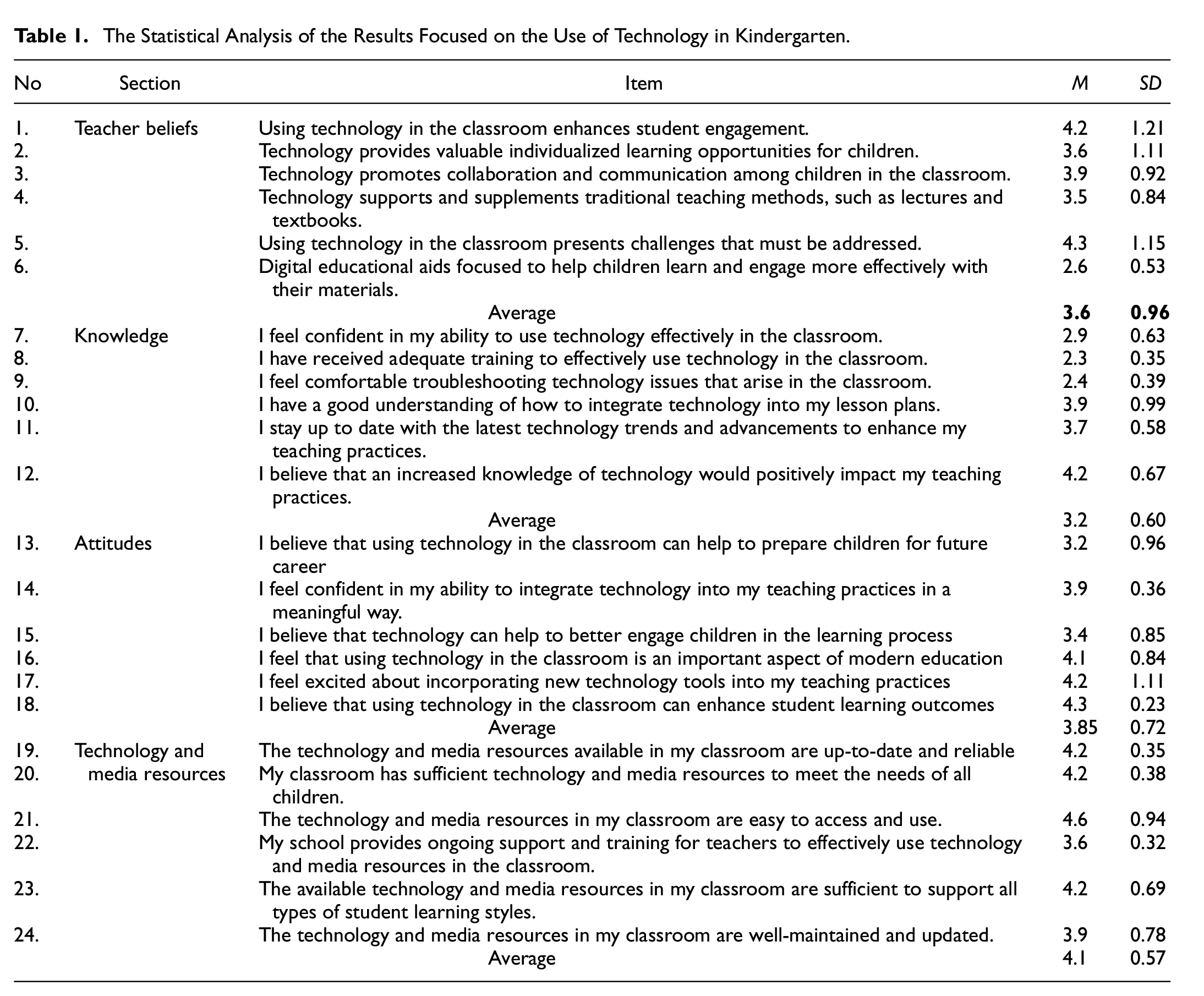
Results have shown that teacher beliefs, knowledge, and attitudes, as well as access to technology and media resources, can have a significant impact on the frequency and quality of technology and media use in preschool classrooms. Teachers who hold positive beliefs about the benefits of technology and media in education, possess strong knowledge of how to use it effectively, and demonstrate a willingness to incorporate it into their teaching practices are more likely to use technology and media frequently and effectively in the classroom. Moreover, access to technology and media resources also plays a critical role in determining the frequency and quality of technology and media use in preschool classrooms. Teachers who have access to up-to-date and reliable technology and media resources are more likely to incorporate them into their teaching practices and use them effectively (Bice & Tang, 2022).
In contrast, teachers who lack access to technology and media resources, or who have limited knowledge and skills in using them, may be less likely to use these resources in the classroom. This can result in missed opportunities for enhancing student learning experiences and preparing them for the digital world. Therefore, it is important for schools to provide teachers with the necessary training and support to effectively integrate technology and media resources into their teaching practices. Schools should also ensure that teachers have access to up-to-date and reliable technology and media resources to facilitate effective use of these resources in the classroom. By doing so, teachers can provide a more engaging and effective learning environment for their children, promoting their development and success in the digital age.
Therefore, it is important for schools to provide teachers with the necessary training and support to effectively integrate technology and media resources into their teaching practices (Basilotta-Gómez-Pablos et al., 2022). This can include professional development opportunities, workshops, and ongoing support to help teachers develop the necessary knowledge and skills to use technology and media effectively in the classroom. Schools should also ensure that teachers have access to up-to-date and reliable technology and media resources, such as computers, tablets, and educational software, to facilitate effective use of these resources in the classroom.
In the context of exploring the relationship between the level of knowledge of teachers’ attitude toward the use of technology in the classroom and the level of children’ motivation and awareness, SEM could be used to model the direct and indirect effects of these variables on each other as shown in Figure 2. The relationship between the level of knowledge of teachers’ attitude toward technology (such as their knowledge and skills in using technology, their attitudes toward technology, and their perceptions of the benefits of technology use) and the level of children’ motivation and awareness (such as their engagement, interest, and understanding of the use of technology in the classroom). Furthermore, teachers’ attitudes toward technology have the strongest direct and indirect effects on children’ motivation and awareness toward technology use. This information could be useful in developing targeted interventions to improve technology integration in the classroom, such as providing professional development opportunities for teachers to improve their knowledge and skills in using technology, or providing support for teachers to design technology-enhanced lessons that can increase student motivation and awareness.
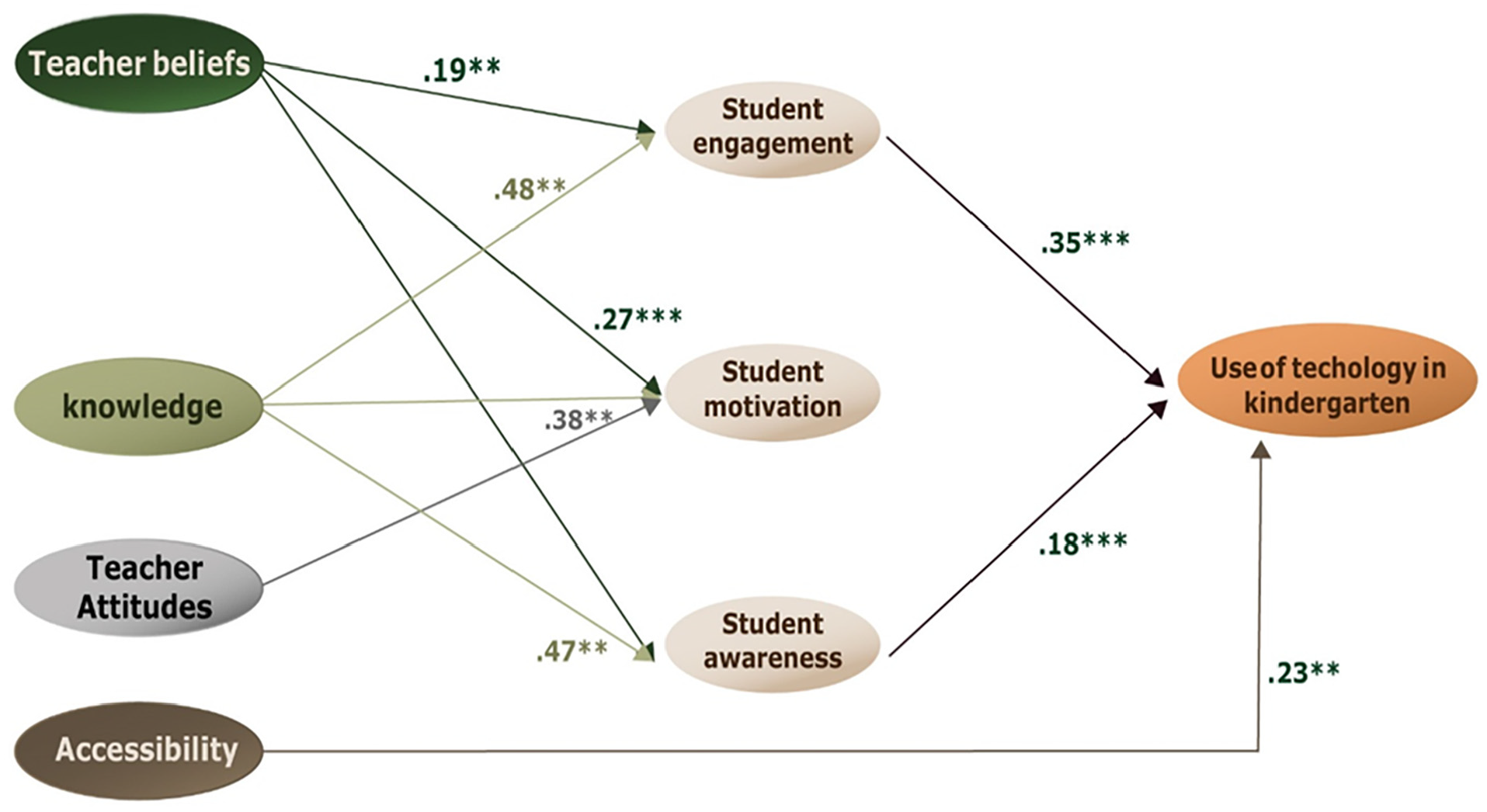
Relations between instructional factors, teacher acceptance, and use of media and technology in preschool classrooms.
Interview Analysis
NVivo 14, was used to analyze the results of the personal interview, and Figure 3 illustrates the key findings and recommendations that emerged from the interview regarding the improvement of the use of educational materials in kindergarten classes. The study found that many teachers had positive beliefs about the benefits of using digital educational aids in the classroom. These benefits included increased student engagement, improved learning outcomes, and more personalized learning experiences. However, some teachers expressed concerns about the potential negative effects of technology on young children, such as over-reliance on screens and decreased social interaction. Access to technology was also found to play a significant role in the use of digital educational aids in preschool classrooms. Teachers who had access to reliable and up-to-date technology and media resources were more likely to use them effectively in their teaching practices. In contrast, teachers who lacked access to these resources had limited opportunities to use digital educational aids in the classroom and relied more on traditional teaching methods.

Interview coding using NVivo 14 software.
The availability of appropriate digital educational aids was also cited as a significant factor affecting their use in preschool classrooms. Teachers reported that many existing digital educational aids were not appropriate for young children and did not align with the curriculum. As a result, teachers had to spend time searching for and adapting digital educational aids to meet the needs of their children, which could be time-consuming and challenging.
The interview identified several psychological factors such as teacher beliefs and attitudes, student engagement and motivation, and the potential impact on social development can significantly influence the use of digital educational aids in preschool classrooms in Saudi Arabia. It is essential for educators to consider these factors when incorporating digital educational aids into their teaching practices. By addressing these factors, teachers can promote the effective use of digital educational aids in the classroom, enhancing student learning experiences while also ensuring their social and emotional development (Kilag et al., 2022).
The current study’s findings align with previous research in several ways. Firstly, the study’s identification of factors that influence the effective use of technology in preschool classrooms, such as teacher beliefs and attitudes, availability and accessibility of technology, and curriculum and pedagogy, are consistent with previous studies (Gözüm et al., 2023; Rad et al., 2023). Second, the study’s finding that teachers’ beliefs and attitudes toward technology use in the classroom is a significant factor in determining the effective use of technology, is consistent with previous research (Galman, 2023). This highlights the importance of addressing teachers’ beliefs and attitudes toward technology use in professional development programs and support systems. Thirdly, the study’s finding that the availability and accessibility of technology in preschool classrooms is a significant factor in determining the effective use of technology, is consistent with previous research (Wolak & Kim, 2023). This highlights the need for policymakers and school leaders to ensure that preschool classrooms have access to adequate technology resources and infrastructure.
The practical implications of the findings for early childhood educators, policymakers, and teacher training programs are significant. Firstly, the study highlights the need for ongoing professional development opportunities for early childhood educators to develop their skills and confidence in using technology in the classroom. This could include training programs that focus on integrating technology into curriculum and pedagogy, as well as addressing teachers’ beliefs and attitudes toward technology use.
There are several potential challenges in addressing the factors identified in the study. One challenge is the cost of providing access to technology resources and infrastructure, particularly for schools in low-income areas. Another challenge is the need for ongoing professional development opportunities for early childhood educators, which can be time-consuming and resource intensive.
To overcome these challenges, policymakers and school leaders could consider several strategies. For example, they could provide funding and resources to support the development of technology infrastructure in low-income schools, as well as providing ongoing professional development opportunities for early childhood educators. Additionally, they could consider partnering with external organizations and experts to provide additional support and resources for technology integration (Lei et al., 2023).
Conclusion
The effective integration of technology into early childhood education is crucial for developing children’s technological awareness. Kindergarten teachers play a critical role in this process and need to possess the necessary skills and knowledge to do so. This study aimed to examine the factors that influence early childhood educators’ use of digital educational aids, using a sequential explanatory design that involved both quantitative and qualitative data collection. The survey data collected from 369 early childhood educators revealed that attitudes toward the value of technology in aiding children’s learning had the strongest influence on technology use. Additionally, semi-structured interviews were conducted with 62 educators, revealing that teacher beliefs, knowledge, and attitudes, as well as access to technology and media resources, influenced the frequency and quality of technology and media use in preschool classrooms.
The study’s findings highlight the importance of professional development and training for teachers to effectively integrate technology and media into early childhood education. The kindergarten stage is critical in preparing children for future learning and development, and as such, it should be a compulsory stage available to all children or serve as the foundation of the educational. The study suggests that a combination of factors, including teacher beliefs and attitudes, access to resources, pedagogical practices, and professional development, can influence the frequency and quality of technology and media use in preschool classrooms.
Footnotes
Acknowledgements
The authors are thankful to the Deanship of Scientific Research at Najran University for funding this work under the Research Priorities and Najran Research funding program grant code (NU/NRP/SEHRC/12/7).
Author Contributions
The author of the work is the one who carried out all the research procedures, analyzed the data, processed, and interpreted it, and reached the results of the study.
Declaration of Conflicting Interests
The author declared no potential conflicts of interest with respect to the research, authorship, and/or publication of this article.
Funding
The author disclosed receipt of the following financial support for the research, authorship, and/or publication of this article: to the Deanship of Scientific Research at Najran University for funding this work under the Research Priorities and Najran Research funding program grant code (NU/NRP/SEHRC/12/7).
Informed Consent Statement
Informed consent was obtained from all subjects involved in the study.

Data Availability Statement
The raw data supporting the conclusions of this article will be made available by the authors, without undue reservation.