




Abstract
This study aims to investigate the role of virtual society in generating social capital, taking into account the challenges associated with new technologies and social arrangements. The study utilizes descriptive analysis and partial least squares path modeling to analyze participant data. The technology acceptance model is employed to assess perceptions of virtual society platforms, specifically Facebook and WhatsApp, in terms of ease of use and value. he study reveals a significant positive relationship between virtual society and the development of social capital. Positive attitudes toward virtual society platforms are associated with increased social capital, particularly in terms of bridging and bonding. The relationship is moderated by the amount of time spent on social networking sites. Limitations of the study include its focus on specific platforms and reliance on self-reported data. Future research can explore additional platforms and employ diverse data collection methods to enhance the understanding of virtual society and social capital formation. This study emphasizes the importance of online attachment and connection for the formation of social capital. The findings inform policy-making and decision-making in organizations by highlighting the role of virtual society platforms in fostering social capital. This research contributes to the understanding of the relationship between virtual society and social capital, shedding light on collaboration patterns and technology reliance in virtual environments. The study’s originality lies in its examination of Facebook and WhatsApp as platforms and the exploration of the moderation effect of time spent on social networking sites. The findings offer valuable insights for academia and practical applications.
Introduction
Social capital has garnered considerable attention within academic discourse, encompassing various fields of investigation that are of critical significance (Robison et al., 2002). It serves as a valuable framework for comprehending diverse social issues that arise within communities and families (Adler & Kwon, 2002). Scholars in the social sciences and humanities particularly employ the concept of social capital to gain insight into trust, mutual understanding, interconnected relationships, social network structures, shared norms, and participation, as well as the roles these entities assume across different temporal dimensions in various community settings (Coleman, 1988)
Despite the growing body of research in the field of social capital, there is a paucity of literature that extends this discourse to encompass technology-driven learning communities, also referred to as virtual learning communities (Pretty & Ward, 2001). Social capital has emerged as a crucial area of inquiry, drawing upon an array of disciplines in the social sciences and humanities. Recently, it has been extensively applied to unravel social issues prevalent within contemporary communities (Portes, 2000; Hussain et al., 2020). For instance, social capital has been employed to shed light on the challenges concerning civic engagement, the role of social capital in fostering civic ethics, and the potential economic benefits associated with social capital (Portes, 2014).
The present study aims to investigate the role of virtual communities in the development of social capital (Blanchard & Horan, 2000). The significance of this research endeavor is particularly evident in light of the recognition that emerging technologies pose significant challenges (Stone, 2001). Such challenges arise due to concerns regarding potential negative consequences of these new technologies and their impact on social life, (Ali et al., 2017), including disruptions, loneliness, depression, and fear of social capital loss (Facer, 2011). Therefore, it is crucial to determine whether virtual communities play a role in fostering social capital (Blanchard & Horan, 2000; Durlauf, 1999).
Collaborative science writing has brought prominence to the emerging concept of virtual communities (Van Kralingen & Prins, 1997). Prominent theories in the field of cyberspace studies depict virtual communities as a concept that embodies the inevitable and transformative impact of emerging technologies. The development of virtual communities influences technological advancements (Woolgar, 2002). Notably, Woolgar (2002) remarked that virtual communities are just one overarching term used to describe the outcomes of new technologies. It represents a particular worldview shaped by technology, coexisting with other conceptions such as information society, networked society, and global society (Hooghe & Stolle, 2003).
The significance of technology in human communication is widely recognized across various fields associated with human development (Danowski, 1980). Virtual human interaction has emerged as a central research area for human resource development experts (Xiao et al., 2013). In the realm of virtual human resource development, technology plays an essential and influential role, as virtual human interaction patterns have evolved alongside technological advancements (Bennett & Bierema, 2010).
In recent years, virtual platforms, (Hussain et al., 2018), have witnessed a surge in their utilization for various purposes (Burke & Larmar, 2021). Virtual education, as a novel instructional approach, offers cost-effectiveness and ease of access to knowledge (Cho & Hong, 2021). Political analysts have identified the economic and inclusionary dimensions of virtual education, arguing that it has the potential to lower costs and promote greater inclusivity (Verlenden et al., 2021). Thus, virtual communities represent an evolved form of open society, where patterns of connections are transformed, enabling individuals to communicate and interact in virtual environments (Stefanoudis et al., 2022). The widespread adoption of virtual communication patterns has resulted in an increasing number of interconnected individuals, fostering the maintenance and expansion of existing relationships (Moore et al., 2021).
Research Objectives
This research endeavor aims to accomplish several objectives, delving into various aspects of the subject matter in a comprehensive manner. Firstly, the study seeks to investigate and assess the role of emerging virtual communities in fostering social capital. By examining the interactions and relationships within these online communities, the research aims to shed light on how virtual platforms contribute to the formation and enhancement of social capital.
Secondly, the study aims to explore the formation and dynamics of bridging social capital within the context of virtual communities. Bridging social capital refers to the connections and networks that exist between individuals from different backgrounds or social groups. By examining the characteristics and patterns of bridging social capital within virtual social networks, this research seeks to uncover the mechanisms that facilitate cross-group connections and information sharing.
Lastly, the research endeavors to elucidate the processes and mechanisms involved in the development of bonding social capital within virtual social networks. Bonding social capital refers to the connections and relationships formed within a specific group or community. By investigating the factors that contribute to the development of bonding social capital within virtual communities, the study aims to deepen our understanding of how these connections are formed, maintained, and utilized for various purposes.
Through the accomplishment of these objectives, this research seeks to provide valuable insights into the role of emerging virtual communities in nurturing social capital, as well as the formation and dynamics of both bridging and bonding social capital within these digital environments. Following research objectives are developed for this study:
RO1: To investigate and assess the role played by emerging virtual communities in nurturing social capital.
RO2: To explore the formation and dynamics of bridging social capital within the context of virtual communities.
RO3: To elucidate the processes and mechanisms involved in the development of bonding social capital within virtual social networks.
A hypothesis is a precise statement of expectation that describes, in concrete terms, the anticipated outcome of a research inquiry (Banerjee et al., 2009). However, not all studies require hypotheses, as some may have exploratory aims. In such cases, the purpose of the investigation may be to gain a deeper understanding of a field, leading to the formulation of specific hypotheses or predictions that can be tested in future studies (Toledo et al., 2011). It is important to note that a hypothesis can consist of one or more specific statements. In alignment with the objectives of this study, the following hypotheses have been formulated:
The relationship between attitude toward Facebook and the development of social capital: A positive correlation is observed between attitudes toward Facebook and the bridging of social capital, indicating that higher scores on Facebook attitude scales are associated with increased bridging. Likewise, a positive correlation is found between attitudes toward Facebook and the bonding of social capital, suggesting that higher scores on Facebook attitude scales are linked to enhanced bonding .
The relationship between attitude toward WhatsApp and the development of social capital: A positive association is identified between attitudes toward WhatsApp and the bridging of social capital, with higher scores on WhatsApp attitude scales being associated with increased bridging.
Similarly, a positive correlation is observed between attitudes toward WhatsApp and the bonding of social capital, indicating that higher scores on WhatsApp attitude scales are linked to enhanced bonding.
Literature Review
The evolution of information and communication technologies has led to transformative changes in societal interaction patterns and communication modalities (Belvedere et al., 2013). This research aims to examine the dynamics of two distinct virtual platforms, namely Facebook, a widely accessible social networking site, and WhatsApp, a mobile messaging application primarily used for portable interactions (Susilo, 2014). Specifically, this study investigates the extent of bridging and bonding social capital within these two diverse virtual mediums. It further explores the potency of fostering and maintaining social capital within virtual communities. The findings of this study have implications for the formulation of future cyber laws and policies, as they shed light on evolving patterns of associations and emerging virtual societies (Halder & Karuppannan, 2009).
The outcomes of this investigation hold relevance for organizations that provide online services to the public and society at large. By leveraging the results of this study, these organizations can make informed improvements to their functions, considering the numerous challenges they face in delivering online services (Omonaiye et al., 2015). The significance of this study becomes evident in the recognition that social networking platforms offer abundant resources and opportunities for cultivating positive social capital (Schellong, 2007). Furthermore, the empirical findings of this study serve as a foundation for future research, opening new avenues for researchers to explore in this field and expand upon the existing investigations.
The perspective of technological determinism recognizes the internet as a transformative force that significantly impacts children, particularly adolescents, by shaping novel patterns of communication, motivation, and inspiration (O’Mara & Harris, 2016). Various terms have been employed by different scholars to describe this younger generation, including the “Net-generation,” the “millenium years’ generation,” and the “digital locals” (Fauzi & Palino, 2022; Jones et al., 2010). These terms refer to individuals who were born and raised during the peak of internet development. They were immersed in an environment where computer games, online gaming, social networking tools, and mobile messaging applications were pervasive and deeply integrated into their daily lives (Shkola et al., 2022).
Research on social capital can be broadly categorized into two approaches. Firstly, some scholars focus on the network connections between individuals as a means of communication (Uslaner, 1999). They examine the structure of relationships and how they facilitate the flow of resources and information within a community. On the other hand, there are researchers who, in contrast to measuring social capital through network connections, prefer to measure the shared beliefs and values among individuals and emphasize association memberships (Hooghe & Stolle, 2003). This approach acknowledges that individuals are organized based on shared norms and collective identities (Grishchenko, 2022).
Scholars have traditionally recognized social capital as one of the three forms of capital, alongside physical capital and human capital (Carpiano, 2006; Geraci et al., 2022). However, economists often viewed capital solely in terms of financial gain, leading them to prioritize financial capital, labor, and physical capital as the primary forms of capital and rational self-interest as the driving force behind economic decision-making (Ng, 2022; Sutherland & Burton, 2011). Critics argue that this perspective overlooks the embeddedness of social relationships in all forms of economic exchange and reduces every life decision to a financial one (Aguilar & Sen, 2009; Hong & Kim, 2022).
While financial transactions are indeed social in nature, they are embedded within a social exchange framework (Rogošić & Baranović, 2016). Social capital, on the other hand, is characterized by organized relationships and connections that can be transformed into economic capital in certain contexts (Fatoki, 2011). It encompasses informal networks or associations based on family, tribe, or class, which are reinforced through ongoing interactions that establish and reaffirm trust and obligations (Foley & Edwards, 1999). Thus, social capital provides a theoretical framework for understanding the relationships and exchanges that govern the allocation of physical and human capital, offering insights into why such exchanges occur beyond mere self-interest (Adler & Kwon, 2000; Navarro, 2002).
Coleman builds upon Bourdieu’s ideas regarding the utilization of social capital in resource distribution, specifically in the context of social media (Häuberer, 2011). He defines social capital as the arrangement or social structure that allows certain actions of actors to take place within a system. For example, in tightly-knit communities, norms and obligations are imposed on community members, facilitating more effective assessment and exchange of resources, such as the diamond trade in certain societies (Wall et al., 1998). Researchers argue that the benefits of social capital enable individuals within a community to access resources they may not possess through their personal networks. This is achieved by creating “credit notes” where individuals provide assistance or resources to others in the present, with the expectation of reciprocation or assistance when needed in the future, based on principles of obligation and trust (Grossman, 2013).
While physical capital and human capital are individually owned and are tools created from raw materials and skills developed through human agency (Araujo & Easton, 1999), their impact on a community goes beyond their individual possession and has significant implications within the social context of the community (Kay & Hagan, 2003). Some scholars refer to this as social capital, which entails changes in human relationships that facilitate collective action for the benefit of all (Ivana, 2017). When invested in a community, social capital allows individuals within that community to gain access to physical and human capital (S. Y. Lee & Lee, 2022). In this case, human capital refers to the skills and knowledge that an individual possesses through education or socialization, which cannot be directly transferred to one’s own children or neighboring bonds and networks required for transmission (N. Lin, 1999). Social capital is also characterized as an “investment with expected returns,” indicating that it yields social bonds and benefits for its members, and the broader society continually reaps the benefits of its formation (Jackson, 2010).
Network connections can serve as evidence of an individual’s affiliation within a network, lending credibility to their credentials (Saffer, 2016). Social ties, particularly weak ties facilitated by shared acquaintances, strengthen an individual’s identity, allowing them to gain access to new groups and networks that have been established over time (Light, 2004).
In this context, financial benefits are considered as additional outcomes of social capital (Chang & Zhu, 2012). The political landscape is also influenced by the presence or absence of social capital within a community. Social capital contributes to more effective political mobilization and cooperation, while the lack of social capital leads to disadvantages in community engagement (Hazleton & Kennan, 2000).
Researchers criticize the various conceptualizations and measurement approaches of social capital, with consistency among researchers being a significant challenge (Nosratabadi et al., 2020). Synthesizing these differences helps in understanding how social exchanges relate to economic transactions (Chua et al., 2012). Some researchers argue that economic transactions depend on social networks characterized by norms, obligations, information channels, and communication patterns (Nosratabadi et al., 2020; Thomas, 1996). They propose that physical and human capital can coexist within social contexts. However, other scholars posit that the economic outcomes are more likely to be the result of social capital formation (Bozionelos, 2015; Liu & Jiang, 2020; Surucu-Balci & Balci, 2023). They suggest that social capital enhances society’s economic potential, but this effect is not contingent solely on societal relations (Atshan et al., 2020; Chou, 2006).
Social capital has been a subject of great interest among mass communication researchers (Zhang & Chia, 2006). However, some scholars have criticized certain aspects of their work (de Zúñiga et al., 2017). Understanding the decline in civic behavior has been a focus of researchers, who have sought to explore the reasons behind this trend (Gil de Zúñiga et al., 2012). One particular issue that has been examined is the impact of television advertising, with many attributing a significant portion of the decline in civic behavior to the rise of television in American households, particularly during the 1960s (Kim & Kim, 2017).
Television became a prominent fixture in American homes and played a role in shaping society (Finkbeiner, 2013; Kim & Kim, 2017). Some researchers argue that television, by consuming individuals’ leisure time in private settings, contributes to increased social isolation and hinders engagement with local communities (Norris, 1996; van Zoonen et al., 2022). However, some mass media researchers argue that the media itself does not directly replace individuals’ leisure time, leading to the erosion of social capital. They suggest that individuals may not be aware that a lack of time leads to a lack of social interaction (Olken, 2009). According to these scholars, television does not necessarily cause the erosion of social capital but rather the time spent watching television collectively impacts social interactions (Pang, 2022; Shah, 1998).
In recent years, the use of social media has emerged, (Hussain et al., 2019), as a powerful and popular platform for forming social capital (Gil de Zúñiga et al., 2012). For example, using television for information-seeking purposes is positively associated with social capital, whereas using television for entertainment purposes is negatively linked (T. T. C. Lin & Chiang, 2019; Mohan & Mohan, 2002). Advertising can also have a positive impact, as research has shown the utility of advertising campaigns in fostering local community formation and providing links to vital information that individuals can use to understand what is happening in their community, such as public health initiatives (Grugulis & Stoyanova, 2012). However, it is important to note that not all forms of entertainment have the same effect on social capital (Razeghi, 2006). Social media, on the other hand, has been recognized as a primary platform for forming virtual communities and promoting social development (Bin & Jun, 2011; Norris, 1996; Zimmerman, 2022).
Researchers have highlighted the potential for disengagement in certain situations when it comes to the internet (Ji et al., 2010; Schrock, 2016). Comparing television and web-based communication, they have found that it is still too early to fully assess the impact of the internet on face-to-face social interactions. However, they have acknowledged that individuals appreciate many of the same features that the internet offers, which can be more effective compared to television (Quan-Haase & Wellman, 2004). They have further argued that people often connect with others through their devices rather than through in-person interactions and have identified websites as a tool for facilitating connections and bringing people together (David et al., 2021; Keles, 2015; S. Y. Lee & Lee, 2022).
Social media platforms differ from traditional media outlets, such as print magazines, newspapers, television, and radio broadcasts, in various aspects including quality, coverage, frequency, accessibility, relevance, and persistence (Liao et al., 2021). Additionally, social media operates on a conversational delivery system, where there are multiple sources interacting with multiple recipients, whereas traditional media follows a single delivery model (i.e., one source to many recipients) (Sirola et al., 2021). For instance, a newspaper is distributed to numerous subscribers, while a radio station broadcasts the same program to an entire city. Given the expansive nature of the internet, digital media or conversations can be used to represent or identify a particular culture, and studying the dynamics of online discourse has become an important area of research for many scholars (Luo et al., 2021). Observers have noted a wide range of positive and negative impacts of social media, including its ability to enhance an individual’s sense of connection in both real and online contexts (Luo et al., 2021).
Methods
The population refers to the entire framework of the study area. While some studies aim to cover the entire population, it is often impractical to do so, leading to the adoption of sampling techniques. For this study, the focus was on a targeted population in Pakistan, as it is not feasible to include the entire population (Blaum et al., 2021; Dahabreh et al., 2021). The specific population selected for this research is referred to as the target population (Haselswerdt, 2021). In this study, the target population comprised Facebook and WhatsApp users from selected universities in Pakistan.
Within the context of study research, an element represents an actual unit under investigation, from which survey data is collected. Elements can vary depending on the purpose of the survey and may include adults, children, families, employees, businesses, students, teachers, schools, uniformed personnel, civilian workforce, police districts, libraries, books in a library, pages in a book, or various other entities.
Sampling involves the process of selecting a subgroup from a population to participate in research. It is a method of carefully choosing individuals in a way that ensures they are representative of the larger group from which they were selected (Balciunaite & Vaskelyte, 2021).
Simple strategies for sampling involve selecting a sample from a comprehensive list of sampling units known as a sampling frame (Hughes et al., 2021). In the current research, the sampling frame consisted of public sector universities in Pakistan. The sampling plan establishes the criteria for identifying individuals within the population who are eligible to be included in the sample, delineating the boundaries or specifications for the cases deemed suitable for consideration within the sample (Mumtaz & Smith, 2021).
A total of 626 participants were included in the current study, with the sample size determined using the Taro Yamani formula. (Olusadum & Anulika, 2021).
Taro Yamane formula:
In order to achieve a comprehensive and in-depth understanding of the research topic, quantitative research techniques were employed to gather the required data from the targeted population in Pakistan (Turnbull et al., 2021). To enhance comprehension, a theoretical/conceptual framework was developed specifically for this study. The framework serves as a guiding structure that outlines the key concepts, variables, and relationships under investigation, providing a foundation for the analysis and interpretation of the collected data.
The scales employed in this study have been previously applied and validated within the country, ensuring their relevance and appropriateness for the research objectives. Through an adaptation process, the scales were tailored to the specific socio-cultural context of the investigation. This involved reviewing existing literature and consulting with experts to accurately capture the constructs under examination within the targeted population of Facebook and WhatsApp users in selected universities in Pakistan. To assess the validity and reliability of the scales, established procedures were followed. Content validity was ensured by carefully examining the items to guarantee their relevance to the research constructs. Additionally, a pilot study with a sample of 30 was conducted to assess internal consistency using statistical measures such as Cronbach’s alpha. While drawing upon prior studies and incorporating adapted scales, this work is not solely an adaptation study. The research aims to investigate the impact of virtual society on social capital formation within the Pakistani context, with a specific focus on Facebook and WhatsApp users in selected universities. Quantitative research techniques were employed, guided by a theoretical/conceptual framework that supports the analysis and interpretation of the collected data. The utilization of established and validated scales, tailored to the context, along with a comprehensive methodology, contributes to the advancement of knowledge in this field while ensuring the rigor and validity of the findings.
Rationale for the Use of Partial Least Squares (PLS) in the Study
The choice to employ Partial Least Squares (PLS) as the analytical method in this study is supported by several key considerations that align with the specific research objectives and characteristics of the investigation (Gefen et al., 2000). The primary focus of the study revolves around exploring the complex relationships among latent variables within a structural model. PLS is well-suited for this purpose as it facilitates the analysis of high-dimensional data and accommodates both formative and reflective measurement models (Komiak & Benbasat, 2006). By utilizing PLS, the study aims to capture and evaluate the intricate relationships among the latent constructs, contributing to a comprehensive understanding of the phenomenon under investigation (Barclay et al., 1995).
Additionally, PLS offers distinct advantages in scenarios where the sample size is relatively small or the data distribution deviates from normality, common challenges encountered in social science research (Haenlein & Kaplan, 2004). Given the constraints of limited sample size and potential non-normal data distributions in this study, the robustness of PLS is particularly relevant. By utilizing PLS, reliable estimates can be obtained even with smaller sample sizes, enhancing the validity and accuracy of the findings (Henseler et al., 2009).
Furthermore, PLS enables the exploration of both predictive and exploratory research objectives. It allows for the development of predictive models while simultaneously facilitating the examination of underlying causal relationships and mechanisms. This aspect is of significant relevance to the study, as it aims to uncover not only predictive outcomes but also to explore the underlying relationships and mechanisms (Hair, Jr et al., 2016). Therefore, the use of PLS aligns with the research goals and contributes to a comprehensive analysis of the investigated phenomenon.
Theoretical/Conceptual Framework
Figure 1 represents the theoretical framework employed in this study, illustrating the relationship between the independent variables, Facebook and WhatsApp, which pertain to the virtual society, and their impact on the dependent variable, the formation of social capital. The technology usage behavior of the participants was assessed through two mediating variables, namely the usefulness and ease of use of virtual technology. Additionally, the time spent by respondents on virtual technology was considered as a moderator in this study. The dependent variable was further examined and measured through two variables, namely bonding and bridging.

Theoretical/conceptual framework.
Target Population and the Sample Size
The target population for this study was derived based on the focus on Facebook and WhatsApp users from selected universities in Pakistan. Specifically, the study aimed to investigate the usage patterns and social capital formation within these virtual communities among university students in Pakistan. To determine the sample size, the Taro Yamane formula was employed. This formula takes into account the population size and desired level of precision. In accordance with the formula, a sample size of 626 participants was determined as appropriate for this study. The sampling frame utilized for participant selection consisted of a comprehensive list of public sector universities in Pakistan. From this sampling frame, a systematic sampling approach was employed to select participants, ensuring that they were representative of the larger target population. In this study, a total of 12 universities were sampled to capture a diverse range of perspectives and experiences among Facebook and WhatsApp users in different academic settings across Pakistan. These universities were selected based on their geographical distribution and student enrollment numbers, ensuring a comprehensive representation of the target population.
Results and Discussions
The analysis plan was developed to investigate the impact of virtual communities on the formation of social connections. Initially, descriptive analysis was conducted to examine the means and frequencies of the data, providing a comprehensive overview. To further enhance our understanding, the data analysis followed a two-step approach, consisting of descriptive analysis and inferential statistical analysis, using Smart PLS-SEM.
To evaluate the influence of observed variables and their underlying constructs on social capital, Smart-PLS version 3.2.8 was employed. PLS-SEM is a widely recognized and utilized tool in exploratory studies for theory development. It encompasses various applications, including path analysis, confirmatory factor analysis, second-order factor analysis, regression models, correlation structure models, and covariance structure models. This structural equation modeling technique enables the examination of linear relationships between latent constructs and observable variables, as well as the estimation of parameter values associated with the relationships among unobserved variables in the model. Moreover, SEM offers the advantage of conducting a comprehensive analysis by integrating multiple relationships within a single model.
For the assessment of social capital, the proposed model was analyzed using Smart-PLS version 3.2.8. This approach offers several advantages, particularly in its ability to examine multiple latent constructs comprising various observable variables associated with social capital. Following the recommended two-step procedure by Henseler et al., Smart-PLS evaluates both the outer measurement model and the inner structural model. PLS-SEM is widely acknowledged and favored in social science research as the most appropriate method for multivariate analysis, making it the ideal choice for our current study (Hair et al., 2021).
Comprehensive descriptive statistics were extracted to provide a detailed explanation of the study’s findings, including measures such as mean, standard deviation, kurtosis, skewness, and others. The kurtosis and skewness results, which fall within the range of −1 to +1, indicate that the data exhibited a normal distribution, thus enabling the measurement of social capital formation.
In order to identify the key factors influencing social capital formation in a virtual society, researchers conducted an extensive and critical literature review. From this review, two prominent social networking platforms, namely Facebook and WhatsApp, were identified as the primary platforms used by respondents in the targeted study area. The variables and their respective codes were developed and presented in Table 1.
Preliminary List of Factors.

The developed measurement model in this study aimed to evaluate the reliability, validity, and internal consistency of both observed variables obtained through surveys and unobserved variables. In order to ensure consistent and accurate evaluations, various tests were conducted to assess the reliability of constructs and individual observed variables, as well as to establish convergent and discriminant validity.
To determine the reliability of each individual observed variable, researchers examined their standardized outer loadings in relation to the unobserved variables. It was found that observed variables with outer loadings of 0.7 or higher were considered acceptable for predicting outcomes and were included in the analysis. Conversely, observed variables with outer loadings below 0.7 were excluded from further analysis. For the purpose of this study, a cut-off value of 0.7 was adopted for the outer loadings, representing the threshold for accepting their inclusion in the analysis.
In order to assess the internal consistency of the constructs, Cronbach’s alpha was employed as a reliability measure. The findings, as presented in Table 2, reveal that the values of Cronbach’s alpha surpass the minimum threshold of .70, indicating a high level of internal consistency in this study.
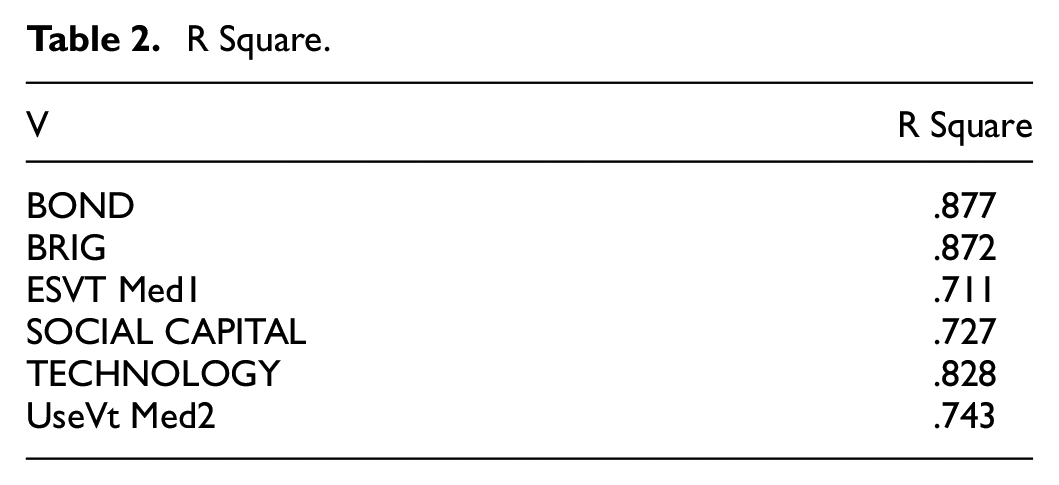
R Square.
In order to evaluate the convergent validity of the variables, we analyzed the Average Variance Extracted (AVE) for the latent constructs as shown in Figure 2. Previous research has indicated that the latent constructs should account for a minimum of 50% of the variance in the observed variables within the study model, and the AVE for each construct should exceed 0.5 (D. Lee, 2019).

Average variance AVE.
In our study, the graph displayed below provides evidence that all AVE values surpass the threshold of 0.5, thus affirming their validity for subsequent analysis.
Construct Reliability and Validity
In order to assess the discriminant validity of the study model, we subjected it to the Fornell and Larcker standard test, as presented in Tables 3 and 4. This test involves comparing the squared correlations with correlations from other latent variables. By examining these values, we can determine whether the constructs exhibit sufficient discriminant validity.
Construct Reliability and Validity.

Fornell and Larcker.

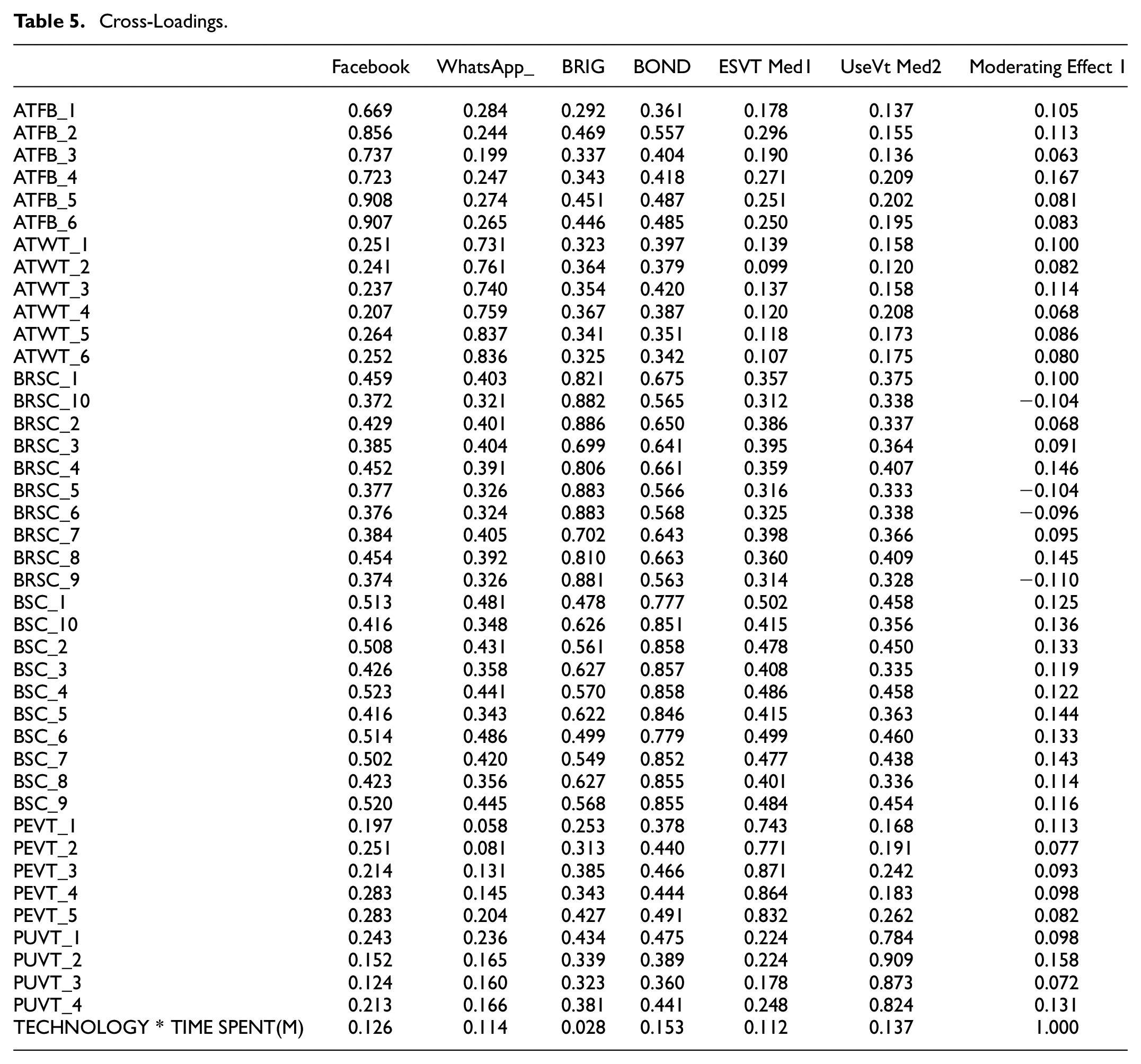
The cross-loading analysis conducted in this study as shown in Table 5 has provided valuable insights into the construct validity of the measurement model. The presence of low or negligible cross-loadings suggests that the observed variables are predominantly associated with their intended latent constructs.
Cross-Loadings.
Evaluation of the Inner Structural Model
The inner structural model of the study was evaluated based on key criteria to ensure its performance and efficacy. These criteria include the coefficient of determination (R2), path coefficient (β value), T-statistic value, predictive relevance of the model (Q2), effect size (ƒ2), and goodness-of-fit (GOF) index. Each of these measures plays a crucial role in assessing the quality and effectiveness of the inner structural model.
Value of R2
To determine the overall effect size in the structural model, the coefficient of determination, also known as R2, was utilized. This measure quantifies the amount of variance explained in the endogenous construct, thereby assessing the predictive accuracy of the model. In the present analysis, the inner path model yielded an R2 value of .72 for the endogenous latent variable of social capital, as depicted in the Figure 3. This indicates that the two primary independent variables, Facebook and WhatsApp, account for 72% of the variance in the measurement of social capital. Hence, it can be inferred that approximately 72% of the observed changes in social capital can be attributed to the latent variables included in the model.

Overall effect size.
According to previous research, an R2 value of .7 signifies a substantial effect size, while an R2 value of .50 is considered moderate, and an R2 value below .5 is considered weak in terms of model prediction. In this study, the obtained R2 value exceeds the required threshold, indicating a moderate effect size.
Assessment of Path Coefficients (β) and T-Statistics
Previous research has suggested that higher β values indicate a more substantial impact on the endogenous latent variable. In addition, the significance of the β coefficients is assessed through the T-statistics test. To evaluate the significance of the path coefficients and T-statistics values in this study, a bootstrapping procedure was employed, utilizing5,000 subsamples. The results, as presented in Table 6, Figures 4–9 indicate that no signifi-cant changes were observed, thus confirming the reliabil-ity of the hypothesis (Awang et al., 2015).
Path Coefficient and T-statistics.


Path coefficient Facebook versus Social Capital.

Path coefficient Facebook versus Technology.

Path coefficient Moderating effect and Social Capital.

Path coefficient Technology and Social Capital.

Path coefficient Time Spent and Social Capital.

Path coefficient of WhatsApp and Social Capital.
Table 6 helped explain the hypothesis developed for this study and proved that all the values show a supportive hypothesis.
Hypothesis Testing and Evaluation
In this section, although numerous hypotheses could have been tested, the focus was placed on a select few hypotheses, and conclusions were drawn accordingly.
Relationship Between Perceived Usefulness and Attitude Toward Facebook
H0: There is no relationship between Perceived Usefulness and Attitude toward Facebook.
H1: There is a relationship between Perceived Usefulness and Attitude toward Facebook.
According to the results presented in Table 6, the findings indicate a significant positive relationship (p < .001) between Perceived Usefulness and the attitude of the study participants toward Facebook. These results suggest that Perceived Usefulness is positively associated with the attitude toward Facebook among the study participants. In other words, an increase in the perceived usefulness of virtual communication platforms is likely to lead to a more favorable attitude toward Facebook. Similarly, individuals with a higher attitude score toward Facebook tend to perceive virtual communication platforms as more useful.
Relationship Between Perceived Ease of Use of Virtual Communication Platforms and Attitude of Respondents Toward WhatsApp
H0: There is no relationship between Perceived Ease of Use of Virtual Communication Platforms and Attitude of Respondents toward WhatsApp.
H1: There is a relationship between Perceived Ease of Use of Virtual Communication Platforms and Attitude of Respondents toward WhatsApp.
The results presented in Table 6 indicate a significant positive relationship (p < .001) between Perceived Ease of Use and the attitude of the study participants toward WhatsApp. These findings suggest that Perceived Ease of Use is positively associated with the attitude toward WhatsApp among the study participants. In other words, an increase in the perceived simplicity of utilizing virtual communication platforms is likely to result in a more favorable attitude toward WhatsApp. Likewise, individuals with a higher attitude score toward WhatsApp tend to perceive virtual communication platforms as easier to use.
Relationship Between Time Spent on WhatsApp and Bridging of Social Capital
H0: There is no relationship between Time Spent on WhatsApp and Bridging of Social Capital.
H1: There is a relationship between Time Spent on WhatsApp and Bridging of Social Capital.
The results presented in Table 6 indicate a significant positive relationship (p < .000) between Time Spent on WhatsApp and Bridging of Social Capital. These findings provide evidence for a meaningful association between the amount of time individuals spend on WhatsApp and the bridging of social capital. The obtained p-value, which is less than .01, highlights the statistical significance of this correlation. The data suggests that an increase in the duration of WhatsApp usage is directly associated with a higher level of bridging social capital. Hence, changes in the time allocated to WhatsApp usage are expected to have a corresponding impact on the degree of bridging social capital. Furthermore, as respondents devote more time to WhatsApp, it is likely to result in a greater facilitation of bridging social capital through the platform.
Graphical Representation of the Path Coefficient
Measuring the Effect Size (ƒ2)
In order to evaluate the impact of each independent variable on the dependent variable, the concept of ƒ2 was employed as a measure of effect size (Table 7). This metric quantifies the magnitude of influence that each exogenous latent construct has on the endogenous latent variables. To determine the effect size of the variables, a systematic procedure was employed whereby the latent exogenous variables were sequentially removed, and subsequent tests were conducted to observe any changes in the coefficient of determination (R2). This analysis aimed to determine whether the removal of a particular latent exogenous construct had a significant impact on the value of the latent endogenous variable. The effect sizes were categorized based on the values of ƒ2, with a value of 0.35 indicating a strong effect, 0.15 indicating a moderate effect, and 0.02 representing a weak effect. The findings of this study highlight significant and meaningful relationships among the variables of interest, as supported by prior research (Purwanto & Sudargini, 2021).
Measurement of Effect Size.

Predictive Relevance of the Model (Q2)
To evaluate the reliability and predictive power of the PLS path model, the Q2 statistics were employed. These statistics were obtained through blindfolding procedures and cross-validated redundancy. The Q2 criterion is a crucial measure of the model’s ability to predict the values of endogenous latent constructs. In the context of structural equation modeling (SEM), it is imperative for the Q2 values to exceed zero for each specific endogenous latent construct.
As illustrated in Figure 10, the Q2 values obtained for the present study’s path model were determined to be 0.72, surpassing the designated threshold. These results indicate that the path model exhibits satisfactory predictive relevance for the endogenous construct. The Q2 values provide evidence of the model’s robustness and its ability to accurately predict the values of the latent constructs under investigation (Memon et al., 2021).
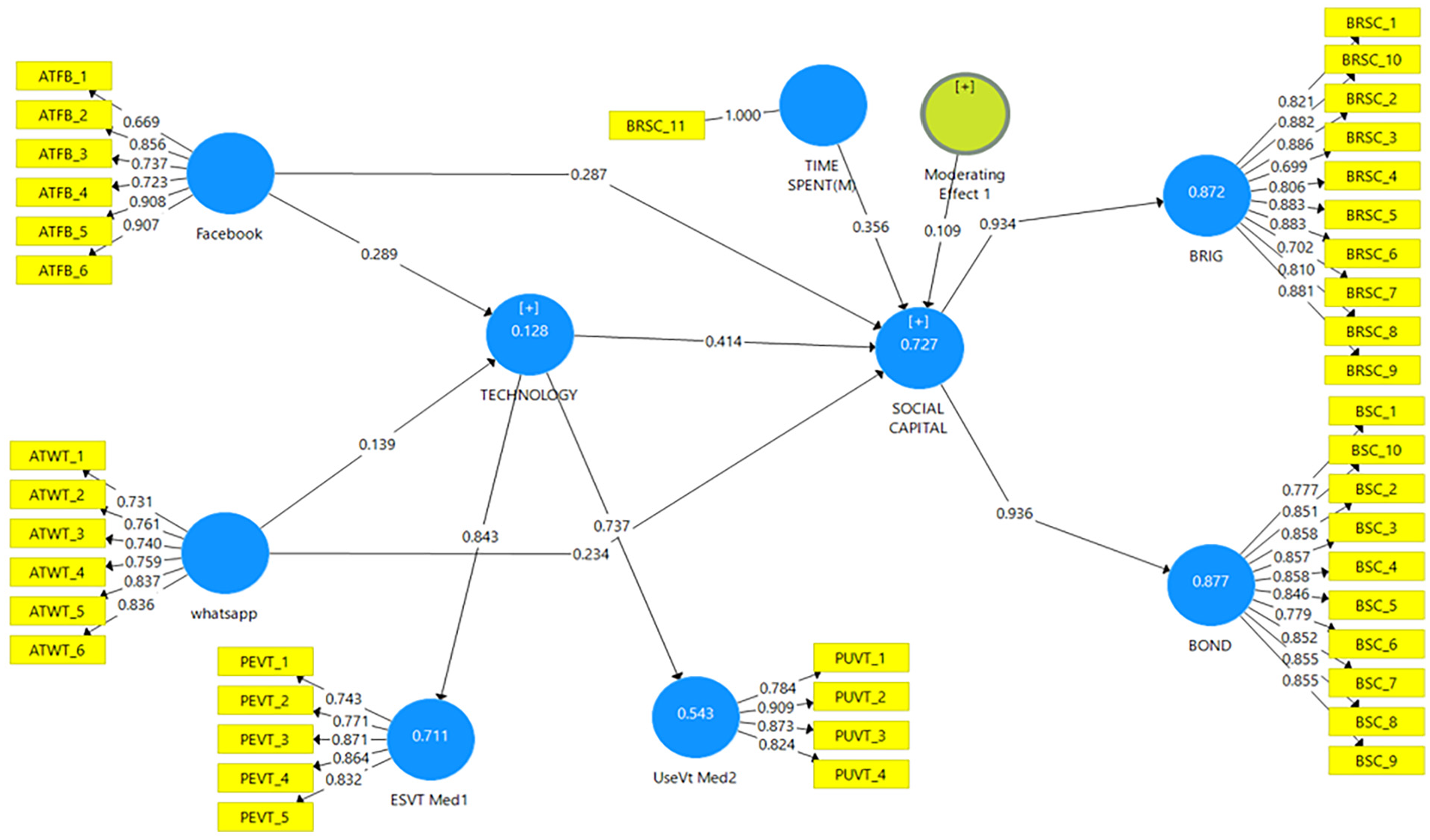
Predictive relevance of the model.
Goodness-of-Fit Index
The adequacy of the model in explaining the empirical data in the study is assessed using the Goodness-of-Fit (GOF) measure. The Goodness-of-Fit Index, which ranges from 0 to 1, provides an indication of the degree to which the model is considered appropriate. In this context, values of 0.10 (small), 0.25 (medium), and 0.36 (large) are commonly used to determine the overall acceptance of the path model in the study. It is widely recognized that a good model fit implies a balance between model simplicity and reliability (Tenenhaus et al., 2004).
The Goodness-of-Fit test incorporates the geometric mean value of the average communality (AVE values) and the average R2 value(s). Equation 1 is employed to calculate the Goodness-of-Fit test.

The Goodness-of-Fit test was conducted to assess the adequacy of the model, resulting in a value of 0.72 when utilizing the AVE and Average R2 measures. This value indicates that the empirical data in the study align well with the criteria for a good model fit and demonstrate substantial predictive capabilities compared to average values. These findings support the reliability and suitability of the model in explaining the observed data in the study.
Conclusions
The formation of social capital in virtual communities is profoundly influenced by the use of Facebook and WhatsApp. This study uncovers a positive and statistically significant relationship between increased usage and engagement on these platforms and the development of social capital, particularly in terms of social bonding. The findings highlight that higher usage of these social media platforms is associated with a greater formation of social capital.
Moreover, this study introduces a novel perspective by incorporating two mediating variables and a moderating variable. The analysis using PLS-SEM reveals a significant association between the dependent variable (social capital) and the mediating and moderating variables. These findings further strengthen the understanding of the interconnectedness and significance of the variables examined in this research.
In an evolving society, our daily interactions are increasingly shaped by virtual communication technologies. This study seeks to explore the contribution of social interactions and communication in virtual social networks to the formation of social capital. Specifically, it focuses on two prominent platforms: social networking sites and a mobile instant messaging application.
The study highlights the stronger influence of users’ perception of value on their attitude toward Facebook and WhatsApp compared to perceived ease of use. The findings indicate that social networking sites play a positive role in the formation of social capital within virtual communities. The technological features of these platforms, including their ease of use and usefulness, act as mediators in the process of social capital formation. Moreover, the amount of time users spend on virtual technology moderates the relationship between technology use and the formation of social capital, with increased time leading to greater social capital.
The study emphasizes the significant association between virtual technology and the primary outcomes of social capital, namely bridging and bonding. Thus, placing more emphasis on virtual communities can enhance the formation of social capital. It is recommended that governments prioritize the provision of reliable internet services and establish effective cyber strategies to foster online social capital. Service providers should also prioritize security policies to ensure the safe and secure usage of virtual communication platforms. Leveraging virtual social networks for social marketing services can contribute to public health and education. Furthermore, virtual communities should be utilized to promote social development and increase social capital.
In conclusion, this study sheds light on the importance of virtual communities and their impact on the formation of social capital. The findings suggest that leveraging the potential of virtual communication platforms can have significant social and developmental benefits.
While this study specifically focuses on Facebook and WhatsApp, future research could broaden the scope by exploring other virtual social network platforms such as TikTok, WeChat, and Twitter. Investigating a wider range of platforms would provide a more comprehensive understanding of the formation of social capital in virtual communities. Additionally, conducting comparative studies across different cultures would offer valuable insights into the cultural nuances that influence social capital formation in virtual communities.
As technology continues to advance, it is essential to continuously improve our collaborative approaches to leverage the potential of virtual social networks. Enhancing social capital and fostering cooperation through these platforms can contribute to meaningful social interactions and strengthen overall social capital. To effectively create social capital in virtual social networks, the following recommendations are proposed:
Promote user education: Educate users about the benefits and potential risks of virtual social networks, emphasizing the importance of responsible and ethical usage. This can enhance users’ understanding of the value of social capital and encourage positive engagement.
Encourage active participation: Encourage users to actively participate and contribute to virtual social networks by sharing knowledge, experiences, and resources. This can foster a sense of community and increase the formation of social capital.
Facilitate diverse interactions: Design virtual social networks to facilitate diverse interactions and promote cross-cultural and interdisciplinary exchanges. This can broaden users’ perspectives and enhance the richness of social capital formation.
Foster trust and privacy: Implement robust security measures to ensure user privacy and data protection. Building trust among users is crucial for fostering meaningful connections and promoting the formation of social capital.
Support community initiatives: Encourage and support community initiatives within virtual social networks, such as collaborative projects, forums, and events. These initiatives can create opportunities for collective action and strengthen social capital bonds.
By implementing these recommendations, virtual social networks can serve as effective platforms for enhancing social capital, fostering cooperation, and promoting positive social development. Continued research and collaborative efforts are essential to further explore and optimize the potential of virtual communities in creating and leveraging social capital.
Governments should prioritize the provision of fast and reliable internet services to facilitate the establishment of online social capital. Accessible and dependable internet connectivity is essential for fostering virtual communities and enabling social interactions. Responsible governments should develop effective cyber strategies that prioritize the creation and maintenance of virtual social networks. These strategies should address concerns related to privacy, digital literacy, and online safety to ensure a secure and inclusive virtual environment.
Service providers of virtual communication platforms must implement robust security policies and measures to enhance user trust and confidence. Protecting users’ personal information, safeguarding against cyber threats, and ensuring data privacy are critical aspects of building a conducive virtual social network.
Virtual social networks should be leveraged for social marketing services aimed at promoting public health and education. These platforms offer opportunities to disseminate valuable information, raise awareness about important social issues, and engage with diverse target audiences.
Virtual communities should actively engage in initiatives that contribute to social development and the enrichment of social capital. By fostering collaboration, knowledge sharing, and collective problem-solving within virtual communities, social capital can be enhanced, leading to positive societal outcomes.
Special attention should be given to the amount of time users spend on virtual technology, as it plays a significant role in the formation of social capital. Encouraging responsible and balanced usage patterns can lead to better outcomes in terms of social capital formation.
Continuous technological advancements should be pursued to improve the functionalities and user experience of virtual social networks. Incorporating innovative features, addressing user feedback, and staying updated with emerging trends will contribute to the ongoing development and success of virtual social platforms.
While this study specifically focuses on two major social networking sites, future research endeavors may consider exploring other virtual social network platforms such as TikTok, WeChat, or Twitter. Including a broader range of platforms in the investigation can provide additional insights into the dynamics of social capital formation. Moreover, comparative studies across different cultures could offer valuable perspectives on how social capital is influenced within diverse virtual contexts.
By expanding our knowledge in these areas, we can better harness the potential of virtual communities and enhance the formation of social capital in the digital age.
Footnotes
Declaration of Conflicting Interests
The author(s) declared no potential conflicts of interest with respect to the research, authorship, and/or publication of this article.
Funding
The author(s) disclosed receipt of the following financial support for the research, authorship, and/or publication of this article: This research is funded by Scientific innovation projects of Shanghai Education Committee (2021-01-07-00-02-E00126); National Social Science Foundation of China (20BXW042, 21&ZD325)

Data Availability Statement
Data sharing not applicable to this article as no datasets were generated or analyzed during the current study.