




Abstract
This study proposes a modern research framework for establishing a grounded theory perspective on regional development initiatives along the China-Pakistan Economic Corridor (CPEC). Grounded theory is a well-known research approach that uses comparative analysis to generate hypotheses from analyzed data. Thematic event analysis exposes the transitions between domains throughout CPEC project design and execution, including political, economic, social, technical, legal, and environmental elements. The Orange Line Metro Train (OLMT) project’s axial coding highlights contextual variables such as problematic agreements, circumvention of regulations, lack of preparation, public indignation, heritage demolition, tree cutting, and regional tensions. These elements, coupled with China-Pakistan relations, the CPEC framework, infrastructural conditions, and other considerations, impact top-down planning, bureaucratic difficulties, and mismanagement of government plans. Consequently, these techniques cause project delays, unsustainable subsidies, historical damage, and environmental implications, raising questions about accountability and political regime change. This chapter focuses on data collection by using the Grounded Theory Method. These ramifications go beyond the CPEC project, emphasizing the significance of consulting key parties and selecting projects based on scientific and technological criteria. Institutional strengthening, climate change policies, and a focus on sustainable development are all critical. Policy consequences include open and accountable resource allocation, enhanced planning and risk assessment, cost-cutting techniques, cultural heritage preservation, specialized courts, and investment in education and healthcare. It is also critical to strengthen democratic institutions and reduce the environmental dangers.
Keywords
Introduction
Regional development projects, particularly those involving multiple countries, present unique challenges owing to variations in natural resource endowments, sociocultural dynamics, governance systems, and political structures. These projects operate across different governance domains ranging from national to provincial to local levels (Ahmed et al., 2018b; Mengzi, 2019). Economic corridors that link strategically important regions offer strategic advantages and serve as catalysts for sustainable regional development. These large-scale projects significantly attract investment and foster cooperation in the economic, innovation, and social sectors. Enhanced connectivity facilitates international collaboration, progressing from bilateral to multilateral engagement (Khan, 2020). Nevertheless, complex projects, such as economic corridors, are susceptible to the influence of host country institutions and stakeholder relationships, which can give rise to unforeseen events. The intersection of economic and political interests often results in distributional politics or power struggles due to international economic factors, and the interplay between domestic politics and economic performance (Kelley, 2010; Reed, 1997). The potential interaction with local stakeholders from diverse sociocultural backgrounds can lead to unforeseen events within the stakeholder environment. These events create challenges in executing plans as intended (Dorobantu et al., 2017; Worley & Parker, 2013). Mutual project participation enables stakeholders to leverage their pooled resources, knowledge, insights, and capabilities, leading to cost-effective solutions (Amir, 2016; Bramwell & Sharman, 1999; Niekerk, 2005).
In a resource-scarce scenario, organizations strive to acquire power and control over critical inputs while maintaining their autonomy (Worley & Parker, 2013). Cooperation and collaboration are crucial in the strategic planning of such projects. However, the identification and legitimization of all current and potential stakeholders pose the most significant challenges (Burga & Rezania, 2017; Cummings et al., 1983; Roberts & Simpson, 1999). It is crucial to investigate the presence of static stakeholders, who may have conflicting interests (Cropper et al., 2008; Prins, 2010; Tryggestad et al., 2013). These factors have the potential to alter the trajectory of a project. Involving stakeholders and fostering collaboration are essential, particularly in developing nations. It has been stressed that dialogue, cooperation, and collaboration among stakeholders can lead to a win-win situation in which a common goal is achieved while preserving local community resources (Aas et al., 2005; Arnaboldi & Spiller, 2011; Santos & Lane, 2017).
The sustainability of the China-Pakistan Economic Corridor (CPEC) projects requires an assessment using the Grounded Theory approach. These projects face unique challenges owing to resource disparities, sociocultural dynamics, governance systems, and political structures. Economic corridors such as CPEC play a crucial role in regional sustainable development by attracting investments and fostering cooperation. However, the interplay of economic and political interests can lead to power struggles and distributional politics, impacting project sustainability (S. Ali et al., 2019, 2020; W. Ali et al., 2016). Complex projects such as CPEC are influenced by host country institutions and stakeholder relationships, resulting in unexpected events and execution challenges (J. Wang, 2020). Collaboration and cooperation among stakeholders are vital, but identifying and legitimizing all stakeholders is challenging. The assessment and analysis of CPEC project complexities using the Grounded Theory approach provides valuable insights into stakeholder dynamics and relationships. This method helps uncover emerging patterns and mechanisms that affect project sustainability. By applying a Grounded Theory approach, researchers can contribute to the long-term success and sustainability of CPEC projects.
This study explores cross-border collaboration and regional project planning using a Grounded Theory approach. By focusing on the case study of the Orange Line Metro Train (OLMT) project in Lahore, the research seeks to provide valuable insights into project temporalities, evolving stakeholder relationships, and the roles played by civil society and the judiciary. Through an in-depth examination of these complex dynamics and conflicting objectives among stakeholders at different levels, this study offers a comprehensive understanding of their interrelationships. The findings derived from grounded theory analysis will contribute to the existing body of knowledge, aiding researchers and academics to comprehend and address technological changes, challenges, and limitations in regional development projects such as the CPEC under the Belt and Road Initiative (BRI). Furthermore, this analysis lays the groundwork for future research on network development and collaboration in the context of regional economic integration.
Issues of Complexity in Regional Integration
Understanding collaboration in diverse cultural and political contexts is crucial (Aaltonen et al., 2010; Aas et al., 2005). Policymakers face the challenge of defining a shared domain in which stakeholders determine autonomy, resource sharing, and decision making (Gareau, 2012). Failure to address this challenge may result in conflicts that require a later resolution (Prins, 2010). During transitions, actors often change their roles and behaviors (Gareau, 2012; Webb, 2004). In uncertain environments, participants with common problems and vested interests form a social construct, leading to the identification of “common interests” or a “negotiated order” (Worley & Parker, 2013).
The role of the government is prominent in regional economic integration literature, particularly in cross-border projects. Governments, as actors, must translate “National Interests” to inspire collaboration among other stakeholders for mutual benefit, a phenomenon known as “aggregation of interests” (Akrich et al., 2002). Cross-border regionalism involves a complex multilevel governance system that includes national, local, and regional agents. It aims to incorporate interest and develop long-term sustainability visions (Bufon, 2011). Integration treaties must deliver their promises to be considered successful (Mattli, 2005). Cross-border projects face administrative loopholes, legislative requirements, multi-tier decision making, and conflicting interests based on country relations, local patriotism, and political point scoring (Ahmed et al., 2018b). Even in the EU, integration struggles with dynamic challenges because of political and economic interests within joint bodies (Bufon, 2011). Such systems should foster open and dynamic development instead of posing the risk of economic colonization (Worley & Parker, 2013).
To understand interest intermediation in multi-government associations, (Moran et al., 2006) introduced the concept of Policy Networks, which can be analyzed through the lens of the Actor-Network Theory (ANT). Policy networks consist of formal institutional and informal connections between the government and other actors, centered on shared beliefs and interests in public policy development and implementation. In the era of global economic governance, there is a growing need for fragmentation and decentralization at the national, regional, and local levels (Amin, 2002; Shim & Shin, 2019).
Understanding the interdependencies between actors in complex networks is crucial. In simple systems, dependencies are synchronous and actors are aware of their mutual reliance, enabling equal exchanges. However, in complex systems, dependencies are asynchronous, with actors needing to interact at different and distant times (de Bruijn & ten Heuvelhof, 2008). In social problems, multiparty collaboration is the most effective approach to achieving sustainable solutions. However, pursuing shared interests becomes more manageable with a policy network and planning such projects requires radical approaches (Alagic et al., 2017). Nevertheless, these radical approaches may create conflicts of interest between existing and emerging stakeholders.
The interdependency among actors can be asynchronous, multilateral, and variable as they strive to protect their interests. In non-transparent contexts, actors may struggle to anticipate recurring interdependencies, leading them to adopt a “Hit & Run” strategy that undermines long-term network dependencies (de Bruijn & ten Heuvelhof, 2008). Consolidating the interests of multiple actors results in slow and sluggish project decision-making processes. In such complex networks, decisions are frequently influenced by power dynamics, leading to suboptimal or biased outcomes characterized by “gray compromises”(de Bruijn & ten Heuvelhof, 2008).
Figure 1 illustrates four strategies for effectively planning and engaging stakeholders in navigating the aforementioned complexities. Amin (2002) highlights the importance of decentralizing national state activities to subnational levels, collaborating with international organizations, and involving non-state actors. In regional economic projects, stakeholders at the federal level are typically familiar with each other, and their actions can be predicted, allowing for a path-dependent or adaptive planning approach. However, challenges arise when agreed-upon terms conflict with the interests of emerging stakeholders, or fail to consider their legitimate roles in the process.

Four grades of complexity.
Understanding complex adaptive systems requires a comprehensive examination of actor interactions, nonlinearity, structural instability, the scope of autonomy, and environmental unpredictability (Amin, 2002; Healey, 2006). This complexity calls for an adaptive or evolving planning approach that is flexible and segmented rather than a rigid top-down process (refer to Figure 1). The BRI encountered challenges in grasping the nature of the complexity and implementing appropriate strategies. To capture this complexity in the narrative of actors involved in the CPEC development project, we chose the OLMT project in Lahore as a case study.
Regional Collaboration Complexity Context: The Case of OLMT
The BRI, previously known as One Belt One Road (OBOR), is a significant foreign policy initiative by the People’s Republic of China, aligned with their doctrine of “Constructive Engagement” (W. Ali et al., 2016). This initiative encompasses a multitiered approach, with numerous infrastructure and development projects aimed at connecting China with the global community through various trade corridors. The Chinese government believes that these efforts will bring prosperity to developing countries in Asia and Africa, which often lack the capacity to independently undertake and finance large-scale infrastructure projects. The CPEC project has been considered to be the flagship project of the BRI. It was based on the “1+4” pattern of economic cooperation. This project initially comprised of four major sectors: energy, transport infrastructure, industrial cooperation, and Gwadar port. These projects were divided into multi-tier projects as Early Harvest Projects (EHPs) as shown in Figure 2.
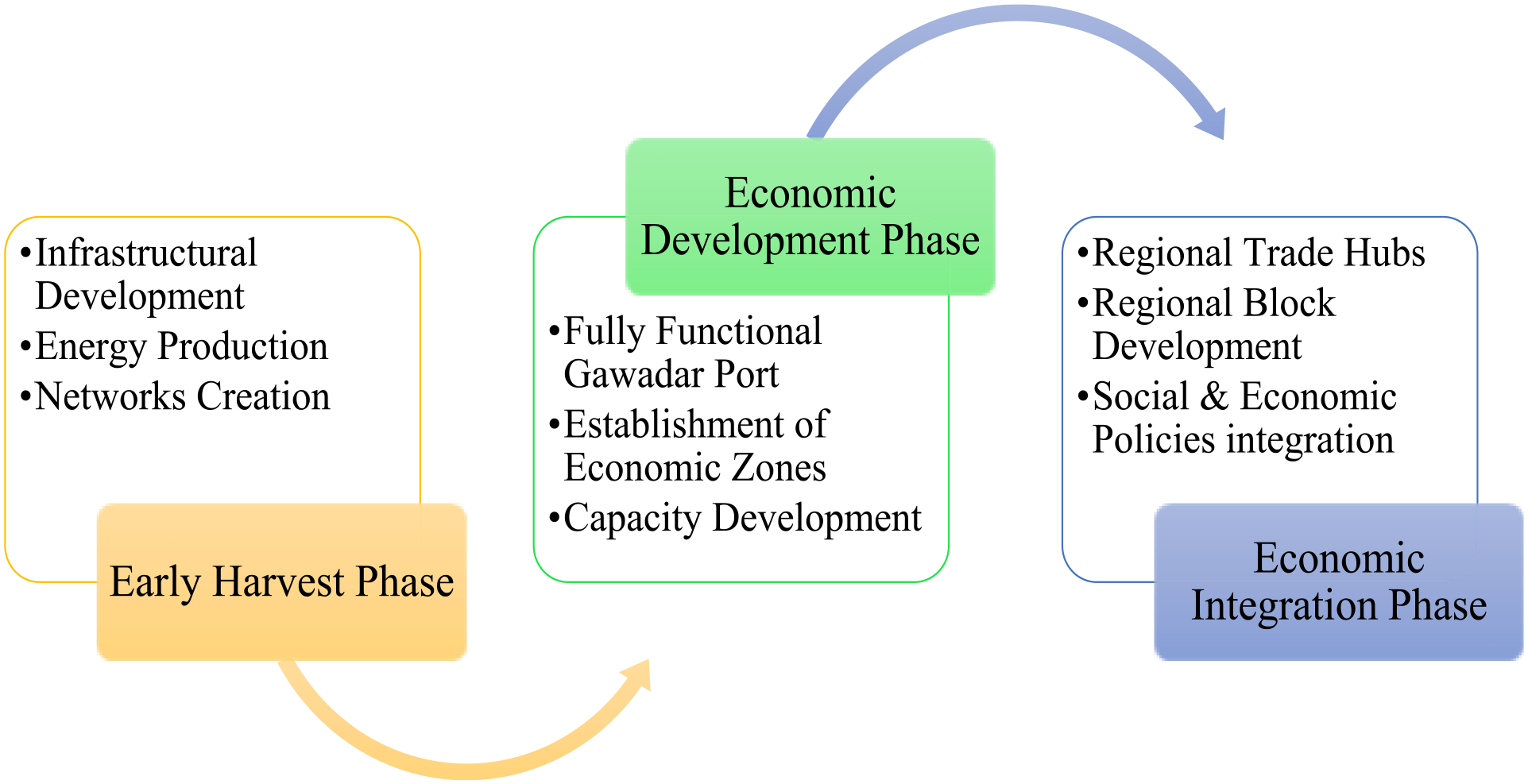
The phases of CPEC in one belt one road initiative.
Lahore, the second-largest city in Pakistan, has experienced significant rural-urban migration, leading to transportation challenges, such as severe congestion, traffic jams, increased commuting times, and environmental issues, such as air and noise pollution. To address the need for an improved urban transport system in Lahore, the Government of Punjab (GoP) commissioned MVA Asia Ltd. to conduct a feasibility study of a Rapid Mass Transit System (RMTS) (GoP, 2016). In 2007, the RMTS was proposed, consisting of four lines: Green, Orange, Blue, and Purple (SYSTRA, 2007) (refer to Figure 3). The first phase involved the construction of a 27-km metro bus system for the Green Line (Gajju Matta to Shahdara) in 2012 to 2013. As part of the China-Pakistan Economic Corridor (CPEC), the second phase commenced in 2015 with the initiation of the 27.1 km Orange Line (Ali Town to Dera Gujjran) (Board of Investment, 2015).
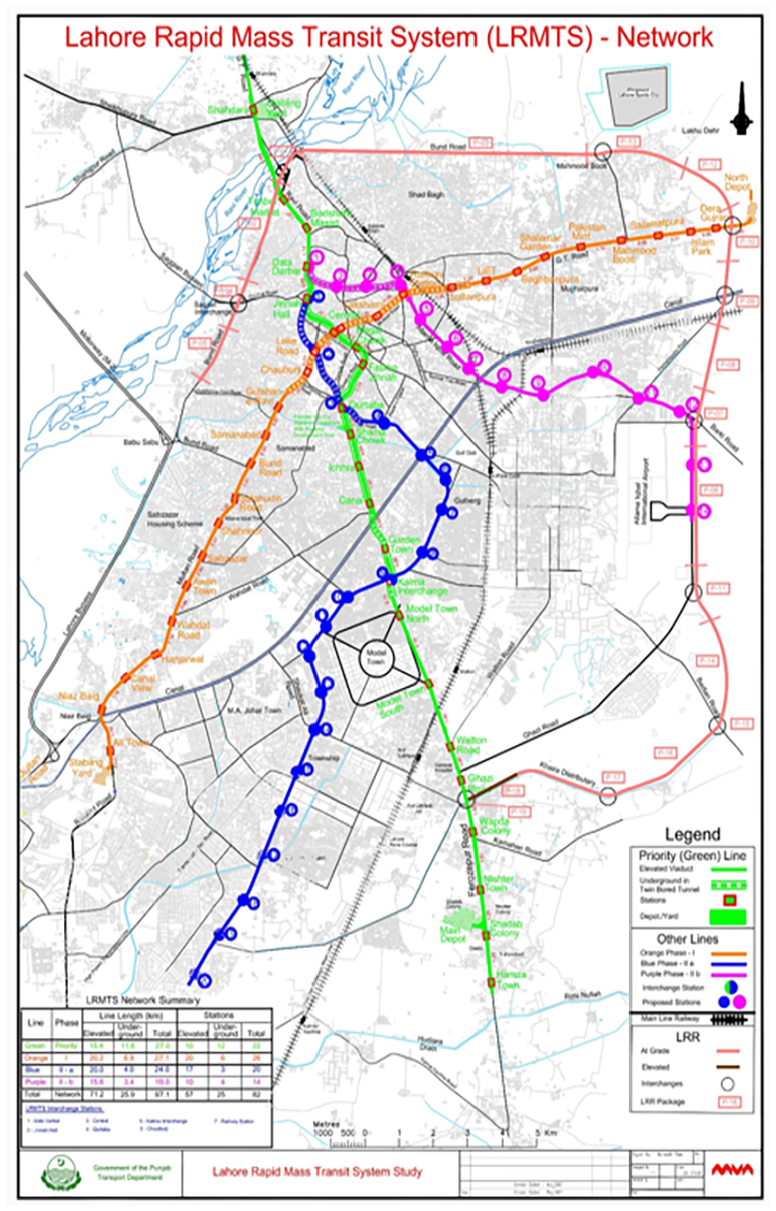
Lahore mass transport system (PMA, 2023).
During the initial feasibility study, conducted in 2007, the OLMT project was divided into three sections. The southwest section, covering a span of 12 km, was designated as an elevated viaduct. Second, the middle section, spanning 7 km from Chouburji to Sultanpura, is planned to be constructed underground. Finally, the northeast section, stretching 8 km from Sultanpura to Dera Gujran, was also intended to be built as an elevated viaduct (Punjab Masstransit Authority, 2018). However, in 2014, the original feasibility study of OLMT was revised by NESPAK (National Engineering Services, Pakistan). NESPAK proposes two alternative plans for the construction of an OLMT. The first plan suggested elevating the entire 27.1 km length of the Orange Line. In the second plan, 25.4 km of the metro line would be elevated, while the remaining 1.7 km would utilize the cut-and-cover method (NESPAK, 2015).
Since its inception, OLMT project was the subject of several controversies, and attracted the criticism from the public. Environmental and cultural activists, and archaeological experts and the general public started a campaign and appealed the government to ensure the protection of cultural and historical heritage of Lahore. They appealed to the government to reconsider the project design and called for consultation and collaboration with archaeologists, architects, and civil engineers. However, the Government of Punjab was determined to proceed with the OLMT project as an Early Harvest Project (EHP) under the CPEC framework, as outlined in the agreement between China and Pakistan (Board of Investment, 2015; GoP, 2016). Additionally, the ruling party in Punjab from 2013 to 2018, the PML-N, aimed to complete the project swiftly to gain political favor before the 2018 general elections. This political motivation prompted the Government of Punjab to reconsider and revise the original plan proposed by SYSTRA without conducting an independent review study or seeking expert consultation. To maintain the appearance of inclusivity and discussion, the government of Punjab claimed to engage in dialogue while unilaterally deciding to proceed with the construction of OLMT (Javed, 2016), following NESPAK’s (2015) suggestions. Construction began without comprehensive review of alternative options or independent expert assessments.
Feeling neglected and uninformed about the OLMT project, heritage campaigners took legal action by challenging the construction of the metro line within a 200 ft radius of historical monuments. They argued that this violated the local and international laws. Their legal cases involved contesting project approval, issuance of permission certificates by relevant provincial departments, Chinese involvement, project priorities, safety concerns, and technical aspects of execution. Procedural faults were identified in issuing No Objection Certificates (NOCs) and their addendums (Ashfaq, 2016), further fueling campaigners' discontent. As public pressure and outrage have increased, the government of Punjab has found itself with limited options. Eventually, the project’s fate was determined in the public interest through the judiciary system. On August 19, 2016, the Lahore High Court (LHC) ordered the suspension of OLMT construction in areas within a 200 ft radius of historical monuments (Boone, 2016; Gabol, 2016). Additionally, the LHC directed the Director General of the Archaeology Department in Punjab to engage independent consultants, preferably with international expertise and in consultation with UNESCO, to conduct new independent studies on “movable antiquities and special premises” (Gabol, 2016). This decision aimed to address the concerns raised by heritage campaigners and ensure a comprehensive evaluation of the project’s potential impact on the cultural heritage.
Despite the High Court's decision to suspend construction, the Government of Punjab filed an appeal challenging the “stay order.” Consequently, the government proceeded with the construction of the remaining parts of the project, directly violating the court’s orders (Uddin & Rehman, 2016). In response to this ongoing dispute, the Supreme Court intervened and sought consultation with relevant appellants. The Supreme Court appointed M/s TYPSA-Asian Consulting Engineers (Pvt.) Ltd. and Professor Robin Coningham from the Department of Archaeology at the University of Durham, UK, to review reports related to the OLMT project. Interestingly, the M/s TYPSA endorsed the report and calculations presented in the NESPAK Environmental Assessment Report. However, Prof Robin Coningham raised several objections regarding this report (Tribune, 2016). This development adds complexity to the evaluation of a project’s environmental impact and archaeological considerations.
On December 8, 2017, the Supreme Court granted permission to the government of Punjab to resume construction of the OLMT project. However, this decision came with 31 conditions that addressed various socioeconomic aspects. Following the court’s ruling, the government expedited the construction process and closed areas near historical sites and Mall Road for three months (Adnan, 2018). Unfortunately, this closure not only resulted in significant disruptions to mobility but also contributed to severe environmental damage, particularly in the form of smog (Omer, 2018). In March 2018, the Director-General of the Lahore Development Authority (DG-LDA) was arrested for charges of corruption and abuse of power. This development triggered an investigation by the National Accountability Bureau (NAB) (Rehman, 2018), causing panic and impacting the execution of CPEC projects, thereby affecting Pakistan-China relations (Dawn, 2017; Rehman, 2018). This arrest and subsequent investigation further added to the controversies and challenges surrounding the implementation of the OLMT project (Dawn, 2017).
Before this, before the needful completion of the project, the test run of the OLMT was conducted during the PML-N’s government tenure (Sheikh, 2018). However, the caretaker government, in June 2018, stopped the payments for the ongoing projects. It caused damages to the construction companies. After the general elections, the new government pledged to investigate corruption in megaprojects. The new cabinet announced to conduct an audit of the developing projects initiated by the PML-N’s government. The development funding for these projects was enormously reduced (Abrar, 2018; A. Mahmood & Marpaung, 2014). Consequently, it caused delays in the completion of the projects and the cost of these projects increases. The projects were delayed. These projects were supposed to be completed by December 2017 (Pakistan Today, 2018). The date for the completion of the project was revised to July 2019.
Materials and Methods
A comprehensive and longitudinal investigation was conducted to examine the planning and development of the OLMT project in Lahore, which is a part of the CPEC as an EHP. This study aimed to provide insights into the procedures involved, the emergence and involvement of stakeholders, and the government’s response to address issues throughout the project’s execution. The main objective of this research is to identify and analyze stakeholders and understand how, why, and when they emerge and become involved in the planning and development process of regional development projects within the CPEC framework. Data collection is necessary to systematically identify and analyze concepts from the Actor-Network Theory (ANT) perspective. The Grounded Theory Method is deemed appropriate for this purpose, as it allows for the systematic coding and analysis of the collected data.
Grounded Theory Method
This study employed the Grounded Theory Method (GTM) to collect data and systematically identify concepts from the ANT perspective. The GTM allows researchers to construct theories based on qualitative data collection and analysis. This enables the development of a new theory based on the collected data. The principles of GTM have been articulated by (Glaser & Strauss, 1968). The current study adopts an inductive approach, following the principles of Glaser and Strauss (1968), and utilizes Narrative Analysis (Riessman, 2008) to explore actors' experiences and narratives. This approach helps understand how actors reshape realities within the system in which they operate. Narrative methods involve interviews, document analysis, and observations to trace participants’ paths (Birkinshaw et al., 2011). Literature has seen a lively debate regarding the characteristics of grounded theory (Morse et al., 2009). Table 1 outlines the fundamental components of the grounded theory study.
Fundamental Components of GTM Study.

Components of GTM Study
Owing to the few examples of “how to do” grounded theory in the literature (Carter, 2010; Morse et al., 2009), the components listed in Table 1 may appear in different combinations in other qualitative studies. However, a GTM study should include all these components (Morse et al., 2009).
Stages of GTM Study
In a GTM study analysis, analysts generally examine the data by finding repeating themes through reviewing the data, immediately coding the themes with phrases and keywords, grouping codes into concepts hierarchically, and categorizing the concepts through relationship identification. Finally, the categories created and the relationships found between them are used as the basis for developing a new theory (Chun Tie et al., 2019; Morse et al., 2009). Figure 4 summarizes the stages of the GTM study.

Stages in grounded theory.
Qualitative methods are gaining popularity because of their detailed understanding of complexity and ability to interpret socio-economic dynamics related to globalization. Qualitative methods provide opportunities to better explain complex processes (Paget et al., 2010). Most researchers using ANT find “following the actor” difficult (Latour, 1987) so it is useful to adopt the “following the space and time” method, as suggested by (Williams & Pollock, 2012). Qualitative methods have become increasingly popular in a wide range of research areas. (Sbaraini et al., 2011) used the GTM in medical research. The authors provided a model for practice aiming to connect medical researchers with a useful methodology and increase the quality of grounded theory in medical literature.
Lovrić and Lovrić (2018) employed GTM to analyze the role of participation in the spatial planning of a national park in Croatia. (Li et al., 2019) used GTM to analyze the green development behavior and performance of industrial enterprises in China. Grounded theory is applicable to various fields, including public health, clinics, and education (de la Espriella & Gómez Restrepo, 2018).
In this regard, regional development projects consider multiple timeframes for different phases of construction for their plan, design, execution, and realignment. Regional integration development projects have multiple dimensions and contexts. Under the given circumstances, the case study methodology (Sarkar et al., 2018; Yin, 1994) is the most suitable because it provides a detailed description and evaluation of processes utilizing different research methods (Yin, 1994). Examination of OLMT case study can provide a number of overlapping assemblages that can be demarcated in a range of ways, both spatially and temporally. Grounded theory was used to encode the events, contexts, phenomena, and consequences of all the important factors. Grounded theory is a qualitative research method that develops and makes sense of the context-based descriptions of societal phenomena. Grounded theory is a versatile, organized, and rigorous method for qualitative research (de la Espriella & Gómez Restrepo, 2018).
GTM Study for the OLMT Project
Data Collection
Grounded Theory offers a solid foundation for a theoretical framework by deciphering actions, contexts, interventions, and consequences in development, preservation, and dissemination. Figure 5 provides the data collection methods and their linkages to Grounded Theory.

Data collection method.
Data were collected through multiple informal and semi-structured interviews with several organizational members, members of civil society, and heritage campaigners who had actively participated in the development of (or had been affected by) the Orange Line Metro Project to different extents (Table 3). Due to the sensitivity of the issue and gravity of the conflict, many government officials hesitated to give official statements and referred the author to their subordinates. In some instances, officials referred us to their helplines, and the responses were collected through telephonic conversation. To safeguard the confidentiality of the interviewees, the author disclosed the actor’s organization and their official capacity.
Discourse analysis (Long, 2015) was also conducted to determine how people construct narratives and attribute social meanings to their experiences and predicaments. Such discourses shape ideas within the statures of externalities and restrict their potential to change. This study involves documenting important events and activities in the planning and implementation of the Orange Line Metro, classifying key stakeholders with their static and dynamic interests and assemblage of such interests as a process. Most of these events are recorded and extensively available on social and online media and new portals that are easily verified and cross-referenced. The main source of information for the Punjab government was the website of “Punjab Mass Transit Authority,” its Facebook page “@OrangeLineMetroTrain, ” and Twitter account of the government of Punjab “@GovtOfPunjab” hashtag “#OLMT,”“#LahoreMetro,”“#ORANGELINE,”“#MetroTrain,” and “#Orangetrain” (Table 2).
Interviews Representation.

For inclusion of the general public, project opposition, and heritage campaigners, Facebook pages of “Lahore, Metro Aur Aap,”“Metro Bus System,”“Habib Construction Services Limited,” and Twitter hashtags “#RastaBadlo,”“#Chauburji.” The posts and comments of people provide a rich idea about people’s perceptions and contexts, and it also helped the author to revalidate the facts in chronological order. To minimize opinion bias (Yin, 1994), the authors collected, compared, and analyzed multiple sources of evidence in chronological order with coding. The users’ unique expressions were analyzed using Ritetag.com. The news was cross-referenced with Google News. The interviews were conducted from July 2016 to May 2018, and secondary data were analyzed from May 1, 2014, to March 10, 2019. Using NVIVO NCapture, data were captured in the form of 28150 tweets, posts, and comments identified by their unique ID. This data was systematically coded using “Grounded theory” (Strauss & Corbin, 1998; Y. Wang et al., 2015).
Open Coding
This study used grounded theory for its analysis. Grounded theory methodology is a methodological approach to qualitative research that generates theories from data, rather than forcing them on it. Data gathering, coding, classification, and theory building through constant comparison and analysis are all parts of the process. It focuses on investigating complicated social phenomena through an iterative analysis to create contextually grounded hypotheses. It offers a comprehensive framework encompassing politico-economic-technical-social-environmental aspects by inscribing to multiple sources of events, contexts, intervening factors, strategies, and consequences. Therefore, maintaining the chronological order of the recorded events is crucial. This study focuses on OLMT, which was approved in late 2015. The researcher relied on publicly available secondary data from October 2015 onwards and coded them using NVIVO software. The coding process involved categorizing events as they occurred and cross-verifying them through subsequent interviews and multiple sources. Open coding was employed, where data from various sources were divided into different “nodes” and “cases” for detailed examination and comparison to identify similarities and differences (Y. Wang et al., 2015). Each unique event, process, and concept was assigned a specific code, without preconceived ideas or models. Data from both English and Urdu were obtained to gather more comprehensive information. Offensive words and data with explicit political agendas were excluded while considering the sentiments expressed. Equal weight was given to both the governing party and the opposition. Different sources were compared and cross-verified through interviews or calls, whenever possible, to identify similarities and differences. These differentiated ideas and nodes eventually emerged as themes (Table 3).
Thematic Distribution of Data.

In ANT studies, using Grounded Theory, it is important to realize that these stories, events, and transitions remain “modest” and “incomplete” (Paget et al., 2010) and the role of the researcher should be in isolation as an observer that should not be different from those whom he or she studies (Y. Wang et al., 2015). However, such iterations are never neutral, and the researcher’s bias makes them somewhat involved in the action.
Selective Coding
This study utilized selective coding, drawing on the concept of inscription (Bilodeau & Potvin, 2016), to develop a comprehensive system for aggregating and interpreting records, events, and analyses. Selective coding involves identifying and categorizing relevant data, enabling the detection and examination of patterns by exploring similarities and differences. The author(s) carefully reviewed the chronological data to identify significant historical events and establish the necessary categorization. According to these criteria, the historical events that were initiated are as follows:
i. Signing of CPEC and speculated inclusion of the OLMT as EHP.
ii. Construction art near 11 historical places and demolition of the Jain Temple and Laxmi Building.
iii. The maximum development budget of the Punjab province allocated to OLMT ignores the education and health sectors that may compromise the achievement of sustainable development goals.
iv. The Lahore High Court (LHC) orders halting construction near 11 places and seeks independent opinions on impact.
v. The PML government appealed to the Supreme Court of Pakistan (SCP) to resume work on the OLMT.
vi. The World Heritage Committee of UNESCO threatens to permanently take off Shalimar Gardens from World Heritage registers due to damages.
vii. Conflicting opinions submitted by independent assessors to the SCP.
viii. The SCP sets aside the LHC decision against the OLMT and orders the Punjab Government to complete the project with 30 conditions.
ix. The National Accountability Bureau (NAB) launched an investigation into the OLMT project after the arrest of the LDA Ex-DG.
x. Lahore’s Fort and Shalamar Gardens comes out of UNESCO danger list.
xi. Phase 1 of OLMT was inaugurated by PLM-N for a trial run, with two phases still in construction.
xii. The caretaker government stops the payments for all ongoing projects including OLMT.
xiii. Change of government of upset loss of the election by PML-N.
xiv. PTI probes corruption and approves a forensic audit of all mass transit systems.
xv. The PTI government first considers revision then refuse to revise OLMT
xvi. The SCP stops NAB from interfering in OLMT.
The identified critical events were synchronized with the number of media reports and social media posts. The number of news items peaked close to each critical event, and then declined and stabilized. The chart of the year-wise distribution of events shows the following pattern (Figure 6).
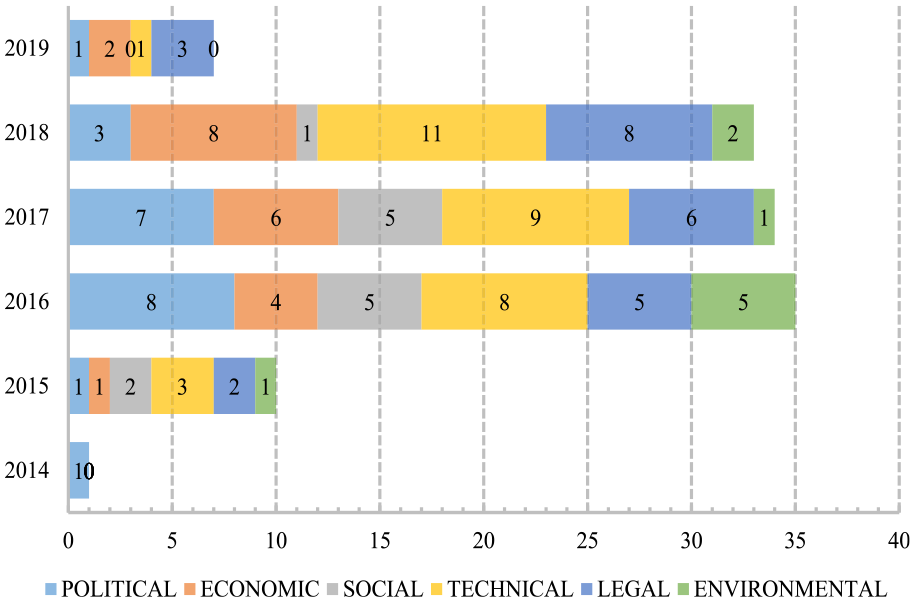
Thematic distribution of events.
Since grounded theory illustrates all events and perspectives in themes, six themes (Political, Economic, Social, Technical, Legal and Environmental) can be drawn from the events, and it can be learned that there is a transition of events from one domain to another around different periods of projects. It can be surmised that all events were well synchronized with the wave of events. Figure 7 illustrates this transition from one domain to another.

Transition of thematic domains.
Since the start of the project, political themes have dominated because of the CPEC Agreement. In 2015, most events revolved around technical requirements, NOC’s, land acquisition, and demolition. 2016 and 2017 became the most complex years, as almost all domains were involved and most of the heritage campaigns and legal battle takeovers. In 2018, the political domain faded away, and the elements of financial viability and corruption dominated. As the project approaches its completion, economic benefits, legality, and accountability are evident. Figure 8 reflects the axial coding (Strauss & Corbin, 1998) of factors, phenomena, contexts, and strategies.

Axial coding of OLMT.
Theoretical Matching
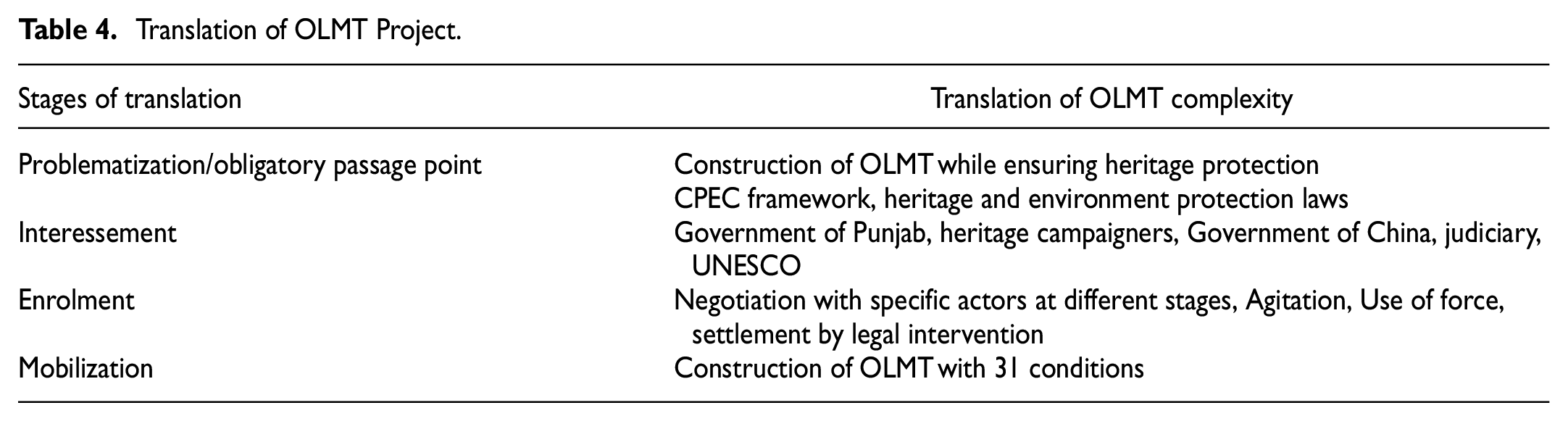
The results of thematic matching can be interpreted in the four stages of opening the black box of OLMT. The OLMT project is complex in several ways.
It has many dynamic and interacting translations of events with varied and emerging actors ranging from political parties aiming to encash or sabotage the upcoming election to heritage campaigners protesting to protect 11 historical sights to the complex and hideous role of China. In the following four sections, each of the four elements will be discussed and then mobilized to explore how multitiered human and non-human actors attempted to enroll, react, and respond and later stabilize adding different levels of project complexities (Table 4).
Translation of OLMT Project.
Discussion
Grounded theory uncovers the underlying processes and causal relationships of a phenomenon. Causal conditions are crucial and represent the factors that contribute to the investigated phenomenon. Through data analysis, conditions were identified, and associated themes emerged. Grounded theory explains how and why phenomena occur within specific contexts, rather than establishing definitive causal relationships, such as quantitative research. Allocating development funds for megaprojects in developing countries involves causal factors such as political ignorance, lack of regional understanding, and exploitation of disadvantaged provinces for extravagant projects. Politicians’ misrepresentations and exaggerations also influence project approval (Rajput et al., 2022). These factors lead to resource misallocation and financially unsustainable projects that fail to deliver the promised benefits.
Large-scale infrastructure projects, such as metro rail systems in emerging countries such as Pakistan, bring excitement and skepticism. While they aim to ease urban congestion and improve transportation efficiency, concerns arise about their profitability and long-term sustainability; the substantial financial investments required raise questions about cost-effectiveness and economic benefits. Inadequate planning can lead to financial challenges and underutilization of metro systems (S. Ali et al., 2020). Comprehensive analyses, meticulous planning, and stakeholder involvement are crucial to ensure these projects deliver substantial benefits and contribute to sustainable urban growth (Ahmed et al., 2018a; S. Ali et al., 2019, 2020). Strategic planning, active stakeholder participation, and a deep understanding of the local context can transform metro-rail initiatives into vital assets for transportation, economic development, and sustainable urban growth in developing countries.
Large-scale infrastructure projects, such as metro trains, can be driven by political motivations that prioritize short-term gains over long-term sustainability and cost-effectiveness. Political interference and favoritism in contractor selection can lead to inflated costs and delays (Ahmed et al., 2018a; S. Ali et al., 2019, 2020). Misleading and exaggerated claims by politicians seeking project approval contribute to the initiation of white-elephant projects (Ebrahim, 2020). These claims may need to align with the project's feasibility or expected outcomes, resulting in misallocation of resources and financially unsustainable projects. By focusing excessively on benefits, politicians may overlook the risks and unintended consequences. This can lead to projects that fail to deliver the promised benefits and harm communities and the environment. Thorough assessments and objective evaluations are needed to ensure that infrastructure projects are economically viable and fulfill the needs (Rajput et al., 2022; Volden & Welde, 2022). Additionally, transparency and accountability in resource allocation can mitigate political influence and promote sustainable development.
The limited institutional capacity of overseeing agencies in developing countries such as Pakistan is a crucial challenge in implementing projects such as metro train systems (Imran et al., 2021). These agencies require support in order to enhance their efficiency and expertise. Insufficient capacity can lead to a lack of scrutiny in evaluating project viability and identifying the risks associated with white-elephant projects. Political interference, bureaucratic inefficiencies, and corruption can compromise these agencies’ autonomy and accountability. Weak institutions may require more transparency in project details and progress updates. When allocating development funds, political ignorance and exploiting disadvantaged regions for extravagant projects perpetuate regional and socioeconomic inequalities. Politicians may prioritize projects that appeal to their voter bases instead of addressing pressing needs in these regions. This misallocation of funds must include critical areas, such as education, healthcare, and poverty alleviation. Strengthening institutional capacity and transparency, addressing political ignorance, and regional exploitation are vital for effective resource allocation and sustainable development in developing countries.
The exploitation of economically disadvantaged provinces for extravagant projects stems from the power dynamics and vested interests in the political system. Politicians prioritize projects in their regions, neglecting marginalized populations and widening regional wealth gaps. Political considerations, such as electoral politics and patronage networks, further influence the allocation of development funds and divert resources for political gain rather than genuine development needs. Grounded theory examines phenomena in order to understand their nature, causes, and effects. Political phenomena, such as favoritism, disenfranchisement, and abuse of power, have significant implications for governance, democracy, and societal well-being. Political favoritism undermines transparency, accountability, and equal opportunities, thus eroding public trust. Disenfranchisement occurs when specific population segments are systematically excluded from decision making, perpetuating inequality. Authorities misuse power for personal gain through forced land acquisition, and unlawful practices undermine democratic principles and citizen rights. Addressing these political phenomena is crucial for promoting equitable development, inclusive governance, and democratic principles (Hanif et al., 2021).
Political phenomena such as favoritism, disenfranchisement, and abuse of power have detrimental consequences for society. They weaken democratic institutions, foster corruption, and perpetuate socioeconomic disparities, thereby hindering inclusive development and eroding public trust. The OLMT project exemplifies an unfavorable economic phenomenon with its impracticability and heavy borrowing, creating a debt trap for Pakistan. Misplaced priorities with a disproportionate budget allocation to the project underscore the need for education and human capital development investments. Corruption further hampers economic progress by distorting decision making, diverting funds, and undermining the rule of law (Wolf, 2020). It undermines competitiveness and foreign investment, and perpetuates inequalities. To address these challenges, transparent and accountable governance, prudent resource allocation, and prioritizing sustainable and inclusive investments are essential. Public funds can be utilized equally and efficiently, promoting economic growth that benefits all segments of society and restores public confidence in the political system.
The preservation of cultural heritage is vital for social welfare, promoting community cohesion, pride, and a sense of belonging (S. Ali et al., 2019, 2020). This fosters social inclusion, intergenerational dialogue, and economic opportunities. Conversely, the destruction of heritage erodes identity and historical roots. Engaging stakeholders is crucial for heritage preservation. Poor planning, disregard for safety standards, and heritage damage are significant phenomena in infrastructure development. In the OLMT project, factors such as compatibility, energy requirements, and heritage preservation have been overlooked. Insufficient evaluation of concerns has led to compromised infrastructure integrity, increased risks, accidents, and damage to historical sites. Hasty construction practices have long term consequences. The safety precautions were minimal, requiring careful evaluation of their effects.
The implementation and enforcement of legal frameworks greatly influence their effectiveness. Inadequate enforcement undermines the rule of law and erodes trust, whereas selective enforcement creates an unfair environment. Judicial interventions, although essential for accountability, can delay development projects (S. Ali et al., 2019, 2020). Excessive scrutiny of decisions and prolonged court cases have caused delays and strained international relations (IR). Specialized courts can be established to handle disputes related to national projects and balance individual and national rights. These bodies should have the expertise to overcome the legal challenges. Striking a balance can mitigate the adverse effects and facilitate timely project execution.
Construction activities related to the OLMT project have worsened air pollution, deforestation, and vulnerability to floods in Lahore. Excavation and construction work has led to increased air pollution due to traffic congestion and the felling of trees. The replanting of trees requires time to restore lost benefits. Moreover, the construction of underpasses makes the city more prone to flooding during the monsoon season. The OLMT project faced a complex interplay between politico-economic, social, legal, and technical factors. Lack of transparency, illicit activities, and rushed planning processes have created mistrust and disenfranchisement at the provincial level (S. Mahmood et al., 2020). Stakeholders sought legal recourse to protect their environment and heritage sites. The project benefited from the strong Pakistan-China bilateral relationship, flagship cooperation endeavor, and dire need for improved public transportation in Lahore. However, challenges such as the city’s cultural significance, air quality concerns, public sentiments, and transparency issues could have helped the project. The government’s top-down decision-making, disregard for court orders and laws, and “bulldozer development” approach fueled opposition. The cooperative framework between the federal and provincial governments was marred by misinformation and mistrust. Moreover, the misallocation of development funds has affected public welfare provisions. Conflict resolution processes aimed at accommodating all parties’ concerns, as seeking compromise became necessary. The OLMT project has unfolded within a complex web of contexts and intervening conditions, shaping its dynamics and outcomes.
Implementing the OLMT project faced significant challenges, including delays (Pakistan Today, 2018), budget overruns, environmental hazards, and strained diplomatic relationships. Construction and train vibrations pose risks to heritage sites, whereas traffic congestion, deforestation, and deteriorating air quality are environmental concerns. Corruption allegations led to investigations and the ruling PML-N government faced electoral defeat. To prevent politically motivated projects, transparent evaluation mechanisms, rigorous feasibility studies, and public consultation are needed. Robust oversight and accountability can safeguard public funds and ensure a project’s success. Transparent approval processes, independent evaluations, and public scrutiny will enable the critical evaluation of projects and validation of politicians’ claims.
Establishing robust oversight and monitoring mechanisms is crucial for ensuring project progress and accountability. Prompt corrective actions should be taken in cases of discrepancy or misleading information. Realistic assessments aligned with development goals should guide project approval and implementation. Independent oversight and anticorruption measures are necessary to prevent political interference. Transparency, public participation, and access to project information should be promoted. Strengthening the institutional capacities of monitoring and development agencies is vital, with adequate financial resources allocated for evaluation, implementation monitoring, and enforcing accountability. Training programs, knowledge sharing, and partnerships with international organizations can enhance technical capabilities and best practices in infrastructure planning and monitoring. This comprehensive approach will enable efficient resource allocation, risk mitigation, and foster sustainable infrastructure development.
Good governance, transparency, and accountability are crucial in addressing these challenges. Strengthening democratic institutions, promoting citizen participation, and transparent fund allocation are priorities (Nisar et al., 2022). Independent project evaluation, cost-benefit analysis, and public consultation ensure objective resource allocation. Empowering local communities and involving provincial representatives were vital. Addressing political marginalization and favoritism requires equitable distribution of development funds. Robust mechanisms and reforms are required to combat power abuse. Strengthening democratic institutions, ensuring accountability, promoting participation, and upholding the rule of law is essential. Empowering marginalized communities, fostering ethical leadership, and encouraging civic engagement are crucial (Hanif et al., 2021; Nisar et al., 2022). Building just and inclusive societies creates the foundation for sustainable development and equality.
Conclusion
This study provides a contemporary research framework suitable for developing a grounded theory perspective on regional development projects within CPEC. Grounded theory is a well-known research method used in various studies that aims to construct theories systematically from obtained and examined data through comparative analysis. Although grounded theory is inherently flexible, it is also a complex methodology, leading many researchers to seek a better understanding of its concepts and processes. An analysis of thematic event distribution revealed a transition between different domains during the planning and execution phases of the project. The main themes identified included political, economic, social, technical, legal, and environmental aspects. Additionally, axial coding and the study of the OLMT project uncover various contextual factors, such as questionable agreements, bypassing laws, functional irregularities, lack of planning, disregard for public outrage, demolition of heritage buildings and sites, tree cutting, and regional conflicts. These contextual factors, along with intervening conditions such as China-Pakistan relations, the CPEC framework, poor infrastructure conditions in Pakistan, the historical landscape of Lahore, public transport preferences, lack of budget transparency, and the upcoming 2018 election, influenced the strategies adopted by the government. These strategies are characterized by a top-to-bottom planning approach, bureaucratic complexities, bulldozer-style development, misinformation dissemination, improper fund allocation, and mismanagement of emerging conflicts.
Consequently, these government strategies have resulted in project plan delays, substantial subsidies for economically unsustainable projects, damage to Lahore’s heritage and cityscape, and environmental consequences. These outcomes raise questions about accountability, and may have significant implications for political regime changes in Pakistan and the bilateral relationship between the two countries, particularly regarding constructive engagement. This study focuses on data collection using the Grounded Theory Method for coding. These research findings and implications extend beyond the CPEC project in Pakistan. As one of the six economic corridors under China’s BRI, the lessons learned from this analysis highlight the importance of directly or indirectly involving all potentially relevant stakeholders. With the expansion of the BRI across continents, encompassing diverse countries with varying political, social, historical, economic, and institutional structures, it has become crucial to consider these factors when planning and implementing large-scale projects. The results suggest that project selection, planning, and implementation should primarily rely on scientific and technical considerations rather than political motivations, as politically driven projects are unlikely to be sustainable in the long term. Furthermore, strengthening institutions and building their capacity are emphasized to ensure successful project completion and enhance economic efficiency and productivity. Incorporating climate change policy objectives into regional development projects is fundamental to ensuring the sustainability of the BRI and protecting the environment.
Policy Implications
i. Open and accountable methods for allocating development funds in place, ensuring that they are based on objective criteria and actual population needs. An independent project review, rigorous cost-benefit analysis, and significant public consultation should guide resource allocation choices. This will aid in preventing the misallocation of money and financially unsustainable initiatives that fail to deliver on their promises.
ii. Improve project planning, appraisal, and risk assessment by increasing the institutional capacity and experience of oversight authorities Provide these agencies with sufficient financial resources, training programs, and collaborations with foreign organizations to improve their efficiency and effectiveness. Increasing the autonomy and accountability of these institutions would assist in guaranteeing thorough reviews, transparent decision making, and successful infrastructure project execution.
iii. Combat political incentives and favoritism in infrastructure project selection by employing cost-cutting and delay-prevention strategies. Ensuring project approval is based on extensive analyses, objective evaluations, and compliance with feasibility and desired outcomes. Transparency, accountability, and the rule of law should lead to decision-making processes, avoiding launching white-elephant projects that waste resources and hurt people and the environment.
iv. Create policies that prioritize cultural heritage protection in infrastructure development. Engage stakeholders, execute detailed planning, and enforce safety requirements to protect historical sites while remaining compatible with local settings. A thorough assessment of possible issues and long-term consequences should lead to infrastructure construction to conserve cultural heritage, while promoting social inclusion, economic possibilities, and community cohesiveness.
v. Create specialized courts to address legal objections to national initiatives, while balancing individual rights and state interests. Courts should know that it is necessary to speed up judicial procedures while maintaining accountability and openness. Finding a happy medium would reduce delays and allow for timely project completion, while offering a framework for effective governance and conflict resolution. Prioritize investments in education, healthcare, poverty reduction, and human capital development to promote sustainable and inclusive development. Address regional disparities and socioeconomic inequities by allocating development money equally and addressing critical needs in underserved areas. Transparent and responsible governments, careful resource allocation, and long-term investment policies stimulate economic growth and restore public trust in the democratic system.
vi. Strengthen democratic institutions, encourage citizen engagement, and improve openness in decision making. To protect democratic values and foster inclusive governments, political phenomena such as favoritism, disenfranchisement, and abuse of power are addressed. Establishing a just and inclusive society, encouraging civic involvement, empowering marginalized populations, and cultivating ethical leadership.
vii. Place-in-place measures to reduce the environmental risks associated with infrastructure development. Air pollution, deforestation, and flood susceptibility should be reduced by adopting sustainable practices, traffic management, tree replanting, and adherence to safety standards. To maintain community well-being and environmental sustainability, infrastructure development should be guided by thoroughly assessing possible hazards and considering their long-term repercussions.
Limitations of the Study and Future Direction of Research
The present study has some limitations, such as the fact that it is limited to megaprojects of CPEC under the BRI in Pakistan. However, the findings of this study may not immediately be transferable to other contexts or countries with distinct political, social, and economic dynamics. When extrapolating to diverse circumstances, these findings should be interpreted with caution. Moreover, this study depended on a specific dataset or case study, which could have limited representativeness and generalizability. The sample size or breadth of the data may capture only a portion of the elements that impact the phenomena under study. Furthermore, because the study was based on qualitative approaches, researchers’ subjective interpretations and biases may have impacted the analysis and conclusions. The viewpoints and prejudices of the researcher may have influenced the identification of the causative circumstances and themes. In addition, unlike quantitative research approaches, grounded theory does not seek to demonstrate conclusive causal relationships. While it reveals the underlying processes, it does not always provide measurable proof of the extent of causal effects or demonstrate causation in a strict sense.
Based on the limitations of the current study, there may be multiple research areas that attract the attention of experts and researchers. First, comparative research across nations and situations can provide a comprehensive understanding of the factors that influence the allocation of development funds for megaprojects. Common trends and unique issues can be identified by comparing political systems, economic development levels, and institutional capacities. Moreover, longitudinal studies are essential to assess megaprojects’ long-term impacts and sustainability, determine if expected benefits were achieved, and identify the factors contributing to success or failure. Including the perspectives of various stakeholders, such as local communities, civil society organizations, and project implementers, helps uncover the complex dynamics inherent in megaprojects. Their experiences, concerns, and recommendations can inform policy recommendations and improve the project design and implementation. Furthermore, a thorough evaluation of policy solutions is necessary to address the megaproject constraints and problems. The effectiveness of measures promoting openness, accountability, and stakeholder engagement in the decision-making processes should be assessed. Drawing insights from political science, economics, environmental studies, and sociology can provide a comprehensive understanding of various aspects of megaprojects. Integrating multiple analytical frameworks and approaches can lead to more nuanced policy recommendations. Additionally, examining successful megaprojects in underdeveloped nations can offer valuable lessons for future projects. Analyzing cases where projects are effectively designed, implemented, and delivered on their promises can help identify best practices and strategies for successful outcomes. Considering megaprojects’ long-term viability and sustainability in the face of environmental challenges, such as climate change and natural disasters, can guide risk mitigation efforts. Assessing environmental impacts and integrating sustainable practices into project design has promoted the development of environmentally friendly infrastructure.
Footnotes
Acknowledgements
Furthermore, the authors are also thankful to the Editors and the Reviewers for the careful review of the paper for its improvement to the final version of the manuscript.
Declaration of Conflicting Interests
The author(s) declared no potential conflicts of interest with respect to the research, authorship, and/or publication of this article.
Funding
The author(s) disclosed receipt of the following financial support for the research, authorship, and/or publication of this article: This work is supported by the “Belt and Road” Innovative Talents Exchange Foreign Experts Project of China (Grant No. DL2023014010L).
