




Abstract
This study conducted a critical analysis of the role of institutional practice in promoting inclusive education for deaf and hard of hearing (DHH) students in Saudi Arabian schools. Considering disabilities based on multiple models and theories enhances understanding and helps develop accessible educational settings. To successfully implement inclusive education, this study conducted a rigorous qualitative analysis with a focus group with eleven participants, including teachers of DHH students, general education teachers, principals, supervisors, and parents of DHH students. Content analysis of participants’ responses was conducted to identify major themes and subthemes. The results revealed providing appropriate educational environment as the major theme, and comprehensive environmental, support services, individualized education programs, general education teachers, and role of parents as sub-themes. Moreover, the findings emphasized the role of inclusive education regulations through interpretations of existing laws and expansion of prevention policy and practice.
Keywords
Introduction
The recent debate regarding the educational policy to enable inclusive education for deaf and hard of hearing (DHH) students has faced many challenges. The notion of inclusive education has emerged in discussions on the need to provide access to general education (Zagona et al., 2017). Inclusive education supports the concept of providing education for all learners and treating individuals in a similar manner regardless of differences, allowing people with and without disabilities the same opportunities to receive an education in a least restrictive environment (Knoors et al., 2019; Murray et al., 2020). The United Nations Convention on the Rights of Persons with Disabilities (United Nations, 2022) influenced the role of inclusive education in creating an appropriate environment based on acceptance within the school for students with disabilities (Alsalem, 2021; McDermid, 2020). Inclusive and special education assume that students with disabilities, including DHH students, should have equal access to general education and public and private services (Crockett & Kauffman, 2013) using various types of support to reach maximum results (Brock, 2018; Salter et al., 2017).
Theoretically, inclusive education provides a variety of educational services and support to assist all learners, including students with disabilities, in becoming self-determined (Wehmeyer, 2020) according to their needs and abilities (United Nations, 2022). Three major theories and schemas guide the educational process: behaviorism, cognitivism, and constructivism. The behaviorism theory supports inclusive education through direct instruction and feedback between teachers and students to enhance learning via direct interactions (Seo-Cense, 2018). The cognitive theory concentrates on mental activities in inclusive education through expressing prior knowledge among learners to acquire new information via various mental planning processes (Petersen, 2014). The constructivism theory empowers the roles of learners through discovering their own ways to express their understanding and interact with others (Akpan & Beard, 2016). Thus, to successfully implement inclusive education, each DHH student should have access to an individualized education program (Foster & Cue, 2008; Nelson & Bruce, 2019) that includes all services that they need (Gilson & DePoy, 2002). Services, such as intervention and prevention (Lane et al., 2007; Palmaffy, 2001), transition (Kim & Morningstar, 2005), and audiology (Marschark et al., 2015), should aim to make the student independent.
Promoting inclusive education requires viewing disability through different lenses and perspectives (Ainscow & Sandill, 2010; Yell et al., 2017). In addition, it is important to provide multi-tiered systems of support (Bruin, 2022) that empower general education to effectively enable inclusive education (Kauffman et al., 2022). Turnbull and Stowe (2001) presented five models for considering disability: (1) human development model, which focuses on individual abilities, (2) public studies model, which emphasizes the relationship between individual and government institutes, (3) cultural model, which focuses on societal perspectives toward individuals with disabilities, (4) ethical model, which focuses on moral standards for individual and group conduct toward disability, and (5) technological model, which considers people’s perspectives regarding disability and how technology empowers individuals with disabilities. According to Turnbull and Stowe (2001), these models enhance our knowledge of how disabilities can be perceived through various perspective (see Figure 1). Holistically adopting these models allows for a strong evaluation, facilitating inclusive education through related services and supplementary aids (Barnes, 2019).
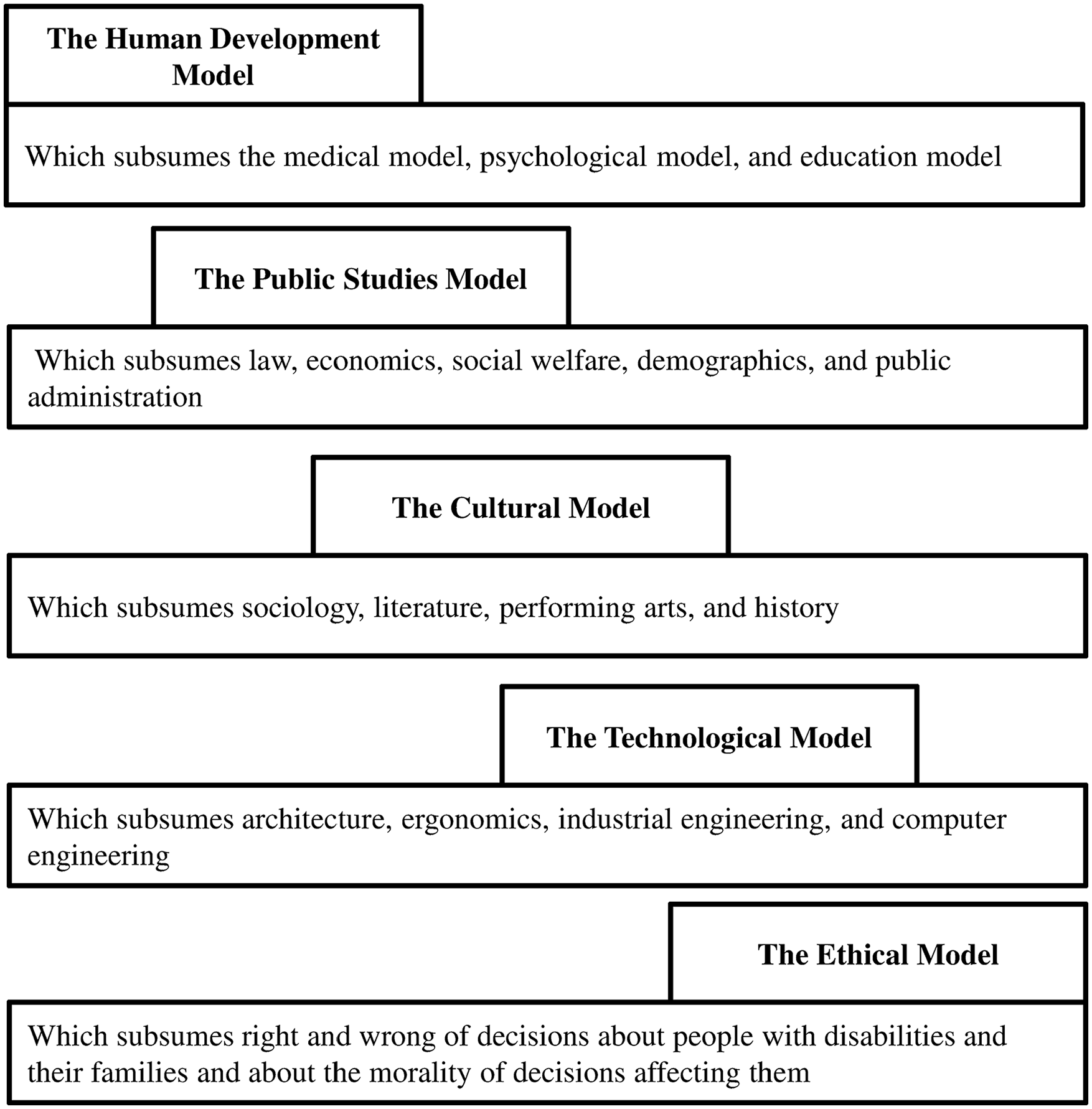
Five models for considering disability.
Studies have shown that inclusive education has emphasized specific types of learners with disabilities (Messiou, 2017; Underwood, 2018) without focusing the effect on the macro level and how the educational system can shift to include all types of learners (Ingram et al., 2005). Alsalman et al. (2018) emphasized the role of professional development among teachers to enable inclusive education to manage classrooms and student behaviors. General and special education teachers support the successful implementation of inclusive education (Baothman & AlSudairi, 2018; Wong et al., 2017). Moreover, family involvement and support provided to educational institutes enable inclusive education (Almoqetib & Alnaim, 2018; Zaidman-Zait et al., 2018). Almalki (2022) measured the level of inclusive education in the US and Saudi and highlighted the role of regulations to improve practices of inclusive education in schools, and the finding of his study emphasized that current regulations do not support to guide the processes of implementation of inclusive education.
Educational System in Saudi Arabia
Inclusive education in Saudi Arabia is currently limited, as indicated by the behaviorism theory. Disability is viewed through the human development model, with students divided in schools based on their disability. None of the five models have been adopted in the educational system for DHH students on a large scale. The education policy focuses on the human development model to evaluate DHH students and does not employ other models. Understanding how inclusive education occurred through various models and supported services (Burns, 2003) promotes positive outcomes (Holt, 2019; Kyzar et al., 2016). Previous research in this area is insufficient to explain the role of institutional practice in promoting inclusive education in schools (Almalki, 2022; Alsalman et al., 2018; Baothman & AlSudairi, 2018).
The Saudi Arabia Ministry of Education runs all education services, including special education, and the regulations published by the Ministry apply to all schools across the country (Alnahdi et al., 2019). This led to limit the expansion of inclusive education in various dimensions based on different theories and models, because the expansion of inclusive education required permission and regulation. Thus, it is crucial to examine disability using other models to provide appropriate placement that benefits all learners. In 2016, the Saudi Arabia Ministry of Education issued “Regulations for Special Education Institutions and Programs,” which regulate all services that schools, and institutes should provide for DHH students. These Regulations helps parents understand their children’s rights, including the appropriate environment (self-contained classrooms, resource rooms, special programs, or private institutions) depending on their type of disability (Ministry of Education, 2016). Furthermore, extensive work is underway to train and prepare teachers to implement full inclusion through various projects (Alharbi & Madhesh, 2018; Dare et al., 2017); however, students with disabilities, including DHH students, continue to be taught in special classrooms.
Rationale and Significance
This study aimed to investigate the role of special education as an institutional practice to promote inclusive education for DHH students in the kingdom of Saudi Arabia through the role of the Convention on the Rights of Persons with Disabilities regarding inclusive education, theoretical framework of inclusive education, and models of disability. Schools are unable to adapt to students’ needs because the educational system looks at disability from a limited perspective. In addition, this study sought to identify barriers in implementing inclusive education within the existing educational framework. Moreover, this study examined the lack of intervention in schools regarding opportunities for DHH students to interact directly with their peers.
Therefore, the following research questions were posed:
What is the role of special education as an institutional practice to promote inclusive education for DHH students?
What are the challenges that institutional practices face in implementing inclusive education for DHH students?
Methodology
This study used a qualitative approach and conducted a focus group to investigate the topic through multi-level perspectives, including the cultural influences of institutional practices in inclusive education (Cardano, 2020). The focus group provided information that could be used to inform policy and institutional practices to gain a better understanding of inclusive education. In addition, it allowed the researcher to combine sets of questions for open discussion to enable the participants to provide more explanations and details (Aspers & Corte, 2019). Previous studies tended to focus on one perspective, such as parents, general education teachers, or teachers of DHH students. Therefore, this study included diverse participants to develop a better understanding of inclusive education.
Research Procedure
The study aimed to answer two major questions through the focus group. These major questions were followed up by probing questions that were used to clarify, such as “Please give me an example” or “Please tell me more.” The Institutional Review Board (IRB) at King Saud University approved this study. An invitation letter was sent through the Ministry of Education to a group of teachers, parents, and principals to be included in this study. The invitation includes the purpose of this study, the roles of the participants, the method to gather information, and confidentiality of data and information that participants would provide.
As an initial step, the participant recruitment was for those who participated in “Regulations for Special Education Institutions and Programs.” In addition, the study developed the inclusion criteria to participate with the focus group: 1) interacting directly with DHH students, including either teachers or parents, or indirectly, such as general education teachers, principals, and supervisors; 2) at least ten or more years of experience with DHH students; 3) willing to participate in this study; and 4) involved in public education, excluding private schools and higher education. Eleven participants were chosen to participate in the focus group (Table 1).
Demographic Information.

First, a pilot study was conducted with four teachers (two teachers of DHH students and two general education) to format the questions in an understandable manner before finalizing the questions for the study. Then, the researcher ran the focus group that was conducted in the Ministry of Education. The duration was 240 minutes due to further inquiries from some participants. The researcher asked the prime questions, and then elaborated and expanded the conversation by providing examples and encouraging the participants to take the lead.
Data Analysis
The data were analyzed by identifying patterns among the participants’ responses and coded using systematic text analysis by highlighting major themes and subthemes (Hsieh & Shannon, 2005). Asking follow-up questions to expand and clarify the answers helped reach data saturation. Data saturation refers to sufficient data and information that the study gathered through multiple ways to answer the research questions (Hancock et al., 2016). The researcher captured the data through an audio recording after obtaining permission from all of the participants. After receiving approval from the participants that the memos represented their responses, the results were analyzed based on the participants’ responses by organizing their answers into categories and subcategories.
Trustworthiness
To establish trustworthiness in this study, after the focus group was done, the researcher listened to the audiotapes and wrote memos for each answer. In addition, to increase the validity of the results, the data were sent to each participant for confirmation. The researcher sought help from a research assistant to ensure that the transcriptions were an accurate reflection of the audiotape to increase the data’s credibility and to avoid bias.
Results
Research question 1 revealed appropriate educational environment for DHH students as a major theme, with five sub-themes: comprehensive environmental, support services, individualized education programs, general education teachers, and role of parents.
Research question 2 revealed recognition of the importance of updating regulations for inclusive education and enhancing its execution in the schools for DHH as a major theme, with two sub-themes: interpretations of existing laws and intervention and prevention policy and practice. Participants noted that challenges could be solved by providing services for DHH students to facilitate successful inclusive education (Figure 2).

Identified themes and sub-themes.
Discussion
Comprehensive Environment
A comprehensive environment guarantees free and available education at public expense for all students that takes into consideration the specific needs of DHH students (Alsalem, 2021). A general education teacher explained this as follows: DHH should have the appropriate and comprehensive education through inclusive education. It will improve academic skills for them through collaboration work and daily interaction with their peers.
Therefore, it is critical to have a clear explanation in the Saudi Arabian education policy regarding what is an appropriate education for DHH students. The misconceptions of parents and teachers who were involved in this study included considering appropriate education inclusive only if DHH students are in the regular classroom. However, DHH students cannot receive the advantages of an inclusive education if the purpose is only to include all students in one class without providing essential services (Bruin, 2022). Understanding how appropriate education takes many dimensions depending on students’ situations helps reshape the appropriate education and clarify it for the stakeholders (Kauffman et al., 2022). Appropriate education states that every child with or without a disability is entitled to free appropriate public education and shall not be excluded from public education if they have physical or functional challenges or hearing loss (Brock, 2018). Therefore, the schools should be fully equipped to provide this necessary support to include all students regardless of their type of needs.
Comprehensive environment leads to the least restrictive environment (LRE) that address the element of inclusion of DHH students (Knoors et al., 2019; Murray et al., 2020) into regular education with same aged peers (McDermid, 2020). Eight out of 11 participants answered that the role of special education as an institutional practice is to promote inclusive education. For instance, one of the special education teachers stated: The role of special education as an institutional practice is to provide the LRE that provides the right accommodation and services for each DHH student that fit their needs.
A supervisor explained: What we are looking for is not full inclusion, but we are seeking the LRE that can provide the exact place that matches with each child’s needs and characteristics.
The success of providing inclusive education hinges on DHH students receiving an appropriate education in the LRE (Crockett & Kauffman, 2013). It allows DHH students to learn with students without disabilities together in the general class environment, which is beneficial to individuals with disabilities (Underwood, 2018). The LRE provisions require the students’ Individualized Education Program (IEP) team to justify any extent or any exclusion (full or partial inclusion) for it to be permissible. The LRE provides the right place that could benefit the student by creating an environment that meets their needs (Messiou, 2017). Therefore, future studies should promote the notion of the LRE through special education as an institutional practice to facilitate inclusive education. The current system in Saudi Arabian schools for teaching DHH students is through the use of separate classrooms, which does not follow the LRE principles for DHH students.
Support Services
One of the most common responses among participants emphasized the significant role of support services that should be delivered for DHH students at all ages. Services enhance students’ performance in special education programs and help promote inclusive education. Services include, but are not limited to, audiology services, speech-language pathology, psychological services, interpreting services, hearing aids, occupational therapy, and training to improve language outcomes in cochlear implant (Kyzar et al., 2016). One principal stated: The major issue that I face in my school is that I don’t have enough supportive services, such as speech therapists for the hard of hearing students at the school. Moreover, the hearing aids that have been provided to the students need maintenance, which contributes to a lack of use by the students.
As such, Saudi Arabian schools have some vital services and support to help include DHH students in general education. Another participant mentioned: As supervisors, we need to have supplementary aids that cover all schools to empower the role of special education as an institutional practice to promote successful inclusive education.
Supplementary aids mentioned in the supervisor’s answer include, but are not limited to, physical, environmental, behavioral, social, and instructional modification and adaptation services (Holt, 2019). Supplementary aids help enable DHH students to be educated along with their peers to the maximum extent appropriate (Burns, 2003). Teachers of DHH students have shown awareness of the role of technology that should be provided in schools. All responses from teachers of DHH students revealed the importance of access to assistive technology (AT). For instance, one of the teachers of DHH said: I always hear about AT, but we never have a chance to use them because the school and district never provided any of these AT to us … I have never received a training session or workshop about how we can use AT in teaching or what kind of AT is available.
Therefore, it is important to define AT to make sure that teachers have a clear understanding of what it is and can do. According to Edyburn (2004), AT is defined as any software, piece of equipment, product system, or item that is used by individuals with disabilities to enhance, improve, maintain, and increase their functional capabilities. AT helps DHH students and allows them to adopt new tools for academic, social, and communication purposes (Rekkedal, 2012).
Individualized Education Program
The Individualized Education Program (IEP) was a common item discussed by the participants. A general education teacher mentioned: I got a chance to teach three DHH students, and I tried to prepare an IEP for them, but I don’t think I have clear information on how to create an IEP … I’m not qualified to create an IEP that matches the students’ needs, I would be happy to teach DHH … I have worked as a teacher for more than 15 years and never took a class in how to teach DHH.
IEP components aim to sharpen the students’ skills and make students more independent, as well as give them greater control over their life and make them self-determined (Wehmeyer, 2020). This is possible through special services, such as audiology (Marschark et al., 2015). Moreover, an IEP can provide students with speech reading and listening device orientation (Nelson & Bruce, 2019). In addition, social work services (Gilson & DePoy, 2002) can assist in working out problems in a student’s living situation through an IEP, which affects students’ adjustment and dependency in school. An IEP is the first stage to establish transition services for DHH students. Transition services (Kim & Morningstar, 2005) provide a strong connection from one program, stage, and activity to another. Furthermore, transition services help prepare students for secondary school by shaping their skills in making choices, setting goals, self-advocacy, self-regulated learning, and solving problems.
General teachers empower IEPs through behavior modification, as some students display behavioral disorders (Lane et al., 2007). Students’ behavioral disorders could impede other learners in the general classroom. Therefore, an IEP requires teachers to have a plan that includes behavioral services and intervention (Ingram et al., 2005). IEPs enhance students’ capacity for learning and socialization, leading to independent productivity and inclusion. Therefore, IEPs are the basis for inclusive education (Foster & Cue, 2008). However, IEPs are lacking in Saudi Arabian schools. Thus, a special education policy must require IEPs for all DHH students in special education programs and general education classrooms to ensure their success in schools.
General Education Teachers
The education system in Saudi Arabia requires that only special education teachers work with DHH students (Alharbi & Madhesh, 2018). However, a new trend is inclusive education, where all teachers work with DHH students. One general teacher stated that he is not ready to teach DHH students: I don’t have the sufficient skills to teach students who are DHH, and I don’t know the ways or methods of teaching them. I’m not ready at all.
One of the parents mentioned a similar concern: I have visited my son’s school over the last 7 years, I never met any general education teachers, although my son received his education in a general school that has both students with and without disabilities … There is no collaboration between teachers.
Special education as an institutional practice requires general educators to have a role in developing and delivering IEPs. Moreover, general teachers need to participate in the student’s IEP through revising and reviewing it (Zagona et al., 2017). They have a duty to contribute to determining appropriate behavioral interventions, methods of teaching, strategies, modifications, and instructional design for students (Dare et al., 2017), as they are on the front lines of delivery (Alsalman et al., 2018; Wong et al., 2017). In addition, general teachers should be aware of the appropriate supplementary aids and services, program modifications, and AT (Salter et al., 2017). Thus, general teachers should be prepared to take a larger role in working with DHH students to empower inclusive education (Baothman & AlSudairi, 2018).
A principal stated: I have worked in three schools as a principal, and all of these schools have DHH students, and we never have collaboration between general and special education teachers. The general education teachers work only with students without disabilities, and there are no rules that oblige general teachers to work with DHH; therefore, they don't want to work with them.
Therefore, successful inclusive education requires general education teachers to be willing and able to work with DHH students.
The Role of Parents
One theme identified the significant role that parents can play in facilitating inclusive education. A parent stated: As a mother, I don’t feel that I’m involved in the educational process. I don’t have the option to choose the right environment for my son and types of services that help my son. I wish I could participate in my son’s IEP and have a discussion on a regular basis with the schools and teachers.
This indicates that parents’ participation has been limited. Promoting inclusive education requires parents’ participation to establish a strong partnership between educators and parents of DHH students. Studies have shown that parents complement the role of the school and can work together with teachers to develop better students and enable their children to reach higher levels of achievement (Zaidman-Zait et al., 2018). Therefore, special education as an institutional practice must encourage parents to participate by providing services to families; however, this is currently lacking in Saudi Arabian education policy, which limits parents’ involvement (Almoqetib & Alnaim, 2018). Therefore, a special education policy must empower the role of parents on a large-scale basis as effective and useful partners to create better educational outcomes for DHH students.
For the research question 2 revealed recognition of the importance of updating regulations for inclusive education and enhancing its execution in the schools for DHH as a major theme, with two sub-themes: interpretations of existing laws and intervention and prevention policy and practice
Update the Inclusive Education Regulations
The findings suggest the need for regulations regarding inclusive education. One of the parents stated: I have a deaf child who has a mild intellectual disability and couldn’t find what type of schools matched her ability. I went to many schools that have students with moderate to severe disabilities, and I didn’t think these were the right place for my daughter. We need rules that help parents to choose the right place for their children.
Other parents and teachers of DHH students mentioned similar concerns about not having clear regulations that promote inclusive education. Another teacher of DHH teacher state: I attended a conference that discussed the importance of having a guide that illustrated what kinds of services schools should provide for DHH to have an inclusive education. Also, we should have stages of implementation to have full inclusion … At the same conference, I heard about the American law called Individuals with Disabilities Education Act (IDEA) that had been mentioned at the conference that has LRE as major component.
In response to the same questions, one of the principals mentioned: There are many challenges that prevent inclusive education in the country; the biggest challenge is that there are no regulations that supports inclusive education. Also, the existing regulations don’t explain the necessary services that should be provided for DHH to implement inclusive education.
A general education teacher explained: I don’t think this is the right time to think about inclusive education; we should first have clear rules for what we expect general education teachers to do with DHH students.
A supervisor stated: During my graduate program, I found that the key to having a successful inclusive education is to have a strong regulation, such as IDEA in the United States. This law covers all parent, schools, teachers, and students with disabilities’ rights, including DHH students.
These answers align with the results reported by Almalki (2022), who highlighted the gap in the current regulations that support inclusive education in the Saudi educational system. Moreover, the participants mentioned IDEA and its principles, which could be implemented into the educational policy. Therefore, it is critical to examine the IDEA and analyze the key issues that emerge from the need to implement a new policy. This should be discussed and applied to Saudi Arabia’s educational policy and educational system as a whole.
IDEA Interpretation
IDEA is US legislation enacted to guarantee the fair treatment of all individuals, emphasizing the value of sameness of people in the community (Yell et al., 2017). IDEA includes six principles: zero rejection, nondiscriminatory identification, appropriate education, LRE, due process, and parent participation (Lim, 2020). A careful examination of IDEA reveals its four national policy outcomes: equal opportunities, economic self-sufficiency, independent living, and full participation with society (Turnbull et al., 2007). To reach these outcomes, IDEA discusses procedures and approaches that require careful interpretation for successful implementation of inclusive education. IDEA addresses the following concepts regarding disability: disability is a natural part of human life; disability under any conditions will not bind people’s rights; and individuals with disabilities, like others, have the right to contribute and participate in society.
Special education and IDEA are the methods to ensure that students with disabilities, including DHH students, are educated with the rights and treatment that they deserve. Disabilities occur naturally and are part of the human experience. Therefore, a disability should not take away a person’s right to live a normal life. Such individuals should be entitled to equal opportunity for education (Yell et al., 2017). This can occur through institutional practices, such as special education programs that promote inclusive settings.
IDEA as Intervention and Prevention Policy and Practice
Dealing with IDEA should be seen as intervention and prevention policy and practice. Initially, special education under IDEA was an intervention policy and practice that responded after identifying that a child or student with a disability (Palmaffy, 2001). The original purpose of this intervention policy intended, but was not limited to, to assure the rights of all students with disabilities, including DHH students, to have a free appropriate public education in the LRE (Lim, 2020). Subsequently, IDEA intervention practice was revised to prevent children or students from acquiring a disability and help them function well in general education. However, the Saudi Arabian system continues to deal with disability through intervention policy and practice without focusing on prevention.
The majority of services in Saudi Arabia provide for DHH students after a diagnosis of disability, particularly when the individuals start formal education at the age of 7 years (Alnahdi et al., 2019). Services provided before birth until the age of 6 years do not include services that could help prevent a disability from occurring or services for those who are at risk of developing a disability. For instance, early intervention programs are not provided for DHH children in public schools. Only a few private schools provide some basic services; however, the level of those services does not prepare DHH students to be successful in regular life. Consequently, paving the way for solid regulations, a prevention policy that aligns with the intervention policy is required (Ainscow & Sandill, 2010).
Core Concepts of IDEA
The core concepts are principles under which a disability policy is grounded and explained. Turnbull et al. (2001) mentioned 18 core concepts that could be interpreted from the IDEA (see Figure 3).

Core concepts of IDEA.
It is necessary to understand the harmony among IDEA’s six principles and 18 core concepts. In addition, the five models (public study, human development, cultural, technology, and ethical) and four national goals (equal opportunity, economic self-sufficiency, independent living, and full participation within society; Turnbull et al., 2007) help implement IDEA.
The Individuals with Disabilities Education Act is not only a law for antidiscrimination but also to organize and operate services provided by the schools as well as the role of parents. Furthermore, it helps ensure equal opportunities for all individuals with disabilities. Applying the principles of IDEA successfully requires a deep understanding of IDEA and sensitivity to the Saudi Arabian environment. This critical analysis could be a guide to implement IDEA in Saudi Arabian education policy, while keeping in mind its cultural, social, and educational considerations. In establishing a system or making changes in the Saudi Arabian system, it is important to pay attention to all people who operate in the system and prepare them to work effectively as a team.
The Saudi Arabian education policy should be built on regulations that identifies the special needs and nature of services that the educational system must provide to teach DHH students and provide related services, supplementary aids, and ATs. In addition, the educational system should offer national goals to be reached for DHH. Establishing this type of legislation and national goals will provide grounds and power to move to the next step, which is to successfully implement inclusive education. Without such legislation and statutes, the system could lack the depth needed to ensure comprehensive service delivery.
Practical and Theoretical Implications
This study focused on the role of institutional practices to promote inclusive education for DHH. Based on the participants’ responses and the available literature, the study suggests that the following implications must be applied before achieving inclusive education in schools:
Make necessary amendments to the existing regulations that guarantee the right for DHH. The regulations should clearly explain the type of service, accommodations, and other important aspects, especially those that are related to education.
Enhance the roles of parents through clear explanations that cover their roles in decision-making.
Promote learning communities by fostering a culture of working as a team to create relationships in collaborative and productive environments through engagement with general and special education teachers, thereby developing collective responsibility.
Create appropriate educational environments that meet all students’ needs, including DHH students. Inclusive education cannot function effectively without an environment designed to meet all the various student needs.
Utilizing large scale research of stakeholders’ perspectives would enhance the implementation of inclusive education.
Future research should pay particular attention to the structure of public education through evaluating services provided for DHH students and how these services could lead to inclusive education.
Future research should analyze challenges that prevent inclusive education for DHH students.
Study Limitations
This study has several limitations. First, the findings of the study could not generalize on a broader context due to small sample size. Second, some answers that were provided by the participants led to the discussion in different directions; therefore, the researcher attempted to keep them on track when they discussed something not directly related to research questions.
Conclusions
The results of this study shed light on the opportunities and challenges of implementing inclusive education successfully in the educational system. Furthermore, this study discussed the methods of empowering the role of special education as an institutional practice to promote inclusive education for DHH in schools in Saudi Arabia. To understand the current situation in institutional practices, a focus group was conducted. The results indicated that there is gap in implementing inclusive education in schools related to the role of institutional practices. There is a need for solid regulations and interpretations to set policies for both intervention and prevention practices. Moreover, other services are required, such as providing an LRE, empowerment for the role of parents, provision of related services and supplementary aid, enhancement of IEPs, and improvement for the general education teachers responsibilities. This study could serve as the basis for further research that discusses inclusive education for DHH.
Footnotes
Declaration of Conflicting Interests
The author(s) declared no potential conflicts of interest with respect to the research, authorship, and/or publication of this article.
Funding
The author(s) disclosed receipt of the following financial support for the research, authorship, and/or publication of this article: The author extends his appreciation to the Deanship of Scientific Research at King Saud University for funding this work through research group No (RG-1439-57).
