




Abstract
Postmodern organizations strive to cultivate open innovation systems to foster product innovation and commercialization. Cultural dynamics can be a massive obstacle in flourishing the inbound and outbound open innovation in many organizations. However, little is known about the effect of different types of culture on the open innovation dimensions. This research aimed to investigate the role of cultural subtleties in nurturing inbound and outbound open innovation in the organizations. A quantitative research design was employed, and data were collected from a random sample of 231 managers from the automotive industry. Structural Equation Modeling (SEM) was used to test the hypotheses using Smart PLS. The results indicated that hierarchy culture, associated with formal rules and regulations, negatively affects the inbound and outbound open innovation. The Market culture has a positive relationship with inbound and outbound open innovation while adhocracy culture could positively impact the inbound open innovation only. On the other hand, clan culture has a negative effect on the outbound open innovation. We concluded that the organizational culture focused on internal integrations is more suitable for outbound open innovation, and the type of organizational culture focused on external differentiation is more likely to support inbound open innovation.
Keywords
Introduction
Since the last decade, firms have been deviating from in-house research and development (R&D) strategies. Using external expertise in order to bring innovation is considered a new normal in the era of globalization. H. W. Chesbrough (2003a), for aforesaid firms, coined the term “open innovation,” and since then, it has become an area of interest for academic researchers and practitioners. However, along with the significant merits and benefits of the system, openness poses some serious threats and challenges. These challenges provide new avenues for the researchers to explore the possibilities of the synergies between such variables with open innovation.
Along with other factors like the size and nature of the industry and the timing of implementing open innovation system, the most critical antecedent documented by researchers is organizational culture (Chiaroni et al., 2010; Mortara et al., 2009; Puck et al., 2007). Researchers have empirically proved that organizational culture is one of the most crucial success factors in implementing innovation models (Brettel & Cleven, 2011; Docherty, 2006; Herzog, 2011; Keramatian & Shahgholian, 2020). Besides, initiating the open innovation processes in organizations requires modification in the overall corporate processes and demands a change in the culture (Carbone et al., 2010). Positive cultural features enhance the organization’s product and process innovation (Noone et al., 2022). Literature in organizational studies provides several pieces of evidence that prove culture can augment or inhibit innovation in organizations. However, various organizational culture facets shape innovation processes by nurturing inbound or outbound open innovation. Different studies in the past have investigated the impact of different facets of organizational culture on open innovation dimensions (Yun et al., 2020). Such as Naqshbandi et al. (2015) studied the impact of integrative and hierarchical cultures on open innovation dimensions.
Similarly, Naqshbandi and Tabche (2018) concluded that empowering leaders enhance open innovation by boosting organizational learning culture. Barjak and Heimsch (2023) also proved that organizational culture’s rational goal and internal process model positively affect innovation inbound open process. Hence, the literature confirms that culture substantially impacts the management of open innovation in organizations (Lam et al., 2021; Qureshi et al., 2021). However, all cultural types do not document the same effects on open innovation (Wiener et al., 2018). Through this research, we have studied the effects of widely-accepted cultural types suggested by K. S. Cameron and Quinn (1999), which are hierarchical, clan, market and adhocracy cultures, on the open innovation dimensions. The framework has rarely been studied in relation to the open innovation constructs. Dimension-wise impact on the open innovation model has also been hardly discussed. Hence, this research is studying the comprehensive framework of the organizational cultures and open innovation model in the automotive industry of Pakistan.
The automotive industry is considered to be one of the most profitable emerging industries in Pakistan (Cao et al., 2020). This particular industry has shown immense growth over the years. The vehicle manufacturing arena has attracted local and foreign investors, despite the fact that the investment scenario in the country is far from favorable. However, reports by the Pakistan Association of Automotive Parts and Accessories Manufacturers (PAAPAM) show that Pakistan has lost several investment opportunities merely due to the weaknesses in the production system and outdated technology used for manufacturing automobiles (PAAPAM, 2014). As per PAAPAM (2014), the available conventional machines failed to meet the precision manufacturing criteria, whereas the labor force appeared to be unfamiliar with modern technology due to a lack of proper training and knowledge. Therefore, the domestic industry cannot offer better quality vehicles with standard safety measures that comply with the international gages on competitive prices (PAAPAM, 2014). The Federal Board of Revenue (FBR) reports highlight that it would be highly beneficial for the industry to import the technology and the skills and training programs to improve productivity, enhance quality, and develop value-added market products. With that, companies having relevant knowledge and skill-set are required in the Pakistani automobile arena to facilitate the technology and knowledge transfer. In the context of inter-organizational collaborations, an unfavorable organizational culture can hinder the boundary-spanning activities among firms (Wu et al., 2013). Hence, creating a culture in an organization that can facilitate and support open innovation systems is imperative. Obradović et al. (2021) suggested in their study that the adoption of open innovation frameworks should be specifically studied in the manufacturing sector through diverse methodologies to understand and develop deep insights on the subject. Dieguez et al. (2020) also highlighted the importance of sustainable collaborative models like open innovation for the development and progress of the automotive industry. Therefore, considering the dire need for open innovation in the automotive industry of Pakistan, we have studied the suitability of the prevailing cultures in the industry for adopting open innovation systems.
Theoretical Foundation of the Research
This study aims at answering how contextual variables in organizations influence innovation. The current research framework is based on a dynamic capabilities approach to building on the existing organizational processes and innovation management information. According to Teece et al. (1997), there are two critical factors in the dynamic capabilities theory: dynamics and capabilities. The word dynamic refers to the multifaceted competencies of being able to evolve according to the changing situations, be it the changing business environment, technological changes or the nature of ever-changing competition in the market (Gonyora et al., 2021). On the other hand, the word capabilities refer to an organization’s potential, competencies and skill level. Hence, dynamic capability theory focuses on the internal and external organizational skills and functional competence to cope with the needs of an evolving business environment (McDougall et al., 2021). This viewpoint also emphasizes getting an advantage from the internal and external capabilities to manage the ever-changing environment (Baden-Fuller & Teece, 2020). Since the 90s ongoing competition has pushed organizations to continuously renew, restructure and reform their reservoirs to adapt themselves according to the eternal competition (Teece, 1992; Teece et al., 1997).
One of the earliest and most famous research approaches known as the resource-based view has also overly emphasized stacking resources to gain competitive advantage; however, contemporary view such as dynamic capability theory highlights the effective utilization of external and internal resources to master the dynamical capabilities that help organizations emerge as market leaders (Jiang et al., 2022). Similarly, Dogru et al. (2019) mentioned in their study that organizations with a stack of resources are likelier to choose a reactive-survival strategy than a proactive-adaptive approach; hence, using the dynamic capability approach, the organization should develop and deploy new resources to thrive even in the uncertain times.
In this regard, H. Chesbrough et al. (2006) believed that open innovation refers to the intentional influx and outflux of information to expedite in-house innovation and augment the markets for external innovation. The concept of the open innovation paradigm implies that organizations must utilize internal and external ideas and explore new paths to the markets if they aim to gain a competitive advantage and promote their technology. Projects can be initiated based on internal or external resources utilizing the open innovation processes. Throughout-licensing or spin-off ventures are two ways of taking projects to the markets apart from the traditional sales sources (H. Chesbrough, 2003). Moreover, organizational culture can influence various aspects of its dynamic capabilities like innovative potential, workers’ involvement, willingness to change, unity, morale, harmony, customer service and faith (Bitencourt et al., 2020). Wang and Ahmed (2007) firmly believed that culture influences and shapes an organization’s innovation dynamics. According to Pümpin et al. (1995), dynamic capabilities are embedded in the organizational culture that flourishes in open, flexible and risk-taking traits that eventually enhances firms’ innovativeness. Hence, dynamic capability theory fully captures the understudied framework’s essence and related variables like open innovation and organizational culture.
Open Innovation
Owning and protecting intellectual property and having internal research and development operations with significant resource control were previously considered necessary to sustain competitive advantage (H. Chesbrough, 2004; Giannopoulou et al., 2010). However, this business model which is coined as “closed innovation” by H. W. Chesbrough (2003b) is rarely viable in today’s business environment. To meet growth targets, developing new products and becoming more efficient, organizations often find that they must cooperate with suppliers, customers, other firms—sometimes even competitors—to access the required knowledge, technologies and resources for innovation (Giannopoulou et al., 2010; Huston & Sakkab, 2006). This is process is known as open innovation that is also identified as an important part of Sustainable Development Goals (SDGs) set by the United Nations (Smart et al., 2019). Since the conception of the idea of Open Innovation, more than 4 million scholarly research has been indexed in Google Scholar. With the popularity and wide acceptance of Open Innovation model, H. Chesbrough and Bogers (2014) further refined the conceptualization of open innovation as “a distributed innovation process based on purposively managed knowledge flows across organizational boundaries, using pecuniary and non-pecuniary mechanisms in line with the organization’s business model.” Open innovation opens the doors of firms to the external players and market proxies. Their constructive involvement often creates the value for the businesses and industries by commercializing and scaling the underutilized and unused technologies and patents (Pellizzoni et al., 2019).
Organization who strictly follows the closed innovation models, limit the knowledge and information transfer between the firm and external market (H. Chesbrough, 2003). Contrary to that, open innovation requires organization to delimit itself into semi-permeable entities in order to ensure the free flow of knowledge between internal and external environments (Öberg & Alexander, 2019). Organizations need to identify the existing knowledge and put in place mechanisms that facilitate the exchange of knowledge between organization and existing environment (Spithoven et al., 2010). Open innovation can be alienated into two theoretically distinct dimensions: inbound innovation and outbound innovation (H. Chesbrough et al., 2006). Further, we explain each of these dimensions separately below.
Inbound Open Innovation
Radical technological development and access to global markets led modern organizations to open up their boundaries to access knowledge from external sources (Gassmann, 2006). This allows organizations to collaborate with external suppliers, universities or any other entity that help in creating new knowledge or product development. Open innovation can expand organizational internal capabilities (Bianchi et al., 2010). This strategy can be considered explorative in nature and allow organizations to search for new information, knowledge, and skills that can be a source of their competitive advantage. Instead of completely depending on in-house research and development, it expands the organizational capabilities by delivering knowledge from outside sources (e.g., research organizations, competitors, possess, suppliers, and universities (Kirschbaum, 2005; Spithoven et al., 2010). The most common practices in inbound open innovation are joint ventures, licensing, purchasing technical, research funding, scientific services and acquisitions (Bianchi et al., 2010). Hence, inbound innovation exalts the firms to headhunt expertise from outside and also make businesses finicky of apt information available in the external environment, hence fostering internalizing of the ideas.
Outbound Open Innovation
Postmodern organizations are investing heavily in research and development activities to develop either radical innovation or incremental innovation that allows their products to have a competitive advantage. In some cases, the development of new products, ideas, or knowledge is not just to enhance their internal products. The firm can generate revenue by licensing these ideas, skills, technologies or knowledge to other organizations (H. Chesbrough, 2003). As per March (1991), this business model is based on the exploitation of internal knowledge and technologies. Instead of letting innovations that do not match up with the organization’s core business go unused, they are licensed out (Spithoven et al., 2010), sold (Enkel et al., 2009), turned into spin-off ventures (H. Chesbrough, 2003) or leveraged in joint ventures in which external organizations can bring them to the market more efficiently (Bianchi et al., 2010). This creates a possibility for the licensor to see if the innovation has possible value and also learn how the licensee develops it further instead of investing themselves (H. Chesbrough, 2004). Therefore outbound innovation can be used to increase speed-to-market and access markets that the organization would not normally have access to if it was practicing closed innovation (Enkel et al., 2009).
Organizational Culture
Culture has been widely discussed from the organizational point of view however, researchers have differences of opinion about the exact conceptualization of organizational culture (Zanon et al., 2021). Organizational culture is defined as the shared set of beliefs that differentiate the members of the organization (Hofstede, 1980). Schein (1993) and K. S. Cameron and Quinn (1999) characterized organizational culture as the norms, fundamental presumptions, beliefs, communal memories, and definitions existing in an organization. Organizational culture is generally defined as a set of values, beliefs, principles that are manifested in the form of organizational practices across structures in an organization (Cadden et al., 2015). Seven researchers over the years have defined organizational culture in both similar and contrasting manners. Few have termed it as a social order determining the attitude of the members while some argued it as a social glue holding the organization as one entity. Many researchers have also categorized the culture into different types. For example, D&M divided culture into consistency, adaptability, mission and involvement; W argued these types only as bureaucratic and innovative, while D segregated culture into adaptable, clan, achievement and bureaucratic. According to K. S. Cameron and Quinn (2011), organizational culture represents integration and lesions that can be either internal or external; flexible or individuality; control or stability (Aktaş et al., 2011; K. S. Cameron & Quinn, 1999; Mohammadi et al., 2010). Considering the acceptability Cameron and Quinn model in operations management, we have adopted their model to study the culture in our research. According to this model, an organization that follows an organic process but is more focused on internal integration is categorized as Clan. This construct of the firm makes a firm look like an extended family tree that is keen on internal preservation and cares for its employees and clients rather than an economic entity that is concerned about transactions. According to C&Q, organizations that follow mechanistic processes and use internal preservation as a tool for control and solidity, become bureaucratic with formal rules and policies. In such organizations defined set of rules, policies and procedures hold the firm together. C&Q argued that the firms which demonstrate an organic process but are focused on external differentiation witness an adhocracy culture. We can see such culture in newly forming organizations that are more dynamic, have an appetite for risk and are striving for venture creation. Lastly, some firms have an external focus but are structured upon a more mechanistic process to become market-oriented and competitive, where the focus is on quantifiable goals like sales targets and business development.
Nexus Between Organizational Culture and Open Innovation
As per marketing and management literature notion of organizational culture is instigated from the discipline of cultural anthropology that is now considered as a significant topic of organizational behavior subject (Gregory et al., 2009). Organizational culture implies those beliefs and values which deliver patterns of expected behaviors which may be followed by the employees (Schein, 1993). It has a very sturdy impact on the behavior of employees which is beyond certain control systems, authority and procedures (O’Reilly et al., 1991). Gregory et al. (2009) claimed that it is presumed not only by the managers but also management researchers that a firm’s innovativeness is influenced by the organizational culture. Hence, it can be believed that the culture of an organization is a powerful tool to elicit coveted innovative outcomes. Considering, relevant literature as the basis of the study, It is, therefore, can be assessed that organizational culture provides a platform for the expansion of innovation in organizations (Büschgens et al., 2013). Similarly, the existing body of literature on open innovation (Lichtenthaler, 2011; Szymańska, 2016) highlighted organizational culture as the core challenge for success of open innovation model. Docherty (2006) claimed that in multinational organizations like P&G and Spalding organizational culture was the main factor for the successful adoption of open innovation. Szymańska (2016) asserted that the absorptive of the open innovation approach in an organization is a question of such a supportive culture that focuses both on employees and organizational objectives and is open to change. According to Huizingh (2011), current advancements in the open innovation practices and theory indicated that it is a prerequisite for the organizations to change their culture in order to captivate open innovation. another study, Reine (2015) concluded that organizations to reap full benefits from open innovation model should encourage a culture which can cultivate capabilities of networking.
Moreover, Lichtenthaler (2011) claimed that open innovation mainly relies on the firm-level capabilities that are mostly determined by the organizational culture and Different cultural types have distinctive impacts on open innovation. The organization with market culture is more focused on external integration and more tending to espouse an outbound innovation while organizations with an internal focus like clan culture are more likely to implement inbound open innovation approach. Furthermore, organizational culture despite having focused attention, the researchers in literature have not documented those characteristics of organizational culture that supports open innovation strategy (Prud’homme van Reine & Dankbaar, 2009). Henkel et al. (2014) asserted that the change process for open innovation can be slowed down by the existing culture therefore learning curve is required but this was followed by any empirical testing. Even though, (Gassmann et al., 2010) defines culture as a necessary element for the development of open innovation theory effusively but limited literature is available about the effect of proficiencies and culture on this new open innovation model (West & Bogers, 2014).
On the other hand, many studies on organizational culture have acknowledged that not necessarily all organizational cultures are related to open innovation in organizations (Golightly et al., 2012; Naqshbandi et al., 2015). In inter-organizational collaboration, unfavorable organizational culture may instigate problems and restrain the boundary-spanning activities of an organization (Ju et al., 2013). Contrarily, these studies have argued that the open innovation needs a particular organizational culture and environment to flourish. So, the focus of this study is to fill this gap by studying different types of organizational culture and how these can affect the implementation of open innovation model.
According to Tharp (2009), mainly organizational culture has four widely explained types. The first type of culture was hierarchical organizations that are largely based on unity, integration and internal orientation on one end of continuum while stability, control and efficiency on the other end. According to Wiewiora et al. (2013), organizations with large no of employees mostly adopt hierarchical culture as it provides internal integration and focuses on stability and control. But these type of organizations are not flexible enough to respond quickly according to changing environment so are not supportive for open innovation. (Uzkurt et al., 2013) also asserted that mechanistic structures are evidently restricting the innovation by all outward sources. A study by Wiener et al. (2018) confirmed that a greater level of control and monitoring in bureaucratic organizations condenses the degree of open innovation in these organizations. Likewise, traditional cultures, that are more internal focus are more inclined toward hierarchy culture and are usually seen as a hurdle for the adoption of this new model of open innovation (Golightly et al., 2012). Naqshbandi et al. (2015) investigated the relationship between open innovation and organizational culture in the manufacturing industry. They also concluded that a hierarchy culture is negatively associated with open innovation. Therefore, based on the above discussion the researcher hypothesized that:
H1: Hierarchy culture negatively affects inbound open innovation.
H2: Hierarchy culture negatively affects outbound open innovation.
According to S. Cameron and Quinn (2006), clan culture is like the hierarchal culture in a way that it has an inward focus with concern for amalgamation. It focuses on internal strength. However, clan emphasizes discretion and flexibility rather than the control and stability of the market and hierarchy culture. In addition to this, Hellriegel et al. (2004) posited that it is assumed regarding clan culture that the environment can be best managed through teamwork and customers are the best partners. According to Jamrog et al. (2006), a team that is consists of members having diverse talent, who present challenging ideas can boost creativity and innovation through the combination of experience and new information. Clan culture though has an internal focus, but it is customer-oriented as well. Customer orientation directs organizations toward external integration to get new ideas (Im et al., 2003). Moreover, Jaskyte and Kisieliene (2006) claimed that creativity, risk-taking attitude and freedom are prominent features of flexible culture that can foster innovation. Additionally, (Naqshbandi et al., 2015) also identified different types of organizational culture that enable open innovation activities in a study of Malaysian high-tech companies. Their empirical testing confirmed that a highly integrative culture supports inbound open innovation. Furthermore, a study by Wiener et al. (2018) in the manufacturing sector also confirmed that clan culture is positively associated with open innovation. So, this current study hypothesized:
H3: Clan culture positively affects inbound open innovation.
H4: Clan culture positively affects outbound open innovation.
Adhocracy culture focuses on flexibility in a structure like a clan culture. The clan culture also emphasizes flexibility and discretion. However, clan and adhocracy cultures are different in terms of their inward focus. Adhocracy culture focuses on the differential and external collaborations while the clan culture just focused on the internal integrations (Talib & Alam, 2016). As per S. Cameron and Quinn (2006), this form of culture is characterized by dynamism, entrepreneurship, creativity and high levels of risk-taking. Wiener et al. (2018) investigated the impact of varied types of culture on open innovation in manufacturing companies. They concluded that adhocracy culture is the most suitable culture for open innovation. Shattow (1996) emphasized that adhocracy culture not only allows employees to experiment and think creatively on one hand but also encourages them to explore new ideas and to pursue new ways to handle problems even if the results are not much favorable (Miron et al., 2004). Empirical research provides evidence that a culture which possesses flexibility and is externally oriented can foster innovation more than the culture that is stable and internally focused (Jaskyte & Kisieliene, 2006). An innovation-friendly culture is pronounced by supporting risk-taking, tolerating failure and acceptance of new ideas (Ollila & Elmquist, 2011). So, the current study hypothesized:
H5: Adhocracy culture positively affects inbound open innovation.
H6: Adhocracy culture positively affects outbound open innovation.
Market culture organizations are similar to the hierarchy culture and focus on the stability and control, but they focus on external orientations rather than internal integration due to high competition in the market and value differentiation over integration as well. According to Reid and de Brentani (2004), market culture as it is externally oriented can foster innovation by providing new products according to customer needs. Moreover, Salavou et al. (2004) claimed that market culture due to its external focus augments innovation by generating innovative ideas. In addition, Valencia et al. (2010) also asserted that organizational cultures with outward orientation favor innovation whereas those internally focused cultures impede it. Thus, based on these evidences the researcher proposed the following hypothesis. The framework of the study is shown in Figure 1.

Conceptual framework.
H7: Market culture positively affects inbound open innovation.
H8: Market culture positively affects outbound open innovation.
Research Methodology of Study
Sample Size Determination
We focused on Multinational Companies in the automobile industry of Pakistan. Mainly three automobile industries are working in Pakistan. These are Honda Atlas (Company 1), Pak Suzuki motors (Company 2) and Indus motors (Company 3). The target population of this study was managerial level employees of the automobile industry of Pakistan. this study got the feedback from top and middle-level managerial employees. A total of 577 top and middle managers were employed in the automobile industry of Pakistan. We used Krejcie and Morgan (1970) formula for determining sample size:


Hence, the sample size for the current research was 231. We conducted multistage sampling so that data accurately represents the population. At first, the automobile industry was divided into four clusters based on the regions (i.e., Cluster 1: Lahore, Cluster 2: Karachi, Cluster 3: Rawalpindi and Cluster 4: Multan). A proportionate sample from each cluster was taken as a sample. Cluster 1 consist of 151 managers, cluster 2 consist of 247 managers, cluster 3 consisted of 121 and cluster 4 consisted of 58 managers. The proportionate sample of 60 managers was contacted from cluster 1, similarly, 99, 49 and 23 managers were contacted from cluster 2, cluster 3 and cluster 4 respectively through the questionnaire. Details of the population and sample size are summed up in the Table 1.
Proportionate Random Sample.

Sample Characteristics
As explained above, the current study focused on the managers of automobile manufacturing industry in Pakistan. Table 2 shows the demographical information of the respondents for this research. Number of managers working at the Suzuki motors company were 91 (41%), Indus Motor Company Limited were 74 (34%) and Honda Atlas Cars (Pakistan) Limited were 56 (25%). Among the managers, 57 (25%) located in Lahore region, 97 (44%) located in Karachi region, 46 (21%) located in the Rawalpindi region and 21 (10%) located in the Multan region. Further, the automotive sector was dominated by the male managers which were 202 (91%) and female were 19 (9%). Managers belonged to the age group between 20 and 30 were 61 (28%), 31 and 40 were 92 (41%), 41 and 50 were 37 (17%) and age group 51 and above were 31(14%). In addition, analyzing the position of managers, middle-level managers were 164 (74%) and top-level managers were 57(26%). Further, respondents with Master’s Degree were 105 (48%) and 116 (52%) were holding Bachelor’s degree.
Characteristics of the Sample.

Measures
In this study, the variable of open innovation was measured through two dimensions: inbound open innovation and outbound. No standardized scale was available to operationalize open innovation as it is a relatively novel concept. Previous studies have mostly used Europe’s Community Innovation Survey (Frenz & Ietto-Gillies, 2009; Leiponen & Helfat, 2010). Inbound open innovation was measured through the scale by Sisodiya (2008) and a scale of Lichtenthaler (2009) was used to measure outbound open innovation. The number of items for open innovation scales was 10, out of which six are measuring inbound and four are measuring outbound innovation. Constructs of organizational culture were measure through the scale suggested by S. Cameron and Quinn (2006). Each dimension of organizational culture was measured through the six items scale. Pre-testing and a pilot study were conducted to test the validity of the questionnaire.
Results
Firstly, we conducted the common method bias test to evaluate the biasness in the data. The common method bias was assessed through the common method variance one-factor test. Common method variance is a consistently repeated issue in the surveys and interviews (Richardson et al., 2009). In order to rule that out, we conducted one-factor test. All factor loadings were connected with a single factor. Unrotated component matrix was examined to check the variance derived through a single factor. The single factor resulted in 40.653% variance that is below 50% cut-off suggested by (Podsakoff & Organ, 1986). Table 3 sums up the results of the common method bias test.
Total Variance Explicated Using Single Factor Method.

Note. Extraction method: Principal component analysis.
The research has adopted the component-based Structural equation modeling technique executed through Smart PLS Software. SEM conducted through PLS is adopted by many well-recognized researchers in the past and its credibility is established hence we have also conducted SEM through Smart PLS software. In the first stage of data analysis, measurement model was tested. In the second stage, hypothesized model was tested through structural equation modeling.
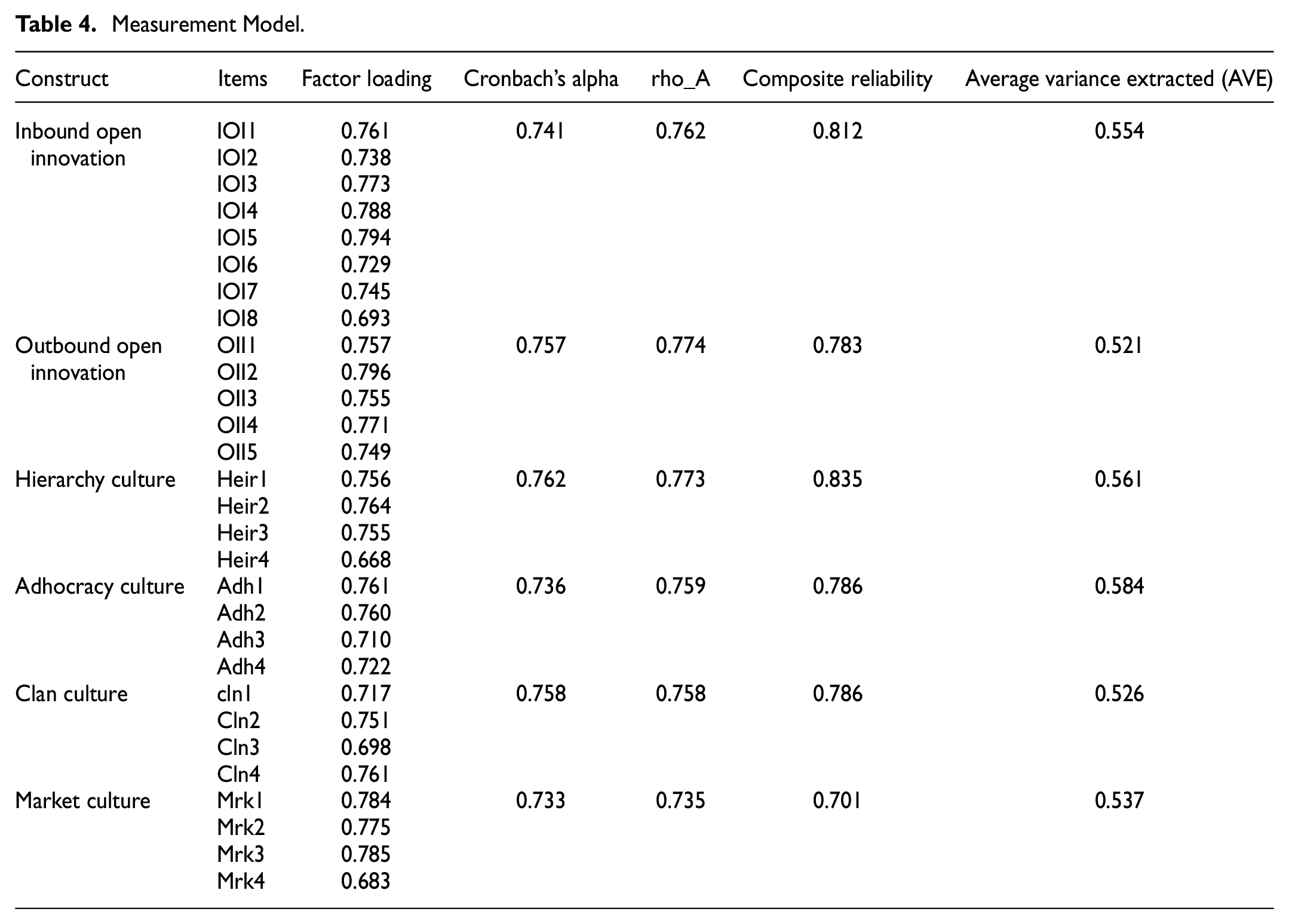
According to (Hair Jr et al., 2014), discriminant and convergent validity of the collected data was evaluated in measurement model. Convergent validity assesses the correlation among the different measures. To determine the convergent validity, factor loadings and average variance extracted (AVE) were computed. According to Hair Jr et al. (2014), outer loadings of each item must be 0.70 or higher and AVE must be 0.50 or above. Almost all the items were meeting the criteria proposed by Hair Jr et al. (2014). Hence, convergent validity of the data was confirmed. Furthermore, Cronbach alpha and composite reliabilities were also computed to test the reliability of the constructs. Table 4 sums up the statistics of the measurement model.
Measurement Model.
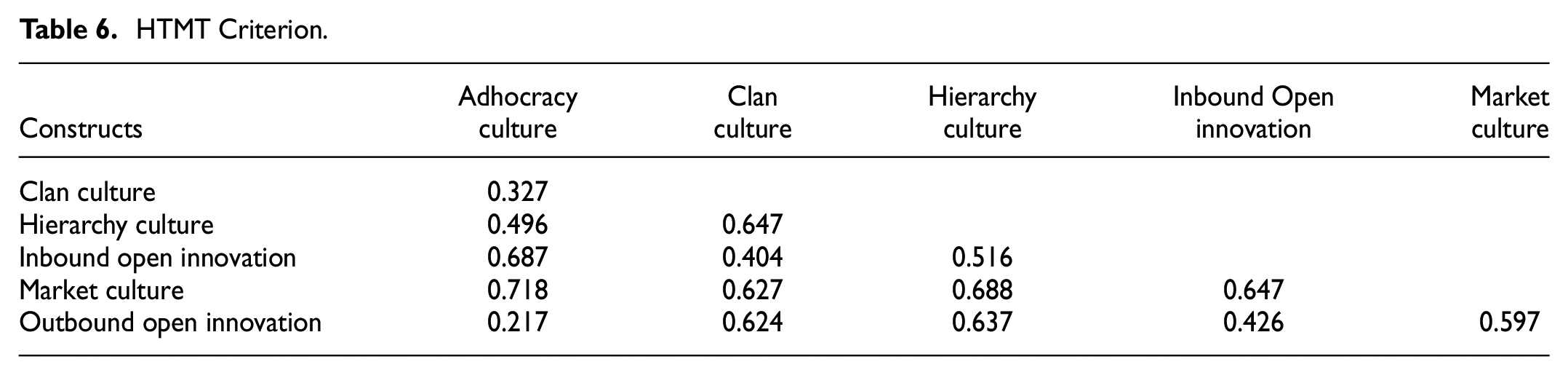
Discriminant validity is described as the degree to which constructs are distinct from one another. Hair Jr et al. (2014) explained “discriminant validity can be established if the square root of AVE is greater than the inter-construct correlations.” Heterotrait-monotrait ratio (HTMT) and Fornell-Larcker criterion tests were conducted to ensure discriminant validity (table 5). According to Kline (2015) if HTMT value is higher than 0.85 then discriminant validity can be proven. Results of tests are summed up in the tables 5 and 6. Results show that our constructs meet both criteria suggested by Hair Jr et al. (2014) and Kline (2015)
Fornell-Larcker Criterion.

HTMT Criterion.
After establishing the reliability of the constructs and validity of the data, in the next phase we tested the hypotheses through structural equation modeling. Co-efficient of determination (R)2 values of the constructs show prognostic accuracy of predictors. For example, R2 value of outbound innovation shows that 28% variation in the construct was resulted due to organizational culture. Similarly, 32% variation in inbound innovation was caused by organizational culture. The effect size (
Path co-efficient between the predictors and outcome variables show the significance of hypothesized relationships. Standardized values closer to +1 shows the positive relationships between the variables and values closer to -1 show the negative relationship. Table 7 includes the path coefficients of hypothesized relationships.
Hypothesis Testing Results.

Findings of the structural equation modeling show that hierarchy culture has negative significant relationships with both dimensions of open innovation. However, clan culture had a statistically insignificant relationship with inbound open innovation and negatively significant relation with outbound innovation however, we hypothesized positive relationship between clan culture and outbound innovation hence, hypothesis is rejected. Adhocracy culture had a positive significant impact on inbound innovation with standardized co-efficient of 0.373. On the contrary, adhocracy culture couldn’t establish any significant relationship with outbound innovation. The discussion section highlights the possible reasons for insignificant results. Market culture had no significant impact on any dimension of open innovation culture.
Discussion on Findings
Though the concept of open innovation is relatively novel but has been widely studied by management researchers. Mainly, the construct is tested and studied in technology-oriented organizations through cases and structured interviews (H. Chesbrough, 2003; Henkel, 2014; Kirschbaum, 2005). Most research is based on a few areas like tabletop role-playing games and open-source software (Henkel, 2014; Lecocq & Demil, 2006). Studies also indicated that culture largely accounted for innovation at the organizational level (Huizingh, 2011; Lijauco et al., 2020; Prud’homme & Peter, 2015; Scott & Davis, 2015). Therefore, we have hypothesized that an organization’s culture influences open innovation in the automobile industry. However many studies on organizational culture have acknowledged that not all types of cultures are associated with open innovation in organizations, and few cultures might discourage innovation in organizations (Naqshbandi et al., 2015; Wiener et al., 2018). Contrarily, these studies argued that open innovation needs a particular organizational culture and environment to flourish. Thus, it is imperative to investigate different types of organizational culture related to open innovation to understand the relationships between organizational characteristics and open innovation. Hence, we have developed different hypotheses for different organizational cultures and tested their effects on two types of open innovation.
Our first two hypotheses state that “hierarchy culture negatively affects inbound and outbound open innovation.” The findings of the research implied that hierarchy culture has a negative influence on both kinds of open innovation. These findings are supported by Naqshbandi et al. (2015). The hierarchical culture is suitable for organizations with many employees as it controls, stabilizes, and focuses on internal integrations (Wiewiora et al., 2013). However, this limits their ability to adapt to the technological changes in the organizations (Mehmet & Sipola, 2021). For this reason, these organizations are not supple enough to support open innovation. The researcher argued that open innovation requires a flexible environment to flourish (Chesbrough et al., 2014). Naranjo-Valencia et al. (2016) claimed that mechanical structures notably restrict innovation from outside sources. Naqshbandi et al. (2015) suggested: that “a higher level of monitoring and control in hierarchical organizations reduces the open innovation in these organizations.” Similarly, in the case of the automotive industry of Pakistan. Those organizations that encourage the hierarchical culture are less likely to involve in collaborative research and development activities with other organizations in the same field. On the contrary, these organizations work in a highly competitive environment and mainly focus on their internal strengths rather than collaborative, innovative strategies. Mainly, hierarchical organizations prefer standardization and the status quo (Kim, 2021). Another possible reason for the lack of support for open innovation in the Pakistani automotive industry is the many layers of management. As Tharp (2009) discussed, hierarchical organizations have many layers of management that discourage the new idea generations from external and internal sources of organizations.
Japanese firms introduced clan culture. Americans had a culture of individualism, while the Japanese believed in collectivism. Differences in their working culture reflect in their approaches to solving problems. Japanese organizations have a family-like environment that promotes harmony, unity, and understanding. Clan culture creates a family-like environment within the organization (Kowsari & Darush, 2017). Clan culture emphasizes discretion and flexibility rather than the control and stability of adhocracy and market culture. Hence, a positive relationship between clan culture was hypothesized with inbound innovation. Findings show that clan culture negatively affects the outbound open innovation. Clan culture is similar to the hierarchy that is, there is an inward focus in clan culture with concern for internal integrations. It focuses on the internal strengths hence, negative relationship is deduced in this study. Clan culture is more relationship-oriented than task-oriented. This allows employees to focus on developing strong interpersonal relationships instead of involving in functional conflicts over different ideas (Shaked, 2021). Employees in the clan culture are more concerned about maintaining relationships, avoiding sharing new ideas, and focusing on new product innovation, especially outside organizations (Park et al., 2021). Hence, findings revealed that clan culture negatively affected the outbound open innovation in Pakistan’s automobile market.
Researchers developed the hypothesis that “Adhocracy culture has a positive effect on open innovation.” Proving the hypothesis, the current study has established a significant positive relationship between the adhocracy culture and open inbound innovation. These findings are in line with the findings of Wiener et al. (2018). Due to its focus on differentiation, adhocracy culture organizations always look for possible internal integrations to create product differentiation (Brock, 2021). These organizations are more open to change and adaptable. These conditions are imperative for the effective implementation of the open innovation model.
Moreover, with a rise in the information technology era, adhocracy culture is transformed to deal with the ever-changing volatile corporate environment effectively. Such technological and social advancements have outgrown the traditional processes of doing things. Success is now attributed to future-oriented creative performance and innovation. Entrepreneurship thrives in profit generation through the exciting opportunities of developing innovative products and services. As Brock (2021) and Qureshi et al. (2021) highlighted in their studies that “adhocracy organizations value flexibility, adaptability, and thrive in what would have earlier been viewed as unmanageable chaos.” Around the globe, technology-oriented organizations are the ones that have adapted the adhocracy culture to facilitate their open innovation. As Zeb et al. (2021) stated, “organizations with adhocracy culture are largely based on the internal orientation, integration, and unity at one end of the scale with stability, control and rivalry on the other.” The adhocracy culture is more focused on internal integration and is organic, thus, allowing organizations to focus more on their strengths, skills and capabilities. However, such a type of organizational culture does not support the outbound open innovation in the organizations. The bureaucratic structure cannot allow external innovations to nourish. Thus, it reduces the ability of outbound open innovation in organizations. Similar is the case in the Pakistani automotive industry; due to technological changes, these organizations have more tilted toward an adhocracy culture to adopt an inbound open innovation approach successfully.
Market culture is another type of culture described in the competing value framework. Our last two hypotheses were that market culture positively affects outbound and inbound dimensions of open innovation. The findings of the study indicated that both hypotheses are not being accepted. Market culture organizations are like the hierarchy culture and focus on stability and control. It is a target-oriented and most aggressive type of culture (K. S. Cameron & Quinn, 2011). Employees’ performance is highly monitored and rewarded or punished for their performance. This hindered their ability to take risks, and they tried to follow the traditional and proven ways to achieve their targets. The same is the case with employees in the Pakistani automotive industry. They have to compete outside the organization and within the organization, which restricts their creativity and innovative behavior, which is a prerequisite for adopting a new model of innovation. To summarize, a culture that focuses on external integration, flexibility, and risk-taking is considered supportive of open innovation in conventional industries like the automobile sector.
Limitations and Implications of the Study
Though this research entails many methodological and literary strengths, a few limitations must be mentioned here so future researchers working on a similar framework can avoid these. Firstly, we used a multistage sampling strategy to get data from 231 employees from the automotive industry of Pakistan. Due to time and financial constraints, we could not collect the data from a larger sample. This limitation can affect the generalizability of the results. Furthermore, the model can be studied in the service industry to get exciting insights into adopting the open innovation model (Turoń, 2022). It is also suggested that the researchers collect the data from more respondents by increasing the sample size to enhance the generalization of findings. Secondly, current research has been conducted in Pakistan’s context and cannot be generalized to other countries because of different cultural values in the organizations. Therefore, testing the framework in another industry or country is advised to conduct a comparative analysis with our research findings. Thirdly, we have adopted a cross-sectional methodology to investigate the framework. The self-reported responses that confined intentions and individuals’ perceptions may change from time to time; hence, a longitudinal study may conclude different results. Hence, it is advised for future researchers to conduct a time-series analysis on the same research framework. Finally, we have examined the effects of different types of organizational cultures that are clan culture, adhocracy culture, hierarchy culture and market culture, on the inbound and outbound open innovation. Future researchers can consider investigating other models and aspects of culture in organizations and their impact on open innovation.
Furthermore, it will also be intriguing to examine the effect of these types of organizational cultures on coupled open innovation. Moreover, in our opinion, it will be interesting to investigate the moderating role of technology turbulence and management support which may strengthen or weaken the relationship between organizational culture and open innovation. Other factors such as role and change agents, the leadership’s willingness to implement an open innovation system and learning orientation could be studied in the framework to get an in-depth understanding of the open innovation implementation phenomena.
As far as practical implications of this research are concerned, first of all, it is the prime responsibility of the leaders to cultivate a culture in the organization that supports open innovation. As findings of the current study imply that open innovation thrives in the market and adhocracy culture; therefore, leaders can focus on boosting such cultures in their organizations. In contrast, hierarchical culture kills the prospects of nourishing open innovation in the organization, so managers should discourage such practices in the workplace. Managers also need to implement programs that include the external partnering of technology to enhance the learning environment. Working with external bodies will allow organizations to transfer technology from external sources. Especially the automotive industry is more exposed to rapid transitions; thus, by effectively implementing open innovation, the automotive industry can be more competitive globally. Managers in the automotive industry are suggested to play a supportive role in enhancing the effectiveness of open innovation, ultimately resulting in a higher level of organizational performance. As mentioned earlier, open innovation implementation is a strategic transitional process. Managers must communicate the pros and cons of open innovation and create an environment where employees are willing to accept and foster these changes within their process. By doing so, managers can effectively implement open innovation system in automotive firms.
Supplemental Material
sj-docx-1-sgo-10.1177_21582440231200319 – Supplemental material for Reconnoitering the Nexus Between Organizational Culture and Open Innovation Systems
Supplemental material, sj-docx-1-sgo-10.1177_21582440231200319 for Reconnoitering the Nexus Between Organizational Culture and Open Innovation Systems by Shazia Parveen, Iqra Abdullah, Muhammad Imran Qureshi, Muhammad Umar Farooq and Shazia Qayuum in SAGE Open
Footnotes
Authors Contribution
Dr. Shazia Parveen made a substantial contribution to the concept and design of the article and drafted the article. Dr. Iqra Abdullah revised the draft critically for important intellectual content. Dr. Muhammad Imran Qureshi contributed to data collection, analysis, and interpretation of data for the article. The first author and other co-authors gave approval for the final version to be published. Dr. Shazia Qayyum and Muhammad Umar Farooq involved in the initial concept development and their primary task was to handle revisions and manuscript improvements. Dr. Iqra Abdullah and Dr. Shazia Parveen prepared the revised manuscript and replied to reviewers’ comments.
Declaration of Conflicting Interests
The author(s) declared no potential conflicts of interest with respect to the research, authorship, and/or publication of this article.
Funding
The author(s) received no financial support for the research, authorship, and/or publication of this article.

Supplemental Material
Supplemental material for this article is available online.
References
Supplementary Material
Please find the following supplemental material available below.
For Open Access articles published under a Creative Commons License, all supplemental material carries the same license as the article it is associated with.
For non-Open Access articles published, all supplemental material carries a non-exclusive license, and permission requests for re-use of supplemental material or any part of supplemental material shall be sent directly to the copyright owner as specified in the copyright notice associated with the article.
