




Abstract
This study aims to help international students learn the language and cultural knowledge of their future study destination by collaborating with local students through coplaying games in online virtual rooms. Therefore, this study explores whether the 3D interactive game with specific contexts on a virtual platform can support intercultural collaboration and improve the students’ language and cultural learning. This study created novel 3D contextual interactive games (3DCIGs) in a gamified virtual environment (GVE), established on a unique virtual platform named Terf®. Terf® enables the observing and recording of data related to the conversations and behaviors of users. To investigate the effects of 3DCIGs on students, a focus group consisting of newly arrived Chinese students and Irish students from an Irish university participated in this study. The study adopted mixed methods of qualitative and quantitative analysis to examine whether 3DCIGs effectively motivate the collaborative learning of intercultural students compared with text-based assignments set in the Game Play Rooms. The findings reveal that the novel 3DCIGs developed in this study have a positive potential to motivate intercultural students to engage in team collaboration and help their cultural and language knowledge exchange.
Keywords
Introduction
In 2021, 1,061,511 Chinese students from Mainland China were studying abroad at the tertiary level, accounting for over 17.5% of mobile students worldwide (UNESCO, 2021). These international students have many concerns prior to studying abroad and have to overcome particular challenges to be successful, primarily language barriers and cultural differences (O’Reilly et al., 2010, 2013; Zhang et al., 2017). While international students attempt to learn English using language tools such as DuoLingo (https://www.duolingo.com/) and Rosetta Stone (https://www.rosettastone.com/), without the vibrancy of peers’ cultural exchange and interactions, these tools are unable to make English learning fun and motivated (Cheng et al., 2017). According to Kerimbayev et al. (2017), pre-communication and sharing experiences of educational activities or life can accelerate the learning process among intercultural students, thus suggesting that student language learning can be supported, enhanced, and accelerated by providing students access to experiences and interactions.
In past decades, virtual worlds (VWs) have been adopted to explore their potential impact on language and cultural learning (Corder & U-Mackey, 2015; Petrakou, 2010; Wood & Gregory, 2018). VWs provide three significant features for their users: a shared 3D simulated space, computer users (avatars) with a first-person view, and an interactive communication environment (Dickey, 2003; Franceschi et al., 2009). In a 3D virtual learning environment, intercultural students can see and hear one another and manipulate virtual artifacts together. Besides, virtual environments benefit the e-learning community because they increase participants’ sense of presence in the community and they enhance the social awareness and communication between participants in a safe way (Abdul Hamid et al., 2017; Machado et al., 2016; Shonfeld & Kritz, 2013). In particular, engagement and presence can be positively affected by the types of collaborative tasks (e.g., involve interactive factors) that are set in the virtual learning environment (Franceschi et al., 2009; González-Yebra et al., 2019; Khlaisang & Songkram, 2019). Therefore, this study’s intercultural communication in virtual rooms should be motivated by a cultural exchange-based collaboration, which involves team knowledge construction and negotiation to learn. Social constructivist theories of learning (Vygotsky, 1978) have led to increasingly peer-assisted and collaborative pedagogies. According to Adefila et al. (2020), collaborative learning enables students to think critically about learning materials and the relevance of new knowledge or skills to their practice in a virtual learning environment (Adefila et al., 2020). In addition, collaboration among learners supports their exchange of knowledge, information, experiences, and skills (Corder & U-Mackey, 2015; Lave & Wenger, 1991). However, intercultural learners who come from different cultural backgrounds cannot develop efficient collaboration automatically; appropriate triggering mechanisms are needed to attain a collaborative mode.
In recent years, incentives such as digital games are increasingly being exploited in virtual spaces to explore their impacts on improving learning efficiency (Alahuhta et al., 2016; Inaba et al., 2015; Lan et al., 2018). Prensky (2001) noted that games are gradually becoming significant incentives to the learning process due to their unique features, which include fun and playfulness; rules and goals; interactivity; adaptiveness; the provision of outcomes, feedback, and rewards; potential competition or challenges; and a social context. The wise use of game mechanics (e.g., points and levels) in virtual learning environments can engage users and encourage them to solve problems collaboratively (Zichermann & Cunningham, 2011), thus making the games highly social and generating interactive experiences that are effective at engaging users in a (collaborative) learning process (Quinn, 2005). Digital games can present credible contexts using details of objects and scenes (Chen et al., 2017), thus creating simulated learning contexts and concrete scenarios (Chen et al., 2018). Context plays a significant role in enhancing language and new knowledge development (Chen et al., 2018; Eun & Lim, 2009; McKeown & Curtis, 2014). Additionally, by inserting context into a learning environment, learners are more inclined to collaborate with others when learning (Eun & Lim, 2009; Lozanov, 2004). Lave and Wenger (1991) argued that efficient learning could be fostered in a proper context during social collaboration. Students situated in a specific context are encouraged to interact with required information and artifacts in a meaningful way (Clark, 2009).
To obtain a more vital awareness of collaboration, learners may need their joint activities to be externally guided in the collaborative contexts in which new skills can be formed (Hämäläinen, 2011; Oksanen & Hämäläinen, 2014). Within the context of multiple cultures, collaborative tasks in virtual rooms offer the potential for effective performance and the promotion of intercultural understanding among students of different nations (Cagiltay et al., 2015; Chun, 2015). Different types of games can create different types of collaborative talks, which could significantly affect the sense of group presence (Prensky, 2001). Owing to the ability of digital games to render contexts, some researchers employed game-based virtual environments to support language learning; the games create contexts that enhance the students’ learning experiences (Berns et al., 2013; Ibáñez et al., 2011; Inaba et al., 2015). However, the above studies’ games’ development was limited to text-based modalities (e.g., assignments). Other researchers have claimed that the text-based virtual learning environment is the least effective in supporting the development of group engagement, presence, and performance (Franceschi et al., 2009). Hence, this paper proposes novel 3D contextual interactive games (3DCIGs) that present interactive graphics with specific contexts created in a virtual platform. The aim of developing 3DCIGs in the virtual space is to support international students’ intercultural collaboration by examining the collaboration between Chinese students and Irish students who are newly studying in an Irish university.
We assume that adding a specific cultural context to a 3D interactive game could be an efficient way to increase international students’ engagement in intercultural collaboration, thereby helping them practice language and learn cultural knowledge. For instance, the context of the future study university is identified as an essential item of prior knowledge for international students (Zhang et al., 2017). Hence, the context of an Irish university has been selected as one of the learning topics added to the 3DCIGs. Doing so will enable Chinese students to practice the English language and learn about the Irish culture by completing 3DCIGs in collaboration with Irish students, thus providing them with optimal preparation for their overseas studies. Accordingly, this study aimed to answer the following two questions: (1) Compared with text-based assignments, do 3DCIGs have a higher potential to activate intercultural collaborations? (2) Collaborates by coplaying 3DCIGs positively improve students’ language and cultural learning? The following sections present the method, results, discussion, limitations, conclusions, and future studies.
Methods
Designing Gamified Virtual Environment on Terf®
The successful implementation of a gamified virtual environment (GVE) onto the immersive collaboration virtual platform Terf® (designed by 3DICC: https://www.3dicc.com/) involves three main parts: virtual rooms, an external database, and game applications, including 3DCIGs.
Terf® platform and virtual rooms
The GVE comprises three virtual rooms: (1) the Introduction Room, where students learn how to use the tools in the virtual rooms and create their teams, as shown in Figure 1; (2) the Social Room, where the avatars identify their intercultural partners, as shown in Figure 2; and (3) the Game Play Room, where the students complete the collaborative tasks, as shown in Figure 3. Virtual rooms in Terf® offer aspects of full-body appearance (an avatar), which uses the avatar’s viewpoint, gestures, locomotion, and directional voice. Each virtual room is equipped with various digital tools for the students to transfer documents and make sophisticated video chats and for the researchers to record the learners’ activities. These virtual rooms are dedicated, secure, and admin-permission-based environments; thus, only invited users can access specific virtual spaces. Once participants are invited to join a virtual room, they can immediately view each other, access the same content, and start working together on a shared project. The Terf® setting offers a strong sense of being in the same “place” as other team members and provides a door game application, which can be set up with one- or two-way doors that represent “physical doors” between the virtual rooms. Compared to pressing buttons to walk or “fly” around in a place, the students’ presence is considered to be better when users walk through several real or virtual rooms (Usoh et al., 1999). These three virtual rooms are connected by one-way doors and set in a specific order, which offers the user a sense of the presence of a shared environment.

Introduction room.

Social room.
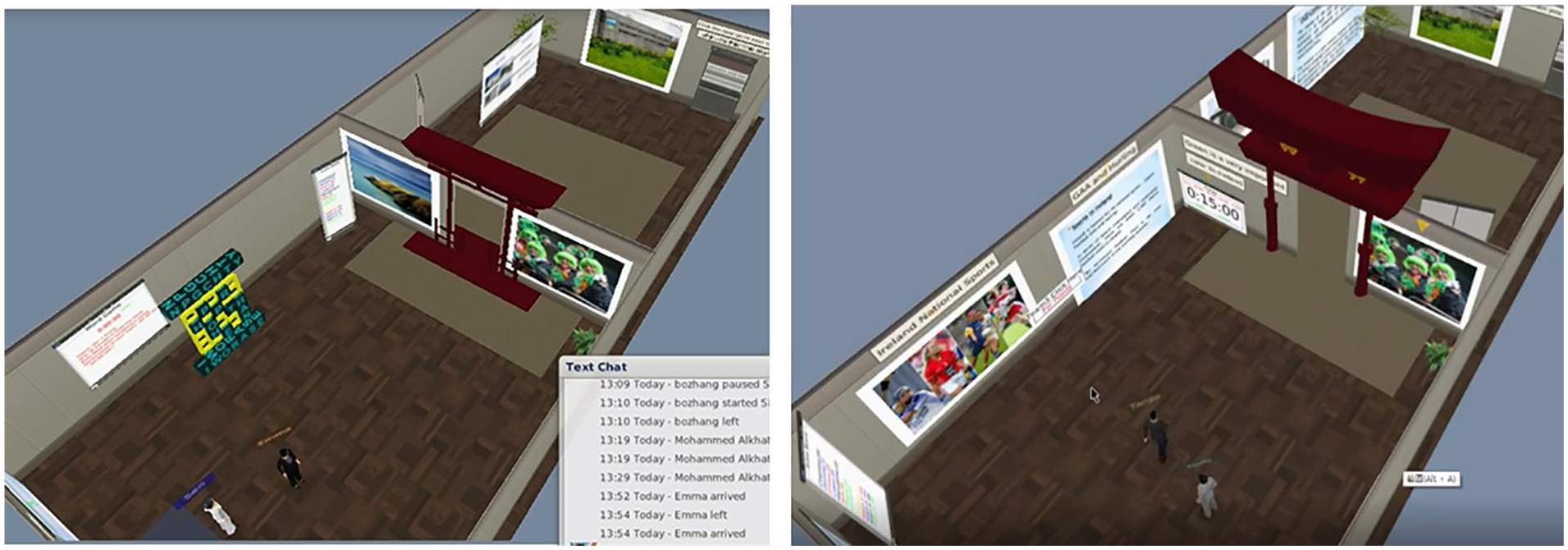
Game play room with 3DCIGs (left) and text-based assignments (right).
Terf® external persistence and the connection with game applications
The Terf® platform provides a Python application programing interface (API) that enables the virtual rooms to collect dynamic data and modify users’ experiences based on an external database. In this study, using a database to set up external persistence to Terf® can provide a capability of concurrent access, which indicates that any interaction with the game applications developed within the virtual rooms will be simultaneously and persistently recorded. The database was created on the Heroku platform (https://www.heroku.com/) to store information concerning the individuals’ or teams’ performances, that is, avatars’ logins, team creations, and score allocations. Figure 4 shows that several game applications, including 3DCIGs, are established within the virtual environment and connected to the external database. The game applications that we developed in the Terf® system are multi-user, automatically replicated for everyone who logs into the virtual room. Therefore, intercultural students can synchronously interact with the same games and complete them collaboratively.
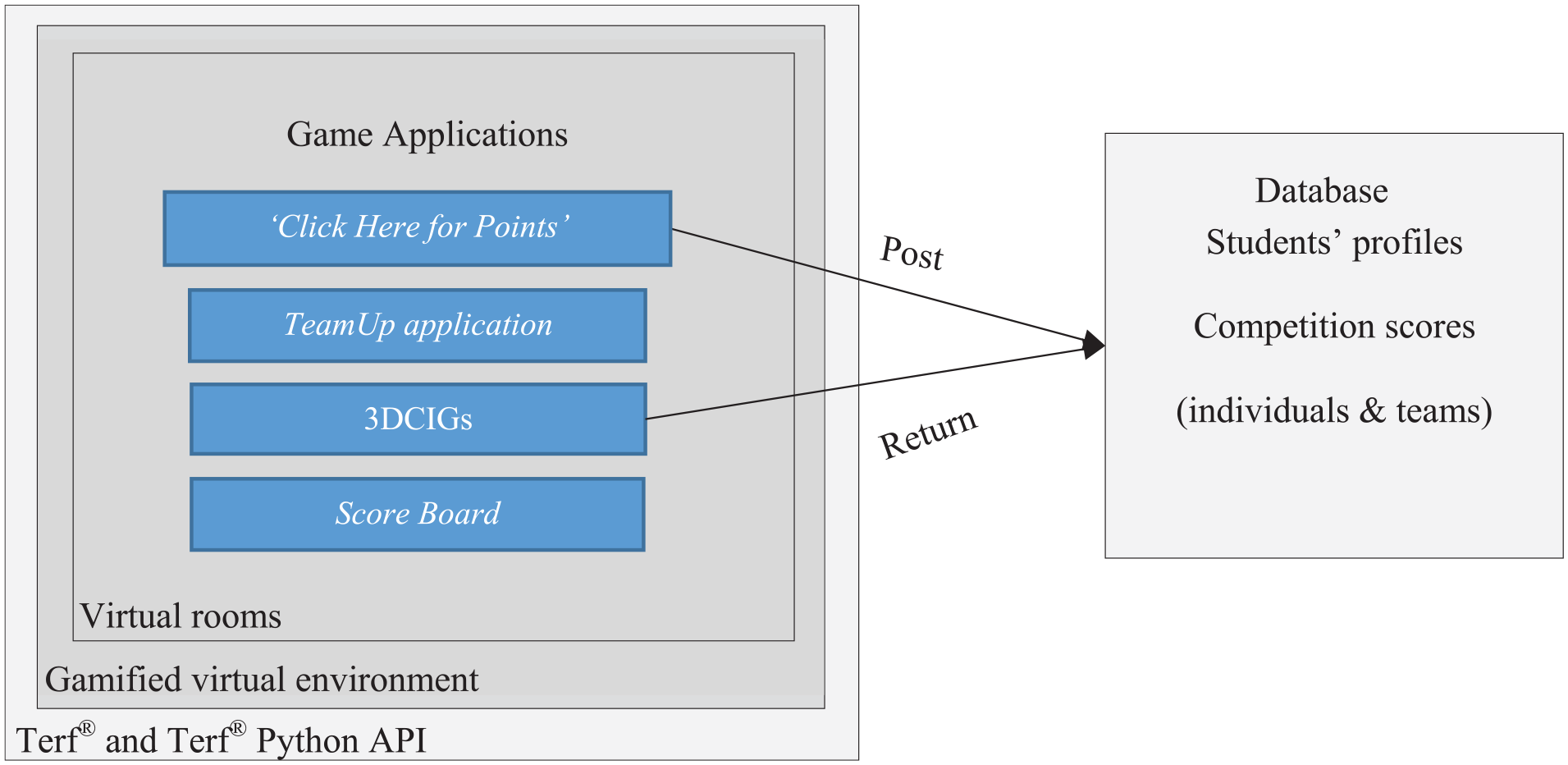
Software architecture of the GVE.
The “Click Here for Points” application (Figure 5) was located in the Introduction Room and Game Play Rooms to reward players when they click on it. Therefore, this application can collect team scores and track the movement of participants in the Game Play Rooms. The purpose of creating this application was to induce students in the Introduction Room to learn how to operate the virtual platform by reading the information board (showing the instructions about texting messages, sending audio and video chats, and manipulating 3D items within the virtual space) and rewarding them with points.

“Click here for points” application (left), TeamUp application (middle), and score board (right).
The TeamUp application (Figure 5) was established to create cross-cultural teams. Once students click on the TeamUp application button, two students from different cultures were automatically allocated to a team. The names and scores (starting from 0) of both individuals and teams were sent to the external database. When the competition started, students were rewarded in real-time, and their rewards related directly to the effectiveness of their cross-cultural collaboration.
The Score Board (Figure 5) application was developed and placed in each virtual room to display the real-time scores of the individuals and teams. The Score Board pulls score data from the database system every 2 seconds and renders this information (i.e., names, scores, and team information about users) on its interface. Students can view their achievements and the achievements of others in real-time and adjust their behaviors as needed (Zhang et al., 2016).
The contexts selected to construct the 3DCIGs were identified by the findings of a recent study concerning the challenges Chinese students encountered when moving from China to Ireland (Zhang et al., 2017). Contexts familiar to Irish students were also added into the games, alongside contexts familiar only to Chinese students. These contexts facilitated the sharing of cultural knowledge between the Irish and Chinese students and encouraged them to practice using the languages while completing games collaboratively and contributing to their team scores. This study established two 3DCIGs with clear concepts: Word Game and Matching Game. The following sections describe the details of these two games.
Word game
The Word Game (Figure 6) is a 3D multiplayer interactive game. In the Word Game, like Scrabble (a square board with a 5 × 5 grid of tiles), users click on the 3D cube and drag it around on a snap grid. The 3D cube will center itself on the nearest snap grid square when released. This game was set with five words: sport, happy, Howth, China, and green to inspire students to talk about these designed cultural contexts. Ireland is famous for its national sports (Hurling and GAA), its famous landscape (Howth), and the favorite color of the Irish (Green). These characteristics are considered to be the most representative cultural identifiers of Ireland. Similarly, relatively relevant and straightforward words such as happy and China are used to ensure that Chinese students contribute positively to the competition and participate in cross-cultural collaboration. The team members who correctly complete one of the set words (five letters) can obtain points when five cube positions are located in the set word order.

Word game.
Matching game
Previous studies have revealed that the information regarding the future study university is vital for intending international students (Zhang et al., 2017). Therefore, we created a Matching Game (Figure 7) based on the context of an Irish university. This game application comprises four image-based elements (images of college buildings) and text-based elements (names of these colleges) that control the corresponding 3D college models. These vivid 3D faculty models (e.g., Confucius Institute, American Studies) became visible when the image-based buttons correctly matched the text-based buttons. When the game was collaboratively completed, the Chinese and Irish students on one team discussed and shared information, such as college locations and names of the university facilities and courses.

Matching game.
While coplaying the 3DCIGs, if the intercultural students accomplish any steps of the puzzles, the points obtained by the individuals and teams are synchronously sent to the external database. Based on the findings of Lave and Wenger (1991), Lozanov (2004), and Zichermann and Cunningham (2011) relating to the importance of creating an interactive learning environment with a proper context, we developed this GVE using game mechanics (e.g., points and interactive games) to engage different cultures and encourage them to solve a problem collaboratively. The game applications were correspondingly set in the virtual rooms.
Participants
To address the research objectives, we experimented with a focus group to test the collaborative tasks set in the Game Play Room. Written informed consent was collected from the participants before they began the experiment. Full ethical approval of this study was granted by the Human Research Ethics Committee at the institution where this research was conducted.
The focus group comprised eight university students (average age = 25.38 years, SD = 2.72 years; four females, four males; four Chinese students, and four Irish students;). These students were recruited from Science related subjects: data analytics, computer science, or engineering; therefore, they have similar technical capabilities. These participants, who had computers (using the highest configuration), were distributed into eight separate, closed spaces, and provided with the same Internet accessibility. All participants received a payment of €10 to encourage them to take the competition seriously.
Procedures
The study used a randomized control-group posttest design. Figure 8 shows the layout and logical flow of the study design. The bilingual signs throughout the virtual environment guided the four teams through the completion of their competition. We created 3DCIGs and text-based assignments using the same context information that served as collaborative tasks in the Game Play Rooms. And rooms 1 and 2 were set up with the 3DCIGs, and rooms 3 and 4 were equipped with text-based assignments (the “Click Here for Points” applications were used for rewarding functions: earning team scores and tracking students’ actions). Thus, two types of the Game Play Room were generated with the same structure and content but different collaborative tasks. As shown in Figure 8, before the start of the study trial, four intercultural teams were grouped: Team 1, Team 2, Team 3, and Team 4 in the Social Room. According to the study design, Team 1 and 2, who entered Room 1 and Room 2 (3DCIGs) were assigned as the treatment group, while Team 3 and Team 4 entered Room 3 and Room 4 (text-based assignments) assigned as the control group. The study trial was conducted and recorded for 20 minutes in the Game Play Rooms. Therefore, this study investigated how the type of collaborative tasks (3DCIGs and text-based assignments) set in the Game Play Rooms affects the development of intercultural collaboration, language, and cultural learning.

The chat flow of the study design.
As illustrated in Figure 8, the following procedures were conducted:
All students learned the necessary skills (e.g., text messaging, audio and video chatting, and manipulating 3D items) in the Introduction Room through the Terf® platform, and four intercultural teams were randomly created within the Introduction Room by the platform. Each team consisted of one Chinese student (C) and one Irish student (I) (they did not know the identities of their team members in advance). All these participants spent the same time in the Introduction Room before they were directed to “walk” into the Social Room.
Within the Social Room, students of different cultures (Chinese and Irish) met their teammates according to the team information shown on the Score Board. Then, members of each team practiced interacting with each other by conducting video or audio conversations, waving their hands to each other, and clicking “Click Here for Points” together, as shown in Figure 2. After a fixed time spent in the Social Room, each team was directed to “walk” into their corresponding Game Play Room, starting the study trial.
Once they entered the Game Play Rooms, all participants were immediately informed of the same instruction and tasks as follows:
Please talk to each other about these contexts and complete the collaborative tasks/games (clicking or dragging interactive items) together to collect the points in this room before moving to the next room.
Then, Teams 1 and Team 2 (the treatment group) completed the 3DCIGs in rooms 1 and 2, respectively, and Teams 3 and Team 4 (the control group) finished the text-based assignments in rooms 3 and 4, respectively. During the study trial, four teams’ behaviors were recorded.
Materials
User experience questionnaire
After the study trial, the participants were given a user experience questionnaire to obtain self-reported evidence regarding their collaborative learning experiences.
The user experience questionnaire consists of two parts: part 1 includes Q1 to Q3 to investigate users’ experience of the virtual rooms’ system usability; part 2 contains Q4 to Q7 to explore participants’ satisfaction with the intercultural interactions and collaboration that occurred in virtual rooms, see Table 1. Items Q1 to Q3 were 5-point Likert-type-style scales with possible responses ranging from 1 (very easy) to 5 (not very easy), while items Q4 to Q7 used single answer-2 points agreement Likert scales, and participants could provide reasons for their answers.
User Experience Questionnaire (Seven Items).

The development of the questionnaire items considered the findings of a prior study that related to the elements of presence in a virtual environment: ability to navigate, ability to interact with other virtual avatars, context consistency, and high-resolution graphics (Usoh et al., 2000). After constructing the items, we conducted face and content validity through the experts in virtual worlds.
Team conversation transcripts
During the study trial, to investigate the effects of language and cultural learning, all the participants’ behaviors (including dialogues) were collected via the recording facilities of the Terf® platform. Based on four intercultural teams’ dialogue transcripts, the Nvivo 12 (a tool for qualitative research) was applied to calculate and extract critical information. As previously mentioned, some knowledge points relating to Irish culture and Irish universities were included in the 3DCIGs and the text-based assignments. Hence, there are four themes were identified to form the coding information in this study: English Knowledge (e.g., English vocabulary, grammar), Expressions of Excitement (e.g., “Great!” “Wow, we got points!” and “Yeah, we won!”), Irish Knowledge (e.g., “Hurling and GAA” “Gaelic things” and “Irish costumes”), and University Information (e.g., “college locations” and “names of the courses”). As we assume that the contextual, collaborative tasks could make intercultural students practice language and learn cultural knowledge more efficiently; therefore, the analysis of the intercultural collaboration focused on the valid quantity and the diversity of the students’ discussions.
Statistical Analysis
Data were analyzed using IBM SPSS version 26.0 and R 4.0. Differences in the results of the user experience questionnaire between the treatment group and control group were analyzed using an independent sample t-test. As the data did not follow normal distribution, we employed paired Mann-Whitney U tests, with one tail mode to calculate the differences of four themes coded from teams’ conversation transcript between the treatment and control groups. All data were measured at 95% confidence intervals, and the threshold for statistical significance was set at p < .05.
Results
User Experience Questionnaire Results
The results in Table 2 show that there were no significant differences (p > .05) in terms of the mean value in Q1, Q2, and Q3 regarding the user experiences of the system usability on navigation, communication, and contextual content understanding in the virtual rooms between the treatment and control groups. Besides, all these mean values on Q1 to Q3 of both groups showed relatively lower than 3 (1 represents very easy and 5 represents not very easy).
Independent t-Test, Results From the User Experience Questionnaire Q1 to Q3 Showing That Both Groups had No Significant Differences on the Satisfaction of the System Usability on Navigation, Communication, and Contextual Content Understanding in the Virtual Rooms.

Figure 9 shows the statistical results from the user experience questionnaire for Q4, Q5, Q6, and Q7. Regarding the enjoyment of playing the collaborative tasks (Q4), the treatment group with 100% support enjoyed coplaying 3DCIGs with their teammates and agreed that completing 3DCIGs among different cultures is a helpful way for international students to share information (100%, Q5). However, the control group showed only 50% satisfaction with text-based assignments and 75% agreement that text-based assignment is a helpful way for international students to exchange information. When asking about would you recommend this virtual platform as a valuable platform to the incoming Chinese students, the result shows that all participants chose Yes (Q6). However, in terms of which collaborative tasks are more helpful for the new Chinese students to plan their trips to future study university (Q7), 75% of the students in the treatment group considered the 3DCIGs helpful, whereas only 25% of the control group supported the text-based assignments.
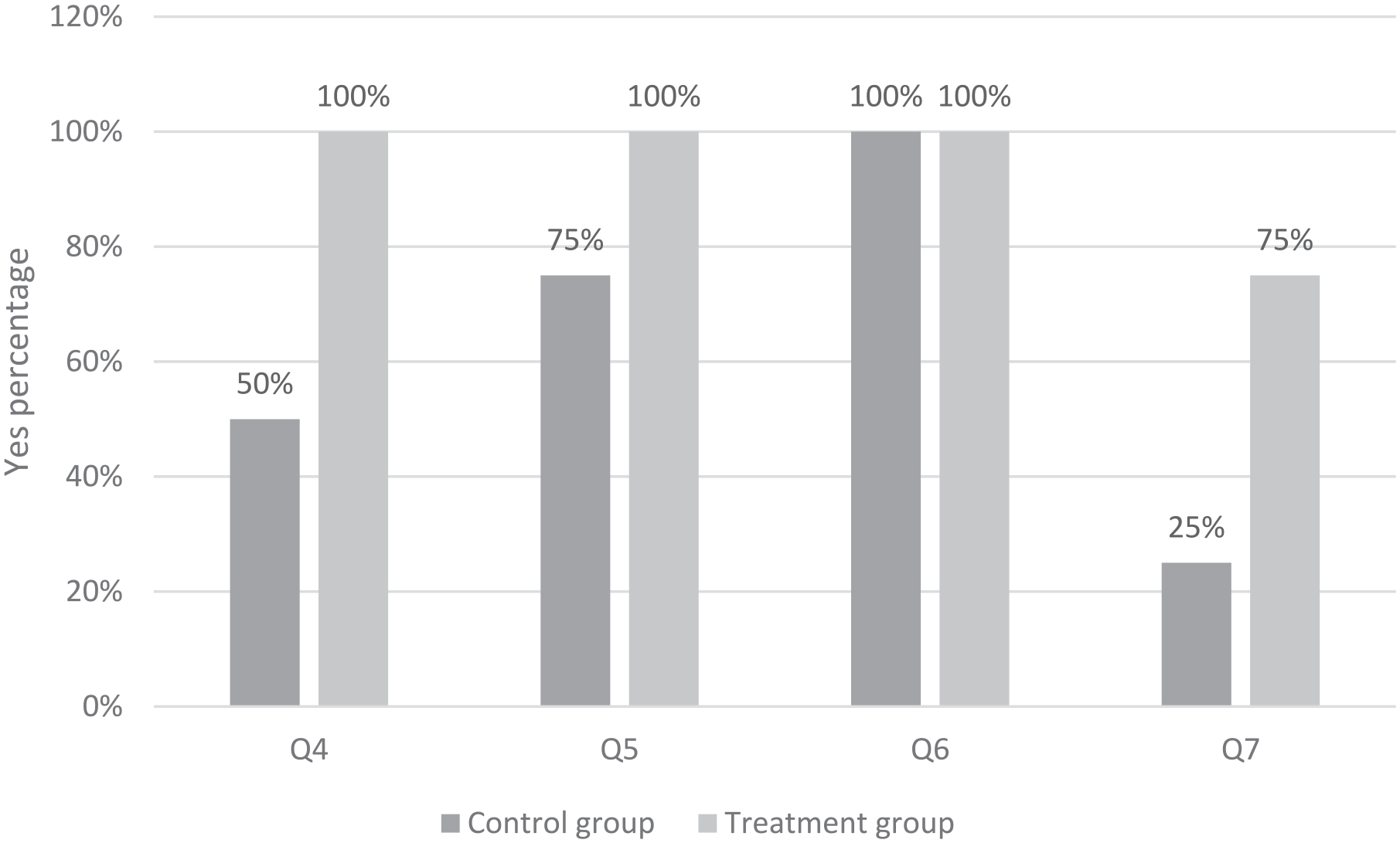
The results from the user experience questionnaire for Q4, Q5, Q6, and Q7.
Tables 3 to 5 show the students’ comments to support their responses to Q4, Q5, and Q7 (no expanded comments were provided for Q6). Table 3 shows that, in regards to the enjoyment of playing the collaborative tasks in the Game Play Room (Q4), the treatment group seems to satisfy with their intercultural collaboration, as the comments such as “great teamwork,” “helping to get familiar with teammates,” “enjoying the communication between players,” and “able to play games. . .together,” were appeared during the team collaboration. By contrast, the students from the control group tended to provide negative comments such as “not very interesting” and “not clear for each step,” thus confirming their displeasure.
The Opinions That Participants Provided to Support Their Answers Regarding Q4.

The Opinions That Participants Provided to Support Their Answers for Q5.

The Opinions That Participants Provided to Support Their Answers for Q7.

Table 4, which presents the participants’ opinions about whether the intercultural interactions between students in the Game Play Room are a helpful way to share information (Q5), shows that the majority of the participants agreed that solving tasks through intercultural collaboration has the potential to enhance their language practice and cultural knowledge exchange. In particular, the students from the treatment group described their learning experiences with optimistic comments, such as “really good to know cultural things” and “oral communication will definitely help new students understand the language easier.” However, while not harmful, the answers from the control group regarding their experiences of intercultural sharing were less enthusiastic: “talk to my partner about what we saw in the rooms” and “help to know each other in advance.” Additionally, the Irish student of Team 4(I) pointed out that the design of the collaborative tasks and the platform system should be improved to provide intercultural students with a useful way of sharing.
Table 5 shows the students’ opinions about the helpfulness of the collaborative tasks in the Game Play Room for the new Chinese students to plan their trips to a future university. Some students from the treatment group gave positive evaluations such as, “gives Chinese students the opportunity to experience the Irish culture,” “practice English with the university students,” and “really helpful in improving. . .language learning by finding the partner first and solving the game puzzle together.” By contrast, the students from the control group expressed dissatisfaction about either the system design of their virtual rooms or the design of the collaborative tasks.
Team Conversation Transcripts
Based on four coded themes: English Knowledge, Expressions of Excitement, Irish Knowledge, and University Information, we analyzed the conversation transcripts of the four teams. The analysis of the four themes focused on the valid quantity and the diversity of the students’ discussions. Moreover, the participants’ (avatars) behaviors in the Game Play Rooms have also been discussed.
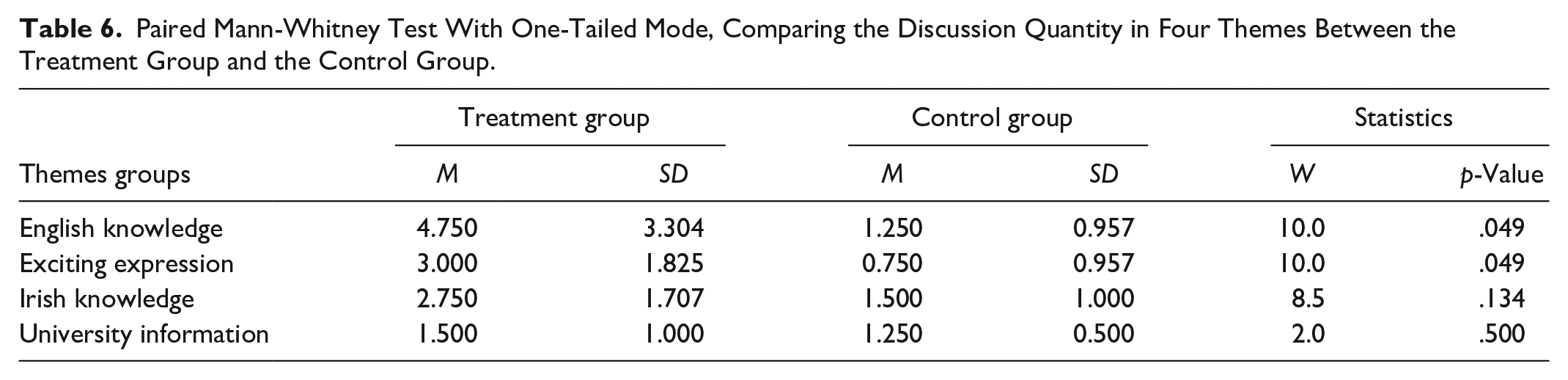
The result shows that the treatment group obtained higher mean values of valid quantity than the control group on discussing all four themes coded from the team dialogue transcripts, with a much higher mean value for English Knowledge and Exciting Expression. The analyses reveal that the mean values of the discussion quantity in the themes of English Knowledge and Exciting Expression in the treatment group were significantly higher (Mann-Whitney U test, W = 10.0, p < .05) than that of the control group; while there is no significant difference (p > .05) in Irish Knowledge and University Information.
Furthermore, based on the analysis of the observations from the study trial and the diversity of both groups’ team discussions, the findings display some significant insights. Firstly, we found that the students from Team 1 were behaving very excited about completing 3DCIGs and achieving scores during intercultural collaboration. Apart from the words (i.e., sport, happy, Howth, China, and green) hidden in the Word Game, they also practiced many other English words, such as spirit, spore, worth, cliff, and shore. Regarding the English Knowledge, they even chatted about the vowels of words, discussing words’ pronunciation and spells. These students discussed information that related to various aspects of the Irish culture, such as the “national color green,” “national sports Hurling and GAA,” “Gaelic things,” “Irish costumes,” and “the name of a famous place in Ireland.” While coplaying the game, they interacted excitedly and frequently laughed when they completed puzzles and achieved scores collaboratively. Many exciting expressions were noted, such as “Cool. I think we finished this game!” “Wow! Yes, it is,” “you got points!” “You won 55, and I won 60,” “Yeah! We got more points. We still have time,” and “Look at the board! Score Board shows every point we got in the real time.”
Similarly, the students from Team 2 mentioned new words such as parade, spring, and spire, and they noticed the changes to the team scores on the Score Board, although they did not perform the tasks as well as Team 1. By contrast, during the gameplay of the text-based assignments in rooms 3 and 4, the students did not behave with apparent pleasure and practiced fewer English words (e.g., camogie, Maryanne, and Howth). They did not chat diversely on the topics of Irish Culture and only discussed one topic: Gaelic Football. When talking about the university, students from Team 3 even digressed from the context of University information but spent ample time discussing other themes, such as the colors of Chinese stocks and Chinese food.
Discussion
The main goals of this study were to explore whether 3DCIGs (compared with text-based assignments) have a higher potential to activate intercultural collaborations and whether the collaboration by coplaying 3DCIGs has a positive impact on improving students’ language and cultural learning. Overall, Table 2 shows that there were no significant differences in terms of the mean value on Q1, Q2, and Q3 between the treatment and control groups. This implies that both groups had the same satisfaction and acceptance of the system usability on navigation, communication, and contextual content in the virtual rooms. Moreover, as all these mean values on the Q1, Q2, and Q3 showed relatively lower than 3 (1 represents very easy and 5 represents not very easy), which implies that both groups found that it was easy to communicate with other participants and navigate in the virtual rooms. Meanwhile, both groups had a similar acceptance of the contexts shown in the two types of Game Play Rooms. However, regarding the enjoyment (Q4) and helpfulness (Q7) of playing the collaborative tasks, the treatment group who were coplaying the 3DCIGs reported a higher 50% than the control group who were coplaying the text-based assignments (Figure 9).
Moreover, using the 3DCIGs to motivate the intercultural interaction for international students obtained higher support than using the text-based assignments in the virtual platform (Q5). Specifically, we analyzed the expanded opinions from the participants about Q4, Q5, and Q7. Results show that regarding the enjoyment of the collaborative tasks in the Game Play Room, the treatment group used the words “great teamwork” “enjoying the communication between players,” and“familiar with your teammates” to describe their collaborative activities. Additionally, a Chinese student from the treatment group stated that they enjoyed the experiences of meeting and communicating with their teammate from a different culture when coplaying the 3DCIGS (see Table 4). An Irish student from the treatment group believed that the 3DCIGs set in the Game Play Room allowed Chinese students to experience the Irish culture, ask questions “in person,” and practice English with western students (see Table 5). Such comments imply that the group engagement and presence emerged when these students fully participated in the 3DCIGs in the virtual room (Quinn, 2005). After completing the collaborative activities, if the feeling of team participation and belonging associated with multiple users of a virtual environment appeared, the group experienced presence (Abdul Hamid et al., 2017; Machado et al., 2016). The expressions of treatment group (see Table 3) used such as “teamwork”, “teammates,” and “between players” suggest that students were aware that other partners were acknowledging them during their team social interaction and collaboration (Zichermann & Cunningham, 2011). However, the control group’s comments regarding their intercultural collaboration experiences were less optimistic and expressed that the text-based assignments should be improved to provide intercultural students with a valuable way of sharing. These findings reveal that 3DCIG has a higher potential than text-based assignments to motivate intercultural students to interact in virtual environments.
Table 6 shows that the treatment group who coplaying the 3DCIGs discussed significantly more times on the themes of English Knowledge and Exciting Expression than the control group who coplaying the text-based assignments during the competition. Regarding the activities of English learning, apart from the words (sport, happy, Howth, China, and green) hidden in the Word Game, students from the treatment group also practiced many other English words, such as spirit, spore, worth, cliff, and shore, and even shared about their knowledge of the vowels of words. However, the students from the control group talked only about fewer English words (e.g., camogie, Howth, and Gaelic) during the team cooperation. In addition, from the observation of the study trial, the treatment group who was coplaying the 3DCIGs acted excited about their achievements (e.g., achieving scores) through the team collaboration. For instance, the students from the treatment group frequently laughed and made comments such as “you got points!” “You won 55, and I won 60.” “. . .got more points!” and “Score Board shows every point we got in the real-time” throughout the intercultural collaboration. This phenomenon shows that these students were aware of their contribution at all times with their collaborators. This finding indicates that group social presence emerged (Franceschi et al., 2019) and that effective collaboration was engendered because the intercultural students awarded each other and happily engaged in the interactive game activities (González-Yebra et al., 2019; Khlaisang & Songkram, 2019). Hence, 3DCIG can provide its players with a playful and interactive experience and offer a social context to engage its users in a collaborative learning process (Prensky, 2001). However, the intercultural students from the control group who were coplaying the text-based assignments generally made neutral or negative comments (e.g., “. . .able to talk to people” and “. . .not very interesting”) regarding the collaborative tasks set in their Game Play Rooms. Moreover, during the whole collaborative process, these students showed little excitement, even when they were rewarded with team scores. Hence, we can see, the different types of games (3DCIGs and text-based assignments) produced different forms of collaborative talks, which affect the sense of group presence and the diversity of language and cultural learning (Prensky, 2001).
Paired Mann-Whitney Test With One-Tailed Mode, Comparing the Discussion Quantity in Four Themes Between the Treatment Group and the Control Group.
Furthermore, the results regarding the diversity of both groups’ dialogue context and the observations of the participants’ (avatars) behaviors in the Game Play Rooms reveal some interesting insights. As discussed in the literature review section, context positively impacts enhancing people’s language and new knowledge development (Chen et al., 2018; McKeown & Curtis, 2014). Language learning and knowledge development benefit from a social context: one of which relate to the host society, its cultures, and personal life experiences (Eun & Lim, 2009). Therefore, this study selected the same contexts of Irish culture and Irish universities to create the collaborative tasks (3DCIGs and the text-based assignments). The results display that during the process of coplaying the collaborative tasks, the students from the treatment group shared diverse information related to Irish Culture (e.g., national color, national sports, Gaelic things, and Irish costumes). In contrast, students from the control group failed to chat diversely on that but focused on a single theme of Gaelic Football. Moreover, regarding the theme of the Irish university, Team 3 from the control group lost track in the context/theme but spent ample time discussing the colors of Chinese stocks and Chinese food. These findings indicate that the social context combined with different collaborative games created in a virtual platform may impact new knowledge exchange differently (Chen et al., 2018; Eun & Lim, 2009; Machado et al., 2016; Wood & Gregory, 2018). Meanwhile, this evidences that different ways of presenting the context may significantly impact creating a rich and collaborative learning environment (Lave & Wenger, 1991).
Overall, results demonstrate, compared with text-based assignments, 3DCIGs have a higher potential to activate an intercultural collaboration because they engage students more deeply in the activity being performed during the intercultural collaboration (Machado et al., 2016; Wood & Gregory, 2018). Sharing experiences in intercultural learning groups based on 3DCIGs implied that a cultural understanding and language learning emerged among representatives of different cultures (Chen et al., 2017; Corder & U-Mackey, 2015).
Limitations
Although this study can provide valuable insights, certain limitations must be considered: (1) This study used only two 3DCIGs. Definitive conclusions about the level of cultural knowledge gained by the Chinese student participants are not feasible due to this relatively limited sample of games. However, the finding was sufficient for demonstrating the potential of this innovative game design and highlighting the kinds of interactions that students found were valuable and informative. (2) The size of the focus group is limited. However, some results still demonstrate that the 3DCIGs, which are 3D interactive games with an added specific context, can activate intercultural collaboration, potentially affecting language and cultural learning.
Conclusion and Future Study
Our findings suggest that coplaying 3DCIGs among different cultures has the potential to support international students’ language and cultural learning. The interactive features and specific context used in the 3DCIGs can enable the collaborative process to be more effective, which can help students actively lead the learning process for entertaining, experience sharing, and obtaining a better understanding of the learning contexts. Given the results of this study, further research should be performed in a larger community and on a broader scale (e.g., contexts and games) to enhance the functions and sustainability of the 3DCIGs. Additionally, the 3DCIGs we created in this study were set in the VWs and accessed through a computer. In the future, virtual reality (VR) and augmented reality (AR) based 3DCIG could be considered to explore its effects on supporting the online intercultural collaboration for international students, as recent years, VR and AR games have been seen as a new way to present social contexts, and have the potential to increase students’ motivation and attention (Zhang & Robb, 2021).
Footnotes
Acknowledgements
We would like to thank Professor Charles Crook and Professor A.Y.M. Atiquil Islam for their valuable suggestion and guidance for this paper.
Author Contributions
BZ designed the study, collected the data, and wrote the manuscript. LG contributed to the idea inform and guided the research process. XG contributed to the idea inform, reviewed, and proofread the paper.
Declaration of Conflicting Interests
The author(s) declared no potential conflicts of interest with respect to the research, authorship, and/or publication of this article.
Funding
The author(s) disclosed receipt of the following financial support for the research, authorship, and/or publication of this article: This study was sponsored by China Major Project of the National Social Science Foundation under grant 19ZDA364.
Ethical Approval
Prior to beginning the study, ethical approval was obtained from the institutional ethics committee in University College Dublin under approval number: HS-14-69-Zhang-Goodman (certificate provided below).
