




Abstract
This study intends to evaluate the influence of social advertising, individual factors, and brand image on the buying behavior of Malaysian consumers toward the fashion clothing brands along with mediation of brand image. Using the convenience sampling technique, data was collected from 288 respondents. Questionnaires were self-administered and data was analyzed via Smart PLS-SEM. Social advertising, individual factors, and brand image are significantly related to the buying behavior of Malaysian consumers toward fashion clothing brands. Social advertising and individual factors have also a positive significant relationship with the brand image. Moreover, brand image mediates the relationship between social advertising, individual factors, and buying behavior. This study provides interesting insights about Malaysian consumers by evaluating the influence of social advertising, individual factors, and brand image on their buying behavior toward the fashion clothing brands along with the mediating role of brand image. These useful insights would enable marketers to develop more influential advertising strategies. By assimilating social advertising, individual factors, and brand image literature, the main contribution of this study is the analysis of social advertising, individual factors, and brand image among Malaysian consumers in enhancing the buying behavior toward the fashion clothing brands and building brand image among communities. Precisely, this study has evaluated the influence of some unique characteristics of social advertising (such as informative, entertainment, credibility, ease of use, privacy, and contents), individual factors (such as market maven, stability, open-minded, agreeable, and materialism), and brand image on the buying behavior of Malaysian consumers.
Keywords
Introduction
In the last two decades, the prevalent usage of social media marketing has massively changed the style of doing business around the world. It has provided the opportunity for two-way communication, become a part of everyday life, and reduced consumers’ anxiety around the globe (Alalwan et al., 2017; Dwivedia et al., 2021). It has gained wide popularity among advertising communities, and became one of the world-leading marketing platforms to share real-time business information (Coursaris et al., 2016; Eze et al., 2021; Vinerean et al., 2013; Yadav & Rahman, 2017). For instance, Facebook had 2.5 million advertisers, more than 50 million small businesses in 2016, and earned $ 5.4 billion in 2014 (Alalwan et al., 2017; Thornhill et al., 2017). Likewise, 88 % of businesses are using Twitter for marketing purposes around the world (Dwivedia et al., 2021). Gradually, the active users of social media have reached 2.95 billion in 2019 and are expected to cross 3.43 billion in 2023 (Dwivedia et al., 2021). It has emerged as an internet-based advertising platform, highly dynamic, exciting, and convey message to millions of people in seconds. At the same time, it has caught researchers’ attention to understand consumers’ responses and strategies of building a brand (Ertugan, 2016). It has enabled businesses to connect with their customers in a personal way, enhance brand awareness, and influence consumers’ attitudes in a positive manner (Dwivedia et al., 2021). Therefore, the concept of social advertising has emerged as a new trend of marketing around the world due to this interesting mechanism (Rehman, 2019). Social advertising is the process of gaining traffic toward social networking sites via content to attract audience attention (Esther et al., 2015; Rehman, 2019). It is the newest internet-based digital advertising system and has gained popularity around the globe (Hadija et al., 2012; Rehman, 2019).
Moreover, studies (Akayleh, 2021; Ertemel & Ammoura, 2016) have assessed the influence of social advertising on the buying behavior of consumers in various cultural contexts but less focused to examine on the buying behavior of Malaysian consumers toward fashion clothing brands. Likewise, studies (Kumar, 2014; Lixandroiu et al., 2021) have examined the impacts of personal factors on the buying behavior of consumers in a variety of settings but less focused to examine on the buying behavior of Malaysian consumers toward fashion clothing brands. In addition, studies (Gupta et al., 2021; Zhang, 2015) have evaluated the influence of brand image on the buying behavior of consumers in different communities but less focused to examine on the buying behavior of Malaysian consumers toward fashion clothing brands. Similarly, studies (Dehghani & Tumer, 2015; Elseminas et al., 2015; Hafez, 2021; Rehman et al., 2014) have assessed the impacts of social advertising on the brand image in numerous backgrounds but less focused to examine among Malaysian consumers toward the fashion clothing brands as well as amid mediation of brand image. Similarly, Filieri and Lin (2017) have assessed the impacts of personal factors on the brand image but less focused to examine among Malaysian consumers toward the fashion clothing brands as well as amid mediation of brand image. Besides, Okazaki and Taylor (2013) have explored the theoretical foundation of social media advertising to identify future research directions and noted three theoretical perspectives (networking capabilities, brand image transferability, and personal extensibility) in reaching targeted customers via social networking sites to enhance behavioral responses. The study has advocated this conception in various cultural settings to get a better understanding of the knowledge area. However, despite significant attention to buying behavior in literature, the prior studies have been less focused to evaluate the influence of social advertising, individual factors, and brand image on buying behavior in the Malaysian context. The academic researchers have also ignored so far in providing real help to the advertisers of fashion clothing brands and attracting literature attention specifically in this part of the world. Therefore, this study has noted a gap of knowledge to evaluate the influence of social advertising, individual factors, and brand image on the buying behavior of Malaysian consumers toward the fashion clothing brands along with amid mediation of brand image based on the theory of reasoned action and technology acceptance model. Hence, the researchers are theoretically approaching to find the answers to the following questions. Firstly, to what degree do social advertising, individual factors, and brand image influence the buying behavior of Malaysian consumers toward fashion clothing brands? Secondly, to what extent do social advertising and individual factors influence the brand image among Malaysian consumers toward the fashion clothing brands? Thirdly, does brand image mediate the relationship between social advertising, individual factors with the buying behavior of Malaysian consumers toward the fashion clothing brands?
To achieve these objectives, we had needed to conduct a study in the fashion clothing sector of Malaysia to clarify the answers to the above-raised research questions. Hence, this study contributes to the relevant literature by evaluating the influence of social advertising, individual factors, and brand image on the buying behavior of Malaysian consumers toward fashion clothing brands. It also evaluates the influence of social advertising and individual factors on the brand image among Malaysian consumers toward the fashion clothing brands. This study contributes by assessing the mediating role of the brand image between social advertising, individual factors, and the buying behavior of Malaysian consumers toward fashion clothing brands. This study contributes in the context of the theory of reasoned action and technology acceptance model in the development of a theoretical framework. This study also merges the literature of social advertising, individual factors, brand image, and the buying behavior of consumers based on the findings from the emerging economies and validating the proposed research model. The application of PLS-SEM in the proposed research model is also a novel contribution. However, this study starts with an introduction followed by a literature review to explain the conceptions of defined constructs along with the theoretical framework. The methodology is in third, while results are plainly explained in the fourth section of this study. Discussion, implications, and conclusions are presented in the last part of this study.
Theoretical Background
Theory of Reasoned Action and Technology Acceptance Model
The development of a solid theoretical framework provides a base to the entire research process, a complete structure to understand the philosophical, epistemological, methodological, and analytical approach of a research study (Grant & Osanloo, 2014). It “guides research by relying on a formal theory. . .constructed by using an established, coherent explanation of certain phenomena and relationships” (Eisenhart, 1991). However, the theoretical framework of this study is based on the theory of reasoned action and the technology acceptance model. The theory of reasoned action examines the relationship between attitude and behavior during purchase action (Ajzen & Fishbein, 1980). It was developed by Fishbein and Ajzen in 1975 (Yusop, 2021). While, the technology acceptance model (TAM) has developed by Davis (1986) to motivate users in using technology (Hussein, 2017). Therefore, this study is based on the theory of reasoned action and technology acceptance model as the consumers buying behavior is always influenced by external (social advertising) and internal (brand image and individual factors) factors (Familmaleki et al., 2015). The informative, credible, and secure social advertising can convenience consumers toward buying and perceive advertising messages in a positive manner. Likewise, the consumer’s personal characteristics and feelings toward brands can play an integral role in the actual purchasing. Therefore, the combination of the technology acceptance model (external source) and theory of reasoned action (internal factors) can put a greater influence on the consumers’ actual buying.
Social Advertising
Social media gave birth to the concept of social advertising and emerged as a new trend of marketing (Rehman, 2019). Social advertising is the promotion of a business through social networking sites and is widely accepted around the world. Due to its wide fame, companies are now revising their marketing strategies to communicate with consumers in a personal way (Rauniar et al., 2014). This revolution of social advertising has drastically changed the pattern of promotion and brought businesses to a new era (Rehman, 2019). Specifically, in Malaysian society, it has become a wide advertising platform both on the individual and business level. Evidently, Parveen (2012) has investigated the websites of 860 Malaysian companies and noted 817 companies of various sectors using social media for marketing purposes. The tradition of social advertising has continued in Malaysia, became a part of life in society, and changed the sphere in all aspects of life (Ohajionu & Mathews, 2015).
Dimensions of Social Advertising
Informative
It is the ability to provide required information that can influence the audience’s perceptions (Blanco et al., 2010). Social advertising provides timely, relevant, updated, completed information and is a convenient, useful source of product information’s that can develop a positive attitude toward a business (Aydın, 2016; Lee & Hong, 2016; Logan et al., 2012). It motivates to search further information, influence positively, and is a valuable inducement (Bauer et al., 2005; Padmanabhan & Anand, 2015; Tsang et al., 2004).
Entertainment
Social advertising is perceived as a good source of entertainment that enhances audience attention due to its amazing features, interest toward brands, and brings new opportunities. Social advertising is a source of entertainment, enjoyment, happiness, pleasure, excitement, imagination, and providing relief from a stressful life (Logan et al., 2012; Soares & Pinho, 2014). It enhances the value of ads and influences attitude, brings satisfaction, causes enjoyment, provides release from emotional stress and increases loyalty with brands (Aydın, 2016; Thong et al., 2006; Xu, 2006).
Credibility
The credibility of social advertising is the consumer’s trust in advertisement and “the extent to which the consumer believes or trusts in the media or advertising claims” (Yaakop et al., 2012). It is the trustworthy, honest, believable, sincere, convincible, and promotional campaign of brands that increases the trust of the audience and enhances the consumer’s response toward advertisements (Clinton et al., 2008; Dinh & Mai, 2016). Social advertising provides reliable information to improve customer services objectives (Boateng & Okoe, 2015).
Ease of use
Social networking sites have caught a considerable attention of societies due to their wide and easy usage. Ease of use is considered an important factor of Facebook advertising (Alraja et al., 2020). Rauniar et al. (2014) have praised Facebook as a flexible, easy to use, and easy to become skillful of its usage, one can do what he/she wants to do, and an understandable source to share knowledge and gain useful information. It is a belief of consumers that a particular system is free of efforts, and has an impact on attitude to accept the usage of technology, social media, online websites, e-commerce websites, and online shopping (Sago, 2013; Sahney et al., 2013).
Privacy
Users have an interest in the privacy issues of social advertising and stay active while sharing images, status, hobbies, usage behavior, usage detail, liking contents and advertisement, as the misuse of information and access of unknown parties to profile can create social problems for its users (Lee & Hong, 2016; Tan et al., 2012; Yaakop et al., 2012, 2013). Privacy is the ability to control the physical, interactional, psychological, and informational access to self or one’s group in social advertising (Jung, 2017). Due to the reasons, social networking sites provide privacy settings to hide profile information that can increase the confidence of users and develop trust among consumers (Sahney et al., 2013; Yaakop et al., 2013).
Contents
Advertisers are using content to build a brand, entertain users, enhance engagement, and influence consumers’ attitudes toward ads (Gaber & Wright, 2014). The contents of Facebook ads can increase the value of posting, user’s interactions, engagement, enhance attitude and emotions toward brands, create loyalty, and users interestingly follow it (Kim & Johnson, 2016; Kirik et al., 2015; Liesse, 2014). It is a new trend in social advertising and the “marketing technique of creating and distributing valuable, relevant and consistent content to attract and acquire a clearly defined audience—with the objective of driving profitable customer action” (Steimle, 2017).
Individual factors
Individual factors are the unique characteristics of consumers; such as their decision style, habits, interest, feelings, beliefs and opinions, age, gender, background, occupation, economic conditions, lifestyle, personality, psychological characteristic, buying behavior, self-concept, culture, and others key factors that persuade their buying behavior (Kaur & Hundal, 2017; Khaniwale, 2015; Sahney et al., 2013; Yakup & Jablonsk, 2012). Due to the reasons, advertisers emphasize different strategies to get a better understanding of the buying behavior of consumers as behavior is always influenced by internal and external factors (Familmaleki et al., 2015). Notably, (Gendel-Guterman & Levy, 2013; Rehman, 2019) have noted the impact of market maven, stability, personal involvement like functional, economics, and symbolic on the store brand products purchase intention among Israeli consumers and a positive correlation among defined constructs, while (Rehman, 2019; Roy et al., 2016) have noted a positive correlation between agreeable, extroverted, open-minded, and stable with the fashion shopping at Indian cloth market. In addition, Rasool et al. (2012) have noted materialism as a direct influential factor on consumers’ consumption behavior. Materialistic consumers show the identity of ownership, are often depressed, lonely, and have lower self-esteem, more conscious toward luxury goods, and commitment to buying (Dittmar, 2005; Hudders & Pandelaere, 2012). However, some important individual factors are discussed below.
Market Maven
Market mavens are the informative leaders among consumers who possess expertise and knowledge about the market, categories, and varieties, innovativeness, quality, design, price, sale points, availability, warranty, usage, features, and characteristics that may be relevant to their needs and advocate other consumers about products. They are motivated consumers and willing to help others, feel pleasure to share information’s, stylish, decide for the group while buying and recommend products, possess social norms and willing to skillfully use them, and introduce new brands, encourage other consumers using words of mouth (Gendel-Guterman & Levy, 2013; Goldsmith et al., 2003). Market mavens are eager to share the marketplace information and experience with others and play an influential role in shaping the buying pattern of other (Fitzmaurice, 2011). Market mavens perceive themselves as smart buyers, enjoy the market while shopping, are highly social and interactive, and recall many brands (Goldsmith et al., 2003).
Stability
Stability is the consumer’s loyalty to brands that buy the same product from the same or different store. Stable consumers are loyal to brands, and display a positive attitude toward them as regular shopping adopts the habit of buying, increases confidence and familiarity with the store brand, and reduces anxiety (Gendel-Guterman & Levy, 2013). The habit of repetition is the central point for advertisers, as stable consumers often buy selected brands from their selected shop (Wood & Neal, 2009; Ying & Yao, 2010). The consistency of buying shows the consumer’s stability with brands, often sensitive to change it and advertisers need little consultancy (Danner et al., 2008).
Open-minded
The term open-minded is the factor of a personality trait that can affect the pricing strategies of brands, can easily agree with the argument of sellers, don’t care about prices, sharply change their mind toward the stylish brand, and do not feel any hesitation in its usage, fashion-minded, creative, innovative, informed, imaginative, open to accept new ideas, having an interest in fashion goods, adventure-seeking, curious by nature, willing to take risks, seeking a new experience, being curious, intelligent, sense of intellectual curiosity, seeking variety, artistic, and sophisticated taste, positively influence compulsive buying behavior (Roy et al., 2016; Ying &Yao, 2010). However, Leong et al. (2017) have noted that open-minded consumers generally have trust and also find deficiencies in Facebook commerce.
Agreeable
The term agreeable is the personality notion of consumers who are perceived as kind, sympathetic, cooperative, and trusting other people in an optimistic and easy way. It is the consumer quality to trust in others, behave friendly, be selfless, and be sensitive to others (Leung & Bozionelos, 2004). It is the vital element of personality characteristics, as agreeable consumers have active imaginations and artistic interest in buying, can affect and develop brand loyalty, spend more money on fashion brands, and show humble, gentle, cooperative, and reasonable behavior in buying fashion brands (Tommasel et al., 2015; Leong et al., 2017; Matzler et al., 2006; SIGMA Assessment Systems, 2000; Ying & Yao, 2010).
Materialism
This term has caught significant attention in the literature and is a belief in “material, self-existent things,” and a complex, multi-faceted phenomenon (Srikant, 2013). Materialism is the importance of things in one’s life, and a set of values that influence the specific aspects of consumer behavior to acquire burdensome debt for life consumption (Goldsmith & Clark, 2012). Materialistic consumers get pleasure in buying, like luxury in life, want to impress people, things have value for them, and feel better of having things (Richins & Dawson, 1992).
Brand image
Brand image is the extensively used term in marketing and derived from the old Norse word brand, “meaning burn,” and “a name, term, sign, symbol, design, or combination of them, which is intended to identify the goods or services of one seller or group of sellers and to differentiate them from those of competitors or perception of a brand in the minds of persons [. . .]. It is what people believe about a brand—their thoughts, feelings, expectations” (American Marketing Association; Lee et al., 2000). It is “the consumer’s general perception and impression of a brand, and the perceptions of a product total attributes” (Herzog, 1963; Newman, 1985). However, studies have shown interest in assessing the influence of brand image on the buying behavior of consumers. Evidently, Kumar et al. (2009) have assessed the direct and indirect effects of individual self-concept, product orientation variables, and brand-specific variables on the purchase intention of Indian consumers toward foreign and local brands, while Horvath and Birgelen (2015) have associated the role of the brand with the behavior and purchase decisions of Netherland compulsive and non-compulsive buyers.
Consumer buying behavior
The consumer is the one who consumes goods and services, while consumer behavior is the “totality of consumer decision with respect to the acquisition, consumption, and disposition off good, services, time and ideas by (human) decision-making units” (Durmaz, 2014; Gautam & Jain, 2008). Buying behavior is the process of searching, selecting, purchasing, using, evaluating, and disposing of products and services to satisfy needs and wants (Narayanan, 2014). It is the mental, emotional and observable process where consumers search for, purchasing, consumption, how they buy, what they buy, when they buy, and why they buy in a particular time period or in a specific context (Aggrawal, 2010). However, understanding the inner motives and buying behavior of consumers is important for advertisers to formulate better marketing and promotional strategies (Rehman, 2019). Advertisers are often keen to understand the buying behavior of consumers for the formulation of interesting promotional strategies (Pelau, 2011; Rehman, 2019).
Hypothesis development
Advertising is an effective source to pursue consumers’ selection, enhance emotions to buy the advertised products (Arshad et al., 2014). Ertemel and Ammoura (2016) have noted that social media advertising has an influence on consumers buying behavior in the fashion retail industry in Turkey. Rehman et al. (2014) have evaluated the influence of Facebook advertising on the buying behavior of young consumers in Pakistan and noted that Facebook advertising has a positive significant relationship with the buying behavior of young consumers. Taha et al. (2021) have evaluated the impacts of social media on the Slovakian and Italian consumers buying behavior during the Pandemic of COVID-19. Akayleh (2021) has also examined the influence of social advertising on buying behavior among Saudi Arabian consumers. Leung et al. (2017) confirmed that Facebook advertising has a positive significant relationship with the purchase intentions of customers. Therefore, we hypothesize in this study that;
Notably, individual factors (demographic and psychological) have a considerable effect on the buying psyche of consumers (Khaniwale, 2015). Evidently, Familmaleki et al. (2015) have noted that cultural (culture, sub-culture, and social class), social (group, family, role, and status), personal (age, occupation, income, lifestyle, personality, and self-concept), and psychological factors (motivation, perception, learning, belief, and attitude) can influence the decision making process and consumers buying behavior in a significant way. Lixandroiu et al. (2021) have analyzed the impacts of personality traits in online buying behavior. Whereas Nwagwu and Famiyesin (2016) have assessed the mobile advertising acceptance among Nigerian consumers with the intention of entertainment, informativeness, credibility, personalization, and ubiquity along with the effects of consumer’s personal factors. Therefore, we hypothesize in this study that;
Several studies have examined the influence of brand image on the consumer’s buying behavior, as consumers often prefer to buy branded products (Fennis & Pruyn, 2006; Fianto et al., 2014; Riaz, 2015). Bian and Moutinho (2011) have examined the role of brand image, product involvement, and knowledge on the consumer’s behavior to buy counterfeit products. Brand image has an influence on consumer buying behavior (Zhang, 2015). Sugiyartia and Mardiyono (2021) have examined the effects of brand image on the consumer’s buying interest. Likewise, (Chovanova et al., 2015) have examined the effects of brand image on consumers’ buying behavior. Therefore, we hypothesize in this study that;
Online advertising facilitates in comparison of brands (Chaffey, 2007), and has significant effects on consumer response (Lee & Staelin, 1994). Specifically, social advertising is a useful mechanism to develop a brand image as consumers respond positively toward social media advertising of a brand (Boateng & Okoe, 2015; Humphrey et al., 2017). Social advertising is a useful mechanism to secure and build branding (Dib & Alhaddad, 2015). It has significant effects on brand image and awareness (Godey et al., 2016). Adetunji et al. (2019) have noted a positive significant relationship between social media advertising content and the brand image. Social advertising has a significant influence in enhancing the brand reputation (Karamian et al., 2015). Therefore, we hypothesize in this study that;
Notably, there are several factors and limitations behind the buying decision and brand selection among consumers. Such as, social factors (reference group behavior, lifestyle, habits, family, role, and status) have considerable effects on the brand selection and buying decision of consumers (Kotler & Armstrong, 2009). Hanzaee and Rouhani (2013) have investigated the effects of personal factors such as age, gender, material status, income level, and household size on the luxury brand perception among Iranian consumers. As personal factors have an influence on buying branded goods (Filieri & Lin, 2017). In addition, market maven and age have a considerable role in the selection of clothing brands among Nigerian consumers (Alooma & Lawan, 2013). Therefore, we hypothesize in this study that;
Various researchers have examined the mediating role of brand image, such as, (Shabbir et al., 2017) has examined the mediating role of brand image, country of origin, brand awareness, brand loyalty in a different context. Hameed (2013) has examined the effects of advertising on brand loyalty along with mediating role of store image, perceived quality, and customer satisfaction. Adetunji et al. (2019) have examined the mediating role of the brand image between social media advertising contents and consumers’ behavioral intentions in Malaysia. Farid (2021) has empirically assessed the mediating role of the brand image between social media marketing activities and brand equity in the fashion wear industry in Egypt. Ismail (2017) has examined the impacts of social media marketing activities on brand loyalty along with the mediating role of value consciousness and brand consciousness among Malaysian users. Therefore, we hypothesize in this study that;
In addition, Liua et al. (2017) have examined the effects of brand image, brand loyalty, brand awareness, and perceived quality on consumers’ brand attitude and purchase intention. The study has determined the moderating effects of brand performance and brand attitude on the relationship between brand image, brand loyalty, brand awareness, and perceived quality with the purchase intentions. Yunus et al. (2016) have examined the mediating role of the brand image between e-WOM, brand awareness, and purchase intentions, while John and Senith (2013) have examined the effects of demographic factors on purchasing branded products in the retail market. Yakup and Jablonsk (2012) supported that consumers’ demographic and psychological factors have an impact on the buying psyche of consumers (Figure 1). Therefore, we hypothesize in this study that;

Proposed research framework.
Methodology
Sample and Data Collection
This study has applied a quantitative approach to collect data through self-administered questionnaires from the shoppers of fashion clothing brands (using mall intercept approach) in the State Johor which is the second major populated state in Malaysia. The sample size of this study was based on G-Power software as recommended by Hair et al. (2014), in PLS-SEM studies. The result of G-Power has revealed that 129 is the minimum sample size to establish a relationship among the defined constructs. However, this study has distributed 384 questionnaires using convenience sampling techniques (as inline studies of Enehasse & Sağlam, 2020; Ismail, 2017; Sama, 2019; have applied a convenient approach for data collection) but only 288 respondents participated. A convenience sampling technique was employed, which represents the non-probability sampling technique, and was the most appropriate method for data collection in this study. They were the users of fashion clothing brands, had the experience of buying, and observed social advertising. It was clear to the respondents that data will be used only for research and publication purposes.
Instruments
This study has adopted and adapted all the instruments of the defined constructs (as shown in Table 1). The questionnaire was included the demographic information of the consumers and the important factors of the selected constructs. The wordings of the questionnaire, its order, format, and appropriateness were refined accordingly. All the questions were close-ended and respondents were given the option to mark what suits them the best. All the items are measured from the range; strongly disagree to strongly agree based on the 5-points Likert scale. The questionnaire was thoroughly checked by high experts in the relevant fields to verify the content and face validity. The experts selected the most accurate and valid items of each construct, and multi-construct them to collect useful information, while the remaining items were deleted accordingly. A pilot study has been conducted to achieve the objective of items reliability, instrument accuracy, mean, skewness and kurtosis, and factor loading analysis. The items with low factor loading were deleted and then started a data collection with the most reliable scale.
Instruments of the Study.

Technique
This study has examined the collected information’s using smart partial least square structural equation modeling to find results. PLS-SEM systematically validates the relationship, deal with complex research frameworks in a single click, and is preferable in predictive studies (Hair et al., 2006; Kabra et al., 2017; Rehman et al., 2017). Therefore, PLS-SEM was the best option to examine the relationship among defined variables.
Results
This study has applied descriptive statistics to sketch the demographic information of the respondents. Table 2 provides the demographic details of the respondents in terms of gender, age, income, etc. Respondents included 45.5% males while 54.5% females. In terms of age, 31.9% of consumers were from the group of 18 to 21 years of age, 26.3% were from 22 to 25 years of age, 22.2% were from 26 to 30 years of age, 19.4% were from 31 to 35 years of age. In terms of income, 64.6% of consumers were from RM 2,000 and below income group, 25.7% consumers were from RM 2,001–4,000 income group, 9.7% consumers were from RM 4,001–6,000 income group. In terms of education, 51% were with Diploma/Inter, 29.2% with bachelor, and 19.8% with master degree.
Demographic Information’s of the Respondents.

This study has applied the PLS-SEM technique to validate the constructs and proposed research model by assessing factor loadings, composite reliability, and average variance extracted (AVE). In PLS-SEM, a two-stage analytical procedure (Ringle et al., 2015) was applied to examine the measurement and structural model to analyze results. In the measurement model, this study has assessed the convergent validity and observed that all the values of factors loading (>7), composite reliability (>7), and AVE (>5) as shown in (Table 3) were greater than recommended values. However, Fornell and Larcker (1981) criteria were applied to examine discriminant validity and the results are summarized in (Table 4). The results indicate that the diagonal values are greater than the correlation between that construct and other constructs in corresponding rows and columns which support the discriminant validity. Further, the HTMT approach was applied to verify the results of discriminant validity (Table 5). HTMT is a recent technique and alternative of cross-loading to validate the discriminant validity. In addition, the variance inflation factor (VIF) was applied to examine multicollinearity among constructs. The results of (VIF) have ensured that there are no issues of multicollinearity among the constructs.
Confirmatory Factor Analysis, Composite Reliability, and AVE Values.

Discriminant Validity .

Heterotrait-Monotrait Ration (HTMT).

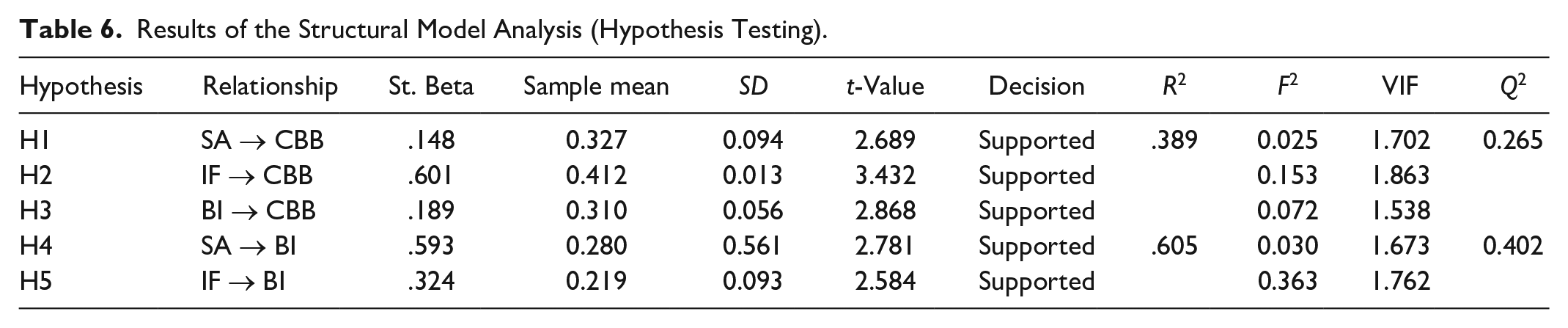
In the structural model, this study has applied bootstrapping procedure (through PLS-SEM) to test the developed hypothesis. The results revealed that social advertising (β = .148, t > 1.645, p < .05), individual factors (β = .601, t > 1.645, p < .05), and brand image (β = .189, t > 1.645, p < .05), have a positive significant influence on the buying behavior of consumers toward the fashion clothing brands. Likewise, social advertising (β = 0.593, t > 1.645, p < .05), and individual factors (β = .324, t > 1.645, p < .05), have also a positive significant influence on the brand image among Malaysian consumers toward the fashion clothing brands (Table 6). Notably, results revealed that individual factors have strong positive significant while social advertising and brand image have a weak positive significant influence on the buying behavior of Malaysian consumers (Figures 2 and 3). Hence, individual factors have much better results as compared to social advertising and brand image to enhance the buying behavior of consumers toward the fashion clothing brands. Likewise, social advertising has a strong positive significant influence on the brand image as compared to individual factors among Malaysian consumers toward the fashion clothing brands (Figure 4). Precisely, informative, entertainment, credibility, ease of use, privacy, and contents are demonstrating positive influence in social advertising with various degrees as shown in figure (Figure 5). It has been noted that credibility has a greater positive influence in social advertising as compared to other factors. In the same way, market maven, stability, open-mindedness, agreeable, and materialism are demonstrating positive influence with various degrees as shown in figure (Figure 6). It has been noted that materialism has a greater positive influence as compared to other individual factors in the context of buying fashion clothing brands. In addition, brand image mediates the relationship between social advertising and the buying behavior of Malaysian consumers. Similarly, brand image mediates the relationship between individual factors and the buying behavior of Malaysian consumers (Table 7). Therefore, the results have supported all the hypotheses of this study.
Results of the Structural Model Analysis (Hypothesis Testing).

Structural models.

Effects on buying behavior.

Effects on brand image.
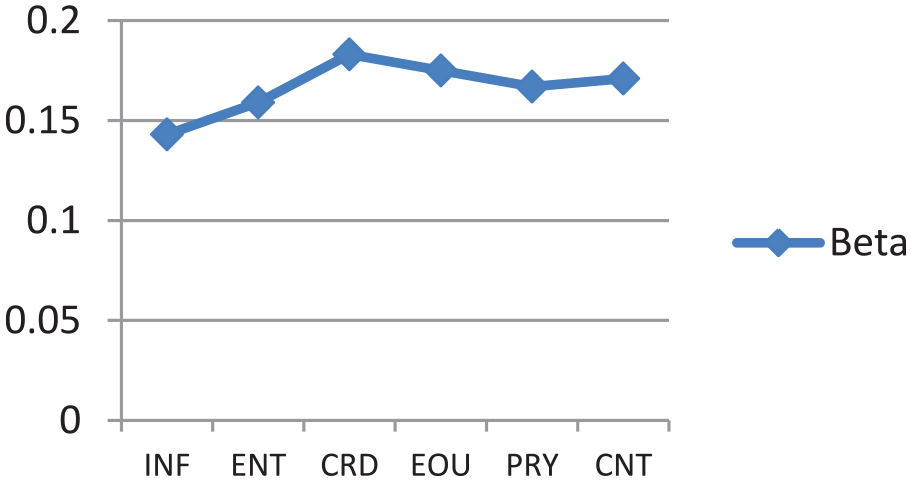
Factors of social advertising.

Individual factors.
Results of Indirect Effects (Hypothesis Testing).

Note. CILL = confidence interval lower level; CIUL = confidence interval upper level.
p < .05.
Results indicate that the values of Q-Square are greater than zero which shows that the path model’s predictive relevance exists in this study. Therefore, on the basis of results, it can be inferred that social advertising provides good, updated, complete, and beneficial information of fashion clothing brands to Malaysian consumers and is a convenient source to stimulate consumers’ imagination, provides entertainment and relief from a stressful life. It is a source of credible and trustworthy information to positively convince Malaysian consumers toward the fashion clothing brands and consumers can feel secure in the usage of social media. It is a flexible source of interactions and Malaysian consumers can easily use it to get interesting information about fashion clothing brands. It can also be said that advertisers can use valuable and attractive content in social advertising to enhance the emotions of Malaysian consumers toward fashion clothing brands.
In the same way, it can be said that Malaysian consumers are more fashionable, prefer to buy in a group of friends, highlight new features of brands to others. Market maven often decides and recommends to others, introduces new brands, and provides interesting information about fashion clothing brands. The honest advice of opinion leaders can enhance the buying behavior of Malaysian consumers and play a pivotal role in building brand image among communities. It can also be inferred that Malaysian consumers prefer to buy a specific brand from a big mall or a supermarket in a repeated manner. The stability in buying from a same-store, big mall, and specific brand shows the habitual characteristics of Malaysian consumers toward the fashion clothing brands. The stability and repetition in buying a specific brand can indicate its image among Malaysian consumers. It is assumed that Malaysian consumers have trust in fashion clothing brands and feel open-minded toward its usage.
Malaysian consumers are open-minded and can easily trust in the fashion clothing brands, are able to find faults in the products, can be easily convinced by sellers, and do not feel any hesitation in the usage of stylish fashion clothing brands. Trust in fashion clothing brands can improve the brand image among Malaysian consumers. Therefore, on the basis of results, it can be inferred that Malaysian consumers are more humble, gentle, and cooperative buyers of fashion brands, have artistic interest and active imagination toward them. The artistic interest in the fashion clothing brands can enhance their buying behavior toward it, while active imagination can improve the brand image among them. It can also be said that Malaysian consumers can gain pleasure, impress people, and feel better while using fashion clothing brands. The pleasure and positive feeling can enhance the buying behavior of Malaysian consumers toward the usage of fashion clothing brands. They can impress people with the usage of luxury products and increase the value of the brand among them. It can be concluded on the basis of results that fashion clothing brands are more credible, well established, have high quality and good value, bring prestige, and attract people’s attention. Therefore, it is apprised to the marketing professional to focus on the features of social advertising, individual factors, and brand image in developing promotional and brand-building strategies for fashion clothing brands that could successfully accomplish business objectives.
Discussion
The purpose of this study was to evaluate the influence of social advertising, individual factors, and brand image on the buying behavior of Malaysian consumers toward the fashion clothing brands along with the mediating role of brand image. Results revealed that social advertising, individual factors, and brand image have positive significant effects on buying behavior. Social advertising and individual factors have also positive significant effects on the brand image among Malaysian consumers. In addition, brand image mediates the relationship between social advertising and the buying behavior of Malaysian consumers. Brand Image also mediates the relationship between individual factors and the buying behavior of Malaysian consumers toward fashion clothing brands. The results of the study have important implications for marketing research and contributed to the body of knowledge. Hence, the tactics in social advertising such as informative, entertainment, credibility, ease of use, customer’s privacy, and attractive contents have the advantage to achieve marketing objectives of the fashion clothing brands. Likewise, understanding the consumer’s characteristics such as market maven, consumer’s stability, open-mindedness, agreeable, and materialism have the advantage to develop market fit strategies to achieve marketing objectives and satisfy customers of fashion clothing brands. Specifically, brand image is an important aspect of marketing strategies to precisely fulfill the business objectives.
The managerial impending of this study was to find the answers of raised research questions and evaluate the relationship among defined constructs. However, the results of PLS-SEM have cleared the relationship among defined constructs and provided answers to the raised research questions. Further, this study is in line with Dehghani and Tumer (2015) who have examined the effectiveness of social media advertising in enhancing the purchase intentions of consumers in Cyprus. The study has investigated four constructs that are social media advertising (Facebook), brand equity, brand image, and purchase intentions of consumers. This study is in line with the sense of social media advertisement, brand image, and its influence on the purchase intention of consumers. This study is also in line with Elseminas et al. (2015) who have empirically investigated the effects of Facebook advertising in enhancing the purchase intention of consumers. The study has inspected five constructs that are social media advertising, brand equity, brand image, word of mouth, and purchase intention. This study is in line in the sense of social media advertising and brand image influence on the purchase intention of consumers. However, the results of this study are unique as compared to other studies due to the identification of factors influencing consumers buying behavior and brand building strategies. This study is also in line with Akayleh (2021) who examined the influence of social media advertising on consumer behavior among Saudi Arabian consumers. However, the results of this study are unique due to the complexity of the theoretical framework. This study is also in line with Majeed et al. (2021) who evaluated the effects of social media advertising on the consumer’s purchase intentions along with the mediating role of brand equity in Ghana’s fashion industry. This study is in line with the sense of social media advertising’s influence on the purchase intentions of consumers in the fashion clothing sector. This study has an association with Ying et al. (2021) who examined the impacts of social media on the consumers buying behavior in Sarawak, but the results of this study are unique due to methodological procedure. This study has linkage with Rehman et al. (2017) who evaluated the impacts of personal factors (market maven, stability, open-minded, and agreeable) on the buying behavior of Pakistani consumers. This study is inline in the sense of fashion clothing brands and methodological procedure. This study has a connection with Roy et al. (2016) that inspected the impacts of demographic and personal characteristics on fashion shopping proneness at the Indian cloth market and observed 46% influence on shopping proneness due to personal factors. The study has observed a positive relationship between agreeable, extroverted, open-minded, stable, and fashion shopping. Guterman and Levy (2013) have assessed the consumers’ personal involvement in the store brand buying proneness in Israel and noted that personal involvement, economic involvement, symbolic involvement, functional involvement, market maven, and stability tendency have a positive correlation with the store brand buying intention. The study has a connection in the context of personal involvement in buying intentions. However, the findings of this study are contextually unique as compared to the above inline studies due to the theoretical framework.
Implications of the Study
Practical Implications
These findings imply that the firms can focus their efforts on social advertising, individual factors, brand image, and the combination of these variables would be an interesting marketing strategy to enhance the buying behavior of consumers toward the fashion clothing brand. The tactics in social advertising, understanding individual factors, and promoting the brand to create an image would be a helpful marketing strategy for greater market response in a competitive environment. Regular advertising and two-way communication through social media can increase the confidence of both parties, understanding the personal factors of consumers is helpful to create brand loyalty and image among various communities. By developing two-way communication and understanding the personal factors of consumers, firms can develop some unique selling strategies that better suit the consumers of fashion clothing brands which may lead them to be perceived as a market leader and a top brand among communities. The informative and credible advertisement through social media can provide the opportunity of entertainment, make clear the business message in targeted customers, can positively enhance their buying behavior, and build brand image in targeted communities. The brand image inspires consumers toward buying in a specific community, can lead to getting an advantage over competitors, and enhance commitment with a brand. Precisely, this study contributes to the prior literature by evaluating the relative importance of various features in social advertising to enhance the buying behavior of consumers toward fashion clothing brands. So, the advertisers can add the most influential features in developing advertisements for building brand image. The results are helpful for marketing and advertising agencies to develop more influential advertisements as per the consumer’s beliefs and characteristics to convey a more effective message in a personalized way. Social advertising also allows marketing practitioners to employ novel advertising techniques to engage customers with fashion clothing brands and enhance buying behavior. The study has noted that Malaysians are widely focusing on their personal characteristics (internal factors) while making a purchase decision as compared to external factors (social advertising). Therefore, marketers need to widely focus on the consumers personal factors when formulating marketing strategies.
Theoretical Implications
This study merged the literature of social advertising, individual factors, brand image, and consumers’ buying behavior based on the findings from the emerging economy and validated the proposed research model in the Malaysian context. The application of PLS-SEM in the defined context is also a novel contribution in the relevant literature. This study has extended the Theory of Reasoned Action and Technology Acceptance Model by developing a theoretical framework and subsequently validated it with data collection and analysis. The validated model contributes to the literature and enhances the systematic understanding of the characteristics of social advertising, individual factors, brand image, and the influence of these factors on the Malaysian consumers buying behavior toward the fashion clothing brands. This study extends the theory of reasoned action in the context of motivational factors of consumers’ beliefs in social advertising that can enhance the subjective norms among them to buy the fashion clothing brands. This study extends the theory of reasoned action in the context of factors (suggestions, comments of friends, and audience in social advertising can enhance the subjective norms among consumers toward buying) that influence the Malaysian consumers buying behavior toward the fashion clothing brands in the State Johor.
Conclusion and Future Directions
This study intends to evaluate the influence of social advertising, individual factors, and brand image on the buying behavior of Malaysian consumers toward the fashion clothing brands along with amid mediation of brand image in the defined context. The results of the study have encouraged by providing empirical evidence that effective social advertising strategies in the relation of individual factors and brand image play a greater role to enhance the buying behavior of consumers toward the fashion clothing brand. The results of the study have contributed to the prior literature by testing the underlying instruments and developing hypotheses. Ultimately, it is believed that the findings of this study will contribute to the theoretical literature and deliver valuable information to the fashion clothing brands in formulating more influential advertising strategies, and improving the brand image in targeted communities. It will guide the marketing practitioners to design more significant communication strategies to induce customers. However, while interpreting results, readers should know about the scope and the boundary line of collected data. To get a better understanding of the analysis, future studies can examine the moderating role of gender and education in the defined context based on the theory of planned behavior. Further, this study was only limited to fashion clothing brands and evaluated only a few constructs of the theory of reasoned action and technology acceptance model and future studies can examine other fashion brands and include the remaining constructs of the theories (such as subjective norms, etc.) among the defined constructs in various cultural context.
Footnotes
Declaration of Conflicting Interests
The author(s) declared no potential conflicts of interest with respect to the research, authorship, and/or publication of this article.
Funding
The author(s) received no financial support for the research, authorship, and/or publication of this article.
