




Abstract
The main aim of this study is to quantitatively investigate special education teachers’ use of Assistive Technology (AT) in special education through a questionnaire distributed to special education teachers in the Jeddah School District. In all, 64 questionnaires were included in data analysis, which found that teachers have a moderate level of AT knowledge and skills and a moderate knowledge of AT concepts and terms, and felt moderately confident about identifying a variety of AT devices. Moreover, 90% of respondents are strongly interested in receiving more training on AT, preferably through one-on-one individualized instruction and attendance at workshops or conferences. This study recommends AT training as having special importance in preparing a conducive educational environment for students with disabilities, for as the professional development of teachers’ competency has a significant influence on teaching students with disabilities, this would better enable teachers to integrate AT into the school curriculum.
Introduction
Assistive Technology (AT) plays a significant role in facilitating the learning process for all partners, especially teachers and students. Many countries worldwide have enacted laws to enhance its importance. The United States of America enacted the Individuals with Disabilities Education Act (IDEA) regarding the provision of AT devices and services in all students’ individualized educational plans when needed (Gustafson, 2006; Wolfe Poel et al., 2013). In contrast, although the government of the Kingdom of Saudi Arabia (KSA) enacted a law in 2000 stating that all students, including those with special needs, were to be ensured equal access to free and proper education (Alquraini, 2011), the contribution of AT to this end has not been investigated (Al Rubiyea, 2010). This study investigates: (a) perceptions of special education teachers in Jeddah about their competencies in AT, (b) the interest of special education teachers in receiving training in AT, and (c) the optimal method for special education teachers to learn and receive training in the relevant technology.
Literature Review
Assistive technology plays a vital role in the learning process of individuals with disabilities. These individuals have trouble performing activities independently, and often teachers incorporate AT in their learning processes to help such students (Walker, 2018). Such technology affords people with disabilities greater opportunities to improve their ability to perform their tasks, and enhances the education of learners with disabilities through interaction, so that concepts can be taught more effectively (Walker, 2018). Due to the presence of AT in the learning/education process, students with disabilities can get assistance to improve their social skills and engage in more social interaction through enhanced lifestyles.
Importance and Effectiveness of Using Assistive Technology
The rapid advances in AT in education have many practical applications, allowing teachers to use technology to help their students learn and achieve the highest levels of education (Metatla & Cullen, 2018). Many students with disabilities can perform necessary tasks; however, they cannot effectively deliver outcomes due to the presence of specific disabilities. AT enables students with disabilities to perform like other students in their educational environment. Students’ educational needs must be modified in particular ways by teachers to suit learning or provide classroom accommodations appropriate to students using adaptive technology (Laumann et al., 2015).
AT aids students with disabilities through assessment techniques that facilitate smooth learning by adjusting the depth of content covered by individuals with disabilities to meet their learning needs (Metatla et al., 2018). Teachers can devise methods for assessing students’ performance using straightforward techniques. For instance, students with visual impairments struggle to read but through AT can excel and process information faster, as by receiving content in an audio format, or teachers can incorporate Braille in their learning process. The blind can present what they have learned orally to their teachers or in monitored settings to determine what they have learned and mastered, such as concepts (Holstein et al., 2017).
Assistive Technology and Education
In recent decades, the digital revolution has created impressive solutions in AT for educational purposes, and the employment of digital tools in the classroom calls for an evaluation of their effectiveness in helping students with disabilities (Lin & Gold, 2018). Devices can demonstrate teachers’ effectiveness in engaging with students in ways that align with the specific content taught in the classroom. Educators have realized that they must learn how to use digital tools. The assessment of AT in schools shows that a revolution has occurred in teaching and learning strategies (Walker, 2018). Many hold a strongly positive view of digital tools now that such devices have proven to be effective in the learning environment.
Furthermore, the nature of the instruction given by teachers to students with disabilities is changing. Students are now exposed to advanced curricula, as the technology can individualize the learning and strategies used (Laumann et al., 2015). AT such as audiobooks engages and empowers students with disabilities to work independently, allowing them to access learning content through technology and express their ideas. The availability of the right digital tools helps students struggling with learning, empowering them and instilling them with confidence to improve their reading skills. Reading obstacles are removed by platforms that offer audio materials to students experiencing reading problems.
Use of Assistive Technology by Teachers
Teachers in their professional duties must possess and live with positive professional philosophies that enable them to respond constructively to students with disabilities (Shute & Rahimi, 2017). Teachers in preschools are generally experienced in the use of AT, having accepted or learned about specific philosophies that contribute to their choice of the AT incorporated into the learning environment (Koch, 2017). Teachers have varying motives for employing technology in the schools to support the learning of children with disabilities. Support and promotion of equality through the use of technology thus responds to the needs of individuals with disabilities.
Comprehensive knowledge of AT enables teachers to create an appropriate learning environment that can accommodate all students, including those with disabilities (Holstein et al., 2017). Teachers incorporate resources and methods to determine existing barriers in the learning environment, and AT is essential to dispel the myth that children with disabilities lack knowledge and are unable to apply skills in learning and working environments. Teachers now increasingly recognize diversity in the school environment and use AT to provide an excellent opportunity for all students to learn. The development of positive philosophies by school teachers helps them adapt to relevant technologies (Laumann et al., 2015), helping them create an engaging classroom where all learners can benefit and acquire the right content and learn in a way that suits them.
Training Special Education Teachers to Use Assistive Technology
The training of special education teachers is directed toward establishing valuable learning experiences for students with disabilities. The proper preparation of special education teachers familiarizes them with the embedded features of AT (Erdem, 2017), allowing them to meet the needs of all children in the classroom setting with proper training. As special education is a delicate issue that requires the maximum involvement of trained special education teachers in the active learning process (Holstein et al., 2017), education programs must prepare special education teachers to meet the challenges involved in teaching students with disabilities in the classroom through highly demanding courses in special education to increase teachers’ skills.
In addition, as having the right kind of resources and trainers helps teachers familiarize themselves with the functioning of the technology (De Witte et al., 2015), special education teachers should have access to AT devices when they are trained to use them so as to be comfortable and confident in using AT to instruct students appropriately. As the well-targeted and formulated instruction of teachers during the training process imparts sufficient skills in using technology, good training should make it possible and even automatic for pre-service teachers to develop proficiency in AT to help students with disabilities (Saleem et al., 2019).
Competency-Based Teacher Education
Competencies are defined as “the set of knowledge, skills, and experience necessary for future, which manifests in activities” (Katane, 2006, p. 44). Therefore, teachers need all the specified skills to attain mastery in competence-based teacher education. Regarding the meaning of AT, it equips teachers with adequate skills in guiding and teaching all students according to their own backgrounds through training to ensure success in using AT (Ahmad, 2015). More is now known about how teachers make progress in educating children with disabilities. Educators become competent through the learning and application of certain skills (Holstein et al., 2017), and the possession of essential competencies by teachers, especially pre-service ones, enables them to integrate AT into the school curriculum (Adebisi et al., 2015; Qazi, 2019). Teacher education provides diverse skills in the integration of technology in teaching practice, training teachers to combine and apply various forms of technology to facilitate the creation of a classroom environment amenable to learning. Thus, AT will continue to shape the learning process and enable all learners with different contexts and abilities to gain a variety of skills.
Conceptual and Theoretical Frameworks
Two conceptual frameworks guide this research, one regarding teachers’ knowledge of AT for learners with disabilities in KSA, and the other highlighting the necessity for information on the tasks, the environment, the students, and the equipment needed to successfully integrate AT into classrooms.
The Technological Pedagogical Content Knowledge (TPACK) model serves as a conceptual framework for this research, emphasizing that technological knowledge (TK), pedagogical language (PK), and content knowledge (CK) are essential and important for integrating technology effectively (Courduff et al., 2016). The TPACK model incorporates a combination of content, pedagogical, and technological knowledge (Henriksen et al., 2016), such that knowledge in these areas creates the basis for successful integration of technology. Thus, teachers have to understand how students learn to implement technology in their curriculum regularly, should know how students learn the content, and ought to be knowledgeable about the content they are teaching (Courduff et al., 2016). With this knowledge, teachers will be able to overcome challenges they face through their use of technology. This model guides this research because it focuses on training and knowledge to effectively integrate technology.
The second conceptual framework guiding this research is the SETT framework model, which was established by Zabala (1995) (Alkahtani, 2013). SETT, which stands for “students, the environment, tasks, and tools” (Zabala, 1995, p. 11), focuses on the need for information on students, the environment, tasks, and tools to successfully integrate AT into classrooms. The SETT model was established to assist and guide IEP teams in gathering helpful information before implementing AT (Alkahtani, 2013).
The Research Problem
Education in KSA is free for all citizens. The education system has passed through different developmental phases, among the most important of which concerned changes in the education of students with special needs. In 2007, more than 93% of male and 73% of female learners with special needs were studied in general education schools (Al-Mousa, 2010). Before the early 1990s, students with special needs were classified as different and consequently isolated from their peers and placed in special institutions (Al-Mousa, 2010). Although the government of the KSA passed a law in 2000 stipulating equal access to free and proper education for students with disabilities (Alquraini, 2010), AT was not then considered in the context of students with special needs. Al Rubiyea (2010) emphasized that a comprehensive policy that formulates their rights and needs is urgently needed for students with disabilities in the KSA.
In contrast, the special education field in the USA had improved after the usability of AT services and devices to develop learners’ Individualized Educational Plans (IEPs) (Gustafson, 2006; Wolfe Poel et al., 2013). Elsewhere, global educational organizations and agencies such as the National Council for Accreditation of Teacher Education (NCATE) and the Council for Exceptional Children (CEC) devised new strategies to improve special education teachers’ practices while using AT in the classroom (Michaels & McDermott, 2003; Wolfe Poel et al., 2013).
Therefore, AT has made possible incredible improvements in special education, for example improving access to the curriculum for students who have a disability. Likewise, the selection and integration of AT devices will maximize the learning opportunities for learners with special needs (Gustafson, 2006). Although many studies have been conducted in such countries as the United States and the United Kingdom on the state of AT implementation for learners with special needs, little is known about the needs and rights of students with special needs in KSA (Al Rubiyea, 2010), as pointed out by Alfaraj and Kuyini (2014), who emphasized that there is a noticeable lack of comprehensive information about the use of AT in KSA. Aldabas (2015) and Alquraini (2012) emphasized the importance of using AT within the educational context. For all these above-mentioned reasons, this research will investigate special education teachers’ knowledge and competencies in utilizing AT in the classroom while teaching students with special needs.
Purpose and Significance of the Study
A few studies have evaluated the usage level of AT and determined these problems (Alfaraj & Kuyini, 2014; Subihi, 2014). The purpose of this research is to investigate (a) the perceptions of Saudi special education teachers about their AT competencies, and (b) the teachers’ interest in receiving AT training. Findings of this study will help policy- and decision-makers in the Ministry of Education in KSA to devise an action plan for using AT and will provide realistic assistance to decision-makers and stakeholders in education in KSA determine the extent to which modifications can be undertaken in the current AT training structure. Furthermore, the outcomes of this study will provide valuable information for schools to improve their learning programs by including various kinds of AT so that future teachers are better prepared.
Research Questions
This study mainly concentrates on special education teachers in KSA and will be guided by the following three questions:
What are the perceptions of special education teachers regarding their AT competencies?
Are these educators interested in training in AT?
What are the best methods for special education teachers to become familiar with AT?
Research Design
The investigator adopted a quantitative research method for this study based on an online survey to collect data about the participants of this study and obtain their opinions, perceptions, attitudes, and previous experiences (Leedy & Ormrod, 2005). Surveys are considered one of the most commonly used methods to collect quantitative data to meet the demands of quantitative research (Johnson & Christensen, 2008). The instrument employed in this study was adopted from Almethen (2017). Creswell (2005) stated that researchers can use and implement already developed survey instruments in their original forms or adapt them so long as they have the author’s permission.
Procedure
The data were collected through an online self-administered survey using the Qualtrics Survey program. After the investigator obtained consent from the Board of Education in Jeddah School District, participants’ contact information was obtained, and the survey webpage link was sent to the participants’ WhatsApp addresses. Appropriate measures for the protection of human subjects were followed to ensure the confidentiality of all participants. Respondents were not asked to provide identifiable personal information, such as their names. Furthermore, the consent form did not contain any information that would elicit participants’ signatures; they were given the “I agree” option on the consent webpage for participation purposes. This informed consent form indicated that the respondents were taking part voluntarily and that there would be no negative consequences if they decided not to complete the survey.
Sampling
The participants were special education teachers working for the Board of Education in Jeddah School District (JSD), KSA. The Department of Special Education in JSD provided the researchers permission to distribute the survey’s link to special education teachers in JSD. The survey web link was developed to be sent to subjects by email and the WhatsApp program. This study did not target a specific age range or gender. However, all surveyed subjects were expected to be special education teachers.
Survey Instrument Reliability and Validity
Testing for reliability, referring to consistency across the parts of a measuring instrument, is important. Among the most important measures of internal consistency is Cronbach’s alpha coefficient, which was developed by Lee Cronbach in 1951 as a measure of the internal consistency of a test or scale (Tavakol & Dennick, 2011), and is now the most commonly used internal consistency measure (Taherdoost, 2016). The value of Cronbach’s alpha ranges between 0 and 1, where values close to 1 indicate that the survey instrument achieves a high level of internal consistency among the items.
For the survey instrument used in this study, Cronbach’s alpha had a value of .914, guaranteeing that the method is reliable in collecting the required data. The results are presented in Table 1.
Reliability of the Questionnaire.

On the other hand, validity is a very critical criterion that indicates the degree to which an instrument measures what it is supposed to measure (Kothari, 2004). In the current study to measure survey instrument validity, the technique of Cronbach’s Alpha becomes obvious if item deleted in used to measure the degree of association between each item with the total scores of the instrument. The results revealed that, all item correlated positively to total scores of the instrument. Meaning items achieved the measurement objectives. The results demonstrated as in Table 2 below:
Survey Instrument Validity.

Data Collection
An online self-administered survey was developed using Qualtrics Survey Software and sent by email and WhatsApp application to special education teachers in JSD for data collection. Teachers’ responses were automatically received when they pressed the submission button. When all responses had been received, the investigator began data analysis using the Statistical Package for Social Sciences (SPSS). The questionnaire used in this study was divided into four domains. The first focuses on the participants’ demographic information such as gender, age, level of education, experience, grade of teaching, specialization, and location of their school. The second domain contains four questions asking teachers about the training they received, how much formal training they receive, how frequently they use AT with students, and a self-estimation of their knowledge of AT. The third domain concerns teachers’ knowledge and skills in AT, comprising 11 items that assess educators’ perceived knowledge and skills in the field of AT. Lastly, the fourth domain is composed of four questions on AT development needs regarding teachers’ interest in receiving more training in AT and their preferred method of training.
Data Analysis
In all, the researcher received responses from 70 participants, but 6 responses were deleted because participants have not completed their answers which resulted in a total of 64 valid questionnaires for data analysis. The data analysis process started with a sample socio-demographic profile and examination of general information.
Results
Sample Socio-Demographic Profile
The analysis of teachers’ sociodemographic characteristics (age, gender, education level, years of experience, and grade level of instruction) is presented in Table 3.
Teachers’ Socio-Demographic Characteristics.

General Information
This section analyzes general information on disabilities, school location, training received on AT, frequency of using AT with special education students, and teachers’ knowledge of AT. The results are summarized in Table 3.
Table 4 shows that the most common disabilities are speech and/or language impairment (34.4%), while 20.3% suffer multiple disabilities, followed by autism at 12.5%. Intellectual disabilities make up 10.9%; speech learning disabilities 7.8%; and other disabilities, 9.4%.
The Disabilities That Teachers Work With.

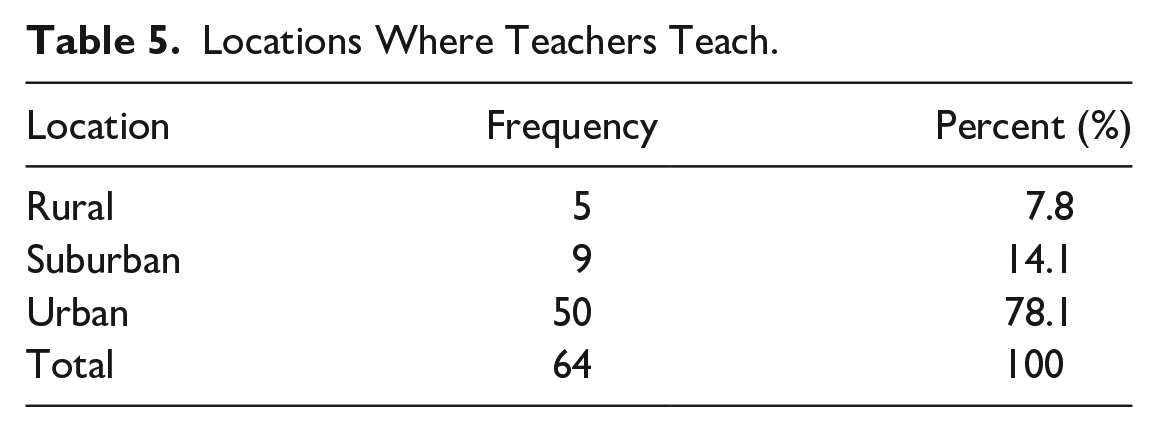
Table 5 shows that the majority of schools were located in urban areas (78.1%). Rural areas made up 7.8%, whereas 14.1% of schools are located in suburban areas.
Locations Where Teachers Teach.
As it is stated in Table 6, it shows that most participants receive training for students with autism through personal interest.
Teachers’ Perceptions of Their Training on Autism.

Table 7 shows that more than 50% of the teachers report having had more than 10 formal training sessions for AT.
Teachers’ Perceptions of Formal Training in AT.

Table 8 indicates that a lack of training is a key reason for this situation.
Frequency of AT Use With Students.
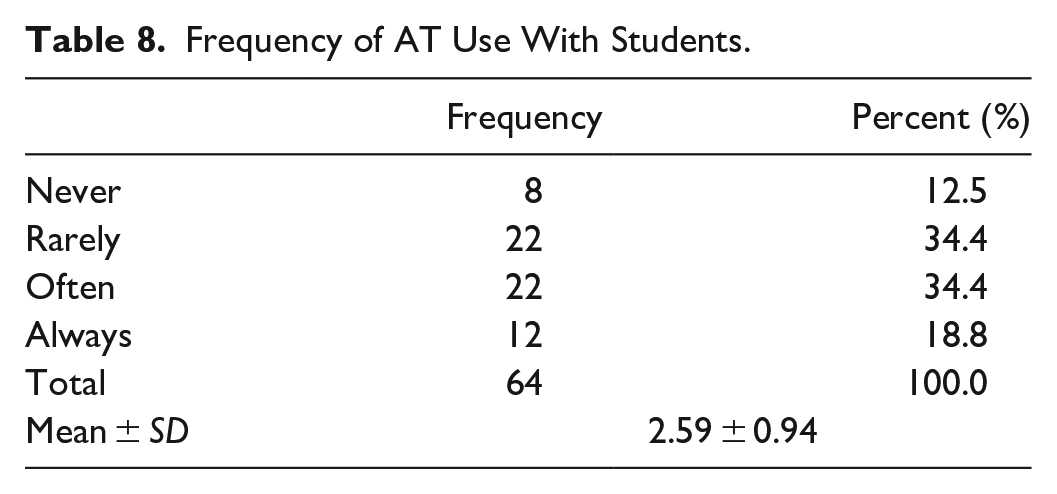
Table 9 shows that Hence, although the results indicated most teachers assess themselves as having a good knowledge of AT, it is evident that more training sessions on AT are required.
Present Teachers’ Self-Estimation of AT Knowledge.

To assess the perceptions of teachers of special education regarding their competencies in AT, 11 questions solicited information for the first research question by instructing teachers to score their attitudes to the respective items on a 5-point Likert scale from strongly disagree to strongly agree (Table 9).
Table 10 reports an overall mean value is 2.86, indicating that, on average, special education teachers have moderate skills and knowledge of AT use, and that most teachers of special education need training for professional development on how to use AT in order to implement it successfully when teaching students with disabilities.
Special Education Teachers’ Perceptions of Their Competency in Using AT.

To examine the special education teachers’ perceptions of their knowledge and skills of AT, a detailed analysis was conducted to understand if they needed professional development. For item 4, that the teachers know how to arrange the classroom environment to facilitate the use of AT, the mean value is 3.08, indicating that teachers have a moderate level of knowledge of AT, and therefore, its place in their future professional development seems to be important to them. In addition, teachers believed that they knew about the concepts and terms regarding AT at a moderate level, as the mean value of their perceptions was exactly 3.02 (SD = 1.21). Therefore, professional development is required as much as possible.
With reference to item 3 concerning teachers’ knowledge to assess students with disabilities to determine appropriate AT, the results reveal that almost all teachers have moderate knowledge, with a mean value of 2.94 (SD = 1.25).
In addition, regarding item 6, which focuses on teachers’ knowledge of AT device options from low- to high-tech, the overall mean value is 2.94 (SD = 1.18), suggesting that almost all teachers have moderate knowledge of AT, so professional development is needed to improve their knowledge.
Regarding item 10, on how teachers of special education identify resources for professional development related to AT, the mean value is 2.86 (SD = 1.22). This means that teachers have moderate skills, so professional development in this area is very important.
On the other hand, item 5, assessing teachers’ knowledge of how to evaluate whether AT is effective in meeting the needs of their students with disabilities, had a mean value of 2.81 (SD = 1.18), meaning that most teachers have a moderate level of how to evaluate the effectiveness of AT to meet students’ needs. Similarly, item 11 on their ability to collaborate with HP team members in selecting and implementing AT had a mean value of 2.81 (SD = 1.22), indicating that most teachers reported a moderate level: Some teachers have the ability to collaborate with team members of HP, while others have a short knowledge. Therefore, teachers need professional development in such areas.
On item 9 regarding following a systematic plan to ensure that AT is correctly implemented, the mean value is 2.78 (SD = 1.21), indicating that teachers were not satisfied with their knowledge; hence, professional development is required to improve their skills and knowledge.
Finally, for item 8, ability to operate a variety of AT devices (low-tech, mid-tech, and high-tech) to support students with disabilities, the mean value was 2.73 (SD = 1.20), indicating that teachers differed in such knowledge, and thus professional development is required to improve their skills.
Therefore, we conclude that most teachers of special education need training for professional development on how to use AT successfully when teaching students with disabilities. Teachers reported a moderate level of skills and knowledge in using AT, which might be related mainly to lack of official training on AT, and most of them receive training through personal interest.
Professional Development
This section focuses on whether special education teachers require more knowledge and training about AT by examining their interests, the areas of the curriculum they would like to see AT options employed in, their preferred AT training method, and when they prefer to be trained. The main objective of this study is to answer two sub-questions.
Table 7 summarizes the special education teachers’ reported interest in receiving AT training.
Table 11 shows that the majority (90.6%) have a strong interest in gaining more knowledge and training. Only one teacher has no interest in receiving more knowledge and training on AT, whereas 7.8% do not know.
Teachers’ Interest in Receiving More AT Knowledge and Training.
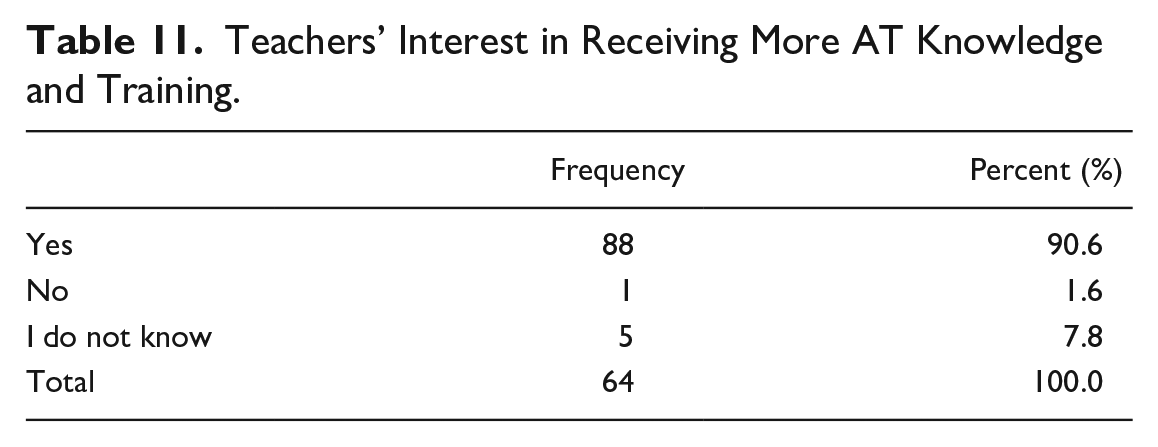
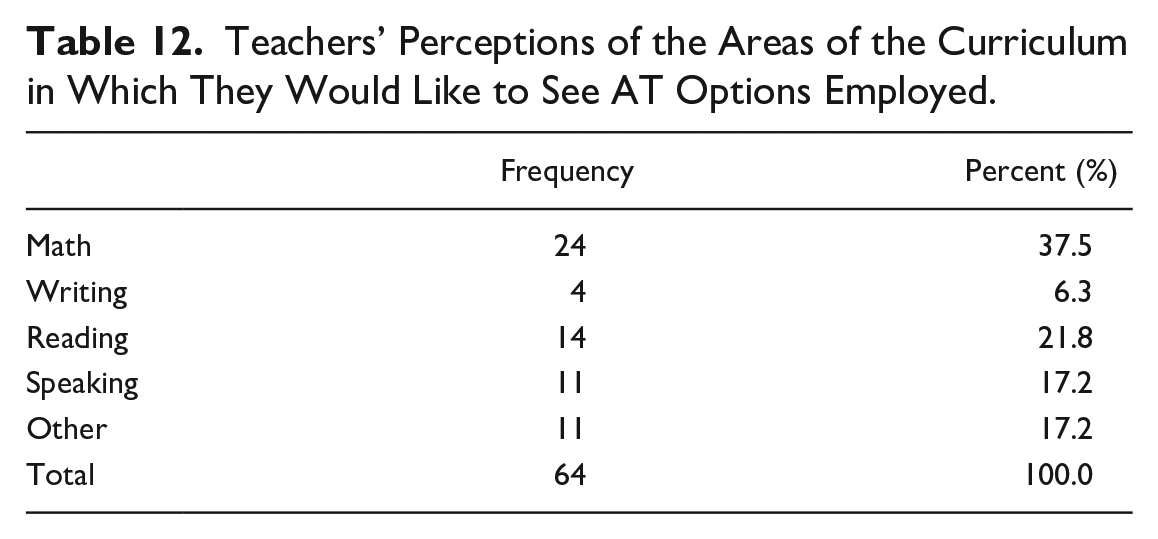
Table 12 shows that the teachers would like to see AT options in place, and math is at the top of these technology options (37.5%), followed by reading (21.8%), speaking (17.2%), and writing (6.3%).
Teachers’ Perceptions of the Areas of the Curriculum in Which They Would Like to See AT Options Employed.
Special education teachers’ perceptions regarding the best methods for undertaking AT training are summarized in Table 11.
Table 13 shows that fully half of the teachers prefer their AT training method to be based on one-on-one individualized instruction, while 40.6% prefer to attend workshops or conference sessions, and 7.8% preferred online modules, and only one teacher mentioned another method. Therefore, the most preferred methods for special education teachers to receive AT training are one-on-one individualized instruction and attending workshops or conferences.
Teachers’ Perceptions of the Preferred Methods for AT Training by Learning Style.

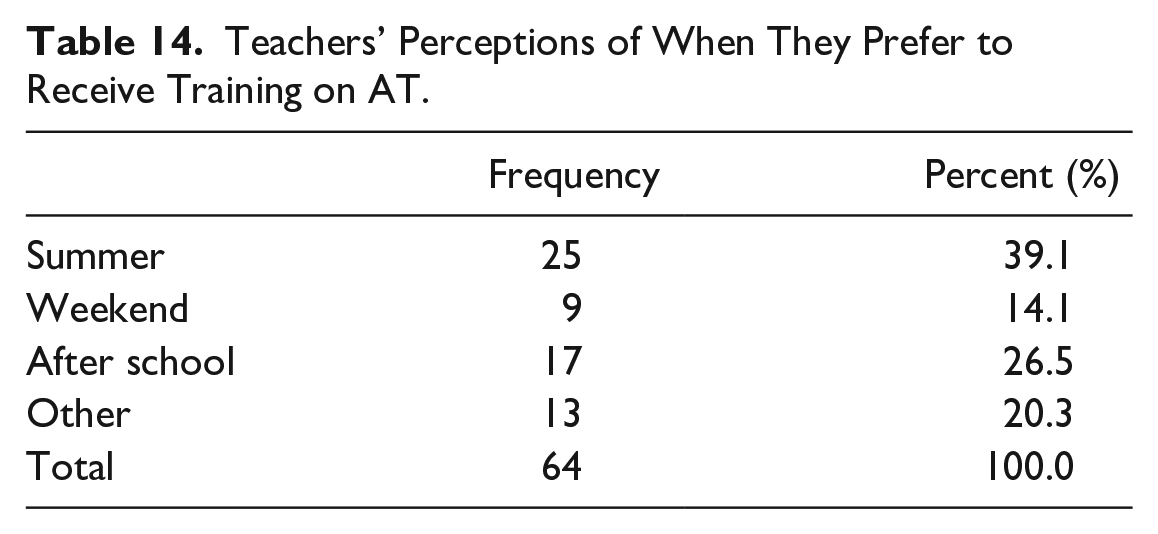
Table 14 shows that the most preferred times to receive AT training are summer and school vacations.
Teachers’ Perceptions of When They Prefer to Receive Training on AT.
Discussion
Special education has received much attention worldwide in recent years, and moves in the Kingdom of Saudi Arabia are underway to create greater access to free and proper education for students with disabilities. To support this type of education, AT plays an essential role in enhancing the educational process of students. This study investigated the perceptions of teachers of special education with reference to their knowledge, competencies, and professional development in using AT to teach students with disabilities.
This study shows that teachers have moderate knowledge and skills regarding AT; in particular, most teachers know how to arrange the classroom environment to facilitate AT. These results agree with those in a study conducted by Walker (2018), who reported that knowledge of technology promotes better education opportunities for people with disabilities and enables them to complete tasks better than they could previously. Technology in the learning process improves the education of learners with disabilities through interactions that allow them to better retain concepts and ideas. In line with this, Lin and Gold (2018) emphasized that the employment of digital tools in the classroom should be assessed to help people with disabilities. Koch (2017) concludes that teachers believe in specific philosophies that inform their choices of the AT incorporated into the learning environment, and that the effective use of technology is linked to the needs of children. The same conclusions were reached by Holstein et al. (2017), who found that comprehensive knowledge of AT enables teachers to create an appropriate learning environment that can accommodate all students, including those with disabilities.
Among the knowledge and skills teachers moderately possess regarding AT, they were moderately confident in their ability to identify a variety of AT devices (low, mid, and high-tech) that could be used by students with disabilities. The findings of this study mirror the conclusions of Laumann et al. (2015), who discovered that the instruction given by teachers to pupils with disabilities are changing for the better. Students exposed to a high-level curriculum succeeded because the technology could individualize learning strategies. At the same time, the availability of the digital tools specified by teachers could help students struggling with their learning tasks, as AT empowers struggling readers and gives them confidence to read better. Reading obstacles can be overcome by employing audio-based materials for students who experience reading problems.
In KSA, Alanazi (2020) explored instructors’ knowledge of the use of AT with learners suffering from autism spectrum disorder (ASD), demonstrating that highly experienced teachers showed more knowledge of how to use AT in the classroom with students with ASD. However, the current study found that teachers have only a moderate level of knowledge and skills to cope with AT to teach students with disabilities, which is in agreement with Alasmari (2020), who investigated both the knowledge and use of AT among special education teachers of students in KSA suffering from expressive language disorders. This study showed variability in the ratings of participants regarding their knowledge of AT, suggesting that teachers are not competent in using AT. This study emphasized the need to enhance training among teachers on how to use AT in education.
Finally, the conclusions of the current study agree with those of other studies conducted in KSA. Alharbi (2018) investigated both the knowledge and use of AT by elementary teachers in their respective special classrooms in KSA. The results highlighted the need for special education teachers to enhance their use and knowledge of AT, since they were lacking in many areas, and never seemed to use AT. Another closely related study by Alsawalem (2019) explored teachers’ attitudes toward the use of information communication technology with students diagnosed with intellectual disability, finding the limited use of technology by teachers to support learning among students with disabilities.
Educational Implications of Assistive Technology
Globally, assistive technology (AT) has growingly gained prominence, especially among students with disabilities. There is no doubt that such students often face a myriad of psychological, academic, and social challenges that negatively affect their learning. Thus, using AT not only enable social participation but also academic engagement, hence transforming the entire learning process. In a school setting, the disability support staff ought to ensure AT needs are satisfied to improve the educational experience. Integrating AT in an educational setting will not only promote inclusion but also reduce stigma significantly, hence improving educational outcomes.
I therefore conclude that there is a need for prepared, trained teachers in KSA to implement the strategy of AT successfully to teach students with disabilities effectively, and that this must be sponsored by an official authority of education in KSA.
The results also show that the majority of teachers have a strong interest in learning more about AT, corroborating Erdem (2017), who found that the formation of special education teachers familiarized them with the embedded features of AT. Special education teachers can meet the needs of all children in a classroom setting. Education programs prepare special education teachers to tackle the challenges involved in teaching students with disabilities. Holstein et al. (2017) found that training facilitates ease in implementing AT in the classroom, and teacher education institutions should offer updated course work in special education. Likewise, Ahmad (2015) concluded that teachers’ competency is maintained by equipping them with necessary skills through training so that students with autism can learn better with AT. According to Holstein et al. (2017), the application of skills gained in training and creating a similar environment for teaching individuals with disabilities is facilitated by the proper training of teachers. With particular reference to teaching students with disabilities, AT is essential to providing educational services to these members of society, who are increasingly numerous. The results of this study have special importance for policymakers responsible for the administration of special education in KSA to ensure the best applications of AT by adequately training teachers who deal with students with disabilities in every part of the country.
Innovations of Assistive Technology in Special Education
Sight Electronic glasses are a significant example of innovative AT enhancing the learning process of blind children. The electronic glasses are made of high speed and high definition cameras that capture what the user is looking at while the algorithms generate video feeds displaying them in two OLD screens for the user to see thus revolutionizing the classroom experience of blind children (Cabell et al., 2011). Another invention is the Livescribe’s Smarten that has helped learners overcome their comprehension problems. The pen can scribble diagrams, write words syncing everything to the audio from the teacher (Da Fonte & Boesch, 2016). Children are now able to review and reflect on what was previously taught in class and thus aiding their memory. The other significant innovation is the Active words feature on Microsoft word. The active word innovation is useful to learners with developmental disabilities as it enhances time management (Dastpak et al., 2017). The feature enables the learner to populate a text into a document. Using the active words students can execute basic computer commands such as opening files and webpages with no difficulties.
Contributions of the Assistive Technology in Special Education
The application of assistive technology devices in special education will have a positive impact on the well-being and health of children with disabilities and their families in general. Students with disabilities are at high risk of facing social, psychological, and academic challenges, especially in high education environments. The use of AT in special education promotes social participation and academic engagement and therefore is considered transformative from the psychological approach (Erdem, 2017).
The support staff for children with disabilities in higher education environments should ensure that the AT needs of such children are met to enhance their educational experience. The harnessing of the AT for all students will enable the inclusion of all and significantly lower the incidences of stigmatization that are common to such children. It is necessary for a professional expert’s conduct an AT evaluation of the child to determine whether the child qualifies to use assistive technologies and all the information specified in the child’s instructional plan.
AT is used in enhancing the student’s basic skills and not replacing them. This implies that Assistive technology should be used as part of the educational process that advances to what the student already knows and is meant to teach the basic skills (Alfaraj & Kuyini, 2014). While conducting the student’s AT evaluation, it is necessary to address both the augmentative and alternative communication needs. Understanding the learner’s needs and knowing when to adjust their learning environment is a crucial consideration in applying assistive technology.
AT has made it easier for the slow learning students experiencing difficulties in generalizing to convert knowledge into different learning experiences, therefore, enhancing their understanding. Being able to transform sound speech into written symbols is a key step in enhancing the student’s comprehensive skills. AT has been fundamental in promoting sequential skill-building among children with disabilities. It is now easier to break down large tasks thus learners can identify areas they need help and intern focus on taking remedial that will reinforce their practice sessions (Lupu & Tomozil, 2016). AT enables students with disabilities that are overwhelmed with fast pace learning by giving them the chance to apply their self-pace throughout the learning process (Ogirima et al., 2017). Such a contribution is crucial in encouraging independence among the students relieving them from the pressures due to their disability.
In light of the above, it is evident that AT can foster psychological, educational, and social benefits, especially to students with disabilities. Nevertheless, schools should be aware of the factors that can hinder the successful integration of AT in the teaching/learning process. Among these factors include inadequate devices and training as well as challenges of having to negotiate multiple sources of information.
Summary of Findings
Regarding special education teachers’ perceptions of their competencies in AT, teachers reported moderate knowledge and skills. In addition, teachers reported knowing how to arrange the classroom environment to facilitate the use of AT at a moderate level.
Furthermore, most teachers have moderate knowledge of the concepts and terms involved in AT, and were moderately confident in their ability to identify a variety of AT devices (low-tech, mid-tech, or high-tech) used by students with disabilities.
The majority of teachers (90.6%) have a strong interest in learning more about AT and receiving training in it. The most preferred AT training methods are one-on-one individualized instruction and attendance in workshops or conferences.
Recommendations
The provision of AT and other modern educational means to teach students with disabilities has a special importance in teaching students; therefore, the government, community, and teachers of special education play a significant role in implementing AT strategies.
The training of special education teachers must emphasize AT devices. The best method of training is one-on-one individualized instruction and attending workshops and conferences.
The professional development of teachers’ competency should include a component on teaching students with autism, because these students are widespread in society and their learning will require integrated AT in the school curriculum.
Conclusion
Providing students with disabilities with special educational environments requires a great level of attention from all of the world’s communities, and must consider the preparation of teachers of special education to implement AT so as to enable them to improve their knowledge, skills, and competencies, as well as teaching skills and expertise in determining and meeting the learning needs of students with disabilities and autistic traits. This study thus examined the perceptions of Saudi Arabian special education teachers regarding their competencies in AT and their interest in receiving more training on AT. The study recommends that training special education teachers in the KSA enhance their AT skills in many areas. Therefore, policymakers at the Ministry of Education in the country should seek to address the problems identified herein regarding the implementation process.
Supplemental Material
sj-docx-1-sgo-10.1177_21582440221079900 – Supplemental material for Teachers of Special Education and Assistive Technology: Teachers’ Perceptions of Knowledge, Competencies and Professional Development
Supplemental material, sj-docx-1-sgo-10.1177_21582440221079900 for Teachers of Special Education and Assistive Technology: Teachers’ Perceptions of Knowledge, Competencies and Professional Development by Abdulaziz S. Alsolami in SAGE Open
Footnotes
Acknowledgements
The author is very thankful to all the associated personnel in any reference that contributed to the purpose of this research.
Declaration of Conflicting Interests
The author declared no potential conflicts of interest with respect to the research, authorship, and/or publication of this article.
Funding
The author disclosed receipt of the following financial support for the research, authorship, and/or publication of this article: This work was supported by the Deanship of Scientific Research (DSR), King Abdulaziz University, Jeddah, The Kingdom of Saudi Arabia, under the grant number (D-711-324-1441). The authors, therefore, gratefully acknowledge the DSR for financial support.

Supplemental Material
Supplemental material for this article is available online.
References
Supplementary Material
Please find the following supplemental material available below.
For Open Access articles published under a Creative Commons License, all supplemental material carries the same license as the article it is associated with.
For non-Open Access articles published, all supplemental material carries a non-exclusive license, and permission requests for re-use of supplemental material or any part of supplemental material shall be sent directly to the copyright owner as specified in the copyright notice associated with the article.
