




Abstract
Vocabulary is an essential element of English language learning. There are many strategies, which teachers can use in teaching vocabulary, especially to young learners. One of these strategies is using educational games to teach vocabulary more effectively. The aim of this quasi-experimental study is to investigate the effect of using educational games on the vocabulary learning of young children. The research was conducted at a kindergarten in Saudi Arabia, in which the participants were 40 Arab young learners. They were between 5 and 6 years old, and all of them were nonnative speakers. Participants were divided into two groups, control, and experimental group. The experimental and control group comprised of twenty students each. The experimental group was taught using games in which the children were involved. On the other hand, the control group was taught using a more “traditional” method by repetition. A vocabulary-based test, presenting as a pre-test, post-test, and delayed post-test, was assigned to both groups. The study revealed that applying educational games as a learning technique with young learners, increased learner engagement, improved knowledge absorption and retention, and gave learners the opportunity to see real word application. Accordingly, this study recommends using educational games in teaching vocabulary more creatively with young learners.
Introduction
Teaching vocabulary is essential in second language acquisition. It is the fundamental skill that learners build their knowledge on. As Harmer (2001) believes: “If language structures make up the skeleton of language, then it is vocabulary that provides the vital organs and the flesh” (p. 246). However, teaching vocabulary can be difficult sometimes, as students might find it hard to recall difficult terms, or get bored easily. Therefore, teachers nowadays are encouraged to use more innovative strategies and focus more on engaging students while learning. In fact, teachers need to facilitate the process of learning vocabulary. With their help, learners can improve their vocabulary gain. One of the useful methods of teaching vocabulary is games, as this is the focus of this study. This strategy has coined a new term which is gamification. It is defined as the use of games in non-game contexts, such as in an educational environment to let the learners have fun and feel motivated (Al Neyadi, 2007). Previous studies explained the positive effect of using games (Ashraf et al., 2014; Deesri, 2002). According to these studies, games increase the students’ motivation and enable them to be more engaged while learning (Ibid.). Applying this gamification technique can create the desire for the students to be more creative and actively construct language for themselves, as they become more motivated in using new vocabulary. However, a number of studies have talked about the effect of games on young learners, few only emphasized the impact of games on young children whose fluency is at the beginning level (Al-Jifiri, 2017; Al Neyadi, 2007; Ashraf et al., 2014). Therefore, the aim of this study is to investigate the effect of using educational games on the acquisition of new vocabulary by young learners.
The next section describes the theoretical part that focuses on previous studies and how are they related to the aim of this intervention.
Literature Review
The teaching of vocabulary is very important in the field of English language teaching (ELT). This skill fosters other language skills like reading, speaking, and writing, so this component has a very crucial rule in foreign language classrooms (Nam, 2010). However, it is pointed out that the teacher should not teach new vocabulary in isolation of other skills (Al Neyadi, 2007; Davies & Pears, 2003). Teaching vocabulary should be engaging, and teachers should always try to create contexts for their students in which the target words are useful and meaningful. In addition, it might be argued that some students may find it hard to negotiate the meaning of new words, so this places a huge responsibility on the teacher, as they need to make their students feel less anxious about that. Nevertheless, this might be different when it comes to young learners, whose characteristics are more complicated. The first thing to remember is that they have less anxiety in the classroom among their peers, so they can talk freely about any topic (Přibilová, 2006). Also, they love to interpret the whole meaning instead of individual words (Přibilová, 2006). Moreover, they prefer the experience with their peers, and they learn from each other collaboratively (Přibilová, 2006). Young learners also have a high ability to argue, think and explore. It is important to realize, that they are especially fond of learning new things (Halliwell, 1992). As a result, a new term has emerged recently: “edutainment” which combines education and entertainment. It can be defined as a hybrid genre that mixes having fun and learning together (Buckingham & Scanlon, 2000). Therefore, many types of games are conducted to teach children. One advantage of using games is that it helps learners interact with each other in the class environment and keep the students awake (Deesri, 2002). Games change the environment of the classroom. Hence, they motivate the students and create a challenging context (Iaremenko, 2017). In addition, games generate fluency, fun, and relaxation which is why most learners like to have this atmosphere in the English classes (Ashraf et al., 2014). On the negative side, some teachers think that games give rise to some problems. For example, some of them believe that games can be a waste of time sometimes. They also say that games make the class messy, and students usually do not achieve the required goals (Stojković & Jerotijević, 2011). Although some teachers may believe so, the majority of teachers acknowledge the importance of using educational games to teach different vocabulary (Stojković & Jerotijević, 2011).
Furthermore, it crucial here to talk about the application and the delivery of educational games in foreign language classrooms. For instance, using communicative tasks, which rely on variable games, cannot be successful without a clear explanation about the games’ instructions to the young learners in detail. It can be argued that providing learners with poor instructions prior to the game, can cause a lack of group-working and affect learners’ motivation (Nguyen & Nga, 2003).
In the Saudi context, a study was conducted by Al Saud (2017) in Al-Riyadh to explore the effect of using educational video games on the social skills of underprivileged children. The researcher used ten educational video games on the IPads with the experimental group, while the control group did not have access to play the games. After applying the intervention for three months, the results showed that children’s social behaviors were improved. They became more polite, disciplined and used respectful words like excuse me and sorry. Another research was done by Al-Jifri and Elyas (2017) on five young male-students in Jeddah. They confirmed that the use of video games enriches the process of learning a language and increases the motivation of the learners. In addition, it has been found that the games help the students to master many skills in second language learning, such as: speaking and reading. Although using games improve children’s skills unconsciously, it is a very useful method of capturing the learners’ attention during the lesson (Přibilová, 2006; Wood, 2001). This method assists the instructors to create an interactive, and cooperative context, particularly within a competition where a winner is announced (Ashraf et al., 2014).
Having reviewed the above studies, one can assert that developing vocabulary knowledge, especially for young learners is essential and challenging at the same time, which means that this area should not be neglected by researchers. It can be argued that there is no language without words, and many studies imply that predicting one’s overall proficiency in a language should be based on the size of their vocabulary competence. Some scholars have recognized that not having a good grasp of word knowledge might cause second language learners to struggle in both receptive and productive skills. In addition, they have emphasized that no matter how much one has become proficient in a particular language, they should not stop learning new vocabularies; because it is a lifelong journey of learning. Thus, it can be argued that vocabulary is the cornerstone of acing a new language, especially that it is the root that paves the way to success in all of the four core language domains, receptive skills, such as: listening and reading, and productive ones: speaking and writing (Al Neyadi, 2007; Davies & Pears, 2003). However, it can be noted that some second language learners cannot recall terms easily as they do not practice them on a daily basis, which suggest more attention to be put towards such an issue.
In addition, this study asserts that most researchers confirm the essential role of games in the foreign language classroom. Research has suggested that vocabulary can be very successfully taught and learned with good materials among second language learners. It is essential for learners to acquire very substantial volumes of vocabulary, however, it does require a huge investment of time and effort from the teacher. In fact, former studies gave a clear piece of evidence that teaching young learners vocabulary in a communicative way, as in using educational videos, is more beneficial for the language learners.
This section has discussed the previous studies on the effectiveness of using educational games in the development of intellectual knowledge, and the next part of this paper will describe the methodology of this study.
Methodology
A quasi-experimental design, in terms of pre-test, post-test, and delayed post-tests has been employed to accomplish the study’s goal, which is to investigate the effect of using games with young Saudi learners in a kindergarten school in Jeddah, Saudi Arabia for teaching English vocabulary. This empirical interventional technique was adopted to help the researcher to estimate the causal impact of such intervention on target population without random assignment.
Research Question
- How can using games assist Saudi young learners to learn new English vocabulary more effectively?
Participants
Forty Arab students who are learning English as a foreign language at a kindergarten school in Jeddah in Saudi Arabia were selected for this study. They were enrolled in the first semester of 2019/2020. They were selected purposefully regarding the aim of the study. This means that a convenience sampling technique was used. The experimental and control group comprised of twenty students each. The participants were between 5 and 6 years old, and all of them were beginner learners. The experiment was conducted during the students’ first year of learning English as a course in the curriculum.
The experimental group was taught using games in which the children were involved. This is a communicative approach. On the other hand, the control group was taught using a more “traditional” method by repetition. Table 1 below shows that there were 7 boys, and 13 girls respectively in the control group. Approximately, the same numbers were in the experimental group (8 boys and 12 girls).
Information about the Gender in Both Groups.

Instrument
This study used two strategies for teaching English vocabulary: communicative and traditional approach. This research depended on three tests: pre, post, and delayed-post tests. All the children took part in the same three tests (pre-test, post-test, and delayed-post-tests) in which 10 pictures of the vocabularies—which the intervention covered—were introduced to them one by one (see Appendix C). Then the researcher asked the children about the pictures. Each correct vocabulary was given one mark. The researcher chose this test to make sure that there were not any distractors and other factors that may affect the reliability of the results. The validity of the tests was ensured.
Procedure
Firstly, the children in both groups took a pre-test to determine their actual level before setting up the intervention. The test consisted of 10 items.
Secondly, the same English teacher taught both groups 10 new vocabularies for 2 weeks, which was a limited period due to the limited time of the researcher (see Appendix B for more details about the vocabulary). Over the 2 weeks, all the participants in both groups had eight classes for 30 to 45 minutes each.
While, in the control group, the lessons were given traditionally, mainly using the textbook and pictures; in the experimental group, the teacher made full use of various games (as described in Appendix D). The teacher used five types of games: ball game, selling and buying, washing line, hidden cards, and cards race. The experimental group students were very positive about using games in their classroom. For all these types of games, the teacher explained the tasks and the roles of students clearly at the beginning of each game. Thirdly, the same test was administered as a post-test at the end of the intervention to assess the children’ development. Finally, to identify the effect of this intervention over a long time, a delayed posttest was given 3 weeks after the post-test; a period long enough to determine the effect of games on the results and conclusion of this intervention. The investigator followed the same pattern of pictures as in the previous tests. All the tests’ marks of all the children were compared, and the results were analyzed by SPSS.
Ethical Considerations
As for any research investigation involving human subjects, it is essential to consider ethical issues that may arise in the planning and conduct of research. Accordingly, the researcher was keen to obtain approval from the school and the teacher to apply the intervention. Added to that, a consent form was sent to all the parents of the children who participated, and they signed the approval (see Appendix A). The researcher informed parents of the study’s aims and procedures. In addition, parents and their children were assured that their participation in this research is voluntary and their identities will be kept anonymous.
Data Analysis
In order to analyze the data, all the tests result of each group were scored initially. The correct answers were given one mark, and false answers were graded as zero. Children could score 10 points by answering all the pictures correctly, and zero by responding to them wrongly. The scores were analyzed quantitively using the SPSS software version 24.0. First, the normality of distribution was checked for both groups. Then, descriptive analysis was used to determine the mean and standard deviation. After that, Paired sample t-test statistics were computed to make a comparison between the results of two groups.
This section has discussed the methodology used, and the next part will address the principal findings of the current investigation.
Results
In this study, the instrument used to gather information was in the form of three tests: pre, post, and delayed post-tests. The data were collected and analyzed to see whether the games method has a positive effect on the acquisition of new vocabularies. The children’ scores were analyzed using SPSS version 24.0. Descriptive statistics were used to report the mean and standard deviation for each group in the three tests as shown in the Table 2.
Information about the Means and Standard Deviation of the Three Tests.

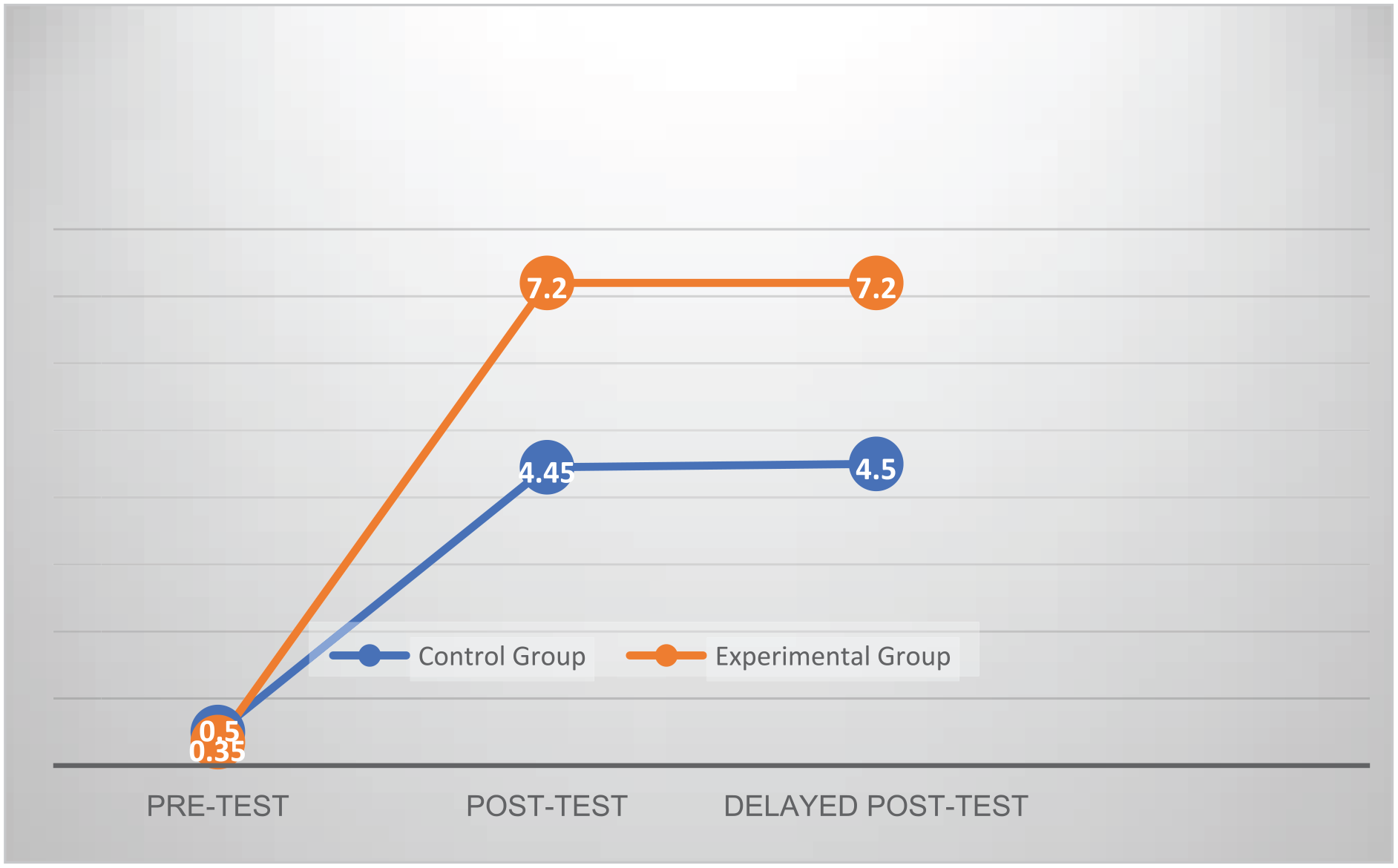
As Table 2 and Figure 1 shows, the children were at the same level as the mean of the pre-test was manipulated (0.5, 0.35 for the control and experimental group, respectively). This result confirms that they were at a similar level before the intervention. After the intervention was applied, the experimental group—who was taught using games—recorded a higher means than the control group in which there were no games.

Illustrates the means’ differences of the three tests between the control and experimental group.
To check the effect size in this experimental study, partial eta squared was computed using the following formula:


It can be noted from the table above that the effect size of the post and delayed post-tests is significant and has a large effect (Figure 2).
Means’ differences within the same group in the three tests.
To support the results and discover if there were any statistically significant differences in the means of post and delayed post-test for both groups, Independent samples t-test was conducted as displayed in Table 3.
Information from Independent Samples t-test.

The results obtained from the pretest showed no statistically significant difference between the two groups (control and experimental) supporting the fact that they were in a similar level.
There was a significant difference in the scores of the post-test for the control group (M = 4.45, SD = 0.52) and the experimental group (M = 7.2, SD = 0.53); as the level of significant is p = .01which is statistically significant at p-value ≤ .05. These results suggest that using games in teaching vocabulary to young learners really had a positive effect on the post-test scores. Specifically, all the children in the experimental group were very happy to have fun in the classroom.
As the results showed, there was a long-term effect on the delayed post-test p = .02. So, using games helped the students to remember the vocabulary for a long time.
A paired sample t-test was computed to compare the differences in the same group between the pre and post-test, and also between the post and delayed post-test (Table 4).
Information from Paired Samples t-test.

The results illustrated that there was a significant difference in both groups for the post-test. And this suggests the positive effect of the intervention on the children. However, no significant difference was recorded between the post-test and delayed post-test within the same group. The participants could remember the vocabulary 3 weeks after the study was done. Regarding the control group, one of the reasons was the efforts that the children’ mothers had made to teach them after the post-test. As there was an English assessment in the school, their mothers helped them to memorize the vocabulary at home.
This section has analyzed the scores of the participants in the three tests and has argued that a positive effect on the control group was present. The next part of this paper will discuss the findings and relate them to the literature review.
Discussion
This study aimed to investigate the effect of the communicative method using games for the vocabulary achievement of young learners in a kindergarten school in Jeddah, Saudi Arabia. The findings revealed that using educational games to teach vocabulary had many positive effects on the participants, as it has been found that games can entertain, teach, motivate, and enhance young learners’ fluency. In fact, one of the students told his teacher: “With games, I saw the beauty of the foreign language class, I was excited all the time.” The results showed that the experimental groups had higher pre-test marks. This is in line with the result of a study by Nguyen & Nga (2003). Nguyen and Nga (2003) argued that games help students to remember new words quickly. Secondly, students in experimental groups had more fun. They interacted, cooperated, and were encouraged to be the winners. These results are similar to those found in Ashraf et al. (2014) who reported the substantial role of games in creating an enjoyable environment in the classroom. The post-test scores showed that applying games were beneficial in the foreign language classroom. In contrast to the earlier findings of Nguyen and Nga (2003), some teachers reported that using games can be hard and a waste of time sometimes. It can be argued in this regard, as we need to justify this contrary view by some teachers, is that teachers might be burdened by the heavy workload or the limited time for instruction. Teachers often follow the curriculum which contains information to be taught with strict deadlines, and this can hinder them from enjoying games with their students.
With attention to the results of the delayed post-test, a positive effect emerged in both groups. This supported the long-term effect of games on remembering the new vocabulary due to the active way they received the new vocabulary. On the other hand, the results of the control group were surprising to the researcher. The main reason for the long-term effect of the traditional way of learning vocabulary, which was by their mothers helping them to memorize the new vocabulary, is to pass the assessment in the school, and this also showed positive results. Add to that, their teacher applied more revisions before the final exam. Although both groups had a long-term effect, the experimental group had higher p-value between post and post-delayed post-test. That is another compelling evidence of the essential role of games on teaching vocabulary for short and long-term effects.
Conclusion
To conclude, this research has investigated the effect of using educational games in the English language classroom as a tool to teach young learners new vocabulary. The findings have shown that games can be the media for teaching English vocabulary to young learners. There was a positive effect on the achievement of the experimental group. The participants were very pleased with this intervention, as many of them reported positive comments. They thoroughly enjoyed their classes. Also, the study revealed that applying gamification as a learning technique with young learners, increased learner engagement, improved knowledge absorption and retention, and gave learners the opportunity to see real word application. Although, there was a positive effect, the short period of the intervention was a limitation. This was because of the limited time the researcher had.
Further studies may apply this intervention for a long period of time, and the role of the teacher in such tasks may be explored in the future. Moreover, a survey-based study might be a future tool to generalize these results in different contexts.
For the pedagogical implementation, this tool should be used more creatively in classes for young and adult learners. In addition, modern English teachers must obtain up-to-date information about the tools and how to use it appropriately. In order to do that, they can attend workshops and training sessions. Finally, suitable materials should be provided to students in class to facilitate each game.
Appendices
A. Parents’ Approval
B. The Taught Vocabularies
C. Pre and Post-test Pictures
D. Types of the used Games
E. Pictures of children
Appendix A
Parents of our children:
This is to inform you that a university student is conducting a research on the impact of using games on education. The research focus will be on the method that the teacher is giving, but for the credibility of the research we must take your consent. Please note that the student has taken the approval of the university and the director of the school.
Thank you for your cooperation.
Agree: …………. Disagree: ………….
Appendix B
1- Iron 6- Key
2- Ice 7- Kite
3- Jug 8- Lion
4- Jam 9- Leaf
5- Juice 10- Lamp
Appendix C

Appendix D
During the first week, the teacher used two main games:
1- Ball Game: After the teacher introduced the new vocabularies of the lecture, she brought a very light, softball and threw it. The student who caught the ball should say the name of the picture which the teacher chose. Similarly, she repeated that until all the students had participated.
2- Selling and Buying: It is a shopping role-play activity. One of the students played the role of the shop assistant while the other students were the shoppers who had money cards. The items were objects representing their new vocabulary. Therefore, the aim of the game to use the new vocabulary by telling the shop assistant which item they need.
Next week three other games were used:
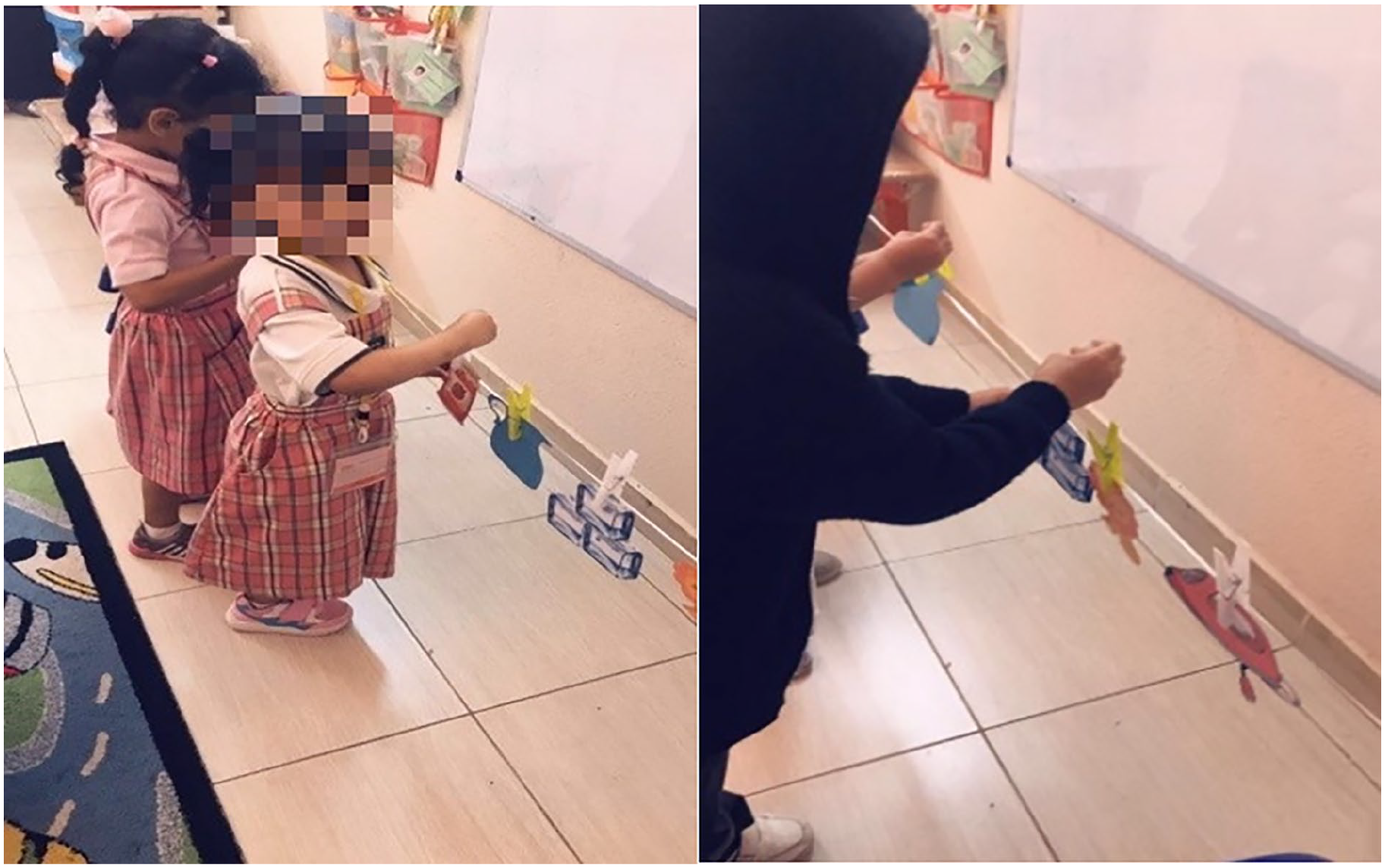
1- Washing Line: the teacher brought slips of papers of each word, for example, ice, lion, etc. She hung a washing line in the class from one wall to the other. She asked the students to say the proper vocabulary and, the child who said the right word consequently, he hung up the paper with clothes pegs. After that, all the kids repeated the word. Similarly, the teacher took turns with all the children to swap and have a try too.
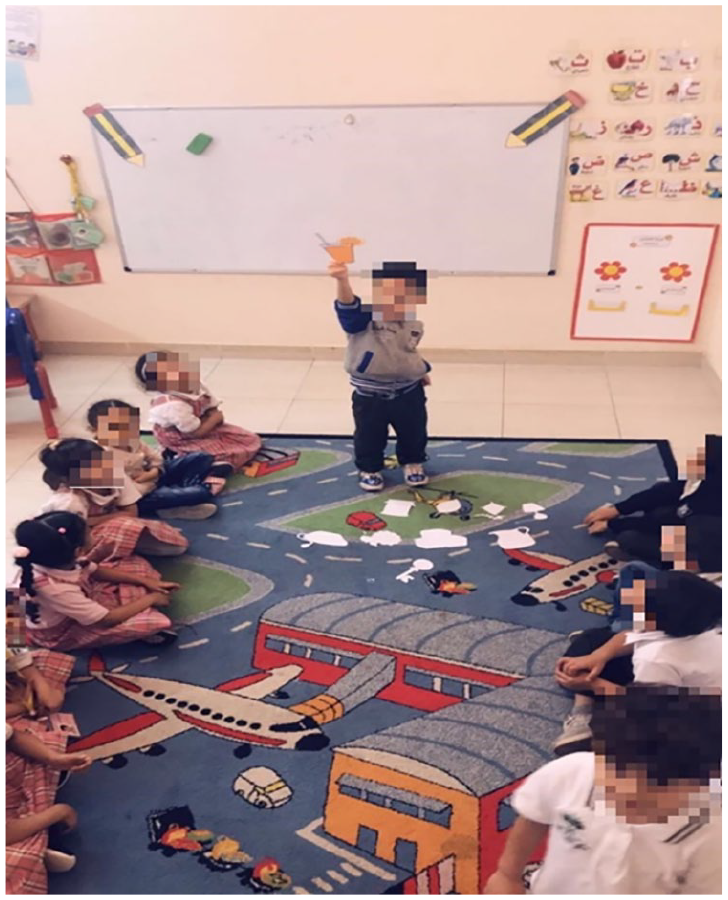
2- Hidden Cards: the teacher brought cards for each word then, turned the cards face down. After that, she asked each student to have one card and say its name.
3- Cards Race: the class was divided into two groups. Both groups were asked to sit in two rows When the teacher threw a card away, the first student in each line should run, bring the card, and say the word printed on it. If he/she said the wrong word, then no point would add to his/her team. In the end, the team with the most points, was the winner.
Appendix E
Selling and Buying:

Washing Line
Hidden Cards
Footnotes
Declaration of Conflicting Interests
The author(s) declared no potential conflicts of interest with respect to the research, authorship, and/or publication of this article.
Funding
The author(s) received no financial support for the research, authorship, and/or publication of this article.
