



Abstract
Increased focus on scientific developments and technological innovations and continuously rising research funding have led to numerous cases of research misconduct that blurs the boundaries between ethics, science, and culture. In our paper, we aim to develop a framework for understanding management and governance in the self-discipline stance, based on case studies from Japan. We adopted a quantity approach by examining cases from 2015 to 2019 provided by the Ministry of Education, Culture, Sports, Science, and Technology of Japan (MEXT), seeking to analyze the relationship between the handling of research misconduct in Japan and the relevant national regulations from the perspective of behavior definition, investigation process, responsibility, the process of the investigator, and handling measures. The results of this analysis will help to determine improved methods for processing and making decisions, and conducting assessments while examining cases of research misconduct.
Keywords
Introduction
In recent years, research misconduct has become a notable problem. Increased focus on scientific developments and technological innovations and continuously rising research funding have led to numerous cases of research misconduct that blurs the boundaries between ethics, science, and culture. Efforts to reduce research misconduct are expanding in government organizations, funding agencies, research institutes, and the academic field in general. Integrity in research activities has been implemented through the cooperation of various sectors and is defined as “integrity systems” in the current paper.
Countries conduct diversified national research misconduct governance based on their national conditions. Some countries, such as the US, utilize a unique system. The US has set up government agencies to observe institutional investigations. These agencies also have the authority to pass final decisions on cases of misconduct, whereas other countries do not utilize such systems (Matsuzawa, 2014a, 2014b, 2014c; Nouchi et al., 2020). Scientific misconduct in Japan is handled completely differently from such cases in the US. One of the most prolific cases of research misconduct was that of Japanese stem-cell biologist Haruko Obokata and her fellow researchers’ claims on a stimulus-triggered acquisition of pluripotency cells in 2014 (Sugawara et al., 2017). Previously, Japan did not introduce legislation addressing research misconduct, nor did government agencies take charge of institutional investigations, such as the system used by the US. The research integrity governance stance of Japan was self-disciplined until 2018(Law Enforcement Ordinance on Activation of Science and Technology/Innovation Creation, 2018). This change was introduced due to the emergence of a scientific research integrity law. Analyzing the volume of research misconduct cases in Japan will yield important results, because “self-discipline” is closely related to authorized agencies alike and every research institution under a non-legal mandatory situation. Therefore, the results of this analysis will help to determine improved methods for processing and making decisions, and conducting assessments while examining cases of research misconduct. Few studies have focused on the self-discipline stance in relation to research misconduct. In our paper, we aim to develop a framework for understanding management and governance in the self-discipline stance, based on case studies from Japan.
Therefore, in the current paper, we contribute to this literature by analyzing how integrity systems in Japan deal with cases of research misconduct. We adopted a quantity approach by examining cases provided by the Ministry of Education, Culture, Sports, Science and Technology (MEXT) (2014), seeking to analyze the relationship between the handling of research misconduct in Japan and the relevant national regulations from the perspective of behavior definition, investigation process, responsibility, the process of the investigator, and handling measures.
Method
Data Sources
We aimed to examine the case-handling principles for varying degrees of research misconduct. Based on the research theme and content, the following criteria are selected to screen cases of research misconduct: (1) Representativeness—In cases involving various types of research misconduct, it is necessary to select cases with clear instances of misconduct. (2) Completeness—Cases with clear results are more beneficial for analyzing the overall process. (3) Availability—Accessibility is the prerequisite for research, thus the cases that must be analyzed are guaranteed accessibility. Based on these criteria, 49 cases of research misconduct from 2015 to 2019 were obtained directly through the MEXT website. Cases of public reports, such as media and newspapers, are not included in this analysis.
Data Preparation and Processing
First, the initial data processing was conducted using Office Word 2019 and GraphPad Prism7. Formatted data were saved and processed using Excel 2019. This included classification and deriving statistical information.
The classification of handling procedures and causes of research misconduct is based on reports and commentary articles on some case studies of common research misconducts. Subject classification is based on the 2018 Subject System Classification Table, published on the MEXT website. Handling procedures are summarized into five phases: the discovery of the case, establishment of an investigation committee, compilation of investigation results, disposal of researchers, and litigation from the respondent. The causes of research misconduct are summarized into 13 categories.
Results
Major Initiatives for Promoting Research Integrity in Japan
The “Guidelines for Responding to Misconduct in Research” (First National Guidelines 2006, MEXT) was first issued in 2006 and is the first national guideline for dealing with research misconduct. These guidelines provided the basic ideas, initiatives, responses, and sanctions for handling research misconduct. Furthermore, the “Guidelines for Responding to Misconduct in Research” (Revised National Guidelines, MEXT) and “Improvement of Research Integrity in Scientific Research” (Science Council of Japan, 2015) were adopted in 2014 and 2015, respectively. Before the introduction of these guidelines, there was a consensus that researchers would hold themselves responsible to avoid indulging in research misconduct. The 2014 guidelines fortified the role of colleges, universities, and other foundations to accept accountability for preventing research misconduct. The 2014 guidelines primarily included forestalling research misconduct activities, explaining the administration obligations of associations, sanctions, and the duty of executives. The 2015 guidelines conducted a periodical exploration about storing experimental data, essential precautions for researchers, the scope of research misconduct other than fabrication, falsification, and plagiarism (FFP), as well as reference standards on research ethics instruction. The decree of “securing research integrity” was provided in the “Act on Activation of the Creation of Science and Technology Innovation”(Cabinet Office)—the first Japanese law promulgated for research integrity in 2018. This law primarily focused on the responsibility of researchers, research institutions, and the government.
Overview of the 2014 Guidelines for Responding to Research Misconduct
The 2014 guidelines focused on three basic ideas about research misconduct. First, research misconduct is a betrayal of science and violates the true nature and publication results of research activities. The 2014 guidelines requested researchers to maintain a strict stance against misconduct. Second, the self-correction approach must be used for dealing with research misconduct, based on the voluntary efforts of researchers, the scientific community, universities, and other research exploration organizations. Third, it is important to reinforce the responsibility of the agency in preventing misconduct by creating an atmosphere that discourages it. The responsibilities of the agency’s management department should be clarified and must function systematically. Moreover, the agency must make substantive efforts to prevent misconduct.
Researchers have four primary responsibilities: ensuring integrity in their research, publishing their research results, complying with laws and regulations, and accepting accountability in case of suspicions related to misconduct. Ensuring integrity in their research required researchers to be aware that the pursuit of scientific research relies on the trust of and mandate from people, and thus fulfilling the responsibilities of research management can prevent misconduct. Research integrity can be preserved by including a clarification of the roles of each researcher and ensuring thoroughness in recording, preservation, and strict handling of research data. While publishing their research, researchers must present their results to the scientific community by using objectively verified data and materials. While conducting their research, researchers must comply with the related laws and regulations. When faced with suspicions of potential misconduct, researchers must present and explain their scientific thesis to dispel these suspicions and increase the transparency and accountability of their results (Ministry of Education, Culture, Sports & (MEXT), 2014)
The responsibilities of colleges, universities, and research institutions comprised three points: establishing lines of responsibility within an organization, preventing misconduct, and responding to allegations of misconduct. First, the aforementioned institutions must clarify the administrative obligations of the association and development measures for preventing misconduct, specifically including (1) providing and revealing the guidelines and framework for responding when misconduct has potentially occurred, and (2) introducing effective and necessary measures (such as ensuring that every researcher is aware of their roles and responsibilities as a scientific researcher, the research results have been confirmed by the principal researcher, and mentors have been assigned to young researchers). Second, the 2014 guidelines proposed requirements for preventing misconduct. Universities and institutions were suggested to provide responsible conduct of research (RCR) education and mandate the preservation of research data for a set period and disclosure as necessary for creating an environment that discourages misconduct. Third, universities and institutions should respond to allegations of research misconduct.
Differences in research misconduct definition between Japan and the United States
There are multiple definitions of research misconduct in each country. Although FFP is commonly used to define it, the scope of coverage on questionable research practices (QRPs) excluding FFP is different in some countries. Based on HAL reports (Creutzberg, 2009) and a white paper by CSE (Overgaard et al., 2016), we compared differences in the definition of research misconduct between Japan and the US (Table 1). The 2006 guidelines referred to US policies (Kobayashi, 2014, 2016), particularly the Federal Policy on Research Misconduct (65 FR 76260), “Research Misconduct” (45 CFR Part 689) by the National Science Foundation, “Policies on Research Misconduct” (42 CFR Part 93) by the Food and Drug Administration, as well as other policies by the Public Health Service (PHS), National Institutes of Health, and Centers for Disease Control and Prevention. Japan’s guidelines have been considerably impacted by the PHS.
Comparison of the Definition of Research Misconduct Between Japan and the US.

The 2014 and 2015 guidelines are combined to derive a complete definition of research misconduct, as shown in Table 1. The 2006 and 2014 guidelines do not indicate a notable difference in the definition of research misconduct. It is noteworthy that the 2014 guidelines are not a law nor statute but is merely a regulation, and the MEXT recommended that all of Japan’s research institutions can formulate their guidelines by following the 2014 and 2015 guidelines.
In the “Act on Activation of the Creation of Science and Technology Innovation,” Article 24-2 states that measures against research misconduct must focus on all the involved entities—researchers, research institutes, and countries. Particularly, research institutes are required to ensure research progress according to the objective and take necessary measures for the country. Before the introduction of these guidelines, research misconduct had not been covered by national laws. By comparing the guidelines and relevant laws, we noted that Japan does not have a national distinction statement to distinguish between research misconduct and honest errors, whereas the Office of Research Integrity (ORI) provides a clear definition—research misconduct does not include honest errors or differences in opinion. To follow the national recommendations included in the 2014 guidelines, research institutions must develop relevant behavioral norms for themselves. RIKEN, a famous research institute in Japan, provided a statement about the definition of honest errors in procedures on its official website (Yamazaki, 2014) in 2006 and has now deleted it to ensure consistency with the 2014 guidelines (Riken, 2012).
The Research Integrity System in Japan (According to MEXT)
The Research Integrity System primarily comprised five parts: Cabinet Office and other Ministries, the MEXT, academic communities, funding organizations, and research institutions. As shown in Figure 1, the Cabinet Office and other Ministries are primarily responsible for issuing policies and initiatives related to research integrity throughout Japan. The second part of the Research Integrity System is the MEXT. Its major responsibilities were establishing regulations and systems based on the guidelines, providing consultation and advice related to research integrity, inspecting the investigation result report, summarizing, and making the cases of misconduct public (including the investigation procedure), and the disciplinary and preventive measures taken by the related institutions. There are two offices under MEXT for Research Integrity, Office of Research Integrity Promotion (established in April 2015) and Experts Meeting on Promoting Research Integrity (established in April 2015, comprising 14 experts). The role of the Experts Meeting on Promoting Research Integrity was to dispense advice on improving the regulations, rules, and organizational structure of research institutions and imposing sanctions on research misconduct. The third part is the academic communities, comprising the Science Council of Japan and the Association for Research Integrity (APRIN). The major responsibilities of the Science Council of Japan were preparing a code of conduct for scientists and improving research integrity in scientific research. The major responsibility of APRIN was to compile teaching materials, primarily the global standard e-learning programs, such as the APRIN e-learning program, and proposing standardized investigations. The fourth part is the funding organization composed of three institutions, namely, the Japan Society for the Promotion of Science (JSPS), Japan Science and Technology Agency (JST), and Japan Agency for Medical Research and Development (AMED).

The Research Integrity Systems of Japan (Office for Research Integrity Promotion 2020) The Research Integrity Systems mainly consisted of five parts: Cabinet Office and other Ministries, the MEXT, academic communities, funding organizations, research institutions.
Moreover, the Research Integrity and Auditing Office, Research Integrity Division, and Division of Research Integrity and Legal Affairs had been established under these three organizations and were primarily responsible for providing online educational materials related to scientific research integrity, establishing a research integrity portal site for the dissemination of information, a connective framework of research integrity officers, and sharing part of MEXT’s work on scientific research integrity. The final part is related to research institutions. They are the primary subject and executors of investigations and are responsible for formulating and disclosing the appropriate rules and regulations, as well as investigation procedures and methods. Moreover, research institutions also provided diverse periodic education related to research integrity, preservation, and research data disclosure.
There are two types of sanctions for violations; one type is for the researcher, whereas the second type is for universities and institutions. Researchers convicted of research misconduct must return competitive funds, and applications for new projects will be subject to qualification restrictions. They will be restricted from access to competitive funding, administrative cost grants, and other funding for basic operating expenses. Research institutions that have engaged in research misconduct will receive reduced indirect cost grants. Sanctions will also be imposed on such research institutions for unfulfilled conditions or unreasonable delays in the investigating progress without submitting legitimate reasons.
Analyzing 49 Public Cases in the MEXT
Overview of research misconduct in Japan
Among the 49 cases from 2015 to 2019, 30 were declared to be plagiarized, 12 were fabricated, 6 tampered with, and 2 were multiple submissions (Figure 2). These cases involved 19 national universities, 2 public universities, 17 private universities, 6 junior colleges, and 1 museum (Figure 3). The subjects involved include 16 cases related to the field of health care, 14 related to social sciences, 4 related to humanities, 4 related to engineering, 4 related to education, 3 related to sciences, and 1 related to agronomy (Figure 4). The jobs of researchers involved in these cases are 26 professors, 13 associate professors, 6 teaching assistants, 5 lecturers, 3 doctoral students, 2 academic researchers and teachers, and 1 staff member (Figure 5). The research organizations’ primary disciplinary measures are forced resignation, suspension, disciplinary measures without detailed announcements, admonitions, suspension, disqualification or demotion, and none (including no investigation process, deceased, and external employment) (Figure 6).

Types and proportion of research misconduct case.

Cases of related university.
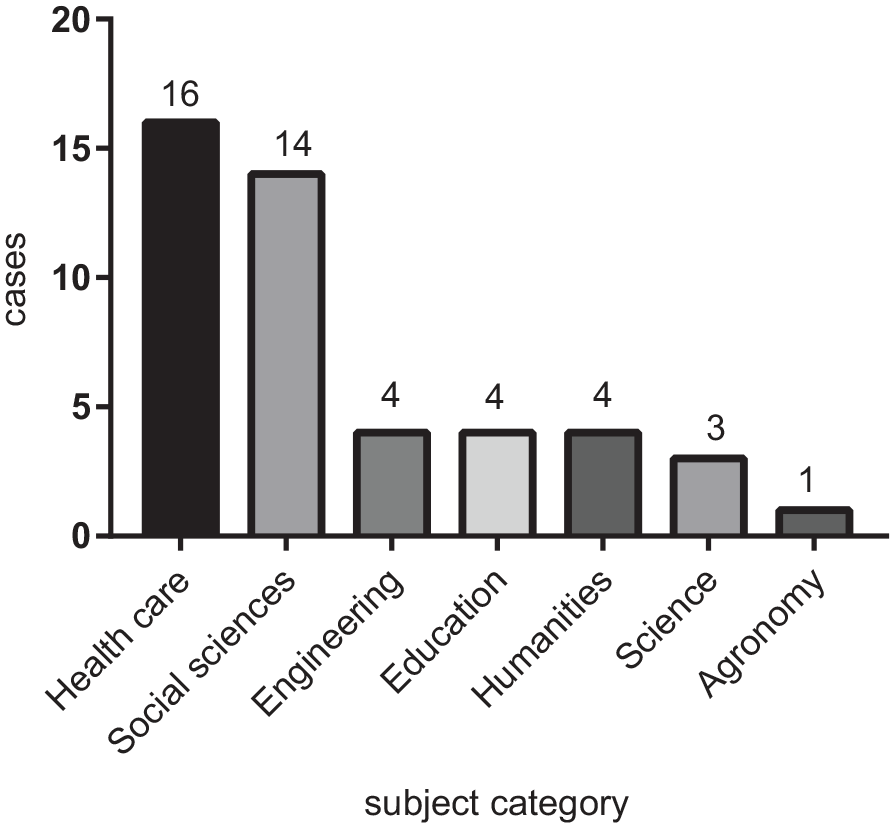
The subjects of the related respondent.

Academic rank of the related respondent.

Disciplinary measures taken by the research organizations.
Case-handling process
Forty-nine cases of research misconduct were investigated following the steps required by the MEXT and are summarized in Figure 7. First, when a research organization receives allegations of research misconduct, it is necessary to verify whether the allegation is scientifically reasonable, credible, and is not based on personal hatred or malicious prosecution. The triggers of discovering research misconduct in 49 cases were from the report of the original author, the report of the co-author, entrustment of the funding agency, internal reports, external personnel, and others (Figure 8). The most common findings of research misconduct were the external reports, including journal publishing and media exposure, and internal reports from the institution of the researchers suspected of misconduct. Once scientific validity and the absence of malicious intention were verified, the allegation could proceed to the next step. Otherwise, appropriate measures should be taken against the complainant following the regulations of the institution. According to complainants, research organizations should set up a research misconduct investigation framework in response to the 2014 guidelines. To ensure fairness in the investigation process, institutions were recommended to set up a standing committee overseeing the activities of the investigation committee, and most of its members shall be external experts who are not involved with the relevant institution. Particularly, the expert with knowledge about the relevant laws must be an outsider.

The investigation framework. The complete investigation process, from accepting allegations to punitive and preventive measures by the Respondent’s institution.

The triggers of discovering research misconduct.
The most important role in misconduct investigation is to verify the authenticity of research publications. The results of this investigation serve as important evidence. Interviews with complainants and researchers can be used to gather information. Furthermore, diverse software has been developed, thus providing a more powerful tool and better chances at detecting specific research misconduct, particularly image manipulation and text plagiarism. The investigative committee should comprehensively examine the evidence and testimonies derived from the investigation to determine the alleged misconduct. If the researchers are unable to overturn the allegations of misconduct with explanations or evidence, the case can be deemed that of misconduct according to the 2014 guidelines. Moreover, the investigative committee must determine whether the error was made intentionally. In 49 cases of research misconduct from the MEXT, the time starting from receiving to submitting the report was 35 to 2,724 days, and the investigation period was 12 to 699 days (Figure 9). If the findings indicate fabrication or falsification, researchers will have one opportunity to apply for reinvestigation. In the absence of a reinvestigation application from researchers and their affiliated research organizations to the investigation committee, the case can be closed. In the cases examined, only a small number of researchers applied for reinvestigation. The reasons for research misconduct were aggregated based on Matsuzawa’s classification (Matsuzawa, 2014c). According to the collected reports, two factors were recognized as the primary cause of research misconduct cases—lack of basic norm awareness and research ethics (Figure 10). Moreover, improper instructions or pressure to commit misconduct from the head of a laboratory also easily generated an atmosphere encouraging scientific misconduct.

The investigation period and time from reveicing to submitting report. (a) the investigation period; (b) the time from receiving to submitting.

Primary cause of research misconduct.
Once research publications or materials are determined by the Investigation Committee to involve misconduct, each research organization must take the necessary measures and dispositions. Sanctions for violations comprised two types—for researchers and their affiliated research organizations.
Discussion
While examining these 49 cases individually, we considered the possibility of accidents. Some researchers unintentionally became involved in research misconduct due to negligence. Therefore, it is important to reduce such “accidents.” Unlike those who deliberately engage in research misconduct (henceforth considered an “incident case”), it may not be possible to expect effective mitigation measures by ensuring severe penalties. This is a key challenge for Japan, a country that aims to become a technology innovation country and create an environment where young researchers who will be the driving force for the next generation, can engage in positive research activities without losing their motivation or becoming involved in research misconduct “accidents.” To prevent negligence, scientific research ethics education or training must be improved and implemented. However, positive effects cannot be expected only by general and abstract education of research ethics. Instead, it should be noted that concrete guidance must be provided while considering the characteristics and differences in research methods of various research fields.
Differences Between Natural Sciences, Humanities, and Social Sciences
In the field of natural sciences, most research misconduct cases were deemed fabrications and falsifications. However, in the field of humanities and social sciences, there are more instances of plagiarism. This is primarily caused by differences in research methods. The job positions and ages of researchers involved in research misconduct were compared between the fields of natural sciences and humanities/social sciences. In natural sciences, research misconduct typically occurs among “younger class” researchers with lower academic rank, whereas in the field of humanities and social sciences, it typically occurs among “middle-ranked/upper class” researchers with a higher academic rank.
In the case of natural sciences, because data is primarily produced through experiments, there is a risk that fabrication/falsification will more easily occur in the process. Moreover, the reason why the composition ratio of “the number of research misconduct cases” was lower, compared with the composition ratio of “the number of university principal researchers” is that (1) multiple researchers often participate in one research, thus cases of research misconduct are relatively less, compared with the number of researchers, and (2) the occurrence of research misconduct can be suppressed by having multiple co-authors checking the paper against each other in the field of natural sciences. There are many cases where multiple researchers collaborate to acquire data through experiments, and students and young researchers often conduct the actual experiments. As a result, young researchers may have more opportunities to become involved in research misconduct by asking for specific responses.
Alternatively, in the humanities/social sciences field, plagiarism is more likely to occur for various reasons: (1) It is easy to make mistakes when citing references; (2) it is difficult to create quantitative discussions based on experimental data, and people may assume that the concepts and ideas determined through the survey are their own thoughts; (3) there are many opportunities to write a paper independently, and the checks conducted by others may not always work properly. In a competitive environment with considerable pressure on research achievements, professors, and associate professors, who have many opportunities to write papers, will also have more opportunities to be held responsible for their execution.
Therefore, to reduce the chances of research misconduct, more detailed measurements should be used after understanding the differences between the natural sciences and humanities/social sciences and considering the characteristics of the “generation” and “position,” as well as the research environment.
Relationship between research misconduct in Japan and its national science and technology policy
The tendency for fluctuations in the estimated number of research misconducts is relatively consistent with the changes in the science and technology policies in Japan (Matsuzawa, 2013a; Tanaka, 2018); the first estimated number of occurrences began to increase along with the first phase of the Science and Technology Basic Plan (1996-2000). It was represented by “Doubling Competitive Funding” and “Postdoc 10,000 Person Plan”. In the first half of the 2000s, under the implementation of “the Second Science and Technology Basic Plan,” the rapid growth of the second estimated number of occurrences overlaps with the period of competitive funding growth and emphasis on life science, information, environment, and nanotechnology/material disciplines. It was also when the competitive environment was further improved, such as the spread of term systems and penetration of research evaluation. The estimated number of cases of research misconduct is approximately 5 to 6 cases a year, which coincides with “the Third Science and Technology Basic Plan” from 2006 to 2010. The year 2005 also marks the beginning when research misconduct began to be exposed in well-known universities, such as the University of Tokyo, and thus aroused societal interest. Moreover, in 2006, the MEXT published the first national guideline. However, the 2006 guidelines had little effect on misconduct, and thus the 2014 guidelines were renewed and published (Ministry of Education, Culture, Sports, 2014).
However, the 2015 guidelines compared with the advanced proposals made in 2005 included no mention of handling issues after the detection of misconduct and the installation of academic courts. The approach to improving research integrity has regressed significantly. One of the revisions of the new guidelines of the MEXT is that research misconduct must be attributed to the individual researcher, and the responsibility is transferred to the research institute (Ministry of Education, Culture, Sports, 2014). The judgment that research misconduct is considered a researcher’s problem and cannot be resolved is consistent with the approach of research justice in Europe and the US. However, various problems have been noted because the main body of responsibility is not a laboratory or small research community, but instead, is a research institution (Enoki, 2018). In Japan, where there is no academic court or its substitute, research misconduct will be eventually be evaluated by research institutes. However, the MEXT has negatively evaluated the occurrence from the perspective of a lack of ethical education and inadequate management measures. Research institutions do not provide incentives to conduct rigorous investigations of these allegations. As a result, they must face a conflict of interest (Enoki, 2018). In other words, if research misconduct is identified by conducting appropriate research aiming for research integrity, the research institute will receive a negative evaluation. In severe cases, the research institute may receive indirect cost reduction measures. In this situation, it is difficult to require strict fairness in assessments conducted by research institutions (Enoki, 2018). When it is difficult to conduct an inquiry thoroughly, it is recommended to cooperate with the Science Council of Japan and the funding organization, but no such case has been noted.
Comparison with the management of research misconduct in Europe, America, and Asia
Numerous studies have focused on research misconduct in Western developed countries, but these discussions have primarily focused on the ORI and the life science field, including the biomedical field (Matsuzawa, 2014c). Yamazaki analyzed 150 cases of the “investigation” conducted by the ORI and the US Public Health Service (USPHS), from 1993 to 1997 (Yamazaki Shigeaki, 2002). According to Yamazaki, only 76 cases of research misconduct were revealed, with an average of approximately 15 cases per year. Detection of research misconduct in projects is only 0.05%. This finding is consistent with the results of Matsuzawa’s analyses focused on cases revealed by open media in Japan from 1993 to 2010 (Enoki, 2018). The scale of research misconduct exposure should focus on the aforementioned scale. In the biomedical field in the US, approximately 90% of such cases are that of fabrication or falsification (Mervis, 2013). The characteristics of research misconduct in developed countries are thus considered fabrication or falsification. Although the content of research misconduct is similar to that of Yamazaki, the most common type is plagiarism (Figure 2), which is different from the case of the US. Research included in this paper includes those from the natural sciences and the humanities and social sciences fields. When comparing only natural sciences, fabrication or falsification accounts determined the main types of misconduct in Japan, similar to the situation in the US (Matsuzawa, 2014c).
Yamazaki showed in the “Academic Rank of Targets of Misconduct” that 165 people were involved in 150 cases, with 27% of those involved being assistant professors, 19% being postdocs, followed by 19% professors, and 7% students (Yamazaki Shigeaki, 2002). Since his survey focused on the field of biomedical science, in comparison with the results of the natural sciences in this paper, there were more professors (45%) and assistant professors (22%) (Figure 5). Yamazaki stated that in the US, “researchers in the position of assistant professor are more likely to be charged with misconduct” and that “most of the accused are high-ranking researchers. . .in half of the cases” (professors, associate professors) (Yamazaki Shigeaki, 2002). In Japan, however, although the information of the petitioner is not disclosed, it is more common for researchers with high status, such as professors, to be prosecuted by colleagues or younger researchers (including students) (Matsuzawa, 2013a). Moreover, in recent years, many of the accusations by external third parties, which have been rapidly increasing, are often targeted at high-ranking researchers (professors and associate professors).
In the case of plagiarism, many of the complainants are the original authors who are also the victims, and this situation is considered to be quite different from the situation in the US. The most serious problem in Asian countries is plagiarism, including self-plagiarism (Matsuzawa, 2014c; Pellegrini, 2018). In South Korea, fabrication and falsification account for approximately 10% cases, and plagiarism accounts for 30%, whereas self-plagiarization accounts for 50% of cases (Matsuzawa, 2014c). In India, approximately 70% of cases disclosed by the Scientific Value Society (SSV) are that of plagiarism (Matsuzawa, 2013a, 2014c). Similar to India, China has a high incidence of research misconduct, and serious plagiarism problems have been reported (Zhang, 2010). Asian countries with rapid economic growth are facing serious plagiarism problems. This phenomenon has also been reported in other BRICS countries, such as Brazil and Russia (Jargin, 2009; Vasconcelos et al., 2009). The following reasons are considered the cause of those problems: (1) Differences in awareness of copyright and intellectual property, and constitution of academia; (2) lack of research ethics education; (3) language barriers in writing English papers (Vasconcelos et al., 2009); and (4) delay in construction of national research integrality system—there is no national research equity system except China. Moreover, the presence of these countries in the field of research and development is rapidly increasing along with economic development. In India and Brazil, the level of R&D performance doubled from the mid-1990s to the mid-2000s. To some extent, in science and technology/innovation policy, the balance between research and development policy and research integrality policy is not sufficiently maintained (Matsuzawa, 2014c). The “distortion” of the rapid increase in research activity may have become a problem of research misconduct (Matsuzawa, 2014c).
Efforts to promote research integrity and the educational value of RCR teaching
In recent years, Japanese universities have become internationalized and are keen to acquire excellent foreigners. Accompanying this, research misconduct cases by foreigners are also occurring frequently. In the cases collected in this paper, 1 out of 58 researchers played a key role in research misconduct. According to Matsuzawa’s statistics on domestic research misconduct cases reported by the media in the past, one-third of the “dissertation cancellation case” (12 cases) that occurred after 2009 were caused by foreign students (Matsuzawa, 2013a). Factors causing research misconduct by foreigners, especially international students, may be (1) language (Japanese) barriers in research activities, (2) educational and cultural differences, such as awareness of copyright, (3) differences in consciousness about future career paths (Matsuzawa, 2013a). Among foreigners, the experience of studying abroad is important to them, and thus some do not intend to continue their career paths as researchers after leaving Japan. In such cases, even if research misconduct occurs, it may not be substantially detrimental to the career path of the applicant after returning to their home country (Matsuzawa, 2013a). In some cases, it may be difficult to expect a psychological deterrent effect on research misconduct only through education and training on research ethics. Each university must take effective measures while considering the actual conditions.
Concerning efforts to promote research integrity, active cooperation is being promoted across the boundaries of ministries and institutions. The “Research Fairness Portal” on the website of the JST is a typical platform. This page is operated by JST and the AMED in cooperation with the MEXT and the JSPS. Various information is provided, including official guidelines, teaching materials for ethics education, and investigation on research integrity. Furthermore, the simulation drama “The LAB” created by the US ORI was promptly translated into Japanese and released. The LAB is a teaching material that allows role-playing of the actions of the parties involved in research misconduct and is a well-developed teaching material that details the dialog of characters and depictions of human relationships in the laboratory. The Research Fairness Promotion Office, which was established in April 2015 by the MEXT, is an organization focusing on the promotion of research integrity and is expected to play a key role as a command tower, starting with the revision of guidelines in the future. APRIN was established in April 2016 and was announced as a private organization including those involved in the Science Council of Japan. Although it is a private organization, many of its members have influenced science and technology policies until recently, and they have a notable connection with the MEXT (Tanaka, 2018). In the “Standardization of Code of Conduct Education for Researchers Education and National Development of Education System (CITI Japan Project)” promoted by the MEXT since 2012, a research ethics education program developed in the US was adopted for e-learning. Although this program was provided domestically, this effort will be inherited by APRIN in the future. APRIN’s mission is dispensing education and enlightenment, providing advice on making norms/guidelines, consultation on questioning, and international exchange on research integrity. In Japan, compared with the West, the power of autonomous communities by field researchers is overwhelmingly weak. To promote research integrity, in addition to APRIN, an organization that reflects the voices of researchers closer to the field is also necessary.
Best Practices
We have discussed the scientific research integrity governance stance of Japan and the framework of its research integrity systems through the history of policy promulgation and case study showing the policy implementation. Japan was a representative of the self-discipline governance stance, and relevant laws on scientific research integrity have been included in the national laws in 2018. Based on its unique cultural characteristics, Japan has gradually improved its scientific research integrity system and policies based on a self-discipline stance, which can provide an institutional reference for developing countries, particularly those that do not have national laws and state agencies.
Research Agenda
It is relatively easy to imitate the established scientific research management system based on national conditions. Moreover, when establishing or planning to establish the national scientific research integrity system, it will be more advantageous if there are more options—more types of stances. To the best of our knowledge, some research focused on the compulsory regulation model represented by the US, whereas some focused on the quasi-judicial stance represented by Britain and Germany. Research that is different from the above models will be useful because it can provide more references for decision-making. Our research only provided how the policies of self-discipline countries are reflected in the case. Therefore, future research must focus on examining the reason why Japan added new laws and regulations for the scientific research integrity system and the development history of the self-discipline model.
Educational Implications
The self-discipline stance in Japan is relatively mature. Its research integrity governance framework and investigation steps can be inquired through official channels and are relatively complete, compared with the governance framework of other countries with the same stance. Therefore, for policymakers who have yet to formulate the governance stance of scientific research integrity, the introduction of the self-discipline governance stance in this paper will serve as a reference. Additionally, all cases of scientific research integrity mentioned in this paper will serve as a reference for the formulation of relevant policies.
Footnotes
Authors’ Contributions
All authors contributed to the study conception and design. Material preparation, data collection, and analysis were performed by Cao Yuan. The first draft of the manuscript was written by Cao Yuan and all authors commented on previous versions of the manuscript. All authors read and approved the final manuscript. Zhao Yong is responsible for supervision.
Availability of Data and Material
Data and materials were obtained from public data
Code Availability
GraphPad Prism 7, Office Excel 2019
Declaration of Conflicting Interests
The author(s) declared no potential conflicts of interest with respect to the research, authorship, and/or publication of this article.
Funding
The author(s) disclosed receipt of the following financial support for the research, authorship, and/or publication of this article: This study was funded by the Project of Supervision Service Center for Science and Technology Funds of the Ministry of Science and Technology (MST) of China.
