




Abstract
We explored the contribution and effectiveness of state and non-state institutions in rural development efforts in highlands (Khyber Pakhtunkhwa [KPK] province) of Pakistan. This study employed mixed-methods research design and data were collected from 300 household heads, randomly selected from six villages from two purposively selected districts Mansehra and Nowshehra. Findings showed people in KPK were deprived of due to conflicts, conspiracies and terrorism, poor governance, small landholdings and subsistence farming followed by sluggish marketing system, insufficient education and training for people, and inadequate employment opportunities. Regarding contribution, non-state institutions had more contribution as compared to state institutions. T-test analysis showed that the non-state institutions had an effective provision of agricultural extension and forestry advisory services, education, health services in remote areas, skill development, and provision of microcredit schemes. The results of F-test statistics showed highly significant difference among the perceived effectiveness of rural development activities of different types of non-state actors (localite, cosmopolite, and religious/faith-based) working in the research area. This study recommends state-owned rural development departments revisit their working mechanism and develop synergistic working relationship with the non-state institutions in discharging rural development efforts.
Introduction
By the end of 2030, around 436 million people are expected to stay poor. Therefore, poverty alleviation is still a foremost challenge to deal with any of the possible means (Demi & Kuwornu, 2013). Rural areas need more attention where about 79% of the poor are residing (World Bank, 2002). Poverty pressure is almost equal among developing countries where the focus to alleviate poverty remains on boosting farming to escalate poor livelihoods. In South Asian countries including Pakistan, although there is decreasing trend in the rate of rural poverty, South Asia is the house of resource-poor farmers and is also the house of 40% poor people of the world (Bishwajit, 2014). Sub-Saharan Africa and South Asia are the hubs of the extremely poor. In Sub-Saharan Africa and South Asia, 50.7 and 33.4% of the global international poor are living (Islam et al., 2018). South Asia needs more holistic actions and regional coordination to postulate measure against poverty and rural development initiatives.
The region is acclaimed for its extensive agricultural growth and over-reliance of the people on this profession to bring height to their livelihoods. Hafeez et al. (2011) agree upon a strong correlation between agricultural development and poverty elimination. Research studies such as Hazell et al. (2007), Turunen et al. (2011), Taj et al. (2012), and Muzari et al. (2012) have concluded that development in agriculture sector expedited the process of poverty reduction. However, the development of agriculture sector stays conditioned with the extended involvement from the different nation-building departments. The Food and Agriculture Organization (FAO, 2003) states that with the effective involvement of state and non-state institutions, agriculture could be the growth engine to terminate poverty pressure. In the entire global world, it has been recognized that rural development through agricultural growth plays a crucial role in economic development of nations especially with agrarian-based economy (Pawlak and Kolodziejczak, 2020). In accelerating development activities in rural areas, the role of agriculture is of prime importance (Brennan & Luloff, 2005).
The significance of rural development in the discourse of development is recognized well by the experts of agricultural extension and other rural development practitioners both in the developing and developed world (Brennan, 2009). With special focus on developing countries where major portion of population used to live in rural territories, development is essential as poverty in these countries is more prominent (Adisa, 2012). The process of rural development is not only limited to economic growth through agricultural development (Wandschneider & Davis, 2003). According to World Bank (2002) and FAO (2010), all the strategies adopted by public or private agencies for the provision of welfare services to the rural community are regarded as rural development. A number of social scientists narrated rural development as a holistic approach (see Hassan et al., 2020; Hazell et al., 2007; Usman et al., 2019; WorldBank, 2006 and many others). In the current research, the concept of rural development emphasizes on the material and non-material well-being of rural community through provision of quality-based rural development services, as presented by Nchuchuwe and Adejuwon (2012).
Within the South Asian region, China, India, Pakistan, Iran, and many other nations have mutual interest and vision to deal with this overwhelmed plight in the best interest of their nation through multiple rural development efforts (Thanh & Duong, 2016). The Chinese model is seen as a roadmap to ameliorate poverty status at household level. In Pakistan, a number of development actors/agencies are striving hard to improve the livelihoods of rural dwellers (Anwar, 2015). Although state departments gained little success, their efficiency in addressing the real needs of rural community is not much significant (Baig & Khan, 2006). Besides state-owned rural development departments, non-state actors are also working to develop rural communities on sustained basis (Luqman et al., 2016). Role of state institutions met with partial success in past giving non-state institutions an opportunity to emerge, perform effectively, and progress accordingly (Baloch & Thapa, 2018). Aiming the assistance of rural people, worth of state actors cannot be undermined. For instance, the Department of Agriculture Extension at provincial level is one of the largest state institutions in Pakistan formed for the assistance of farmers at their doorsteps (Lodhi et al., 2006).
Khyber Pakhtunkhwa (KPK) is one of the four provinces of Pakistan where rural poverty rate and ratio of food insecure people is higher than in other regions. Inconsistent with challenging extension work, a huge gap between the actual and potential yield of major and minor crops is witnessed across the province (Shahbaz & Ali, 2009). A. Farooq et al. (2010) had reported poor performance of agriculture extension sector in meeting farmers’ need and bridging the yield difference. They identified that the department was not able to provide timely technical backstopping to the farmers. Israr et al. (2009) admire that institutions are striving hard to harness best rural development efforts through improvement in farming and developing economic opportunities through different sectors like tourism. But still the majority of the rural people are facing the issues of poverty and food insecurity (N. Shah et al., 2010). Non-state organizations claim that they are in a better position to cater the needs of people within the social and cultural norms and also in delivering new innovations and technologies regarding agriculture and other income-generating activities. However, the involvement of non-state actors is reported significantly to improve the socioeconomic conditions of poor masses of society. But the typology of these non-state actors with reference to their engagements in rural development work has not been explored extensively along with their effectiveness in comparison with the efforts done by state-owned departments/institutes. With this rational, following specific objectives were formulated:
To identify the typology of non-state actors working for rural development;
To measure the level of involvement of different non-state actors in rural development;
To explore major reasons of poverty in the research area;
To explore major rural development activities undertaken by non-state actors;
To compare the effectiveness of different types of non-state actors regarding different rural development services;
To study the effectiveness of non-state actors in comparison with state-owned departments regarding different rural development services.
It is anticipated that the findings of the study will be helpful for amending their roles of state and non-state actors in rural development work and also in reshaping their working strategies.
Method
Description of the Research Area
We conducted this research in KPK province of Pakistan. KPK has a long history of trade, agriculture, conflicts, and natural disaster (Danish Refugee Council, 2013). The total area of the province is about 25.2 million acres sparing 13.9 million acres for agriculture (Government of Pakistan, 2011). Province is largely comprised of highlands and vastly covered with forests (Ali et al., 2006). Of the total forest area of Pakistan, 40% falls in KPK (Bukhari et al., 2012), rebating a pleasant climate conducive for fruits, crops, and vegetable cultivation (Luqman et al., 2016).
Sampling Procedure
The survey-based research design was embodied in this study where use of sample resulted in obtaining more accurate information than by using entire population (Strydom et al., 2005). There are many techniques which are being used in social science research for the selection of sample from the given population. Each technique has its own merits and demerits (Langham, 1999). Keeping in view the nature of this study, both probability (simple random) and non-probability (purposive) sampling techniques were used to select appropriate sample size. The province had 30 administrative units known as districts. Pertaining to limited resources, the study was further confined to two purposively selected districts (Mansehra and Nowshera). Both selected districts were famous for its diversified potential for cultivating a variety of crops, fruits, and vegetables for not only to consume but also to commercialize. Farming was the preferred source for farmers to support their livelihoods. Interestingly, both districts had a bunch of nonprofit organizations (NPOs) working in the area for sustainable rural development. The history of non-state actors and their role in rural development work in both the targeted study districts is very long.
Data Collection Approach
Mainly in social science/behavioral research studies, researchers used to collect data/information through qualitative, quantitative, and mixed approaches (Heaton, 2004). It is very much difficult and complicated to comment which data collection approach is the best one (O’Leary, 2004). On one hand, quantitative data collection approaches are focused on quantitative data through different statistical tools (Creswell, 2013); on the other hand, qualitative data collection approaches focused on descriptive and interpretive data analysis like content, thematic, or discourse analysis (Patton, 2005). The mixed research approach is a combination of both qualitative and quantitative data collection approaches whereby both methods are used together to enhance the outcome and increase the validity of research findings.
With this rational and due to the complex nature of research questions in this study, a combination of both the qualitative and quantitative methods was applied for the purpose of triangulation and to avoid biases (Bush, 2012; Mayring, 2002). The use of both qualitative and quantitative methods was also used to validate the research findings as in that approach the researcher tends to base claims of knowledge on pragmatic grounds. In the present research, interdependency of quantitative and qualitative findings significantly played role in addressing the research questions. For collecting qualitative data and in-depth understanding about the research questions, focus group meetings (FGMs) and key informant interviews (KIIs) were conducted while face-to-face interviews were conducted for obtaining quantitative data.
Data Collection Instruments and Analysis
The study was a mixed-methods study and both qualitative and quantitative data were collected. Quantitative data were collected through interview schedule, whereas the qualitative data were collected through interview guide and observations. Keeping in mind the significance of validity and reliability of research instruments, we measured its content and face validity. Content validity of research instruments was measured through the panel of experts from Sustainable Development Policy Institute (SDPI), Islamabad, University of Agriculture, Faisalabad, University of Agriculture, Peshawar, and University of Sargodha. On the contrary, face validity was checked through pretesting. The reliability of the same was calculated through Cronbach’s alpha. Data collection remained in the process from June 2018 to August 2018. Data were collected in three different phases.
First phase
A list of NPOs working for rural development in the area was prepared in consultation with the local leaders, the staff of social welfare and agriculture department, and citizens’ community board. In addition, authors contacted KIIs and organized focus groups to mainstream NPOs.
Second phase
In the second phase, authors approached targeted areas (villages) where different organizations had their role to achieve rural development. Researchers organized Focus groups with the respective field staff of the organization using interview guide.
Third phase
In this phase, three villages were randomly selected from each selected administrative unit (district), thus making a total number of six (6) villages. From each selected village, 50 households’ heads were selected for interview, thereby making a total sample size of 300 respondents. A semi-structured interviews schedule was outlined in consistence with the objectives of the study. The data were collected through face-to-face interview technique as the literacy rate in the targeted research areas (villages) is very low. The major intention behind the use of interview schedule as quantitative data collection tool was that it gives a good return rate in answering the questions (Gray, 2004).
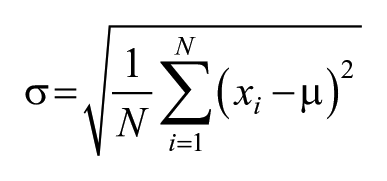
For analyzing collected data, both statistical and non-statistical procedures were used. The combination of statistical and non-statistical procedures of data analysis was well explained by Frels and Onwuegbuzie (2013). Statistical Package for Social Sciences (SPSS) was used for the analysis of quantitative data, whereas the qualitative data were analyzed through thematic analysis procedure. To construct the difference between the effectiveness of different rural development services rendered by state and non-state actors, t-test was used. To find out the difference in opinion of respondents regarding three different types of non-state actors, F-test was applied. Perceptions of the rural community regarding the effectiveness of institutions in connection with rural development were measured with the help of three-point (3) Likert-type scale as 1 = not effective, 2 = least effective, and 3 = most effective. Mean and standard deviation were computed using the following formulas:

Ethical Statement
The survey instrument (questionnaire) was approved by the Ethical Committee of Experts, Department of Agricultural Extension, University of Sargodha, Pakistan. Verbal consents from the respondents were sought before the collection of data. The anonymity of respondents was maintained and kept confidential.
Results and Discussion
Socioeconomic Profile of Respondents
The socioeconomic profile of respondents included age, education, income source, and landholding status of the respondents for this study. The results in this regard are presented in Table 1.
Socioeconomic Profile of Respondents (n = 300).

Table 1 shows that 77.7% of respondents were aged between 26 and 45 years. Of the total respondents, 13% and 9.3% were aged less than 25 and more than 45 years, respectively. Results imply that respondents were in their productive ages and had the potential to boost their livelihoods. Regarding educational level, few respondents (6%) had graduation and 9% had a primary level of education. The level of education among respondents was average as 22.7%, 39%, and 23.3% respondents had middle (8 years schooling), matriculation (10 years schooling), and intermediate (12 years schooling), respectively. The average educational level could be a possible reason for persisting poverty in the region. Luqman et al. (2016) assessed the impacts of agricultural services provided by nongovernmental organizations (NGOs) in district Mansehra of KPK province and linked the presence of poverty with poor educational level among respondents. In another study, Javed et al. (2008) found that those who had poor educational level were poorer and food insecure. They further augmented that respondents with poor educational level had very limited opportunities for income generation to combat poverty and food insecurity. These findings were also in line with the observations made by Strauss (2011) that the higher the educational level, the higher will be the income level. Children in the study area are usually refrained from high education due to several reasons including state of instability in the region and scanty opportunities for the educated people. One of the respondents revealed, I had an urge to educate my children for their bright future. But, inadequate financial resources refrained me to invest. I hardly managed to educate my children but the limited opportunities made me disappointed as many of educated children are found unemployment in the area. Therefore, I preferred to put my children in private business rather wasting money on education.
Regarding income sources, respondents had a diversification toward the mixing of on-farm and non-farm income sources (63.7%). Greater than one fifth (22%) of respondents were reliant on farming for income and 14.3% had adopted non-farm income sources such as labor and private businesses. It has already been mentioned that the study area was mountainous and practicing farming in most of the areas is a challenging task. Farming gets poor returns to farmers and non-farming sources were the alternate to bridge this return gap, as respondents mentioned. Anang and Yeboah (2019) had affirmed that non-farm income is a viable alternative for farmers in KPK to earn income. One of the respondents responded that I did farming and income from the crops was always uncertain and insufficient to sustain my livelihood. I went for off-farm income sources that significantly reduced the uncertainty of income earned from the on-farm source. Now, I am in a position to meet my family needs.
The above qualitative remarks support the quantitative findings that for securing sustainable rural livelihoods single farm income source is insufficient due to small and uneven land holdings in the KPK province in general and specifically in the targeted research areas. This shows the integration of qualitative and quantitative findings of present research. Regarding tenancy status, 69.0% of respondents were the owner of their lands and 31.0% were tenants. However, farming in the regions was predominantly a subsistence farming having meager access to fertile lands and water for irrigation. Limited arable land and arid agriculture were perceived as reasons behind lower production of crops ultimately earning a low return. The prospects of small farming, low production, and poor returns have already been discussed in Luqman et al. (2016).
Typology of non-state actors
The nature and typology of non-state actors engaged in different rural development–related activities is generally diverse due to their contested ideologies regarding development work (Banks and Hulme, 2012). In Pakistan, it is very much difficult to differentiate and mark a clear demarcation between different types of non-state actors involved in delivering rural development services on the door steps of poor and marginalized masses of society (Rehman, 2006). With this rational, non-state actors, which are under study in the present research, are broadly categorized into three main categories: localite/neighborhood, cosmopolite, and religious/faith-based. There exists cultural differences and ideological divide between these three categories of non-state actors. It was observed that religious or faith-based non-state actors have affiliation/associations with any of the religious group/sect but localite and cosmopolite non-state actors have no such affiliation with any of the religious or political group or organization. The detailed description of typology of non-state actors in the KPK province in specific and in the whole country in general is given below.
Localite/neighborhood non-state actors
These non-state actors originated locally in the form of organizations from the grassroots level and had deep penetration in the local community. In some parts of the world, they are referred to as grass root organizations (GROs) being closed to the local people and efficient change for development services (Veltmeyer, 2004). The specific role of such actors/organizations in community development is well explained by Molyneux et al. (2007). With reference to KPK province, Pakistan, the engagement of localite organizations in rural community development work was identified by Ali and Khan (2015). It includes village-level welfare societies and groups like burial or zakat committees. Community-based organizations (CBOs) working under the umbrella of Citizen Community Boards (CCBs) were also included in this category. The examples of such groups/organizations are Kaghan Valley Development Forum (KVDF), Women Agricultural Development Organization (WADO), Kohsar Local Support Organization (LKSO), Rural Development Support Organization (RDSO), Omeed Area Coordination Council and rural community Council, Siran Ittehad Welfare Society, and so on Some village-level associations/tunzeems were also doing community work within that particular village like Kunhar Welfare Cooperation, Ittehad Area Coordination Council, Roshani Welfare Organization, Sahara Welfare Association, Shaheen Welfare Association, Khushal Dahi Triqiati Tunzeem, and many others. The rural community reported that these village-level local non-state organizations are playing a significant role in well-being of marginalized and vulnerable groups and individuals. The qualitative findings were supported by the findings reported by I. A. Shah and Baporikar (2012).
Some non-state actors were also identified and placed in this category as they originated locally. The examples of such actors/organizations are Anjuman-e-Kashtkariane Hazara (Association of Farmers in Hazara), Pakistan Kissan Ittehad (Farmers Union), Sarhad Awami Forestry Ittehad (SAFI), and Tahreek-e-soba Hazara (movement for separate Hazara province). They are actively engaged in raising voice of neglected sections of rural society like landless laborers and peasants. The major focus of these groups is to challenge the existing policies of the state with regard to resource allocation and distribution in the province. The function of such non-state actors in the Highlands of Pakistan has also been cited by A. M. Shah et al. (2018), Luqman et al. (2013), and K. Ahmad et al. (2011). One of the key informants reported that Local community based organizations have much potential to deal with the real and targeted issues of rural community and also in bringing sustainable improvements in their livelihoods but some limiting factors are also present which hindering the potential. These problems include lack of adequate capital, lack of technical knowledge, limited market chain for local products, poor infrastructure, information collapse and political hindrances.
The qualitative remarks regarding problems and issues of localite non-state actors were also cited by Mohamed (2010).
Cosmopolite non-state actors
These non-state actors are commonly referred to as NGOs. In developing countries, these actors/organizations have considerable contribution toward rural development work as explained by Siddaraju (2011), Wardak et al. (2007), and many others. In the research area, some of these are working at regional or provincial level and some are working at national level. Sungi Development Foundation, RABT Development Organizations, Society for Sustainable Development, HAASHAR Association, Skyians Welfare Organization, Integrated Development Empowerment & Advocacy for Livelihood Support (IDEALS), Saiban Development Organization, Friends Welfare Association, and Aurat Foundation are examples of such non-state actors/organizations. Delivering community welfare/relief services, advocacy and imparting skill-oriented trainings were the major thrust behind the success stories of their development work. These organizations were also the part of larger network of NGOs in Pakistan striving for the social change in the country. In this strain, R. Khan and Khan (2004) reported that NGOs network in Pakistan is the basis of rural development work in Pakistan.
Religious/faith-based non-state actors
It is fact that among different philosophies of social life religion plays an important role (Mahajan & Jodhka, 2009). Research studies conducted by Iqbal and Siddiqui (2008) and Bano (2005) concluded that majority of the welfare organizations in Pakistan are religiously inspired. Besides localite and cosmopolite non-state actors, some religious/faith-based actors are also working in the form of structured organization for delivering well-being and development services to the diverse groups community. Al-Khidmat Foundation, Hussani Foundation, and Flah-e-Insaniat Foundation are the best examples of such organizations. It was noted during field visits that these organizations had done a remarkable work in delivering relief services to the community during emergency as well as imparting religious (learning of Quran and Sunnah) and education of other science subjects to the people. The working of religious non-state organizations in KPK province was also reported by Rauf (2006). It is also important to mention here that religious organizations are against the working of NGOs in the province. They perceived that well-being has not been yet addressed by these organizations. Furthermore, their opinion is that the working of such organizations is rapidly disturbing the social, cultural norms of Muslim society.
Level of Involvement of Different Non-State Actors Rural Development
The level of involvement of above-described three categories of non-state actors in different rural development–oriented activities was obtained using 3-point Likert-type scale as 1 = low, 2 = medium, and 3 = high. The data in this regard are well described in Figure 1.
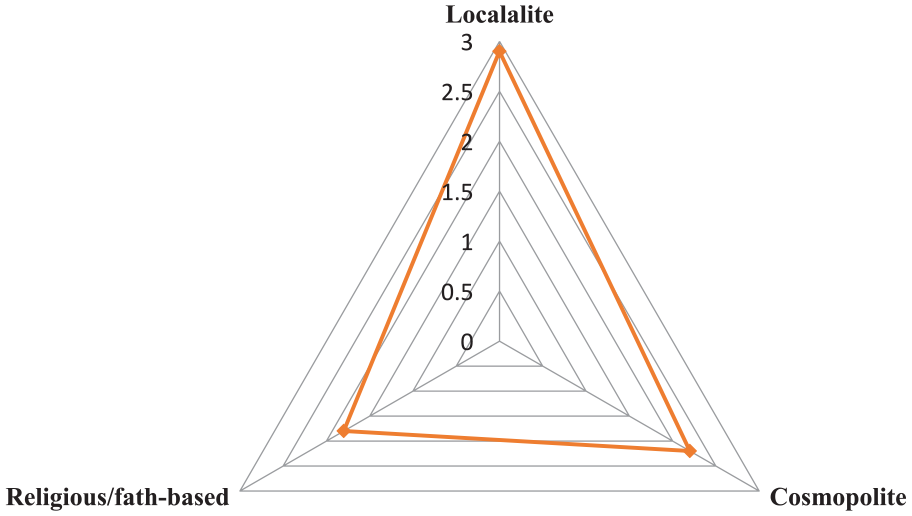
Involvement level of different non-state actors in rural development.
The data presented in Figure 1 shows that level of involvement of localite/neighborhood non-state organizations was perceived as maximum as highest mean value (2.9/3.00) was obtained. These quantitative findings got integration from the qualitative remarks of one of the respondents as “we rely and trust more on the local village level organizations for rural development work as they know well about our problems and priorities.” It was found through qualitative observations that localite non-state actors had strong vertical and horizontal linkages with cosmopolite non-state actors.
Perceived Reasons for Poverty in the Research Area
This section meant for the identification of different reasons of poverty as perceived by the respondents. Perceptions of respondents were recorded on 5-point Likert-type scale (1 = strongly disagree, 2 = disagree, 3 = neutral, 4 = agree, and 5 = strongly agree). Factors were explained on the basis of mean values. The data in this regard are presented in Table 2.
Perceived Reasons for Rural Poverty in the Area.

Table 2 shows the 12 reasons that could be the possible reasons behind poverty in the region. Conflicts, conspiracies, and terrorism were ranked foremost reasons for poverty (x̄ = 4.6/5.0). KPK province is full of resources. Unfortunately, the Afghan invasion brought a geographical shift to major cities in KPK like Swat, Peshawar. Since then conflicts emerged, the Taliban threatened people even students and teachers. S. Khan and Seltze (2016) had reported that school enrollment was reduced pertaining to terrorism acts by various groups like the Taliban. Various studies such as Hayat (2009), R. Khan (2012), United Nations Educational, Scientific and Cultural Organization (2010) and Khan and Seltzer (2016) have unveiled violence exerted by the Taliban on schools. An Attack on Army Public School in Peshawar was the greatest tragedy of the decade when more than 150 innocent schoolchildren were brutally killed by terrorists. However, the country reacted and the region was cleared from the militant groups when Pakistan Armed Forces killed 3,500 militants in 2016. Peace has prevailed in the region and prosperity is about to happen, but still occasionally conflicts and acts of terrorism emerge in the result of internal and external conspiracies. These conspiracies halt governance diverting the focus from economic development to fighting terrorism and uncertain adventures. Poor governance was perceived the second leading reason for poverty ( x̄ = 4.49/5.0). Small landholdings coupled with hefty challenges to practice farming were perceived as the third leading reason of poverty ( x̄ = 4.42/5.0). Respondents were of the view that farming would have to pull them out of poverty if we had access to irrigation water and fertile lands followed by a marketing mechanism in favor of growers. The current system of farming was traditional and respondents had poor awareness regarding the recent trends and future prospects of modern practices. Respondents lacked in skill-based education and training ( x̄ = 4.6/5.0) to understand the recent interventions and profitable measures in farming. Limited educational level among respondents has already been discussed in Table 1. The findings of Cheema et al. (2018) accentuated that rural people in Pakistan had a lower level of education putting them in the poverty trap.
During the qualitative discussion, one of the respondents opined, Our area lack in professional and skill-based educational facilities therefore, majority of the young people often migrate to Punjab for low-income job opportunities. It can be witnessed in Punjab, People working on daily wages or working as hawkers and wanderers belong to KPK.
Inadequate opportunities for employment obtained a mean value of 4.20. O. Farooq (2013) and Ul-Allah et al. (2014) had concluded that inadequate employment opportunities expedite poverty circle.
Gender inequality, inadequate awareness regarding improved agricultural practices, sluggish national economy, poor marketing linkages, large households, and insufficient access to microcredit schemes obtained 4.11, 4.06, 4.0, 3.93, 3.55, and 3.16 mean values, respectively. Respondents verily agreed with those reasons impacting poverty in the area.
One of the rural people during qualitative interviews recommended that KPK is blessed with a wide range of fruits and different crops. Wide attention by the government can turn fruits orchards into an industry likely to create jobs and value addition to the product for more earning.
Which Type of Rural Development Actor Is Playing Significant Role in Reducing Rural Poverty Through Different Rural Development–Oriented Activities?
In the research area, both state and non-state actors were striving hard to extend rural development services to the community (Ahmed et al., 2009). Most of the people were beneficiaries of these services. Therefore, respondents were asked to respond that how do they perceive the role of institutions in eliminating poverty. The data in this regard are presented in Figure 2.
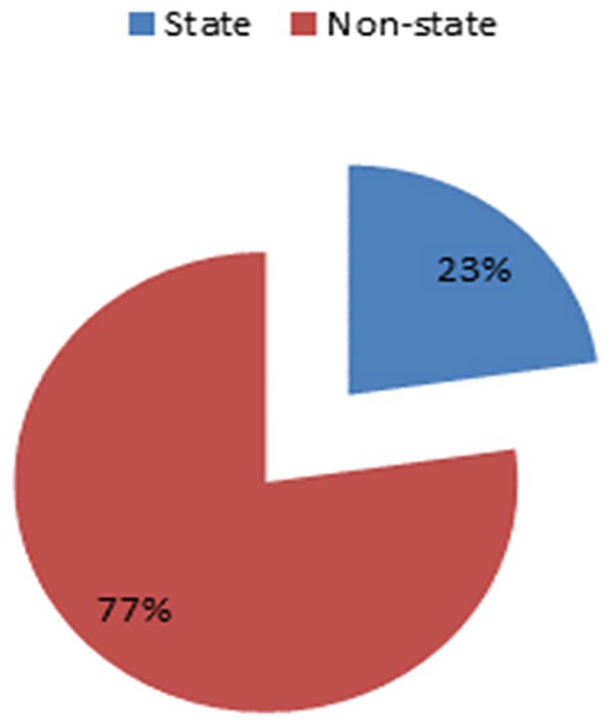
Percentage share of state and non-state actors regarding their role in poverty reduction.
Figure 2 shows that 77% of respondents perceived non-state actors as more active in the wake of poverty reduction as compared with state institutions/departments. Of the total respondents, 23% spoke in favor of state institutions’ proactive role in reducing chronic poverty. However, respondents convinced with non-state actors often found available upon the need felt by people, whereas respondents were more critics to the state institutions. One of the respondents commented, I didn’t see any of the official from state owned rural development departments visiting farmers to solve their problems and technical guidance. On the contrary, I witness the consistent visits from non-state organizations to farmers for technical support. More importantly, the services provided by the non-state actors were well in time.
A number of research studies identified the poor performance of state actors in maintaining their efficiency to render rural development services in a befitting manner (Abbas et al., 2009; S. Ahmad et al., 2007; Bhattacharjee & Haldar, 2015; Islam, 2004; Luqman et al., 2014, and many others). These studies summarized that state institutions were challenged with a number of constraints such as poor policy, weak implementation, and inadequate monitoring and evaluation mechanism. The reasons behind the effectiveness of rural development services rendered by non-state actors were explored and the data in this regard are illustrated in Figure 3.
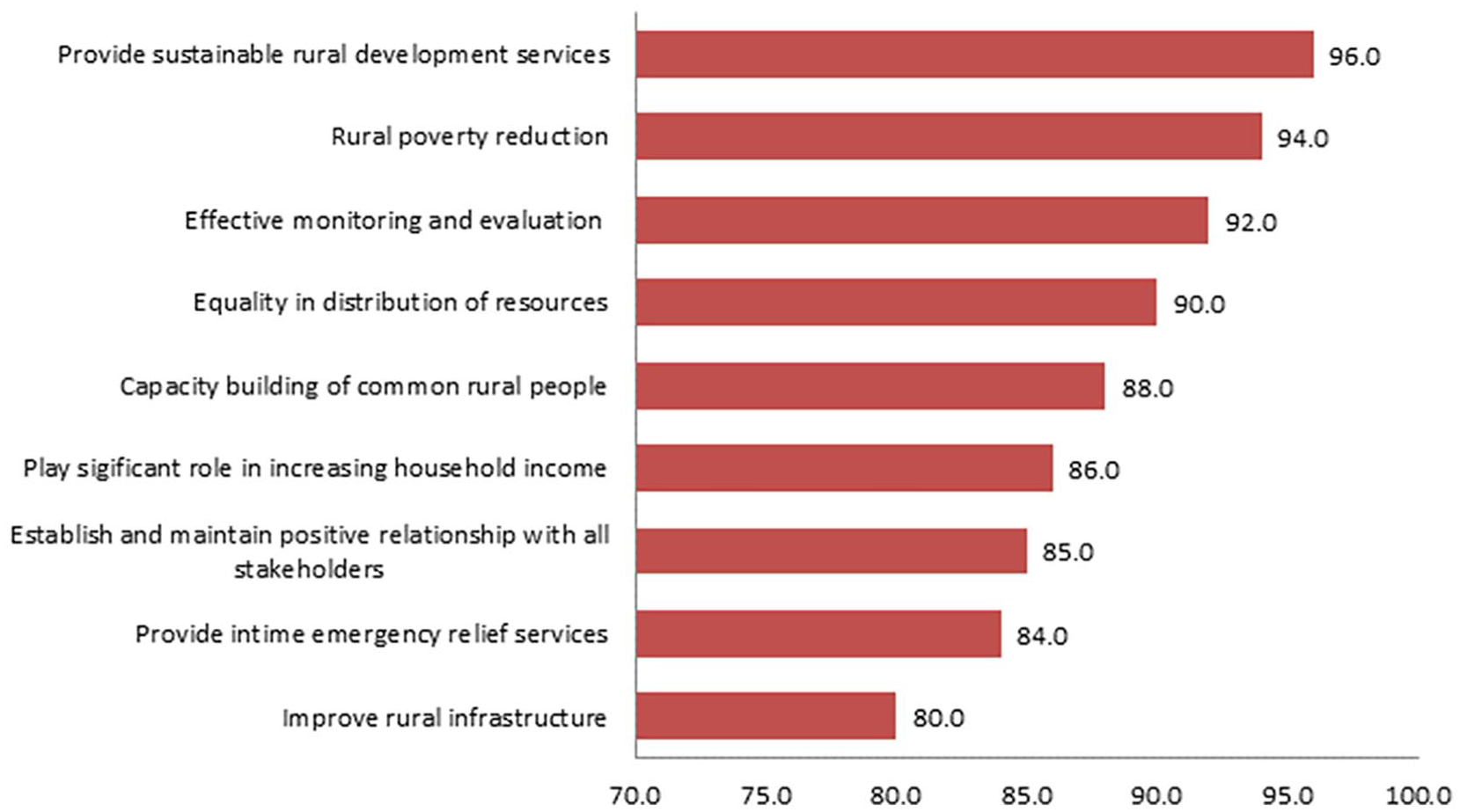
Major reasons for reliance on non-state institutions for rural development.
Figure 3 shows that respondents’ perceived services offered by non-state institutions were focused on rural development, poverty reduction, program were being monitored, balances the distribution of resources, effort to escalate income, urgent relief, and timely provision of required services. 96% of respondents viewed that non-state institutional services purely emphasized on sustainable rural development and 94% agreed that services are focused to pull people out of poverty. One of the key informants quoted, Being a beneficiary, I can say that non-state actors had a worth mentioning, unbiased and in time provision of rural development services. Competencies of their staff were unmatched with those of state institutions. Non-state institution staff was found keen to work in line to the need of their beneficiary.
The vast majority (90%) of respondents perceived non-state institutions maintained equality in the distribution of resources such as inputs, seed, and so on and they did believe on strengthening the capacity of people (88%). Non-state institutions persuaded respondents to diversify their approach to generate income through capacity building (86%) and developing synergistic relationship with their stakeholders (85%). Non-state institutions were providing relief to people (84%) in terms of technical guidance and monetary services and improving rural infrastructure (80%). Findings are similar to those of Luqman et al. (2016) where they found non-state actors achieving their objectives, increasing farm production, improving livelihood, achieving food security, and escalating social capital within society in KPK. N. Ahmad et al. (2009) and Zada et al. (2019) have concluded that non-state actors boosted the self-confidence and vision of self-help among people in KPK through learning-centered training sessions with people in the region.
Major Rural Development–Related Activities Being Undertaken by Non-State Actors
Data were collected regarding major rural development–related activities being undertaken by different non-state actors in the research area through 3-point Likert-type type scale (1 = never, 2 = occasionally, and 3 = mostly). Involvement level of non-state institutions in different rural development–related activities was assessed by computing mean value as present in Figure 4.
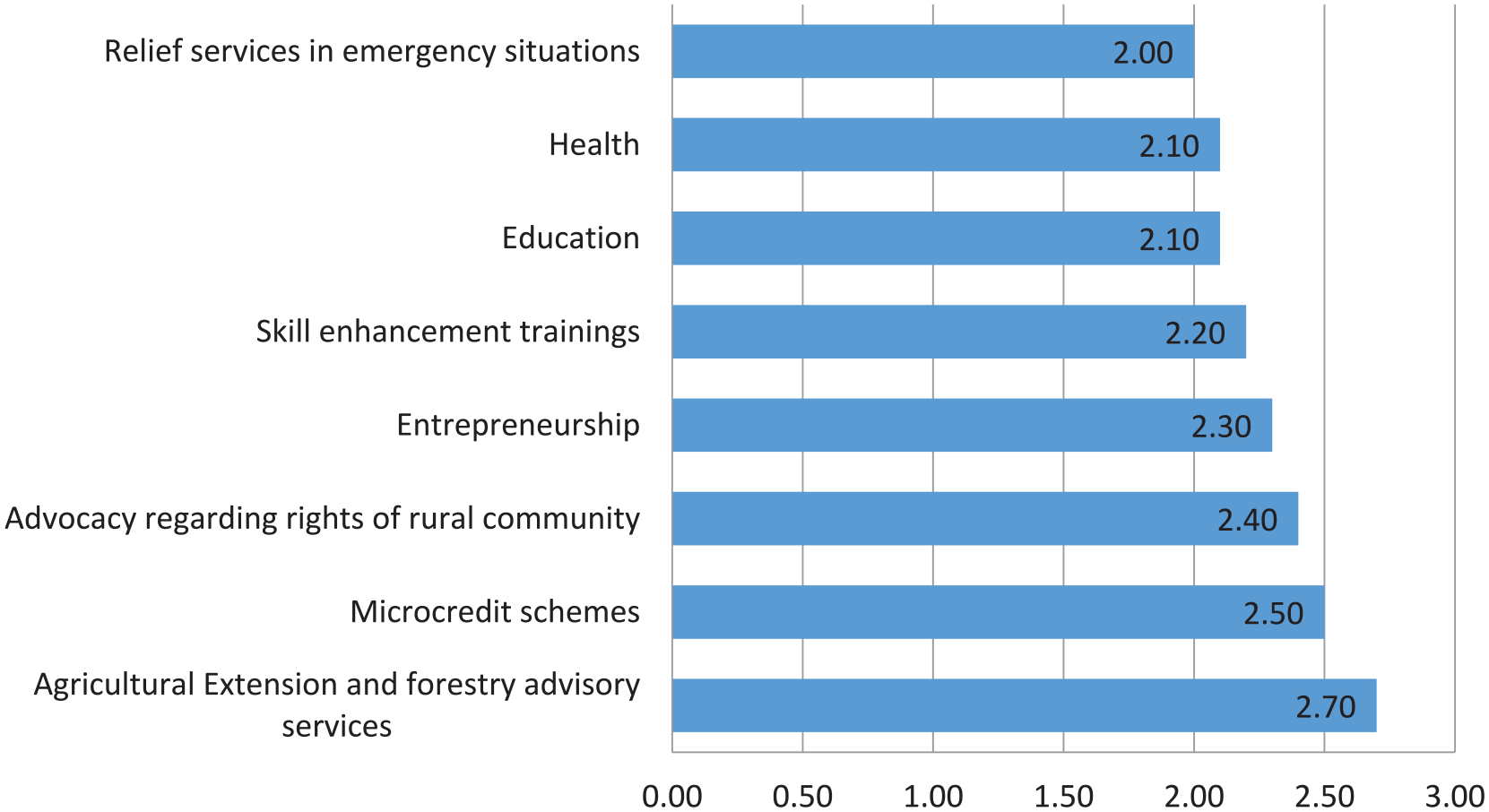
Mean value regarding involvement of non-state institutions in different rural development–related activities.
The data present in Figure 4 shows that non-state actors performed a number of rural development–oriented activities generally in the whole province and specifically in the research area. Out of these activities, “provision of agricultural extension and forestry advisory services” to the rural community was on the top with highest mean value ( x̄ = 2.70/3.00 and SD = 0.460). Other activities were “microcredit schemes ( x̄ = 2.50/3.00 and SD = 0.507),” “advocacy campaigns regarding rights of rural community ( x̄ = 2.40/3.00 and SD = 0.814),” “entrepreneurship ( x̄ = 2.30/3.00 and SD = 0.660),” “imparting skill enhancement trainings ( x̄ = 2.20/3.00 and SD = 0.788),” “educational activities ( x̄ = 2.10/3.00 and SD = 0.639),” “health activities ( x̄ = 2.10/3.00 and SD = 0.644),” and “provision of relief services in emergency situations ( x̄ = 2.00/3.00 and SD = 0.742).” These findings indicate that non-state institutions were mostly involved in agricultural extension/rural advisory services and disbursement of microcredit to the rural community. Both of these activities directly affect livelihoods of rural people by bringing significant improvement in their farm productivity and ultimately reducing rural poverty which is the prime indicator of rural development (Adisa, 2012). In connection with these findings, this is a proven fact that effective agricultural extension services played and will play effective role in enhancing the household income of famers thereby increasing their farm productivity through adopting improved cultivation practices (Emmanuel et al., 2016; Mwololo et al., 2019). In this connection, Danso-Abbeam et al. (2018) reported that agricultural extension has been one of the major conduits of addressing the issues of rural poverty and food insecurity. With specific reference to Pakistan where small land holders are in majority, agricultural extension serves as the main instrument for capacity building of farmers (A. Khan & Akram, 2012; Talib et al., 2018).
Similarly, microcredit services also play significant role in reducing poverty especially from rural localities where majority of the poor and food insecure people reside (Amoako et al., 2017). Although both of these rural development–oriented (agricultural extension and microcredit services) activities are also being performed by state institutions (agricultural extension and rural development departments), the performance of these state-led rural development departments is not up to the mark and play least role in improving livelihoods of rural people in majority of the developing countries including Pakistan (Siddiqui & Mirani, 2012). The comprehensive synthesis of poor performance of state-owned agricultural extension work that is essential for overall rural development in Pakistan was also reported by Baloch and Thapa (2019). In this situation, rural people mostly rely on rural development–oriented activities provided by non-state actors (commonly referred to as NGOs). Farmers gain positive economic impact on their livelihoods through active involvement in activities provided by NGOs (Danso-Abbeam et al., 2018; Nawaz et al., 2019). The results of present research study were also confirmed by Luqman et al. (2016) that non-state institutions mostly involved in extension/advisory-related and microcredit disbursement services at the door steps of rural communities.
Comparative Effectiveness of Rural Development Efforts of Different Non-State Actors
Comparative effectiveness of rural development efforts of different non-state actors as identified in the research area was determined through different rural development–related indicators on the basis of self-perception of the rural community. A 3-point Likert-type-type scale (1 = Not effective, 2 = Least effective, 3 = Most effective) was used for the said purpose. The data in this regard are tabulated in Table 3.
Mean, SD and F-Test Statistics of Different Non-State Actors Regarding Rural Development.

Highly significant (p < .05).
The data given in Table 3 showed that the perceived effectiveness of rural development activities/services of localite non-state organizations was found to be higher (overall x̄ = 2.55/3.00) than cosmopolite (overall x̄ = 2.43/3.00) and religious/faith-based organizations (overall x̄ = 1.80/3.00). This indicates that the rural development efforts/services rendered by religious/faith-based organizations were least effective as perceived by the rural community. In all the cases of rural development practices of localite organizations, the perceived effectiveness was higher. This showed that village-based local organizations are highly effective in developing rural areas on sustainable basis. In view of these results, Mohamed (2010) reported that village-level CBOs have greater potential in bringing sustainable improvements in the livelihoods of rural community. To find out the statistical difference between the perceived effectiveness of rural development activities imparted by all the three categories of non-state organizations, F-test was applied. The results of the F-test statistics showed that there is highly significant difference between the effectiveness of rural development–related engagements of all the three categories of non-state actors working in the targeted research area.
Comparative Effectiveness of State and Non-State Actors With Regard to Different Rural Development Services
Comparative effectiveness of both state and non-state institutions regarding the wake of rural development services was measured on 3-point Likert-type scale (1 = not effective, 2 = least effective, and 3 = most effective). The data in this regard are given in Table 4.
Comparison of Rural Development Services Rendered by State and Non-State Actors on the Basis of Their Effectiveness.

To educate people for attitude change and provide health services to deprived people both state and non-state institutions had their role. However, in terms of their effectiveness, their difference in means of educational services (p = .002) and health services (p = .000) was different. The negative sign in t-test signifies that non-state institutions had more effectiveness than the state institutions.
p values of all comparing variables such as Agricultural Extension and forestry advisory services (p = .030), Poverty reduction through entrepreneurship (p = .000), Microcredit schemes (p = .000), skill enhancement trainings (p = .004), advocacy (p = .000), and emergency relief services (p = .000) imply that the difference in means was statistically significant at 5% confidence interval. The negative sign in t-test signifies that non-state institutions had more effectiveness compared with the state institutions. It was observed that non-state institutions were active to solve community problems. Rahman (2005) had reported that having the special ability to solve the community problem was the greatest strength of non-state institutions. In the study area, non-state institutions were effectively meeting the needs of people and providing them with their required amenities. One of the respondents argued the reasons for non-state institutions success in the area: Non-state institutions often have good homework about the areas and needs of the people and they ask for the local support as well. They believed in local participation that gives people a sense of ownership. The staff has an effective approach to utilize their strength to meet their goals.
Bhaskar and Geethakutty (2001) had appraised the contribution of non-state institutions toward sustainable development and alleviation of poverty through poverty alleviation programs under NGOs (Enyioko, 2012) and Civil Society Organizations (CSOs) (Luqman et al., 2016). One of the key informants discussed different reasons persuading people to acclaim non-state institutions and commented about the extension advisory service providers in particular: Agricultural extension and advisory service providers are one the distinguished state institutions but the field staff rarely visited the farmers for their technical backstopping. Courtesy to the poor role of state institutions, people started relying more on non-state institutions.
The stance made by the key informant was supported by Pervaiz et al. (2013) and A. Khan and Akram (2012) as they had reported over-reliance of people on non-state institutions due to poor performance of state institutions. The work of CSOs was apprised by the World Health Organization (2005) as they found health services extended by CSOs in remote areas were way effective than state institutions-led services. Moreover, the efforts made by Community Mobilizing Organizations (CMOs) had more impact than state institutions-led services (Lewis & Kanji, 2009).
Conclusion and Recommendations
It was concluded from the findings that large majority (77.7%) of respondents fall in the age range of 26 to 45 years with education up to matriculation (10 years of school). Multiple income sources were being used by the respondents due to complex nature of livelihood realities in the targeted research area. Subsistence farming was found in the area where majority of the people had their own agricultural land. Non-state actors engaged in rural development work specifically in the research area and generally in the whole KPK province as well as in the country divided into three major categories as localite/Neighborhood, cosmopolite, and religious/faith-based. Involvement level of localite/Neighborhood non-state actors/organizations in rural development work in the area was found to be highest among others with maximum mean value (2.9/3.00).
Conflicts and terrorism were the main reasons behind prevailing poverty in the area and ranked first among variety of other reasons. It was concluded that high majority (77%) of respondents perceived that non-state actors were more active in the wake of poverty reduction as compared with state institutions/departments. The major reason behind this was the provision of sustainable rural development services by the non-state actors as explained by overwhelming majority (96.0%) of respondents. Agricultural extension and forestry advisory services were the main rural development–related activities undertaken by the non-state actors/organizations in the research area. The results of the F-test statistics showed that there is highly significant difference between the effectiveness of rural development–related engagements of all the three categories of non-state actors working in the targeted research area. Similarly, the results of t-test statistics showed significant difference in effectiveness of rural development services provided by state actors in comparison with non-state actors/organizations. These findings urge a revamping of state institutions in KPK and initiate a comprehensive rural development model and set targets to bring people out of poverty and deprivation. The state institutions are advised to harvest local potential to increase agriculture productivity, value addition, and direct marketing for farmers to harvest benefits. The synergistic work of state and non-state actors can be more productive for the rural community development especially in KPK province and generally in the whole country.
Footnotes
Acknowledgements
We are thankful to the respondents who actively participated in the survey. The way they corresponded was admirable.
Declaration of Conflicting Interests
The author(s) declared no potential conflicts of interest with respect to the research, authorship, and/or publication of this article.
Funding
The author(s) received no financial support for the research, authorship, and/or publication of this article.
