




Abstract
Multisensory environments are increasingly being used in health care settings with reported benefits including relaxation, supporting self-regulation, enhancing mood, and reducing chronic pain. However, limited research exists that explores the impact of multisensory environment design on engagement.
In response, this article presents a qualitative study exploring the creative design attributes that cultivated participant engagement and shaped their overall experience of spending time in an artistically created multisensory environment: the Sensory-Art Space (SAS).
A maximum variation approach to sampling was used to select 18 participants. Data were gathered via semi-structured interviews and were audio-recorded and transcribed verbatim before being analyzed thematically.
Our findings produced three key themes. The first two themes were: the ambience of everything and variation: it’s always my choice, which identified aspects of the artistic design that fostered engagement and the sense of connection and ownership of the SAS captured in the third theme, a space that’s yours.
Based on analysis of participant responses, creative design considerations were identified that could assist the development of future multisensory spaces and highlighted the importance of a holistic and curatorial approach to enhance engagement value.
Introduction
Recent developments in health care research have seen a shift in focus to the promotion of wellbeing. This new focus reflects the “third era of health” as societal attitudes move beyond the previous ideologies of the second era of health encompassing merely the absence of disability and disease, and the first era with its focus on the treatment of chronic illnesses (Breslow, 2006). Although many of the issues relating to the first and second eras of health are still present, more attention is being placed on preventive measures as a means of health promotion and self-care (Mazuch, 2017). This focus on wellbeing explores our desire and ability to live longer, richer and more fulfilling lives and involves active pursuits of maintaining and enhancing physical and mental health and wellbeing.
Restorative Environments
One means of supporting wellbeing that is gaining increasing attention is restorative environmental design. In particular, there is a growing emphasis on designing built environments that maintain and enhance occupants’ health and wellbeing needs (Mazuch, 2017; Salonen et al., 2013; Schweitzer et al., 2004). This new approach, also referred to as salutogenic design, involves conceiving everyday spaces and environments as performing an active role in promoting health and wellbeing (Mazuch, 2017). The attention to designing everyday environments to support wellbeing builds on existing research regarding the effective design of health care environments to support patient wellbeing (Andrade & Devlin, 2015; Mourshed & Zhao, 2012; Salonen et al., 2013; Schweitzer et al., 2004).
The inclusion of features that capture attention to restore depleted cognitive resources and support recovery from stress is one mechanism through which environmental design supports wellbeing. This approach is underpinned by Kaplan’s (1995) Attention Restoration Theory and Ulrich’s (1991) Theory of Supportive Design. Attention restoration theory asserts that exposure to natural environments is restorative. It suggests that in natural environments, an individual’s nondirected attention is captured effortlessly with “soft fascinations” thereby providing capacity for the restoration of depleted and fatigued cognitive resources (Ohly et al., 2016). Supportive design speaks to the restorative benefits of incorporating art as well as nature into the design of health care environments to evoke positive emotions and provide positive distraction from distress (Andrade & Devlin, 2015). The incorporation of art into health environments has a long history (Nightingale, 1860), and continues to be used to enhance the restorative value of these settings (Lankston et al., 2010).
Advantages of Nature and Art in Environmental Design
There is a broad evidence base for the benefits of incorporating art into the design of health care environments in relation to improved outcomes for both staff and patients (Andrade & Devlin, 2015; Daykin et al., 2010; Dieser et al., 2017; Hume, 2010; Lankston et al., 2010; Schweitzer et al., 2004). For instance, Harper et al. (2015) found reductions in physiological indicators of stress among patients as a result of installing photographs of nature landscapes in general practice examination rooms. Sculptures specifically designed to elicit positive emotions have also been shown to reduce workplace burnout and stress among hospital staff in a health care environment (Dieser et al., 2017).
Experiencing or viewing art, known as receptive arts engagement, can also positively influence public health and wellbeing (Australia Council for the Arts, 2014). Benefits of receptive arts engagement as a recreational or cultural activity, such as visiting galleries and museums, have been found in general population samples (Davies et al., 2012; Davies Knuiman et al., 2014). The reported benefits include enhanced perceptions of happiness and life satisfaction, improved mental health and wellbeing, and reduced cardiovascular reactivity and psychological distress (Cuypers et al., 2012; Davies et al., 2016; Michalos & Kahike, 2010; Renton et al., 2012). Artworks that incorporate images or references to nature have been shown to be particularly effective in supporting stress reduction and restorative outcomes in both health care and public settings (Gillis & Gatersleben, 2015; Kjellgren & Buhrkall, 2010; Lankston et al., 2010; Saito & Tada, 2007; Salonen et al., 2013). For instance, large nature murals situated in study-break areas have demonstrated restoration of depleted cognitive resources among university students (Felsten, 2009).
The Biophilia Hypothesis (Wilson, 1984) accounts for the particular benefits of incorporating nature, or images of nature, into the design of built environments. Biophilia suggests humans have an innate connection to nature and a subconscious biological predisposition toward natural settings and features. Therefore, exposure to nature is reasoned essential to human wellbeing (Gillis & Gatersleben, 2015). Modern lifestyles, building design, and urbanization have resulted in many people spending the majority of their time indoors and consequently lacking opportunities for engagement with nature (Kellert & Calabrese, 2015). As such, Biophilic design has become an important approach in architecture and design initiatives to produce the restorative benefits of nature in the built environment (Joye, 2007; Mazuch, 2017). Kellert and Calabrese (2015) identified the three experiences of Biophilic design and their attributes that support wellbeing. These include direct experiences of nature, such as light, water, plants; indirect experiences of nature including images of nature, organic shapes and forms, and information richness; and experiences of space and place, for example, organized complexity, wayfinding, prospect, and refuge. A recent review has further explored these Biophilic design attributes, finding that much of the current research is limited to visual input suggesting further research to explore the restorative potential of multiple senses is needed (Gillis & Gatersleben, 2015).
Engaging the Senses
There is growing interest in exploring new ways to engage sensory aspects of the environment and to explore the potential for sensory input to influence experience and elicit desirable outcomes on wellbeing, behavior, and affect (Schreuder et al., 2016). Information received through our senses shape our perceptions of the environment and how it influences our emotions, thoughts, and behaviors (Engel-Yeger & Dunn, 2011a; Krishna, 2012). Additional factors, including the environmental context, social interactions and individual’s mood, personality traits, and illness can also impact the effects of multisensory stimulus (Engel-Yeger & Dunn, 2011a, 2011b; Klasen et al., 2014; Schreuder et al., 2016). The experience of varied and meaningful sensory stimulation is integral to good mental health, whereas sensory deprivation can result in negative outcomes of stress, anxiety, depression, and poor motivation that can impact quality of life (Baillon et al., 2002).
One aspect of manipulating sensory input that is gaining popular momentum with a range of technological applications is the use of haptics. Haptic perception is the ability to experience the environment using/via active exploration through the sense of touch (Gallace & Spence, 2014a; Henriques & Soechting, 2005; Robles-De-La-Torre, 2006).
Studies exploring haptic interactions with museum objects and sculptures in gallery settings have found that touching the object can heighten visual engagement and foster longer and deeper experiences with, and appreciation of, the object (Christidou & Pierroux, 2019; Gallace & Spence, 2014b). Breakthrough technology has seen the use of haptics to enhance experience and perception and to augment reality. This technology uses ultrasound to create complex, three-dimensional textures and shapes that can be felt through touch as an extension to virtual reality. Vi et al. (2017) explored the incorporation of mid-air haptics as an additional sensory dimension to enhance the experience of artworks and heighten engagement in a modern gallery setting. Their findings demonstrate how technology and real experiences can work together collaboratively and highlight the importance of touch, an often undervalued attribute of art engagement (Gallace & Spence, 2014b; Vi et al., 2017).
Enriching the sensory input in an environment, such as through the therapeutic use of multisensory environments, has been found to achieve health and wellbeing outcomes in clinical settings. Multisensory environments are also known as “sensory rooms” or “Snoezelen” the original terms coined by Hulsegge and Verheul (1987). They are purpose designed environments that are used to stimulate multiple senses as a type of sensory processing intervention to assist sensory modulation (Baillon et al., 2002; Champagne & Stromberg, 2004). The aim of these multisensory environments is to stimulate positive emotions, down-regulate negative emotions, provide relaxation benefits, and enhance feelings of control and choice (Baillon et al., 2002). Their design typically includes some of the following: pastel colored walls, a massage chair, beanbags, bubble columns, light projectors, sound machines, aromatherapy diffusers, and weighted blankets. Multisensory environments were first created as a leisure experience for people with intellectual disabilities (Hulsegge & Verheul, 1987). Emerging research in varied clinical populations suggests a range of benefits from dementia care, chronic pain management, maternity, disability, and mental health. These benefits include facilitating relaxation, assisting self-regulation of emotions and behaviors, enhancing positive moods, and reducing chronic pain (Champagne & Stromberg, 2004; Hauck et al., 2008; Novak et al., 2012; Schofield, 2005; Wiglesworth & Farnworth, 2016).
Despite evidence for their benefits, there is limited research regarding the design of multisensory environments or how different aspects of the design impact on engagement or therapeutic outcomes (Champagne, 2006; Jakob & Collier, 2017). While some studies include lists of the items that could be included (Champagne, 2006; Collier & Jakob, 2017), the existing literature provides little direction regarding the design and curation of the space as a whole. As discussed earlier, the role of design to impact health and wellbeing is an important consideration in any built environment (Mazuch, 2017) and as such could further enhance the therapeutic value of multisensory environments.
Intervention: The Sensory-Art Space
The sensory-art space (SAS) was an artistically created multisensory environment situated in a university setting (created by BC). The SAS formed the intervention for a mixed methods postgraduate research project that aimed to investigate its effects in relation to mental health and wellbeing among members of a university community.
Concept Development
The concept of the SAS drew from the artist’s (BC) original exhibition work for her Bachelor of Fine Art Honors degree in 2012. The aim of the honors project was to create an artistically designed multisensory environment to alleviate the artist’s own symptoms of Tourette syndrome. While the impact was successful on a personal level, an unexpected outcome was the positive impact the exhibition appeared to have on other people who experienced the work. The visitors’ reactions that were observed and anecdotal positive responses suggested that there was potential to investigate the therapeutic value on a broader scale in relation to stress reduction and mood enhancement.
The potential to investigate this concept further was realized through transdisciplinary postgraduate research that combines the benefits of art and health and led to the creation of the SAS. Therefore, the researchers explored the creation of the SAS from a trans-disciplinary perspective that focused on artistic design rather than a more conventional sensory room design.
Creative development
The creation of the SAS was informed by the artist’s aesthetic and practice, as well as theoretical design principles from the literature regarding restorative environments in nature and architecture (Gillis & Gatersleben, 2015; Kaplan, 1995; Kellert & Calabrese, 2015; Ulrich, 1991), receptive arts engagement (Davies et al., 2016; Vi et al., 2017; Windsor, 2005), and multisensory environments (Chalmers et al., 2012; Hauck et al., 2008; Wiglesworth & Farnworth, 2016). This research presents the SAS as an example of an artist’s vision of an enriched multisensory environment design, based on the available research regarding the effectiveness and overall design considerations of such spaces (Champagne, 2006; Jakob & Collier, 2017).
The artistic curation of the space refers to the artist’s decision-making process in conceptualizing and designing the installation to work as a whole. This was of importance to maintain the artistic integrity of the installation. The SAS was designed to create an immersive experience that would stimulate the visual, haptic, olfactory, auditory, vestibular, and proprioceptive senses. Construction began by transforming a study room in the library of the University into a blacked-out dark room, curated with illuminated Biophilic-inspired sculptural forms and artworks, comfortable and soft seating, instrumental music, bubbling water sounds, and an assortment of weighted blankets and weighted lap cushions (Cavanagh et al., 2019). The SAS stimulated the olfactory sense with the use of an aromatherapy scent diffuser, scented room spray, and lavender scent packs placed discreetly around the room. Several of the components incorporated a variety of visually stimulating effects, such as movements of bubbles in water and slow transitions of changing colored lights. Darkness was a key feature of the overall design aesthetic, which enabled sensory input to be strategically focused as well as the orchestration of the atmospheric effects of colored light play. See Figures 1 to 4 for detailed photographic documentation of the SAS.

Corner view inside the SAS (detail).

Details of the SAS.

The SAS bubble water feature (detail).
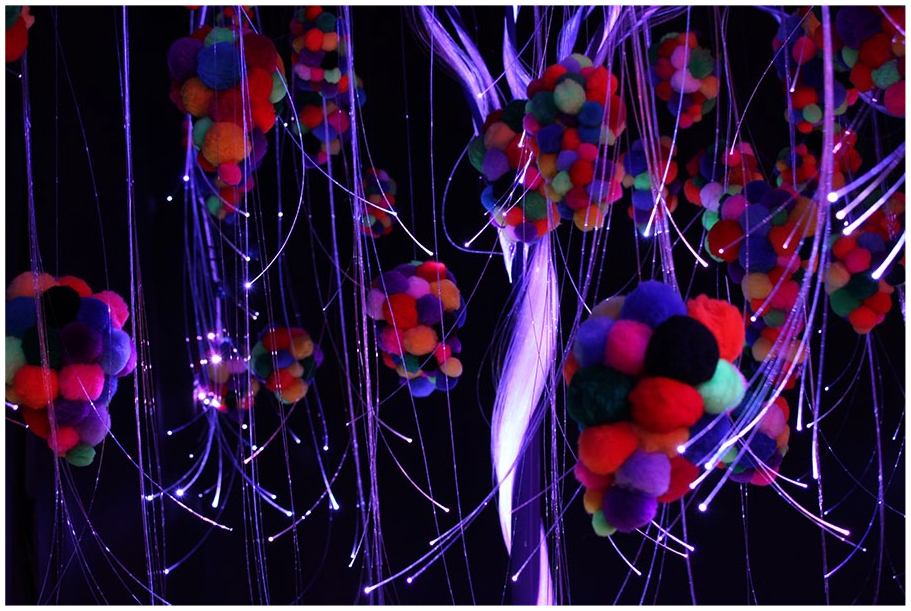
The SAS fiber optics grape tree (detail).
Benefits of the SAS
In a previous qualitative study, the SAS was recognized as a restorative environment among a sample of students and staff in a university setting. A range of self-management strategies supportive of mental health and wellbeing were identified, including relaxation, restoration, enhanced positive emotions, and meditative effects from time spent in the space (Cavanagh et al., 2019). These perceived beneficial effects were attributed to a feeling of being in a completely different world and an enhanced ability to focus (Cavanagh et al., 2019). This previous study highlights the potential benefits of an artistically created multisensory environment for adults in nonclinical settings. Given the evidence of benefits associated with the SAS, it was determined that the creative design attributes or features that influenced participant engagement warranted further investigation, informing the aim for the study presented in this article. Emerging evidence shows that the design impacts on the effectiveness of multisensory environments (Champagne, 2006; Collier & Jakob, 2017; Jakob & Collier, 2017). Previous evaluations of multisensory environments have reported that poorly designed and disorganized placement of objects and equipment can produce negative outcomes, reduce the effectiveness, and result in nonuse of the room (Anderson et al., 2011; Dalke & Corso, 2010). A few studies have demonstrated the importance of building evidence-based design research in relation to multisensory environments. These studies highlight that effective design leads to better benefits and patient outcomes (Champagne, 2006; Collier & Jakob, 2017; Jakob & Collier, 2017). These studies have produced a range of principles and user-orientated recommendations from design and health backgrounds, particularly for people with dementia. The study presented in this article will expand this evidence base to include an arts perspective in relation to a general population sample. Due to the growing interest in therapeutic use of multisensory environments, further understanding of how the artistic design of the SAS fostered engagement and produced beneficial effects could generate valuable considerations to enhance effectiveness of such interventions in both clinical and community settings.
Aim and Methods
Study Aim
The aim of the study presented in this article was to identify the creative design attributes that cultivated the participants’ levels of engagement and shaped their overall experience of spending time in an artistically designed multisensory environment (SAS).
Study Design
A qualitative descriptive study design was considered the most appropriate approach to facilitate an understanding of the participants’ perceptions and experiences of an artistically created multisensory environment: the SAS. Ethics approval was granted by the Human Research Ethics Committee at the University (Approval Number H-2016-0214). Only those who volunteered and provided informed consent were included in the study and participants were able to withdraw at any time without consequences.
Recruitment and Sampling
The participants included university students and staff members and were drawn from the participants in an earlier survey-based study about the emotional experience of spending time in the SAS. Participants in that study who were willing to be contacted for a follow-up interview provided their contact details at the end of the survey.
One hundred and two of a possible 224 participants consented to be contacted for a follow-up interview. Maximum variation sampling was employed to support understanding of the SAS from the broadest range of perspectives available. The different factors considered included gender, role (staff/student), age, health conditions, and changes in self-reported mood and stress recorded after spending time in the SAS. Participants in this study also engaged in interviews about the perceived beneficial effects of spending time in the SAS, which is reported in Cavanagh et al. (2019).
Participants
A total of 18 participants were recruited to this study. Five participants were male and 13 female, four were staff members, and 14 students, with ages ranging from 18 to 54 years. Of the 18 participants, 7 had mental health conditions including depression, anxiety disorder, obsessive–compulsive disorder, attention deficit hyperactivity disorder, and Asperger syndrome. There were five participants who recorded the presence of physical conditions such as asthma, high blood pressure and one pregnancy, while another five stated the absence of any mental or physical health conditions. One participant chose not to comment.
Data Gathering
Data gathering was conducted using semi-structured interviews, which were carried out by BC in the SAS and were audio-recorded and transcribed for analysis. The interviews were carried out using an interview guide that comprised a series of open-ended questions and prompts created to address the aims of this research (Edwards & Holland, 2013). The interview guide included questions about the participant’s experience in the SAS, perceptions of the artistic design and sensory components, and potential benefits from spending time in the SAS (Cavanagh et al., 2019). The interviewer also recorded field notes, which were included in data analysis (Cavanagh et al., 2019).
Prior to the interview, each participant spent 20 min alone in the SAS. The interviews ranged in length from 39 to 98 min with the average being 71 min. To ensure anonymity, pseudonyms were chosen by each participant.
Analysis
Data were analyzed thematically according to the procedures suggested by Braun and Clarke (2006) to identify, examine, and categorize patterns in the dataset to offer a full and thorough understanding of the phenomenon (Braun & Clarke, 2006). Analysis was inductive and data-driven (Braun & Clarke, 2006; Patton, 1990). BC conducted the analysis, beginning with familiarization with the data through repeated readings of the interview transcripts (Cavanagh et al., 2019). This process facilitated an in-depth immersion into the interview data to examine the participants’ experiences and stimulated the cultivation of initial ideas and possibilities in terms of analysis (Green et al., 2007). Interviews were then subjected to a coding process to identify patterns in relation to the research question: what were the creative design attributes that cultivated participant engagement and shaped their overall experience of the SAS? The next stage of the analysis process involved the grouping, collapsing, and categorization of codes to account for recurring concepts (Braun & Clarke, 2006). A comprehensive process of repeated examination of the data and the themes was conducted by the whole research team (B.C., C.J., K.H., M.L.). This process included visual drawing and mind-mapping, paper-based color-coding, and robust discussion to test relationships and further refine and interpret the findings. Categories and key themes were checked for confirming and disconfirming evidence within the dataset to support the credibility of the interpretation of the data. This ongoing dialogue led to inter-subjective agreement on categories and themes (Braun & Clarke, 2006; Green et al., 2007). A systematic and rigorous process was used to transform the data into the findings. A journal was used to record decisions that were made, developments and to ensure consistency between the emerging findings and the original data. NVivo Qualitative Data Analysis Software (version 12, 2018) was used for data management and analysis.
Rigor
Practices addressing the four principles of trustworthiness were used in this study. These principles are credibility, transferability, dependability, and confirmability (Krefting, 1991). Credibility was addressed through the use of the reflective journal and maximum variation sampling. The description of participant characteristics and the setting support transferability. The systematic and rigorous approach to data analysis, use of the journal, frequent peer review and ongoing dialogue among the research team underpin the dependability and confirmability of the findings.
Findings
Three themes emerged from the data. The final theme, a space that’s yours, describes participants’ overall engagement, sense of ownership, and connection with the SAS. The other two themes, the ambience of everything and variation: it’s always my choice, identify the attributes of the creative design of the SAS that cultivated participant engagement.
The relationships between the themes and their accompanying subthemes are represented in Figure 5. The ambience of everything is on the left side of the diagram. It includes broad concepts about cultivating engagement, with the subthemes immersive: engaging multiple senses, balance, natural, and darkness. The right side of the diagram shows the theme variation: it’s always my choice and explores more specific design attributes of the SAS including it’s a visual thing: color, light and movement, different levels of experience, and installation says touch me. The elements represented in the first two themes cumulate to produce the third theme represented in the circle, achieving a space that’s yours.

Diagram of key themes.
The Ambience of Everything
Fundamental to achieving the level of engagement that shaped the participants’ overall experience of the SAS was the ambience of everything. This theme identifies the importance of the overall design aesthetic to create the affective tonality of the atmosphere. Barney suggested that: “. . . it provides the whole overall aesthetic. I think it’s really important, I mean that’s what makes it; the ambience of everything in here.”
The participants identified the aesthetic beauty as an important aspect of the overall ambience. Kirsten recounts her initial response: “It was beautiful. I walked in, and it was beautiful.” Participants often identified having difficulty describing the overall experience of the SAS, as Daisy emphasized, “. . . it’s amazing. It’s like colorful and stimulating and. . . you kind of can’t describe it because it’s so esoteric.” A sense of appreciation for the aesthetic quality of the overall environment was often described, as Lesley said: “. . . I appreciated the overall curation of the space . . . how curated the space is, and that it is designed, and all the connective elements . . .” and Lily further explained, “There was appreciation for the beauty and appreciation for how things were set out.”
The participants identified the artistically curated combination of all of the elements together as shaping the overall atmosphere of the SAS environment, which Kirsten reiterates, “I just think it’s the overall atmosphere. . . . It’s really a lovely environment . . . I really think it’s the whole thing together.” While the individual elements were described as holding specific engagement value, emphasis was placed on the ambience of the whole environment as essential to cultivating the participants’ experiences of the SAS. Lesley explained, So I’m sure that pieces of this space could be utilized to some extent to get the emotional value that I get from the space. But I don’t think it would feel as magical or as otherworldly as it does all together . . . I think the actual whole experience of sitting in a room that is like this, and is unlike anywhere else I’ve been—and I think that all together, and having all of the elements, is the part that I enjoy most about the space.
The four subthemes that contribute to achieving the ambience of everything are immersive: engaging multiple senses, balance, natural, and darkness.
Immersive: Engaging multiple senses
The participants identified the multisensory engagement as an essential attribute of the creative design of the SAS, which contributed to the ambience of everything. Barney emphasizes the importance of engaging multiple senses to affect the “whole” sensory experience: “My mood definitely changes as soon as I’m in here . . . all the senses are covered here . . . So it’s not just one thing or the other, it’s just that whole thing.”
The multisensory engagement helped to create an immersive experience, as identified by Louise: “. . . it’s immersive in the sense it’s sight, smell, touch; it’s all senses.” Fletcher further explains the multisensory effects on transforming his perception of the SAS into an immersive experience: “. . . it’s kind of all-encompassing in terms of your senses . . . So, in terms of like a whole sensory experience it was really effective . . . You felt like you’re in a different kind of world . . .”
Balance
The participants identified that the purposeful artistic design and curation of the space provided a well-executed sense of balance, which was essential to the overall ambience and engagement value of the SAS. Sally described this sense of balance as “I like how everything flows in this room. . . everything sort of has its place and it’s in its perfect spot.” Lesley further described the value of the artistic design in achieving this sense of balance and cohesion: It’s not just because it’s an art installation, it’s a curated art installation and I think all of the elements are really met here. So you’re feeling all of your senses . . . all of the textural elements meet with the scent in the room and . . . everything plays together and is really well balanced in this room.
Natural
The incorporation of nature-inspired artistically designed elements was identified by several participants as having influenced their overall experience of the SAS. Bella said, “. . . it’s less like being in a building and more like being out in nature.” These perceptions of the SAS as a more natural environment led participants to identify the experience as more innate or organic. Barney explains this concept, comparing it to other workplace design initiatives: I know you see like sleep pods and stuff at Google or you know cool advertising firms have slippery dips and stuff, it’s all very predetermined. Whereas this is . . . there’s something about it I suppose, is more innate in us. It’s a more natural environment. The other thing is because of the darkness there’s something quite nocturnal about it . . . and that’s really nice as well.
This innate connection described by many participants was an important component to facilitating engagement and achieving the unique ambience of everything. Lily described this connection to nature as: It feels more organic, like nature, and there’s so much beauty in nature . . . It reminds me . . . that even at end of the day we are animals and we are beings of nature. So, I think if we get too far away from that, that’s when we feel a bit disconnected. So I think to have things that resemble nature, you can enjoy the technological aspects of the art, but then it’s still that awareness that you’re still a human being, and a natural being at that.
Darkness
Participants identified the darkness of the SAS as an essential feature that contributed to the ambience of everything, as Sally stated, “The darkness is what allows it to have this effect.”
The darkness of the space was also identified as affecting the participants’ spatial awareness, creating a sense of depth and transforming the sense of space in regard to the physical boundaries of the built environment. For example, Barney described, “You almost don’t know how big the room is. If you squint and look, you can’t see that that’s a wall . . . You don’t know that you can’t keep walking past that. So, there’s definitely a sense of depth . . .” Alex further explains, It’s the black walls . . . it’s the blackness. Because the black to me feels like. . .I could be just floating in an infinite space . . . what defines that space is these lights and things that you’ve put up in here . . . it’s its own little universe in here.
In addition, the darkness accentuated the impact of the illuminated colors and light effects, which participants identified as an important relationship to defining the sense of space and creating the overall ambience of everything. Fletcher described, . . . the darkness and the colours work together so that you . . . reduce the acknowledgement of like being boxed in by walls and a ceiling and a floor. But the colours come out more because they’re the only kind of light sources, and so I think that is probably the most active component in affecting my mood . . .”
The theme the ambience of everything describes the importance of creating an overall atmosphere that encourages engagement and identifies key attributes of the artistic design of the SAS. While the participants identified the importance of the “whole” environment working together to create the ambience of everything, insight into how participants engaged with the space and the creative design aspects that cultivated their engagement on a deeper level was achieved through the variety of stimuli and the choices available. This concept is identified in the following theme variation: “it’s always my choice.”
Variation: It’s Always My Choice
Although the overall ambience was an important factor, the participants also identified that the ability to choose to interact with different elements was essential to fostering an engaging and personal experience. Kidoni described: “It’s the fact that you have a lot of choices. . . .It’s that you can do whatever you want in this space and that it’s your space.”
While the artistically curated sense of balance described above was identified as important, Lesley speaks about the importance of this cohesive balance between the overall environment and further emphasizes the variety and choices of individual elements of the SAS as a whole: . . . each piece that’s in this room is separate, but there’s a cohesion . . . this feels like it envelops you and when one piece is losing its—I need the variety. So being able to turn only a few degrees and see something completely different, I think is the difference . . .
Further emphasis on the importance of variation and choices within the whole environment was also identified in terms of gaining engagement value from different elements compared to previous visits to the SAS. For example, Kirsten said, . . . I enjoyed different things this time more than I did last time. I didn’t enjoy it less this time I just enjoyed it differently than the first time . . . Everything’s beautiful . . . But this time it was more the colours and the bubbles . . . That just made me feel better today . . .
Participants identified several factors that influenced their choices and engagement behavior, particularly their mood before entering the SAS. Many described an increased ability to identify the impact of the various elements and choose which elements would assist their self-regulatory needs. Alex compared her two experiences of the SAS: . . . I was more drawn to those (bubbles) last time, but I know this time I felt much more agitated when I came in this time and the fiber optics are more calming for me, just because of the way they—because there is a lot less movement. And it’s a lot more like a continuous movement rather than thousands of bubbles.
Another factor that influenced their choices and behavior was the presence of other people sharing the SAS simultaneously on their first visit, comparing the differences to their solitary follow-up visit. Bella remarked, “I was able to satisfy my curiosity a bit more . . . I got to try different seats and do what I wanted to do.”
The participants identified several design attributes that provided the variation and choice required to cultivate active engagement with the SAS, which form the following three subthemes: It’s a visual thing: color, light & movement; different levels of experience; and the installation says touch me.
It’s a visual thing: Color, light, and movement
The participants described the value of the visually engaging aspects of the SAS, with particular emphasis on color, light, and movement, as Jacob said, “It’s a visual thing . . . It does draw your attention because it has movement.”
Participants identified the variety of kinetic motions: the movements, rhythms, and flow created by and incorporated into the artistically designed elements as engaging features of the SAS. This variety was described in relation to the artistic design of the whole environment, as Barney said, “. . . there’s just enough movement and flow to keep you awake as well, so you’re relaxed but stimulated. I think that’s really important” and Alex expanded, So it’s not just a nice picture that’s not doing anything that you just look at. There’s stuff happening that I can focus on. I can hear it, I can feel it, I can see it, and I can feel my mind trying to get amongst the patterns: patterns of the colours, patterns of the light, the patterns of the flow. My mind likes that . . . I don’t have to do anything, just sit there and I can feel it getting into a different rhythm and it was a nice calming rhythm. That’s how it felt. That’s how it feels now.
Variety and choice were also valued in single elements, as Lesley described, That piece alone delivers so many of the sensory objectives . . . the bubbles are quite different in each. So, some swirl and some are quite soft, and I find that I kind of look at one and then move to another, and I get to choose what I’m going to focus on . . . So I’m still looking at the one piece in this space but I get lots of variation from it . . . So it needs that movement and I need the variety.
The importance of color, light, and movement were vital to stimulating an engaging experience that captured the participant’s attention on multiple levels and this was further facilitated by the following subtheme: different levels of experience.
Different levels of experience
Engagement with the SAS was also shaped by the variety of seating options, viewpoints, levels, and positions available to participants, which influenced a variety of responses and outcomes highlighting the importance of choice. Lesley identified the design attributes of the SAS facilitating “every level of experience” as she said, there’s something to look at from the floor to the ceiling at every different height and I think that’s really important . . . from every seated position or if you’re laying down on the ground, there’s still a texture at every height. So I can see that they have been designed for every level of experience . . . I think in terms of again that variety and being able to capture my attention . . . from the different shapes, the different textures, the different lighting. So the adjustments and variations I think add a lot to the space.
The importance of having the variation of stimuli and opportunities for different levels of experience provided the participants with different outcomes depending on their personal preferences and self-regulatory needs. Kirsten reiterated this point, “. . . it’s nice to be able to look at everything and it’s nice to be able to shut off as well . . . It’s just a different outcome.” Albert referred to the effects of sitting up high in the corner position of the SAS: “It gives you a full view of everything.” Fletcher expanded on this position, . . . it’s like a cat and you want to kind of sit on the highest bit because you can preside over everything around you . . . laying on the stairs was the most unique of the experiences because it kind of feels a bit more open.
Being “cocooned happy” as Jayne said, related to the opportunity to increase or decrease the amount of stimuli, which further encouraged the ability to choose and control the experience among participants. Tabitha described this opportunity created by a curtain that surrounded the cocoon chair “I just like this, the curtain, and I can shut it if I wanted to” and Fletcher further explained: “. . . it’s this feature: the curtain bit, where it doesn’t close everything out . . . it reassures you while you can still see everything . . . it’s kind of like a filter over everything.”
Installation says touch me
Another important aspect of engagement relates to active exploration through touch with choice and variety of textures, as Daisy stated, “the installation says touch me.”
The participants’ response to the tactile nature of the SAS was an important aspect of their overall experience, as Sally stated, “I really like textures. I think that’s my favourite part of this room is just being able to feel everything.” They described either enjoying the “full range” of textures as “. . . all positive. I had all positive reactions to all the touch sensations in here” (Barney) or discovering specific textual elements that they preferred and chose to tailor to their needs. For instance, Kidoni referred to the cushions as: “I mean they’re like a nice density, like they’re not too hard and they’re not too soft. And there’s lot of variations and there’s a lot of them, so you can organise it whichever way you want.”
Haptic engagement was described as both purposeful in an exploratory manner and as a more subliminal action, which Lesley described as a “thoughtless fidget . . . it’s happening naturally” and Kirsten said: “. . . I think I did it a lot sort of subconsciously, without knowing I was touching it, and it’s just a nice feeling.” Exploring the variety of tactile choices through touch was a common experience among participants, as Jacob described his experience of haptic engagement: I was going around touching most things that were soft and fluffy and I wanted to compare the feelings of the furry items as opposed to the pompoms . . . to feel how solid they are compared to the pompom tree. Then I was sort of grasping them with my hands . . . It’s just a different—I don’t grab things like this! I’m just enjoying doing things differently.
Touch was also explored in more unconventional ways, describing the feeling of being immersed or submerged by choosing to engage with different elements in a variety of ways. Kirsten described her experience with the cascading fiber optic lights of the tree as “I think it was actually the way it felt when you walk into it . . . Just the way it felt on my face” and Lesley said, “I loved having all the cushions surrounding me . . . I felt kind of like I sunk into them . . . I think the comfort was definitely about being submerged in those soft cushions.”
In addition, proprioceptive engagement was described in terms of the effects of the weighted blankets and cushions. Jacob described, The weight is good . . . It’s kind of like a hug. It’s kind of like the same pressure as a hug. Plus you’ve got the extra furriness . . . It’s soft. You can wrap it around. It’s got the weight; . . . it has that sort of intimacy, . . . the tactile-ness.
Alex further explained her experience of choosing to engage with the variety of weighted items available: . . . I think I grabbed so many today because I remembered how good it felt, and I thought I’m just going to put it all over, from head right up to here and just as much as myself as I could cover and as heavy as I could . . . my body just disappears for a while and that’s a really good feeling to not be consciously aware of everything all the time.
A Space That’s Yours
The final theme, a space that’s yours, identifies the depth of engagement experienced by participants. It speaks to their sense of connection to the overall space and its individual elements. References such as “my bubble wall” or “my cocoon chair” were common and the majority of participants described the SAS as “their” space. This was achieved by the ambience of everything and the variety and choice of stimuli that the SAS provided. For example, Kirsten said, “I really think it’s the whole thing together. It’s nice to be able to sit quietly and have a space that’s yours” and Jacob stated, “. . . after a while I owned it, it was my space.”
One characteristic that signified this personal connection was shown through the actions of many of the participants taking their shoes off in the SAS. This was identified as a behavior relating to feeling at home in the SAS and a desire to enhance their experience. Lily explained her behavior as “just so I can feel more . . . just really wanting to feel a bit freer with my shoes off in here” and Jacob said, “. . . I just felt really at home. I took my shoes off, got my feet up, moved the cushions around a bit to suit me.”
Finally, the overall artistic design of the SAS created an immersive experience that cultivated engagement and achieved a personal sense of connection. Louise unpacks this notion in relation to engaging in the immersive SAS environment: It changes it from a room to a space . . . you’re here to be part of this. You’re not here to look at it because the chairs don’t naturally all face it. It’s not like a gallery display. It’s more share the space with the tree, rather than come and look at the tree.
The ambience of everything and the variety and choice that encouraged engagement transformed an everyday environment into a space that’s yours. James summarized, “. . . well number one: the darkness as compared to the bright lights out there, soft things, being able to take your shoes off and the sound created a relaxing atmosphere.”
Discussion
This study explored the creative design attributes that cultivated participant engagement and shaped their overall experience of spending time in an artistically designed multisensory environment (SAS). Three themes were discovered. The two fundamental themes were the ambience of everything, followed by variation: it’s always my choice, which described important aspects of the artistic design that fostered engagement. These two themes enabled the sense of connection and ownership of the SAS described in the third theme, a space that’s yours.
Our findings suggest that the overall atmosphere of the space, identified in the theme the ambience of everything, is a key creative design feature that cultivated an engaging experience for participants. There is limited research that explores effective multisensory environment design in terms of engagement and how best to curate the space as a whole (Champagne, 2006; Collier & Jakob, 2017; Jakob & Collier, 2017). Our findings contribute new knowledge about the design of multisensory environments suggesting potential considerations to develop and enhance these therapeutic spaces. Table 1 outlines the creative design considerations identified based on the findings of this study. Applying the principles of environmental design from other fields of research could provide a new approach to multisensory room design in current health care settings and future applications for public health. For instance, evidence for the benefits of incorporating aspects of Biophilic design is suggested through the subtheme natural, as participants described the importance of the nature motifs to their experience of the SAS as nurturing a more natural and organic experience.
Multisensory Environment Creative Design Considerations.

Unconventional to the accentuation of natural light in current health space design, darkness was a key feature of the overall aesthetic enabling sensory input to be strategically focused and orchestrated. Our findings suggest that darkness does have a role to play in health design as identified by the experiences of the study participants and further considerations for its effects should be noted during the creative design process.
The effects of darkness also extended to influence the color and lighting effects in the SAS. From a visual sense perspective, the influence of light color on mood and emotions has become an interesting area of research in recent years, with particular focus on the effects of light modulation (Ross et al., 2013). Light modulation describes the control of cyclic light movements and patterns that coordinate the parameters of color and intensity (Martel, 2007). Studies have found that light modulation can stimulate visual brainwave entrainment, a process whereby brainwaves naturally synchronize with pulsating visual stimuli that can produce therapeutic mood-enhancing effects (Huang & Charyton, 2008). While the light modulation in the SAS was not engineered to achieve brainwave entrainment, the language used by many of the participants when describing their experiences in the theme it’s a visual thing: color, light & movement is suggestive of this effect. The design and effects of light modulation are an area for further research in relation to enhancing the engagement value of multisensory environments.
Another important aspect of our findings, described in the subthemes balance and immersive: engaging multiple senses, is the suggestion that the curated sense of balance between multisensory elements was essential to creating a positively engaging experience of the SAS among participants. Research studies exploring the effects of environmental multisensory stimulation have largely focused on visual aspects, or are limited to only a few sensory modalities. Further research regarding complete multisensory interventions and how they can induce positive outcomes has been encouraged (Schreuder et al., 2016). Our study explored the effects of all of the primary senses, except taste, and further expands research that investigates multisensory interventions.
The curated balance of multisensory stimulus was an essential creative design feature, particularly as studies show that each sense can influence different response mechanisms and these responses are not simply the result of adding each individual sensory modality (Driver & Noesselt, 2008; Schreuder et al., 2016; Shimojo & Shams, 2001). For example, exposure to red, green, and blue ambient colored lighting and music can influence taste perceptions on the wine drinking experience (Spence et al., 2014). Additional factors including the environmental context, social interactions and individual’s mood, personality traits, and illness can also impact the effects of multisensory stimulus (Engel-Yeger & Dunn, 2011a, 2011b; Klasen et al., 2014; Schreuder et al., 2016). This emphasizes the sensitivity of multisensory interventions, which must be considered as a whole and not just the sum of their components, as each combination can invoke different effects and responses (Fenko & Loock, 2014; Lin, 2004; Schreuder et al., 2016). Our findings further contribute new knowledge to increase understanding as to how multisensory interventions foster engagement and can elicit desired therapeutic outcomes in a nonclinical setting.
Manipulating the multisensory environment in such a way that all the senses are stimulated congruently can effectuate the desired ambience of the experience (Schreuder et al., 2016; Thibaud, 2011) and our findings suggest the SAS achieved an engaging ambience that fostered connection in the study participants. Ambience is understood as a relationship between an individual and the space expressing “affective tonality” based on its all-encompassing nature (Thibaud, 2011; Ziegler, 2015). Eliciting the desired ambience or atmosphere in a space requires a harmonious balance of all the senses combined to stimulate a more authentic multisensory experience (Thibaud, 2011). The ambience or atmosphere is an important aspect to overall environmental design as it facilitates the connection between the occupant and the space, thus transforming “space” into a memorable and affective “place” (Erwine, 2017). The overall ambience in our study, as described by the participants in the theme the ambience of everything, should be considered an essential creative design attribute to achieving the engagement value of multisensory environment design. It also identifies a direct correlation to achieving a personal connection, as described through the participants’ experiences in a space that’s yours. Of equal importance to the participants was the variety and choice of multisensory stimuli, as identified in the theme variation: it’s always my choice, which further contributed to achieving a personal connection to the SAS. Our findings outline creative design considerations that could assist the development of future multisensory spaces and highlight the importance of a holistic and curatorial approach to enhance engagement value.
Limitations
This was a small-scale qualitative study, carried out in a single location and therefore the findings may not be generalizable to other populations or settings. Further research exploring these principles is encouraged. The participants in our study were highly educated university staff and students and therefore may not represent the broader general population. To ensure the broadest demographics and participant experiences within the university community were included, we used a maximum variation approach to sampling. The participants were all self-selecting volunteers, which could also generate some volunteer bias to the findings. Due to time limitations in regard to accessing the SAS within the university setting, member checking was not carried out. The design of the SAS and the subsequent studies exploring participant experiences formed part of an overall postgraduate research program and thus there was only scope to create one space. However, applying variations of the design principles to create alternative spaces for comparative evaluation could be an interesting topic to be explored in future research.
Conclusion
Participants in our study identified aspects of the artistically created multisensory environment that cultivated their personal sense of connection and engagement shaping their overall experience of spending time in the SAS. This personal sense of connection recognized the SAS as “a space that’s yours.” It was attributed to the overall ambience as well as the variation and choices available to the participants. This study contributes new knowledge that could enhance the therapeutic value of multisensory interventions, particularly in nonclinical settings. The creative design attributes outlined in the findings of this study align with those shown in other restorative environmental designs, such as indirect experiences of nature described in Biophilic design and the sense of “place” created by an ambience or atmosphere. These alignments suggest these features might play an important role to improve current multisensory environment design. The findings of this study demonstrate the capacity for trans-disciplinary research to complement and enhance therapeutic health outcomes in innovative and novel ways. The creative design considerations identified in our findings could assist the development of future multisensory spaces and highlights the importance of a holistic and curatorial approach to enhance engagement value.
Footnotes
Declaration of Conflicting Interests
The author(s) declared no potential conflicts of interest with respect to the research, authorship, and/or publication of this article.
Funding
The author(s) received no financial support for the research, authorship, and/or publication of this article.
