




Abstract
While many global societies have undergone radical transformations, places have suffered from the irreversible loss of public memory. The value of continuity in the urban landscape has gradually declined due to the culture of “avant-gardism.” This article explores the enduring values necessary for human cohabitation and aesthetic qualities inherent in the rapidly changing urban environments of today. It draws attention to the ethical significance of continuity as the whole notion of “place” hinges, and argues that the experience of urban continuity in everyday life is an intrinsic and instrumental factor for our sense of identity, well-being, and belonging. Continuity, as predicated on human existence, is essential for the evolutionary, ecological, cognitive, cultural, and spiritual experience of the shared environment. The proposed dimensions of an aesthetic continuity are intended to provide a normative and pragmatic framework useful for application to placemaking in ever-changing urban environments.
Introduction
In the end, our society will be defined not only by what we create but by what we refuse to destroy.
Urban landscapes are changing fast. Today’s global societies have developed an unprecedented means to transform cities on a massive scale and in relatively short periods. With the rapid growth of the urban population, more than 50% higher than that of the world’s population (United Nations, 2019), the coming decades will bring even more profound changes to the size and spatial distribution of the global environment. From Asia to the Middle East, through Africa to Europe, irrespective of ethnos or national culture, the process of industrialization and urbanization has produced prototypical orders and homogeneous forms “that honor monumentality and power striking in size and appearance” (Berleant, 1994, pp. 22–30). “The economic and political power that is inherent in capitalist development produces similar urban structures and forms all over the world” (King, 1997, p. 144) and has exacerbated the crisis of modernity (Short, 2006).
“The town and country relation has changed deeply during the course of history, according to different periods and to modes of production” (Lefebvere, 1996, p. 119). Our cities, the center of capital accumulation, haves visualized a class gap and homelessness (Kirk, 2020). Public spaces and streets have become increasingly commodified. Many cities particularly in the developing world, have undergone such swift changes that traditional towns and villages, and other culturally-rooted communities, are either in serious peril or have already disappeared (Oliver, 2006). What replaces our cities is usually an amalgam of pre-engineered architectures, commercial blocks without scale, and homogeneous hardscapes that hardly betray its relationship to the social and cultural conditions of traditional features of town that took hundreds or thousands of years to evolve (Bliss, 2020; Trancik, 1986). Our towns and cities require enormous resources and efforts for recuperative measures to repair or reverse the profound disruptions of long-lived environments.
The deluge of digital media and the constant flow of up-to-date news have also stimulated a relentless cult of overproduction of buildings and overconsumption of land (Solzhenitsyn, 1993). “Our technics has become compulsive and tyrannical, since it is not treated as a subordinate instrument of life.” Lewis Mumford continues, “our art, at the same time, has become either increasingly empty of content or downright irrational in an effort to claim a sanctuary for the spirit free from. . . our daily life” (Mumford, 1952, p. 137). The dramatic alteration through “settlement dispersion, building waste, the consequent destruction of the natural [and cultural] heritage” (Sargolini, 2013, p. 27) has eradicated our natural affinity for “urbane” and “humane” environments that support the livelihoods and dignity we need as humans, and has left us in a state of nostalgia, loneliness, and uncertainty that we “inhabit” in shame (Lepore, 2020; Rowe & Barber, 2018). These issues raise questions in ideas of progress, urban aesthetics, social justice, and the quality of life in our everyday experiences of the environment.
In addressing these matters in many cities, urban planners and designers have joined perennial debates on the contested values between development and preservation for the past several decades. Despite their improved levels of insight and sophisticated measures, most discussions tend to focus on increasing demands for technical innovation and aesthetic novelty in both global and traditional cities (Frampton, 1992). Scholars, on the contrary, have focused more on assessment of cultural landscape change, postmodern or postindustrial response to global urbanity, and policies (Mitchell & Barrett, 2015; Scazzosi, 2004). These studies are substantiated primarily by case-based empirical methods but have not necessarily examined an analysis of concepts that presuppose fundamental aspects of humanity, values, experience, identity, goodness, and existence (Hitchcock, 2006; Smart, 1965).
Two important questions establish the structure of this article. What are the enduring values or essential qualities necessary for human cohabitation that should persist in ever-changing landscapes and, thus, in urban environments? If articulated, how can these urbane and humane values and qualities be pursued and embodied in today’s urban landscapes? The article involves a discursive exploration of the idea of evolution, the definition of continuity, and the full description of the proposition. First, through an illustration of the declining value of continuity in an urban environment, Second, through a conceptual analysis of continuity, and argument for its inclusion as a necessary condition of human habitation, well-being, and good placemaking. Finally, through the conceptual and practical account for an aesthetic continuity of urban landscape comprised of 12 correlated dimensions.
This process of “unraveling and tracing the interweaving of its constituent parts” for analysis and argument for value may be called “the evolutionary method,” as Dewey (1902, pp. 110–113) puts it. The purpose of this exploration is to reconsider the ethical role and principle in counteracting the pervasive deterioration of aesthetic qualities and identities of urban landscape today, as an antithesis to what Vaughan (1987) identifies as “a proliferation of styles with the divergence of intents” for supremacy, in the absence of consensus or common ground (pp. 82–84).
Continuity and Change in Urban Landscape
Memory is not a pocket, but a living instructor, with a prophetic sense of the values which he guards; a guardian angel set there within you to record your life, and by recoding to animate you to uplift it. (Emerson, 1995, p. 92)
Continuity and change are not so much opposed to each other as they are complementary to and contain each other. The need for continuity and the desire for change always contain each other and coexist as constants of human inhabitation. A place cannot continue to exist if it fails to adapt to change. None of our most cherished places will be able to survive if they cannot accommodate change, nor will they ever be successful if we do not find ways to sustain the continuity of lives within places. Without change, the pervasive sameness would leave people stagnant, confined, and bored. A constant change without continuity, however, would make them feel rootless, unstable, and confused.
The Swiss children’s book illustrator Jörg Müller (1977), who received the Hans Christian Anderson Award in 1994, brings this reciprocity between continuity and change into a tangible focus with his portfolio entitled “The Changing City.” In a sequence of eight images separated in time at intervals of approximately 3 years from 1953 to 1976 (Figure 1a and b), he documents the incremental changes of an imaginary yet quite “real” urban landscape, potentially located in any medium-sized Central European city.

(a) The changing urban landscape from 1953 to 1963, and (b) the changing urban landscape from 1966 to 1976.
On its surface, the eight-image ensemble appears to record merely factual changes occurring through new construction and development in parts of a city absent distinguished, particularly significant architectural, historical, or cultural value. As one tries to discern exactly what has changed from one image to the next from 1953 to 1963 (Figure 1a), it becomes apparent that typical characteristics of urban life, such as children playing on the corner of a small street, cats sitting on a roof, chatting merchants and ladies along the alley, and dining tables in front of restaurants—all of which appear in the foreground of the first image—have been overtaken by a handful of commercial activities and the introduction of the streetcar.
Here Müller depicts an ordinary urban landscape and living community with vivid details evoking a rich sense of place and identity on the verge of disappearance within just a few years. New construction continues to escalate, introducing dramatic changes in the images from 1966 to 1976 (Figure 1b) until a troubling undercurrent becomes apparent. When comparing the last image from 1976 with the first one from 1953, within two decades—a period of less than a generation—an urban community, displaying the cumulative characteristics of an inherited environment over time, has all but vanished. Intentional or not, the multivalent dimensions of urban landscapes that serve as observational evidence bound in a diverse and complex cultural fabric have become a one-dimensional monologue, dominated by hardscape, vehicles, and blatant commercial signage.
“Urban Amnesia” in the Changing City
The subtle progression of the images in the ensemble illustrates the consequences of a radical rupture in urban continuity, which we may have experienced slowly over long periods. This inevitable sense of place estrangement seems to appear as ever-present and as fast as radical transformations occur. Although often normalized in rapidly changing cities, such experience provokes a compelling sense of “urban amnesia”—the collective loss of public memory and place-identity. This feeling of alienation should not be dismissed merely as a nostalgic sentimentality to change or loss; instead, it should be regarded as symptoms of a more traumatic malaise threatening the continuity of human experience. It is traumatic in the sense of prolonged amnesia because its consequences are noticeable only in retrospect, and from a distance in space and time, and require us to undergo considerable revision of habitual memories (Casey, 2000; J. Knox, 2003).
The insidious changes of the urban scenes, as eloquently depicted in Müller’s portfolio, make apparent the elusive aspects of landscape: One cannot perceive the creeping differences if one lives in the midst of them, reminiscent of the story of a frog sitting in a pot of water on a stove. While perceiving only the small incremental changes in temperature from moment to moment, the frog does not recognize the right time to jump out and stays in the pot until it boils to death. Müller’s images also call us to think about the enduring values of human experience and how collective memories of a quotidian community can be embodied (given a form) and incorporated (into our bodies) in generations of inhabitants (Barbaras, 2001).
The environment is not only natural sediment of the ongoing transformation of spatial and material structures but also equally the imprint of the continuity of people’s inhabitation, social order, and shared experiences (Gill, 1991; Lefebvere, 1996). In that sense, “the idea of continuity emerges as the best account of what environment is and means” (Berleant, 1997, p. 7) because the environment constitutes itself whenever people continue to inhabit space together. This is also why the periodic reemergence of traditional values and beliefs over time tends to characterize the transformation of many urban environments. Lowenthal (1975) writes, If the character of the place is gone in reality, it remains preserved in the mind’s eye of the visitor, formed by historical imagination, untarnished by rude social facts. The enduring streets and buildings persuade him that past is present. We also require more conscious and particular evidence of the past—features and structures we believe to be old, previous, or durable. The intimate continuity of past with present is a source of general comfort . . . The tangible past affects people most in their everyday surroundings. (pp. 7–8)
The changing city should still be a refuge to secure our improvised sense of being-in-the-world. It should also provide the fundamental capacity to cope with the increasing complexity, hybridity, and uncertainty of contemporary existence (Berlyne, 1960). If we can diagnose what has gradually tarnished in the progression of these urban landscapes, we should also be able to identify what are enduring features and structures to give continued meaning to human existence, and what aspect of urbane experience would foster the uplifting of the human spirit.
The Intrinsic and Instrumental Value of Continuity
Why does the idea of continuity matter in environmental conditions and experiences of its inhabitants? It is because continuity concerns the intrinsic and instrumental value of experience, life, and humanity. Intrinsic values, such as the value of humanity, are justified themselves, not necessarily with reference to other values (Callicott, 1993; Harold, 2005). Something is good only insofar as that “promotes, expresses, sustains, or is the result of the exercise of something else good” (Harold, 2005, p. 90). Whatever produces or promotes intrinsic values should therefore be justified. The following put forward six grounds for the value of continuity.
First, continuity represents a survival force in an “evolutionary process” of life in an environment. Evolution “is a continued development of new conditions which are better suited to the needs of organisms than the old,” through successive differentiations and integrations (Dewey, 1954, p. 65). All successful species have managed to adapt to the changing circumstances of their immediate environment, and humans as a species have been particularly successful in their ability to imbue their environment with coherent heterogeneity of structure and function that increase predictability and decrease uncertainty. A predictable environment liberates limited physical and cognitive resources from being consumed by the mere struggle for biological survival and has allowed them to use and apply these resources for cultural advancement.
Second, continuity serves as the “teleological goal” for all life (Ayala, 1999; Santayana & Coleman, 2009). All organisms strive for reproductive success to transmit their genetic codes and prescribed traits from generation to generation. They pass on to their offspring information gained genetically in a long process of reproduction and adaptation to environments Such genes and traits continue to live on in the cognitive development of future generations and give them the equipment and the biosocial codes of conduct to establish the conditions for life to succeed from the start.
Third, continuity is embedded in “ecological systems” of the natural and original environment as the whole. Ecosystems are generally characterized by the diversity of organisms that slowly unfold in the continuity of life. The stability of nature’s patterns and life forms manifests itself in regular occurrences of daily and seasonal cycles and in the endurance of species of plants and animals over long periods of time. The continuity of the natural environment is fundamental to the health of all organisms and gives humans the very reason to protect it (Callicott, 1995).
Fourth, continuity is the dominant value pursued in “social relationships.” Humans and many animals make connections with others to increase their chances for a better quality of life with neighbors and their social surroundings (Wright, 1942). The success of friendships and kinships in living together with families, communities, and even human institutions is predicated on healthy and sustainable relationships, which take time and effort to develop. Social relationships in a community are always viewed as a source of well-being worthy of protection as long as its members derive mutual benefits from them (Mead, 1925).
Fifth, all “cultures” depend upon and value continuity in the form of customs, knowledge, language, art, and traditions to assure heritability to future generations. Culture is manifested and reconstructed by the collective minds of individuals who influence and inherit the epigenetic pathways and ineradicable regularities in behaviors to stay constant (Wilson, 1998). Traditions have the primary function to secure social knowledge and insight gained by previous generations to accelerate civilization and cultural progress at any given point in time. Culture is indeed what stabilizes and prolongs social relationships of individuals within communities.
Finally, humans perceive the continuity of self and the meanings of the world through “the sharing of experience.” Memory gives continuity and context to new experiences. Although humans age and change, they continue to perceive the continuity of the self in the identities of their living body, mind, and soul within the fuller and higher realm of the lifeworld until they die. When it comes to spiritual or religious life, they assign a high value to the dimension of continuity, as evidenced by their long-lasting adherence to the shared core beliefs proclaimed in significant texts and scriptures (Ricoeur, 2004).
Sharing Urban Experience
Life is more than separate events; it incorporates the quality of duration, of passage through time. Buffeted by change, we retain traces of our past to be sure of our enduring identity. We ourselves also change we grow up, mature, and age. Our journey through these states of being, like that through the changing environment, is a voyage into the unknown guided by our assurance of continuity. (Lowenthal, 1975, pp. 9–10)
The sharing of experience is necessary for the evolution of the environment and for the continuity of self-hood, neighborhood, and a sense of belonging to a community (Aravot, 2002). It involves a twofold process. Primary experience refers to the practical ability to acquire firsthand experience of survival and growth, deriving from direct observation of, and the ability to adapt to, the immediate environment (Burkitt, 2003; Dewey, 1950). Secondhand experience comes from the intersubjective ability, acquired through the eyes and the mind of someone else, to refine the information gained from the primary experience and to apply it to new challenges of the environment we encounter in everyday life (Reed, 1995; Wood, 2003). Primary experience helps to perceive the environment with directness, magnification, intensity, and genuineness, whereas the secondary experience encourages us to appreciate it with comprehensiveness, diversification, multiplicity, and flexibility (more openness to change; Heft, 2001; Philip & Heft, 1982). The former supports evolutionary, teleological, and ecological accounts of environmental experience; the latter involves cognitive, cultural, and spiritual continuity of coexperience.
Regarding the sharing of urban and potentially aesthetic experience, it is pointless to choose one perspective over the other, because both successfully represent “a naturalizing of aesthetics, as it were, its association and continuity with other regions of experience” (Berleant, 1992, p. 161). Aesthetic experience resorts to the human intersubjective ability of people to appreciate urban landscapes empathetically and aesthetically (Barbaras, 2001; Casey, 2000; P. L. Knox, 2005). Discussions of aesthetic experience usually center on a narrow art relying upon elitists’ comments (Berleant, 1997) because “it has much to do with complex characteristics of humanity, such as the nature of knowledge, morality, taste, and belief systems” (Holagte, 1992, p. 17). In part, our “culture of science, technology, and organizations is overwhelmingly professional . . . deeply suspicious of the productive power of the lay world” (Habraken, 1985, p. 22).
Twelve Dimensions (12 Rs) of an Urban Aesthetics of Continuity
The case of aesthetic experience. . . is the simplest and most direct way . . . to lay hold of what is fundamental in all the forms of experience that are traditionally (but fallaciously) regarded as so many different, separate, isolated, independent divisions of subject matter. The traditional and still current habit of separating from each other subject matters that are respectively political, economic, moral, religious, educational, cognitive (under the name of epistemological) and cosmological, thereby treating them as being self–constituted, inherently different, is an illustration of what I reject in the case of the aesthetic. (Dewey, 1950. p. 57)
An evolutionary account of the shared experience challenges such long-held bias or belief of aesthetic experience. Analysis of aesthetic experience must not be based on arguments for some objective truth but “some common principles that actually underlie apparent chaotic diversity” (Orians, 1986, p. 18). It should begin with identifying “the patterns of environmental configurations that induce exploratory behaviour and to relate those to intrinsic features of environment that contribute to fitness” (p. 8).
The following proposes 12 interlocking dimensions of an urban aesthetic of continuity as “a harmonious condition of reciprocal fulfilment of person and place in a single socio-cultural-environmental complex” (Berleant, 1986, p. 6). The four spaces and 12 Rs can serve as a normative framework where our collective beliefs and preferences cohere to guarantee that aesthetic judgment is a pragmatic and intuitively reasonable argument and help sustain public memory (Cantwell, 2003).
Normative Framework for an Urban Aesthetics of Continuity (by author).

Inhabitable Space
Repetition
Repetition is the recurrence of the familiar in a variety of appearances and transformations. Repetition in the form of human habits, customs, and traditions gives stability to life. Repetition occurs abundantly in nature and culture, both evolving through continuous change and adaptation, and creating the regularity of phenomena that form their undergirding armature. Human intuitive affinity to repetition is rooted in our genetic, cognitive, and ecological needs, and the repetition of familiar forms and behaviors in variation creates recognizable patterns in public spaces in our communities (Tesar, 2015). People are attuned to the simultaneous perception of similarity and difference in things and take pleasure in it. The aesthetics of most naturally and culturally evolved environments is predicated on the interplay of variety within overarching uniformity. This recurrence of familiar features of urban environments provides a shared sense of predictability, safety, and commonality.
Rhythm
Rhythm is the underlying pattern and the musicality of repetition and their associated sensibilities. Repetition in variation creates rhythm. Life is intrinsically rhythmic, and the walking body is perhaps the most visible embodiment of rhythm in space. Through the repetitive movements of our body, we continually interact and engage with our surroundings in a variety of ways (Barbaras, 2001; Gill, 1991). Our experience of the identity of places is not only based on repetitive patterns of material and spatial characteristics, but also on the repetitive and lively patterns of human activities that give structure to our experience of time in a place (Tuan, 1977). The existence of structured “musical” repetitions in space and time makes places more memorable by reinforcing them (Wunderlich, 2013). A continuous row of facades, for instance, with small niches of unexpected friendly and green interventions within a larger unit, generates lively patterns of activities imbued with the potential for improvised episodes. Without rhythm, urban spaces would lack an essential capacity of expression and become insipid and lifeless (Figure 2).
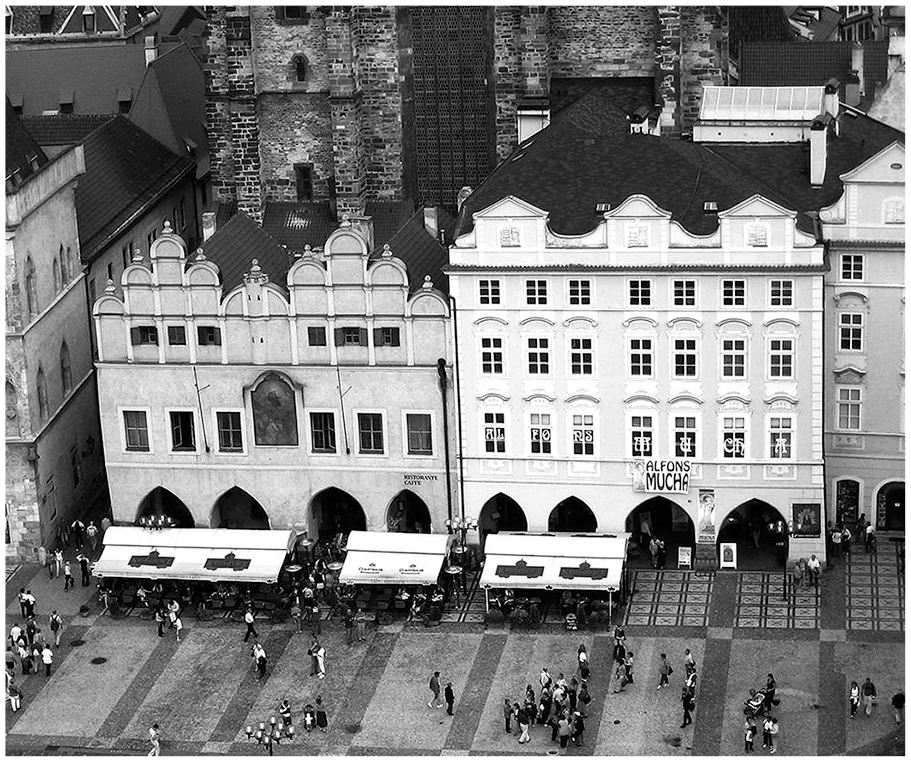
Architectural facades embodying urban rhythm.
Routine
Routine is the prevalence of the ordinary as the common “ground” for the unique “figure” (Koffka, 1935). Routines allow us to deal with repetitive situations in a repetitive way, enhancing the quality of life because they liberate our limited resources of attention to deal with new situations in different and more creative ways, and simultaneously create the expectations that afford the possibility and delight of surprise (Teal, 2008). Places are memorable as much for their ordinary repetitive routines as for their unique exceptions to them. Shared routines allow people to deal with reoccurring situations in a habitual way and enhance their collective identity as inhabitants (Bourdieu, 2002). An understanding of the routines of a community is a powerful tool for sustainable design because it deepens sensitivity to specific site conditions and interconnects varied members of a community (Figure 3).

Disruption of urban routines as a civic event.
Engaging Space
Resemblance
It is the similarity of shared features among families of objects and places.
“All environments, both present and absent, are integrated into an ideological system according to mental laws which recur over and over again and manifest themselves in similar ways” (Levi-Strauss, 1973, pp. 7–23). Human memory, trained as it is by eons of interactions with the phenomena of the environment, has a propensity to recognize similarities among things, particularly when exploring a new place (Kaplan & Herbert, 1988). We familiarize ourselves with objects and events among environmental invariants, and there occasionally even is a resemblance among members of different families (Wittgenstein, 1980). As it were, resemblances among things establish groups of environmental phenotypes and promote a sense of continuity through familiarity. Metaphor refers to discovering “the hidden resemblance” between two unlike things. It is an incarnation of the resemblance that profoundly influences the understanding of the meaning of objects and events; thus, metaphor is often regarded as a creative tool for learning about the novelty and complexity of an urban environment through the process of association (Johnson, 2007; Figure 4).

Duck family sculpture in the Boston Public Garden, Massachusetts.
Recognition
Recognition is the awareness of encountering something we already know.
Recognition is literally re-cognition (i.e., knowing something again). To conceive anew what we already seem to know; it is this reencountering what we already know that establishes a level of continuity among past experiences. While we need the stimulation and challenge of the new to keep us alert, we also need the reassurance and comfort of the familiar to keep us grounded (Kaplan & Kaplan, 1982). Recognizing a familiar face, melody, or place imbues an experience with hedonic overtones, generating strong involvement (Neisser, 2004). The capacity for pattern recognition also enhances cultural sensitivity to traditional structures with past experiences in rapidly changing cities (Figure 5). For instance, indigenous communities in traditional neighborhoods tend to strive to preserve their ordinary landscapes, probably to reassure themselves of what has kept them grounded. Even if each ethnic tradition has emerged as a powerful force in cultural identity in its own right, similar features in different traditions often point to a common hallmark of human nature.

An urban courtyard representing Latin American culture with vernacular forms.
Revelation
Revelation is the uncovering of existing properties and qualities.
Revelations, while seemingly intuitive, sudden, and happening in the present, usually have a history of something that was present but obscure in our consciousness. In other words, revelation is not so much the “dis-covery” of something new as the “uncovering” of what we have known all along, but without knowing how to define it. Environments reveal something of themselves to us only if we come “prepared” to receive it. Revelation is not a purposeful action of making the invisible visible, but rather the imaginative capacity to expose and modify inherent structures and qualities (Brady, 2004). In an aesthetic experience of an environment, what attracts and fascinates usually comes first, but subsequent attention peels off layers and properties that were present but obscure and brings them to consciousness (Tuan, 1989). Design for revelation nurtures the aesthetic capacity of urban marginal spaces to become a magical place attracting birds, insects, and other (human) animals that can open unrealized perspectives on the corner of a city (Figure 6).
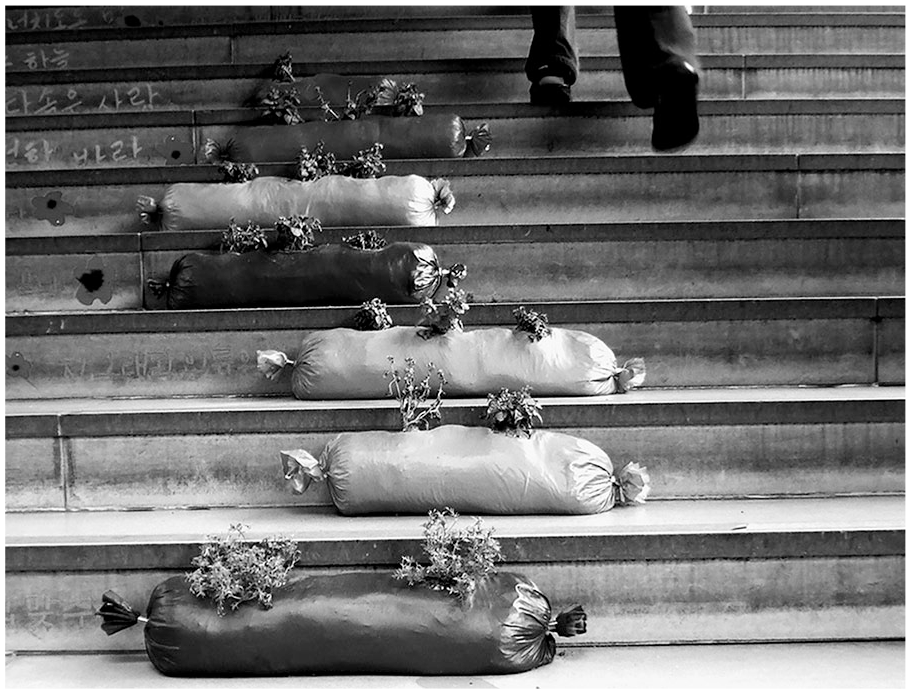
Temporary planting pillows create a sense of traffic order and nurture a “green heart” of the gray city.
Adaptable Space
Reference
Reference is the new that contains a dimension of existing contexts.
Continuity cannot be confined to the preservation and protection of environments that already exist. People become cognizant of urban richness when they observe it through existing frames of reference and appreciate it through active participation. Urban structures and patterns shape their cognitive schemata and supply the basis for the capacity to understand both familiar and new meanings. As depicted in Müller’s last image (Figure 1b), the overwhelming presence of new structures and buildings, with no reference to previous communal, social, or public activities, do not merely add a new dimension of experience to the existing urban life, rather, they render it desolate and without any trace of contextual references to what there was before. New elements building upon various strategies of reference to a cultural context can create aesthetic continuity by reiterating, redefining, refocusing, rereading, and refilling the existing with new meanings (Hubbard, 1981).
Relevance
Relevance is the unmediated recognition of significance and connection to a matter at hand.
Relevance is the primary filter of human experience and continuity facilitates the perception of prima facie relevance. It helps us to prioritize references to the complexity of environmental information and thereby to choose what is appropriate and significant in making sense of the world. Aspects of environments thus become meaningful to the extent that we perceive them as relevant to our existence; otherwise, they remain mute and inert (Aravot, 2002). For example, architectural avant-gardes have used structures in public space to pursue personal and private aesthetic ambitions, thus contributing to the creation of a place-neutral global world where many buildings are divorced from their cultural and historical context (Tesar, 2005; Figure 7). Without a perception of relevance, new elements of the environment will fail to connect with people and alienate them from communal engagement with their local surroundings.

Two kinds of architectural expression—private idiosyncrasy and vacuous abstraction—that equally fail to convey socially relevant meanings and purposes.
Resilience
Resilience is the capacity to reinforce continuity and to retain the sense of an enduring whole that is undergoing change.
Resilience is the ability to recover and return to a stable equilibrium after disruption and may be analogous to an immune system that allows an organism to function as it fends off risks and infections. The resilient system of an organism maintains not only the habitual rule of inertia, but also includes the flexibility to accommodate dire necessities for new possibilities, while maintaining the same natural function and structure (Alroe & Kristensen, 2003). Resilient communities nurture reciprocal relationships among members to heal the scars inflicted on traditional structures and to address challenges in revealing social and ecological opportunities for interventions and experiments (Bryant, 2011). “A good urban intervention often involves triggering healthy responses within the city, to stimulate improvements and positive chain reactions” (Lerner, 2014, pp. 1–4), as exhibited, for example, in the High Line project in New York City and in many other successful cases of urban revitalization after industrial use and abandonment. Such structures of resilience establish a dimension of continuity as an enduring whole, thus reinforcing a sense of the shared identity.
Empathetic Space
Remembrance
Remembrance is the capacity to engage with the presence of the past and to construct shared meanings afresh.
Memories will gradually disappear over time, unless some stimuli, events, and behaviors intervene and retrieve them to appear in the present: the act of remembering. (Casey, 2000). Urban landscapes can incorporate our collective memories into the public realm as material evidence, a palimpsest of what has survived or disappeared from the original condition. Remembrance appeals to our shared humanity that transcends from the individual to our communal and cultural life, and sometimes involves a sense of suffering from the loss of what we cherished. An experience of ruins in the decaying city, for instance, represents deeper feelings of life connected with death, fear, hope, love, and sadness (Ginsberg, 1994), and is not always accompanied by positive emotions such as joy, pleasure, happiness, and excitement (Carlson & Hatfield, 1992).
Similarly, the Japanese conception of wabi-sabi from Zen Buddhist philosophy expresses the aesthetics of change and continuity—the beauty that comes with age and that is incomplete, imperfect, and impermanent (Handa, 2015). Remembering is thus the art of participation in the presence of the past. Design for remembrance gives a spatial and temporal presence to the past to keep it alive with a new identity. It has profound aesthetic and ethical implications for valuation, sharing, and caring (Figure 8).

Black Holocaust Memorial exhibiting resilient community identity.
Resonance
Resonance is the sympathetic reverberation with an inner being, the sound of synesthesia, or a poetic sense of place.
Resonance is the musical and emotional force that immediately engages people through one another’s hearts and thereby creates an intense experience of sharing (Sancar, 2003). Urban experiences that resonate intuitively with us depend on the memory we share. When an urban landscape resonates with its residents, it absorbs them into a multisensory environment, and people begin to “feel” sympathetic and symbiotic with the totality of its presence, as if two musical instruments start to reverberate in response to each other’s body. Beethoven’s symphony No. 6 The Pastrorale is, for example, a musical embodiment of environmental synesthesia from which people can glean an idyllic landscape metaphorically. This synesthetic feeling is communal, visceral, spontaneous, spatial, and authentic one that we could seldom describe in an articulate language (Langer, 1967, 1972), and it intensifies the social and political function of the city. Cities with amenities for playing, dancing, singing, and romantic engagement in public spaces offer an effective sphere for democracy because their inherent “musicality” resonates with all participants profoundly and equally (Figure 9).
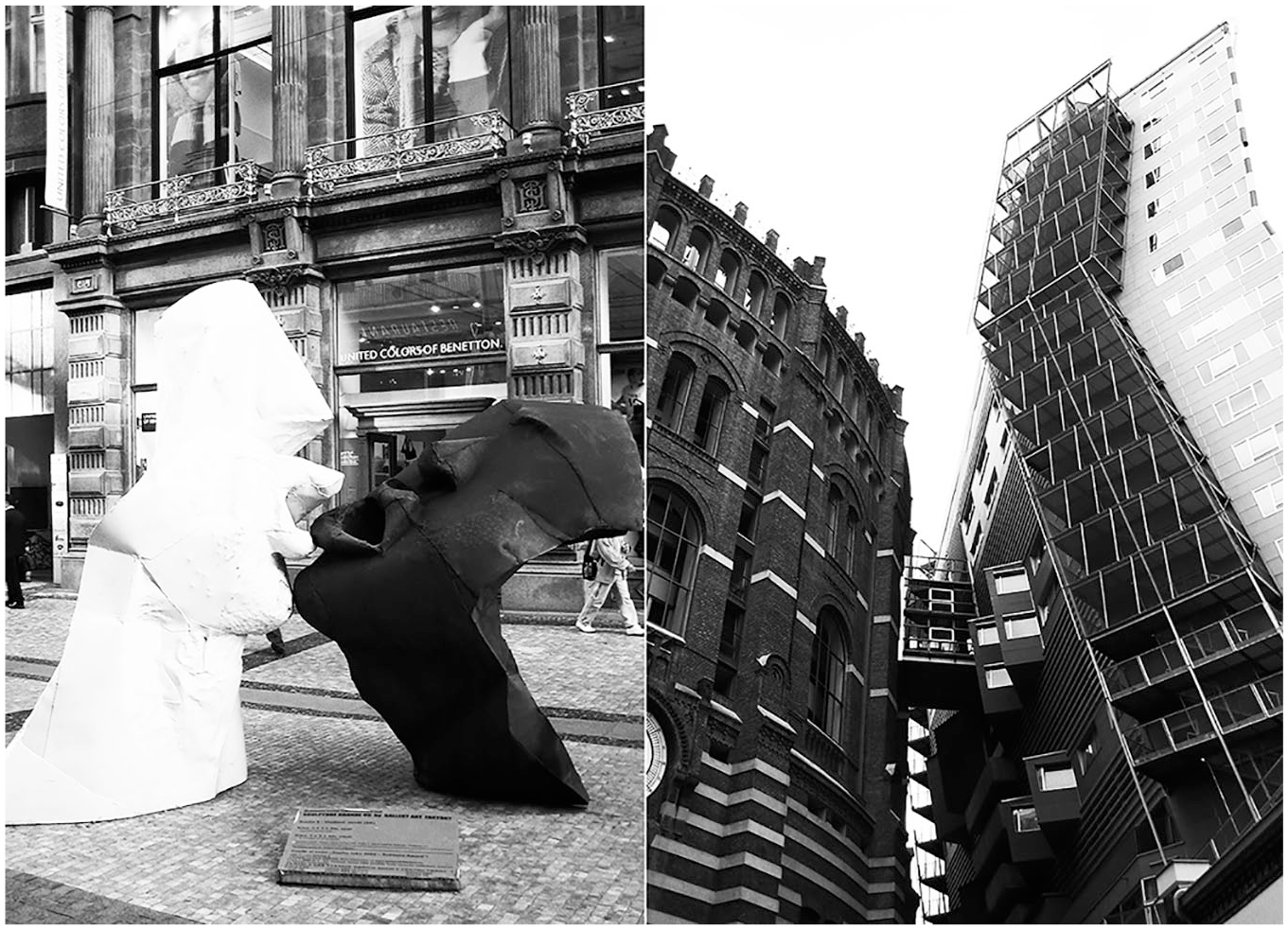
Urban amenities symbolizing romantic engagement, Prague, Czech Republic (left) and Vienna, Austria (right).
Reverence
Reverence is the love and gratitude for the intrinsic value of something, including self-dignity.
Reverence is neither worship nor faith that is held with arrogance and self-satisfaction (Woodruff, 2001); it is the forgotten virtue to feel oneself largely without ego, aspiring to the value of something in its own right that is deemed noble, exalted, and truthful. Reverence also differs from respect or responsibility. The former is the ability to perceive something as it is; the latter can easily deteriorate into domination and possessiveness (Fromm, 2006). Reverence is the empowering love to feel the “right” degree of respect, just as courage is the capacity to decide when one feels confident to act or not (Woodruff, 2001). When a person is touched by the humane dignity of a neighborhood or by the play of light in a sacred place, they encounter a moment of inarticulate awe and reverence (Von Bosnsforff, 2002). Opportunities for memorial ceremonies or funerals, or for the periodic reenactment of communal rituals, serve to generate a more profound love of place and nature, the shared meanings of life and death, and their continued relevance to the community (Figure 10).

Historic landmark reenacted for a communal and spiritual center, The Plaza Mayor in Madrid, Spain.
Concluding remark
Cities “express, embody, and signify meanings” (Mitias, 1994, pp. 87–108), and urban landscapes that are deemed beautiful and meaningful are always vulnerable. However, the compulsive fascination with novelty in today’s societies often benumbs cultural and aesthetic sensitivity to the subtlety, vulnerability, and fullness of humanist urban environments (Tuan, 1989). Many of the current assumptions about urban values and landscape qualities still lack conceptual clarity in the evolutionary and experiential contexts. The very notion of continuity, as predicated on human existence, is essential for the evolutionary, ecological, cognitive, cultural, and spiritual value of the shared environment. “Without humanity, there is no value” (Hook, 2003, p. 362).
Pursuing an aesthetic of continuity in a city will contribute to creating a sense of place, well-being, and belonging, and motivate environmental ethics for sustainable development: moving “from beauty to duty” (Rolston, 2002). “When we act beautifully, there is no conflict of feelings involved,” for it feels natural to do so (Naess, 1993, p. 67). Perhaps no one has stated the legitimate function of tradition, the most important instrument of cultural continuity, more poignantly than Gilbert Keith Chesterton when he characterizes it as “the democracy of the dead”: Tradition gives votes to the most obscure of all classes: our ancestors. It is the democracy of the dead. Tradition refuses to submit to the small and arrogant oligarchy of those who merely happen to be walking about. All democrats object to men being disqualified by the accident of birth; tradition objects to their being disqualified by the accident of death. (Chesterton, 1980, p. 148)
At any time, some members of this “arrogant oligarchy,” who have the political motivation and economic power to serve their self-interests, can impose their forceful will to change our shared environment by eradicating layers of the urban fabric that have absorbed the voices of history over centuries and formed our public memory (Lowenthal, 1997). This article hopes to remind all of us that future generations will judge us not only by the value of what we have created in the present time of history but also by the value of what we have chosen not to destroy.
Footnotes
Declaration of Conflicting Interests
The author(s) declared no potential conflicts of interest with respect to the research, authorship, and/or publication of this article.
Funding
The author(s) received no financial support for the research, authorship, and/or publication of this article.
