




Abstract
Although 90% of women between the ages of 18 and 29 report using makeup, research on the motivation and effects of makeup use on self-esteem is lacking. The purposes of this qualitative study is to (1) understand the effects of intrinsic and extrinsic motivation to use makeup on self-esteem, (2) explore whether makeup use may serve as a buffer for low self-esteem, and (3) explore the impact of sociocultural scripts and hegemonic beauty on self-esteem in ethnoracially diverse YouTube beauty influencers. Jacobsen’s Aesthetics of Psychology framework was used to classify narratives of nine female beauty influencers aged between 21 and 40 years from the United States and Great Britain, who self-identified as Black, Hispanic, and White. Makeup use may have a more direct effect on self-esteem if internally motivated and viewed as a mechanism for creativity, mastery, agency, and human connection. Likewise, makeup use may indirectly buffer low mood/self-esteem for those who are externally motivated to use makeup in order to avoid guilt, enhance ego, and promote audience confidence. Results elucidate the importance of motivation to use makeup and its implications for positive mood regulation/enhanced self-esteem through the development of mental health interventions involving makeup application. Findings illuminate the experiences of women in media and public domains and are particularly salient for women of color who may be more extrinsically motivated to use makeup due to hegemonic beauty standards, as Black beauty influencers reported industry disparities in pay/salary, sponsorships, and subscriber count compared with young, White influencers.
Keywords
Introduction
The effects of makeup use on self-esteem have been reported inconsistently in the literature, with some studies showing a positive correlation (McCabe et al., 2017; Palumbo et al., 2017), while others demonstrating a negative one (Fares et al., 2019; Robertson et al., 2008). Rectification of this dissent is critical, given the omnipresent cosmetic industry, sociocultural scripts regarding outward appearance, and suicidal risk associated with low self-esteem (Yoo et al., 2015). In addition, the motivation to use makeup and its effects on mental health has yet to be studied. Much of the previous literature focuses on young college participants (Huguet et al., 2004; Palumbo et al., 2017; Rajajeyakumar et al., 2016; Robertson et al., 2008), who may be influenced by societal beauty ideals, but not female influencers who play a huge role in influencing current standards of beauty. In this study, we used Jacobsen’s (2006) Psychology of Aesthetics framework with a special focus on motivated behavior to use makeup and self-reported self-esteem in a sample of ethnoracially diverse female YouTube beauty influencers. The findings of this study will shed light on the experiences of not only women in media, but also women in public domains who are constantly evaluated for their beauty and character, those who wear makeup, and those struggling with poor self-esteem. This study will also help highlight the impact of makeup use and instruction in the form of tutorial creation as a possible mental health intervention.
The Effects of Makeup Use on the Psyche: It’s Not Always Black or White
The umbrella term “aesthetics” encompasses a wide range of artifacts ranging from art and music to literature and physical beauty. In Western societies, one mechanism frequently used by women seeking to enhance facial attractiveness is makeup (Jones & Kramer, 2016). The use of makeup is so frequent that in one study, only 10 % of consumers aged 18 to 29 reported never wearing makeup (Statista Survey, n.d.). Despite the near ubiquitous use of makeup, studies have failed to find consensus regarding the role of makeup on users’ mental health and self-esteem (Fredrickson & Roberts, 1997; Mulhern et al., 2003; Nash et al., 2006; Robertson et al., 2008).
Several studies have found a positive relationship between makeup use and self-esteem. Korichi and colleagues (2008) described makeup application as a “holistic technique,” stimulating the senses of touch, smell, and sight. Collectively, these positive sensations can prompt psychological pleasure. Makeup can also alter appearance, boost self-image, emotions, and mood, and can be considered a daily routine to mitigate negative effects and/or augment positive effects connected to self-image (Korichi et al., 2008). In a group of 70 women aged from 25 to 65 years, pleasurable odor or vibrantly colored makeup had positive effects on the mental health of women with severe illnesses (Korichi et al., 2008). Furthermore, a recent study found that female undergraduate students wearing makeup received higher grades than those who did not when taking a simulated university examination (Palumbo et al., 2017). This illustrates makeup’s potential impact on academic achievement through bolstered self-esteem, as higher levels of self-esteem have been linked to greater academic performance (Palumbo et al., 2017).
Contrastingly, makeup use was found to be negatively associated with social confidence and self-esteem (Robertson et al., 2008). Frederickson and Roberts (1997) argued that using makeup to modify facial features is associated with self-objectification, which negatively impacts self-perceived competence and cognitive performance. When one’s body or face is scrutinized, the flow of consciousness is disrupted, leading to decreases in available cognitive resources and performance (Fredrickson & Roberts, 1997). In addition, increased concern with one’s appearance negatively affected self-reported competence in contexts evaluating aptitude, as more self-objectification led to reports of feeling less competent, warm, attractive, and refined (Fredrickson & Roberts, 1997).
Human Motivation
The decision to use makeup is influenced by internal (intrinsic) and external (extrinsic) motivation. Deci (1975) developed the Self-Determination Theory (SDT) to describe intrinsic motivation. Under this theory, intrinsic motivation is defined as the “doing of an activity for its inherent satisfactions rather than for some separable consequence” (Ryan & Deci, 2000, p. 56). Shortly after, Ryan and Deci developed the Organismic Integration Theory (OIT), a sub-theory within SDT, in which they define extrinsic motivation as behavior motivated by attainment of a separable outcome (Ryan & Deci, 2000).
SDT focuses on three innate psychological needs: competence (mastery and control of outcome), autonomy (being the causal agent of life), and relatedness (desire for interpersonal connection/belongingness) that, when met, can foster growth, integration, and wellness (Vansteenkiste & Ryan, 2013). The four types of extrinsic motivations are external regulation, introjection, identification, and integration (Ryan & Deci, 2000). Externally regulated behavior is the least autonomous, in which behaviors are performed “to satisfy an external demand” (e.g., wearing makeup due to peer pressure; Ryan & Deci, 2000, p. 61). Introjection refers to actions that are performed in order to avoid guilt/anxiety or to enhance ego/pride (e.g., wearing makeup as a bridesmaid due to guilt from not conforming to wedding etiquette). Ego involvement is a form of introjection that describes performing a behavior in order to maintain/boost self-esteem, for example, wearing makeup in order to receive compliments, and in turn, feel more confident. Lastly, identification refers to identification with the importance of behavior, for example, using acne clearing makeup to treat acne-prone skin.
The Psychological Study of Aesthetics: A Unified Approach
Jacobsen’s (2006) Psychology of Aesthetics framework was established as a unified approach to understanding the mental processing that underlies aesthetic appreciation from seven perspectives: (1) diachronia, (2) ipsichronia, (3) mind, (4) body, (5) content, (6) person, and (7) situation. Diachronia relates to the historical/cultural evolution of beauty, for example, fashion and makeup trends, while ipsichronia relates to the impact of culture, social roles, and status on the way individuals define aesthetics. The mind refers to cognition, emotions, and attitudes, and body relates to the brain, biology, and neuroscience. Content describes the content under evaluation, for example, painting or sculpture. Person refers to an individual, a group, and/or expert/non-expert differences. Finally, situation relates to schemata and scripts, which comprise expected behaviors and roles.
Quantitative and qualitative studies exploring aesthetic processing in neuroaesthetics (Cela-Conde et al., 2011), visual aesthetics (Augustin et al., 2012), acoustics (Brattico et al., 2009), and cultural differences in aesthetic appreciation (Jacobsen, 2010) have referenced Jacobsen’s (2006) work, as it offers a way to empirically explore aesthetic processing through the use of objective physiological data through event-related brain potentials and functional magnetic resonance imaging in conjunction with subjective self-reported data.
What Is a YouTube Beauty Influencer?
The terms “social influencer” and “beauty influencer” entered popular lexicon within the past decade as YouTube became increasingly popular. While the literature on the topic of influencers is scant, with a few studies in communication theory/business leadership and brand marketing, the term social influencer has been scholarly defined as a “third-party endorser who shapes audience attitudes” (Freberg et al., 2011, p. 90). They are “masters of electronic word-of-mouth (eWOM)” (Forbes, 2016, p. 80) who possess appealing traits, such as verbosity, intelligence, ambition, productivity, and poise (Freberg et al., 2011). Modern influencers reach their audiences through online media platforms such as YouTube, Instagram, and Twitter. The term beauty influencer more specifically refers to an aesthetic expert who provides teaching on topics of enhancement (life/health/style/etc.) and beautification practices. A beauty influencer often has business contracts with specific beauty brands that pay influencers to promote their product(s). Influencers are valuable to companies because makeup application is a task that requires effort, discipline, and specialized knowledge (Puvia, 2011), and individuals with that expertise and social impact are highly sought after as teachers and promoters of select products.
The Current Study
This IRB-compliant study aims to explore the narratives of YouTube beauty influencers using Jacobsen’s (2006) Psychology of Aesthetics framework to assess self-aesthetic processing and whether self-aesthetic processing/esteem is impacted by motivation to use makeup. We focus on YouTube beauty influencers, as it allows for a rich assessment of aesthetic processing and motivated behavior on self-esteem. Due to the public nature of YouTube, influencers are constantly, publicly, and critically scrutinized for their beauty. This experience can have negative effects on their self-esteem, specifically for those who are not endowed with defining features of hegemonic beauty (e.g., more ethnic facial features). This heightened scrutiny can shed light on the overall effects of beauty standards on women’s self-esteem, especially for women who work in public domains who are constantly being evaluated for their beauty. It can also help to highlight how makeup tutorial creation can be used in a mental health intervention to help women increase their self-esteem.
A majority of research on makeup’s effect on self-esteem has not explicitly explored the impact of sociocultural scripts (i.e., the set of expected norms, cultural values, and practice in a given society and culture) as motivators, possibly because of the use of homogeneous samples or the omission of race/ethnicity variables in descriptive statistics of study samples. Thus, surveying a diverse panel of YouTube beauty influencers who mainly record tutorials of their faces allow for experiential comparison between Black and White YouTube beauty influencers.
Method
Participants
We chose to survey socially impactful female beauty influencers as “all these duties [makeup application] and abilities regard only women not men, who are not stigmatized if they decide to just follow the ordinary standards of hygiene” (Puvia, 2011, p. 32). We focused on influencers with a subscriber count on YouTube greater than 60,000 because the quantity of supporters an influencer has impacts their degree of influence (Forbes, 2016) and “followership is a big part of leadership; without followers, there are no leaders” (Androulaki-Ralli, 2015, p. 17). The success of prominent beauty influencers is grounded in Bandura’s (1971) Social Learning Theory, which describes that learned behavior can be achieved through observation and through informative feedback that guides decisions about successful future behavior (Forbes, 2016).
Sample
To explore aesthetic processing and specifically, the effects of cosmetic use on self-esteem, we used Jacobsen’s (2006) framework for the psychological study of aesthetics to qualitatively analyze responses. The 20-question interview script was distributed through email to 9 YouTube beauty influencers via the chain-referral method beginning with a prominent informant, and all influencers had at least 60,000 followers, were aged between 21 to 40 years, were from the United States and Great Britain, and self-identified as African American, Afro-Latina American, Black Puerto Rican American, Black British of Nigerian heritage, Black British Puerto Rican, Armenian American, and Middle Eastern/Russian American. According to the U.S. Census Bureau’s definition of race, “White” refers to any person having origins in “any of the original peoples of Europe, the Middle East, or North Africa,” “Black” refers to any person having “origins in any of the Black racial groups of Africa,” and “Hispanic, Latino, or Spanish” may be of any race (U.S. Census Bureau, 2018). Seven respondents were Black, three of which identified as Afro-Latina, while two were White, which enabled us to compare experiences between the groups. Five out of nine respondents explicitly described their socioeconomic status by using the terms and phrases such as “working class,” “poverty”, “little to no income,” “struggling to keep on track financially”, “money was tight,” and “living in the projects.” For confidentiality purposes, we have omitted names. Text responses were edited in the standard American English spelling style. Informed consent detailed the voluntary and confidential nature of the study, outlined the duration of the interview script (45 to 60 minutes), and ensured anonymity of published quotes.
Data Analysis
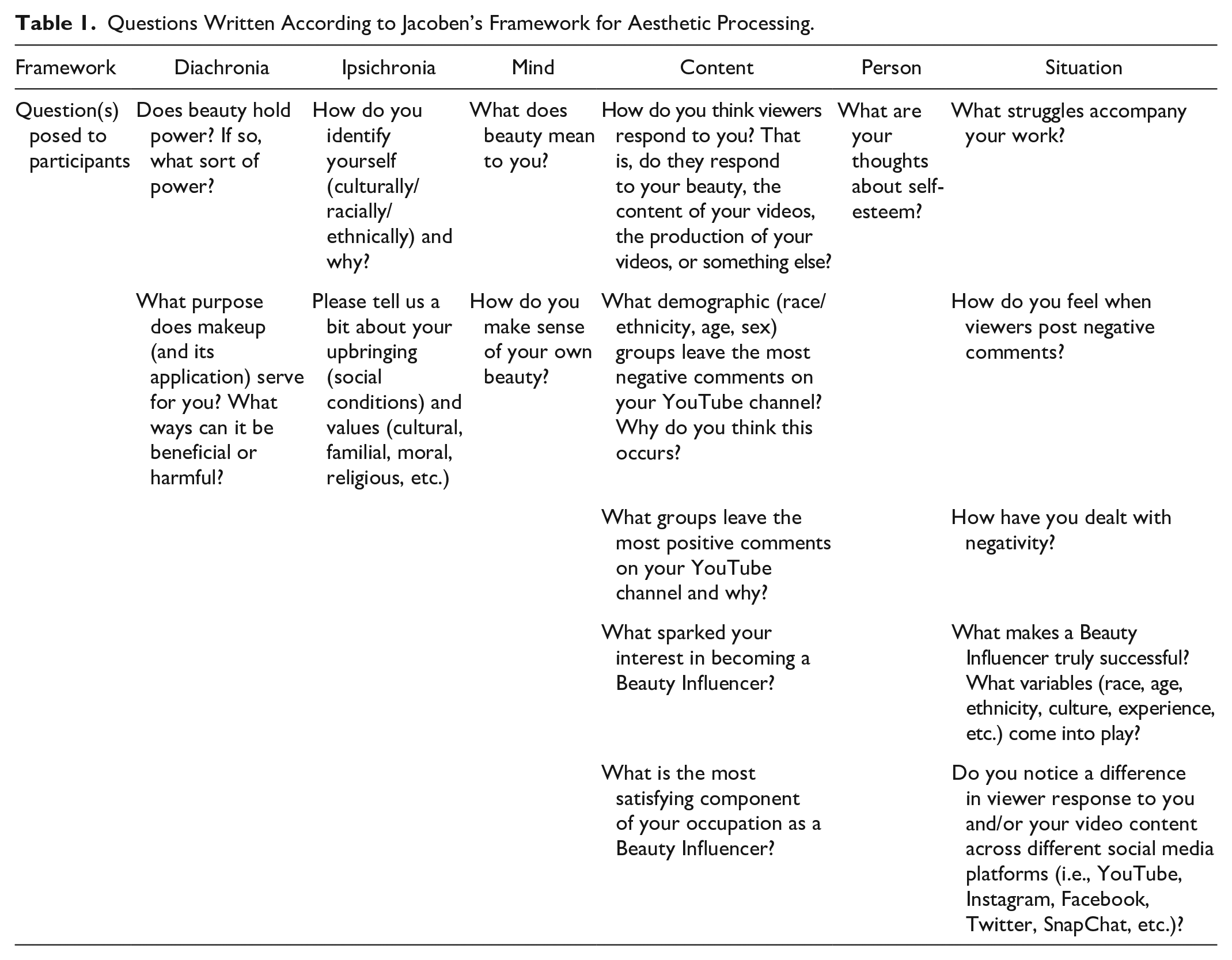
An interview script (Table 1), was written based on six out of Jacobsen’s (2006) seven vantage points related to aesthetic processing: diachronia, ipsichronia, mind, content, person, and situation (Figure 1). Participants were asked to provide written responses to the interview questions. The process of code analysis consisted of classifying the text from the written responses into distinct categories through use of Jacobsen’s (2006) framework as the coding scheme. The coding process was developed from the suggested procedure for establishing credibility (Graneheim & Lundman, 2004; Hsieh & Shannon, 2005). The first and second authors coded the text from three (33 % of the sample) randomly chosen interviews. The authors coded responses into each of Jacobsen’s six vantage points and held coder meetings to discuss the coding decisions. We excluded the “body” theme in Jacobsen’s framework because it refers to understanding aesthetics as it relates to biology, neuroscience, and the brain, which is beyond the scope of this paper. Discrepancies in coding decisions were discussed and final decisions about how to code the text were made collectively. After establishing interrater reliability, the first author coded the six remaining interview scripts.
Questions Written According to Jacoben’s Framework for Aesthetic Processing.
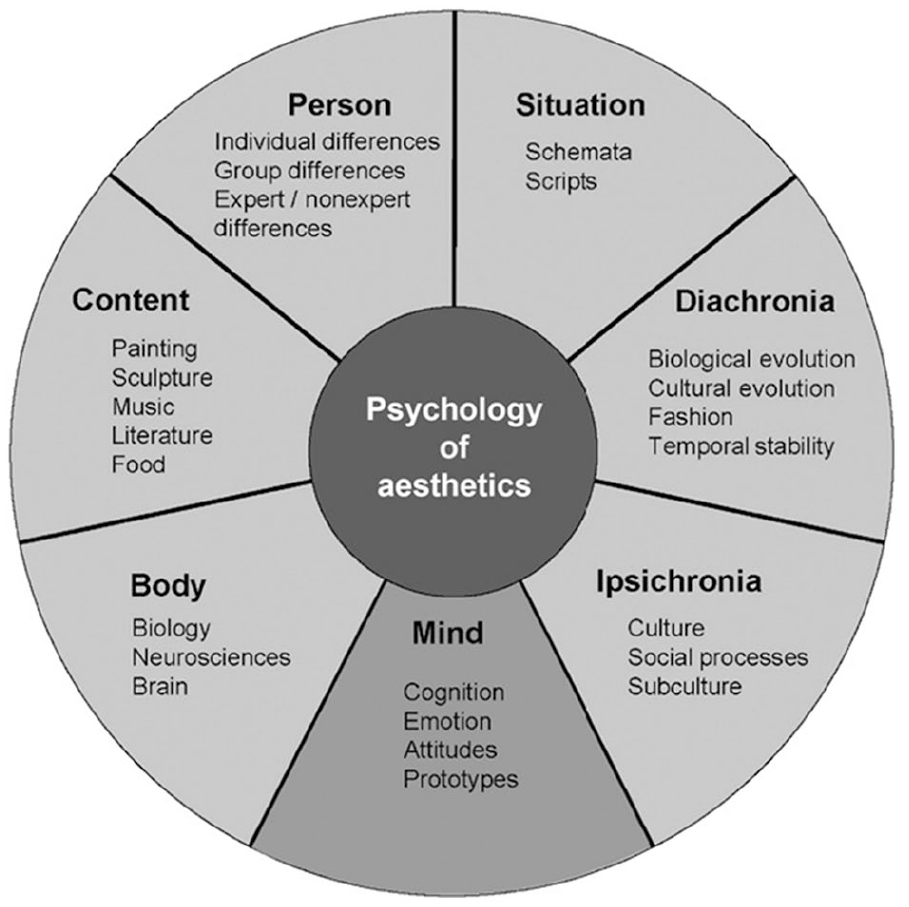
Jacobsen’s framework for the psychological study of aesthetics.
Two theoretical frameworks were used to explore the participants’ responses using a thematic analysis approach. Thematic analysis is a qualitative analysis technique for coding and identifying meaning from the interview text (Braun et al., 2019). First, data were primarily conceptualized using Jacobsen’s (2006) Psychology of Aesthetics. This theoretical framework was used to group responses into six vantage points for aesthetic processing of makeup use.
Second, we used Ryan and Deci’s (2000) theory on human motivation to identify whether these themes were related to intrinsic or extrinsic motivation to use makeup. In addition, the literature shows that these types of motivations can impact self-esteem (Murphy & Roopchand, 2003; Topcu & Leana-Tascilar, 2018; Truong & McColl, 2011). Thus, we also explored beauty influencers’ beliefs about how the different types of motivated behaviors may relate to self-esteem.
On a larger scale, we sought to understand the impact of hegemonic beauty on the experience of both Black and White beauty influencers. Traditionally, mass media is a vehicle that the “ruling elites often used to perpetuate their power, wealth, and status by popularizing their own philosophy, culture, and morality” (Lull, 1995, p. 33). Beauty influencers are at the forefront of a new mass media with their large platform. Examining their experience in a hegemonic beauty industry is particularly salient in understanding the experiential differences between Black and White women. It is important to note that there are “counter-hegemonic” cultures (e.g., Black is beautiful) that also operate within the larger society that embody ways of thinking and doing that counteract dominant thinking (e.g., hegemonic beauty) (Lull, 1995, p. 35).
Results
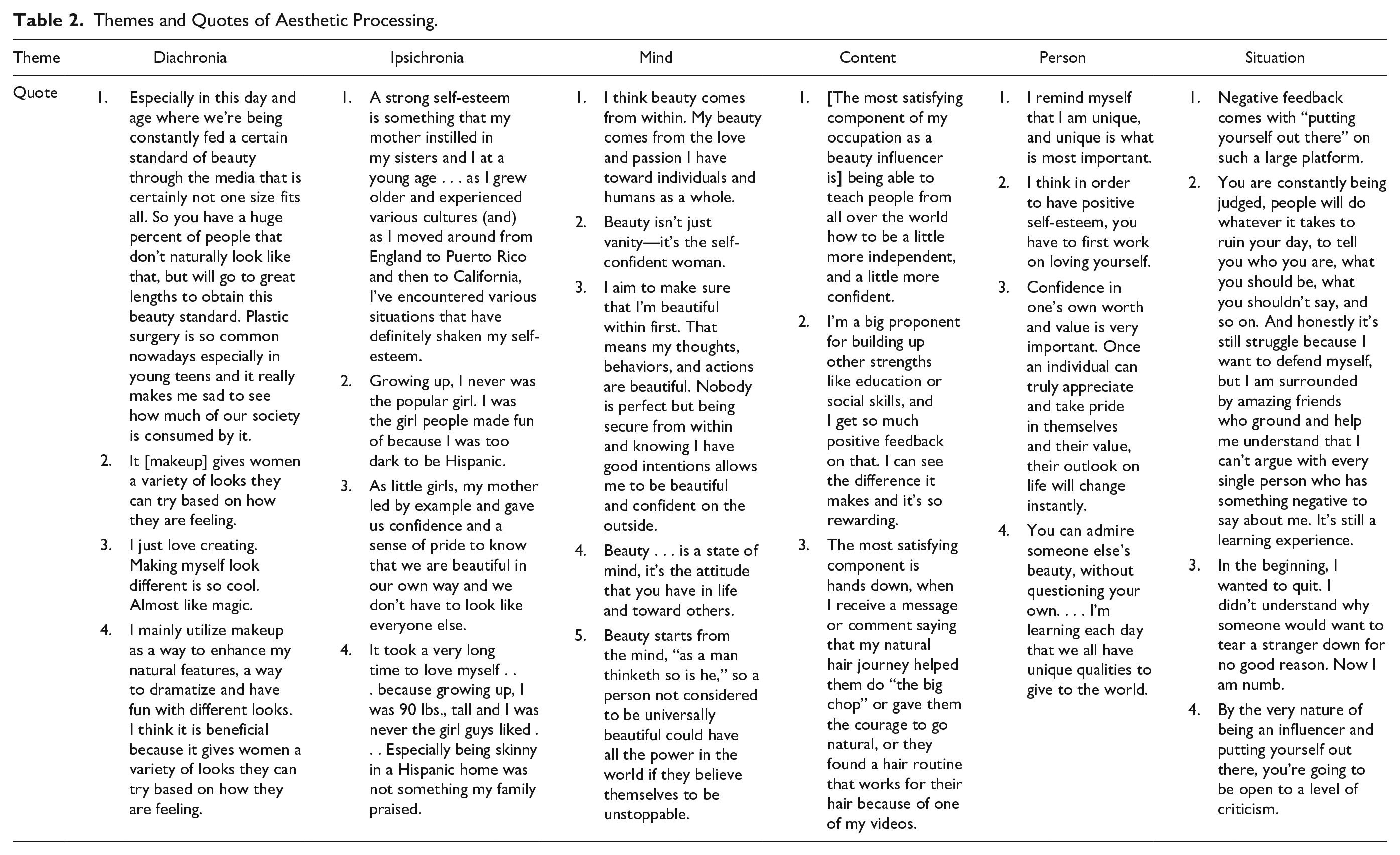
The six vantage points from Jacobsen’s (2006) framework used to understand the psychology of aesthetics and analyze the transcripts included the following: (1) diachronia, (2) ipsichronia, (3) mind, (4) content, (5) person, and (6) situation. Quotes were coded into each of these vantage points and examples are presented (Table 2). These themes were connected to beauty influencers’ internally and externally motivated behavior (e.g., makeup use) and its effects on self-esteem.
Themes and Quotes of Aesthetic Processing.
Diachronia
Trends (e.g., makeup and ideal body shape) may change throughout time and vary across cultures, but the media is a main driver of change. One participant related to this vantage point when she wrote, “beauty is what we see in an aesthetically driven society.”
Makeup as a Diachronic Agent
Makeup can be applied in a manner that reflects mood and/or trends (e.g., having disposition to apply dramatic eye makeup [mood], such as the “smokey eye” [trend]). It can also be regarded as a time-traveling tool due to its ability to capture era-specific makeup trends (e.g., 1950s “glamour” and 1960s Twiggy-inspired “winged eyeliner”). As such, it was described as a vehicle for change/versatility: I mainly utilize makeup as a way to enhance my natural features, a way to dramatize and have fun with different looks. I think it is beneficial because it gives women a variety of looks they can try based on how they are feeling.
The ability to refine self-image via makeup also enabled respondents to achieve personal agency. For instance, a participant explained: People look at my makeup and think omg [oh my God] she’s changing who she is, but in reality we change ourselves every day; women might wear a push-up bra to feel more confident about their bust and that’s okay! I wear heels all the time because I’m short . . . or if you wear wigs and extensions . . . These are all factors of how we want to present ourselves to the world. It doesn’t mean I’m not happy with myself. It means I’m taking control of my life and my body and I’m able to do so if I please.
Duplexity of Makeup
Participants wrote about the dual nature of makeup use, citing beneficial and negative outcomes associated with its use. Those who viewed makeup use as internally motivated deemed cosmetic use valuable and enjoyable: “I love playing with makeup and I think it’s fun to be able to switch up your look,” and as a mode of artistic expression: “Makeup is art. If we are inspired one way or the other, we can express it through makeup”; “It’s like creating art on my face”; and “Makeup serves a perfect way to express myself. My makeup can tell you so many things without me saying a word.”
Overreliance and pressure on makeup use were two external motivators participants cited for using makeup. These two external motivations were identified as having detrimental effects on self-confidence. For example, participants stated that “it can be harmful if it is relied upon . . . and without it they feel like less” and “I will admit when I remove the makeup it does affect my self-esteem, and then I feel the need to constantly wear it.”
Ipsichronia
How an individual defines aesthetics, whether intrinsically or extrinsically, may impact self-perceived attractiveness/self-esteem. Participants described how their self-esteem was extrinsically shaped by familial/cultural scripts. One participant attributed her strong self-esteem to her mother’s teachings, “As little girls, my mother led by example and gave us confidence and a sense of pride to know that we are beautiful in our own way and we don’t have to look like everyone else.” Confidence due to instilled familial values can be extrinsically sub-typed into “ego involvement,” which refers to performing a behavior to boost/maintain self-esteem or “identification” with the importance of having confidence.
On the other hand, familial teachings were not always described favorably, It took a very long time to love myself . . . because growing up I was 90 lbs., tall and I was never the girl guys liked . . . Especially being skinny in a Hispanic home was not something my family praised.
Moreover, poor self-esteem due to peer disapproval was influenced by external messages of beauty, I was bullied as a kid in my teenage years. Being [ethnically] mixed and not be able to fit in with a racial group was very difficult for me. I had a hard time accepting myself for who I was.
Mind
Participants defined beauty as emanating from within: “Beauty . . . is a state of mind, it’s the attitude that you have in life and toward others;” “Beauty starts from the mind, “as a man thinketh so is he,” so a person not considered to be universally beautiful could have all the power in the world if they believe themselves to be unstoppable,” and transcending physicality, “[Beauty is] a combination of qualities that go beyond physical appearance.” The aforementioned quotes capture important inherent satisfactions associated with intrinsic motivation such as relatedness to others (e.g., attitude), competence, and autonomy to “have all the power in the world,” be “unstoppable,” and rework the limited definition of beauty to encompass “qualities beyond physical appearance.”
Content
In this study, the aesthetic “object” in question is the influencer and her video content. Many influencers referenced their creativity, personality, and charity as important components of internal and external (audience feedback) content processing. One participant answered, I was always an artist; I drew and painted all my life. That skill set transferred well into makeup! . . . I have the unique privilege of showing women, especially younger women, how much intelligence and a great personality can be beautiful. Outer beauty fades, I’m a big proponent for building up other strengths like education or social skills, and I get so much positive feedback on that. I can see the difference it makes and it’s so rewarding.
Participants were asked to describe some of the struggles that accompanied their work, which was mostly dealing with negative comments, “It’s a huge struggle to not take negative comments personally. There are people that basically hide behind a computer screen all day for the sole purpose of leaving hateful comments, and you really have to have a thick skin.” However, negative comments related to the posted videos were perceived as constructive criticism, “I appreciate that they are not afraid to mention when they enjoy a specific type of video, down to the editing, the content and the production, and equally when they don’t.”
Participants who identified the importance of posting content despite receiving negative feedback also described fulfillment from helping others, which can be considered an externally motivated behavior to attain the separable outcome of audience happiness: “It’s so rewarding when you get emails from girls around the world who share that my content has made an impact on them in some way”; “The most satisfying component of my occupation is seeing how many people I inspire . . . The comments I receive about how I’ve helped someone in their everyday life”; and “I’m still so humbled to feel that I can help people feel better about themselves.”
Person
Though each influencer uniquely makes sense of her own beauty, a common theme was avoidance of comparison to others and recognition of one’s distinction to protect self-esteem, “Low self-esteem usually arises when we compare ourselves to others and begin focusing on what we think we don’t have instead of embracing what we do”: I used to compare myself to other people, which was really destructive to my self-esteem. So, I love the quote that says, “You can admire someone else’s beauty, without questioning your own.” . . . I’m learning each day that we all have unique qualities to give to the world.
Situation
Participants reported that negative comments, predominantly made by teenage girls and women aged 13 to 30, are expected in the YouTube world, “By the very nature of being an influencer and putting yourself out there, you’re going to be open to a level of criticism”; “You’re under a microscope and no matter how safe you play the game, there will always be negative opinions from people who judge for no reason.” Nonetheless, it is difficult to ignore, “With this whole YouTube thing, it’s really hard not to take negative comments personal”; and “I take it personally. The smallest thing bothers me, which is why I stopped reading them [the comments].”
Participants also expressed empathy for commentators who struggle with their own self-confidence or unhappiness: “I try to find humor in the negative comments and realize they have issues of their own that they’re dealing with,” while others worked through negative interactions with antagonistic commenters (sometimes called “trolls”) who may use the internet as a coping mechanism for personal issues. As mentioned previously, many influencers who report receiving bothersome comments endure not only because it is expected and commonplace in their occupation, but because they have the ability to influence people in a positive way. The behavior to continue to upload content may be done to satisfy the externally separable outcome of audience happiness and confidence, which results in a boost to their own self-esteem.
Interestingly, many of the negative comments were mostly intraracial. More White viewers made negative comments about the White influencers. The White influencers who identified as Middle Eastern/Russian and Armenian American said, “My most negative comments across every platform come from [Middle Eastern] men and women. I don’t know why, but I’m assuming it’s because very few [Middle Eastern] women are pursuing the things that I am”; “I notice it comes more so from white and [white] Latina women and less so from black women.” More women of color left negative comments for several of the Black influencers who identified as Afro-Latina, “To be honest, I get the most backlash from women of color, females, teenagers. I honestly don’t know. I don’t understand why we don’t support each other . . . I hope things change! ”; and “Although I haven’t received that many negative comments, the ones that leave them are usually black women. I’m not sure why that is though.” Moreover, several Black respondents who identified as African American, Afro-Latina, and Black British, believed race and age impacted success on YouTube such that young White girls are perceived to have more success than a Black girl of the same age, “If we’re talking about success with money, like sponsorships and brand deals, I do think that race plays a bigger factor than I would like. I don’t see as many platforms and opportunities for black or dark-skinned Latina vloggers as there are for white and Asian ones.” Another commented, I’m going to get real here. I think what makes a beauty guru truly successful is being a young white girl preferably in the 13-18 age range and mainstream culture. Take a 14-year-old black girl and a 14-year-old white girl, the white girl will have a million [subscribers] before the black girl.
However, all influencers agreed that regardless of race, personality traits and content creativity are important variables that contribute to one’s success, “Race is a variable that comes into play. It cannot be ignored as it is difficult being a successful black beauty influencer, but it is not the main variable that comes into play”; “History has proved [proven] that young, white, teenage girls are truly successful. But I think hard work and dedication, creativity, and originality all come into play too.”
Discussion
This study used Jacobsen’s (2006) framework for understanding the psychology of aesthetics to analyze the transcripts from YouTube beauty influencers. Themes were connected to beauty influencers’ internally and externally motivated behavior, specifically motivation to wear makeup, and its effects on self-esteem.
Makeup as a diachronic agent has the ability to embody historical/cultural evolution in the form of beauty trends (e.g., 1960s winged eyeliner). It has been described as a mechanism for change and provides people with agency to control/modulate self-image, enabling users with the ability to exercise personal agency and control over the outcome. Unsurprisingly, the duplexity of makeup use can have both positive and negative effects on self-esteem.
All participants discussed how internal motivation to use makeup may be beneficial, while external motivation, particularly the least autonomous externally regulated behavior, may be detrimental to self-esteem. Motivation to use makeup can fulfill the innate needs of mastery, autonomy, and relatedness, as the agent has the ability and control to shape the outcome of their finished product and can achieve relatedness to others (e.g., joining online beauty forums to discuss makeup trends). Participants who are internally motivated to use makeup and/or have a strong sense of mastery, bodily agency, and relatedness to their subscribers viewed cosmetic use as having positive effects on self-esteem. All participants reported increased confidence as one benefit of makeup use and described it as a way to enhance/manipulate appearance and mood. On the contrary, negative effects of makeup use on self-esteem were linked to external motivators such as overreliance and pressure to use makeup. However, self-perceived beauty/esteem is not just impacted by motivated behavior to use makeup.
External messages from society regarding beauty are impacted by culture, family, and social roles (e.g., ipsichronia). All participants who identified as Afro-Latina reported having negative self-esteem due to either peer disapproval of their mixed ancestry or familial discontent of their bodily figure. On the other hand, familial teachings of a strong self-esteem were discussed as being an integral component of confidence building and a buffer toward poor self-esteem, as externally motivated identification and ego involvement align the agent to the importance of the teachings and augment self-esteem, respectively. Furthermore, creating an expansive definition of beauty to include facets other than physical traits is a reflection of the three innate needs of internal motivation: relatedness to others (e.g., beauty is the attitude that you have in life and toward others), competence to have control and direction over self-constructed definition of beauty, and autonomy to have higher levels of self-esteem through belief in oneself (Vansteenkiste & Ryan, 2013).
In regard to “content,” participants described feelings of guilt related to inconsistent work, delayed video postings, artistic roadblocks, and failure to keep up to date with their social media platforms, which describes introjection as actions are performed to avoid guilt. Furthermore, “situation” refers to the expected behaviors and roles as a YouTube beauty influencer. Negative comments were described as “part and parcel of the territory.” However, two participants with external motivation to post videos despite receiving many negative comments reported willingness to post tutorials using makeup at the expense of their self-esteem to vicariously boost audience confidence, and this mission to help others served as a buffer toward waning self-esteem. This behavior describes extrinsic ego involvement to maintain self-esteem and identification with the importance of helping viewers from around the world.
It is important to note that intrinsically motivated actions can parallel extrinsic ones, as the influencers reported achieving relatedness through uplifting audience members; this is arguably fulfilling an intrinsic psychological need, which is theorized to promote growth and progression. Furthermore, positive audience feedback, another example of relatedness initiated by the viewer, outweighed the cost of negative commentary, which was reported as a major insult to self-esteem. In turn, some influencers felt confident about their knowledge in the content presented, and this confidence additionally served to undermine the adverse impact of negative comments.
Furthermore, the impact of hegemonic beauty on the experience between Black and White beauty influencers was explored. Participants reported that Black influencers had lower pay/salary, experienced more difficulty arranging sponsorships/brand deals, and had a slower gain of followers compared with young, White influencers.
Since beauty influencers are at the forefront of mass media through their large platforms, they have the means to reach millions of people and have power to make change through narrative and discourse. They not only instruct, but often give advice regarding self-esteem and confidence, much of which is anecdotal, but very much valid and powerful in that it bolsters relatedness and communicates authenticity. In addition, their success in a difficult industry points to their resilience to succeed through hard work, dedication, creativity, and originality. Negative comments from viewers seemed to be largely intraracial, in that more negative comments were made by White women for White influencers and more negative comments were made by Black women for Black influencers. This can be due to viewer demographic and disproportionate racial representation, as Black influencers reported having a primarily Black following, whereas White influencers stated having a majority of White viewers. However, this can also be explained through the objectification theory as the “cultural milieu of objectification serves to socialize girls and women to internalize and treat themselves as objects to be looked at and evaluated” (Fredrickson & Roberts, 1997, p. 177). External pressures eventually induce preoccupation with physical attractiveness and self-objectification.
Media has been a major driver of sexual socialization, particularly for young people (Bevens et al., 2018). YouTube beauty influencers can be viewed as “media ideals” and when objectified, lose autonomy as “objects lack autonomy in their own right” (Bevens et al., 2018, p. 2). Therefore, when viewers make negative appearance-related comments, they have objectified the beauty influencers and when girls/women make these comments, they are enacting the teaching that women are objects to be looked at and evaluated. Moreover, in a study examining self- and other objectification between men and women, women were significantly more likely to objectify other women due to projection of internalized views of objectification (Strelan & Hargreaves, 2005). Objectification is further complicated by sociocultural identities such as race/ethnicity (Szymanski et al., 2011). For example, the historic sexual exploitation of African American women since the time of slavery has culminated in the unjust development of sexual stereotypes portraying Black women as “sexual aggressors and sexual savages” (Greene, 1994; Szymanski et al., 2011).
Limitations
Due to the nature of qualitative data, this case study does not provide information on causality and our findings cannot be explained as representative. Furthermore, our sample consisted of nine cisgender women in their early 20s to early 30s. Thus, we could not observe gender differences for the equivalent number of cis- or trans-male, non-binary, or trans-female participants. We must take heed when interpreting findings in populations that are non-female and/or significantly older than 30 years.
Implications
Our findings elucidate the importance of internally and externally motivated behaviors, as well as coping mechanisms to protect/boost self-esteem. Makeup has a more direct potential to serve as a regulator of mood and esteem if internally motivated and viewed as a mechanism for creativity/productivity, mastery, agency, and human connection. Equally, the use of makeup may indirectly buffer self-esteem and mood for those who are externally motivated to use makeup to avoid guilt, enhance ego, and promote audience confidence.
Implications for in-depth research on the body’s somatic response, for example, brain activity in response to self-aesthetic processing in YouTube influencers should be considered. Moreover, makeup as a potential form of art therapy should also be examined. Our findings show that conducting makeup tutorials can help increase women’s self-esteem. It is well documented that art therapy encourages creativity and emotive expression, which may reduce anxiety, foster self-acceptance, and increase self-esteem (Hoffman, 2016). Thus, makeup tutorials could potentially serve as a strong mechanism in an intervention to increase self-esteem and mental health among women of color. In addition, future research could assess themes of YouTube viewer comments and the reasons that motivate YouTube viewers to respond positively or negatively to makeup influencers. YouTube viewers’ comments to women of color would be especially salient, since women of color experience some of the greatest levels of discrimination (Chyu & Upchurch, 2011; Hahm et al., 2010; Shin et al., 2017).
Our findings are particularly salient for women of color who experience hegemonic beauty standards, sexism, racism, and historical colonization/exoticization. They may be even more extrinsically motivated to use makeup to adhere to beauty standards of the European prototype (e.g., contouring the nose to slim its appearance). The pressure to appeal to this standard may be further exacerbated in YouTube beauty influencers due to their occupation and even more pronounced for influencers of color.
Footnotes
Ethical Approval
This study abided by the rules of IRB protocol # 02318.
Declaration of Conflicting Interests
The author(s) declared no potential conflicts of interest with respect to the research, authorship, and/or publication of this article.
Funding
The author(s) disclosed receipt of the following financial support for the research, authorship, and/or publication of this article: This research was supported in part by grant number T32 AA007459 from the National Institute on Alcohol Abuse and Alcoholism at the National Institute of Health.
