




Abstract
Foundations in Germany were examined in the context of environmental issues. Data from environmental foundations show that there is huge difference between private and public foundations concerning financial settings. Furthermore, environment is often not the only objective and sometimes not even processed. Our analysis shows that there are different types of foundations with regard to environmental scopes and activities. Although “attractive topics” such as biodiversity and landscape conservation seem to be more important to foundations, less visible topics such as pollution prevention remain merely a “blind spot.” Together, these findings suggest that there is only a limited potential of private foundations compared with public foundations. Nevertheless, there might be an impact on environmental awareness and local sustainability.
The system of German foundations has developed in the recent years to one of the most important and dynamic donation systems worldwide. With more than 20,000 foundations, Germany has the second largest foundation system behind the United States. The assets of these foundations are estimated to amount to more than €100 billion (Bundesverband Deutscher Stiftungen, 2014). Although the term foundation cannot be associated with a specific legal form, all foundations possess some specific features that distinguish them from other institutions or associations. As self-governing entities, foundations are independent from governmental decisions and are not guided by commercial goals and considerations (Anheier, 2003). In addition, they serve a public purpose that is either charitable or tax-exempt under the relevant laws of a country (United Nations, 2003). To achieve their missions, foundations either run their own projects (Carmin & Balser, 2002; Delfin & Tang, 2006; Faber & McCarthy, 2005a) or act as donors for other groups and associations (Lowry, 1999; Nownes & Cigler, 2007).
In Germany, there are three main categories of charitable foundations that are relevant to environmental issues. The most common type is the legally responsible foundation under civil law (§§ 80 ff.) that is established by a single person or private household. These foundations acquire their assets from one specific private donor. This donor defines the mission statement, the assets of the foundation, and the inner structure. Generally, the assets of a newly founded foundations start between €50,000 and €100,000. Currently, there are more than 20,000 foundations under civil law in Germany. Community foundations comprise the second group and are usually established by a group of local individuals who want to support their community. Thereby, the founders support the foundation not only with their financial support but also through volunteer work or by contributing ideas (Krikser, 2013). These community foundations usually have broad fields of actions and are independent of single individuals or political or social groups. New founders can join a community foundation if they give money to increase the assets. In most cases, the minimum donation to become a member of a community foundation is between €1,000 and €5,000. As community foundations are established under civil law, it is not possible to change their mission statements unless all donors agree to the change. The third main type of foundation in Germany is established by the public authorities. These foundations fulfill tasks that are of special importance to the public. After these public foundations are established, they act formally independent of the political authorities, although some representatives of the state may be part of the inner organization of the foundation. There are also other forms of foundations in Germany, but they are either not charitable (family foundations), fulfill tasks that are not relevant for environmental issues (religious foundations), or appear only rarely in Germany (cooperate foundations, foundation with limited liability).
All of these foundations fulfill different tasks that can be summarized into three different main functions. They can act as general partners for the public authorities and take responsibility for public duties. The state therefore uses the principle of subsidiarity and supports the foundation not only through indirect financial support such as tax relief but also by direct payments (Adloff & Schwertmann, 2004). Furthermore, they can act as drivers of innovation, test new approaches, and take more risks than political administrations and profit-based institutions (Faber & McCarthy, 2005b; Jenkins & Eckert, 1986; Jenkins & Halcli, 1999). Finally, they can also be regarded as mediators in the communication between society, the market, and political institutions (Adloff & Schwertmann, 2004; Anheier & Leat, 2006), and also as watchdogs, which provide effective checks against the abuse of state authority and protect a democratic public sphere (Edwards, 2009).
In this article, the focus of the analysis is German foundations that support or operate projects that include nature and environmental protection or conservation. The relevance of foundations as patrons of such common interest (Bartley, 2007; Delfin & Tang, 2008) and societal issues (Colwell, 1993; Jenkins, 2006; Saidel, 1991; Warren, 2003) has been recognized by scientists and national and international organizations. Despite some criticism over the role elites play in philanthropy (Domhoff, 2002; Ostrower, 1997; Slaughter & Silva, 1980) and the depoliticizing effects foundations can have by supporting mainstream themes (Karl & Katz, 1987; Morrison & Dunlap, 1986; Roelofs, 2003; Walker, 1994), the necessity of foundations in supporting environmental initiatives seems to be unquestionable (Brulle, 2000; Earl, 2003; McCarthy, 2004; Revesz, 2001; Smith & Pangsapa, 2008).
Environmental foundations can contribute to local and regional issues that are often under the political radar by providing grants and knowledge to projects and organizations related to their mission (Bothwell, 2005; Dowie, 1995; Priller & Zimmer, 2007). In addition, endowed foundations have the ability to establish their own projects and fund long-term activities (Delfin & Tang, 2007; Jenkins, 1998; Nownes & Cigler, 2007). Such pioneer projects are often needed to find solutions for the most relevant environmental issues, such as climate change or the conservation of biodiversity (Earl, 2003; Jamison & Eyerman, 1995).
A closer look at the international data on environmental foundations indicates that grants for “environment” and “animals and wildlife” account for approximately 6% to 8% of the grants distributed by foundations in the United States (Foundation Center, 2010) and approximately 3% in the United Kingdom (Cracknell, Godwin, & Williams, 2012). Despite the potential importance of foundations’ environmental engagement, little is known about concrete activities and the distribution of grants.
There are some data that provide a rough overview of environmental engagement in the United Kingdom, Europe, the United States, Canada, and Australia. “Biodiversity and species preservation” together with “terrestrial ecosystems and land use” are the main supported issues (35%-65%) in all comparison areas except the United States (Cracknell et al., 2012). Nevertheless, a growing interest in climate change can be observed based on data from the United Kingdom for the years 2008/2009 and 2009/2010 (Cracknell et al., 2012) compared with prior years (Cracknell, Godwin, & Williams, 2009). For the United States, the 2007 biennial report of the Environmental Grantmakers Association (EGA) claimed that more than 50% of EGA members’ funding (represents approximately 1 of US$2.7 billion of total U.S. grants to environmental issues) was spent on conservation efforts (terrestrial ecosystems and land use, biodiversity and species preservation and coastal and marine ecosystems) and approximately 20% on environmental protection (climate/atmosphere, energy, waste, agriculture, toxics, transportation; EGA, 2009). In 2009, the report showed a shift in supported topics toward “climate/atmosphere” (18.1%) and “energy” (13.9%), making them the most supported issues (EGA, 2012).
For Germany, only estimations based on the mission statements of foundations are available. Approximately 17,500 foundations are registered in the Association of German Foundations (BDS) database. Of these foundations, approximately 1,500 indicate in their missions that they support environmental issues. Therefore, the BDS estimates a relevance of 6% (Bundesverband Deutscher Stiftungen, 2008). Except for a short survey of 100 German environmental foundations under the topic “How foundations are trying to save the climate” (Bundesverband Deutscher Stiftungen, 2011), no insights into the characteristics and environmental activities of these specific players are available. Nevertheless, it is important to obtain better knowledge of the different actors, their specific characteristics, and their current activities.
This study will help to improve the understanding of the current situation in Germany. Even if there has been a great deal of literature about civil society organization in general (Adloff, 2005; Evers, 2010; Gensicke, Dienel, Olk, Reim, & Schmithals, 2009; Kocka, 2003; Strachwitz, 1998; Zimmer, 2007) and specifically on foundations (Adam, 2004; Anheier, 2001; Anheier & Daly, 2007; Toepler, 1996), an analysis of the aims and scope of environmental foundations is still lacking in Germany. This research gap exists because there is no central registry for foundations. Even if there are some data pools in Germany, these data depend on the voluntary collaboration of organizations. Therefore, this study will concentrate on German foundations that contribute their work to environmental issues.
It is therefore of great importance to understand the financial situation as well as the aims and scope of environmental foundations in Germany. In this article, we analyze the aims based on the mission statements and the scope based on the environmental activities of approximately 200 German foundations that invest in environmental issues. We want to gain better knowledge about the relevance that nature and environmental protection and preservation hold for foundations in Germany. Furthermore, we want to identify the environmental fields of action on which foundations spend their money.
Based on the previous discussed research, the first task of the article is to provide a closer examination of the structure of environmental foundations in Germany. With the help of this structure, we want to answer the following research questions:
Furthermore, we want to discover whether environmental foundations in Germany use their independence from political influence and their sufficient resources to act in innovative fields of action. If so,
To answer these questions, we define an environmental foundation as a foundation that integrates environmental issues into its mission statement and funds or operates environmental projects.
Data and Method
We present data from a study of environmental foundations in Germany. The results are based on an online survey conducted in 2011. As foundations in Germany are not listed in an official index, the population for the survey was compiled according to the databases from the German Association of Foundations (BDS) and the Maecenata Institute for Philanthropy and Civil Society. We adjusted and combined both data sets to include the greatest number of foundations that included “environment” in their mission statements. Foundations that focus on domestic animals were excluded from our database. The term environment and animals, therefore, refers exclusively to environmental issues and biodiversity and wildlife. Through this approach, 1,359 foundations with valid addresses were invited to participate in an online survey. Most foundations (1,075) were invited via e-mail. If valid e-mail addresses were not available, the foundations were invited via conventional mail (284). In total, 201 foundations answered the questionnaire. Foundations invited by e-mail could state that they do not serve environmental issues, even if they have the term environment in their mission statement (277). This response was not possible for foundations that were invited via conventional mail.
We had to adjust the calculation of the response rates (RR) and cooperation rates (COOP) as suggested by the American Association for Public Opinion Research (APPOR; 2011). For the calculation of our minimum response rate, we decided to exclude foundations that confirmed they do not serve environmental issues (Non-Environmental: NE) from our population (N). We decided against estimating the number of non-environmental foundations in the population that was invited by letter. We only used completed interviews (I) for the calculation. For COOP, we included the non-environmental foundations.
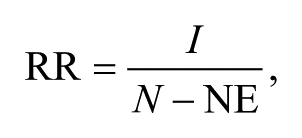
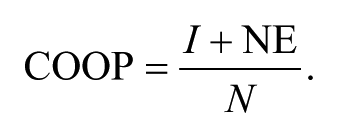
According to our formulas, the RR, calculated by dividing the number of completed interviews by the entire population and subtracting the non-environmental foundations, is 18.6%, and the COOP, calculated by adding the completed interviews to the non-environmental foundations that responded to the survey and dividing by the entire population, is 35.2%.
Within the data set, we found eight public foundations that were established by political authorities. These foundations have greater financial strength than the private foundations we found in our sample. To obtain valid results for our research questions, we decided to classify the sample into two subsamples for different parts of the data analysis. The first subsample consists of private foundations. The second subsample contains the pubic foundations. The second subsample is highly influenced by the German Environmental Foundation (Deutsche Bundesstiftung Umwelt: DBU). The DBU was established by the German Federal Government in 1990. With a financial endowment of €2 billion, the DBU is one of Europe’s largest foundations. By an act of the parliament, the DBU promotes innovative and exemplary environmental projects (www.dbu.de).
The questionnaire was organized in two parts. Initially, the respondents were asked for general information about their foundation, including the type of foundation, mission statement, and resources per year. In the second part of the survey, the questionnaire focused on environmental protection and the conservation of nature. In this section, we asked questions about relevance and the proportion of foundation issues that were environmental, the activities they perform, and their financial strength. During the survey, respondents were asked to answer several questions regarding the foundation’s financial settings, fields of interest, spatial level of activities, and environmental focus. For some of the questions, we used a 7-point Likert item (Likert, 1932). The format of our scale was based on Rohrmann’s scale (Rohrmann, 1978; Stoer & Lawless, 1993): 0 = not at all, 1 = a little, 2 = somewhat, 3 = moderately, 4 = quite a lot, 5 = very much, and 6 = exclusively. To compare our data sets, the Likert items were recalculated when we had a group of questions. We recalculated using the following formula:

The formula states that the recalculated value (R) of a question (Q) in a group of questions is obtained by dividing the value of the Likert item (V) by the sum of the values of the Likert items for all questions within a group.
The data we received from the respondents were in accordance with the comparable parameters of the entire population from the Maecenata Institute and the Association for German Foundations (Bundesverband Deutscher Stiftungen: BDS) databases (cf. Table 1). With the good response rate for a foundation survey in addition to overlapping parameters between the two databases, we can assume that the data are adequately representative of German environmental foundations. The data analysis was conducted using IBM SPSS 22.
Demographics of Environmental Foundations in Germany (in %).

Note. There is no difference between the probabilities of finding a foundation in the online survey and in the whole population referring to “type of foundation” and “age in years” (binominal/chi-square Null Hypothesis Significance Testing (NHST) p > .100). BDS = Association for German Foundations.
Results
Characterization of German Environmental Foundations
In our survey, we found very few environmental foundations that were established before 1950. There were also few foundations established between the 1950s and the 1990s. Therefore, the number of environmental foundations did not start increasing until the 1990s, and the rate kept growing into the first decade of the 21st century (cf. Table 1). In comparison with the entire population of environmental foundations, our data show a higher share of young environmental foundations (cf. Table 1). The establishment of community foundations that started in the late 1990s and boomed in the first 10 years of the 21st century greatly influenced the number of new foundations in the last decade.
Approximately half of the surveyed foundations give grants exclusively to other organizations or private individuals (48%), and approximately 25% are purely operating foundations. The remaining foundations operate their own projects and fund other initiatives as well (27.7%).
Regarding their financial situation, Table 1 shows the results of their expenditures in 2010. Although not all of the foundations shared their financial information, evidence suggests that most environmental foundations are not able to spend more than €100,000 (Mean=€1,007,000; Mdn = €40,170; SD = 6,023,000) per year. In our sample, all public foundations were able to spend more than €50,000. Without the public foundations, the average decreases by more than 50% (Mean=€479,790).
Information on the general sources of income indicates that almost 90% of foundations supplement some of their expenditures through interest on capital, two thirds receive gifts and donations, and a quarter obtain public grants (see Table 2). Private grants and membership fees only play a minor role. Even if foundations are not membership organizations, some respondents checked membership fees. These foundations belong to membership organizations that built an additional foundation for specific topics and support this foundation using the membership fees of the main association. Therefore, these membership fees are, legally speaking, private donations from an association.
Sources of Income for Environmental Foundations (in %).

As for the importance of sources of income for expenditures on environmental issues, the data show that interest on capital counts for half of the expenditures for the environment. Approximately a quarter of the money is received through gifts and donations and slightly more than 10% through public grants. These three income sources seem to be the most relevant sources in general, as well as for environmental issues. Compared with private foundations, public foundations acquire more than 20% of their income from sources other than those listed. Such sources consist of lottery revenue or administrative fines.
Fields of Interest
For a better understanding of the activities of environmental foundations, we asked them to answer the question, “What fields of interest does your organization promote?” The participants could choose from “environment and animals,” “human services (including health),” “education,” “science,” and “arts and culture,” based on a 7-point Likert item. Table 3, column 2 shows the overall importance of these different types of interests within the surveyed foundations. Environmental issues play a major role here. However, to better understand the different types of foundations, we used a two-step cluster analysis after the recalculation of the stated values. The silhouette measure of cohesion and separation is between 0.5 and 1.0, which indicates a satisfactory cluster quality for our measure.
Relevance of Fields of Interests Based on a Two-Step Cluster Analysis.

Excluding domestic Animals.
By using the cluster analysis, we could identify three types of environmental foundations. First is the “environment” type that promotes “environment and animals” exclusively. Nearly a quarter of our surveyed foundations (24%) belong to this type (see Table 3). Second, we identified the “Environment and Education” type. This type concentrates on environmental issues combined with educational and scientific activities. Other topics such as human services and arts and culture do not play a significant role. This type represents 31.2% of the environmental foundations. The third type includes foundations that have a universal focus on most fields. The environment does not play a major role in this cluster but is a significant part of the whole bundle of interests. It can be described as “Universal.” The “Universal” type represents almost half of all German environmental foundations.
As expected, spending on environmental issues (based on a comparison between total expenditure and environmental expenditures) is, on average, approximately 100% for the type “environment.” Foundations of the type “environment and education” spend approximately 63% on environmental issues. The proportion of environmental spending in the “universal” cluster is approximately 22%. It is remarkable that community foundations are found mainly in the “universal” cluster. Twenty-four out of 26 community foundations belong to the “universal” type, representing approximately 30% of this type. The public foundations that joined the survey were mainly found in the cluster “environment” (five out of eight).
Environmental Issues
With regard to the relevance of foundations as environmental actors, the specific environmental activities they support are important. Therefore, we ask which types of environmental issues the foundations focus on (see column 1, Table 4). Table 4, column 2 gives an overview of the different environmental subjects supported by foundations in Germany. The overall results show priority in the more or less classic nature conservation areas “species and habitat protection” and “landscape protection.” Nearly 50% of the activities are targeted at these two issues.
Relevance of Environmental Objectives Based on a Two-Step Cluster Analysis (in %).

A two-step cluster analysis allows for a differentiated view of the different types of environmental foundations with regard to their environmental focus. The cluster analysis gave us three types of environmental foundations (see Table 4). The silhouette measure of cohesion and separation indicates a satisfactory cluster quality for our measure. The output shows the overall mean values and each clustering variables’ mean values and their relative importance across the three clusters.
The first type, “Nature Conservationists,” has a clear focus on “species and habitat protection/biodiversity” (41.6%) in combination with “landscape protection” (42%). “Inland waters” are also relevant for this type, while all other issues play only a minor role. In total, 30% of environmental foundations belong to the “Nature Conservationists” type.
The second type, “Environmentalists,” consists of foundations that concentrate on issues related to pollution prevention and other issues of environmentalism. “Agriculture” and “coast and seas” are also relevant topics for this type of environmental foundations (see Table 4). Only 6.5% of German foundations that answered the survey belong to this type of environmental foundation. Overall, the “Environmentalists” are the smallest group. The third type, called “Generalists,” seems to promote environmental issues in a very general manner. More than 60% of the surveyed German foundations do not focus on specific environmental issues (see Table 4). All public foundations were part of the “Generalists” cluster.
To understand the role of foundations within the context of environmental actors, a closer examination of the types of activities foundations undertake to achieve environmental goals may provide us with some evidence of their roles. Table 5 shows the relevance of different activities for all environmental foundations (n) and the three types of foundations. The ANOVA results show that there are significant differences (sig. < .01) with regard to “political involvement” and “practical conservation” between the Nature Conservationists and the Environmentalists, as well as the Generalists.
Relevance of Activities Toward Environmental Issues (in %).
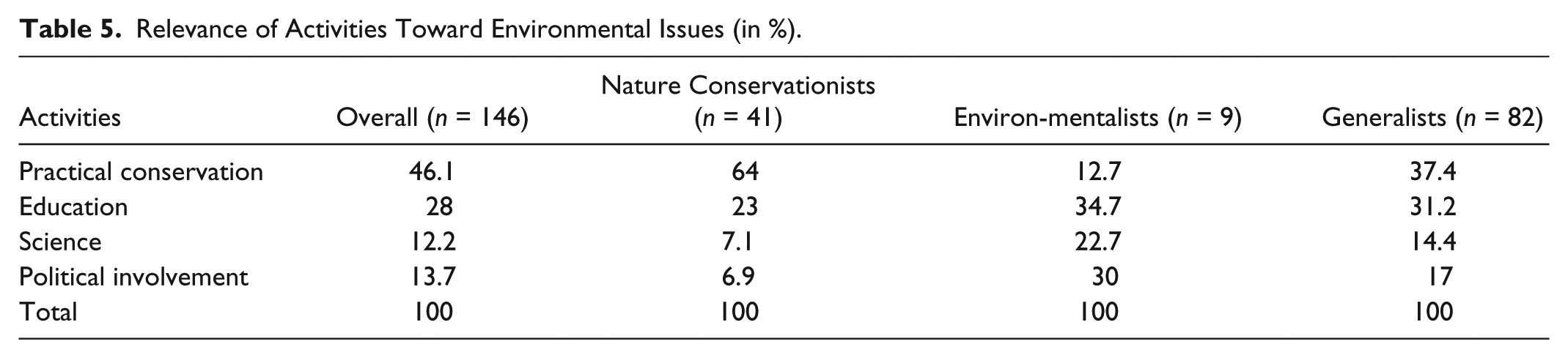
Practical conservation, at 64%, is the key activity for Nature Conservationists. Our survey shows that specific practical conservation activities are relevant at the regional and local levels. In addition, Nature Conservationists also try to achieve their environmental goals through environmental education and by raising awareness (23%). The support of science and political involvement do not play a major role. The small Environmentalists group indicates a different picture. For this type of foundation, educational measures (34%) and political involvement (30%) are the most important activities. However, this group of foundations also has the highest share of activities that support science (23%). In line with their broad environmental goals, the Generalists support a wide range of activities. Practical conservation (37%) and education (32%) are the main activities, but political involvement and science are also relevant.
Even if property is important for initiatives in the environmental sector, financial resources are an important indicator for the strength foundations that are not based on volunteer action. Therefore, the real monetary input for the activities on specific environmental issues plays a decisive role as an indicator for the relevance given to these issues. Table 6 shows the financial resources that are spent on each environmental issue by year. The calculation is based on the relevance of the specific issue for a foundation and the financial resources for each environmental issue each year. In comparison with the stated average relevance (Table 4), the financial relevance shows that the topics “species and habitat protection/biodiversity” and “landscape protection” lose a portion of their impact. However, the fact that these results show no indication for the property that foundations use for conservation should be considered. In general, the results gave evidence that financially strong foundations spread their expenditures over several topics.
Expenditures for Environmental Objectives in 2010.

The comparison between public and private foundations shows that private foundations spend relatively more money on the conservation of nature (biodiversity, landscape protection, forest, inland water, and agriculture), while the expenditures for environmental protection (waste, energy, and transportation, air, and climate and consumption) increase as soon as public foundations are taken into account. With regard to the financial relevancy of public compared with private foundations, the data show that public foundations account for three fourths of the total expenditures of our sample but represent only approximately 3%. However, it should be taken into account that the largest environmental foundation in Europe is a German foundation funded by the German government. Therefore, the data show the influence such a major player has related to overall spending.
Discussion
As outlined previously, there are three main functions that environmental foundations can perform. They can act as general partners for the political authorities, as innovators, or as mediators and watchdogs. In line with the first alternative, restrictions can be found for German environmental foundations regarding their financial ability to fulfill this task. The data show that the environmental sector is mainly composed of very small foundations. Nearly one in three environmental foundations spend less than €10,000 per year, while two in three spend less than €100,000 per year (see Table 1). In addition, public foundations count for more than 70% of the total expenditures for environmental issues in our survey (see Table 6). These numbers must be discussed while considering that this money is used to achieve not only achieve environmental but also social and cultural objectives (see Table 3). Less than a quarter of foundations that support the environment are “pure” environmental foundations, which means that most environmental foundations also support general targets such as education and human services. Nevertheless, in addition to finances, foundations can also bring their skills and expertise to a public–private partnership.
In such partnerships, they can fulfill their second function and act as drivers for innovation. In our data, we found evidence that both science and education are two important topics for the majority of environmental foundations. Nevertheless, to assess the relevance of foundations with regard to current environmental issues, one must realize that many foundations focus on “traditional” nature conservation subjects, such as biodiversity and landscape, as shown in our data (see also Bundesverband Deutscher Stiftungen, 2011; EGA, 2012). Our cluster analysis shows that approximately one third of foundations can be described as “Nature Conservationists” that focus on these traditional issues. For Great Britain, Cracknell et al. (2012) state that more grants went to elephant and rhino projects than consumption and waste. This result is in line with findings from Martín-López, Montes, and Benayas (2008), who demonstrate that visible and well-known species (e.g., the giant panda Ailuropoda melanoleuca or mountain gorilla Gorilla beringei beringei) attract greater attention and, hence, higher willingness to pay than less visible and more poorly known species or less attractive topics (see Luck et al., 2012). This phenomenon is especially relevant for foundations that depend on donations and therefore need to focus on “attractive topics.” The data show that private foundations especially depend on additional private donations in addition to their interest on capital. Therefore, we can assume that only a few environmental foundations are as independent as Anheier (2003) and others suppose (Delfin & Tang, 2006; Faber & McCarthy, 2005a). It seems to be more likely that the criticism that foundations are mainly supporting mainstream themes (cf. Roelofs, 2003; Walker, 1994) is justified.
However, we can also realize that the general public’s growing interest in climate change issues is reflected in foundations’ activities. For the United States, the U.S. Foundation Center estimates foundation grants toward climate as “Climate received a bigger piece of the total environmental philanthropic pie, growing from 9.6% to 20.8% for all funders” (EGA, 2012). These results are in contrast to the situation in Great Britain: “. . . the total grants directed towards mitigating climate change account for less than 0.7% of total UK” (Cracknell et al., 2012). In our survey, we did not address “climate change” separately. However, 11% of the foundations are engaged in the areas of “energy and transport” and “air, atmosphere and climate.” It is interesting to note in comparison that a survey by the BDS in 2011 showed that more than 50% of respondents were engaged in “climate protection.” The reason for this difference could be explained by the buzzword “climate protection” in combination with the survey method. The BDS survey was titled “climate and environmental protection” and only allowed yes or no answers (Bundesverband Deutscher Stiftungen, 2011). Therefore, it seems very important to analyze concrete projects funded and operated by foundations in greater detail to determine their environmental activities.
Regarding the function as a mediator or watchdog, the data show that in Germany, environmental foundations focus only 14% of their activities on political involvement to achieve their environmental goals. Our results are confirmed by another investigation of environmental foundations in Great Britain (Cracknell et al., 2012). Practical conservation is the leading activity of foundations. However, our cluster analysis shows that for the “Environmentalists,” other activities, such as education and science, are just as important as traditional nature conservation (see Table 5). Even if this environmental foundation type may be the smallest group in our survey, the development of this type indicates its rising importance as an environmental actor in recent years. Therefore, environmental protection could be one of the upcoming issues for German foundations, as it was in the United States (EGA, 2012) and the United Kingdom (Cracknell et al., 2012).
Thus, although the financial resources of private environmental foundations are limited, the analysis of the survey data provides evidence that environmental issues are becoming more important for foundations in Germany. The fact that 277 out of 1,359 foundations, and therefore more than half of German foundations that answered the survey, stated that they currently do not support environmental projects leads to the interpretation that German foundations have a growing awareness of environmental challenges. This statement may sound inconsistent, but considering legal restrictions that make mission statements permanent once they have been established, the inclusion of environmental issues in mission statements allows foundations to support and promote future environmental projects. Therefore, this inclusion can be regarded as an indicator of growing environmental commitment.
It seems that environmental foundations in Germany need more time for financial consolidation. Today, only the public foundations seem to have the power to make a significant impact on the environmental sector on the national and international levels. However, foundations, along with their specific capacities, can be important players for the environment and the protection of nature on the local and regional levels (North, 1990, 2010).
Nevertheless, the fact that the financial resources are limited but environmental awareness is rising in new funded foundations leads one to conclude that smaller foundations with limited capacity may concentrate on mainstream issues today but change their courses of action toward the environment and the protection of nature in the future. Although we cannot conclusively say that these foundations will address environmental tasks in the future, the developments in the United States and in the United Kingdom provide evidence that such a development is also possible in Germany.
Conclusion
Although further work is required to gain a more complete understanding of the strengths and weaknesses of environmental foundations in Germany, we can conclude that concerning the fields of action, environmental foundations in Germany focus mainly on habitat and landscape protection. Practical conservation and environmental education are the most relevant general objectives. Nevertheless, most of the foundations are multiple players because they have different fields of interest, such as social, cultural, and environmental engagement. This structure is in line with data from other countries such as the United States and the United Kingdom. However, German foundations lack financial resources, especially private foundations. Thus, expectations should not be too high with regard to this type of environmental actor.
The role of a watchdog for governmental institution especially cannot be fulfilled as suggested in the literature. Other civil society organizations such as the bi-environmental association have greater capacity and resources to accept this responsibility. However, we can learn from other countries that foundations, with their specific form of long-term orientation and political independence, can be an important corrector, as well as an important partner for the public authorities. If the state and civil society aims to benefit from private donations and foundations, there must be a further promotion for donating to, for example, a community foundation. Concepts such as matching grants are already developed in other states but are not common in Germany. As we have observed growing awareness for environmental issues, this awareness should be used to gain a long-term benefit for nature and environmental protection.
The development of foundations shows a growing number of startups every year. Our data give some evidence that within these startups, the importance of environmental issues will rise. However, our data also show that environmentally engaged foundations are often quite small with low financial resources. Thus, expectations should not be too high with regard to this type of environmental actor. In addition, close scrutiny of the different types of environmental engagement reveals a clear focus on nature conservation issues, such as biodiversity and landscape protection. Finally, practical conservation measures are the most important activities, while the important civil society role of the so-called “watch dog” is not fulfilled by foundations.
Footnotes
Acknowledgements
The authors are grateful to all participants of the survey who generously gave their time and shared their information.
Declaration of Conflicting Interests
The author(s) declared no potential conflicts of interest with respect to the research, authorship, and/or publication of this article.
Funding
The author(s) disclosed receipt of the following financial support for the research and/or authorship of this article: The study was carried out within the scope of CIVIL and Research Group, funded by the German Federal Ministry of Education and Research (Bundesministerium für Bildung und Forschung: BMBF) within the Social-Ecological Research (SÖF) program under Contract 01UU0911.