




Abstract
Crime surveys of businesses have revealed that while crimes in which men were victims tend to be reported, those in which women were victims are likely to go unreported to the police. Understanding the reasons behind male reporting and female non-reporting is useful not only for collection of crime statistics but also for improving crime control competences of law enforcement agencies. This article examines the impact of crime involving market women on their crime-reporting practices in Oyo town, Oyo State, Nigeria. The study adopted quantitative and qualitative approaches. Copies of a questionnaire were administered to collect quantitative data from randomly selected 210 market women at Akesan, Sabo, and Mosadoba markets in Oyo town. Five focus group discussions, in-depth and key informant interviews were conducted to complement quantitative data. Both data were analyzed. The study found that cultural considerations stand between crime events that hurt the economic interests of women and their readiness to report to the police. Due to the very low confidence that market women have in the ability and willingness of the police to apprehend criminals, they prefer to internalize their losses, take their cases to traditional rulers who use “oro cult” to protect them against criminals, or approach available faith-based options such as churches and mosques. The article concludes that women have economy-enriching roles to play in the context of sustainable security. It therefore suggests that the government should address public safety to enable market women make their modest contribution to Nigeria’s economic development.
Introduction
There are several difficulties that impinge on the collection of reliable statistics on criminal activity and victimization in Nigeria (Alemika, 2004). The inability of market women to play a significant role in Oyo’s accusatory justice constitutes one of these difficulties. Being a multi-faceted social challenge, crime has no easy fix, anywhere in the world. Nevertheless, crime reporting is one of the most effective responses by which members of civilized societies provide solutions to crime issues.
The history of crime and its reporting by women in contemporary Nigeria have focused essentially on the interactions that occur among the victim, criminal justice system, and the offender. In the quest to discover a great deal about how certain crimes are and are not reported, the network of social intervention, gender structure of crime reporters, the twin spectacles of the apprehension and escape of offenders have stimulated this inquiry. It was almost invariably these individuals who decided whether a crime was to be prosecuted in the first instance, and it was their words which were recorded by magistrates during trials.
Despite small businesses serving as major income earners and new employment providers for Oyo’s teeming youth, overcoming business crimes that threaten the contribution of market women to the economic development of this ancient community is probably its most critical challenge. Although business and retail crimes are commonly assumed to include all crimes and disorder committed by or against businesses, the onslaught on them has lately become an issue of significant interest to individuals who monitor developments within the Nigerian economy with patriotic interest.
If current statistics, which paint the exact picture of victimization of women within the economy were available, these would have revealed how acutely deprived women traders have been in Nigeria. While substantial research has been conducted in relation to crimes against individuals, research into crimes against businesses has traditionally received less attention, although this gap has started to close in recent years (Burrows, Anderson, Bamfield, Hopkins, & Ingram, 1999; Felson & Clarke, 1997; Gill, 1998; Hopkins, 2002; Mirrlees-Black & Ross, 1995a, 1995b; Tilley & Hopkins, 1998; Walker, 1994) in advanced countries perhaps, but not so appreciably in most developing countries of the world, especially in Nigeria.
Thus, providing inadequate empirical evidence to confirm the assumption that crime against businesses is almost as twice the estimated number of crimes against households. It is regrettable that among the general public, a commonly held perception is that, as transgressions against inanimate objects, business crimes are obscure, “victimless” events. Business victims consequently generally fail to arouse the sort of empathetic responses ordinarily reserved for “real” victims—individuals—as they are seen as better able to manage the event and absorb the losses (Johnston, Leitner, Shapland, & Wiles, 1994). Although business crime has often been regarded as a victimless crime due to difficulties in quantifying its nature, scale, and impact (Robson & Teague, 2005), the potential costs of business crime to both the individual business and the wider community are now better documented (N. Taylor, 2002), even if business offenses still mostly go unreported.
One of the most basic aspects of civil society is the guarantee of citizens’ safety and liberty to undertake decent engagements, including ones with economic motivation without any form of harassment. However, protecting the rights of individuals, who transact their businesses legitimately at market places has remained a challenge in many developed and developing countries of the world. When the means of a people’s livelihood is threatened, economic hopes become shattered. Apart from the absence of employment opportunities for able-bodied youth that makes vandalism a perennial problem, some people see their reckless siege on market traders as “no more than youthful high spirits or as an unconscious attempt on the part of children to exercise control over their environment by leaving some sign of their presence” (Barker & Bridgeman, 1994, p. 4).
Could youth not constitute an army of informal community security outfit, which imposes service charges on clients as a more socioeconomically responsible means of establishing their presence? The wanton activities of badly behaved youth could result in a situation that causes mass panic and insecurity to flourish. This could affect the welfare of poor and rich people in the community. It can cause injury and death, reduce family income, and generate a climate of fear (Department for International Development [DFID], 2000). Although some Nigerian laws exist to guarantee freedom of lawful competition, security of assets, and the protection of the business people’s rights of ownership, nevertheless, conflict scholars present the theoretical argument that crimes serve as a sort of non-institutionalized protest against the existing social relationships as well as a reaction to those relationships. Therefore, criminals who victimize market women respond to failures in social consciousness and in legislation intended to redistribute property and social status among various social groups (Tulyakov, 2004).
Studies conducted in the area of business crime provide support to the thesis that a substantial proportion of businesses suffer from crime. By virtue of their sizes and income they bring about, small businesses lack the human and financial resources of larger businesses to implement crime prevention measures. Often, surveys report that approximately half of the businesses surveyed had experienced a crime (Burrows et al., 1999; Gill, 1998; Perrone, 2000). Sometimes, this figure can be even larger (up to 76%), as was found in another study (Wood, Wheelwright, & Burrows, 1997). Unfortunately, market women do not report crimes to the police.
The British Chamber of Commerce (2004) reports that the main reasons for businesses not reporting crime were the relatively small or no loss/damage to the premises or property, no confidence in the police response, and too time-consuming. In addition, FSB (2005) indicates that businesses are particularly reluctant to report minor crimes as well as crimes that occur infrequently. The reluctance of business people to report crimes does not translate into crime prevention; neither does it cause them to be immune to revictimization. What it does imply is a conspiracy of silence that rubs public record of due statistics for crime monitoring, community surveillance, and resource allocation policies.
Besides, the limitations of official police recorded crime statistics are well known in that they only indicate the nature and level of crime that is reported to the police (Carcach & Makkai, 2002). It is even more difficult to accurately determine the true nature and extent of business crime because it is often left unreported (N. Taylor, 2002).
Again, the reasons why business crime is underreported are manifold but such underreporting means that police crime statistics do not reveal the true extent of the problem. Most business people, who refuse to report crime incidents involving them, are probably ignorant of the fact that their attitude affects the ability of the police to target and tackle the problem effectively (FSB, 2005; N. Taylor, 2002), and the effectiveness of any data collection mechanism is intimately connected with the preparedness of victims to report the crimes to which they have been subjected (West, 2000).
In the face of negative crime-reporting practices of business people, small businesses are concerned that the impact and seriousness of crime against businesses are overlooked by the criminal justice system with an overwhelming number of business owners stating that current deterrents are not sufficient to protect small businesses from the threat of criminal activity (FSB, 2005). In traditional African settings, most markets are places either open or covered, where individuals, irrespective of their ethnic nationalities, who have wares to offer for sale, meet and agree with their prospective customers, usually after non-mandatory negotiating interactions, to exchange goods for money.
For the peculiar nature of policing in Nigeria, market women do not need to be convinced that the Nigeria police are, even if illegitimately, too preoccupied with maintaining the peace in other public spaces, in which the presence of wealthy government officials and politicians is more pervasive, particularly to protect from harm than embark on less rewarding market patrols. Customarily, therefore, market women are accustomed to engaging members of vigilante groups to secure their wares. In this particular circumstance, these traders probably took the safety of their wares in the market for granted. As a result, they did not arrange private security and paid dearly for that negligence.
The effects of crime on market women’s businesses can be devastating for the wider community in the following regard: It often subjects women traders to repeat victimization and disruptive turnover; crime affects their ability to meet their customers’ deadlines, attract new customers, and ultimately cause them to face the risk of businesses closing down and putting local patronage at risk. Business crimes affect profitability; deter investment and scarce financial resources are drained partly through crime prevention measures.
On the whole, crime is a drain on the economy, inhibiting progress and damaging competitiveness. It imposes direct and indirect costs on the business, and it is often the impact of crime, rather than the direct cost, which is most devastating (Robson & Teague, 2005). The businesses of market women are usually done on a small scale. This makes their enterprises particularly vulnerable to collapse, as they lack a competitive market edge, and hence experience greater difficulty in absorbing the costs of victimization (Fisher & Looye, 2000; Snyder, Broome, & Zimmerman, 1989). It is for these reasons that market women whose businesses fall victim to crime are often left to bear the cost alone or in conjunction with their friends and family members.
Despite the likelihood of women seeming too naturally scared about crime, it is alarming that studies have found out that even businesses are somewhat resigned to the experience of crime. A BCC (1997) survey discovered that 85% of respondents were reconciled to accepting victimization as a fact of entrepreneurial life—a natural cost of doing business. Allegations of a “grudging acceptance [by retailers] that theft is a fact of [business] life” have also been noted in Australia (Hagopian, 1999-2000, p. 16).
At this juncture, the consistent finding that commercial premises face a greater risk of criminal victimization and revictimization than their residential counterparts (Bamfield, 1994; Bowers, Hirschfield, & Johnson, 1998; Naudé, Prinsloo, & Martins, 1999; G. Taylor, 1999; van Dijk &Terlouw, 1996) is of particular relevance, especially to small business enterprises, where multiple or chronic victimization is common (BCC, 1997; Hibberd & Shapland, 1993; Mirrlees-Black & Ross, 1995a, 1995b; Perrone, 2000; Tilley & Hopkins, 1998). All these make the lack of interest in reporting of business offenses by market women seem normative.
Beyond that, the commercial strength of market women has not attained the level at which they can, without being prodded, insure their wares for the purposes of risk management; it is high time these traders appreciated the broader context of doing businesses that must succeed. There is hardly a way the environment and its components, which sometimes have counterproductive impact on business activities will not, in some subtle ways, frustrate the crime-reporting initiatives of market women. In reality, the boundaries between the business and public domains are far from discrete, and hence, the effects of crime against businesses reverberate throughout the society (Cromie, 1993; Fisher, 1991; Fisher & Looye, 2000).
The organized and unorganized private sectors of the Nigerian economy, for example, contribute significantly to situations that threaten the well-being of businesses, even if they facilitate domestic capital investment, employment growth, gross domestic product, and economic well-being of the country, in general. Therefore, any assault on the business sector is, therefore, an assault on business strength, economic vigor, and social well-being of all Nigerians. It is the realization of this that makes an inquiry into crime-reporting practices of market women irresistible, at this time.
Social Action of Marx Weber was used as the theoretical framework of this study. His school of thought holds sociology as a comprehensive science of the subjective meanings of the understandable motives of human actors. These subjective meanings are attached to human actions in their mutual orientations within specific sociocultural contexts. Therefore, any behavior outside of this web, as Weber insists, falls outside the purview of sociology. It is probably in this context that Secher (1962) credited Weber with the belief that an action is “social,” if the acting individual takes account of the behavior of others and is thereby oriented in its course.
In the context of crime against market women and their reporting practices, the emphasis of this theory is on how shared values encourage or frustrate individual action in respect of how or how not to respond to issues of business victimization. This theory tries to explain how actors and society interact in the aftermath of crime. Market women victims just do not base their crime-reporting decision making on the contextual issues only, they often look beyond, especially at the broader interactional implications of their crime control initiatives for gainful future integration in the cultural milieu. Surprisingly, business crime has received relatively little attention from the U.K. government and criminologists despite the fact that it can have a significant impact on businesses (FSB, 2005; Hopkins, 2002). Crime prevention efforts have similarly focused on households and individuals, because they are the victims of a higher proportion of crimes than businesses (Burrows & Hopkins, 2005).
While interest in business victimization has increased in recent years, research in this domain is still limited and more work has been done in countries other than Australia (Fisher & Looye, 2000; Gill, 1998; Mirrlees-Black & Ross, 1995a; Tilley & Hopkins, 1998) and Nigeria. It is against this backdrop that this study aims to contribute to the knowledge base of crimes against women’s businesses through the involvement of the criminal justice system, in Oyo town, Nigeria, by providing answers to the following questions:
Materials and Method
The study location was Oyo town in Oyo state (Figure 1). Oyo is mostly inhabited by the Yoruba people. The population for this study comprises residents, especially female traders aged 18 years and above, that is, young and old female traders who are resident in Oyo town where their experiences of crime incidents make them prone to reporting crime in the way they do. The study randomly selected 225 women traders at Akesan, Sabo, and Mosadoba markets in Oyo town, as respondents to copies of a questionnaire.
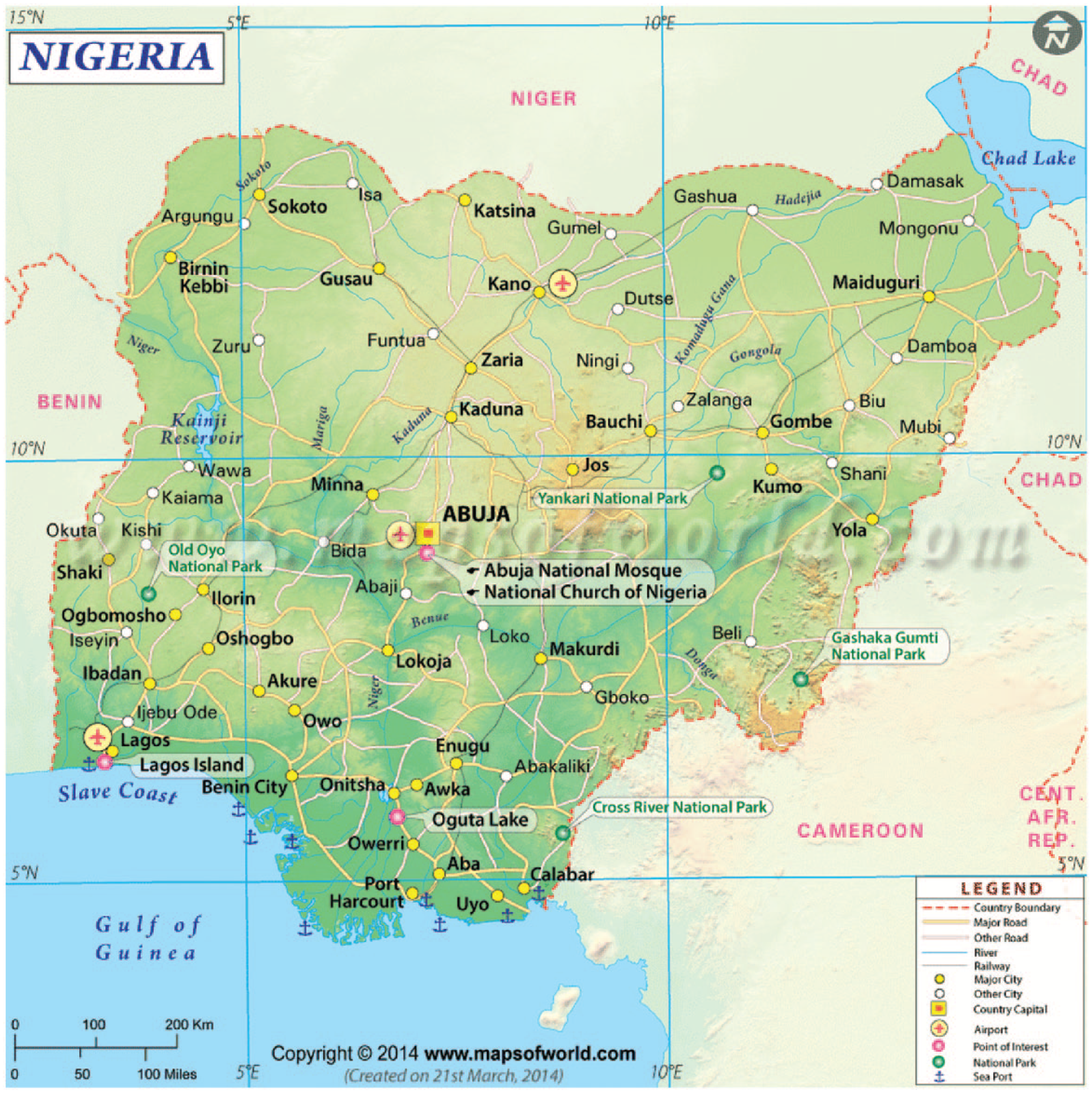
The study site in Nigeria.
The questionnaire was crafted in English but was translated to Yoruba for respondents who did not understand English. The research assistant filled out the questionnaire after the respondents had answered the questions. Even those of the respondents who could write, judging by their power of expression, were not inclined to do so because of the infringement of doing so on their sales’ time. The three markets were randomly selected. As observation later revealed, the population of traders in the three markets, the number of their customers, and the level of socioeconomic activities going on there, showed that they have the requirements to serve as representative samples of others.
In addition, these markets are located at different geographical areas of Oyo town with diversity in socioeconomic and cultural characteristics. These make selected respondents from the markets quite representative and therefore suitable for the study. Also, five focus group discussions (FGDs) were conducted to capture the underlying thoughts that inform market women’s crime-reporting practices, their sociodemographic characteristics and suggestions for improving their crime-reporting responses, so as to guarantee safer commercial interactions and livelihoods in Oyo markets.
This study adopted the probability and non-probability sample procedures. Therefore, random sampling and purposive sampling methods were used in selecting study sites and respondents. FGD respondents were selected through purposive sampling (opinion leaders such as market women leaders, police officers, customers, and members of civil rights fighters).
Concepts and Measurements
The dependent variables used for the study are whether market women reported their victimization experiences prior to the survey. The independent variables are age, place of trading, marital status, educational level, occupation, religion, and volume of trade. For knowledge about crime prevention, respondents who mentioned more than three ways of preventing victimization were classified as having good or high knowledge about prevention. From the causes of crime against market women, only three of those options are correct, those who mentioned any of the options were regarded as having good knowledge about the causes, whereas others were categorized as having poor knowledge of the causes of victimization in this article.
Sampling Design and Selection
Furthermore, these markets are heterogeneous enough to contain the diversity in sociocultural, political, and economic characteristics required for representativeness in the study. These make respondents quite suitable for the study. The sample size for this study was 225 female respondents (18 years and above) in Oyo town to study their crime-reporting practices and the efficacy of such practices in containing business victimization in Oyo town. For the reason that borders on education policy in Nigeria, it is a crime for a school-age child to be engaged in commercial activities during school hours. As a result, the study did not envisage finding school-age children selling in open markets, where they could be easily located by government officials who might arrest them for engaging in illegality.
Also, five FGDs were conducted. The sociodemographic characteristics of respondents make them appropriate for the provision of suggestions that could help strengthen security consciousness and make Oyo market women operate their businesses in a safer Oyo community. This study adopted the probability and non-probability sample procedures. Therefore, random sampling and purposive sampling methods were used. Key informant interview respondents were selected through purposive sampling (opinion leaders such as market leaders, key community leaders such as the head of the vigilante group, a chief, and a police officer).
Data Collection
Both quantitative and qualitative methods were used for data gathering. While the questionnaire method was used to fetch quantitative data, FGD provided complementary qualitative data for the study. Five final-year students of Sociology Department of the Lagos State University, comprising three men and two ladies, were engaged as assistants who conducted the FGDs and administered copies of the questionnaire with the researcher. The research assistants primarily used Yoruba language in translating the questions to Yoruba respondents and Pidgin English (commonly called broken English, which is understood across Nigeria as the simplest mode of informal communication) to translate to other respondents from other ethnic groups. In the FGD, the Pidgin English was mainly used.
These assistants were rigorously trained on the techniques of interviewing people in ways that will prevent respondents from holding any vital information back or injecting their personal biases. Pre-interview practice sessions were held to avail the research assistants the skill to administer questionnaire, handle tape recorders, and transcribe their contents. These orientation exercises took 5 days. In all, 210 copies of a questionnaire were administered, retrieved, correctly completed, and analyzed for the study.
Sample selection
Quantitative
To make the sample size representative of the entire population of market traders in Oyo town in the study area, three markets were randomly picked from among the markets in the town. From each of the three markets, 70 respondents were randomly selected to respond to copies of a questionnaire. In all, 210 copies of a questionnaire were correctly completed and analyzed for the study. From these responses, information about respondents’ sociodemographic characteristics and crime-reporting practices were captured.
Qualitative
Five FGDs were conducted to elicit information about crime-reporting responses of market women in Oyo town to capture the underlying thoughts that keep the observed crime-reporting practices enduring in contemporary times. The focus group discussants were selected across different socioeconomic backgrounds within the study area. Each of the FGDs consisted of eight participants. Consent forms were administered to all the participants before the discussions. Tapes, notes, and consent forms were safely kept by the researcher.
Data Analysis
Quantitative data
Returned copies of a completed questionnaire were thoroughly edited. Being a pre-coded instrument, entry and analyses were facilitated. The quantitative data collected from this survey were subjected to three levels of analysis. The first level involves an examination of the distribution of the respondents according to selected characteristics. This is because the behavior of individuals in society is, to a large extent, determined by their personal characteristics as well as those of the environment in which they live.
For this reason, it is expected that crime-reporting responses will be greatly determined by background characteristics such as education, age, marital status, and type of trade invested in. To this end, simple percentages were used to describe these variables. The second level involves the examination of the pattern of relationship between the independent variable, that is, market women and other dependent variables such as crime-reporting practices.
Qualitative data
The discussions from the FGDs were transcribed and translated verbatim. Analysis involved developing a system of indexing the data into sets of categories or codes that provided structure to the data based on the research objectives and the topic included in the question guide. A qualitative software ZY-index software package for ethnographic data was used for textual data analysis. Some striking expressions were used for verbatim reporting. Data from qualitative survey have been extensively used in this article to validate quantitative analysis where and when desirable.
Results
Socioeconomic Characteristics
About 88.5% of respondents who admitted having been victims of crimes are between ages 26 and 40 years holding West African School Certificate (37.8%), First School Leaving Certificate (36.7%), National Certificate of Education (19.4%), and First University Degree (6.1%). From the foregoing, respondents cannot be assumed to be ignorant traders, who are completely oblivious of the implications of the dynamics of crime reporting. Their culture may simply be overwhelming.
The marital status of respondents, who have fallen victims of crimes, is as follows: married (71.2%), divorced (11.5%), and widowed (17.3%). Also, of the respondents, 24% who are Christians admitted that they have been victims of crime and 26.1% that they are not. However, 70% of the respondents who are Muslims said that they have been victims of crime, whereas 67.4% said that they have never been victims of crime. It was not as if, in reality, they were not victimized but being victims of crime, especially in a traditional environment, is interpreted to be a kind of punishment for concealed sins. Victimhood, therefore, attracts lots of stereotypes and stigmatization. This explains why most traditional individuals want to avoid being classified as victims, at all costs.
Of the respondents surveyed, 39.7% who accepted ever reported a crime are between ages 36 and 40; 31 – 35 years (30.2%) and 21 - 25 years (19%). While only 9.5% respondents who conceded to having reported crimes to the police are single, 52.4% are married, 19% divorced, and 19% widowed. Rather than marriage impeding crime reporting because of its numerous cultural encumbrances, it provided crime-reporting resources in this study.
Twenty-one percent of surveyed respondents who reported crime to the police hold First School Leaving Certificate, West African School Certificate (33.3%), National Certificate of Education (24.6%), and First University Degree (10.5%). Education of respondents does not appear to have tilted crime reporting to a direction that could be considered significantly positive or negative. About 79.4% of the respondents who agreed to have reported crime to the police are Muslims, Christians (11.1%) and others (9.5%).
Although Muslim respondents reported more crimes in this study, it should be borne in mind that different religions have their diverse values. While crimes are mostly reported by Muslims market women could be due, in part, to their tradition, religion, and level of education. Crimes committed by known offenders among the traditional Yoruba people are usually not formally reported, especially when the victims do not have western education. There are customary structures in place to address these.
The value of loss that Muslim women respondents incurred must have accounted for their high rate of crime reporting. Otherwise, Muslims are noted to accept every misfortune that befalls them as an act of God. Right from the beginning of Nigeria, ethnic and religious tensions between the different ethnic nationalities are primary challenges. At different times, unpatriotic politicians have intensified the crises by fanning the embers of political sentiments.
Nevertheless, Nigerians from diverse ethnic backgrounds still interact in mutually rewarding contexts in their ordinary everyday socioeconomic activities. It is, therefore, common in Nigeria to have both Christian and Muslim women selling in the same market, without any observable bitterness. Beyond these, from their secondary market interactions, profound primary relationships that often culminate into inter-ethnic marriages are known to have developed. On the whole, buying and selling are commonly done by Nigerians without ethnic resentment.
The Nature of Crime Commonly Committed Against Market Women in Oyo Town
Regarding the nature of crime and crime reporting, 71.1% of the respondents revealed that their victimization involved beating which caused them severe bodily injuries that necessitated treatment at nearby clinics, which sometimes resulted in outright admission; 15.6% said that it was offensive touching and 13.3% noted that it was outright rape. The respondents said that their victimization involved theft of money (60.6%), loss of food items (21.2%), and loss of moveable economic items (18.2%). However, 10.5% respondents observed that the offenders threatened persons they found on their premises; 47.4% said that the offenders actually used weapons and 42.1% confessed that no threat whatsoever was used.
From the foregoing, it is clear that the offenders did not have any particular crimes other than theft in mind. Therefore, the time of the day in which a crime occurs has influence on the crime-reporting practices of the respondents. About 21.1% of the respondents who reported crimes to the police said that the crime took place in the morning, at night (66.7%) and did not know precisely when the crime occurred (12.3%). Majority of the crime that took place at the market occurred at night when power outage was most likely and offenders will have all the liberty in the world to cart away as much items of the market women they could.
Victims’ Handling of Reporting of Crimes Committed Against Women’s Businesses
Availability of alternative conflict resolution structures in Oyo town, too, has its influence, no matter how subtle, on the crime-reporting practices of market women. While 65.8% of the reported their victimization to town association, 18.4% reported to traditional rulers and 15.8% to Oodua People’s Congress (OPC). In Nigeria, the capacity of community residents to report crime has been badly frustrated by fear of offender retaliation. For instance, in the time past, one notorious armed robber Anini became a national threat so extraordinary that Babangida as head of a military government asked Etim Iyam, the then inspector general of police, after a supreme council meeting, “My friend, where is Anini?” No Nigerian was courageous enough to report his or her exploits for fear of reprisal.
On arrest, Anini confessed that his gang had George Iyamu, the deputy superintendent of police (DSP) as an insider within the police hierarchy who shielded, would reveal police secrets to them, and would give them logistic support such as arms to carry out robbery operations. After each operation, Iyamu joined the criminals in sharing their loot.
As a result, he had choice buildings in Benin City as his investment of the loots he obtained from men of the underworld (Anini, 1986). Imagine, if any foolhardy community resident had gone to report Anini and provided useful information to the police which their ring leader, DSP Iyamu, knew about, the consequence for that reporter meant nothing short of death.
Rounding off a regime of crime typified by Anini in the context of fear-invoking criminality in Nigeria, Omo-Agege (1986) in his judgment said that Anini will forever be remembered in the history of crime in this country, but it would be of unblessed memory. Few people if ever, would give the name to their children. As a result of this, public trust in the police has become incredibly low. Therefore, most of the community residents who are victimized willingly explore cultural structures for solution to their crime challenges, instead of notifying the police.
Nevertheless, 48.7% who reported their victimization to the police said that the police believed their reported crime accounts, 35.9% said that the police arrested the offenders, and 15.4% said that the police ignored them and their complaints. Similarly, social network influences have a significant effect on the crime-reporting practices of market women in Oyo town. The people to whom the respondents confided in about the occurrence of crimes determined the direction of their crime-reporting preferences as 11.8% received support from those they told, 27.5% said that such individuals advised them, while 60.8% actually said that these individuals reported their victimizations to the police on their behalf.
Satisfaction of Market Women Victims With Outcomes of Crimes Reported to the Police
How comfortable are these market women victims with the processes involved in the formal reporting of their victimization? None of the respondents were very satisfied with the police handling of their complaints. While 65.8% are dissatisfied with the police, 18.4% are satisfied and 15.8% found it extremely difficult to define their state of satisfaction with police services. That majority of the respondents who reported their victimization experiences to the police ended dissatisfied bears eloquent statistical testimony to the level of trust disconnect between the community and the police.
Despite all the shortcomings of the police, market women showed a willingness to assist in making the police functional for public good by suggesting a way out of the commercial insecurity of women at Oyo markets. Fifty percent of the respondents suggested that the government should invest in mass security education in the three main Nigerian ethnic languages (Igbo, Hausa, and Yoruba) and 50% recommended that voters should elect good leaders for Nigeria in future who would be committed to ensuring public safety.
It is understandable when some respondents denied ever having been victims because this has its roots in cultural orientation. The meaning of crime in Yoruba is “oran,” which is often interpreted as a tragedy. In typically cultural parlance, the criminal (odaran), his or her crime (oran), and the victims are symptoms of varying layers of misfortune. Therefore, crime is often ascribed to cultural retribution of some kind. Except a respondent has had a deep sense of detachment from his or her natural entrapment by cultural socialization, to accept being a victim of crime in a deeply cultural environment is as clear as indicating that one is a cultural sinner.
In the study site, when someone is victimized, he or she is commonly assumed to be atoning to a secretly committed against the gods and rhythm of traditional order (cultural sin). However, this claim has roots only in stereotypes, which drive interaction among deeply traditional members of the community. Among educated indigenes, this does not enjoy any generic and considerable acceptance. For the fact that crime victims are most likely to be stigmatized in traditional surroundings, every victim would prefer to conceal his or her state of victimhood to avoid some embarrassing interpretations and painful cultural labeling. Qualitative data support most of the quantitative findings as insights from the contributions of respondents of in-depth interview indicate :
Respondent A observed as follows: Burglary of locked up shops is the most common crime that market women face in Oyo town. We report them to market leaders who then notify the police. However, by conduct, the difference between the police and offenders is not clear. In Nigeria, police corruption is not strange to anyone. Therefore, no one is immune to police extortion. Occasionally, the police in association with immigration officials raid open markets in which market women do their legitimate businesses. The police use force to retrieve smuggled goods. When these happen, Nigerians unanimously condemn the police whose duty it was to have prevented the entry of all these banned items, in the first place. However, markets women’s associations may reach special arrangements with the police for protection which might involve money payment; it is not common for police to collect money from individual market women, ostensibly to provide protection. This is not to deny the truth that the police usually make reporters feel stupid as they request them to report at their stations at odd times when the victims are supposed to be making efforts to overcome their losses. At the end of the day, the offender may never get apprehended and losses too never recovered. This is double loss of some kind to us [market women].
Respondent B observed, I have no confidence in the police. Whenever they are alerted, they blow siren to alert the robbers of their arrival. In effect, the offenders would just leisurely walk away, undetected. What happened next? The police would begin to harass and arrest innocent citizens as suspects of more scandalous crimes. To bail themselves out from police net, they are made to pay various forms of illegitimate dues. This is really a humiliating tradition in the face of available best practices in crime control that characterize the 21st century.
Respondent C observed, It is like the bad eggs outnumber the ethical ones in the Nigeria police. Government should totally overhaul the police and provide jobs for our teeming youths to reduce the threat of burglary to the economy of market women in Oyo town.
A female FGD argued, The only way to counter deep-seated traditional fears of Oyo women in terms of crime reporting of their abusers is to embark on carefully coordinated crime-reporting education which will commit them to reporting without inducing the police and overcoming all cultural inhibitions to assert their rights in a civilized manner.
Another female FGD observed, The general air of discrimination against women on the basis of their sex has widely spawned a culture that rejects modern values which enjoin men to show consideration to women and their concerns. Except market women rise as a critical vessel for crime reporting, their economy may become more endangered in future.
Respondent F, a female cloth seller, said, When her trade experienced crime some few months before the study, she was extremely traumatized. She felt the urge to report hoping she would recover some of the items stolen but she feared the offender might revenge after he must have been arrested, prosecuted, punished and released. The police cannot be trusted to keep the particulars of crime reporters confidential, as expected.
Respondent G, an adult female smoked-fish seller, said, Cases of abuse of market women are though disturbing, some of them derive from long-standing practices that we have grudgingly tolerated for years. We have started to feel the impact of their onslaught more deeply and painfully. This informs our unsolicited embrace of formal crime-reporting choices in modern times.
Respondent H, an old female pepper seller, said, Such business abuses by offenders were part of a pattern of disturbing behaviour for years among young men in Oyo communities. Most of their sympathizers often attempted to reduce the effect of their misconduct by claiming that it was the bad economy that drove young men to violate the rights of market women in Oyo town. Beyond this, if all economy-affected youth have to unleash their anger on market women, will their mothers still remain in most homes perpetuating motherhood activities?
Discussion and Conclusion
It is a verifiable statement that many crimes against market women go unreported. This is probably so because of the level of confidence the traders have in the police ability to ensure recovery of stolen items through prompt apprehension of criminals. In the colonial epoch, the style and principles of policing have been described as anti-people by several authors (Alemika & Chukwuma, 2000; Ikuteyijo, 2009; Okafo, 2006; Rotimi, 2001). The unwholesome antagonism between the police and the policed in the study site must have taken its root from this unpleasant beginning.
Colonial police had a universal agenda. Everywhere there was colonialism, the focus of the colonial police was to foist compulsory order, tolerable or not, on the citizenry. Therefore, to ensure that colonial subjects obeyed their masters hook, line and sinker, the colonial police probably, inadvertently, adopted adversarial policing which worsened the already suspicious civilian/police relations in Nigeria.
For the foregoing and other reasons, market women in Nigeria, generally, and those in Oyo town, in particular, are encouraged to develop the culture of business insurance, now that insurance policy has been liberalized, so that their expectation of compensation could enhance their survival competence and crime-reporting interest in the aftermath of victimization. In the light of crime-reporting reality on ground, the study suggests that market women in Oyo should deemphasize spiritual security of their economic wealth and invest in formal security channels and insurance.
The truth that most market women in Oyo town appear to ignore is that crimes against their businesses are usually crimes of opportunity. In some instances, individuals who are not career offenders may offend simply because market women leave their precious items without capable guardians. With the economic dislocation that inundates most Nigerian environments with employable but unemployed youth, frustrated individuals who hitherto did not have criminal intention may take advantage of carelessly exposed items in the markets. In sum, if market women continue to make their markets easy for criminals to steal from, chances are, every situational criminal who otherwise might not have taken to criminality will take advantage of this porous market situation, to help themselves.
Although the history of community police relation in Nigeria has been described as frosty as the idea of policing imposed on the country by the colonial masters was calculated to foster an antagonism between the policed and the police (Alemika & Chukwuma, 2000; Onoja, 2007; Tamuno, 1970), a lot could still be achieved in terms of public security, if Nigerians decide to make good of a bad job. It is, therefore, concluded that making crime against their businesses risky, costly, and unrewarding through proactive and protective measures is about the best option that Oyo market women could explore in their circumstance to sustain their businesses.
Recommendations
Market women should overcome cultural limitations and begin to disclose crimes they have been traditionally disinclined to report.
Public policy should simplify crime-reporting procedures to further encourage women to report crimes involving them and their varied interests.
In addition to imbibing the culture of crime reporting, market women should insure their business risks with insurance companies to have something concrete in terms of compensation to fall back on times of inevitable victimization. Therefore, market women should take advantage of the ongoing (insurance liberalization) simplified insurance conditions, through group application, to insure their wares.
Market women should save their money in banks on a daily basis to reduce their losses at each victimization episode by taking advantage of the (banking liberalization) softened banking conditions, which encourage diverse saving packages that are convenient for petty traders. Most banks have branches all over in Nigeria and through their numerous aggressive marketers are reaching out to petty traders to avail themselves of the available packages that ease bankability. As yet, Nigerian banks do not discriminate against customers on any grounds.
Market women should invest more on crime prevention strategies for less cost of business crime.
The mind-set that crimes against businesses are natural costs of doing business and therefore facts of business life should be changed because it is tolerant of crimes and criminals.
Women should report crime against their businesses, so that criminal data emanating from them could form critical guiding components for the development of culturally based interventions.
Footnotes
Declaration of Conflicting Interests
The author(s) declared no potential conflicts of interest with respect to the research, authorship, and/or publication of this article.
Funding
The author(s) received no financial support for the research and/or authorship of this article.