




Abstract
This study explores the role of educational programs in promoting students’ cross-cultural competence (CCC) development in international business education. Using constructivist grounded theory methodology (GTM), a comparative analysis of four extensive case studies was conducted within four schools, all of which offer international management education in English for local and international students. This study examines institutional contributions to an environment that supports students’ CCC development. A typology model consisting of four educational approaches to students’ CCC development is presented based on student experiences. The study provides recommendations regarding the steps that higher educational institutions (HEIs) can take to promote educational environments that support cross-cultural exchange, cultural knowledge creation, and individual and organizational cross-cultural competence development.
Keywords
Global mobility has become commonplace in academic environments and is even considered “the defining characteristic of our age” (Rizvi, 2008). The internationalization of higher education can be both a driver of international student mobility and the resulting student diversity (Jiang, 2005) and a response to these factors (Qiang, 2003). The number of international students has nearly doubled worldwide in the past 10 years. In 2012, there were more than 4.1 million official international students (Organization for Economic Co-Operation and Development, 2012), and by the year 2025, there will be an estimated 15 million (Altbach & Knight, 2006). Although the United States attracts the largest proportion of international students worldwide—in 2012, 4% of students attending U.S. institutions were international, and 22% of those studied business and management (Open Doors, 2012)—Latin American and European countries were the most popular destinations for short-term study abroad programs (Open Doors, 2012).
Literature Review
The interconnectedness of business and academia has increased international education opportunities, transforming the composition of student bodies at higher educational institutions (HEIs) and the labor market requirements for graduates. Business program graduates in particular are expected to perform with competence in international and intercultural professional environments (Edwards, Crosling, Petrovic-Lazarovic, & O’Neil, 2003). This development presents educational business programs with the challenge of accommodating diverse groups of multicultural learners and preparing these students for global careers. Although preparing students for a globalized world and international careers is a stated goal of numerous HEIs, there is a lack of agreement regarding whether the most desirable outcome of such preparation should be pragmatic, liberal, or civic (Schechter, 1993). A number of authors support the role of higher education in promoting global citizenship (Nodding, 2005), focusing on the development of a set of values and attitudes that foster global justice and peace, whereas other authors suggest a more practical or pragmatic approach, focusing on global employability and the ability to work in diverse groups (cf. Gardner, 2004). The majority of international business students need practical abilities and skills that prepare them for future careers (Grigsby, 2009), because “(t)he increasing globalization and the interconnectedness of multinational work environment have intensified the demand for graduates capable of operating in culturally diverse context” (Jones, 2013, p. 95). The latter approach, commonly referred to in international business as cross-cultural competence, is understood as the following: An individual effectiveness in drawing upon a set of knowledge, skills and personal abilities in order to work successfully with people from different national cultural backgrounds at home or abroad. (Johnson, Lenartowicz, & Apud, 2006, p. 530)
This type of competence is desirable not only for students but also for the instructors and administrators of educational programs that serve diverse student bodies (Jones, 2013). In the last 25 years, the topic has drawn the attention of the management and academic community, and cultural knowledge creation and cross-cultural competence have been approached and researched from a variety of directions (cf. Holden, 2002; Johnson et al., 2006; Spitzberg & Changnon, 2009). However, despite a notable increase in interest in the development of cultural skills on both practical and methodological levels, and a large number of models, frameworks, and approaches, there is no common understanding of these complex constructs (Van de Vijver & Leung, 2009). The challenge for educators is to develop these competences “as a kind of professional knowledge through the curriculum” (Fitch & Desai, 2012).
To meet this challenge, HEIs must increase both the international and multicultural student presence in the educational environment and must facilitate meaningful interactions among diverse student groups. This challenge is consistent with intergroup contact theory (Allport, 1954), provided that the essential conditions of equal status, common goals, cooperation, and support from authorities are satisfied. Whereas current research favors the hypothesis that this approach is likely to enhance cultural knowledge, empathy, and perspective (Pettigrew & Tropp, 2008), the initial aims of the intergroup contact theory were more modest. These aims included a reduction in existing prejudice rather than the more ambitious and pragmatic goal of developing future business competence. However, the overly optimistic expectations that students would arrive on campus with a wealth of cultural capital (Ridley, 2004) that would result in numerous educational opportunities, including social forums to foster multicultural (Adler, 1983) and intercultural (Volet, 2004) development, were not entirely grounded.
Although the benefits of cultural interactions are not contested among researchers (cf. Jon, 2013; Leask, 2009; Otten, 2003), there are limited and sometimes conflicting suggestions regarding how these interactions should be facilitated among students in an academic community, given that the mere presence of students from different cultural backgrounds on campus and in classrooms is not sufficient (Volet, 2004; Ward, Bochner, & Furnham, 2001). In fact, simply increasing the quantitative cultural diversity of a student body is unlikely to result in educational benefits (Dunstan, 2003) and may even produce “more heat than light” (Bennett & Salonen, 2007, p. 46). Therefore, HEIs must promote intercultural education and learning through various means, including curriculum internationalization, which “provides students with course content that reflects diverse perspectives” (Whalley, 1997, p. 10), emergent and study abroad tours (Black & Duhon, 2006; Green, Johansson, Rosser, Tengnah, & Segrott, 2008), or comprehensive processes that increase international awareness through cross-cultural interactions and student immersion into global settings through study abroad and international work placements (Edwards et al., 2003).
Despite the growing popularity of study abroad programs, such programs often fail to achieve even the modest objectives of increasing cultural awareness and sensitivity (cf. Forsey, Broomhall, & Davis, 2012; Koskinen & Tossavainen, 2004). Formal classroom instructions can provide students with the theoretical framework for adopting long-term perspectives (Aggarwal, 2011). However, these programs must also incorporate concrete cultural experiences and reflective observations into their curriculum to successfully develop students’ cross-cultural skills and competences (Ng, Van Dyne, & Ang, 2009; Yamazaki & Kayes, 2004). Moreover, in formal courses, students benefit from the development of language skills and knowledge about different cultures and from their interactions with peers from different places, such that “the learning occurs on multiple levels” (Gupta & Govindarajan, 2002, p. 122), but “knowledge of international business must be supplemented by appropriate personal skills” (Aggarwal & Goodell, 2014, p. 2). However, students’ understanding of diverse cultures tends to exclude their friends and social network members who represent culturally different groups because these relations are built on shared interests, not on differences (Halualani, 2008). Consequently, theoretical discussions regarding cultural diversity miss the main point, because an increase in CCC may be perceived by learners as a decrease, which is consistent with a shift from conscious incompetence to unconscious competence (Tung, 1993).
Skobeleva (2008) proposes a more promising model that addresses the pragmatic process of collaborative cultural knowledge creation in cross-cultural and multicultural groups that share a common practical goal. The process is initiated by the desire (or “longing”) for a positive change. First, participants recognize the limitations of their knowledge and actively seek new knowledge or novel solutions for common problems. This approach involves the combined transfer of valuable experiences and perceptual adjustments. Participants share their knowledge until it becomes symmetrical. The second critical stage is characterized by building trust, deep mutual appreciation, and collaboration. This process is facilitated by the presence of a shared language, professional knowledge, and the shared value of collaboration, resulting in new competences and novel discoveries. Skobeleva and Gomes (2011) caution that this model of cultural knowledge creation lacks confirmation in other settings and contexts, as well as it needs further development in a number of themes . . . [However], the theory can also be used to structure teaching in business-related courses in cross-cultural environments.
Given Halualani’s (2008) findings regarding students’ perception and understanding in multicultural learning environments, Skobeleva’s model may be a pragmatic and feasible approach for creating knowledge and developing cultural competence in international business education.
Although there are numerous theoretical propositions regarding how students can increase their cross-cultural competence or develop global mind-sets at international educational institutions (cf. Boyacigiller, Beechler, Taylor, & Levy, 2004; Spitzberg & Changnon, 2009), there are generally fewer studies empirically examining this process. The existing studies tend to focus on specific aspects of the experience such as the effectiveness of a study abroad program (Forsey et al., 2012; Koskinen & Tossavainen, 2004), the experiences of an ethic group at a foreign university (cf. Devita, 2000; Ladd & Ruby, 1999), or, more recently, the experiences of local host students with their international peers (Dunne, 2009; Jon, 2013). These studies lack an empirical focus on the holistic experiences of all students. Moreover, these studies neither compare several international programs nor incorporate the experiences of diverse student groups, including local, international, and exchange students, who study in different countries within varying educational systems. There is a need for a model that explains how students experience the process of CCC development and what influences this development. This study adopts a holistic approach to this issue and concentrates on students’ experiences during the educational process.
Method
The following research questions serve as guides for this study:
Design
This study uses a constructivist grounded theory approach (Charmaz, 2006) to analyze the experience of business students in international multicultural learning environments. In this study, I examine the academic experiences of students, including their formal class instruction, independent group work, and social experiences, because each of these factors contributes to the process of creating and sharing cross-cultural knowledge.
Study Setting
I collected data from 2007 to 2009 at the following four undergraduate international business programs: the state-sponsored University of Applied Science (UAS) in Finland, two private universities in the Czech Republic, and a large private university in Ecuador. One of the Czech universities offered vocational certificates and academic degrees in business and management in cooperation with a U.K. college, whereas the other offered a national degree and an American degree in business administration in cooperation with a large state university in the United States. I selected these extensive cases based on theoretical aspects, that is, the cases were sufficiently similar and different to “allow for theoretically interesting comparison” (Eriksson & Kovalainen, 2008, p. 122). English is not an official language in any of the three countries; in addition, English was not the native language for the vast majority of the enrolled students. The national cultures of Finland, the Czech Republic, and Ecuador are distant (Kogut & Singh, 1988) from each other and from the national cultures of the United Kingdom and the United States, countries in which the majority of the international faculty were educated: Therefore, the study settings represent a wide range of national cultures and educational environments.
The selection of these cases differs from numerous studies examining students’ cultural adjustment or competence development because these cases represent small HEIs (from 25 to 150 graduating students at the time of the study) without residential campuses that are located in Europe and Latin America. Therefore, all of the students had to engage in daily meaningful academic and social interactions with their cross-cultural peers in academic environments. Correspondingly, the students had to participate in educational processes conducted in a foreign language by primarily international faculty in multicultural classrooms.
Participants
I interviewed a total of 94 participants (78 students, 12 faculty members, and 4 academic administrators) from 30 countries. Approximately half of the student participants (42) were women. The majority of students were slightly older than traditional young adult college students; the mode of the students’ ages was 22 years. All of the students were full-time degree students, and the majority of them were either employed or engaged in active job searches at the time of the study. In addition, all of the programs were located in or near a large city; in the first three cases, this location was the multicultural capital city (i.e., Helsinki and Prague). To effectively combine participants’ observations with their in-depth interviews, for three universities (A, C, and D), I only recruited students who were enrolled in one of the management classes that I taught during the data collection period. For School B, where I was not teaching during the data collection stage, three of the eight student participants were my former students, and the other five were enrolled in the degree program. All eight participants were recruited via school email. All of the participants were volunteers and gave their informed consent. Table 1 above provides additional information regarding the interviewed participants.
Summary of the Interview Participants’ Personal Data.

Data Collection
For theory-building purposes, I combined the following data collection methods (Eisenhardt, 1989) at each location: semi-structured in-depth qualitative interviews; reviews of organizational materials, including formal documents, promotion materials, and course syllabi; and participant observations because “. . . both organizational rhetoric and reports may pale in the face of observed worlds” (Charmaz, 2006, p. 38). I actively participated in all four academic settings as a visiting instructor and a member of the academic community. Therefore, I benefited from my “personal observations that result from [my] presence, participation or even intervention in the actual process to be examined” (Gummesson, 2000, p. 83). Having lived and worked as an instructor in all three research locations for extended periods of time (the shortest sojourn was 18 months in Ecuador), I possess informed knowledge of the educational institutions, countries, and educational systems that the programs represented.
The participant observations occurred during classes, during social and formal academic events, and in daily academic situations such as study groups, library visits, and coffee breaks, depending on the location. At the beginning of a new course, I explained that I would be acting as a participating observer and would take notes on things that happened within and outside of class. I invited the students to contact me if they found these arrangements uncomfortable, but no one did. The settings I observed were open to me as an instructor at the university and as an extension of that role in the social sphere. I observed my classes, as well as extracurricular activities that were organized as a part of the learning process. I observed my colleagues’ classes when I was invited, and I observed school events at which my participation was expected, such as graduations and public lectures.
In the interviews, I asked students to explain why they decided to study in an international program, what they expected as a result of their cross-cultural learning experiences in multicultural academic environments, and how they would describe their academic experiences and their relationships with peers and faculty. I used documents to illustrate organizational rhetoric and to represent the officially required processes and procedures because these factors influenced the students’ experiences and the academic environments.
Analysis Procedures
I recorded and analyzed the data that were collected via the interviews, participant observations, and the documents using the constructivist grounded theory method (GTM; Charmaz, 2006). The GTM requires ongoing coding of the data (at the initial, focused, and theoretical levels), constant comparison analysis, and inductive theory building until theoretical themes emerge. Dimensional analysis, a constructivist method for generating grounded theory (Bowers & Schatzman, 2009; Kools, McCarthy, Durham, & Robrecht, 1996; Schatzman, 1991), was applied to describe and explain the students’ experiences and approaches to the development of cross-cultural competence. Dimensional analysis is an “alternative method of generating grounded theory conceived for the purpose of improving the articulation and communication of the discovery process in qualitative research” (Kools et al., 1996, p. 314). Based on the theories of natural analysis (Schatzman, 1991) and symbolic interactionism (Blumer, 1969), dimensional analysis provides a methodological framework in which each dimension represents a component of the researched phenomenon. In combination with an explanatory matrix, which is the cornerstone of the analytical process, this analysis extends beyond a description to provide an explanation regarding the complexity of the process (Kools et al., 1996). Based on the constant comparison analysis, I established the dimensions of the data by coding the data for incidents that explained what was occurring. In dimensional analysis, the codes are organized in an explanatory matrix. However, the process of dimensionalization or “designating things and events (dimensions) in the data regardless of position on the explanatory matrix” (Kools et al., 1996, p. 323) begins during the initial analysis to expand the data by answering the question, “what all is involved here?” At the next stage, based on “the most significant and frequent codes” (Charmaz, 2006, p. 57), I generated analytical categories to facilitate theoretical development. Then, I selected several salient dimensions that had the most explanatory power and organized these dimensions in the explanatory matrix, which was constructed from the perspective of what I considered the most prominent dimension from the data. The explanatory matrix is presented in Figure 1, and additional details are provided in Table 2. I assigned the other dimensions to the prescribed positions of the matrix—context (or settings), the conditions that influenced actions, process(es) that occurred under the conditions and in the context, and finally, the outcomes of the process(es) or consequences (Kools et al., 1996). The consequences are presented in Figure 2.
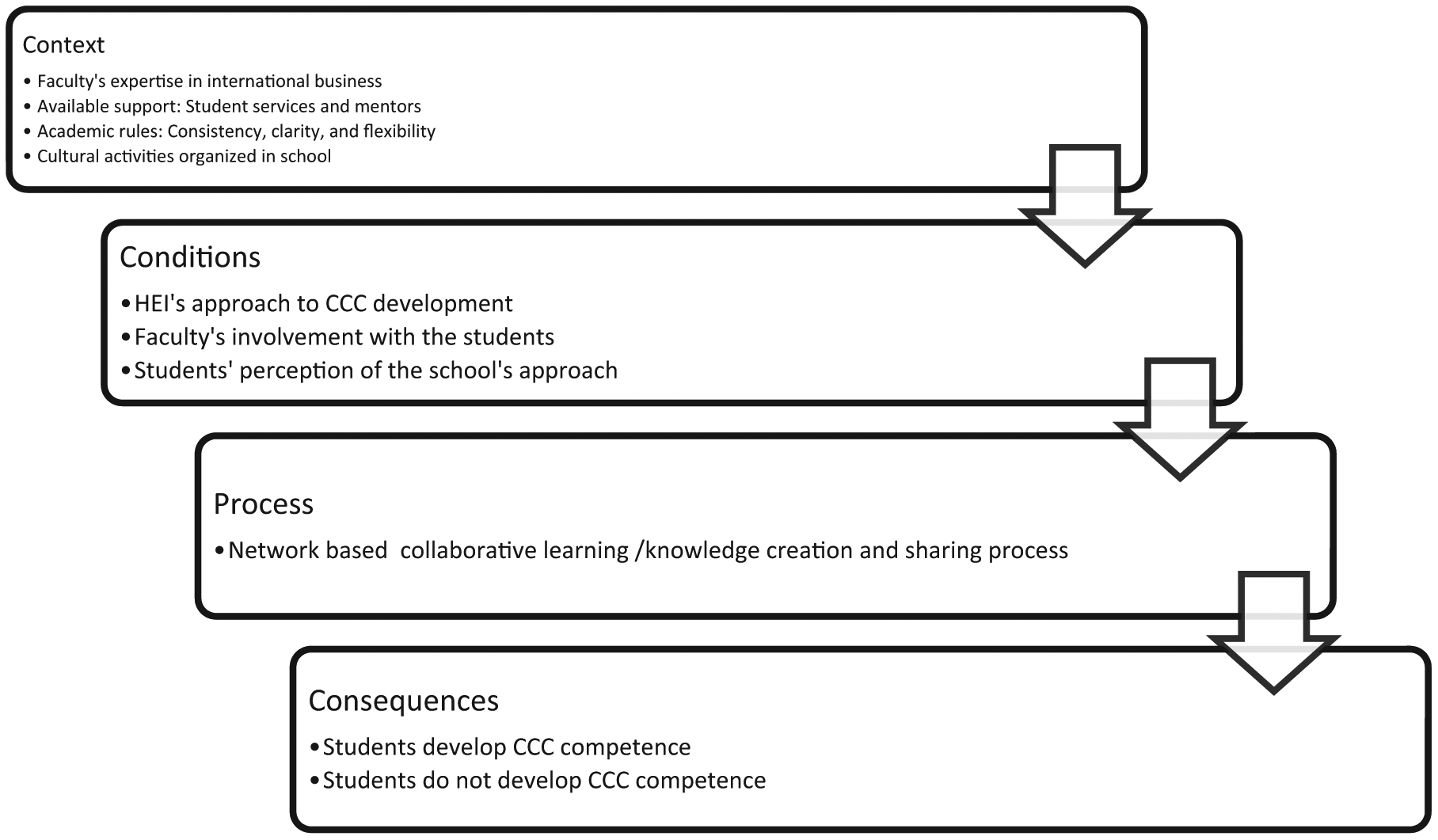
Explanatory Matrix. Student Experiences in Multicultural Learning Environments.
Summary of Student Experiences in School Environments.

Note. CCC = cross-cultural competence.
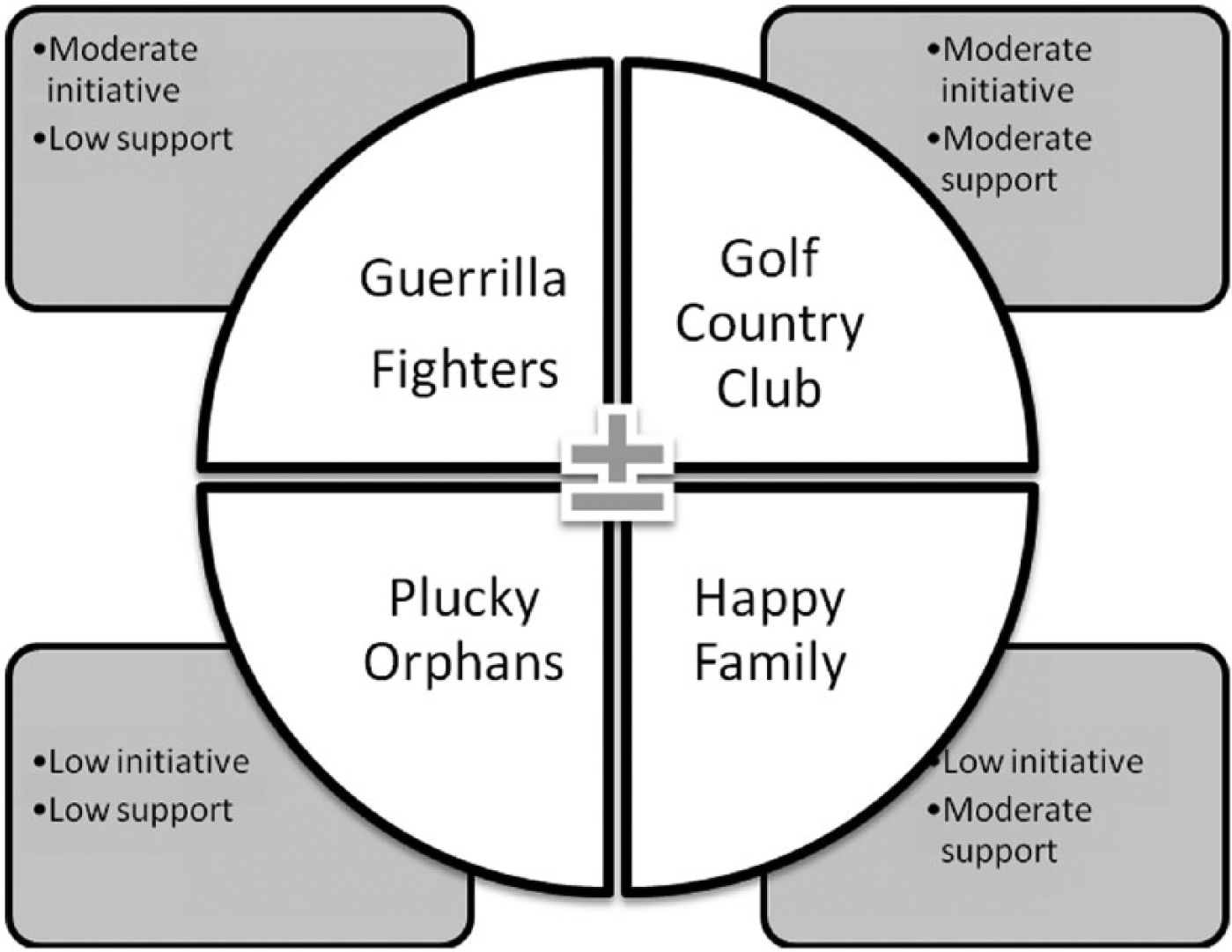
Consequences: Students’ approaches to cultural knowledge creation and CCC development.
During the first stage of the analysis, I identified the aspects of the educational environment that influenced students’ cross-cultural competence development and cultural knowledge creation. Given that the students were invited to discuss their cross-cultural knowledge creation experience, anything that they mentioned had significance. During this phase, I initially coded the interview summaries and observation notes regardless of the possible importance or the connections among them (Schatzman, 1991). Factors identified during the first stage included the following: the impact of the program, the feedback mechanisms, the faculty’s class management styles and skills, the social connections among the local and foreign students, the extent to which students engaged in group work, the students’ attitude toward group work, the teachers’ requirements for team projects, and the support of the students’ efforts to generate new knowledge.
Early in the process at School A (Finland), the in vivo code of “school as a building” emerged; this perspective eventually became evident at all four schools. The dimension that appeared to have the most explanatory power was the students’ desire and expectation that a university should not only be a building and a place to study but also be a socially connected learning community. Next, I selected the dimensions that were related to the social setting of the school as a learning environment and organized these dimensions in the explanatory matrix. Although the four universities addressed the issue of their academic environment and community in different ways, a number of similarities were identified, and eventually, the data were saturated in the fourth university. Saturation is achieved when no new evidence emerges to inform theoretical development.
To ensure the theoretical rigor of the analysis and the credibility of the findings, as required by constructivist GTM (Charmaz, 2006), I frequently compared the newly added data with the existing data and recoded all the data when a new dimension or focused code emerged. I recorded theoretical developments through conceptual memos and invited the participants to co-analyze the emergent themes. I solicited the participants’ personal understanding of the connections among the categories and the explanations of the process. Although direct member checking was impossible, as I moved from one country to another during data collection and conducted the analysis simultaneously, I presented preliminary results to other groups of students and faculty. The centrality of social networks and the learning environment for the development of cross-cultural competence and a global mind-set was universally supported.
Application of NVivo 10 (CAQDAS) Software in Data Analysis
In addition to the constant comparative analysis that was conducted simultaneously with the data collection, the data were coded through a QSR NVivo 10 project such that the codes were edited and the explanatory matrix dimensions and interconnections were verified against the complete data set. Although there are concerns that the CAQDAS programs are better suited for objectivist rather than constructivist grounded theory because the programs “may unintentionally foster an illusion that interpretive work can be reduced to a set of procedures” (Charmaz, 2000, p. 521), the use of this software facilitated the conceptual exercise of theory building.
Findings
The student participants clearly articulated their educational goals, which included progressing in their careers, building networks, and developing and sharing cultural knowledge. However, as shown in the examples below, many participants were disappointed that their university or program (i.e., school) did not create a social environment that was conducive to collaborative learning.
The school here is just a building—four walls and a roof—it’s the place where you get lectures, not a community where you can learn. (An international student from China, School A) It’s a sick building, dangerous and uncomfortable to be in, and there is no place to meet, to share things and to learn. We don’t even have a cafeteria. They [the school administration] want us to come, to pay and to go away. They don’t care whether we learn or not. (A local Czech student, School C) I think the school community is just like this building. Pretty to look at, but see these cracks in the wall? And the puddles on the floor when it rains? It’s more important how the university looks on the school’s brochure, not what the students learn and how they are prepared for an international career. It looks good to have international faculty, so here we are. It’s less important what we can teach the students, how we prepare them for the globalized world. (A U.S. faculty member, School D)
The metaphor of a building evokes a formal, bureaucratic, and inflexible approach to learning and encourages one to contemplate the difference between a house and a home. The main components of the explanatory matrix are presented in Figure 1 from the perspective of “a school is more than a building.” The contexts or settings of the schools were described in more detail based on the students’ perceptions of the academic environments, which were supported by the document review and the participant observations. Table 2 illustrates the contexts, conditions, and consequences as experienced by the students. A discussion of the process follows.
Context
The context dimension describes how the participants experienced the situation. To provide some background details, information on the programs has also been added. The students considered the faculty’s expertise in international business; the available support (particularly from student services and faculty mentors); the existing academic rules and their consistency, clarity, and flexibility; and the cultural activities organized in school to be the most important factors that influenced their cultural competence development. The specific details for the different programs are presented in Table 2.
School A was a program at the UAS in Finland, the only public university among the four schools included in this study. During data collection, the school pioneered a “learning by development” approach to education, which all of the interviewed students found confusing. The school administration did not name CCC development as a high priority; rather, the administration decided that only international students required cultural orientation or training because the administration believed that these students were more likely to miss classes and final exams, turn in their assignments late, and generally possess poor study skills. This is not unusual, as in Finland, the intercultural education is often related to the “problematic idea of tolerance” and is presented from the “perspective of otherness” and the object of the education are those who are being tolerated, the “others,” and specifically, the international students (Dervin & Layne, 2013, p. 4).
However, both the local and foreign exchange students considered CCC as a primary outcome of their studies, in addition to developing an international professional network of peers and knowledge regarding foreign business practices, including marketing, client services, and entrepreneurship. Although the heavy academic load, inconsistent and capricious course requirements, and unclear academic outcomes made it difficult for all of the students to succeed academically, the exchange students felt less pressure because their grades were less important. The students wanted to engage in more social and professional activities in school, in addition to activities through the student union and international student clubs. The students believed that the school took only nominal steps to support their cross-cultural competence development, such as by assigning local peer mentors to international students. The students felt that the school should make more of an effort to promote intercultural communication and social network development.
School B was an international business college in Prague that followed the U.K. educational model in cooperation with a British partner. This school was the smallest of the four cases and the one with the most informal atmosphere. The small class sizes required cross-cultural adjustment because there was rarely a group of students from the same culture in any class, even with regard to the local Czech students. Each student was treated as an individual with his or her own strengths or weaknesses, and instructions were tailored to address the particular needs of each student. However, this scenario also could be viewed as a shortcoming. Although the students had numerous opportunities to form international friendships and to receive personal attention from their instructors, those students who were quiet, shy, and performing at an acceptable academic level were ignored. Some of these students already had friendship groups outside of the school and were not interested in forming new ties. Although the school administration was easily accessible and the teachers were readily available by phone and email for questions and consultations, there was an organizational belief that CCC could develop naturally through contact with other students and faculty. Therefore, CCC did not receive any specific attention.
School C was a private university in Prague that offered bachelor degrees in cooperation with a large public U.S. university. The students selected this school for its “American style” approach to teaching, which included practical projects, presentations, and discussion-style lectures; students generally had more options than were offered by other Czech universities. Students could pursue a national BBA degree, obtain a BS degree from the U.S. partner university, or earn a double degree. Students could also decide whether they wanted to attend classes during the week or over the weekend, and they could take some classes in the traditional semester format and others in the intensive, weekend format. Nevertheless, the students perceived that they were often treated merely as cash-generating customers and therefore were disgruntled. This situation created an unusual bond between the students and the faculty, who, like the students, tended to believe that they were not treated fairly. Neither the students nor the faculty liked the strict administrative rules and authoritarian management style, which were at odds with both the traditional academic culture and the Anglo American style of instruction.
School D was a large private university in a suburb of Guayaquil, Ecuador. The university enrolled a large number of bi-cultural (i.e., Ecuadorian/U.S.) students but few international students. However, nearly all of the faculty members in the international business program were foreign-born, and all were foreign-educated. The school administration was often called on to mediate between teachers and students, who tended to disagree regarding issues that were perceived as cultural but that actually could be found on any college campus, mono- or multicultural, including issues relating to academic integrity, attendance, and course requirements. The university organized cultural activities to enhance students’ cross-cultural development and was the only one among the four schools to do so. The exchange and international students and the new faculty participated in a cultural orientation on the social, cultural, and academic life of Ecuador. Trips and outings were offered to places of interest, including the Galapagos Islands. The existing faculty could also take advantage of these opportunities. The well-liked dean of the program was viewed by students as “an entrepreneur” who “gets up from a chair” to proactively accomplish things for them. Many of the students were from influential social and economic backgrounds; therefore, these students’ academic results were less important for them because they were likely to join family companies on graduation or had developed social networks of relatives and friends that made finding jobs easier. Although the students at this school may not have been the most academically advanced, they were learning to be effective business people and were already demonstrating managerial and business competencies. If a class lecture or discussion did not contribute to their knowledge (in a way that they believed could be applicable to their business environment), the students preferred to spend class time building and strengthening their social networks, which are of crucial importance in Ecuador. The teachers were encouraged to keep their courses relevant to the realities of local and international business life, and the administration played a benevolent role in negotiating differences and solving conflicts.
Conditions
The important conditions that influenced the students’ CCC development were identified as the program’s approach to cultural knowledge development as well as the students’ perception of the approach. The extent of the faculty’s formal and informal involvement with the students outside the classroom, such as faculty’s provision of career and business advice or participation with students in professional and social events, also emerged as an influential factor. However, the students did not consider this involvement dependent on a school policy but rather on individual faculty members’ goodwill, professionalism, and engagement in the teaching process.
Process
Students considered the process of collaborative cultural knowledge creation through social networks to be the most important. Because the students perceived CCC both as a crucial outcome of their studies and as a study skill that could improve their learning, their approach was pragmatic: They intended to “learn manageable things that can be applied right away” (international student from Sweden, School C). The practical approach to cultural knowledge creation, or cross-cultural competence, was considered imperative by students, as explained in the following comment: To do business in the modern world, a business person has to be able to work with partners and employees from different cultures. That is the essential part of international business. (An international student from Israel, School C)
This opinion was expressed in different ways across all four locations by the majority of the participants. However, the desirability of developing cross-cultural competence for academic purposes was not universally supported, as illustrated by the following opinion: It is important to know how to manage your employees from other countries and how to deal with business partners and customers, but in school, we are all students, all follow the same rules, so there is less need to understand each other’s preferences or accommodate others’ working styles. (A local Czech student, School C)
To achieve CCC, the students created their own social and professional networks, either with their school’s support (e.g., mentoring, academic events, the buddy system, and the encouragement of social contact among students and teachers) or without their school’s support. However, it should be noted that even when a school supported network creation, it did it either unintentionally or with a different objective in mind. The objective of the schools’ support was either academic success (e.g., mentoring, buddy systems, and academic events) or entertainment (encouragement of social contacts with faculty, organization of social events, and school trips). Students developed their networks independently and opportunistically, often at the expense of the stated and approved academic objectives. In addition to obtaining an official diploma or undergraduate degree, cross-cultural networking was considered by the students to be the main reason for international business education: The most important part of school is that you meet people—create your circle or network. That is what it is all about—you can read books at home or even listen to lectures. I always try to meet international students—even if we are not in the same class. (A local Ecuadorian student, School D)
A local Finnish student at School A expressed a similar feeling: We are international business students. We need to know how to do business in other countries, not here in Finland. And our international classmates are the best resource. After all, we are going to be doing business with them or with somebody like them, not with the professors. I’d like to build my business network now, when I am at school, that’s why I’d like to have in class international students from the places I would be interested in professionally.
The students may already have a global mind-set or at least the drive to develop a “curiosity about the world,” an “explicit articulation of the current mindsets,” an “exposure to diversity,” and “a disciplined attempt to develop an integrated prescriptive” (Gupta & Govindarajan, 2002, p. 120). Through academic activities, the students shared knowledge regarding local practices, available economic and social resources, and methods of conducting business for existing projects and future professional goals.
We are planning to go into business with A. (an international Ukrainian student) when we graduate, and even now we are building our contacts with the students from Serbia and other parts of the Balkans. And they introduce us to other potential partners. We can share our local knowledge and discuss future projects because we are all on the same page; most of us took the same business strategy course. (An international Finnish student, School C)
The desire to form lasting networks and to learn business and social practices in different locations outweighed the students’ interest in purely academic knowledge. They engaged in collaborative cultural learning opportunistically—while working on a team project, during class discussions, at social events, and during lunch. The students indicated that they enjoyed having diverse team members, particularly in classes addressing international subjects, to use each other’s knowledge of the environment, to consider a variety of approaches, and to develop novel solutions and entrepreneurship ideas.
One of the great things is that when we work in teams, we are not only discussing the group project at hand, but also share knowledge of our countries, or other places we have been, like I can tell my classmates about Mexico and the U.S., where I used to live. We share ideas and come up with creative solutions, which we would not be able to come up with on our own. Sometimes, we kind of forget about the project, we get on with some other [business] idea. But of course, we always end up doing what is required from us. (An international student from Macedonia, School B)
Occasionally, the students expressed a preference for working in groups that shared their attitudes toward schoolwork and academic achievement; nonetheless, even in these cases, they preferred to achieve not only academic but also cultural learning objectives.
We like to work [on group projects] with other Chinese students, because normally the Finnish students don’t care about their grades that much—passing is good enough for them, but we need “excellent.” But when the students do good work, deliver their parts on time, and come to all team meetings, we are happy to work with them as that gives us more perspectives and ideas. We like to work with L. (an international student from Estonia) and with P. (a local Finish student) as they can be trusted to do their best and we learn from them about how business is done in Europe. (An international student from China, School A)
Not surprisingly, international faculty members were commonly viewed as potential mentors, particularly by local students who planned to have international careers. However, the mentoring role was perceived as an extension of the social role of a friend rather than the academic role of an instructor.
It’s nice when we can meet the teachers socially—not only to know them better, but when you are friends with them, they can be your mentors, you have a long-term relationship, even after you graduate. This is very important and a huge plus of this program. (A local Ecuadorian student, School D)
In some cases, students described instructors as current mentors because of established academic and personal connections.
Prof S. is more than a teacher—he is a friend and mentor. (An international student from Colombia, School D)
Students’ peers and even their peer groups also acted as current and future mentors, particularly when the majority of classmates were professional adults.
We are kind of all helping each other, academically and socially. That is what is important, to build connections that will last—education is important, but this is more valuable—we all learn from each other, in class and after. (An international student from Slovakia, School C)
Holden (2002) considers networking to be a cross-cultural, knowledge-sharing activity by promoting cultural understanding in a social process that occurs in a community of shared networks with interrelated meanings (Gertsen & Søderberg, 2010). Therefore, when students had neither time nor opportunities to build social networks because of their academic workload (as was often the case for School A—Finland) or did not perceive network building to be valuable because of their existing social and cultural networks (as reported by several participants at School B—Czech Republic/the United Kingdom), there was less interest in sharing knowledge and collaborative learning. The students who were less interested in cultural knowledge creation and sharing often had vague plans for future careers, and these plans involved government service or large national firms rather than business entrepreneurship or global management.
Consequences
Each of the approaches that the programs promoted for their students, regardless of the international or multinational rhetoric of the particular school or program, is presented in Figure 2.
The consequence or outcome of the cultural knowledge creation process in various programs was either the success or failure of student CCC development. Although the individual outcomes depended on personal factors, including an individual student’s ability to create cross-cultural social and professional networks, the general approach of the students in a specific program was influenced by the administrative assistance and by the students’ initiative. Unfortunately, none of the four programs provided substantial support of students’ cultural knowledge creation, and in none of the programs did the students, as a group, exhibit high initiative, although some students were significantly more proactive than their peers. Student initiative appears to be a more significant factor than the administrative support provided by a school. Therefore, in the programs in which the students took initiative and responsibility for their cultural knowledge development, they were more likely to succeed.
“Plucky Orphans” School A—Finland
Despite the internationalization rhetoric, as it was documented, for example, in Tossavainen (2009), this program leaves students without support in the development of cultural knowledge. Demanding academic objectives, a lack of school-organized social or cultural activities, and the faculty’s limited international experience and desire to engage with the students outside of classes limit the students’ opportunities to develop cross-cultural networks. The student union organizes some cultural activities with international students, but these activities are conducted during normal school hours and, therefore, are poorly attended. Some students attempt to meet their international classmates socially, but because of a lack of shared interests or safe social spaces where they can interact, this network building is mostly restricted to team projects and group assignments. In addition, most students lack basic network-building skills and expect the school to provide them with opportunities to engage with their international peers. Such an approach is unlikely to result in the development of cultural knowledge and CCC.
“Guerrilla Fighters” School C—Czech Republic/the United States
The administrative support provided by School C is low; however, the students take at least moderate initiative in the development of their cross-cultural networks. The program unintentionally provides students with opportunities to engage with their peers and with the international faculty, such as in weekend-long classes during lunch hour. School C is less academically demanding than School A. Therefore, many assignments allow time, often during class, to engage in social networking: to discuss personal, professional, and business interests, and to engage instructors in discussions that might not be strictly related to the course’s learning objectives. In addition, the students and faculty share a disdain for the administrative rules and requirements, which are perceived to be unreasonable. The faculty members often engage the students in clandestine, or at least unofficial, learning and career development projects, such as field trips to local businesses, informal study groups held in a local pub, the sharing of job search tips, professional introductions, and invitations to international social and business events. The students appreciate that the faculty members might be risking their jobs by breaking the school attendance and trips authorization rules set by the unpopular administration, and this creates a bond between the faculty and the students as well as among the students in the same course. In addition, many students are working professionals, and they have developed business and professional interests and networking skills. A “Guerilla Fighters” approach is likely to result in the development of cultural knowledge and CCC.
“Golf Country Club” School D—Ecuador
At this school, students’ initiative and administrative support for cultural knowledge development are both moderate. The program provides cultural orientation for international faculty and exchange students, engages students and faculty in social and sporting events, organizes cultural trips, and encourages the faculty to tailor team projects and class assignments to the students’ expressed interests. The campus has several social spaces, including group study rooms, a cafeteria, a café, a gym, and a chapel, in addition to many study places furnished with sofas, tables, and computer stations. The students have well-developed networking skills and are willing to introduce international and exchange peers to local business practices and invite them to social events. Many students participate in family businesses and have developed professional interests. Faculty members are mostly willing to engage in social activities, and to participate in cultural events, where they are likely to meet their students. Faculty and students organize joint social events, which are encouraged by the administration. Although most of the administrative support is aimed at providing enjoyable learning environments for the students, and retaining international faculty, it also facilitates the students’ CCC development and cultural knowledge creation.
“Happy Family” School B—Czech Republic/the United Kingdom
A significant amount of academic and learning support is provided to students, including personalized assignments, one-on-one tutoring, twice as many contact hours as in any of the other programs, an informal environment, an open door policy, ever-present-on-site administration, easy contact with teachers, consistent forms of the assignments, written feedback, and regular meetings with advisors. Small class sizes help students make new friends, share cultural insights, and improve their academic performance. However, School B expects its students to miraculously develop cross-cultural abilities through exposure to different cultures. Yet the students are used to detailed instructions, directions, and advice provided by the faculty and administration, and they rarely take the initiative to develop cross-cultural networks. In addition, the social activities organized by the school are poorly attended, possibly due to the excessive time students spend at school, and there are limited social spaces, where students can interact outside the classroom. Such an approach, while supporting academic progress, is unlikely to result in the development of cultural knowledge and CCC.
Discussion
The main theoretical theme that emerged after comparison and dimensional analysis was that “a school is more than a building,” or social space is needed to create networks in educational environment, notably with respect to the collaborative and social aspects of knowledge sharing and creation.
The participants’ attitudes toward cultural knowledge creation were more pragmatic (Engeström, 2001) than meta-cognitive, which aligns with the cultural intelligence tradition of intercultural competence (Thomas, 2006). This finding is consistent with the practice of acquiring cross-cultural competence in business environments (Blasco, Egholm Feldt, & Jakobsen, 2012) and is positively influenced by mentorship (Ericsson, Krampe, & Tesch-Romer, 1993) provided by peers or instructors. Therefore, social networking contexts and activities are central for CCC and knowledge creation (Holden & Glisby, 2010),
This approach is consistent with the idea of building joint frames (Bird & Osland, 2006) in the cultural understanding process, wherein collaborators identify novel cultural situations and weigh conflicting interpretations. In addition, this approach is consistent with cultural knowledge creation within a team, as described by Skobeleva (2008). In this process, participants use their joint knowledge of management and entrepreneurship to solve problems and create cultural and business knowledge in multicultural and cross-cultural environments. As noted earlier, students may already possess global mind-sets, given their consideration of the international opportunities both for educational purposes and for future careers and enterprises. Although their attitudes were pragmatic, the students engaged in cosmopolitan learning (Rizvi, 2008), albeit on a limited scale.
The process was similar across all four settings (i.e., schools) regardless of the attitudes toward CCC development that were promoted and encouraged by the schools. There were differences in the degrees of students’ development. In schools that supported network building and collaborative knowledge creation, either intentionally (School D—Ecuador) or unintentionally (School C—Czech Republic/the United States), the students engaged in social and collaborative cultural knowledge creation. In schools in which this engagement was dissuaded, either because of an excessive academic workload and confusing regulations (School A—Finland) or the extensive individual assistance provided by the faculty and staff, which made contacts among students unnecessary (School B—Czech Republic/the United Kingdom), the students who sought to build networks and appreciated the value of these networks for academic learning and future career prospects were not actively engaged with their cross-cultural peers. These students often relied on local or expatriate groups for knowledge sharing and cultural learning.
The main limitations of this study are consistent with a qualitative constructivist approach to theory building. Although the selection of cases was based on theoretical considerations, there was also an opportunistic element because I was a member of the educational communities of these schools. Therefore, the case selection was limited to schools with which I had a professional employment connection either at the time of the study or prior to that time. The number of participants (94), although rather large for a qualitative study, was not adequate for drawing any generalized conclusions. In addition, although the representation of 30 countries is significant, it obviously does not cover the entire spectrum of the student bodies found in international education programs. The findings of this study cannot be generalized in any meaningful way globally, nor can they be generalized to the countries or campuses in which this study was conducted. However, generalization was not the intention because the study was based on constructivist grounded theory, which seeks to analyze the subjective experience of the actors, not the general condition of reality. Finally, student interactions were only studied in academic environments; student experiences outside of these environments, both prior to and concurrent with the study, were only acknowledged when reported by the students, which was in relation to the academic educational process.
Nevertheless, the study provides important insights into international students’ educational goals and learning objectives, namely, the development of cultural knowledge and cross-cultural competence. Furthermore, this study provides universal support for the importance of informal social networks for meeting these objectives. HEIs should assess the specific needs and educational objectives of their students, both local and international, and would benefit from creating conditions that encourage student initiative and that provide opportunities for social networking and collaborative learning.
As this study demonstrates, international business students are likely to adopt a pragmatic approach to developing cross-cultural competence. Rather than being created in isolation, cultural knowledge is a social process involving group knowledge sharing and creation. This approach to CCC development is consistent with Skobeleva’s (2008) model, which stresses shared goals, symmetrical shared knowledge, and novel solutions to common problems. Although teamwork is possible during course group projects, a long-term approach to expertise development that is promoted by Ericsson (Ericsson et al., 1993) requires an embedded approach to development, including faculty participation as mentors and advisors and a systematic commitment on behalf of the HEIs to assist students in developing and building social and professional networks. Although students’ initiative is the main factor that influences this development, educational programs can support this development by creating opportunities for students to engage in social network creation.
Future research should focus on the specific ways that students engage with social networks to create and share cultural knowledge and on the possible involvement of educational programs for nurturing and enhancing these networks.
Recommendations
This study did not identify one specific approach to promoting students’ cross-cultural competence development in international business education that is likely to succeed in all educational environments. Student initiative seemed to be a more significant factor than the administrative support of the program. Nevertheless, several steps can be recommended for most international business programs regardless of the specific compositions of their student bodies and students’ educational goals.
First, HEIs should address the social aspects of the educational process and should support students’ development of social networks by creating positive conditions both inside and outside of the classroom, including organized social, academic, and professional events, clubs, and activities, or integration of experiential learning projects (Osland, Kolb, Rubin, & Turner, 2007) in the curriculum (cf. Mikhaylov, 2014) for promotion of cross-cultural learning. Because encouraging students’ initiative appears to be beneficial for cultural knowledge development, learning projects, social clubs, and professional events are more likely to promote cross-cultural network development and knowledge creation if they are organized by students and are based on the students’ preferences and shared interests.
Second, students need to learn networking skills, including communication, presentation, and how to develop contracts. HEIs should teach these skills, either as career development or as part of the curriculum. Obviously, the learning objectives should depend on the specific learning needs of the students. For example, among Finnish students, even proficient English often lack such basic communication skills as initiating small talk, whereas students in Ecuador tend to ask personal questions too early in a relationship. Although the majority of international students use social media to stay in touch with friends at home and to find information in new locations, many require professional and business-oriented social media networking skills.
Third, as suggested by Mitchell and Vandegrift (2014), HEIs should extend their efforts to hire and retain international faculty members, who are culturally competent and have professional experience in international business, not only to introduce students to global business practices but also to act as mentors and advisors. This approach can provide safe places where students can learn to build and inspire trust, and to develop social capital and cross-cultural networks.
Fourth, developing connections with local and global businesses and communities and encouraging student participation in joint projects are likely to promote students’ professional and cultural competence. In addition, joint social events, which may have limited academic value, provide opportunities for students to meet others, develop contacts, and ultimately, promote cultural knowledge sharing.
Finally, a globally embedded approach that highlights long-term expertise development (Ericsson, 1996) is more likely to be effective than a single course or even a short-term immersion in a cultural experience.
Conclusion
This study addresses the gap in the literature on the institutional factors that affect international students’ cross-cultural competence development. It proposes an empirical model, grounded in students’ experience, of the different approaches to CCC development and the factors that influence this development. The study shows that although student initiative is crucial for the development of cultural knowledge and cross-cultural competence, school support, including diverse and safe social spaces, the encouragement of social and professional networking activities, and access to cultural expert mentors, positively influences cultural knowledge creation. Compared with previous studies, the design of this study is more rigorous, including research in four culturally distant educational settings, an examination of the experience of different groups of students, and several data collection methods (interviews, observation, and document reviews), representing a holistic approach to the issue.
Notably, I found that international business students are likely to use similar processes of CCC development regardless of the educational environment and to take a pragmatic approach to this development. This study’s findings also confirm the positive influence of cultural mentors. To the best of my knowledge, this is the first study to identify the crucial role of informal social networks for cultural knowledge creation in international business education.
Footnotes
Declaration of Conflicting Interests
The author(s) declared no potential conflicts of interest with respect to the research, authorship, and/or publication of this article.
Funding
The author(s) received no financial support for the research and/or authorship of this article.