




Abstract
This is the first national and multilingual survey of Ethiopian journalists, resulting in, first, a comprehensive demographic profile of Ethiopian journalists; second, the overwhelming evidence of antipathy between government-employed and private-sector journalists that undermines the possibility of a collective identity or cooperative relations among Ethiopian journalists; third, the discovery of an apparent paradox between Ethiopian journalists’ pride in their country’s history as a sovereign nation and their regret at the lack of strong press traditions which is a by-product of this history and, finally, the tension that emerges in the data between Ethiopian journalists’ pride in and embarrassment about their chosen profession.
Introduction
Ethiopia is an ancient country that shows many faces to the world. It is respected variously as the cradle of humanity (homo sapiens), the birthplace of one of the world’s oldest but now defunct forms of democratic governance (the Oromo Geda System), the stronghold of African independence, and the homeland of the world’s most outstanding long-distance runners. At the same time, it attracts much more international media coverage as the land of famine, hunger, poverty, civil war, and autocratic governments.
Politically, modern Ethiopia has known three different types of governments: the imperial rule of Emperor Hailesilassie (r. 1930-1974; except for the Italian East Africa interregnum from 1936 to 1941), the Marxist military junta led by President Mengistu Hailemariam (r. 1974-1991), and the Ethiopian People’s Revolutionary Democratic Front’s (EPRDF’s) revolutionary democratic government, led by Prime Minister Meles Zenawi (r. 1991-2012), one of Africa’s longest serving leaders, who died in office in August 2012, and was replaced by Prime Minister Hailemariam Dessalegn.
In 2012, the Federal Democratic Republic of Ethiopia (FDRE) had an estimated population of 92 million, making it the second most populous nation in Africa. The country is landlocked, has a predominantly agrarian economy, and regularly suffers extreme weather events such as drought and famine. The country depends on significant amounts of humanitarian and development aid from Western countries to alleviate its economic problems and food shortages. In the last decade alone, US$26 billion in aid was donated, primarily from the European Community, United States of America, and United Kingdom (Dereje, 2011).
The official language is Amharic. It is spoken by only 32.7% of the population, with another 31.9% speaking Afan Oromo, the language of the largest ethnic community of the country. In terms of religion, some 43.5% of the population are followers of the Ethiopian Orthodox Tewahido Church, another 33.9% identify as Muslims and there are smaller Protestant and Catholic congregations as well as followers of traditional beliefs (Central Statistical Agency [CSA], 2008).
Ethiopia has very limited media and communication resources. According to a recent Ethiopian Broadcast Authority report, by 2013, there were only 16 newspaper titles and 25 magazines available in the market (Ethiopian Broadcasting Authority [EBA], 2013). The country’s Telecom and Broadcast industry is under government monopoly. There are an estimated 1,400 professional journalists in the country or one journalist for every 65,000 Ethiopians. This number does not include around 200 EPRDF cadres that staff the party-owned media. The EPRDF government tightly controls both the state-run media organizations and the commercial press. These adverse conditions have dampened the professional ambitions of many dedicated and courageous Ethiopian journalists. It is a grim fact that those who take their work seriously live with the constant threat of prosecution, imprisonment, or exile. In a recent survey, Ethiopia is named among the countries most likely to imprison journalists or to force them into exile (Committee to Protect Journalists, 2011a, 2011b; Human Rights Watch, 2010; Witchel, 2011).
Thus, despite creating a constitutional and legal framework to protect press freedom and independent journalism in the 1990s as part of the post-junta democratization process, the Meles government then proved more than willing to contravene its own media rules and stifle media commercialization in the 2000s to ensure its own political survival. The recently appointed Prime Minister Hailemariam Dessalegn seems set to follow the same path as his predecessor (“Ethiopia’s Hailemariam,” 2012).
Research Questions and Methods
Under this brief background, this article is aimed at examining continuity and change in the profile of Ethiopian journalists. The article also investigates their self-perceived identities by providing answers to the following three research questions:
This study, at the center of methodological pluralism, adopts a mixed-methods research design (Creswell & Tashakkori, 2007; Johnson & Onwuegbuzie, 2004; Morgan, 2007; Teddlie & Tashakkori, 2009) for answering these questions. Thus, data for this research were gathered via a mix of database compilation, quantitative survey questions (incorporating some open-ended questions), and in-depth interviews with senior working journalists as well as retired journalists who had been pioneering figures or leaders in the Ethiopian field of journalism.
The actual number of the country’s journalistic workforce was difficult to determine. As a result, I decided to undertake a census. The census was conducted by collecting the names of journalists from all the private and government mass media organizations across all urban, sub-urban, and regional towns of Addis Ababa, Adama, Hawassa, Bahir Dar, Mekele, Dire Dawa, Harar, and Metu. For this purpose, the list of mass media organizations was obtained from the website of the EBA. In 2010, the EBA listed 46 functioning mass media organizations in the country, of which 12 were state owned and 34 were privately owned. I contacted 43 of these 46 organizations, excluding three outlets of the ruling EPRDF party (i.e., Radio Fana, Walta Information Centre, and Dimsti Woyane Tegray) because of their close political affiliations. The Ethiopian News Agency, which was once governed by a government-appointed board, was excluded as well because it had recently been relocated to the Office of Government Communication deemed a “government communicator,” and was no longer registered or licensed as a government media outlet. This suggests that the agency no longer sees itself as a journalistic institution. Instead, it is serving as a public relations office for the government, promoting government policies, agendas, and interests. The census resulted in 1,391 total number of Ethiopian journalists (1,196 state-run media employed and 195 privately employed journalists). Since then, the Ethiopian Media Mapping study conducted by Electoral Reform International Services (ERIS) revealed that about 1,650 journalists are serving in private, government, and party affiliated media in Ethiopia (Ward, 2011). This basic information was compiled into a database, which was then amplified using demographic data gathered using the main research instrument, the quantitative survey. To avoid sampling bias, I collected the names of journalists from each mass media outlet (for newspapers, I relied on published by-lines). The sample was drawn randomly from the lists of journalists using the proportionate stratified random sampling method. To avoid under- or over-representation, strata of journalists working in the private and government media were created. Then, a 10% sample of participants was randomly selected from each stratum.
A pilot study was conducted, using a convenience sampling strategy drawing on a small group of journalists based in the capital, Addis Ababa, including journalists working in all four target languages: Amharic, Afan Oromo, Tigrinya, and English. Based on the feedback, the questionnaire was then re-edited to a final master and distributed to journalists in the chosen sample, mostly in person via trusted contacts in the field, for self-completion.
Twenty-four working journalists and three retired veterans of the Ethiopian news industry were interviewed for this project. The in-depth interview technique aimed to achieve deeper insights into journalists’ views, and provide a means of verifying and extending the quantitative findings by identifying consistencies and inconsistencies in the answers given to similar questions asked using different formats (Creswell, 2003; Greene, 2007; Teddlie & Tashakkori, 2009). In fact, triangulation is achieved by comparing and contrasting data obtained from the closed- and open-ended survey questions (two components) with data gathered during the interviews (third component), which helped enhancing the validity of the findings. Semi-structured questions were used in the in-depth interviews; these questions explore the same topic areas as the quantitative survey.
Data for this profile were compiled from the quantitative survey undertaken in 2010. 145 of the 155 journalists invited to participate in the survey completed the questionnaire, a response rate of 94%. The sample comprised journalists working in the national mass media of the Ethiopian Radio and Television Agency (ERTA), including its branches in the Metu and Harar radio stations, the Ethiopian Press Agency (EPA), and the regional states mass media agencies in the two main cities of Addis Ababa and Dire Dawa, as well as the five major regional broadcasting services, producing and broadcasting radio and television programs: Oromia (including reporters working in 17 zonal branches), the Southern Nations, Nationalities and Peoples’ Region (including 6 zonal branches), Harari, Tegray and Amhara. The survey data from 145 journalists were complemented and cross-checked against the data from the qualitative interviews with 27 journalists, selected from both the government (n = 19) and private (n = 5) mass media, and 3 retirees who had worked with the government mass media. The interviews were conducted in three languages—Amharic, English, and Afan Oromo—according to the preferences of the interviewees. The 24 working journalists were interviewed anonymously in the regional towns of Hawassa, Adama, Bahir Dar, and the capital, Addis Ababa. Thirteen journalists worked in the broadcast media, 7 in the print media, and the remaining 4 participants in both print and broadcast media. The retired journalists, who had worked in the government mass media, were also interviewed in Addis Ababa. A transcription and translation service was hired to transcribe and translate the Amharic and Afan Oromo audio data into English. I personally double-checked the transcriptions by listening to the audio recordings while reading the text documents, to correct any misinterpreted or mistaken translations and fill in any missing content. The interviews were conducted based on a promise of confidentiality. Participants were therefore given pseudonyms and their data were presented using those pseudonyms, with additional reference to the general job category and employer organization of each participant.
Continuity and Change in the Profile of Ethiopian Journalists
The most notable changes in the profile of Ethiopian journalists, when compared with the 2006 study (Birhanu, 2006), concern the age and education of journalists; however, gender and employer type have remained static, with government-employed male journalists continuing to dominate the Ethiopian journalism field. The integrated analysis of the survey and interview data revealed that journalists’ educational level has increased since 2006, and journalists tend to be younger than they were 7 years ago. One hundred thirty-nine journalists in the survey gave their age. Their ages ranged between 22 and 52 years, with a mean of 30.64 years and a median of 29 years. In all, 93.5% of the respondents were under the age of 40, which implies that this is a young person’s occupation (see Table 1).
Descriptives of Ethiopian Journalists’ Demographic Profile.
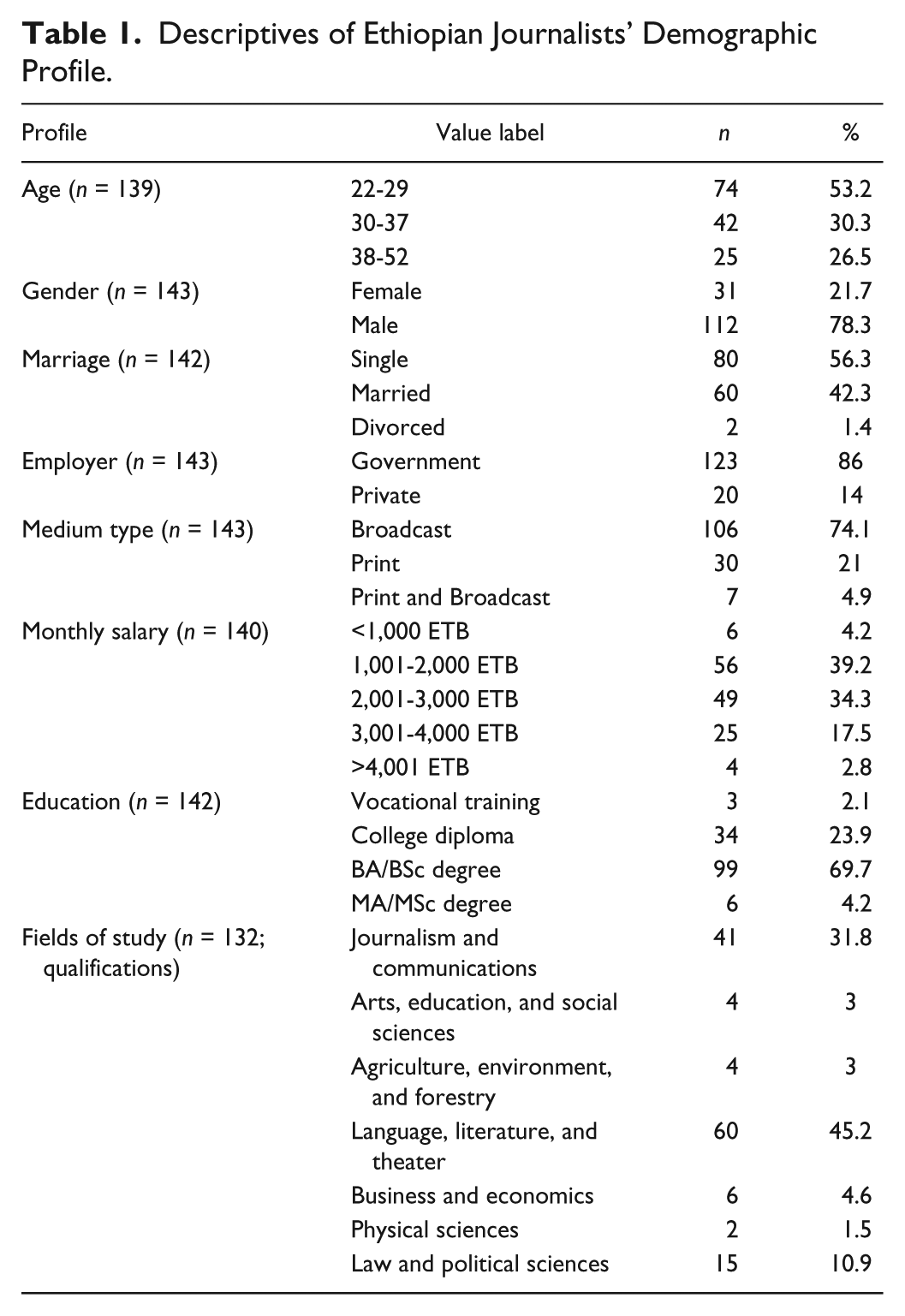
This investigation found significant recent changes in journalists’ education level and age composition as compared with previous research findings (Birhanu, 2006). Although more limited in sample size and scope, the 2006 study identified the typical Ethiopian journalist as “male, educated, married and working for government media” (Birhanu, 2006, 2009). However, this survey, based on the data gathered in 2010, finds the typical Ethiopian journalist to be young (median 29 years old), unmarried, male (with a ratio of 4:1), well educated (98% held college diploma and first degree), but poorly paid (93% received a per monthly pay of approximately US$72–US$287). There has been dramatic growth in journalists’ educational level and in the number of journalists studying journalism and communications, the most relevant discipline for this occupational group. However, Ethiopian journalism continues to be dominated by male journalists, suggesting that society’s attitudes toward gender have yet to change. The vast majority of all journalists continue to work for the government mass media.
In terms of age composition, journalism is becoming a young person’s job in Ethiopia, with most journalists in the 22 to 29 years age bracket; the median age is 29 years and the mean age is 30.64 years. The 2006 survey found an older cohort of journalists, with more of those surveyed in the 30 to 40 years age bracket (Birhanu, 2006). This survey revealed that there are now more young, unmarried, male journalists in Ethiopia compared with 2006 when the cohort was characterized by married, slightly older journalists, who demonstrated labor market mobility by indicating that they might give up journalism for another type of job (Birhanu, 2006).
These findings reveal two of the most important personnel dynamics in the profession. First, it indicates that news media organizations are recruiting young graduates, from the mushrooming numbers of students enrolling in journalism courses. Second, there has been a significant turnover of experienced personnel, possibly due to low wages and other external influences over the profession. The high turnover problem is not particular to Ethiopia. Weaver (2005) reports that in most parts of the world, young journalists join the profession to earn some experience before leaving for more well-paid and stable jobs in other fields, for example, public relations. Inadequate material benefits are one of the main reasons given for leaving journalism. A 2005 study conducted on Ethiopian government journalists’ job satisfaction revealed that the majority were unsatisfied, giving rise to high attrition and turnover rates, with low wages identified as a major cause of job dissatisfaction (Amanuel, 2005).
Returning now to the issue of workforce qualifications, consistent with Skjerdal’s (2012) findings, this survey found a remarkable progress, in a relatively short period of time (5 years), in raising the educational qualifications of journalists and ensuring achievement of qualifications in the journalism discipline. Most journalists in Ethiopia hold a bachelor’s degree. In the 2006 survey, graduate journalists entered the workforce for the most part with qualifications in the fields of Language, Literature, and the Theatrical Arts. In the current survey, the number of graduate journalists who had studied Journalism and Communications had considerably increased, even though graduates of Language and Literature still dominated the profession. This suggests that journalism education is increasingly seen as professionally relevant, to entry-level journalists as well as mid-career journalists looking to upgrade their qualifications. Currently, more than 21 universities and colleges around the country offer journalism courses (Skjerdal, 2012). This trend toward Ethiopian mass media organizations employing more journalism-trained personnel should favor the process of professionalization in the medium to long term.
Religious, Ethnic, and Political Orientations
The religious, ethnic, and political backgrounds of journalists are fundamentally important in a country with a highly volatile, “multiparty” political system where the dominant governing party, the EPRDF, plays the influential role surrounded by a number of tiny ethnic-based “satellite political parties” (Merara, 2003). Around 79 national and ethnic-based political parties (Electoral Board of Ethiopian, 2010) represent more than 75 ethnic communities that, in turn, comprise followers of a wide range of major religions and traditional faiths. Against this background, it is curious to find that most Ethiopian journalists are members of the Ethiopian Orthodox Tewahido Church, ethnic Amhara, and politically affiliated to the ruling EPRDF party.
In terms of “religious preference,” 58% of survey respondents (n = 83) were “Ethiopian Orthodox Church” and 24.5% (n = 35) were “Protestant.” Of the remaining respondents, 9% (n = 13) were followers of Islam, 3.5% (n = 5) were followers of Waqeffanna (Oromo traditional ritual), and 1% (n = 1) was Catholic. Only 2% (n = 3) of the respondents had no religious affiliation. In fact, the result would be unsurprising comparing with the 43.5% of the country’s population following this religion, which is followed by 33.9% Muslims and other smaller Protestant and Catholic congregations as well as followers of traditional beliefs (CSA, 2008). However, while further sociological and historical research is needed to fully explain why Ethiopian journalism attracts people from a particular religious faith, Ethiopian media history points to close links between the media and the Ethiopian Orthodox Tewahido church. From the early days of the press, Emperor Hailesilassie recruited journalists who demonstrated both political loyalty and religious knowledge. Thus, the current religious profile of Ethiopian journalists may well be a legacy of the past.
In terms of ethnic orientation, some 30.8% of the 123 respondents (n = 44) were Amhara and 23.8% (n = 34) were Oromo. The remaining 45.4% respondents were from the smaller ethnic communities, including Tigrean, Shekacho, Kambata, Tembaro, Gedeo, Nuer, Agew Hemra, Goffa, Wolita, Kafa, Guraghe, and Sidama. A few respondents preferred to be identified as mixed or multiethnic Ethiopians, and still fewer others identified themselves as “Southerners.” The Southern Nations, Nationalities and Peoples’ Regional State (SNNPRS) comprises 45 indigenous ethnic communities (CSA, 2008). In the qualitative interviews, 9 participants were “Oromo,” 7 “Amhara,” and 2 “Tigrean.” Two respondents identified with “Kambata” and “Sidama,” whereas 3 others called themselves ethnically “mixed” and 1 journalist did not identify with any ethnic community.
Based on the data from the survey, 40.2% (n = 51) of the participants were ethnic Amhara, followed by 33.9% (n = 43) Oromo. Language is an important factor here. The official language is Amharic, which gives native Amharic speakers advantages over journalists who speak a different first language. In addition, native Amharic speakers enjoy wider education and employment opportunities than speakers of other languages because, historically, the major social institutions use Amharic. It is only with the transition to ethno-federalism in 1995, under the EPRDF government, that government institutions and media organizations have gotten a constitutional guarantee to officially become multilingual. In fact, before that, ethnic languages, including Afan Oromo, which is the dominant language in Eastern Africa, were deliberately suppressed to encourage the diffusion of Amharic as the language of national unity (Mekuria, 1997; Smith, 2008). The frequency of journalists from Oromo backgrounds detected in this survey may well reflect the post-1995 growth of regional government-owned media broadcasting in Afan Oromo. It is worth noting here that Oromo is the largest ethnic group in Ethiopia and Eastern Africa with the estimated population of 35 million (Africa: Ethiopia, 2011). By contrast, the Amhara, the hegemonic ethnic community, number around 27 million (Africa: Ethiopia, 2011).
In terms of political orientation, 44.8% (n = 64) of the 142 survey respondents indicated they were affiliated to the ruling party, the EPRDF, with a further 7.7% (n = 11) saying they were affiliated to EPRDF-allied parties. Only 2% (n = 3) of the respondents said they were members of opposition parties. Forty-four percent (n = 63) of the respondents said they had no political affiliation. In the qualitative interviews, 8 working journalists were affiliated with the EPRDF, whereas 16 respondents said they had no political affiliation. The remaining 3 interviewees are retirees, and were not interested in answering this question.
This survey therefore finds the majority of journalists affiliated to the governing EPRDF party, with a very small minority affiliated to ethnically based opposition parties at either the national or regional levels. The data from the survey and the interviews, taken together, reveal that participants in this study were affiliated to the incumbent party. The finding would appear to confirm the claim that the government continues to staff mass media organizations with its own cadres or sympathizers to achieve pro-government influence over media content.
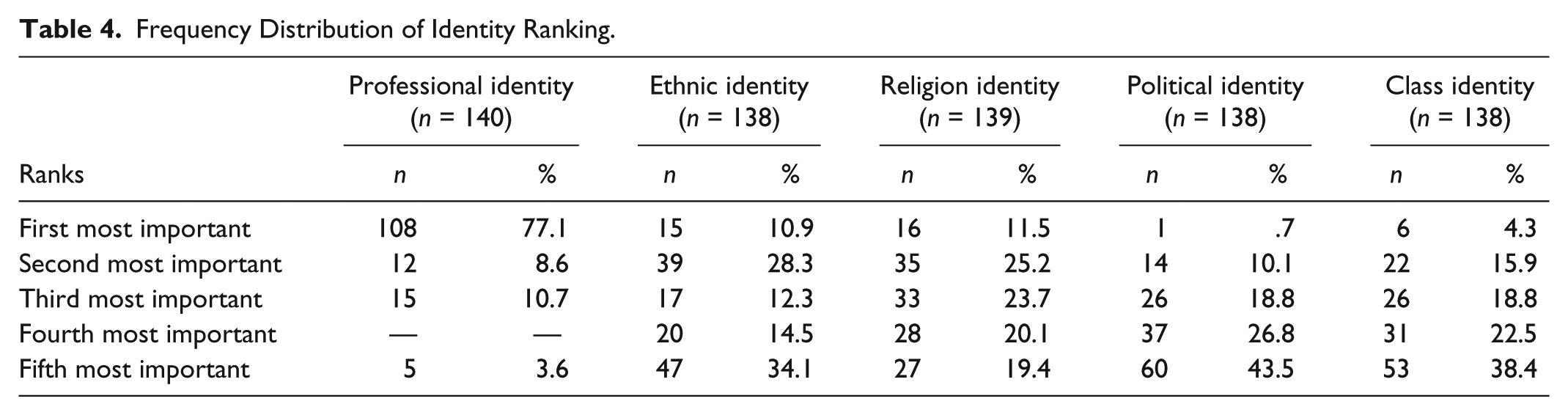
This is not to suggest that all journalists who identified themselves as EPRDF members are propagandists for the government. On the contrary, journalists were specifically asked to rank the relative importance of their various different professional, class, religious, ethnic, political identities. As presented in the section, which probes journalists’ pride, a remarkable 77.1% (n = 108) of respondents ranked professional identity as the most important. Interestingly, this was followed by religious identity with 11.5% (n = 16), ethnic identity with 10.9% (n = 15), and class identity with 4.3% (n = 6); only one person (0.7%) ranked political identity as the most important (n = 1), a trend that suggests that the political instrumentalization of journalists has its limits, at least at the level of perceived role priorities.
Nevertheless, it must be acknowledged that individual beliefs and values do not always find expression in the everyday work of journalists, especially where external factors intervene to shape and constrain journalistic practices. One important consideration is the strength and integration of the profession as a whole and its collective capacity to foster shared ethical values and news conventions as well as provide benchmarks for news quality and professional standards.
Professional Profile of Ethiopian Journalists
This part of the profile of Ethiopian journalists explores the collective identity of journalists as well as their commitment to professional associations that might further their professional goals. It also canvasses working relationships in newsrooms as well as working relationships at the inter-organizational level. The self-image of Ethiopian journalists is probed, with particular interest in how Ethiopian journalists compare and contrast themselves to their counterparts in other African countries. Professional pride is another dimension of this profile.
To explore the collective identity of Ethiopian journalists, survey respondents were asked to explain their collegial relationships, membership of professional associations, and level of active involvement in association activities. The findings reveal that Ethiopian journalists were poorly organized at a collective level, and intense and unhelpful levels of antagonism characterized their collegial relationships.
Ethiopian journalism’s professional culture is very weak. Divisive, distrustful, and suspicious relationships between government and private media are the norm, a tendency that strongly undermines the capacity of journalists to defend and promote their professional rights. There are some reasons that emerged from the study to explain the frail status of journalistic professional associations.
Looking first at membership numbers, this study finds very low interest in joining professional associations. Nearly three quarters of the surveyed journalists said that they were not members of any professional journalist association. Furthermore, those who said they did belong to an association mostly added the caveat that only rarely participated in association activities.
In statistical terms, 76.2% (n = 109) of the 143 respondents were not members of a professional association. Only 23.8% (n = 34) said that they belonged to either a national professional association, such as the Ethiopian Journalists Association (EJA), Ethiopian Free Journalists Association (EFJA), and Ethiopian National Journalists’ Union (ENJU), or one of the many special interest associations, including the Ethiopian Women Journalists Association (EWJA), Ethiopian Sport Journalists Association (ESJA), Ethiopian Environmental Journalists Association (EEJA), Addis Ababa Health Journalists Association, and Teflame Journalists Association. Even the 23.8% (n = 34) of participants who said they were members of an association did not have a lot of confidence in them, with most indicating less than frequent (M = 2.79) participation in their activities.
To understand the factors that have influenced the weak professional organizations of journalists, and by extension the poor development of professionalism in journalism, respondents who were not members of any association were asked to give a reason for non-membership. The responses to this question were rigorously coded and analyzed. This produced the finding that journalists shun organizational memberships for (a) professional, (b) political, and (c) personal reasons.
Of the 108 respondents who answered this specific question, 49% (n = 53) gave reasons for non-membership that are related to their professional identity. These respondents claimed problems of transparency, credibility, independence, competence, commitment, and profession-wide goals meant that the associations had weak and unattractive leadership and organization. For instance, one respondent said, “the associations run for their own benefits, lack a strong membership base, are characterized by commotion and partisanship, and, above all, they achieve nothing.” Another respondent said, “I have never seen a journalist’s professional association striving for the rights and freedom of journalists. They exist in name only; they do not stand for the profession.” As third respondent said, “there is no strong and reputable association, with established credibility. The main association has been fractured into distinctive associations each promoting a different agenda. I doubt these professional organizations are at all independent.”
Turning to political factors, 36% (n = 39) of the 108 respondents gave political reasons for non-membership, blaming the leadership of the associations for manipulating their members, and criticizing media organizations, government officials, and the ruling party for encouraging membership only for ideological reasons. One respondent said, “I do not want to participate in the association, because it has been manipulated by certain political interests.” Another respondent said, “The existing associations don’t represent journalists. Instead, they are serving as agents and messengers of EPRDF.” Similarly, a third journalist said he would not join an association because of the “political intrigues and ideological motives behind the associations.”
Fourteen percent of the 108 respondents (n = 15) gave personal reasons for non-membership, ranging from “lack of time,” “personal attitude,” and “lack of awareness about the importance of the association,” to “no particular reason.” One respondent said, “I do not know if professional journalism associations even exist.” Another respondent said, “No one, including me, has taken the initiative in developing the activities of the association.”
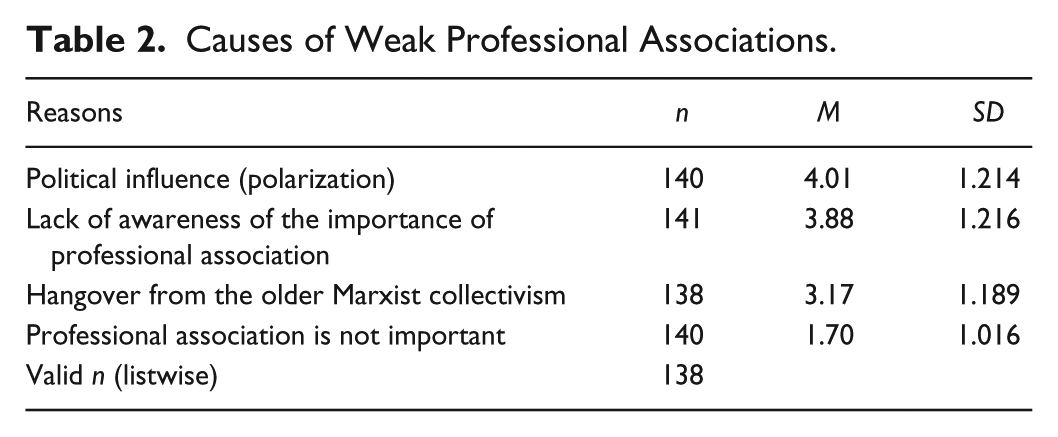
These anecdotal findings were triangulated with the following insights from the quantitative survey results. All survey participants were asked to respond to a series of statements about professional collegial relations that tested the importance or otherwise of pre-defined hypothetical factors on a scale of 1 to 5 (1 = disagree strongly, 2 = disagree, 3 = neither agree nor disagree, 4 = agree, 5 = agree strongly). The descriptive summary, as presented in Table 2, shows that respondents identified “political polarization” (M = 4) and “lack of awareness of the importance of associations” (M = 3.88) as key disincentives to membership, and, hence, major factors contributing to the weakness of professional associations. In short, this result supports the finding that journalists attribute the weakness of their collective integration to professional and politics problems.
Causes of Weak Professional Associations.
These problems were further probed in the qualitative interviews. Of the 24 working journalists interviewed, only 7 are members of an association. Two have been members in the past, but withdrew, and 15 interviewees have never been members of any of the professional associations. Consistent with the survey findings, the interviewees agreed that Ethiopian professional associations are very weak, and journalists tend to avoid the national umbrella associations such as the ENJU, in favor of the smaller, club-like special interest or “thematic” associations. Some of the interviewees characterized the current state of Ethiopian journalists’ professional associations as a “North-South” battlefield, in which ideological opponents are at war with each other. The most damaging rift is the intense hostility and antagonism between journalists working for the government and the private mass media.
The interviewees identified various factors constraining the development of stronger professional associations, including politics, incompetence, and corruption at the leadership level. Some questioned journalists’ motives for wanting to strengthen the professional associations; others claimed government intervention in the internal affairs of journalists as an obstacle. For instance, Anole, a regional TV editor who once belonged to a professional association, described the situation in the following words:
Individual journalists have extreme fears of being excommunicated by their own camp if they are seen publicly with members of the opponent’s camp. That gap prohibits journalists from forming associations under one umbrella. I think the problem lies in the political ideology.
Even those who join national associations, such as Fewus, a TV editor, see the divide between government-employed and private media journalists as unhealthy. He described his association in negative terms, saying, “it is not worth more than offering membership ID cards.” He said that union members do not meet together to discuss and debate issues related to professional development. Instead, he claimed that journalists lack professional commitment and, most importantly, leaders who are prepared to create positive initiatives. Gela, another union member, and TV producer, also shared the view that national professional associations have been inefficient and their leaders incompetent. In his view, there is too much emphasis on self-serving struggles to secure private benefits for members, and not enough focus on professional goals: “some thematically organized associations are known for their endless commotion over personal benefits such as scholarships, overseas workshops and access to international funds.”
Interviewees also reported problems of political intervention. For instance, Abi, a newspaper columnist and association member, recalled the well-known government approach to increasing its political influence, summed up in the slogan “There will not be even a village welfare association that is not under EPRDF control.” Wakel, another newspaper columnist and union leader, took a different view of the political problems, blaming the “political extremism” of journalists for the current divide between government and private media: “Some journalists see the associations in political terms, either as a representative of the government or as a representative of opposition parties.” Gedam, a TV news editor and union leader, agreed with the claim that political ideology is a divisive problem that makes it difficult to develop common professional goals. He suggested that more non-partisan journalists needed to lead state-run and private mass media:
As long as media executives are government appointees, they will no doubt act as government tools. The independent media association is no better than the government ones; it also indulges itself by getting involved in political affairs rather than focusing on professional issues. It sides with opposition groups.
Gedam also argued that the creation of a third national professional association, called the ENJU, in a bid to moderate existing differences, had proved futile. Formed in 2008, the ENJU was immediately labeled a “pro-government organization” by government critics. The creation of special interest or thematic associations is seen as another failed attempt to address political divisions among journalists. For example, while radio producer Lomi joined the Ethiopian Media Women’s Association (EMWA) to avoid getting involved in politics, she has been disappointed to find that it is as inefficient as the national associations. She said,
I joined EMWA because it seemed the best alternative . . . but it turns out that its leadership is addicted to self-serving activities, they run after personal advantages. They use us; they use our names to collect funds.
What is the source of so much antagonism between journalists working in different sectors of the news media? One explanation can be found in the increasing levels of state intervention and political instrumentalization of the press that has occurred in the context of the EPRDF government’s declining electoral popularity. The opposition’s challenge to the 2005 national election result, amid claims of vote-rigging, saw a sharp crackdown that included the forced closure of most of the independent press. Antagonism between private media and government-employed journalists dates back to this crackdown. For instance, TV reporter Habtie said the name-calling began around this time, with government journalists labeled as “cadre journalists,” while the private journalists were called “pessimists.” Abi, a newspaper columnist, said the division was really between the editorial approaches of the different news media, not between journalists. For example, she disagreed with the decision of the state-run television station to campaign against independent newspapers: “It portrayed the free press as the doomsday wishers, that is, as totally cynical and pessimistic. You just don’t feel comfortable with such a negative portrayal of other journalists.”
Despite these antagonisms in Ethiopian journalism, a few interviewees believed that journalists are working hard, despite many limitations, and remain committed to developing a stronger professional identity. For instance, TV news editor Gedam is one Ethiopian journalist who firmly believes there is potential to develop a stronger professional identity.
However, this kind of optimism is limited, and most of the interviewees questioned whether professionalism existed at all in Ethiopian journalism. TV news editor, Konna, and newspaper editor, Sori, were among those who expressed doubts about professional identity. Sori said,
We don’t have a professional identity. I can say there is no journalism profession. Maybe you can see some elements of professionalism in the private media, particularly in some print media. But, they don’t represent all journalists. So, our identity has not yet been established. It is in the making. As regards the government-owned media, I can tell you there is no journalism; this is simply the PR department of the government.
For Konna, a TV editor, the problem with Ethiopian journalists is that they prefer to be what he called “safe walkers” and do not possess a strong professional identity at all, something he believed needed to change. In this view, journalists opt for “safe” reporting practices to avoid conflict or problems. Konna described his experience as an editor in the following way:
I have tried to analyze the behavior of many journalists. They want shortcuts. They want to focus on trivial issues, and do things without any difficulty. They have developed this identity of “safe walking,” if you can call it an identity. To me, it is an identity that needs to be changed.
Newspaper editor Sara labeled journalism “a pass time job” rather than a career; print editor, Tadeg, said the industry suffered from a lack of distinguished role models, while TV producer Gela blamed socio-cultural influences for Ethiopian journalists’ difficulties in developing a sense of identity.
The findings would appear to suggest that Ethiopian journalists are stuck between their belief in professionalism and their experience of partisanship, a paradox that expresses itself negatively in the divisive relationship between government-employed and private media journalists, and fosters damaging practices such as character assassination and stereotyping based on ideological orientations.
There is little interest in the establishment of a national trade union to defend and extend the rights and working conditions of all journalists. Instead, factionalism prevails. This suggests that the attachment to a professional identity exists only at the rhetorical level; it does not translate into concrete actions that might build unity and integration among journalists working in different media institutions. It is therefore unsurprising to find that 135 of the 143 survey respondents (85%) said that they lacked a strong professional identity at a collective level. And, where this subsection has identified some of the reasons for this problem at the collective level, the following section further tests journalism’s identity problems by turning attention to the state of collegial relationships between journalists working in the same news organization.
Collegial Relationships in the Newsroom
Both the quantitative and qualitative data provided interesting insights into the collegial relationships between journalists at both the intra-organizational and inter-organizational levels. This study revealed strong collaborative relationships between journalists working in the same newsrooms, whether private or government. This collegiality stands in stark contrast to the intensely antagonistic relationships found to exist between journalists working in different newsrooms, with journalists working in the state-run mass media and the private mass media manifesting hostile attitudes and behaviors toward each other.
The survey found that journalists working in the same newsroom generally had good relationships with each other. Respondents strongly agreed, on a scale of 1 to 5, with “4” being described as agree and “5” as strongly agree, that genuine personal relationships (M = 3.6) and authentic and collaborative work relationships existed in their newsrooms (M = 3.8). At the inter-organizational level, however, the result was the opposite: 73% of the 141 respondents (n = 103) to this set of questions classified the relationship between government-employed and private media journalists as antagonistic, with only 27% (n = 38) indicating that it is collaborative. Some of the reasons given for these adverse relationships include claims that they possess different codes of ethics, undermine each other, publish critical articles about each other, organize separate professional organizations, and defend their own organization rather than the profession as a whole.
The qualitative data from the open-ended survey questions show that journalists attribute their conflict-ridden relationships to political differences. The government mass media, for instance, portray the private mass media journalists as “doomsday wishers” and “pessimists,” whereas the independent mass media labeled the government mass media journalists as “government parrots.” Moreover, the private journalists are considered to be “anti-government” and willing to promote the opposition parties’ political agendas, whereas government journalists are simply labeled “pro-government cadres.”
Respondents were further probed on the reasons that explain their antagonistic relationship, by rating six statements describing various aspects of the relationship on a scale of 1 to 5, with 1 as strongly disagree and 5 as strongly agree. Table 3 presents a descriptive summary of the results. Please note that all mean values scored between 3.56 and 4.09 were labeled “4” or “agree.” The results revealed that Ethiopian journalists work against each other rather than toward strengthening their professional community.
Relationships Between Journalists.

To further probe whether journalistic hostilities are specifically based on the type of mass media ownership/employer, the survey included a question about professional behavior using a series of claims about the practices of government-employed and private media journalists. One behavioral trait stood out in the results of this question: on a scale of 1 to 5, with 4 being described as “agree,” government journalists favor government officials (M = 4.16), whereas private journalists favor opposition parties and leaders (M = 3.88). The statements about other aspects of professional behavior prompted much less agreement, even neutral responses, which suggests that conflict exists among journalists working for different types of media owners rather than between the journalists themselves.
These results show Ethiopian journalists are divided into two opposing camps, based on the type of employer, with government mass media journalists promoting the Revolutionary Democratic ideology of the incumbent party, while the private mass media journalists advocate the Libertarian ideology of the opposition groups. The results further reveal the difficulty of developing fraternal relationships between journalists. On the contrary, in the context of the current political extremism in the country, they show journalism to be the victim of political instrumentalization.
Ethiopian Journalists and Their African Counterparts
The next step in probing the self-image of Ethiopian journalists is to ask how they see themselves and their professionalization problems, in comparison with their African counterparts. Broadly speaking, the professionalization of African journalism is the legacy of a colonial press history that Ethiopia did not share. This study is interested to know if Ethiopia’s distinct press history matters.
The data from the qualitative interviews provided most insight on this issue. It was meticulously coded into subject categories, resulting in the identification of a key theme: Ethiopian journalists are ambiguous about their press history. While they are proud of the country’s sovereignty, they also point to the fact that professional journalism is stronger in African countries that had a colonial press, because they benefit from the legacy of Western media institutions and practices. Most of the interviewees highlighted the advantages experienced by other African journalists when compared with Ethiopian journalists. They pointed to factors such as media pluralism and higher levels of professional competency among journalists. This result would appear to suggest a paradox: Ethiopian journalists are proud of their country’s sovereign history, yet lament the “lost opportunity” of colonial press development experienced by their counterparts in other African nations because they link their distinct media history to their current problems of professionalization.
Compared with their African counterparts, Ethiopian journalists perceived themselves to be lagging far behind their counterparts in terms of journalistic knowledge, competence, and reporting standards. Interviewees talked about themselves as “submissive,” “repressed,” and “closed” in comparison with their African colleagues, who they described as working in an “active,” “free,” and “open” environment and to their best level of professionalism. The interviewees repeatedly referred to Kenya, Ghana, Cameroon, Egypt, Uganda, Tanzania, and South Africa as countries with relatively pluralist, vibrant, and transparent media systems. For instance, Fewus, a TV editor, said that unlike Ethiopia, the media environment in the other African nations is vibrant. In fact, he applauded the positive impact of colonialism in this regard:
I think [colonialism] might have helped them. They knew what media is about, how to use technology, how to manage media, etc. before us. They are more open. Our media is still growing. Colonialism left behind many negative impacts, but in terms of media advancement, I feel it left behind positive impacts.
Sori, a senior newspaper editor, said Ethiopian journalists are incomparably far behind their colleagues of other African nations when it comes to openness and the culture of criticism:
So, fortunately or unfortunately, because we had not been colonized, our mass media culture is not of Western origin or of Western orientation. Western media influence has not materialized in this country . . . So, I don’t think we are comparable with those other African countries . . . I can say we are nowhere.
Geta, another TV journalist, agreed that journalists of other African nations enjoyed more freedom, but he questioned whether those journalists are serving the society. He talked about Kenyan newspaper content as “meaningless,” and “lacking national and indigenous colors.” Newspaper editor Faye shared something of Geta’s view when he likened other African journalistic practices to Western journalism, while linking Ethiopian journalistic practices to Ethiopia’s ancient Amhara culture:
Ethiopian journalism is, closely related to Amhara; it was established by those people from the Amharic speaking ethnicity. Journalism in other African countries, which were colonized, was a direct transfer of the ideology of their colonial masters. That is why; you can see more open and free journalism in other African nations as compared to Ethiopia. In Ethiopia, rigidity and loyalty to the government/party are among the main features of Ethiopian journalism.
Similarly, Anole, a regional TV editor, expressed that the difference between Ethiopian and other African journalism practices arises from their different histories of subjugation, that is, the colonial subjugation of other African nations as distinct from the feudal subjugation of Ethiopia. According to Anole, Ethiopian journalists are far behind their African counterparts:
We are more obedient to systems, parties and governments than other African countries. I think the colonizers’ subjugation was not as brutal as the feudal subjugation in this country . . . there is cultural influence, too. Some cultures in this country teach that one has to obey elders, older siblings, officials and so on. This instruction to obey doesn’t discriminate between wrong and right messages that may be imposed by the persons to be obeyed. Our society is conservative and simply expects you to obey rules.
According to Tadeg, a newspaper editor, comparing Ethiopian journalists and journalists in other African nations is a matter of comparing pride and lost opportunity. He said, “In fact, we may be proud that we had not been colonized. At the same time, I think we lost the opportunity to develop a modern media system. I think we must blame ourselves for lagging behind.” Similarly, Kedam, a radio editor, described the legacy of colonialism as a paradox.
We claim we know about freedom because we were not under colonialism. We fought for sovereignty and independence. But, are we exercising freedom? I don’t think so. Our culture itself is a factor. It is not because other African countries had more freedom to exercise press freedom, rather they had more opportunities to copy many things from the Europeans. It is the experience of imitating them and adopting their ideology. I think other African countries have got that advantage and they dare to report boldly. It is paradoxical that we haven’t exploited the opportunity that we had not to be colonized to exercise our freedom. We, the people who resisted external controls, should have not tolerated internal controls. We are not able to say no. It may be due to various factors. No doubt, those who were under colonization made use of ideology transfer.
A regional radio journalist, Edi, saw the Western liberal model of journalism offering practical ways to address the highly closed, suspicious, and conservative culture of some of the Ethiopian society:
In Ethiopia, we think we solve problems by hiding the truth. I believe we can solve our problems if we discuss them frankly . . . I believe that we would be able to solve our problems by pinpointing the problems and opening the floor for discussion. We cannot find solutions by covering the problems and hiding them. The fact that we avoid liberalism forces our media to shy away from facts. That has a consequence. We cannot resolve our problems. Our mind set up is not ready to accept that an individual can say whatever he/she wants to say. We are not ready to accept the notion of freedom of expression.
Various interviewees talked about Ethiopia’s conservative social and political culture, with its never-ending “do’s and don’ts.” Some believe that news reporting practices in Ethiopia reflect local literary and cultural traditions, which are not open, sufficiently informative, popular, or boldly investigative. Veteran journalist Negussie Teferra sketched out the problem:
Our tone of reporting and presentation is different. It is home-grown and the reflection of our literature and cultural values. Our reporting style is not open, not is it sensational either. In fact, decency is important. However, it needs care not to fall into the opposite extreme of over-cautiousness. Another difference is the level of information release. In this country, there is insufficient information about every aspect of life: economic, social and political. Ethiopians browse international sources for information about their own country. That is one indicator of the problem of inadequate information in our country. There is no infrastructure to support information supply, on the one hand, and, on the other, there are restrictive information laws. Many people are not satisfied with the media situation in Ethiopia. Why? They don’t have an enabling environment in which to debate their affairs, they don’t have the chance to compare and contrast different viewpoints. Citizens hear about their country from outside sources.
Another veteran journalist, Kebede Anisa, shared this view when he said,
The way we were up brought influences our behavior; it influences us not to boldly ask questions, not to search for further information . . . We have a lot of instructions “Dos and Don’ts” that the society expects us to observe. That might have influenced our journalistic behavior.
Taken together, these results show that Ethiopian journalists believe local socio-cultural influences to be far more important than imported Western liberal ideology in shaping and constraining professional journalism practice. At the same time, they reveal ambiguous attitudes to this situation, expressed first in the paradox between pride in Ethiopia’s sovereign history and regret at the lost opportunity of colonial press development, and, second, in the belief that the literary and cultural traditions that developed in the context of Ethiopia’s long history of feudal subjugation have deprived journalists of the kind of open, critical writing and reporting practices that would support strong professional practice. This is not to say that Ethiopian journalists wish their country had been colonized. On the contrary, many interviewees mentioned the disadvantages of colonialism, including the “lost identity” of African journalists trying to report the complexities of their societies using imported Western journalistic values and practices. Veteran journalist Yacob Wolde-Mariam summed up this identity crisis in the following way:
In general, African newspapers outside Ethiopia are not African newspapers. The editors may be black people, but behind them is Western money. They don’t express African opinion. They express the opinions of the West. That is why the West argues about press freedom, because the newspapers are theirs.
The next section completes the profile of contemporary Ethiopian journalists by probing the question of professional pride.
Professional Pride Versus Embarrassment
This section considers what journalists’ attitudes toward journalism reveal about their professional orientations. Accordingly, journalists were asked to rank the importance of their professional identity in relation to various other possible identities (ethnicity, religion, political affiliation, or social class). This part of the study found another paradox: Ethiopian journalists prefer their professional identity above all other identities, but, at the same time, they are reluctant to publicly identify themselves as journalists for a variety of reasons. The evidence for this conclusion comes from an integrated analysis of the quantitative and qualitative survey data triangulated with the qualitative interviews. Participants ranked the different identities, rated their pride in journalism, and explained their attitudes to professional self-identification.
In the first instance, survey respondents were asked to rank the importance of five alternative identities: professional, ethnic, religious, political, and social class (see Table 4). More than 77% of 140 respondents ranked professional identity as their most important identity, followed by 28% of 138 respondents who indicated that their ethnic identity was the most important.
Frequency Distribution of Identity Ranking.
In a related question, respondents indicated their level of pride in their current occupation as a journalist on a 5-point scale. Descriptive results showed that 38% (n = 54) of 142 respondents were “very proud,” 28% (n = 40) were “proud,” 12% (n = 17) were “somewhat proud,” 6% (n = 8) were “least proud,” and 16% (n = 23) were “not at all proud.” The mean value of the responses (m = 3.64) indicated, albeit not strongly, that journalists were more or less proud of their current profession (see Table 5).
Frequency Distribution of Journalists’ Professional Pride.

Thematic analysis of the interviews with 24 working journalists extended the understanding of these quantitative findings by providing interesting insights into how Ethiopian journalists see themselves. There were two main questions in this section of the interview: Were journalists proud of their current profession and did they publicly identify themselves as journalists? Of the 24 interviews, eight journalists were proud of their profession, nine journalists were not proud, and seven journalists had mixed feelings. Thematic analysis of the interview brought two most important themes, pride versus humility.
Six of the journalists who were proud of their profession worked in government-run media, and two worked in the private mass media. For instance, Tadeg, a senior newspaper editor, linked his pride to his achievements, including winning journalism prizes. Wakel, a newspaper columnist, had a different explanation, saying he believed that Ethiopian society gave due respect to journalists. Likewise, for Fewus, a TV editor, pride in journalism was linked to social status. He said, “The place the society gives to a journalist is great.” Like Fewus, Kedam, a radio editor, explained his professional pride in social terms, this time referring to audience satisfaction, and the achievements that put him in the hearts of his audience. Abi, a newspaper reporter, echoed this sentiment in saying that she is proud to be a journalist because she has a passion for what she performs.
The nine journalists who were not proud of their profession all worked in the government mass media. They also revealed that they shied away from being identified as journalists because of the poor image of journalists in Ethiopian society. For instance, Sori, a senior newspaper editor, explained his lack of pride in the following terms:
The public attitude is devastating . . . if you are working for government media, it is automatic that you are assumed to be a party member and a government parrot.
Konna, a senior TV editor, had a similar opinion: “I feel the public does not like us. Thus, I am not comfortable with my profession.” He added that he despises journalism in Ethiopia because the reality on the ground, in newsrooms, is completely different from the theories of journalism taught in universities. Lomi, a senior radio editor, went one step further in saying that she has preferred not to be identified as a journalist because she fears that people will believe that she is a propagandist for the government. She further added that Ethiopian journalism has too many “loyal cadre journos” and too much “say-so-journalism,” meaning journalists faithfully report everything government officials say and, even worse, everything they think the government officials might want to be said.
The seven journalists who expressed mixed feeling about their profession were typically caught between the inherent potential of their profession and embarrassment over journalists’ failure to deliver proper information services, due to various influencing pressures. However, they still like to be identified as journalists. Geta, a newspaper reporter, summed up the mixed feeling by saying, on one hand, “The profession is in my heart,” while, on the other hand, lamenting, “I am not reporting what I should report . . . this disappoints me.” Sara, a senior newspaper reporter, linked professional embarrassment to unethical practices. Two senior TV editors, Anole and Bula, were more precise about the sources of professional embarrassment. First, they pointed to public suspicion that journalists are informers, and that saying something wrong about the government will bring them harm. Second, there is the problem of elitism, “the society looks at journalists as top level dignitaries in the social stratum.” Habtie, a TV reporter, stated his mixed feelings by likening his journalistic practices with a soccer match.
If your coach wants you to play in a defensive position, you do that. If the coach wants you to play as a striker, you obey the instruction. Because I am not allowed to play with full energy in the field, I am not proud of the profession. However, I am happy because when I am allowed to play at the end of the game, at the 90th minute, and I score a goal, the spectators applaud me.
This qualitative data suggest that lack of pride in the profession is linked to both dissatisfaction with performance and negative public attitudes toward individual journalists and the profession as a whole. However, pride in the profession is linked to personal achievements, and, more broadly, satisfaction in providing services to the public. For others, journalistic pride is the result of recognition and self-confidence. Still, for others, journalistic pride is the result of optimistic expectations of, and passion for, professional journalism. This includes the professional ambitions of journalists in serving the public. Nonetheless, there is a general reluctance to be publicly identified as a working journalist. Only two interviewees said that Ethiopian society offers journalists due respect. The rest pointed to negative societal attitudes toward journalists. Society is seen to keep journalists at a distance because they cannot be trusted or relied on to do their job properly. Thus, the study reveals tensions inherent in Ethiopian journalism, which inevitably must shape and constrain their professional orientations and practices.
Conclusion
Ethiopian journalism faces some curious paradoxes. In talking about Ethiopian journalism in relation to the journalism cultures found in other parts of Africa, Ethiopian journalists express regret over the “lost opportunity” of colonial media development, while expressing pride in their country’s sovereignty and a press history that is “free” from colonial influence. Ethiopian journalists are proud of their profession yet, ironically, they shy away from publicly identifying themselves as journalists out of shame or fear of public attitudes toward them.
Pride in a chosen profession is an incentive to positive performance. It means that increased pride leads to increased performance. In the current study, Ethiopian journalists’ pride in their chosen profession was an expression of emotional attachment rather than commitment to their professional undertakings or building a strong collective professional identity. According to Lawler (2003), the state of collective identity depends on whether the emotions of pride or shame are directed at the self, and whether the emotions of gratitude or anger are directed at others. Pride–gratitude feelings are seen to build or foster collective identities, whereas shame–anger feelings weaken social groups and undermine the possibility of collective identities (Lawler, 2003). Thus, journalists’ pride in journalism is worth researching as an indicator of their professional commitment and sense of identity. The current study’s finding reveals contradictory emotions of pride and shame, with journalists expressing pride in their profession, while feeling insecure and ashamed to be identified as a journalist. This tension is related to the poor societal image of journalists and widespread criticism of their professional inefficiency.
Attention to the findings on journalists’ pride, or otherwise, in their profession opens up ways of integrating the Ethiopian journalism experience into broader discussion of international trends in the professionalization process. So, to recap, the study found that, at the individual level, journalists were proud of journalism as their chosen profession. However, they did not dare to identify themselves with confidence as journalists.
At the newsroom level, journalists worked collegially with each other, developing genuine working relationships, but these were not replicated, unfortunately, at the inter-organizational level. Instead, government-employed and private media journalists demonstrated intensely antagonistic attitudes toward each other, expressed in common problems of character assassination as well as accusations and counter-accusations of political bias and advocacy.
At the national level, Ethiopian journalists tended to belittle their profession’s contribution to society and compare themselves unfavorably with their counterparts in other parts of Africa. There was praise for the competitive mass media environments in countries such as Kenya, Ghana, and South Africa, as their reporting practices were seen to be more open and transparent than Ethiopian journalism practices.
Another prominent belief in international debates about journalism concerns the role of professional associations in advancing the professionalization project. The literature points to the widespread belief that journalists who belong to professional organizations more readily identify with and are socialized into the profession; in addition, they are better placed to defend their autonomy from external intervention (Schein, 1972; Tumber & Prentoulis, 2005; Weaver, 1996, 2005). The Ethiopian experience of weak collective identity and participation in national professional associations unfortunately confirms this scholarly viewpoint. This study identified political partisanship as one of the major reasons behind journalists’ reluctance to become union members, with the existing associations seen to engage only in political rather than professional activities (Skjerdal, 2012). This is a particularly damaging situation, given that Ethiopia is a country where communal lifestyles are well-established and culturally valued. For example, communities routinely form institutions such as eddir, afooshaa, ekub, jigie, debo, jaarsummaa, and shemgilinna, to collaborate with each other, strengthen social and economic ties, and improve well-being. Yet, this survey found little evidence of collective identity among Ethiopian journalists. On the contrary, in terms of union membership, they lagged far behind their counterparts in neighboring countries, with one study reporting 77% of Ugandan journalists to be union members (Mwesige, 2004). In fact, this number might be exceptionally high, as union membership rates vary widely in different parts of the world for different reasons: In Spain, for instance, only 4% of surveyed journalists were union members (Canel & Pique, 1998), whereas in Brazil, the number was much higher at 43% of surveyed journalists (Herscovitz, 2005).
In sum, then, this profile of Ethiopian journalists provides a number of insights into the particular socio-cultural forces that shape and constrain professionalism in the country. Some of the paradoxes and complexities inherent in the identity of Ethiopian journalists also emerged, suggesting the need for deeper understanding of what professionalism means in the Ethiopian media context, and how journalists might act strategically to strengthen their professionalization project.
Footnotes
Acknowledgements
A special word of thanks is due to Dr. Penny O’Donnell (University of Sydney, Australia) for her substantial inputs in shaping this research paper. I am also thankful to the editor and anonymous reviewers for their invaluable comments.
Author’s Note
First name was used whenever an Ethiopian author was referred to following the naming traditions in Ethiopia.
Declaration of Conflicting Interests
The author(s) declared no potential conflicts of interest with respect to the research, authorship, and/or publication of this article.
Funding
The author(s) received no financial support for the research and/or authorship of this article.