




Abstract
This article uses a healing research methodology to describe how school counselors create, implement, and facilitate psychoeducational Educator Social-Emotional Learning (EduSEL) interventions. Using individual and small group interventions, school counselors sought to improve educators’ social and emotional competence, which fosters healthier school and classroom environments (Jagers et al., 2019). This study applies Critical Participatory Action Research (CPAR) to investigate how the facilitators of these interventions perceive educators’ wellness. School counselors report that EduSEL sessions fostered deeper professional learning for teachers and enabled them to develop personal insights, participate in healing, and learn practical strategies to translate into the classroom. Simultaneously, school counselors participated in a parallel SEL process, deepening their own social and emotional competence, along with their professional and clinical practices, to improve the effectiveness of SEL interventions and enhancing their role in promoting SEL across the school community. We briefly discuss several implications for school counselors within the context of EduSEL practice/training, policy, and research.
Keywords
Introduction
All students deserve access to a school environment that enables them to thrive and to achieve academic and personal excellence. However, the challenges that school systems have historically faced, coupled with those that have occurred since the multiple pandemics of 2020, have exacerbated the growing mental health crises faced by both children and adults in today’s society (CDC, 2024; Substance Abuse and Mental Health Services Administration [SAMHSA], 2024). Specifically, in addition to the COVID-19 global pandemic, we have seen educational disruptions, economic and financial distress, experiences of grief and loss, racialized oppression, natural disasters, inequitable educational and medical systems, anti-legislation efforts, and the tumultuous political climate that have created ripple effects, negatively impacting our educational communities (Panther et al., 2021; Segarra-Alméstica et al., 2024; White, 2022).
An Imperative for Healing in Schools
Currently, one in three adults between the ages of 18 and 25 are diagnosed with either a mental health condition or substance abuse disorder. SAMHSA suggests that the actual number is higher, as these data only account for individuals with access to medical care and the ability to receive a diagnosis (SAMHSA, 2024). This statistic is highly concerning as these are the ages of most pre-service and early career educators. Emerging neuroscience research is suggesting that educators who are personally dysregulated have more difficulty regulating children for learning (Fu, 2024; Perry & Winfrey, 2021). With teachers spending most of the day educating youth, their wellness and ability to cope can impact children’s learning and development (Arens & Morin, 2016; Collie & Martin, 2023; Perry, 2020a, 2020b; Valenzano et al., 2020). One promising approach to address the many challenges children and adults are facing within our schools is social emotional learning (SEL).
SEL’s Growing Influence in Schools
SEL has great potential to enhance education systems; attending to both students’ and educators’ well-being could serve as an antidote to the ongoing mental health challenges while also fostering academic success. SEL refers to the acquisition of life skills that support people in experiencing, managing, and expressing emotions, making sound decisions, and fostering interpersonal relationships; whole school communities thrive when SEL is used as an integral part of an equitable and inclusive school culture (Collaborative for Academic, Social, and Emotional Learning [CASEL], 2020).
SEL is important within the field of education because of the occupational stressors (McCarthy et al., 2016) specific to this work that are related to an imbalance between social and emotional demands and resources (Iancu et al., 2018). Moreover, a growing body of research provides evidence of the benefits to educators in improving their own social emotional competence social and emotional competence. Research indicates that increased social and emotional competence boosts job satisfaction, lowers stress and burnout (Olivera et al., 2021), and increases personal efficacy (Oberle & Schonert-Reichl, 2016). Increasingly, it is classroom teachers who are being asked to explicitly teach SEL skills to their students while being underprepared or untrained to do so (Haulton, 2023).
School Counselor Opportunities in SEL Delivery
In recent history, SEL has been at the cornerstone of the school counselor’s role in supporting whole student development through comprehensive programming and across Multi-Tiered Systems of Support (MTSS; Edirmanasinghe et al., 2022a). However, SEL with educators (EduSEL) is nascent in school counseling literature as an instrumental approach in co-creating equitable and healthy learning environments (Ieva et al., 2021a). School counselors are trained at the intersection of education and mental health to hold psychoeducational expertise with integrated counselor and educator identities (Levy et al., 2024a; Levy & Lemberger-Truelove, 2021). School counselors can use their knowledge and skills in mental health, education, and systems to implement whole-school comprehensive counseling programs that consider social and emotional competence for both students and educators. Similar to counseling supervision theory (Bernard, 1997), school counselors fluidly operate with counselor, educator, and/or consultant as part of their professional identity (Ieva & Beasley, 2022; Lemberger-Truelove et al., 2023). As such, they are in a unique position to use their expertise for healing-centered engagement (Ginwright, 2018) through psychoeducation and counseling practices that address the intersections of trauma and racism, and promote culturally affirming SEL (McCall et al., 2023).
Integrated Theoretical Frameworks for Action
Capitalizing on SEL’s potential to attend to both student and educator well-being, this study is guided by the Healing Research Methodology Framework (HRMF; Lee et al., 2023) and uses a critical lens of power, privilege, and intersectionality (Beasley et al., 2023, 2024; Ieva et al., 2022; Moradi & Grzanka, 2017; Steen et al., 2024) as well as a bioecological systems theory (Bronfenbrenner & Morris, 2006). First, HRMF is a transformative and culturally centered approach to research that prioritizes the well-being and empowerment of participants, particularly those from marginalized communities. It integrates principles of decolonization, cultural sensitivity, and social justice, and aims to address and transform systemic harms that contribute to individual or community trauma. This framework also recognizes research as a collaborative, relational process where participants are co-researchers, and their lived experiences are central to the inquiry. Healing is considered embedded within the research process itself, in addition to being a potential outcome. By focusing on empowerment, trust-building, and mutual respect, HRMF creates spaces for participants to engage in meaningful dialogue, reclaim agency, and collectively generate knowledge that contributes to their healing and to broader social change. HRMF integrates healing as an essential component to dismantle systemic inequities and promote the restoration of cultural identity and collective resilience.
Second, examining power, privilege, and intersectionality remains an important part of research within schools to ensure that equity and excellence are advanced within educational settings (Beasley et al., 2023, 2024; Ieva et al., 2022; Moradi & Grzanka, 2017). This critical lens allows room for researchers to challenge themselves and the communities being examined. Third, drawing upon the bioecological systems framework’s (Bronfenbrenner & Morris, 2006) emphasis on the interrelationship between individual and societal factors aligns with the HRMF focus on restoring agency and addressing harm within broader contexts of power, fostering both personal and systemic transformation. This blending of theoretical frameworks fuels research that is healing-centered and critically reflective of social structures that influence well-being. For this study, school counselor collaborators work to address a growing teacher wellness concern that impedes students in their school contexts while attending to their own learning and healing within these communities.
Purpose of the Study
The purpose of this study was to investigate how a group of school counseling professionals (PhD-SCs) who were enrolled in a doctoral class entitled Advanced Practicum for Counseling in Educational Settings created, implemented, and facilitated culturally sustaining EduSEL interventions using psychoeducational individual and small group delivery to support the healing, learning, and development of the educators they supported. The PhD-SCs enrolled in this doctoral course sought to simultaneously address the need for educator wellness and the problem of educator disengagement that they were collectively witnessing in schools, while also learning advanced skills and increasing their own social emotional competencies. In this study, the perceptions of the PhD-SCs and school counselor educator experiences are presented in the findings, though they are heavily influenced by data shared by the educators who participated in the interventions.
Methodology
Research Design
Critical Participatory Action Research (CPAR) was selected for this study as it offers a critical lens as both a pedagogy and a research methodology (Fine et al., 2021). CPAR is a collaborative research approach that integrates critical theory and participatory action to address social issues, emphasizing power dynamics, equity, and social justice (Fine et al., 2021). Researchers and participants work together as collaborators engaging in a cyclical process of reflection, action, and evaluation to generate knowledge and implement change. This methodology empowers marginalized groups by acknowledging their lived experiences and fostering collective agency in the pursuit of transformative solutions. CPAR not only focuses on understanding and addressing the root causes of inequities but also aims to create spaces where participants actively shape and guide the research process, ensuring that their voices drive both inquiry and action. While CPAR is absent from school counseling literature, Youth Participatory Action Research (YPAR) has been used to elevate the student voice in school counseling programming (Edirmanasinghe et al., 2022b; Hipolito-Delgado et al., 2024) and in school counselor education (Levy et al., 2024).
Collaborative Researchers and Collective Reflexivity
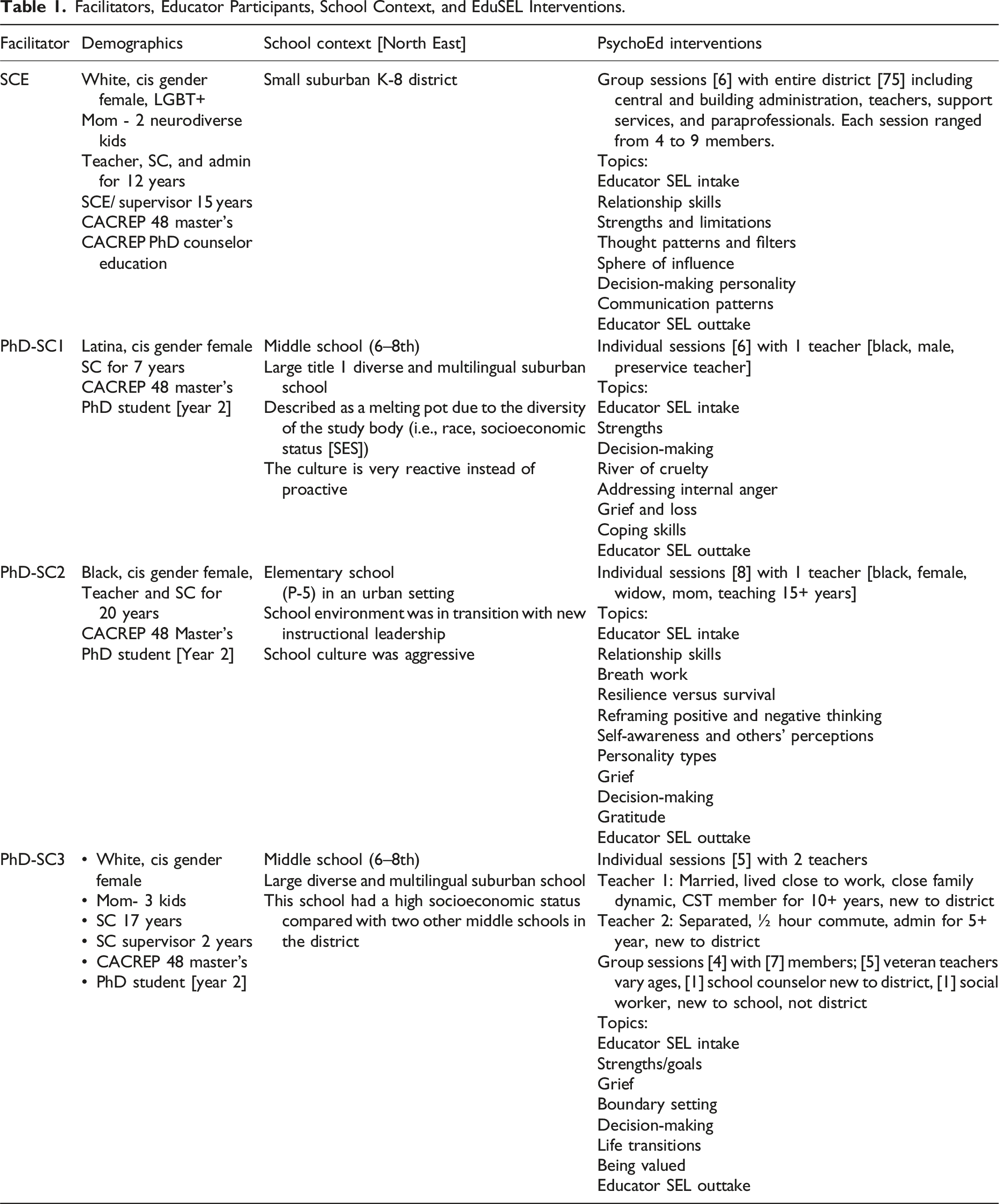
Facilitators, Educator Participants, School Context, and EduSEL Interventions.
Relatedly, the fifth and sixth authors of this article also met with the SCE weekly as part of a long-standing Group Research Collaborative (i.e., research team that has been meeting since the summer of 2019) and were able to provide consultation throughout the research process. Collectively, they have discussed and explored their own identities, as well as systemic influences on their families and the communities in which they live and work; they challenged one another and created healing spaces through the process. These transformative dialogues about critical issues of equity in education, school counseling, and healing environments provided a foundation for the current study, with the unified goal of using relationships to create culturally affirming healing spaces in school communities where all youth and educators have an opportunity to thrive.
Critical Participatory Action Research (CPAR) Cyclical Process
CPAR is an iterative process that includes a sequence of planning, acting, observing, and reflecting for 10 cycles. An added step in this CPAR study is “supervision,” which takes place after reflecting and before planning in the next cycle. See Figure 1 for the CPAR cycle. Supervision specifically creates the space to model the healing environment and to provide feedback to enhance their clinical skills in the process and support personal and professional growth. The discussion below describes the initial cyclical process, emphasizing the many sessions of planning, and then summarizes what occurred during the remaining cycles. CPAR cycle for EduSEL psychoeducational counseling interventions.
Phase 1: Plan
Given the weight of what is being asked and the ethical implications, the co-researchers spent a considerable amount of time planning. This initial step took researchers approximately five sessions (2.5 hrs./per session) to identify the problem to consider, discuss the ways to address and situate the problem within the goals of the course and professional practice, establish a shared vision and definition, determine school-based collaborators, determine modes of delivery that fit the counselor and the school setting, the process by which to develop curricula for sessions, and share a common starting point for sessions by co-developing an EduSEL Intake and Outtake Questionnaire.
Identifying the Problem
The doctoral course, Advanced Practicum for Counseling in Educational Settings, focuses on assessing and improving clinical skills for PhD students in school counseling. Traditionally, these students work with adolescents to demonstrate and refine their counseling skills. Among this cohort, a recurring theme emerged: “the adults are not okay.” The PhD-SCs shared that to date, the present school year had been one of the most challenging, marked by an inability to be proactive in addressing daily crises and a lack of administrative support. Despite initiatives from school administrators for teachers to promote SEL, many of these educators were overwhelmed. As a result, a key question surfaced: “How can teachers help students co-regulate if they are unable to recognize their own dysregulation?” In reflecting back on Perry’s and Szalavitz (2017) research stating, “a regulated, calm adult can regulate an anxious and dysregulated child, but a dysregulated adult can never calm a dysregulated child,” the team collectively identified teachers’ lack of SEL knowledge and low morale as obstacles to successful district-wide SEL implementation. They also discussed the absence of time for teachers to reflect and self-regulate, suggesting the need for spaces where educators could connect their minds, bodies, and emotions, potentially fostering more healing-centered classroom environments. See Figure 2 for Statement of the Problem. As the school counselors considered solutions, they recognized their own lack of access to regular clinical and/or peer supervision. Therefore, they proposed creating a supervised space for teachers to connect with their bodies, minds, hearts, and other supportive individuals as a way of enhancing their own well-being. State of the problem and study context.
Context for CPAR and Potential Impact
The team emphasized the importance of creating healing spaces for both educators and students. The researchers grew united in their belief that educators in “survival mode” cannot create healing spaces or foster critical consciousness to support culturally affirming classrooms without the internal work of EduSEL. This led the team to dream of ways they could work with teachers on EduSEL to help them successfully implement SEL into the classroom. This aligned with previous discussions of EduSEL as a form of teacher consultation to address racism (Ieva & Beasley, 2022). The team noted school counselors’ roles as consultants, educators, and counselors and explored whether providing EduSEL sessions for teachers could heal, model, and improve teacher-student relationships (Lemberger-Truelove et al., 2023). Additionally, the SCE had started professional development groups on EduSEL for educators, and the team found that the process aligned with their goals for the course and their professional practice. As a result, they decided to implement individual and/or small group EduSEL psychoeducational counseling sessions with teachers, thereby solidifying their engagement in research and pedagogy through the CPAR process (see Figure 3). CPAR for EduSEL, healing, and impact.
Operationalizing EduSEL
For successful implementation of EduSEL, the first step was to develop an operational definition that was both built upon and extended beyond CASEL’s framework of Adult SEL. CASEL (2020 defines SEL as a crucial aspect of human development, enabling individuals to acquire the knowledge, skills, and attitudes necessary to develop healthy identities, manage emotions, achieve personal and collective goals, demonstrate empathy, build supportive relationships, and make responsible, caring decisions. Adult SEL (CASEL, 2023) expands this framework by addressing how adults can continue to develop and model these competencies, with attention to structures and practices that support adult well-being.
To honor their own and others’ positionalities, the research team identified a need for EduSEL to incorporate a critical lens, emphasizing the importance of internal work in fostering critical consciousness for equitable practices and policies in education. As a result, the team collaboratively defined EduSEL as “the ongoing, psychoeducational, reflective process through which educators actively engage in continuously facilitated, psychoeducational professional development that encompasses exploration, learning, and reflection to enhance their own social-emotional competencies focused on their own healing.” EduSEL competencies are based on CASEL’s five main categories (e.g., self-awareness, self-management, relationship skills, social awareness, and responsible decision-making) and subcategories. EduSEL emphasizes understanding how SEL shapes personal and professional identities, and is informed by educators’ past experiences, bioecological systems (Bronfenbrenner & Morris, 2006), and social environments. Developing this shared definition allowed the researchers to align their operational framework for the sessions, ensuring consistency in their approach.
Phase 2: Action
The PhD-SCs had the autonomy to decide how to engage teachers in their EduSEL sessions, allowing them to align their doctoral studies with professional practice without overwhelming responsibilities. The SCE, specializing in group counseling and research, recognized psychoeducational group counseling as an appropriate delivery method. Previously, the SCE had provided psychoeducational individual EduSEL sessions in a different district and also knew this was a viable option for intervening. PhD-SC1 and PhD-SC2 chose psychoeducational individual sessions to ensure they remained able to balance their roles as school counselors and PhD students, while PhD-SC3, new to her school, felt able to conduct both psychoeducational individual and small group sessions. Contextual information on these roles is detailed in Table 1.
Participant Educators
The selection of educator participants for EduSEL interventions were strategic, based on relationships, potential benefits, and diversity in roles. PhD-SC1 chose an educator likely to benefit from SEL practices, while PhD-SC2 selected a pre-service teacher already active in the school community. PhD-SC3 selected a diverse group of teachers, counselors, and Child Study Team members, ensuring varied perspectives. The SCE conducted psychoeducational small group EduSEL sessions with the district’s staff, which included administrators, teachers, and paraprofessionals. For additional details, see Table 1 for educator demographics and school contexts.
Curriculum Development
In line with their choice of delivery methods, the team developed tailored curricula for each session to meet the educators’ developmental needs. Rather than following a rigid curriculum, this personalized approach modeled responsive healing and learning. PhD-SC2 planned to explore CASEL’s SEL framework, integrating their Journey into Inner Peace (JIIP) model, incorporating yoga and breathwork. PhD-SC1 also used CASEL’s framework, was client-centered, and remained open to evolving topics for professional and personal growth. PhD-SC3’s sessions were guided by an intake process, building trust and addressing deeper topics such as grief and transitions. These approaches offered opportunities to foster meaningful EduSEL growth.
Session Components
The PhD-SCs aimed to replicate the healing space from their clinical/peer supervision sessions with the SCE and one another in their EduSEL work. Each session, regardless of modality or participant makeup, followed a consistent structure, designed by the SCE from theories of learning, development, and change. In individual sessions, PhD-SCs used self-disclosure as a clinical tool. The components for each 45-minute session included: (1) Check-in: A fun, creative question to help educators regulate, transition, and connect to the session’s SEL focus. (2) Experiential Activity: Psychoeducational activities tailored to EduSEL competencies based on prior assessments. (3) Guided Reflection: Questions to encourage educators to process their thoughts and emotions. (4) Process Questions: Prompts to help educators reflect on personal reactions tied to healing and growth. (5) Interpersonal Dialogue: Facilitated discussion exploring how session insights relate to broader systems. (6) Connections: A guided dialogue to explore commonalities and differences. (7) Application to Teaching: A closing discussion on how the session content applies to professional practice.
Collectively, the team developed an EduSEL implementation plan specific to each PhD-SC, educator, and district, with goals, key competencies, and a shared vision for conducting individual and group sessions. This framework is constantly being refined in future cycles as PhD-SCs and the SCE plan each session collaboratively. For details on curriculum, please contact the authors.
Phase 3: Observe
During the Observe phase, researchers gathered weekly data to monitor the implementation fidelity of their EduSEL psychoeducational individual and small group counseling sessions. The observations included detailed implementation notes, which were essential in capturing the counselors’ experiences. Notes featured case conceptualization insights allowing for a deeper understanding of the educators’ needs and challenges. Additionally, the observations included descriptions of interactions and conversations between the PhD-SCs and educators that occurred between sessions. These observations provided valuable context on how educator participants were engaging with and applying SEL concepts and/or language, as well as highlighting any evolving dynamics or concerns that emerged during the process. The Observe process helped paint a comprehensive picture of the implementation’s areas for the next phase, Reflection.
Phase 4: Reflection
As part of this phase, PhD-SCs were tasked with writing weekly reflection journals to document their experiences implementing EduSEL psychoeducational individual and small group counseling sessions with educator participants. These entries encouraged counselors to critically evaluate key aspects of their sessions, such as identifying the most productive and important critical incidents and elements, as well as recognizing areas where they struggled the most. The reflections highlighted recurrent themes and issues that emerged across sessions, enabling PhD-SCs to assess potential growth and challenges in their work. Additionally, the reflections provided space for counselors to consider the advanced skills they applied during sessions and to explore the implications of working with a diverse range of educators. These weekly reflections were essential for counselors to refine their practice, develop deeper insights into the EduSEL implementation process, and address any challenges they faced while promoting the social and emotional growth of the educator participants.
Added Phase: Group Supervision
In the Group Supervisory Sessions, PhD-SCs participated in regular reflective clinical/peer supervision sessions facilitated by the SCE, who began each meeting by modeling the EduSEL lessons she was implementing in school districts. Through these sessions, the SCE demonstrated key elements of facilitation, including creating a healing space, following the EduSEL structure, using clinical skills such as self-disclosure, managing group dynamics, and navigating the shifting roles of counselor, educator, and consultant. The intent of these supervisory sessions was to provide not only professional development but also personal healing, growth, and restoration for the PhD-SCs. They co-created a collaborative space where school counselors shared their own implementation experiences, jointly watched EduSEL recorded sessions, provided peer feedback, and discussed challenges and successes. The sessions also included case conceptualization discussions to deepen understanding. This collective reflection and feedback loop played a critical role in supporting PhD-SCs’ personal and professional development, while also informing continuous improvement in planning for future EduSEL sessions.
Data Collection
To evaluate the implementation of EduSEL psychoeducational individual and small group counseling sessions, a comprehensive, multi-source data collection process was used. Data included transcripts of group supervisory sessions, which encompassed discussions on EduSEL recorded sessions, peer feedback, and case conceptualization notes. These elements were also analyzed individually as separate transcripts and documents, providing a nuanced view of the group interactions and individual reflections. Additionally, facilitators maintained reflective journals that offered insights into their personal experiences, observations, and implementation strategies.
The PhD-SCs used the EduSEL Intake questionnaire developed during the planning phase to build rapport, assess wellness, introduce the SEL competencies and the connection to personal and professional development, and collaborate on goals of the sessions. The Outtake questionnaire was used to gather feedback and reflections at the termination of sessions, enabling continuous improvement (Appendix A). These questionnaires were analyzed to assess educator participant progress, challenges, and overall experiences during the intervention. This multi-faceted approach allowed for a rich, triangulated dataset, enhancing the evaluation of EduSEL implementation and identifying factors that influenced its success.
Data Analysis and Trustworthiness
Themes Derived From Data.

Ethical Considerations
While the co-researchers entered this process with full transparency as active participants, PhD-SCs obtained informed consent from all educator participants specific to the course, to include recording sessions, supervision consultation, and confidentiality related to working with educators in sensitive psychoeducational processes. Additionally, co-researchers engaged in continuous reflexivity throughout the group supervisory sessions to acknowledge and address their biases, power dynamics (between SCE and SC-PhDs, and SC-PhD and educator colleagues), and positionalities in the implementation and research process.
Findings
This study explored how school counseling professionals (PhD-SCs) who were enrolled in a doctoral Advanced Practicum for Counseling in Educational Settings designed, implemented, and facilitated culturally sustaining EduSEL interventions. These interventions used psychoeducational individual and small group formats to support educators’ healing, learning, and development. After data analysis, member checking, and thematic consolidation, six key themes emerged: (1) co-healing spaces; (2) advancement of counseling and supervision skills; (3) a counselor needs a counselor; (4) cognitive awakenings; (5) ripple effects; and (6) EduSEL dynamics and delivery. These themes, drawn from PhD-SCs’ reflections, supervisory experiences, and educator feedback, highlight the collaborative nature of implementation and its impact on all participants.
Theme 1: Emergence of a Co-Healing Space
The EduSEL sessions created a dual healing space, benefiting both PhD-SCs and educator participants. PhD-SC2 noted that modeling breathwork and mindfulness established a co-regulated, co-healing environment. PhD-SC3 described the experience as enhancing her mental wellness and fostering collegial bonds. Educator participants gained new perspectives on SEL, recognizing how teaching spaces could also serve as healing spaces. For example, an educator acknowledged how the sessions helped him realize he shielded himself emotionally, which impacted his relationships with students. This transformative realization motivated him to foster more authentic connections.
The group space also facilitated the release of emotional burdens, as PhD-SC3 noted: “Sharing transitions, grief, or new beginnings allowed collaboration and parallel growth.” Educator participants expressed a need for similar spaces at the administrative level, with one saying, “I wish administrators would check in like this—really ask, how are you?” These reflections highlight the importance of intentional, supportive environments in education.
Theme 2: Advancement and Utility of Counseling and Supervision Skills
PhD-SCs refined their counseling skills through the facilitation of EduSEL. As PhD-SC3 reflected, “For a 17-year high school counselor, I had to revisit and resharpen my group counseling skills.” The sessions required dynamic clinical skills, including empathy, pattern recognition, and the ability to pivot based on participants’ needs. Educators often operated in “survival mode,” but PhD-SCs used their expertise to challenge and support growth. For instance, PhD-SC2 noted, “We were able to make connections, assess hesitancy, and pivot quickly to meet client needs.”
This skill refinement also deepened PhD-SCs’ understanding of educators as individuals beyond their professional roles. PhD-SC1 reflected, “I learned how to see them as humans, not just the roles they serve in the district.”
Theme 3: A Counselor Needs a Counselor
Supervisory sessions modeled co-healing spaces, allowing PhD-SCs to process their experiences and improve their practice. PhD-SC1 emphasized the value of peer supervision: “Thank God for supervision; I’m not sure I would be functioning without it.” These sessions provided opportunities for feedback, resource sharing, and perspective shifts.
Supervision also highlighted the impact of transference. For instance, one PhD-SC shared how a client’s grief triggered her own unresolved emotions: “It reminded me of the grief from my own failed marriage.” These reflective moments underscored the importance of supervision in managing personal and professional boundaries.
Theme 4: Cognitive Awakening
EduSEL sessions fostered transformative cognitive awakenings for both facilitators and participants. Trust and rapport were foundational, as PhD-SC3 observed: “Rapport and trust were established quickly, especially in group settings.” Educators gained a deeper understanding of SEL’s relevance to their personal and professional identities. One educator expressed, “I wish this was something everyone did,” and called for administrators to ask more value-driven questions.
Through introspection and collaboration, participants became more aware of their emotional states and the impact on their teaching. As PhD-SC1 noted, “My client realized she had never wanted to see a therapist before, but our sessions created a safe space for her.” This introspection extended to emotional literacy, with educators adopting SEL vocabulary and competencies. PhD-SC2 described the shift: “In the beginning, SEL was an external concept, but over time, emotional literacy became integrated into their language and practice.”
Theme 5: Emergence of a Ripple Effect
EduSEL sessions empowered educators to apply SEL strategies in their classrooms, creating ripple effects throughout their school communities. PhD-SC1 explained, “Helping regulate a dysregulated adult benefits all stakeholders, contributing to a positive school climate.” Educators reflected on their growth and the practical tools they gained, which were often student-driven.
For PhD-SCs, the parallel process of receiving supervision mirrored the EduSEL sessions they facilitated. This supervision served as an affinity space, fostering critical consciousness and collective healing. As SEL is a lifelong process, the EduSEL model provided ongoing opportunities for personal and professional development.
Theme 6: EduSEL Dynamics and Delivery
The EduSEL process demonstrated benefits in both individual and group formats, though group sessions emerged as a more sustainable option. PhD-SC reflections revealed that individual sessions, while impactful, were limited by time and capacity constraints. “Individual sessions are not sustainable for school counselors given the demands of their roles,” one facilitator noted.
Group sessions, on the other hand, fostered collaboration and camaraderie. Educator participants shared personal and professional experiences, building trust and connection. PhD-SC3 described how life transitions deepened group dynamics: “Trust was established quickly, leading to candid conversations about marital relationships, adult children, and stress.” These shared experiences highlighted the importance of collective support in addressing educator well-being.
The group setting also encouraged cross-disciplinary collaboration, as PhD-SC2 observed: “The group sessions allowed for true collaboration with people who might never have connected otherwise.” This dynamic underscored the transformative potential of group EduSEL interventions in fostering co-healing and professional growth.
Discussion
Themes emerging from this study align with critical topics in existing literature. A central theme was the “Emergence of a Co-Healing Space.” Healing, defined as a process of giving, restoring, and regenerating (Lee et al., 2023), parallels the safe environments students need for learning, as educators also require spaces to process, engage, and support one another—spaces that traditional professional development does not provide. Experiencing a co-healing space fostered renewed perspectives on SEL for both educators and their students.
This study also emphasized the “Advancement and Utility of Counseling and Supervision Skills.” School counselors possess the training and expertise necessary for supporting educator participants. Counseling skills facilitated the internal work in EduSEL sessions, with school counselors integrating roles as counselors, educators, and consultants to deliver culturally affirming EduSEL services (Fitzgerald et al., 2022). Effective facilitation requires preparation and training, as noted by prior research (Ieva & Beasley, 2022; Levy & Lemberger-Truelove, 2021). School counselors’ training equips them with a unique skillset tailored to school functioning (Ieva & Beasley, 2022), enabling self-directed growth and the development of higher-order cognitive and socio-emotional skills.
This research affirms that school counselors’ counseling and supervision skills (Ieva & Beasley, 2022; Levy & Lemberger-Truelove, 2021) ensure the fidelity of EduSEL implementation (Schonert-Reichl, 2017). PhD-SCs used advanced clinical supervision models, integrating techniques such as framing, situating, and enacting to build relationships that supported educators’ personal and professional growth. These strategies enhanced facilitators’ self-awareness and their ability to address participants’ values and biases.
Engaging in EduSEL also highlighted the need for school counselors’ own restoration. Supporting educators and students in social-emotional development involves high-pressure situations that can lead to compassion fatigue, burnout, and secondary trauma. The theme “A Counselor Needs a Counselor” emphasizes the importance of clinical/peer supervision for school counselors’ healing and growth. Supervision sessions provided a regenerative cycle of reflexivity, intersectionality, and emotion (Lee et al., 2023), empowering counselors to navigate their work. Weekly peer sessions supported restoration while enabling counselors to reflect on their experiences. As noted, “Supervision provided space to bring awareness and engage in difficult discussions.”
Although substantial research confirms the benefits of clinical and peer supervision for school counselors (Bledsoe et al., 2021; Zalewski, 2022), it is not mandated in schools (Brott et al., 2021). Relevant models like Antiracist Inclusive Model of Systems Supervision (AIMSS; Ieva et al., 2021b) and the Culturally Informed-Social Justice School Counselor Supervision Model (Sandifer et al., 2024) offer frameworks for attending to the needs of colleagues and systems.
The co-healing space also facilitated “Cognitive Awakening.” Many educator participants entered the study with limited knowledge of SEL competencies, requiring PhD-SCs to meet them developmentally. Through EduSEL sessions, participants experienced transformation. Prior research confirms SEL curricula reduce burnout and improve student-teacher relationships (Sandilos et al., 2023; Schonert-Reichl, 2017). Initially, participants felt unprepared to address SEL for themselves or their students. Time during the workday for SEL sessions and professional development is essential to mastering these skills (Fitzgerald et al., 2022).
EduSEL emerged as an intervention for regulation, healing, and developing critical consciousness (Sandilos et al., 2023; Zarate et al., 2019). The process began with introspection and reflection, cultivating critical language and awareness. PhD-SCs observed that this “cognitive awakening” enabled participants to connect personal growth with advancing equity work.
Connecting with other individuals’ SEL fostered a “Ripple Effect,” as school counselors modeled SEL competencies, encouraging educators to apply these skills in their classrooms. By adopting SEL techniques, teachers developed closer relationships with students, creating positive classroom environments and improving school outcomes (Sandilos et al., 2023). Collaborative efforts between school counselors and educators supported professional growth and student well-being (Ieva & Beasley, 2022).
Within the theme “EduSEL Dynamics and Delivery,” differences emerged between individual and group sessions. Individual sessions were deemed unsustainable due to time constraints and the lack of clinical supervision. While individual sessions allowed for tailored interventions, group sessions demonstrated greater potential for transformation and scalability. Group EduSEL sessions fostered connection and collaboration, with participants sharing experiences and learning from one another. “Life transitions moved the group dynamic quickly,” noted a PhD-SC, emphasizing how trust and vulnerability deepened connections.
Group sessions modeled social awareness, providing a space for educators to explore their worlds and foster authentic collaboration. As one PhD-SC remarked, “The group process allowed for true collaboration with people you may not have connected with otherwise.” Group EduSEL sessions demonstrated the potential for broader impact, supporting collective growth and reinforcing the importance of relational work in SEL. Research confirms that group processes amplify social awareness and foster systemic changes, as highlighted by studies on affinity groups and collaborative professional development (Benner et al., 2023; Berger et al., 2022; Oliveira et al., 2021).
In summary, this study highlights the transformative potential of EduSEL for educators and school counselors. By fostering co-healing spaces, advancing counseling skills, providing supervision, facilitating cognitive awakenings, and leveraging group dynamics, EduSEL offers a sustainable approach to supporting educator and student well-being.
Implications
The EduSEL psychoeducational approach has several implications for practice/training, policy, and research. In terms of practice, school counselors as facilitators of change can use counseling in a collaborative manner to promote healing, to focus on strengths, and to provide opportunities for advocacy. For training in particular, school counselor education programs must prepare and supervise trainees in EduSEL across all dimensions—curriculum, practicum, internship, and clinical supervision. This in turn can equip school counselors to build and teach social-emotional competencies. This connected training will prepare school counselors to work intentionally with adults and children to foster growth in the SEL arena.
Within practice and training, EduSEL should continue to be explored as a proactive parallel process to support counselors, teachers, and students. Specific implementation methods and strategies include: (a) using clinical and psychoeducational skills to address mental health and sociopolitical issues; (b) offering group-based professional development for teachers to explore and implement SEL; and (c) providing workshops and webinars for parents and caregivers, such as early childhood programs.
Next, policy implications can be gleaned from the recommendations this study emphasizes, which includes tailored clinical supervision for school counselors that specifically addressing their roles as educators, counselors, and consultants to advance equity and excellence. Policymakers who understand the need for both adults and students to have these SEL skills can ensure educators have both planning periods and reflective process periods to engage in both formal (e.g., professional development) and informal interactions that center EduSEL. Embedding this approach within the fabric of the schools can create a sustainable framework for supporting educators in these systems.
Research within the EduSEL sphere is at a nascent phase and most of the general research on SEL in school counseling focuses on students and student outcomes. EduSEL programming in schools holds significant potential for enhancing educator well-being, student outcomes, and school climate. Therefore, areas for future research could explore the development, implementation, and effectiveness of programs that span both evidence-based curricula tailored for educators and impactful programs for different contexts, adapting curricula for diverse needs such as geography, grade level, and cultural considerations. In addition to expanding the program offerings, the relationship between educator SEL, teacher well-being, and student outcomes could be addressed using longitudinal research designs that examine the long-term effects of SEL on teacher mental health, job satisfaction, and burnout prevention. This research could provide opportunities to explore links between improved teacher well-being and student engagement, academic performance, and social skills, which in turn could offer a holistic view of SEL’s impact. Finally, future studies could examine how school counselors integrate EduSEL into school-wide SEL frameworks, particularly at the Tier 1 level within MTSS. Insights into their dual roles as facilitators and beneficiaries of SEL initiatives can further understanding of how to foster healing in school environments.
Limitations
There are several noted limitations with this study. This CPAR operated as a proof of concept and pilot study. While the implementation findings are promising and useful for moving forward, there is much room to grow when presenting the research design and the components of the intervention for replication purposes. Although the researchers across the planning, implementation, and evaluation phases of the study and writing of the article operated collaboratively, conflicts did emerge. While unacknowledged conflict is not inherently problematic, highlighting critical incidents over the course of this multifaceted process could provide strategies on mitigating possible future areas warranting particular attention. For instance, despite the SCE’s best intentions, there was a power dynamic present with SCE and PhD-SCs that could have fueled social desirability in different aspects of the study, but especially within the reflections. Additionally, it is important to acknowledge the researchers’ and authors’ biases, which are shaped by their personal and professional experiences. Finally, this study was tied to a course offered within a school counselor education program and therefore was limited to the 15-week course duration.
Conclusion
Despite these limitations, the collaborative team of researchers and authors reflected deeply on their findings and experiences and capture the essence of EduSEL. As a result, they collectively developed and offer the following shared definition to guide future understanding and implementation: EduSEL is defined as the ongoing, psychoeducational, reflective process through which educators actively engage in continuously facilitated, psychoeducational professional development encompassing exploration, learning, and reflection to enhance their own social-emotional competencies focused on their own healing. EduSEL competencies are grounded in a critical lens to CASEL’s five main categories—self-awareness, self-management, relationship skills, social awareness, and responsible decision-making—and their subcategories. EduSEL is a dynamic process delivered through group or individual sessions aimed at fostering personal growth, continuous healing, and enhanced capacity to support student SEL. Ultimately, EduSEL serves as a mechanism for promoting educator wellness both personally and professionally.
Overall, this study offers intriguing avenues for future exploration. The findings provide promising initial evidence that school counselors can support educator well-being, enhance social-emotional competence, and improve student-teacher relationships through Tier 1 EduSEL programming under supervision.
Footnotes
Declaration of Conflicting Interests
The author(s) declared no potential conflicts of interest with respect to the research, authorship, and/or publication of this article.
Funding
The author(s) received no financial support for the research, authorship, and/or publication of this article.
