



Abstract
This paper reports findings from a mixed-methods study, which aimed to examine challenges in shared parenting among racial minority women survivors of domestic violence who have a young child under the age of 4. Fifteen racial minority women were among the 84 respondents who first participated in an online questionnaire survey to study shared parenting experiences. Based on the questionnaire survey findings, we developed semi-structured questions and invited the surveyed women to participate in an in-depth individual interview. Five of the 15 racial minority women who participated in the survey were interviewed. These five women were no longer in their heterosexual relationships with the perpetrator of violence. From the quantitative data analysis, racial minority women in this study more frequently experienced physical hurt, excessive texting from ex-partners, self-reported anxiety, financial hardship, and a lack of social support, compared with the non-racialized participants. Findings from the qualitative interviews suggest that racial minority women in this study shared strong resilience in coping with all of these challenges. They value family ties, choose to forgo the court system, stay positive, and embrace new intimate relationships. This paper shares rare and valuable findings from these racial minority women survivors and discusses implications on education and practice for service providers.
Introduction
In this paper, we share valuable findings from a small sample of racial minority women survivors of domestic violence (DV) who shared parenting of a young child with an ex-partner. The importance of hearing the voices of these women cannot be overstated as there is limited research reflecting shared parenting experiences for racial minority women and even less when adding complexities such as DV and caring for young children. For this paper, racial minority women are defined as those who are non-Caucasian or non-white. There is no consensus in the research literature for the definition of shared parenting; for our study, we have defined shared parenting as a child spending at least 40% of their time with each parent (Bala et al., 2017). We defined DV based on the Divorce Act in Canada (Government of Canada, 2024), as physical, sexual, psychological, or financial abuse, or coercive control.
Physical, psychological, and financial stress while caring for a young child can be daunting and is exacerbated when adding the traumatic experience from DV before and after separation, the very often difficult battle of child custody and support, and the continuation of violence over shared parenting matters (Sheehy & Boyd, 2020). More importantly, literature has documented that racial minority women have experienced additional challenges in confronting DV, for instance, isolation or lack of social support, financial insecurity, and systematic discrimination (Garcia & Rivera, 2014). This Canadian study is aimed at examining shared parenting of a young child aged 4 and under among racial minority women who are survivors of DV. We placed the focus on women with children aged 4 and under because women, as a group, continue to experience a high prevalence of DV and the consideration of their children's dependence when they are young is often a deterrence factor for women to leave an abusive relationship (Satyen et al., 2018; Tam et al., 2015).
Literature Review
According to the Canadian Survey of Safety in Public and Private Spaces, racial minority women experienced a higher rate of DV (47.0%) than their non-racialized counterparts (29.0%; Cotter, 2021). Research found that racial minority women who: (i) have limited knowledge of the criminal justice system, (ii) have encountered language barriers, (iii) were financially dependent on their spouses, or (iv) have experienced pressure from their extended family, may not report DV to authorities. For example, Latino church leaders indicated that they were aware of intergenerational risks of DV, yet did not hold abusers accountable for their behavior nor did they support separation or divorce (Ames et al., 2011). For Mexican American families, there was pressure from extended kin to remain married (Afifi et al., 2013). One study analyzed Canadian parenting arrangement decisions where a child's identity of mixed-race heritage was written in the judgment for custody cases (Boyd & Dhaliwal, 2015). Where shared parenting was ordered, neither systematic challenges due to race nor culture were taken into consideration for the decision. The authors did not find any legislation that referenced the child's racial identity (Boyd & Dhaliwal, 2015). Another study, from Tubbs (2010), reported a small sample (n = 5) of African American women survivors of DV, who shared parenting with their ex-partner. This study by Tubbs found that ongoing fear was evidenced among these African American women survivors of DV, who also shared parenting. However, the findings indicate that these women were able to develop new kinds of awareness and different perceptions of their lived experiences as single parents and survivors of DV. For example, one area of insight into their experiences included when their children matured, along with the system/societal change, as more support was offered to racial minority women survivors of DV. Nevertheless, most of these cited works are either dated, in the context of the United States, or not specifically focused on shared parenting among racial minority women survivors of DV with young children.
Due to a limited understanding of shared parenting among racial minority women survivors of DV with young children, we conducted a detailed literature search to understand what challenges or service gaps are experienced by racial minority women who have experienced DV and are in shared parenting arrangements. Through an extensive search of literature published between January 2017 and December 2022 and are related to racial minority women survivors of DV on five databases, namely CINAHL Plus, Academic Search Complete, APA PyscINFO, Social Work Abstracts, and Family Studies Abstracts, six articles were identified and reviewed for better understanding of issues among racial minority women survivors of DV in shared parenting. These articles revealed five areas of concern for Indigenous and racial minority women: (1) culture and gender role expectations; (2) child well-being; (3) economic dependency; (4) distrust in the system; and (5) the impact of colonization.
Culture and Gender Role Expectations
The review of these six articles shows that cultural norms and sociocultural pressures influence the decision-making and/or help-seeking behaviors of study participants. In the United States, evidence suggests that some Indigenous women survivors of DV have stayed in relationships of violence because of internalized gender roles for women that keep the family together, in addition to beliefs that family matters stay within the family (McKinley & Liddell, 2022). Williams and Jenkins (2015) found similar gender role expectations and their influence on women survivors of DV in Latina communities, where women were reluctant to proceed with DV complaints due to patriarchal gender roles. Moreover, these same authors found in their community-based study that although the DV rates are high, Asian and Pacific Islander women are not likely to report such incidences. Two of the main identified reasons behind the hesitation to seek help were issues of shame and privacy (Williams & Jenkins, 2015). The same findings were noted for British-Indian women survivors of DV in England, and Arab women survivors of DV in Israel (Buchbinder & Abu Tanha, 2019; Das, 2012), wherein the influence of the patriarchal system and emphasis on the preservation of the family and collectivism make divorce a taboo. Therefore, racial minority women survivors of DV find themselves confronting the cultural norms of living with violence.
Child Well-being
Children are another factor influencing decision-making for Indigenous and racial minority women survivors of DV; for some women, children are the reason to stay in the relationship, and for some, the reason to leave (Meyer & Stambe, 2022; Williams & Jenkins, 2015). For Arab women survivors of DV, seeing their children suffering was a determinant in deciding to leave the relationship (Buchbinder & Abu Tanha, 2019). However, British-Indian women survivors of DV decided to leave when the risk was heightened for their children and themselves, as well as when they received support from their older children (Das, 2012). For racial minority women who chose to leave the abusive relationship, post-separation shared parenting arrangements made their and their children's healing challenging, as ongoing contact with the perpetrator disrupted the healing process for both the women and their children and could further trigger traumatic experiences (Meyer & Stambe, 2022).
Economic Dependency
Lack of economic liberation alongside other factors can play a large role in the decision-making processes of women survivors of DV (McKinley & Liddell, 2022; Meyer & Stambe, 2022). McKinley and Liddell (2022) explained that having limited education or limited employment opportunities resulted in unemployment or underemployment among Indigenous women, who then became more financially dependent on the male partner (abuser), making it harder for the women DV survivors to leave the abusive relationship. Importantly, DV rates are highest among Indigenous populations, yet Indigenous women survivors of DV may not have the necessary resources easily accessible to them, specifically for those who have lived on reserves and those experiencing income insecurity in urban settings (Fox et al., 2018; Meyer & Stambe, 2022). Buchbinder and Abu Tanha (2019) also shared the observation that economic dependence highly influences the ability of Arab women survivors of DV in Israel to leave an abusive relationship.
Distrust in the System
Law enforcement and criminal justice systems are considered discriminatory among Indigenous women survivors of DV due to the history of colonization (Holder, 2023; Palmater, 2016). Therefore, the survivors are finding it hard to trust such systems, which impact their decision-making and ability to leave the abusive relationship (McKinley & Liddell, 2022). Specifically, Indigenous women do not want to contribute to the over-representation of Indigenous men in the criminal justice system through DV complaints (Meyer & Stambe, 2022). Meyer and Stambe (2022) state that DV abusers may blackmail their female partners; both Indigenous and non-Indigenous survivors may be blackmailed by reporting them to child protection services, which in turn discourages women's help-seeking decisions. Similarly, Black women may not follow up or pursue their complaints about DV as they may believe Black men will not be treated fairly by the criminal justice system (Williams & Jenkins, 2015).
Impacts of Colonization
Issues rooted in colonial practices and policies, such as child welfare and the availability of affordable housing in the United States and Australia, have entrapped Indigenous women survivors of DV into remaining in abusive relationships (McKinley & Liddell, 2022; Meyer & Stambe, 2022). Colonizing welfare policies include practices and policies that emerged from governmental agencies, churches, and welfare groups such as removing Indigenous children from their families by force and placing them in the care of White Anglo-Saxon families have resulted in intergenerational trauma that impacts their well-being and their ability to trust the system (Meyer & Stambe, 2022). Moreover, leaving abusive relationships is more complicated for Indigenous women as they have deep family and community relational accountability, and they often face economic, legal, housing, health, child custody, and child welfare challenges (McKinley & Liddell, 2022). For Indigenous women DV survivors who reside in remote and/or northern communities, seeking help and access to affordable housing and employment opportunities are further complicated due to limited accessibility and availability (McKinley & Liddell, 2022; Meyer & Stambe, 2022).
In summary, the comprehensive literature search did not generate any articles on shared parenting among racial minority women survivors of DV; however, the six articles reviewed did provide a broad understanding of additional challenges, such as economic dependency and the experiences of discrimination among racial minority women survivors of DV. This paper is intended to highlight the experiences of women who identify as racial minorities, who have young children, and are in shared parenting arrangements. We consider the following research questions: What are the identity markers of racial minority women who have young children and are in shared parenting arrangements? What are their lived experiences before and/or after the shared parenting arrangement? How did/do these racial minority women survivors of DV cope with shared parenting? The University of Calgary, the University of Toronto, and the University of Manitoba provided ethics approval for this study.
Methodology
The findings reported in this paper are drawn from a larger mixed-methods study (i.e., cross-sectional survey and qualitative interviews), on which 84 women (including 15 racial minority women) completed an online study of shared parenting arrangements across three provinces in Canada. A detailed recruitment strategy can be found in previous publications (Archer-Kuhn et al., 2021, 2023). Interested women survivors could participate in the online survey through an anonymous link embedded in the recruitment materials. Among the 15 racial minority women, five of them completed a follow-up, in-depth qualitative interview to provide their experiences of shared parenting arrangements on their young children and themselves when there had been DV.
Measures
The online survey comprised of: (a) HITS (hurt–insult–threaten–scream), a four-item DV screening tool that was used to measure the occurrence and frequency of DV before their separation. The HITS has good internal consistency with Cronbach's alpha of .80 and has good concurrent validity with the verbal and physical aggression items on the Conflict Tactics Scale (Sherin et al., 1998). The research team added three questions to include stalking, excessive texting, and restricting access to finances for a more comprehensive understanding of various types of violence. (b) The Center for Epidemiologic Studies Depression Scale Revised (CESD-R), which is a 20-item tool that measures symptoms of depression and has been reported to have good internal consistency, with Cronbach's alpha greater than .90 in community samples (Li & Hicks, 2008). This measure has been used to assess levels of depression in cross-cultural studies with survivors of DV (Li & Hicks, 2008). And (c) The Beck Anxiety Inventory, a 21-item multiple-choice self-report inventory, has been identified as having good internal reliability, with a Cronbach's alpha of .92, and is considered to be an accurate measure of anxiety in adults over the age of 17 (Beck et al., 1988). The Beck Anxiety Inventory is recommended for use with survivors of DV (Satyanarayana & Chandra, 2010). We know that it is common for female survivors of DV to experience anxiety and depression, and we wanted to know if this holds true in shared parenting arrangements.
Semi-Structured Interviews
An interview guide was developed for the semi-structured interviews following the analysis of the quantitative data to help provide further explanation of the survey results. Questions related to the following areas: (1) day-to-day functioning in shared parenting (e.g., What has been your experience with shared parenting of your young child with the other parent?); (2) co-parenting arrangements (e.g., How do you and your co-parent make decisions about your young child's well-being?); (3) ongoing experience of violence or disputes (e.g., What types of issues remain in dispute with the other parent?); (4) communication (e.g., When there are differences between your opinions on parenting, how are issues dealt with?); (5) sense of self as a parent (e.g., How do you know you are doing a good job as a parent of a young child in a shared parenting arrangement?); and (6) finances (e.g., In what ways does income impact shared parenting?). Interviews were held electronically on the Zoom platform. Individual interviews were audio recorded and transcribed verbatim.
Data Analysis
Descriptive statistics was used to understand the unique characteristics of these 15 racial minority women in comparison with the non-racialized women in the larger study. Due to a large sample size difference between the racial minority (n = 15) and the non-racialized (n = 69) groups, a parametric test on group differences was considered undesirable. Additionally, due to the number of racial minority women being small in this study, a non-parametric test (e.g., chi square) could not reliably be used because some expected cells had less than 5. For group comparison on percentages, we adopted a conventional practice of 10 percentage points or more to be considered substantial of group difference (Rosenthal, 2012).
A thematic analysis (Clarke & Braun, 2017) was used to analyze the narrative data from the interviews. With reference to Clarke and Braun (2017), we organized the data into codes, categories, and themes to seek patterns in the data. Two doctoral students on the research team coded the data and created categories independently, then came together to agree on themes, which were subsequently reviewed, discussed, and agreed upon by another research team member. Specific participant quotes were chosen to represent the identified themes.
Findings
Quantitative Findings
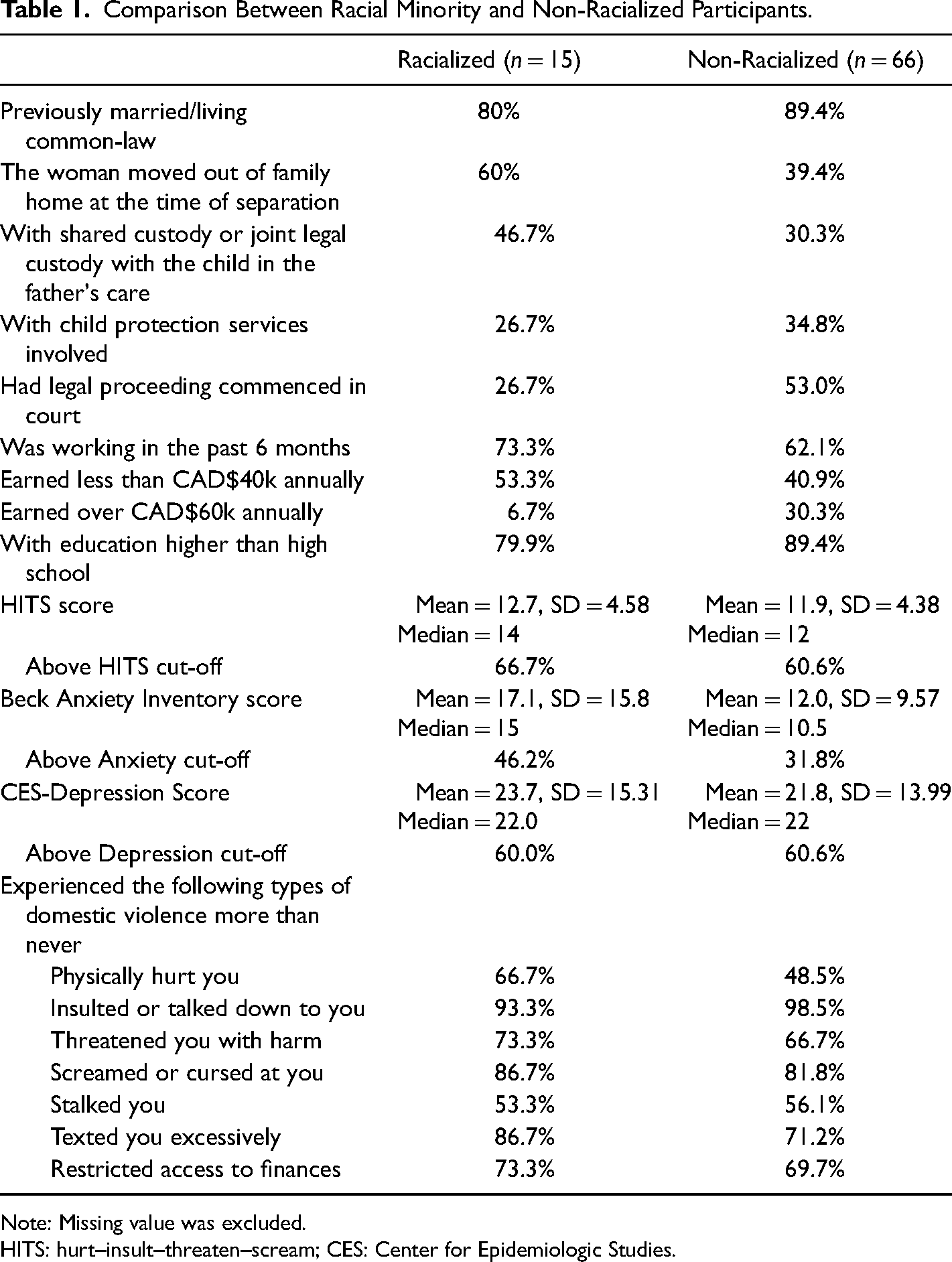
There were 15 women from the survey data who self-identified with one of the following ethnic groups: Indigenous (First Nations, Inuit, and Métis), Asian, Filipino, Hispanic, Indian, and mixed race. From the examination of their identity markers, 12 (80.0%) of the 15 racial minority women reported that they were previously married or living common-law with their child's other parent. Nine (60.0%) of these racial minority women reported that they were the ones to move out of the family home at the time of separation. Four (26.7%) of the racial minority women had child protective services involved. Eleven (73.3%) racial minority women were working in the previous 6 months, with the remaining either unemployed, on social assistance, on maternity leave, or stay-at-home moms. Slightly over half (53.3%) of the racial minority women earned less than CAD$40,000 annually. Only one (6.7%) of the racial minority women earned over CAD$60,000 annually. See Table 1 for details.
Comparison Between Racial Minority and Non-Racialized Participants.
Note: Missing value was excluded.
HITS: hurt–insult–threaten–scream; CES: Center for Epidemiologic Studies.
Ten of the 15 racial minority women scored above the cut-off (10.5) for the HITS before separation (M = 12.7, SD = 4.58, Mdn = 14). Nine out of 15 (60.0%) racial minority women scored above the cut-off (16) for CESD-R, which assessed their feelings from the previous 7 days (M = 23.7, SD = 15.31, Mdn = 22). Six out of 13 (40.0%) racial minority women who answered the Beck Anxiety Inventory scored above the cut-off (16), which is indicative of clinical anxiety (M = 17.1, SD = 15.8, Mdn = 15) during the month before completing the survey. These findings corroborate the literature on the higher prevalence of anxiety and depression among survivors of DV (Sediri et al., 2020; Tutty et al., 2020).
Table 1 also shows the comparison between the racial minority and non-racialized women in the larger study. Based on the 10 percentage points or above differences criteria to be considered as substantial in this study, there are several valuable observations. Notably, racial minority women reported experiencing a greater percentage of anxiety (46.2% vs. 31.8%), being physically hurt (66.7% vs. 48.5%), and receiving text messages excessively (86.7% vs. 71.2%) compared with their non-racialized counterparts. Of the eight identity markers, there are concerning deprivations among the racial minority women as a greater portion of them moved out of the family home at the time of separation when compared with the non-racialized counterpart (60.0% vs. 39.4%), a greater proportion of racial minority women earned less than a CAD$40,000 annual income (53.3% vs. 40.9%), and there was a much smaller proportion of these racial minority women earning over CAD$60,000 annually compared with the non-racialized women (6.7% vs. 30.3%). The finding on financial disadvantaged condition is consistent with the literature related to unemployment and underemployment among racial minority women (Fox et al., 2018; McKinley & Liddell, 2022).
Another noteworthy finding was that a greater portion of racialized minority women shared custody (i.e., parenting responsibility) with their ex-partner or had joint legal custody with the child in the father's care when compared with their non-racialized counterparts (46.7% vs. 30.3%). This suggests more demand on time and logistic for racialized minority women to coordinate with their former partner on child matters not to mention the energy and time required to navigate potential uncooperating behavior or post-separation violence (Bala et al., 2017; Sheehy & Boyd, 2020). Despite that, a smaller proportion of the racial minority women (26.7%) were involved in the court system for legal proceeding (e.g., child custody, charge on DV against their former partner, etc.) compared with 53.0% among the non-racialized women. This corroborates the literature in terms of the distrust on the justice system among racialized groups (Holder, 2023; Meyer & Stambe, 2022).
Qualitative Findings
To help the research team better understand the shared parenting experiences, all surveyed women in the larger study were invited to engage in follow-up interviews. A total of 20 women accepted the invitation and participated in individual interviews. Among these 20 women, five were racial minority women survivors. Qualitative findings from the larger study were published (Archer-Kuhn et al., 2022), with key themes for non-racialized and racialized women from the larger study including: (1) walking a tight-rope; (2) navigating post-separation relationships; (3) emotional realities of shared parenting; (4) shared parenting outcomes (e.g., coercive control); and (5) structural challenges. In this paper, we focused on experiences and coping that are unique to racial minority women in this study.
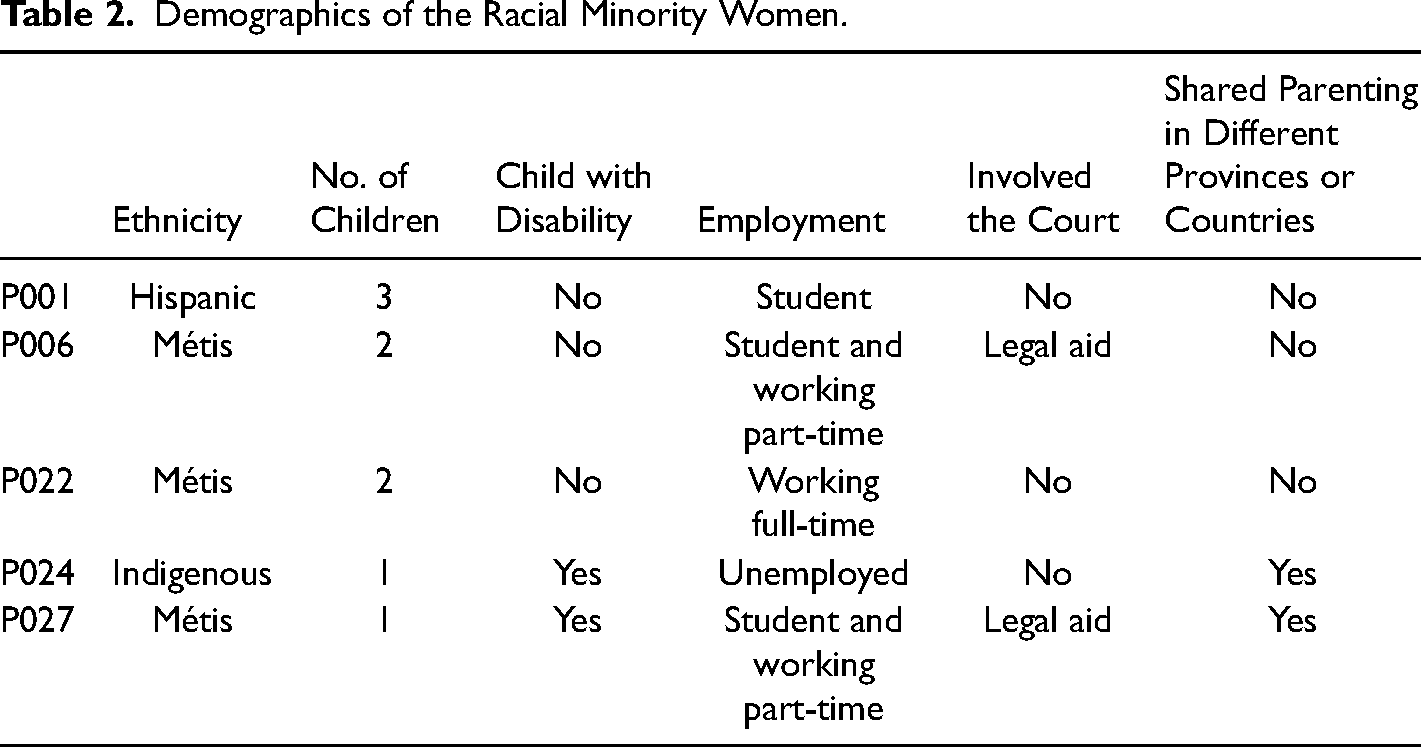
Among the five racial minority women who left their heterosexual relationships, three of them were Métis, one woman identified as First Nations, and the other woman, Hispanic. The women had one to three children, of whom at least one child was aged 4 or under. Two women had a child with a disability (i.e., hearing impairment, attention-deficit hyperactivity disorder [ADHD]). One woman was a stay-at-home mother, one woman was a full-time student, two women studied part-time and worked outside of the home, and one woman was employed full-time. Three women did not go through the court system for their shared parenting arrangements, while two other women used legal aid through the court system. Two women were involved in cross-province or cross Canada–United States border shared parenting. See Table 2 for further demographic data.
Demographics of the Racial Minority Women.
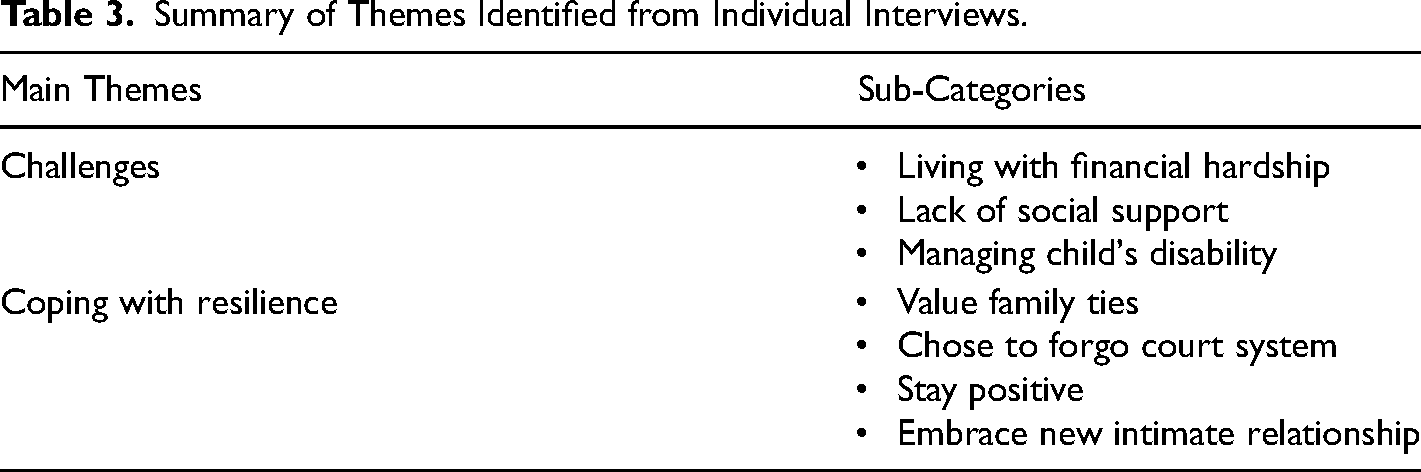
Using Clarke and Braun's (2017) thematic analysis, two main themes emerged: challenges and coping with resilience. Each theme emerged from multiple categories and is described below using participant quotes for illustration.
Challenges
The theme challenges speak to the difficulties the women experienced in their shared parenting arrangement with an abusive former partner. Three categories comprise this theme: (1) living with financial hardship; (2) lack of social support; and (3) managing unique circumstances.
Living with Financial Hardship. Being a single parent with young child(ren) is not an easy decision or life experience, as women are more likely to face financial hardship. Only one out of these five racial minority women worked full-time; therefore, some of these women were “struggling to even meet basic needs” (P001). One woman shared that “It's harder to put [my children] into activities that they want to do when I am paying for the whole thing” (P006). Three women indicated that they did not receive any financial support from their ex-partner. The following quote reflects how these women are living under financial hardship: I haven't been working since I moved out here. So, every, all of [my child's] needs have just come out of my child tax [benefit]. Um, honestly, if I could get some child support for [my child] that would go a long way towards paying for swimming lessons. (P024)
In addition to the lack of financial support, maintaining employment or career development was limited, compounding the challenges of improving their financial outlook. In the following excerpt, we see the difficulties these racial minority single mothers are facing in the workplace: The biggest limitation for me is the fact that because I’m basically solely responsible that I’m the one that takes a lot of the hits when it comes to finances. When it comes to like work, I’ve had employers telling me that they didn’t know if I was good enough for the position because I’ve called in sick because I’m the only one that's responsible for [my child]. (P027)
These racial minority women make it clear that they are bearing more financial burden in their shared parenting arrangement than they can reasonably manage. This qualitative finding corroborates the findings reported in the quantitative findings section, whereby a greater proportion of racial minority women earn less than CAD$40,000 annually (53.3%), while only 6.7% earned over CAD$60,000 annually, compared to 40.9% and 30.3% of the non-racialized women, respectively.
Lack of Social Support. The need for social support is evident among these racial minority women. Social support includes practical, emotional, and cultural/spiritual support from their family, friends, or formal system. For instance, one woman expressed that: “I had just moved from my family, five hours away. So, I was all alone doing all this” (P006). These women not only have to cope with the physical and emotional demands from childcare, employment, and navigating the logistics for shared parenting, but also various forms of DV after the separation. One woman shared that: “Honestly, I was so exhausted, because I just never had a break. From being a mom, even with [my child] going to preschool, it was always just me and [my child], and I got so tired” (P024). For these women in shared parenting, time for themselves is a luxury. The following example reflects the exhaustion and isolation that these racial minority women were facing: “I do 50/50 parenting. And I work 12-hour shifts, so on the days that I work, I have no life because I'm working. And then the days that I have the kids, I, I have no social life” (P022). In addition to the marginalization these women experience in the larger society, being separated or a single parent, and being a mother with young children places a much greater burden on these racial minority women's shoulders, and the thirst for social support is evident.
Managing Unique Circumstances. Shared parenting is the lived reality among these racial minority women; however, unique circumstances in their shared parenting situations have complicated and added a further burden. For instance, two women had children with disabilities, two women shared parenting in different provinces or countries, and one woman had three children to care for, including a child aged 4 or under. When DV happened in their relationship before and after the separation, reasonable negotiation on shared parenting became difficult. An illustration was shared by a woman whose former partner had been charged with DV. The woman was granted full decision-making, but a later appeal made by the former partner resulted in 50/50 shared parenting time. The woman expressed that not only was the entire process frustrating, but she had to manage shared parenting of a child with a disability with a former partner who lacked consistent parenting and reasonable agreement. Here's how she explained it: Their dad and me parent very different…they eat a lot of sugar there…So it's a lot of reminding them to do stuff like brush their teeth and to like, get their pajamas on and keep eating supper. They both have ADHD too so that doesn’t help (bitter laugh). (P006)
Shared parenting across different locations added challenges for the women. For example, one woman in a shared parenting arrangement between Canada and the United States expressed that she has received excessive phone or text messages from her former partner, who “…feels he's entitled to all of this time with [the child] where she has to travel to him” (P027). Recall that 83.1% of the racial minority women reported experiencing excessive texting from their former partner. This woman tried not to reply, but her former partner would “…take whatever information he has, and he will make his own story…so that I look like a not-so-great parent” (P027). She used a metaphor to explain her challenges in shared parenting in two countries: “It's more like the stresses I have to go through for [my child] to travel…time is currency on its own.”
These racial minority women were managing multifaceted challenges to make shared parenting work for their children, in addition to coping with the post-separation DV or trauma on their own. In sharing their stories, strong coping resilience among these racial minority women was identified.
Coping with resilience
Despite all of the challenges that these racial minority women encountered, their interview data revealed their strong resilience and ability to cope under strenuous circumstances. Four categories comprise this theme: (1) value family ties; (2) choose to forgo the court system; (3) stay positive; and (4) embrace new intimate relationships.
Value Family Ties. From collectivist cultures, these racial minority women value the importance of staying connected with their family and maintaining family roots for their children. Despite the separation from their ex-partner and post-separation DV, we see here the strong desire to maintain family ties: Like our beliefs were different, so it was hard to come to an agreement. For many things, a lot of times I give in. Because I feel like [my child's] relationship with [the] father is more important than me being right. (P027)
These racial minority women perceived that the continuation of family ties is beneficial for the upbringing of their children, and maintaining these ties becomes the driving force for them in remaining connected with their former partner, despite knowing the situation for the children is not ideal. Here is an example: “I grew up in a small town…I’m not going to make this about me…I just wished that they had better roots, and I wish that they could grow up the same way I grew up” (P022). For these women, working through shared parenting arrangements as a family is a preferred practical consideration. For instance, this woman articulated how she values maintaining family connections: Even if we are not together and all that. We are still a family unit, even with my other two involved. So, I appreciate that he encompasses the other two and recognizes that, you know, no matter what, we are family because of being connected by [my child]. (P001)
We learned from these racial minority women that letting their children stay connected with their family of origin is very important to them, even when there is post-separation DV.
Chose to Forgo the Court System. Three racial minority women out of five chose not to involve the family court system to handle their experiences of DV and preferred to problem solve with their ex-partners on parenting arrangements. This decision to forgo the court system to make parenting arrangements was rooted in past unpleasant experiences or distrust of the justice system. For instance, a woman expressed that her ex-partner was supposed to pay child support every month, but “…he brought it back (to the court) and he wasn’t supposed to pay any…we were supposed to be splitting (the child's) medication and stuff like that…But it doesn’t happen, and I stopped trying” (P006). Yet, not involving the court system can be an empowering experience for these racial minority women. For example, one woman explained why she did not report her experience of DV during the court hearing in child custody arrangements: “I never brought [domestic violence] up…I don’t want. Yeah, like what I've seen, him parent, and he's good to [my child] so our history is our history and leave it there” (P027). Another woman was so proud to problem solve with their former partner: “We like everything split 50/50 and we don’t even have a lawyer agreement and we’ve never been to any [lawyers] to seek legal advice or help or aid. We’ve just, we just did it” (P022). Another reason for not using the court system is to prevent secondary trauma for the child's benefit, as we see here: I recognize that the system was failing me. Sometimes, an unorthodox approach is what is needed. Like for us, we stayed out of the court system… I am getting lost in this [court process] because I am hitting roadblocks, and the court they are not even listening to me in court. And I do not want to tarnish my relationship with my co-parent because with court comes hostility. I said that a million times throughout my court journey that the court is a game of making your co-parent, your opposite party, look like the worst person on the planet. That's how you win that game. And that is not effective for your child. (P001)
We learn from these racial minority women that alternatives to the judicial system provided them with a better sense of control and empowerment; they were able to resolve the shared parenting arrangement on their own, and reduce the potential for secondary trauma to themselves and their children. The narrative data from these racial minority women offered a possible explanation of the findings from the quantitative survey of why fewer racial minority women (26.7%) were involved in the court system to deal with their shared parenting arrangement than their non-racialized counterparts (53.0%).
Stay Positive. The ability to stay positive was evidenced among these racial minority women; they embraced the positive aspects of shared parenting. Being separated from an abusive former partner, these women experienced “…more autonomy and control in [their] own household without the influences from the other partner” (P001). Moreover, as communication with the other parent improved, these mothers saw the benefit for their children: “…our parenting has gotten so much better. [My child] doesn’t hide under the table when we aren’t fighting [in front of them]” (P024). Importantly, these mothers perceived the shared parenting arrangements as providing a better environment for their children, instead of living in fear or remaining emotionally stressed. Shared parenting is about the kid. And that is the main thing that one must focus on when co-parenting, there is always going to be high emotions. There is always going to be stress… But at the end of the day, everyone needs to make it work so that the child has the best environment to thrive in. (P027)
For these mothers, the lack of support they have experienced has required them to make shared parenting arrangements work for them and their children, despite ongoing DV. They say that the focus on staying positive about these arrangements allows them to observe some benefits of shared parenting arrangements for their children.
Embrace a New Intimate Relationship. Experiencing DV, living separately from an ex-partner, and experiencing post-separation challenges in shared parenting can be traumatic and can damage a woman's ability to trust. The lived experiences of these racial minority women demonstrate their resilience and ability to embrace new intimate relationships, which they perceive as good for their children: “…my kids really love my [new] partner” (P006). Being involved in a new intimate relationship helped these women to celebrate the quality of life both emotionally and practically for themselves and their children. Here is another example: And my [new] partner, I just have to tell you, just because he is amazing. Like he came home from work, and he cleaned the house, he cleaned the rooms, he did the groceries, you know. So, when I came home from work with the kids, he was like, you just go chill with them for an hour. Like, oh my god. Single parents, like I was, all by myself, doing absolutely everything right, and having two kids vying for my attention. So, it is really nice that I have that, my [new] partner made me have more positive time with my kids. So that is great. (P022)
Despite the multiple challenges these survivors in shared parenting arrangements faced, these racial minority women with young children demonstrated versatile coping and strong resilience. Table 3 summarizes the two main themes and sub-categories from the in-depth qualitative interviews with the five racial minority women.
Summary of Themes Identified from Individual Interviews.
Discussion
The voices of racialized women with young children in shared parenting arrangements have seldom been heard. Even though this paper is based on a small sample of racial minority women survivors of DV who are in shared parenting arrangements, which limits the generalization, findings from this study provided valuable information for future work with racial minority women survivors in the Canadian context. From the quantitative data, racial minority women experienced a greater degree of self-reported anxiety, physical hurt in DV, and excessive texting as a form of coercive control than the non-racialized participants. This means racial minority women in this study may be at greater risk of post-separation violence, which may impact both the women and their children's physical and psychological well-being. Moreover, learned that racial minority women survivors of DV in this study were more likely to have moved out of the family home at the time of separation, despite earning less than CAD$40,000 annually. With the high cost of living, specifically, high housing costs across Canada, racial minority women survivors of DV with young children experience greater challenges in finding affordable housing and may be more at risk of becoming unhoused. From the racial minority women in our study, the following are valuable insights from them.
Be Self-Reliant
From the literature, we understand that cultural and gender role expectations (Buchbinder & Abu Tanha, 2019; Tubbs, 2010; Williams & Jenkins, 2015), economic dependency (Fox et al., 2018; McKinley & Liddell, 2022; Tam et al., 2015), and children's well-being (Buchbinder & Abu Tanha, 2019; Meyer & Stambe, 2022) are factors that may deter racial minority women survivors of DV to leave an abusive relationship. However, racial minority women in this study demonstrated tremendous courage; they are determined to live without the day-to-day experiences of violence, protect their children from further harm, and be self-reliant. This is evident from the quantitative findings showing a greater portion of racial minority women in this study moved out of the family home at the time of separation despite the fact that a higher proportion of these women earned less than CAD$40,000 annually when compared with the non-racialized. Racial minority women in this study were less likely than non-racialized women to involve child protection services or be involved in family court system for legal matters. This is quite consistent with the literature that indicates racial minority women with children are reluctant to use formal systems (e.g., to report to the police or child welfare agency) to address DV issues due to colonialization and discrimination experienced by racial minority women (Meyer & Stambe, 2022; Tubbs, 2010).
Be Strong Regardless of Circumstances
Insight learned from the qualitative interviews broadens our understanding on the challenges faced by racial minority women survivors of DV with young children. Women in our study shared a need for healing despite navigating non-cooperative or controlling ex-partner who has not contributed financial support. With the high cost of living in the Canadian context (i.e., a 40-year record high inflation rate of 8.1% in 2022; Wang, 2024), these racial minority women survivors of DV are struggling with meeting basic needs. Only one out of the five women being interviewed had a full-time job, two worked part-time, one was a full-time student, and the other was a stay-at-home mother. Such information corroborates the literature that racial minority women have experienced income insecurity (Fox et al., 2018; McKinley & Liddell, 2022). Despite the small sample size, our data portrays persistent concern over income insecurity among racial minority women (Haan et al., 2020; Premji & Shakya, 2017) as a greater proportion of racial minority women earned less than CAD$40,000 annually. Additionally, racialized women in our study, when compared with non-racialized women, were less likely to earn over CAD$60,000 annually. Even though some of these women were working, they were often employed in positions that required long hours of work, and in one case, experienced discrimination at their workplace due to needing time off to take care of their sick child. More critical is that four out of the five women in the qualitative interview were Indigenous women, who were systematically disadvantaged along with their communities (Nickel et al., 2018).
Be an Advocate
Despite the challenges, racial minority women in our study were determined to overcome situational and systematic barriers as parents. They were committed to ensuring their children had connections with their biological family and cultural roots so that they could develop a strong sense of identity and connectedness with their family of origin. Cultural practices, customs, native language, and cultural food are very important considerations for racial minority women who grow up in collective cultures (Cotter, 2021; Holder, 2023). For example, three out of five of these racial minority women chose to make the shared parenting arrangements in collaboration with their former partner rather than going through the court system. This is because they placed more value on the co-parenting relationship and did not want the court system, which has a history of perpetuating systemic racism, resulting in inequitable outcomes (McKinley & Liddell, 2022; Meyer & Stambe, 2022), further jeopardizing the well-being of their family. Such self-determination and staying connected with the cultural roots are notable strengths of these racial minority women. This is also good learning for non-racialized service providers to understand the importance of respecting a woman's choice rather than imposing one's values in practice with racial minority populations.
In sum, the racial minority women in this study demonstrated strong resiliency amid many challenges; they stayed positive, focused on the benefits of shared parenting for their children, and made efforts to work things out with their former partners. Worth noting, three of the five racial minority women in this study began a new intimate partner relationship. This is a very important step not only for themselves to overcome the traumatic experience from previous relationships, but also in modeling for their children that despite the past distressing experience, people can heal, enjoy life, and be a champion of healthy family relationships. This is consistent with Tubbs (2010), who noted that new forms of awareness emerged when children matured and when societal support increased.
Limitations and Future Research
Before concluding, readers are cautioned about the limitations of the findings of this study. First, a non-randomized sampling and a small sample of racial minority women participated in the quantitative survey, which limits the statistical generalization of the findings. Second, four out of five racial minority women who participated in the qualitative interview were Indigenous women, and the other woman was Hispanic. Their experiences cannot be generalized to other racial minority groups. For future study, recruiting women DV survivors in shared parenting from other racial minority backgrounds would help understanding the experiences of these groups given the lack of research. Third, there are community and judicial system differences from the three provinces in which these racial minority women were living at the time of the study. The comparison of their experiences of community and judicial support systems are limited by provincial differences. Fourth, we focused on racial minority women survivors of DV with young children aged 4 and under and did not gather data from the child's perspective. For future studies, including the child and youth's voices as well as expanding the age range of children to 18 is needed to amplify the voices of racial minority children. Lastly, the qualitative finding on co-parenting arrangement outside of the legal system was very unique among these racialized women, and we do not have a large enough sample size to support association with other variables, such as the decision to leave the family home. Future studies should further explore this area and compare any differences between racialized and non-racialized women. Regardless of these limitations, this is one of the few research studies to examine the experience of shared parenting of young children aged 4 and under among racial minority women survivors of DV in Canada. The learning from this study helps broaden understanding and the development of culturally responsive support to meet the needs of racial minority women.
Implications and Conclusion
Even though this paper is based on data from a small sample of racial minority women, the findings broaden our understanding of the challenges in comparison with the non-racialized women that racial minority women face. For example, they are those who were more often to move out of the family home at the time of separation, more often earned less than CAD$40,000 annually, and their ex-partners were also those less likely to earn over CAD$60,000 annually. Moreover, racial minority women experienced a higher percentage of self-reported anxiety, and experiencing physical hurt, and excessive texting in previous intimate relationships, indicators of DV. Further, racial minority women reported financial hardship, lack of social work support, and the need to manage their children's disabilities in addition to navigating the shared parenting arrangement.
The findings from this study serve well for educational purposes to service providers both in the community and the court systems. Service providers can better understand what challenges racial minority women have faced and continue to face while they are exploring options with, and providing support services to these women, to stay or to leave the abusive relationship, and how to share parenting arrangements. In terms of practice, the findings from this study corroborate with the literature on culturally sensitive practice, such that one size does not fit all. As we learned from the coping strategies utilized by these racial minority women, they have demonstrated strong levels of resilience and strength. From a strength-based perspective (Saleebey, 2009), service providers can explore options, provide needed resources, support self-determination, and celebrate the joy of new life. Furthermore, the small number of racial minority women who experienced DV and had young children in this study had chosen to divorce or separate from their former partner and were in shared parenting situations. These findings suggest that more efforts are needed to proactively reach out to the racial minority communities in terms of understanding their needs and challenges, and to provide culturally responsive support.
Footnotes
Acknowledgments
We would like to thank the women who took the time to share their genuine experiences and deep knowledge to broaden our understanding. We would also like to thank the research assistants who supported this work—your dedicated, thoughtful, and intentional actions have strengthened what we have come to know. The authors highly appreciate the Social Sciences and Humanities Research Council (SSHRC) for the funding that has enabled this work to go forward.
Declaration of Conflicting Interests
The authors declared no potential conflicts of interest with respect to the research, authorship, and/or publication of this article.
Funding
The authors disclosed receipt of the following financial support for the research, authorship, and/or publication of this article: This project was funded by the Social Sciences and Humanities Research Council of Canada (Reference: 430-2019-00107).
