



Abstract
Racial disparities in the U.S. juvenile justice system appear to be attenuated for people with sexual and violent versus drug and property offenses. Existing theories such as the racial threat hypothesis partially explain these racial disparities, but the definition of “threat” could limit our ability to explain juvenile justice outcomes across offense categories. Importantly, research often overlooks the different and unique threats associated with violent and sexual crimes. The present study examined impacts of racial threat and an expanded definition of “threat” associated with violent and sexual crime on (a) preadjudication detention and (b) dispositions of postadjudication confinement. Statewide archival court data were obtained regarding 212,274 male and female adolescents. In the full models, less severe violent (assault vs. homicide) and sexual offenses (indecent exposure and child pornography vs. sexual abuse) were associated with lower use of detention and secure confinement. This impact of specific violent and sexual offenses on court outcomes were observed in models run with Black adolescents and models separated by violent offenses and sexual offenses. Higher rates of county-level homicide prosecutions and White-to-Black unemployment were significantly and positively associated with detention and confinement, respectively. Racial threat and other theories aiming to explain racial disparities should be reexamined and modified to include markers of violent and sexual offense stigma and threat. Further, models testing racial disparities should include an expanded definition of “threat” in selecting indicators. Our suggested modified theory could better elucidate racial disparities in the juvenile justice system and presents important practice implications.
Disproportionate minority contact—the overrepresentation of adolescents of color or Latinx youth in the juvenile justice system relative to their percentage in the general population—is well documented. In 2020, 65% of adolescents who were detained or confined in the United States were identified as adolescents of color or Latinx adolescents (Puzzanchera & Hockenberry, 2020). Black adolescents are generally the most overrepresented racial group in the juvenile justice system, with data indicating that Native North American and Latinx adolescents are also overrepresented (Puzzanchera & Hockenberry, 2020). Disproportionate minority contact perpetuates racial disparities over time and across contexts, given the connection with later justice involvement (Kim et al., 2017), economic (Sharlein, 2018) and relationship instability (Schiraldi et al., 2015), educational setbacks or stagnation (Yoon et al., 2021), and poor physical health (Binswanger et al., 2012). Black youth who have justice involvement, their families, and their communities face the greater hardships compared with White youth as a result of this involvement, highlighting the need for alternative interventions and equitable treatment for those having contact with the justice system or even the need to prevent more youth from having any such contact in the first place.
Black and Latinx adolescents are overrepresented among youth in preadjudication detention (Chappell, 2019; Gann, 2019; Guevara et al., 2006; Lowery & Smith, 2020). Preadjudication detention is significantly associated with decreased likelihood of more favorable outcomes in later court processing, such as probation versus secure confinement (Cochran & Mears, 2015; Guevara et al., 2018). Secure confinement can be considered the most severe outcome in the juvenile justice system, given its lifelong consequences noted above. Disproportionate confinement is also evident postadjudication (Gann, 2019), though perhaps less so than at the preadjudication stage (Spinney et al., 2018). Only 5 of 13 reviewed disproportionate minority contact studies found overrepresentation or mixed findings for Latinx adolescents, and 10 of 20 studies noted Black adolescents were overrepresented or demonstrated mixed findings in use of postadjudication secure confinement (Spinney et al., 2018).
Observed racial and ethnic group disparities within the juvenile justice system are present yet attenuated among adolescents with violent and sexual offenses (Fix et al., 2017; Ikomi et al., 2009). Moreover, rates of disproportionate minority contact are less attenuated than sexual offenses (Fix et al., 2017). Still, the question remains concerning whether offense types within more serious offense categories have a different impact on juvenile justice system outcomes depending on severity. Stereotypes regarding Black people (particularly men), as violent and dangerous are pervasive and may impact justice system responses to people of color (Welch, 2007). Internal processes such as thinking about the consequences of crime victimization or possessing (implicit) racist attitudes are significantly associated with worry about personally experiencing—or others experiencing—violence (Gouseti, 2018). Such worry may contribute to support for punitive responses to violent crime. In response, the present study examined factors associated with pretrial detention and confinement through the lens of a modified racial threat hypothesis and included threat associated with serious (i.e., violent and sexual) crime in addition to specific violent and sexual offense types in a statewide sample of juvenile court cases.
Confinement Decisions
Both legal (allowable) and extralegal (not allowable) factors impact decisions about pre- and postadjudication confinement; race itself is an extralegal factor but legal and other extralegal factors may contribute to racially disparate outcomes. Although a history of arrests is an allowable consideration and is empirically associated with recidivism (Kubik & Boxer, 2020), differential policing practices and arrest rates may result in higher rates of arrest among Black adolescents with similar self-reported offending when compared with White adolescents (Ahonen et al., 2017; Gilman et al., 2014). Additionally, living with a single parent is an allowable consideration to the extent that it reflects ability to provide supervision in the community; yet given racial group differences in single-parent households (U.S. Census Bureau, 2021), this may further contribute to disproportionate confinement of minoritized youth (Leiber & Fox, 2005; McCoy et al., 2012). The relationships between predictors and juvenile justice system outcomes are complicated and may vary by race (e.g., Bishop et al., 2010); thus, complex models accounting for these possible interactions must be tested.
Gender is another identity-based extralegal factor that influences the racially disparate use of secure confinement (Kurtz et al., 2008; Leiber & Fox, 2005). Findings suggest Black race and gender interact such that Black boys are most likely to be placed in secure confinement (Guevara et al., 2006). Additional effects of youth gender in concert with race have been documented for specific offense categories and juvenile justice decision-making stages (e.g., Guevara et al., 2006; Leiber & Peck, 2015; Lowery, 2019). For example, research demonstrates Black girls, in comparison with White girls, are sentenced with a greater focus on punishment.
Theory-Based Explanations of Racial Disparities in the Juvenile Justice System
The racial threat hypothesis (Blalock, 1967) focuses largely on racial hegemony as the instigating factor contributing to racial disparities. Given the overrepresentation of Black, Indigenous, and Latinx adolescents in the juvenile justice system, this theory has been extensively incorporated into models of disparities in the juvenile justice system (Davis & Sorensen, 2013; Lowery et al., 2018; Zane, 2018). According to the racial threat hypothesis, use of social control methods, such as detention and secure confinement, will increase in response to greater competition for economic or political resources. Research has produced mixed evidence for this theory in juvenile justice settings (e.g., Leiber, Peck, & Rodriguez, 2016; Spinney et al., 2018).
The racial threat hypothesis as it stands indicates that racial disparities in the justice system result from a (real or perceived) power struggle associated with growth of racial/ethnic minority population proportions. Racial/ethnic minority population growth can create a real or perceived imbalance in economic resources and cultural and political power across racial/ethnic groups, resulting in potential threat to racial hegemony (e.g., Blalock, 1967; Thomas et al., 2012). Different versions of the racial threat hypothesis have been tested: a diffuse version in which all defendants are expected to be treated more harshly when the Black population proportion is high or increasing and a targeted version in which Black defendants are expected to be treated more harshly than White defendants (Zane, 2018).
Research on racial threat often evaluates the targeted version, predicting more punitive crime responses for Black defendants alongside increases in Black racial group population proportion (e.g., Sampson & Lauritsen, 1997; Zane, 2018). Research demonstrates that racial population proportion can result in harsher punishment of Black adolescents in the juvenile justice system (Lowery et al., 2018; Stolzenberg et al., 2004). When the Black community comprises a similar or greater population percentage relative to the White community, racial/ethnic disparities in justice system responses reduce due to the increased power and influence of Black adults in the community (Horowitz, 1985; Thomas et al., 2012). Other indicators of economic threat, such as an increasing White-to-Black unemployment ratio, may increase the perceived threat to the economic power of the dominant social group and increase the use of social control policies for all youth. Our study tested for diffuse effects of racial threat, with a focus on diffuse effects for individuals with violent and sexual offenses as impacted by county-level indicators of racial and offense threat.
Racial threat and other criminological theories such as the Code of the Street (Anderson, 1994; Blalock, 1967; Sampson & Laub, 1993; Steffensmeier et al., 1998) partially account for observed racial disparities (Guevara et al., 2006; Leiber, Peck, & Beaudry-Cyr, 2016; Lowery, 2019; Lowery & Smith, 2020; Stewart & Simons, 2006). Social psychological literature further offers clear and compelling evidence that racial bias (a distinct construct from racial threat) plays a significant role in decisions within and outside of the justice system (Eberhardt, 2020; Lai et al., 2014; Lynch, 2019). Criminologists have incorporated social psychological principles through integration of attribution theory (Lowery & Burrow, 2019; Rodriguez, 2013) and focal concerns theory (Lynch, 2019). Other aspects of racial bias are not emphasized in criminology but are supported by social psychological research, including the threat of blackness as a social construct and associated stereotypes of blackness (Eberhardt, 2020). Research has demonstrated people—including justice professionals—consistently endorse stereotypes associating blackness with physical and sexual violence (Kahn et al., 2017; Trinkner et al., 2019). Stereotypes contribute to our automatic reactions to individuals as well as individual views on crime policy more broadly. For example, a seminal social psychological study observed that people who were told prison populations were more proportionally Black reported more concern about crime and support for more punitive policies (Hetey & Eberhardt, 2014). Although select studies have integrated criminological and social psychological concepts to understand racial disparities in the juvenile justice system, to date, these bodies of literature have not been integrated in an effort to understand attenuated racial disparities by offense type.
Threat Associated with Crime Severity
Beyond threat associated with race (which can have diffuse effects on court outcomes for all youth), some types of illegal behavior are perceived as more threatening to both societal norms and physical wellness. Serious crimes, meaning offenses including physical or sexual violence, pose a large threat to one's sense of safety and contribute to greater worry about crime (Gouseti, 2018; Steffensmeier et al., 1998). Existing research demonstrates offense severity moderates the impact of racial disparities in decisions to detain and confine adolescents (Holleran & Stout, 2017; Leiber, Peck, & Rodriguez, 2016); attenuation of racial disparities may result when aspects of the crime (violence and sexual violence) raise concerns regarding justice and public safety regardless of stereotypes about the individual who committed the crime (e.g., Bishop et al., 2010; Leiber & Peck, 2015). Offense severity is associated with reduced disproportionate minority contact rates (McGuire, 2002). Disproportionate minority contact is also present yet attenuated among adolescents with sexual offenses relative to adolescents with violent offenses (Fix, 2020; Fix et al., 2016, 2017). Investigating more specific offense categories may inform our understanding of when (or under what circumstances) extralegal factors, such as race and gender, influence court outcomes.
Many individuals likely experience fear regarding sexual violence regardless of the race of the person who engaged in sexually harmful behavior (Bowleg et al., 2017). The stigma and threat of sex crime are pervasive (e.g., Levenson et al., 2007; Pickett et al., 2013; Rogers & Ferguson, 2011), even influencing individuals with sexual offenses themselves (Fortney et al., 2007). Stigma and associated punitive responses to those with sexual offenses may outweigh extralegal factors; sexual offending may be perceived as so socially unacceptable and indicative of dangerousness that the punitive response applies to all who commit these offenses regardless of race. Therefore, we tested for targeted effects of the threat associated with sexual violence in the current study.
Current Study
Black and other youth of color are overrepresented in the juvenile justice system. Such racial inequities in the juvenile justice system contribute to subsequent justice system and health disparities (Bailey et al., 2017). Racially disproportionate responses to youth in the justice system differ depending on the type of offense for which an adolescent is adjudicated (Fix et al., 2017). Indeed, while reactions to more severe types of offenses appear more racially equitable, there are still racially disparate responses for violent and sexual offenses. Given the stereotypes associated with blackness and physical and sexual violence, we hypothesized that as counties included a more proportionally Black-identified population, more racially disparate rates of unemployment, and higher rates of physical (i.e., homicide) and sexual (i.e., rape) violent crime—justice system responses to Black adolescents would be more severe than responses to White adolescents (targeted racial threat) and all youth with more severe offenses would be punished more harshly (attenuation of racial threat by crime threat). Spinney et al. (2018) enumerated limitations of studies that have examined contributing factors to disproportionate minority contact, including differing techniques for measuring disparities and different samples of youth at different time points. Our study analyzed a large range of data including youth from all jurisdictions in a single state using recommended statistical procedures to test for the impact of race on detention and secure confinement.
Beyond commonly studied individual factors (e.g., race, gender, and prior offending), effects of specific violent and sexual offense types (e.g., homicide and incest) were included in models of pretrial detention and secure confinement. Moreover, county-level indicators of racial threat, threat of violent offending, and threat of sexual offending were examined as predictors of pretrial detention and secure confinement. The impact of these threat indicators on juvenile justice decisions was examined for all adolescents in a statewide sample, followed by all adolescents whose race was identified as Black, all adolescents with violent offenses, and all adolescents with sexual offenses.
Three questions were tested in the full sample and the subsample of Black adolescents:
Do legal and extralegal individual factors significantly predict detention and confinement? We hypothesized that Black race, current serious violent offense charges (i.e., homicide and attempted homicide), and current serious sexual offense charges (e.g., rape and incest) would be significantly and positively associated with detention and confinement. Do county-level factors theorized to relate to racial threat (e.g., Black population percentage) significantly predict detention and confinement? We hypothesized that county-level factors indicative of racial threat and indicative of violent and sexual crime-related threat (given the stereotyped association between blackness and violence) would be predictive of use of confinement in general (diffuse racial threat). Do county-level factors theorized to relate to racial threat, violent offense threat, and sexual offense threat predict confinement decisions for Black adolescents, adolescents with violent offenses, and adolescents with sexual offenses? We hypothesized that effects of county-level racial threat would be more impactful on detention and confinement among Black adolescents compared with the full model (targeted racial threat). Given stereotyped associations between crime and blackness, we also hypothesized that county-level indicators of violent offense threat and sexual offense threat would be strongly associated with punitiveness toward Black adolescents. We also anticipated that county-level threat specific to violent crime and sexual crime would have the strongest influence on court outcomes for adolescents with violent and sexual offenses, respectively (target version of crime-related threat). Lastly, we hypothesized that factors related to racial threat would have a similar influence on adolescents with violent offenses compared with the full sample, given the stereotyped associations between violence and blackness.
Method
Participants and Procedure
Data were from a statewide sample of 212,274 adolescents who were in an Alabama juvenile court between 2005 and 2014. Approximately 21% of all adolescents were placed in preadjudication detention and 9% were confined postadjudication in youth correctional facilities. Most adolescents were boys (72%) whose race was African American/Black (57%) or European American/White (41%). Almost two-thirds (61%) of adolescents lived in a single caregiver household. Most charges were categorized as drug, property, or other (e.g., disorderly conduct) (74.7%), followed by violent (23.9%) and sexual (1.5%) offenses. Individual- and county-level descriptives are presented in Table 1.
Descriptive Statistics for Statewide Juvenile Court Sample.
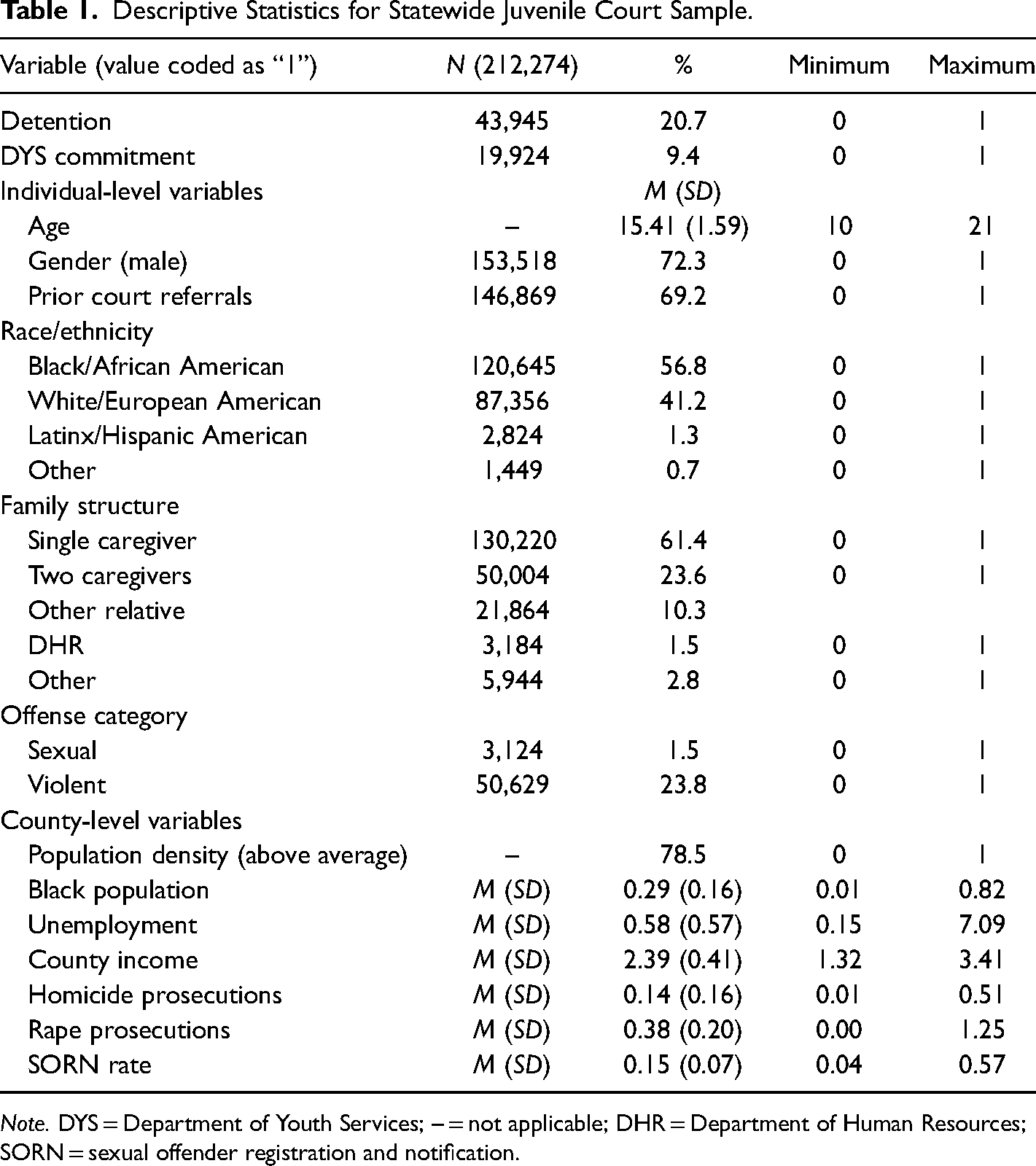
Note. DYS = Department of Youth Services; – = not applicable; DHR = Department of Human Resources; SORN = sexual offender registration and notification.
Measures
Demographic Information
Age, gender, and race/ethnicity were coded by the courts at the time of the adolescent's court appearance. Age was coded based on the adolescent's date of birth and date of court appearance. Gender/sex was dichotomous (i.e., girl/female and boy/male). Race/ethnicity was coded into four categories: Black, Latinx/Hispanic, White, and other.
Family structure was classified into five categories: single caregiver, two-caregiver, other relatives, Department of Human Resources (DHR) housing, and other. Single caregiver included single mother and single father families. Two-caregiver included families with two biological parents, or a stepparent and a biological parent. The other three categories were: other relatives (i.e., grandparents and other relatives), DHR housing (i.e., foster homes, juvenile correctional facilities, job corps, and group home living situations), and other family structures undefined by the Administrative Office of Courts.
Indicators of Racial Threat
Similar to prior research (e.g., Lowery et al., 2018; Thomas et al., 2012), indicators of race-based threat were obtained via public databases. Racial threat was primarily measured using the Black population percentage (U.S. Bureau of the Census, 2019). Additionally, the ratio of White-to-Black adult unemployment rates for each Alabama County was calculated, with values over 1 indicate higher unemployment rates for white adults compared with Black adults and therefore greater racial threat.
Indicators of Threat Associated With Violent and Sexual Crime
Factors unique to threat of violent and sexual crime were obtained from the U.S. Census Bureau (2019), Alabama Registered Sex Offenders (Homefacts, 2019), and the Alabama Law Enforcement Agency (2019) based on 2015 values. For threat of violent crime, we included rates of homicide prosecutions per 10,000 residents. County-level threat associated with sexual crime included county-level rates of people subjected to sex offender registration and rates of rape prosecutions per 10,000 people.
Individual factors. Up to three charges per adjudication date were included in the statewide dataset, which were used to classify participants by offense category. Four specific offenses were categorized as violent in the present study: homicide, attempted homicide, assault, and robbery. Charges of assault were used as a reference offense type for the violent offense category. Six specific sexual offenses were included in the present study. These consisted of the most common types of sexual offenses among boys with sexual offenses in Alabama courts: rape, sexual abuse, sodomy, incest, sexual misconduct, and indecent exposure. Sexual abuse was used as the reference offense type for the sexual offense category.
Juvenile Court Outcomes
Juvenile court outcomes in the present study included the decision to use preadjudication detention or not and dispositional decisions of confinement or probation. Prior court appearances were included in the dataset as present or absent.
Data Analysis
Analyses were conducted to evaluate individual and county-level factors that contributed to confinement decisions. To account for the nested nature of the data utilized in the current study, a series of multilevel modeling procedures were run. Individual juvenile court cases were nested first at the county level (n = 67) as counties are characterized by certain similarities (Johnson, 2006; Lowery et al., 2018) and then at the juvenile court circuit level (n = 41). Models were run using the full court sample, the subset of youth with violent offenses, and the subset of youth with sexual offenses. All models were repeated separately within the Black racial group to examine cross-level interactions for county factors among Black boys (Lowery et al., 2018). Family structure and year of disposition were included in all models as individual-level control variables. Density of county populations (below or above the state average (U.S. Census Bureau, 2019) and average county income (U.S. Places, 2019) were included as county-level control variables (Thomas et al., 2012).
Results
Models Predicting Use of Detention
Table 2 presents unstandardized coefficients from models predicting use of preadjudication detention (detention) and confinement in a secure facility (confinement) in the full sample of court-involved adolescents and the Black race-specific subsample of court-involved adolescents. Boys (b = .05), Black adolescents (b = .01), and those with prior court referrals (b = .12) were significantly more likely to be detained. Homicide (b = .25) and attempted homicide (b = .14) significantly increased odds of detention compared to assault, as did robbery (b = .18). Rape (b = .04), sodomy (b = .14), and incest (b = .20) were associated with significantly increased odds of detention compared to sexual abuse, whereas distribution of pornography (b = −.07) and indecent exposure (b = −.05) charges were associated with significantly decreased odds of detention. County homicide rate was associated with a significant 2.8 odds reduction in detention; no other county-level variables significantly impacted detention.
Coefficients for Multilevel Models of Confinement and Detention Among all Adolescents.
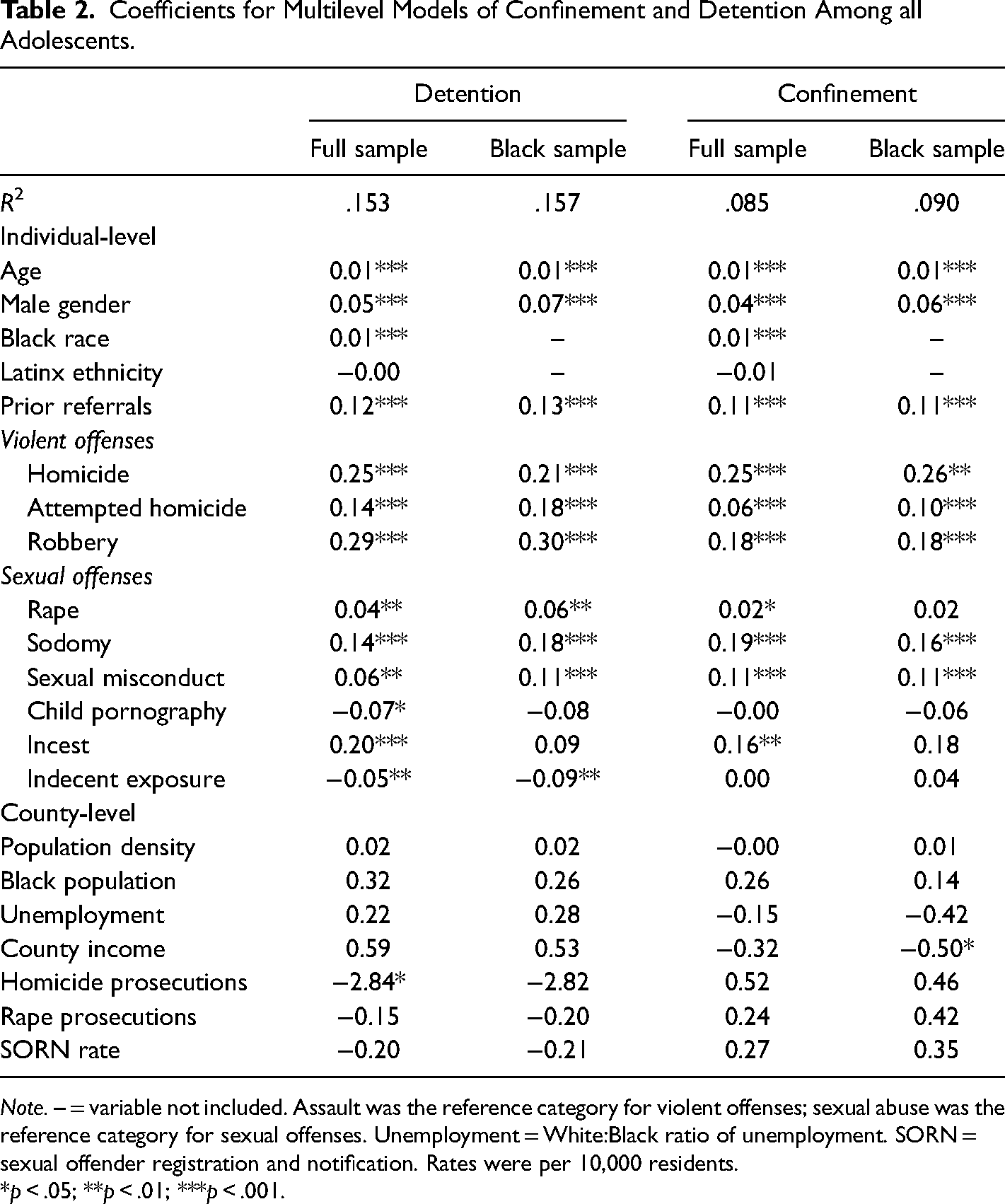
Note. – = variable not included. Assault was the reference category for violent offenses; sexual abuse was the reference category for sexual offenses. Unemployment = White:Black ratio of unemployment. SORN = sexual offender registration and notification. Rates were per 10,000 residents.
*p < .05; **p < .01; ***p < .001.
Nearly all effects observed in the full model predicting use of detention were mirrored in the model including only Black adolescents. The only exception was that distribution of pornography did not significantly impact odds of detention for the Black subsample. Put another way, Black adolescents with pornography charges were as likely to be detained as Black adolescents with sexual abuse charges.
Models Predicting Use of Secure Confinement
The first model predicted postadjudication confinement in the full sample of adolescents with confinement dispositions. Results from the multilevel model indicated male gender (b = .04), Black race (b = .01), and prior referrals (b = .11) were significantly associated with greater likelihood of confinement than probation. Similar to the model predicting detention, charges of homicide (b = .25), attempted homicide (b = .06), and robbery (b = .18) were significantly associated with greater likelihood of confinement compared to charges of assault. Rape (b = .02), sodomy (b = .19), sexual misconduct (b = .11), and incest (b = .16) were each associated with a significant increase in use of confinement compared to sexual abuse. No county-level characteristics significantly predicted use of confinement instead of probation in the full model.
Nearly all effects observed in the full model predicting use of detention were mirrored in the model within Black adolescents. The only exception was that incest did not significantly impact odds of detention for the Black subsample.
Models of Outcomes for Adolescents with Violent Offenses
Detention Among Adolescents With Violent Offenses. Table 3 presents results from models predicting detention and confinement specific to adolescents with violent offenses, including the full model and the model run with only Black adolescents with violent offenses. In the full model predicting detention among all adolescents with violent offenses, male gender (b = .01) and prior court referrals (b = .10) significantly increased the likelihood of detention. Unlike the model run including all offenses, Black race (b = −.02) significantly decreased the likelihood of detention in the model specific to adolescents with violent offenses. All types of violent offenses significantly predicted use of detention compared to assault: homicide (b = .22), attempted homicide (b = .08), and robbery (b = .24). Of the county-level predictors, homicide rate was significantly associated with a 3.58-fold decrease in detention.
Coefficients for Multilevel Models Among Adolescents With Violent Offenses.
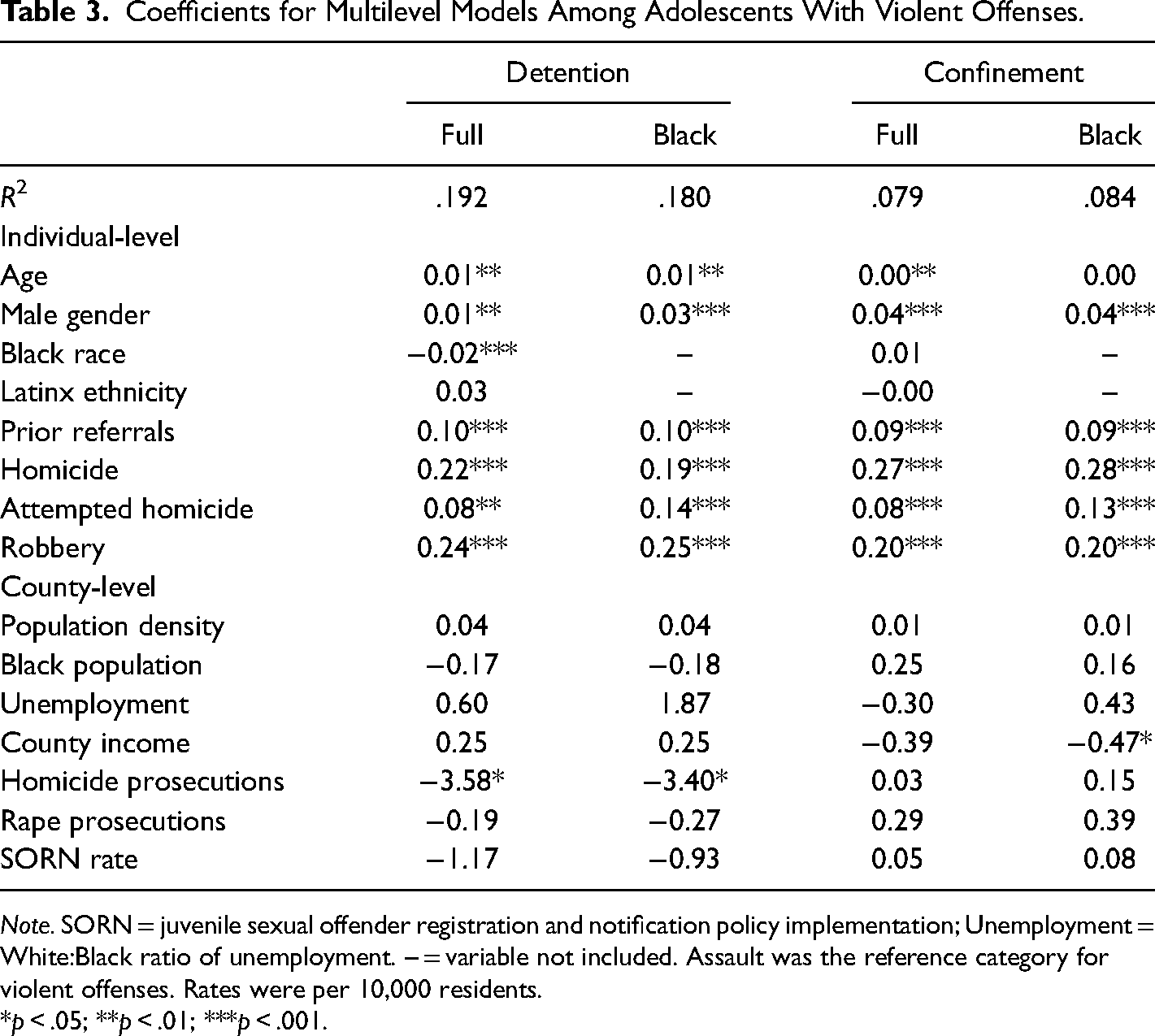
Note. SORN = juvenile sexual offender registration and notification policy implementation; Unemployment = White:Black ratio of unemployment. – = variable not included. Assault was the reference category for violent offenses. Rates were per 10,000 residents.
*p < .05; **p < .01; ***p < .001.
In the Black race-specific model predicting detention, the overall pattern of results was the same. Attempted homicide (b = .14) appeared to have a larger effect on the use of detention in the Black race-specific model.
Confinement Among Adolescents With Violent Offenses. Male gender (b = .04) and prior referrals (b = .09) were associated with greater odds of confinement. Charges of homicide (b = .27), attempted homicide (b = .08), and robbery (b = .20) were correlated with significantly increased odds of confinement compared with assault. These effects were mirrored in the Black race-specific model including violent offenses. In the Black race-specific model, county income was significantly associated with lower odds of confinement (b = −0.47).
Models of Outcomes for Adolescents with Sexual Offenses
Detention Among Adolescents With Sexual Offenses. Table 4 presents results from models predicting detention and confinement specific to all (and Black) adolescents with sexual offenses. The multilevel model predicting detention among adolescents with sexual offenses suggested Black race (b = .04), Latinx ethnicity (b = 0.15), and prior referrals (b = .06) all significantly predicted preadjudication detention. Additionally, with sexual abuse as the referent sexual offense type, incest (b = .17) was associated with significantly more use of detention, whereas sexual misconduct (b = −.05), distribution of pornography (b = −.14), and indecent exposure (b = −.15) were associated with significantly lower odds of detention. No county-level variables were significantly associated with use of detention. The pattern of results was the same for the Black race-specific model.
Coefficients for Multilevel Models Among Adolescents With Sexual Offenses.
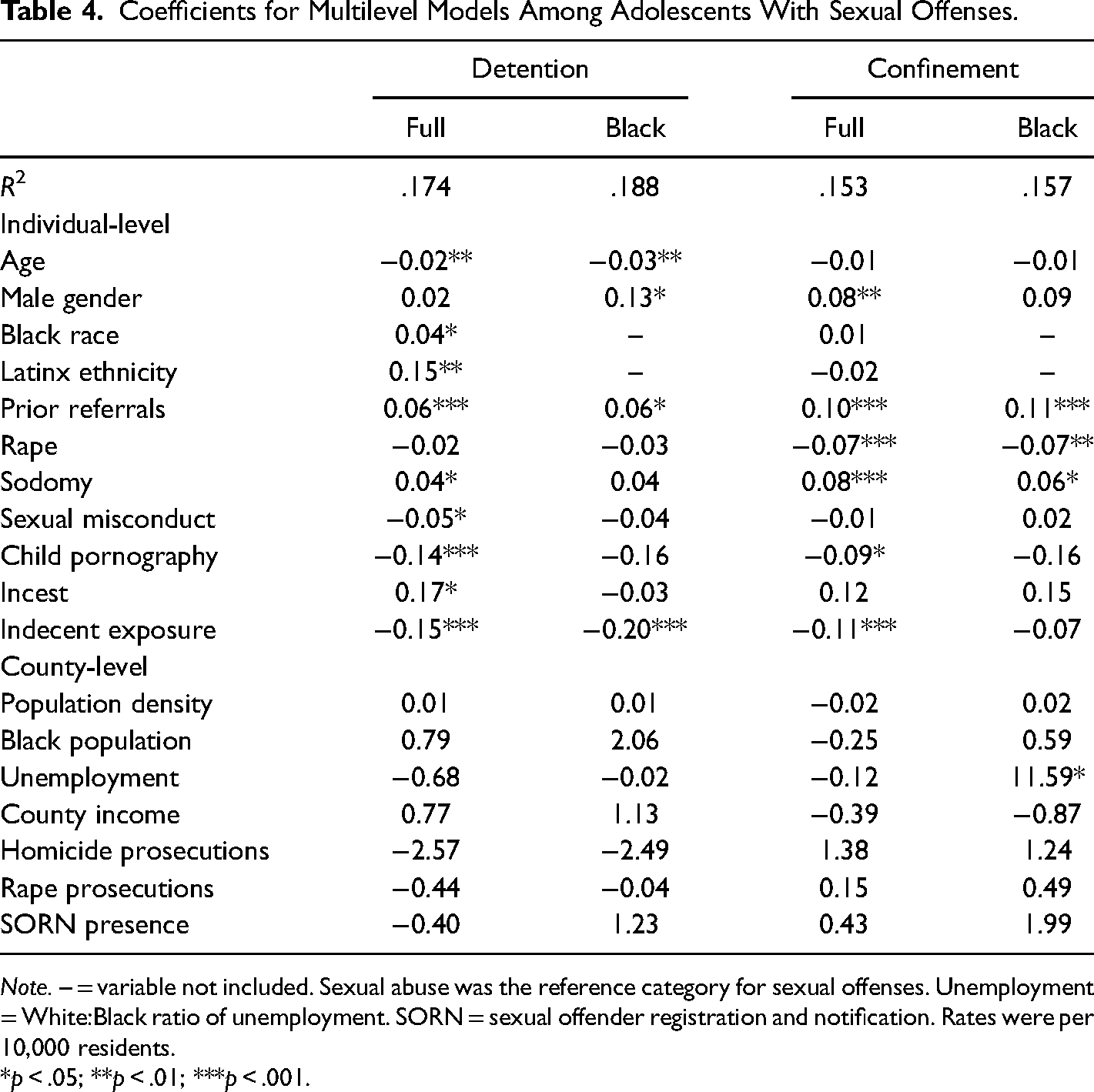
Note. – = variable not included. Sexual abuse was the reference category for sexual offenses. Unemployment = White:Black ratio of unemployment. SORN = sexual offender registration and notification. Rates were per 10,000 residents.
*p < .05; **p < .01; ***p < .001.
Confinement Among Adolescents With Sexual Offenses. Male gender (b = .08) and prior court referrals (b = .10) were associated with greater odds of confinement. With sexual abuse as the referent group, sodomy (b = .06) and incest (b = .12) had significantly greater odds of confinement. On the contrary, charges of rape (b = −.07), distribution of pornography (b = −.09), and indecent exposure (b = −.11) were associated with significantly lower odds of confinement. Paralleling the full model of confinement, no county-level variables were significantly associated with decisions to confine.
Similar individual-level effects were observed in the Black race-specific model specific to adolescents with sexual offenses. White-to-Black unemployment ratios increased odds of use of confinement for Black adolescents with sexual offenses by 11.59 times.
Discussion
The current study tested the impact of factors relevant to the racial threat hypothesis and other pertinent variables associated with threat of offending as an explanation for disproportionate minority contact among adolescents in one state's juvenile court. The key innovation of this study was the inclusion of variables associated with threat of violent and sexual offending. Overall, study findings indicate that individual-level predictors most meaningfully influenced detention and confinement of adolescents, whereas only county-level income and threat of violent offending were consistently significantly associated with use of detention or confinement. Our study did not support the racial threat perspective. Specifically, we found that although Black youth were more likely to be confined than White youth, individual-level factors such as specific offense type had the greatest impact on confinement decisions. This may suggest that prejudice by decision-makers regarding type of illegal behavior may be impacting outcomes more than—or at least in addition to—racial threat (which hypothesizes differences based on community-level factors). Additionally, concerns about violence (indicated by county-level violent offense threat indicators) may impact decisions more than concerns about sexual offending (indicated by county-level sexual offense threat indicators). In addition, the models we ran with only Black adolescents and within violent and sexual offense categories often had a similar model fit—and demonstrated similar effects of predictors—compared with full models including all racial groups.
Our first hypothesis that Black race and current serious offense charges (e.g., homicide, rape, and incest) would be significantly associated with detention and confinement was confirmed, effectively mirroring findings from previous studies (Holleran & Stout, 2017; Leiber, Peck, & Rodriguez, 2016; Spinney et al., 2018). Further, our study results emphasize that male gender, Black race (both extralegal factors) and prior court referrals (a legal factor) are significantly and consistently associated with detention and confinement. In the model tested within adolescents with sexual offenses, Black race was not significantly associated with confinement; this finding supports the notion that the impact of race is attenuated for sexual offending—the most stigmatized offense category (Fix et al., 2017). This effect may also be partially due to the high rate of representation of White boys among justice-involved adolescents with sexual offenses in comparison with other offense categories (Craun & Simmons, 2012; Fix et al., 2017, 2019; Ikomi et al., 2009). In the current sample, White boys comprised the majority of sexual and drug offenses whereas Black boys comprised a larger proportion of violent, nonsexual offenses.
Our second hypothesis that more serious violent and sexual offenses (in comparison with the less serious reference categories of assault and sexual abuse, respectively) would be associated with more punitive responses in the juvenile justice system as measured by use of detention and confinement was supported. Results from models tested in the full sample and within offense category largely mirrored related research (Lowery, 2019). More specifically, within the violent offense category, relative to cases with assault charges, youth with homicide, attempted homicide, and robbery charges were all punished significantly more harshly. That is, these cases were all significantly more likely to experience preadjudication detention or postadjudication confinement. Among adolescents with sexual offenses, relative to sexual abuse charges, charges of sodomy consistently led to significantly more use of detention and confinement, while charges of pornography distribution and indecent exposure were associated with significantly less use of detention and confinement. Findings for violent and sexual offense categories were largely comparable in the Black race-specific models. Altogether, these findings indicate that specific violent and sexual offenses have a differentiated impact on confinement as an outcome (e.g., homicide increases punishment and indecent exposure decreases punishment). Moreover, examining specific violent and sexual offense charges may be more meaningful than broader offense categories in models of juvenile justice outcomes and disproportionate minority contact.
Most county-level factors related to racial threat, violent offense threat, and sexual offense threat were not associated with confinement in the present study. White-to-Black unemployment was the only significant marker of racial threat in any of the models; however, these rates only meaningfully contributed to the models tested within Black adolescents—consistent with the targeted version of the racial threat hypothesis. This finding overlaps with the observation by Lowery and Burrow (2019), but there were fewer racial threat variables that had a meaningful impact on court outcomes in the current study. Prior findings have been mixed (e.g., Leiber, Peck, & Beaudry-Cyr, 2016; Leiber, Peck, & Rodriguez, 2016; Lowery et al., 2018), indicating that either the racial threat hypothesis is not a powerful predictor of juvenile justice outcomes or that moderators of the impact of racial threat (e.g., gender, consistency with stereotypes) account for the differences across studies. Our use of more nuanced offense variables associated with threat of violent and sexual offending may be one of the key reasons we observed fewer racial threat effects.
Threat of violent offending significantly influenced use of detention for adolescents with violent offenses. Contrary to expectations, lower rates of homicide prosecutions were associated with greater use of detention for adolescents with violent offenses and in the full sample. The reduction in use of detention associated with homicide rate may be due to decreased resources in each judicial circuit. This effect was not observed among adolescents with sexual offenses; it might be that outcomes for adolescents with sexual offenses were meaningfully impacted by homicide rates, but that the reduced sample size for this group diluted findings. Neither county-level indicator of sexual offense threat predicted the use of confinement in any model. County-level indicators of threat associated with violent and sexual crime merit further examination, given the low number of these cases in some counties and court circuits and use of a single state's juvenile justice system.
Policy and Practice Implications
To date, research on racial or ethnic bias in juvenile courts has concentrated on key indicators of structural racism through the lens of racial threat. While informative, this approach appears incomplete and thus cannot be used to fully account for the effects of racial bias. Results from our study and from previous research (e.g., Fix et al., 2017; Lowery et al., 2018) suggest that race meaningfully influences juvenile court outcomes, yet so does the type of offense. In determining charges for sexual offenses, sometimes the offense type (e.g., sexual abuse vs. sexual misconduct) is subject to individual police officer or judge interpretation. For example, a 14-year-old boy who had sex with their 12-year-old girlfriend could be charged with sexual abuse or sexual misconduct depending on the state and circumstances. Their sentencing and whether they are required to register on a public sex offender registry can also vary from state to state (Harris & Lobanov-Rostovsky, 2010). Of course, the intersection of race and offense type could also impact perceptions of adolescent behavior and result in different charges being assigned to a youth regardless of their behavior. Research indicates Black children and adults in the juvenile and criminal justice systems are perceived as more aggressive and culpable after exhibiting similar behavior to their White counterparts (Birck, 2018; Downey & Pribesh, 2004; Finn & Servoss, 2014). Namely, personnel should complete evidence-based trainings designed to reduce implicit racial bias to promote use of more careful and planful decision making (Fix, 2020). Through such trainings, justice personnel could be more inclined toward policy change facilitating racial equity in the courts and beyond.
To prevent racial bias among juvenile justice personnel is no small feat, given the ubiquitous nature of human tendency to automatically categorize individuals and rely on heuristic processing (Eberhardt, 2020; Lai et al., 2014). Preliminary data from evaluation studies on a single training for juvenile justice professionals suggest short-term gains in knowledge about bias and ethnocultural empathy (Fix, 2020). Gains from trainings appear promising, but additional intervention is likely needed for juvenile justice personnel to maintain reduced levels of implicit bias. Perceived threat and implicit bias associated with race and select types of illegal behavior should be targeted in such trainings alongside other social identifiers like gender and disability status. Lastly, efforts to prevent adolescent physical and sexual violence should be our primary focus. There are promising interventions that effectively reduce or prevent use of physical or sexual violence, and data support primary prevention efforts alongside tertiary prevention efforts (Assini-Meytin et al., 2020, 2021).
Limitations and Future Directions
Several of the study's limitations are related to the source of the dataset. Although the data includeda statewide population of juvenile justice-involved adolescents, all data came from a single rural Southeastern state. It is therefore recommended that the influence of offense category along with relevant variables associated with racial threat, and threat of violent and sexual offenses be examined in states representing different regional cultures. Additionally, given that the current sample was predominantly Black and White, follow-up research should expand to include jurisdictions that include greater representation of other racial/ethnic groups. This is particularly important given that Latinx ethnicity was significantly associated with use of detention among adolescents with sexual offenses.
Although the present study included measures associated with racial threat, there are other measures of racial threat that were unavailable for the current study that might be included in future research. For example, county-level political representation by race/ethnicity is a potentially meaningful contributor to court outcomes (Lowery et al., 2018). Future research investigating the racial threat perspective might also consider testing interactions between multiple threat factors and curvilinear effects of these factors.
Many county-level characteristics did not significantly influence court outcomes, possibly due to the small proportion of cases sentenced to probation and the small proportion of sexual offense cases in many counties. This may have limited our ability to adequately capture the potential influence of county-level characteristics on court outcomes. Testing similar models in samples spanning more time or in a larger and/or more densely populated state is encouraged.
Conclusion
The present study expanded upon the definition of “threat” in the racial threat theory. We tested the impacts of racial threat, threat of violent offending, and threat of sexual offending on juvenile justice system detention and confinement. Most notably, individual factors were more often significantly associated with study outcomes than were county-level factors in all tested models. This finding supported expansion of individual offense types and select county-level indicators of “threat” (e.g., violent and sexual offense-specific crime rates) in models of juvenile justice outcomes. Moreover, it appears that considering specific offenses within broad offense categories produces noteworthy findings that differed in models including only Black youth or only youth charged with certain types of offenses. Thus, our study demonstrated the importance of examining decisions to detain or confine adolescents within subsamples of adolescents with violent and sexual offenses in contrast with looking at decisions within a heterogeneous sample of offending adolescents. Factors that could heighten concern about violent offending may influence juvenile justice professionals’ responding to adolescents with violent offenses, while threat of juvenile sexual offending does not appear to meaningfully impact decisions to detain or confine adolescents. Separating out sexual and violent offense categories can only serve to improve the ability of juvenile justice professionals to understand—and effectively respond to—such behavior.
Footnotes
Declaration of Conflicting Interests
The authors declared no potential conflicts of interest with respect to the research, authorship, and/or publication of this article.
Funding
The authors received no financial support for the research, authorship, and/or publication of this article.
