




Abstract
Background:
The Job Demands-Resources (JD-R) theory suggests that an imbalance between job demands and available resources can lead to burnout, negatively affecting job satisfaction. Physical activity is recognized for its positive effects on psychological well-being and could play a crucial role in mitigating burnout and improving job satisfaction, especially in high-demand professions such as nursing.
Objective:
This study investigates the relationship between burnout, physical activity, and job satisfaction in Peruvian nurses, using the JD-R theory as a theoretical framework.
Methods:
A cross-sectional and explanatory analysis was conducted on a sample of 420 Peruvian nurses, using a Structural Equation Modeling (SEM) design to analyze the relationships between burnout, physical activity, and job satisfaction. The instruments included the Ultra-Short Burnout Measure (IUB), the General Job Satisfaction Scale NTP 394, and the International Physical Activity Questionnaire (IPAQ).
Results:
The findings showed a significant negative correlation between burnout and physical activity (β = −.40, P < .001) and between burnout and job satisfaction (β = −.46, P < .001). Physical activity exhibited a significant positive correlation with job satisfaction (β = .22, P < .001). Moreover, mediation analysis confirmed that physical activity mediates the relationship between burnout and job satisfaction (β = −.106, P < .001).
Conclusions:
The findings emphasize the importance of physical activity as a mediator in the relationship between burnout and job satisfaction among Peruvian nurses, highlighting the need to promote physical activity as a strategy to improve workplace well-being. It is suggested that enhancing access to and promotion of physical activity could mitigate the effects of burnout and improve job satisfaction, which is essential for the quality of care and the well-being of nursing staff. These findings underscore the need for organizational and public health strategies that promote a healthy work environment and balance between the demands and resources available.
Introduction
The Job Demands-Resources (JD-R) theory proposes that all work factors are classified into 2 categories: job resources and job demands, where resources help achieve goals, reduce psychological costs, and foster personal growth, while demands require sustained effort and are associated with psychological or physiological costs.1,2 The JD-R theory provides a framework to understand how work conditions affect employees’ well-being, indicating that an imbalance between job demands and available resources can lead to fatigue and burnout, impacting job satisfaction negatively. Physical activity is positioned as a crucial mediator, known for its properties to reduce stress and improve psychological well-being.3,4
In this sense, burnout, described as a state of physical and mental fatigue or exhaustion resulting from exposure to chronic job demands, negatively affects health, well-being, and job satisfaction, the latter being a key element for employee retention and organizational performance.5,6 Physical activity can reduce stress, improve mood, and increase job satisfaction, enhancing overall well-being. 3 Environments with high walkability promote physical activity and, in turn, contribute to a lower body mass index and better cognitive health. Moderate to vigorous physical activity, including walking and cycling for transport, acts as a significant mediator in the relationship between walkability and adiposity; sedentary behaviors do not show significant mediation. Moreover, physical fitness, especially cardiorespiratory, agility-speed, and general fitness, effectively mediates the adverse relationship between fat mass and cognitive performance in youth, regardless of their socioeconomic vulnerability.7 -10
The relationship between burnout and job satisfaction among nurses, particularly in high-demand settings such as the healthcare sector, is an area of growing interest due to the significant impact of burnout on decreasing job satisfaction among healthcare professionals.11 -13 Nurses face challenging working conditions, exacerbated during the COVID-19 pandemic, highlighting the need to address burnout to improve care quality and staff well-being.14,15 Long shifts, lack of professional recognition, and high job demands contribute to burnout and job dissatisfaction, while job satisfaction is crucial for preventing burnout and enhancing care quality.16,17 The conceptualization of burnout has evolved since its introduction,5,18 emphasizing work factors that contribute to burnout, including workload, control, reward, among others.19,20 Physical activity is presented as a promising intervention to improve the mental and physical well-being of healthcare professionals, although more research is needed to fully understand its impact.21,22 During the COVID-19 pandemic, the importance of physical activity as a preventive measure against work exhaustion has been recognized, despite time and access limitations. 23 Likewise, interventions aimed at stress reduction and health promotion in the workplace, including physical activity, have shown promise in reducing burnout and stress.24,25 Regular physical activity is crucial for physical, mental, and overall well-being, helping to maintain happiness, self-esteem, and optimism over the long term.26 -29
The interaction between various work and personal factors deeply influences burnout, job satisfaction, and physical activity among Peruvian nurses. In this sense, burnout is especially prevalent in the healthcare context, highlighting the urgency of addressing the specific needs and challenges faced by nurses in Peru. 30 Furthermore, physical activity stands out as a potential protective factor that could mitigate the negative impact of burnout by promoting physical and mental health and, therefore, job satisfaction among nurses. However, the COVID-19 pandemic has imposed significant restrictions on the lives of healthcare professionals, limiting their access to physical activity and exacerbating work-related stress, underscoring the importance of developing adaptive strategies during and after the pandemic. 23 The Job Demands-Resources (JD-R) theory provides a valuable theoretical framework for understanding these dynamics, emphasizing how job demands, such as burnout, can significantly influence nurses’ job satisfaction.31 -33 Moreover, physical activity emerges as a key mediator, suggesting that enhancing engagement can mitigate the negative effects of burnout and promote greater well-being in the workplace.7,8
Evidence suggests that addressing burnout requires a multifaceted approach that includes not only individual interventions, such as promoting physical activity, but also organizational strategies to reduce job demands and increase the resources available to nurses. This approach has the potential not only to improve the quality of life and job satisfaction of Peruvian nurses but also to enhance the quality of care provided to patients, a critical aspect in the context of the current and future challenges facing the health system in Peru.31 -34
Considering the arguments presented, the following hypotheses are proposed (Figure 1).
H1: There is a negative relationship between burnout and physical activity.
H2: There is a negative relationship between burnout and job satisfaction.
H3: There is a positive relationship between physical activity and job satisfaction.
H4: Physical activity mediates the relationship between burnout and job satisfaction.

Theoretical model.
Methods
Design and Participants
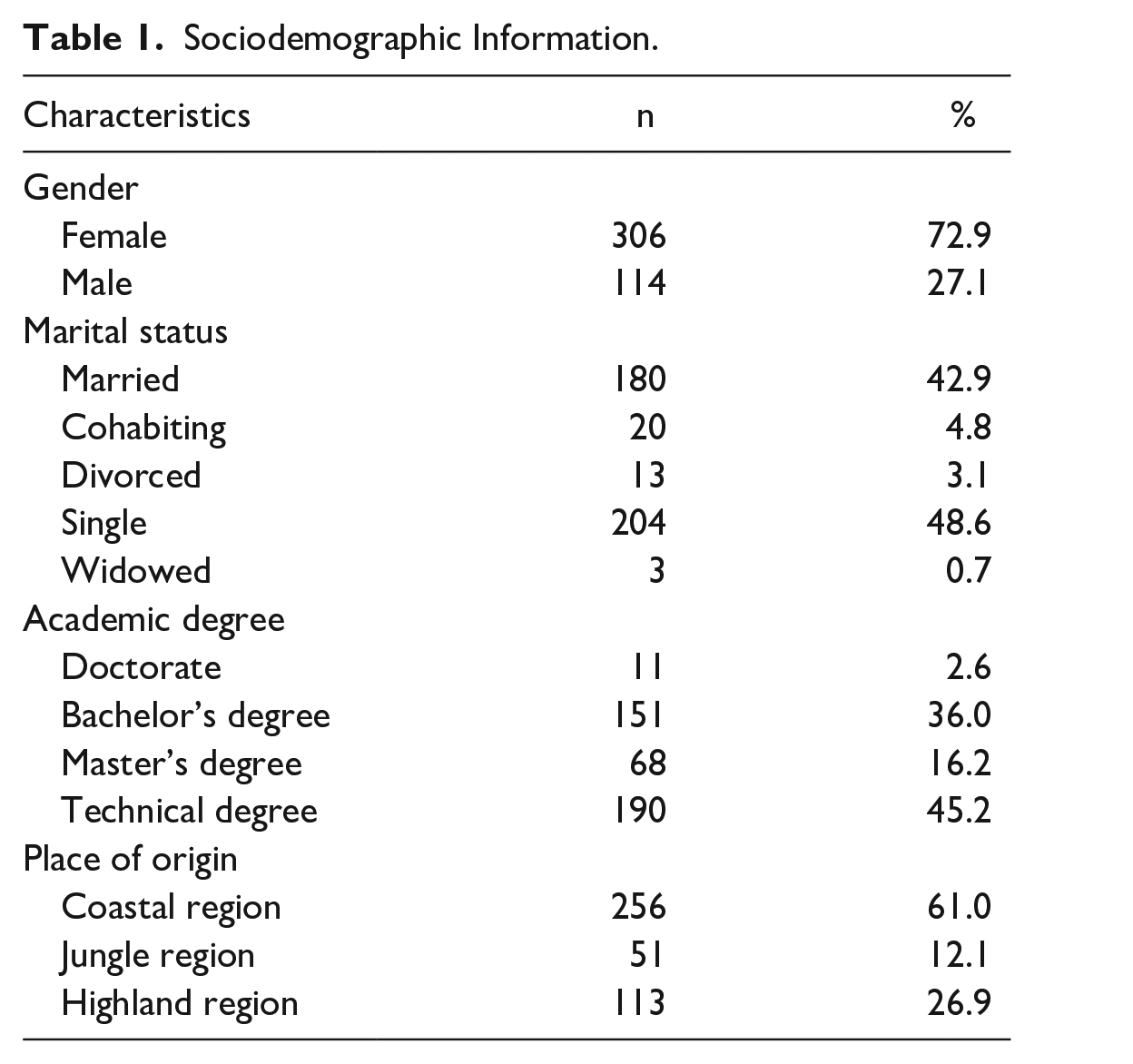
A cross-sectional and explanatory analysis incorporating the study of latent variables through Structural Equation Modeling (SEM) was conducted. 35 The sample selection was based on a non-probabilistic method, in line with recommendations for the application of measurement instruments in health-related research. 36 The sample size determination was performed using Soper’s software, 37 which calculates this parameter based on the number of observed and latent variables in SEM models. Considering an anticipated effect size (λ = .2), a statistical power of 80% (1 − β = .80), and a significance level of 5% (α = .05), a target sample of 296 individuals was established. However, the study involved the participation of 420 nurses, with a significant predominance of the female gender at 72.9%, single marital status at 48.7%, and a technical level of education in 45.3% of cases. Regarding geographic origin, the majority of participants, 61.1%, came from the coastal region (Table 1).
Sociodemographic Information.
Instruments
Single item of burnout
For the assessment of burnout, an instrument adapted to the Peruvian context was applied. 38 This instrument, based on the original version by Rohland et al, 39 stands out for its conciseness and efficacy in measuring burnout, organized into 5 descriptive categories covering its various dimensions. Detailed instructions were provided to ensure a uniform understanding of the concept among participants, highlighting the feeling of being extremely exhausted or “burned out” by work demands. The specific instruction given to respondents was: “Select the option that best reflects your personal experience, considering BURNOUT as a sensation of mental and physical exhaustion, equivalent to being ‘burned out’ by work.”
Job satisfaction
The General Satisfaction Scale, adapted to Spanish by Pérez-Bilbao and Fidalgo 40 from the original General Satisfaction model developed by Warr et al, 41 was used. Participants rate each item on a scale from 1 to 7, where 1 represents “Very dissatisfied” and 7 “Very satisfied,” offering a total score range from 15 to 105. Higher scores indicate a higher level of job satisfaction. The instrument’s reliability, determined by Cronbach’s alpha, showed coefficients from .79 to .85 for intrinsic satisfaction and from .74 to .78 for extrinsic satisfaction, demonstrating excellent internal consistency in both dimensions.
Physical activity
The International Physical Activity Questionnaire (IPAQ), which includes seven items designed to provide a comprehensive assessment of physical activity, was used. Based on the results obtained with the IPAQ, participants’ physical activity levels are classified into 3 categories: a low level, identified by a score less than 6 points; a moderate level, with a score between 7 and 9 points; and a high level, characterized by a score higher than 9 points. 42
Procedure
To conduct this study, a coordination process was initiated with the directors of 2 selected hospitals, obtaining not only their approval to carry out the research but also their collaboration in facilitating email addresses, crucial for the implementation of the online survey. Data collection took place between June 2 and August 20, 2023, using 2 complementary strategies: a face-to-face intervention and a virtual one. In the face-to-face modality, the measurement instruments were applied directly to nursing professionals at their workplaces, while in the virtual modality, email invitations to participate in the digital survey were sent, including a link to it. Before applying the instruments, participants were given a detailed explanation of the study’s objectives and purpose, ensuring their full understanding and obtaining their informed consent. This study was approved by the Institutional Ethics Committee of a Peruvian university, under code No. 023-2023-ETHICSCOMMITTEE/UI, ensuring compliance with international ethical standards, according to the Declaration of Helsinki. 43
Statistical Analysis
The theoretical model analysis of the study was carried out through structural equation modeling using the MLR estimator, suitable for its robustness against inferential normality deviations. 44 The fit evaluation was performed with the Comparative Fit Index (CFI), the Tucker Lewis Index (TLI), the Root Mean Square Error of Approximation (RMSEA), and the Standardized Root Mean Square Residual (SRMR). CFI and TLI values >0.90, 45 RMSEA <0.080, 46 and SRMR <0.080 47 were used. To explore mediating effects within the model, the bootstrapping method was implemented, specifically with 5000 replications to obtain an accurate estimation of the 95% confidence interval. 48 This analytical process was conducted using the R statistical software, version 4.0.5, leveraging the capabilities of the “lavaan” library. 49
Results
Preliminary Analysis
Table 2 presents the descriptive statistics, including the mean (M), standard deviation (SD), skewness (G1), and kurtosis (G2). Regarding the correlations, burnout shows a significant negative correlation with both physical activity (−0.40, P < .001) and job satisfaction (−0.55, P < .001), indicating that higher levels of burnout are associated with lower levels of physical activity and job satisfaction. On the other hand, physical activity demonstrates a significant positive correlation with job satisfaction (0.40, P < .001), suggesting that higher levels of physical activity are associated with higher levels of job satisfaction (Table 3).
Descriptive Statistics and Correlations for Study Variables.

Abbreviations: α, Cronbach’s alpha; G1, skewness; G2, kurtosis; M, mean; SD, standard deviation.
P < .01.
Research Hypotheses on Indirect Effects and Their Estimates.

Theoretical Model Analysis
The established model according to the hypotheses shows an excellent fit to the data (χ2 = 245.750, df = 111, P < .001; CFI = 0.97; TLI = 0.96; RMSEA = 0.05 [90% CI 0.05 - 0.06]; SRMR = 0.03), indicating that the proposed model adequately reflects the relationships between the studied variables. Hypothesis 1 is confirmed, revealing a significant negative relationship between burnout and physical activity (β = −.40, P < .001), suggesting that a higher level of physical activity is associated with lower levels of burnout. Similarly, Hypothesis 2 is confirmed, showing a significant negative relationship between burnout and job satisfaction (β = −.46, P < .001), indicating that as burnout increases, job satisfaction decreases. Lastly, Hypothesis 3 is confirmed, demonstrating a significant positive relationship between physical activity and job satisfaction (β = .22, P < .001), implying that a higher level of physical activity is related to greater job satisfaction (Figure 2).

SEM.
Mediation Model
A mediation model was conducted using the bootstrapping technique with 5000 iterations. The results confirmed Hypothesis 4, indicating a statistically significant mediation in the relationship between burnout and job satisfaction through physical activity (β = −.106, P < .001). This analysis highlights the role of physical activity as a mediator that can mitigate the negative impact of burnout on job satisfaction, providing a clear and significant link between lower burnout and higher job satisfaction when physical activity is increased.
Discussion
The Job Demands-Resources (JD-R) theory categorizes work factors into resources, which support goal achievement and personal growth, and demands, which involve effort and are linked to psychological or physiological costs. An imbalance toward demands can lead to fatigue and burnout, deteriorating job satisfaction. Physical activity emerges as a crucial mediator, alleviating stress and enhancing psychological well-being, contributing to job satisfaction and countering burnout, especially in high-demand work environments like the healthcare sector. Research shows that both individual interventions, such as promoting physical activity, and organizational strategies to balance demands and resources, are essential for improving the quality of work life and patient care, underscoring the importance of multifaceted approaches to manage burnout and foster a healthy work environment.
The positive relationship between the negative correlation of burnout and physical activity indicates that a higher level of physical activity is associated with lower levels of burnout among healthcare professionals. This inverse relationship suggests that physical activity acts as a protective factor against burnout, positively influencing both the physical and mental health of individuals. Regular physical activity facilitates psychological detachment from work, helping to reduce the risk of prolonged stress responses like burnout. 23 Additionally, it increases individuals’ self-efficacy, which can positively affect their job performance by making them feel more competent in handling their tasks. From a physiological perspective, physical activity improves the capacity to handle psychological stress through changes in neurotransmitters and neuromodulators, resulting in a better mood and higher energy levels.21,27 Despite the known benefits of physical activity, healthcare workers face significant challenges in maintaining regular physical activity habits due to demanding work schedules and associated fatigue. This lack of physical activity can increase their vulnerability to burnout, highlighting the need for specific workplace interventions to encourage physical activity habits among this professional group. 26 Furthermore, certain job characteristics, such as role and shift schedule, may influence the response to physical activity interventions. Variability in physical activity participation among different job roles and schedules suggests the need for personalized approaches to promote physical activity, especially in clinical settings where demands are higher. 22 Additionally, during the COVID-19 pandemic, the importance of physical activity as a crucial tool for managing stress and preventing burnout in healthcare staff was highlighted. A dose-response association between physical activity and burnout reduction reaffirmed the relevance of promoting wellness practices among healthcare professionals.23,33
On the other hand, the negative relationship between burnout and job satisfaction, especially in the nursing field during and after the COVID-19 pandemic, is confirmed. Emotional exhaustion and reduced personal achievement play central roles in decreasing job satisfaction among nursing professionals, without finding a significant correlation with depersonalization.13,33 This relationship involves several factors, including fear of contagion, lack of organizational support, staff shortages, and the high workload associated with the pandemic, which continue to negatively impact both job satisfaction and burnout. 12 An ambivalence in job satisfaction is observed, with nursing professionals expressing mixed feelings of satisfaction and dissatisfaction in different aspects of their work, which could influence their ability to provide quality care. This bidirectional relationship between job satisfaction and burnout is also affected by emotional exhaustion and depersonalization, with the latter considered significant antecedents of job satisfaction. 50 Adverse working conditions, such as long working hours, work overload, and lack of adequate rest, significantly contribute to the development of burnout and greater job dissatisfaction. Particularly, shifts of 12 h or more have been associated with higher reports of burnout and intentions to leave the job.16,32 Education and work experience emerge as factors influencing this dynamic, where higher education levels and more extensive experience may be related to higher levels of job dissatisfaction and burnout, possibly due to unmet expectations and an accumulation of fatigue. 12 On the other hand, job satisfaction is related to a greater propensity to provide individualized care, while burnout is associated with a decrease in this capacity. Burnout is closely associated with adverse job characteristics like high workload, low staffing levels, and long shifts, which can lead to emotional exhaustion, depersonalization, and reduced personal achievement. 20
The positive relationship between physical activity and job satisfaction, especially among nursing professionals, is confirmed. This relationship may be attributed to a variety of psychological and physiological factors that contribute to an enhanced perception of the work environment and overall well-being. Previous studies indicate that regular physical activity, at least once a week, leads to higher levels of job satisfaction among nurses. This positive effect may be due to the exercise’s ability to improve mood and reduce stress, as well as to encourage informal communication among colleagues, contributing to a more relaxed and mentally healthy work environment. 51 Despite long work hours that may limit the available time for exercise, the importance of physical activity in improving job satisfaction is undeniable. Furthermore, although physical activity levels may be lower among nurses, especially those working in care coordination programs, the perceived quality of life is higher. This suggests that, in addition to physical activity, other extracurricular factors also influence job satisfaction and perceived well-being. 52
Moreover, motivation, both extrinsic and intrinsic, plays a crucial role in this process. While external regulations can temporarily increase physical activity levels, identified regulation, where individuals recognize the personal benefits of physical activity, is essential for promoting sustained changes in physical activity among nurses. However, factors such as workload, stress, and lack of confidence can interfere with the ability to maintain regular physical activity. 53 The implementation of intervention programs that combine physical and psychological aspects has proven effective in improving job satisfaction. These programs, which may include physical exercises, ergonomics, and relaxation techniques, are designed to improve physical and mental health, reducing perceived stress and enhancing quality of life and job satisfaction. 25
Finally, the mediation of physical activity in the relationship between burnout and job satisfaction, grounded in the Job Demands-Resources (JD-R) theory, is confirmed. An imbalance, particularly an excess of demands over available resources, can lead to a state of burnout, characterized by emotional exhaustion and a decrease in job satisfaction.1,2 Physical activity emerges as a significant personal resource that can counteract the negative effects of excessive job demands. Regular physical activity is suggested not only to reduce stress and improve mood but also to increase job satisfaction by enhancing the overall well-being of the individual.3,4 Evidence shows that physical activity can improve an individual’s capacity to handle psychological stress, induce beneficial changes in neurotransmitters and neuromodulators, resulting in an improved mood and higher energy levels, which contribute to greater job satisfaction and a reduction in burnout symptoms.21,27
Additionally, the importance of the built environment, such as neighborhood walkability, has significant correlations with physical activity and, by extension, with the physical and psychological well-being of individuals. Neighborhoods with high walkability promote physical activity and are consistently associated with lower levels of adiposity and better cognitive health, underscoring the role of urban design in promoting healthy lifestyles. 7 Physical fitness, particularly cardiorespiratory and agility-speed, has been found to effectively mediate the adverse relationship between adiposity and cognitive performance, regardless of socioeconomic vulnerability. This suggests that improving physical fitness can be an effective strategy to mitigate the negative effects of overweight and obesity, as well as to promote healthy cognitive development in children and adolescents. 8
The literature highlights that physical activity not only has direct physiological benefits, such as improvements in heart rate variability and stress reduction, but also positively impacts work-related factors such as salary satisfaction and working conditions. This underscores the need to promote wellness programs that include physical activity as part of a comprehensive strategy to improve job satisfaction and reduce burnout, especially in demanding work environments like those experienced by healthcare professionals during the COVID-19 pandemic.24,54
Implications
The findings of this study provide compelling evidence on the interaction between burnout, physical activity, and job satisfaction among Peruvian nurses, underscoring the relevance of the Job Demands-Resources (JD-R) theory. This theory helps us understand how a proper balance between job demands and available resources can mitigate burnout and enhance job satisfaction through the promotion of physical activity as a personal resource. Given the significant impact of burnout on nurses’ job satisfaction and well-being, there is a emphasized need to develop policies and practices that incorporate physical activity into occupational health programs.
Furthermore, the findings suggest that health institutions should take steps to encourage regular physical activity among nursing staff, such as providing appropriate spaces for physical exercise, scheduling work hours that allow for physical activity, and promoting an organizational culture that values the physical and mental well-being of employees. These interventions could not only help reduce burnout but also increase job satisfaction and indirectly improve the quality of care provided to patients. Additionally, it is imperative that occupational health policies recognize burnout as a significant workplace hazard, especially in high-demand environments like the healthcare sector. Policies should include both preventive and corrective strategies that address job demands and promote personal resources such as physical activity. It is also advisable for public health policies to encourage collaboration between health and urban planning sectors to enhance infrastructures that promote physical activity, such as parks and safe pedestrian areas near hospitals and clinics.
Lastly, this study contributes to the existing literature by providing empirical evidence on the role of physical activity as a personal resource that can mitigate the effects of burnout on job satisfaction. This finding suggests that the JD-R theory can be an effective framework for exploring the interactions between physical and mental well-being, burnout, and job satisfaction in various work contexts. For future research, it would be beneficial to examine how other personal and work resources can interact with job demands to influence employee well-being across different sectors and geographical contexts.
Limitations
Despite the significant findings of our study, it is crucial to recognize and address its inherent limitations. First, the cross-sectional nature of the analysis limits our ability to infer causality between the variables of burnout, physical activity, and job satisfaction. Future research could benefit from longitudinal designs that allow tracking participants over time to establish clearer temporal and causal sequences.
Another limitation is the lack of consideration for potential confounding or moderating variables that could influence the observed relationships, such as specific demographic factors (age and work experience) or work environment characteristics (such as support from colleagues and supervisors). Future research should explore the impact of these variables to provide a more nuanced understanding of how and under what conditions physical activity can influence burnout and job satisfaction.
Lastly, while our study focuses on Peruvian nurses, the applicability of our findings to other cultural contexts or health professions requires caution. Similar studies in different geographical and cultural contexts, as well as among different health professions, are needed to determine the universality of our conclusions.
Conclusion
In conclusion, physical activity acts as a mediator between burnout and job satisfaction, offering a practical pathway to improve work well-being. This mechanism underscores the importance of addressing both job demands and available resources, promoting environments that facilitate physical activity and, therefore, contribute to a better balance between job demands and resources, ultimately improving job satisfaction and reducing burnout.
Footnotes
Declaration of Conflicting Interests
The author(s) declared no potential conflicts of interest with respect to the research, authorship, and/or publication of this article.
Funding
The author(s) received no financial support for the research, authorship, and/or publication of this article.
