




Abstract
With the expected future nurse shortage we need knowledge on nurses’ life and work situation. The aim of this study is to examine 498 nurses’ satisfaction with life (SwL) and job (SwJ), and intention to change job (IchJ), and to compare this with a control group of non-nurses (n = 3,714). With data from a Norwegian population-based survey, we analysed associations between socio-demographic and work-related variables. In order to study SwL, SwJ and IchJ we performed bivariate and multivariate statistical analyses. The results show that nurses reported significantly higher SwL and SwJ than non-nurses. For nurses, high SwL was significantly associated with lower age, higher SwJ and appreciative leaders. Significant predictors of higher SwJ were: intention to stay in current job, autonomy, appreciative leader, less monotonous tasks and less stressful work. Intention to change job was associated with low age, nagging colleagues, temporary position and low SwJ. The conclusion is that nurses reported high SwL and SwJ; however, leaders should aim to promote permanent positions, and to minimize stressful work conditions and nagging coworkers.
Introduction
Population estimates predict that the number of elderly and persons with chronic diseases will continue to increase.1–4 People suffering from comorbidity and those in need of long-term follow-up require qualified healthcare personnel, 5 of which nurses make up the largest professional group. 6 However, it is well documented that there is a shortage of nurses.7–10 In order to promote higher recruitment of nurses, as well as higher work satisfaction and more stability among nurses, more research is needed on nurses’ job satisfaction and the predictors thereof. Therefore, the well-documented shortage of nurses actualizes a study of nurses’ life and work situations. Statistics predict that Norway will face an increase in the demand for nursing professionals over the next 15 years, and that the gap between demand and supply will grow every year. 11 A reasonable balance between the supply of and demand for nurses is important, not only in order to secure good quality of care for patients, but also to prevent health problems among nurses and prevent them from leaving their jobs.
From the perspective of the nurses, their leaders, patients, and family caregivers, maintenance of good health and satisfaction among nurses is crucial. We expect that nurses who report a low quality of life (QOL) will, as those who report low satisfaction with their job, have a higher incidence of sick leave and retire earlier. 12 It will be economically beneficial for the organizations in which nurses work to maintain nurses’ job satisfaction, 13 as this may reduce turnover and burnout. 14 Patients, family caregivers, and nursing colleagues will also benefit form a stable work force. Several studies reveal that nurses who report lower satisfaction with their job, provide lower quality care.9,15,16
Nursing is a very stressful occupation.9,14 Nurses today must manage tasks that doctors dealt with in the past. 1 The workload is high, and nurses experience stress when they have to leave tasks undone.14,17 This may result in job dissatisfaction. Both stress and job dissatisfaction are associated with nurse turnover,1,14,18 which is a well-known problem among nursing staff. Turnover in relation to job refers to changes in the staff: some leave and new employees begin. Turnover intentions, however – intention to change job (IchJ) – are considered an outcome of affective variables, while actual turnover also includes nurses retiring and leaving involuntarily. Turnover intention also measures what influences the nurses and makes them want to quit. 1 A Norwegian study reveals that one in four nurses wants to leave the job. 5 The high turnover rate for nurses frequently results in a decrease in job satisfaction for the remaining nurses. Job satisfaction is a concept incorporating each of the nurses’ subjective opinions on their ‘satisfaction with job’ (SwJ). A study of Norwegian nurses found that more than one fifth of all the nurses reported to be somewhat or very dissatisfied with their job. 5
Nurses generally report being under constant pressure to provide better care with fewer resources. In light of this it is interesting to examine if and how various aspects of nurses’ work situation impact their QOL. Quality of life is a complex and much discussed concept, which can be measured in many different ways. In this article, QOL refers to subjective ‘satisfaction with life’ (SwL). The measure for SwL, according to Spilker, 19 corresponds to the global QOL (GQOL), which refers to a person’s well-being or satisfaction in life.
Most studies have focused on the psychological health of nurses, and report a higher proportion of common psychological problems such as depression and anxiety among nurses compared with the general adult population.20,21 Very few studies have focused on nurses’ GQOL, and, to our knowledge, none have used data from Norway. The studies that have reported on QOL have presented health-related QOL (HRQOL), corresponding to the health perspective rather than global QOL.
19
One study from China reported that nurses have lower HRQOL than the general population.
20
Due to the lack of studies on the QOL of Norwegian nurses, and the relationship between QOL, job satisfaction, and work situation, it is relevant and important to study this in a Norwegian context. The overall aim is therefore to examine nurses’ SwL, SwJ and IchJ. From this standpoint, this study poses four research questions:
Is there a difference between nurses’ and non-nurses’ self-reported satisfaction with life (SwL), satisfaction with job (SwJ) and intention to change job (IchJ)? To what degree is there an association between nurses’ SwL and various aspects of their work situation? To what degree is there an association between nurses’ SwJ and aspects of their work situation? To what degree is there an association between nurses’ IchJ and aspects of their work situation?
Methods
Data
We used data from a large, nationally representative survey called Life cOurse, Gender and Generation (LOGG). The dataset is well documented and universally available in an easy-to-use format from www.nsd.no. 22 The LOGG data are described in detail elsewhere.23,24 In the LOGG study, 14,892 persons aged 18–79 years were surveyed by telephone interview and postal questionnaire. The study was conducted during 2007 and 2008. The response rate was 61% (www.ssb.no/logg).
For this study, we selected participants who were employed and had answered the item ‘present occupation’. The occupations were categorized based on the International Classification of Occupations (ISCO-88).
25
Our sample for the present analysis comprises individuals in the groups ‘shorter academic, university education and technicians’ and ‘academic occupations’. Nurses with a bachelor’s degree were included in the category ‘shorter academic, university education and technicians’, and specialist nurses, with longer education, were in the category ‘academic occupations’. The latter group comprised 1440 individuals, including 96 specialist nurses. The first group included 2752 persons, of whom 382 were registered nurses. The registered nurses and specialist nurses were combined into one group, ‘nurses’, consisting of 478 participants. The comparison group was a combination of the rest of the occupations in the two main categories consisting of 3714 persons, called ‘non-nurses’. For more details see Figure 1 and documentation from Statistics Norway.
25
Division of the two groups, nurses and non-nurses.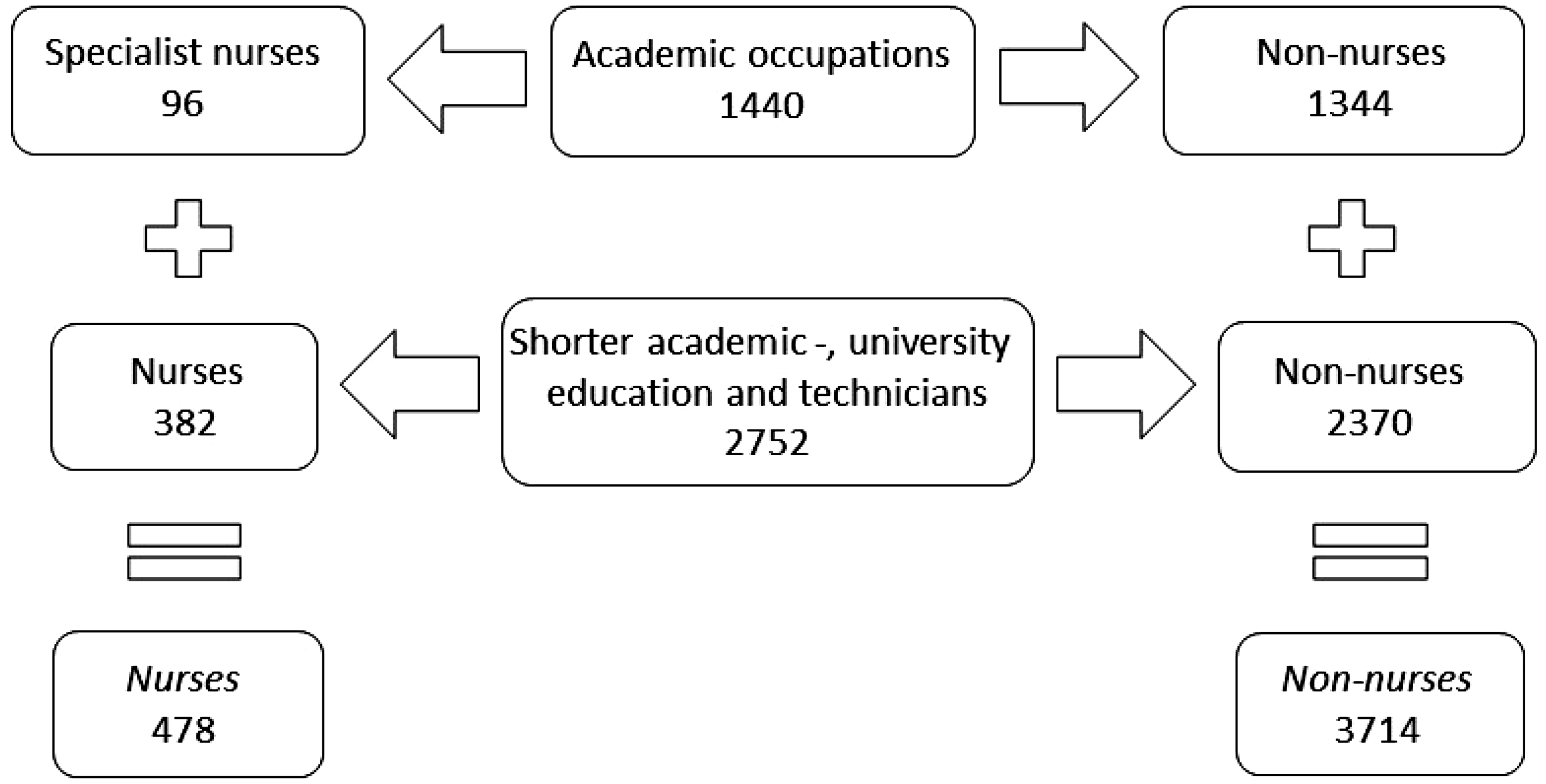
Variables
The Satisfaction with Life Scale (SWLS) 26 measures the subjective aspect of QOL. The scale contains five items with response categories consisting of five steps, from ‘strongly agree’ to ‘strongly disagree’. We constructed a total score, ranging from five to 25, where a higher score indicated higher SwL.
The SwJ variable was measured by a single item asking respondents to rate their satisfaction with their current job on a scale from 0 (‘not satisfied at all’) to 10 (‘completely satisfied’). Staff turnover was measured by a question that asked respondents whether they intended to change workplace or start another business within the next three years (no = 0, yes = 1).
Independent variables
We controlled for various socio-demographic variables: sex (female = 0, male = 1), age (in years), and income (Norwegian Kroner after tax). Job position was used as a dichotomized variable (0 = permanent position, 1 = temporary position). Years in current job refers to the number of years from when they started their current job to the time of the survey interview. Weekly working hours were measured in whole hours. The variable working hours consisted of various shifts, and was dichotomized into ‘regular night shifts’ (1) and ‘other work hours’ (0). As described, the groups examined in this study were recoded from the question ‘current occupation’.
Evaluations of work related characteristics were registered on a four-point Likert scale ranging from ‘not at all’ to ‘to a great extent’, where a low score refers to what we in the context of this paper consider a positive work characteristic. The characteristics were: hectic and stressful, with little variation, data systems that were hard to learn, and irregular working hours. Work-related experiences were coded the same way, but here a high score was considered a good work experience. These experiences were: colleagues asked for advice, the leaders appreciated your work, you had the opportunity to learn new things, and you experienced autonomy in the job.
Statistical analyses
Data were analysed using SPSS for PC, version 23 by IBM. All the variables were tested for multicollinearity with the use of the Pearson product–moment correlation coefficient, with no values over r = 0.7. 27 Associations between independent variables and SwL as dependent variable were analysed with bivariate and multivariable linear regression analyses. The strength of associations was expressed as unstandardized beta (β) and t-value (t). The model was evaluated using adjusted R-squared (adjusted R2). The same was done for the dependent variable SwJ. Associations between independent variables and the dichotomous IchJ were analysed with bivariate and multivariable logistic regression analyses. The strength of associations was expressed as odds ratios (ORs) with 95% confidence intervals (95% CI). The model was evaluated using Cox–Snell and Nagelkerke R-squared. The level of significance was set at p < 0.05 and all tests were two tailed. All the variables showing significant values in the linear regression were tested for curvilinearity, and the logistic regression had a non-significant Hosmer–Lemeshow goodness of fit test, which indicates support for the model. 27
Ethics
The LOGG study was conducted by Statistics Norway and met all the legally required regulations, and was approved by the Norwegian Social Science Data Service (NSD), the Regional Committee for Medical Research Ethics (REK), and the Norwegian Data Protection Authority. All participants in LOGG gave consent when completing the telephone interview. The data file used in this study was provided by NSD as an unidentifiable data file.
Results
Description of the groups
Comparison of socio-demographic and work related variables between nurses and non-nurses.

Comparison between nurses and non-nurses
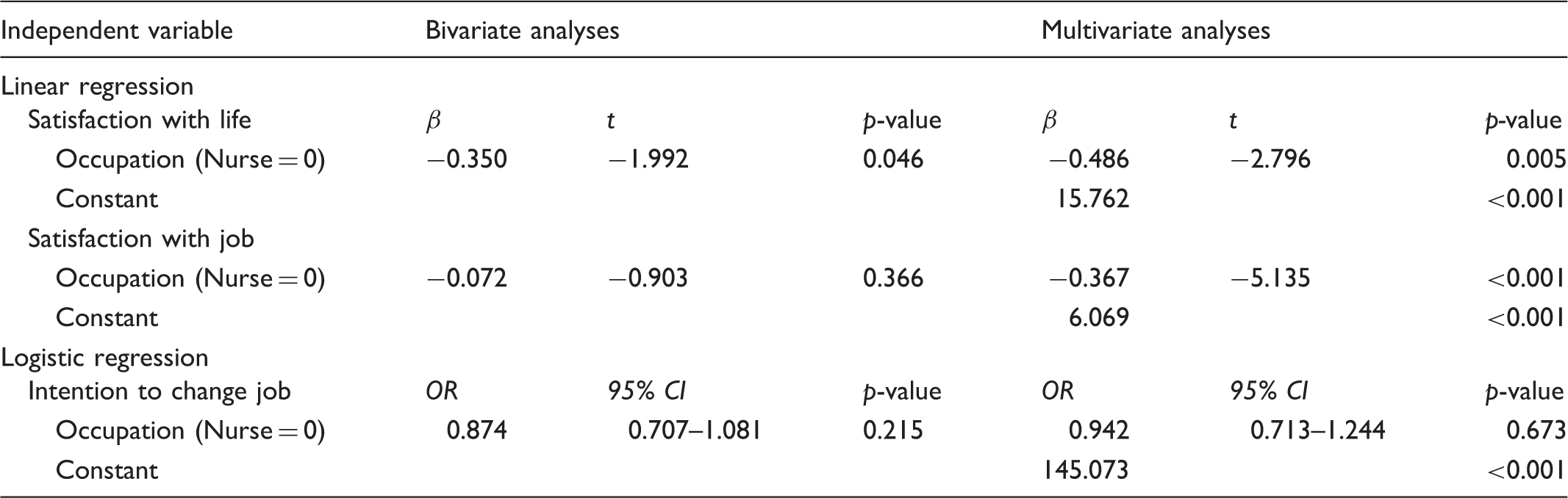
Bivariate and multivariate analyses of the three dependent variables when comparing nurses and non-nurses.
Satisfaction with life
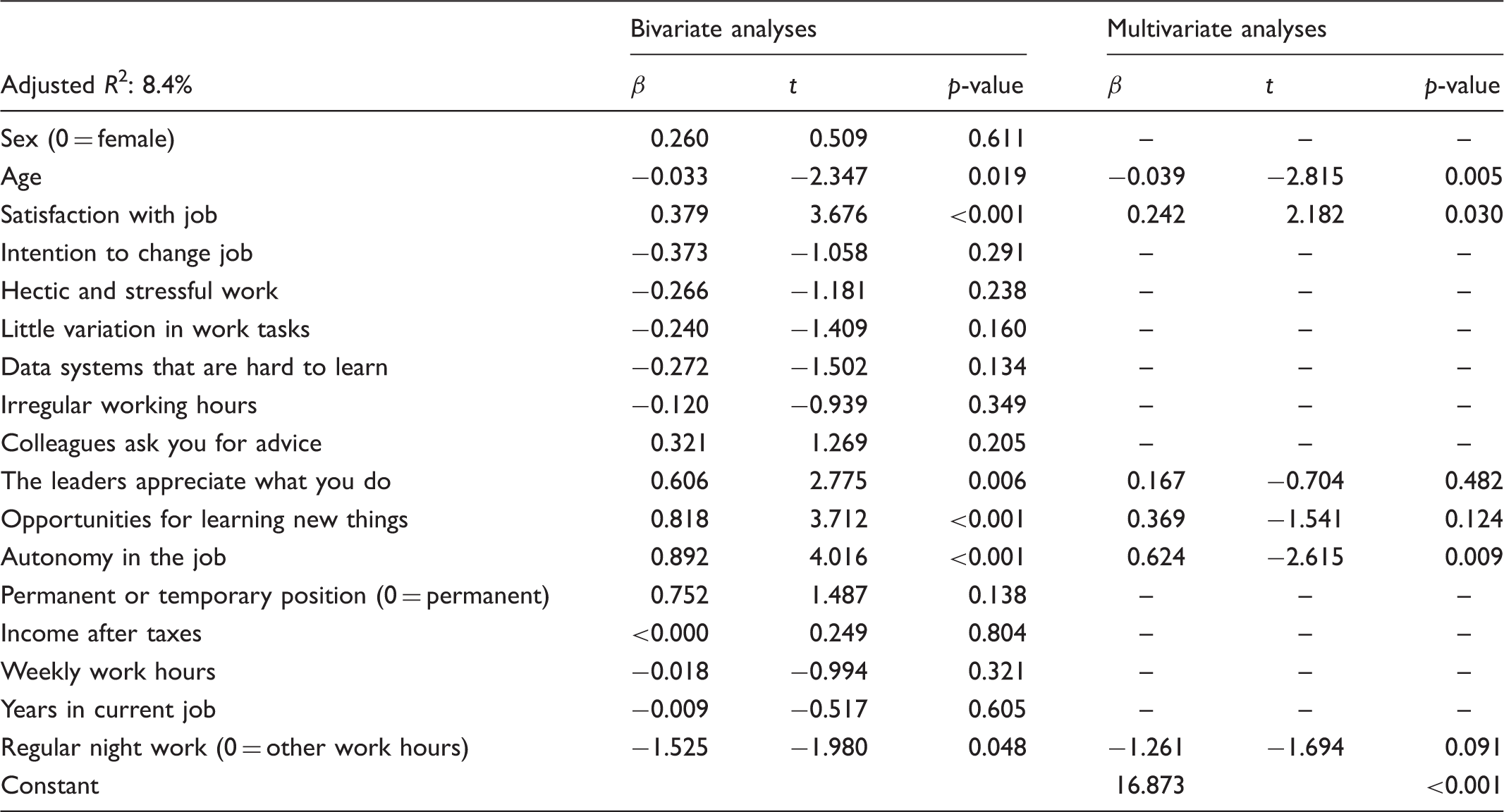
Bivariate and multivariate linear regression analyses with ‘satisfaction with life’ as the dependent variable.
Satisfaction with job
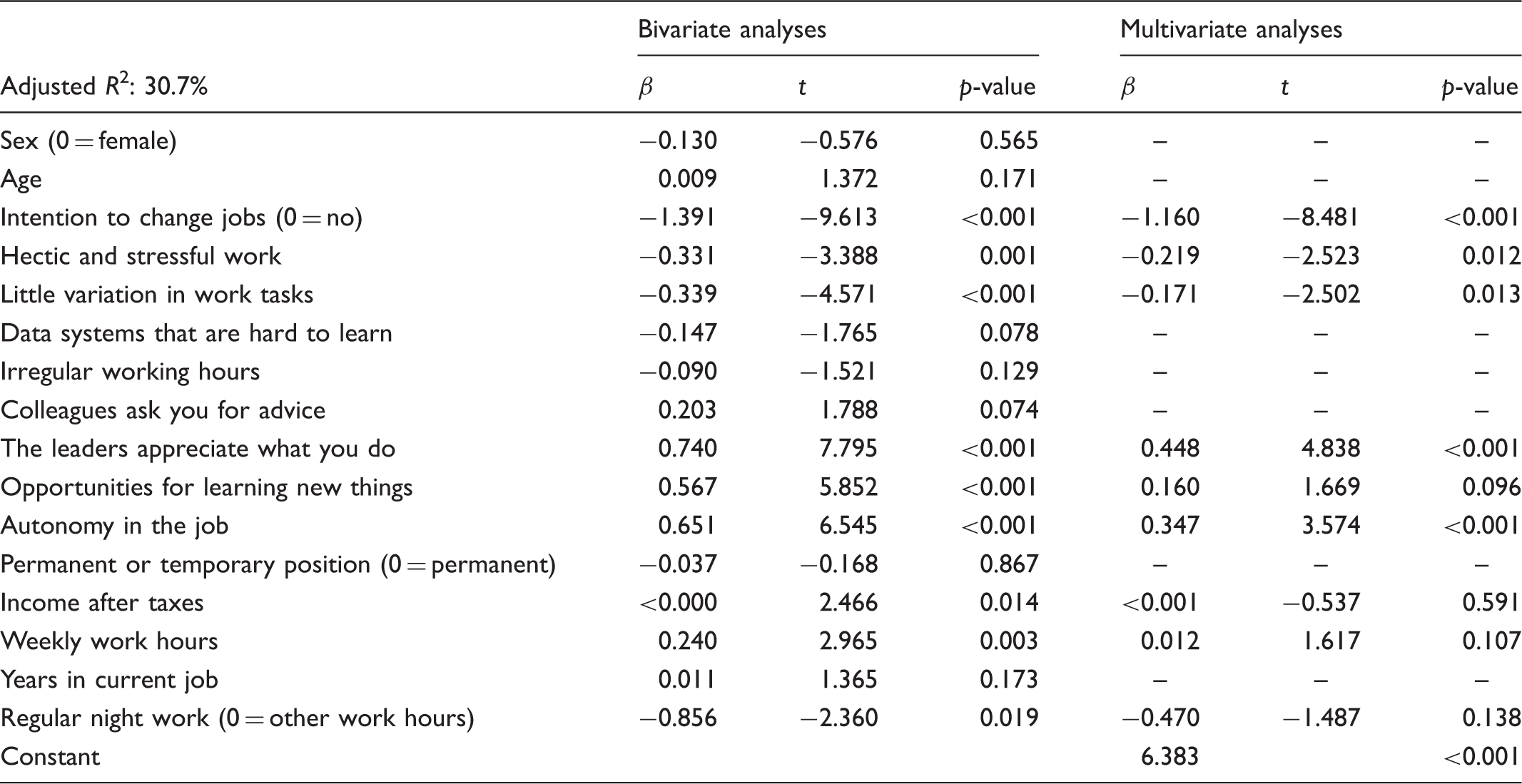
Bivariate and multivariate linear regression analyses with ‘satisfaction with job’ as the dependent variable.
Intention to change job
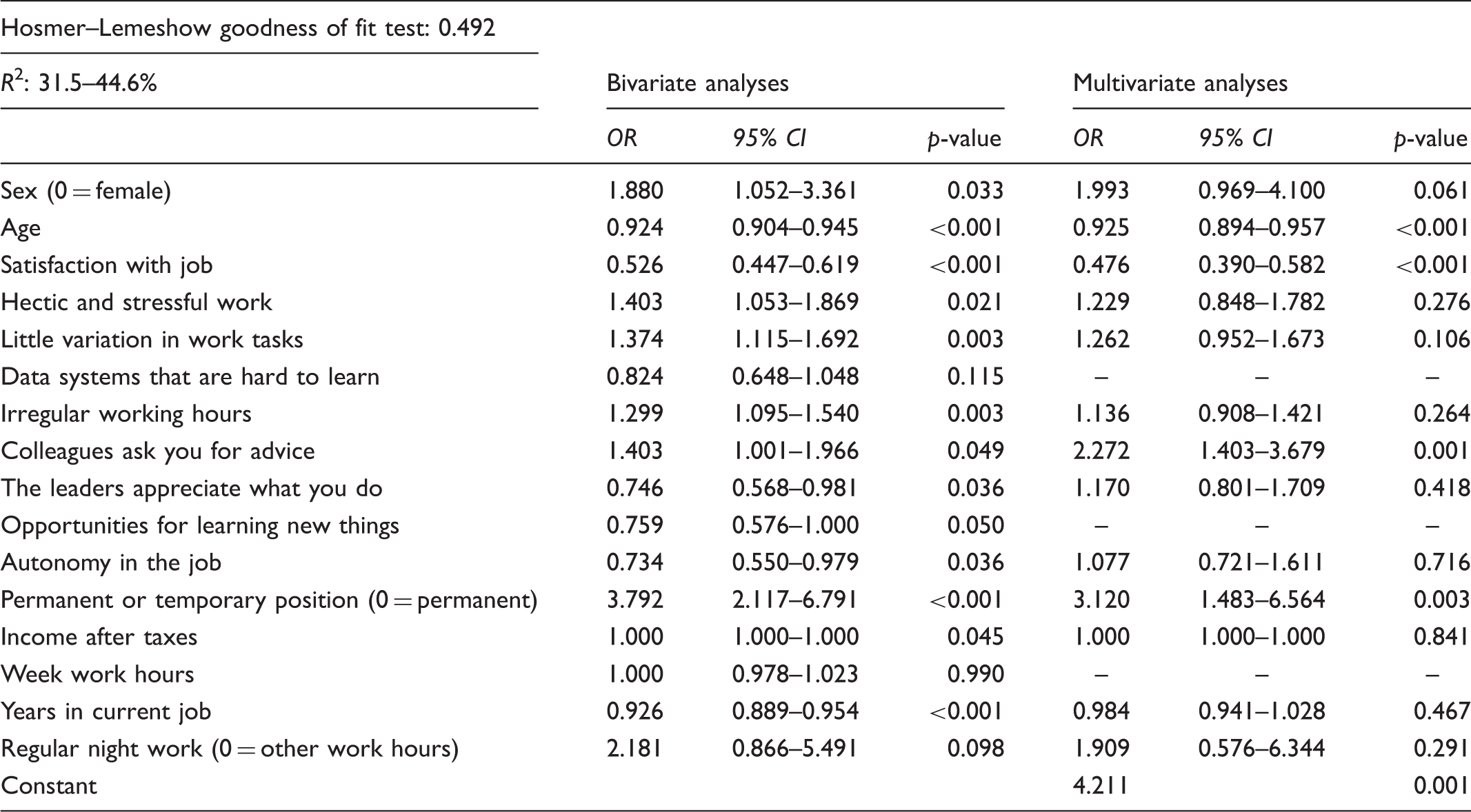
Bivariate and multivariate logistic regression analyses with ‘intention to change job’ as dependent variable.
Discussion
This study examined possible differences in SwL, SwJ and IchJ between nurses and a comparable group of non-nurses. Furthermore, it explored the effects of socio-demographic and work-related characteristics on the dependent variables and the role of these effects in explaining the nurses’ SwL, SwJ and IchJ. Both SwL and SwJ showed significant differences between the two groups compared. Different work aspects revealed significant association for the three dependent variables investigated in this study, but we discovered variation between them. For SwL, experience of autonomy at work and SwJ showed significant relationships. For SwJ, significant associations were revealed in both job characteristics and experiences. Regarding IchJ, low age, temporary position, nagging coworkers and low SwJ revealed significant associations.
In this study 30% of the nurses reported an intention to change jobs. In another Norwegian study the figure was 25% among nurses. 10 Considering the higher mean age in this study, 42 years versus 35 years in Heinen et al, 10 we would expect less intention to change jobs in our sample of nurses. Compared to a study concluding that younger members of staff are more likely to have an intention to change jobs, 28 our study is contradictory in showing that the higher turnover affiliation with a higher mean age.
Nursing is a meaningful occupation
When comparing the dependent variables between the two groups, no significant difference was found in the bivariate analyses regarding the variable SwJ. However, when we controlled for the other significant variables in a multivariate analysis, the difference became significant. Net of other factors, nurses reported higher job satisfaction than the comparison group. These findings might indicate that SwJ can be part of what makes the nurses more satisfied with their life as a whole. Nurses witness much suffering and death at work, and this may give nurses a different perspective on life and make them more appreciative of a life without illness than people who do not come that close to illness, death and grief in their work. Also, nurses work with people and experience meaning and goodness directly through their hands-on tasks. Findings confirm those of one previous study showing that nurses generally perceive their work as meaningful. 29 Feedback and response from patients and family caregivers may have a positive effect on their job satisfaction. 30
Nurses’ jobs influence their personal lives
In the bivariate analyses, SwL was unrelated to the various work characteristics variables. However, three in four variables exploring experiences at work were significant in the bivariate analyses. The multivariate analysis showed significant associations between SwL and the variables age, SwJ and autonomy in the job. These results indicated that SwL was not dependent on the content of work tasks, as long as the person is satisfied and experiences autonomy. Work can promote both positive and negative health. 31 Results from our study indicate that nurses’ jobs have a positive impact on the nurses’ health, which in turn may increase their SwJ.
There are few studies that explore nurses’ QOL, and none that have studied the global aspect (GQOL). Studies that have explored HRQOL found that the presence of work stress resulted in burnout or personal strain and had a negative effect on nurses’ HRQOL.12,17 Presence of satisfactory work ability, on the other hand, had a positive effect on nurses’ HRQOL. 32 Even so, at least in some countries, nurses’ HRQOL was relatively low. 20 This study showed that the nurses’ GQOL was higher than that of the comparison group, which may be explained by a different interpretation and use of the QOL concept, or that low HRQOL does not always influence GQOL to a large degree.
Monotonous and stressful work decreases nurses’ job satisfaction
For SwJ, indicators of work characteristics and work experiences showed significant associations. Respectively, the variables appreciative leader and autonomy in the job showed significant associations. Additionally, the variables little variation in tasks and a hectic and stressful job had a negative impact on SwJ. It is well known that work-related stress, and the quality of organizational factors more generally, 33 are strongly associated with SwJ. 18 These results support similar findings from a meta-analysis, which indicate that autonomy and stress are consistent predictors of SwJ. 9
In this study, neither age nor years in current job were significantly associated with job satisfaction. In previous studies these aspects have been reported to have significant influence, and the explanation may relate to nurses’ increase in salary based on their length of service.28,33 From this study, we have learned that income had no significant impact in the multivariate analysis for any of the dependent variables, although it was the most significant factor in a study performed in England. 4 The results may indicate that there are great differences between countries. As with nurses’ dissatisfaction with wages,7,9 income does not seem to be a top predictor of job satisfaction when other predictors are considered.9,34
Temporary positions, nagging coworkers and low job satisfaction can increase nurse turnover
In the analyses of IchJ, three indicators of work characteristics turned out to be significant in the bivariate analyses. However, in the multivariate analysis none of these remained significant predictors of the inclination to change workplace.
A literature review showed that the way the work is organized, such as work demand, commitment, culture and work environment, are reasons for nurses to quit their current job,7,35 and that shift work increases the risk of nurses leaving the job.10,14 Working shifts is often inherent to the nursing profession, and can perhaps decrease nurses’ job satisfaction, especially for those with family obligations. However, at the same time, shift work makes nurses’ working hours more flexible, which in turn may increase work satisfaction. This may explain the non-significant results from irregular work hours in this study.
The issues of leadership and stress have previously been highlighted as influencing nurse turnover. 1 In our study, a hectic and stressful job was not significant, as opposed to findings in many other studies on nurse turnover.1,7,14,18 As nursing jobs are described as hectic and stressful, 14 these latter findings may no longer come as a surprise to nurses. These results may indicate an individual impact regarding whether stress influences nurses negatively or not. Some nurses like to work in a stressful work environment; however, some nurses dislike a hectic workplace. The nursing leadership has been shown as a variable influencing nurse turnover. When the nurses’ appreciated and valued their leaders, the leaders were more supportive and communicative, resulting in a stable staff of nurses who preferred to stay on in their present job.10,34 In this study we found that the variable leaders appreciate what you do, did not reveal significant associations with the nurses’ IchJ. Since these two variables explained the SwJ, the findings may indicate that the independent variables have an indirect relation with IchJ through SwJ.
In the multivariate analysis the variable colleagues ask you for advice was the only variable concerning work experiences that had significant impact. With its negative outcome, meaning that colleagues often ask for advice, the nurses have a higher rate of IchJ. The finding was surprising, as studies have shown that colleagues constitute an important factor in reducing nurse turnover.7,10 However, we may explain this finding as representing interruptions to work, and being asked for advice may not count as part of colleague support. As mentioned, one explanation may be that the nurses feel that their colleagues nag, and they might want to leave because of a disturbing work environment. Another explanation may be that the nurses who are used as consultants feel they are overqualified for the job. If the work does not provide challenges and nurses feel overqualified, they are more likely to change jobs. 36
Having a temporary position may increase nurses’ inclination to change jobs. Holding a permanent position is valued in itself; however, since a temporary position has an end date, the nurse constantly has to plan for a new job. In Norway, more than half of the recently graduated nurses have temporary positions, and most of them want a permanent position due to the advantage of the stability in workplace and income. 37
We expected that the frequency of nurses’ IchJ would decrease with higher age. Previous studies have explained this finding by the generally higher salaries and lower mobility of older, highly experienced nurses, or the attrition of older nurses not matching the requirements of the demands in a new job. 28
Neither gender nor working hours had significant associations with whether the nurses intended to change jobs. These results contradict those of studies indicating that males and part-time workers are more likely to consider leaving their jobs and nursing.10,36
Not surprisingly, the inclination to change work was strongly related to SwJ. A likely interpretation is that low SwJ makes people want to change jobs, rather than vice versa. The fact that low SwJ might lead to higher nurse turnover was expected and supported in many articles.14,28,34
Regular night work had no significant impact in the multivariate analysis for any of the dependent variables. This finding is at odds with previous findings, from Chan et al.’s literature review, showing that working nights has a negative impact on nurses’ well-being, and might be associated with nurse turnover. 7 In relation to the latter study, our findings represent a contradiction. An explanation may be that there are differences between countries, and differences in the nurses’ working conditions, as well as in the cultural and social context between countries.33,35 So far, nurses in Norway have been able to decide where they want to work, and working nights is frequently a choice. Additionally, the results from this study showed that the nurses are happy and pleased with their lives, and the possible negative impact of working nights does not influence their overall satisfaction.
This study has examined different aspects of nurses’ satisfaction and work life. Nurses’ jobs affect them in many ways. Even though nurses have a stressful occupation, the findings of this study show that nurses are more satisfied with their lives and jobs compared with a group of non-nurses with similar educational and occupational backgrounds. This study shows some of the work aspects that have revealed associations with the nurses’ SwL, SwJ and IchJ. Considering the expected shortage of nurses, and the fact that about 30% of nurses report an intention to change jobs (Table 1), the aspects that influence nurse turnover are of special interest and importance. Understanding the underlying causes of nurse turnover may provide those in leadership positions with an opportunity to address the issues and make appropriate changes. 7 Nurse leaders should act with supportive leadership styles to improve the work environment; this can positively affect job satisfaction and hence nurse turnover. 7 Efforts should be directed towards keeping employed nurses in their jobs as long as possible. 38 By doing so the nurses will do a better job, the quality of patient care improves, 33 and this will be economically beneficial for the healthcare organization.9,13
Strength and limitations
The strength of this study is the use of a comparison group consisting of non-nurses holding the same educational level. An adequate comparison group gives a greater understanding of the nurses’ satisfaction with their life and work. This is a cross-sectional study, which precludes reaching conclusions about causality. Longitudinal studies are therefore recommended. In addition, many factors may have a connection with the nurses’ work. From the LOGG data we have used relevant variables; we have not, however, used a complete set of parameters that may affect the nurses’ lives, satisfaction with life, and satisfaction with their job.
Implications for leaders
Management at various healthcare facilities and nurse leaders will be able to use this study to improve some work aspects that may influence nurses’ job satisfaction levels and reduce their intentions to change jobs. The lack of permanent positions, the presence of nagging coworkers, and dissatisfaction with work are issues that need to be addressed. Interventions to improve these aspects may lead to a reduction in nurse turnover rates. To uphold and increase nurses’ satisfaction with their jobs leaders must appreciate the workers and give them autonomy and variation at work as well as try to improve on a hectic and stressful work environment. Promoting higher satisfaction levels may also improve work performance, productivity, and in turn be economically beneficial for the healthcare organization, both in terms of personal costs and patient safety.
Conclusion
The findings from this study show that most nurses are satisfied both in their lives and with their jobs. Regarding intention to change job there is no difference when comparing nurses with other occupations with similar education levels. As the nurse shortage increases, leaders have to shed light on factors that might reduce nurse turnover. Leaders may take advice from the results of this study and provide more permanent positions, minimize nagging from coworkers, and uphold nurses’ satisfaction with their jobs. Addressing these issues and making appropriate changes will be economically beneficial for health organizations.
Footnotes
Funding
The NorLAG and LOGG surveys are financed by the Research Council of Norway (grant nos. 149564 and 168373); Ministry of Health and Care Services; Ministry of Labour; Ministry of Children, Equality and Social Inclusion; Ministry of Local Government and Regional Development; Norwegian Social Research (NOVA); and Statistics Norway. The NorLAG and LOGG datasets are part of the ACCESS Life Course infrastructure project funded by the National Financing Initiative for Research Infrastructure at the Research Council of Norway (grant no. 195403) and by NOVA.
Conflict of interest
The authors declare that there is no conflict of interest.