




Abstract
In this article, we analysed the emotions expressed in response to COVID-19 vaccines on Kwai, a Chinese social-media platform launched in Brazil in 2019. Our corpus comprised 355 videos published between 2020 and 2022 and collected through a Python script. The emotions were identified and classified based on the emotion descriptors of the Human–Machine Interaction Network on Emotion for Emotion Annotation and Representation Language; an analysis of the levels of emotional valence and arousal was based on the core affect model. Considering the diversity of video content, we classified the posts according to their approach in order to identify those that expressed emotion, based on their predominant characteristic (personal, informative, infotainment, humorous or advertising). As a result, we observed that just over half of the emotions expressed in relation to the total set of data were positive. This positive attitude was emphasized when the vaccines were taken as the main topic mobilizing emotions. Expressions of contentment and trust stood out, especially among posts with a personal approach and advertising content. Among the negative emotions, disapproval and doubt stood out, mobilized by topics in relation to the vaccines and other contextual elements, especially in videos with a humorous, informative or infotainment approach.
Introduction
In recent years, digital platforms have gained ground and prestige in the production and circulation of information. In the context of the COVID-19 pandemic, different groups used digital platforms as tools for the production and consumption of content, in order to express aspirations, positions and reports about their experiences (Almars et al., 2022), and also as sources of information. In this setting, debates about vaccines and vaccination against COVID-19 gained a new dimension and become topics of discussion on social-media platforms—spaces responsible for mediating social life and its processes (D’Andréa, 2020).
Several digital platforms stood out in this context, with short-video platforms at the forefront (Wei and Wang, 2022). The visual and narrative aspects of these platforms, combined with the entertainment bias of their content, gave them a new position in terms of content production and consumption (He et al., 2023; Tan, 2021). Kwai (known as Kuaishou in China) stood out among the short-video platforms that made headway and expanded during the COVID-19 pandemic. Originally from China and currently available on the global market, Kwai offers its users a simple and accessible interface through which video content can be consumed and produced. With a version launched in Brazil in 2019—immediately prior to the emergence of COVID-19—Kwai quickly gained significant ground in the country (Wei and Wang, 2022).
In view of the increasing presence of content produced on digital platforms, several researchers have examined how these platforms are being used as sources of public-health information, and as indicators of the attitudes of certain audiences regarding some health resources, such as vaccines (Amanatidis et al., 2021; Orr et al., 2016). One of these platforms is Kwai, which Song et al. (2021) highlighted as an important source of health-related information. Kwai's attractive visual and graphic format gives it an edge over text-based digital platforms (He et al., 2023), and the short and agile structure of the platform's videos also provides information in an expeditious way (Tan, 2021; Wang et al., 2022).
In this article, we present our investigation of the content about COVID-19 vaccines produced in Brazilian Portuguese and posted to Kwai, paying particular attention to the emotions expressed in connection with them. The choice of Kwai as the video platform of interest for this study is due to its growth in the Brazilian context, especially in the period marked by the evolution and spread of COVID-19. It is also worth noting that most studies focusing on the relationship between digital platforms, vaccines and emotions have used textual data (Chou and Budenz, 2020; Greyling and Rossouw, 2022; Obeica and Martins, 2022; Rodas et al., 2022), while far fewer investigations have considered platforms based on video, such as Kwai.
In this study, we sought to find answers to the following research questions: 1) What emotions were mobilized and expressed in the content about COVID-19 vaccines and vaccination produced on the short-video platform Kwai? 2) What types of content and approaches elicited the most affective and emotional expressions about vaccines and vaccination processes? 3) Which were the topics of discussion associated with the theme of vaccines that also aroused emotions?
Research into the relationship between vaccines and emotions helps shed light on the behaviours, motivations and attitudes of certain audiences where public-health resources are concerned (Chou and Budenz, 2020; Rathnayake and Suthers, 2023). Disputes about the regulation and approval of COVID-19 vaccines in Brazil were marked by misinformation, politicization and denialism (Monari et al., 2020; Recuero et al., 2022; Recuero and Soares, 2022), including on the part of public authorities, such as former president Jair Bolsonaro. Considering this situation, we sought to identify and understand the expression of emotions concerning vaccines by the Brazilian public on digital platforms. Observing these issues can be a useful strategy for understanding the arguments and beliefs that underlie the expression of emotions (whether positive or negative) regarding vaccines—an aspect that is reinforced by the premise that the content of video platforms can affect people's thoughts, feelings and attitudes (Buchanan and Murray, 2012).
Kwai: Its origin in China and arrival in Brazil
Created in 2011 in China, the first version of what is currently known in Brazil as Kwai was initially called ‘GIF Kuaishou’, and its purposes initially differed from those currently proposed by the platform (Liu, 2020). GIF Kuaishou was created as a tool to assist its users in creating images in the Graphics Interchange Format. This feature was modified in 2013, when Kwai CEO Su Hua joined the GIF Kuaishou team, at which point Kwai emerged as a short-video-sharing platform with social-media functions (Liu, 2020; Xiang, 2019).
In the following years, the number of Kwai users increased considerably, especially during 2014 and 2015, making it one of the social-media platforms with the largest number of users in China (Liu, 2020). This growth continued with the internationalization of the platform, which started in 2017, when it began to attract new audiences, as occurred when it was launched in Brazil in 2019 (Wei and Wang, 2022).
Kwai's predominant audience in China comprises people from rural areas of second- and third-tier cities 1 (Liu, 2020; Tan, 2021), most of whom are female (Tan, 2021). A large part of the platform's videos consists of entertainment-related content, as well as narratives linked to the lifestyle of rural areas and ‘smaller’ cities in China (Xiang, 2019). Because its users are from the aforementioned cities and areas, Kwai came to be seen in some of the country's sectors as a representation of rural and low-culture China. This image was further bolstered by the presence of content on the platform that exhibits pornography, self-torture and inappropriate behaviours (Liu, 2020). Some theorists have noted that, notwithstanding this aspect, Kwai gives poorer or less well-educated people a voice, enabling them to be seen and heard (Xiang, 2019).
Kwai's vitality and growth, therefore, can be attributed to its accessibility to different groups, given the good usability of its interface and its decentralized mindset of content production focused on ‘ordinary’ people (Xiang, 2019) and smartphone usage. As a result of these characteristics, Kwai operated for many years in short-video production and platform sharing without facing significant market competition, given that TikTok, currently Kwai's biggest competitor, became available online only in September 2016 (Liu, 2020).
In Brazil, Kwai was launched shortly before the emergence of COVID-19, which may have contributed to its substantial growth, given official recommendations for social isolation, searches for information related to COVID-19 and the increased use of the internet and social media (Glaser, 2021). In 2022, Kwai ranked seventh among the most widely used social-media platforms in Brazil and was accessed by 55.8% of the country's online public (Statista, 2023). According to a more recent analysis of data on platforms focusing on short videos, Kwai now occupies the second position, preceded only by TikTok (Statista, 2023).
Kwai's audience in Brazil consists mainly of the socio-economic classes C, D and E. The Kwai app is found on the smartphones of 33% of these groups, while it is found on only 25% of the smartphones of users in classes A and B (Panorama Mobile Time/Opinion Box, 2022). This is confirmed by Comscore Brasil's 2023 Social Media Trends Report, which also reports that most Kwai users in Brazil are from socioeconomic classes C, D and E. As for the gender of the platform's users, 54% are women and 46% are men. With regard to user ages, in Brazil, the Kwai platform is used largely by people older than 45 years and only infrequently by younger people (Comscore Brasil, 2023).
Theoretical background
With its international dimension and highly representative audience, Kwai has been studied by researchers using different approaches. For example, several studies have examined the uses and impacts of the platform in the production of journalistic content (Lu and Zhou, 2021; Xiang, 2019). The consequences of the use and acceptance of the platform have also been investigated by scholars in the field of audiovisual production and consumption, considering the language innovation promoted by Kwai (Huang, 2021). Similarly, given its popularity, the platform has also been investigated in the field of marketing (Jun, 2021) and analysed in studies on digital influencers, with a particular focus on the emergence of this phenomenon based on specific characteristics, given that Kwai favours the manifestation of other representations and symbolic markets (Hou, 2022).
The issue of production and consumption of information on Kwai is one of the most thoroughly examined research areas, and this is an aspect that has gained new dimensions in the context of the COVID-19 pandemic (Wang et al., 2022). The reason for this is that, in the context of an increasingly accelerated social life, short videos provide a more accessible, contextual and agile way of accessing information (Tan, 2021), and the consumption of short videos gained significant ground and popularity with the spread of COVID-19 (Wei and Wang, 2022). Moreover, such videos also serve as sources of public-health information (Song et al., 2021).
In fact, this state of affairs is not entirely new, given the existence of other video platforms such as YouTube, which already provides health-related content and information (Trigo, 2018). However, many people find it easier and more convenient to watch short videos and absorb their content more quickly, and such videos often help individuals in their reasoning and decision-making (He et al., 2023). On the one hand, this method of acquiring information can be beneficial; on the other, there may be certain risks depending on the quality of the information conveyed.
Considering this premise, He et al. (2023) carried out a study to evaluate the reliability and quality of short videos about inflammatory bowel disease published on three short-video platforms: TikTok, Bilibili and Kwai. The content of 125 videos pertaining to the topic was evaluated by two doctors, who examined the quality and reliability of the information displayed. Based on that evaluation, the authors ascertained that the general quality of the analysed videos was low, since they failed to provide consistent information on the subject of inflammatory bowel disease, especially in videos produced by ordinary people or those without specific training in the field of health care.
Qin et al. (2023) also evaluated the quality of short-video content posted to TikTok, Bilibili and Kwai between 2018 and 2021 and reported similar findings with respect to first-aid recommendations (primary and secondary prevention) in cases of burns in China. Consonant with the findings of He et al. (2023), Qin et al. (2023) found that, despite the increasing number of short videos on the subject, the quality of the content regarding first aid in cases of burns was poor and, therefore, unsatisfactory. In both studies, the authors point out the need for caution in viewing this content and suggest that the platforms should supervise and regulate the content in order to ensure the dissemination of accurate and reliable health information (He et al., 2023; Qin et al., 2023).
This aspect is reinforced by the possibility that short videos can significantly impact the thoughts, beliefs, attitudes and emotions of the individuals who consume them (Buchanan and Murray, 2012) by exhibiting a social, emotional and political slant that may influence the way in which people interpret certain topics (Wei and Wang, 2022). Based on this perspective, some studies have investigated the expression of emotions in content produced on short-video platforms about health-related topics, such as vaccines against COVID-19. Wang and He (2022), for instance, analysed the expression of emotions elicited by the COVID-19 vaccine in TikTok videos and found that most of the posts on the topic trended towards humour or parody, which are elements commonly explored on short-video platforms. Joy stood out as the most frequent among the emotions identified, accompanied by surprise about the side effects caused by vaccines. However, other negative emotions, such as anger and indignation, were also identified, especially in videos covering vaccines that presented content full of misinformation.
A propensity for humour and parody was also identified in other studies that investigated emotions about COVID-19 vaccines on short-video platforms, such as those by Lewis and Grantham (2022) and Basch et al. (2021). In their study investigating the discourse about the COVID-19 vaccine among the top 100 videos on TikTok that used the hashtag #CovidVaccine, Lewis and Grantham (2022) identified opinions and emotions favourable to vaccination. Separately, in describing vaccination-related content on TikTok, Basch et al. (2021) stated that, although the main characteristic of this content was humour or parody, which are culturally considered as fun and emotionally positive elements, most of the content discouraged vaccination. Moreover, it often jokingly called into question the efficacy or safety of the vaccines, which the authors allege may be risky to do in a context marked by misinformation.
Several studies adopting a similar approach have been conducted using other social-media platforms, which are seen not only as environments aimed at establishing social exchanges but also as places where interests, beliefs and emotions are expressed (Papacharissi, 2014; Serrano-Puche, 2016). In this regard, video platforms such as Kwai are presumably responsible not only for producing content on topics with the most diverse approaches—as in the case of vaccines—but also for mobilizing the production of affects and emotions (Lin and Kloet, 2019) on the subject. Despite this observation, little research has examined Kwai from this perspective despite its growth, popularity and production of content on the topic. In fact, most of the studies concerning the relationship between vaccines, emotions and short-video platforms have been carried out using TikTok as the research object, the production of content for which is aimed at an audience other than people using Kwai.
Studies on vaccines, emotions and short-video platforms in general are incipient in Brazil. However, several studies have sought to gain an insight into the expression of emotions about the COVID-19 vaccine on text-based social-media platforms such as X (formerly Twitter) (Obeica and Martins, 2022; Penteado et al., 2021; Rodas et al., 2022), Facebook (Oliveira et al., 2023a) and Instagram (Oliveira et al., 2023b) within different time frames. Among the main results of these investigations is the expression of positive emotions concerning vaccines, despite the identification and occurrence of some negative emotions not related to the vaccines themselves but rather to contextual factors, such as an increase in the number of COVID-19 cases or the emergence of new coronavirus variants. Other negative emotions concerning political figures involved in the approval and regulation of vaccines in Brazil, such as former president Jair Bolsonaro, were also identified.
Given the contributions of these investigations, as well as the limitations of short video platforms, which are little explored, this study sought to expand the interpretation and analysis of content about COVID-19 vaccines published on Kwai and the emotional responses elicited by this content.
Materials and methods
Data collection
For the Kwai data-extraction process, we created a Python script to automate the procedure of scraping posts that mentioned the hashtags ‘vacinacovid19’, ‘vacinacoronavirus’, ‘vacinacovid’, ‘vacinacorona’, ‘passaportevacinal’, ‘coronavac’, ‘Pfizer’, ‘AstraZeneca’ and ‘Janssen’. The data was collected from the video watch page of Kwai's graphical interface, with a limit of up to 100 videos per hashtag, which were displayed in order of relevance created by the platform itself.
We then normalized the data and removed duplicates, generating a database of 617 posts, which were manually checked to remove those produced in languages other than Brazilian Portuguese and to exclude posts that were no longer available for viewing. This procedure led to the exclusion of two posts from the sample for being in a language other than Brazilian Portuguese and 38 posts because they were no longer available when the data was categorized. As a result, 577 Kwai posts were initially considered for analysis, which were then subjected to a process of classification and identification of emotions expressed about COVID-19 vaccines.
Classification and identification of emotions
After collecting and selecting posts on Kwai that mentioned COVID-19 vaccines, we analysed them to identify the expression of emotions in the examined content. With regard to the study of emotions, it is worth noting that, in general, the following three viewpoints stand out: 1) the naturalistic view, which considers the phenomenon of emotions to be the result of biological processes and therefore universal and innate to all individuals, regardless of their culture or territory (Ekman, 1993; Plutchik, 1962); 2) the constructivist view, which is based on the idea that emotions are the result of the social, cultural and historical relationships to which they belong, thus having specificities in terms of their forms of expression according to their context (Ahmed, 2014; Barrett, 2017); and 3) the integrated view, which sees emotions as having biological, social, historical and cultural dimensions (Gu et al., 2019; Hofmann and Doan, 2018).
In this study, we adopted the third perspective to analyse emotions elicited by the topic of COVID-19 vaccines in videos on Kwai. In fact, we used the assumptions of the multimodal analysis of feelings and emotions (Morency et al., 2011; Perez Rosas et al., 2013) to classify and identify emotional expressions. This approach is similar to that used for analysing feelings and emotions exhibited in text (Liu, 2010; Xu et al., 2022). However, in addition to text, it focuses on the audiovisual resources of objects of investigation, such as images or videos, as is the case with Kwai. It should be noted that, by using multimodal analysis, the transcription and description of textual elements in audio and video provide an important resource for recording and analysis (Perez Rosas et al., 2013). This procedure was carried out in the encoding of Kwai content.
The selected 577 short video posts were analysed to identify the expression of emotions, since not all posts expressed emotions. The description ‘expressed and identified emotion’ was applied to posts in which the expression of emotions was identified, while posts without any expressed emotion were given the description ‘unexpressed emotion’. In other posts, which showed a visible emotional bias that could not be clearly defined, the descriptor ‘unidentified emotion’ was employed, as was done in previous works (Oliveira et al., 2023a; 2023b).
Of the total number of posts produced on Kwai (n = 577) and collected for this study, 355 were classified as having ‘expressed and identified emotion’, 201 were classified as showing ‘unexpressed emotion’ and 21 were marked as showing ‘unidentified emotion’. Since our aim was to analyse expressed emotions, posts classified as having ‘unexpressed emotion’ or ‘unidentified emotion’ were eliminated. Thus, the final corpus of this research consisted of 355 posts. Temporally, this data covered the years from 2020 to 2022.
Subsequently, the 48 emotion descriptors from the Human–Machine Interaction Network on Emotion (HUMAINE) for Emotion Annotation and Representation Language (EARL) (Douglas-Cowie et al., 2007; Schröder et al., 2006) were used, in principle, to identify the expressed and identified emotions. After we reviewed the research data, eight other emotion descriptors were added, making a total of 56 (Table 1), following the practice used in other studies by our group (Rowe et al., 2023).
List of emotional descriptors adapted from HUMAINE/EARL protocols.
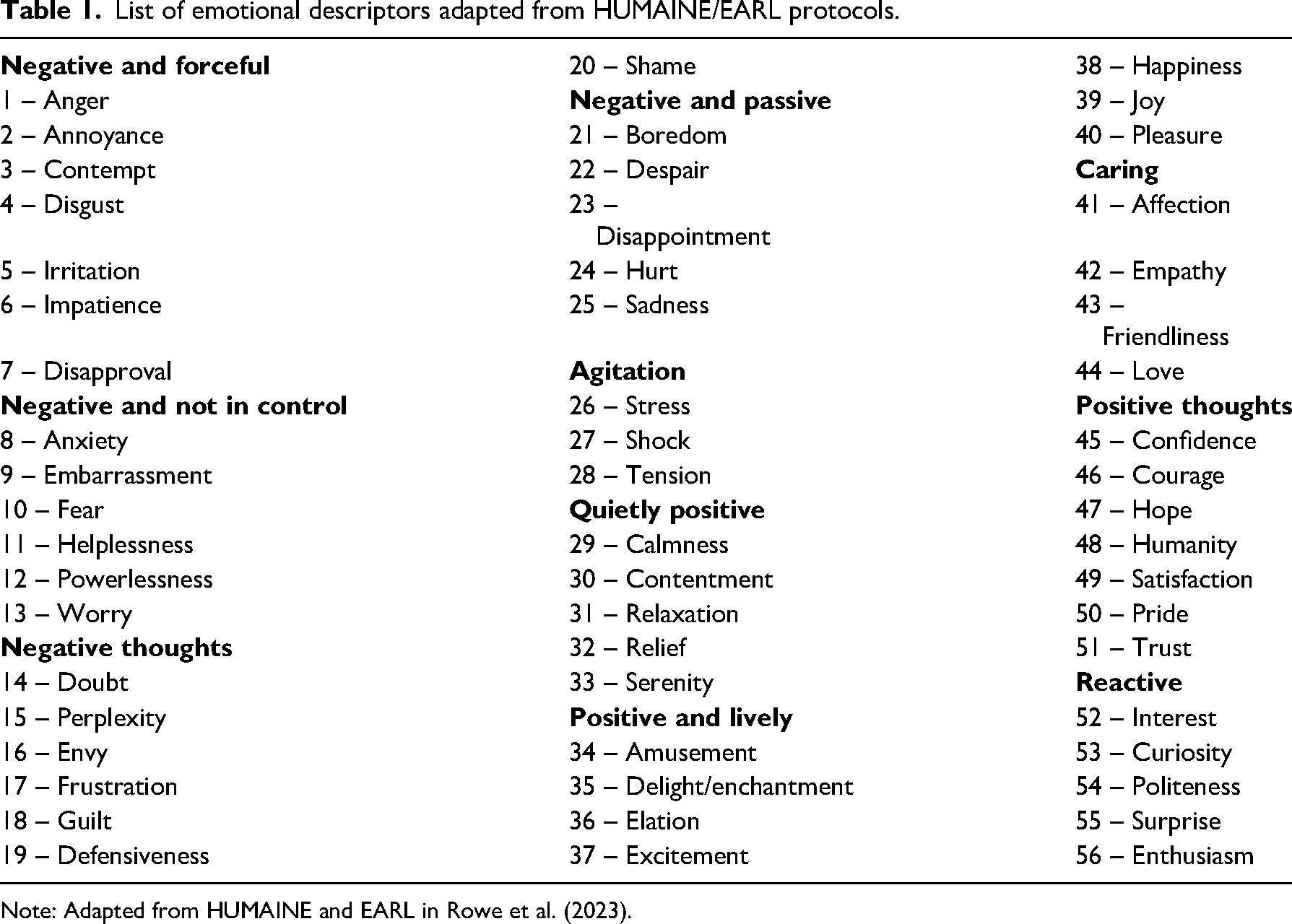
List of emotional descriptors adapted from HUMAINE/EARL protocols.
Note: Adapted from HUMAINE and EARL in Rowe et al. (2023).
One or more emotional expressions were identified in the content that composed the final analysis corpus, considering the characteristics of the videos collected and analysed, which varied in terms of duration and the audiovisual elements and strategies they utilized. After identifying the emotions using the descriptors in Table 1, we classified them based on their valences (positive and negative) and levels of emotional arousal (low or high) according to the core affect model and the circumplex model (Russell, 2003) (Figure 1).
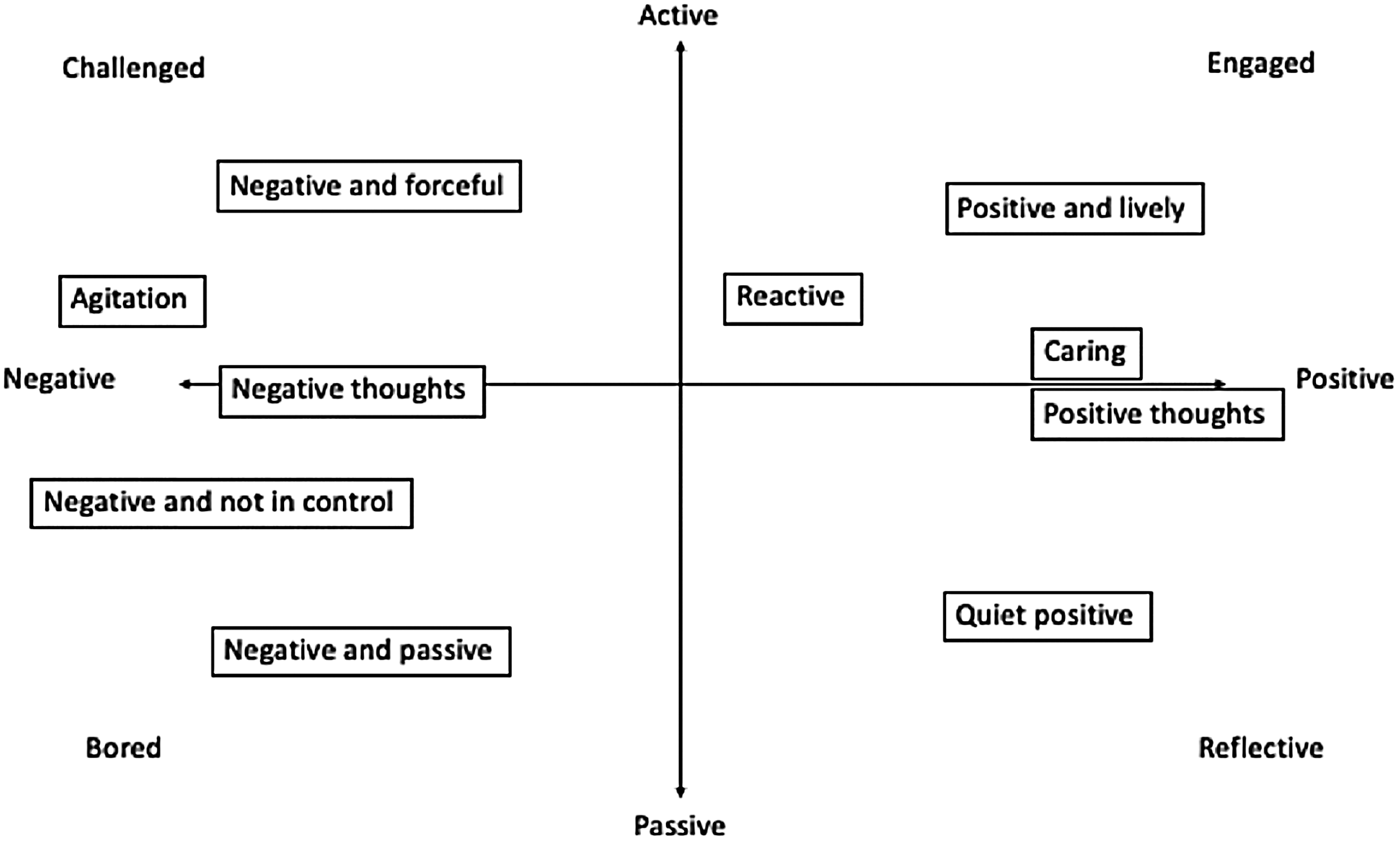
HUMAINE/EARL descriptors, as grouped by the circumplex model. Adapted from Russell (2003) and Rowe et al. (2023).
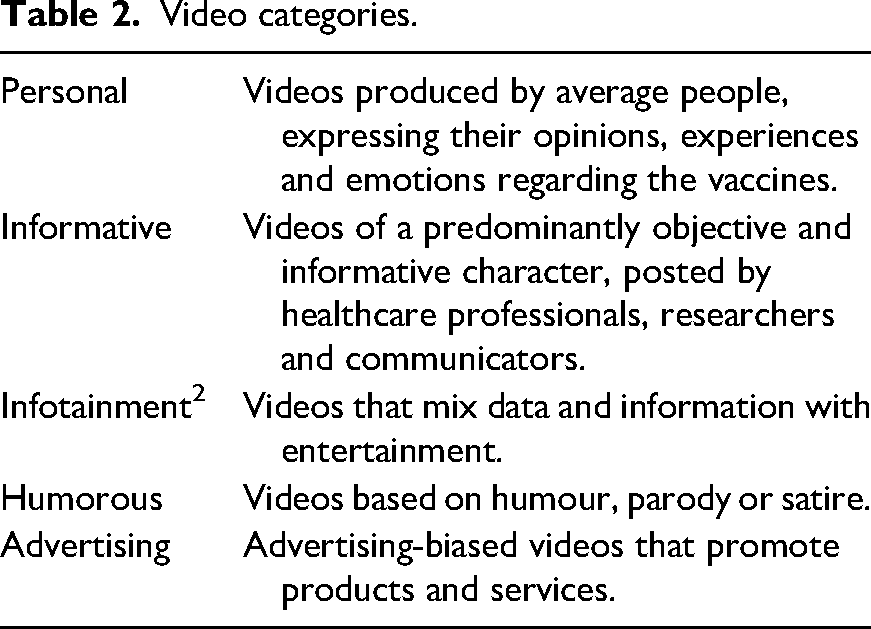
In addition to these aspects, given the diversity of ways in which COVID-19 vaccines were treated in the videos, we were also interested in identifying the ways in which the content produced on Kwai was broached, based on its predominant characteristics. In this regard, the categories described in Table 2 were created to identify and classify this aspect in videos with expressed and identified emotion.
Video categories.
Finally, based on the fact that, in addition to the vaccines, other topics of discussion related to the vaccines also evoked emotions (such as political figures, the application of vaccines and side effects), we sought to classify the targets of expressed and identified emotions, as was done in previous studies (Oliveira et al., 2023a; 2023b). This strategy favoured in-depth analysis, taking into account the different emotions evoked towards the identified targets.
This entire process was initially developed by one of the authors. Subsequently, the encoded data was shared with a second author in order to discuss and review the encoding, seeking better coherence in the data analysis and greater reliability of the results.
Based on the list of emotion descriptors in Table 1, as well as the set of 355 posts that made up the final dataset of this study, a total of 26 distinct emotions were identified in the content produced in Brazilian Portuguese on Kwai, based on the adopted data-classification processes. Considering that more than one emotion can be expressed in the same video, the identified emotion descriptors were observed in a total of 640 instances, indicating the mobilizing potential of Kwai's content about vaccines and vaccination processes in Brazil. The most frequently identified emotion was disapproval (n = 104), followed by doubt (n = 90), contentment (n = 89), trust (n = 56), amusement (n = 43), pride (n = 34), happiness (n = 30), interest (n = 30), fear (n = 30) and hurt (n = 29). Smaller numbers of other emotion descriptors were also identified (Figure 2).
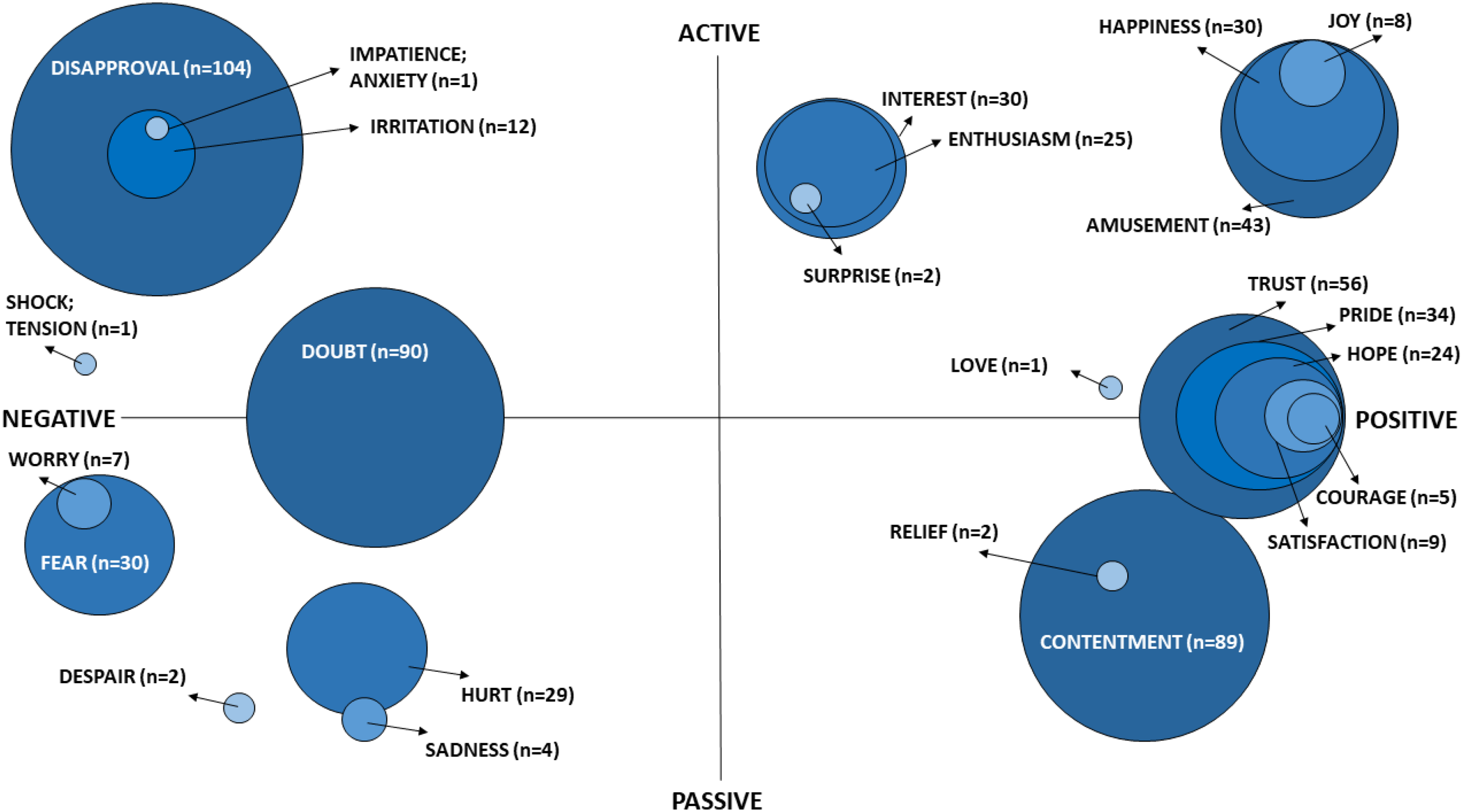
Emotions identified in the dataset. Note: Circle size corresponds to the total number of appearances of the corresponding emotion in the dataset.
Slightly more than half of the expressed emotions exhibited a positive valence (n = 356, 55.6%), while 44.4% (n = 284) were negative. The use of Russell's (2003) circumplex model revealed 259 occurrences of emotions with high levels of activation, as well as 139 with a positive valence and 120 with a negative valence. On the other hand, 381 occurrences of emotions with a degree of passivity were identified, 219 being positive and 162 being negative. In this context, positive emotions with low levels of activation were more frequent (such as contentment, trust, pride and satisfaction).
Given the diversity of emotions evoked by the vaccines or other related topics, we identified the themes or targets that triggered the strongest emotions. The main topic that aroused emotions (n = 330, 51.5%) was COVID-19 vaccines, inducing emotional expressions of positive valence (n = 270, 81.8%) in most cases, such as contentment, trust, interest, happiness, enthusiasm, hope, satisfaction, joy, amusement, pride, love and relief. Meanwhile, observed emotions with a negative valence towards the vaccines (n = 60, 18.2%) included disapproval, doubt, fear, worry, irritation and anxiety. These and other emotions were also identified in relation to other topics involving vaccines and vaccination processes in Brazil (Figure 3).
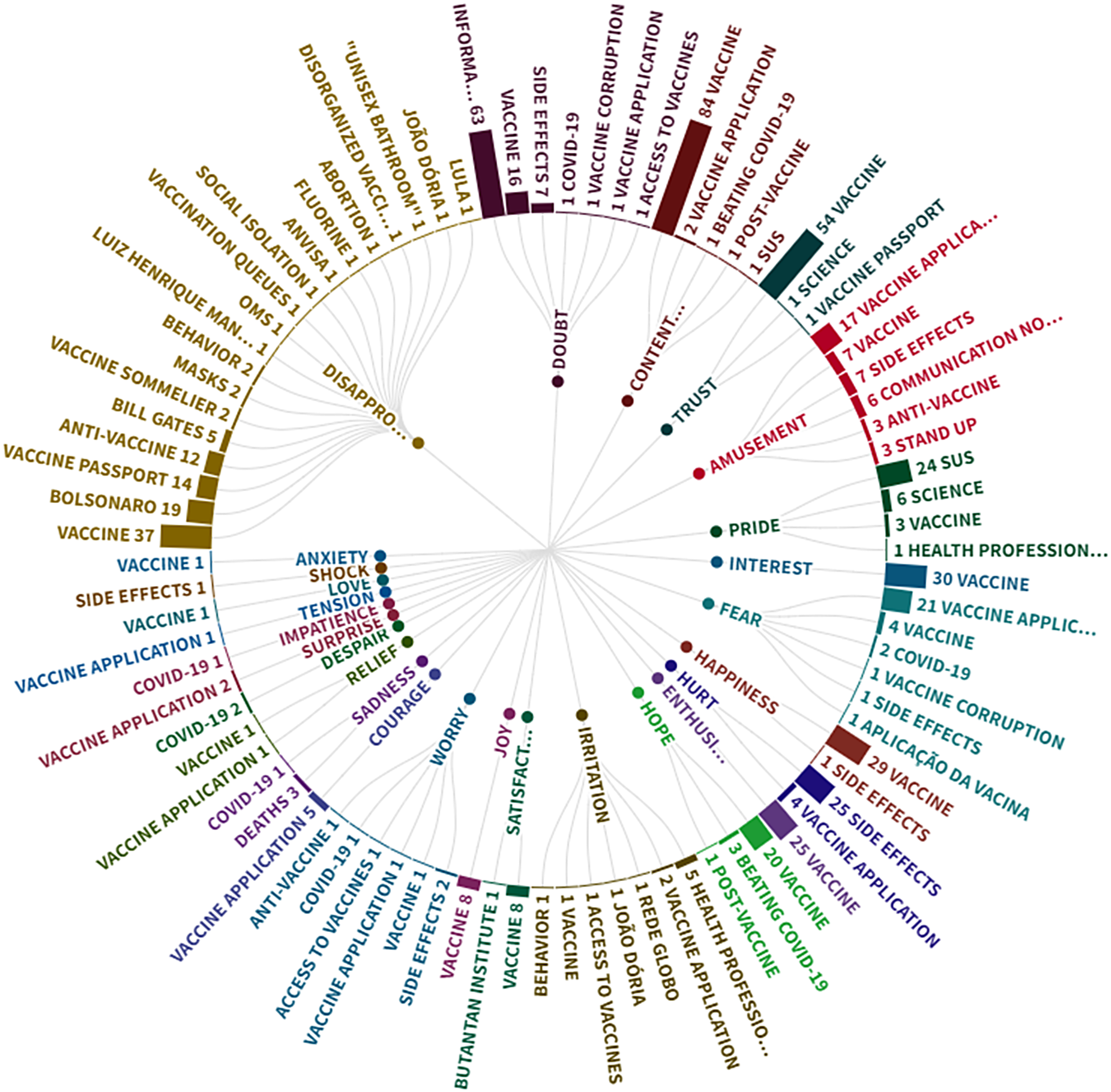
Emotions and their respective objects. Note: ‘SUS’ is the acronym representing the Brazilian national health system (Sistema Único de Saúde), which provides unlimited, universal, free access to health services for the Brazilian population.
Disapproval (n = 104) was the most frequently recurring emotion in the dataset. However, although the vaccines were the main target (n = 37) of this emotion, it was also directed at other related topics, such as the figure of former president Jair Messias Bolsonaro (n = 19), proposals to create a vaccine passport (n = 14), anti-vaccine people or attitudes (n = 12) and Bill Gates (n = 5) (who, in the videos, was suspected of having vested interests in the pandemic and of profiting from it).
Doubt (n = 90), as the second most frequently expressed emotion in the analysed dataset, did not focus on the vaccines as its main target but rather was initially directed at the search for or the clarification of more general information (n = 63)—the result of questions posed by the video producers about the audience's daily lives. Posting videos that evoked doubt was a strategy aimed at producing a feeling of proximity between producers and consumers of content and also resulted from conversations held by people appearing in the videos. However, it should be noted that, although the vaccines were not the main target of doubt, they also induced this emotion (n = 16), as did the vaccines’ side effects (n = 7) and other related topics. Other negative emotions, such as fear (n = 30) and hurt (n = 29), were associated especially with fears about the application of immunizers and their side effects.
In general, most of the emotions identified were expressed in videos that adopted a personal approach (n = 453)—a category of videos in which individuals describe their own desires and experiences. Short videos expressing emotions with a humorous approach (n = 98) also stood out, followed by emotions expressed with an informative approach (n = 60), infotainment approach (n = 25) and advertising approach (n = 4) (Figure 4).
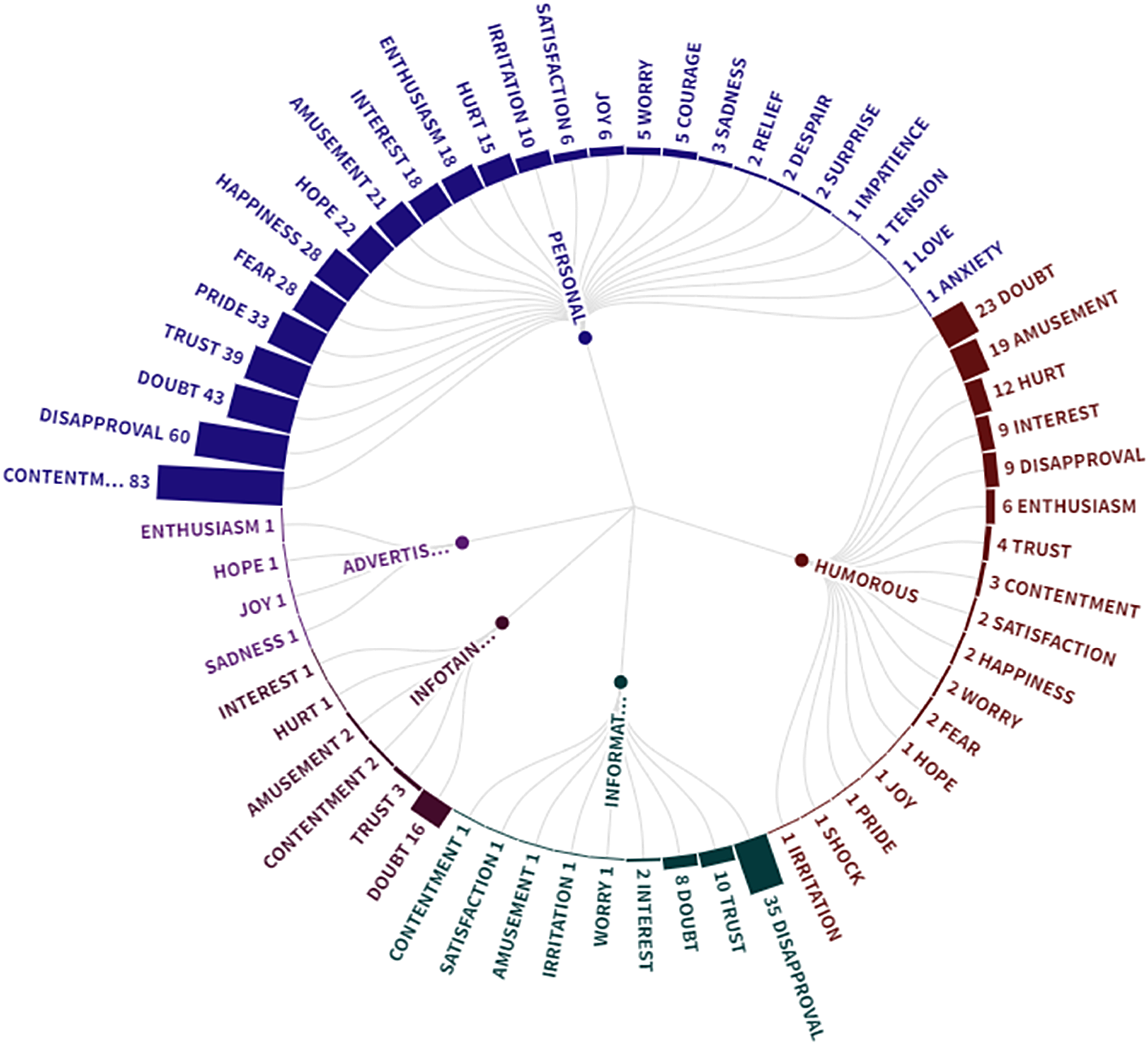
Video categories and corresponding emotions.
Videos displaying a personal approach stood out as content that most evoked positive emotions (n = 283), which was also the case with videos using an advertising approach (n = 3). In contrast, videos classified as humorous expressed predominantly negative emotions (n = 51), as did videos classified as informative (n = 45) or infotainment (n = 17). Note that, in the humorous and infotainment categories, a negative bias strongly influenced the recurrence of the emotion of doubt, which was frequently used as an approach strategy and as a way to attract attention. A predominance of emotions with a negative valence in the informative category is observed to be the result, in particular, of content about the vaccines that does not go into significant depth—the result of misinformation or the use of informative clippings that sought to construct a sense of opposition to vaccines.
Based on our analysis, the content about the vaccines and vaccination processes on the short-video platform Kwai during the COVID-19 pandemic mobilized a wide range of emotions, which were expressed through different approaches. Overall, when we looked at the total set of data analysed, we found that just over half of the emotions expressed were positive. Still, a close examination of posts about the vaccines revealed the presence of mostly positive emotions, with emphasis on emotional expressions of contentment, trust, amusement, pride, happiness and interest. It is noteworthy that, during the data-collection period, especially from January 2021 onwards, when the first vaccines were approved and began to be made available in Brazil, different vaccines were being delivered, such as Coronavac (or Sinovac), AstraZeneca, Pfizer and Janssen. They received generally positive perceptions, regardless of their manufacturers, according to our data analysis. This finding substantiates the results of other investigations with similar objectives, which examined emotions about vaccines on other social-media platforms, such as the studies by Greyling and Rossouw (2022), Oliveira et al. (2023a; 2023b), Wang and He (2022) and Lewis and Grantham (2022).
However, with regard specifically to Kwai, it is worth mentioning that, although just over half of the emotions identified were of positive valence, two emotions of negative valence most frequently expressed stood out (disapproval and doubt) 3 . While doubt was mobilized as an engagement strategy and was induced by questions aimed at attracting the public, the main target of disapproval was the vaccines, and this trend requires attention and more careful scrutiny since it points to a new phenomenon unlike previous ones cited in other studies. Disapproval directed at the vaccines was based on arguments that called their effectiveness into question, especially based on distrust about the relatively speedy development of the vaccines (see Appendix). Also seen as a basis for the emotion of disapproval was the recurrence of unsound information about vaccines lacking a professional or scientific basis, for which videos were developed based on cut-and-paste videos that are often considered reliable to discuss which vaccines were interpreted as a risk, indicating the use of particular practices and strategies of misinformation.
Initially targeting vaccines, disapproval was also expressed concerning former president Jair Messias Bolsonaro, who, on numerous occasions, expressed his opposition to the vaccines, contributed to the circulation of false information (Recuero et al., 2022; Recuero and Soares, 2022) and promoted medicines without scientific proof (Monari et al., 2020). Debates about the vaccine passport, as well as anti-vaccine speeches, among other topics (Figure 3), also evoked disapproval, highlighting this emotion as a broader affective state widely circulated in the content produced about the vaccines on Kwai.
The personal category stood out among the approaches used in the production of the videos, in line with the findings of both Lu and Zhou (2021) and Lin and Kloet (2019), who identified a focus on everyday life as the main aspect of content produced on the Kwai platform. With regard to the COVID-19 vaccines, the prevalence of the personal approach in videos also indicates how much the discussions about vaccines had a particular dimension, suggesting that the vaccines were a topic of interest and reflection. Posts that used this approach were mostly positive, as was also observed in videos using an advertising approach.
In contrast, most of the videos produced with a humorous, informative or infotainment approach showed a negative valence. In humorous and infotainment content, the predominantly negative bias of emotions indicates that some approaches or forms of communication characteristic of social networks, such as humour and infotainment, can contribute to anti-vaccine emotions and attitudes. This is particularly evident when it comes to questions in parodies and satires, which, because of their jocularity, may go unnoticed and be seen as positive, often contributing to a context of misinformation and low-quality information about health (Basch et al., 2021). This same aspect was observed in videos classified as informative, most of which were based on superficial approaches and content about vaccines, further contributing to doubts rather than clarification. This feature, which was often observed in studies on videos about the COVID-19 vaccine on TikTok (Basch et al., 2021), was therefore also identified in the Kwai content about the vaccines analysed here, especially, as indicated, in content from humorous and infotainment posts. This demonstrates that, despite having distinct audiences, a similar phenomenon is noticed across these platforms in terms of vaccine content production. However, concerning Kwai, the presence of misinformation was also observed in videos coded as informative, which were mostly produced from snippets and approaches about the vaccines with little depth and contributed more to the promotion of doubts than to clarification, which is an aspect less indicated or explored in studies focusing on TikTok.
Final considerations
In this article, we have sought to identify the emotions expressed towards COVID-19 vaccines and vaccination processes in Brazil among posts on the short-video platform Kwai. Our findings revealed a prevalence of positive emotions, especially in posts using a personal approach, corroborating earlier investigations of other platforms and contexts.
Despite this aspect, the identification of the two most frequently expressed negative emotions—disapproval and doubt—raises new perspectives about content involving the COVID-19 vaccines on Kwai. The reason for this is that, unlike the findings of other investigations with a similar perspective, the main target of one of these emotions—disapproval—was the vaccines. The main vector for the expression of disapproval was arguments that questioned the effectiveness of the vaccines, given the speed of their development. In addition, the occurrence of posts imbued with misinformation, which tend to contribute to a negative perception about the vaccines, also provided support in this area.
In view of this situation, there is an evident need to encourage the dissemination of content with credible and reliable information about the vaccines. This is important, considering the lack of effective application of the platform's guidelines against posts based on false information or those that could cause harm in the real world (Kwai, 2022) and the low frequency of posts from health professionals that pay attention to the reliability of the information provided, which may lead to a reduction in the expression of negative emotions about immunizers. At the same time, it is also relevant to carry out periodic studies on vaccines, both for COVID-19 and other diseases, on Kwai and other platforms in order to scrutinize the production of content on this public-health resource. It is proposed, in this regard, that the analysis of emotions in these contexts can be a fundamental axis for understanding a given reality or health culture, thus providing important scientific insights that enhance understanding of beliefs, perceptions, attitudes and interests about different areas of health, such as vaccination. Once addressed, these elements will contribute to a more scientifically minded culture attentive to new perspectives of work, thus expanding areas of activity that are still little explored.
Footnotes
Acknowledgements
This article was written within the scope of Brazil's National Institute of Public Communication of Science and Technology, with support from the Carlos Chagas Filho Foundation for Research Support in the State of Rio de Janeiro (Faperj) and the National Council for Scientific and Technological Development (CNPq). It was supported by notice CNPq-PROEP-COC, CNPq Universal 2023, PPSUS and ARC funding calls. Fernandes-de-Oliveira and Scalfi thank CNPq for the DTI-A scholarship, while Massarani and Oliveira give thanks to CNPq for the Productivity in Research 1B and 2 scholarships, respectively. Massarani and Oliveira thank Faperj for the Scientist of Our State and Young Scientist of Our State awards.
Declaration of conflicting interests
The authors declared no potential conflicts of interest with respect to the research, authorship, and/or publication of this article.
Funding
The authors received no financial support for the research, authorship, and/or publication of this article.

Notes
Author biographies
Geilson Fernandes-de-Oliveira holds a PhD in media studies from the Federal University of Rio Grande do Norte (UFRN). He is a professor in the Multimedia Journalism program at the State University of Bahia (UNEB) and a researcher at Brazil's National Institute of Public Communication of Science and Technology (INCT-CPCT), Oswaldo Cruz Foundation.
Luisa Massarani holds a PhD in management, education and dissemination in biosciences from the Federal University of Rio de Janeiro (UFRJ). She is the coordinator of INCT-CPCT and a researcher at the Oswaldo Cruz House, Fiocruz (COC/Fiocruz).
Marcelo Alves-dos-Santos-Junior holds a PhD and a master's degree in communication from the Federal Fluminense University (UFF). He is a professor in the Department of Social Communication at the Pontifical Catholic University of Rio de Janeiro (PUC-RIO). He coordinates the Media, Technology, and Data Research Laboratory. He is an associate researcher at the Media, Democracy, and Political Institutions Laboratory (Lamide/UFF) and the Research Group on Politics, Public Opinion, and Communication (Gruppocom/UFC).
Graziele Scalfi holds a PhD in education from the University of São Paulo (USP). She is a researcher at INCT-CPCT, Oswaldo Cruz Foundation.
Thaiane Oliveira holds a PhD in communication from UFF. She is a professor in the Graduate Program in Communication at UFF. She is a member of Brazil's National Institute of Science and Technology in Disputes and Informational Sovereignties (INCT-DSI), NCT-CPCT, and the Brazil's National Institute of Science and Technology in Comparative Studies in Conflict Management (INCT-InEAC). She is an affiliated member of the Brazilian Academy of Sciences.