




Abstract
Purpose
Education on the ethics of responsibility is paramount. However, in educational practice, students who perform well academically—often referred to as “top-notch students”—frequently exhibit low levels of ethical responsibility. To explore the validity of this claim, we conducted a survey at a junior high school in Shanghai with a reputation for nurturing top-notch students.
Design/Approach/Methods
Using the Student Ethics of Responsibility Scale, we compared the levels of ethical responsibility exhibited by top-notch and ordinary students and explored their influencing factors.
Findings
First, results show that top-notch students outperformed ordinary students across all dimensions of ethical responsibility, particularly in terms of responsibility for the future, collective responsibility, and social responsibility. Second, major influencing factors affecting top-notch students’ levels of collective responsibility and social responsibility were their responsibility for others, their individual responsibility, the levels of collective and social responsibility exhibited by their peers, and parents’ expectations for their children's comprehensive quality. Third, the primary factors influencing students’ responsibility for the future were responsibility for others, individual responsibility, self-education expectation, and their peers’ responsibility for the future. Fourth, gender, grade, and parents’ years of education had minimal impact on the ethical responsibility of top-notch students.
Originality/Value
The findings of this study refute the stereotype that students who perform better academically have a weaker sense of responsibility.
Keywords
Rationale
Various sectors are paying increasing attention to education research and practices for cultivating top-notch innovative talents in basic education (Zhu & Chu, 2021). To achieve the major targets of the 14th Five-Year Plan (2021–2025) concerning basic education, Shanghai intends to establish several “future schools” and disciplinary hubs for the early development of top-notch talents in basic subjects. According to Zhou (2023), “selecting and nurturing talent might be the most fundamental, direct, and perhaps the most effective approach for cultivating top-notch innovative talents … Gifted and talented programs in Western countries and advanced/elite classes in Eastern countries all follow education selection models.” These models have been contentious, particularly in terms of the inequitable distribution of educational resources and the quality of education. Students developed under selection models are often considered “high academic performers with low practical skills” (Qiu, 2023). 1 Particular concern has been raised over their levels of personal and social responsibility (Su, 2018), with adolescents thought to lack the courage to take responsibility for the consequences of their behavior (Li, 2016). This critique gradually developed into the popular stereotype of top-notch students as individuals who excel academically but lack personal and social responsibility in real life.
To explore the validity and pervasiveness of this stereotype of top-notch students, we conducted preliminary surveys of three high schools in Shanghai. Survey results confirmed that teachers generally recognize top-notch students as those excelling in mathematics and sciences at the primary and secondary levels. Significantly, responses revealed that teachers believe that “the better a child's academic performance, the lower their level of responsibility.” They also acknowledged the existence of “sophisticated egoists.” According to one respondent, “Top-notch students are less willing to take on class responsibilities. Parents are also reluctant for their children to become class cadres due to concerns over their academic progress.” Another even asserted, “Some parents even demand that their children pretend to behave at school so that their learning is not affected.”
To further verify this stereotype of top-notch students, this study investigates the levels of personal and social responsibility exhibited by such students. Based on a review of the relevant literature, this study focuses on “education on the ethics of responsibility” (Su, 2019). The ethics of responsibility is a theoretical system for assessing moral conduct, with responsibility as the central consideration in moral decisions and their consequences. It transcends and complements the previous ethics of belief, 2 which requires that actors carefully select and be responsible for their choices. According to Zhang (2015), where philosophers like Hans Jonas “extend the scope of human responsibility to the whole of organic nature and add a vision of the future, [Max] Weber is still stuck in traditional ethics, with his responsibility to the present and to the world of the personal.” In other words, the ethics of responsibility goes beyond normative ethics, which are anthropocentric, based on the present, and neglect the sustainable development of human beings and the natural world. In contrast, the ethics of responsibility requires human beings to be responsible for the past, present, and sustainable future development of human society and the natural world. This study proposes an ethics of responsibility combining some of the claims of contemporary Western ethics of responsibility, the idea of responsibility in normative ethics, and the concept of responsibility in traditional Chinese culture. As such, this study proposes a new type of “ethics of responsibility” that integrates the East and the West and connects the past and the present (Su, 2019). From a methodological perspective, the ethics of responsibility differs from traditional ethics at the first level and ethical theories at the second level. As a framework, it can provide valuable guidance for applying traditional ethics in real-life practice (Villiers, 2020). To this end, we conducted a survey to measure and compare the levels of ethical responsibility exhibited by students enrolled in an academically prestigious school in Shanghai and discern the influencing factors at play.
Literature review
This section summarizes the relevant research regarding the relationship between academic performance and ethical responsibility, as well as related influencing factors.
Relationship between higher academic performance and ethical responsibility
Previous research indicates that students with higher levels of personal responsibility have greater tolerance for criticism of their failures and are motivated to obtain better academic performance (Wong, 1995). Personal responsibility levels can be used to predict an individual's academic achievement and career success (Martel et al., 1987). More specifically, students with higher levels of personal responsibility tend to perform better academically than those with lower levels (Zhang, 2010). Responsibility significantly impacts academic performance due to its social and psychological influence (Zhao, 2011). Developing the responsibility of high school students can enhance their internal motivation to learn and positively predict academic achievement (Guo & Wu, 2011). Research on the neural mechanisms of the brain has found that the volume of the superior parietal lobe and middle frontal gyrus affect academic performance through trait conscientiousness (Wang & Gong, 2018). According to the results of the Social and Emotional Competence Survey of Chinese adolescents, while the correlation between students’ sense of responsibility and their academic performance was positive in the 10-year-old group, it was not significant in the 15-year-old group (Yuan et al., 2021). Indeed, studies show that individual responsibility influences academic performance considerably, whereas responsibility for others or collective responsibility does not. For instance, Li et al. (2018) found a significant positive correlation between self-responsibility and academic achievement among middle school students. Nathani et al.'s (2020) study on students’ social responsibility revealed that students with higher levels of social responsibility performed better, and Helker and Wosnitza (2016) demonstrated that students’ personal responsibility is related to their motivation and academic performance. Scholars have also found that academic performance is positively correlated with the objectives and actions involved in prosocial behaviors and social responsibility, indicating that academic performance may be related to prosocial behaviors and social adaptation (Wentzel, 1989). However, there is a marked lack of empirical research on responsibility among top-notch students (Qi et al., 2020), with existing analyses of responsibility still relatively superficial.
Nevertheless, some studies have highlighted the importance of teaching the ethics of responsibility to cultivate talent. For example, research on supernormal or gifted children in ancient China highlights their morality, ethics, ideals, and beliefs. Rooted in family ethics, the concept of filial piety reflects Chinese cultural values and underscores the importance of moral education in talent development (Huang & Kong, 2018). Notably, the scope of moral education includes individual and familial ethics as well as broader ethical responsibilities. An important part of moral education is the development of the individual's personality, that is, their enduring characteristics and behaviors, including their interests, values, self-concept, and motivations. Indeed, a well-rounded personality is the foundation of personal development. Top-notch talents tend to have a sense of social responsibility based on their awareness of social realities, desire to learn, and perseverance (Mo, 2023). They have strong humanitarian values and a global vision. Together, these traits lay the foundation for their talents to be utilized positively (Wang, 2016). Talents should be cultivated in a way that allows them to have the time and inclination to think about real problems with an eye toward the long-term interests of society (Song, 2013) and recognize their responsibilities in this respect. Society requires individuals to accept their responsibilities. As the ethics of responsibility provide a posthumanist approach to moral education (Su, 2022), education on the ethics of responsibility should be integrated into talent development.
Some scholars have questioned the adequacy of education on the ethics of responsibility. However, all stages of education—such as talent development—must consider individual differences. In other words, education on the ethics of responsibility for top-notch students should also reflect the unique characteristics of such students. High-quality education on the ethics of responsibility should be compulsory for exceptional talents, particularly insofar as it can provide the correct ideals and beliefs to guide their development (Gu, 2008). Intellectually outstanding students may be socially excluded or overwhelmed by problems related to their behaviors and psychological shortcomings, which can isolate them from and negatively impact society. Nonetheless, most of these concerns are based on discussions prompted by individual cases and lack empirical evidence, raising the question of what levels of personal and social responsibility top-notch students tend to exhibit.
Existing research cannot answer this question or clarify the current level of development of ethical responsibility among top-notch students. Previous surveys of university students participating in talent education programs found that top-notch students were generally interested in national strategies and development, showing a certain degree of social responsibility and sense of purpose (Zhang & Xu, 2021). However, such survey findings lack analytical depth and cannot be used to determine whether there are differences in ethical responsibility between top-notch and ordinary students. Beyond the individual and family levels, talents are important at the group level in terms of their roles in society and the nation. In this respect, they also bear responsibility for the future, including their future innovations (Nováky, 2007). Therefore, as addressed in this study, the ethics of responsibility should be understood as comprising multiple dimensions. Nevertheless, there is a significant lack of research examining top-notch students in high schools. Given the growing interest in the early discovery and cultivation of talents in basic subjects in basic education, it is necessary to fully understand the current levels of ethical responsibility among top-notch high school students, particularly insofar as this research can provide a practical basis for designing and developing teaching contents on the ethics of responsibility.
Influencing factors of ethical responsibility
Self-responsibility and responsibility for others are the fundamental dimensions of ethical responsibility. The academic community has yet to reach a consensus on how to divide ethical responsibility into different dimensions based on the object of responsibility. However, it is important that all dimensions, regardless of the object of responsibility, must be premised on the intactness of the subject of responsibility. To realize individual freedom, one must first be responsible for oneself and assume the duty of freeing oneself from restriction and violation (Mazzini, 1995). Therefore, self-responsibility lays the foundation of other dimensions of ethical responsibility. Self-responsibility largely involves responsibility for one's own physical and mental well-being (Yang, 2020). As noted, self-responsibility also includes responsibility for one's academic pursuits and career. Responsibility arises and develops through dialogue with oneself and other people. In this respect, all relationships are established based on knowledge of the existence of the other person. As such, responsibility is constructed through the general other (Wang, 2022). Dimensions like collective responsibility, responsibility for the nation, responsibility for nature, and responsibility for the future (Jonas, 1984) involve some iteration of responsibility for others, primarily expressed as love, gratitude, admiration, and respect for others (Lin, 2009). Therefore, self-responsibility and responsibility for others are key premises of any discussion of ethical responsibility and its dimensions.
Students’ ethical responsibility is influenced by their environment. Parents, peers, and teachers, among others, have varying degrees of influence on students’ growth and development, and the environment created by others sets an example for individuals to shape their growth. A study on students attending higher vocational schools found that students’ sense of responsibility is significantly correlated with family atmosphere and peer influence (Sun, 2022). Childhood development research has found that young children's responsibility levels are related to those of their peers and that parents exert an indirect influence through their demands on their children's responsible actions (Jiang & Chen, 1997). Parenting styles also have a significant effect on students’ sense of responsibility. Where parental warmth and understanding have a positive impact on children's overall responsibility level, rejection and denial have negative effects. In particular, mothers’ positive parenting was revealed to have a mediating effect on children's overall sense of responsibility and their learning goal orientations (Zhang, 2010). While Gawas (2021) found that authoritative parenting styles are positively related to students’ social responsibility, the analysis did not reveal any relationship between academic achievement and parenting styles and social responsibility. Ethical responsibility is an essential quality of top-notch talents. A diverse environment is important for realizing individuals’ potential. To promote the all-round development of students, we should strive to create a sound environment conducive to the development of ethical responsibility.
While several studies have explored the relationship between students’ academic performance and the ethics of responsibility, discussion has typically been limited to the importance of ethical responsibility for student development. Although some have examined factors influencing students’ responsible behaviors, few have focused on top-notch students—despite the importance of this cohort.
Methodology
Data source
This study examined students’ levels of ethical responsibility in seven dimensions and discerned the influencing factors at play. To this end, this study developed and disseminated a survey questionnaire to 2,666 students enrolled in a junior high school in Shanghai (School A) with a reputation for cultivating top-notch students. 3 Surveys were distributed to students in grades 6–9 via wjx.cn between March and June 2023. After excluding 33 invalid responses, 2,633 valid responses were obtained. The survey measured respondents’ levels of ethical responsibility using the Student Ethics of Responsibility Scale. To compare respondents’ levels of ethical responsibility across various dimensions and discern the influencing factors, students were categorized into top-notch and ordinary students based on their academic performance. Doing so enabled comparative analysis between the groups while mitigating potential research bias.
Instruments
The study utilized various research instruments to obtain three sets of data: basic information, the Student Ethics of Responsibility Scale, and influencing factors. First, regarding respondents’ basic information, two sets of variables were used to collect students’ demographic information and family background. Variables related to demographic information included gender, age, grade, top-notch student (Yes/No), and only child (Yes/No). Based on academic performance, mainly in mathematics, all students were classified into “top-notch” and “ordinary” students based on their academic performance, mainly in mathematics. More specifically, those who ranked among the top 18% of the sample were categorized as top-notch students. As most elementary and high schools already have systems in place to stratify students according to their academic performance, the percentage used to discern between top-notch and ordinary students was based on the existing student stratification system of the school. Variables related to family background included parents’ years of education, parents’ expectation for their children's academic performance, and parents’ expectation for their children's all-round development. Based on the literature, the number of years of education and corresponding level of education were set as follows: not educated = 0 years, primary school = 6 years, junior high school = 9 years, vocational/technical secondary school or vocational high school = 11 years, high school = 12 years, college = 15 years, master's degree = 19 years, and doctoral degree = 22 years (Yang et al., 2020).
Second, this study utilized the Student Ethics of Responsibility Scale. The original model of the ethics of responsibility assumes a two-parent upbringing (Zhang, 2015), placing emphasis on the parent–child relationship and understanding responsibility as originating in the relationship between the self and the family (Su, 2022) before gradually expanding to other dimensions. In terms of the occurrence mechanism, individuals always grow up in a wide range of social interactions. Individuals first face intergenerational interactions with their parents, and the scope of their initial interactions is very narrow and limited to the family and school. As they grow older, the scope of their interactions continuously expands. By “discovering others,” they absorb other people's perspectives, develop empathy for other people's feelings, and gradually form collective responsibility and social responsibility (Qian, 2000) and even global responsibility. Drawing on relevant research findings distinguishing different dimensions of responsibility in fields such as psychology, ethics, behavioral science, and ethical responsibility, this study classified ethical responsibility into seven dimensions: individual responsibility, family responsibility, responsibility for others, collective responsibility, social responsibility, responsibility for nature, and responsibility for the future and technology. Each dimension was measured using three items scored on a 5-point scale ranging from 1 = strongly agree to 5 = strongly disagree: namely, “willingness to shoulder certain responsibility,” “willingness to continue fulfilling the responsibility in the face of difficulties or setbacks,” and “ability to translate certain responsibility into concrete actions” (Su & Shan, 2018). For each dimension, Cronbach's alpha was within 0.873–0.898, and the standardized factor loadings for all items were within 0.755–0.892. To verify the validity of the Student Ethics of Responsibility Scale, we conducted a confirmatory factor analysis, the results of which confirmed good indexes of fit: RMSEA = 0.084, CFI = 0.955, TLI = 0.933, SRMR = 0.047; factor loadings ranged from 0.745 to 0.94.
Third, we included a set of variables to explore factors influencing the levels of ethical responsibility of top-notch students: namely, self-education expectation, self-evaluation of performance, self-evaluation of health, and school's commitment to cultivating ethical responsibility. Self-education expectation refers to the thoughts that students have regarding their future level of education based on their own characteristics and desires. Similar to parental education level, self-education expectation was measured as follows: not educated = 0 years, primary school = 6 years, junior high school = 9 years, vocational/technical secondary school or vocational high school = 11 years, high school = 12 years, college = 15 years, university = 16 years, master's degree = 19 years, and doctoral degree = 22 years (Yang et al., 2020). Self-evaluation of performance involves individual student's subjective evaluation of their own academic performance. Students evaluated their performance on a 5-point scale, in which 1 represents believing that one's academic performance is at the bottom of the class while 5 indicates believing that one's academic performance is at the top of the class. Self-evaluation of health refers to students’ perceived physical and mental health levels. Students evaluated their health on a 7-point scale, where the higher the value, the healthier the student. Finally, school's commitment to cultivating ethical responsibility was evaluated on a 5-point scale ranging from 1 = not important at all to 5 = very important.
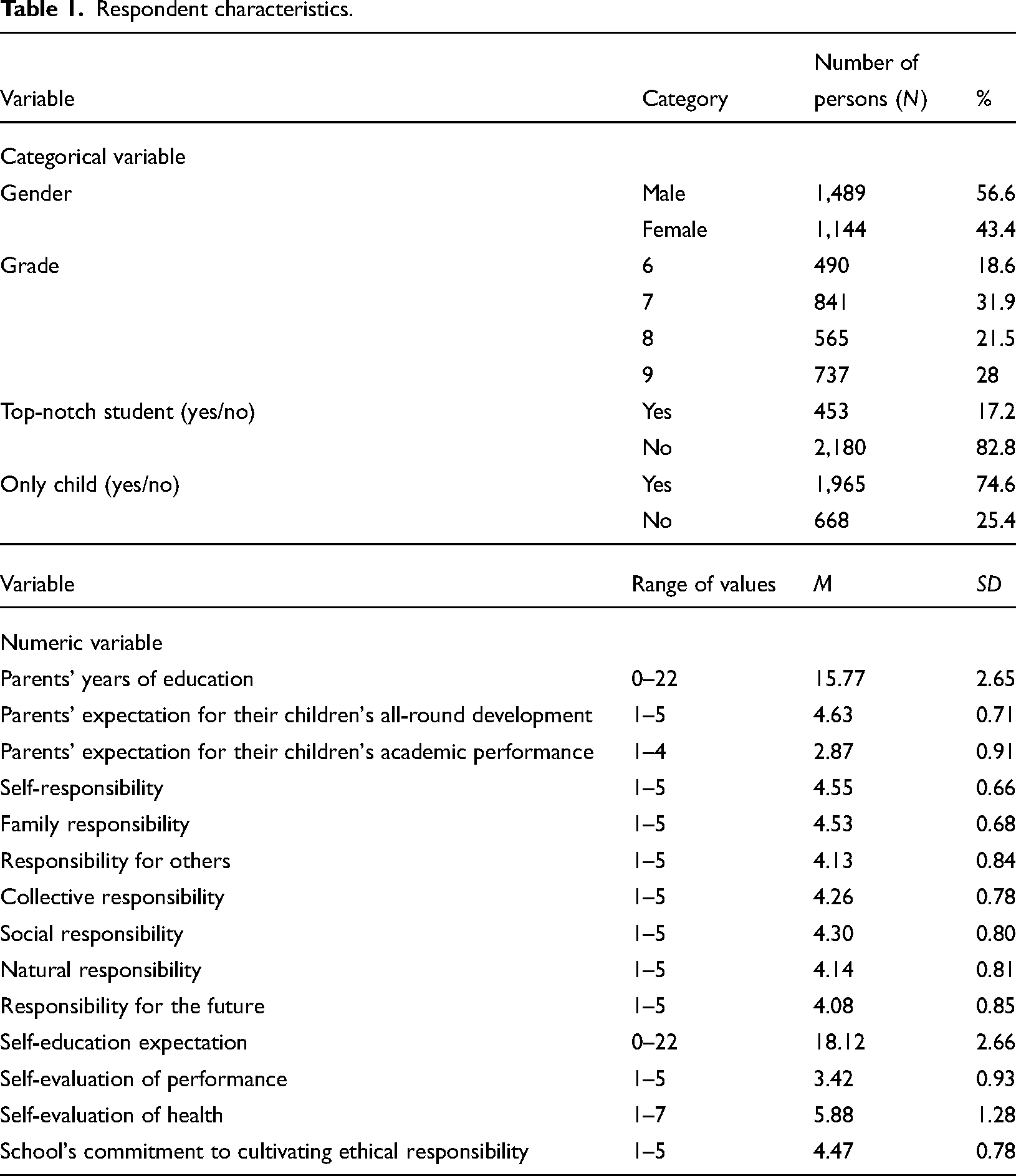
Table 1 presents the descriptive statistics of the variables employed in this study. In terms of gender, 56.6% of respondents were male, and 43.4% were female. Regarding grade, 18.6% of respondents were in Grade 6, 31.9% in Grade 7, 21.5% in Grade 8, and 28% in Grade 9. Regarding academic performance, 17.2% of respondents were top-notch students, while the remaining 82.8% were ordinary students. Concerning family structure, 74.6% of respondents were from one-child families, while 25.4% had siblings.
Respondent characteristics.
Research findings
Independent samples t-tests were performed to identify the differences between top-notch and ordinary students in terms of their levels of ethical responsibility across various dimensions, as well as relevant influencing factors. In addition to regression analysis, we conducted a bootstrap test to examine multiple mediating effects and identify the factors affecting the ethical responsibility of top-notch students.
Levels of ethical responsibility
Figure 1 presents the results of the independent samples t-tests performed to determine the differences between top-notch and ordinary students in terms of their ethical responsibility across seven dimensions: self-responsibility, family responsibility, responsibility for others, collective responsibility, social responsibility, natural responsibility, and future obligations.

Comparison of students’ levels of ethical responsibility across seven dimensions.
Overall, the mean values for all students exceeded 4 (out of 5) in all dimensions. In descending order of respondent scores, the seven dimensions ranked as follows: self-responsibility, family responsibility, social responsibility, collective responsibility, natural responsibility, responsibility for others, and responsibility for the future. Top-notch students and ordinary students share similar rankings across various dimensions, yet there is a notable distinction: top-notch students appear to have a stronger sense of responsibility for the future compared to natural responsibility and responsibility for others. These results indicate that students at School A generally have a high level of ethical responsibility. In the sample, self-responsibility and family responsibility were the most prominent types of responsibility among respondents, while top-notch students attached higher importance to responsibility for the future.
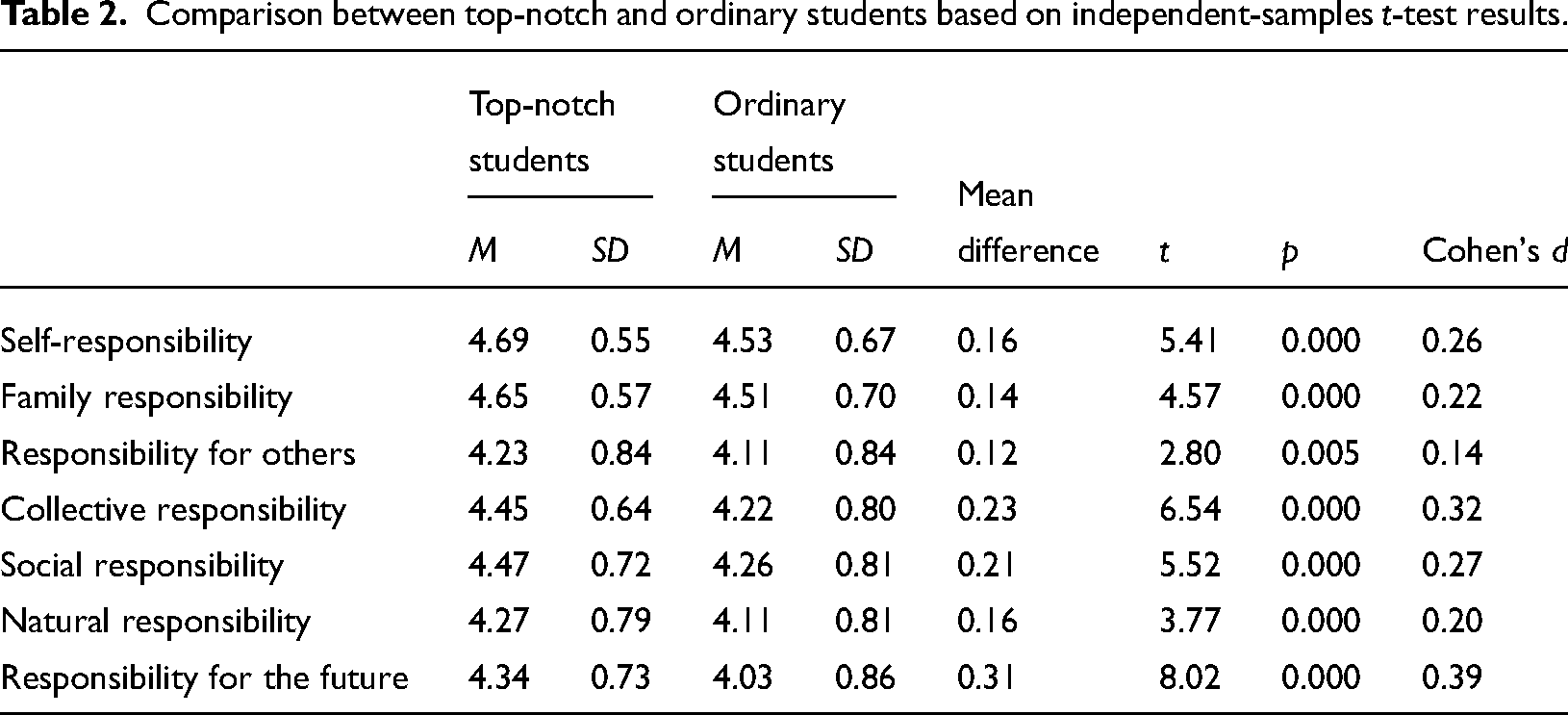
Table 2 presents the independent-samples t-test results regarding the responsibility levels of top-notch and ordinary students. Results show that top-notch students reported significantly higher levels of ethical responsibility in all dimensions (p < .01). Except for the responsibility of others, all Cohen's d values are greater than 2, indicating that the difference is statistically significant. As the results in Table 2 show, mean difference between top-notch students and ordinary students in descending order ranked as follows: responsibility for the future, collective responsibility, social responsibility, self-responsibility, natural responsibility, family responsibility, and responsibility for others. This indicates that top-notch students have more advantages than ordinary students, exhibiting higher levels of ethical responsibility across all dimensions, particularly responsibility for the future, collective responsibility, and social responsibility.
Comparison between top-notch and ordinary students based on independent-samples t-test results.
Influencing factors
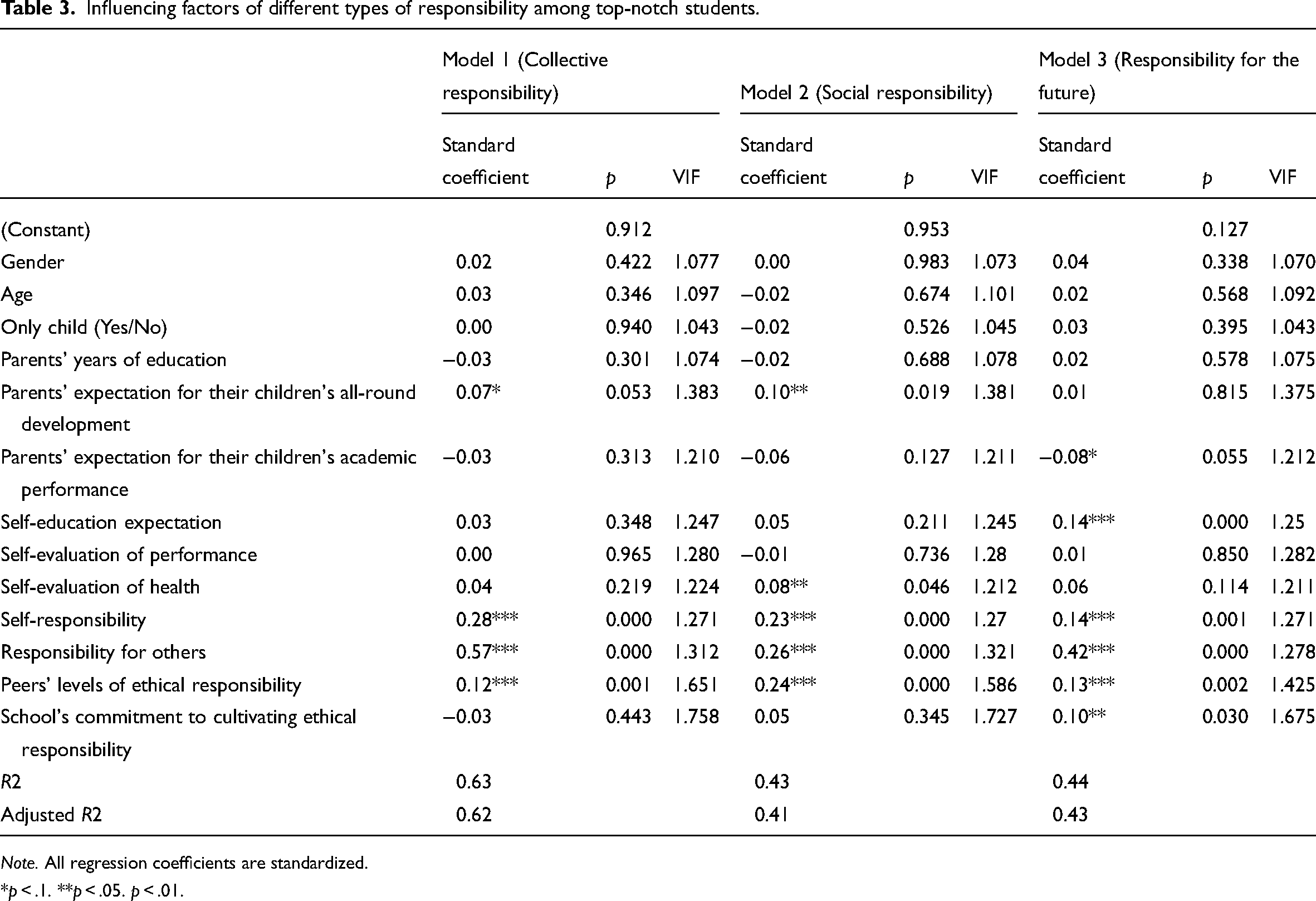
In discussing influencing factors, this section focuses on those pertaining to the three dimensions in which top-notch students reported higher scores of ethical responsibility: collective responsibility (Model 1), social responsibility (Model 2), and responsibility for the future (Model 3). Table 3 presents the results for these three models. In Table 3, the variance inflation factor (VIF) values are close to 1, indicating relatively mild multicollinearity in the multiple regression models. The percentages of explained variation in the values of the dependent variables were as follows: 63% in Model 1 (R2 = 0.63), 43% in Model 2 (R2 = 0.43), and 44% in Model 3 (R2 = 0.44).
Influencing factors of different types of responsibility among top-notch students.
Note. All regression coefficients are standardized.
*p < .1. **p < .05. p < .01.
The results in Table 3 have the following implications. First, regarding control variables, there were no significant differences in students’ levels of ethical responsibility in terms of their gender or whether they have siblings. Age and parents’ years of education also had no significant impact on students’ levels of ethical responsibility. Parents’ expectations for their children's all-round development had a significant positive effect on students’ collective responsibility (
Second, at the individual level, students’ self-education expectation had a significant positive effect on their level of responsibility for the future (
Third, concerning school environment, top-notch students’ levels of responsibility in all three dimensions were positively influenced by their peers’ level of collective responsibility (
Fourth, responsibility for others appears to have been the most influential factor across all three dimensions. More specifically, responsibility for others had the greatest influence on students’ level of collective responsibility, followed by self-responsibility, peers’ levels of collective responsibility, and parents’ expectations for their children's all-round development. In terms of students’ level of social responsibility, responsibility for others was the most influential factor, followed by peers’ levels of social responsibility, self-responsibility, and then parents’ expectation for their children's all-round development. Finally, regarding students’ level of responsibility for the future, responsibility for others had the biggest impact, followed by peers’ levels of responsibility for the future, self-responsibility, the school's commitment to cultivating ethical responsibility, and then parents’ expectation for their children's all-round development.
Multiple mediation analysis
According to the t-test results, top-notch students exhibited significantly higher levels of ethical responsibility in all dimensions than ordinary students. This raises the question of why these two student groups differ, that is, what influencing mechanism shapes ethical responsibility among top-notch students. To answer this question, we performed a bootstrap test to analyze multiple mediation effects. Sampling was repeated 5,000 times to estimate bias-corrected bootstrap confidence intervals for direct, indirect, and total effects. Table 4 presents the results of the multiple regression analyses of Model 1 (collective responsibility), Model 2 (social responsibility), and Model 3 (responsibility for the future).
Multiple mediation analysis results.
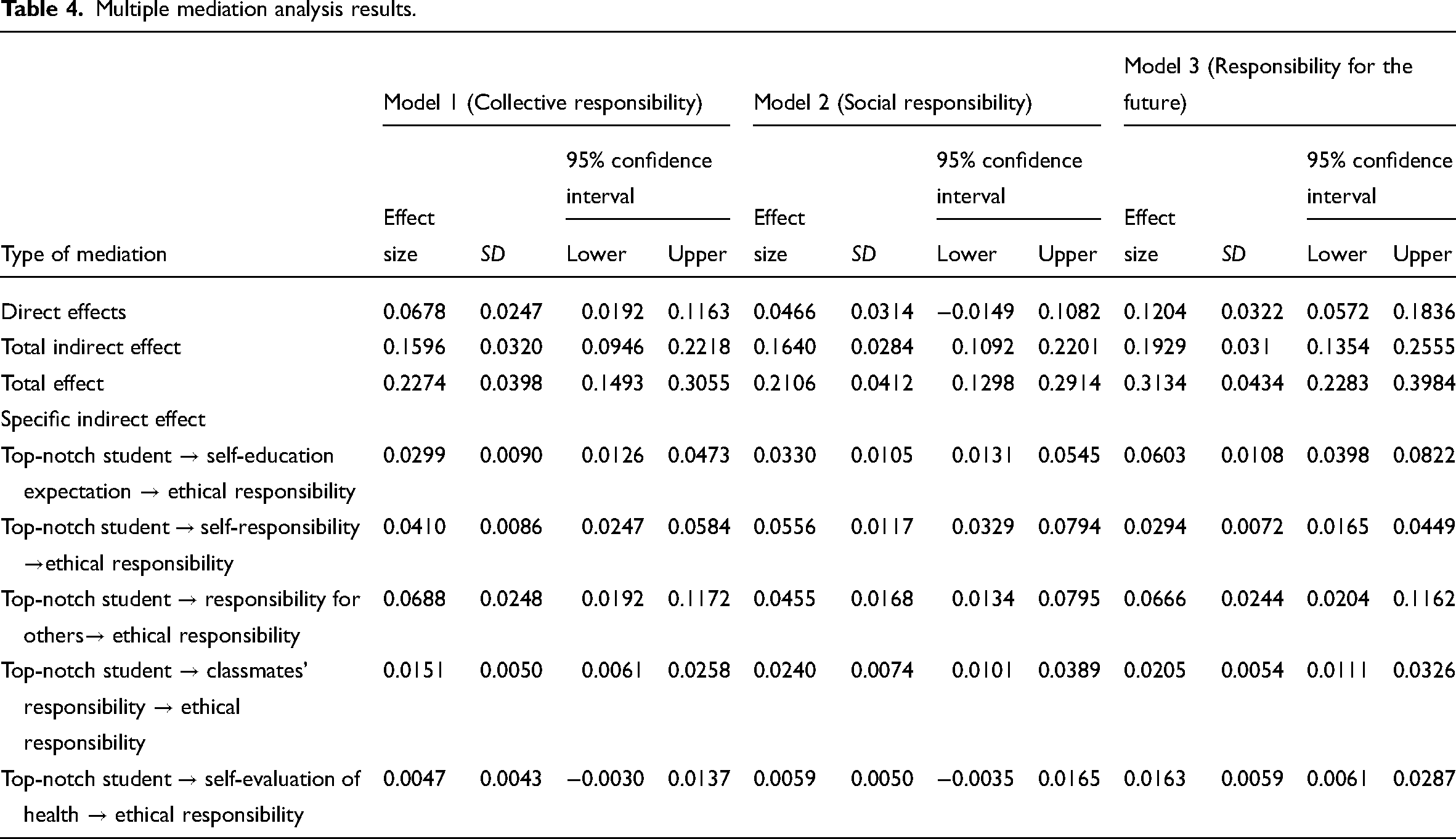
In Model 1, the status of being top-notch students had a significant positive direct effect, total indirect effect, and total effect on students’ levels of collective responsibility at a 95% confidence interval (not containing 0). Among the five paths for specific indirect effects, positive significant results were obtained in four paths at a 95% confidence interval (not containing 0), except “top-notch student → self-evaluation of health → collective responsibility.” Notably, the “top-notch student → responsibility for others → collective responsibility” path had the strongest mediation effect (0.0688). These findings indicate that responsibility for others, self-responsibility, self-education expectation, and the perceived collective responsibility of their peers partially mediate the influence of academic performance on top-notch students’ levels of ethical responsibility. In other words, the differences in the levels of collective responsibility between top-notch and ordinary students can be partially attributed to significant variations in these four factors.
In Model 2, the status of being top-notch students did not have a significant direct effect on their level of social responsibility at a 95% confidence interval (containing 0). This result suggests that the influence of the status of being a top-notch student on their level of social responsibility is only indirectly affected by academic performance. Among the five paths for specific indirect effects, positive significant results were obtained in four paths at a 95% confidence interval (not containing 0), except “top-notch student → self-evaluation of health → social responsibility” at a 95% confidence interval (containing 0). In particular, the “top-notch student → self-responsibility → social responsibility” path exhibits the largest mediation effect (0.0556). These results suggest that the difference in the level of social responsibility between top-notch and ordinary students is due to significant differences in their levels of self-responsibility, responsibility for others, self-education expectation, and the perceived social responsibility of their peers.
In Model 3, the status of being top-notch students had a significant positive direct effect, total indirect effect, and total effect on students’ levels of responsibility for the future at a 95% confidence interval (not containing 0). Positive significance was obtained for all paths of specific indirect effects at a 95% confidence interval (not containing 0). Here, the “top-notch student → responsibility for others → future obligations” path had the greatest mediation effect (0.0666), followed by the “top-notch student → self-education expectation → future obligations” path (0.0603). These results suggest that the difference in the level of responsibility for the future between top-notch and ordinary students is partially caused by significant differences in their levels of responsibility for others, self-education expectation, self-responsibility, peers’ levels of responsibility for the future, and self-evaluation of health.
Conclusion
This study examined the levels of ethical responsibility exhibited by top-notch students and determined the influencing factors at play. Analysis of survey data yielded three main findings. First, top-notch students outperformed ordinary students across all seven dimensions of ethical responsibility, particularly in responsibility for the future, collective responsibility, and social responsibility.
Second, the ethical responsibility of top-notch students is produced by multiple factors. Results indicate that several factors influence the levels of ethical responsibility exhibited by top-notch students in three dimensions—collective responsibility, social responsibility, and responsibility for the future—to varying degrees, including the following: parents’ expectations for their children's all-round development and academic performance, students’ self-education expectation, self-evaluation of health (i.e., physical and mental health levels), level of individual responsibility, level of responsibility for others, peers’ levels of ethical responsibility, and the school's commitment to cultivating ethical responsibility. Two conclusions can be drawn from these results. Notably, the primary factors influencing top-notch students’ collective and social responsibility are their levels of responsibility for others, self-responsibility, and the collective/social responsibility of their peers. Furthermore, both their parents’ expectations for children's all-round development influence their level of ethical responsibility. Additionally, the main factors influencing top-notch students’ level of responsibility for the future are their responsibility for others, self-responsibility, self-education expectation, and peers’ level of responsibility for the future. This dimension is also influenced by their parents’ expectations for academic performance and the school's commitment to cultivating ethical responsibility.
Third, results revealed that other factors do not significantly impact students’ ethical responsibility, including gender, family background (only child), age, and parents’ years of education.
Implications
Based on this study's findings, we propose two suggestions. First, this study suggests the need for new perspectives and a better understanding of top-notch students. The finding contradicts the common perception of top-notch students, particularly among educators in primary and secondary schools. Indeed, some of the teachers interviewed during the preliminary research stage 4 agreed that, except for individual responsibility, top-notch students tended to exhibit lower levels of ethical responsibility than ordinary students. While ordinary students do not excel intellectually like top-notch students, they are assumed to have several non-intellectual advantages, especially in terms of their sense of responsibility. However, empirical analysis—including this study's results—presents a different picture. Empirical analysis has already shown that top-notch students have high levels of responsibility and a strong motivation for learning (Wong, 1995). Students’ academic performance is also positively related to their responsibility levels (Zhang, 2010). Students’ personality traits, including their sense of responsibility, serve as key predictors of their academic performance (Jaber et al., 2022), with responsibility considered the most effective predictor in this respect (Schneider & Preckel, 2017). The converse is also valid: Students with greater academic performance also have significantly higher levels of ethical responsibility compared to their peers. Significantly, students’ beliefs about achieving academic success can positively influence their sense of responsibility (Fishman, 2014). In particular, students’ self-expectations were found to promote the positive mutual influence between their individual sense of responsibility and academic achievement. In short, there is no evidence to suggest that top-notch students tend to be “indifferent” or “selfish.” This study's results also reveal that ordinary students do not necessarily possess high levels of ethics of responsibility. In fact, the lower students’ self-evaluation of their academic performance, the lower their sense of responsibility (Chen & Hu, 2015). In contrast, top-notch students have a markedly higher sense of responsibility for the future compared to ordinary students. In this regard, top-notch students are more willing to shoulder future responsibilities, which are not limited to planning for long-term goals (e.g., academic development) at the individual level but include the sustainable development of future society and humanity's destiny amid the challenges of our time.
Essentially, the general perception regarding top-notch students must change. Indeed, rather than being selfish or indifferent, top-notch students tend to have rich inner worlds, excel academically, and exhibit high levels of ethical responsibility. In-depth interviews with top-notch students revealed that some exceptionally talented or “genius” individuals can appear immature and apathetic to others due to the latter's bias and rush to judgment. Although not as gifted as geniuses, top-notch students are highly intelligent individuals with significant potential. They typically exhibit higher levels of responsibility, although some students may appear somewhat irresponsible. Some educators were likely biased when assessing the level of responsibility exhibited by top-notch students. Furthermore, the delayed effect should be considered when assessing responsibility behaviors insofar as high school students do not have many opportunities to fulfill their responsibilities.
Second, students’ ethical responsibility develops as a result of various factors, including their motivations, the classroom environment, familial expectations, and the school's commitment to cultivating ethical responsibility. Consequently, addressing issues related to the development of students’ ethical responsibility requires collaborative efforts from families, schools, and society (Liu & Liu, 2013).
Significantly, students’ self-responsibility, responsibility for others, and the perceived ethical responsibility of their peers are key factors in each dimension. Among the seven dimensions examined in this study, individual responsibility serves as the foundational dimension. Responsibility for others marks a significant milestone in the progression of responsibility levels, with the forging of ethical relationships with others as the starting point for discussing all relationships (Durkheim, 2015). Crucially, others are integral to collective, social, and future relationships. Both empirical research and theoretical perspectives indicate that self-responsibility and responsibility for others are key areas for advancing education on the ethics of responsibility. This study's findings also underscore the substantial influence of peers in cultivating responsibility. Students with a stronger sense of responsibility can promote the development of responsibility in other students, which may further enhance academic performance. Therefore, it is essential to consider the balanced distribution of responsibility qualities in student groups (Fu et al., 2023). Meanwhile improving the school's cultivation of students’ ethical responsibility will substantially enhance top-notch students’ level of responsibility for the future.
Moreover, while parents’ expectations for their children's all-round development are conducive to enhancing students’ level of collective and social responsibility, their academic demands can have a significant negative effect on students’ level of responsibility for the future. Further analysis revealed that parental expectations shape students’ thinking and planning for their future and that of society.
Finally, it is necessary to promote research and education reforms that support the development of students’ ethical responsibility. In addition to aiding further research and practice, a clearer understanding of the levels of ethical responsibility among top-notch and ordinary students, as well as their influencing factors, will help educators and parents guide student development without bias. This study analyzed the levels of ethical responsibility exhibited by top-notch math students at School A. The results suggest the need for educators to rethink prevailing assumptions regarding top-notch students. Stakeholders in academia, government, and society must determine the meaning of education for individual, social, and national development so that students feel like an integral part of the development process and not outsiders.
Limitations and future research
This study has addressed a gap in research on ethical responsibility, the bulk of which has been limited to discussions on the theory of ethical responsibility itself (cf. Turoldo, 2010, pp. 174–185; van Niekerk, 2020, pp. 207–227; Villiers, 2020, pp. 163–184; Wang, 2022) or focused on factors influencing the levels of responsibility among students at different stages of education (cf. Sun, 2022; Zhang, 2010). There is a marked lack of research specifically focusing on the expressions of ethical responsibility among top-notch students—an oversight addressed by this study's empirical examination of top-notch students’ ethical responsibility. This study also contributes to existing literature by exploring the factors influencing top-notch students’ ethical responsibility. Adding to existing discussions, this study compared the levels of ethical responsibility between top-notch and ordinary students and explored multiple factors influencing different dimensions of student responsibility. A unique feature of this study is its examination of students’ sense of responsibility for the future, an aspect hitherto overlooked in the literature. In demonstrating that top-notch students displayed higher levels of ethical responsibility across all dimensions than ordinary students, this study provides a robust statistical basis from which to dismiss the stereotype that students who perform better academically have a weaker sense of responsibility. This study also provides a reference for other researchers exploring self-responsibility among top-notch students, particularly in terms of the theoretical instruments and methodology employed.
This study has several limitations. First, due to limitations in data collection during the questionnaire survey, this study was unable to accurately match students’ questionnaires with those of parents and teachers. Consequently, this study primarily used students’ self-reported data. Second, this study was mainly based on the case study of School A. In addition to refining the research tools and matching the self-report data with other data, future studies should survey other schools to validate the rigor and scientific quality of the research conclusions.
Footnotes
Authors’ note
This article is primarily based on the authors’ recent empirical study on the level of ethical responsibility among top-performing students, which was published as a Chinese-language article in the journal Global Education (《全球教育展望》) in December 2023 (Su et al., 2023). In the current article, the authors have more clearly defined the theoretical contributions, limitations, and prospects for future research of the empirical study. This English version has been authorized by Global Education and acknowledged by ECNU Review of Education. Xiaoyu Wei is currently affiliated with the Institute of Basic Education Development at Shanghai Normal University.
Contributorship
Na Su is responsible for formulating the research problem, developing the theoretical framework, and designing the research apparatus. Xiaoyu Wei is responsible for data analysis and the preliminary formation of research findings, and all correspondence related to this article. Xiaoying Han is responsible for the literature review.
Declaration of conflicting interests
The authors declared no potential conflicts of interest with respect to the research, authorship, and/or publication of this article.
Ethical statement
After reviewed by the Ethics Committee, Na Su's research, “Is Higher Academic Performance Related to a Lower Level of Ethical Responsibility? Analysis of Ethical Responsibility Among Top-Notch Students in Shanghai,” was found to comply with the basic procedures of the Ethics Committee and their research protocols. Therefore, the Shanghai Normal University Academic Ethics Committee approved Na Su's research (serial number 2023 No. 3).
Funding
The authors disclosed receipt of the following financial support for the research, authorship, and/or publication of this article: This work is part of the broader education project, “Contents and Means of Teaching the Ethics of Responsibility in High School,” funded by the 2020 National Social Science Fund of China (project number BEA200114).
